24.2 C
London
Tuesday, August 4, 2026
Home Blog

How four Asian economies are positioning themselves for the AI age

0
how-four-asian-economies-are-positioning-themselves-for-the-ai-age
How four Asian economies are positioning themselves for the AI age

The global AI race is usually portrayed as a contest between the US and China. But another story is unfolding across east Asia, where countries such as Taiwan, South Korea, Japan and Vietnam are looking to command key parts of the AI value chain.

Here, sovereignty is the desired outcome. These governments are trying to secure enough control over critical AI capabilities such as chipmaking, computing infrastructure and physical AI applications like robotics to avoid becoming rule-takers in the next technological era.

While their intentions are similar, each country starts from a distinct point and has chosen a different path.

Taiwan already occupies perhaps the strongest strategic position. Home to Taiwan Semiconductor Manufacturing Company (TSMC), it dominates production of the world’s most advanced semiconductors – the hardware upon which cutting-edge AI systems depend. These include AI processors, which are chips designed to handle AI tasks.

Jensen Huang, the founder and CEO of US tech firm Nvidia, is Taiwanese and on a recent visit to Taiwan exclaimed that the island is at the “epicentre” of the AI revolution. While Nvidia is the leading designer of AI processors, the physical manufacturing of these chips is outsourced primarily to Taiwan.

Taiwan’s focus now is on maintaining leadership in advanced chip production. The Taiwanese foreign minister, Francois Chih-chung Wu, said in late 2025 what many assumed to be the doctrine: that the most advanced chipmaking capabilities must remain in Taiwan.

TSMC has chipmaking facilities in Germany, Japan and the US. But these are not producing chips at the leading-edge; that is reserved for Taiwan.

A TSMC chip manufacturing plant in Tainan Science Park, Taiwan.

A TSMC chip manufacturing plant in Tainan Science Park, Taiwan. Jack Hong / Shutterstock

South Korea is taking a similar approach to Taiwan. The country’s government and leading chipmakers, Samsung and SK Hynix, have recently announced an investment of nearly US$600 billion (£446 billion) in two new chip manufacturing plants in the south-west of the country.

Samsung and SK Hynix lead a distinct segment of the AI value chain from TSMC. They constitute nearly 80% of the global market for high-bandwidth memory chips. These chips provide the ultra-fast memory that AI processors rely on to train and run increasingly sophisticated models.

If the Nvidia-designed, TSMC-manufactured AI processors are the “brains” performing calculations, Samsung and SK Hynix’s high-bandwidth chips are the short-term memory that continuously supplies those processors with the data they need.

Seoul has also actively courted global AI leaders and chip designers. On his trip to Asia, Huang met with SK Hynix, LG and Naver chairmen. Before leaving, he asserted that South Korea is set to be a global leader in AI given its infrastructure strengths. American AI giant Anthropic is also reported to be collaborating with Samsung to develop a new AI chip.

Japan’s strategy looks different. Japanese AI investment commitments are smaller than in South Korea. Japan’s government has announced a target of US$65 billion of investment by its public and private sectors in physical AI by 2040. This is nearly a tenth the size of the Korean investment.

But this commitment has been followed by headlines that Japanese corporate giants SoftBank and Sony will lead Noetra, a consortium to develop an AI model to bolster robotics. The Japanese government sees physical AI applications like robotics as central to addressing the country’s demographic challenges and an area of competitive strength.

Nvidia is also embraced with open arms in Japan. In Huang’s July visit to Japan, the country’s strengths in AI for the factory floor, including automotive production and robotics, were emphasised. The Nvidia chief’s visit brought a collective sigh of relief in Tokyo as his earlier spring tour of Asia skipped Japan, which had stirred anxiety.

A staff member stands next to a humanoid robot during an exhibition in Tokyo.

Japan’s strategy focuses on physical AI applications such as robotics. Franck Robichon / EPA

Vietnam starts from a lower technological base than its north-east Asian neighbours. However, it has outlined an ambitious catch-up strategy. Hanoi aims to train 50,000 chip engineers by 2030 and is courting major investments. This has included a commitment by Nvidia to build research and development and AI data centres in partnership with Vietnam’s telecoms giant, FTP.

Vietnam’s restrictions on the export of its unprocessed rare earth minerals reflect its longer-term ambition to manufacture chips, rather than only assemble and test them. Rare earths are important inputs into the advanced electronics, robotics and data-centre infrastructure that support the wider AI ecosystem.

Winning the race

Taiwan currently occupies the strongest position because it controls one of the most irreplaceable parts of the AI supply chain: manufacturing of the most advanced chips. South Korea follows closely through its combination of memory chips and industrial AI capabilities.

Japan’s strength lies in physical AI, injecting it in robotics. And while Vietnam is starting from a different position, it is pushing for future gains by investing in talent, critical minerals and facilities.

Success brings new challenges. The out-performance of South Korea and Taiwan’s AI chipmakers catapulted their national stock markets to new heights and then to quick collapse, fuelling consternation about both growing wealth inequality and volatility. In the short-run at least, “winning” the AI race bears social costs.

The broader lesson here is that AI competitiveness is not about becoming self-sufficient across the supply chain. Very few countries, even the US and China, can realistically achieve that. Instead, Asia’s middle powers are identifying how and where they can cultivate indispensability.

By specialising and building complementary strengths alongside major US technology firms, especially Nvidia, they are increasing both their economic competitiveness and their strategic relevance. This is how they are pursuing sovereignty through, not in, AI.

From Threats to Turnarounds: Seven Trump Reversals on Iran

0
from-threats-to-turnarounds:-seven-trump-reversals-on-iran
From Threats to Turnarounds: Seven Trump Reversals on Iran


President Donald Trump announced late Saturday that he had called off planned U.S. strikes on Iran, saying renewed negotiations had raised hopes of easing the conflict and reopening shipping through the Strait of Hormuz.

The announcement follows a familiar pattern in Trump’s handling of the five-month conflict, with repeated threats of military action followed by abrupt pauses as diplomatic efforts resume. Several previous ceasefires and negotiating windows have collapsed within days, leading to fresh rounds of U.S. strikes.

Here’s a look at Trump’s major announcements on pausing military action against Iran:

April 7:

Trump announced that the United States and Iran had agreed to a two-week ceasefire after weeks of fighting that began on Feb. 28 following Israeli and U.S. strikes.

The announcement came less than two hours before a deadline Trump had set for Iran to accept his demands or face attacks on bridges and power plants, warning that otherwise “a whole civilization will die.”

April 21:

Trump extended the ceasefire indefinitely one day before it was due to expire, saying mediators had requested more time for negotiations. The pause lasted until May 8, when U.S. forces resumed strikes, targeting Iranian tankers.

May 18:

After warning of a major military operation, Trump said he was delaying planned strikes because “serious negotiations” were underway.

“There seems to be a very good chance that they can work something out,” Trump said. “If we can do that without bombing the hell out of them, I’d be very happy.”

The talks later broke down, and U.S. strikes resumed on May 27.

June 11:

Trump warned the United States would hit Iran “VERY HARD TONIGHT” and threatened to take “total control” of its oil and gas industry. Hours later, he said a diplomatic breakthrough had been reached and canceled the planned strikes.

June 17:

Trump signed an initial agreement with Iran calling for a permanent halt to hostilities, the reopening of the Strait of Hormuz and a 60-day negotiating period on Iran’s nuclear program. But he warned the agreement could be abandoned if talks failed.

“It’s a memorandum of understanding, and if I don’t like it, we’ll go back to shooting at them, dropping bombs,” Trump said.

July 7:

After Iranian attacks on commercial shipping in the Strait of Hormuz, Trump ordered fresh U.S. strikes while attending the NATO summit in Ankara, Turkey. He later declared the ceasefire effectively over and threatened to “just finish the job.”

July 27:

Trump announced another pause in U.S. military operations after nearly two weeks of daily strikes on Iranian military and commercial targets. The suspension was intended to give negotiations another opportunity as Iran continued launching missiles and drones across the region.

Hours after telling reporters the United States would hit Iran “very hard,” Trump announced on social media that he had canceled the planned attacks, saying Middle Eastern allies had reached the framework of an agreement to end the conflict and reopen the Strait of Hormuz.

“Based on this request, I have agreed, for the future benefit of the WORLD and, likewise, the survival of a successful and prosperous Iran, to cancel the attack, subject to being able to rapidly make a DEAL,” Trump wrote.

Iran’s defense minister responded by saying the country was “neither surprised nor passive” and remained prepared for any potential military action.

Via The Independent

What another Texas flood revealed about the state’s warning system

0
what-another-texas-flood-revealed-about-the-state’s-warning-system
What another Texas flood revealed about the state’s warning system

When torrential rain doused the Texas Hill Country last month, Paul Welch stayed up past his bedtime checking radar and rain gauges on RiverHub, the Upper Guadalupe River Authority’s new tracking website. At midnight, comforted by what he saw, he went to bed. 

Four hours later, his phone rang. It was a neighbor, the same fellow who had awakened him the previous July, just before floodwaters swamped Welch’s riverfront cabin near Comfort. “Get up. Get out. Quick.” he said, speaking calmly into the phone. The water at Center Point, 4 miles upstream, had risen 25 feet as Welch slept. A wall of water was heading his way.

Welch and his partner, Elizabeth Hastings, could hardly believe it was happening again. This time, they knew what to do: Hastings tossed the guns, jewelry, paperwork, and medication into the Sprinter van and drove through the downpour to a gas station already crowded with vehicles. Welch moved his tractor, golf cart, and other essentials to higher ground, then joined his neighbors on the same high spot near the highway where they’d gathered the last time this happened. For the second time in 12 months, they watched water tear through the valley, roiling and churning with more power than Welch had ever seen.  

A flooded roadway near a large city building with trees out front

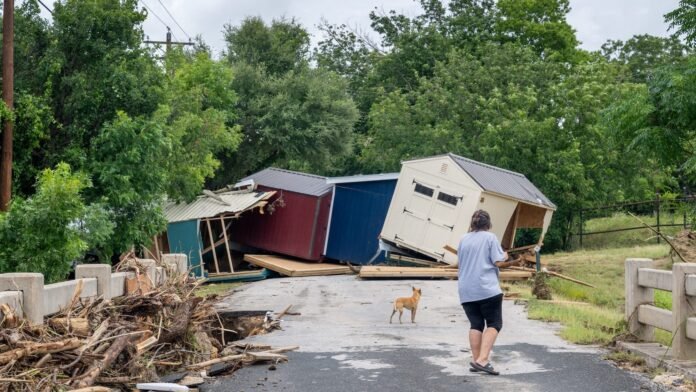
Water floods a street after heavy rain in Comfort, Texas, on Thursday, July 16, 2026. Aaron E. Martinez / The Austin American-Statesman via Getty Images

The next morning, as Welch and Hastings picked their way through the muck, his phone rang. It was Huntly Dantzler,  a volunteer who had helped them through last year’s catastrophe. “Paul, give me some good news,” he said. “I’ve got none to give,” Welch replied.

Gone was the $130,000 RV they’d lived in as they awaited construction of their dream house — into which Welch had already sunk $80,000. Gone were the new appliances that sat in his shop, still in bubblewrap. Gone were the 200-year-old cypress trees that had survived so much. “We cried and prayed over the phone,” Dantzler said.

Read Next

One year after several rivers and creeks in central Texas killed 139 people and spurred a statewide push to improve flood warnings, another historic storm tested those changes. This year’s disaster brought at least 12 inches of rain — and as much as 28 — to one dozen counties north and west of San Antonio and destroyed or damaged hundreds of buildings. Yet just three people died.

“Here we are a year later, but under incredibly different circumstances,” Kerr County Judge Rob Kelly said at a July 20 press conference. “Last year when we were here, we were grieving. We were in a pall of human loss.”

Earlier forecasts, new warning systems, and a public primed by last year’s tragedies saved lives. But the catastrophe also exposed how much work remains, leaving many Texans counting on vigilance and neighbors when the water rises. 

A man in a khaki uniform bends his head and holds his hat at waist height in front of a flood map pasted on a wall in a meeting roomweaknesses in the state’s flood-warning and emergency management systems. Among them, the county lacked outdoor sirens, even along the most vulnerable stretch of the Guadalupe, and the authority had deferred building the warning system it knew it needed after the state denied funding. The county never activated a federal emergency alert system capable of reaching nearly every cellphone in the area and delayed some local alerts while dispatchers sought supervisory approval. 
Those shortcomings became central to lawmakers’ push for a more robust warning system across flood-prone communities. During a special late-summer session, lawmakers passed four flood-response bills. Two strengthened safety and licensing requirements at youth camps. Another launched an effort to expand flood-warning systems in 30 counties by identifying flash flood–prone areas that need warning siren systems, including sensors and gauges. The last bill provided $50 million to buy them and another $24 million for a two-year project to dot the Hill Country with more rain gauges, radar, and forecasting tools. 

Twenty-nine of the 30 eligible counties had joined the warning-system program by early July. But much of it remained under development when the flooding started.

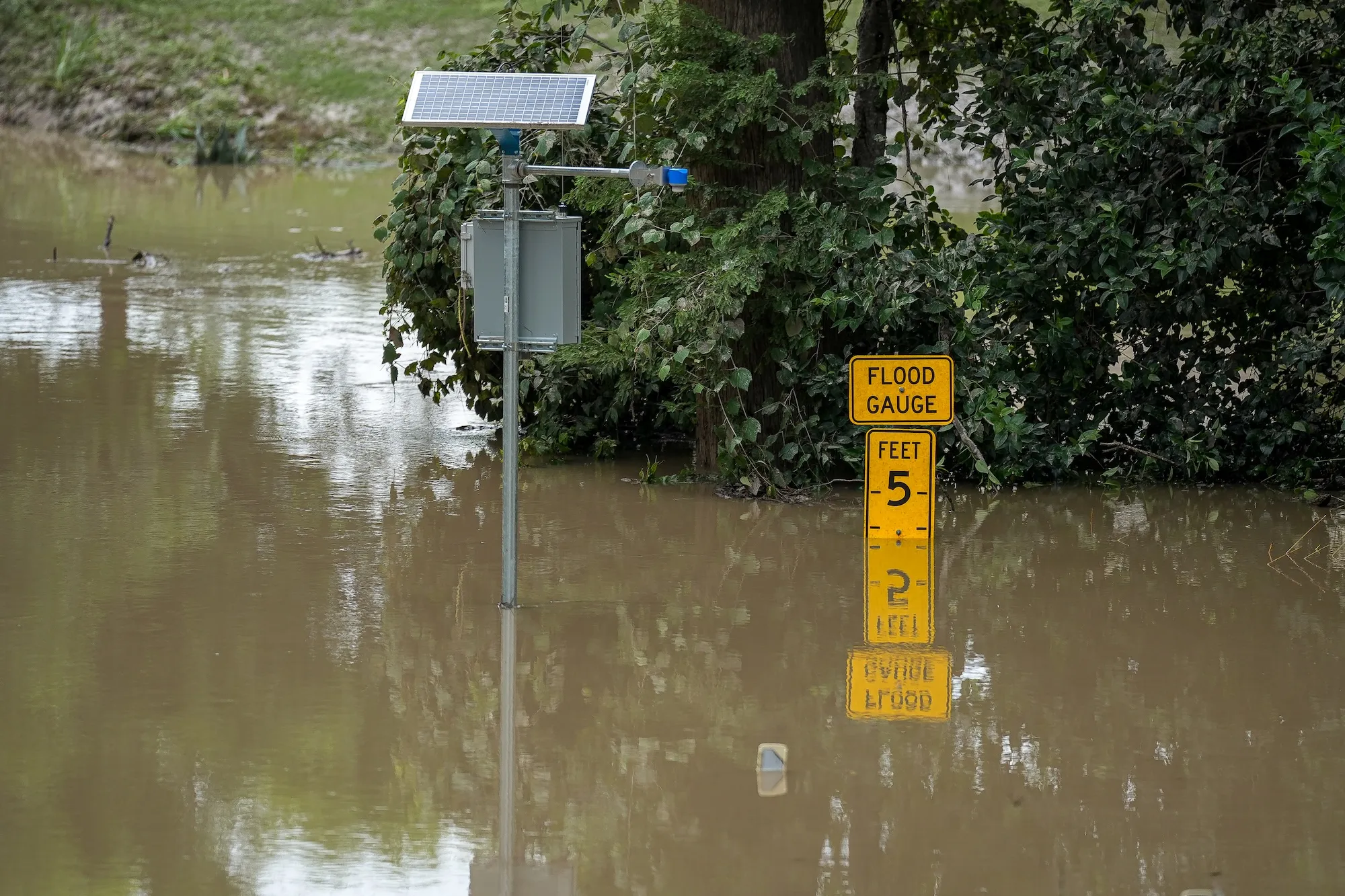
a flood gauge sign in watersaid a few of the 104 sirens it had installed for landowners along the river sounded automatically, as they were designed to. Local authorities also helped dozens of people evacuate ahead of the deluge.

At the July 20 press conference, Governor Greg Abbott and Kelly cited several reasons for the lower death toll, including a storm that moved more slowly, a community and public officials with greater vigilance after the previous year’s disaster, and warning systems installed in the months since.

The first two of those things may have mattered most. 

Unlike last year’s storm, this one was larger and easier to track. That gave forecasters a much clearer signal that dangerous flooding was possible, said Robert Mace, who leads the Meadows Center for Water and the Environment at Texas State University. 

The National Weather Service used the same models and warning procedures it used in 2025, said Jason Runyen, warning coordination meteorologist at the agency’s Austin/San Antonio office. It simply began briefing emergency officials four days before the river peaked; last year, it did so less than 24 hours ahead of the disaster.

But it was the storm’s intensity that might have played the biggest role in minimizing fatalities, said state climatologist John Nielsen-Gammon. Rain fell at a rate of 2 to 5 inches per hour, versus the 4 to 6 that fell last year, according to Weather Service data. That meant it took longer for the floodwaters to build up, giving people more time to evacuate, Nielsen-Gammon said.

a dog looks out the window of an RV sitting in flood waterUnited Cajun Navy’s relief efforts there last year, credits public awareness for minimizing fatalities. People checked on neighbors. They didn’t try driving through floodwaters. And they heeded calls to evacuate. “We were all on hypervigilant PTSD mode with this flood, so everyone was kind of hyperaware,” he said. 

Mark Rose is a former general manager of the Lower Colorado River Authority, which oversees the lower Colorado River basin just north of the Guadalupe. He cautioned against drawing quick conclusions from the lower death toll. “Did we really do better because we know better and we’ve made institutional changes?” he said. “Or did we just do better because last year we had a horrible flood that killed a bunch of people, and it’s now more on our mind? Those are the hard questions that all of the authorities should be asking and answering.”

The storm highlighted just how much of the state’s flood-warning network remains unfinished. Many counties included in last year’s disaster declaration still lack sirens, adequate stream gauges and other infrastructure. In eastern Kerr County, where Paul Welch and Elizabeth Hastings live, no sirens sounded even though their part of the Guadalupe flooded catastrophically last year. Kerr County plans to install 26 more sirens by next summer, but officials in Kerrville have estimated that a more thorough system with additional sirens, river gauges, and the like would cost at least $14 million — far more than the state’s $1 million allotment.

Tom Moser, a former NASA engineer, former Kerr County commissioner and leader of the team that’s establishing requirements for the county’s flood-warning system, said the state should fully fund such hardware up front. “There’s no reason, in my judgment, why a system like this couldn’t be put in place in probably less than six months,” he said. “We’ve seen enough emergencies and the impact of floods in the area that it ought to be full speed ahead.”

Kerr County officials did not respond to requests for comment. The governor has said the conversation is not over. 

“The systems we put in place last year proved to be successful and helpful,” Abbot said when asked during a press conference if the Legislature might provide more money for sirens. “We want to make sure we are equally successful and helpful in every region across the state of Texas. And those are the kinds of issues that we will take up in the next session.” 

a man holds a piece of paper during a press conference with other people sitting and standing near him

Texas Governor Greg Abbott shows a signed major disaster declaration that he says he will send to President Donald Trump following a news conference about the state’s flood response on Friday, July 17, 2026. Sara Diggins / The Austin American-Statesman via Getty Images

It’s unclear how the system that officials have assembled so far would have stood up in a disaster more like last year’s storm and whether they would have resulted in a similar death toll. Too many homes, vacation rentals, and campgrounds remain in floodplains inundated both times.  “Not to be too macabre about it, but it’s possible that some of the people who died last year in their homes would have died in the flooding this year,” Nielsen-Gammon said.

But even the most expansive network of sirens won’t fully eliminate fatalities because they are reactive, Rose said. “With all due respect to those who think they have solved the problem by putting up a siren, in my opinion that’s total bullshit. And the reason is, [are] you going to hear a siren at 3 o’clock in the morning in a pounding rain, dead sleep, when you have an hour to respond? No.”

Rose believes effective flood warning begins as soon as the rain starts falling. In the Hill Country, where rivers are fed by runoff that can be difficult to track, that means monitoring the entire watershed with rain and stream gauges in creeks and tributaries, as the Lower Colorado River Authority has done. Because the Guadalupe has little flood control infrastructure, information is the first line of defense, he said, and it is only as good as the speed with which it arrives.

The fact that Welch felt safe enough to go to bed after checking RiverHub “tells you that we’re in the fledgling stages of data gathering on the Guadalupe River,” Rose said. He suspects the system probably does not yet provide enough timely, real-time information to keep a rapid rise in the water level coming as such a surprise.

“If anybody thinks that they’re done, that the job is done, it’s not,” Rose said. “It’s just starting.” 

a pair of muddy shoes near an RV entrance after a flood

A man stands in mud washed into his RV by flooding near Goat Creek, Texas, on July 17, 2026. Sara Diggins / The Austin American-Statesman via Getty Images

In the end, what saved Welch and Hastings was a phone call from a neighbor — who had himself been tipped off by a friend in the fire department hearing the first emergency calls. “He saved our lives twice,” Hastings said.

The two of them fled to an Airbnb they found in downtown Comfort. Two weeks later, they had given up on the idea of living along the river and closed on a house 20 miles west, in Kerrville. It sits on a hilltop. “For the first time in a couple years I’m going to feel safe,” Hastings said.

She has always known the Hill Country was dangerous. As a child in 1978, she watched television footage of cabins floating down the Guadalupe after 48 inches of rain fell in two days. But she never imagined the river would produce two catastrophic floods just 12 months apart.

That could grow more common. Warmer sea-surface temperatures are loading the atmosphere with more moisture, increasing the risk of extreme rainfall along the Gulf Coast, Mace said.

Still, Welch and Hastings can’t let go of their spot on the river. They love the waterfalls, the swimming hole, and the birds too much. They’ll keep coming back, but only in the van so they’re ready to get out quickly. Just in case. 


Private firms driving Russia’s new tech push in Ukraine war

0
private-firms-driving-russia’s-new-tech-push-in-ukraine-war
Private firms driving Russia’s new tech push in Ukraine war

Russia is introducing new technology into the Ukraine war. Will it help the Russians win in the conflict? Even more tantalizing, both were developed by private sector companies in Russia!

Russia and Ukraine often tout new products sold to the public as wunderwaffen. Soon it becomes clear that their role in the war is minimal, and the advertising moves on. Russia has launched two new products that promise a lot. But can they deliver?

The first, and perhaps the most important, is a new satellite communications system called Rassvet-3 (”Dawn”). It is Russia’s answer to Starlink, Elon Musk’s fabulous network of between 10,870 to 10,890 satellites.

Ukrainian frontline forces rely heavily on Starlink for Command, Control, Communications, Computers, Intelligence, Surveillance, and Reconnaissance (C4ISR). It enables live video streaming from reconnaissance and strike drones, real-time fire adjustments for artillery and rocket systems, and encrypted coordination between unit commanders and troops in the trenches.

The Russians were using Starlink until Elon Musk shut them down in early February, 2026 by implementing a combination of geofencing and terminal “whitelisting” to cut off Russian usage.

This forced Russia into trying to replicate broadband battlefield connectivity some other way. Initially, the Russians turned to “mesh networks” – essentially linking platforms (mainly UAVs) to provide broadband connectivity.

To achieve this, Russia scaled up the integration of small, digital mesh modems (frequently using frequency-hopping spread spectrum/FHSS technology in the 1.3–1.5 GHz band) into strike and reconnaissance drones.

​By David Johnson, Karel Matthee, Dare Sokoya, Lawrence Mboweni, Ajay Makan, and Henk Kotze (Wireless Africa, Meraka Institute, South Africa)

Mesh networks on drones and on ground nodes work, but not without problems. They are generally limited in coverage, so different mesh networks need to be maintained to provide coverage. Because signals are processed and reprocessed, delays happen (called latency).

Latency is a very bad thing if you are guiding a suicide drone to a target or warning about an incoming threat. Mesh networks also continually transmit, so the enemy can easily detect them, and respond either with jamming or by destroying the node.

Starlink, because it uses hundreds of satellites at a time, has very little latency (20 – 50 ms) and the multiplicity of satellites makes jamming difficult. The most common jamming approach is to blank out signals in a specific battle area provided there are capable jammers available.

(Starlink uses very high radio frequencies typically used by radars, including the Ku and Ka bands. Starlink also links satellites with laser communications, which are not jammable.)

As Ukraine began to attack Russian drones with innovative technology such as the Zirka counter drone which uses artificial intelligence and, once launched, operates autonomously, the Russians could not be sure mesh networks would survive.

Zirka counter drone

This led to the development of the Rassvet-3 (“Dawn”) satellite system. The first 12 to 15 satellites are already operational and Russia is rushing to build portable ground terminals so Rassvet can work on the battlefield.

Russia’s 12 to 15 satellites do not even come close to Starlink’s 10,000 in orbit. In fact, as of today, the coverage over Ukraine is around two to three communication windows per day, each lasting between 1 and 1.5 hours.

This is enough to work out bugs and test the satellite array, but not enough to provide sufficient coverage to meet the Russian army’s tactical needs. Russia launched another 16 satellites on July 19, but we do not yet have information on them. Russia’s goal is to have 156 satellites in orbit by the end of 2026.

Orbital launch Rassvet-3 on March 23, 2026, The launch was not announced.

Like Starlink, Rassvet-3 (which is in a somewhat higher orbit) uses Ka and Ku bands and supports inter-satellite laser communications (demonstrating data speeds up to 10 Gbit/s in testing) and support the 5G NTN (Non-Terrestrial Network) standard for direct satellite-to-cellular connectivity.

Rassvet provides encrypted military data relay, drone command-and-control links, and secure backhaul—filling the operational gap left after Russian access to Starlink was blocked.

Rassvet was developed by the private Russian technology firm Bureau 1440 (a subsidiary of the Yadro technology group) under the government’s broader Sfera space program, the project has been elevated to a top strategic priority for Moscow. YADRO is the flagship subsidiary and primary revenue generator of IKS Holding (ИКС Холдинг). 

IKS Holding is funding ~329 billion rubles (US$4 billion) of the total budget out of its own commercial capital, parent revenues, and private credit lines. Telecom giant MegaFon initially seeded the project in 2020 with 6 billion rubles, and Russian banking giant VTB Group acquired a 15% stake in 2021 for 2 billion rubles before the project was restructured under IKS Holding.

The Russian federal government committed 102.8–116 billion rubles (US$1.26–$1.3 billion) through its national “Data Economy” roadmap (“Advanced Space Systems and Services for the Period up to 2030.”)

Federal funds directly subsidize launch vehicle integration aboard Soyuz-2 rockets via Roscosmos, orbital frequency licensing, and manufacturing infrastructure for subscriber ground terminals.

The Rassvet project, therefore, is unique from an ownership and financial perspective and represents how Russia is finding ways to support high priority defense programs combining private sector and public investment.

Bureau 1440 also is charged with manufacturing terminals. Many of the components for the terminals are sourced in China and are commercial off-the-shelf systems (COTS). Terminal manufacturing could be a bottleneck for the Russians.

Because Rassvet is still in early days and not yet in widespread use, it remains to be seen if the system can meet its goals and provide the functionality the Russian army needs for Ukraine.

If it is successful, the Russians will have a functional alternative to Starlink to support military operations in Ukraine. Thus, the Rassvet project is real and not advertising. Once fully functional (end of 2026 to mid-2027), Russia will be able to match Starlink on the battlefield.

Jamming Starlink over Russian territory

Ukraine has been hitting critical infrastructure in Russia, both to retaliate for Russia’s attacks on Ukraine’s infrastructure and military targets and as part of a Ukrainian effort to embarrass the Russian government with heavy costs at home that, the campaign appears to hope, will force the Russians to the bargaining table with major concessions Ukraine could potentially accept.

(Russia has retaliated in part by destroying gas stations in Ukraine. There are localized fuel shortages in Russia because of Ukrainian attacks.)

While the Russians are able to shoot down many Ukrainian drones, enough of them get through and past Russian air defenses to create serious trouble for the Russian government, especially as Russian leaders keep emphasizing they are winning the war.

Independent analysts say that in the Moscow region and Crimea, where the Russians have layered air defenses, between 80% and 90% of Ukrainian drones are intercepted. In heavily defended airspace (such as around Moscow or major military hubs), Russian air defenses and electronic warfare (EW) jamming stop the vast majority of incoming long-range UAVs. In less well-defended places, a higher percentage get through.

Since most Ukrainian long-range drones rely on both GPS and Starlink, Russia has been seeking to improve its jamming capabilities, recognizing that jamming Starlink is challenging.

Volna Kupol Garant: Russia’s electronic weapon specifically designed to hunt Starlink. (Photo: Russian Ministry of Defense)

Russia is introducing a new jammer system dedicated to jamming Starlink. Known as Volna (”wave”) Kupol (”dome”) Garant, it was developed by the Crimean-based firm Rossiysky Kupol LLC, which is often styled in Russian media as AO Русский Купол or Russian Dome.

Kupol is a Crimean-based defense electronics contractor that has emerged as one of Russia’s primary private entities developing tactical counter-drone and counter-satellite EW hardware.

Kupol sells hardware directly to localized command structures, regional administrations, and defense units rather than going through traditional long-term state military acquisition pipelines.

US defense officials should take note of this sales approach as it eliminates red tape and delays in getting a product from the factory to the soldier. It may also account for lower costs by removing testing and evaluation processes that are often costly, although it carries some risk.

Kupol features a trailer-mounted uplink satellite jammer explicitly tailored to disable Starlink receivers overhead. Kupol is designed to form a wide RF suppression shield against NATO-standard and commercial Ukrainian drone frequencies over a 20-kilometer radius.

The Volna Kupol Garant array uses eight parabolic dish antennas distributed across six mobile trailers. Each dish is enclosed under a protective, egg-shaped composite radome. Rather than electronically shifting the beam across a flat array phase matrix, each dish uses physical motor mounts to mechanically rotate and track low-Earth orbit (LEO) Starlink satellites as they move across the sky.

Kupol chose not to use Active Electronically Scanned Arrays (AESA) technology for its jammers, although it would have been preferable. AESA arrays excel at multi-beam agility and rapid electronic scanning without moving parts, but they require advanced Gallium Nitride (GaN) or Gallium Arsenide (GaAs) Transmit/Receive (T/R) modules — components that are scarce and heavily sanctions-restricted in Russia.

However, while relying on far older technology, Kupol claims it has achieved the focused Effective Radiated Power (ERP) required to reach LEO satellites (~500-kilometer altitude) using simpler, commercially available RF components.

The Kupol problem is the limited coverage of each system, meaning that to protect critical infrastructure these units would need to be positioned close to the protected site. The cost of doing this in a complex, industrialized nation such as Russia could be prohibitive. Each Kupol unit costs $1.5 million (very little in Western terms, but a high cost if hundreds of units are needed).

There isn’t much information on how effective Kupol is against Starlink. However, the fact that Ukraine has targeted deployed systems suggests Kupol does work. Whether Russia can afford to deploy enough systems, and whether Kupol (a small company) can produce enough systems, are unanswered questions.

It is not likely that Rassvet or Kupol will dramatically change the war in Ukraine in Russia’s favor. But both systems offer solutions and improvements that were previously lacking. Moreover, both come out of the private sector, demonstrating that independent companies may be best positioned, even in Russia, to develop and manufacture badly needed military equipment.

Stephen Bryen is a former US deputy undersecretary of defense and special correspondent at Asia Times. This article was first published on his Weapons and Strategy Substack and is republished with permission.

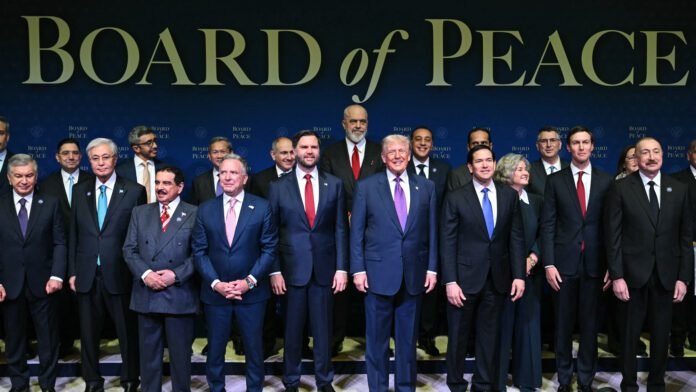
Board of Peace Backs Hamas Disarmament-First Gaza Framework 

0
board-of-peace-backs-hamas-disarmament-first-gaza-framework 
Board of Peace Backs Hamas Disarmament-First Gaza Framework 


The sequence has become one of the most closely watched questions surrounding the Gaza framework: Will the conflict between Hamas and Israel’s positions over disarmament and troop withdrawal be resolved? On Monday, the Board of Peace offered its clearest answer yet, saying implementation requires Hamas to complete the decommissioning of its arsenal before the Israel Defense Forces withdraw beyond the Yellow Line, consistent with Israel’s position. 

The clarification followed a meeting between High Representative Nickolay Mladenov, a Board of Peace delegation, Israeli Prime Minister Benjamin Netanyahu and their respective teams. In a statement posted on X afterward, the organization said Hamas had committed to mediators that Israeli withdrawal would begin only after light weapons, heavy weapons and the tunnel network had been decommissioned. 

The discussions centered on implementing the Gaza framework, which is intended to dismantle Hamas’s military capabilities, transfer authority to civilian governance and create what the Board of Peace described as a safer future for Israelis and Palestinians in Gaza. The organization called the talks “constructive and detailed” and said it and Israel remained aligned on the framework’s ultimate objective. 

That objective, the statement said, is the complete removal of weapons from the Gaza Strip and the replacement of armed rule with civilian governance. Achieving it, however, will unfold in stages, with the next phase focused on defining how the transition will be carried out. 

Oversight of the process will fall to the International Stabilization Force and the Implementation Verification Committee, whose members include representatives of both the United States and the Board of Peace. The organization added that continued progress depends on every party fulfilling its commitments under the agreed framework. 

The clarification also addresses a point that had stalled implementation. Hamas previously said it would neither surrender its weapons nor carry out any phase of the agreement until Israel halted its airstrikes, met its humanitarian aid obligations and completely withdrew its military forces from Gaza. 

Israeli officials have consistently maintained that military withdrawal would come only after Hamas had fully demilitarized and surrendered its arsenal. Monday’s statement places that sequence at the center of the implementation process, reaffirming that disarmament precedes any Israeli withdrawal beyond the Yellow Line. 

China is Tesla’s cash cow, but for how much longer?

0
china-is-tesla’s-cash-cow,-but-for-how-much-longer?
China is Tesla’s cash cow, but for how much longer?

Tesla’s factory in Shanghai had its best June ever, according to the China Passenger ⁠Car Association. Tesla built 93,579 cars in China that month, a hefty 38 percent increase compared to June 2025, according to CPCA’s data. But that production isn’t translating into bumper sales to Chinese customers. Rather, sales have been down quarter on quarter in China for more than a year now, particularly as buyers tire of the Model 3 sedan.

Almost 40 percent of the EVs that Tesla built in June were destined for export. And in Q2 in total, more than 50 percent—just—of the cars it built were for Europe, Canada, and other Asian markets: 128,394 versus the 126,157 Chinese-built Teslas that were sold to Chinese buyers. Low labor costs compared to Germany or the US are a big boon here, as are cheaper components from local suppliers. Throw in some export-related tax rebates from the Chinese government, and it’s not hard to see how Tesla’s Shanghai plant is an extremely valuable asset.

Despite this seemingly critical importance to the automaker at a time when its profit margins are evaporating, Tesla may be contemplating a future without China. Last week, The Wall Street Journal reported that some Tesla executives have been tasked with separating Chinese and non-Chinese parts of the company, although Tesla denied such preparations were underway.

But Tesla has been working to reduce its dependency on China for the cars it sells in the US, which remains the company’s largest market. New US regulations banning Chinese-linked connected car software went into effect for model-year 2027, and a similar ban on Chinese-linked hardware comes into effect for model-year 2030, meaning cars that will be on US roads in two years. Tesla now no longer imports Chinese-made cars for sale in the US, and it has worked with its North American suppliers to make sure the components it buys don’t have unwanted Chinese origins.

Trade restrictions aren’t the reason for the potential divorce, however. Rather, the desire to join up with SpaceX is what is being cited as the driving force. Although SpaceX has started using excess Cybertrucks in its operations, the real desire behind such a marriage is access to investors. As Ars detailed earlier this summer, the S&P 500 index rejected a request by Elon Musk—CEO of both Tesla and SpaceX—to bend the rules (which require, among other things, four consecutive profitable quarters) for the rocket company.

Tesla, though, joined the S&P 500 back at the end of 2020, and if SpaceX merged with it, those efforts by S&P to keep SpaceX from passive investors will be for naught. (Both Tesla and SpaceX are down about 25 percent for the year to date, although obviously SpaceX’s year only began with its IPO in June.)

Such a merger would risk being blocked by the US government on national security grounds given the tens of billions of dollars of military contracts between SpaceX and the US government on the one hand, and Tesla’s Chinese operations on the other. Killing the golden goose doesn’t make sense if you think about it from the perspective of a company that wants to sell more cars profitably. But then, Tesla’s CEO does keep telling us that it’s not a car company anymore, doesn’t he?

Harry and Meghan’s Secret ‘Divorce Plan’ Revealed

0
harry-and-meghan’s-secret-‘divorce-plan’-revealed
Harry and Meghan’s Secret ‘Divorce Plan’ Revealed


Buckingham Palace is reportedly preparing for the unthinkable — a royal future in which Prince Harry returns to Britain without Meghan Markle.

Harry, 41, and Meghan, 45, have increasingly appeared to be moving in different directions, with the homesick prince reportedly eager to rebuild ties with his family while his wife remains firmly committed to her life in California.

Now, palace insiders claim royal officials are quietly considering what would happen if the Duke and Duchess of Sussex eventually decided to end their marriage.

Palace Preparing for a Possible Sussex Split

One royal source claimed Buckingham Palace could be “quietly drawing up contingency plans in the event of a split.”

Harry has shown a renewed interest in spending time in the United Kingdom and repairing his damaged relationship with the royal family. Meghan, however, reportedly has no desire to move back to England.

“Meghan won’t want to come back from the U.S. — and that schism is potentially dangerous,” the insider claimed.

Should the couple divorce, the palace could reportedly take extraordinary steps to prevent an ugly public battle with Meghan.

One proposed arrangement would allegedly allow the former Suits actress to continue using her Duchess of Sussex title, even while remaining in America.

“The agreement would also grant Meghan the continued use of her Duchess of Sussex title,” the source claimed. “The Palace sees it as a face-saving measure, because tearing it away from her could spark a media war.”

King Charles Reportedly Wants the Marriage to Survive

Despite the alleged behind-the-scenes planning, sources insist King Charles is not hoping for his son’s marriage to collapse.

“This isn’t about trying to come between Harry and Meghan,” the insider said. “Contrary to what a lot of people might think, King Charles is actually rooting for them.”

Charles knows firsthand how painful and destructive a royal divorce can become. His bitter separation from Princess Diana dominated headlines for years and left lasting scars on the monarchy and their two sons.

The king reportedly wants Harry to know that he would be welcomed home without criticism if his marriage ever reached a breaking point.

“He wants Harry to know that, if he ever reaches a point where he’s overwhelmed or confused, there’s no judgment waiting for him,” the source claimed. “He’ll be there to listen and offer whatever wisdom he can.”

The insider added that Charles may not understand the Hollywood deals and business ventures Harry and Meghan have pursued, but he does understand complicated relationships.

Harry Returns to Britain Without Meghan

The reported palace planning comes after Harry returned to England for events marking the one-year countdown to the 2027 Invictus Games in Birmingham.

Meghan and the couple’s children, Archie, 7, and Lilibet, 5, were initially expected to join him. Those plans reportedly fell apart because of security concerns, leaving Harry to handle the public appearances alone.

Meghan later reportedly entered Britain quietly with the children, and the Sussex family held a private, hourlong tea with Charles and Queen Camilla at Highgrove House on July 10.

The meeting fueled speculation that Harry’s long-running feud with his father may finally be beginning to thaw.

Harry Reportedly Struggling to Find His Place

Sources claim Harry has struggled to establish a clear role for himself after six years in the United States.

While Meghan has continued pursuing entertainment, lifestyle and business opportunities, Harry has reportedly remained torn between his California life and the royal world he left behind.

The prince has also faced years of tension with his family following explosive television interviews, allegations against palace officials and the release of his 2023 memoir, Spare.

Still, Charles reportedly does not want to see his youngest son isolated or unhappy.

“Ultimately, all Charles wants is for Harry to be happy,” the insider claimed. “But he also wants him to face whatever lies ahead with his eyes wide open.”

The source added: “He doesn’t want Harry to bury his head in the sand and pretend everything’s fine if it isn’t. More than anything, Charles wants Harry to know he doesn’t have to shoulder this all alone.”

For now, Harry and Meghan remain married. But behind palace walls, royal officials are reportedly making sure they are prepared for whatever bombshell may come next.

The EPA Doesn’t Typically Retest Homes in the Country’s Largest Residential Lead Superfund Site. So We Did.

0
the-epa-doesn’t-typically-retest-homes-in-the-country’s-largest-residential-lead-superfund-site-so-we-did.
The EPA Doesn’t Typically Retest Homes in the Country’s Largest Residential Lead Superfund Site. So We Did.

Decades after the last plume of lead-laced smoke rose from a smelting plant in Omaha, Nebraska, the Flatwater Free Press and ProPublica found lead in concentrations that pose a threat to people’s health in soil throughout east Omaha. 

Our investigation began more than two years ago, when Leah Keinama, who previously worked for a food security nonprofit, could not find up-to-date information about lead contamination for gardeners in Omaha. Keinama, now the director of civic journalism at the Nebraska Journalism Trust, and reporters at the Flatwater Free Press knew about the city’s refining history, so they teamed up to find out whether concerns about lead exposure were still warranted all these years later.  

The Environmental Protection Agency declared a 27-square-mile area within the city a hazardous waste zone, known as a Superfund site, after the American Smelting and Refining Company closed in the 1990s. That prompted a lengthy period of testing and remediation. Today, unless Omaha residents pay for private testing, there aren’t many avenues to find out how much lead is in their soil if their property had been tested by the city and EPA in the past.

Throughout our reporting, we heard from hundreds of Omaha residents who said they didn’t know about the city’s lead history. Some said they believed that because the EPA had already cleaned up thousands of properties that had high concentrations of lead in the soil, there was nothing to worry about. 

Our goal was to reach people in every neighborhood in and around the Superfund site. So we knocked on doors, hung up flyers around town, visited a community health center, attended multiple events, partnered with local libraries, and spoke to a college classroom to invite people to sign up for free soil testing. We also posted our online form in various social media channels and shared the news with other local media. We made our reporting available in Spanish, as roughly 10% of residents living within the Superfund site don’t speak English.

Flatwater Free Press initially partnered with local libraries and a community-based organization to distribute do-it-yourself kits with instructions on how to collect a soil sample. We received fewer than 100 samples using this method before switching to a sign-up system in which residents indicated they wanted our team to collect soil from their yard.

After a resident signed up for testing, a member of the reporting team (usually Keinama or Flatwater Free Press reporter Chris Bowling) went to their home, put on latex gloves, wiped down a stainless steel spoon with an unscented wipe and scooped about 3 to 4 tablespoons of soil from the middle of the yard into a sealable vial. We made sure not to collect samples too close to the house or too close to the road, which the EPA has found can be overly contaminated by paint or the remnants of leaded gasoline, respectively. When demand for testing increased, we hired two part-time soil collectors.

We sent labeled samples to Accurate Analytical Testing, an EPA-accredited lab, for $10 per test. Once we received the results from the lab, we informed residents (unless they had opted out of receiving their result) and put together a guide to answer some of their top questions

Our soil collection process differed from the EPA’s method of taking multiple composite samples from five sections of the yard. We chose to take a single sample from one area of each yard to reach more people and keep costs reasonable. In a few cases, we took multiple samples from the same yard and tested each sample individually but used only the highest result for our analysis.

Series Timeline

Oct. 20, 2025

The Trump administration issued guidance tripling the amount of lead that has to be in soil to warrant potential cleanup. Before that, the EPA had been discussing expanding the Omaha cleanup, which could have included nearly 27,000 properties.

December 2015

The EPA finished the cleanup of more than 13,000 residential properties and passed the remaining work to the city of Omaha.

March 1999

The Environmental Protection Agency began testing soil from Omaha yards after concerns about elevated blood lead levels in children. The contamination was eventually tied to a smelter and factories that spewed lead dust for over a century.

The EPA said sampling a single area “can be strongly biased high or low” compared to composite sampling. However, several of the nine environmental contamination experts we spoke to said single samples can offer broad conclusions about contamination in an area when enough are collected, which several experts felt we had achieved. Some said our sampling would likely underestimate contamination on a property. 

Other experts said our testing method would not accurately depict lead levels across a particular yard because of how variable the contamination can be. At the same time, experts also told us the EPA’s method of gathering multiple composite samples can still miss hot spots or underestimate contamination. 

What We Found

Over the past two years, we used the EPA’s sampling protocol as guidance to collect soil from 620 homes in and just outside of the Omaha Superfund site. (We’re continuing to collect samples from the nearby cities of Bellevue, Nebraska; Carter Lake, Iowa; and Council Bluffs, Iowa.)

We matched each home at which we took a soil sample with Omaha’s lead registry, which includes details like the address’ remediation status and results of the EPA’s testing, and compared our test results with historic data. Some homes that had previously undergone the EPA’s remediation process had high levels of lead contamination, our analysis found.  

  • We tested 150 previously remediated yards. One in 10 of those yards’ results came back with a concentration greater than 400 parts per million, the level the EPA used to decide which yards to clean up.
  • Nearly all of the previously remediated yards that tested above 400 parts per million are within 100 yards of another property that originally tested above the EPA cleanup threshold but was never remediated. A third had two such neighboring properties. That proximity could mean that the previously cleaned-up yards we tested were recontaminated by properties where the soil was never replaced, one expert said.
  • Many of the 241 homes we tested within the Superfund site that had never been remediated also showed high levels of lead. Of those homes, 1 in 20 had a concentration higher than 400 parts per million, according to our test results.
  • Across Omaha, 41% of the 620 yards we tested had more than 100 parts per million in their soil sample, a level that an EPA model shows could cause high blood-lead levels in children. Within the Superfund site, more than half of the almost 390 yards we tested had more than 100 parts per million. 

Our testing shows that lead contamination at levels that pose a risk to residents’ health is fairly widespread — even in sites that the EPA previously addressed.

Throughout our reporting, we spoke to nine experts in environmental and lead contamination to make sense of our findings. Several said the EPA should do more testing and possibly cleanup in Omaha.

We asked the EPA about our findings. The agency said it will work with the city of Omaha to “investigate the outcomes you have noted” and work with the city and property owners to take corrective action if needed in accordance with 2009 cleanup guidelines.

Donald Trump has made US$2.2 billion in his second term. How does that stack up against other US presidents?

0
donald-trump-has-made-us$22-billion-in-his-second-term.-how-does-that-stack-up-against-other-us-presidents?
Donald Trump has made US$2.2 billion in his second term. How does that stack up against other US presidents?

At the end of June – in the run-up to America’s celebration of the 250th anniversary of the signing of the Declaration of Independence – President Donald Trump staged the White House’s first-ever professional sporting event. And while the UFC Freedom 250 evening of mixed martial arts was ostensibly part of the July 4 jamboree, Trump took the opportunity to promote his family’s business interests.

Fighters were paid bonuses in US$1 stablecoins, the cryptocurrency owned by the Trump family, while the event itself cost a reported US$60 million, much of which was taxpayers’ money.

The US president’s ability to make money while in office has been a focus of attention since his financial reports for 2025 were made public at the end of June. His reported revenue jumped from US$622 million in 2024 to US$2.2 billion in 2025, the first year of his second term.

While he and his family claim that there is no conflict of interest, there is little doubt that Trump has been able to profit from his position. But how does his financial gain as president stack up with some of his recent predecessors?

The Kennedy family were famously wealthy. The family’s patriarch, Joseph Kennedy, put some of his money into trusts for his children, allowing John Fitzgerald, Robert Francis and generations of future Kennedys to pursue politics without financial worry or conflicts between business and public service.

Kennedy’s successor Lyndon B. Johnson owned significant land and a small media empire in Austin, Texas with his wife Lady Bird, all of which was put into a blind trust and officially controlled without the Johnsons’ involvement while he was in office.

During the 1972 election cycle, Time magazine reported that incumbent president, Richard Nixon had improved his finances by just over US$300,000 during his first presidential term, noting that he was “not yet a millionaire”. Most of Nixon’s financial assets were tied up in property and his civil service pension.

Jimmy Carter’s famous peanut farm assets were put into a trust when he won office, and he left the presidency in $1m of debt following droughts in Georgia. Ronald Reagan, who succeeded Carter and was not a businessmen but a film actor-turned-politician, came to office with some assets. His assets – valued in 1981 at about US$4 million, mainly made up of his two properties – were also held in trust while he was in office.

George W. Bush made almost US$15m selling his stake in the Dallas-based Texas Rangers baseball franchise in 1998, while he served as governor of Texas. Barack Obama earned money from royalties on book sales while in office, but both he and Bill Clinton have amassed considerable wealth since leaving office.

None of these presidents appeared to leverage their presidency or their image to earn money while in office in the way that Trump has during his second term. Instead, they tended towards waiting until the post-presidency years.

Lucrative memoirs

Making money post-presidency is hardly a new story– the likes of James Buchanan and Ulysses S. Grant penned memoirs to earn money as far back as the 19th century. Nixon penned a well-paid memoir and made a lucrative and famous series of television interviews with David Frost in 1977 that earned him a base payment of $600,000 – over $3 million in 2026.

Perhaps the most lucrative of these post-presidential careers has belonged to Bill Clinton. Still a relatively young man of 54 when he left office, he moved into a public speaking and advising career. By 2016, he had made US$189m, US$38m of which had come from memoirs and other writing projects.

Barack Obama followed suit, pre-selling the rights to his memoirs immediately after leaving office for in a combined book deal with his wife Michelle reported to be US$60m.

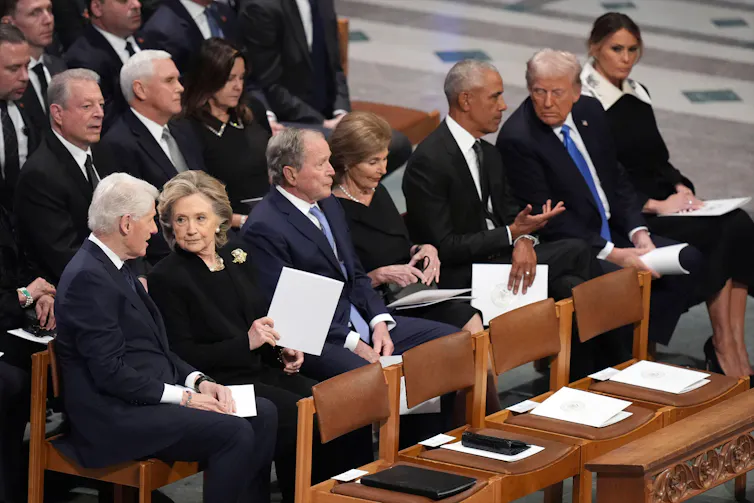
Donald Trump and former US presidents Barack Obama, George W. Bush and Bill Clinton with their wives at President Jimmy Carter's funeral in January 2025.

Donald Trump and former US presidents Barack Obama, George W. Bush and Bill Clinton with their wives at President Jimmy Carter’s funeral in January 2025. AP Photo/Jacquelyn Martin

Obama waited until he had officially stepped down before publicly concluding negotiations with Penguin Random House, taking the same pains as his predecessors to avoid the accusation of conflicting interests between his public service and private business.

Cashing in on the presidency?

No modern president has come close to Trump’s earnings, either while in office or after leaving.

In his first term Trump made attempts to differentiate his businessman persona from his new profession. Sean Spicer, his first White House press secretary, announced in 2017 that Trump was donating his first quarter earnings to the National Park service, a tradition he continued throughout his presidency. But he still amassed business revenues of US$2.4b – more than his predecessors by a considerable margin.

But even this could well be dwarfed by the amount of money Trump stands to make in his second term, if the first year is any guide. The 47th US president continues to argue that he follows the same path as other presidents and that his wealth is managed at arms’s length by external trusts and partnerships.

But the recent launch of Truth API – a paid-for data feed which gives access in “milliseconds” to posts on TruthSocial, a social media platform launched by Trump in February 2022 – has led to calls from his political opponents for the Securities and Exchange Commission to investigate. Posts by the president and other powerful people on the platform are known to move markets.

A recent poll by CNN has found that nearly two-thirds of Americans believe that Trump has gone too far in pursuing his personal business interests while serving as president. Whether this will hurt his party’s prospects in the midterm elections in November is yet to be seen. But what is clear is that the immense amount of money the US president has earned – and the power he wields over regulatory systems – now blurs the lines between public office and private business in a way that few other American leaders have.

US in a losing race to replenish depleted missile arsenals

0
us-in-a-losing-race-to-replenish-depleted-missile-arsenals
US in a losing race to replenish depleted missile arsenals

The US’s multibillion-dollar push to expand interceptor missile production could begin rebuilding depleted stocks, but long manufacturing lead times, industrial bottlenecks and cost imbalances mean the benefits will depend on how quickly new capacity translates into deployable missiles.

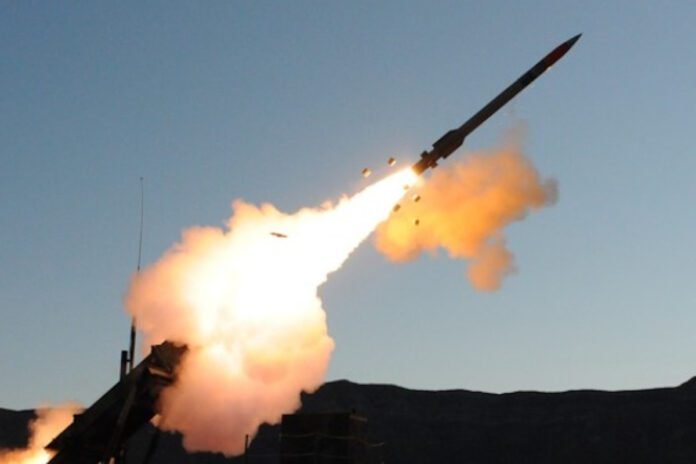
The US Department of Defense (DoD) signed framework agreements worth over US$3 billion with defense contractors Lockheed Martin and Northrop Grumman to expand production of Patriot and Terminal High Altitude Area Defense (THAAD) missile interceptor components, multiple media outlets reported.

The initiative aims to triple manufacturing capacity for Patriot Advanced Capability-3 (PAC-3) interceptors and quadruple output for THAAD systems, aligning with a long-term US DoD objective to procure nearly 14,000 interceptors.

The action addresses severe stockpile depletion caused by high operational tempo in conflicts across Ukraine and Iran, where estimates indicate the US military has expended up to two-thirds of its Patriot inventory and roughly half of its THAAD reserves.

To accelerate manufacturing, the US DoD is engaging directly with component suppliers rather than relying solely on prime contractors, establishing a secondary source for PAC-3 solid rocket motors, expanding ignition safety device production, and increasing output of THAAD mid-body shells, muzzle covers, and rail car assemblies.

By offering sustained demand signals and funding workforce and facility modernization, officials intend to reinforce supply chain resilience, correct lopsided economic expenditure—such as firing $4 million interceptors against $50,000 attack drones—and restore critical US air defense stockpiles.

The buildup’s real test, however, is whether US industry can replenish advanced interceptors fast enough to meet mounting demands across multiple theaters. The depletion of US interceptor stocks may also be driving renewed procurement of older, less capable models.

The War Zone (TWZ) reported in July 2026 that the US Army awarded Raytheon a $441.6 million contract modification to procure new-production PAC-2 Guidance Enhanced Missile-Tactical (GEM-T) Patriot interceptors, marking the military’s first domestic PAC-2 order in over three decades.

However, these older model interceptors may not be as effective as newer ones. For instance, the Kyiv Independent reported in May 2025 that PAC-2 missiles sent by Germany under US authorization to replenish depleted Ukrainian interceptor stocks are less effective against Russian ballistic missiles than the newer PAC-3 variant, citing an anonymous European diplomat.

A senior Ukrainian intelligence official, cited by the Kyiv Independent, speaking anonymously, said that even the PAC-3 cannot intercept Russia’s Oreshnik intermediate-range ballistic missile (IRBM).

According to the report, the PAC-3s are designed with “hit-to-kill” capability, meaning they destroy incoming missiles through direct physical collision rather than using an explosive warhead. It adds that PAC-3 interceptors are smaller, lighter, and more maneuverable, and a standard Patriot launcher can hold 16 PAC-3 interceptors, compared to just four PAC-2 rounds.

Declining interception rates over Ukraine illustrate how depleted stocks, larger salvos and increasingly sophisticated missiles are straining existing defenses. Benjamin Jensen and Yasir Atalan note in a July 2026 Center for Strategic and International Studies (CSIS) report that Ukraine’s interception rate against Russian ballistic missiles fell to just 10.6% in early 2026.

Jensen and Atalan note that despite Ukraine maintaining an 85% interception rate against one-way attack drones such as the Shahed, Russian ballistic missile salvos increased by 700% between 2023 and 2025, while Ukrainian interception success dropped by 36% in the same period. They warn that Russia may be poised to launch 840 ballistic missiles against Ukraine in 2026, leaving hundreds of targets vulnerable.

The situation may be similarly precarious in the Middle East, with the Wall Street Journal (WSJ) reporting in July 2026 that US President Donald Trump paused a planned two-week US air campaign against Iran to pursue diplomatic negotiations over the Strait of Hormuz and address dwindling air defense inventories, according to US officials.

According to WSJ, White House discussions highlighted severe stockpile depletion, with estimates indicating that over 1,500 Patriot interceptors have been expended, leaving fewer than 1,000 in US reserves.

The report cites General Dan Caine, US Joint Chiefs of Staff Chairman, who warned that the shortage increases operational risk, though Trump publicly denied munitions deficits. Beyond the Gulf states taking on increased risk, the threat may be felt even more acutely in Israel.

This month, The Telegraph reported that a leaked memo from General Alexus Grynkewich, US European Command (EUCOM) Commander, warned that the US risks being unable to defend Israel against Iranian missile attacks due to dwindling interceptor stockpiles and naval resource constraints.

Similar to Ukraine, Israel may be facing declining interception rates against Iranian drone and missile threats. Citing an anonymous Israeli intelligence official, TRT World reported this month that Israel’s air defense effectiveness against Iranian missile strikes fell sharply from nearly 90% to 65% over 24 hours.

The report highlights mounting strain on Israeli air defenses, driven by Iran deploying faster, high-precision projectiles — including multi-warhead missiles and heavy warheads carrying over a ton of explosives — that cut Israeli early warning times from ten minutes to six. It also adds that sustained Iranian retaliatory salvos challenge interception geometry and severely deplete critical interceptor stockpiles.

Beyond Eastern Europe and the Middle East, shortages of US interceptors could also impact the Pacific region. David Axe points out in a March 2026 article for The Strategist that China poses a much more significant missile threat than Iran.

He emphasizes that interceptors like THAAD and the SM-6 are among the best, and sometimes the only, defenses available against China’s advanced ballistic missiles.

Axe notes that before Operation Epic Fury, the US already had too few of its best interceptors to defend against a determined Chinese attack; now there are even fewer. He warns that Chinese leaders may attempt to seize Taiwan by force during the three- to four-year US replenishment period, when the gap between China’s offensive missile arsenal and US defensive interceptor stocks could be at its greatest.

But expanding US interceptor production will require far more than announcing higher output targets. Looking at the challenges in scaling up Patriot interceptor production, Macdonald Amoah and other authors mention in a May 2026 Foreign Policy Research Institute (FPRI) report that PAC-3 Missile Segment Enhancement (MSE) interceptors require long lead times — 24 months for missile assembly and 30 months for solid rocket motor curing — delaying emergency contract deliveries by years.

Amoah and others add that production throughput is further constrained by single-point sub-tier choke points, including Boeing’s solitary seeker plant in Huntsville and limited rocket motor production at L3Harris Aerojet Rocketdyne.

They also point out that erratic purchasing demand and complex supplier qualification processes have discouraged long-term capital investments in specialized tooling and workforce expansion, leaving manufacturers unable to scale assembly rapidly.

Unless the US can resolve its industrial bottlenecks faster than adversaries expand their missile arsenals, the coming replenishment gap will increasingly force it to ration air defense among Ukraine, Israel and the Indo-Pacific — turning interceptor scarcity into a strategic constraint on when and where it can intervene.

0FansLike
0FollowersFollow
0FollowersFollow
0SubscribersSubscribe
- Advertisement -
Google search engine

Recent Posts