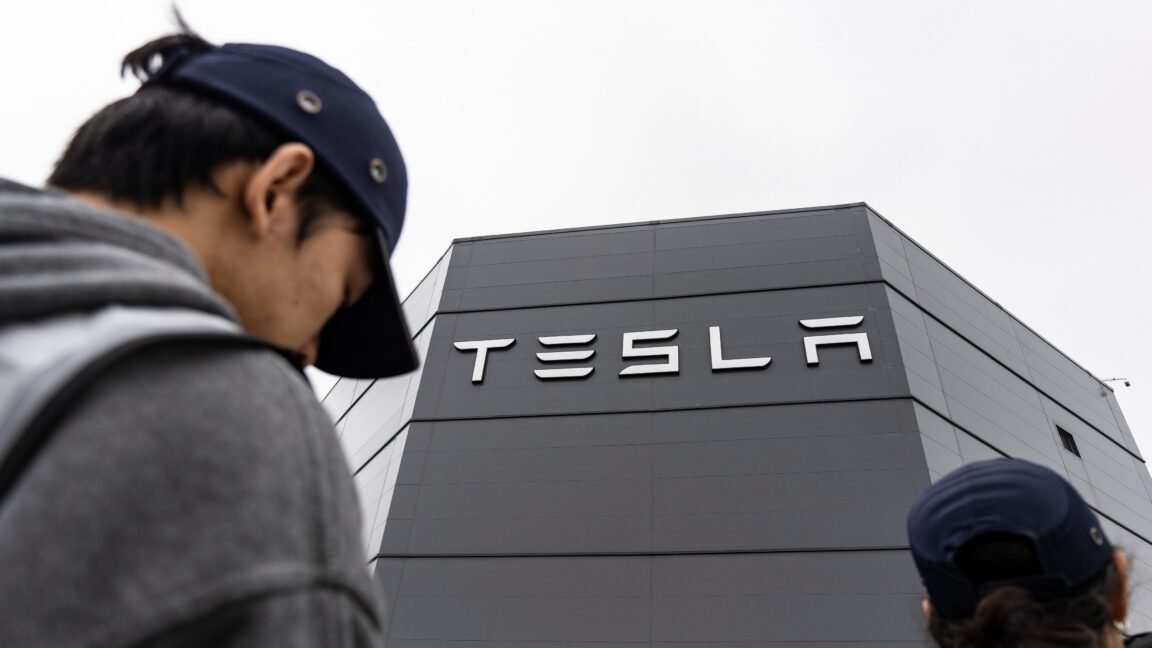
Tesla’s factory in Shanghai had its best June ever, according to the China Passenger Car Association. Tesla built 93,579 cars in China that month, a hefty 38 percent increase compared to June 2025, according to CPCA’s data. But that production isn’t translating into bumper sales to Chinese customers. Rather, sales have been down quarter on quarter in China for more than a year now, particularly as buyers tire of the Model 3 sedan.
Almost 40 percent of the EVs that Tesla built in June were destined for export. And in Q2 in total, more than 50 percent—just—of the cars it built were for Europe, Canada, and other Asian markets: 128,394 versus the 126,157 Chinese-built Teslas that were sold to Chinese buyers. Low labor costs compared to Germany or the US are a big boon here, as are cheaper components from local suppliers. Throw in some export-related tax rebates from the Chinese government, and it’s not hard to see how Tesla’s Shanghai plant is an extremely valuable asset.
Despite this seemingly critical importance to the automaker at a time when its profit margins are evaporating, Tesla may be contemplating a future without China. Last week, The Wall Street Journal reported that some Tesla executives have been tasked with separating Chinese and non-Chinese parts of the company, although Tesla denied such preparations were underway.
But Tesla has been working to reduce its dependency on China for the cars it sells in the US, which remains the company’s largest market. New US regulations banning Chinese-linked connected car software went into effect for model-year 2027, and a similar ban on Chinese-linked hardware comes into effect for model-year 2030, meaning cars that will be on US roads in two years. Tesla now no longer imports Chinese-made cars for sale in the US, and it has worked with its North American suppliers to make sure the components it buys don’t have unwanted Chinese origins.
Trade restrictions aren’t the reason for the potential divorce, however. Rather, the desire to join up with SpaceX is what is being cited as the driving force. Although SpaceX has started using excess Cybertrucks in its operations, the real desire behind such a marriage is access to investors. As Ars detailed earlier this summer, the S&P 500 index rejected a request by Elon Musk—CEO of both Tesla and SpaceX—to bend the rules (which require, among other things, four consecutive profitable quarters) for the rocket company.
Tesla, though, joined the S&P 500 back at the end of 2020, and if SpaceX merged with it, those efforts by S&P to keep SpaceX from passive investors will be for naught. (Both Tesla and SpaceX are down about 25 percent for the year to date, although obviously SpaceX’s year only began with its IPO in June.)
Such a merger would risk being blocked by the US government on national security grounds given the tens of billions of dollars of military contracts between SpaceX and the US government on the one hand, and Tesla’s Chinese operations on the other. Killing the golden goose doesn’t make sense if you think about it from the perspective of a company that wants to sell more cars profitably. But then, Tesla’s CEO does keep telling us that it’s not a car company anymore, doesn’t he?