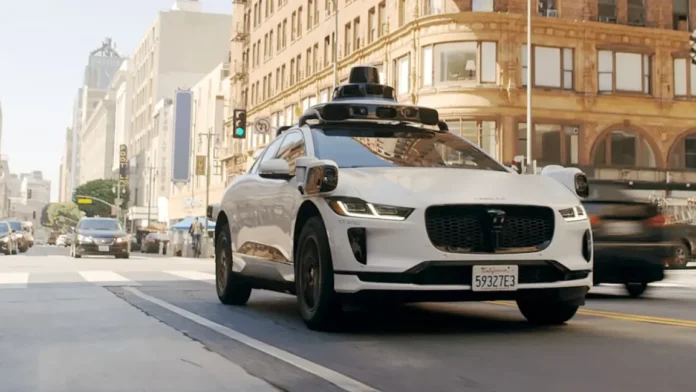
After noise complaints, judge orders Waymo to stop overnight charging in Santa Monica
A local judge has ruled that Waymo can no longer use its side-by-side charging facilities overnight in Santa Monica, California, as these may pose a “public nuisance.”
Los Angeles Superior Court Judge Bradley S. Phillips granted this week the City of Santa Monica’s motion for a preliminary injunction in the city’s ongoing public nuisance lawsuit against the autonomous vehicle giant.
City officials and neighbors assert that the constant stream of vehicles at the charging stations create light and sound pollution and cause undue traffic congestion on the streets and nearby alleys, creating a collective bother and disruption.
“The constant ‘beep beep beep’ sound as the autonomous vehicles back out of their spaces (in their own lots) is an incessant disturbance that hinders both our tranquillity during the day and our peace during the night,” wrote Christopher Potter, a man who says he lives right next to the lots.
Under the new order, Waymo is forbidden from operating the charging lots on Broadway at 12th and Euclid Streets between 11 pm and 6 am. The Broadway charging stations sit directly across the street from a private school. Apartment buildings and other residences are also nearby, and some residents have complained consistently for over a year.
With the order in place, neighbors already notice a difference.
“I took a walk around last night, and gosh, it’s amazing,” Dylan Moore told Ars. Moore lives down the block from these Waymo lots and previously created the WaymoProblems.org website. “You can hear the crickets, you can hear your thoughts, it’s not a fleet of locusts descending on the neighborhood, it’s incredible.”
Another neighbor, who wished to remain anonymous for fear of reprisal and described himself as a “night owl,” said that he is thrilled that Waymo has abided by the court order.
“At 2 am when the bars let out, that’s when [they had been] full bore,” he said. “My apartment faces Broadway. The sound of the Waymos, yes, but the acceleration and deceleration sound that EVs have, makes it sounds like you have Tron outside your window. It [was] one after another!”
Santa Monica leadership also trumpeted the success.
“Our residents’ ability to sleep peacefully in their own homes is not negotiable,” Mayor Caroline Torosis said in a statement. “This ruling affirms what our neighbors have been telling us for more than a year, and it delivers relief while the case moves forward.”
Waymo has appealed the ruling. It did not immediately respond to questions from Ars Technica.
Waymo began using these charging facilities in January 2025. After numerous complaints and an online petition, the City of Santa Monica ordered the company to halt overnight operations. It eventually sued Waymo over the issue in November 2025 in a case that is still ongoing. (Waymo has also counter-sued.)
The next court hearing in the case is scheduled for October 2026.
Updated on August 1 to note that Waymo has appealed this ruling.
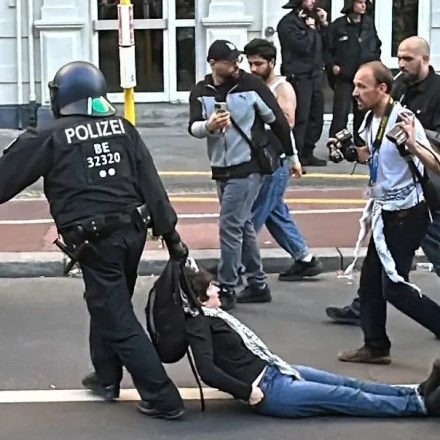
Dem Frontmann der britischen Punk-Rap-Band Bob Vylan wurde aufgrund seiner pro-palästinensischen Aussagen unlängst die Einreise nach Deutschland verweigert. Er wurde am Berliner Flughafen festgehalten und schließlich zurück nach England abgeschoben.
Die Bundespolizei begründete die Einreiseverweigerung des Sängers am 15. Juni mit seinem Auftritt beim Glastonbury Festival im vergangenen Jahr, wo er den Sprechchor „Death, death to the IDF“ („Tod, Tod der IDF“ – der israelischen Armee) angestimmt hatte.
Ende Juli hoben die Behörden das Einreiseverbot gegen den Sänger, der mit bürgerlichem Namen Pascal Robinson-Foster heißt, in einem entsprechenden Schreiben wieder auf, verweigerten jedoch jede Auskunft darüber, warum die Maßnahme aufgehoben wurde; oder wie die Entscheidung über das Einreiseverbot zustande gekommen war.
Die polizeiliche Akte zu Robinson-Foster, die The Intercept vorliegt, wirft ihm vor, antisemitische Narrative und Hamas-Propaganda zu verbreiten, die zur „Radikalisierung einzelner Bevölkerungsgruppen“ beitragen und terroristischen Gruppen oder Einzelpersonen als „ideologische Begründung“ dienen könne.
Zudem heißt es, Robinson-Foster stelle „eine Gefahr für die öffentliche Sicherheit und Ordnung“ in Deutschland dar. Seine Einreise würde dem internationalen Ansehen sowie der Glaubwürdigkeit der Bundesrepublik „erheblichen Schaden“ zufügen; dadurch entstünde der Eindruck, Deutschland unternehme keine Anstrengungen, „den propagierten Antisemitismus und dazugehörige Aufrufe zur Gewalt, insbesondere grenzüberschreitend, zu unterbinden“.
Detaillierte Fragen zu dem inzwischen aufgehobenen Einreiseverbot beantwortete die Bundespolizei nicht. Sie berief sich dabei auf Belange der öffentlichen Sicherheit und Datenschutz. Auf einen Fragenkatalog zum Entscheidungsprozess hinter der Einreiseverweigerung, ihrer Rechtsgrundlage, zu beteiligten Behörden sowie zu den Gründen der Aufhebung der Einreiseverweigerung erklärte Bundespolizei-Sprecher Nikolai Jaletzke gegenüber The Intercept, man äußere sich nicht zu Gefährdungsbewertungen, operativen Maßnahmen oder Abstimmungsprozessen zwischen Behörden.
„Zu behaupten, ich würde eine Gefahr für die nationale Sicherheit Deutschlands darstellen, ist schlicht absurd“, sagte Robinson-Foster The Intercept. „Genauso absurd ist die Behauptung, wir würden Propaganda im Namen irgendeiner verbotenen Organisation verbreiten.“
Bob Vylans Auftritt beim Glastonbury Festival sorgte weltweit für Aufmerksamkeit. Er kam zu einem Zeitpunkt, als immer mehr Kulturschaffende begannen, sich öffentlich gegen die Zerstörung Gazas durch Israel auszusprechen. Der Auftritt – insbesondere der Sprechchor „Death, death to the IDF“ – wurde von Politiker, darunter dem damaligen britischen Premierminister Keir Starmer, sowie von mehreren pro-israelischen jüdischen Organisationen scharf verurteilt. Der Antisemitismusbeauftragte der Bundesregierung Felix Klein bezeichnete den Auftritt als „Hass und Hetze“ und rief Konzert- und Festival-Veranstalter in Deutschland dazu auf, Bob Vylans Konzerte abzusagen.
Kurz nach dem Glastonbury-Auftritt waren Robinson-Foster und seinem Bandkollegen Wade Laurence George Visa für ihre Einreise in die USA entzogen worden. Deutschland ist jedoch das erste Land, das einem Mitglied der Band die Einreise verweigert und ihn abgeschoben hat.
Die The Intercept vorliegenden Dokumente betreffen ausschließlich die Umsetzung des Einreiseverbots – nicht den dahinter liegenden Entscheidungsprozess. „Unsere Position ist simpel“, sagte Alexander Gorski – der deutsche Anwalt, der Robinson-Foster vertritt. „Es gibt ein verfassungsmäßiges Recht darauf, die Akte zu kennen, auf deren Grundlage eine solche Entscheidung getroffen wird.“
Nach Robinson-Fosters Abschiebung stellte Gorski beim Bundespolizeipräsidium Potsdam einen Antrag auf Löschung der Einreisesperre aus dem Nationalregister sowie auf Einsicht in die zugrundeliegenden Akten. Kurze Zeit später hob die Bundespolizei das Einreiseverbot wieder auf – ohne jedoch zu erklären, warum. In dem zweiseitigen Schreiben, das The Intercept ebenfalls vorliegt, heißt es lediglich, dass dem Antrag stattgegeben wird und keine weitergehenden Informationen erteilt werden könnten.
„Natürlich ist es gut, dass das Einreiseverbot aufgehoben wurde“, sagte Gorski The Intercept. „Aus rechtsstaatlicher Sicht ist es jedoch hochproblematisch, wenn jemand wegen einer politischen Äußerung, die keinen Straftatbestand erfüllt, an der Einreise gehindert wird – und ihm anschließend noch der Zugang zu den zugrunde liegenden Akten verweigert wird.“
Gorski legte daraufhin formell Widerspruch ein, um Einsicht in interne Akten zu erhalten, die zur Verhängung des Einreiseverbots führten. Robinson-Foster habe ein Recht darauf zu erfahren, auf welcher rechtlichen Grundlage ihm die Einreise nach Deutschland verweigert wurde. Nicht nur, um die Rechtmäßigkeit des Vorgangs überprüfen zu können – sondern auch, um zu verstehen, welches Verhalten die deutschen Behörden zukünftig als Grundlage für eine Einreiseverweigerung ansehen.
„Wenn ein Künstler sich an das Gesetz halten will, muss er wissen, was die Regeln sind“, so Gorski.
Bislang ist unklar, wie es dazu kam, dass ein britischer Musiker, dem weder in England noch in Deutschland eine Straftat zur Last gelegt wird, von deutschen Behörden als Gefahr für die öffentliche Sicherheit eingestuft wurde. Die britische Polizei hatte entsprechende Ermittlungen zu Bob Vylans Glastonbury-Auftritt Ende letzten Jahres eingestellt und erklärt, es gebe „keine ausreichenden Beweise für eine realistische Aussicht auf eine Verurteilung“.
„Es fehlt nicht an Beweisen, es fehlt an einer Straftat“, sagte Robinson-Foster gegenüber The Intercept. „Die BBC hat den Auftritt übertragen. Man kann ihn sich einfach ansehen.“
Für Gorski steht der Fall paradigmatisch für einen grundlegenden Wandel im Umgang mit deutschem Migrationsrecht gegenüber pro-palästinensischen Stimmen. Letztes Jahr hatte das Land Berlin Abschiebeverfahren gegen vier ausländische Staatsangehörige eingeleitet, die sich an Protesten gegen Israels genozidalen Krieg in Gaza beteiligt hatten.
Gorski argumentiert, die deutschen Behörden würden das Migrationsrecht verstärkt dazu nutzen, um „unerwünschte Stimmen zum Schweigen zu bringen“, indem etwa Kritiker Israels die Einreise verweigern wird – oder indem sie des Landes verweisen werden. Ähnliche Bedenken äußerte zuletzt auch Thomas Oberhäuser, Vorsitzender im Geschäftsführenden Ausschuss der Arbeitsgemeinschaft Migrationsrecht im Deutschen Anwaltverein. Auch Oberhäuser sieht Anzeichen dafür, dass das Migrationsrecht in Deutschland zunehmend für politische Zwecke eingesetzt wird.
Gorski verwies im Gespräch auf frühere Fälle, etwa den Fall des britisch-palästinensischen Chirurgen Ghassan Abu Sitta sowie den Fall des ehemaligen griechischen Finanzministers Yanis Varoufakis. Gorski hat beide in vergleichbaren Verfahren vertreten. In beiden Fällen hatten deutsche Behörden versucht, ihre Einreise zu verhindern, um ihre Teilnahme an pro-palästinensischen Veranstaltungen zu unterbinden.
Robinson-Foster sagte gegenüber The Intercept, er sei im Juni privat nach Deutschland gereist. Er habe vor der Veröffentlichung des neuen Albums der Band Freunde und Musikerkollegen besuchen wollen. Bob Vylan tourte in den letzten Jahren mehrfach auch in Deutschland. Obwohl die deutschen Behörden das Einreiseverbot jetzt aufgehoben haben, habe der Vorfall „eine Büchse der Pandora geöffnet“.
„Es scheint, als hätte die Einreiseverweigerung in Deutschland dazu geführt, dass wir bei der Einreise in andere Länder nun immer wieder Probleme bekommen“, berichtete Robinson-Foster. Seit seiner Abschiebung seien sowohl er als auch sein Bandkollege bei Einreisen in andere EU-Länder mehrfach intensiv befragt worden. In einem Fall hätten belgische Grenzbeamte den Schlagzeuger der Band zu dem Vorfall in Deutschland befragt – obwohl dieser selbst nicht nach Deutschland eingereist sei.
„Wir möchten weiterhin Konzerte in Deutschland spielen“, sagte Robinson-Foster. „Wir sind in den letzten fünf Jahren regelmäßig auf Tour dort gewesen. Es wäre wirklich bitter, wenn wir den Kontakt zu den Menschen verlieren, die uns dort unterstützen.“
This story was originally published by Inside Climate Newsand is reproduced here as part of the Climate Desk collaboration.
For generations, summer in Montana has meant long days outdoors. Children spent afternoons riding bicycles through quiet neighborhoods, swimming in lakes and rivers, hiking forest trails, and playing baseball past sunset. Families planned camping trips months in advance, double-checking that they had all the fishing, paddling, and tenting gear they needed to sleep in cool mountain air under clear skies.
Today, many parents instead check the Environmental Protection Agency’s Air Quality Index before deciding whether their children can play outside at all.
As wildfire season becomes longer and more severe across the American West, smoky skies have become an increasingly familiar part of summer. In Montana, where wildfire has always been part of the landscape, summer now includes days or even weeks when children are advised to stay indoors because the air outside is unhealthy.
Scientists have documented the growing health risks of wildfire smoke, particularly for children whose lungs are still developing.
But pediatricians and researchers say the consequences extend beyond children’s lungs. A 2024 UNICEF report found that wildfire smoke affects not only children’s respiratory health but also their learning, mental well-being, and opportunities for play, warning that repeated smoke exposure can shape childhood in lasting ways.
school buildings should function in a changing climate.
“I remember being stuck inside because of the smoke,” said Melody Irvine, who grew up in western Montana with asthma.
During smoky summers, outdoor activities that many children took for granted often disappeared for Irvine. Today, as a student at the University of Montana studying environmental science and social work, Irvine sees those childhood memories differently.
“When I was younger, it felt like something unusual,” she said. “Now it seems like smoky summers are becoming expected.”
A threat to physical, mental, and emotional development
Smoke’s shift from an occasional disruption to a recurring part of childhood is increasingly drawing the attention of public health experts.
“Kids typically spend more time outdoors, and they’re usually running around, increasing their breathing rate and their exposure to wildfire smoke,” said Kerri Mueller, an air quality specialist with the Missoula City-County Health Department.
Smoke exposure can trigger headaches, itchy eyes, sore throats, coughing, wheezing, and asthma flare-ups, while repeated exposure may reduce lung function.
Wildfire smoke contains tiny particles known as PM2.5, which can travel deep into the lungs and enter the bloodstream. Studies in the Journal of Exposure Science & Environmental Epidemiology have linked exposure to wildfire smoke with asthma attacks, respiratory infections, and emergency department visits, particularly among children.
Lori Byron, a pediatrician and chair of the nonprofit Montana Health and Climate. “We also know much more now about particulate matter from wildfire smoke. Those particles can get into our brains and even reach unborn babies.”
“We’re only beginning to understand the full extent of the harm they can cause,” said Byron.
Although Montana lacks statewide pediatric hospitalization data linking wildfire smoke directly to children’s illnesses, pediatricians say they routinely see more children with asthma attacks and other respiratory problems during smoke events. National studies show increases in emergency department visits among children during periods of heavy wildfire smoke, Byron said.
During smoke season, many parents begin each morning by checking not only the weather forecast but also the Air Quality Index, which can determine not only if their children can play outside, but if it is safe to open the windows to cool their home.
Read Next
When wildfire smoke blankets a community for days or weeks, childhood routines begin to disappear. Soccer practices are canceled. Playgrounds sit empty. Summer camps move indoors or suspend programming. Even simple activities like walking a dog or riding a bicycle become difficult when air quality reaches unhealthy levels.
Such outdoor play is not a luxury, according to experts, but essential to healthy child development. Running across a field, playing with friends, climbing trees, or just loitering outdoors are far more than physical exercise for children, a September 2018 study from the American Academy of Pediatrics reported. These experiences build social skills, confidence, emotional resilience and overall, well-being. Mental health experts say repeated disruptions to those routines can also leave children feeling apprehensive and uncertain.
For children, repeated cancellations and long periods indoors can create more than disappointment. When familiar routines, social activities, and opportunities for independent play repeatedly disappear, children may begin to feel that their environment is unpredictable or unsafe. Experts say that loss of stability can heighten stress, particularly for younger children who may not fully understand why smoke keeps disrupting their lives.
A 2023 report in Current Psychiatry Reports found that children exposed to wildfire disasters are at greater risk of anxiety, stress, depression and post-traumatic stress symptoms, underscoring that the impacts of wildfires extend well beyond physical illness.
Read Next
The emotional disruption of repeatedly losing normal childhood experiences may leave effects as lasting as the asthma attacks and respiratory problems pediatricians routinely see during smoke events, Byron said.
And while the interruptions may be temporary, experts say their repeated incidence can lead their effects to accumulate over time.
A recent brief from Harvard University’s Center on the Developing Child argues that repeated smoke exposure during early childhood can affect the environments and experiences that shape children’s brain development, learning and emotional well-being.
“Kids don’t understand why the world suddenly isn’t stable or why they can’t do what was planned,” Byron said. “It kind of undermines a child’s faith in the world.”
Family pressures
Wildfire smoke also leaves parents dealing with new concerns.
“The summer I was pregnant with my daughter was especially hot and smoky,” said Sarah Lundquist, executive director of Montana-based nonprofit Families for a Livable Climate. “After experiencing heat-related fainting spells, we bought portable air conditioners and air purifiers just to keep our home safe. That experience has stayed with me. Now, as a mother of two young children, I check the air quality almost every day before deciding whether it’s safe for them to play outside. Something as simple and joyful as an afternoon at the park has become a health calculation.”
Children sense their parents’ anxiety, psychologists note, and often begin to feel less secure themselves.
Window air-conditioning units are seen at a Missoula County Public Schools building on June 25. Mosabber Hossain/Inside Climate News
Parents often have to rearrange work schedules, cancel summer plans, and keep children indoors for days at a time. As familiar routines disappear, families are left trying to substitute indoor activities that cannot fully replicate children’s need for exercise, social interaction, and unstructured play.
“Wildfire smoke really throws a wrench into families’ lives,” Byron said.
Pediatric experts say indoor activities can help pass the time, easing the stress both the children and their parents feel, but they cannot fully replace the physical, social, and developmental benefits of outdoor play.
While research directly linking wildfire smoke to increased screen time remains limited, many families say digital devices become children’s primary source of entertainment when smoke keeps them indoors. And while computers, tablets, and smartphones might provide some distraction when a smoke wave keeps kids housebound, they may also compound the mental and emotional challenges the lack of time outside is already imposing.
A 2022 systematic review and meta-analysis published in JAMA Psychiatry found that greater screen time was associated with more anxiety, depression, attention problems, and other behavioral difficulties in children.
Ann Bates, a Missoula resident who occasionally works as a volunteer with children at a summer camp and does fundraising for children’s programs, believes governments need to do more to protect young people from the growing impacts of wildfire smoke.
“I’m a mother, so I know how stressful wildfire days can be,” she said. “I was always checking on my daughter wondering what she was doing and how she would get to and from school safely. She is in college now, but when I see young children struggling at school because of the smoke, sometimes with tears in their eyes, it breaks my heart. It makes me cry because they shouldn’t have to grow up like this.”
Smoked out schools
Smoke has become a routine consideration in Missoula County Public Schools during late summer and early fall, facilities director Burley McWilliams said in an interview, and keeping outdoor smoke from entering school buildings is far more difficult than many people realize.
High schools, for example, serve hundreds of students who move between classrooms, cafeterias, and outdoor spaces. Doors open constantly throughout the day, allowing smoke to enter even when ventilation systems are operating.
“Our high school has about 1,200 students,” McWilliams said. “They’re going in and out of the building all day long. Every time those doors open, smoke comes inside.”
Heat compounds the challenge.
Read Next
Many Montana schools were constructed decades ago, before prolonged heat waves became common. As temperatures rise, classrooms without air-conditioning become increasingly difficult to cool, particularly if smoke outside prevents opening windows, affecting both students and teachers.
A study of California public schools found that between 2002 and 2019, wildfire and smoke accounted for nearly two-thirds of all weather-related school closure days. After the Los Angeles wildfires of January 2025, school closures, relocations, and poor air quality disrupted learning for more than 700,000 students for months.
Researchers at Stanford University have also found that wildfire smoke can reduce students’ academic performance, suggesting that the educational costs of smoke extend well beyond the days when schools are forced to close.
Many educators must now consider wildfire smoke in their plans for instruction, student health and school operations.
As hotter summers, longer wildfire seasons, and more frequent smoke events become an expected part of life in western Montana, schools are increasingly being designed to protect children’s health during climate emergencies by keeping classrooms cool during heat waves, filtering smoke-filled air and, when necessary, serving as clean-air shelters for surrounding communities.
That reality has inspired Montana’s Climate Ready Schools initiative. Missoula County Public Schools is working together with partner organizations to redesign schools so they can better withstand the challenges of a changing climate.
The plans include upgraded HVAC systems, HEPA air filtration, more shaded playgrounds, and energy-efficient buildings.
CIS, an environmental and climate resilience infrastructure company, is primarily doing the planning, technical assistance, community engagement, and resilience design for the initiative.
“School buildings must now be designed with climate change in mind,” said Sarah Dobie, a project manager with CIS.
Funding, however, remains an obstacle. “Making just three schools climate-resilient is expected to cost about $30 million, an investment that is difficult for most local school districts to afford,” she said.
That leaves most families on their own to figure out how to live with smoke as increasingly hazy skies become a normal part of childhood.
Hundreds protest in Sweden’s Stockholm against Israeli attacks on Gaza, West Bank
Hundreds gather to protest against Israeli attacks on Gaza and West Bank and call for a ceasefire, in Stockholm, Sweden on August 01, 2026. [Atila Altuntaş – Anadolu Agency]
Hundreds of people gathered in the Swedish capital Stockholm on Saturday to protest Israeli attacks on the Gaza Strip and the occupied West Bank, Anadolu reports.
The demonstration, held at Odenplan Square, called for an immediate ceasefire.
Carrying Palestinian flags, demonstrators marched with banners reading “There is a massacre in Palestine,” “There is genocide in Gaza,” and “Immediate permanent ceasefire for Gaza.”
Israeli Knesset member Ofer Cassif addressed the rally via video link, criticizing the Israeli government’s policies toward Palestinians.
Citing Israeli philosopher and scientist Yeshayahu Leibowitz, Cassif said the scholar had warned that when a state elevates military power and territorial expansion above all else, it risks moral collapse.
Leibowitz also warned that such a mindset could give rise to what he called “Jewish Nazism,” Cassif said.
“Today, the mass destruction, dispossession and massacres suffered by Palestinians unfortunately demonstrate the accuracy of that warning,” he added.
Here’s how engineers plan to save the satellite sent to save NASA’s Swift mission
One week ago, more than 200 miles above the Earth, a refrigerator-size satellite making its way toward an attempted rescue of NASA’s $500 million Swift gamma-ray observatory suddenly spun out of control.
It didn’t look good. The spacecraft, named Link, was rotating on multiple axes, rendering it unable to maintain a reliable communications link with the ground and complicating efforts to arrest the spin. Two of the satellite’s three reaction wheels, used for pointing, also stopped working. Through sporadic radio contact, engineers discovered a problem with some of the spacecraft’s cold gas thrusters used for finer attitude control.
The Link satellite is built, owned, and operated by Katalyst Space Technologies, a satellite servicing startup that won a $30 million contract from NASA to fly up to the Swift observatory, grab onto it, and boost its orbit before succumbing to aerodynamic drag and burning up int he atmosphere.
The clock is ticking. In a few months, Swift will be too low for Katalyst to complete the rescue. This is the first time NASA has contracted with a commercial company to service one of its satellites. The space agency gave Katalyst less than a year to put the mission together. The Link satellite launched July 3 to begin the pursuit of Swift, and the mission proceeded mostly according to plan until last Saturday.
“When this happened, it was during one of the passes without comms,” said Ghonhee Lee, CEO of Katalyst, said in an interview with Ars. “We were, immediately prior, in a very stable configuration.”
Katalyst’s ground team, working from a control center near Denver, hurried to find a fix and recover the Link satellite. The good news was the spacecraft’s other systems remained healthy, including its power supply, three xenon-fueled electric thrusters, and the rendezvous and robotics hardware the Link satellite needs to capture Swift.
Keeping at it
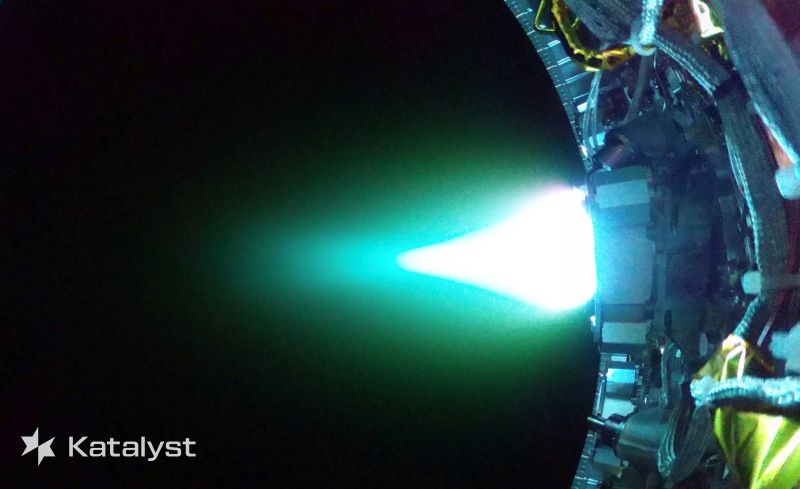
Ars spoke with Lee, Katalyst’s chief executive, on Friday afternoon as the company’s ground team worked to stabilize the spacecraft. The first step involves using the satellite’s plasma engines to gradually slow the spin. The engines are primarily designed for orbit-raising, but they’re also suitable for attitude control because they can vector their thrust with a two-axis gimbal.
Link’s electric propulsion system is efficient but low in thrust, meaning it takes time to generate enough of an impulse to regain full control of the satellite’s pointing.
“We’ve been able to use the thrusters to point in the opposite direction of the rotation rate and affect the attitude control that way, which has been highly effective,” Lee said.
This has worked well so far. As of Friday, the spacecraft had cut its spin rate in half, from about 9 degrees per second to approximately 4 degrees per second. Officials hope to further reduce the spin rate, allowing Katalyst to improve communications with the spacecraft.
“Once we are in a more stable configuration, with much more high-bandwidth comms, we’ll be able to use that to downlink all the rich data (about the condition of the spacecraft),” Lee said. “We do know the states of the reaction wheels and the thrusters and things like that. So our GNC team—guidance, navigation, and control team—has been very hard at work with NASA, essentially remapping all of the control algorithms to be able to have an updated controller ready to go for when we are able to stabilize the spacecraft.”
A plume of plasma exhaust coming from one of the Link satellite’s xenon-fueled electric engines.
Credit: Katalyst Space Technologies
A plume of plasma exhaust coming from one of the Link satellite’s xenon-fueled electric engines. Credit: Katalyst Space Technologies
Katalyst may eventually be able to recover the satellite’s two inoperable reaction wheels, but the team’s priority is restoring control by uplinking a new algorithm to manage its orientation through a combination of its one remaining reaction wheel and thrusters.
Engineers aren’t sure yet what caused the emergency with the Link spacecraft last weekend. It could have been an internal problem with the satellite or a collision with space junk. Lee said two cameras on the satellite will look for signs of damage after ground teams stabilize it.
Whatever the cause, Katalyst’s mission control team lost contact with Link for more than 24 hours after it spun out of control. The satellite then automatically reset itself, just as it was supposed to do.
“This was built-in fault protection logic saying, “Hey, if I haven’t heard from anybody in 24 hours, there must be something wrong. I’m going to toggle the power, turn it on and off again,’” Lee said. “It’s just built in. However, that shutdown mode is ungraceful. It basically pulls the plug on everything, and that creates some downstream effects for sensitive systems such as the reaction wheels.
“Basically, there was a big thermal spike that came about as a result of this that over-temperatured the upstream electronic circuits that control the reaction wheels, which ultimately led them to being inoperable,” Lee said.
The problem with the spacecraft’s cold gas thrusters seems to be a “separate issue,” Lee said. But engineers don’t have all the data in hand to make a final determination.
“These things all happened at once, so it’s hard to delineate between what contributed to creating the situation and what was the consequence of the situation, and that’s something we’ll have to investigate with all the data,” Lee said.
Nevertheless, Lee said Katalyst still aims to move Link toward NASA’s Swift observatory, perhaps around the end of August.
“We’re very committed to pursuing this mission,” Lee said. “We’re working side by side with NASA. I just came from a technical working meeting with their controls team, where we’re reviewing the algorithms. It seems like there’s nothing that is preventing us from reestablishing three-axis control of the spacecraft with the remaining reaction wheel, with the remaining thrusters, as well as the electric propulsion.
“It’s not the original mode that we expected to control the spacecraft with, but it seems like we will have sufficient stability and controllability of the spacecraft,” Lee said. “With this, we believe we’ll be able to do the rendezvous with Swift. We believe that we’ll be able to go and do things like the inspection of Swift within a close approach of a few dozen meters. And as it stands right now, we have not made a formal assessment, but we believe that a capture of Swift, an attempted capture of Swift, is very much in the cards.”
Wildfires can generate tornadoes, lightning and other extreme weather, sometimes miles from the flames
We often think about weather controlling wildfires: dry air, heat, wind and lightning help determine when fires start and how quickly they spread.
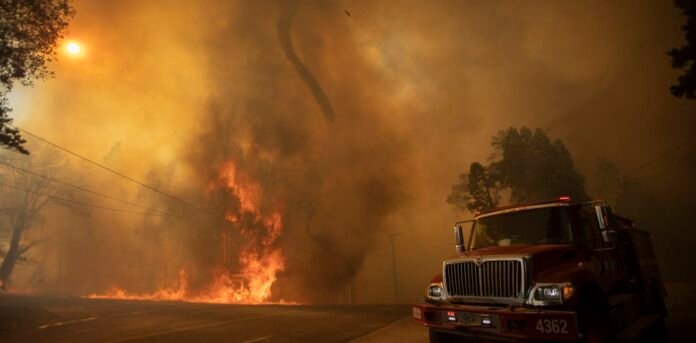
However, once a wildfire becomes intense enough, the relationship can flip. Instead of simply responding to the weather, the fire begins to create its own weather.
I study wildfires and air quality at the University of Texas at Arlington. Here are four key ways wildfires influence the weather around them:
1. Updrafts and fire tornadoes
Wildfires release a large amount of heat. As the air above the flames heats up rapidly, it becomes lighter than the surrounding air. As a result, the warm air rises.
The process is very similar to how a typical tornado forms, though fire tornadoes tend to be smaller and, because they feed off the heat, confined to the fire area.
As water vapor condenses, it releases additional heat, making the rising air even more buoyant. If the fire is intense enough and the atmosphere is unstable, the cloud can continue expanding upward into the upper troposphere. It may eventually develop into a pyrocumulonimbus cloud – a thunderstorm generated by the fire itself.
3. Fire-generated lightning
As the pyrocumulus cloud rises above the point in the atmosphere where the air temperature drops below freezing, cloud droplets begin to freeze, producing ice crystals, supercooled water droplets and graupel – a soft version of hail.
Collisions among these particles separate positive and negative electric charges within the cloud. Over time, the charge imbalance becomes strong enough to produce lightning.
Some of these lightning strikes can ignite new fires beyond the original fire perimeter, making firefighters’ jobs even harder.
Lightning is a frequent cause of wildfires. Wildfire smoke can fuel storm clouds that generate more lightning, which can start new fires.AFP via Getty Images
In late July 2026, a severe wildfire near Saumos in southwestern France became intense enough to generate a pyrocumulonimbus cloud. Lightning from the storm ignited new fires outside the original burn area, allowing the fire to spread beyond its initial blaze.
4. Smoke can change weather downwind
Wildfire smoke can also affect weather far from the flames. Smoke can travel hundreds or even thousands of miles. Along the way, it can influence how clouds form and how lightning develops.
Smoke contains large numbers of tiny particles. These particles act as seeds on which water vapor condenses to form cloud droplets. Scientists call these seeds cloud condensation nuclei. When wildfire smoke arrives over a region, it increases the number of cloud condensation nuclei in the atmosphere. As a result, the same amount of water is divided among many more cloud droplets, making each droplet smaller.
Smaller droplets take longer to merge into raindrops, which can delay rainfall or shift it to another location downwind. This is one reason why forecasting precipitation becomes more challenging during major wildfire events.
A pyrocumulus cloud builds over the Gold Mountain Fire on July 26, 2026, in western Colorado. Sláinte Farms.
Scientists have also found that wildfire smoke can alter lightning patterns in downwind thunderstorms.
Positive lightning is more powerful and damaging than negative lightning. It carries larger electrical currents, lasts longer and releases more energy. As a result, it is more likely to ignite new wildfires and can pose greater risks to people and infrastructure.
In some smoke-affected thunderstorms, positive flashes accounted for more than 40% of all cloud-to-ground lightning. In the most extreme cases, the fraction exceeded 90%, meaning that nearly all cloud-to-ground lightning was positively charged.
Living with fire and its consequences
The next time wildfire smoke turns the sky hazy, remember that the smoke is not simply drifting through the atmosphere – it is becoming part of the atmosphere.
Wildfires and their smoke can shape clouds, rainfall and lightning in ways we are only beginning to understand. As large wildfires become more frequent, living with them will require more than fighting fires. We must also learn to anticipate and adapt to their far-reaching effects on air quality, health and even the weather.
Review: Yes, we’re still arguing about Nolan’s The Odyssey
Christopher Nolan’s The Odyssey has been a lightning rod for controversy ever since the first casting and design reveals, igniting afresh with each new trailer. The film has garnered plenty of well-deserved accolades (and earnings) since its release, and yet somehow the debates rage on between classicists and the general public alike—all this over an adaptation of an epic poem that’s been around since roughly the 8th century BCE.
My take: the IMAX scale might be epic, but Nolan gives the story an intimate feel, weaving a captivating, nearly three-hour cinematic spell. While the magic slowly starts to dissipate once one leaves the theater, the powerful imagery will resonate for days. And the film gave me, personally, a fresh perspective on the central character of Odysseus.
(Spoilers below.)
Most of us read some version of The Odyssey in high school, so we’re familiar with the story: Odysseus (Matt Damon), legendary Greek king of Ithaca, begins the long journey home after 10 years of fighting in the Trojan War. But the journey does not go smoothly, as Odysseus and his men encounter the cyclops Polyphemus (Bill Irwin), the Sirens, and an enchantress named Circe (Samantha Morton), among other obstacles. Meanwhile, his long-suffering wife, Penelope (Anne Hathaway), is warding off hundreds of suitors eager to usurp Odysseus’ throne back home. And the wandering king’s son and heir, Telemachus (Tom Holland), is convinced his father is still alive and sets off to find him.
Nolan sets the tone by opening with a bard (Travis Scott) beginning to tell the tale of the fall of Troy—at least the idealized heroic version that the bard’s audiences are hungry to hear. It’s not meant to reproduce ancient Greek oratory tradition, just to evoke some sense of it, and the device is surprisingly effective.
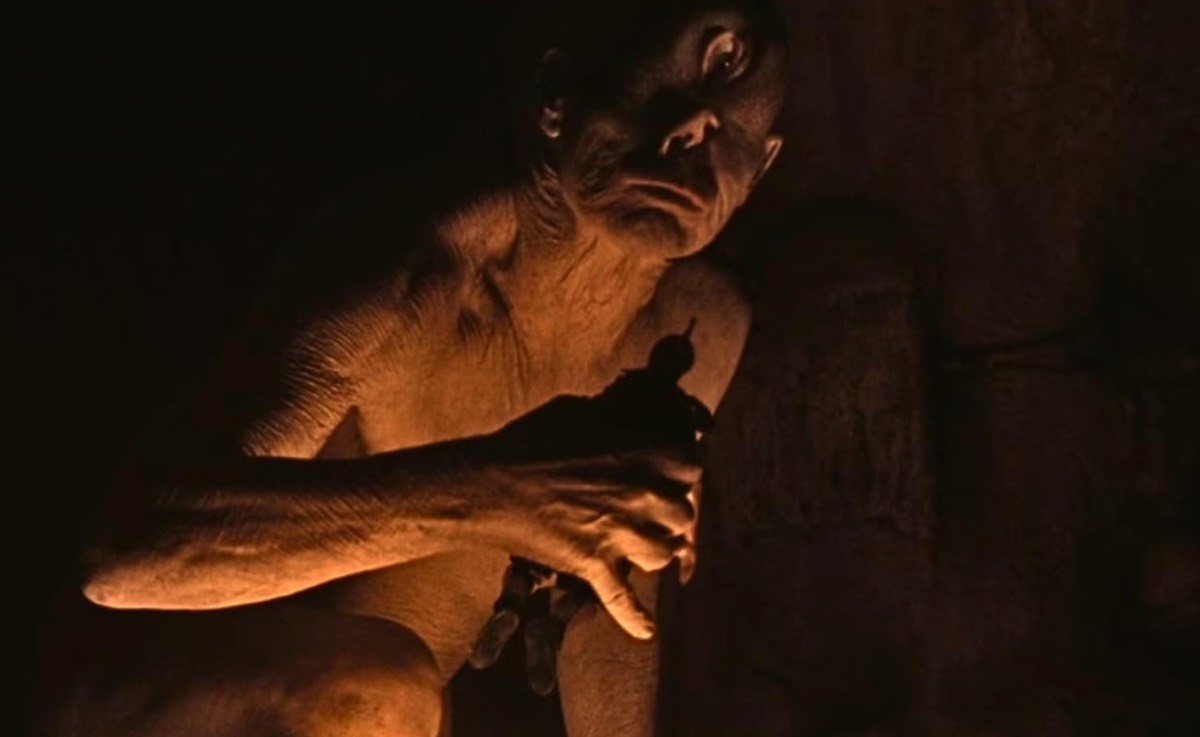
The director has also preserved Homer’s nonlinear narrative structure, with tales nesting within tales. His depiction of Odysseus is that of a seemingly broken man slowly regaining his fractured memories of the Trojan war and its aftermath in bits and pieces, after spending years under the intoxicating effects of the lotus fruit with Calypso (Charlize Theron) on the island of Ogygia. What has he tried so hard to forget, and why? What difficult truth must he finally face before he can find his way home at last?
Fractured memories
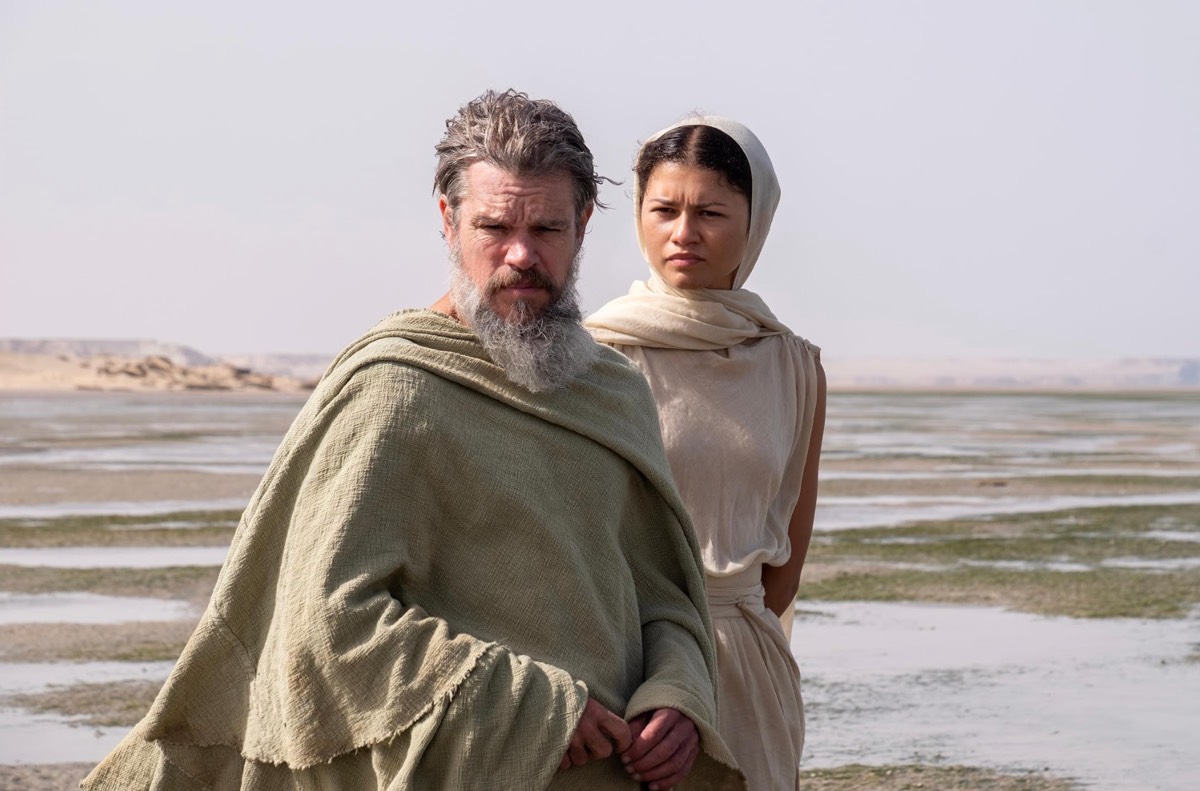
Athena (Zendaya) represents the personal reckoning Odysseus (Matt Damon) seeks to avoid.
Universal Pictures
Athena (Zendaya) represents the personal reckoning Odysseus (Matt Damon) seeks to avoid. Universal Pictures
Odysseus has spent years high on lotus fruit as Calypso’s (Charlize Theron) lover.
Universal Pictures
Odysseus has spent years high on lotus fruit as Calypso’s (Charlize Theron) lover. Universal Pictures
Athena (Zendaya) represents the personal reckoning Odysseus (Matt Damon) seeks to avoid. Universal Pictures
Odysseus has spent years high on lotus fruit as Calypso’s (Charlize Theron) lover. Universal Pictures
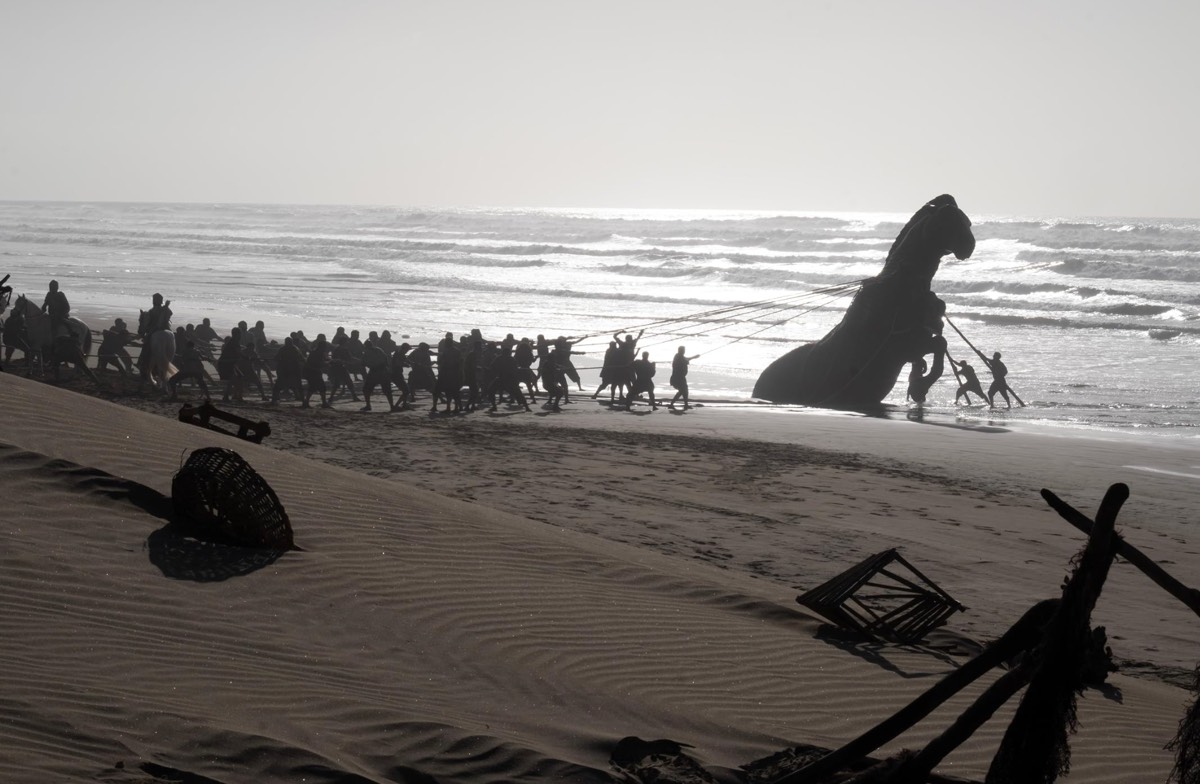
The infamous Trojan horse.
Universal Pictures
The infamous Trojan horse. Universal Pictures
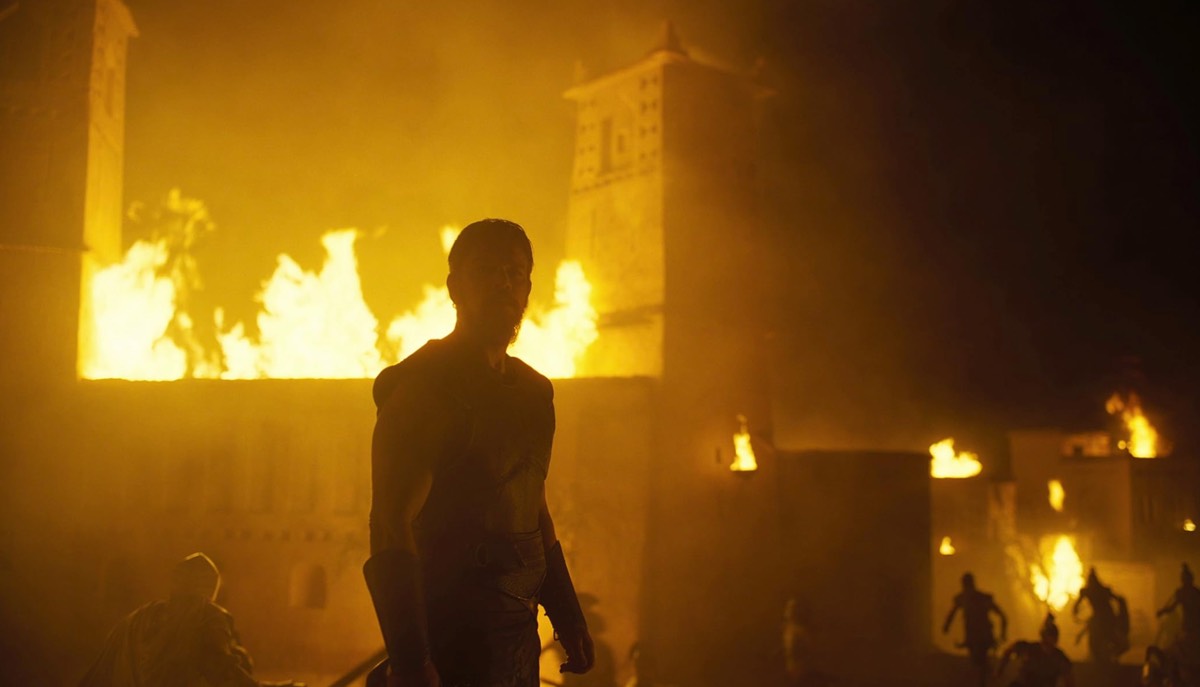
“The broken wall, the burning roof and tower/ And Agamemnon dead.”
Universal Pictures
“The broken wall, the burning roof and tower/ And Agamemnon dead.” Universal Pictures
The infamous Trojan horse. Universal Pictures
“The broken wall, the burning roof and tower/ And Agamemnon dead.” Universal Pictures
We only get the briefest of flashbacks at first, little more than fleeting impressions, because the Ithacan king can’t yet face his memories whole. As the film progresses, we gradually cycle through increasingly detailed memories of what transpired before Odysseus washed up alone on Calypso’s island—the sole survivor among all his men. It all builds up to a powerful moment of self-revelation with Penelope, where he finally admits that his long absence was driven in part by his stricken conscience at the horror his cleverness had unleashed on Troy.
This approach gives the audience a sense of what Odysseus is experiencing, but it also led to complaints that Nolan had wasted his talented cast of major Hollywood stars. Theron’s Calypso gets just a few minutes of screen time. Ditto Lupita Nyong’o in her dual role as Helen of Troy and Clytemnestra; Jon Bernthal’s Menelaus; and Benny Safdie’s Agamemnon, among others. It’s true that Nolan presumes his audience is familiar with Homer’s epic poem and hence many of these characters primarily exist in the margins of Odysseus’ memories. But minutes of screen time are not necessarily indicative of the relative importance of any given role to Nolan’s vision.
For instance, Zendaya’s Athena only appears to Odysseus in brief dream-like sequences, but those moments are critical. As he regains his memories, her mood shifts from calm neutrality to sadness, disappointment, disapproval, and ultimately to horrified grief as the invading Greek army chops off the head of her statue in a Trojan temple—along with the head of a young Trojan woman with Athena’s face. Athena represents the personal reckoning Odysseus is so loath to face.
Similarly, Elliot Page is only in a couple of small scenes as Sinon, a character who doesn’t even appear in Homer’s Odyssey; his story can be found in Virgil’s Aeneid. He’s the soldier left behind with the Trojan horse, whose lies convince the Trojan army to bring this “gift” to honor Athena into the walled city. Nolan has retooled the character into an innocent victim, unaware of Odysseus’ scheme, who nonetheless gives his life for it. His accusatory shadow shows up when Odysseus and his men travel to the underworld to consult with the blind prophet Tiresias (James Remar)—yet another example of the human toll exacted for violating “Zeus’s law” of hospitality in order to end the siege and win the war.
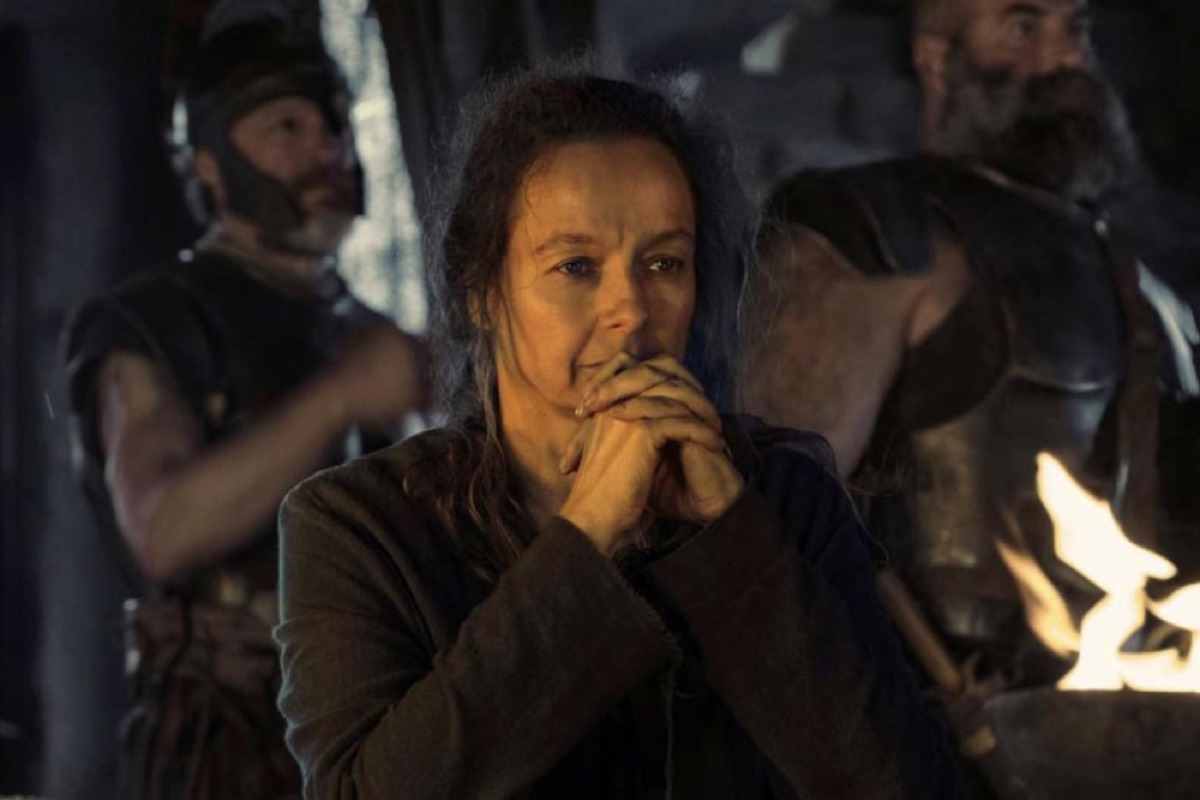
Nobody makes more of their limited screentime than Samantha Morton as the sorceress Circe in one of the film’s most powerful sequences. Once again, Nolan has reinvented the character to fit his themes. This is not the beautiful creature who seduces Odysseus in the poem. This Circe has suffered terribly at the hands of men; she turns Odysseus’ men into pigs because to her, they are swine wearing human masks. We don’t need to know all the gory details of what happened to Circe (and her sister), the trauma that fuels her rage and thirst for vengeance. We see the effects etched into every microexpression on her ravaged face.
The Odyssey has garnered both critical and audience raves and has already topped $700 million at the box office—more than enough to cover its $250 million production budget and surpassing Oppenheimer‘s entire haul. It’s going to be nominated for tons of Oscars and will likely win several, both for technical achievement and for the many terrific performances—especially Morton, Damon, Hathaway, Holland, and Robert Pattinson’s deliciously villainous suitor, Antinous. So another backlash was inevitable.
A scholar weighs in
The manufactured online trolling/culture war campaign that preceded the film’s release isn’t even worth the electronic space to rebut. The Odyssey‘s dominance at the box office is rebuttal enough. But then classicist Emily Wilson—no stranger to controversy as the author of a much praised and also unjustly maligned translation of Homer’s epic poem—decided to stir the waters by penning her own harsh critique of the film for the London Review of Books. Nolan quoted the opening line of Wilson’s translation in a couple of interviews—“Tell me about a complicated man”—so I guess she felt compelled to weigh in.
Penelope (Anne Hathaway) fends off a horde of greedy suitors.
Universal Pictures
Penelope (Anne Hathaway) fends off a horde of greedy suitors. Universal Pictures
Telemachus (Tom Holland) is determined to find his father Odysseus.
Universal Pictures
Telemachus (Tom Holland) is determined to find his father Odysseus. Universal Pictures
Penelope (Anne Hathaway) fends off a horde of greedy suitors. Universal Pictures
Telemachus (Tom Holland) is determined to find his father Odysseus. Universal Pictures
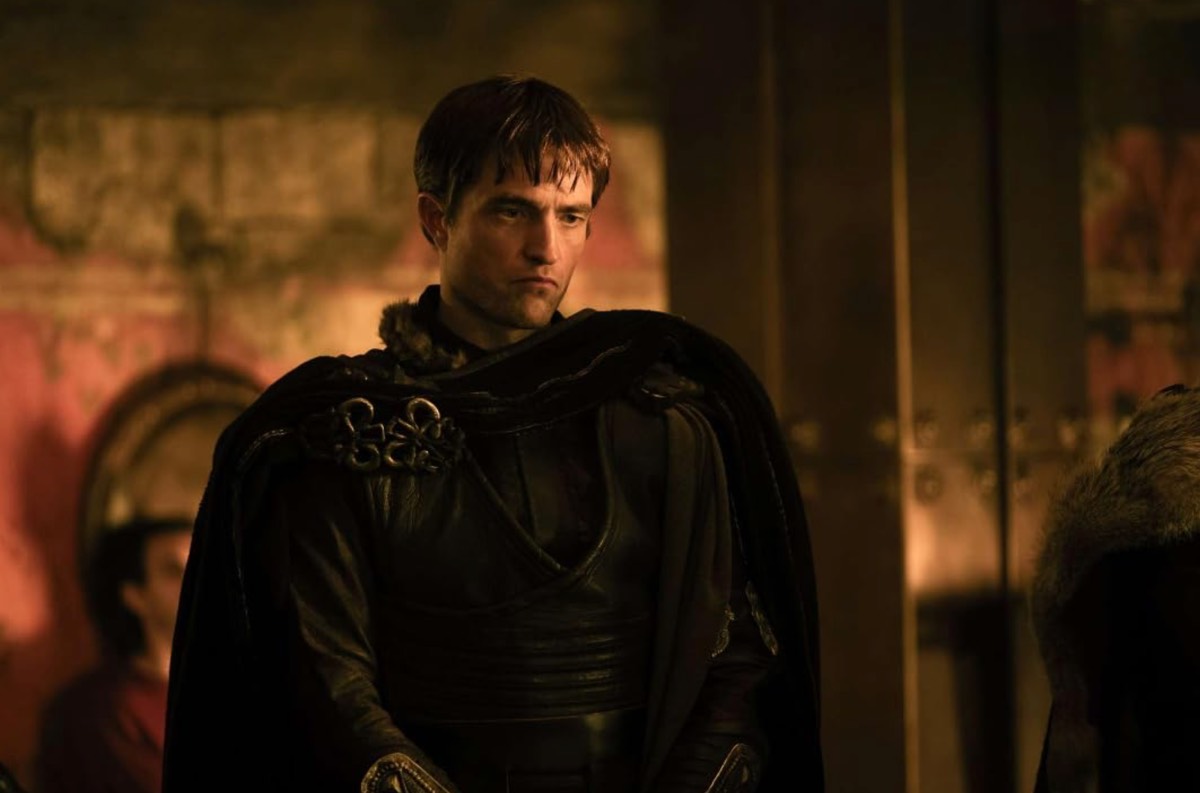
Nobody does smirking villainy better than Robert Pattinson as Antinous, Penelope’s craftiest suitor
Universal Pictures
Nobody does smirking villainy better than Robert Pattinson as Antinous, Penelope’s craftiest suitor Universal Pictures
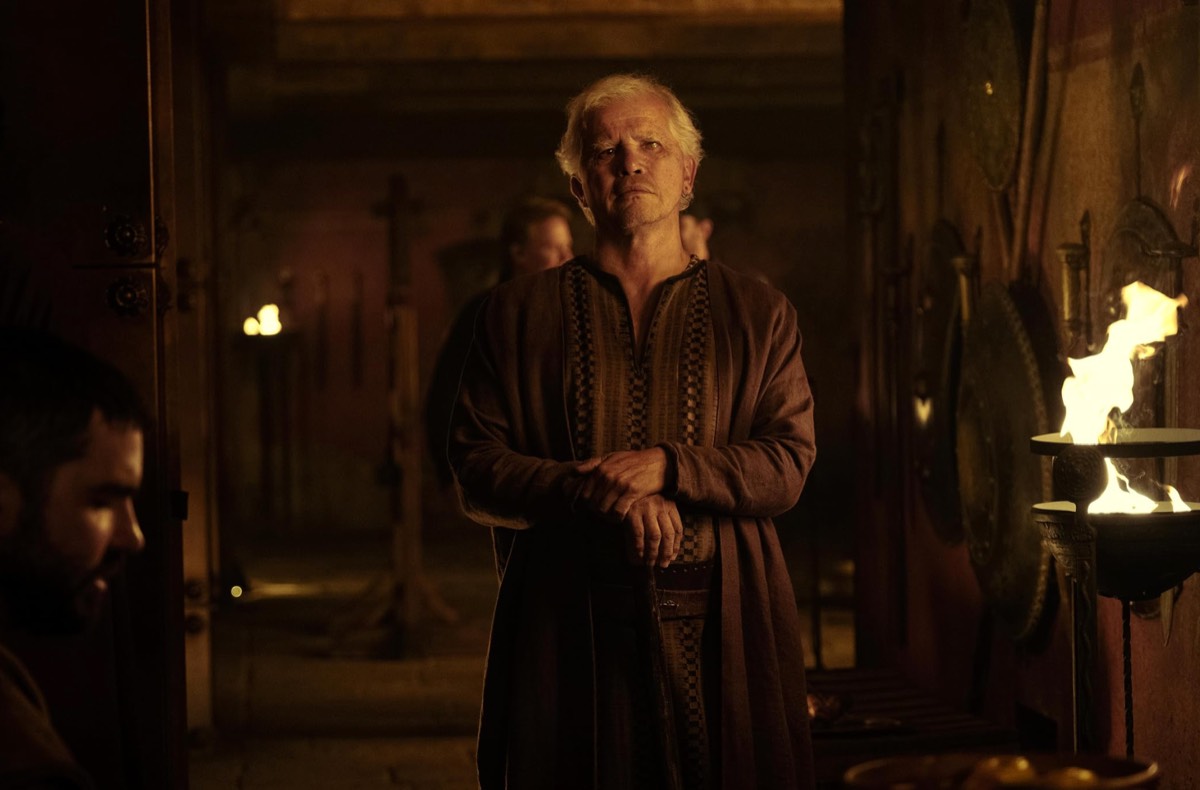
John Leguizamo plays the blind swine herd and faithful servant Eumaeus
Universal Pictures
John Leguizamo plays the blind swine herd and faithful servant Eumaeus Universal Pictures
Nobody does smirking villainy better than Robert Pattinson as Antinous, Penelope’s craftiest suitor Universal Pictures
John Leguizamo plays the blind swine herd and faithful servant Eumaeus Universal Pictures
My issue is not that Wilson didn’t like the film; nobody is required to like it. And Wilson wields her poison pen with great skill. Her essay is the quintessential death by a thousand withering cuts that is a noxious hallmark of academia. Even her more complimentary remarks are pointedly condescending. I’m sure Nolan is sobbing all the way to bank. But for all her throat-clearing assurances that she wanted to assess Nolan’s film on its merits and the director’s artistic intent, Wilson fails spectacularly to do so.
Consider her main critiques. She’s bothered by the fact that the film “centers” Odysseus’ point of view—it’s literally called The Odyssey—and dismisses the race-neutral casting not because it’s “woke” but because the non-white cast members are just playing variations on the “Black best friend.” (To her credit, Wilson did walk back that ill-advised line on BlueSky.) She both criticizes the film’s “implicit values” as being inconsistent with the mores of Homer’s original poem, and dings Nolan for not explicitly showing that war is bad, and for not giving us the perspective of the victims of the fall of Troy, which she deems essential for “any serious depiction of violence.”
Wilson is further disappointed by the lack of sex scenes, given that Odysseus had affairs with both Circe and Calypso during his wanderings, and by the fact that many of the female roles are relegated to the sidelines. She’s unhappy that the gods don’t play a larger role, as they do in Homer’s original poem. This was a deliberate choice by Nolan; he has said that he wanted to humanize the gods and convey supernatural events primarily through natural phenomena that would once have been considered evidence of divine influence on human events. If one claims to be assessing the film in part on Nolan’s artistic intent, it’s strange not to acknowledge that intent.
There’s more. Wilson hates the dialogue. (“I would be ashamed to have written any part of this script.”) And she criticizes Nolan’s “unethical” decision to film part of the movie in Western Sahara, an occupied territory where there has been much violence against the indigenous people. This may be a valid critique, but it has nothing to do with an objective assessment of the film.
The best praise Wilson can muster is that the film is “not boring” and a “family-friendly audiovisual spectacle” that her teenagers really enjoyed. (Implication: only young or unsophisticated audiences could possibly like this film.) And for some reason she seems to think it’s an escapist action movie with exploding vehicles. Perhaps she wandered into a screening of Motor City by mistake.
If Nolan’s Odyssey is so simplistic and shallow and fleetingly forgettable as Wilson claims, why are we still arguing so passionately about it? Why did she pen that entire essay?
A timeless story
Wilson is among our foremost classical scholars and has likely forgotten more about Homer’s works than most of us ever knew. But Nolan is a creator, not a scholar. He did not set out to make a historically accurate, 100 percent faithful adaptation of The Odyssey. He created his own contemporary remix of a foundational text through the lens of his favorite personal themes. He succeeded brilliantly, even if the film falls shy of masterpiece status.
The cyclops Polyphemus snacks on a few of Odysseus’s men.
Universal Pictures
The cyclops Polyphemus snacks on a few of Odysseus’s men. Universal Pictures
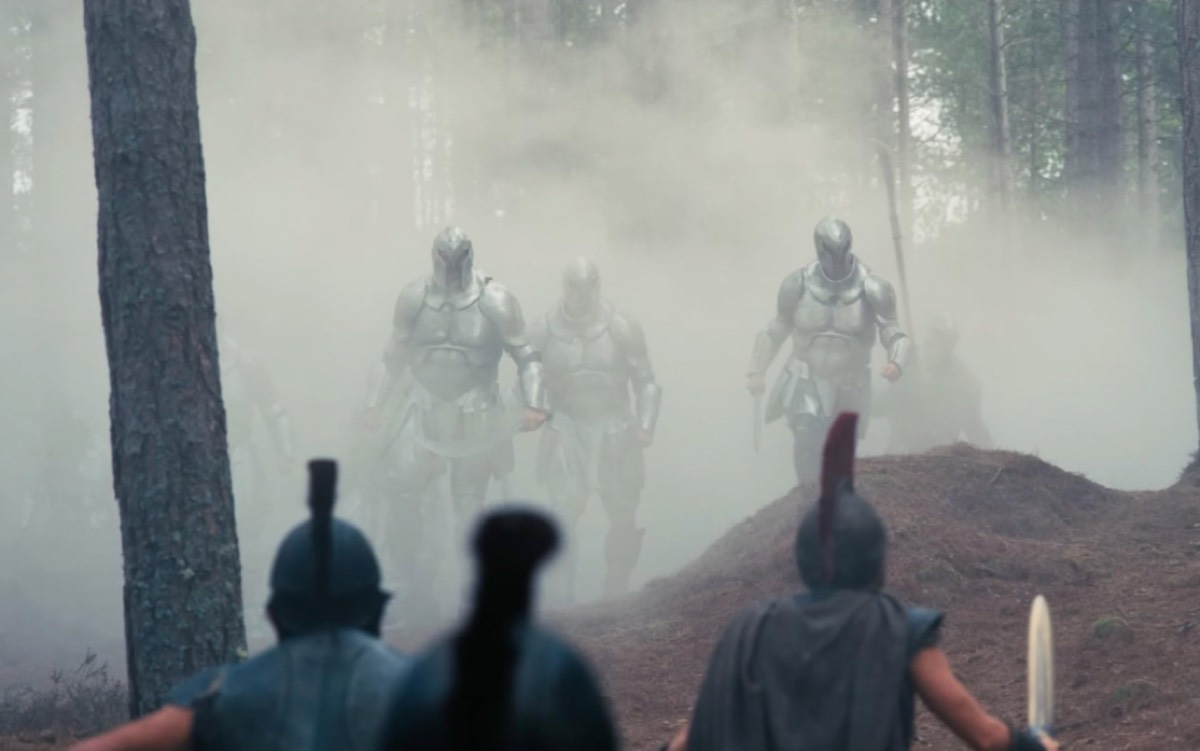
Odysseus and his crew encounter the giant Laestrygonians on the island of Aeaea.
Universal Pictures
Odysseus and his crew encounter the giant Laestrygonians on the island of Aeaea. Universal Pictures
The cyclops Polyphemus snacks on a few of Odysseus’s men. Universal Pictures
Odysseus and his crew encounter the giant Laestrygonians on the island of Aeaea. Universal Pictures
Samantha Morton’s Circe is one of the film’s most memorable performances
Universal Pictures
Samantha Morton’s Circe is one of the film’s most memorable performances Universal Pictures
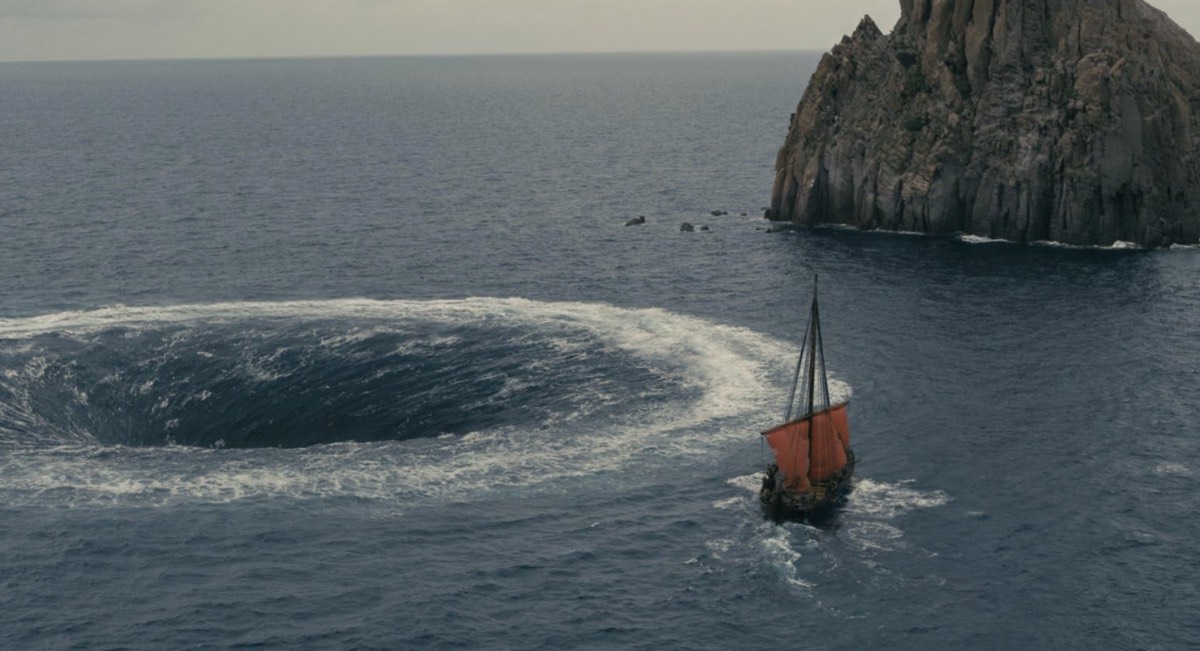
Caught between the Scylla and the Charybdis.
Universal Pictures
Caught between the Scylla and the Charybdis. Universal Pictures
Samantha Morton’s Circe is one of the film’s most memorable performances Universal Pictures
Caught between the Scylla and the Charybdis. Universal Pictures
Is the dialogue a bit clunky? Sometimes, but if bad dialogue were enough to sink a film, Star Wars: A New Hope would have bombed at the box office and fallen into oblivion, instead of becoming the cultural touchstone it is today. It’s true that there are a lot of untethered big ideas wafting about Nolan’s dreamily impressionistic take on Homer, but Wilson is simply incorrect that the film lacks “solid specific human experience.” And while Nolan clumsily tries to shoehorn a Message For Our Times in at the end, his Odyssey nonetheless provides a fresh take on the core myth and reminds us anew why Homer’s epic deserves its place in the literary pantheon.
Ultimately that’s what every translator does, Wilson included, whose translation uses iambic pentameter rather than Greek dactylic hexameter, among other innovations. They put their personal stamp on it. Every translation requires its own tradeoffs, reflecting the unique choices of the individual, which in turn are driven by their own values and perspective. (As I was writing this, both novelist Joyce Carl Oates and Wilson’s fellow classicist, Theo Nash, made a similar point, which merely demonstrates how patently obvious it is.) Wilson claims to understand this, but her essay undercuts it repeatedly.
It’s abundantly clear that Wilson simply doesn’t like Nolan’s style as a director, specifically calling out his “usual combination of grandiosity and superficiality.” That’s fair enough. At the end of the day, Nolan’s gonna be Nolan, and if you disliked Oppenheimer, Tenet, Inception, etc., this probably isn’t The Odyssey for you.
There is no such thing as the One True Take on Homer’s Odyssey. The core myth transcends any specific place and time. So each incarnation finds its own imperfect truth in this enduring tale, yielding different insights into the characters, their choices, their motivations. One can appreciate one without diminishing the others—and ideally find something to savor in all. Nolan’s The Odyssey very much deserves to take its place among them.
The Odyssey is now playing in theaters. It’s definitely worth seeing in IMAX if you can.
Penélope Cruz has opened up about a frightening health scare that left her convinced she might be facing death.
The 52-year-old Spanish actress revealed she was once told doctors had detected a possible brain aneurysm while she was in the middle of filming The Black Ball.
The alarming news came just before Cruz was scheduled to shoot nighttime scenes in costume as a cabaret singer.
“We’re about to go out. I was putting on my wig, and they said, ‘Oh, apparently you have some brain aneurysm,’” Cruz recalled during an appearance at the Cannes Film Festival.
The Oscar-winning star admitted the shocking warning immediately sent her mind to the worst possible place.
“I thought I was about to die,” she said. “This is something that was totally surreal in my life.”
Despite the terrifying discovery, Cruz was eventually medically cleared to continue working. The actress said the experience left her feeling as though simply being able to move forward was a miracle.
“I thought, ‘It’s a total miracle. I have to, I must have this in me,’” she said.
Cruz also praised the film’s production team for supporting her as she tried to process the devastating possibility while continuing to perform.
“You experience these things together, yet despite all this, despite the hardship, you can move forward in life,” she said.
Thankfully, the suspected aneurysm turned out to be a false alarm.
“I have had many scares like that,” Cruz recently revealed. “Fortunately, I’m fine. It was a false alarm.”
Still, the ordeal appears to have permanently changed how the Vanilla Sky actress thinks about her health.
Cruz, who shares 15-year-old son Leo and 12-year-old daughter Luna with her husband, No Country for Old Men star Javier Bardem, said she now makes taking care of herself a major priority.
“I worry about staying healthy, taking care of myself,” she said. “I don’t drink, I don’t smoke, I really don’t party.”
“Without health, we have nothing.”
The actress has also become increasingly outspoken about the lack of medical research and funding devoted to health conditions that primarily affect women.
“It’s shocking that over decades, we’ve stuck to the same information about how women’s bodies work,” Cruz said.
“Look at funding for investigation into any illness that affects only women — we don’t get even half the investment. It is a level of control or suppression.”
Cruz, who won the Academy Award for Best Supporting Actress in 2009 for her role in Woody Allen’s Vicky Cristina Barcelona, said the frightening experience served as a powerful reminder that even the biggest Hollywood stars are not protected from sudden health scares.
Although she ultimately received good news, the actress admitted those terrifying moments left her deeply shaken — and more determined than ever to protect her health.
The internet had a field day last summer when a picture surfaced of Sen. Josh Hawley, R-Mo., with his arm around a former Democratic member of Congress.
Hawley was at an event in St. Louis, Missouri, celebrating the inclusion of expanded funds for victims of nuclear radiation in President Donald Trump’s signature economic bill. In the photo, the far-right Republican smiled down on former Rep. Cori Bush, D-Mo., who had worked with him on the measure, as he embraced her.
Bush was no longer in Congress at the time. She was ousted from her St. Louis seat in a Democratic primary the summer before, after facing more than $18 million in spending from outside groups, including the super PAC for the American Israel Public Affairs Committee.
Bush’s AIPAC-backed replacement, Rep. Wesley Bell, stood in the background of the photo, off to the side.
“Cori, thank you,” Hawleysaid. “We would not be here without you and your work.”
It was a rare show of camaraderie between two officials who rarely saw eye to eye. Bush previously called for Hawley’s removal from office in 2021 and said he had blood on his hands after making a show of solidarity with rioters who attacked the Capitol on January 6.
“One thing that we both respect is fight,” Bush told The Intercept.
“The community came to me and said, ‘Cori, where is our fighter?’”
Though they might disagree on a swathe of other issues, they worked together to deliver the package because it was something they both believed in. Bush said the acknowledgment from Hawley was an honor, particularly because she was no longer in Congress when the bill was finalized. Zero Democrats in the House voted for the bill, though Bell said he supported the provision.
“He decided that he wouldn’t forget about me,” Bush said. “And he said that with the current congressman standing behind him. He didn’t acknowledge him.”
Asked recently about the event, Bellsaid: “I never take it offensively when Josh Hawley does not give me credit.” (Bell’s campaign did not respond to a request for comment.)
Beyond sparking internet memes speculating that there had been a romantic bent to their embrace, the event and the subsequent photo distilled the heart of Bush’s argument in her campaign to win back her seat on Tuesday in a rematch against Bell.
Bush told The Intercept this cycle is completely different from her last race.
“This cycle, the momentum met me,” she said. “The community asked me to run. The community came to me and said, ‘Cori, where is our fighter?’”
Two Paths From Ferguson
In many ways, the protracted fight between Bell and Bush started long before either of them ran for Congress.
It was the summer of 2014. Bush was working as a nurse and a pastor. Bell had just lost his first campaign for a seat on the St. Louis County Council.
Four days after Bell lost the race, a Ferguson police officer shot and killed 18-year-old Michael Brown Jr. Protests erupted that would rock the city and launch a nationwide movement against police brutality and overpolicing in Black communities.
Bush drove to Ferguson on the second night of demonstrations. She provided mental health support to people in the community. Her work in Ferguson and her ascendance in the Black Lives Matter movement would eventually lead her to run for federal office.
At the time, Bell was an assistant professor of criminal justice at St. Louis Community College, in addition to gigs as a municipal judge and a prosecutor. After he lost his 2014 race in St. Louis, Bell soon set to work on his next campaign for another council seat. This time, though, Bell ran in Ferguson in the city’s first election since Brown’s killing.
Ferguson was a majority-Black city with a largely white government, and Bell, the son of a police officer, was at the time one of four Black candidates running to reshape the city council. One supporter compared him to former President Barack Obama and speculated that he might eventually make it to Congress.
Bell would eventually do just that, though perhaps not in the way some of his supporters envisioned it. Bell moved from the Ferguson City Council to the office of the top prosecutor in St. Louis County, campaigning as a reformer and toppling the three-decade incumbent who’dfailed to indict Brown’s killer. Hetransformed the prosecutor’s office, ending cash bail for misdemeanors and launching a unit dedicated to reviewing wrongful convictions and addressingpolice abuse.
Four years later, Bell launched a primary to unseat Bush. He initially ran for Senate in Missouri, but saw an opening to take on the incumbent after she introduced a resolution for a ceasefire in Israel’s assault on Gaza shortly after the October 7 attacks. Two weeks after the legislation was introduced, Bell dropped his Senate bid and announced his campaign against Bush.
It soon looked like Bell had made a sound political judgment. The pro-Israel lobby made Bush one of their top targets, with AIPAC pouring more than $8 million into the race, and Bell vanquished her in the primary.
Before resigning from office to enter Congress in 2025, one of his last acts as a prosecutor wasslapping Ferguson protesters with felony charges.
Grassroots Energy
In a Democratic primary cycle that’s been largely defined by frustration with incumbents, Bell is aligned with two political forces that the party’s base increasingly views as enemies. He’s an incumbent with AIPAC on his side — though the group has invested just a fraction of its 2024 spending, with its super PAC United Democracy Project putting more than $3 million into the race this July.
One thing Bell does not have is Bush’s grassroots army. Though he’s far outraised Bush and has outside spending in his corner, Bush is buoyed by organizers with the St. Louis chapter of Democratic Socialists of America. The group, of which Bush is a member, has helped power insurgent candidates and topple incumbents from New York to Colorado this cycle. She also has endorsements from the progressive group Justice Democrats, Sen. Bernie Sanders, I-Vt., and Rep. Rashida Tlaib, D-Mich. (Bush told The Intercept she has not spoken to her former Squad colleague, Rep. Alexandria Ocasio-Cortez, D-N.Y.)
Facing that insurgency from below, Bell, who previously challenged Bush to televised debates, has not shown up to a series of candidate forums, frustrating Democratic organizers who say they rearranged schedules to accommodate him. One of the only polls in the race, released this spring, showed Bell just 4 percentage points ahead of Bush, with 17 percent undecided.
“A lot of people have buyer’s remorse.”
After being saturated with negative ads and mail from AIPAC and other groups that spent on the 2024 primary, St. Louis residents are slightly more prepared this time around, said organizers backing Bush’s campaign, including Jessica Montgomery, co-chair of the St. Louis DSA chapter. Montgomery said she joined DSA in 2021 because of her experience volunteering on Bush’s 2020 campaign, when she toppled a half-century political dynasty on her second attempt at the seat.
“A lot of people have buyer’s remorse,” Montgomery said. “Wesley Bell was selling himself to be a certain way, and now that he’s been in office, I don’t think he’s lived up to what he was selling people.”
Even with those factors on her side, Bush is still facing headwinds.
There’s the obvious problem: She lost her last primary.
She’s also facing a recently launched investigation by the Missouri attorney general, an unelected Republican official, over allegations that funds she raised for tornado relief were moved to a political committee. There’s been reporting on her using PACs not connected to her campaign to legally pay salaries to herself and her husband totaling $25,500. Her husband was the target of charges for pandemic loan fraud in a case that was dismissed earlier this year.
And she was the subject of an investigation launched by the Department of Justice in 2024 into using campaign funds to pay her now-husband for campaign security services, an issue the Office of Congressional Ethics had previously investigated and dismissed. (A conservative group had originally filed a complaint with the Federal Election Commission about the spending in 2023, claiming that Bush had used campaign funds for personal use.)
Bush has said all those claims, including her husband’s pandemic loan probe that started under former President Joe Biden, were politically motivated attempts to discredit her. The person who eventually signed her husband’s indictment was the former chair of the Missouri Republican Party, who at the time led the federal prosecutor’s office that brought the charge.
“What they’re talking about is less than what someone would be paid for a part-time job,” Bush said of the salaries she and her husband drew from PAC money. She added that the investigations into her husband were part of a broader effort to tear her down. (There has been no public update investigation by the Department of Justice investigation, which did not immediately respond to a request for comment.)
“The DOJ investigation against me did not go anywhere,” Bush told The Intercept. “There was someone that is no longer with the DOJ who we were told said, ‘Well, we just have to keep looking. Let’s look into her husband now,’ because the target was me.”
A Perfect Foil
In many ways, Bell is Bush’s perfect foil.
Asked if she looks back on her time in office and wishes she’d done anything different, Bush said, if anything, she would have done more.
“Before I felt like I was there flipping tables, sometimes. I was flipping them one by one,” she said. “This time, I’ll have to do two at a time.”
In contrast, Bell has largely kept his head down in Congress. He’s sponsored around 30 bills, includingjust one that passed the House in March that allowed the National Park Service to host private events at a national landmark in St. Louis.
At times, Bell has seemed to side with party centrists or, worse, Republicans. In June 2025, Bell voted with 74 other Democrats for a measure to express “gratitude” to ICE, explaining after Bush criticized him that the resolution included a condemnation of a thwarted terrorist attack in Colorado.
Montgomery, the St. Louis DSA co-chair, also pointed to a measure in Congress to back-burner an effort to impeach President Donald Trump; the majority of Democrats opposed the resolution, but Bell was one of 47 Democrats who voted present.
“There’s a lot of very progressive voters in St. Louis who don’t like the fact that he voted to thank ICE,” said Montgomery. “I think they want someone who will be more adversarial and will fight back against the Trump administration.”
Bree Bowen, president of the 6th Ward Democrats in St. Louis, helped to organize a recent forum where Bell canceled a planned appearance at the last minute that had more than 100 people in attendance, many who had come to see Bell speak. Bowen started working on Bush’s campaign shortly afterward.
After the group changed the date of the forum to accommodate Bell’s schedule, he canceled and sent a surrogate instead, Bowen said.
“The wards that were there have the highest turnout in the whole city,” Bowen said. “A lot of people that were there I think were very disappointed — not shocked, but disappointed that he wasn’t there because they came to see him.”
Today, there’s a higher level of literacy around the source of many of the most salient criticisms of Bush. She took heat for being one of six Democrats to vote against Biden’s infrastructure bill in 2021 over concerns that it didn’t include more spending for social services. And critics said Bush didn’t show up for work at a time when she said she had Covid.
Those attacks nevertheless stuck with many voters, said Keith Rose, another St. Louis DSA member who also helped on the 6th Ward candidate forum Bell skipped.
“Whenever you say ‘Cori Bush’ to so many of our voters, those are the first things that come to their mind,” said Rose, whose role as the Missouri organizer for Our Revolution, launched by supporters of Bernie Sanders after his 2016 presidential primary, is dedicated to supporting Bush’s campaign.
Still, Rose pointed out that Bush won reelection the next year by more than 40 percentage points the year after the Biden infrastructure bill vote. The difference two years later? Rose said it was AIPAC’s prodigious spending.
“These exact same humans” — those critical of Bush — “voted for her afterward because they hadn’t been told yet by AIPAC to care about that other vote,” Rose said. “They’ve really just defined the terms of the fight so effectively just through repetition and spending.”
Bush said she wouldn’t change the infrastructure vote, where she sided with the heads of Missouri unions in the effort to secure social welfare provisions along with the physical infrastructure funding.
“I put myself on the line with that,” she said. “But history recorded that, and now we can look back and say, maybe if we had those things right now, we wouldn’t be looking at a president who some people voted for because of the price of eggs.”
As Reddit stock falls, CEO questions value of Google’s AI Overviews
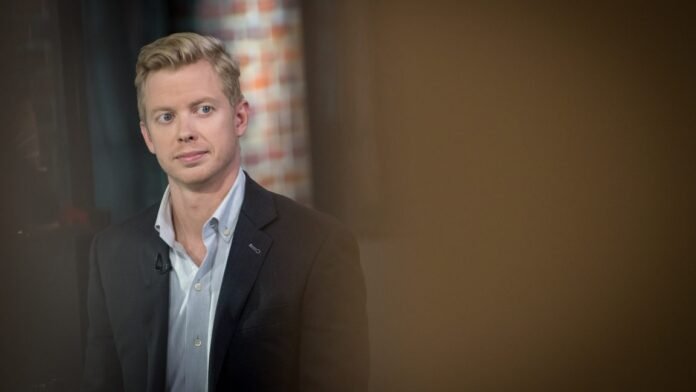
Like any company, Reddit reports quarterly earnings, and its CEO, Steve Huffman, addresses investors during those reports. It’s not always about just sharing numbers, though: This quarter, Huffman took the opportunity to voice concerns and criticisms about Google’s AI Overviews feature, which automatically summarizes search results on most user queries.
First, there was a letter to investors, wherein Huffman spun his narrative about Reddit’s value proposition and general strategic direction amid the proliferation of AI tools.
He wrote:
As the internet becomes flooded with synthetic content, people are craving real human perspective. We are the antidote to an automated web. AI compresses the internet into summaries. Reddit delivers the opposite: deep discussions, passionate debates, and lived experiences. People don’t want a summary of Reddit; they want Reddit.
The letter also said:
As AI makes information more abundant, the challenge is no longer finding content—it’s finding context, personal opinion, and first-hand accounts. Everything online feels flat, polished, generated, or sponsored, so consumers are overwhelmed and increasingly skeptical. We’ve never had more information, but we’ve never trusted it less.
And then, in comments around the earnings report, he added:
What we see is, 10 blue links has driven tremendous value and growth to the broader ecosystem… from where we sit, AI Overviews has yet to make a similar level of positive impact, and I think that’s consistent across the broader landscape, right? As businesses, publishers, retailers, we’re still looking for that win-win.
To add context to these statements, Reddit has long had a relatively lucrative ($60 million) licensing deal with Google, but Reddit is considering ending that deal, according to a Wall Street Journal report from earlier this month. The report also said that several prominent publishers are considering similarly cutting ties with Google, including The Economist, Reuters, Politico, and USA Today. (Reddit also has a deal with OpenAI.)
Last year, a study by Pew Research that looked at data from 900 US adults concluded that Google’s AI Overviews cut referrals to sites like those by almost half, compared to the “10 blue links” approach that Huffman referred to. It’s important to note, though, that Google has long diverged from just “10 blue links” in other ways even before AI Overviews entered the scene.
In light of the Pew Research study, Google told Ars, “This study uses a flawed methodology and skewed queryset that is not representative of Search traffic. We consistently direct billions of clicks to websites daily and have not observed significant drops in aggregate web traffic as is being suggested.”
A few days later, Google further countered in its own blog post, saying, “total organic click volume from Google Search to websites has been relatively stable year-over-year.” That contradicts what many publishers have been saying, though most publishers are of course wary of sharing too many proprietary numbers publicly.
Part of the problem is that both publishers and Reddit have historically depended on regular Google search traffic, but in most cases, the current status quo treats being surfaced as one of the so-called blue links and being part of AI Overviews as a package deal.
There have been several efforts to change that situation. Last year, we reported on Cloudflare’s attempt to update the default configuration for robots.txt in part to try to force Google to make changes. Google has also made changes to AI Overviews that it claims will lead to more prominent links out to other websites than before, but it still maintains that AI Overviews are here to stay and that they’re actually good for the user experience and the web in general.
The situation remains unresolved, and Reddit’s shares fell more than 20 percent after the earnings report, even though the company’s quarter trounced investors’ expectations on most of the basic financials. The reason? Search referrals were “choppy,” in Huffman’s words, and investors are thus concerned about the future of the site as AI tools continue to disrupt the traditional economics of the web.
Investors are concerned that Reddit can’t succeed without those Google referrals, and that concern can be extended to most other organizations in the business of producing content for the open web.
Advance Publications, which owns Ars Technica parent Condé Nast, is the largest shareholder in Reddit.

 school buildings should function in a changing climate.
 Lori Byron, a pediatrician and chair of the nonprofit Montana Health and Climate. “We also know much more now about particulate matter from wildfire smoke. Those particles can get into our brains and even reach unborn babies.”



![Hundreds gather to protest against Israeli attacks on Gaza and West Bank and call for a ceasefire, in Stockholm, Sweden on August 01, 2026. [Atila Altuntaş - Anadolu Agency]](https://i0.wp.com/www.middleeastmonitor.com/wp-content/uploads/2026/08/AA-20260801-42120120-42120118-HUNDREDS_PROTEST_AGAINST_ISRAELI_ATTACKS_ON_GAZA_AND_WEST_BANK-scaled-e1785599343991.jpg?fit=920%2C690&ssl=1)