21 C
London
Saturday, August 8, 2026
Home Blog

Bill and Melinda Gates’ Shocking Scandals Exposed

0


Bill and Melinda Gates once appeared to have it all — staggering wealth, three children, a powerful charitable empire and a marriage that lasted nearly three decades.

But behind the scenes, their relationship was reportedly unraveling under the weight of infidelity, broken trust and Bill Gates’ controversial association with convicted sex offender Jeffrey Epstein.

By the time the couple announced their divorce in 2021, their split had become one of the most closely watched — and expensive — breakups in the world.

Bill and Melinda married in Hawaii on January 1, 1994, and went on to welcome three children together. After 27 years of marriage, they stunned the public on May 3, 2021, by announcing they were calling it quits.

“After a great deal of thought and a lot of work on our relationship, we have made the decision to end our marriage,” the pair said in a joint statement.

Although they vowed to continue working together through their foundation, they made it clear their relationship as husband and wife was finished.

“We no longer believe we can grow together as a couple in this next phase of our lives,” they said.

Their divorce was finalized just three months later, on August 2, 2021.

But the questions surrounding what went wrong were only beginning.

Melinda later opened up about the painful collapse of the marriage, making clear that there was no single event behind her decision to leave.

During a March 2022 interview with Gayle King on CBS Mornings, Melinda acknowledged that Bill’s infidelity and his meetings with Epstein had played a role.

“As I said, it’s not one thing, it was many things,” she explained. “But I did not like that he’d had meetings with Jeffrey Epstein, no.”

Melinda described the divorce as deeply painful but said she had begun rebuilding her life.

“I started on this journey of healing, and I feel like I’m starting to get to the other side,” she said.

She later told Fortune there were “some reasons” she simply could no longer remain in the marriage.

Bill, meanwhile, has publicly admitted the divorce remains one of the biggest regrets of his life.

“You would have to put that at the top of the list,” the Microsoft co-founder told The Times when asked about his mistakes.

“The divorce thing was miserable for me and Melinda for at least two years,” he added.

The cracks in the marriage became even more public as reports surfaced about Bill’s past relationships.

The Wall Street Journal previously reported that Microsoft investigated an alleged romantic relationship between Gates and a female employee that had taken place years earlier.

Gates has also faced scrutiny over other alleged extramarital relationships.

During congressional testimony before the House Oversight Committee on June 10, Gates identified three women with whom he said he had extramarital relationships: Russian bridge player Mila Antonova, Russian nuclear physicist Karima Nigmatulina and medical entrepreneur Alice Jacobs Nesselrodt.

But perhaps no controversy cast a darker shadow over the Gates marriage than Bill’s association with Jeffrey Epstein.

Melinda has made no secret of how much the connection disturbed her.

In her memoir, The Next Day, she recalled the impact of a New York Times report examining Bill’s contacts with Epstein.

“That October, things had reached a fever pitch when The New York Times published a deeply disturbing article that raised serious questions about Bill’s conduct — questions that suggested he had betrayed not only our marriage but also my values,” she wrote.

Melinda has also said that renewed attention surrounding Epstein brought back memories of an extremely painful period in her life.

“I am so happy to be away from all the muck,” she said.

Bill has repeatedly expressed regret over spending time with Epstein.

Speaking to Australia’s 9 News in February, Gates said he regretted “every minute” he spent with the disgraced financier and maintained that their interactions consisted of dinners.

“Every minute I spent with him, I regret, and I apologize that I did that,” Gates said.

He also pushed back against claims contained in Epstein-related documents suggesting Gates had contracted a sexually transmitted disease and concealed it from Melinda.

Gates said an email Epstein apparently drafted to himself containing the allegation was false.

“That email was never sent,” he said. “The email is false. I don’t know what his thinking was there. Was he trying to attack me in some way?”

For Melinda, however, the decision to end the marriage appears to have become less about looking backward and more about reclaiming her own life.

In a 2024 interview with The Sunday Times, she called the divorce “necessary.”

“If you can’t live your values out inside your most intimate relationship, it was necessary,” she said.

She also made clear she had moved on from Bill’s public comments about regretting their split.

“He’s got his own life. I have my life now. I am very happy,” she said.

More recently, Melinda discussed learning to trust again after experiencing what she described as a lack of honesty and trust in her marriage.

Speaking on the February 5 episode of NPR’s Wild Card podcast, she said her life after divorce had allowed her to approach relationships differently.

The Gates divorce reportedly involved an estimated $76 billion settlement, putting it among the most expensive celebrity and billionaire breakups ever.

But for Melinda, the staggering financial stakes appear to have been secondary to something far more personal.

After 27 years, three children, enormous success and years of turmoil behind closed doors, she ultimately decided there were some things even billions of dollars could not repair.

Unpacking the Saudi Arabia-Pakistan-Turkey defense pact

0
unpacking-the-saudi-arabia-pakistan-turkey-defense-pact
Unpacking the Saudi Arabia-Pakistan-Turkey defense pact

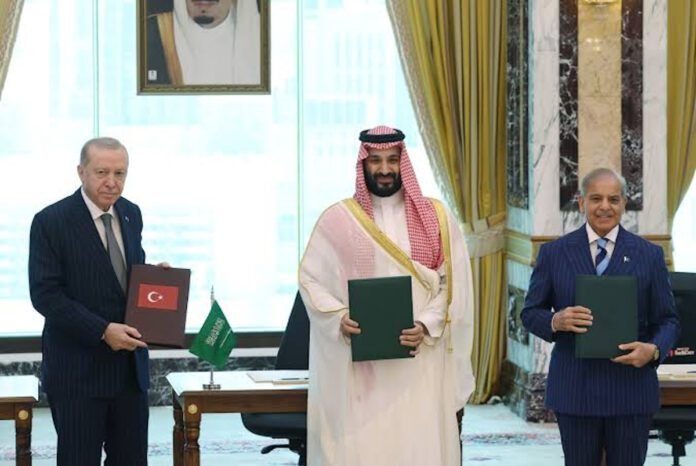
The recently signed Saudi Arabia-Pakistan-Turkey Joint Defense Agreement, concluded in Mecca on August 7, 2026, and referred to as the Makkah Joint Defense Agreement, marks a significant development in the evolving strategic architecture of the Middle East.

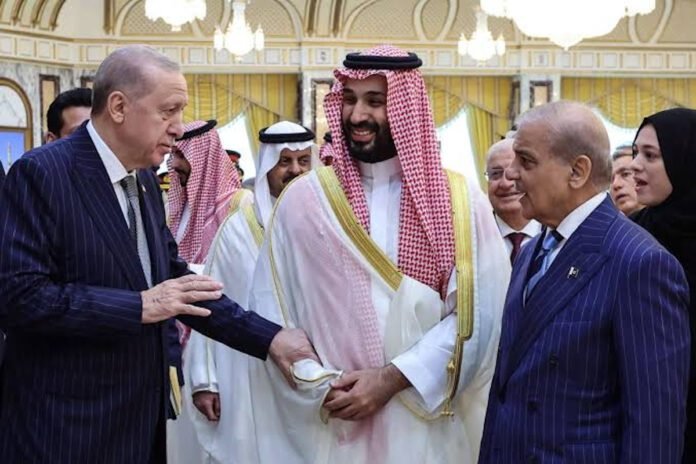
The agreement was signed by Saudi Crown Prince and Prime Minister Mohammed bin Salman, Pakistani Prime Minister Shehbaz Sharif and Turkish President Recep Tayyip Erdogan.

It establishes the principle that an armed attack on any one of the three countries would be treated as an attack on all three, reinforcing a collective defense commitment among the partners. It builds on the Strategic Mutual Defense Agreement signed between Saudi Arabia and Pakistan in September 2025 and seeks to broaden defense and security cooperation among the three countries.

While the agreement provides a framework for deeper military cooperation, including areas such as joint exercises, defense-industrial collaboration, technology transfer and intelligence sharing, its detailed operational mechanisms, specific military commitments and implementation provisions have not been publicly disclosed.

Saudi vulnerability, Turkish ambitions and Pakistan’s military role

The timing of the agreement is particularly important. The Middle East remains deeply unstable, with the ongoing US-Iran conflict showing no immediate signs of a durable resolution. Iran-backed Houthi forces have intensified their military activities and threats against Saudi Arabia and Saudi-linked interests.

At the same time, the recently signed US-Saudi civil nuclear cooperation agreement remains tied to the broader question of Saudi-Israeli normalization, with Washington linking the nuclear arrangement’s implementation to Riyadh joining the Abraham Accords.

The evolving Gaza situation, including discussions over the implementation of a possible peace framework, is also creating pressure on major Muslim countries to play a greater role in regional security and diplomacy.

For Saudi Arabia, the agreement reflects a growing concern about its vulnerability to threats from Iran and Iran-backed groups, particularly the Houthis. Riyadh has invested heavily in its economic transformation under Vision 2030, and prolonged regional insecurity directly threatens that ambition.

The closure of the Strait of Hormuz and renewed Houthi threats to Red Sea shipping have demonstrated how quickly regional conflict can disrupt Saudi trade, energy exports and investor confidence. Saudi Arabia therefore needs military partners capable of providing manpower, intelligence, technology and strategic depth.

Pakistan offers one component of this equation. It possesses a large military establishment, extensive operational experience and a long-standing defense relationship with Saudi Arabia. Turkey offers another. Under President Erdogan, Ankara has increasingly sought to expand its strategic influence beyond its immediate neighborhood and project itself as a major power across the Muslim world.

Turkey’s ambitions are particularly relevant. Ankara has become increasingly active in the Middle East, Africa, Central Asia and South Asia, seeking to strengthen its political, military and defense-industrial relationships with Muslim-majority countries.

Erdogan’s own drive to expand Turkey’s regional and international influence is an important factor behind this strategy. Its involvement in Syria, its confrontation with Kurdish groups and its broader regional reach demonstrate that Turkey has interests extending well beyond its borders.

Pakistan as a gateway for Turkey’s strategic expansion

This creates a different strategic equation from the earlier Saudi-Pakistan arrangement. One of the most important questions surrounding the new arrangement is what role Pakistan will actually play. Pakistan could provide the manpower and military capabilities that Saudi Arabia and Turkey may require in different theaters.

If the security commitments under the agreement translate into deployments beyond the traditional defense of Saudi territory, Pakistan could increasingly find itself involved in conflicts and security operations in Yemen, Syria or other theaters where Saudi or Turkish interests are directly challenged. This could effectively turn Pakistan into a military instrument for the strategic objectives of other powers.

For Pakistan, however, the arrangement offers considerable incentives. Islamabad desperately needs financial support. Its economy remains dependent on external assistance, bailout programs and financial inflows from friendly states.

The China-Pakistan Economic Corridor has not resolved Pakistan’s structural economic problems, while Beijing has become increasingly cautious about extending additional financing and has sought repayment of outstanding obligations. Pakistan has also struggled to secure the level of external financial assistance it needs from other partners.

In this environment, a defense arrangement with Saudi Arabia offers Islamabad an additional mechanism through which its military establishment can secure financial and strategic benefits.

Saudi financial assistance, energy supplies and investment could become increasingly important, while Turkey could provide defense technology, training, intelligence cooperation and military-industrial support.

The military can present the agreement domestically as evidence that Pakistan has regained strategic importance and international relevance. Field Marshal Asim Munir could also use the arrangement to strengthen the military’s domestic legitimacy and further consolidate its political influence.

But there is another side to this equation. The arrangement could also constrain Pakistan’s independent decision-making by tying its foreign and security policies more closely to the interests of its partners.

In fact, Turkey’s involvement changes the equation. The earlier Saudi-Pakistan defense relationship was primarily a bilateral arrangement in which Saudi Arabia provided financial and economic support while Pakistan offered military capabilities and manpower. Turkey’s entry introduces a much broader defense-industrial and geopolitical dimension.

Turkey has already developed a substantial defense relationship with Pakistan. The two countries cooperate in areas ranging from drones and naval platforms to broader defense-industrial projects, and their cooperation has also expanded into training, intelligence and military technology.

The relationship became especially significant during the India-Pakistan confrontation in May 2025. Turkey provided political support to Pakistan, while Turkish-origin defense systems and personnel reportedly featured in Pakistan’s military operations. The experience demonstrated the practical value of the growing Turkey-Pakistan security partnership.

A formal trilateral framework could now accelerate this cooperation. Pakistan could gain greater access to Turkish defense technology, expertise and training, while joint development of platforms could expand.

Cooperation involving drones, naval systems and future combat-aircraft programs could become increasingly important, and Turkey’s KAAN program and other advanced defense-industrial projects could become part of a broader trajectory of Turkey-Pakistan technological cooperation.

This matters because Turkey is not merely seeking commercial defense partnerships. Ankara is simultaneously attempting to expand its geopolitical influence across Asia through its “Asia Anew Initiative.” Turkey’s growing engagement with Bangladesh, Pakistan and other Muslim-majority countries demonstrates that its strategic reach is increasingly extending into South and Southeast Asia.

Its expanding maritime presence and defense relationships in the Indian Ocean also deserve closer attention from New Delhi. The recent visits of the Bangladesh Army chief and Pakistan’s field marshal to Turkey are part of this broader pattern of expanding military engagement.

For India, therefore, the concern is not simply that Pakistan is receiving additional military assistance. The larger concern is that Pakistan could increasingly become a conduit through which Turkey expands its strategic footprint in South Asia.

Why Saudi Arabia is different for India

At the same time, New Delhi should not interpret Saudi Arabia’s participation in the agreement as an indication that Riyadh intends to abandon its relationship with India.

Saudi Arabia has strong economic, energy and strategic interests in India. Its primary objective in entering a defense arrangement of this nature is likely to address the security challenges it faces in the Middle East, particularly those emanating from Iran and Iran-backed groups.

India therefore needs to distinguish between Saudi Arabia’s strategic requirements and Turkey’s broader geopolitical ambitions. The danger for New Delhi emerges from the interaction between the three countries. Saudi financial resources can strengthen Pakistan’s military capacity.

Pakistan can provide manpower, military infrastructure and geographical access. Turkey can provide advanced defense technology, training and intelligence cooperation. Together, these capabilities could create a substantially more capable Pakistani military ecosystem. That is a different equation from the earlier Saudi-Pakistan relationship.

Strategic entrapment

Ironically, the agreement that offers Pakistan financial and military benefits could simultaneously create new security problems for Islamabad. Pakistan already faces a deteriorating internal security environment, particularly in Balochistan and along its western frontier.

Greater involvement in Middle Eastern conflicts could stretch its military resources further. This concern is not merely theoretical. During the 2026 Iran conflict, Pakistan reportedly deployed around 8,000 troops, a fighter-jet squadron and an air-defense system to Saudi Arabia under its existing mutual defense arrangement with Riyadh.

More importantly, Pakistan’s closer alignment with Saudi Arabia and Turkey could complicate its relationship with Iran. Pakistan shares a roughly 900-kilometer border with Iran, making any deterioration in bilateral relations particularly sensitive for Islamabad.

Iran has historically viewed Saudi Arabia and Turkey through the prism of regional competition, while Iranian-backed armed groups remain central to several Middle Eastern conflicts. Tehran has already reacted critically to the new Saudi-Turkey-Pakistan defense agreement, warning that such an arrangement would not necessarily provide Saudi Arabia with greater security.

If Pakistan is perceived by Tehran as directly supporting Saudi or Turkish military objectives against Iranian interests, Islamabad could face increased diplomatic and security pressure along its western border.

This could have serious consequences for Pakistan’s already fragile security environment in Balochistan, where Islamabad is simultaneously confronting militant violence and separatist insurgency.

Pakistan may therefore find itself caught between competing strategic demands: securing Saudi financial assistance, deepening military cooperation with Turkey, maintaining its relationship with China, managing relations with the US, and avoiding a direct confrontation with Iran.

At the same time, Pakistan has attempted to position itself as a mediator in the Iran-related crisis, making its balancing act even more complicated.

Pakistan may believe that the agreement gives it strategic importance. But strategic importance can also become strategic entrapment. Once Pakistan commits military, intelligence and logistical capabilities to the security interests of Saudi Arabia and Turkey, withdrawing from those commitments could become increasingly difficult.

Its experience during the ongoing conflict already demonstrated how quickly its Saudi security commitments can intersect with its relations with Tehran. The country could gradually find itself fighting—or being expected to support operations—in theaters far removed from its own immediate national interests.

New strategic challenge for India

The agreement therefore needs to be viewed beyond its formal language. Behind the defense pact is a much larger geopolitical contest involving Iran, Saudi Arabia, Turkey, the US, Israel, Pakistan and other regional powers. Every country is attempting to build strategic depth and secure partners before the next phase of instability in the Middle East.

Turkey wants greater influence across the Muslim world. Saudi Arabia wants protection from regional threats while pursuing its economic transformation. Pakistan wants financial resources, military technology and international relevance. Their interests overlap, but they are not identical.

That creates both opportunities and risks. For Pakistan, the immediate benefits may be substantial: financial assistance from Saudi Arabia, energy support, greater military cooperation with Turkey, access to defense technology and enhanced international visibility. But the long-term costs could be equally significant if Pakistan becomes increasingly involved in conflicts that do not directly serve its national interests.

For India, meanwhile, the emergence of this trilateral security relationship creates a new strategic challenge.

Turkey has already demonstrated its willingness to support Pakistan politically and militarily. Ankara’s ambitions in South Asia, its engagement with other Muslim-majority countries and its growing maritime and defense presence in the Indian Ocean indicate that New Delhi cannot view Turkey’s relationship with Pakistan merely as a bilateral matter.

The convergence between Ankara and Islamabad on political Islam also adds another layer to this relationship, potentially creating greater ideological and strategic coordination across the region.

India therefore needs to closely monitor the agreement’s implementation and assess how it translates into practical cooperation in areas such as intelligence sharing, military exercises, defense-industrial cooperation, technology transfer and military deployments.

New Delhi should also deepen engagement with countries that share concerns about an expanding Turkish strategic footprint, strengthen its own defense, maritime and intelligence capabilities, and intensify engagement with other Gulf partners — particularly on defense, intelligence, maritime and economic cooperation — to ensure its strategic interests remain protected amid the region’s evolving security alignments.

New Delhi must also recognize that the Middle East has changed significantly. The region emerging from the Iran war is not the same strategic environment that existed before the conflict. Shifting threat perceptions and the search for new security partnerships mean India can no longer rely on previous assumptions about regional alignments.

At the same time, India should continue engaging Saudi Arabia. Riyadh has demonstrated that it values its relationship with New Delhi, and India should make clear that its growing strategic partnership with Saudi Arabia need not be undermined by the latter’s security arrangements with Pakistan.

The objective for India should not be to force Saudi Arabia to choose between India and Pakistan. Rather, New Delhi should ensure that Saudi Arabia understands the potential consequences of allowing its financial and strategic resources to strengthen capabilities that could ultimately be directed against Indian interests.

As the geopolitical chessboard grows more complicated and complex, Pakistan may believe it has gained strategic leverage by entering this arrangement, but it has stepped into a much larger game whose consequences it will find increasingly difficult to control.
Israeli forces kill Palestinian in Gaza, wound 9 including 4 children

0
israeli-forces-kill-palestinian-in-gaza,-wound-9-including-4-children
Israeli forces kill Palestinian in Gaza, wound 9 including 4 children

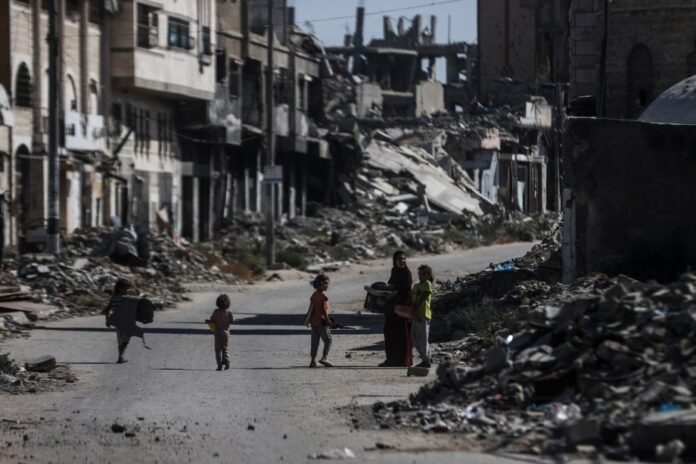
Palestinians are seen as the Israeli forces placed new yellow concrete blocks at the Sanfura junction continuing to expand the area known as the

Palestinians are seen as the Israeli forces placed new yellow concrete blocks at the Sanfura junction continuing to expand the area known as the “Yellow Line” despite the ceasefire in western Gaza City, Gaza, Palestine, on July 27, 2026. [Ali Jadallah – Anadolu Agency]

Israeli forces killed a Palestinian and wounded nine others, including four children, in separate attacks across the Gaza Strip on Saturday, medical sources told Anadolu Agency.

The latest casualties came amid continued Israeli violations of the ceasefire agreement, which has been in force in Gaza since Oct. 10, 2025.

A medical source told Anadolu Agency that a young Palestinian man was killed after Israeli forces opened fire in Deir al-Balah in central Gaza.

In southern Gaza, medical sources said seven injured Palestinians, including two children, were admitted to Nasser Hospital after Israeli tanks stationed near the al-Shakoush area southwest of Khan Younis opened heavy fire. Three of them are in critical condition, according to the sources.

READ: 300 Palestinian children killed since Gaza ceasefire, UNICEF Says

In Gaza City, two children were wounded after Israeli forces opened fire toward Palestinian homes and tents sheltering displaced families in the eastern Tuffah and Zeitoun neighborhoods, according to medical sources.

In central Gaza, local sources and witnesses told Anadolu Agency that Israeli drones opened fire at Palestinian homes east of the Bureij refugee camp, east of Deir al-Balah, but no casualties were reported.

Israeli artillery also shelled areas east of the Maghazi refugee camp in central Gaza, according to local sources.

According to Gaza’s Health Ministry, Israeli violations of the ceasefire have killed 1,257 Palestinians and wounded 4,131 others since the agreement took effect.

Since Oct. 8, 2023, Israel has waged what Palestinians describe as a genocidal war on Gaza with US support, killing more than 73,000 Palestinians and injuring over 174,000, most of them women and children, while devastating about 90% of the enclave’s infrastructure.

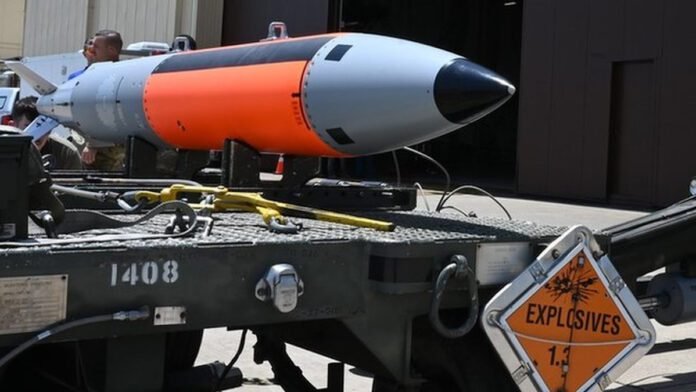
US weighs tactical nukes as China, Russia raise escalatory stakes

0
us-weighs-tactical-nukes-as-china,-russia-raise-escalatory-stakes
US weighs tactical nukes as China, Russia raise escalatory stakes

The US may be entering a period of significant nuclear reassessment as it confronts a growing mismatch between its predominantly strategic arsenal and adversaries increasingly prepared for limited nuclear use.

This month, Breaking Defense reported that the US Department of Defense (DoD) has initiated a review of the nation’s nuclear posture to expand tactical nuclear strike options for the White House.

Undersecretary of Defense for Policy Elbridge Colby confirmed the re-examination of nuclear employment guidance, citing the need for “rational nuclear options” in response to potential regional conflicts with China or Russia.

The policy review comes amid longstanding US DoD concerns over foreign developments in low-yield warheads, which risk leaving the US without proportional non-strategic responses.

US Strategic Command head Admiral Richard Correll explained that while declaratory policy remains unchanged, the military seeks “escalation maneuver” space across non-kinetic, conventional and limited nuclear domains. The review will remain classified.

At present, the US nuclear arsenal and modernization program remain heavily weighted toward strategic forces over tactical nuclear weapons. Strategic nuclear weapons are designed to destroy an adversary’s war-making capabilities, namely its military, economic, political and population centers of gravity.

Strategic nuclear weapons encompass intercontinental ballistic missiles (ICBMs), strategic bombers, and nuclear ballistic missile submarines (SSBNs), designed to hit targets deep in an adversary’s territory.

In contrast, tactical nuclear weapons are designed to destroy an adversary’s war-fighting capabilities. These weapons could be deployed against enemy bases and force concentrations to gain a battlefield advantage.

Such weapons may include those deployed from dual-capable fighter aircraft (DCA), heavy artillery, tactical ballistic missile systems and ship- or submarine-launched cruise missiles.

March 2026 data from the Bulletin of the Atomic Scientists show that the US nuclear arsenal remains overwhelmingly structured around long-range strategic weapons, which comprise roughly 94% of all actively deployed warheads.

According to the data, of the US’s 1,770 deployed warheads, approximately 1,670 are assigned to the strategic triad — comprising land-based ICBMs, submarine-launched ballistic missiles (SLBMs), and strategic bombers — while non-strategic weapons account for only 100 tactical gravity bombs stationed in Europe.

The Bulletin of the Atomic Scientists report points out that the US’s multi-billion-dollar modernization priorities heavily favor strategic program overhauls, including Sentinel ICBMs, Columbia-class SSBNs and B-21 Raider stealth bombers, leaving tactical nuclear weapons as a small, specialized component of overall US nuclear posture.

However, the US emphasis on strategic nuclear weapons potentially leaves it inflexible against adversaries prepared to wage limited nuclear war.

In scenarios where adversaries are willing to employ limited nuclear strikes, a heavily strategic-weighted posture risks forcing a difficult binary — refrain from a nuclear response or escalate toward a strategic-level exchange.

Tactical nuclear weapons offer a more scalable signaling option short of strategic exchange, but their frequent use of dual-capable delivery systems can blur the line between conventional and nuclear operations, raising the risk of inadvertent escalation.

While the US nuclear posture remains heavily weighted toward strategic forces, China’s nuclear buildup and Russia’s continued nuclear threats in the Ukraine war may force a rethink.

Although China maintains a “no first use” (NFU) nuclear policy, its rapid nuclear buildup has raised concerns. China has approximately 620 nuclear warheads and is expanding its strategic triad through hundreds of new solid-fuel ICBM silos, Type 094/096 SSBNs carrying longer-range JL-3 SLBMs and air-launched ballistic missiles (ALCMs) on H-6N bombers, according to July 2026 data from the Bulletin of the Atomic Scientists.

The report notes that while China maintains lower-yield, dual-capable theater systems like the DF-26 intermediate-range missile, its future trajectory emphasizes strategic survivability, high readiness and launch-on-warning capabilities to project global deterrence and offset potential strategic disadvantages, with projections indicating it will exceed 1,000 warheads by 2030.

The growth and diversification of China’s nuclear arsenal complicate confidence in how its “no first use” pledge would hold under intense crisis conditions, particularly if survivability concerns create use-it-or-lose-it pressures.

In a US-China conflict over Taiwan, China could use increasingly severe nuclear signals—from missile tests and demonstrative detonations to limited nuclear use—to deter intervention or stave off defeat.

Beyond a possible Taiwan contingency, Japan’s call for public discourse about the role of nuclear weapons and its nuclear latency may be pushing China to reconsider its NFU policy.

Defense Minister Shinjiro Koizumi broke with the longstanding taboo on the issue by saying that Japan could not avoid addressing the nuclear issue when it comes to national security.

In that connection, Japanese Prime Minister Sanae Takaichi has long advocated for a review of Japan’s “no entry” aspect of its nuclear policy, possibly alluding to a nuclear-sharing arrangement with the US.

Moreover, Japan has a significant plutonium stockpile that its Institute of Laser Engineering at Osaka University could potentially use for developing nuclear weapons.

The institute’s inertial confinement fusion reactors (ICF) – similar to those used in French and US nuclear weapons programs – allow the physics of these weapons to be studied under laboratory conditions, possibly giving the country “virtual” nuclear testing capability.

While Russia has remained a longstanding nuclear peer competitor to the US, the Ukraine war may have fundamentally changed the dynamics between the two nuclear powers.

In a May 2026 report, the Bulletin of the Atomic Scientists says that Russia is finalizing a multi-decade overhaul replacing Soviet-era strategic and non-strategic nuclear weapons.

According to the report, Russia’s strategic modernization involving Sarmat ICBMs and Borei-class SSBNs aims to maintain parity with the US but faces severe manufacturing delays.

For Russia’s tactical nuclear forces, the report mentions that Russia focuses on fielding versatile, dual-use systems such as the Oreshnik and Iskander ballistic missiles, along with the Kinzhal air-launched hypersonic weapon, and increasing forward deployments in Belarus.

The report notes that while Russia’s nuclear warhead stockpile grew to around 4,400, it will increasingly rely on its tactical nuclear weapons to deter NATO, since its conventional forces have been badly battered during the Ukraine war. 

Similar to China in a potential conflict with the US over Taiwan, Russia may opt to use its tactical nuclear forces to stave off a catastrophic battlefield defeat.

Russia may have also employed the threat of nuclear ambiguity, especially with its dual-capable Oreshnik ballistic missile. Although the Oreshnik has been used as a conventional terror weapon against Ukrainian cities, the underlying message could be that the next attack may be nuclear.

These pressures may force a fundamental rethink of a US nuclear posture shaped largely by bipolar Cold War competition but now confronting an increasingly multipolar nuclear order.

The US DoD’s tactical nuclear review reflects that shift: the central challenge is no longer simply deterring massive strategic attack but managing escalation across a wider spectrum of limited nuclear scenarios.

The expiry of New START, China’s rise as a peer nuclear competitor, North Korea’s continued modernization and Iran’s nuclear ambitions are pushing deterrence beyond the bilateral frameworks of the Cold War.

New mechanisms for arms control, crisis management and proliferation restraint will be needed to keep that multipolar competition from sliding toward nuclear war.

Lebanese Politician Calls for Shi’ite ‘Intifada’ Against Hezbollah

0
lebanese-politician-calls-for-shi’ite-‘intifada’-against-hezbollah
Lebanese Politician Calls for Shi’ite ‘Intifada’ Against Hezbollah


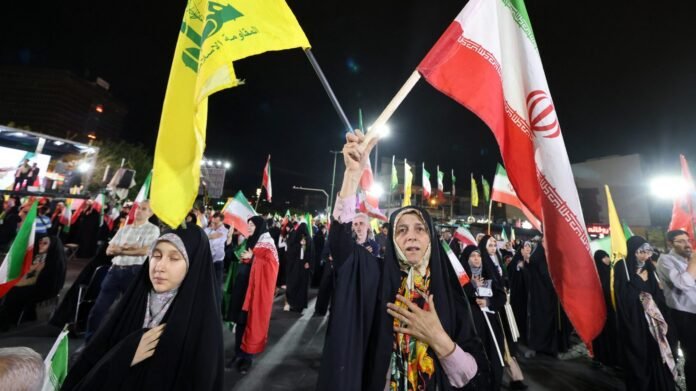
Lebanese Kataeb Party leader Sami Gemayel called for an “intifada” against Hezbollah, saying Lebanon’s Shi’ite population is being held hostage by the terrorist group and should separate itself from Hezbollah as efforts continue to resolve the conflict with Israel and disarm the group.

Gemayel, who heads the Lebanese Social Democratic Party, made the comments during a meeting with a delegation from the Lebanese Press Editors’ Syndicate. He described Shi’ites as victims of Hezbollah and said he had raised the issue with Parliament Speaker Nabih Berri.

After Gemayel sought to discuss with Berri ways of communicating with the Shi’ite community about distancing itself from Hezbollah, Berri quickly ended the discussion, he said. Berri is closely allied with Hezbollah, and commentators have suggested that the group’s support has helped him politically.

L’Orient Today reported that Gemayel said the Shi’ite population was effectively being held hostage by Hezbollah and called for an “intifada,” or uprising, against the group.

Gemayel supports ongoing talks between Israel and Lebanon aimed at ending the conflict. The talks have led to efforts to disarm Hezbollah, which opposes the negotiations and has said it will not surrender its weapons.

The Lebanese presidency separately reported progress in the negotiations. President Joseph Aoun “updated the government on positive progress in negotiations with Israel regarding the border issue,” as well as discussions concerning “the prisoners’ issue,” referring to Lebanese detainees held by Israel.

According to the presidency, Aoun also said that “Washington will work to address the ceasefire issue and the pilot zones.”

The developments came as military activity continued in southern Lebanon on Saturday.

An Israel Defense Forces (IDF) soldier was moderately wounded by shrapnel during operational activity in southern Lebanon, the IDF Spokesperson said. The soldier was evacuated to a hospital for medical treatment, and his family was notified.

Lebanon later reported that two people were wounded in a drone strike in the Kfar Reman area in southern Lebanon.

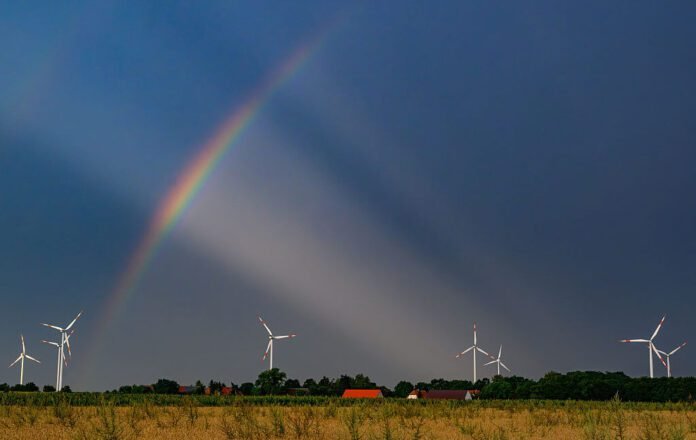
Trump is losing his war on wind power

0
trump-is-losing-his-war-on-wind-power
Trump is losing his war on wind power

On Thursday, a US District Court in Oregon ordered the US government to restart the process of approving wind projects. All new wind development in the US has been on hold since August 2025, when the Department of Defense (DoD) stopped participating in a process that allows it to compel developers to alter projects in order to limit their interference with radar equipment. The court ruled, however, that the DoD’s national security claims did not allow it to opt out of a process that is legally mandated.

The Trump administration has made many attempts to block wind development, both offshore and land based. Its attempts to stop offshore wind included the same approach at issue in this case: Claim that drone developments mean that radar interference by wind turbines creates a national security risk. The courts were not sympathetic to this claim, including in cases where judges examined a classified report that the DoD was using to justify blocking offshore wind construction. As a result, the administration has turned to paying companies not to pursue wind development.

In parallel, the government was pursuing a similar approach for onshore wind. Here, a law lays out a process for the DoD to evaluate any problems posed by wind turbines and negotiate changes to planned wind farms with the developers. As laid out in the new decision, the government simply stopped participating in this process in August 2025, first by refusing to sign off on previously negotiated agreements, and later by refusing to draft agreements entirely. Eventually, it simply refused to participate in negotiations at all. This has brought a halt to all wind development in the US.

So, individual developers and industry groups sued. The government made a variety of defenses, including that the suit was filed in the wrong court system, that it hadn’t made any final decisions that were subject to judicial review yet, and that the plaintiffs lack standing to sue. The court found none of these arguments persuasive. And it found that the hold was a very clear violation of the law. “DoD’s review is not a black box,” Judge Karin Immergut ruled. “Rather, Congress created a statutory framework that guides DoD’s review of whether a construction project ‘would result in an unacceptable risk to the national security of the United States.’”

Nothing in that framework allows the DoD to simply stop participating in the process. “If DoD wishes to alter the statutory scheme, it can ask Congress to do so,” Immergut wrote. In the absence of congressional action, the DoD can’t simply ignore the law.

The ruling orders the DoD to resume the process of approving wind projects using the congressionally mandated schedule and to report back every 30 days on its progress.

Junts joins European Democratic Party, expanding EDP presence in Spain

0
junts-joins-european-democratic-party,-expanding-edp-presence-in-spain
Junts joins European Democratic Party, expanding EDP presence in Spain


The European Democratic Party said it has welcomed Junts per Catalunya into its political alliance, a move that strengthens the party’s presence in Spain and deepens cooperation on a federalist vision for the European Union.

The European Democratic Party, also known as EDP/PDE, said the accession reflects a shared commitment to a more democratic and federal Europe that respects national, cultural and linguistic diversity.

In a statement announcing the decision, Junts per Catalunya described the EDP as a European federalist and centrist party committed to civil and social rights. The Catalan party said membership would enhance its international profile and increase its ability to influence debates on the future direction of the European Union.

Junts said it shares with the EDP the view that a stronger Europe and the nations and territories that compose it are “not incompatible projects, but allies.” The party added that identities, languages and the democratic right to determine one’s future deserve full recognition within the EU framework.

The European Democratic Party said the move aligns with its own belief that European integration, federalism and respect for territorial diversity are mutually reinforcing. It said a stronger Europe is one that protects the linguistic, cultural and national identities of its constituent territories.

The EDP added that the accession reinforces a shared commitment to the rule of law and democratic dialogue.

Trump is blocking billions of dollars of grants that would fix the grid

0
trump-is-blocking-billions-of-dollars-of-grants-that-would-fix-the grid
Trump is blocking billions of dollars of grants that would fix the grid

This story was originally published by Canary Media and is reproduced here as part of the Climate Desk collaboration.

In Wisconsin, utility Alliant Energy has called off a project meant to reduce power outages in disadvantaged and tribal communities, after the Trump administration terminated a federal grant that would have supported it.

In California, the Sacramento Municipal Utility District, which has deployed and upgraded hundreds of thousands of advanced smart meters, has not received any reimbursement from the U.S. Department of Energy, or DOE, for the work since October, when the Trump administration declared it was killing grants that it described as fueling ​“the Left’s climate agenda.”

And in the upper Midwest, a consortium of regional grid operators, utilities, and state agencies is still waiting for $464 million in DOE funds meant to help build high-voltage transmission lines to reduce grid congestion — although the agency in charge of the project says the funding will soon be restored.

Across the country, hundreds of such projects to improve grid reliability and make electricity more affordable face a highly uncertain future — the result of Trump administration actions that have slowed the outflow of billions of dollars of DOE funds to a trickle.

Read Next

Some of those projects in ​“blue states” were targeted as political retribution, as recent reporting from The New York Times has made clear. A handful of grant awardees in this category have won favorable court rulings, and more are seeking legal redress.

But many others are suffering from the DOE’s broader failure to carry out work that Congress has tasked it to do, according to groups that have been monitoring the agency since the start of last year. In red and blue states alike, the DOE is forcing thousands of grantees to undergo a laborious review process, so even projects that have not been officially terminated are stuck, unable to determine when or if they’ll start getting the money they’re owed.

According to an April report from the DOE Alumni Network, a group of former agency employees, the DOE has announced the termination of 356 awards totaling $12.5 billion since January 2025, and has threatened to terminate 303 additional awards worth $12.2 billion.

But the DOE has also stalled projects for ​“a large number of awardees who have never appeared on any list,” the report found. ​“This means the agency is not moving forward to resolve disputes, finalize conditional awards, or respond to continuation applications, leaving projects in administrative limbo and functionally freezing promised funds.”

“DOE both overtly canceled a set of projects, then had this pattern of behavior where for 15 months they stopped actively managing projects,” said one former DOE official. ​“Projects can’t proceed to the next stages and get their next tranche of funding.”

The former official, who asked not to be named, described a pattern of stalling, stonewalling, and ​“ghosting” utilities, state governments, energy companies, and nonprofit groups awarded grants under the Biden administration.

Read Next

Many of those projects have been caught up in a process the DOE announced in May 2025 to review all financial assistance ​“on a case-by-case basis to identity [sic] waste of taxpayer dollars, protect America’s national security and advance President Trump’s commitment to unleash affordable, reliable and secure energy for the American people.”

Then, in October, the DOE announced the ​“termination of 321 financial awards supporting 223 projects” — all of them tied to states that voted for Kamala Harris in the 2024 election. The DOE’s termination announcement came right after Russ Vought, director of the White House Office of Management and Budget, declared in a social media post that the administration would cancel ​“nearly $8 billion in Green New Scam funding.”

Canary Media reached out to a subset of DOE grantees that had won funding from the Grid Resilience and Innovation Partnerships (GRIP) program created by the 2021 bipartisan infrastructure law. The DOE issued a total of more than 100 GRIP grants — in October 2023August 2024, and October 2024 — for projects to enlarge the grid, harden it against extreme weather, build microgrids to protect vulnerable communities, and deploy technologies to integrate solar, wind, EVs, and batteries.

Some of the GRIP projects involve expanding clean energy and serving disadvantaged communities, two bugbears of the Trump administration. But many more are straightforward grid improvement projects that need federal dollars to reduce the costs borne by utilities and regional or state agencies.

The largest of these is in California. In 2024, the DOE awarded a $630.6 million grant aimed at upgrading more than 100 miles of high-voltage power lines in the state with advanced power cables capable of carrying more electricity along existing transmission corridors, a project estimated to be capable of delivering about $200 million in savings from improved energy efficiency. That project was terminated in October, and the DOE has disbursed no money for it, according to federal records.

Read Next

This uncertainty appears to apply to the majority of GRIP projects, according to Emlyn Bottomley, founder of the consultancy High Road Analytics, which focuses on workforce development, and a former Department of Labor deputy policy director in the Biden administration.

According to his tracking of federal spending, of the roughly $11.4 billion in DOE funds obligated to grid infrastructure and resilience — a category that includes GRIP program funds — $9.1 billion remains ​“at risk,” with funding stalled or timelines for completion shortened. That’s compared with $400 million in grants that have been canceled outright and $1.3 billion not yet disbursed but showing no signs of being stalled.

“It’s a shame these projects are being held up or canceled, especially since the case for them is fairly bipartisan — spanning national security, economic competitiveness, and cost and affordability,” Bottomley said.

All of the GRIP projects required partners to provide matching funds at an amount at least equal to the money DOE is providing, the former DOE official added. ​“You’re talking about folks putting hundreds of millions of dollars on the line. People have skin in the game for these awards.”

The costs of losing federal funding

Many of the GRIP grantees contacted by Canary Media declined to comment, citing ongoing discussions with DOE. Others reported that they are no longer pursuing the projects as described in their grant applications, at least not with the help of DOE money.

The latter is the case for Alliant Energy’s Smart Power Automation in Rural Communities (SPARC) project, which won a $50 million grant in late 2024 to add grid visibility and control devices to 140 grid circuits in disadvantaged and tribal communities served by subsidiary Wisconsin Power & Light — a utility in a blue state.

Those devices could allow the utility to quickly find and isolate faults on its grid, cutting power outages in targeted communities by up to 50 percent. They could also support grid-management software to help integrate more renewable and distributed energy, and potentially expand wireless communications access to these remote areas.

Alliant ​“voluntarily withdrew” from the grant award process in April, six months after its grant was terminated by the DOE, Alliant spokesperson Melissa McCarville told Canary Media. The agency has disbursed no funds to the project, according to federal records.

Read Next

Alliant is ​“actively pursuing many of the goals that were outlined in the SPARC project,” McCarville wrote in a May email, but as part of a 10-year strategic plan with no set timeline. ​“While the grant did provide valuable funding, it also required a significant investment, and we want to ensure our contributions are properly prioritized,” she wrote.

Still, at least one grant-funded project in a blue state is proceeding despite the absence of DOE funds. 

That’s the case for the Sacramento Municipal Utility District, which serves the state’s capitol and environs. In 2023, SMUD won a $50 million grant to support a project to deploy 200,000 smart meters and grid devices and underlying software controls to ​“improve grid reliability, resilience, visibility and efficiency,” utility spokesperson Gamaliel Ortiz told Canary Media in an email. 

SMUD has carried out much of that work, which includes close to $100 million in utility spending, and has received almost $33 million in reimbursements from DOE, according to federal records. However, SMUD ​“has not received reimbursement for any costs incurred after the grant was cancelled on October 10, 2025,” Ortiz wrote. ​“We remain committed to this critical work and stay flexible as we evaluate how the loss of grant funding may impact the project timeline.”

In other blue states, some grants have been canceled and others are still under negotiation. In Oregon, utility Portland General Electric has recently learned that the DOE may reinstate a previously terminated $50 million grant to support next-generation ​“grid edge computing” devices, utility spokesperson John Farmer told Canary Media in an August email. That project had received only $1.2 million in DOE funding, according to federal records.

Read Next

The purpose of the project was to integrate batteries, EVs, and community solar into its grid to ​“improve resilience, enable the integration of distributed energy resources, and maximize customer investments in home energy solutions.”

“PGE is evaluating the benefits and risks of reinstating the grant,” Farmer told Canary Media. The utility ​“recognizes that there are inherent risks of additional and changing demands by the DOE as the administration’s priorities change.”

At the same time, PGE remains in discussion with the DOE on a $250 million grant to build a high-voltage transmission line with the Confederated Tribes of Warm Springs, Farmer wrote. ​“Without this funding, we would lose the opportunity to offset those costs with external dollars, which could limit how efficiently we can advance needed grid improvements.”

Red state projects are also being held up because the grantee is located in a blue state. Such is the case of the aforementioned $464 million DOE grant for the Joint Targeted Interconnection Queue project to build new transmission lines between the Midcontinent Independent System Operator and Southwest Power Pool, two grid operators spanning nearly a dozen Midwestern states.

The $464 million GRIP grant was meant to bolster $1.3 billion in matching funds from utilities in the region to enable nearly 30 gigawatts of new generation to be built in Iowa, Kansas, Minnesota, Missouri, Nebraska, North Dakota, and South Dakota. All but one of those states voted for Donald Trump in the 2024 election — but the Minnesota Department of Commerce, the entity awarded the grant, is in a blue state.

Read Next

In May, the Minnesota Department of Commerce announced that the DOE ​“will honor its $464 million grant,” which will ​“unlock more than $1 billion in additional private investment and provide communities across the region with economic and infrastructure benefits.”

A DOE spokesperson told Canary Media in a July email that the DOE has conducted its review of GRIP projects based on a ​“number of criteria,” including whether it has ​“achieved the milestones set forth in the terms of the award,” whether it ​“remains technically and economically feasible,” and whether it ​“continues to effectuate the purpose of the program or the Department’s priorities.”

The spokesperson added that ​“none of the termination decisions were based on political considerations.” That statement is belied by court testimony reported by The New York Times last month, in which a DOE lawyer stated that none of the October grant terminations were ​“based on any programmatic, statutory, cost-reduction or performance-based factor,” and that all but one of them ​“had a recipient location and/​or at least one place of performance in a state that awarded its electoral votes to Kamala Harris in the 2024 election and has two Democratic-caucusing senators.”

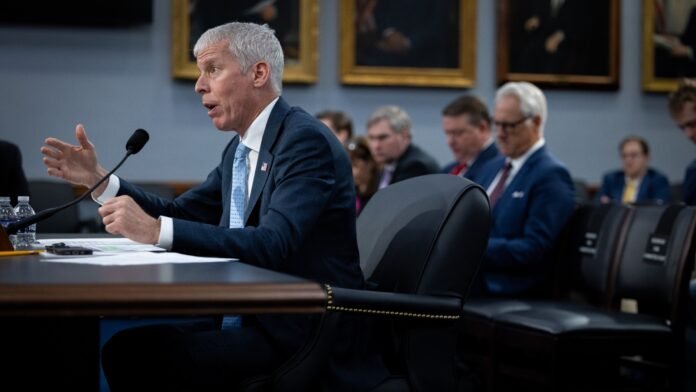
During a series of congressional hearings in April, Energy Secretary Chris Wright stated that the DOE’s review of more than 20,000 grants was almost complete, and that more than 80 percent of grantees had received notice that their awards could proceed as is or with modifications.

But an Alumni Network analysis of DOE data shared with Congress showed that the DOE’s review both failed to restore the vast majority of projects caught up in the ​“blue state” termination action in October and failed to address the hundreds of projects that have never been officially terminated but remain unable to secure funds.

The revelation of the DOE’s explicit targeting of blue states for grant termination spurred 39 Senate Democrats to sign a letter to Wright and Vought demanding the immediate restoration of funding for DOE projects terminated in October.

“Once an administration begins punishing Americans for how they vote,” the senators wrote, ​“the threat extends far beyond these projects: no state, community, business, or worker can trust that the federal government will apply the law fairly.” 


Makkah pact more strategic hedge than mutual defense revolution

0
makkah-pact-more-strategic-hedge-than-mutual-defense-revolution
Makkah pact more strategic hedge than mutual defense revolution

On August 7, 2026, at Al-Safa Palace in Makkah, Saudi Crown Prince Mohammed bin Salman, Turkish President Recep Tayyip Erdogan and Pakistani Prime Minister Shehbaz Sharif signed the Makkah Joint Defense Agreement — a trilateral pact declaring that an armed attack against any one of the three states will be treated as an attack against all.

The symbolism was carefully chosen: a Friday signing in Islam’s holiest city, framed as an act of religious and civilizational solidarity as much as a conventional alliance treaty. However, beneath the symbolism lies a more sober strategic calculation, one born of a region that has spent the better part of a year absorbing shocks it did not fully anticipate.

The agreement cannot be read apart from the war that has convulsed the Gulf since February 28, 2026, when the United States and Israel launched strikes against Iran that killed Supreme Leader Ali Khamenei and triggered a prolonged regional conflict. Iran’s retaliation extended well beyond Israel, reaching Saudi Arabia, Kuwait, Bahrain, Qatar, the UAE, Oman and Jordan.

In addition, Tehran’s effective closure of the Strait of Hormuz cut crude and LNG shipments through the waterway by roughly nine-tenths, a disruption serious enough that Gulf officials do not expect full flows to resume before 2027. Riyadh, in particular, absorbed direct fire while watching its economic diversification plans fall into jeopardy.

This sustained exposure, arriving despite decades of American security guarantees and billions of dollars in American arms purchases, appears to have done more to catalyze the Makkah pact than any single event.

It followed and built upon a bilateral Pakistan-Saudi defense understanding signed in Riyadh in September 2025, itself a response to earlier shocks, including an Israeli strike on Doha that alarmed Gulf capitals.

The trilateral agreement can therefore be understood less as a sudden rupture than as the latest and most formal step in a gradual process of Gulf states hedging against the possibility that Washington’s protection may prove selective, slow or simply nonexistent.

The logic of the pact rests on genuine complementarity. Turkey brings NATO’s second-largest standing army and a defense-industrial base that has made it a significant drone and missile producer. Saudi Arabia brings financial depth, custodianship of Mecca and Medina, and one of the best-equipped air forces in the region.

Pakistan brings the only nuclear arsenal in the Muslim world, along with a large army long involved in training and advising Gulf militaries. Analysts have described the pact’s purpose as building deterrence and balancing Iranian and Israeli influence, rather than seeking direct confrontation with either.

Yet complementary assets are not the same as an integrated command. As several defense analysts have noted, the three militaries operate largely incompatible equipment: American systems predominate in Saudi service, a mix of Chinese and domestic platforms in Pakistan’s, and NATO-standard as well as indigenous systems in Turkey’s.

There are, as yet, no shared data links, no status-of-forces arrangements, no pre-positioned stocks and no joint headquarters. NATO took roughly a decade, and a far more existential threat, to build that infrastructure among states that at least shared contiguous territory.

The Makkah Agreement’s signatories are starting, for now, from a communiqué rather than a command structure. Whether the pact evolves toward integrated air and missile defense over the Arabian Peninsula, or remains chiefly a political signal, will depend on choices not yet made public.

Reactions elsewhere have been watchful rather than hostile. Iran’s initial public response emphasized Muslim unity rather than confrontation, consistent with Saudi officials’ insistence that the pact is defensive and threatens no one. Israel has offered no formal comment, though some Israeli commentary has begun to describe Turkey’s regional weight, alongside Iran’s, as a factor to watch.

India has said it is studying the pact’s implications, a natural response given its own defense ties with Israel and its long-standing, complex relationship with Pakistan. Washington, for its part, appears to view the pact as one more indicator that Gulf and South Asian partners are diversifying their security options rather than as a repudiation of the US relationship outright.

The US and Gulf officials alike have described the agreement as an institutionalization of long-standing cooperation rather than a response to any single actor.

Several questions remain genuinely open. The pact’s text, so far as has been made public, leaves unspecified what obligations “collective defense” actually entails — whether troop commitments, basing rights or purely diplomatic and economic solidarity.

The three states also do not share identical threat perceptions: Pakistan’s primary security preoccupation remains India, Saudi Arabia’s is Iran and the Houthis, and Turkey’s spans Syria, the Kurdish question and its own complicated ties with Israel.

Whether the agreement can accommodate such divergent priorities without becoming diplomatically hollow, and whether it will eventually be opened to other Muslim-majority states such as Egypt or Qatar, are questions that will only be answered as the pact is tested.

For now, the Makkah Joint Defense Agreement is thus best understood as a hedge rather than a revolution: a formal acknowledgment that three states with complementary strengths and a shared sense of vulnerability have decided that pooling their deterrence, however loosely defined, is safer than relying on any single external guarantor in a region that has recently proven capable of upending assumptions very quickly.

The views expressed in this article are the author’s own and do not reflect the positions of any institution.

The world’s biggest solar telescope caught vortexes on the Sun’s surface

0
the-world’s-biggest-solar-telescope-caught-vortexes-on-the-sun’s-surface
The world’s biggest solar telescope caught vortexes on the Sun’s surface

Wherever two fluids slide past each other at different speeds, the boundary between them buckles, then curls, then rolls up into vortexes. It’s called the Kelvin-Helmholtz instability, and the physics behind it was worked out in the late 1860s. We know this instability explains why wind causes ripples on the surface of water and clouds shear into a row of curves.

For decades scientists argued the same thing must be happening with plasma on the surface of the Sun, and yet nobody had been able to confirm it. Now, a team led by David Kuridze and Friedrich Wöger of the National Solar Observatory reports that Kelvin-Helmholtz instabilities are not just visible on the Sun, but they’re ubiquitous. Their new study proposes that this may change the way we think about how heat, mass, and magnetic energy move through the Sun’s atmosphere.

Telescope’s test drive

The reason plasma whirlpools on the Sun stayed hidden for so long is rather trivial: They are very small. Their scale sits below what telescopes with mirrors smaller than 2 meters can resolve. For most of the history of solar physics, that has ruled out every telescope on Earth. This changed when the US National Science Foundation opened the Daniel K. Inouye Solar Telescope, a 4-meter instrument in Hawaii and the largest solar telescope in the world. The telescope entered its operational phase back in November 2021.

During a three-minute window on April 14, 2025, Kuridze’s team pointed it at an active region near the center of the solar disk and recorded images at a wavelength of 416 nanometers using a diagnostic camera setup built jointly by the National Solar Observatory and the Max Planck Institute for Solar System Research. They were not looking for vortexes, though. “The main goal was to achieve diffraction-limited performance with the telescope,” Kuridze said.

Every telescope has a diffraction limit, the finest detail its optics can physically deliver. It’s set by two things: the size of the mirror and the wavelength being observed. The bigger the mirror and the shorter the wavelength, the finer the detail we can observe. The mirror at the Inouye telescope was fixed at 4 meters, so the team pushed on the wavelength. “416 nanometers is towards the smaller portion of the visible spectrum,” Kuridze says. “We selected it because we wanted to achieve a higher diffraction limit and higher resolution.”

What they got in the end, though, was something more than just a cool test drive. The camera read out 740 frames per second with exposures of 100 microseconds. Two thousand of those frames were combined into a final image using a technique called multi-frame blind deconvolution, which numerically models and removes the blurring left over by Earth’s atmosphere after the telescope’s optics have done their work. The result was a movie of the solar surface with a new frame every two seconds and a spatial resolution of about 19 kilometers—right at the theoretical limit of what a 4-meter mirror can do at that wavelength.

“As a byproduct we got these amazing observations, which allowed us to see something which has never been seen before,” Kuridze said.

Vortex structures

At 416 nanometers, the solar surface is dominated by granules, the convection cells that carry heat from the interior. They’re interlaced with concentrated bundles of intense magnetic fields. In lower-resolution images, the interface between a bundle of these magnetic fields and the surrounding granulation looks smooth and slightly blurry.

In the DKIST data, it looks nothing like that.

The interfaces are composed almost entirely of vortex-like structures and fine dark striations. The team identified 47 of these vortex-bearing interfaces in the telescope’s field of view and measured the spacing between adjacent curls. It turns out they’re usually between 60 and 100 kilometers apart, with individual vortexes measuring from 25 to 170 kilometers in diameter. The smallest ones scientists could spot sat right at the 19-kilometer resolution limit, which means we don’t know how far down in size they go. Tracking how fast they grow, the team established they could double their size in under a minute. The vortexes also propagated along the interfaces at speeds between 0.67 and 3 kilometers per second.

For the observer hovering above one of these boundaries, Kuridze says, the view would depend on the time of arrival. The instability runs through two phases. “The first is the linear phase, when things are more relaxed, very well organized, regular and beautiful,” he said. “If you see them from close range, you will see something like cloud-type things, which are rolling.”

But when the peaceful phase is over, it’s chaos. “At some point everything turns into a non-linear regime and then things get messy,” Kuridze said. “You are basically getting turbulence—very chaotic turbulence.”

Why do the curls form at the interfaces and not elsewhere? That’s due to the direction the magnetic field is pointing. Magnetic field lines act a bit like elastic threads running through the plasma, and they resist being bent. When those threads lie along the direction of the flow, they pull a rippling boundary back, which flattens and suppresses the instability before it can grow. When they run across the flow, they do nothing to stop it.

In the strong magnetic regions DKIST observed, the field points almost straight up out of the surface, while the granular flows sliding past it move sideways. The threads are strung the wrong way to hold the boundary together, so the curls grow with nothing to limit them.

Double-checking

Because Kuridze, Wöger, and their colleagues saw something nobody has seen before, they made sure the observation wasn’t just an artifact of image processing. “Everything looked like it should be Kelvin-Helmholtz, but of course this is not enough,” Kuridze said. “You need theoretical proof to make sure that it is really Kelvin-Helmholtz.”

To get that theoretical proof, researchers ran computer simulations modeling a patch of photosphere roughly 6 megameters on a side at a grid spacing of 3.2 kilometers, seeded with a magnetic field map of the actual observed region. Then, they synthesized images that the DKIST should have registered while looking at this simulated patch.

The team computed 500 spectral points across the observed wavelength band, applying the transmission profile of the real interference filter and blurring the result to match the real telescope’s resolution. The synthetic images accurately reproduced the vortexes’ appearance and dynamics, including growth rate, distribution, and propagation speeds, which led the team to conclude their observations are most likely real.

And so are the consequences.

Unexpected stir

A strong magnetic field normally holds plasma still. That’s essentially what a sunspot is: a patch where the field is strong enough to choke off convection, leaving the surface dark and cool.

Finding an instability that spins up vortexes along the edge of every magnetic element means finding a stirring mechanism where none was expected to exist. That means magnetized and unmagnetized gas can blend into each other; cool material from the edges of the convection cells can leak into the magnetic regions, altering how heat moves just beneath the visible surface. Our existing models of solar convection do not account for this.

Then there is the corona, the Sun’s million-degree outer atmosphere. It is heated partly by field lines being shuffled at their anchor points until they braid into tangles that eventually snap and release energy. The problem is, we have never observed the mechanism responsible for this shuffling. “You have these twisting motions everywhere at the surface of the magnetic element, and this twisting motion is nothing else than braiding of the magnetic fields,” Kuridze says.

So far, though, all of this rests on a three-minute observation window—a snapshot rather than a survey—and simulations that were also somewhat limited.

Imperfect images

“One thing we just don’t know is how small these Kelvin-Helmholtz patterns get on the Sun,” Kuridze said. What we can resolve is very close to the resolution limit, so it’s possible we’re missing ones below that. One way around this is to let the simulations run finer than the telescope can see. The team tried to do that but with little luck so far.

“When you do this at higher resolution in the simulations, some extra physics needs to be involved, and we are not sure exactly how things work in computational simulations when you need to reach those resolutions,” he said. “This is a completely new area, and we need to do more investigation.”

Another limitation comes from the kind of data the team got from the DKIST, which mostly provided high-resolution visual images. These worked as a decent proxy for the location and strength of the magnetic fields, but they were still just a proxy. Everything the team knows about how fast the plasma is actually moving comes from the simulations rather than from the telescope, and the magnetic field driving the whole thing has never been measured directly at this scale.

The team thinks most lingering uncertainties can be resolved by extending the observations beyond the current three-minute window. “If you want to quantify how the magnetic field is evolving in time, what sort of dissipation you have, how much energy is released, how much energy budget there is for eruptions and flares—you need much longer observations, and you need magnetic maps,” Kuridze said. “This is the next challenge and the next milestone.”

Nature, 2026. DOI: 10.1038/s41586-026-10871-3

0FansLike
0FollowersFollow
0FollowersFollow
0SubscribersSubscribe
- Advertisement -
Google search engine

Recent Posts