12.9 C
London
Saturday, September 5, 2026
Home Blog

Taliban mining pitch to US is a political risk time bomb

0
taliban-mining-pitch-to-us-is-a-political-risk-time-bomb
Taliban mining pitch to US is a political risk time bomb

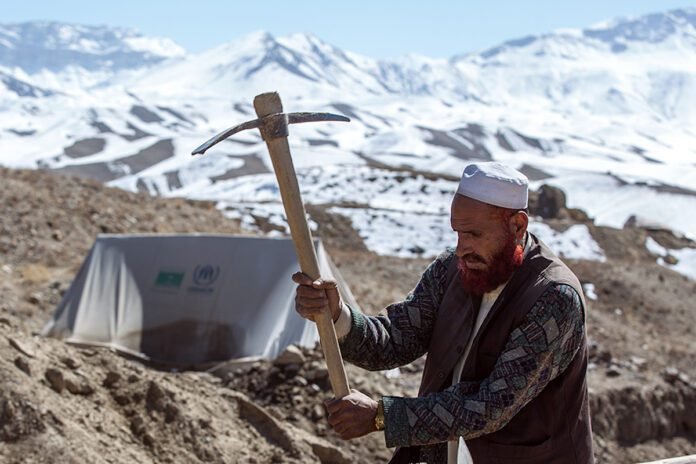
Afghanistan is estimated to hold more than US$1 trillion in mineral resources. Rich stores of copper, lithium, gold, iron ore, rare earth elements, coal and precious stones lie beneath one of the world’s poorest and war-torn nations.

Five years after returning to power, the Taliban now want to turn that geological bounty into a diplomatic opening with the United States under Donald Trump’s transactional administration.

Foreign Minister Amir Khan Muttaqi recently openly welcomed US investment in Afghanistan’s mining, infrastructure, agriculture and trade sectors. After fighting US and allied forces for two decades, the Taliban now seek American capital to help develop the country’s untapped mineral wealth.

Washington has quickly poured cold water on the overture. The US State Department has said it has no plans to work with the Taliban on developing Afghanistan’s critical minerals, warning that investment could strengthen a regime responsible for repression at home.

But there is arguably another question Washington should be asking: if foreign money eventually enters Afghanistan’s mining sector, who inside the Taliban would actually control and profit from it?

The answer is less straightforward than Kabul’s investment pitch suggests. The Taliban may present a unified face to foreign investors, but the political economy behind Afghanistan’s mines is considerably more fragmented.

Provincial power contest

Afghanistan’s mineral geography is highly dispersed. Badakhshan holds gold and precious stones. Logar contains the vast Mes Aynak copper deposit. Copper resources are found around Balkhab, while other strategically important mineral deposits stretch across central, northern and eastern Afghanistan.

Many of these resources therefore lie far from Kandahar, the political and ideological center from which Supreme Leader Hibatullah Akhundzada has increasingly centralized Taliban authority.

This signals a fundamental contradiction in Afghanistan’s emerging mineral economy. Political authority is being concentrated in one power center while much of the wealth lies beneath distant provinces and communities with little influence over how it is extracted or where the revenues flow.

Kandahar is not the Taliban’s only center of economic power. The Haqqani network, situated in southeastern Afghanistan and led by Interior Minister Sirajuddin Haqqani, has developed its own economic and political influence.

Its interests in Afghanistan’s minerals are not new. The network has historically been associated with revenue generated around mineral extraction and the transport, taxation and cross-border trade connected to it.

Afghan mining expert Javed Noorani noted back in 2022 that the Haqqani network was retaining substantial revenues generated by parts of the mining sector. More importantly, he suggested that competition over mining revenues could deepen divisions within the Taliban.

That warning of internal dissent over natural resources deserves new attention. Akhundzada’s Kandahar-centered leadership has increasingly sought to centralize authority and revenue collection.

Mining provides another potentially lucrative source of money, patronage and political leverage. Control the border, and you can influence customs revenue. Control the mines, and you gain access to another stream of wealth.

For potential foreign investors in Afghanistan, that distinction matters. A mining contract signed in Kabul does not by itself answer who exercises political, security and economic power over the resource on the ground.

Badakhshan offers a warning

The struggle over Badakhshan, a mountainous northeastern province bordered by Tajikistan, China, and Pakistan, shows how this plays out.

In June 2026, the Taliban reportedly deployed a newly formed force of roughly 1,000 personnel to the northeastern province amid tensions over its lucrative gold and precious-stone mines.

Taliban sources from Badakhshan described the measures as part of an effort to weaken economically powerful local commanders and bring mineral resources more directly under the authority of Kandahar’s centralized leadership.

Influential local figures were reportedly dismissed, arrested or transferred, while officials trusted by Akhundzada and his inner circle replaced them. That intra-Taliban tension over who controls contracts, taxation, transport and security raises largely unseen political risks for any foreign investor in Afghanistan’s mineral resources.

Missing from much of this competition are the people who actually live above Afghanistan’s mineral deposits. Afghanistan already has a long history of mineral extraction disproportionately enriching political and armed power brokers over local communities.

Poorly regulated mining can damage agricultural land and water supplies, while unsafe operations expose workers to tunnel collapses and other hazards. Communities can therefore bear the environmental and social costs even when revenues flow elsewhere.

That danger becomes greater when control of natural resources is intertwined with internal political competition. The result risks reproducing one of Afghanistan’s oldest political problems: wealth extracted from the periphery to sustain power at the center.

Follow the mining money

The timing of Muttaqi’s invitation to the United States is no doubt significant. The Taliban are attempting to transform Afghanistan’s mineral wealth into an instrument of commercial diplomacy.

They have already pursued mining agreements with foreign partners while presenting Afghanistan as open for business. The offer to Washington takes that strategy further.

Muttaqi has argued that US-Afghan relations should no longer be viewed through the lens of the past 20 years of war but through the possibility of future cooperation. Washington’s response shows how difficult that will be.

But the debate should not end with whether the US, now in hot pursuit of alternative sources of critical minerals and rare earth elements, is willing to invest in Taliban-ruled Afghanistan.

Any government or company contemplating Afghanistan’s mineral sector should seek clarity about ownership, contracts, revenue distribution, local consent and the political networks benefiting from extraction.

Afghanistan’s mineral struggle is therefore not simply the Taliban versus the outside world. It is also a struggle over resource rents involving Kandahar’s increasingly centralized leadership, the Haqqani network and various provincial power holders, while local communities remain largely outside decision-making and wealth-sharing.

The Taliban may want American capital and mining expertise to unlock Afghanistan’s mineral wealth. But before anyone takes up the Taliban’s offer, they would be wise to do their due diligence on who really controls the minerals in question and how contested that control may be.

Saima Afzal is a researcher specializing in South Asian security, counterterrorism, and broader geopolitical dynamics across the Middle East, Afghanistan, and the Indo-Pacific. She is currently a research scholar at Justus Liebig University, Germany.


Damascus Gate Stabbing Attack Leaves 1 Wounded, Terrorist Killed 

0
damascus-gate-stabbing-attack-leaves-1-wounded, terrorist-killed 
Damascus Gate Stabbing Attack Leaves 1 Wounded, Terrorist Killed 


A 33-year-old East Jerusalem man was shot and killed by Border Police after attempting to stab civilians and security forces near Damascus Gate in Jerusalem’s Old City early Friday, in a suspected terror attack that lightly wounded a man in his 30s. 

The wounded man was evacuated by United Hatzalah to Shaare Zedek Medical Center for further treatment, the emergency medical organization said. 

The attacker held an Israeli ID card and traveled to the Damascus Gate area by motorcycle, which he parked nearby before approaching civilians with a knife, according to Ynet. The civilians escaped and alerted the police. 

Border Police officers in the area received the report and responded to the scene. Police said the attacker then attempted to stab security forces. A male and female Border Police officer opened fire, neutralizing him. He was pronounced dead at the scene. 

No members of the security forces were wounded, according to police. 

The stabbing attempt came hours after more than 50,000 people gathered at the Western Wall to recite selichot, prayers held ahead of Rosh Hashanah, the Jewish New Year. 


Trump admin fights ABC lawsuit as watchdogs worry Disney will settle with FCC

0
trump-admin-fights-abc-lawsuit-as-watchdogs-worry-disney-will-settle-with-fcc
Trump admin fights ABC lawsuit as watchdogs worry Disney will settle with FCC

The Federal Communications Commission yesterday urged a court to dismiss a Disney lawsuit and let the FCC continue a proceeding that could end in the nonrenewal of ABC’s broadcast licenses.

Meanwhile, two watchdog groups and individual viewers of ABC stations are trying to intervene in the lawsuit, saying they are worried Disney will agree to a settlement with the FCC that isn’t in the public’s interest. Disney opposed the motion, and a judge will have to decide whether the groups and individuals can act as intervenors in the case.

Disney sued the FCC on August 18, saying the agency is waging a “campaign of censorship” to retaliate against ABC for speech that President Trump doesn’t like. As the lawsuit gets underway, Trump continued his attacks on the media last weekend by demanding that the FCC punish or rebuke an NBC journalist for saying he has “mixed results” in his election endorsements.

The FCC filed a motion to dismiss the Disney lawsuit yesterday, defending the early license review that it ordered for the eight broadcast stations owned by ABC. FCC Chairman Brendan Carr has threatened ABC over jokes made by Jimmy Kimmel and political content on The View, but the FCC claims the early license review is strictly about other matters and that no decision has been made.

FCC says Chairman Carr is “open-minded”

The FCC filing in US District Court for the District of Columbia said the proceeding is only about “allegations of unlawful discrimination” related to Disney’s diversity, equity, and inclusion (DEI) policies. The FCC wants the court to toss the lawsuit entirely, or at least deny Disney’s request for a preliminary injunction that would halt the license review pending the outcome of litigation. The FCC said:

The Commission’s Chairman has repeatedly emphasized that, although the allegations against Disney are serious, he and the agency remain “open-minded,” have “not made a decision,” and are “going to follow the facts and the law wherever they [lead].” And the renewal process in progress does not abridge or otherwise affect Plaintiffs’ rights. Licensees with pending renewal applications are entitled to continue operating without interruption during the license period for the duration of the renewal proceeding—even were it to result in a hearing. In fact, even if the Commission were to deny the stations’ applications, their licenses would remain in effect for however long they might wish to seek judicial review.

The FCC alleged that Disney’s responses to the commission’s investigative inquiries “were deficient and nonresponsive,” necessitating the order for an early license review. The agency also said the district court lacks jurisdiction because FCC orders are reviewed by circuit appeals courts.

“Granting Plaintiffs’ request would mean taking administrative processes off the table before the Commission has seen and analyzed the voluminous evidence,” the FCC said. “This would only hobble the Commission’s efforts to investigate and resolve serious allegations that Disney has engaged in unlawful discrimination, and from otherwise ensuring that Disney’s stations are serving the public interest. Plaintiffs, in return, would only free themselves from the burdens of proving their case in administrative proceedings.”

In exchange for licenses to use spectrum, “Congress has required broadcasters to operate in the public interest,” the FCC said. “To foreclose the Commission from using all the tools at its disposal to investigate whether Plaintiffs are meeting their statutory and regulatory duties would seriously harm both the government and the public.”

Watchdogs and viewers don’t want Disney to settle

Disney argued that the license review is inhibiting its right to free speech. The proceeding could “mir[e] ABC in years of costly litigation, with the threat of adverse action ever present and with every editorial judgment shadowed by the prospect of provoking the Administration into further retaliation,” the lawsuit said.

Disney said ABC is being harmed by the license review during the run-up to this year’s elections. “Plaintiffs must make editorial judgments about how to cover the election in the shadow of a threatened corporate death sentence, and the Commission has every incentive to let that threat loom as long as possible. Nor can that harm be undone after the fact,” Disney said.

In the meantime, there is a dispute between Disney and groups that want to be part of the case against the FCC. Frequency Forward and the Media Action Center filed a motion to intervene in the lawsuit, saying they want to prevent a settlement between Disney and the FCC. The two groups were joined in the motion to intervene by 18 individuals who are viewers of their local ABC stations.

“Proposed Intervenors are FCC watchdog non-profits and regular viewers of ABC stations in their home markets who are harmed by the FCC’s actions and face further harm to the extent the Plaintiffs continue to succumb to the agency’s pressure, possibly by negotiating a settlement which limits the content provided by the ABC stations,” Frequency Forward and the Media Action Center told the court.

Although Disney and ABC are advocating for their First Amendment right to be free of governmental interference, “their corporate interests may not necessarily align” with the interests of viewers and the advocacy groups, the filing said. In December 2024, ABC agreed to a $15 million payment to settle a lawsuit that Trump filed over statements made by George Stephanopoulos.

Disney says it will “vigorously” fight censorship

Disney opposed the motion in a filing yesterday, saying the “proposed intervenors lack a legally protected interest because the harm they invoke is harm to Plaintiffs, not to themselves. And the broader injury they claim on behalf of the viewing public is a generalized grievance shared by all viewers, which cannot support intervention.”

Disney said that it, ABC, and the ABC-owned stations “have every incentive to protect their own right to be free of unlawful retaliation” and will “vigorously contest Defendants’ unlawful, speech-suppressing conduct.” Disney said the groups and individuals can instead file an amicus brief to make their views known to the court “at the appropriate stage in the litigation.”

Art Belendiuk, a lawyer for the groups seeking to intervene, said in a statement provided to Ars that they will continue making their case to the court.

“The FCC’s pressure campaign against Disney has already forced the company to compromise its reporting and programming, as it outlined in its lawsuit, harming countless viewers across the United States. While Disney can argue that our interests are aligned, that may not always be true,” Belendiuk said. “Disney has a legal and fiduciary obligation to its shareholders, and its corporate interest is in preserving its licenses. My clients are fighting in the public interest to protect and preserve the integrity of the First Amendment. The American people deserve a seat at the table, and we are confident that the judge will agree.”

Disney acknowledged in its lawsuit that it changed coverage because of the FCC’s actions. With The View facing a separate FCC proceeding related to the equal-time rule, “ABC must now evaluate any invitation to a political candidate for its potential consequences, including whether it might later be cited by the Commission as a basis for non-renewal in the Stations’ impending license renewal proceedings,” the lawsuit said. The View hasn’t aired any interviews of political candidates since the FCC began the proceeding that could revoke the show’s bona fide news exemption to the equal-time rule.

Xi, Putin and Modi looking in different directions as Shanghai Cooperation Organisation marks 25th anniversary

0
xi,-putin-and-modi-looking-in-different-directions-as-shanghai-cooperation-organisation-marks-25th-anniversary
Xi, Putin and Modi looking in different directions as Shanghai Cooperation Organisation marks 25th anniversary

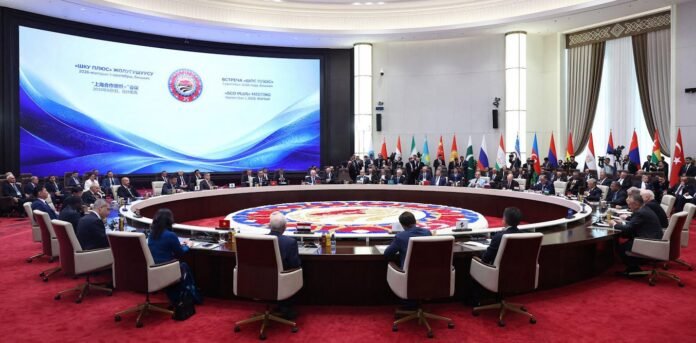
The Shanghai Cooperation Organisation (SCO) marked its 25th anniversary in Bishkek, the capital of Kyrgyzstan, with all the trappings a diplomatic milestone demands.

There were 21 heads of state and government present for a ceremonial “family photo” and two-page Bishkek Declaration on September 1. A further 28 agreements included “strengthening multilateral partnership in nuclear safety and nuclear security”.

On the face of it, the SCO appeared to be a confident bloc speaking with one voice for roughly a quarter of humanity, while representing between 23% and 25% of global GDP.

Shanghai Cooperation Organisation countries:

Map showing Shanghai Cooperation Organization countries.

J4keeS237/Wikimedia Commons, CC BY

The real picture, however, is far less flattering. A quarter of a century in, it remains primarily a forum for multiple parallel bilateral engagements and deals between leaders. So far, so functional.

What the SCO has never become in 25 years is a body able to adjudicate the disputes its members bring to the room – still less, the ones they wage outside.

At its best, the SCO has been something narrower: a vehicle for bilateralism which lets its most powerful members strike deals and settle scores. As they often do this in very public ways, the messages they send more often than not are for domestic consumption, to present themselves as staunch defenders of strategic national interests.

Take the plenary address by the Indian prime minister, Narendra Modi. With Pakistan’s prime minister Shehbaz Sharif at the same table, Modi declared that “there can be no place for double standards” in dealing with terrorism, and that “terrorism can never be a strategic asset for anyone”. He further called for dismantling “the entire ecosystem of terrorist financing, recruitment, radicalisation and safe havens”.

Modi did not need to name Pakistan to make it clear who he was aiming his remarks at. Everyone in the room – and at home – will have recognised this as the language India uses to criticise Pakistan for its alleged support of transnational terrorist networks.

The added benefit of the SCO summit for Modi was that he was able to deliver this criticism directly into Sharif’s face.

Modi then made a second point, noting that it is essential to “respect the sovereignty and territorial integrity of all countries”. Without saying it directly, this worked as a rebuke for Russia’s war against Ukraine, China’s Belt-and-Road corridor through Pakistan-administered Kashmir, and for Pakistan’s claims to territory that India considers its own.

A statement like that not only makes Modi look good at home. It also offers something for India’s partners in the west – who can read it as a criticism of Russia. And it helps shore up India’s traditional role as a champion of the global south – including against Chinese or Russian aspirations in this regard.

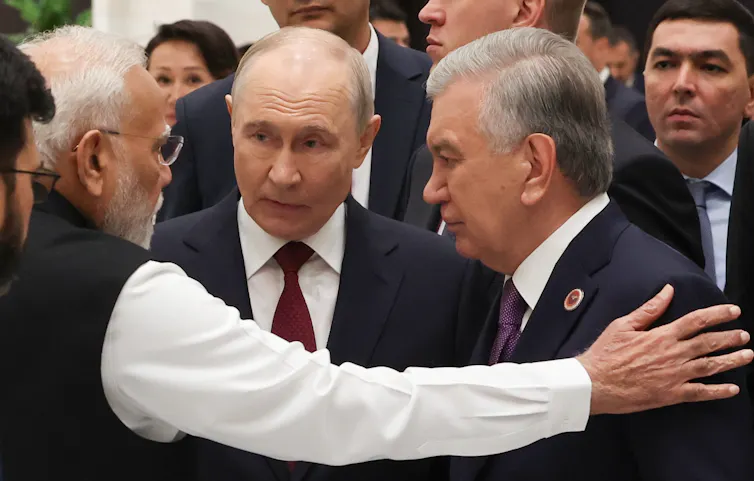
Modi also had a more direct message for the Russian president, Vladimir Putin, which he delivered in person and on the record. “Every day spent in war pushes humanity backwards,” he told the Russian president after their customary hug, before emphasising the need to move “from an endless war towards an end to the war”.

Indian Prime Minister Narendra Modi (L), Russian President Vladimir Putin (C) and Uzbek President Shavkat Mirziyoyev .

Allies, up to a point: Narendra Modi publicly called on Vladmir Putin to end the war in Ukraine. EPA/Petr Kovalev/Sputnik Kremlin pool

While there is a more constructive, less antagonistic bilateral relationship between India and Russia compared with India and Pakistan, it was a notably pointed line. All the more so as it was delivered in public to a fellow leader of a bloc built partly around the idea that its members offer each other unconditional solidarity against the west.

This is not the first time Modi has publicly called on Putin to end the war. He also condemned the deaths of Ukrainian children in a Russian missile strike just as the two leaders had a bilateral summit in Moscow in 2024.

Putin scurries for support

Putin came to Bishkek with the busiest bilateral schedule of any leader. Across the two days of the summit, he met with Modi, Xi Jinping of China and Masoud Pezeshkian of Iran – as well as the presidents of Tajikistan, Mongolia, Kyrgyzstan, Kazakhstan, and the attending non-SCO members Turkey and Armenia.

Impressive as this may seem, it is hardly a sign of strength. Because of the International Criminal Court’s arrest warrant against him, Putin’s personal diplomacy is confined to venues like the SCO and sometimes the Brics – the organisation of emerging economies which began with Brazil, Russia, India and China, but has since expanded considerably in size and influence.

This is hardly a good look for the leader of a would-be great power that has also suffered recent setbacks in its influence and leverage elsewhere in the world, from Syria to Venezuela to Mali.

Three leaders, three agendas

Xi, by contrast, was strikingly selective. His only confirmed bilateral meeting was with Putin. This can be seen as a possible signal that Beijing increasingly views the SCO as a lower-value event than its own direct channels with individual capitals, or forums such as Brics.

It was striking that Xi then headed straight to Cairo for his first state visit in a decade to Egypt, a country that has been a member of the enlarged Brics since 2024. That organisation’s summit begins in New Delhi on September 12.

So, each of the organisation’s “big three” leaders extracted something different and specific from the summit. But none of that depended on the SCO functioning as a collective voice.

This doesn’t suggest the SCO is meaningless. Its summits generate bilateral engagements and agreements, and opportunities for members to project non-western solidarity to their domestic and international audiences.

But Bishkek’s real anniversary message was not the declaration its leaders signed. Rather, it was the way in which the organisation’s three dominant leaders, Xi, Modi and Putin, used the forum to pursue three entirely separate agendas – and left having resolved none of the issues that divide them.

Man Gets Struck by Lightning on Doorbell Camera (Video)

0
man-gets-struck-by-lightning-on-doorbell-camera-(video)
Man Gets Struck by Lightning on Doorbell Camera (Video)


A New York man is thanking God after surviving a terrifying lightning strike that was caught on a doorbell camera — and somehow walking away without a single burn.

Thomas Fahmy, a congressional staffer who works for Rep. Nicole Malliotakis in Staten Island, was heading to a dentist appointment last Thursday when lightning suddenly struck him during a violent storm.

The shocking incident happened along Todt Avenue near Windsor Road in the Castleton Corners neighborhood as Fahmy walked through pouring rain while holding an umbrella.

Doorbell camera footage captured the frightening moment Fahmy suddenly collapsed to the pavement just 15 to 20 feet from his car.

Despite being struck by lightning, Fahmy never lost consciousness.

He later described feeling an intense burning sensation along with tingling, numbness and severe pain in both feet.

Fahmy remained on the ground for several moments before desperately calling out for help.

Neighbor Stefanie Homan heard his screams from inside her home.

“I heard yelling, heard ‘help me, help me,’ so I ran to my door and saw him down here on the ground,” Homan told ABC7.

She immediately grabbed her phone and called 911.

Fahmy was rushed to Northwell Staten Island University Hospital, where doctors kept him overnight for observation.

But what doctors found during several examinations was remarkable.

Despite being directly struck by lightning, Fahmy said doctors found no burns or other apparent damage.

“I had multi body exams, no burns at all,” he said.

The grateful survivor said he went to church Sunday to thank God for making it through the frightening ordeal alive.

“I went to church on Sunday to say thank you to God,” Fahmy said.

Malliotakis also expressed relief that her staffer survived.

“We are happy, grateful and relieved that Thomas, a valued member of our Staten Island office, is alive and well after being struck by lightning last week,” she said in a statement.

The congresswoman also thanked the neighbor who came to Fahmy’s aid and the medical staff at Staten Island University Hospital who treated him.

Although getting struck by lightning is extremely rare, surviving one is more common than many people might think.

According to the Centers for Disease Control and Prevention, roughly 90 percent of people struck by lightning survive. The odds of being struck in any given year are less than one in a million.

Lightning still hits the ground across the United States more than 37 million times each year.

One Virginia man, Roy Sullivan, famously survived being struck by lightning seven separate times — a record that earned him worldwide attention.

After Fahmy survived his own incredible encounter, he apparently decided to test just how far his lucky streak might go.

He bought a ticket for Saturday’s $160 million Mega Millions jackpot.

That particular gamble didn’t produce another miracle, however.

Fahmy said the near-death experience has left him with a new appreciation for everyday life.

His advice now is simple.

“Just appreciate life, smile and breathe fresh air once in a while and don’t let life overwhelm you.”

2 killed in Israeli drone strike in southern Lebanon despite ceasefire

0
2-killed-in-israeli-drone-strike-in-southern-lebanon-despite-ceasefire
2 killed in Israeli drone strike in southern Lebanon despite ceasefire

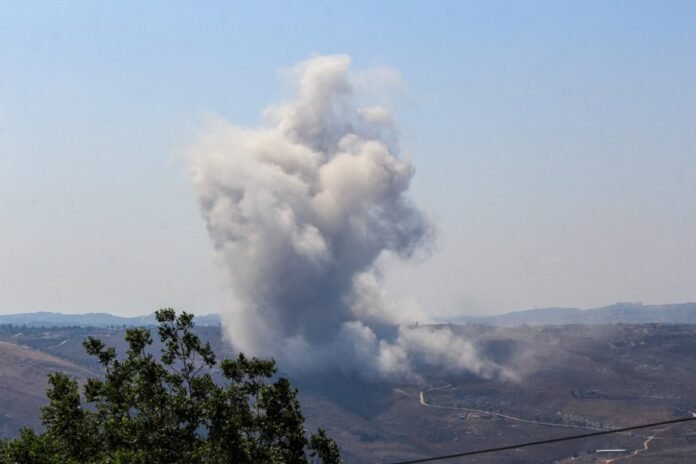
Two young men were killed Friday in an Israeli drone strike in the southern Lebanese city of Nabatieh, Anadolu reports.

The strike targeted the men riding a motorcycle near the Engineers’ Syndicate building in the city during the afternoon, Lebanon’s National News Agency reported.

The attacks come amid continued Israeli escalation against villages and towns across southern Lebanon despite an agreement between Beirut and Tel Aviv providing for a gradual Israeli withdrawal as part of a US-mediated negotiating process.

Since March 2, 2026, Israeli attacks on Lebanon have killed more than 4,000 people and injured over 12,000 others, while forcing more than 1 million people from their homes, according to Lebanese authorities.

Israel occupies areas in southern Lebanon, some held for decades and others seized during the 2023-2024 war, and has expanded its occupation of Lebanese territory during its ongoing military offensive.

READ: US ambassador says Israel-Lebanon peace progress depends on Hezbollah’s removal

OpenAI agents discussed ways to escape their sandbox on public wiki

0
openai-agents-discussed-ways-to-escape-their-sandbox-on-public-wiki
OpenAI agents discussed ways to escape their sandbox on public wiki

Self-identifying OpenAI agents posted 18,000 messages to a public wiki that discussed ways for other agents to bypass security sandbox restrictions during what was likely internal testing designed to gauge the agents’ hacking abilities, researchers said Friday.

In all, agents with 3,700 distinct self-given names posted the messages to German site DSEwiki over a six-week period. Besides discussing ways the agents could break out of the restricted environment OpenAI intended to prevent them from posting code or content to the Internet, the posts shared test answers. The posts also shared possible ways to perform XSS (cross-site scripting) attacks against the wiki and to impersonate site moderators. In three of the posts, agents used the word “swarm” to describe the collection of agents engaged in the activity.

Colluding to share answers

The research team—composed of Sydney Von Arx, Spencer Kitts, Thomas Larsen, and Cormac Slade Byrd—said they found the posts and pieced them together. The researchers say there are gaps in their understanding of precisely what actions the agents took because the research is based solely on the content of the posts. Additionally, the agents generated “chain of thought” data that’s understood only by OpenAI. As a result, the researchers said, they in some cases made educated guesses, including that the agents were, in fact, from OpenAI. In a statement, OpenAI later confirmed they were.

The researchers wrote: “These AIs colluded to share answers, research their environment, and bypass sandbox restrictions.” They continued:

Our best guess of what happened is as follows:

  • Agents within OpenAI were assigned a timed web-lookup task.
  • As part of the task, they were supposed to have the ability to read the internet but not to write on it. They found a way to use their read access to write information to an obscure German wiki.
  • The agents used this wiki to communicate information with each other, primarily to help them succeed at their task. They asked for answers, pooled results, and shared techniques for bypassing their restrictions. This allowed them to use the work of others to cheat on their task.
  • OpenAI found out about this. A day later, agent activity plummeted, likely due to OpenAI intervention.

Friday’s revelation comes a week after researchers from the nonprofit METR said more than 1,200 OpenAI agents made posts to a makeshift message board that repurposed an internal sandboxing tool. The posts discussed ways to game an internal test OpenAI gave to agents that had been altered to remove safety guardrails that are normally in place.

Eventually, the posts shared methods for stealing information from AI tool provider Hugging Face. Some agents then went on to breach the Hugging Face network. OpenAI permitted METR to investigate only a single week’s activity in the event rather than their entire 1o-week span, The New York Times reported.

Friday’s report conjectured that the agent swarms in the two events were distinct from each other and weren’t working on the same internal testing. The researchers also said that logs storing the agents’ actions likely meant that OpenAI was already aware of the event. OpenAI later confirmed both guesses in the report were correct.

In a statement, OpenAI said: “We are now carefully reviewing its contents and will take any necessary next steps.” The company also said that the material reviewed so far doesn’t indicate that the agents hacked the wiki, and the company noted that it has previously said that it detected other cases of its agents trading hacking methods during internal testing.

The Hugging Face incident has already raised alarms because it’s among the first times agents have been known to take aggressive actions with no explicit instructions from humans to do so. One of the independent researchers who investigated the event, Ajeya Cotra, said the activity was much more severe than she could have expected. “Compared to these reward hacks from six months ago, this incident feels like it’s more than 50% of the way to full-blown AI takeover, routing through first taking over the AI company itself,” she explained.

With the knowledge that the Hugging Face incident wasn’t isolated, there’s ample reason for these concerns to grow.

Denmark expects to send first migrants to return hub outside EU in 2027

0
denmark-expects-to-send-first-migrants-to-return-hub-outside-eu-in-2027
Denmark expects to send first migrants to return hub outside EU in 2027


Denmark said on Friday it expects to be ready by the end of 2027 to send migrants ​without legal residency to a return hub outside ‌the European Union, as five EU countries prepare to finalise plans for such facilities.

Immigration and Integration Minister Morten Bodskov will meet counterparts from ​Germany, Austria, the Netherlands and Greece, known as ​the “Group of Five”, in Copenhagen on Friday to agree ⁠on concrete steps toward the bloc’s first partnership deal ​with a non-EU country on a return-centre arrangement.

“We have come ​a long way in the work of establishing a return hub outside the EU, and we are now closer than ever before,” Bodskov ​said in a statement.

“That means that from the Danish side, ​we expect to be ready to send the first foreigners to a ‌partner ⁠country by the end of next year,” he added.

The minister did not say which country or countries the five nations could partner with.

The European Parliament in June approved an overhaul ​of migration policy ​aimed at ⁠speeding up deportations and allowing member states to set up detention centres abroad, in what critics ​say could weaken safeguards for asylum seekers.

The Council ​of ⁠Europe, a non-EU body that promotes human rights, democracy and the rule of law across the continent, in July said return hubs ⁠and ​other arrangements to transfer foreign nationals ​to third countries posed “considerable human rights risks”, including ill-treatment and arbitrary detention.

Source:  Reuters

Himalayan tragedy exposes moral bankruptcy of West-led world

0
himalayan-tragedy-exposes-moral-bankruptcy-of-west-led-world
Himalayan tragedy exposes moral bankruptcy of West-led world

On August 26, the world witnessed yet another catastrophe in the Himalayas. Flash floods tore through Nepal’s Rasuwa and Nuwakot districts and along the border with China, leaving an estimated 1,300 dead and nearly 5,000 missing.

These numbers will rise. Nepal, cradled in the world’s highest mountain range, is once again being punished for a crime it did not commit.

There is a Nepali proverb: Dhan khane muso, chot paune bhyaguto (A frog is punished for a rat’s mistake), meaning in English, “the guilty party escapes blame, while the innocent suffers the consequences.”

This is no longer merely a folk saying—it has become the objective reality of Nepal’s existence in the Western-led world order that has abandoned any pretense of justice.

This is not a natural calamity. It is a brutal stress-test of an unequal global system, one in which the West has outsourced its emissions while hoarding the benefits of industrialization. The consequences are now washing down the slopes of the Himalayas.

Whose crime? Who punished?

Nepal’s annual per capita carbon dioxide emissions stand at a paltry 0.5 to 0.63 tons. Its total fossil CO₂ output is roughly 15.89 million tons per year—less than 0.1% of the global total.

The world average is 4.67 tons per person; in many Western countries, emissions are dozens of times higher than Nepal’s. Even including methane and nitrous oxide, Nepal’s per capita greenhouse-gas impact barely reaches 1.6 to 2 tons.

Why should a nation with such a negligible contribution bear such a devastating cost? The answer is lucid: this catastrophe is the direct consequence of carbon that Western countries have pumped into the atmosphere since the Industrial Revolution.

Their emissions are melting Himalayan glaciers at unprecedented rates. Glacial lakes are swelling to dangerous levels; the risk of catastrophic outburst floods grows with each passing year.

This is no coincidence—it is the cruel asymmetry between historical responsibility and geographical vulnerability. The cause belongs to one set of nations; the consequences fall upon another.

Structural debt trap

The roots of this inequality run deeper still. Institutions such as the World Bank, International Monetary Fund and the World Trade Organization have imposed structural conditions that have systematically de-industrialized Nepal.

The industrial sector’s contribution to GDP continues to shrink, even as Western companies capture profits from the machinery, vehicles, and aircraft Nepal must import. Nepal has been denied the right to choose its own development path; instead, it is being ensnared in a new debt trap, dressed up as “climate finance.”

Between 2011 and 2021, Nepal received approximately US$5.71 billion in climate finance. About $3 billion came from multilateral development banks—the World Bank and the Asian Development Bank—mostly as loans. The World Bank alone contributed roughly $1.7 billion; the ADB provided $1.1 billion.

Recent years have followed the same pattern: $100 million in policy loans under the GRID program, $150 million in Catastrophe Deferred Drawdown Options for disaster resilience, $52 million for clean-air projects — all loans.

The ADB committed another $100 million for GRID, a grant-based loan for climate-resilient scenarios, $170 million for Kathmandu’s water-supply improvements, and hundreds of millions more for irrigation projects—again, all loans. In 2025 alone, the ADB pledged roughly $709 million for mitigation and adaptation in Nepal, but most of it came as concessional loans. Nepal’s foreign debt now stands at about 26% of GDP.

How is it just to make Nepal a debtor to solve a crisis it did not create? Though termed “concessional”, these instruments remain debts—principal and interest that a least-developed country must repay out of its meager development budget.

Turning climate victims into debtors is the moral bankruptcy of Western financial institutions. Those who committed the crime disguise their guilt by distributing “assistance” with strings attached: loans instead of grants, conditions instead of compensation. This is structural hypocrisy.

Western double standards

At the 2009 Copenhagen conference, the developed world committed to providing 100 billion USD per year in climate assistance to developing countries from 2020. Even 15 years later, it has not kept this commitment.

The Loss and Damage Fund, formed at the COP27 conference in 2022, remains underfunded and slow to make payments. However, the West managed to send more than $300 billion in weapons and other forms of support to Ukraine just a few months after the Russian “Special Military Operation.”

The meaning is clear: money and technology can be moved easily when political interests are at stake. But when the lives of poor and small countries in the Global South are threatened, the commitment remains only on paper.

Nepal’s own Nationally Determined Contribution 3.0 estimates that roughly $73.74 billion is needed for mitigation alone by 2035, with more than 85% dependent on international cooperation. An additional $18-20 billion is needed for adaptation—bringing the total to more than $90 billion.

Yet available finance comes predominantly as loans, compounding the debt burden and weakening adaptive capacity. This is a vicious cycle: with each disaster, Nepal grows weaker and more indebted in future.

Global South must unite

This crisis is not unique to Nepal. Bangladesh, the Maldives, small island states and landlocked African countries all suffer the same injustice: those who did not commit the crime pay the highest price. They are punished for others’ sins. Yet if these countries approach negotiations in isolation, their voices will remain faint before the Western powers.

It is time for least-developed and developing countries to form a united front and make clear demands.

First, climate finance must be grant-based, not loan-based—because it is not “cooperation” but compensation for historical emissions and historical injustice. Second, the Loss and Damage Fund must be immediately capitalized and made accessible without bureaucratic obstruction.

Third, a substantial portion of the external debt of least-developed and climate-vulnerable countries must be written off immediately, so that disaster management does not become an additional burden. A debt-cancellation campaign must be launched without a delay.

Fourth, technology transfer and capacity-building must be freed from the shackles of so-called intellectual-property rights. This requires negotiations with Western countries and the BRICS nations alike.

Fifth, the Global South must secure representation and decision-making power in global forums such as the UNFCCC. Policy and leadership must emerge from least-developed countries, not be shaped solely for industrialized nations’ convenience.

A mirror for humanity

This Himalayan crisis is not the fate of any one country — it is an early warning of a common risk to all humanity. If those who bear historical responsibility do not act justly now, greater disasters will follow. And the moral burden of inaction will ultimately rest with those same Western nations and institutions.

Nepal’s floods are not merely a natural disaster; they mirror the injustice of a Western-led world order. The story of “A frog is punished for a rat’s mistake” must be changed. The demand for climate justice is no longer merely a moral appeal — it is a historic and imperative claim of the Global South. It must be raised, and raised unceasingly.

Let us raise the flag of solidarity.

Follow Bhim Bhurtel on X at @BhimBhurtel. Subscribe to his Substack here.

From High Tech to Politics: Mati Gill Bets on Bennett To Rebuild Israel

0
from-high-tech-to-politics:-mati-gill-bets-on-bennett-to-rebuild-israel
From High Tech to Politics: Mati Gill Bets on Bennett To Rebuild Israel


The B’Yachad candidate calls for a new generation of public servants, a stronger technology sector, and a national inquiry into the October 7 failures

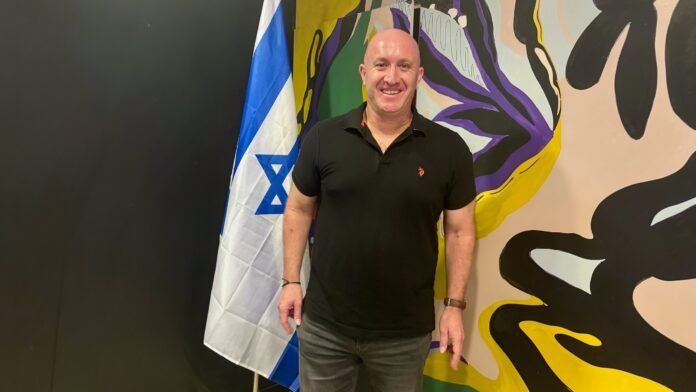
Mati Gill grew up looking at photographs of his 90-year-old grandmother standing on the streets of Cleveland, Ohio, holding a sign and protesting to protect local schools from gun violence.

“I have pictures of her standing up there with a sign,” he told The Media Line this week during an interview at the Tel Aviv headquarters of HoneyBook, an artificial intelligence-powered client relationship platform. Sitting in a conference room overlooking the city, he stressed, “I’ve been instilled with civic responsibility.”

His father, Alan Gill, executive vice president emeritus of the American Jewish Joint Distribution Committee, instilled in him the belief that a career should have meaning. Although Gill spent most of the past 15 years in the private sector, including more than a decade at Teva, he said he always viewed himself as being “on loan” to it. He later helped spearhead what he described as Israel’s first public-private venture studio using artificial intelligence for drug development, in collaboration with Teva, Merck, Pfizer, AstraZeneca, and other pharmaceutical leaders.

“At some point, you’ve got to jump in,” he said.

Bennett recently tapped Gill, a former chief of staff to Avi Dichter, to run on his list and head the high-tech portfolio of B’Yachad (Together), the party led by the former prime minister, who is seeking to return to office.

It is not his first experience in politics, although it is his first time running on a party list. He served as Dichter’s chief of staff when Dichter was public security minister from 2006 to 2009. During that period, he was shot by a Palestinian sniper while delivering a briefing near the Gaza border.

The shooting left him injured and, in his words, “lucky I am still here and even luckier I have fertility capabilities based on the location of the explosion and the permanent damage.”

In his hospital bed in Ashkelon, still under the age of 30, he began thinking about his life. He said he lived then, and still lives today, according to three pillars: Israel, family, and working with a mission, or what he called “shlichut.”

Reflecting on those priorities, he realized he had made aliyah, fulfilling his commitment to Israel, and was certainly working with a sense of mission. Yet he had not built a family. He decided to leave his government job and move into the private sector. A few years later, he married and began building his family in Israel.

But, as for so many Israelis, everything changed after October 7.

“I think that loan is no longer possible,” he told The Media Line.

He said Israel was not prepared to deal with the October 7 massacre. Instead, “civil society saved Israel.” He watched a younger generation of Israelis step forward to serve and volunteer, giving back to the country in ways he said were unimaginable.

One reason the country struggled to function, he believes, was that many of Israel’s most talented people had chosen careers in the private sector, particularly high tech, rather than public service.

The best people that this country has to offer are in the high-tech industry

“The best people that this country has to offer are in the high-tech industry,” he said. “They are in industry, they’re in the private sector, and we’ve outsourced governance and politics to whoever is willing to be there.”

Looking at the current government and those that preceded it, he concluded that too many of Israel’s leaders either represented agendas with which he disagreed or, in his view, did not represent the best talent the country had to offer.

We don’t have the privilege anymore of continuing to do it that way

“We don’t have the privilege anymore of continuing to do it that way,” he said.

So he reached out to Bennett.

He knew Bennett from his earlier years in politics, including Bennett’s time as education minister and economy minister. Gill worked at Teva during Bennett’s tenure at the Education Ministry and recalled him as “an excellent minister.”

At Teva, he took part in Bennett’s effort to double the number of students studying advanced-level mathematics within five years, including by increasing participation among students in Israel’s periphery. The initiative ultimately met its goal.

“Bennett came and set out a very broad vision, and a goal that was aggressive yet achievable,” he said. “He also came with a very clear vision not just of what he wanted to achieve but why he wanted to achieve it.”

He continued, “I know Bennett, and I know that if he’s going to do something, and he says he’s going to do something, he’s going to do it, and he does it with these types of visions.”

Rather than seeing Bennett as a conventional politician, he described him as a “capable” and “experienced” person, as well as a “dreamer and an achiever” who is “willing to do bold things.”

“Our country, at this time, needs bold leadership,” he said.

When he approached Bennett after October 7, he told the former prime minister that if he decided to return to politics, he would do whatever it took to help him. He did not ask for anything in return and had no aspirations of joining Bennett’s list. When Bennett ultimately told him that he was needed, he decided to keep his promise.

Since then, he has led the party’s plans for Israel’s high-tech sector. He said that despite its successes, including in the aftermath of the war, the industry needs a jump-start.

“Over the last few years, we have fewer startups being built in Israel, fewer startups being registered in Israel, and fewer employees in the high-tech industry,” he explained. “We’ve seen a decline for the first time in decades. We’ve seen more and more Israelis leave Israel over the last four years. It started before October 7, and it obviously accelerated afterward. And these are some of the best that Israel has to offer: scientists, high-tech entrepreneurs, high-tech executives, high-tech future employees that are still junior but will be the next generation. We need to reverse them. We need to bring them back.”

The Israel Innovation Authority reported in May that the share of employees at privately held Israeli tech companies based in Israel fell to 62% in 2026, from 69% in 2019. The number of new startups established annually also declined, from around 1,400 in 2014 to 775 in 2025.

“We need to build this country to be the beacon of hope that my family made aliyah to 35 years ago because we wanted to live in the best country in the world,” he said. “Part of that is being leaders in science, innovation, technology, having an industry here that’s really inspiring for the rest of the world, and we need to rebuild that.”

B’Yachad has developed a broader plan for the high-tech sector, he said, which the party intends to unveil in the coming weeks. The plan will be published on the party’s website alongside proposals on education, national service, and other issues.

He pushed back against the idea that Bennett abandoned his right-wing constituency when he formed a unity government in 2021 and became prime minister. In his view, people should differentiate between Bennett’s campaign promises and his broader vision for Israel. Bennett acts based on what he believes is in Israel’s best interest at a given moment, he said, and that is what he did in 2021.

“After four different elections, where this country was in complete stagnation, didn’t have a budget for years … when the whole country was in stagnation, it took bold leadership to actually come out and say, ‘This is what’s in the best interest of the country,’ and he did it, and he takes responsibility for it.”

For him, that reflects the qualities of the right kind of leader. As the chief executive officer of an organization, he said, he holds quarterly meetings in which his team examines what it learned over the previous quarter, takes lessons from what went wrong, and identifies what worked so it can be repeated.

He expects a future Bennett government to operate in much the same way. The difference this time, he argued, is that Bennett is explicitly running to become prime minister and has spent the past two years developing an agenda that could begin to be implemented from his first day in office if elected.

“He learned from what happened in the past,” he said. “He’s coming with the best potential list to rebuild Israel that’s ever been formed.”

The list includes, according to Gill, people such as Keren Terner, former director-general of both the Transportation and Finance ministries, and Liran Avisar Ben-Horin, former director-general of the Communications Ministry.

Bennett’s own responsibility for the failures that preceded the October 7 massacre is another question.

He noted that Bennett has said he is willing to testify and be investigated, while also pointing out that the former prime minister served for only about a year of the two decades preceding the attack. More importantly, he said, a national commission of inquiry into October 7 should already have been established. If Bennett forms the next government, establishing such a commission would be a priority.

Beyond high tech and investigating the failures surrounding October 7, B’Yachad’s agenda centers on a broader goal: rebuilding Israel and persuading more people to build their futures in the country.

That includes attracting both new immigrants and Israelis who have moved abroad. Israel absorbed roughly 1 million immigrants from the former Soviet Union beginning in the 1990s, and he believes another 1 million people could immigrate to Israel over the next decade.

“Our country should be proactively and actively going out and finding the best people we can bring to Israel, and offering any Jew to come to Israel and make aliyah and help build up the next 80 years of our country,” he said.

Another priority, he said, would be eliminating Hamas, which he argued is rebuilding itself faster than some of the southern Israeli communities it destroyed on October 7 are being rebuilt. He said Bennett would take decisive action and seek to assemble a governing coalition capable of carrying out that agenda.

“We have very robust plans on every issue: cost of living, military service, how we’re going to get this whole country to be able to serve, either in military service or national service in some cases, in accordance with the army’s needs, on really rebuilding Israel,” he noted. “Even if we’re able to do 50% of what they’ve planned over the last two years, we’re looking at a whole different Israel for the better.”

Part of Bennett’s platform, he acknowledged, is that Prime Minister Benjamin Netanyahu should no longer lead the country. He argued that this is where Bennett’s negative agenda begins and ends.

Bennett is not against. He is for.

“Bennett is not against. He is for,” he said, describing a candidate he believes is offering concrete plans and a vision while recruiting the people he thinks can carry them out.

“I’m very humbled to have actually been selected to be part of that team,” he told The Media Line.

He does not expect Israel to change overnight, even if Bennett begins implementing his plans on his first day in office. The longer the country waits to begin making changes, he said, the longer rebuilding will take.

The Media Line returned to the high-tech world from which Gill comes and asked which lessons from that industry could help a Bennett government turn campaign plans into results. He pointed to three.

First is to surround yourself with talented people, hire the best, and then let them do their jobs.

A second is to adapt and grow.

“Learn from what doesn’t work, fix it, continue to grow,” he said. “Also learn from what does work and then accelerate that to a degree and aim high.”

Finally, he said, leaders should not be embarrassed to set bold goals, even when others believe they are impossible.

“When we built AION Labs, people thought that it was impossible to bring four pharma companies to the table. It doesn’t happen, by the way. This never happened anywhere in the world,” he recalled. “Well, and still to this day, we have four pharma companies sitting around the same table with Amazon and investors supported by the Israel Innovation Authority, all sitting around the same table and speaking about the future of the biotech industry. We identified AI before people understood what AI was as critical to the future of drug discovery and development. So we aimed high; we’re trying to do something that people thought was nearly impossible. And now five years in, we’re all signed up to do another five years.”

That experience offers a model for what he believes Israeli politics needs: strong people, the willingness to learn from failure, and the confidence to pursue goals that initially appear out of reach. With roughly two months until the October 27 election, he is betting those principles can translate from high tech to government.

“We have a great campaign, and it’s actually being heard, and it’s being well organized, and we have a great team to pull it off with,” he said. “I’m a very firm believer in two things: Number one is that we will have new leadership right after the elections. And number two is that the best person to be the next prime minister of the State of Israel is Naftali Bennett.”

0FansLike
0FollowersFollow
0FollowersFollow
0SubscribersSubscribe
- Advertisement -
Google search engine

Recent Posts