It’s clear from the generally horrified reaction to Gianni Infantino’s plan to turn the World Cup into an investment vehicle that the Fifa boss has gone too far.
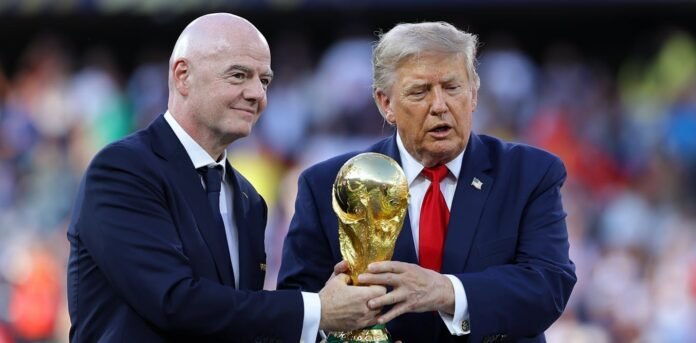
For years Infantino has been the target of criticism. What is seen as his inapprioriate close relations with world leaders including Vladimir Putin of Russia, Mohammed bin Salman of Saudi Arabia and US president Donald Trump. Then there’s the controversial “peace prize” awarded to Trump and his recent bitter Instagram post hitting out against “haters” who criticised the way Fifa had organised the recent World Cup, which have been the subject of ridicule.
But his latest plan, Uefa has warned, “crosses a line that football’s governing institutions should never cross”. Fifa wants to package the World Cup’s commercial rights into a new US$20 billion (£15 billion) company, then sell private investors a stake – potentially around 20% – in the broadcasting, sponsorship, licensing and ticketing revenues it generates.
This would represent a seismic change to the governance of football’s greatest competition and appears to have been devised without meaningful consultation, prompting Uefa to accuse Fifa of acting with “zero transparency”.
The details should trouble anyone who cares about how football is governed. Fifa has presented the proposal as part of the “democratisation of football worldwide”. Uefa sees things rather differently: “None of us are the owners of football. It is not Fifa’s to sell,” Uefa said.
The UK prime minister, Andy Burnham, said pretty much the same thing, adding: “Football belongs to the fans. It always has, and it always will.”
There are also serious questions about the relationships surrounding the proposal. Joshua Kushner’s Thrive Capital has been linked to the plan. Kushner is the brother of Jared Kushner, Trump’s son-in-law. This comes after a World Cup during which Infantino’s proximity to the US president became increasingly conspicuous – to the point where Trump publicly acknowledged asking him to review refereeing decisions.
Read more: World Cup’s credibility in question after Fifa volte face following call from Donald Trump
Infantino has now also been called to appear before the US Congress amid questions over Fifa’s relationship with Trump.
None of this establishes wrongdoing. But an organisation governing the world’s most popular sport should understand that such relationships require extraordinary transparency. Instead, Infantino presides over a Fifa in which power has become dangerously concentrated.
Infantino’s power is not simply personal but structural. Fifa’s patronage system turns development money into political loyalty, political loyalty into presidential power, and presidential power into an institution increasingly resistant to meaningful scrutiny.
Decisions of extraordinary consequence are now seemingly made with vanishingly little consultation or accountability: not good governance so much as rule by presidential fiat.
Football’s capitalist endgame
As a lifelong football supporter and a researcher of football heritage, this bothers me. Football’s long transformation from a community culture into global entertainment product is well documented. We have watched clubs become investment vehicles, supporters become consumers, stadiums become entertainment complexes and communal traditions become commodified intellectual property.
Now comes the logical endpoint: the World Cup itself as an investment proposition. But there is a fundamental problem. Fifa did not create the thing from which it proposes to extract this extraordinary value.
The World Cup is what scholars call “living heritage”: a cultural tradition inherited between generations, but continually recreated by those who participate in it. Its extraordinary value lies in the stories passed from parents to children, the iconic moments endlessly watched and retold; the rivalries, heroes, heartbreaks and binding mythologies accumulated across almost a century. Every tournament adds another layer to a collective inheritance that Fifa administers, but supporters around the world create, carry and bequeath.

Private capital didn’t create that value. But it is being invited to extract from it. There’s a fundamental problem with this. Football shouldn’t be Infantino’s – or Fifa’s – to sell. Fifa administers the World Cup. It does not own the accumulated human culture which makes it valuable. That distinction matters because living heritage is not indestructible. It survives only for as long as communities retain the ability to practise and transmit it.
Price supporters out? Turn matches into media entertainment experiences? Expand competitions relentlessly until they become meaningless? Transform traditions into branding exercises? Eventually, the culture from which all this commercial value is extracted withers.
People power
But against all this bleakness, there is one reason for hope. We have been here before.
It’s worth remembering that one of the banks associated with Fifa’s plan, J.P. Morgan, was also involved in the ill-fated European Super League, which made essentially the same mistake in 2021. The people behind this project seemed to believe that because they legally owned football clubs, they possessed an unlimited right to reshape institutions which generations of supporters had invested with cultural meaning. Supporters reminded them otherwise.
Fans took to the streets and revolted. Politicians responded. Pressure rapidly became irresistible, clubs fled one by one, and within 48 hours a project presented as the inevitable future of European football had spectacularly imploded, although it took until February this year for the last rites to be read.
That crisis helped awaken the very protectionist consciousness around football heritage I have subsequently spent years researching. It demonstrated that somewhere beyond the billions, broadcasters and investment funds remained a boundary beyond which football could not be pushed without resistance.
Infantino and Fifa may just have found it again. The World Cup was never theirs. And it certainly does not belong to whichever billionaires and investors can afford a piece of it. It belongs to the people who have spent almost a century giving it meaning.