28 C
London
Tuesday, July 28, 2026
Home Blog

Judge blocks first state law that would have banned prediction markets

0
judge-blocks-first-state-law-that-would-have-banned-prediction-markets
Judge blocks first state law that would have banned prediction markets

Minnesota, the first US state to prohibit prediction markets, was prevented from enforcing the law by a federal court ruling just days before the ban was scheduled to take effect. But while Minnesota was stopped from enforcing a total ban, the state may ultimately be allowed to prohibit some types of prediction-market wagers.

The Trump administration and the two largest prediction markets—Kalshi and Polymarket—sued Minnesota after the state enacted the law in May. The cases were consolidated, and a ruling issued yesterday imposed a preliminary injunction blocking the law that was scheduled to take effect on August 1.

Minnesota lawmakers saw prediction markets as indistinguishable from gambling, but the US Commodity Futures Trading Commission (CFTC) argues it has exclusive authority to regulate the platforms under federal law. One of the primary legal questions is whether event contracts are “swaps,” which are regulated by the CFTC.

Swaps are defined broadly in US law to include contracts in which payment “is dependent on the occurrence, nonoccurrence, or the extent of the occurrence of an event or contingency associated with a potential financial, economic, or commercial consequence.” US District Judge Katherine Menendez in the District of Minnesota, a Biden appointee, said Minnesota’s total ban on prediction markets is likely to violate US law because many trades on Kalshi and Polymarket are swaps. Menendez wrote:

Specifically, it appears that whether the Minnesota statute is expressly preempted turns on whether the state law attempts to regulate trades in event contracts that qualify as “swaps” within the meaning of the CEA [Commodity Exchange Act]. And there are several examples of event contracts hosted by Kalshi and Polymarket US that fit that definition because they concern the occurrence of events with clear potential economic, financial, or commercial consequences that are neither remote or unattenuated. Kalshi and Polymarket US are designated contract markets, so the CFTC has exclusive jurisdiction to regulate transactions involving those “swaps.”

State AG: “Prediction markets are gambling”

Menendez said the CFTC, Kalshi, and Polymarket met their burden of showing they are likely to succeed on the merits, so she issued “a preliminary injunction barring enforcement of Minnesota’s prediction market statute until a final decision on the merits is reached.” But she said Minnesota may be able to prohibit some types of event contracts offered on Kalshi and Polymarket because not all of them appear to meet the definition of swaps. For example, Menendez doesn’t think prediction-market bets on the outcome of Love Island USA meet the legal definition of swaps.

Minnesota could continue litigating the case in district court or ask a federal appeals court to overturn the preliminary injunction. When asked if the state will appeal yesterday’s ruling, Minnesota Attorney General Keith Ellison said he will keep defending the law and did not make any mention of an appeal.

“We respectfully disagree with the Court’s determination that the proper ‘status quo’ to maintain is one that allows predatory gambling apps to proliferate,” Ellison said in a statement provided to Ars today. “However, we also acknowledge that the Court has been presented with complex legal issues that are difficult to decide quickly and without a fully developed record. We look forward to continuing to litigate this case and defend the State’s duly passed law.”

Ellison also said, “Prediction markets are gambling, plain and simple, and Minnesota has every right to keep predatory gambling out of our communities.”

Minnesota may get partial victory

While Minnesota was the first state to enact a full ban, other states have tried to impose limits on prediction markets by regulating them under gambling laws. Courts have reached different conclusions on whether states can regulate prediction markets, raising the odds that the Supreme Court will take up a case to decide the matter.

Menendez’s ruling said that when she rules on the merits, district court may allow Minnesota to prohibit certain types of event contracts, but not all of them. “Plaintiffs have not shown that every event contract listed on Kalshi and Polymarket US fits the statutory definition of a ‘swap.’ If they don’t fit, Plaintiffs have much weaker claims that the CFTC is the only authority that can regulate them,” Menendez wrote.

After the sides present their cases in more detail, Menendez could issue a permanent injunction that blocks only parts of the law. She wrote:

After all, as relevant here, the exclusive jurisdiction Congress gave to the CFTC extends to transactions involving swaps that are conducted on DCMs [designated contract markets], not to every conceivable event contract that Kalshi, Polymarket US, or any other DCM might host. If, as appears to be the case, Kalshi and Polymarket US are listing at least some event contracts that don’t meet the CEA’s definition of swaps, any permanent injunctive relief may be much narrower. But given the unique nature of Minnesota’s prediction market statute, the posture of these cases, and the imminent effective date of Minnesota’s statute, a preliminary injunction maintaining the status quo until the merits of this case can be fully resolved is appropriate.

Menendez also stressed that “this is not a final determination of the merits, and there may be strong arguments that ultimately weigh against a conclusion that the CEA expressly preempts the statute.”

Minnesota argued that “swaps should only be understood to include event contracts that are tied to some commodity,” rather than to the outcome of some future event, Menendez wrote. But the US law defining swap “has no such limiting language,” and several other courts already “found that event contracts involving the outcomes of sporting events fall within the definition’s scope,” she wrote.

Love Island USA bets aren’t swaps, judge says

Menendez said some prediction-market bets clearly meet the federal definition of swaps because they are closely associated with potential financial, economic, or commercial consequences. That includes contracts that pay out based on who will win a US Senate seat, which NBA team would sign LeBron James, which team would win the World Cup, and when traffic in the Strait of Hormuz would return to normal, she wrote.

But Menendez said other prediction-market transactions don’t appear to fit the definition of swaps. This includes trades predicting which couple will win season eight of Love Island USA and trades regarding what announcers would say during World Cup game broadcasts.

Menendez wrote that “one is hard pressed to imagine the financial, economic, or commercial consequence of the occurrence or outcome of these events unless the words of limitation in [the federal definition] are stretched so broadly that they impose no limit on the CFTC’s jurisdiction at all.”

Menendez also said that plaintiffs and defendants regrettably “treated the issues before the Court as all-or-nothing propositions,” which “provides little guidance on how the Court ought to navigate the reality that Kalshi and Polymarket US list many event contracts likely falling within the CFTC’s exclusive jurisdiction to regulate swaps on DCMs, and many falling outside of it.”

Vietnam’s smart-port push opens another door to Washington

0
vietnam’s-smart-port-push-opens-another-door-to-washington
Vietnam’s smart-port push opens another door to Washington

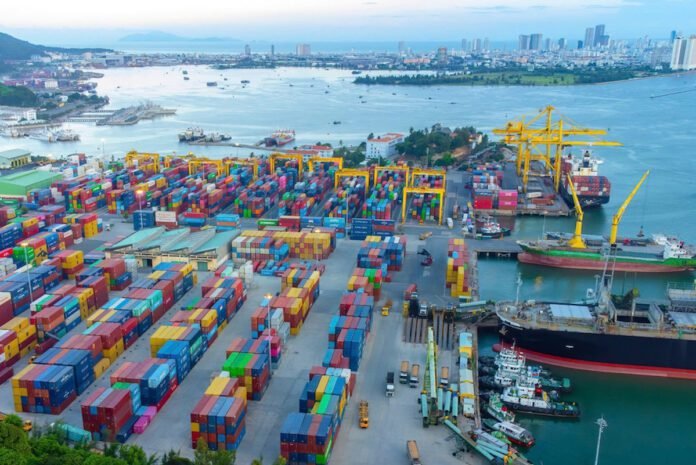
Vietnam’s effort to modernize Da Nang’s maritime infrastructure may look at first like another Asian port-development project, but it is considerably more important than that.

The transformation underway along Vietnam’s central coast brings together three priorities that increasingly define Hanoi’s foreign policy: economic modernization, technological self-reliance and stronger maritime awareness in the South China Sea. It also creates another practical opening for US-Vietnam cooperation.

That convergence will be on display with the arrival of the USS George Washington (CVN-73), a Nimitz-class nuclear-powered aircraft carrier, serving as the US Navy’s premier forward-deployed carrier in the Indo-Pacific in Da Nang on July 30-August 3.

The event will serve as another reminder that the central Vietnamese city has become an important point of contact between the two former battlefield foes and now strategic comprehensive partners.

Previous high-profile port calls to Danang include the aircraft carrier USS Ronald Reagan (CVN-76) in June 2023 and an amphibious group visit by the USS Tripoli (LHA-7) and USS Robert Smalls (CG-62) in December 2025.

The naval symbolism matters, but the more consequential story is taking place ashore. Vietnam is expanding the Lien Chieu port complex as part of its plan to turn Da Nang into a major logistics gateway, linking central Vietnam with regional and international markets.

The city envisions a modern container port with highly automated cargo-handling technology and eventual capacity measured in millions of containers annually. Da Nang also wants stronger road and rail links connecting the port with industrial centers and the East-West Economic Corridor stretching toward Laos and Thailand.

Da Nang Port is already experimenting with digital tools. In April, it introduced an electronic mapping system that combines real-time container-yard information with GPS navigation, allowing truck drivers to locate containers and navigate the terminal more efficiently. It is a modest example of a larger transformation toward data-driven port management.

Satellites are part of that transformation. Vietnamese researchers are increasingly using remote sensing to monitor coastal waters, shoreline changes and port development.

A recent study using European Sentinel-2 satellite imagery examined changes at Lien Chieu between 2022 and 2025, demonstrating how satellite data can track shoreline movement, land reclamation and environmental impacts associated with major port construction.

Vietnam has also started combining satellite observations with artificial intelligence to monitor seawater quality. Researchers have used Sentinel-2 data, machine-learning algorithms and cloud computing to assess coastal conditions, illustrating how remote sensing can become a routine tool of environmental governance.

For port managers, these technologies have obvious commercial value. Satellite imagery can reveal sedimentation near navigation channels, monitor coastal erosion and help planners understand how construction is changing shorelines. Automatic Identification System data can track vessel movements.

Digital port platforms can reduce congestion, improve cargo flows and lower logistics costs. But information gathered for commercial purposes does not stop being useful at the harbor entrance.

The same combination of satellites, vessel tracking, geospatial analysis and environmental sensors can improve maritime domain awareness — essentially giving authorities a clearer picture of what is happening at sea.

That is where the Da Nang story has geopolitical significance. Vietnam faces the South China Sea while managing a difficult relationship with China, its largest neighbor and an important trading partner but also rival claimant to contested maritime territories.

Hanoi has no interest in turning Da Nang into an anti-China outpost, nor is Vietnam likely to abandon its longstanding reluctance to enter formal military alliances. Instead, Vietnam is building resilience.

Better ports strengthen supply chains. Better satellite information improves environmental management. Better vessel tracking improves navigation and maritime safety.

Collectively, however, those same capabilities make it easier for Vietnam to understand activity along its coastline and in nearby waters. Civilian technology and national security are increasingly difficult to separate at sea.

Washington has good reason to pay attention. Since elevating relations to a Comprehensive Strategic Partnership in 2023, the US and Vietnam have broadened cooperation in science and technology, the digital economy, semiconductors, defense and maritime security.

Washington has also provided equipment and programs aimed at improving Vietnam’s maritime domain awareness, port security and ability to combat illegal fishing. Da Nang therefore offers a logical laboratory for the next stage of the relationship.

American universities, technology companies and government agencies possess considerable expertise in satellite analysis, geospatial information systems, environmental monitoring, artificial intelligence and smart-port management.

Cooperation in these fields would be less politically sensitive than a dramatic expansion of military access while still strengthening Vietnam’s capacity to manage its maritime space. It would also meet Hanoi on its own terms.

Vietnam’s strategic approach is not built around choosing Washington over Beijing. It is about acquiring enough diplomatic, economic and technological options to avoid excessive dependence on either. Smart maritime infrastructure fits that strategy particularly well because it delivers immediate economic benefits while quietly strengthening national capacity.

Da Nang’s geography only magnifies its importance. The city sits on Vietnam’s central coast facing the South China Sea and has long served as a maritime gateway. Today, planners see Lien Chieu as a key link between the sea, Vietnam’s industrial economy and overland trade routes reaching into mainland Southeast Asia.

That makes the port relevant not only to ships entering Vietnam but to the broader contest over resilient Asian supply chains.

The expanding US-Vietnam maritime relationship is not measured solely by warships, joint exercises or defense agreements. Increasingly, it also involves satellites monitoring coastlines, digital systems tracking ships and cargo, and sensors giving Vietnamese authorities a clearer picture of activity in their coastal waters.

US port calls at Da Nang provide the visible face of that relationship, while quieter cooperation in technology, maritime awareness and infrastructure may prove more consequential over the long term. The quieter transformation ashore may prove more consequential.

Vietnam is building a port for commerce. In doing so, it is also building the information infrastructure needed by a modern maritime state. For the US, helping Vietnam make that transition offers something increasingly valuable in the South China Sea: deeper cooperation without a full-blown alliance.

James Borton is a senior fellow at Johns Hopkins SAIS Foreign Policy Institute and the author of “Harvesting the Waves: How Blue Parks Shape Policy, Politics, and Peacebuilding in the South China Sea.

Oman Pushes Regional Plan for Shared Control of the Strait of Hormuz

0
oman-pushes-regional-plan-for-shared-control-of-the-strait-of-hormuz
Oman Pushes Regional Plan for Shared Control of the Strait of Hormuz


Oman has put forward a proposal that would replace Iran’s sole control of the Strait of Hormuz with a joint regional mechanism, opening negotiations over one of the world’s most strategically important shipping lanes, Reuters reported, citing a Gulf source.

At the heart of the proposal is a shared framework for managing the Strait, which carries 20% of the world’s oil and gas. Rather than leaving oversight solely in Iran’s hands, the plan would establish a regional system responsible for maritime security, search-and-rescue operations and other functions needed to keep the waterway operating.

The proposal also introduces a voluntary transit fee modeled on the Strait of Malacca, where shipping companies contribute to navigation, environmental protection and emergency response without mandatory tolls.

For now, the talks are limited in scope. The Wall Street Journal reported that negotiators are concentrating on shipping arrangements rather than trying to resolve the broader conflict. Mediators hope a temporary understanding over maritime operations could create momentum for wider negotiations later.

That goal remains elusive. According to the Wall Street Journal, Iran and Oman continue to disagree on several aspects of the proposal, including whether ships passing through the Strait should contribute transit fees. Mediators and one US official told the newspaper that no agreement has been reached on that issue.

The diplomatic effort accelerated Friday, when Oman reportedly sent a delegation to Tehran. The visit took place the same night President Donald Trump ordered a halt to US attacks on Iran after nearly two weeks of nightly strikes targeting Iranian military capabilities.

While significant differences remain, the negotiations represent an effort to reshape how the Strait of Hormuz is managed, replacing unilateral control with a regional arrangement that supporters believe could improve maritime security while creating an opening for broader diplomatic engagement.

Federal Judges Chastise Trump’s Justice Department for “Unlawful,” “Unethical” and “Unseemly” Conduct

0
federal-judges-chastise-trump’s-justice-department-for-“unlawful,”-“unethical”-and-“unseemly”-conduct
Federal Judges Chastise Trump’s Justice Department for “Unlawful,” “Unethical” and “Unseemly” Conduct

Across the country, federal judges are calling out Department of Justice lawyers, questioning in unprecedented ways whether they can be trusted to tell the truth or uphold centuries-old legal norms.

From Washington, D.C., to Rhode Island to Oregon, federal judges nominated by presidents from both parties, including Donald Trump, have zeroed in on what’s called “the presumption of regularity.” It essentially means that judges must presume that the government — whether it be federal prosecutors, an IRS auditor or an FBI agent — did their jobs according to the rules and in good faith.

Until Trump’s second term, which has seen an exodus of veteran DOJ lawyers and a transformative shift in priorities from issues like enforcing civil rights to instead defending a mass deportation agenda, this foundational tenet had rarely been discussed in federal courtrooms, former judges, lawyers and scholars say. But as Trump’s DOJ exhibits behavior that judges have called “unlawful,” “unethical,” “unseemly” or otherwise dishonest, adherence to that bedrock standard is now being questioned.

ProPublica reviewed hundreds of cases since Trump retook the White House in which judges criticized the actions of DOJ lawyers and found more than 40 in which they explicitly referenced the presumption of regularity. In many cases, judges have expressed frustration that they can no longer take the government at its word.

“Judges simply don’t believe the representations that are being made by United States attorneys, assistant United States attorneys and the like,” said John E. Jones, a former federal judge for the District of Pennsylvania, appointed by President George W. Bush.

“I don’t think in the annals of the Department of Justice, in the history of jurisprudence in the United States, we’ve ever seen anything close to this.”

In Rhode Island in May, Trump-appointed federal Judge Mary McElroy rebuked federal prosecutors’ conduct — saying they withheld information and misrepresented facts — as she quashed their requests for a subpoena in their investigation into a hospital’s care of transgender children. The judge alleged the DOJ had inappropriately claimed its investigation was operating out of Texas to secure subpoenas targeting sensitive medical records of patients in another state and that it falsely claimed the Rhode Island hospital hadn’t communicated with the department.

“The discrepancy between the honorable conduct expected of federal prosecutors and DOJ’s tactics in this case is unsettling,” McElroy wrote. “The Court cannot help but share the sentiment that ‘[t]he presumption of regularity that has previously been extended to [DOJ] that it could be taken at its word — with little doubt about its intentions and stated purposes — no longer holds.’”

Judges have emitted a chorus of condemnations against the legal basis for some of Trump’s political agenda, including the mass firings of federal workers, an immigration dragnet that has imprisoned hundreds of U.S. citizens and retribution campaigns against the president’s political enemies.

In doing so, federal judges are imbuing forceful language into their orders in a way that scholars say signals to the Trump administration that the third branch of government is losing trust in the Justice Department.

“I don’t think in the annals of the Department of Justice, in the history of jurisprudence in the United States, we’ve ever seen anything close to this.”

Former federal Judge John E. Jones, a George W. Bush appointee

Federal judges rarely grant interviews, and none of the judges who criticized the Justice Department in their orders granted interviews to ProPublica.

In a statement, a spokesperson for the DOJ said its attorneys are “dedicated public servants who represent the United States with integrity, in accordance with their ethical obligations and the law.”

“The Department stands firmly behind the professionalism and good faith of its attorneys,” said spokesperson Kiersten Pels. The White House did not respond to a request for comment.

Federal judges have found that the government filed statements generated by artificial intelligence that referenced nonexistent case law, wrote briefs that ignored facts and filed declarations with inaccurate dates, the ProPublica review shows.

In one case, the government included documentation claiming a detainee had been convicted of marijuana possession in 2009. That detainee, the judge noted, citing what she called the government’s persistent “sloppiness,” would have been 4 years old.

“This Court will no longer blindly accept statements of fact from [the U.S. government] unless they are made under oath by an individual with personal knowledge,” Judge Christine O’Hearn, a President Joe Biden appointee, wrote in New Jersey while reviewing a writ of habeas corpus petition filed by a man who claimed he was unlawfully imprisoned by immigration officers. O’Hearn accused the government of defying her orders when, instead of releasing the man, Immigration and Customs Enforcement transferred him to a different facility in New York.

In Minnesota, the state’s top political leaders had publicly clashed with the administration following the violent ICE raids that led to the deaths of two U.S. citizens. Then the administration filed a flurry of subpoenas against them.

Last month, Judge Patrick J. Schiltz, who was appointed by George W. Bush and clerked for Supreme Court Justice Antonin Scalia, slammed the government’s actions and “spurious claims,” saying the presumption of regularity was being abused.

“Initiating a criminal investigation in order to harass political opponents or to coerce them into taking official action — particularly official action that the federal government cannot directly require those political opponents to take — is a blatantly unlawful and unethical use [of] the grand-jury process,” the judge wrote.

“Breakdown” of a Presumption

The presumption of regularity creates a high bar for those suing the government or defending themselves against it in criminal cases. They often must provide evidence that the government willfully violated a policy or otherwise deviated from its charge — that is, did something irregular — to overcome the standard.

It’s a shield the government wields often, with little notice, and one that is almost always successful. But overcoming that presumption has become increasingly common under Trump’s second term, according to court watchers.

About half of the cases ProPublica identified as questioning the presumption come from districts, including D.C., Maryland and Virginia, where by proximity and jurisdiction many of Trump’s actions are challenged and often heard by Democratic-nominated judges. The Southern District of New York, which has issued repeated rebukes of Trump administration actions, and the Northern District of California, another Democratic stronghold, are other hotbeds of judicial scrutiny.

Last September, D.C. District Magistrate Judge Zia M. Faruqui accused the administration of working around the federal grand jury process, getting an indictment from a state court after prosecutors had failed to get one in his court, which he called “unseemly,” if not “unlawful.” He fired off one of the earliest signs that the presumption itself could come into question.

“This only deepens the growing mistrust of the actions of prosecutors,” the judge wrote. “That is a sentiment that was once unthinkable, but the irregular is now the regular.” While the case was largely managed by assistant U.S. attorney Caelainn Carney, according to court transcripts, Faruqui was aiming his frustration at her bosses, including senior prosecutor Jonathan R. Hornok, and the leadership at DOJ. Neither attorney responded to requests for comment.

Pels, the DOJ spokesperson, told ProPublica that Faruqui “was wrong on the law” and noted that after the government appealed to the district’s chief judge, his order was overruled. “Judge Faruqui has a long-standing documented pattern of editorializing from the bench beyond the scope of the cases before him,” Pels added.

But in recent months, skepticism about the presumption has also come from judges appointed by Republicans, such as McElroy, or in GOP strongholds.

In Indiana, Trump-appointed federal Judge James Patrick Hanlon ordered the release of Salah Sarsour, president of the Islamic Society of Milwaukee and a lawful U.S. resident, from ICE custody in March. Sarsour’s lawyers argued the government had targeted him to suppress his First Amendment right to free speech. The DOJ invoked the presumption of regularity and argued his arrest was part of an anti-terrorism dragnet, which the judge threw out.

In the Southern District of Ohio, Judge Michael R. Barrett, appointed by George W. Bush, ordered ICE to release a detainee after concluding the presumption had been overcome because the government hadn’t presented a reasonable argument that the man was a flight risk.

News outlets, including CNN, have documented federal judges’ ire with Trump’s DOJ, and some of the cases under question have been well-publicized, such as the government’s illegal deportation of Maryland resident Kilmar Abrego Garcia to El Salvador. In that case, Judge Paula Xinis, a President Barack Obama appointee, criticized the government, saying, “You have taken the presumption of regularity, and you’ve destroyed it.”

Many of the rulings challenged one of Trump’s hallmark efforts: immigration enforcement and deportations.

“The presumption of regularity and integrity previously and routinely afforded to the Executive branch and the United States Attorney’s Office has been undeniably eroded in this jurisdiction and across the country,” O’Hearn wrote in February, noting that the federal government had repeatedly violated court orders in her district and others related to immigration operations.

In another immigration detention case, this one in Washington state, Biden-appointed Judge Lauren King said, “[t]he ‘presumption of regularity’ is dislodged here by the numerous factual errors in Respondents’ filings and by their conflicting representations.”

Jeremy Fogel, executive director of the Berkeley Judicial Institute and a former federal judge from California, said what’s happening in the courts feels more like a “political conflict” than the normal ebb and flow of the justice system.

“It’s really one branch that is really sort of questioning the legitimacy of the other one,” Fogel said. “I think the judges are trying to stand up for the legitimacy of their branch.”

Just Security, an online law and policy journal, has been tracking cases in which federal judges have admonished Trump’s prosecutors, including those involving the presumption.

“We’re witnessing a breakdown in the ways in which any administration ordinarily carries out its responsibilities, through the Justice Department in particular,” said Ryan Goodman, Just Security’s co-editor-in-chief.

Erosion of Trust, Ethics Inquiries

The erosion of trust from the federal bench comes as Trump has profoundly shifted priorities at the DOJ to align with his political platform: ending civil rights and diversity programs, deporting immigrants and stripping away environmental protections.

Those who deal with DOJ lawyers have noticed the difference in court.

Mitch Bernard, chief counsel at the nonprofit Natural Resources Defense Council, has faced off on environmental issues with the DOJ many times. Although they may disagree, he said, he always expected his opponents to be “fair and above board.”

That dynamic is gone, he said.

“I would call it a transformation of the role of the Justice Department,” he said. “There are many different judges in different jurisdictions not only ruling against the government but calling the government out for dishonesty and dissembling, and that’s an extraordinary thing.”

The result, Bernard said, is that “the government will lose more cases as a result of the way the Justice Department is behaving.”

“There are many different judges in different jurisdictions not only ruling against the government but calling the government out for dishonesty and dissembling, and that’s an extraordinary thing.”

Mitch Bernard, chief counsel at the Natural Resources Defense Council

Meanwhile, groups such as his are benefitting from the government brain drain. “We hired 10 litigating attorneys last year,” he said. Of those, eight came from the DOJ.

Judges aren’t just losing faith in the DOJ. Some are pushing to sanction Justice Department lawyers.

This month, Miami federal Judge Kathleen M. Williams ruled that Trump’s lawsuit against the IRS was an improper exercise in self-enrichment, citing the president’s lawyers for a series of misstatements in the case.

The Obama appointee referred the lawyer who brought the president’s case against the IRS, Alejandro Brito, to the Florida Bar for potential disciplinary proceedings. She also forwarded her ruling to disciplinary officials in New York, who had earlier received an ethics complaint about acting Attorney General Todd Blanche.

A DOJ spokesperson called the Blanche case “nothing more than a politically motivated bar complaint, filed by partisan activists who disagree with this Administration’s policies.” Brito did not respond to a request for comment.

In Rhode Island, McElroy referred DOJ lawyers to a review board for possible discipline for their handling of the hospital investigation.

“As citizens, we trust that federal prosecutors, when wielding this awesome power against a state, a company, or certainly against vulnerable children, will play fair and be honest with its counterparts and the judiciary,” McElroy wrote. “DOJ has proven unworthy of this trust at every point in this case.”

US, UAE to establish military artificial intelligence task force

0
us,-uae-to-establish-military-artificial-intelligence-task-force
US, UAE to establish military artificial intelligence task force

The US Central Command (CENTCOM) announced an agreement with the United Arab Emirates (UAE) on Tuesday to create the first bilateral task force dedicated to accelerating the development of military artificial intelligence (AI).

“The US-UAE task force, named Task Force Talon Synapse, is scheduled to formally launch in the coming weeks,” CENTCOM said in a statement.

Based in Abu Dhabi, the team will comprise approximately 20 experts in AI, cybersecurity, and data from both nations.

The initiative aims to integrate applications for intelligence support, the protection of critical infrastructure and monitoring the regional security environment.

CENTCOM Commander Adm. Brad Cooper characterized the agreement as a “historic milestone,” noting that it will rapidly deliver AI advancements to warfighters. He emphasized that the partnership with the UAE will “foster innovation at speed and scale.”

READ: CENTCOM says US forces redirected 17 commercial vessels, boarded 2

Report: Trump mad RFK Jr. hasn’t cut more vaccines or proven autism link

0
report:-trump-mad-rfk-jr.-hasn’t-cut-more-vaccines-or-proven-autism-link
Report: Trump mad RFK Jr. hasn’t cut more vaccines or proven autism link

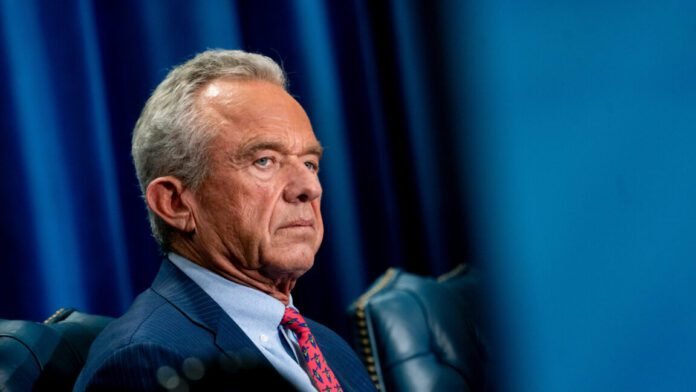
Ardent anti-vaccine activist and current US Health Secretary Robert F. Kennedy Jr. is reportedly on thin ice with Trump for not being anti-vaccine enough for the president’s liking, according to a report late Monday from the Wall Street Journal.

Trump has become fixated on the completely false, thoroughly debunked claim that vaccines cause autism, the Journal reported. People familiar with the president’s scattered thinking say Trump wants an autism remedy to be part of his legacy and thinks scaling back childhood vaccinations is a way to secure that achievement. As such, he has grown frustrated and disappointed that Kennedy hasn’t done more to cut back federal childhood vaccine recommendations or confirm a link to the neurodevelopmental disorder.

In May, the president reportedly aired his disappointment, calling out Kennedy for having “the yips” that were preventing him from acting on his zealous anti-vaccine agenda while holding the highest health position in the country. In June, Trump reportedly vented in the Oval Office to Kennedy that wasn’t doing enough.

Kennedy has reportedly been taken aback by the criticism—and it’s likely that outside public health and medical experts would have been, too, if they were present. To experts, Kennedy has been diligently working to undermine life-saving vaccines, endangering public health in the process.

Some notable examples include Kennedy’s overhaul of a key vaccine advisory committee, which he stacked with like-minded anti-vaccine allies. Those allies then arbitrarily ditched evidence-based recommendations for the birth dose of the hepatitis B vaccine and a combination shot against measles, mumps, rubella, and varicella (chickenpox) called MMRV. Kennedy also single-handedly trimmed the US childhood vaccine schedule to resemble that of Denmark’s, a small country with universal healthcare. He directed the Centers for Disease Control and Prevention to stop promoting seasonal flu vaccines with prepaid advertisements during a particularly deadly flu season. And he edited a CDC website to falsely link vaccines to autism.

Political risks

Some of Kennedy’s efforts to trash vaccines have been blocked in court—namely, the changes to the advisory committee and the childhood vaccine schedule. But Kennedy is now laying the regulatory groundwork to sabotage vaccination rates in ways that can’t be undone so easily.

Kennedy’s anti-vaccine meddling in federal policy has been so apparent that polling in December found that Kennedy’s efforts to cut vaccines were broadly unpopular and “politically risky.” As such, White House political advisors have urged Trump and Kennedy to tone down the anti-vaccine rhetoric, which Kennedy appeared to be doing—publicly at least. In recent public appearances, Kennedy has avoided the topic of vaccines.

But it seems Trump has not aligned with his advisors and still wants Kennedy to demolish vaccination policy with wild abandon, despite the health and political dangers. With Kennedy apparently not working fast enough, the Journal reported speculation that Kennedy could be sidelined or replaced. Already, Kennedy’s Medicare chief, Chris Klomp, has been “empowered to run every corner” of the Department of Health and Human Services on behalf of the Secretary, the paper reported. There are also rumors that Mehmet Oz, the Centers for Medicare and Medicaid Services administrator, could become health secretary after the midterm elections.

‘Today’ Star Explodes After being Accused of ‘Mansplaining’

0
‘today’-star-explodes-after-being-accused-of-‘mansplaining’
‘Today’ Star Explodes After being Accused of ‘Mansplaining’


Carson Daly is reportedly facing behind-the-scenes drama at Today after a seemingly playful on-air exchange with NBC News correspondent Vicky Nguyen allegedly left him furious once the cameras stopped rolling.

The awkward moment unfolded during the Friday, July 17, broadcast of Today, when Nguyen joined Daly, Al Roker, Craig Melvin and Laura Jarrett for a “Best Ways” segment about choosing the right grill for summer cookouts.

Nguyen had been sharing grilling advice from Paul Hope, a Consumer Reports editor and professionally trained chef, when Daly jumped in to add his own thoughts. Daly told viewers that he and Roker “have a lot to say about the topic” before explaining that a meat thermometer should be placed in the center of the meat to get an accurate temperature.

He also pointed out that the most expensive grill is not always the best one.

Roker then reminded Daly that the same points were already included in Nguyen’s report, prompting her to quip, “Yeah, thank you for mansplaining that again, Carson.”

The group appeared to laugh it off on camera, and Daly responded, “I am just passionate about the grill.”

But according to Hollywood insider Rob Shuter, the mood behind the scenes may have been far less lighthearted.

“Carson exploded off-air as soon as they went to commercial,” a source claimed to Shuter for his Naughty But Nice Substack. “He’s still livid, and Carson can hold a grudge.”

The comment quickly became a talking point among viewers and reportedly inside NBC as well, with insiders suggesting the brief moment may have exposed a larger tension behind the polished morning show image.

“When something like this happens on camera, people naturally wonder what the atmosphere is like when the cameras are off,” one insider claimed. “These moments don’t happen in a vacuum.”

Another source claimed Nguyen’s clapback resonated with staffers because they recognized the dynamic.

“It was over in seconds, but people are still talking about it,” the source said. “Her response resonated with the staff because they recognized the dynamic immediately. Carson would never speak to a man that way — or to Savannah Guthrie. It’s always the younger female staffers who get interrupted.”

Neither Daly nor Nguyen has publicly confirmed any feud, and the moment itself appeared playful during the broadcast. But the clip stirred plenty of debate online, especially after Nguyen later shared a screenshot of a harsh email she received from a viewer who believed she owed Daly an apology.

“Your work treats viewers as if we’re idiots every time you’re on the screen,” part of the email read. The viewer added that they wished one of Nguyen’s co-hosts would say to her, “Thanks for elite-splaining that to the unwashed masses,” followed by a “phony hug.”

The angry message continued, “Get off your high horse, lady. I know this is only being read by an assistant who will never pass it on, but at least I hope it gives you a smile if you find your boss as insufferable as the average viewer does.”

Nguyen appeared to take the criticism in stride, joking in her Instagram caption, “It’s hard out here for a consumer reporter.”

Several people jumped to Nguyen’s defense in the comments, with one person writing that it was “crazy” someone felt the need to send the email.

“They don’t know your relationship with Carson Daly and should not be offended for him,” the commenter added.

Another supporter wrote, “You don’t owe anyone an apology. Every member of the Today team has shared playful zingers and lighthearted clapbacks on air over the years.”

Even Al Roker weighed in, writing, “Vicky, Deborah’s mom has the saying that fits for this person: Bless his/her heart!” referring to his wife, journalist Deborah Roberts.

The reported Daly-Nguyen tension comes after another unsettling incident involving the Today show. Just last week, Andrew Truelove was arrested after he allegedly followed Craig Melvin into the NBC building, lunged at him and made racially charged insults.

Both Melvin and Roker later took out restraining orders against the alleged intruder.

For now, the Daly and Nguyen exchange remains one of those blink-and-you-miss-it TV moments that took on a life of its own after the cameras stopped rolling. But if the insider claims are true, the laugh on-air may not have matched the mood backstage.

Donald Trump has launched another ‘Red Scare’ in the US – it’s a favourite tactic of the right

0
donald-trump-has-launched-another-‘red-scare’-in-the-us-–-it’s-a-favourite-tactic-of-the-right
Donald Trump has launched another ‘Red Scare’ in the US – it’s a favourite tactic of the right

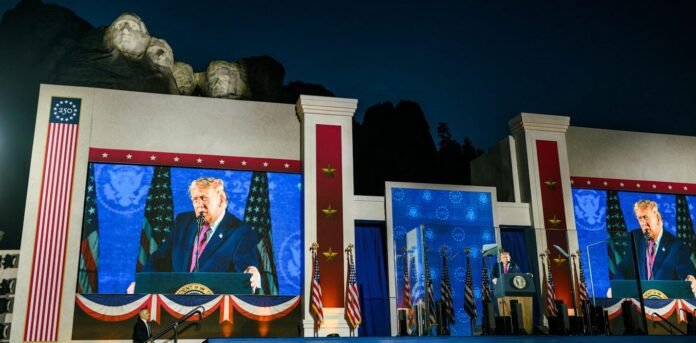
President Donald Trump’s recent speech at the Mount Rushmore National Memorial was a key moment in his carefully choreographed America 250 weekend. Though partisan and rambling in typical Trumpian style, the speech stood out for its focus on a theme which has increasingly dominated his rhetoric over recent months: the dangers of communism.

Communism is back, the US president argued – a resurgent menace and mortal threat to American liberty.

He linked the fight against communism to the upcoming midterm elections in November. Trump’s Republican party is presently on course to lose at least one and possibly both houses of Congress. Meanwhile, the president’s personal job approval ratings continue to plummet.

This attack on communism might seem so ludicrous as to be easy to dismiss. It is partly a response to the success of Zohran Mamdani, who was elected last year as the mayor of New York on a Democratic Socialists of America ticket.

Neither Mamdani nor any of his Democratic Socialists colleagues are remotely close to being communists. But Trump has clearly decided that the best strategy for the midterm elections is to whip up a new Red Scare.

He may well be right. Anti-communism has huge appeal within American political culture – particularly for the generation of voters who, like Trump, grew up on a diet of cold war propaganda.

Ironically, given the connections Trump has regularly made between communism and immigration, it also appeals to some voters from immigrant communities. For much of the Latin American diaspora in the US, particularly from places such as Cuba and Venezuela, anti-communism is even more politically powerful than it is for the rest of the country.

When we think about the history of anti-communism, we probably think first about McCarthyism and America’s last major Red Scare in the 1950s. But anti-communism was not limited to the US or the cold war. It was one of the most powerful global political projects of the 20th century.

Anti-communism drove Britain and its allies to invade Russia 1919, and provoked a rightwing backlash against the rise of the Labour party in the 1920s. It fuelled Christian politics and parties in the interwar period, particularly in the Vatican.

Anti-communism also underpinned the rise and popular appeal of fascism throughout Europe in the 1920s and ’30s. It drove Britain’s murderous fight against Malaysian independence in the 1950s, caused up to 1 million deaths in the Indonesian genocide of the 1960s, and was used to justify mass torture and disappearances during the Latin American dictatorships of the 1970s.

It also underpinned many features of 20th-century politics that are widely regarded as progressive. The UK’s welfare state, for example, was built to encourage the working classes to resist the siren call of communism. Social democratic parties existed to offer a reformist alternative to revolutionary parties to their left. Many trade unions, in Britain and elsewhere, pursued the fight against communist rivals with even greater urgency than the fight against their bosses.

Anti-communism, in short, was a far more persistent and powerful force in 20th-century history than anti-fascism.

Manufacturing an ‘enemy within’

There are three reasons why anti-communism was, and remains, such a powerful project. The first is the ease with which hatred or fear of communism can be yoked to hatred or fear of other outsider groups.

For Trump, the link is between communists and illegal immigrants. For the Nazis, it was between communists and Jews. Hitler’s deranged obsession with “Judeo-Bolshevism” culminated in the Holocaust.

A man and his dog walk past a display of anti-communist propaganda.

The anti-communist message appeals to lots of immigrant groups in the US, including many people of Chinese extraction. David Grossman/Alamy Live News

The second reason is the ability of anti-communism to unite people across the political spectrum, from traditional conservatives to the wildest fringes of fascism.

In the Spanish civil war, fear of communism proved a more powerful ideological glue for Franco’s supporters than fear of fascism did for the fractured Republican side. And throughout history, there have been plenty of examples of liberals and social democrats who, when push came to shove, chose to line up on the side of the fascists when the threat of communism loomed.

The third reason is that anti-communism doesn’t require the existence of actual communists to retain its power.

Many of those being tarred with the brush of communism, like Mamdani, are no more than moderate social democrats by historical standards. Similarly, most of those killed in the anti-communist massacres in Indonesia and Latin America weren’t card-carrying party members. And while there were plenty of Jewish communists and socialists in early 20th-century Europe, the idea that all Jews were communists was nothing more than an antisemitic fever dream.

We can see all of this at play in the rise of the global far right over recent decades. Former Brazilian president Jair Bolsonaro declared at his first inauguration that Brazil’s flag would never be red. Colombia’s president-elect, Abelardo de la Espriella, denounced his reformist opponent as a “radical left Marxist”.

Even mainstream UK conservatives such as Suella Braverman are prone to sharing “cultural Marxism” conspiracy theories.

For all these reasons, it’s important not to be blinded by the seeming absurdity of Trump’s anti-communist rhetoric. Anti-communism is back – indeed, it never went away.

It survived the end of the cold war, embedded itself within some of the most extreme ideological currents of the far right, and is now reemerging as a central plank of global politics. It is powerful, persuasive and dangerous, and we need to take it seriously.

Canada’s GCAP fighter move tests limits of US diversification

0
canada’s-gcap-fighter-move-tests-limits-of-us-diversification
Canada’s GCAP fighter move tests limits of US diversification

Canada’s entry into the Global Combat Air Program (GCAP) highlights a broader strategic dilemma: how to modernize its air force without deepening dependence on any single supplier or undermining the interoperability on which its defense commitments rely.

This month, multiple media outlets reported that Canada officially joined the GCAP as its first observer nation, marking the stealth fighter initiative’s first expansion beyond founding members Italy, the UK and Japan.

Canadian Defense Minister David McGuinty announced the agreement with his British, Italian and Japanese counterparts in London following meetings surrounding the Farnborough International Airshow.

Under the non-binding framework, Canada incurs no financial obligations but gains privileged insight into governance, capability development, and industrial frameworks, with Canada expected to contribute flight simulation training technology and testing resources.

Defense contractors BAE Systems, Leonardo, and Mitsubishi Heavy Industries aim to field a sixth-generation combat aircraft by 2035 to replace Japan’s Mitsubishi F-2 and the Eurofighter Typhoon.

The partnership bridges Euro-Atlantic and Indo-Pacific security priorities while helping allies diversify defense technology away from sole reliance on the US, responding directly to heightened geopolitical tensions such as recent joint Russian and Chinese military exercises around Japan.

Looking at the defense and political dynamics that led to Canada’s decision to join the GCAP project as an observer, Shaun McDougall notes in a Defense Security Monitor article this month that Canada was initially driven by the need to replace its aging CF-18 Hornets, which were originally due for retirement in 2020.

McDougall notes that Canada named the F-35 the top-ranked bidder in 2022 and finalized an agreement in 2023 to acquire 88 aircraft after extensive procurement delays.

However, relations with the US subsequently deteriorated amid trade tariffs and annexation rhetoric from US President Donald Trump, prompting Canadian Prime Minister Mark Carney to review the purchase and consider alternatives such as the Saab Gripen.

The alternatives, however, involve distinct trade-offs, Gio Kaikatsishvili notes in an April 2026 article for the NATO Association of Canada.

Kaikatsishvili says that the F-35 excels in alliance interoperability, stealth, intelligence gathering, and heavy payload, making it ideal for joint NATO and North American Aerospace Defense Command (NORAD) missions, but suffers from escalating procurement costs, high hourly operating expenses, modernization delays, and US supply chain dependence.

As for the Gripen, Kaikatsishvili says that the jet offers superior suitability for harsh Arctic environments, longer range, small maintenance footprints, road-landing capability, and domestic production, creating 10,000 jobs.

Yet, he points out that the Gripen still depends on US-owned Link-16 encryption software for secure communication with NATO allies, maintaining an unavoidable degree of foreign strategic dependency.

Neither option fully resolves Canada’s problem, particularly as Chinese and Russian fifth-generation fighters, and China’s prospective sixth-generation designs, raise the technological standard Canada’s future fleet may have to meet.

Against that backdrop, observer participation in GCAP allows Canada to examine whether a sixth-generation program could offer a more durable alternative without yet committing to finance or purchase the aircraft.

As Brian Wu argues in a Network for Strategic Analyses article this month,  joining GCAP provides an unprecedented opportunity to advance Canada’s defense sector through collaborative R&D, leveraging domestic strengths in avionics, sensors, radars, and flight simulation alongside major defense primes from partner states.

He also points out that Canada can supply critical rare earth minerals, reducing allied reliance on China. He stresses that GCAP grants Canada access to cutting-edge “system of systems” sixth-generation fighter technology, which includes AI-enhanced autonomous drones and combat clouds to boost its expeditionary capabilities across Europe and the Indo-Pacific.

The attraction, therefore, lies not simply in acquiring another fighter, but in gaining a role in the technologies, supply chains and industrial partnerships that may shape the next generation of air combat.

However, GCAP’s ambitions remain constrained by funding. Justin Bronk argued in an April 2023 Royal United Services Institute (RUSI) article that the program rests on unrealistically optimistic cost estimates.

Bronk points out that developing the Eurofighter Typhoon historically cost its partner states roughly US$130 billion, while Reuters reported this month that GCAP funding totals approximately US$11.51 billion over the next four years.

Bronk says that without tens of billions in new funding, GCAP risks producing an inferior fighter unable to compete with upgraded F-35 variants backed by US$412 billion in US investment.

Beyond funding concerns, Mark Soo notes in an April 2026 Geopolitical Monitor article that Japan may be wary of expanding GCAP while already facing pressure to meet the program’s 2035 delivery target. Soo says that adding members could complicate decision-making by introducing more national priorities that must be reconciled.

For Canada, those funding and governance risks translate into a more immediate problem: even as a future full partner, it may have to wait until at least 2035 for the first aircraft, forcing it to extend the CF-18’s service life or procure F-35s and Gripens as interim solutions.

Such a mixed fleet could create as many problems as it solves. Christopher Coates says in a June 2026 Macdonald-Laurier Institute (MLI) article that a diverse force would require separate training, sustainment and technical systems, weakening efficiency, interoperability and operational depth. Diversification, he argues, could merely replace one dependency with several new ones.

More broadly, Canada’s observer role reflects an emerging defense strategy that preserves deep continental integration with the US while expanding partnerships in Europe and the Indo-Pacific, as Alexander Salt argues in a May 2026 Canadian Global Affairs Institute report.

Salt says that Canada will prioritize NORAD and North American defense to avoid disrupting existing capabilities, while seeking to lead middle-power initiatives to free up US assets. Concurrently, he adds that Canada remains committed to its NATO obligations in Europe regardless of shifting US priorities.

In the Indo-Pacific, Salt says Canada plans to prioritize Australia as its leading non-US partner and deepen defense ties with Japan, expanding its regional presence without sacrificing essential interoperability.

Ultimately, Canada’s GCAP gambit will be judged not by whether it broadens the country’s options, but by whether it can convert observer access into industrial leverage and strategic autonomy before procurement delays turn diversification into a new capability gap.

Japan lifts tsunami advisory after 7.1-magnitude quake

0
japan-lifts-tsunami-advisory-after-7.1-magnitude-quake
Japan lifts tsunami advisory after 7.1-magnitude quake


Japan has lifted a tsunami alert issued after a powerful earthquake struck the country’s southwest on Tuesday.

The Japan Meteorological Agency removed the warning from its website less than two hours after the 7.1-magnitude quake hit the island of Kyushu. Prime Minister Sanae Takaichi said the earthquake caused several injuries, building collapses and fires.

The tremor struck at 4:27pm local time (0727 GMT) and registered the highest possible level seven on Japan’s Shindo intensity scale, which measures the strength of shaking rather than the magnitude of the quake.

The agency had earlier warned that waves of up to one metre could reach affected coastal areas at around 5:00pm (0800 GMT), but the alert was later cancelled.

The Nuclear Regulation Authority said no immediate issues were reported at nuclear facilities, while Kyushu Electric Power confirmed that three operating reactors in the region continued normal operations.

The latest quake follows a magnitude 7.2 earthquake that struck northern Japan on 25 June, which caused no deaths or major damage.

via TRT News

0FansLike
0FollowersFollow
0FollowersFollow
0SubscribersSubscribe
- Advertisement -
Google search engine

Recent Posts