18.9 C
London
Sunday, August 16, 2026
Home Blog

5 Years of Gender Erasure: Afghan Women Describe Forced Exile, Systematic Oppression Under Taliban Rule

0
5-years-of-gender-erasure:-afghan-women-describe-forced-exile,-systematic-oppression-under-taliban-rule
5 Years of Gender Erasure: Afghan Women Describe Forced Exile, Systematic Oppression Under Taliban Rule


Fariba Akbari, an Afghan women’s rights activist in exile, told TML: “As conditions worsen, the international community faces a critical choice: intervene or allow the quiet destruction of millions of lives to become the new norm”

[ISLAMABAD] Five years after the Taliban seized power on August 15, 2021, Afghan women and girls remain trapped at the center of a deepening human rights crisis, stripped of many of the rights, freedoms and opportunities that once shaped their lives.   

Since the collapse of Ashraf Ghani’s government, Taliban authorities have systematically pushed women and girls out of public life, dismantling their access to education, employment, movement, and civic participation.  

The United Nations says Afghan women and girls are entering their fifth year of near-total exclusion from public life, while girls remain barred from education beyond the sixth grade.  

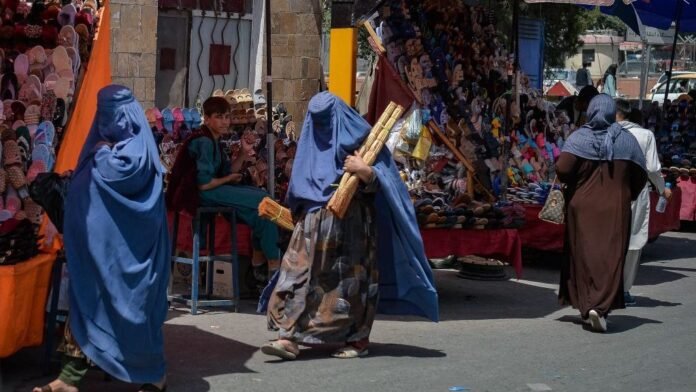
What began as a series of restrictions has evolved into an increasingly entrenched system of control. Women face sweeping limits on employment, movement, and access to public spaces, while Taliban rules impose strict dress requirements and, in many circumstances, require women to be accompanied by a male guardian.  

UN human rights monitors warn against legitimizing the Taliban regime, saying its five-year rule has intensified oppression with no evidence of impending moderation.  

In a statement marking the anniversary, UN experts urged governments to refrain from normalizing relations with the Taliban until there is demonstrated, measurable, and independently verified progress on human rights, particularly the rights of women and girls.  

The statement was endorsed by more than two dozen UN-appointed independent experts, including Afghanistan rapporteur Richard Bennett and specialists on women’s rights, education, food, torture, freedom of expression, and enforced disappearances.  

Meanwhile, a new UN Women report says Afghan women face mounting restrictions on movement, education, and public life, while many report deteriorating mental health and little control over their futures.  

In a tragic incident reported in the last days of July 2026, a 16-year-old Afghan girl, identified by her family as Fariba, reportedly died by suicide after being denied the opportunity to continue her education under the Taliban’s ban on girls’ secondary schooling. According to reports, she left a note saying it was “too hard to be a girl in Afghanistan.”  

Fariba’s reported death is more than an individual tragedy; it highlights the devastating human cost of denying girls their fundamental rights and opportunities. Every girl deserves the chance to learn, pursue her dreams, and shape her own future.  

Working and highly educated women, along with their families, have faced severe harassment and pressure, forcing many to flee Afghanistan.  

Islamabad’s forced repatriation campaign has worsened the situation for those who fled to Pakistan alone.  

The Media Line spoke with Afghan women who fled their homeland alone, leaving behind families and futures as they sought safety from Taliban persecution. At their request, their identities and locations have been withheld for safety reasons.  

Marzia Imamzadeh, a Hazara Shia refugee, told The Media Line that she dreamed of becoming a lawyer after earning top academic honors at Kabul University.  

Recalling the loss of both parents in a suicide bombing, she described how her life was shattered. Following the Taliban takeover and restrictions on girls’ higher education, Imamzadeh recounted fleeing toward Pakistan and surviving an attack on her convoy by the Islamic State Khorasan Province that left her alone upon reaching a refugee camp.  

She says that her mental health has severely deteriorated amid profound insecurity and the constant fear of forced deportation.  

Speaking anonymously to The Media Line, a former Afghan women’s volleyball coach shared her painful reality as a refugee in Pakistan.  

Separated from her children and unable to afford food or medical care, she described a severe mental health crisis driven by pervasive insecurity, all while receiving no help from relevant authorities to halt her potential deportation.  

Zala Ahmadi, an Afghan woman living in the diaspora, told The Media Line that she was one semester short of a computer science degree at Kabul University when the Taliban takeover ended her plans to launch a software startup.  

A vocal critic of Taliban policies toward women and girls, Ahmadi said she sold her family’s remaining gold jewelry to pay smugglers to cross into Pakistan after being barred from education and employment.  

She now lives as an undocumented refugee in a crowded apartment, unable to work legally and fearing deportation, while watching her younger sisters lose access to education.  

The Afghan women who spoke to The Media Line said that words could hardly capture the hardships they have endured in exile, while their loved ones continue to face difficult conditions back home.  

The Media Line exclusively spoke with Tahmina Usmani, an Afghan journalist and former presenter with TOLOnews and Afghan International, who became TOLOnews’ first female news presenter and the first woman to return to television after the Taliban seized power in August 2021. She has relocated to Paris.  

Usmani continued to deliver news with courage, clarity, and professionalism, keeping vital issues such as women’s rights and freedom of expression in the public spotlight.  

In a video statement to The Media Line, she detailed the problems that arose once the Taliban assumed control and why she fled her homeland. By sharing her experience, she emphasized that Afghan women continue to inform, lead, and shape their country’s future despite extraordinary restrictions.  

Marwa Ali, a social activist and former Afghan national athlete living in Paris, told The Media Line that she grew up during a period when women’s and girls’ rights and freedoms were gradually improving.   

However, she said, the Taliban’s return to power in 2021 abruptly reversed those gains, stripping women of their autonomy, restricting their freedom of movement, and banning them from participating in sports. She added that women and girls who violate the restrictions reportedly face violence and are branded anti-Islamic.  

Tahmina Safi, a former judge of Afghanistan’s Supreme Court and co-founder of the Afghanistan Impact Network, told The Media Line that “five years after the Taliban takeover, restrictions on women have become a deeply entrenched system of gender-based exclusion affecting half of Afghanistan’s population.”  

Restrictions on women have become a deeply entrenched system of gender-based exclusion affecting half of Afghanistan’s population

In reply to The Media Line’s question, Safi underlined that the international community must keep Afghan women’s rights, dignity, and voices at the center of its Afghanistan policy, warning that humanitarian aid should not replace political pressure or normalize Taliban rule.  

Turning to foreign governments, she pointed to a clear policy contradiction: they condemn the Taliban’s systematic restrictions on women while continuing political and humanitarian engagement, arguing that such engagement does not constitute recognition.  

Safi emphasized that Afghanistan needs a legitimate, democratic political system in which all Afghans can freely choose their government, regardless of gender or ethnicity. True stability, she maintained, means not merely the absence of war, but dignity, education, healthcare, economic freedom, and a voice in the country’s future.  

Paul Farley, a US-based former Senior Intelligence Service officer and an advisor and consultant on geopolitical risk and international relations, told The Media Line that “the trajectory of women’s rights in Afghanistan remains firmly negative, with little indication of significant improvement.”  

The trajectory of women’s rights in Afghanistan remains firmly negative, with little indication of significant improvement

Farley said the Taliban has rejected calls from fellow Muslim countries to ease restrictions on women. While pragmatists in Kabul recognize the need for international legitimacy, he said ultimate authority rests with Kandahar’s hardline clerical leadership, which considers the restrictions theologically non-negotiable.  

Farley warned that the long-term consequences could be severe, creating social misery for women, marginalizing an entire generation of girls, and depriving Afghanistan of professionals, particularly doctors and nurses. 

Combined with restrictions on female health workers, he said, the policies could produce a severe shortage of female doctors and midwives in Afghanistan’s strictly gender-segregated health system, potentially driving up maternal mortality.  

Without direct international leverage linking diplomatic recognition to human rights standards, Farley warned, the oppressive status quo could become deeply entrenched, undermining Afghanistan’s future development.  

Fariba Akbari, an Afghan women’s rights activist in exile, told The Media Line that Afghan women’s day-to-day struggle for survival and their severe mental health crisis remain critically underreported.  

She said women excluded from education, employment, and public life are facing severe poverty, food insecurity, forced marriage, and pervasive trauma, which she said are manifesting in alarming rates of depression, anxiety, and profound despair.  

Akbari said an entire generation of Afghan women had seen its aspirations systematically erased, while international media and public discourse increasingly treat the ongoing humanitarian crisis as a normalized status quo.  

She described the combination of poverty, security threats, domestic abuse, and forced deportations as a “brutal cycle” pushing Afghan women and children to the brink.  

“This is no longer just a political stalemate; it is a full-scale humanitarian crisis,” she said. “As conditions worsen, the international community faces a critical choice: intervene or allow the quiet destruction of millions of lives to become the new normal.”   



UPDATED: Nigel Farage returns as MP, winning Clacton by-election

0
updated:-nigel-farage-returns-as-mp,-winning-clacton-by-election
UPDATED: Nigel Farage returns as MP, winning Clacton by-election


Reform UK leader Nigel Farage regained his parliamentary seat on ​Friday in an election he triggered to bolster his position against allegations of financial impropriety, a strategy that was undermined when his ‌main challenger, a comedian dressed as a trash can, won more than a quarter of the vote.

Farage, one of Britain’s leading Brexit campaigners, in a highly unusual move did not turn up at count in the southern English seaside resort of Clacton because he said the police had advised him that there was a campaign to disrupt the result.

“I am damned if I am ​going to stand on a stage, having won a resounding victory…. and be demeaned and humiliated by nobodies,” Farage told supporters at a ​party before the result was announced.

The election was triggered after Farage resigned from parliament last month to seek a fresh mandate from ⁠voters in what he described as a war against an establishment bent on discrediting him over taking undeclared gifts from donors.

After Britain’s main parties pulled out ​of the race, calling it a self-serving stunt, Farage’s main challenger ended up being Count Binface, a figure created by comedian Jonathan Harvey, who has become a fixture ​of fun at British elections

While Farage took 62.8% of the vote, Count Binface, whose policies included capping the price of ice cream cones and conscripting anyone using a speakerphone on public transport, secured 26.7%.

REFORM’S MOMENTUM SHOWS SIGNS OF SLOWING

After enjoying a lengthy lead in the opinion polls, Reform has seen its popularity wane, driven partly by the funding accusations made against Farage, who ​is under investigation in parliament over whether he should have declared a £5 million ($6.75 million) gift from a cryptocurrency billionaire investor.

After declaring his decision to trigger the election ​in Clacton little more than a ploy to distract from those allegations, other British parties pulled out of the race, leaving even some of Farage’s strongest supporters questioning whether the veteran ‌politician had ⁠been wrong-footed.

Laura Richards-Gray, a politics lecturer at Birkbeck University in London, said the absence of major-party opponents undermined his attempt to turn it into what he called a “people versus the establishment” contest.

“This has backfired, particularly nationally, as Farage lost control of the narrative,” she said, adding some voters saw the election as “a waste of time and money”.

Farage’s position has not been helped by a rise in support for the governing Labour Party.

Since Andy Burnham became prime minister last month, Labour has been ​enjoying a bounce in ratings, with the ​party leading Reform 28% to 25%.

Burnham ⁠has dominated the airwaves and social media in his first few weeks in office, and while the next national election is expected in three years’ time, he appears to be consolidating a left-leaning bloc around Labour.

Reform, on the other hand, is ​competing for a divided right-wing vote with the Conservative Party and the anti-immigration party Restore Britain gaining in support.

GIFT ​FROM BILLIONAIRE CRYPTO INVESTOR

Despite ⁠winning this vote, the parliamentary watchdog is expected to continue its investigation into his financial declarations once he returns to parliament.

At the heart of the investigation is whether he should have declared the gift from a Thailand-based billionaire before the 2024 national election. Under parliamentary rules, members of parliament must declare any donations received in the year preceding ⁠an election ​within one month of taking office.

Farage has admitted receiving the money, but not declaring it, saying he ​has done nothing wrong because it was a personal gift.

If the parliamentary authorities, who are investigating, conclude that Farage breached declaration rules, he could face a suspension from parliament, and another vote to retain ​his seat, where the main parties would probably field candidates.

A Reform spokesperson said there was a “credible threat” against Farage.

The police did not immediately respond to a request for comment.

While Farage aimed to ​demonstrate his strong ​local support to ⁠bolster his position against the accusation of financial impropriety, the decision by major parties not to put ​up candidates left him facing more than 30 rivals, ​including ⁠comedians and independents, in what was the longest ballot paper in British political history.

His main rival is likely to be Count Binface, a ⁠silver ​cape-clad character created by comedian Jonathan Harvey, ​who has run against three prime ministers over the last decade to poke fun at ​them.

Source:  Reuters

Baseball Legend Dies Suddenly from Blood Clot

0
baseball-legend-dies-suddenly-from-blood-clot
Baseball Legend Dies Suddenly from Blood Clot


Former New York Mets slugger Butch Huskey has died at just 54 years old, leaving the baseball world mourning a player forever linked to one of the most historic nights in Major League Baseball.

The Mets announced Huskey’s death Friday, with reports confirming that the former fan favorite died from a blood clot in his lung.

“I just want to acknowledge this solemn day with the passing of Butch Huskey this morning,” Mets interim manager Andy Green said. “Just want to send prayers and thoughts to his family. I know all of our Mets family is thinking of him and the people who love him today.”

Huskey spent parts of five seasons in Queens and became one of the most recognizable Mets players of the 1990s.

The team selected him in the seventh round of the 1989 MLB Draft straight out of high school. He made his major league debut four years later and eventually appeared in 414 games for the Mets.

During his time in New York, Huskey hit .264 with a .740 OPS while playing both the infield and outfield.

His biggest offensive season came in 1997, when he belted 24 home runs.

Huskey also once held the Mets record for the most RBIs in a single inning after driving in five runs during the sixth inning of a 1998 game against the Florida Marlins.

After the 1998 season, the Mets traded Huskey to the Seattle Mariners. He would later suit up for the Boston Red Sox, Minnesota Twins and Colorado Rockies before his MLB career came to an end.

But for many Mets fans, Huskey will always be remembered for the number on the back of his uniform.

Huskey wore No. 42 on April 15, 1997, the night Major League Baseball permanently retired Jackie Robinson’s number across the sport.

The emotional ceremony took place during a Mets game against the Los Angeles Dodgers and included Robinson’s widow Rachel, MLB commissioner Bud Selig and then-President Bill Clinton.

Huskey later revealed that he had no idea beforehand just how historic the night was going to become.

He remembered seeing Clinton and the massive presidential security presence at Shea Stadium, but said he did not fully understand what was happening until the announcement was made during the fifth inning.

“That’s one of the best memories I had in my lifetime,” Huskey recalled during a Mets broadcast in 2024, adding that the moment would always stay with him.

When MLB retired Robinson’s No. 42, players already wearing the number were allowed to keep it for the remainder of their careers.

That meant Huskey could continue wearing the number despite initially believing he might have to give it up.

The connection was especially meaningful for Huskey.

He later revealed that while still in high school, he had written an essay about Robinson after an English teacher who knew about his love of baseball suggested the topic.

Decades later, Huskey said he still owned the No. 42 jersey he wore on the historic retirement night — complete with Rachel Robinson’s autograph.

“It meant the world to me and not just myself but a lot of other kids, people of color,” Huskey said in 2024 while discussing Robinson’s impact.

“He went through things that paved for us to have it not as hard as he did, and I just don’t think I could’ve done what he did.”

Huskey was the second-to-last Mets player ever to wear No. 42.

Mo Vaughn, another player who had been grandfathered in before the league-wide retirement, became the final Met to wear Robinson’s legendary number.

Now, Huskey’s sudden death has left the Mets family remembering not only a powerful hitter from the 1990s, but a player who found himself permanently connected to one of baseball’s most unforgettable moments.

From Gaza to Iran, Washington’s wars are becoming an electoral liability

0
from-gaza-to-iran,-washington’s-wars-are-becoming-an-electoral-liability
From Gaza to Iran, Washington’s wars are becoming an electoral liability

A political rally in Florida should not, by itself, tell us much about the direction of American foreign policy. This one might.

With only three days to go before Florida’s Democratic primary, a Fort Lauderdale venue cancelled an event featuring Congresswoman Rashida Tlaib and congressional candidates Angie Nixon, Elijah Manley and Oliver Larkin. The decision came after Democratic state representative Michael Gottlieb attacked the gathering as an “anti-Jew” event. The venue cited security concerns and the organisers moved elsewhere.

Reuters reported the story on Saturday, 15th August.

There is something familiar about the episode. American politicians who question Washington’s support for Israel have spent years being told that their position sits beyond the limits of respectable politics. What is less familiar is what is happening around them. Candidates are continuing to run on those positions, voters are sometimes rewarding them and the argument over Palestine is starting to merge with a much older American anxiety: the fear of being dragged into yet another war in the Middle East.

That is what makes 2026 different.

The war with Iran, begun in late February by the United States and Israel, has made foreign policy harder to keep at a comfortable distance from everyday American life. Nearly six months on, there is still no persuasive sense of where the conflict is meant to end. There is, however, a much clearer sense of what it costs.

Reuters reported this week that the average US petrol price had climbed to about $4.08 a gallon, roughly 29 per cent higher than a year ago. Donald Trump’s answer was essentially that Americans should accept the increase as the price of continuing the fight.

That is a remarkable political proposition from a president who built so much of his appeal around cheaper living and a promise to avoid the “endless wars” of earlier administrations.

And voters have noticed.

Pew Research Center found that around six in ten Americans believe the United States made the wrong decision to use military force against Iran. The numbers are especially stark among Democrats.

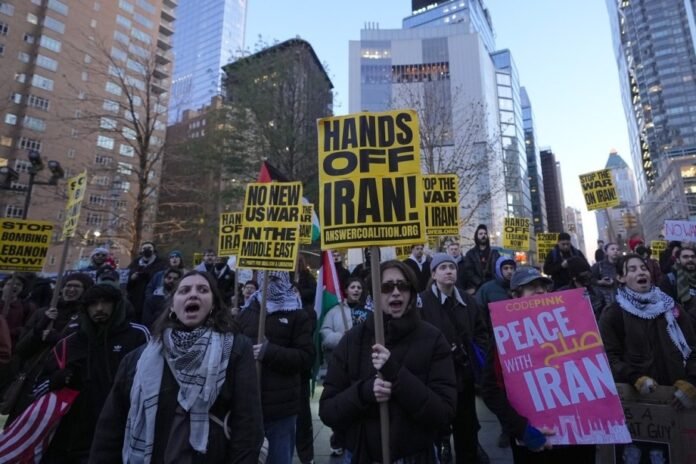
This is the context in which “No War on Iran” needs to be understood. It is no longer only a chant at demonstrations or the language of foreign-policy activists. It is becoming part of an electoral argument about what Washington does with American money, American military power and the authority voters hand to their government.

Abdul El-Sayed understood that earlier than most candidates.

After Trump ordered the first strikes in February, El-Sayed argued that the president had promised to end endless wars only to begin another one. He questioned both its purpose and its lack of congressional authorisation.

Five months later, Michigan Democrats nominated him for the US Senate.

That result deserves attention not because every voter who supported El-Sayed did so over Iran or Palestine. Elections are never so tidy. Michigan voters were also thinking about healthcare, prices, Trump, jobs and the usual mix of local and national grievances.

But foreign policy was not incidental to the contest either.

AIPAC and affiliated groups poured an extraordinary amount of money into the race. The Associated Press documented more than $30 million in spending connected to the pro-Israel lobby’s effort to shape the primary. El-Sayed nevertheless defeated Haley Stevens.

The lesson is not that AIPAC suddenly ceased to matter. It plainly does. The more interesting lesson is that spending on that scale was unable to turn El-Sayed’s criticism of Israeli policy and American militarism into the disqualifying liability it once might have been.

Something in Democratic politics has moved.

The change is visible in public attitudes towards Israel as well. Pew found in April that 60 per cent of Americans held an unfavourable view of Israel, rising to eight in ten among Democrats and Democratic-leaning independents. Meanwhile, 59 per cent of Americans expressed little or no confidence in Benjamin Netanyahu.

Those figures would have looked extraordinary not very long ago.

They also help explain why Palestine and opposition to war with Iran increasingly sit within the same political conversation. The common thread is not Iran. It is Washington.

For many voters, the question is becoming whether the United States should continue treating military escalation as its default response to crises in the Middle East and whether support for an Israeli government should remain largely insulated from the ordinary scrutiny applied to every other recipient of American weapons and money.

Members of Congress are beginning to test that argument.

Ilhan Omar, another politician whose opposition to Israeli policy has repeatedly been used against her, supported the Iran War Powers Resolution in March. Its demand was hardly revolutionary: the president should obtain congressional authorisation before committing the United States to further hostilities.

That principle should not be controversial in a democracy. Yet decades of presidential wars have made it seem almost unusual.

This brings us back to Florida.

The three candidates appearing with Tlaib will face voters on 18th August. Their individual races are different and none should be treated as a guaranteed victory for an emerging progressive bloc. But the attempt to stigmatise the event before voters even reach the polls tells us something about the stakes.

For years, criticism of Israel was often dealt with by raising the political cost of expressing it. Candidates learnt which subjects were safer to avoid. Donors learnt which challengers could be overwhelmed with spending. Members of Congress learnt how quickly criticism of Israeli military policy could become a controversy about the critic rather than the policy.

That arrangement becomes harder to sustain when voters themselves are changing.

It becomes harder still when the consequences of Middle East wars turn up on petrol station signs and household budgets.

Americans are being asked to accept higher prices while Washington spends billions sustaining another conflict. They are watching a president who campaigned against endless wars defend one that has already lasted nearly half a year. At the same time, they are being told that questioning military assistance to Netanyahu’s government remains politically suspect.

Eventually those contradictions reach the ballot box.

There is no reason to pretend that an anti-war majority has suddenly taken control of American politics. It has not. Nor will the victories of a handful of progressive candidates undo decades of bipartisan interventionism.

But the old political calculation is becoming less reliable.

A candidate can now oppose another war with Iran and win a major Senate primary. A member of Congress can demand limits on presidential war powers and survive attempts to remove her. Candidates can challenge unconditional military support for Israel without automatically ending their political careers.

For Washington’s foreign-policy establishment, that may be the development worth worrying about.

The question facing American politicians is slowly changing from “What will it cost me to oppose this war?” to something much more uncomfortable: What will it cost me to support it?

The views expressed in this article belong to the author and do not necessarily reflect the editorial policy of Middle East Monitor.

Zhu Rongji left Asia a blueprint — and it still works

0
zhu-rongji-left-asia-a-blueprint-—-and-it-still-works
Zhu Rongji left Asia a blueprint — and it still works

When Zhu Rongji died in Beijing on August 12 at the age of 97, Asia lost one of the finest public servants of its modern era. He was the premier who opened China to the world, the plain-spoken technocrat who took his country into the World Trade Organization in December 2001 after almost 15 years of talks.

The tributes have reached for the big numbers, and the numbers are extraordinary. But the most valuable thing he left behind is smaller and more useful than any of them: a method any government in Asia can copy. Make a binding promise to the outside world, then use it to win the arguments you cannot win at home.

Zhu trained as an electrical engineer at Tsinghua University, and he governed like one. He did not preach ideology. He asked what was broken and what would hold.

As vice premier from 1991, he beat back inflation by cutting off credit to money-losing state firms. In 1994, he rebuilt the tax system so that revenue reached Beijing. As premier from 1998, he pushed banks, airlines and oil companies to run as real businesses without selling them off, and built a private housing market almost from scratch.

None of it came from free-market faith. He simply wanted a machine that would not break down. The WTO fit the same instinct. One of Beijing’s own negotiators later compared the talks to bargaining in a vegetable market. But the real prize was always at home.

Membership turned openness into a national promise, written into international law. That gave Zhu the leverage he needed against officials who protected favored firms and a state sector that would not otherwise move. Reformers expected the WTO to force changes in banking, company law and the courts that were too hard to attempt alone. Call it reform by treaty: borrow pressure from outside to do the hard things inside.

What makes the example worth following is that he chose it knowing what it would cost, and said so. His restructuring left an estimated 40 million state workers without jobs — critics called it surgery without anaesthesia.

Import tariffs on cars and much else came down to no more than 25% from 100% or higher, and officials at home accused him of giving away the country. On taking office, he vowed to go forward whether what lay ahead was “a minefield or an abyss.” He meant it.

Nor did he leave those workers to fend for themselves. As state jobs disappeared, state apartments were sold to their occupants for next to nothing, cheap mortgages followed and basic welfare and unemployment insurance arrived alongside them. It was imperfect, and he would have been the first to say so. But a generation that lost its jobs gained, for the first time, something of its own.

Then there was the quality rarest in any political system anywhere: he apologized. After floods killed 4,150 people in 1998, he said dikes built with embezzled money were no stronger than bean curd. Three years later, he went on national television to take responsibility for a school explosion that killed at least 42 people, most of them children.

A leader who owns a failure in public is telling citizens and markets the same thing: the numbers will not be massaged. Trust is built that way, and very little else builds it.

An honest accounting has to note what came later, and most of it came after him. The fiscal system he designed left local governments leaning on land sales, which in time helped feed the property crisis that broke in 2021.

The financial opening promised at accession was never completed, and the government procurement market pledged in 2001 remains closed. But Zhu retired in 2003: treaties set the boundaries, and successors decide what happens inside them.

For his neighbors, the gains were never going to be equal, and he never promised they would be. World Bank economists predicted before accession that the biggest benefits would flow to China and to the countries supplying its factories with parts, machines and raw materials, while those competing head-to-head with Chinese manufacturers would feel the squeeze.

That is roughly what happened. Preparation, not membership, decided who came out ahead — a lesson within reach of every government here.

Today’s arguments over overcapacity and a record trade surplus of nearly $1.2 trillion are real enough. But they belong to choices made in the decades since he left office, not to the bargain he struck.

So the tribute he would have wanted is not nostalgia. It is use. Asia’s next great bargains — deepening the Regional Comprehensive Economic Partnership (RCEP), widening the Comprehensive and Progressive Agreement for Trans-Pacific Partnership (CPTPP), writing rules for digital trade, green goods, subsidies and data — all turn on the same question.

Do governments have the nerve to do what Zhu did, and sign an agreement abroad precisely because it breaks a deadlock at home? That works in Jakarta, Delhi, Hanoi and Seoul as surely as it worked in Beijing.

His quietest legacy points the same way. As founding dean of Tsinghua’s school of economics and management, he trained the economists and finance officials who served China for decades afterward. People and institutions outlast tariff schedules.

He once joked that an official photograph made him look like a dead man. The man is gone now, and the region is poorer for it. His idea is not. It is still there on the table, waiting for the next reformer with a fraction of his courage to pick it up.

Y. Tony Yang is an Endowed Professor at the George Washington University in Washington, D.C.

IDF Kills Radwan Force Commander After Hezbollah Drone Wounds 3 Soldiers 

0
idf-kills-radwan-force-commander-after-hezbollah-drone-wounds-3-soldiers 
IDF Kills Radwan Force Commander After Hezbollah Drone Wounds 3 Soldiers 


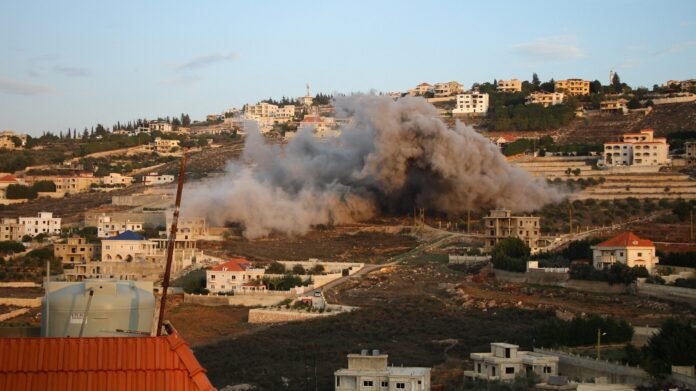
The Israel Defense Forces (IDF) struck Hezbollah targets across southern Lebanon overnight and into Saturday, killing a Radwan Force battalion commander and several other terrorists after what the military described as Hezbollah action against Israeli troops operating in the Ali Taher Ridge security zone. 

A Hezbollah explosive drone seriously wounded three Israeli soldiers on the Ali Taher Ridge on Saturday morning, according to Israeli reports.  

The IDF said it targeted Hezbollah infrastructure in the Nabatieh and Ansar areas following action against soldiers stationed in the Ali Taher Ridge area. Lebanese reports initially said seven people were killed and two wounded in strikes in Ansar, with additional strikes reported around Ali Taher Ridge and al-Nabatieh al-Fawqa. 

Lebanon’s Health Ministry later said seven people were killed in Ansar, claiming three children and two women were among the dead. 

The IDF subsequently said a central Hezbollah command center in the Kafr Ansar area was among the targets. Ali Samir al-Haj Hassan, a battalion commander in Hezbollah’s Radwan Force, was killed along with several other terrorists, the military said. 

Hassan’s family was inside the command center and was reportedly harmed, but the IDF said they had not been targeted. 

“It should be emphasized that they were not the target of the strike,” the IDF said. “The terrorist used his family as human shields and hid with them inside the military command center.” 

Another Israeli strike was reported in Deir ez-Zahrani in the Nabatieh region. Lebanese authorities later put the death toll there at four, with 17 people wounded. Lebanese reports said the combined toll from the strikes during the day reached 11 dead and 19 wounded. 

Lebanese Prime Minister Nawaf Salam called the Israeli strikes a “dangerous” escalation that threatened efforts to establish stability. He said responsibility for addressing military structures on Lebanese territory belonged solely to the Lebanese state, army and legitimate institutions. 

Hezbollah accused Lebanese authorities of making concessions to Israel and demanded an end to direct negotiations. The terrorist organization also threatened retaliation, saying Israel’s “aggression, violations and attempts to impose a fait accompli” would be met with “an appropriate response.” 


Air India to test all pilots for banned substances

0
air-india-to-test-all-pilots-for-banned-substances
Air India to test all pilots for banned substances


Air India is to test all of its pilots for banned substances, starting immediately.

It comes after an incident last week in which its Phuket to Delhi flight suddenly lost altitude, with a preliminary report saying the senior pilot had to retake their substance test. Reports say they had tested positive for marijuana.

Pilots at the airline’s budget arm, Air India Express, will also be subject to the tests from Thursday.

Existing rules require at least 10% of pilots to be tested at random.

Seventeen passengers and crew were injured when the Airbus lost about 91 metres (300 feet) in height shortly after departure on 4 August.

It is being investigated by Indian authorities working alongside Airbus and France’s air safety agency.

Both pilots of the flight have been removed from duties until the investigation is complete.

In a memo seen by the BBC, Air India said it was “important to go further” in its testing.

“This initiative, which goes beyond regulatory requirements, reflects our determination to uphold the highest standards of safety and professionalism, and to provide reassurance to our passengers, stakeholders and the community at large,” it said.

The airline has already been under scrutiny after a June 2025 flight from Ahmedabad to London crashed shortly after take-off, killing 241 people on board and 19 on the ground. Only one passenger survived.

The tests – for substances as well as medications prohibited under aviation regulations – are being carried out alongside training sessions at Air India’s academy, as well as other locations including briefing centres and offices.

Last week, former Ethiopian Airlines boss Tewolde Gebremariam became Air India’s new chief executive.

Via BBC

AI could help fossil fuel companies create more emissions

0
ai-could-help-fossil-fuel-companies-create-more-emissions
AI could help fossil fuel companies create more emissions

This story was originally published by Wired and is reproduced here as part of the Climate Desk collaboration.

The emissions from powering data centers rightly get a lot of attention. But new research from former Microsoft sustainability workers cautions that the way artificial intelligence enhances productivity in the oil and gas industry could be much more damaging to the planet.

Published last week in the journal npj Climate Action, the research finds that AI use could significantly increase global energy emissions simply by enabling the fossil fuel industry to produce more oil and gas. At the low end, the research finds that the additional yearly emissions could be equal to Mexico’s; at the high end, AI boosting the fossil fuel industry could add as much greenhouse gas emissions as Russia, the world’s fourth-largest emitter.

That increase in emissions, the paper finds, outweighs the benefits AI provides to developing solar, wind, and other clean technologies. It also significantly outpaces projections of emissions from the global data center buildout.

The relationship between technology companies and fossil fuels is “a self-reinforcing effect between supply and demand,” says Will Alpine, one of the authors of the research. “One of the key insights of our paper is that you cannot treat them independently. They are two sides of the same coin.”

Alpine and his wife and coauthor, Holly, are former Microsoft sustainability workers with years of experience between them at the company. They quit their jobs at the start of 2024 because of the company’s continued work with the oil and gas industry and began publicly campaigning to draw attention to the relationship between AI and fossil fuels.

Oil and gas companies have been using various types of AI for decades to help find and develop underground resources more efficiently. That increases global dependence on fossil fuels and makes it harder for the world to reach its climate targets, the Alpines argue.

While tech companies measure their own emissions and that of their supply chain, they don’t tend to measure just how much their tools help to increase fossil fuel production. The Alpines refer to AI-supported greenhouse gas pollution as “enabled emissions.”

“Sustainability measures [within tech companies] are very much focused on operational emissions” rather than enabled emissions, Holly says. The new paper argues that while accounting for that pollution is important, it ignores emissions that do much more damage to the climate.

To get an idea of how AI can affect fossil fuel companies’ emissions, the Alpines used a complex economic model that allows researchers to introduce various factors to test out how they might play out over the broader economy. Using reports from oil and gas companies about demonstrated gains from AI tools, the Alpines modeled AI as a productivity enhancer across various sectors of the fossil fuel industry, from extraction to refining to electricity generation. They also estimated how that in turn can increase global emissions.

Read Next

The modeling found that AI as a productivity enhancer for the fossil fuel industry could help increase global energy-related emissions between 1.2 to 4.8 percent. That’s significantly higher than multiple projections around emissions from data center energy use.

“The scale of this was staggering,” says Will.

Fossil fuel companies are increasingly providing power for data centers. Chevron and Microsoft recently confirmed that the oil giant would be building a large behind-the-meter gas plant in Texas to power data centers for the tech company.

In a call with analysts in June, Jeff Gustavson, the president of Chevron’s New Energies division, hinted that the deal would benefit Chevron’s AI capacities as well. Chevron, according to Gustavson, will “use some of that compute” generated by the power from the power plant serving Microsoft “to actually power AI inside of our company.” (“Chevron and Microsoft have worked together for years to accelerate digital transformation, leveraging the capabilities of a trusted cloud to generate insights, scale innovation, and unlock value across the organization,” Chevron spokesperson Paula Beasley told WIRED in an email, in response to several questions about the specific relationship between the oil giant and the tech company.)

“It’s perfectly illustrative of the relationship between AI and fossil fuels,” Will says of the Chevron deal with Microsoft.

“There are many AI boosters who blithely claim that AI will solve the climate problem so we should go ahead and develop it as quickly as possible,” Jon Koomey, an energy researcher, tells WIRED in an email. “Such hand-waving arguments ignore the effects that AI will have on ALL industries, not just renewable energy and efficiency.”

Koomey, who was not involved in the new analysis, says that the conclusions the researchers draw seem solid.

“Machine learning can make data center cooling 30-40 percent more efficient, but [could] also make fossil fuel extraction much cheaper and faster,” he says. “How that nets out nobody yet knows for sure, but this new research is a credible attempt to answer that question using a macroeconomic model.”


NFL Reporter Suffers Terrifying Health Emergency Live on Air

0
nfl-reporter-suffers-terrifying-health-emergency-live-on-air
NFL Reporter Suffers Terrifying Health Emergency Live on Air


NFL reporter Michael Holley sparked a frightening scene Friday when he suddenly fainted during a live NBC Sports broadcast, forcing the show to abruptly cut to commercial.

Holley, 56, a longtime Boston sports journalist and former ESPN contributor, was appearing remotely on Pro Football Talk with host Mike Florio when the scary moment unfolded.

As the two discussed the latest NFL headlines, Holley suddenly became wide-eyed and began slipping down in his chair before disappearing from view.

A stunned Florio immediately realized something was wrong.

“What happened to Michael Holley?” Florio asked members of the production crew. “Did he just pass out?”

The host quickly sent the program to commercial as staff scrambled to determine whether Holley needed emergency help.

“We want to see what’s going on with Michael Holley,” Florio told viewers before the broadcast cut away.

Fortunately, the frightening incident did not turn out to be as serious as it initially appeared.

Florio later told Awful Announcing that Holley had been broadcasting from a studio inside his home that had become extremely warm.

According to Florio, Holley had also not eaten or had anything to drink before going on the air.

“It’s very warm in there,” Florio explained. “He hadn’t had anything to eat or drink before the show. He became overheated during the show and passed out.”

Florio said he initially missed the warning signs because he was looking directly into the camera instead of watching Holley on a monitor.

“I didn’t notice until he slumped in his seat,” he said.

The show immediately went to break so producers could make sure Holley received assistance if necessary.

Thankfully, Holley regained consciousness quickly.

“Fortunately, he recovered quickly and is fine,” Florio said.

The incident was especially alarming because Holley, who was wearing a warmup jacket, appeared to fade without saying a word before collapsing out of his chair.

Television studios can become surprisingly hot under production lights, which is why many professional sets are kept unusually cold during broadcasts.

Holley’s collapse also brought back memories of another frightening live-TV moment involving NFL legend Bruce Smith.

Smith fainted during a TNT broadcast in 2000 while standing on the set. It was later revealed that the Hall of Famer had been suffering from the flu and dehydration at the time.

In Holley’s case, the terrifying on-air scare had a much happier ending, with Florio assuring worried viewers that the veteran sports journalist was doing well after the incident.

Ukraine strikes major Russian rocket factory with cruise missiles

0
ukraine-strikes-major-russian-rocket-factory-with-cruise-missiles
Ukraine strikes major Russian rocket factory with cruise missiles

Ukrainian President Volodymyr Zelenskyy confirmed on Saturday that his country struck the Progress Rocket Space Center deep within Russia using ground-launched cruise missiles.

“In Russia’s Samara region, one of the key enterprises within Roscosmos—the Progress Center, which was involved, among other things, in electronics production–was hit,” Zelenskyy said on the social media site X. “Flamingo missiles were used. A good achievement.”

The largest city in the Samara Oblast, about 900 km from the Ukrainian border, Samara is home to Russia’s most important manufacturer of rockets. The Progress center assembles the workhorse vehicle for Russia, the Soyuz-2 vehicle, as well as the newer Soyuz-5 rocket. The facility also builds military satellites.

Russia uses the Soyuz-2 rocket, which has a lift capacity of about 8 metric tons to low-Earth orbit, for a variety of civil and military purposes. Notably, it is the principal rocket used for Russia’s human spacecraft launches to the International Space Station.

Already a shortage of Soyuz rockets

It was not immediately clear which facilities at the sprawling Progress facility were damaged. There were some open-source reports that a missile struck a building that houses a clean room for avionics—perhaps a reference to the electronics production Zelenskyy referred to.

Ukraine used the FP-5 “Flamingo” missiles for the attack, which have a range of several thousand kilometers. The “FP” stands for Fire Point, the Ukraine-based defense group that developed the missile. The missile has previously been used to target energy infrastructure, military production facilities, and other strategic targets. It seems unlikely that Ukraine sought to target Russia’s civilian space infrastructure, but the civil and military space efforts in Russia are closely aligned.

Any lasting damage to Soyuz rocket production would be crippling for Russia’s space programs. Of the more than 120 Russian rocket launches since 2020, more than 85 percent have involved the Soyuz-2 family of rockets. This has become the country’s key launch vehicle with the Proton booster aging out, and the newer Angara rockets being so slow to reach a decent launch cadence.

Even before the attacks, Russian space officials said demand for Soyuz rockets were exceeding the production capacity, Russian Space Web reports. This demand was as much as 30 to 50 percent higher than capacity for the period from 2027 to 2030.

0FansLike
0FollowersFollow
0FollowersFollow
0SubscribersSubscribe
- Advertisement -
Google search engine

Recent Posts