17.7 C
London
Saturday, July 25, 2026
Home Blog

RFK Jr.’s handpicked committee approves manufacture of peptides he uses

0
rfk-jr.’s-handpicked-committee-approves-manufacture-of-peptides-he-uses
RFK Jr.’s handpicked committee approves manufacture of peptides he uses

In a widely expected move, a committee organized by the Food and Drug Administration (FDA) has voted to endorse removing restrictions on the manufacture of peptides for human use. Thursday’s panel meeting saw a sharply divided group recommend lifting limits on four peptides; votes on three additional peptides are scheduled for today. The move comes despite a continuing lack of evidence regarding their safety and effectiveness.

The move had been telegraphed months earlier as peptide enthusiast and Health and Human Services Secretary Robert F. Kennedy Jr. took steps to ensure this outcome.

Like proteins, peptides are composed of amino acids that are chemically linked into a chain. Peptides differ merely by length; they’re often 10–20 amino acids long, in contrast to proteins, which can be hundreds or thousands. Some of them, such as insulin, are specifically made by targeted processing of a protein into shorter fragments, and the resulting peptide interacts with receptors that have evolved to send signals to cells based on its levels.

But a lot of peptides are just the result of the messy complexity of biology, where larger proteins may break down in a way that consistently produces a stereotypical pattern of fragments. Some of those fragments, being relatively short and flexible, may stick to other proteins in ways that trigger some sort of physiological response. Others may simply be digested and recycled without doing anything of note.

Understanding how a peptide is made and what downstream effects it triggers can take decades of research. In many cases, we have some evidence of what happens when we expose cultured cells to a peptide, but lack any indication of what might happen if an intact animal is. (Notably, transiting this same evidentiary gap is often where promising-looking drug candidates turn into failed ones.)

RFK Jr. and many like him, who fear the clearly defined and well-understood proteins in vaccines, are perfectly willing to inject various peptides in the complete absence of any safety data. However, unlike most of the peptide fans who share anecdotes online, Kennedy is in a position to turn his hobby into policy.

While the FDA has already used its standard processes to approve peptide drugs like insulin and some recently developed weight loss drugs, the lack of safety and efficacy data has kept most peptides off the market. The Biden administration also blocked their manufacture by compounding pharmacies, which make specialty drugs. But, earlier this year, Kennedy announced his interest in reversing that ban.

At the time of his announcement, Ars’ Beth Mole wrote, “Outside experts and watchdogs suspect that before the first meeting in July, Kennedy will work to stack the advisory board with questionably qualified allies who will come with a predetermined decision to ease access to the drugs—no rigorous scientific evaluation needed.” That’s exactly what came to pass. In June, Kennedy added members to the advisory group who, with one exception, had obvious interests in the manufacture and sale of the unapproved peptides.

Yesterday, those newly appointed members provided the decisive votes for overturning the ban, with all of the pre-Kennedy members voting against doing so. Despite Kennedy’s earlier claim that “independent experts will rigorously evaluate each substance on its scientific merits using full clinical, pharmacological, and safety evidence,” no such evidence was presented at the meeting.

According to The New York Times, when asked by a committee member whether the FDA had ever approved anything that had never been tested in humans before, an FDA official said it had not. That may be a critical factor in what happens next. The committee’s role is advisory, and the FDA could reject its recommendations. Doing so, however, would place the FDA’s experts in direct conflict with the wishes of Kennedy, who can simply fire them.

Mike Tyson Reveals Mom Gave Him Drugs at 10-Years-Old

0
mike-tyson-reveals-mom-gave-him-drugs-at-10-years-old
Mike Tyson Reveals Mom Gave Him Drugs at 10-Years-Old


Mike Tyson has never been shy about the darkness that shaped him, but his latest confession may be one of his most disturbing yet.

The former heavyweight champion, now 60, revealed that his first exposure to alcohol and marijuana came when he was just a little boy — and, according to Tyson, the person who introduced him to both was his own mother.

Speaking on The Joe Rogan Experience, Tyson said his mother, Lorna Tyson, struggled with alcoholism and gave him liquor and marijuana when he was around 9 or 10 years old because she believed it might help him sleep.

“When you’re a kid your mother gives you liquor and marijuana for you to think that you’re going to go to sleep or something,” Tyson told Rogan.

The boxing icon then added bluntly: “My mother was an alcoholic. Liquor and marijuana to see if you go to sleep.”

Rogan pressed Tyson on how young he was when he first tried drugs, and the answer stunned him.

“Kid. 10 years old, 9 years old,” Tyson said. “Smoking and drinking.”

The shocking admission painted a grim picture of Tyson’s childhood in Brooklyn, where the future champion grew up surrounded by poverty, instability and street violence long before he became one of the most feared athletes on the planet.

But Tyson’s early exposure to substances did not stop with booze and marijuana.

He told Rogan that as he got older, he began experimenting with more drugs.

“Then as I got older, I tried acid,” Tyson said.

When Rogan asked how old he was at the time, Tyson replied: “Probably 11.”

The confession is the latest chapter in Tyson’s long and painful public reckoning with the trauma of his youth. Long before he became “Iron Mike,” the youngest heavyweight champion in boxing history, Tyson was a troubled kid growing up in Brownsville, Brooklyn, where crime and survival were part of daily life.

Tyson has often described his childhood as chaotic and frightening. He was frequently in trouble, bullied as a child and pulled into the streets at an early age. By the time he was a teenager, he had already been arrested multiple times.

His mother died when Tyson was just 16 years old, leaving him with complicated grief and deep emotional scars that he has spent decades trying to understand.

Despite the pain, Tyson has credited legendary boxing trainer Cus D’Amato with saving his life and giving him the structure he never had at home. D’Amato became Tyson’s legal guardian and mentor, molding the troubled teenager into a disciplined fighter with a terrifying style and unmatched intensity in the ring.

Under D’Amato’s guidance, Tyson transformed from a lost Brooklyn kid into a boxing phenomenon. In 1986, at just 20 years old, he became the youngest heavyweight champion in history, launching one of the most explosive careers the sport has ever seen.

But behind the fame, money and knockouts, Tyson’s personal demons never disappeared.

Over the years, he has spoken openly about addiction, rage, depression and the emotional wreckage that followed him into adulthood. His rise was legendary, but his downfall played out just as publicly, with legal troubles, substance abuse, financial collapse and personal turmoil turning him into one of the most complicated figures in sports history.

In recent years, Tyson has taken on a more reflective tone, often speaking about the damage caused by childhood trauma and the long road to healing.

He has also credited cannabis with helping him manage his pain, calm his mind and move away from harder substances. Tyson has become a major advocate for marijuana, even building a cannabis business as part of his post-boxing career.

The former champ has said he now views much of his past through the lens of survival rather than shame. While his reputation was once built on fear, intimidation and destruction, today Tyson often speaks like a man trying to make peace with the frightened child he once was.

His latest remarks about being given liquor and marijuana before he was even a teenager are likely to shock fans, but they also help explain the harsh world that shaped one of boxing’s most ferocious champions.

For Tyson, the story of his life has never been just about what happened in the ring.

It has also been about what happened long before the lights, the crowds and the championship belts — when a little boy in Brooklyn was already being handed substances no child should ever touch.

Trump’s new tariffs to cost Americans $100 billion per year

0
trump’s-new-tariffs-to-cost-americans-$100-billion-per-year
Trump’s new tariffs to cost Americans $100 billion per year

Donald Trump thinks tariffs make America great but US households will be left to foot the bill. Image: X Screengrab

US President Donald Trump on Thursday unveiled a new package of tariffs targeting 60 countries that account for over 99% of US imports, a move that—if upheld in court—would cost Americans an estimated US$100 billion per year in the form of higher costs.

The duties, ranging from 10% to 12.5%, were announced as part of the president’s effort to maneuver around repeated court rulings against his sweeping tariffs, including by the conservative-dominated US Supreme Court.

Jamieson Greer, the Trump administration’s top trade official, pointed to Section 301 of the Trade Act of 1974 to justify the new tariffs, introduced with the purported goal of penalizing countries “for their failure to impose and effectively enforce a prohibition on the importation of goods produced with forced labor.”

Observers questioned the administration’s pretext. “Magically, the US tariff probe on forced labor practices is done perfectly in time to replace the generalized but expiring Section 122 tariffs,” noted Bloomberg’s Josh Wingrove, referring to the legal authority Trump cited for earlier tariffs.

Rep. Mike Levin (D-Calif.) acknowledged that “Section 301 is a law Congress passed,” but added, “What was passed in 1974 was authority to respond to specific unfair trade practices after investigation.”

“What is being done with it now is a tariff on 99% of American trade, set by Trump, with no expiration, no vote, and no ceiling,” said Levin.

“If a delegation that broad is lawful, then the tariff power in Article I means very little. The Supreme Court struck down the last version of this policy in February. The response was to avoid Congress and find a different statute and rebuild substantially the same tariffs, effective the same minute the old ones lapsed,” Levin said.

The list of countries targeted by the Section 301 tariffs includes Canada, Australia, Brazil, China, Mexico, Russia, Norway, the United Kingdom, and Vietnam.

Between the start of his second administration and January 2026, Trump’s tariffs cost American families $1,700 each on average as importers passed burdens onto consumers in the form of higher prices. The tariffs have also hammered small businessesincreased hardship for farmers, and failed to arrest the decline of American manufacturing jobs.

The Progressive Policy Institute said Thursday that the new tariffs would “likely cost Americans $100 billion a year” collectively—though the group’s trade director, Ed Gresser, said the administration’s order “looks vulnerable to challenge, and courts would have good reason to strike it down.”

“Its vague claims about forced labor abroad do not hold up,” said Gresser.

“Constitutionally, it is likely impermissible as an attempt to use a law designed for problem-solving abroad to impose a general tariff increase. And legally, Section 301 requires administrations to demonstrate ‘unreasonable acts, policies, or practices’ which impose a burden on US commerce, which this executive order fails to do.

“While making emotive claims about forced labor, it neither presents evidence that the listed countries are buying goods made with the use of forced labor, nor demonstrates that if they were, this would impose the statutorily required ‘burden on US commerce,” Gresser said.

Rep. Brendan Boyle (D-Pa.), the top Democrat on the House Budget Committee, said in a statement that “these new tariffs are more of the same: a nationwide sales tax that will make life even harder for families already struggling under the costs of Trump’s reckless war in Iran.”

– Common Dreams

Hormuz traffic falls as Bab el-Mandeb activity rises

0
hormuz-traffic-falls-as-bab-el-mandeb-activity-rises
Hormuz traffic falls as Bab el-Mandeb activity rises

Maritime activity showed an uneven pattern across key chokepoints, as ship crossings dropped in the Strait of Hormuz while the Bab el-Mandeb strait experiences increased vessel movements. an international maritime tracker reported on Friday.

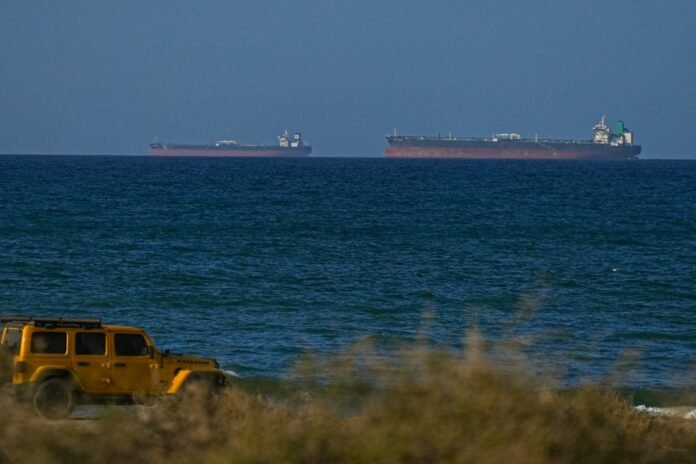
MarineTraffic data showed that traffic through the Strait of Hormuz fell to just six confirmed crossings, which represented a 60% decrease day-on-day.

Five of the six vessels followed the Iranian Unilateral Scheme, and this highlighted the continued concentration of traffic along that specific route.

Meanwhile, the Bab el-Mandeb strait recorded 49 confirmed crossings, and this total included five sanctioned vessels, 11 shadow-fleet vessels, and four dark transits.

Several ships that previously reversed their course in the Gulf of Aden and the Red Sea later completed their passages, while others remained on hold.

READ: Report says Bahrain, Kuwait carried out strikes inside Iran earlier this month

John King Cautions Against Ground Front: Eyes on Kurds, Kharg Island and Kuwait 

0
john king cautions against-ground-front:-eyes-on-kurds,-kharg-island-and-kuwait 
John King Cautions Against Ground Front: Eyes on Kurds, Kharg Island and Kuwait 


“Washington may believe additional pressure will force negotiations, while Tehran may interpret the same pressure as preparation for regime destruction. … The conflict could become region-wide with very little warning,” King said.

The confrontation between the United States and Iran is increasingly becoming a conflict without a clearly contained battlefield.  

What began as an escalation centered on direct US-Iran military exchanges and the strategic struggle over the Strait of Hormuz is now generating pressure across a much wider geographical space. Gulf states have faced attacks and threats against critical infrastructure. The possibility of US operations against Iranian territory has expanded beyond air strikes to discussions surrounding Kharg Island and potential cooperation with Kurdish and other anti-regime forces. Iranian warnings have, in turn, raised the possibility of retaliation extending to Kuwait and potentially Bahrain.  

A source inside Iran told The Media Line that Tehran is threatening to invade Kuwait if the US undertakes a ground operation backed by Kurdish forces. The report echoes a threat by Ahmad Bakhshayesh Ardestani, a member of parliament’s National Security Committee,  last week that “If the United States puts boots on the ground in Iran, we may also launch ground attacks on Kuwait and Bahrain.”   

Meanwhile, the Houthis have added another layer of instability around Bab-el-Mandeb by targeting Saudi-linked shipping, placing pressure on one of the principal maritime alternatives available to Riyadh as the crisis around Hormuz continues.  

Israel, which has remained outside the latest phase of the direct US-Iran confrontation, is also watching events closely. The reopening of public shelters in several municipalities on Thursday does not indicate that an Iranian attack is imminent, but it does reflect concern that a further escalation between Washington and Tehran could once again bring Israel directly into the conflict.  

Is a Ground War Likely? 

Taken together, these developments do not yet demonstrate that a regional ground war is imminent. But they raise a consequential question: whether the growing number of military options now being discussed could eventually create an escalation that neither Washington nor Tehran initially intended.  

The distinction is important because a conventional US invasion of Iran, a limited seizure of an island such as Kharg, a special-forces operation and a campaign relying on Kurdish or other local forces would each represent fundamentally different forms of military intervention.  

John King, founder of Q Advisory, cautioned against interpreting the existence of such options as evidence that the White House has already decided to open a ground front.  

“These possibilities must be taken seriously, but contingency planning should not be confused with a presidential decision to begin a ground war,” King told The Media Line. “The Pentagon plans for multiple options, including limited island seizures, special-operations missions and support for indigenous forces.”  

These possibilities must be taken seriously, but contingency planning should not be confused with a presidential decision to begin a ground war

For King, the operational indicators required for a substantial ground operation have not yet been publicly demonstrated.  

“I have not seen publicly verifiable evidence of the integrated command arrangements, protected staging areas, sustained logistics and US air-support commitments that would indicate an imminent operation,” he said. In his view, a Kurdish ground component would be more plausible than a conventional American invasion, but that would still require extensive US support, he added.  

The distinction between planning and execution remains central to understanding the current phase of the war.  

Large militaries routinely prepare multiple scenarios. But once one side begins to believe that contingency planning reflects a decision to pursue regime destruction or territorial occupation, the political meaning of military preparations can change rapidly.  

From Tehran’s perspective, that danger is particularly significant. Mohammed Ali Ghanamizadeh Fallahi, a Middle East researcher based in Tehran, argued that the pattern of American strikes in southern Iran should already be viewed within the context of possible preparations for a wider operation.  

“The most important issue is that the US attacks on southern Iran, according to the footage released by CENTCOM [United States Central Command], are not primarily aimed at military targets or even important infrastructure,” he told The Media Line. Ghanamizadeh Fallahi said that in his opinion, the type of target selection shows that the US is waging a psychological war against the people of the southern regions, so that if a ground attack is carried out, these areas would already be depopulated and the defenses reduced.  

His interpretation of American intentions is an assessment rather than an independently established US strategy. But it highlights one of the central risks of the current confrontation: Washington may consider its actions part of a coercive military campaign, while Tehran increasingly interprets the same actions as possible preparations for a much broader attack.  

Ghanamizadeh Fallahi also questioned whether a southern ground operation would be strategically sustainable. “The plan to attack through southern Iran is not very wise or practical, because American equipment is not suitable for the climate of the Iranian islands,” he said, adding that other forces of the resistance axis may also be able to cut off American forces.  

He argued that the history of previous ground wars fought by the US would also weigh heavily on any decision to move beyond air and maritime operations, especially against an opponent with significant experience in ground and guerrilla warfare, and remembering its own experiences from Vietnam, Iraq and Afghanistan. “This makes a ground attack against Iran difficult, even from different fronts, unless it inflames internal protests in Iran and disrupts Iranian national unity,” he said.  

The Possible Effects of Kurdish Involvement 

It is precisely that possibility—the combination of external military pressure and internal instability—that has made the Kurdish and ethnic-minority question increasingly relevant to speculation surrounding the next phase of the conflict.  

Iran is not ethnically homogeneous, and several communities have longstanding political grievances with the central government. Kurdish armed organizations operating from northern Iraq have previously confronted Tehran, while Baluch areas in southeastern Iran have also experienced persistent instability.  

A strategy based on such groups could theoretically allow Washington to create pressure inside Iran without immediately deploying large numbers of American ground forces. Yet such a strategy would carry risks that extend far beyond the battlefield.  

King said Kurdish forces could provide Washington with several tactical opportunities.  

“Washington might hope that Iranian Kurdish forces could divert the Islamic Revolutionary Guard Corps, disrupt supply routes, collect intelligence, secure territory or encourage broader opposition to Tehran,” he said.  

But tactical pressure and strategic success are not the same thing.  

The danger is that this could transform a conflict over Iran’s nuclear, missile and maritime behavior into an ethnic and territorial war

“The danger is that this could transform a conflict over Iran’s nuclear, missile and maritime behavior into an ethnic and territorial war,” King said. “Iranian nationalism could strengthen the government rather than weaken it, while Tehran could retaliate directly against Iraqi Kurdistan. Turkey, Baghdad and neighboring states would also fear separatist spillover.”  

In that scenario, an effort intended to weaken the Iranian state could instead strengthen nationalist support for Tehran while simultaneously creating new tensions across Iraq and Turkey. “Kurdish forces could create tactical pressure, but they are unlikely by themselves to produce controlled regime change or a stable postwar settlement,” King said.  

Kobi Michael, an analyst and researcher at the Institute for National Security Studies and the Misgav Institute, also believes Kurdish involvement could become relevant if the confrontation continues to expand.  

“The Kurds might play a role, but it depends on the developments,” Michael said, noting that many Kurds are interested in achieving increased autonomy.  

He also pointed to other minorities with unresolved grievances against Tehran, suggesting that a broader internal front could eventually emerge even without a single, centrally coordinated military operation.  

But any attempt to introduce Kurdish armed groups into the confrontation would immediately affect relations with Turkey.  

The Kurdish question remains one of Ankara’s most sensitive national-security concerns, particularly because any significant Kurdish territorial or political gains in Iran or Iraq could have implications for Turkey’s own Kurdish population.  

Michael acknowledged that Turkish opposition would be substantial but argued that Ankara would not necessarily be able to prevent Kurdish groups from acting if they believed the regional conflict had created a historic opportunity.   

Ghanamizadeh Fallahi presented a sharply different view from Tehran.  

“They are counting on the Kurds inside Iran, but this is wrong,” he said. “The Kurds in Iran are not going to tie themselves to them.”, he added. He also suggested that Iran and Turkey could find overlapping interests in containing Kurdish separatist forces.  

The disagreement reflects a larger uncertainty surrounding any strategy based on Iran’s internal divisions. Ethnic grievances exist, but that does not automatically translate into support for a foreign military intervention. Nor does opposition to Tehran necessarily imply a willingness to participate in a campaign that could fragment the country.  

The Pivotal Role of Kharg Island 

The possibility of a more limited US territorial operation, particularly against Kharg Island, presents a different strategic calculation.  

Kharg is important because of its role in Iran’s oil-export system. Seizing or neutralizing the island could theoretically deprive Tehran of a major economic asset while giving Washington additional bargaining power.  

But an operation that appears limited geographically could still produce region-wide consequences. “Seizing Kharg Island could deprive Tehran of its principal oil-export hub and give Washington a powerful bargaining asset,” King said. “It would not necessarily provide decisive leverage.”  

The difficulty would not simply be capturing territory. “Capturing an island is different from holding it against missiles, drones, mines, small boats and attacks launched from the nearby Iranian coast,” King said. “Iran could damage or destroy its own facilities rather than permit the United States to operate them,” he stressed.  

Iran could damage or destroy its own facilities rather than permit the United States to operate them

The strategic problem for Washington is therefore not only whether it could seize Kharg, but what would follow.  

An island operation could create a new military commitment requiring constant protection while simultaneously giving Tehran justification to widen its retaliation against American forces and Gulf infrastructure. “Tehran could also retaliate against Gulf oil terminals, desalination facilities, ports, US bases and commercial shipping,” King said.  

Such retaliation would place the Gulf states in an increasingly difficult position.  

Many Gulf governments have spent years attempting to maintain security relationships with Washington while simultaneously preserving channels with Tehran. But as military operations increasingly affect civilian infrastructure, energy exports, and maritime routes, the space for strategic hedging becomes narrower.  

Could Iran Invade Kuwait or Bahrain? 

The most extreme version of this dilemma emerged with Iranian warnings that a US ground operation could trigger an Iranian response involving Kuwait and potentially Bahrain. The feasibility of a conventional Iranian invasion remains deeply disputed.  

Willian, a US Department of State adviser,  expressed skepticism about Iran’s ability to take Kuwait while acknowledging the broader uncertainty surrounding the conflict.  

Iran doesn’t have the capacity to take Kuwait. … It’s not impossible, but I don’t think it’s something that’s going to happen right now.

“Iran doesn’t have the capacity to take Kuwait. … It’s not impossible, but I don’t think it’s something that’s going to happen right now.” he told The Media Line.  

King similarly described a conventional Iranian occupation of Kuwait or Bahrain as militarily improbable. “Iran has no direct land border with Kuwait, meaning its forces would have to cross Iraqi territory or conduct a highly exposed amphibious operation,” he said. “Bahrain is an island hosting the headquarters of the US Fifth Fleet, making an Iranian occupation attempt even more difficult.”  

But the distinction between occupation and a limited operation is crucial. Iran would not necessarily need to capture and hold an entire Gulf state to create a major strategic shock.  

“Missile and drone attacks, sabotage, infiltrations, attacks by aligned groups or a limited raid intended to capture American personnel are considerably more plausible,” King said.  

“If Tehran believed the survival of the state was at stake, it might accept extraordinary losses to attempt such an operation, but occupying either country would be beyond Iran’s realistic conventional capacity.”, he added.  

Michael also considered a conventional invasion unlikely but warned that Tehran could become less predictable if it believed the regime itself faced an existential threat.  

“They will do whatever they can do. They are not going to surrender, at least when it comes to this regime,” Michael said.  

“Until the end, I don’t see any surrender of this regime. And therefore, they will try even to use ground forces. But the probability that they will be succeeding in doing that is very low when it comes to Kuwait and to Bahrain,” he added.  

For Michael, an operation conducted through Iraqi militias would also face significant obstacles.  

“It’s not an idea that you push a button and then in three seconds you have the Iraqi militias in Kuwait,” he said. “It’s a logistical effort. It is something that takes time, something that creates a lot of noises for the intelligence to monitor it,”, he added.  

A large militia mobilization would have to cross Iraqi territory, potentially encounter opposition from Baghdad and expose itself to extensive American and regional intelligence surveillance.  

Yet the former Bahraini diplomat interviewed for this article, who requested that his identity and current affiliation remain undisclosed, argued that the danger should not be evaluated exclusively through the lens of conventional invasion.  

“The main aim could be to seize US bases, capture hostages, or just conduct temporary operations and withdraw,” he told The Media Line, while stressing that he was not a military expert and could not assess whether Iran or its allies had the capacity to conduct such an operation.  

The main aim could be to seize US bases, capture hostages, or just conduct temporary operations and withdraw

His assessment points toward a broader characteristic of the conflict: limited actions can generate strategic consequences disproportionate to their military scale.  

A raid on a military installation, the capture of American personnel or a temporary incursion into a Gulf state could force Washington to respond rapidly even if Tehran had no intention of permanently occupying territory.  

King warned that the threshold for such a regional escalation could be crossed quickly.  

A high-casualty strike, an attempted seizure of a US installation or a ground incursion could bring American retaliation within hours and place the broader Gulf security architecture under pressure.  

Not every Gulf state would necessarily choose to join offensive operations, but as bases, intelligence facilities, air defenses and logistical networks across the Gulf became part of the conflict, remaining outside the war could become increasingly difficult.  

For the former Bahraini diplomat, the deeper question is therefore whether the current confrontation could ultimately expose structural limits in the Gulf’s dependence on American deterrence.  

“In my view, if the United States continues to escalate militarily but is unable to achieve a decisive strategic outcome against Iran and its allies through military operations alone, the Gulf states—including Bahrain—may eventually, and unfortunately, find themselves compelled to pursue a new regional security arrangement that accommodates Iran as an established stakeholder in the Gulf’s security architecture,” he said.  

“Such a development would not necessarily reflect a political preference, but rather a pragmatic adaptation to a changing regional balance of power,” he added.  

The Strait of Hormuz as a Strategic Weapon 

For Washington, allowing Iran to maintain the ability to disrupt one of the world’s most strategically important maritime corridors carries both economic and geopolitical costs.  

For Tehran, the ability to threaten Hormuz represents one of its most important instruments of leverage against a militarily superior opponent.  

The former Bahraini diplomat argued that the conflict has already demonstrated how difficult it is for conventional military superiority to completely neutralize asymmetric pressure.  

“Despite its overwhelming military superiority, the United States appears unable to guarantee complete and economically sustainable control over the Strait of Hormuz, while Iran has demonstrated that relatively low-cost asymmetric capabilities can repeatedly disrupt the Strait,” he said.  

“In this sense, the Strait of Hormuz has effectively become a strategic weapon in its own right—a geopolitical asset whose ability to disrupt global energy markets rivals the strategic impact traditionally associated with far more sophisticated military capabilities,” he added.  

Michael reached a similar conclusion regarding the strategic value Iran assigns to the waterway.  

The current regime will never give up on the control of Hormuz because this is the ultimate and maybe the only strategic leverage that they have over the US

“The current regime will never give up on the control of Hormuz because this is the ultimate and maybe the only strategic leverage that they have over the US,” he said.  

This creates what Michael described as a strategic impasse.  

Washington cannot easily end its campaign while appearing to accept continued Iranian pressure over Hormuz. Tehran, meanwhile, has little incentive to surrender one of the few instruments capable of imposing substantial economic costs far beyond the immediate battlefield.  

The Houthis Block Saudi Arabia’s Alternate Route 

The Houthis’ attacks against Saudi-linked tankers around Bab-el-Mandeb carry particular significance because the Red Sea represents an essential alternative route for Saudi Arabia at a time of instability around the Persian Gulf.  

If Hormuz and Bab-el-Mandeb come under simultaneous pressure, Riyadh faces a strategic problem that extends beyond individual attacks on ships.  

The issue becomes whether alternative export routes can genuinely provide protection when multiple maritime chokepoints are exposed to different but interconnected conflicts.  

Michael, however, cautioned against treating the Houthis as actors who simply execute Iranian orders.  

“They are not a classical Iranian proxy,” he said. “It is true that they support the Iranians. It’s true that they are willing and they are ready to be part of the resistance axis and to do some things that might help Iran. But they have their interests, they have their agenda, they have their aspirations,” he added.  

The distinction is important.  

A regional escalation does not require every actor to operate under a single command. Iran, the Houthis, Iraqi militias and other armed groups can pursue distinct interests while their actions simultaneously increase pressure on the same regional security architecture.  

This makes deescalation harder because resolving one confrontation does not necessarily neutralize the others.  

Ghanamizadeh Fallahi also framed the current confrontation as part of a larger struggle over the future of the American role in the Middle East.  

“You know, both Iran and the United States want the withdrawal of the US military presence from the Middle East, but the United States wants this withdrawal to end with the absorption of Iran into its new economic ecosystem,” he said.  

If the United States initiates a ground operation and fails, the Middle East will be over for Trump forever

“If the United States initiates a ground operation and fails, the Middle East will be over for Trump forever,” he added.  

His assessment reflects a broader Iranian argument that a failed American ground campaign would have consequences beyond Iran, potentially weakening US deterrence and accelerating the wider erosion of Washington’s regional position.  

From another perspective, however, precisely that reputational question could make disengagement more difficult for Washington.  

If the United States has made freedom of navigation and control of escalation around Hormuz a central objective, ending the confrontation without achieving a visible strategic result could carry significant political costs.  

The result is a conflict in which both sides may understand the dangers of escalation while simultaneously believing that backing down carries unacceptable consequences.  

Could Israel Get Involved? 

Although it has been absent from the latest phase of direct American-Iranian exchanges, the reopening of shelters in several Israeli municipalities has renewed speculation over whether it could soon find itself involved again.  

The shelter decisions alone should not be interpreted as proof of an imminent Iranian attack. Municipal authorities have strong reasons to prepare for contingencies when ballistic-missile warning times are limited.  

King said the significance of the measures would increase only if they were accompanied by broader national military preparations.  

“A local shelter decision is not, by itself, proof that Israel has intelligence of an imminent Iranian strike,” he said.  

“The assessment would become more serious if Israel’s Home Front Command changed national guidance, reserve and air-defense deployments increased, American-Israeli military coordination intensified, or multiple municipalities simultaneously took similar measures,” he added.  

Yet the possibility of renewed Israeli intervention cannot be separated from the wider trajectory of the war.  

Michael believes that Israel is increasingly likely to find itself drawn back into the confrontation, but he also identified a significant difference between Israeli and American strategic priorities.  

“If we are talking about probabilities, there is a higher probability that Israel will find itself involved,” Michael said. “I think that this is not in the Israeli interest currently. I think that Israel prefers that the Americans will do what they have to do,” he added.  

There is a higher probability that Israel will find itself involved. I think that this is not in the Israeli interest currently.

The problem, he argued, is that Washington’s immediate focus and Israel’s strategic objectives are not necessarily identical.  

“Israel is interested in other issues. Hormuz is not an Israeli issue,” Michael said. “Israel is interested in eliminating, first, the nuclear capabilities of Iran, secondly, the ballistic missiles, thirdly, all the idea of the proxies,” he added.  

This creates two very different paths toward Israeli involvement.  

Iran could attack Israel directly, forcing Jerusalem to respond and potentially giving the Israeli military greater freedom to pursue its own strategic priorities.  

Alternatively, Washington could ask Israel to join an American-led operation whose principal objective remains different from Israel’s own.  

In the second scenario, Israel could find itself assuming substantial military risks in support of American objectives while gaining less freedom to determine when and how the campaign ends.  

The danger is that any of the current fronts could trigger another.  

A US move against Kharg Island could prompt attacks against Gulf oil, water and military infrastructure.  

An attempt to mobilize Kurdish or Baluch forces could transform an interstate war into an ethnic and territorial conflict inside Iran while creating new tensions with Turkey and Iraq.  

An Iranian raid against Kuwait, Bahrain, or an American military installation could trigger a rapid US response even without any realistic Iranian ability to permanently occupy territory.  

Continued Houthi pressure around Bab-el-Mandeb could reduce Saudi Arabia’s ability to compensate for disruption in Hormuz.  

And a renewed Iranian attack on Israel could return the Israeli military to the center of a war whose objectives have already expanded well beyond the confrontation that initially brought Washington and Tehran into direct conflict.  

For King, the central danger remains that military pressure is interpreted differently on each side.  

The central danger is miscalculation

“The central danger is miscalculation,” he said. “Washington may believe additional pressure will force negotiations, while Tehran may interpret the same pressure as preparation for regime destruction,” he added.  

“Once either side adopts the second interpretation, military decisions will be driven by survival rather than bargaining, and the conflict could become region-wide with very little warning,” he added. 

For now, there is still no publicly established evidence that Washington has decided to launch a large-scale ground invasion of Iran.  

But that may no longer be the only relevant threshold.  

The more significant question is whether increasingly discussed territorial options—an island seizure, a special operation, support for Kurdish or other armed groups, or limited Iranian operations against neighboring states—could gradually move from contingency planning into action as both sides search for new forms of leverage.  

The conflict is therefore becoming dangerous not only because Washington or Tehran may deliberately choose a wider war, but because each successive attempt to increase pressure reduces the space available for the other side to absorb the attack without responding.  

Hormuz, Bab-el-Mandeb, Gulf infrastructure, Iran’s internal ethnic divisions, the future of the American military presence and the possibility of renewed Israeli involvement are no longer entirely separate questions.  

They are increasingly becoming different fronts of the same strategic confrontation.  

And the closer those fronts come to intersecting, the more difficult it becomes to distinguish between coercion designed to force an agreement and escalation that makes an agreement impossible.  



Oil prices hit $100 for the first time since May

0
oil-prices-hit-$100-for-the-first-time-since-may
Oil prices hit $100 for the first time since May


Oil prices have surged to $100 a barrel for the first time since May as renewed fighting in the Middle East raises concerns over global energy supplies.

Brent crude, the international benchmark, jumped more than 6% on Thursday after several days of gains as the United States intensified military strikes against Iran. Prices were further pushed higher after Houthi militants in Yemen attacked oil tankers in the Red Sea, threatening a key trade route used by Saudi Arabia to bypass the Strait of Hormuz.

Gas prices have also continued rising, with the UK benchmark reaching around 150p per therm, compared with about 98p at the end of June.

Oil markets had previously eased following a temporary ceasefire between the US and Iran, returning to levels seen before military action by the US and Israel began on 28 February. However, the truce has collapsed, with US Secretary of State Marco Rubio saying Iran’s leadership was not prepared to reach an agreement.

The renewed conflict is fuelling fears of higher inflation across major economies. Rising oil prices could push up petrol and diesel costs, while businesses may pass increased transport and production expenses on to consumers through higher prices for everyday goods, including food.

via BBC

Roku raises streaming stick prices by up to 60 percent

0
roku-raises-streaming-stick-prices-by-up-to-60-percent
Roku raises streaming stick prices by up to 60 percent

Roku is raising the prices for its streaming sticks and boxes by up to 60 percent.

Roku has updated its website with the new prices. Currently, it is still selling its streaming players at their old MSRPs but lists those prices as sale prices. The new prices are:

  • Roku Streaming Stick: $40 (formerly $30)
  • Roku Streaming Stick Plus: $60 (formerly $40)
  • Roku Streaming Stick 4K: $80 (formerly $50)
  • Roku Ultra: $150 (formerly $100)
  • Roku Streambar SE: $150 (formerly $100)

Roku is even upping the price for a bundle that includes a Streaming Stick Plus and a one-month subscription to Fox One. As recently as July 20, Roku listed the bundle at $60 with a sale price of $25, according to the Internet Archive’s Wayback Machine. Now, the bundle carries an $80 MSRP and $45 sale price.

When I tried buying the devices at their “sale prices,” Roku’s store limited me to three units per model. Other retailers will continue to sell the devices at the lower prices until supply runs out, The Desk reported today.

Roku is raising prices in response to the shortage of memory, as well as “other components, caused by the artificial intelligence rush,” The Desk reported, citing a “Roku executive.”

This is an about-face from May, when Roku founder and CEO Anthony Wood said that the memory shortage is “great” for Roku. During a call with investors, Wood said that the Roku TV operating system “requires significantly less memory and storage” than rivals because Roku has focused on keeping its bill of materials low.

“Although there is issues around memory that we have to manage, [the RAM shortage] is generally great for our business because of our bill of materials cost advantage, which allows us to just have a lower cost than … all the competing products. That gap is just widening right now by a pretty wide margin,” Wood said, per a transcript of the call.

The executive also noted that the low costs associated with running Roku OS have helped the company win over TV OEMs and retailers.

Many tech companies have hiked prices recently due to the memory shortage. On the streaming hardware side, for example, Apple last month raised prices for Apple TV boxes from $129 to $199 for the 64GB version and from $149 to $249 for 128GB.

Apple has a reputation for selling high-end devices at a premium, though. Roku, on the other hand, has built a name for itself through affordability. The company may have a harder time getting people to accept higher prices for what have traditionally been viewed as budget products.

A Roku representative told The Desk that the company still thinks its devices are competitively priced.

“We are doing our best to have great deals like what we have going on right now,” the executive told the publication.

Roku’s price hikes come weeks after Fox announced it is buying Roku for an enterprise value of $22 billion. The deal remains subject to regulatory and shareholder approval and is expected to close in 2027.

Pakistan’s only choice is active neutrality in US-Iran war

0
pakistan’s-only-choice-is-active-neutrality-in-us-iran-war
Pakistan’s only choice is active neutrality in US-Iran war

A war is entering Pakistani homes right now. Not through headlines, but through the electricity bill, the bus fare, the price of vegetables at the local market.

Wars in the Middle East rarely stay confined to the countries that start them — their consequences travel through oil pipelines, shipping lanes, financial markets, refugee routes, sectarian networks and military alliances.

For Pakistan, the escalating war between Iran and the United States isn’t a spectacle to watch from a safe distance. It’s a national emergency unfolding just beyond the western border, and across the waters the country’s economy depends on.

As of July 24, 2026, the conflict has entered an increasingly dangerous phase. American missiles have struck targets across Iran, including military and naval facilities near the Strait of Hormuz, with reports of strikes reaching further into the interior.

Iran has claimed retaliatory attacks on American positions and allied installations across the Gulf, including a strike on a base in Jordan. Meanwhile, Iran-aligned Houthi forces have hit Saudi oil tankers in the Red Sea, opening a second front and threatening the Bab el-Mandeb chokepoint.

Traffic through the Strait of Hormuz has fallen sharply, shipping-insurance costs have climbed, and international oil prices have briefly crossed $100 a barrel.

None of this is abstract for Islamabad. Pakistan shares a long border with Iran, keeps close defense and financial ties with Saudi Arabia and the UAE, depends heavily on imported petroleum, hosts major Chinese investments, and still wants a working relationship with Washington.

Millions of its citizens have livelihoods tied to Gulf economies, one way or another. Few countries in the region have to hold so many competing relationships together at once.

No more comfortable ambiguity

For decades, Pakistan’s Middle East policy has rested on strategic ambiguity — staying cordial with Iran while keeping exceptionally close ties with Saudi Arabia and the UAE, cultivating China as the principal strategic partner while periodically rebuilding relations with Washington.

That balancing act was never easy, but it held up reasonably well as long as regional rivalries stayed short of open war.

It gets much harder when missiles are crossing borders, American installations in Gulf countries are being hit and the shipping lanes Pakistan relies on are under military pressure. Restraint and neutrality, in the old vocabulary, aren’t enough anymore.

What the country needs now is a clearly stated doctrine of active neutrality — which doesn’t mean indifference, and doesn’t mean pretending every party in this war carries equal weight.

It means refusing to take part in offensive operations, while actively protecting Pakistani territory, shipping, citizens and economic interests, and using every diplomatic channel available to slow the escalation down.

The Foreign Office has repeatedly called on all sides to show restraint and has said sustained dialogue is the only real path forward. That’s the right instinct, and it should stay the foundation of policy. But it needs to be backed by something visible.

Pakistan should state plainly that its territory, airspace, ports and intelligence infrastructure will not be used to launch attacks on Iran — and just as plainly, that any attack on Pakistani territory, vessels or civilians will be treated as a violation of sovereignty.

Defend the country, yes. But don’t let it become a battlefield, a barracks, or a launching pad for somebody else’s war.

Wartime decisions have a habit of hiding behind the language of national security. That would be a mistake here. Any Pakistani military commitment beyond straightforward territorial defense ought to go through parliamentary debate and a public explanation.

The government should brief political parties on existing defense commitments, on how Pakistani facilities are being used, on the risks at the border and on what escalation would cost economically.

It should do so not to spill operational secrets, but because policy shaped by a narrow circle rarely survives real political pressure, while policy debated openly in parliament tends to hold up better, both at home and abroad.

The opposition has a job here too: scrutinize the government’s approach, certainly, but without reaching for sectarian emotion or turning this crisis into a weapon against Iran, the United States, Saudi Arabia, or any Pakistani community. Foreign policy can’t stay stable if every external crisis just becomes new ammunition in domestic politics.

Inabsorbable economic shock

The most immediate danger is economic. Petroleum imports made up 22.2% of Pakistan’s total import bill during July-March of fiscal year 2025-26, costing roughly $11.2 billion.

Even before this latest escalation, the Pakistan Economic Survey had already flagged how Middle East conflict was driving energy-market volatility, pushing up shipping and insurance costs, and disrupting regional supply chains.

A prolonged closure of the Strait of Hormuz, or even serious disruption short of full closure, would push fuel-import costs higher, strain foreign-exchange reserves, and weaken the rupee further. Costlier diesel raises transport and farming costs.

Higher petrol prices land on commuters and small businesses. More expensive electricity generation eventually shows up on every household’s bill. This is how a war fought thousands of kilometers from Islamabad ends up in an ordinary Pakistani home.

It won’t stop at energy, either. Ships avoiding the dangerous routes take longer paths, which raises freight charges and delays imports of machinery, chemicals, edible oil and industrial raw materials. Exporters face higher logistics costs right when Pakistan needs stronger export growth, not weaker.

The government needs to move past reassuring statements and actually publish an emergency economic plan: what strategic fuel reserves exist, what alternative procurement and shipping arrangements are in place, how essential supply chains will hold up.

Blanket fuel subsidies would be financially unsustainable, and would mostly help richer consumers who need it least. Targeted relief for public transport, agriculture, low-income households and export industries is easier to defend, and cheaper to sustain.

Pakistan should also move faster on conservation — cutting government fuel use, improving urban public transport, allowing flexible work arrangements where practical, and pushing incentives for solar and energy-efficient technology. None of this is an environmental extra right now. It’s economic security.

The Gulf connection

Pakistan’s exposure to the Gulf goes well beyond oil. During July-March FY2026, Saudi Arabia accounted for 23.4 percent of workers’ remittances received by Pakistan, the UAE for 20.7%, and other GCC countries for another 9.5% — together, more than half of all recorded remittance inflows.

A wider war could disrupt employment, aviation and construction activity across these economies, and Pakistani workers could face job losses, delayed salaries, or emergency evacuation. Even a temporary dip in remittances would hit foreign-exchange reserves and household spending back home.

Islamabad should set up a unified crisis mechanism spanning the foreign, finance, aviation, maritime affairs, overseas Pakistanis, petroleum and interior ministries. Embassies across the Gulf need updated citizen-registration systems, evacuation plans and emergency communication lines ready before they’re needed, not after.

Commercial airlines need clear contingency guidance too. Pakistan can’t afford a repeat of past crises, when citizens were often left piecing together information through informal networks because nobody official was telling them anything. Protecting overseas Pakistanis isn’t just a consular obligation. It’s an economic one.

Pakistan has deep ties to the Gulf monarchies, but Iran occupies a different position altogether — it’s the immediate neighbor. Instability inside Iran would inevitably spill into Balochistan, into border trade, into security operations, into the lives of communities on both sides of the frontier.

A weakened Iranian state opens space for militant groups, criminal networks, weapons smugglers and traffickers. Border closures would hurt livelihoods in districts that are already struggling, and a serious humanitarian crisis could push refugees toward Pakistan.

Islamabad needs to tighten border security without treating the entire local population as a threat. Heavy-handed measures that choke off legitimate trade and movement tend to deepen resentment and strengthen exactly the illegal networks the state is trying to shut down.

A better approach: expand regulated border markets, improve customs facilities, bring local communities into the security planning itself. Balochistan shouldn’t be managed only as a military buffer zone — treat it instead as Pakistan’s principal western economic and diplomatic gateway.

There’s a real internal risk, too. Iran-US hostilities are easy for extremists to reframe as a sectarian fight. Pakistan has already paid dearly for imported ideological conflicts, and political leaders, religious scholars and media organizations need to consciously avoid language that casts this as a struggle between Muslim sects.

At its core, this war is about power, security, nuclear policy, regional influence and control of strategic waterways. Turning it into a sectarian dispute would be both wrong and dangerous.

The opportunity — and limits — of mediation

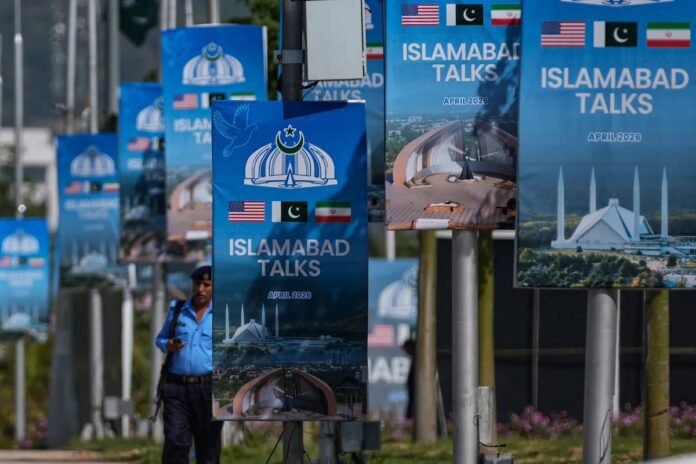
Pakistan has already tried to bring Washington and Tehran to the table. Pakistan and Qatar helped facilitate an earlier memorandum meant to create space for negotiation, though it eventually fell apart amid accusations of violations on both sides.

More recently, Islamabad has explored reviving talks alongside Chinese diplomatic engagement — Beijing has publicly backed Pakistani mediation, though serious obstacles remain, not least because attacks on Saudi Arabia and other Gulf states have complicated Islamabad’s own position.

Pakistan should keep trying. But it needs to know the difference between mediation and diplomatic theatre. A mediator needs credibility with everyone involved, and Islamabad can’t claim public neutrality while appearing privately aligned with one side’s military goals.

It needs to be transparent about what principles are actually guiding its involvement: respect for sovereignty, protection of civilian life, freedom of commercial navigation, non-proliferation and an end to attacks on neighboring states.

Working with China, Qatar, Oman and Turkey to open parallel diplomatic channels is a reasonable path.

The goal doesn’t have to be an ambitious final settlement covering every grievance — a limited ceasefire tied to practical steps would do: protect commercial shipping, suspend attacks on regional states, guarantee that neighboring territory won’t be used for offensive operations, and get negotiations moving again. A phased agreement is less dramatic than a grand peace conference.

It’s also more realistic. Pakistan should use its standing at the UN and the OIC to press for respect for international humanitarian law along the way — civilian deaths can’t be waved off as acceptable collateral, whether caused by American missiles, Iranian drones, or allied armed groups. Neutrality can’t be allowed to become moral silence.

Pakistan’s real choice

Commentators may want to frame this as a choice between Iran and Saudi Arabia, or between China and the United States. That’s the wrong framing.

Pakistan’s primary obligation is to its own people, and their interests need a stable Iran, secure Gulf states, open shipping routes, affordable energy, protected overseas workers, continued Chinese investment, and a working relationship with Washington. Joining a regional war serves none of that.

What Pakistan needs is active neutrality, serious mediation, and real economic preparedness — defending friendly Gulf states diplomatically, staying at peace with Iran, coordinating with China, and remaining engaged with Washington, all without handing its strategic autonomy to any one of them.

There’s an uncomfortable truth underneath all of this: Pakistan’s vulnerability to Middle Eastern wars is made worse by its own economic weaknesses. A country this dependent on imported fuel, foreign deposits, external loans and overseas remittances will always have limited room to maneuver diplomatically.

The long-term fix isn’t clever balancing alone. It’s real domestic resilience — diversified energy, stronger exports, better taxation, better governance, less reliance on emergency financial rescue.

The immediate job is simpler to state, if not to do: keep this conflict from entering Pakistan economically, militarily or socially. Right now, the wisest foreign policy isn’t picking a camp in someone else’s war. It’s choosing peace, sovereignty, and the welfare of Pakistan’s people. Not out of weakness – out of strategic discipline, born of necessity.

Mansoor Qaisar is a communications specialist and freelance writer based in Islamabad, writing on public policy and social issues shaping Pakistan and the region. He can be reached at mqesar@gmail.com

Anthropic’s Opus 5 is about token efficiency, not a capability leap

0
anthropic’s-opus-5-is-about-token-efficiency,-not-a-capability-leap
Anthropic’s Opus 5 is about token efficiency, not a capability leap

Today, Anthropic rolled out Opus 5, the newest update for the model that has recently become a popular choice for coding and other software development tasks, among other things.

While this is a noteworthy bump for Opus, it doesn’t seem to be an Opus 4.5-level breakthrough in agentic coding performance.

A chart (made by Anthropic) with various benchmarks like Frontier-Bench and DeepSWE shows Opus 5 performing at about the same level or slightly ahead of the much-ballyhooed capabilities of Anthropic’s Fable model for coding tasks. It ostensibly beats Opus 4.8 and OpenAI’s competing GPT-5.6-Sol in just about every kind of task.

The various benchmarks show an iterative increase in performance, but not a radical leap, while the main pitch is that it’s a model that offers something just shy of Fable at approximately half the cost.

It’s also worth mentioning that Anthropic specifically avoided giving Opus 5 cutting-edge training on cybersecurity tasks, so it lags way behind Fable and Mythos in that regard. Anthropic claims it is relatively good at finding cybersecurity vulnerabilities, but because of decisions made in training the model, it is “substantially behind Mythos 5 on the exploitation of those vulnerabilities.”

As such, Opus 5 doesn’t have all of the same controversial protections that Fable had, such as the policy of keeping data for review for 30 days in case of an incident.

But this is really a cost story. From one model update to the next subsequent one, we’ve mostly been seeing modest performance improvements—though they look far more dramatic when you look at a whole year of updates. The discourse among software developers and engineering managers right now is mostly around dealing with cost, and there’s real movement in open-weight models, local models, and other alternatives to cutting-edge frontier models.

Opus 5 sits at $5 per million input tokens, or $25 per million output tokens—on par with its predecessor, but cheaper than Fable. That said, the recently announced Chinese open-weight model Kimi K3 comes in at just $15 per million output tokens at similar performance, so competition is fierce.

Lately, companies like Cursor and Meta have been building “model routers,” systems that automatically select models of varying size and capability from an array of options based on the nature of the prompt. The idea is that you save a lot of tokens (and therefore compute and/or money) by not using something like Fable for every task.

Companies like Anthropic are going to have to keep bringing token costs down, or at least (as is the case here) offering more performance for no additional cost, to continue to see the growth they’ve seen. Otherwise, they will start seeing reduced usage as people turn to smaller or open models once those models get good enough to handle the less challenging development tasks.

Qantas Tests Ultra-Long-Range Airbus on 17,000km Nonstop Flight to Melbourne

0
qantas-tests-ultra-long-range-airbus-on-17,000km-nonstop-flight-to-melbourne
Qantas Tests Ultra-Long-Range Airbus on 17,000km Nonstop Flight to Melbourne


Qantas has completed a major test flight of its new ultra-long-range Airbus A350-1000ULR, with the aircraft landing in Melbourne after a nearly 19-hour nonstop journey from France as the airline prepares for its ambitious Project Sunrise flights.

The aircraft departed Airbus’ manufacturing facility in Toulouse on Thursday and travelled almost 17,000km to Australia, becoming the most tracked flight in the world on flight monitoring website Flightradar24, with more than 67,000 people following its route.

The A350-1000ULR is being developed to operate some of the world’s longest commercial flights, including Qantas’ planned direct service between Sydney and London, which is expected to begin in 2027 and could take up to 22 hours.

During the test flight, four Airbus pilots and five flight test engineers evaluated key systems, including fuel management and cabin conditions. Qantas said the aircraft would remain in Melbourne before returning to Toulouse, with two Qantas pilots joining the return journey.

The aircraft is the first of its model to enter flight testing and features an additional 20,000-litre fuel capacity, allowing it to travel up to 18,500km. Qantas has ordered 12 A350-1000ULR aircraft, configured with 238 seats, fewer than standard versions to prioritise passenger comfort on ultra-long routes.

Project Sunrise, which aims to connect Australia directly with destinations including London and New York, has faced several delays. Qantas now expects its first specially configured aircraft to be delivered in April 2027, with commercial services due to follow later that year.

via the Guardian

0FansLike
0FollowersFollow
0FollowersFollow
0SubscribersSubscribe
- Advertisement -
Google search engine

Recent Posts