23.5 C
London
Friday, July 24, 2026
Home Blog

How Videos Helped Me Uncover Abuse at an Arkansas Private School

0
how-videos-helped-me-uncover-abuse-at-an-arkansas-private-school
How Videos Helped Me Uncover Abuse at an Arkansas Private School

The Delta Institute for the Developing Brain was set back off a country road in a white colonial house — such an atypical location that I first drove right by it, unsure that it was a school. I turned around, went to the door, introduced myself as a reporter and asked for a tour.

I knew a student had been assaulted in this Arkansas school a year earlier because of some news reports based on a detective’s description. Once inside, I noted the preteens tucked into hammock chairs or sitting on the floor. I noted the cameras mounted in the foyer and classrooms, a reminder that, in order to fully understand what had happened, I’d need to see the video that had captured the assault. 

But since this happened at the Delta Institute, a private school, I didn’t have access to the types of public records — incident reports, emails and video — that might have existed at a public school. The only reason we knew that something awful had happened here was that law enforcement got involved. I would have to keep reporting for weeks until the criminal case was closed. Then I could start pursuing the video evidence.

I had come to Northeast Arkansas, just outside of Jonesboro, to report on private schools that have been opening in response to state legislatures increasingly setting aside public money for parents to spend on private education. Our reporting shows that more public money doesn’t necessarily translate to more transparency. In most of the states that ProPublica studied, private schools operate with little oversight. Unlike public schools, where everything from test scores to school lunches and staff credentials is regulated, most of what happens in private schools is not open to public scrutiny.

In Arkansas, the focus of my recent story with Jodi S. Cohen, there are no rules about who can open a private school, and they can operate just about anywhere. The state only requires that private schools conduct regular fire drills, keep immunization records and have an American flag and a flagpole. It doesn’t review schools’ curriculum or the backgrounds and capabilities of their operators.

There are no records showing that the Arkansas Department of Education investigated the Delta Institute or visited the school, even after police arrested its founder. When asked if the department had gone to the school, officials did not answer, but said when the department is made aware of issues, that “often results in a site visit.”

Eventually, I was able to obtain video evidence recorded from inside the school. With the help of Arkansas Times reporter Milo Strain, I submitted a Freedom of Information Act request for video footage to the Craighead County Sheriff’s Office and to the prosecutor who brought the charges on behalf of the state. 

Now I want to share some of that footage with you. It’s sourced mostly from my open records requests, plus one video that was shared with me by a parent who consented to its publication. While the videos are difficult to watch, they are important in that they show not only the mistreatment of students at one particular private school but also the systemic lack of oversight that allows private schools to operate with few regulations and little monitoring.

Private School Owner Mary “Tracy” Morrison Orders Students to Scrub Floors

The owner of an Arkansas private school sent a video to a student’s mother last year to explain why the boy, a 10-year-old with autism, was being kept after school. Obtained and redacted by ProPublica. Two of the children’s names and faces are redacted to protect their identities.

Early in my reporting about the Delta Institute, a parent showed me a video of her son’s experience at the school. It was taken by the school’s owner, Mary “Tracy” Morrison. She had texted the video to Renee Johns, whose 10-year-old son with autism was a student, as an explanation for why he was being kept after school that day.

That video shows three boys scrubbing the floor and walls of a room in the school with rags as Morrison shouts commands and admonishments. You can see the boys startle and react as she raises her voice to them. It’s clear they’re being punished.

Morrison was an occupational therapist and had never run a school before. But she sold herself to parents as an expert on autism and neurodivergence.

Johns filed a report about the floor-scrubbing video with the Craighead County Sheriff’s Office. She saw it as child abuse. About three weeks later, in April 2025, a second parent came to the sheriff’s office to report another incident at the Delta Institute — this one also captured on video.

Morrison Encourages Students to Assault Classmate

Mary “Tracy” Morrison, an occupational therapist who founded an Arkansas private school in 2024, conducted a “group discussion” in which she encouraged other students to assault a 13-year-old boy. The incident led to criminal charges and jail time for Morrison. Excerpts of video from The Delta Institute for the Developing Brain obtained by ProPublica. Faces blurred in original video.

A detective went to the school in April 2025 with a warrant and retrieved a roughly 40-minute clip of footage recorded by a camera in the classroom. I obtained that through a Freedom of Information Act request, and it’s really the only unfiltered view we have into the methods Morrison was using at her school.

The video shows Morrison directing a boy to sit in the middle of a circle of 12- and 13-year-old students on the floor. Morrison then told the students to put their hands on the boy in the center however they wanted.

One boy loops his arm around the student’s neck and chokes him. Afterward, Morrison gives the boy a high-five.

Other students join in by hitting, punching and pinching the boy. Morrison encourages one, who strikes the boy hard enough that you can hear another student say, “That had to hurt!”

Morrison Strikes the Student, Too

Mary “Tracy” Morrison instructs a student to hit a peer while she watches. She hits the same 13-year-old student with a plastic cylinder, then berates him. Excerpts of video from The Delta Institute for the Developing Brain obtained by ProPublica. Faces blurred in original video.

A few moments later, Morrison thwacks the boy in the center with a footlong plastic cylinder. She’s trying to get him to admit to being unkind to another student.

Morrison was charged with 11 felony counts of permitting child abuse and other related crimes. She took a deal pleading guilty to one count of permitting child abuse and four counts of contributing to the delinquency of a juvenile. The deal allowed her to avoid a trial, which means the video was never played in open court. She was sentenced to 30 days in jail.

I’ve been writing about schools for the better part of 25 years, often extensively about discipline and how schools react to student behavior.

But what I saw in the video looked nothing like anything I’d seen before. I’d never seen a school administrator — the owner of the school, no less — shout at a child that he’s a liar or invite other students to put their hands on him.

Morrison declined to speak to the detective who investigated the case or to the prosecutor. She didn’t respond to our requests for interviews and comments. Our only real insight into her perspective came in other videos we obtained: recordings of calls with her family, friends and school employees made while she was in jail.

From Jail, Morrison Tells a Different Story

In a video call from jail with documentary filmmaker Alysia Sofios, Morrison explained her goal in conducting the “restorative” group discussion with students. Obtained by ProPublica

We got recordings of more than 500 phone and video calls that Morrison made or received while she was incarcerated in May. In a call with a filmmaker who has produced true crime documentaries and who spoke with Morrison about telling her story, we hear her explanation of what happened.

Morrison describes leading a “sophisticated” intervention method in which she guides students at risk of becoming criminals in a “restorative” group discussion. “It was never about, like, ‘Go hit him,’ right?” she said to the filmmaker, referring to the 13-year-old boy she’d had sit in the center of the circle. 

Morrison was released from jail June 1. The school’s new administrator said Morrison has “zero involvement” with the school right now.

“I think she should be prevented from teaching anywhere in the United States of America and having children around if she’s going to try to influence them the way she did,” David Bailey, the detective on the case, said. “If we can’t protect our kids, who can we protect?”

The incidents at the Delta Institute show how one publicly funded private school has operated with little scrutiny, even after a criminal investigation into student abuse. But our reporting has uncovered several other such schools, and I encourage you to sign up for updates as we publish more about what we’ve discovered across the country. 

The school is still operating and is still eligible to get public funding from the state. This spring, though, it changed its name. It’s now called North Star Academy.

Help ProPublica Report on Education

Have you had trouble finding a school or using a voucher-style program? Do you have concerns about schools — public or private — in your area? Help us understand how families across the country are navigating their school options.

New surveillance commons means the end of military concealment

0
new-surveillance-commons-means-the-end-of-military-concealment
New surveillance commons means the end of military concealment

Image: MizarVision via X

On February 26, 2026 – 48 hours before the United States and Israel launched Operation Epic Fury – Hangzhou-based MizarVision posted AI-annotated satellite imagery of F-22 Raptors at Ovda Air Base in Israel, carrier strike group positions in the Arabian Sea and AWACS aircraft at Prince Sultan Air Base in Saudi Arabia.

The company does not own satellites. It purchases commercially available imagery from Western and non-Western providers and processes it through proprietary AI that identifies and categorizes military assets through automated object detection.

Operation Epic Fury launched approximately 24 hours after one particularly significant imagery release. MizarVision continued posting throughout the campaign, including damage assessments after Iranian strikes on Al Udeid, THAAD battery repositioning in Jordan and tanker aircraft locations at bases across Bahrain and the UAE. The US military classified many of its own force movements. A Chinese commercial AI platform published them on social media in near-real time.

The conventional understanding of operational security in the satellite age assumed that the relevant constraint was satellite access. Cold War spy satellites were large, few, expensive and operated by states, meaning only great powers had the persistent surveillance capability to track military force movements with meaningful temporal resolution.

Commercial satellite constellations changed this calculation over the past decade, but the full implications were not operationally demonstrated until Epic Fury. Planet Labs operates more than 200 SmallSat imaging satellites with daily revisit capability over any point on Earth.

Maxar’s constellation provides sub-meter-resolution imagery available by commercial subscription. These are not classified systems — they are commercial products accessible to any buyer with the appropriate subscription and the computational capacity to process the imagery at scale.

What MizarVision demonstrated is that processing commercial imagery with AI-enabled object detection compresses the timeline from satellite pass to military intelligence product from days to hours.

Force posture information that once required a classified satellite program and a dedicated ground processing facility can now be extracted from commercial imagery by a private company posting its findings to social media.

The operational consequences of MizarVision’s activities during the campaign were significant. F-22 Raptors at Ovda were identified from a satellite pass, and their presence was publicly confirmed before the operation began.

THAAD battery repositioning in Jordan and Saudi Arabia was tracked across successive passes, revealing defensive configuration changes that affected Iranian retaliation planning. AWACS positions at Prince Sultan were published, and Prince Sultan was subsequently struck repeatedly by Iranian attacks.

OSINTtechnical geolocated the destroyed E-3 Sentry after its loss, identifying it as serial number 81-0005 from publicly available aircraft markings and satellite imagery. Whether MizarVision’s publications directly informed Iranian targeting — and whether the correlation between imagery release and subsequent strikes reflects causal influence — remains unresolved by public evidence.

The operational reality that the correlation documents is analytically significant regardless of causation: US force posture across seven countries was continuously visible to any actor with access to MizarVision’s social media posts throughout the campaign.

The governance architecture for commercial satellite imagery and its military applications does not address this reality. The US government operates a system of shutter control — the authority to restrict commercial imagery providers from releasing images of specific locations during sensitive operations — over American companies.

Planet Labs and Maxar are subject to this authority. MizarVision is not.

It is a Chinese company purchasing imagery from non-US providers, processing it with AI and distributing it on social media platforms. There is no international agreement governing the military use of commercial satellite imagery by non-state entities, and there is no norm limiting the publication of AI-processed military force posture data derived from commercial imagery.

The Arms Export Control Act and the International Traffic in Arms Regulations govern the export of military systems and technology, not the commercial imagery that allows adversaries to track those systems.

The strategic implication is not primarily about MizarVision specifically, or even about China’s use of commercial intelligence more broadly. It is about the structural transformation of the surveillance commons.

Every military in the world is now conducting operations under the assumption — confirmed at operational scale for the first time — that concealing force posture from commercial satellite observation is not achievable for assets visible from orbit.

This includes not only large platforms like aircraft carriers and AWACS aircraft, but increasingly smaller and harder-to-hit targets as AI-enabled object detection improves.

The operational response — US Air Force imagery of the destroyed E-3 was not released, commercial imagery from US providers of Prince Sultan was delayed and assets were dispersed across isolated taxiways to complicate targeting — reflects the adaptation of force protection doctrine to a surveillance environment that did not exist when the doctrine was written.

The governance gap is real and not currently addressable through unilateral US policy. An international agreement limiting the military use of commercial satellite imagery by non-state entities would require China’s participation — the state whose commercial intelligence companies most directly exploited the capability during Epic Fury — and would represent the most consequential arms control negotiation since the Open Skies Treaty, which the US itself withdrew from in 2020.

The commercial satellite commons will not be ungoverned indefinitely. The question is whether governance emerges from negotiation before the next conflict demonstrates consequences more severe than the force-posture visibility revealed in 2026.

Aleena Saif Ullah is a scholar in international relations specializing in global defense and security at the University of the Punjab, Lahore.

Google just had its first negative cash flow quarter due to massive AI spending

0
google-just-had-its-first-negative-cash-flow-quarter-due-to-massive-ai-spending
Google just had its first negative cash flow quarter due to massive AI spending

Google has reported its financial results for the second quarter of 2026 (PDF), and as usual, the search giant raked in an unfathomable amount of money. Google saw total revenue of $119.8 billion, beating analyst expectations by a comfortable margin. Despite that, the company’s stock has taken a hit. Along with all that revenue, Google has announced a further increase in its AI-fueled capital expenditures (or capex). The company is actually spending so much on AI infrastructure that it has negative cash flow for the first time.

Search was the largest chunk of Google’s income, accounting for $63.3 billion. Google Cloud pulled in $24.8 billion, a significant 23.8 percent increase from the first quarter. This shows there is massive demand for Google’s AI services. Google also earned $12.9 billion from its subscriptions, platforms, and devices portfolio, as well as $11.1 billion from YouTube ads. The company managed to goose that last one by more than 12 percent since last quarter as it made YouTube ads even longer.

A significant chunk of Google’s revenue comes from investments. When you subtract those non-cash earnings, Google’s operating cash flow for Q2 2026 was about $39.1 billion. That’s not the most the company has ever seen, but it’s a healthy 40 percent increase from Q2 2025. The problem is that Google’s spending has also gone up—a lot.

Before this latest round of financial updates, Google told investors it was expecting $180 billion to $190 billion in capital expenditures for 2026. Like other AI-obsessed tech behemoths, Google is burning cash on building and running the data centers powering its AI models. These numbers were already well above the $91 billion Google spent in 2025. The company now says it’s planning to spend as much as $205 billion on infrastructure in 2026.

As a result of its increasing AI demands, Google reports it spent $44.9 billion expanding its AI footprint in the second quarter, and you don’t need an accounting degree to know which number is larger. With $39.1 billion in cash income, this spending left Google with -$5.8 billion free cash flow.

To be clear, Google is still profitable—wildly so. It’s also sitting on a war chest of more than $100 billion. But free cash flow is an important metric that goes to the overall health of a business. This is the actual money a company takes in to fund its operations without selling investments or taking out new loans. So it’s notable that Google’s free cash flow has dipped into negative territory for the first time since going public.

Google’s stock price took a hit overnight on the news, dropping about 4.5 percent. It has continued to trend downward today.

Onward and upward

Google’s leadership is signaling to investors that this state of affairs is the new normal. The company points out with much fanfare that its capex spending currently is about six times higher than the $22 billion it spent in 2022 before the AI boom. Google expects spending to be even higher next year, too.

Investors have started to question the scale of AI spending, which is expected to top $700 billion industry-wide this year. Tech firms used to be reliable stocks, reporting high profits and juicy margins, but the race to build AI data centers and train new models has changed the landscape. Google is in a better position than most, with a robust ad business and cloud services that pull in plenty of cash. It just wasn’t quite enough cash to offset its spending this time. It also designs its own AI chips, and the latest Tensor 8i and 8t are supposed to be more efficient for AI data centers.

Where things go from here is uncertain. People are clearly more sensitive to the high cost and lack of profit in AI, so Google’s stock price may be in for a minor correction. Things will probably even out for the company if it can continue to compete with other major AI players.

Google recently delayed the release of its flagship Gemini 3.5 Pro model, which it says is still in testing with a small number of partners. Reports have suggested that Google is not seeing the kind of gains it needs to remain competitive with the likes of GPT 5.6 and Claude Mythos. Google has also been hit with a wave of resignations among its top AI researchers. The next few months may be pivotal for Google’s AI efforts.

‘The View’ in Crisis as ABC Faces Budget Bloodbath

0
‘the-view’-in-crisis-as-abc-faces-budget-bloodbath
‘The View’ in Crisis as ABC Faces Budget Bloodbath


The View may look loud, polished and powerful on camera, but behind the scenes, the long-running ABC talk show is reportedly feeling the squeeze.

The daytime staple has allegedly been hit with a wave of budget cuts, leaving co-hosts and staffers frustrated as the network tightens the purse strings ahead of the show’s next chapter.

According to a new report, the cuts have touched everything from salaries to wardrobe spending, with one co-host reportedly denied a major pay bump while the show’s once-splashy fashion budget has been scaled back.

Alyssa Farah Griffin, 37, is said to be unhappy after reportedly failing to secure a sizable raise on her mid-six-figure salary. The reported decision has allegedly caused tension, especially as veteran moderator Whoopi Goldberg, 70, is still said to command a mid-seven-figure paycheck.

But the pay drama may only be part of the problem.

One of the biggest complaints behind the scenes reportedly centers on wardrobe cuts. For years, The View’s co-hosts have appeared on air in high-end looks, polished styling and expensive designer pieces that helped give the show its glossy daytime-TV image.

Now, insiders claim the budget has been dramatically reduced.

“They’re all mad because they were all wearing really expensive designer clothes, and now it’s the same budget of a Wendy Williams-type show versus a marquee daytime show,” a source told Page Six.

The insider added, “They keep downsizing and downsizing and downsizing.”

The alleged cutbacks come as The View prepares to begin filming a new season in September, with more financial belt-tightening reportedly expected.

Even the show’s production footprint is said to have changed, with filming space reportedly adjusted as ABC looks to keep costs under control. The annual Halloween episode, long known for its over-the-top costumes and theatrical flair, is also expected to be scrapped, according to the report.

The reported cuts arrive at a sensitive time for The View, which is approaching its milestone 30th season and continues to generate headlines for its fiery political clashes, celebrity interviews and viral on-air moments.

Goldberg’s future has become one of the biggest questions surrounding the show.

The Oscar winner has been a defining force at the table for nearly two decades, but she has also repeatedly landed in hot water for controversial remarks. Entertainment insiders have claimed her outspoken style, especially her criticism of President Donald Trump and his administration, has made her a lightning rod at a time when ABC may be considering a broader refresh.

Goldberg has previously been criticized for comparing being a Black American to living in Iran, for saying Roman Polanski’s alleged 1970s sexual assault of a 13-year-old girl was not “rape rape,” and for insisting the Nazi persecution of Jews was not about race.

Her Holocaust remarks led to a two-week suspension from The View, and Goldberg later apologized.

Those controversies have fueled speculation that the network could eventually move in a new direction, though insiders have pushed back on the idea that a shake-up is already underway.

One source claimed some staffers believe negative stories about the show are being planted to build pressure and create a public reaction.

“Many believe that an effort is being made to put negative news out there to get a reaction and also for them to materialize it to become true,” the source said.

Another insider, however, insisted the current lineup remains intact, saying, “No one is being replaced. The table is full.”

Still, rumors about a refresh have not gone away.

Some insiders reportedly viewed Elisabeth Hasselbeck’s return as a guest panelist in March, during Griffin’s maternity leave, as more than just a temporary fill-in. The conservative former co-host’s brief return allegedly sparked chatter that ABC was reminding the women at the table that no seat is guaranteed forever.

Goldberg, however, has not sounded like someone ready to walk away.

Despite past comments about wanting to retire, she has joked that she needs to keep working because she has “gotta keep paying those bills.”

That may be the clearest sign yet that Goldberg intends to stay put, even as questions swirl around the show’s future, its finances and the changing mood behind the scenes.

For now, The View remains one of the most talked-about shows on daytime television. But with wardrobe budgets shrinking, raises reportedly being denied, and beloved specials potentially getting the ax, the drama at the table may be nothing compared with what is happening off camera.

Ukraine: bad week on the home front for Volodymyr Zelensky

0
ukraine:-bad-week-on-the-home-front-for-volodymyr-zelensky
Ukraine: bad week on the home front for Volodymyr Zelensky

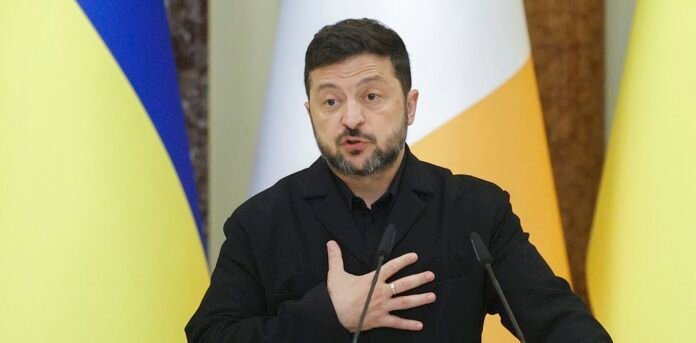
Just as reports from the front lines in Ukraine are giving Volodymyr Zelensky some reasons to be cheerful, his government has descended into turmoil. Within a matter of days he sacked his defence minister, Mykhailo Fedorov, before having to fire his commander-in-chief, Oleksandr Syrskyi.

Fedorov’s dismissal was very much Zelensky’s decision. Syrskyi’s, however, appears to have been forced on the Ukrainian president, after hundreds of thousands of people took to the streets across Ukraine to protest the departure of the defence minister. Fedorov is widely credited with masterminding the success of Ukraine’s drone strategy, which, apart from helping to even up the odds on the front lines, has wreaked havoc inside Russia and Crimea.

Using drones to target Russian energy infrastructure has led to petrol shortages, and power outages across the country. Crimea, meanwhile, is under a state of emergency thanks to a bombing campaign targeting bridges, rail lines, roads and other infrastructure.

So it’s unsurprising that so many people are angry at Zelensky’s decision to dismiss Fedorov, writes Stefan Wolff, an expert in international security at the University of Birmingham. It seemed to make very little sense to defenestrate someone whose modern approach and nimble thinking have enabled this success.

Zelensky’s choice of replacements will, however, go some way to placating the protesters, Wolff believes. The military commander brought in to replace Syrskyi, Mykhailo Drapatyi, is thought of as part of a new generation of strategists very much aligned with Fedorov’s hi-tech approach. The acting defence minister, Yevhenii Khmara, is on the same page. This will be critical if Ukraine is to maintain its momentum.


Read more: Ukraine’s defence shake-up exposes rift in Zelensky’s inner circle


The crisis began when Fedorov called for Syrskyi’s removal, saying the commander was blocking his attempts to reform Ukraine’s defence establishment. In the event, it was Fedorov that Zelensky sacked. The president opted to back his most senior military officer rather than his political colleague.

This is par for the course for Ukraine, say Sarah Whitmore of Oxford Brookes University and Bettina Renz of Nottingham University. The pair have spent some years researching the relationship between the government and the military in Ukraine. They have traced this pattern back to well before Zelensky acceded to the presidency in 2019.

Which is remarkable when you think that Nato and the EU, which have been encouraging reform in Ukraine as a condition for joining those alliances, require civilian control of the military. It hasn’t helped that previous defence ministers have been caught up in corruption scandals (three former defence ministers are accused of treason for allegedly selling off vital defence supplies). But Zelensky has also shown he is also more likely to side with his military commanders, write Whitmore and Renz. And this is unlikely to change while Ukraine remains under existential threat from Russia.


Read more: Ukraine war: inside the longstanding conflict between politicians and military commanders


Putin under pressure

Someone else under existential threat, if you believe some of the more breathless commentary on the state of Russian politics during the war, is Vladimir Putin himself. Certainly Ukraine’s recent successes and the hardships they are imposing on the Russian people, coupled with the terrible death toll among Russian troops and the prospect of further rounds of conscription, have affected the Russian president’s popularity.

Putin’s approval ratings have fallen steadily this year and the Kremlin has been forced to deal harshly with a couple of outspoken Putin critics. But whether this is a sign that the president is losing his grip on power in Russia is debatable, to say the least. Since taking office on the last day of 1999, Putin has assumed almost complete control of the levers of power in Russia.

Opponents have been ruthlessly liquidated, the media stifled and big business – once a potentially powerful source of opposition to Putin – largely tamed.

Besides which, as Bo Petersson of Malmo University points out, history tells us that Russian (and Soviet) leaders tend to die in office. Petersson suggests this is likely to be Putin’s destiny too.


Read more: Putin under pressure but history tells us most Russian leaders die with their boots on


Flies on the White House wall

I’ve spent the past couple of weeks reading a fascinating new book about the first year of Donald Trump’s second presidency. Regime Change: Inside the Imperial Presidency of Donald Trump, by New York Times reporters Maggie Haberman and Jonathan Swan is a detailed, almost fly-on-the-wall report of goings on in the White House. It’s irresistible stuff for what our reviewer Colleen Murrell calls “political nerds and Trump obsessives” (guilty as charged).

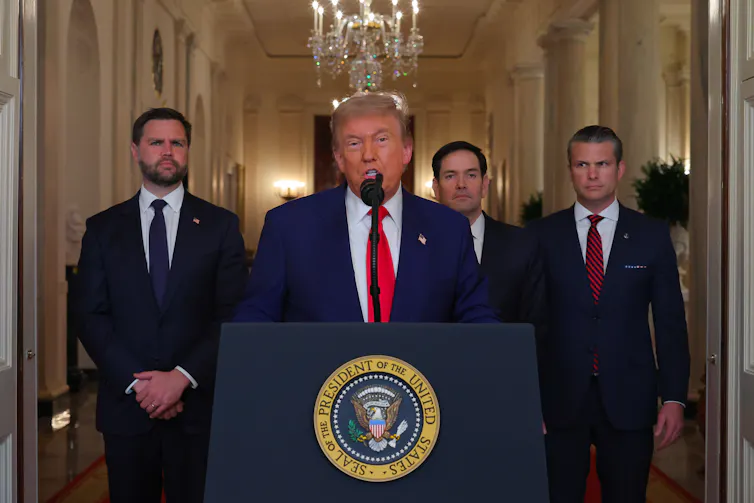
Donald Trump at a podium in the White House. Behind him are secretary of war Pete Hegseth, vice-president JD Vance and secretary of state Marco Rubio.

All the president’s men: Donald Trump with secretary of war Pete Hegseth, vice-president JD Vance and secretary of state Marco Rubio. EPA/Carlos Barria/pool

And it’s the fly-on-the-wall aspect that Murrell homes in on. Haberman and Swan are seriously credentialed reporters of the Trump era, and their access to the US president’s inner circle is extraordinary. Most of the information in this 496-page book has been sourced on what journalists call “deep background”, an agreement between a reporter and their source that they can use information without attributing it.

But some of the direct quotes, including plenty of rather florid language from the 47th president about various of his political enemies, almost makes you feel as if you are in the room with him. Which, as Murrell observes here, feels like an invitation to play the time-honoured journalists’ parlour game: who blabbed?


Read more: New Trump book will have readers playing the parlour game: who blabbed?


One of the themes that anyone following the first 18 months of Trump’s second term will have identified is the way that the US president has sought to increase the power of the executive at the expense of the US Congress. Last month he took to his Truth Social platform to boast of a recent Supreme Court judgment that: “90 years of precedent has been COMPLETELY AND UNEQUIVOCALLY OVERRULED, greatly increasing Presidential Power at a time when it is most needed!”

The US Supreme Court ruled in June that the president was entitled to sack federal trade commissioner Rebecca Slaughter “at will”, despite an act of Congress and a Supreme Court precedent establishing that the power to appoint and remove the heads of various independent agencies should lie in the hands of Congress.

It’s a big deal which hands US presidents almost monarchical powers, writes Andrea Loux Jarman, an expert in US constitutional law at Bournemouth University. She highlights the words of Associate Supreme Court justice Sonia Sotomayor in her dissenting opinion that the decision “gives the President a power unknown even to the English Crown against which the Founders revolted”.


Read more: Supreme Court ruling hands Trump sweeping new powers and limits Congressional oversight


Japan’s fake fury over its free-falling yen

0
japan’s-fake-fury-over-its-free-falling-yen
Japan’s fake fury over its free-falling yen

TOKYO — Japanese Prime Minister Sanae Takaichi’s political fortunes are falling almost as fast as the yen these days — and the two are closely linked.

The yen has slid toward 164 against the dollar, its weakest level since 1986, driven partly by the same economic strains dragging down Takaichi’s approval ratings. A new Mainichi Shimbun poll shows her Cabinet’s support dropping 10 points to 41% in mid-July, slipping below 50% for the first time.

But the yen’s decline is troubling for three reasons that global markets have largely overlooked. First, it exposes how bereft the ruling Liberal Democratic Party is of fresh strategies for keeping pace with a faster-growing China.

A weak yen has been the LDP’s default growth lever for 25 years. And Takaichi’s slipping popularity is only compounding the problem as she pours political capital into an unpopular Imperial House Law that changes the rules governing both marriage and adoption within Japan’s royal family, rather than focusing on economic concerns.

Second, there’s a strange silence from Washington as the yen plumbs new modern lows. Given the scale of the current trade war — Trump has just layered new 10%-12.5% tariffs onto most major trading partners — you’d expect sharp criticism of Japan for manipulating its exchange rate. Instead, Treasury Secretary Scott Bessent’s department has said almost nothing about the yen.

Third, the yen no longer seems to attract the safe-haven demand it once did during global turmoil. That could reflect broader dollar strength rather than yen weakness — gold isn’t rallying either — but it may also confirm a fear long held in Tokyo: that global capital is simply routing around Japan.

For now, Tokyo’s priority is propping up a slowing economy. Japan is projected to grow just 0.5% in 2026 — far below the inflation trajectory the Bank of Japan has been signaling much of the year.

Since the BOJ raised rates to a 31-year high of 1% in mid-June, the Iran war has reemerged as a major risk, threatening to push oil-importing Japan into stagflation — a scenario that could prove even harder to manage than the deflation of past decades.

Despite public statements and periodic intervention, the reality is that Takaichi’s government still wants a weaker yen — not necessarily a plunge to 170, but a retreat to the 140-150 range would increase pressure on Japan’s US$4.2 trillion economy.

China’s shadow looms large here. Beijing has spent the past two years exporting industrial overcapacity worldwide, intensifying price competition that President Xi Jinping’s government has struggled to rein in.

A stronger yen would blunt Japan’s ability to compete on price in export markets — markets that are also getting a boost from the AI boom. SoftBank Group’s market value has now surpassed Toyota’s, and firms like Kioxia and Taiyo Yuden are gaining ground too.

Regardless of what Takaichi says publicly, she worries a firmer yen could slow that momentum, along with the broader rally that pushed the Nikkei 225 above 72,000 last month (it has since eased back to around 64,000, after starting the year near 50,000).

Even so, officials are rhetorically outraged over the currency’s slide without doing much to address its root cause. Finance Minister Satsuki Katayama continues to warn that “decisive action” is available if the yen weakens excessively, and Tokyo did intervene briefly in April and May when the rate crossed 160.

But as Deutsche Bank strategist Mallika Sachdeva notes, without a credible plan to rein in Japan’s soaring debt, these moves are largely symbolic: if fiscal capacity becomes the dominant policy concern, currency management could increasingly give way to yield management, and how the government handles that trade-off will shape the yen’s trajectory going forward.

That’s why past interventions haven’t stuck this time — traders have watched this pattern repeat too often to expect a different outcome.

Tokyo does have levers left to pull, even if using them would be risky. One path involves persuading Bessent’s Treasury to join a sustained, coordinated intervention.

The more radical option would be resurrecting the reflationary strategy of Korekiyo Takahashi — the finance minister often called “Japan’s Keynes” — who combined aggressive monetary easing with fiscal expansion, including direct central bank purchases of government debt, to pull Japan out of the Great Depression in the 1930s.

Former Federal Reserve Chair Ben Bernanke has praised the approach, and many economists consider it an early precursor to Modern Monetary Theory. Takaichi’s mentor, Shinzo Abe, was drawn to Takahashi’s example during his 2012-2020 premiership, pushing the BOJ toward supersized quantitative easing starting in 2013.

By 2018, the BOJ’s balance sheet had grown larger than Japan’s entire economy — a first among G7 nations. Yet even Abe stopped short of going all-in on Takahashi-style debt monetization.

Trying that now, in 2026, could easily backfire. Twenty-seven years of near-zero rates and a weak yen never revived Japan’s underlying growth engine — if anything, they dulled the urgency for structural reform.

While Japan stood still, China reshaped global manufacturing much as Japan itself did in the 1980s, and Japanese industry still hasn’t found an answer to competitors like electric-vehicle giant BYD or AI success DeepSeek.

All of this leaves the BOJ facing a precarious stretch as it tries to keep normalizing rates. Moody’s Analytics economist Sarah Tan points out that the inflation outlook now hinges largely on developments in the Middle East and their effect on commodity prices.

Tan says if nominal wages fail to keep pace, real incomes and consumer spending could suffer, with any further yen depreciation only adding to imported inflation.

Takaichi’s team appears to be drawing the wrong lessons from two eras of quantitative easing — the 2000s version and Takahashi’s original 1930s model.

Modern QE traces back to 2001, when then-BOJ Governor Masaru Hayami used it to combat deflation and contain a bad-loan crisis left over from the 1990s. The approach later spread to the US, UK, eurozone and Australia following the 2008 global financial crisis.

But while those central banks eventually normalized policy, Japan never fully weaned itself off monetary support. Despite years of tightening, the BOJ still holds more than half of all outstanding Japanese government bonds and remains the country’s largest equity holder.

Current Governor Kazuo Ueda has pushed further toward exiting zero rates this year than his predecessor Toshihiko Fukui managed between 2003 and 2008, when rates ultimately drifted back to zero, and QE returned by 2009.

Ueda’s team is expected to leave rates unchanged on July 31. Longer term, though, he’s determined not to repeat that cycle. Ueda’s biggest obstacle may be the LDP itself, which has relied on essentially one economic playbook — stimulus — for seven decades of near-continuous rule since 1955.

Even senior party figures now privately acknowledge that a quarter-century of zero rates backfired, with the yen’s prolonged slide as the price now coming due.

Takaichi, though, shows little sign of breaking from that tradition. Her economic approach so far looks nearly indistinguishable from Abe’s — and, by extension, from the Takahashi model that inspired him.

Tension flared briefly this month when Takaichi’s government suggested the Government Pension Investment Fund — the world’s largest pension fund — might repatriate large sums of overseas capital, a move that would have strengthened the yen.

Tokyo has since walked that back, fueling concern that officials will instead lean on the BOJ to resume bond purchases — a step Deutsche Bank’s Sachdeva warns “could be very negative” if it looks like the central bank is being co-opted to prop up the bond market.

This is the crux of the standoff. Ueda entered 2026 looking like the governor who had finally steered Japan out of deflation, having raised the benchmark rate to a 30-year high of 0.75% in December and to 1% last month.

But the Iran war, which erupted February 28, scrambled those plans — driving up oil prices and tariff pressures just as the government pushes back against further tightening.

Takaichi has openly called additional rate hikes “stupid,” and in March lawmakers questioned her directly about whether she was pressuring the BOJ.

While nominally independent, the BOJ faces far more political pressure than peers like the Fed or European Central Bank — making Takaichi’s resistance to inflation-fighting especially striking just as Iran-driven price shocks threaten to destabilize the region’s economy.

One wild card here is that as China’s growth slows, President Xi may well turn to a weaker yuan to boost exports, happily taking political cover in Tokyo’s own devaluation efforts. That would most certainly catch Bessent’s attention in Washington.

Another is that bond markets get antsy. As Robin Brooks, economist at the Brookings Institution, notes, Takaichi has been angling to end excessive fiscal austerity.

“That’s highly irresponsible,” he says, warning that Tokyo could be “in the early stages of a global debt crisis. Long-term government bond yields have risen sharply everywhere. Markets are losing patience with governments that are chronically unable or unwilling to bring public debt down. This is no time to pretend Japan’s humongous debt isn’t a problem. Denial isn’t a plan.”

Hence fears of a “Liz Truss moment” in Tokyo. In late 2022, then-UK Prime Minister Truss destabilized the debt market by attempting to sneak an unfunded tax cut past bond traders, leading to her unceremonious demise.

The extreme market turmoil remains a cautionary tale for Takaichi as her party mulls tax cuts. With a debt-to-GDP of 260% and the population shrinking fast, Takaichi needs to tread carefully.

Ultimately, though, the reason why the yen isn’t responding to Tokyo’s half-hearted efforts to feign displeasure with its weakness comes down to Charlie Brown, Lucy and the football. Each time, of course, Lucy pulls the football away from Charlie, and he ends up in the muck.

This isn’t global investors’ first brush with things-are-different-this-time chatter surrounding Asia’s second-biggest economy. That means anyone betting on a yen rally might regret it come year-end, as a duped and muddied Charlie Brown reminds us.

Follow William Pesek on X at @WilliamPesek

Sony’s decision to ditch discs was practically inevitable, data shows

0
sony’s-decision-to-ditch-discs-was-practically-inevitable,-data-shows
Sony’s decision to ditch discs was practically inevitable, data shows

Many gamers have been lamenting Sony’s recently announced decision to halt sales of physical game discs in 2028. However, new data revealed by Circana analyst Mat Piscatella highlights how years of stark economic trends helped lead Sony to that decision.

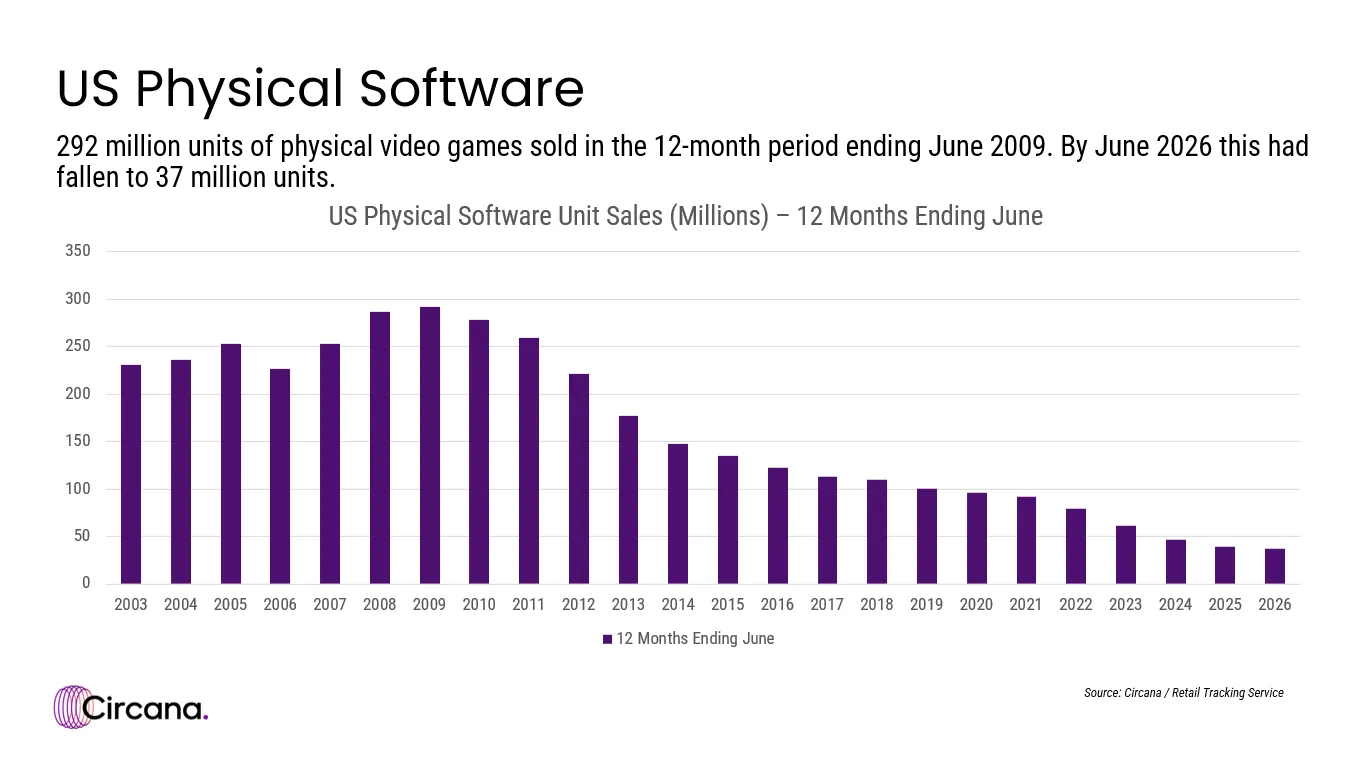
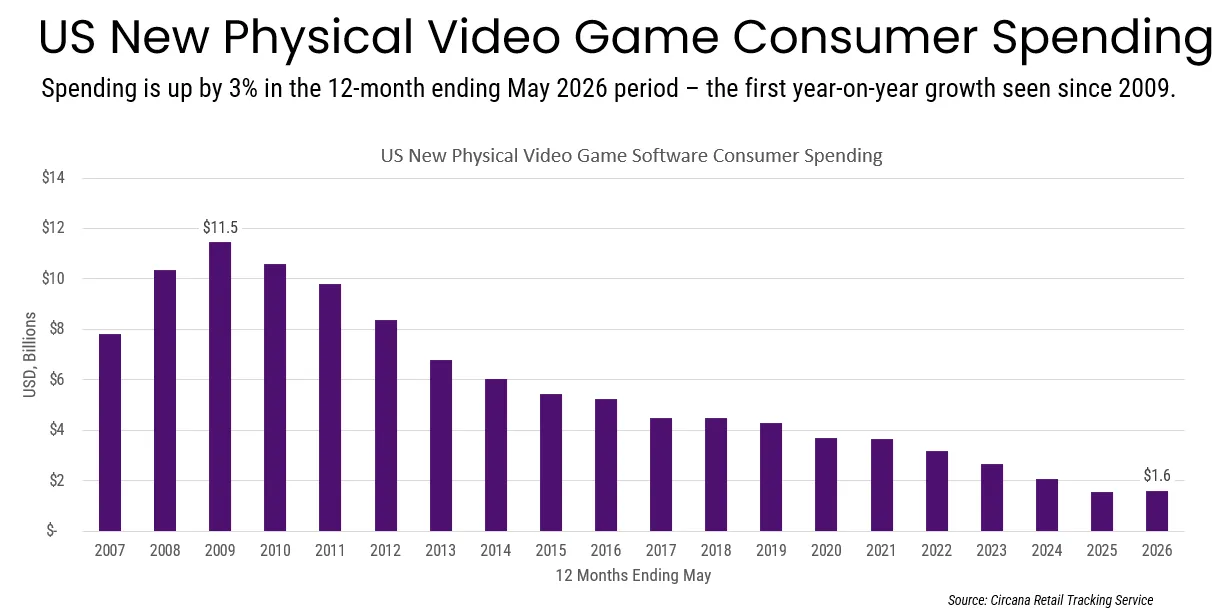
In a social media thread Thursday morning, Piscatella shared insights into Circana’s tracking data on physical game sales in the US dating back to 2003. A graph of those trends shows physical sales peaking in the 12 months ending June 2009, when 297 million units were sold across the US. Those physical unit sales have been on a steady downward trajectory since then, leading to just 37 million physical units selling in the US in the last 12 months.

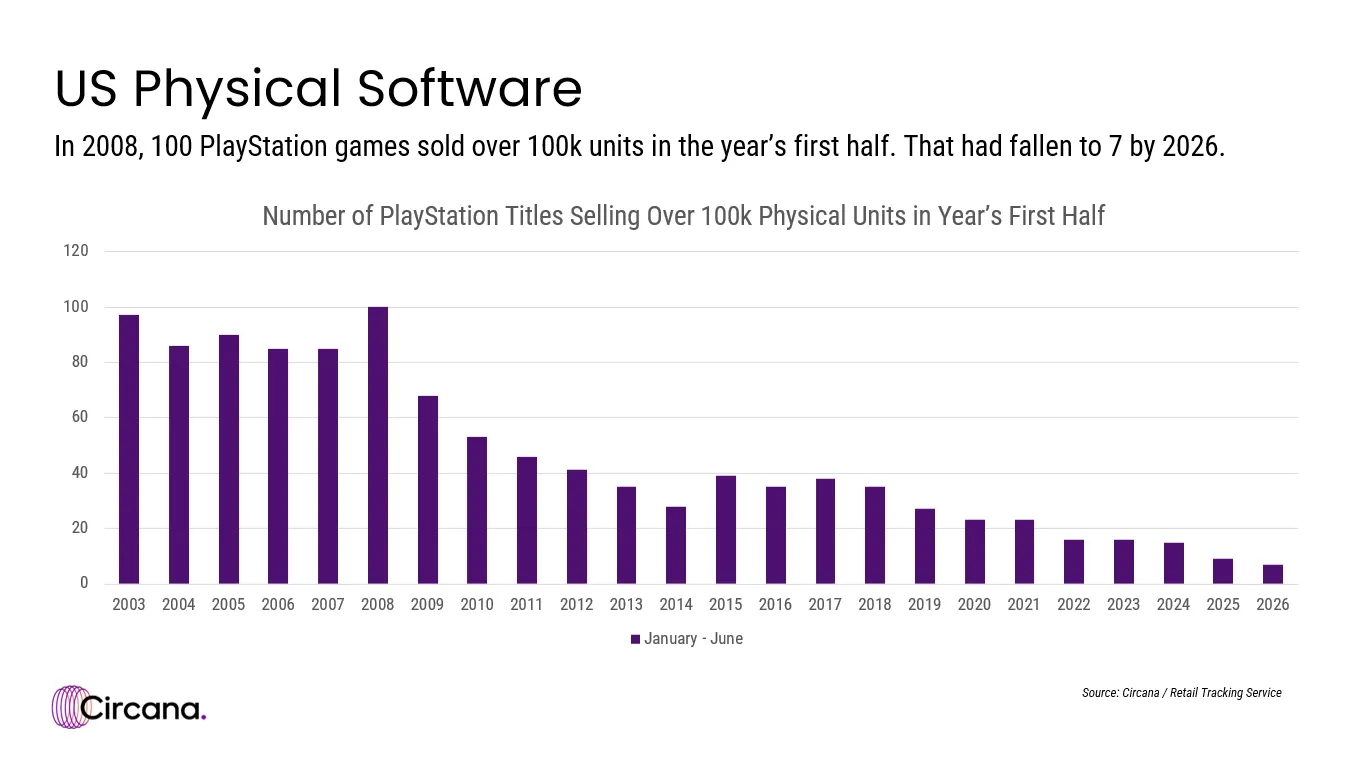
The newly revealed data follows on an earlier post from Piscatella highlighting that only seven PlayStation games had sold over 100,000 physical units so far in 2026. Today, Piscatella followed up on that stat with a graph showing how this baseline used to be common; 100 PlayStation games sold at least 100,000 physical units in 2008. The ceiling for physical PlayStation game sales isn’t all that impressive these days either; Piscatella shared that the top-selling physical PlayStation game has only sold a paltry 275,000 units in the US so far this year.

Physical game sales in the US have fallen dramatically since their heyday in the late ’00s.

Only a small handful of PlayStation games sell significant physical numbers these days.

There are some small signs of hope for the physical game market, if you squint. Piscatella noted that aggregate spending on physical video games in the US was actually up 4 percent year-to-date, compared to the year before. But that small increase is a mere blip following 16 straight years of sizable declines in physical game spending in the US, reducing a peak of $11.5 billion in physical spending in 2009 to a mere $1.6 billion for the 12 months ending in May. And Piscatella attributed the recent growth in physical spending to “the Switch 2 and physical sales growth on Nintendo platforms,” while other platforms (such as PlayStation) were still seeing “percentage drops from the teens to the mid 30s” in that spending.

The beginning of the end

Looking back, it’s easy to see why sales of physical games seemed to peak in the late 2000s. At that time, services like Xbox Live Arcade, PSN and WiiWare were already showing console gamers’ willingness to pay for downloads of smaller indie games, and the concept was expanding to downloadable versions of major releases like Infamous and LittleBigPlanet.

The slight uptick in physical game revenues last year can’t make up for 16 years of consistent, sharp declines.

The slight uptick in physical game revenues last year can’t make up for 16 years of consistent, sharp declines. Credit: Mat Piscatella / Circana

By the time the PlayStation Vita launched in 2012, Sony required that all publishers that make physical game cartridges also offer a downloadable option. Subsequent consoles like the Wii U, PS4, and Xbox One continued that trend, and by the end of the 2010’s physical-exclusive console releases were practically nonexistent. In recent years, some big-budget games have been skipping a retail release altogether or offering “download in a box” retail options like Switch 2’s Game Key Cards or Grand Theft Auto VI‘s printed download codes.

Over the last 15 years or so, console gamers have overwhelmingly voted with their wallets in favor of all these digital download options, preferring the convenience of not leaving the house to purchase a game (or leaving the couch to switch to a new title) over the permanence of games on discs and cartridges. The shift has been so strong that many of today’s console gamers are fine skipping the disc drive entirely; Piscatella shared today that 27 percent of all PS5 hardware and 52 percent of all Xbox Series hardware sold in the US so far has been “Digital Only” editions.

None of this data will be of much comfort to the small but passionate group of console gamers who still buy games they can hold in their hands. But the numbers pretty clearly explain why Sony doesn’t seem worried about losing what is, financially speaking, a rather small segment of its current gaming business.

UK’s Burnham opens ‘No10 North’ to shift economic power from London

0
uk’s-burnham-opens-‘no10-north’-to-shift-economic-power-from-london
UK’s Burnham opens ‘No10 North’ to shift economic power from London


British Prime Minister Andy Burnham will on Friday officially open a new government hub in Manchester, branded “No10 North”, in a symbolic extension of his Downing Street office as he seeks to shift economic decision-making away from London.

Burnham, who took office on Monday after succeeding Keir Starmer, is moving swiftly to shape his premiership, with the northern England base intended to demonstrate his commitment to devolving power from Westminster to the regions after decades of policymaking centred on the capital.

The new prime minister, who previously served as Mayor of Greater Manchester, will use the office to chair the inaugural meeting of a revived National Economic Council, bringing together senior cabinet ministers and regional mayors to coordinate the government’s economic growth agenda.

The council was originally established by then-prime minister Gordon Brown during the 2008 financial crisis to oversee Britain’s response to the economic downturn.

Describing No10 North as “the situation room for making Britain better”, Burnham said the office would help transfer decision-making from Whitehall to local communities. “The days of Whitehall resisting devolution are over, for good,” he said.

Conservative leader Kemi Badenoch criticised the move, arguing Burnham was “behaving like he’s still the Mayor of Manchester” and should instead focus on national priorities.

Initially based at Heron House in central Manchester, which already hosts the northern hub of Britain’s intelligence and cyber agencies, No10 North will be used by Burnham every week, with other ministers also expected to work from the site regularly. The initiative reflects Burnham’s long-standing campaign to devolve greater powers from Westminster to cities and regions across the UK.

US Senate rejects resolution to limit Trump’s Iran war powers

0
us-senate-rejects-resolution-to-limit-trump’s-iran-war-powers
US Senate rejects resolution to limit Trump’s Iran war powers

The US Senate on Thursday failed to advance a resolution that would have directed President Donald Trump to withdraw American forces from hostilities against Iran, Anadolu reports.

The Senate voted 47-49 against the War Powers Resolution introduced by Democratic Senator Chris Van Hollen of Maryland, falling short of the votes needed to advance.

Republican Senator Susan Collins of Maine broke with her party to vote in favor of the measure, while Democratic Senator John Fetterman of Pennsylvania voted against it.

Senators Katie Britt, Mitch McConnell, Lisa Murkowski, and Rand Paul did not vote.

The resolution would have required Trump to remove US forces from hostilities “within or against Iran,” absent a declaration of war or specific congressional authorization.

Democrats and some Republican lawmakers have argued that in current US campaign against Iran, Trump has illicitly usurped Congress’ exclusive power to declare war.

READ: US House passes $1.15tn defence bill embedding Israel’s war machine inside America

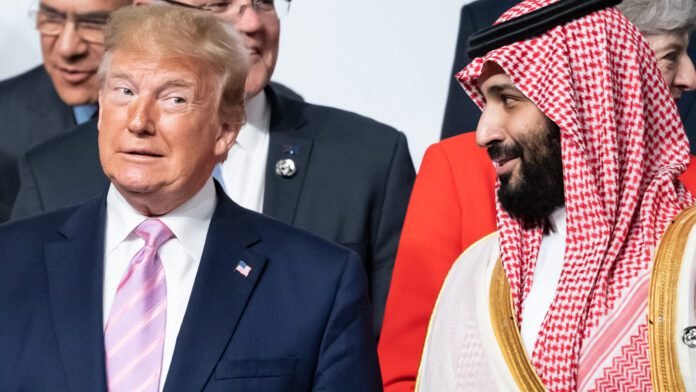
President Trump Says Saudi Nuclear Deal Hinges on Israel Normalization 

0
president-trump-says-saudi-nuclear-deal-hinges-on-israel-normalization 
President Trump Says Saudi Nuclear Deal Hinges on Israel Normalization 


President Donald Trump said the newly signed US-Saudi civilian nuclear agreement will move forward only if Saudi Arabia establishes diplomatic relations with Israel by joining the Abraham Accords, adding a new condition that was not included when the agreement was first announced.

In a post on Truth Social, Trump said the agreement “will be approved, but is totally subject to Saudi Arabia joining the very respected and successful Abraham Accords.” He also said the deal would not allow the kingdom to enrich nuclear material on its own territory.

President Trump’s statement introduced a condition that was absent from the original announcement of the civilian nuclear program. It was not immediately clear how the administration would alter a legal agreement already signed with the Saudi government.

Saudi Arabia has consistently maintained that normalization with Israel depends on clear progress toward the establishment of a Palestinian state. The Saudi Energy Ministry declined to immediately comment on the conditions Trump attached to the agreement.

The Biden administration also pursued discussions on a civilian nuclear agreement with Saudi Arabia, but similarly linked such an arrangement to the establishment of diplomatic relations between Saudi Arabia and Israel.

According to the agreement, Saudi Arabia will build nuclear power plants using US technology, creating a pathway to a Saudi nuclear enrichment program. The proposal has prompted debate in Congress, where lawmakers have raised concerns that permitting additional countries to develop uranium enrichment capabilities could eventually increase the number of states possessing nuclear weapons.

Before Trump’s Truth Social post tying the agreement to normalization with Israel, former Prime Minister Naftali Bennett criticized the emerging deal, calling it a strategic setback for Israel.

“The nuclear agreement that ⁠is coming together with Saudi Arabia, over Israel’s head, is a serious strategic failure that endangers our security,” said Bennett, who is seeking to unseat Netanyahu in an October 27 election.

“Nuclear enrichment on Saudi soil could lead to a regional nuclear race and a dangerous loss of control.”


0FansLike
0FollowersFollow
0FollowersFollow
0SubscribersSubscribe
- Advertisement -
Google search engine

Recent Posts