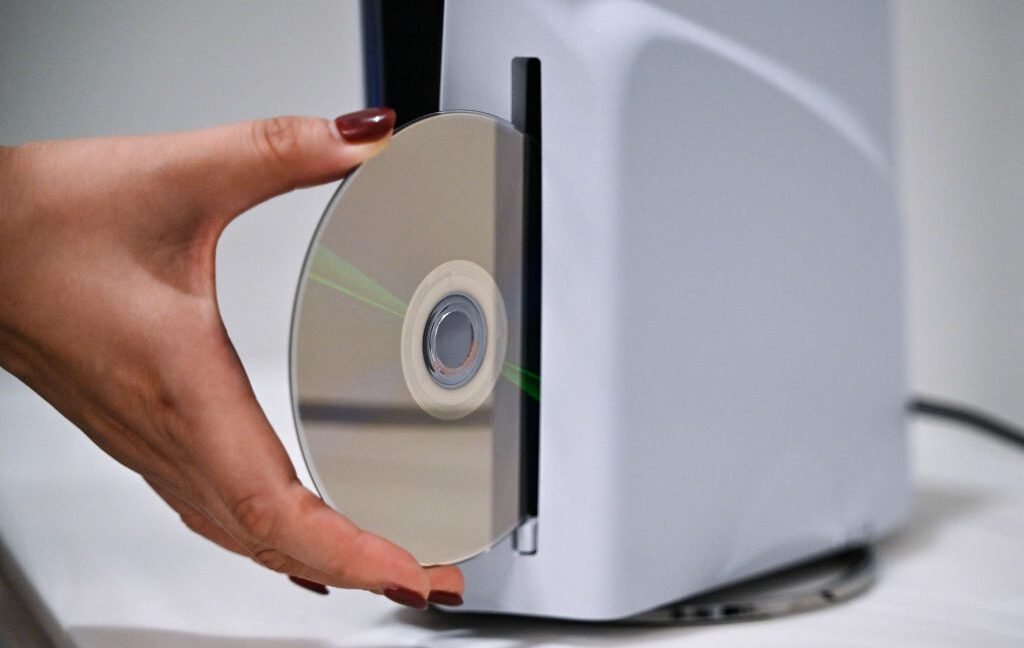
Many gamers have been lamenting Sony’s recently announced decision to halt sales of physical game discs in 2028. However, new data revealed by Circana analyst Mat Piscatella highlights how years of stark economic trends helped lead Sony to that decision.
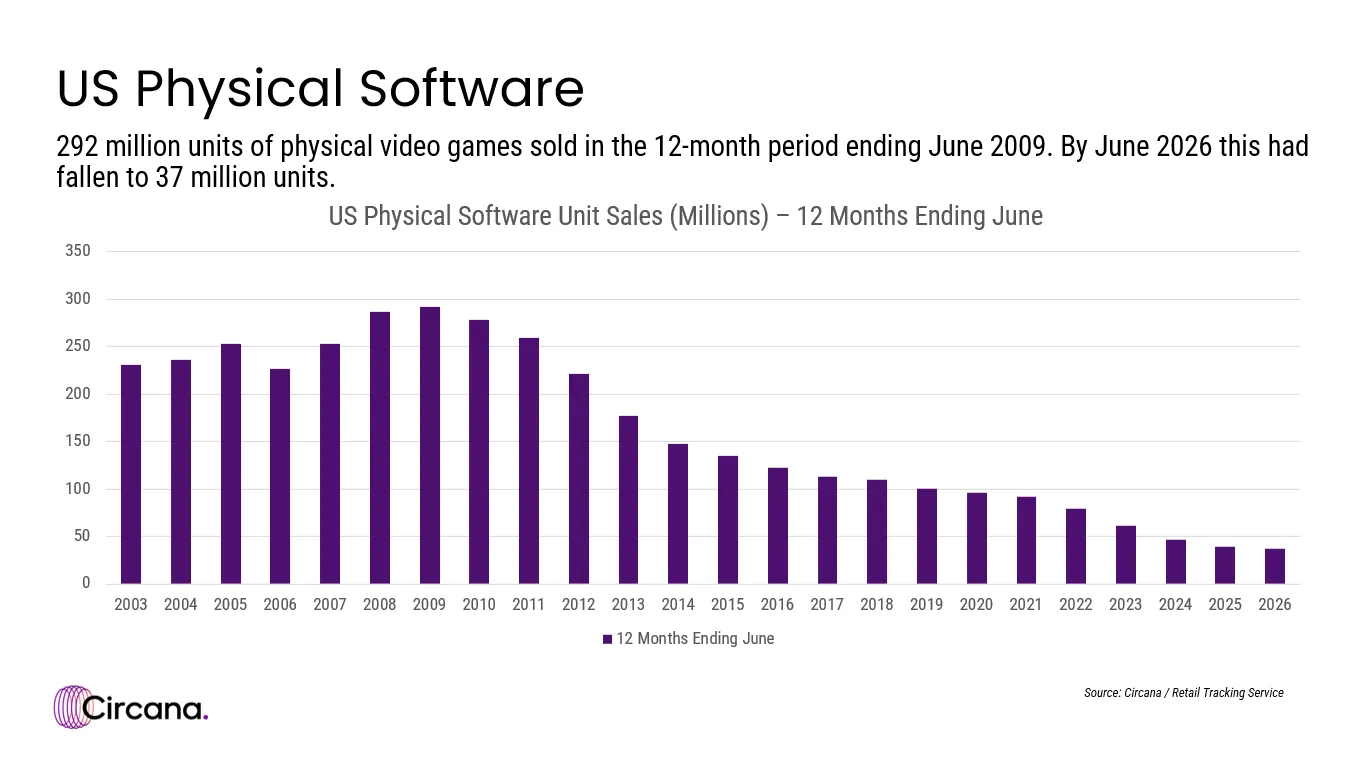
In a social media thread Thursday morning, Piscatella shared insights into Circana’s tracking data on physical game sales in the US dating back to 2003. A graph of those trends shows physical sales peaking in the 12 months ending June 2009, when 297 million units were sold across the US. Those physical unit sales have been on a steady downward trajectory since then, leading to just 37 million physical units selling in the US in the last 12 months.
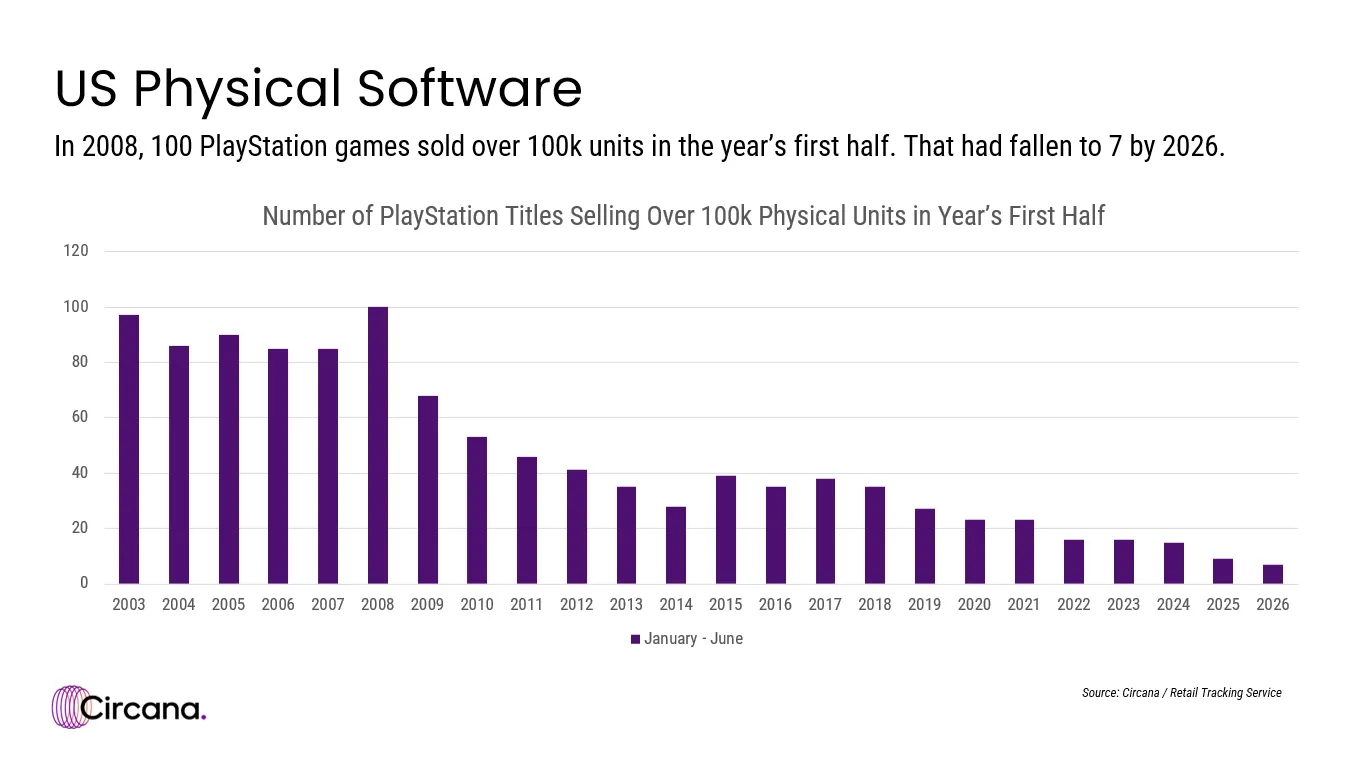
The newly revealed data follows on an earlier post from Piscatella highlighting that only seven PlayStation games had sold over 100,000 physical units so far in 2026. Today, Piscatella followed up on that stat with a graph showing how this baseline used to be common; 100 PlayStation games sold at least 100,000 physical units in 2008. The ceiling for physical PlayStation game sales isn’t all that impressive these days either; Piscatella shared that the top-selling physical PlayStation game has only sold a paltry 275,000 units in the US so far this year.
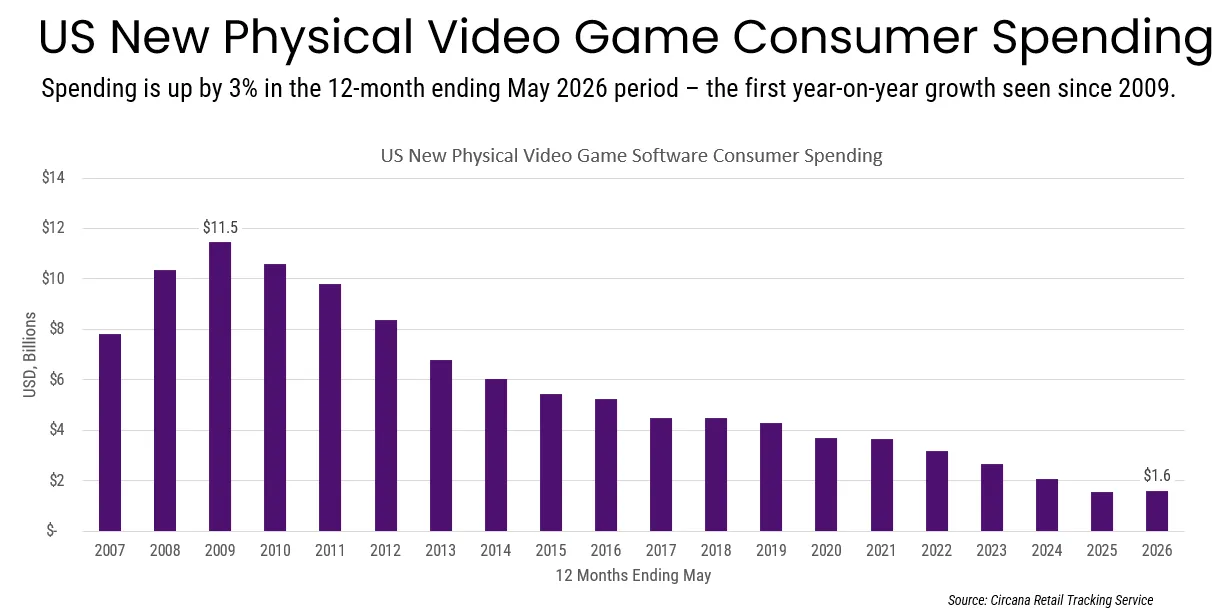
There are some small signs of hope for the physical game market, if you squint. Piscatella noted that aggregate spending on physical video games in the US was actually up 4 percent year-to-date, compared to the year before. But that small increase is a mere blip following 16 straight years of sizable declines in physical game spending in the US, reducing a peak of $11.5 billion in physical spending in 2009 to a mere $1.6 billion for the 12 months ending in May. And Piscatella attributed the recent growth in physical spending to “the Switch 2 and physical sales growth on Nintendo platforms,” while other platforms (such as PlayStation) were still seeing “percentage drops from the teens to the mid 30s” in that spending.
The beginning of the end
Looking back, it’s easy to see why sales of physical games seemed to peak in the late 2000s. At that time, services like Xbox Live Arcade, PSN and WiiWare were already showing console gamers’ willingness to pay for downloads of smaller indie games, and the concept was expanding to downloadable versions of major releases like Infamous and LittleBigPlanet.
By the time the PlayStation Vita launched in 2012, Sony required that all publishers that make physical game cartridges also offer a downloadable option. Subsequent consoles like the Wii U, PS4, and Xbox One continued that trend, and by the end of the 2010’s physical-exclusive console releases were practically nonexistent. In recent years, some big-budget games have been skipping a retail release altogether or offering “download in a box” retail options like Switch 2’s Game Key Cards or Grand Theft Auto VI‘s printed download codes.
Over the last 15 years or so, console gamers have overwhelmingly voted with their wallets in favor of all these digital download options, preferring the convenience of not leaving the house to purchase a game (or leaving the couch to switch to a new title) over the permanence of games on discs and cartridges. The shift has been so strong that many of today’s console gamers are fine skipping the disc drive entirely; Piscatella shared today that 27 percent of all PS5 hardware and 52 percent of all Xbox Series hardware sold in the US so far has been “Digital Only” editions.
None of this data will be of much comfort to the small but passionate group of console gamers who still buy games they can hold in their hands. But the numbers pretty clearly explain why Sony doesn’t seem worried about losing what is, financially speaking, a rather small segment of its current gaming business.