16.8 C
London
Wednesday, August 19, 2026
Home Blog

Peacock raises prices by 18 percent after becoming profitable

0
peacock-raises-prices-by-18-percent-after-becoming-profitable
Peacock raises prices by 18 percent after becoming profitable

For the fourth time in four years, Peacock has raised its prices.

The Select plan, which has ads and doesn’t include sports, movies, or Peacock originals, went from $8/month to $9/month. The monthly fee for the standard ad plan (Premium) went from $11/month to $13/month, and the ad-free plan (Premium Plus) went from $17/month to $20/month. Annual pricing, as previously, offers 12 months for the price of 10 months.

Peacock’s previous price hike was in July 2025, when the middle tier (with ads) went from $8/month to $11/month, and the ad-free plan increased from $14 to $17. Peacock also raised prices in July 2024 and August 2023. NBCUniversal launched the service in 2020.

The streaming service turned its first quarterly profit in Q2 2026 with $189 million in adjusted EBITDA. During that quarter, Peacock saw revenue from subscriptions increase over 50 percent and advertising revenue rise nearly 70 percent, Comcast CFO Jason Armstrong said during a call with investors in July, according to a transcript.

Peacock also gained 2 million subscribers in Q2 and now has 48 million.

But just because Peacock is now profitable, it can’t necessarily expect the same level of success in upcoming quarters.

In the call with investors, Comcast co-CEO Michael Cavanagh said he expects Peacock’s profitability to improve on an annual basis but vary from quarter to quarter, with profits depending on what content, such as sporting events and shows, debuts each quarter.

NBCUniversal must also keep Peacock profitable amid big, ongoing spending on live events, including an 11-year deal under which the company will pay $2.5 billion a year to air about 50 NBA games exclusively on Peacock, along with distribution rights for NBCU’s other distribution platforms, including broadcast channels. The company has made other large investments in sporting events, including Sunday Night Football and the Premier League.

Higher prices could theoretically help fund more programming. But with Peacock only recently becoming profitable, it’s possible that the annual price hikes could continue being the norm.

Indonesia’s Chinese satellite: farm help or spying eye?

0
indonesia’s-chinese-satellite:-farm-help-or-spying-eye?
Indonesia’s Chinese satellite: farm help or spying eye?

On August 5, a rocket lifted off from the coast of China carrying a new satellite that Indonesia now calls Lampung-1. Named after a province on the Indonesian island of Sumatra, the satellite will help the province monitor its farms, coasts and land from space.

This may sound like a small local story. But it is also a small test of something bigger: how much trust China and Indonesia are willing to place in each other, and how carefully Indonesia is learning to handle Chinese offers of technology and help.

The satellite was built by a Chinese company called STAR.VISION Aerospace, working with a university in China and the Lampung provincial government. Indonesia’s national research body, BRIN, is also part of the project.

It can take very detailed pictures of the ground. These pictures can show if crops are healthy or dying, or if water is clean or polluted. The satellite also has a powerful onboard computer that analyzes the images in space and sends back a simple answer, such as “this field needs water,” instead of just raw photos.

Local leaders say the first use will be farming: checking soil, monitoring crops, and estimating harvest yields. Cassava, a common crop in the area, is one of the first things it will track. Officials also say they will use it later for fishing, coastlines and disaster warnings.

Local deal

The money side of the deal sounds attractive. Lampung says it did not spend any of its own budget on the satellite. The Chinese company owns and runs it. Lampung’s job is to help decide how the satellite’s information is used and to train local people.

Significantly, this is not a deal made between Beijing and Jakarta. It grew out of a sister-city-style tie between Lampung and Shandong, a Chinese province. China has used this kind of local-to-local link before, namely in ports, industrial parks, and farming projects across many countries.

It is a useful shortcut: local deals move faster than national ones, build goodwill on the ground and often get far along before national leaders or security agencies take a close look. By the time bigger questions come up, as they have here, the project already exists.

Indonesia has long tried to stay friendly with both the United States and China, without leaning too far toward either one. Taking useful technology from China, while keeping the deal small, local and civilian in nature, fits that habit well. Calling this a farming project, run by a province, makes it easier for Jakarta to accept without looking like it is picking a side.

But the location makes that framing difficult to maintain. Lampung sits right next to the Sunda Strait, a narrow sea passage that many ships use to travel between the Indian Ocean and the South China Sea.

A satellite that can watch crops closely could also watch ships closely. No official has explained any rule that would prevent the satellite’s images from being used to track ships, not just fields and coastlines.

A project sold as simple agricultural help sits on a stretch of water that matters for Indonesia’s security, not just China’s interests. Just days after the launch, the praise turned into hard questions, and they came from people inside Indonesia, not from outsiders.

Researchers at a university in Lampung asked who would really control the information the satellite collects. Would local officials be able to see the data right away, or would they have to wait for Chinese approval first? Even now, the answer is unclear.

Indonesian officials have tried to calm these fears. The head of BRIN said the data will stay under Indonesian control. A top Lampung official said BRIN monitors all information passing through the satellite, and that Chinese access is limited.

But both also admitted that the exact rules, including what the Chinese partners are allowed to see, are still being written. Months after launch, those rules still do not exist in final form.

Indonesia has seen this pattern before with Chinese-backed projects, including a major railway line built with Chinese loans, where costs and terms became the subject of public argument only after construction was already underway. What is different this time is the speed of the response.

Provincial officials, university researchers, and local newspapers raised the sovereignty question within days, not years, and officials felt they had to answer publicly right away. That signals that Indonesian institutions are getting quicker to ask hard questions about Chinese partnerships, even as they still welcome them.

Sky-high stakes

For China, this satellite is part of a larger plan to give countries across Southeast Asia their own satellites, built and launched with Chinese help. It is a low-cost way to build goodwill and show that China can deliver useful technology quickly to countries that could not afford it alone.

If the data questions in Lampung get settled cleanly, the project becomes a strong example for that wider plan. If they turn into a lasting dispute, it feeds into a story already told about Chinese-backed projects elsewhere: that they arrive fast but leave the hard questions about control for later.

For Indonesia, the test is different. It is not really about whether to accept help from China. Indonesia clearly wants that help and stands to gain real value for its farmers, fishers and disaster planners.

The test is whether Indonesia can build the habit of settling the rules on data, access and control before, rather than after, a project like this launches. Provincial and academic voices have shown they will ask the question early.

What is still missing is a clear, public answer announced in advance, not worked out quietly after the satellite is already circling overhead.

Lampung-1 will likely still deliver real benefits to Indonesian farmers. But how Jakarta and Beijing handle the unanswered questions around it may matter more for the future of China-Indonesia relations than anything the satellite itself can photograph.

Muhammad Zulfikar Rakhmat is the director of the China-Indonesia Desk at the Jakarta-based Center of Economic and Law Studies (CELIOS), an independent research institute. Yeta Purnama is a researcher at CELIOS.

Ukrainian drones overwhelm Russian tanks’ new active protection system—for now

0
ukrainian-drones-overwhelm-russian-tanks’-new-active-protection-system—for-now
Ukrainian drones overwhelm Russian tanks’ new active protection system—for now

Russian tanks have entered battle for the first time with a new active protection system designed to shoot down incoming drones. But the technology’s recent combat debut in Ukraine met with only limited success—Ukrainian drones still destroyed the Russian armored vehicles by attacking in overwhelming numbers.

The first documented battlefield appearance of the Arena-M active protection system took place when Russian forces launched a company-size assault with tanks and other armored vehicles in the Donetsk Oblast of eastern Ukraine on July 22. The Ukrainian defenders repelled the attack and posted video footage of their kamikaze drone strikes destroying at least seven T-72B3A tanks, including some that carried the Arena-M system, according to Euromaidan Press.

However, Ukrainian soldiers also described the Russian Arena-M system successfully shooting down some incoming drones, according to the journalists Dmytro Putiata and Rob Lee. The Ukrainians reported requiring between 15 and 20 drones to finish off each tank.

The incident “demonstrated that the Russian military is learning and is experimenting in how to employ armor on a drone-saturated battlefield,” Lee wrote on X. “The Arena-M [active protection system] demonstrated effectiveness and will likely be improved.”

This development comes more than four years after Russia launched its full-scale invasion of Ukraine in February 2022, as mass armored assaults have become increasingly scarce on the modern battlefield dominated by drone warfare. It’s part of an ongoing arms race where many militaries are struggling to figure out how to protect the weakest points of their expensive main battle tanks and other armored vehicles against swarms of cheap drones.

The Russian military has previously tried adding more physical armor in the form of “cope cages” welded or bolted onto tanks and other vehicles, which inspired the Ukrainian military to do the same. Russian forces even made “turtle tanks” covered in porcupine-style metal spikes and other improvised armor, although the extra weight and encumbrance of such add-ons have often limited both tank mobility and the use of their main guns.

Even up-armored vehicles attempting to enter the drone kill zone usually get destroyed, which is why mechanized assaults have mostly disappeared from the current battlefields in Ukraine in favor of infiltration tactics using small groups of soldiers. Russia’s battlefield deployment of the Arena-M aimed to change that.

The limitations of Arena-M

The Arena-M represents the latest version of the Arena system originally developed in the Soviet era. The technology uses radar to detect incoming rocket-propelled grenades and anti-tank missiles so that it can launch its own projectiles to intercept the incoming warheads.

The Ukrainian news publication Militarnyi reported that Russian engineers have been working to equip their tanks with the Arena-M system since 2019 and that live-fire tests were already being conducted in 2021. However, Militarnyi also highlighted reports suggesting Russia was struggling to adapt the Arena-M system to detect and destroy small drones, because the latter can fly more slowly and in more unpredictable ways than incoming missiles or rockets fired directly at tanks.

Having just a dozen countermunitions for interceptions also proved inadequate in the face of large numbers of Ukrainian drones. Remotely piloted Ukrainian drones capable of disabling or destroying armored vehicles through kamikaze attacks can cost as little as $400 each—so it’s still a very cost-effective trade for Ukrainian drone operators even if they have to use more than 12 drones to take out an armored vehicle costing millions of dollars.

“The Arena-M system, by itself, likely will not be an effective countermeasure to Ukrainian [first-person view drones] alone, as the system can be overwhelmed and only increases the cost and effort required of Ukrainian forces defending against the Russian mechanized assault,” wrote the Institute for the Study of War in an August 9 update on the war in Ukraine.

Pro-Kremlin Russian bloggers apparently acknowledged the Arena-M system’s current limitations and called for additional defenses to be integrated to provide tanks with layered air defense against drones. However, tanks and other armored vehicles still face additional battlefield threats beyond drones in the so-called kill zone, including crewed anti-tank weapons, landmines, and artillery.

For now, the Russian military may be considering increasing the number of Arena-M counter munitions to intercept incoming drones and other projectiles. But as Euromaidan Press explained, space constraints for the turret-mounted projectile launchers could ultimately limit that approach.

Concerns beyond the war in Ukraine

The limitations of active protection systems against drones have also appeared beyond the battlefields in Ukraine during the US-Israeli war against Iran. When the Israeli military sent troops into Lebanon to fight the Iranian-backed faction Hezbollah, the Israeli Merkava 4 tanks came equipped with Trophy active protection systems developed by Israel’s Rafael Advanced Defense Systems.

But Hezbollah militants published multiple videos showing their small quadcopter drones loaded with explosives striking Israeli tanks that had Trophy systems still loaded with countermunitions, according to the Ukrainian media company Defense Express. Such videos implied that the Trophy system had difficulty detecting incoming small drones.

Making matters worse for the Israeli military, Hezbollah deployed drones that are immune to radio signal jamming because they are connected to human operators by miles of fiber optic cables. That battlefield innovation first came out of the war in Ukraine and became a crucial part of Hezbollah’s arsenal as the faction ramped up its asymmetric campaign against Israel between March and June 2026, according to the Institute for the Study of War.

Although it’s unclear how many Israeli tanks were damaged or knocked out by Hezbollah’s drones, such drone attacks became the top threat for the Israeli military in Lebanon and accounted for the majority of deaths among Israeli soldiers after a temporary ceasefire went into effect in April, The Wall Street Journal reported.

Despite uncertainty about the Trophy active protection system’s performance, multiple European countries have been buying the Trophy system in an attempt to better protect their tanks against the threat of drones. The EuroTrophy joint venture expects to equip 400 European Leopard tanks with the system, according to Breaking Defense.

The US military has already equipped several hundred M1 Abrams tanks with the Trophy system in recent years. But it’s clear that the United States and many other countries are still sorting out the best way to deploy tanks on drone-dominated battlefields. During the Combined Resolve military exercise held in Germany this year, Ukrainian drone operators wiped out an entire brigade of US Army tanks and armored vehicles.

Eight Israeli airstrikes hit Syria’s Abu al-Duhur airbase

0
eight-israeli-airstrikes-hit-syria’s-abu-al-duhur-airbase
Eight Israeli airstrikes hit Syria’s Abu al-Duhur airbase


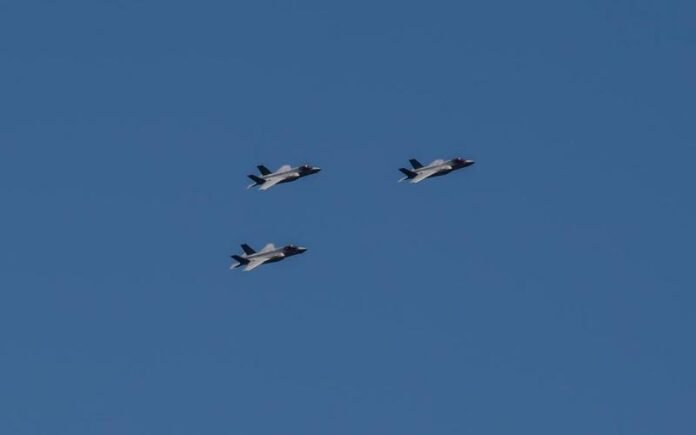
Eight Israeli airstrikes hit the Abu al-Duhur military airbase in northwestern Syria early on Tuesday, targeting the runway ​and storage facilities, Syria’s state-run Ekhbariya said, citing a military source.

There ‌were no casualties, according to a military source and a civilian who lives near the base. The Israeli military declined to comment on the strikes while the Syrian defence ministry did not ​respond.

The base, about 70 km (43.5 miles) from the Turkish border, has been ​out of service as a dedicated military airfield since 2013 and ⁠changed hands several times during Syria’s 14-year civil war between forces loyal ​to former President Bashar al-Assad and opposition factions.

Since Assad was ousted in late 2024, ​the base has been used as a training centre for Syria’s new army, according to the military source.

The strikes come amid heightened security tensions between Israel and Turkey and increasingly ​sharp rhetoric between the two countries over Syria.

Turkish Foreign Minister Hakan Fidan said ​in an August 6 speech that Israel continued to threaten Syria’s security through its repeated ‌attacks, ⁠calling for pressure on Israel to respect Syria’s territorial integrity.

Israeli Defence Minister Israel Katz, for his part, has issued direct warnings to Turkish President Tayyip Erdogan, saying Israel would not allow steps that strengthened Syria’s military capabilities in ways that ​could pose a ​threat to Israel.

Syria ⁠conducted air exercises in the north of the country in early August using Russian-made MiG-21 fighter jets, the first such ​exercises since Assad’s ouster.

Israel’s Kan public broadcaster reported on August ​11 that ⁠Israeli security officials had detected signs that Syria was accelerating efforts to rebuild its air force, including the recruitment of new pilots, flight training and a first ⁠exercise involving ​fighter aircraft.

Kan quoted an Israeli security source as ​saying Israel was closely monitoring the developments and had shared its concerns with the United States.

Source:  Reuters

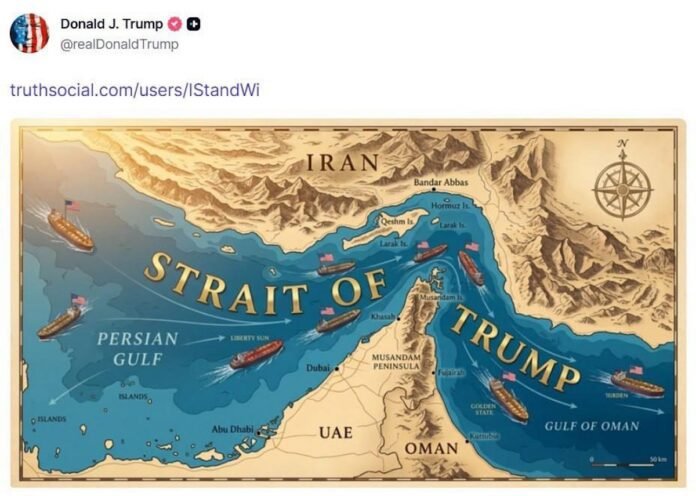
Escalating Trump posts map labeling Hormuz Strait ‘US territory’

0
escalating-trump-posts-map-labeling-hormuz-strait-‘us-territory’
Escalating Trump posts map labeling Hormuz Strait ‘US territory’

It’s not his first time to relabel the strait. Here is a map he reposted on X in April, 2026. Screenshot: X

Just days after threatening to declare the Strait of Hormuz a US territory, President Donald Trump on Tuesday posted a map on his Truth Social platform with that label over the crucial waterway – and was swiftly called out by a top Iranian diplomat.

“Just as Trump correctly wrote the name of the Persian Gulf, his illusion about the Strait of Hormuz will soon be corrected – or we will correct the delusions of this delusional individual,” Iran’s deputy foreign minister, Kazem Gharibabadi, responded in Arabic on X.

Gharibabadi included a screengrab of Trump’s post featuring a map that shows the strait, which is south of Iran and runs between the Persian Gulf and Gulf of Oman.

Since Trump and Israel began illegally bombing Iran on February 28, the Middle East country has restricted traffic through the strait, a key shipping route, particularly for fossil fuels. That has driven up fuel prices worldwide, including in the United States, where the cost for a gallon of gasoline just hit a record high for mid-August.

Despite the economic toll at home, the range of impacts across the Middle East – where nearly six months of war have killed thousands of people – and a plummeting approval rating, Trump said last week that “I’ll never apologize, I did the right thing.”

That declaration and Trump’s threat over the strait came in a Friday speech on Long Island, after which critics across the United States and beyond condemned the president as a “completely unhinged lunatic” and “sadistic violent menace to the world” who ought to be impeached again.

By Monday, a 60-day ceasefire deal expired, and neither side has signaled any progress on talks to end the war – which Trump claims is aimed at stopping Iran from building nuclear weapons, even though his own intelligence agencies have said it wasn’t trying to do so. Trump notably ditched the Obama administration’s Iran nuclear deal during his first term.

According to Palestine Chronicle, Iranian Maj. Gen. Mostafa Izadi, deputy commander-in-chief of the Islamic Revolutionary Guard Corps, said Tuesday that “the enemy failed to destroy Iran’s defensive capabilities and nuclear industries.”

As for the strait, Iranian Parliament Speaker Mohammad Bagher Ghalibaf said that it will stay closed until the US blockade and oil embargo are lifted, and warned that any party continuing its “aggression or threats” would face a “more severe defeat.”

-Common Dreams

Half a million in London… millions stuffed in water jugs in Baghdad

0
half-a-million-in-london…-millions-stuffed-in-water-jugs-in-baghdad
Half a million in London… millions stuffed in water jugs in Baghdad

The news that Chris Wormald, the former head of the UK civil service, has been awarded £500,000 in compensation—more than half a million dollars—after being forced out of his post without justification, is the kind of story that makes a British reader pause in disbelief. It is a large sum in a country that measures public money with teaspoons of sugar and coffee, where every financial decision is subjected to political, legal, and media scrutiny that rarely shows mercy.

But the moment you compare this figure to anything remotely similar in Iraq, the British shock dissolves into a small joke—because in Baghdad, a country governed by what can only be described as state-sanctioned looting, half a million pounds is barely a drop in an ocean of stolen billions.

In Britain, £500,000 is enough to allow Wormald to live comfortably for years, even if he never works again. More importantly, it is the direct result of a clear legal mechanism: a prime minister wrongfully removed a senior official, and the state was compelled to pay the price. There was a mistake, there was accountability, there was compensation, and there was a public watching closely.

READ: US Federal Reserve sends $500M cash shipment to Iraq: Report

In Iraq, by contrast, this amount means nothing at all. It is a trivial figure compared to the sums that disappear daily from the state treasury without causing the slightest tremor in the political establishment. We have seen money far exceeding this amount burned in bread ovens during the arrest of Deputy Oil Minister Adnan al-Jumaili. We have seen millions of dollars stacked inside private homes, some of it stored in plastic water jugs as if it were nothing more than litres of tap water.

This is how public money is treated in Iraq: not as a national resource, but as personal loot—liquid wealth that can be poured anywhere, hidden anywhere, or smuggled at any moment.

What makes Wormald’s compensation a national event in Britain is not the size of the payment, but the integrity of the state behind it. The British state is not merely a government building; it is a tightly woven ethical and legal system. Power is accountable. Public money is respected. Institutions do not allow even the most powerful prime minister to dismiss a senior official without consequences.

This integrity is not a luxury—it is the essence of the modern state: A state that errs, but admits it. A state that stumbles, but corrects itself. A state that pays compensation because it understands that the dignity of public office belongs to society, not to the ruler.

Iraq, on the other hand, has spent the past 23 years living without the most basic definition of a state: the ability to protect public money. A state that cannot safeguard its treasury cannot safeguard its citizens, cannot build institutions, and cannot generate trust. Public money becomes spoils. Public office becomes a private farm. Power becomes a network of interests immune to accountability.

Iraq’s failure is not accidental. It is the direct outcome of a trajectory that began in 2003. When Tony Blair stood before the world and promised that Iraq would become “a flourishing democracy,” he was selling a political illusion he had no tools to deliver.

READ: Iraq sentences 12 tax employees in ‘heist of the century’ corruption case

Britain—now shaken by a £500,000 compensation case—was unable to build in Iraq even a faint resemblance of its own state. It helped topple the old regime. It helped design the new political order. It helped write the constitution. It helped train institutions. But it failed to export the one thing Iraq needed most: a culture of statehood.

Twenty-three years later, the results are unmistakable: A country without institutions, without accountability, without integrity, without the ability to protect public money, and without a national project. More than $150 billion has been lost since the occupation—according to Iraqi officials—not through mismanagement alone, but through the systematic absence of the state itself.

A country that loses this amount is not merely corrupt. It is a failed state.

A Comparison That Exposes Everything

This is why Wormald’s compensation becomes a political mirror. In Britain, half a million pounds shakes the government, ignites media debate, and triggers public scrutiny. In Iraq, millions of dollars are stored in water jugs, burned in ovens, or stuffed into suitcases—without shaking a single chair in power.

In Britain, the state pays because it made a mistake. In Iraq, the state is robbed because it is absent.

A country that holds itself accountable for half a million pounds, and a country that cannot explain where 150 billion dollars went—this is the real comparison.

OPINION: Iraq’s electricity crisis: Fifty degrees of cold promises

The views expressed in this article belong to the author and do not necessarily reflect the editorial policy of Middle East Monitor.

Can Syria Do Without Russian Wheat? 

0
can-syria-do-without-russian-wheat? 
Can Syria Do Without Russian Wheat? 


Economist Yafa Nawaf told TML that sustainably eliminating the need for wheat imports depends on continued support for producers, access to fertilizer, seed, affordable fuel, investment in irrigation networks, dams, and storage capacity

[DAMASCUS] Syria says the sharp increase in wheat production during the 2026 season could allow it to significantly reduce its reliance on imports and, at least as far as the Syrian Grain Establishment’s needs are concerned, potentially eliminate them altogether this season.  

Such a shift could ease pressure on the country’s limited foreign currency reserves and reduce one aspect of Syria’s direct economic dependence on Russia, which for years has been a major supplier of wheat used in the country’s bread system.  

Purchases of domestically grown wheat by the Syrian Grain Establishment have reached about 2.7 million tons, exceeding the agency’s stated annual requirement of roughly 2.55 million tons. That has prompted officials to say the establishment no longer needs to sign new import contracts for the current season.  

But the announcement that imports are no longer needed raised new questions about what the claim of self-sufficiency actually means. On August 11, a new shipment of wheat arrived at the Port of Tartus through Pier 4. The identity of the importer and the original source of the wheat were not immediately clear, nor was it known whether the shipment was linked to a contract signed before the Grain Establishment announced that it had covered its requirements, or whether it was intended for needs outside the establishment’s purchases.   

The shipment does not necessarily contradict the establishment’s statements. It could be tied to an earlier contract, intended for strategic reserves, or consist of varieties and quantities not covered by domestic procurement. But its arrival highlights the need to distinguish between the Grain Establishment covering its own requirements and Syria as a whole ending wheat imports.  

The improvement in this year’s harvest follows an exceptionally difficult agricultural season in 2025, when drought caused wheat production to fall sharply and increased Syria’s need for imports. According to Agriculture Ministry data, wheat production that season stood at around 934,000 tons.  

For 2026, however, the ministry estimates a final production figure of more than 3 million tons, driven by improved rainfall and the return of large areas to cultivation, particularly in regions that have traditionally served as major centers of grain production.  

But the official figures raise a fundamental question: Does the Syrian Grain Establishment’s ability to meet its needs mean that Syria has actually regained wheat self-sufficiency?  

Economist Yafa Nawaf told The Media Line that the Grain Establishment’s purchases reaching roughly 2.7 million tons are not, by themselves, enough to conclude that the country has restored self-sufficiency, because that figure represents what the agency purchased from farmers rather than total national production or the country’s overall consumption.  

The Grain Establishment says its annual requirement is about 2.55 million tons. On that basis, Nawaf said, the agency can meet its own needs without importing wheat this season.  

The picture becomes more complicated, however, when those figures are compared with earlier estimates placing Syria’s total annual wheat consumption at around 4 million tons.  

Nawaf said the difference—about 1.45 million tons between the Grain Establishment’s stated requirement and the estimated national consumption—suggests that the two figures measure different things.  

“The first figure most likely refers to the quantities the government establishment needs to supply flour and bread through its own system, while the second includes the country’s overall consumption and other uses of wheat,” she said. “Therefore, the claim that imports are no longer needed may be accurate in terms of the Grain Establishment’s requirements for the 2026 season, but it is not sufficient on its own to prove that Syria has achieved full national self-sufficiency.”  

According to Nawaf, establishing self-sufficiency at the national level would require a clear wheat balance showing total production, existing stocks, consumption, quantities reserved for seed, losses, and volumes traded outside the government procurement system.  

That distinction is important because the Grain Establishment purchasing more than its own annual requirement does not necessarily mean that the country’s total domestic wheat supply covers every form of consumption.  

The 2026 season nevertheless represents a dramatic change from the previous year. If production indeed surpasses 3 million tons after reaching only around 934,000 tons in 2025, wheat output has more than tripled in a single year.  

Nawaf said the surge should be interpreted cautiously because a substantial part of it resulted from improved rainfall and the return of large areas to cultivation, rather than solely from permanent structural improvements in Syria’s agricultural sector.  

Farmers’ ability to repeat current production levels will also depend on whether wheat remains economically viable.  

According to the Ministry of Economy and Industry, figures cited for the current season show that the wheat purchase price was set at about 46,000 new Syrian pounds per ton, with an additional bonus of 9,000 pounds, bringing the total return to roughly 55,000 pounds per ton.  

Nawaf noted, however, that a higher nominal purchasing price does not necessarily guarantee that wheat farming will remain profitable next season. Final production costs depend on the prices of seed, fertilizer, fuel, irrigation, harvesting, and transportation.  

That becomes particularly relevant in years with less rainfall, when farmers must rely more heavily on irrigation and absorb the additional costs.  

Nawaf said sustainably eliminating the need for wheat imports depends on more than one successful season. It requires continued support for producers, access to fertilizer, seed, and fuel at affordable prices, and investment in irrigation networks, dams, and storage capacity.  

Without those measures, she said, self-sufficiency could remain dependent on rainfall and fluctuate sharply from one agricultural season to the next.  

The importance of this year’s wheat season extends beyond food security to the finances of a country with limited access to foreign currency.  

Syrian political activist Mufida Ankair, who lives in Germany and follows changes in Russia’s presence in Syria, told The Media Line that Damascus’ ability to reduce or halt wheat imports could ease significant pressure on its foreign currency reserves.  

The Food and Agriculture Organization had estimated that Syria would need to import around 3 million tons of wheat during the 2025-2026 season after drought sharply reduced domestic production.  

At international prices of approximately $250 to $300 per ton, importing 3 million tons could cost between $750 million and $900 million, before shipping, insurance, and financing expenses.  

Ankair said replacing a large share of those imports with domestic production could save Syria hundreds of millions of dollars while also reducing its exposure to fluctuations in international commodity prices and disruptions in global supply chains.  

Reduced import requirements also carry broader implications for Damascus’ relationship with Moscow. During the war and its aftermath, Russia became a major wheat supplier to Syria, and grain shipments developed into part of a broader network of economic and political ties between the two countries.  

But Ankair cautioned against interpreting reduced reliance on Russian wheat as the beginning of an economic separation between Syria and Russia. Russia remains an important supplier to Syria in other sectors, particularly energy, she said, while commercial, military, and logistical ties between the two countries extend far beyond grain.  

“Reduced dependence on Russian wheat lessens one form of Syria’s direct reliance on Russia, but it does not mean that the economic relationship between the two countries has ended or fundamentally changed,” she said.  



Teen Fatally Beaten on Soccer Field After His Team Scored Goal

0
teen-fatally-beaten-on-soccer-field-after-his-team-scored-goal
Teen Fatally Beaten on Soccer Field After His Team Scored Goal


A 19-year-old Arizona soccer player has died after a game allegedly erupted into horrifying violence, with his family claiming rival players punched, kicked and stomped him after becoming furious over a goal.

Tumusifu Bazirake was rushed to a hospital in extremely critical condition after a fight broke out during a soccer match in Phoenix earlier this month, according to police.

He later died from his injuries.

Now, Bazirake’s devastated family says the teen was attacked while trying to protect his brother — and that the violence began after their team scored.

“We scored on them, and they got mad,” Bazirake’s brother, Jeanpaul, told local media.

According to Jeanpaul, players from the opposing team initially began attacking him before his brother jumped in to defend him.

But when Jeanpaul turned around, he said he saw Bazirake lying helplessly on the ground as several people allegedly continued attacking him.

“They were just stepping on him while he’s on the ground,” Jeanpaul recalled. “Stepping, kicking, punching — all that.”

Emergency crews responding to a report of an unresponsive person learned Bazirake had been playing soccer when a fight erupted, Phoenix police said.

Investigators believe several people assaulted the teen before fleeing the field.

Officers found Bazirake gravely injured and had him taken to a hospital, where he remained in extremely critical condition.

Police were later notified that he had died.

No suspects had been publicly identified as of Aug. 18, and authorities are now investigating the teen’s death as a homicide.

The tragedy came at an especially heartbreaking moment for Bazirake’s family.

He was reportedly just one week away from beginning college and dreamed of one day becoming a firefighter.

His loved ones have since launched a GoFundMe to help cover funeral expenses as they mourn the young man whose life was cut short following what should have been an ordinary soccer game.

Phoenix police are asking anyone with information about the deadly attack to contact investigators or Silent Witness at 480-WITNESS. Spanish-speaking callers can use 480-TESTIGO.

“Sabotage”: Experts, lawmakers blast RFK Jr. for destroying healthcare research

0
“sabotage”:-experts,-lawmakers-blast-rfk-jr.-for-destroying-healthcare-research
“Sabotage”: Experts, lawmakers blast RFK Jr. for destroying healthcare research

The federal agency tasked with studying ways to improve America’s outstandingly poor healthcare system is “on the brink,” experts warn. The Trump administration has cut its staff by 75 percent, canceled its grants en masse, and is refusing to spend tens of millions of dollars appropriated by Congress.

Whether the agency “will survive the second Trump administration is an open question,” health policy experts Aaron Carroll and David Atkins wrote in an opinion piece published today in the Annals of Internal Medicine.

The agency in question is the Agency for Healthcare Research and Quality (AHRQ), which has focused on ways to improve patient safety, healthcare quality, care delivery, and new technologies and practices since the 1990s. In the past, “Republican leaders recognized that health care disparities were fundamental quality problems,” Carroll and Atkins wrote. But recently, disparities in care have become partisan issues.

During Trump’s second term, DOGE cuts led to the firing or retirement of an estimated 75 percent of the AHRQ’s staff. In July, AHRQ abruptly sent grant cancellation letters to around 150 researchers. More than 100 research grants collectively worth over $250 million have been canceled. Although Congress appropriated $345 million for the 2026 fiscal year, much of it has gone unspent, with only $15 million going to grants so far. As such, scientists across over 30 states have halted research, laid off staff, shut down programs, and stopped pursuing new lines of research.

“Profound concern”

In addition to the losses in data and research findings, Carroll and Atkins lament the loss to the scientific community. “This is what it looks like when we stop developing the next generation of health services researchers.” Reversing the damage is doable, but will be difficult, they write, while calling on Congress to act.

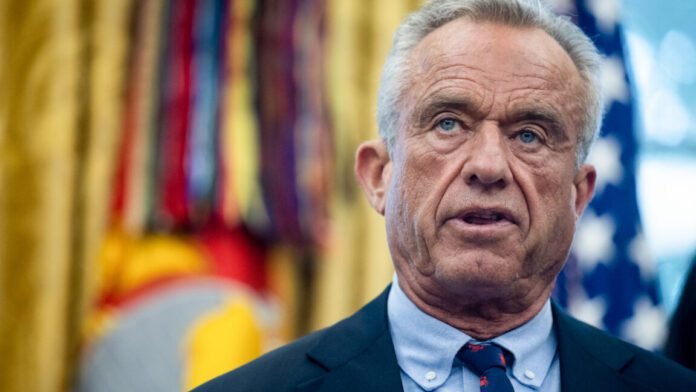
Last week, 30 Democratic senators sent a fiery letter to anti-vaccine Health Secretary Robert F. Kennedy Jr. Noting the same series of events as Carroll and Atkins, they called Kennedy’s handling of AHRQ “sabotage” and an “outrageous abuse of administrative power that will leave Americans sicker, poorer, and dying from preventable causes.”

They highlighted just a few of the research programs that were axed under Kennedy, including studies on training rural healthcare workers to handle maternal medical emergencies in Connecticut, improving access to home dialysis in New York, reducing risks of patient falls in rural hospitals in Colorado, reducing overuse of antibiotics in Utah, improving autism screening and care for Black children in North Carolina, and improving chronic pain management to reduce reliance on opioids in Virginia. The senators also noted that grants were canceled out of the blue with form letters, which had contradictory explanations and incorrect citations.

With “profound concern and unequivocal opposition” to the mass grant cancellations, the senators wrote, “We demand that you immediately rescind these cancellations and ensure that the funding Congress appropriates to AHRQ is invested in health research in accordance with the law.”

“We want to be clear: Democrats and Republicans did not work together to appropriate funds for AHRQ as a gentle suggestion for the [health] Department to follow at their discretion or leisure,” they wrote. “We provided this money with the explicit instruction that the Department faithfully support life-saving research to improve access and health outcomes for Americans.”

The health department under Kennedy has previously defended the cuts. The senators gave Kennedy until August 25 to respond to their letter.

Against all odds, SpaceX finally tugs Starship into port after 24 days at sea

0
against-all-odds,-spacex-finally-tugs-starship-into-port-after-24-days-at-sea
Against all odds, SpaceX finally tugs Starship into port after 24 days at sea

SpaceX’s most recent Starship test flight may have ended July 24, but its mission isn’t over yet.

The spacecraft splashed down in the Indian Ocean intact after flying halfway around the world from SpaceX’s launch base in South Texas. Engineers expected the ship’s life to end with a fiery disintegration after toppling over, just as past Starships have done following splashdown.

Numerous onboard sensors and cameras, along with buoys and drones in position at the splashdown zone, have provided important data for SpaceX to assess the performance of the ship’s heat shield after each test flight, so officials accepted the post-flight conflagrations. That day, Starship tipped over and remained intact, surprising just about everyone.

Engineers have reams of data from all 13 test flights of Starship and its giant booster rocket, known as the Super Heavy. But there’s no match for inspecting hardware after returning from space. SpaceX routinely recovers and reuses Falcon 9 booster stages with near-flawless performance. The handful of minor failures with the Falcon 9 have centered on the rocket’s single-use upper stage.

Hardware-rich

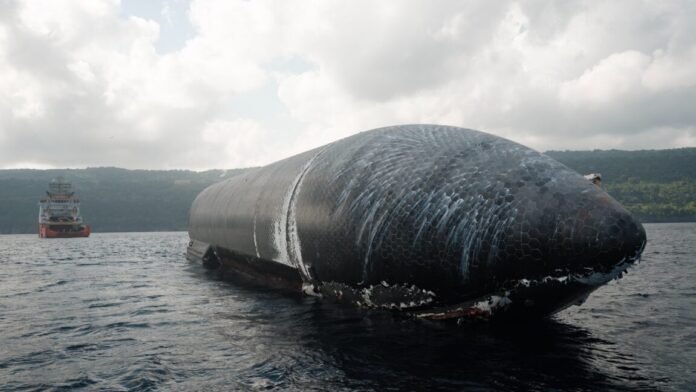
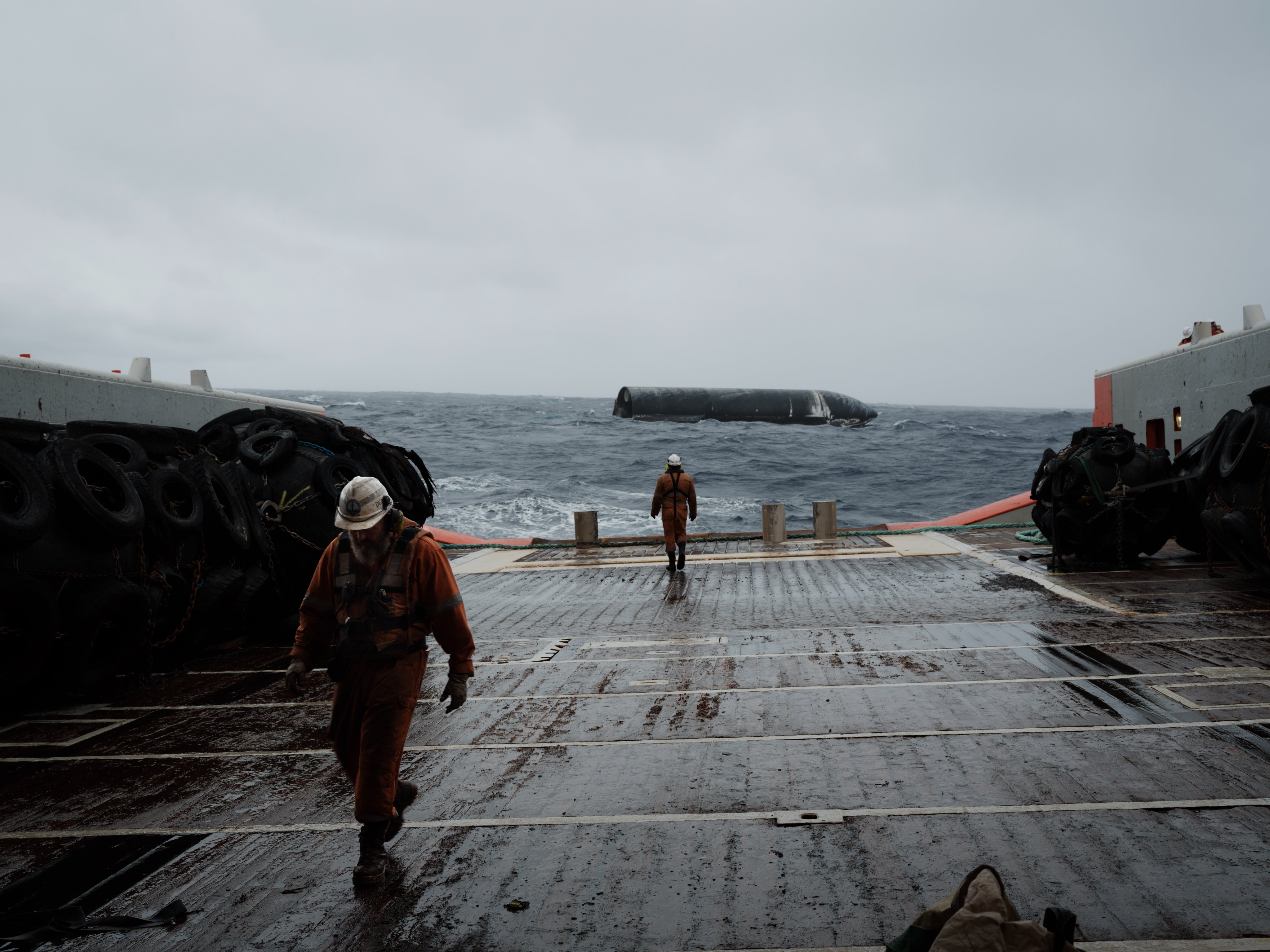
So, getting Starship back in one piece is a boon. A recovery ship towed the spacecraft engine-first several hundred miles across the Indian Ocean to Christmas Island, an Australian territory. SpaceX announced the ship’s arrival just off the coast of Christmas Island on Tuesday.

“A team of SpaceX engineers is on their way to conduct additional analysis on the vehicle in calmer waters before attempting to return it to Starbase,” SpaceX wrote on X.

SpaceX hasn’t said how exactly it might get the spacecraft back to Starbase, the company’s Starship development site and launch base in South Texas, more than 10,000 miles from Christmas Island. It would have to travel by sea. Starship, more than 170 feet (52 meters) long and 30 feet (9 meters) in diameter, is too large to fit into any aircraft in one piece.

The company intends to recover future Starships directly at the launch site, using mechanical arms on the launch tower to catch the vehicle during final descent. That will help SpaceX expedite reuse of the vehicle. This one won’t be reused. Splashing down in the ocean exposes the spacecraft’s engines, stainless steel structure, and sensitive electronics to the corrosive effects of salt water. The vehicle also sustained damage during the tip-over after splashdown.

Successfully bringing Starship to Christmas Island was perhaps just as unexpected as the vehicle ending its test flight intact. At one point last week, Elon Musk, SpaceX’s CEO, said that recovering the ship was “not looking good.” He said teams in the Indian Ocean were able to obtain close-up photos of the heat shield and engines “for future upgrades.” The recovery crew kept Starship afloat in rough seas by attaching air-filled Yokohama fenders around the vehicle.

Starship floats off the stern of a recovery ship in the Indian Ocean.

Starship floats off the stern of a recovery ship in the Indian Ocean. Credit: SpaceX

Starship’s heat shield, made of approximately 18,000 ceramic tiles, is key to SpaceX’s goal of making the vehicle fully and rapidly reusable. NASA’s Space Shuttles used similar tiles for protection during atmospheric reentry, but they required replacement and extensive touch-ups between every flight. SpaceX would like to eliminate tile replacements, and even detailed inspections, to turn around its future fleet of Starships multiple times per day.

Musk has long identified the heat shield as the company’s most pressing unsolved problem with Starship. During SpaceX’s first quarterly earnings call on August 4, Musk said he considered the heat shield problem “solved.”

Other industry experts are not so sure. It is true that the vehicle’s heat shield seemed to be in better condition after last month’s flight than it was following previous reentries. The tiles are clearly good enough to bring Starship back to Earth safely, but can they withstand the high flight rate SpaceX foresees to build and maintain bases on the Moon and Mars or large constellations of orbital data centers?

Getting Starship’s heat shield back, and then putting the recovered tiles through tests in the laboratory or even on future Starship flights, might help answer this question.

0FansLike
0FollowersFollow
0FollowersFollow
0SubscribersSubscribe
- Advertisement -
Google search engine

Recent Posts