19.5 C
London
Wednesday, July 22, 2026
Home Blog

South Korea’s far right is on the rise – with MAGA’s backing

0
south-korea’s-far-right-is-on-the-rise-–-with-maga’s-backing
South Korea’s far right is on the rise – with MAGA’s backing

South Korea is often regarded as an example of a young and vibrant democracy. Merely two years ago, mass protests thwarted a self-coup attempted by the sitting far right President Yoon Suk-yeol.

However, due to an array of social factors, the support of wealthy donors like retail tycoon Chung Yong-jin, the chairman of the conglomerate that owns Starbucks Korea, and growing links to the US right, an anti-democratic and reactionary movement is steadily picking up steam.

Seoul was a major overseas stop for far right influencer Charlie Kirk ahead of his September 2025 assassination. Kirk was the keynote speaker in 2025 at the annual rally of Build Up Korea, a far right group founded in 2023 by Mina Kim, a young conservative Christian educated in the US who appears to be determined to create a reactionary youth movement in the image of Kirk’s Turning Point USA.

Kim also serves as president of EveryLife Korea, the national franchise of an anti-abortion diaper brand with a self-described “‘Make More Babies’ mission” in which Donald Trump Jr. holds a stake through a financial vehicle. In the US, the brand remains marginal, depending exclusively on mail order sales. In South Korea, however, its products are sold in Korea’s largest mass retailer (led by Chung) with about $20 billion in annual sales.

In a September 2025 interview with Charlie Kirk, Mina Kim jokingly asked if he would sue her for imitating Turning Point USA’s tactics and politics. Participants were kept caffeinated throughout the two-day event by a seemingly endless stream of coffee donated by Starbucks Korea, which is owned by Shinsegae, the country’s largest retail conglomerate, which is headed by Chung.

Starbucks Korea’s role in stoking the rise of the far right

In addition to providing free coffee throughout the far right Build Up Korea conference, Starbucks Korea has also stoked anti-democratic forces in sweeping symbolic ways.

Starbucks Korea struck a nerve on May 18 when it launched a reusable travel cup named “Tank” and branded the promotion “Tank Day.” It was a symbolic, and painful, affront to South Korea’s democratic legacy. May 18 marks the anniversary of the beginning of the Gwangju Uprising, the 10-day civilian resistance to the military coup of 1980, which was crushed by special warfare troops using tanks and armored vehicles to overrun the southwestern city of Gwangju.

The “Tank Day” fiasco enraged much of the South Korean public, triggering consumer boycotts targeting Starbucks, for which Chung holds the exclusive franchise rights in the country.

In an attempt to contain the fallout from the controversy, more than 2,000 Starbucks stores across South Korea closed early on June 21 to conduct historical awareness trainings for the company’s 24,000 or so baristas. The franchise reported that due to the early closure, it incurred 2.1 billion South Korean won ($1.4 million in U.S. dollars) in lost sales. But the closure was deemed necessary to manage the backlash Starbucks Korea was facing and contain fallout from the controversy that had been building around Chung.

Chung Yong-jin, the chairman of Shinsegae Group (center), visits Washington to attend Donald Trump’s second inauguration ceremony, meets with Trump Jr. (left) and introduces his wife Han Ji-hee (right). Photo: Shinsegae Group

Chung, a retail tycoon and longtime friend of Donald Trump Jr., is open about his far right views and has often made provocative remarks on X. These statements had largely been dismissed as the provocative musings of a powerful tycoon, buffered by the PR influence of his conglomerate.

The scandal elicited media scrutiny from outlets worldwide, including The New York Times and The Financial Times. While most coverage focused on the conglomerate’s convoluted corporate governance, which allowed even a marketing promotion to be tailored to the chairman’s political taste in spite of public sentiment, it largely overlooked another dimension of the story: Chung has been helping bankroll a rising far right movement. He effectively put Mina Kim on his payroll by letting her sell her diaper brand through his vast retail network.

Meme-ing the far right agenda

The Starbucks fiasco is already having ripple effects. On June 29, during a popular livestreamed baseball match, players on a Seoul team mocked their opponents from Gwangju, chanting “Let’s go to Starbucks” and “Tank Day” from the dugout while performing a choreographed gesture. Far right propaganda has leaned into entertainment value, with Build Up Korea and other right-wing variants flooding social media with short-form videos, memes, and catchy songs to attract teenagers and young adults.

In early June, these emerging layers of the far right converged at Olympics Park in Seoul to protest what they claimed was election fraud. The government should bear some responsibility for the flare-up — ballots ran out at a polling station in the park a few hours before voting closed in a local election. As of this writing, hundreds of young far right elements are still squatting in the park, now blanketed with banners and posters promoting their conspiracy theory and slogans.

The movement has drawn both ideological inspiration and tactical cues from the MAGA movement in the United States.Protesters rallied almost daily in central Seoul, repeating slogans such as “Stop the Steal” and “CCP Out” (referring to the Chinese Communist Party), often in English. The demonstrations increasingly took the form of a typical MAGA rally, with heavy emphasis on social media

Over the past two years, the ties between MAGA and its Korean clones have deepened. At last year’s Conservative Political Action Conference (CPAC), conservative commentator Gordon Chang, a China hawk who has extended his acid-tongued rants to paint South Korea’s liberalism as pro-China and pro-North Korea, defended Yoon’s coup in his remarks.

At this year’s gathering, Hwang Kyo-ahn, a conservative Christian and former South Korean prime minister — the latter being a role roughly equivalent to the United States’ vice presidency — alleged that the recent South Korean elections were rigged through a tripartite collusion of the South Korean left, North Korea and China.

A failed coup galvanizes the far right

In much of the global imagination, South Korea has come to be seen as a democracy with a unique cultural cachet — having transformed from a grim authoritarian industrial park into an emerging soft power conquering global cultural platforms with K-pop and K-dramas.

This relatively new public image has often obscured the smoldering political tensions between the far right, liberals and the left. That steadily growing cacophony finally broke containment on December 3, 2024, when then-president Yoon Suk-yeol abruptly declared martial law to stage a self-coup on the pretext of protecting the government from “communist and Chinese interference,” echoing far right conspiracy theories that CCP-hired hackers and North Korean operatives manipulated South Korean elections.

In response, South Korean citizens spontaneously took to the streets, supporting the legislature to override martial law. Because its people knew how they should respond to the president’s subversion of their hard-won democracy, South Korea appeared to emerge from the crisis with a new opportunity to renew its democracy.

On the surface, the sequence of post-coup developments confirmed that belief — Yoon was impeached and swiftly tried for insurrection and Lee Jae-myung, of the liberal Democratic Party of Korea (DPK), was elected president in a snap election. Once again, these reassuring changes obscured a more troubling reality — the failed coup has revitalized, rather than demoralized, the far right.

Yoon’s ill-fated power grab provided far right forces with the momentum these once-fringe groups needed by drawing on their anti-China conspiracy theories and faith-based anti-communism. Yoon then further inflamed these fanatics by resisting arrest inside the presidential residence for more than a month.

And he had success. In January 2025, Yoon’s supporters raided and torched a courthouse in Seoul, injuring 40 police officers, after the court extended the detention warrant for Yoon. Lee, the liberal DPK candidate, failed to win more than 50 percent of the vote in the snap election, which many had expected would give him a landslide win.

Meanwhile, the US right stepped in to support Yoon. One of the first figures — Korean or foreign — to publicly approach the president during his attempted coup was Matt Schlapp, president of the American Conservative Union. At a CPAC forum attended by Steve Bannon in 2025, Schlapp claimed that Yoon believed Chinese technology firm Huawei was influencing South Korea’s elections, alleging that election servers were compromised by Chinese malware.

Fertile ground for the far right

Shaped by Cold War politics and evangelical Christianity, South Korea is fertile ground for the far right. The country is home to five of the world’s 20 largest Christian congregations — including the largest Presbyterian megachurch and likely the largest Methodist megachurch as well — many of which were preaching prosperity theology long before it spread widely in the US. About 33 percent of the population identifies as Christian.

In the 1970s and 1980s, a succession of US-backed military dictatorships permitted few large outdoor gatherings. Christian rallies were among the exceptions. A watershed moment came in 1973, when US evangelist Billy Graham held his largest-ever crusade in Seoul under the auspices of President Park Chung-hee — a Buddhist who saw conservative Christian congregations as a counterweight to a rising labor movement.

The rally was broadcast nationwide and rebroadcast repeatedly. Megachurch expansion followed, as Billy Kim, Graham’s Korean interpreter and a Baptist pastor, later recalled.

Today, these congregations face a familiar problem: declining attendance in an aging, shrinking society. Their response has often been to rebrand — mobilizing homophobia, Islamophobia, Cold War anti-communism and hostility to organized labor as adhesive forces for diminishing memberships.

Youth discontent provides a parallel current for the far right. South Korea’s youth unemployment rate sits around 7% – well under the Organization of Economic Co-operation and Development (OECD) average. The issue is not joblessness per se, but credential inflation without commensurate returns.

Roughly 77 percent of South Korean women aged 25-34 in 2023 had completed postsecondary education, and 63 percent of their male counterparts had as well, according to a recent OECD report. Yet 13 percent of South Korean men with postsecondary degrees in this age group were economically inactive at that time – neither employed nor seeking work.

The standard explanation points to exam preparation. While the rate of economic inactivity among South Korean women aged 25-34 with postsecondary education is even higher at 21 percent, pressure on them to seek employment has perhaps been less acute due to entrenched biases against working women, and those who do seek work experience a demographic imbalance that favors women in the labor market.

Many inactive young men are studying for civil service and other competitive positions, where women have recently outperformed them.

The political implications are stark. College-educated young men unable to secure work commensurate with their credentials have gravitated toward online subcultures of misogyny and conspiracy theories – a Korean analogue to the US incel phenomenon. In the post-coup period, many became foot soldiers of the far right. Women facing parallel frustrations have also joined in significant numbers.

At the risk of oversimplification, the traditional far right of older conservative Christians has joined with younger organizations such as Mina Kim’s Build Up Korea to constitute a new force in alliance with the US MAGA movement. When Kirk died, Kim’s group erected an impromptu altar for him in central Seoul. Build Up Korea and Free University, its campus affiliate, have since organized debates in Kirk’s signature style and anti-China protests, while mobilizing as the youth infantry of the movement to attempt to restore Yoon to power.

The older traditional forces have found a new face in Busan-based Presbyterian evangelist Son Hyun-bo, who launched Save Korea, a political movement, in the aftermath of the failed coup. The group has gained traction through its austere, disciplined rallies, drawing support from megachurches and conservative lawmakers. At one such rally, 37 lawmakers from the People Power Party (PPP) appeared, publicly endorsing Son’s claims of election fraud and his defense of Yoon.

In early September 2025, Son was detained for violating electoral regulations by holding rallies for conservative candidates without party affiliation. By then, however, he appeared to have gained the ear of US Vice President JD Vance, who serves as a leading voice for Christian nationalism within the Trump administration. During a January meeting with his South Korean counterpart, Vance raised concerns about Son’s detention.

In January, a court released Son, waiving his six-month prison sentence. Upon his release, he claimed that his two adult sons had been invited to the White House on two separate occasions while he was in detention awaiting trial. Son also said that Alliance Defending Freedom, a conservative legal fund in the US, had donated $15,000 to his legal defense.

MAGA internationalism

South Korea’s MAGA-inspired far right realignment is not unique. From Europe to South America, MAGA has emerged not only as a source of inspiration but also as a provider of tactics, offering a flexible playbook that has proven effective in mobilizing younger generations.

At first glance, it may seem counterintuitive that a movement rooted in nativism and nationalism would seek global influence. But another core pillar of MAGA is evangelical Christianity, which has long pursued transnational reach.

While cracks have surfaced within MAGA over the geographic scope and ambitions of the movement – especially in the wake of Trump’s assault on Iran – these divisions should not be overstated. So long as MAGA’s ideas continue to find receptive audiences abroad, amplified by the international ambitions of evangelical networks, the global reactionary movement will continue to grow. South Korea is a case in point.

Kap Seol is a Korean writer and researcher based in New York. His writings have appeared in Labor Notes, Jacobin, In These Times, Business Insider and other publications. This article was originally published by Truthout and is republished under a Creative Commons license.
Haim Yavin, Israel’s Enduring Voice of Public Television, Dies at 93  

0
haim-yavin,-israel’s-enduring-voice-of-public-television,-dies-at-93  
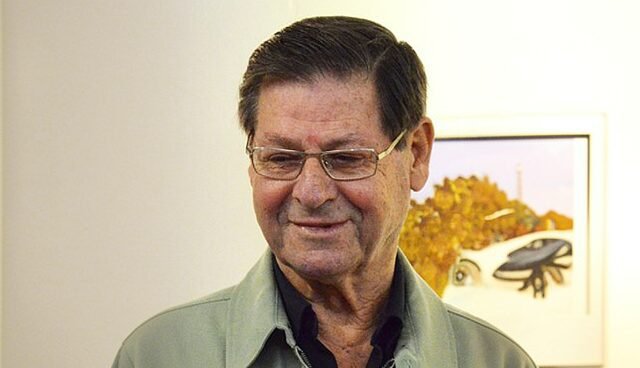
Haim Yavin, Israel’s Enduring Voice of Public Television, Dies at 93  


Known to Israelis as “Mr. Television,” Yavin was a foundational figure in Israeli broadcasting—someone who did not simply report the country’s history but helped establish the medium through which much of that history was experienced

The Media Line is saddened by the loss of Haim Yavin, a broadcaster whose voice and presence were woven into Israel’s public life for generations. Yavin also held a valued place in The Media Line community, serving on the Professional Advisory Board of its Mideast Press Club from 2005 to 2008.  

The Press Club was created during a period when contact between Israeli and Palestinian journalists had largely broken down. Its purpose was practical—to create a professional setting in which reporters, editors and broadcasters could meet, learn from one another and improve coverage of the people and issues on both sides of the conflict. Yavin’s participation reflected his belief in journalism as a public responsibility, grounded in seriousness, dialogue and first-hand knowledge. We extend heartfelt condolences to his wife, Yosefa, his children and grandchildren, and to his many colleagues and admirers. 

Known to Israelis as “Mr. Television,” Yavin died on July 22 at the age of 93. He was a foundational figure in Israeli broadcasting—someone who did not simply report the country’s history but helped establish the medium through which much of that history was experienced. 

He was born Heinz Kluger in 1932 in Upper Silesia, then part of Germany. His family came to Mandatory Palestine in 1933. Before beginning the career that would make him a household name, he worked at the Phoenicia glassworks in Haifa and later studied Hebrew and English literature at the Hebrew University of Jerusalem. 

Yavin entered radio in 1956, joining Kol Yisrael at a time when broadcasting was developing into a central institution of the young state. He later helped build the radio service that became Reshet Bet. By the time television reached Israeli homes in 1968, he was among the people helping to shape its character and standards. 

On July 23, 1968, Yavin anchored the first edition of Mabat, the nightly news broadcast of the new public television service. He remained identified with the program for roughly four decades, working not only as its anchor but also as an editor and senior television executive. Between 1986 and 1990, he headed Israeli Television. 

His delivery was deliberate and unadorned. In an age before dozens of channels, rolling updates and social media, viewers often encountered national events through a single evening broadcast. Yavin brought authority without theatricality, which made him a trusted guide through moments of war, political change, grief and celebration. 

One such moment became part of Israel’s political vocabulary. On the night of the 1977 election, when Menachem Begin’s Likud ended Labor’s long hold on power, Yavin announced the result with the word “mahapach”—upheaval. The expression has remained attached both to that election and to his public persona. 

Yavin’s work was not confined to the anchor desk. He made documentaries that explored difficult issues in Israeli life, including the country’s relationship with the Palestinians and the settlement movement. His 2005 series Land of the Settlers drew intense debate because it brought the veteran broadcaster’s personal observations to a subject he had long covered from the news studio. 

He retired from presenting Mabat in February 2008, but his standing in Israeli media endured. In 1997, he received the Israel Prize for communications, in recognition of a career that spanned radio, television leadership, documentary filmmaking and public affairs. 

Yavin belonged to the generation that created Israeli television’s common language. He helped set an expectation that news could be sober, precise and attentive to the public interest. For those who watched him over the years, his legacy will be measured not only in broadcasts and honors, but in the confidence he inspired whenever Israel faced a moment that demanded to be understood. 


Sales were up at Tesla but so were costs and spending

0
sales-were-up-at-tesla-but-so-were-costs-and-spending
Sales were up at Tesla but so were costs and spending

Tesla posted its financial statement for the second quarter of the year this afternoon. Earlier in July, we learned that the American automaker had had a good quarter in terms of sales, growing 25 percent year over year. Fans hoping that sales increase would result in a plenty profitable Tesla may be disappointed, though. Revenues are up but so are expenses, and the company’s once-enviable double-digit profit margin has fallen to just 1.4 percent.

Tesla brought in $20.5 billion from its electric vehicle business, a 23 percent increase year over year, and just $146 million came from automotive regulatory credits. Credits have been a key to Tesla’s profitability in previous challenging quarters, but they were abolished in the United States with Musk’s blessing in 2025.

There was growth from its energy and storage business, which grew 13 percent year over year to revenues of $3.1 billion, but the most growth was in Tesla’s services, which doubled, bringing in $4.6 billion. Tesla’s shift from a one-time purchase to a monthly subscription for its much-criticized FSD partially automated driver assist—something tied to CEO Elon Musk’s gargantuan remuneration package—was a big help here.

Overall, total revenues were up 26 percent, to $28.2 billion.

But the cost of doing business went up more. Tesla’s operating expenses went up 47 percent to $4.4 billion, and income from those operations fell by 57 percent year over year to $398 million. The company is still profitable—it generated $1.1 billion for the quarter, but that’s 5 percent less than the same three months last year.

In large part, that’s because Tesla has been spending heavily. Its capital expenditures grew by 142 percent to $5.8 billion, and free cash flow is currently negative $1.1 billion. That’s an 848 percent drop compared to last year, but Q2 2025 was barely positive either. For a more short-term comparison, Tesla ended last quarter with a free cash flow of more than $1.4 billion. It’s also lost another $1.2 billion from its investments.

Despite so much of Tesla’s revenues coming from cars, then solar and batteries, its spending is not on developing a new line of cars or even finally making those solar roof tiles we were promised a decade ago. It’s still all about AI, humanoid robots, and more robotaxi rollouts, despite a high preponderance of crashes in Texas, including one involving a teleoperator and a Houston tree stump.

In its statement to investors, Tesla says that it anticipates beginning production for its humanoid robots later this year, and that robotaxi deployments are “in line in seven major metros,” although it acknowledges that at least one of these requires the assent of California regulators, who we have seen are notably less permissive than equivalents in Arizona, Florida, Nevada, or Texas.

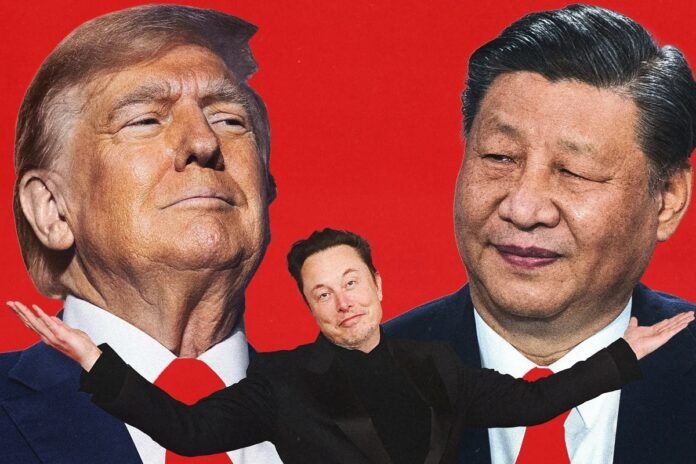
AI needs US-China cooperation. Elon Musk can help

0
ai-needs-us-china-cooperation.-elon-musk-can-help
AI needs US-China cooperation. Elon Musk can help

Despite his controversies and contradictions, Elon Musk may prove an unlikely force in moderating US-China rivalry and the AI risks it amplifies.

In June, following SpaceX’s listing, Musk became the world’s first trillionaire — a remarkable milestone, but one that crystallized two deeply uncomfortable realities for the future of AI.

The first concerns the staggering concentration of wealth and influence among a handful of tech’s uber-rich. Musk’s fortune is not just a personal achievement; it reflects the widening gap between those who shape the digital economy and everyone else.

The second is even more consequential. The same small circle of immensely wealthy technology leaders is increasingly driving the development of artificial intelligence. As AI reshapes economies, politics and daily life, its direction should not be determined by a privileged few without broader public accountability.

Yet, the ultimate fate of AI will not be decided in Silicon Valley alone. China’s technology sector is aggressively closing the frontier gap. Just last week, Moonshot AI’s rollout of the Kimi K3 model stunned global tech hubs by matching – or outperforming – premier American systems in raw coding and processing power.

Predictably, this rapid catch-up has caused Washington to double down on zero-sum geopolitical framing. At a recent US congressional hearing, Senator Jim Banks warned that no competition matters more to America’s future than staying ahead of China. “The nation that leads in AI will set the terms of the world’s economy and command the high ground in military power.”

This intensifying US-China rivalry introduces existential perils. One is the accelerating development of AI for military purposes, with the potential to inflict unprecedented destruction. More troubling, however, is the possibility that such American and Chinese technologies could fall into the hands of rogue states or non-state actors.

While public anxiety frequently fixates on the hypothetical sci-fi threat of “rogue AI” turning on humanity, the far more pressing risk is fragmented, unregulated proliferation. If Washington and Beijing refuse to establish baseline guardrails, the structural breakdown of global AI safety becomes inevitable.

In May, following Trump’s visit to Beijing, the two countries agreed to hold talks on establishing guardrails for AI. Yet Washington continues to send mixed signals. In June, House Foreign Affairs Committee Chairman Brian Mast framed the US-China competition in starkly zero-sum terms, describing the United States as the “superhero” and China as the “supervillain.”

Meanwhile, at last week’s World AI Conference in Shanghai, President Xi argued that no single nation should monopolize AI and pledged that China would help Global South countries to bridge the AI divide.

As Beijing positions itself as a champion of international AI cooperation, the United States remains caught between viewing China as a strategic competitor and recognizing it as an indispensable partner in AI governance.

This policy uncertainty extends to Washington’s domestic tech governance. For years, US regulators largely favored a light-touch approach.

Recently, however, national security concerns prompted the government to restrict the Anthropic Mythos 5 model – triggering resistance from Silicon Valley, which argues that excessive regulation could slow innovation and erode the American technological lead over China.

Compared to their strictly supervised Chinese counterparts, US tech giants wield extraordinary economic and political influence. Elon Musk’s Starlink, for example, has evolved into a global communications network with capabilities resembling those traditionally associated with nation-states.

Musk’s ambitions extend beyond Earth, with his vision of making humanity a multi-planetary species. Yet he is also a controversial political figure, presenting himself as a defender of Western civilization and reportedly supporting right-wing movements in Europe.

He is not alone. Figures such as Peter Thiel and Alex Karp have fused ideology, statecraft, and national security in their worldviews. This faction increasingly frames AI as central to competition with China and has pushed for a tougher US stance.

Speaking at the Hudson Institute, Karp, the CEO of Palantir, laid the stakes bare: “There are only two cultures that are going to win… It’s going to be us or China.”

He argued that unless the US remained “the dominant technological culture in the world,” the values Americans cherish would not endure. The growing influence of these hawkish tech tycoons grants them a powerful role in shaping not only technology, but also the geopolitical landscape of AI.

Not all US technology leaders, however, assumed such a hardline view of China. Musk has generally favored pragmatic engagement over confrontation, arguing that cooperation is essential in areas of shared interest.

That may ultimately prove his greatest significance. As AI risks become ever more intertwined with US-China relations, voices advocating engagement rather than decoupling could play an important stabilizing role.

To be sure, Musk remains deeply polarizing. His politics have alienated many, and his immense wealth raises legitimate concerns about the concentration of power in Big Tech. Yet his unique position also gives him unusual leverage.

As the head of xAI and SpaceX, he commands influence in Washington, while Tesla’s vast manufacturing presence in Shanghai has given him rare access to China’s senior leadership. Few business leaders enjoy comparable credibility in both capitals.

In an era where formal diplomatic channels are paralyzed by mutual suspicion, a trillionaire with skin in both games might be the only actor capable of convincing both superpowers that when it comes to rogue AI – and, more pressingly, rogue states – cooperation is not a weakness — it is a matter of mutual survival.

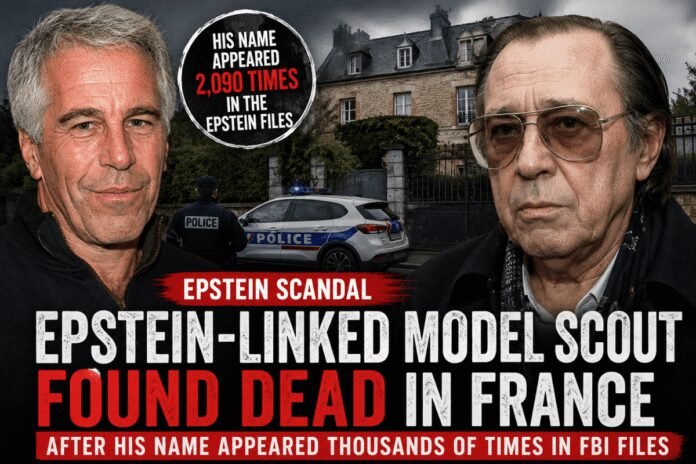
Epstein ‘Scout’ Found Dead in France After His Name Appeared in FBI Files

0
epstein-‘scout’-found-dead-in-france-after-his-name-appeared-in-fbi-files
Epstein ‘Scout’ Found Dead in France After His Name Appeared in FBI Files


Epstein-Linked Model Scout Found Dead in France After His Name Appeared Thousands of Times in FBI Files

A French model scout accused of helping Jeffrey Epstein find young women has been found dead at his home outside Paris, adding another grim twist to the ever-expanding Epstein scandal.

Daniel Siad, 69, was discovered dead Monday, July 21, at a house he occupied in Colombes, a suburb northwest of the French capital, according to French prosecutors. His death came while he was reportedly under investigation in France over allegations that he helped Epstein traffic and abuse women.

The Nanterre prosecutor’s office confirmed that authorities opened an investigation into the cause of death after Siad’s body was found. Prosecutors said an autopsy is expected to determine how he died. (Reuters)

Siad’s name had recently resurfaced in a major way after appearing repeatedly in documents tied to Epstein, the convicted sex offender and disgraced financier who died in a Manhattan jail cell in 2019 while awaiting trial on federal sex-trafficking charges.

According to reports, Siad’s name appeared nearly 2,000 times in the Epstein files released by U.S. authorities, placing him among the many figures whose alleged ties to the late predator have come under renewed scrutiny. (Reuters)

The allegations against Siad were deeply disturbing. He was accused of acting as an overseas recruiter for Epstein, allegedly helping connect him with women and models in multiple countries. Siad denied wrongdoing.

One alleged Epstein victim, identified by the BBC under the pseudonym Anya, previously claimed Siad introduced her to Epstein. Other women have also come forward with accusations against Siad, fueling a growing investigation in France before his death.

In one 2014 message cited from the Epstein files, Siad allegedly compared the work of recruiting women to fishing, writing in broken English that sometimes he caught something quickly and sometimes there was “no fish.” He then reportedly listed women from Sweden, Slovakia, France, Russia and China.

Epstein allegedly responded by telling Siad he would reimburse him for expenses.

The files also reportedly included messages from 2009 in which Siad discussed Slovakia and claimed he had dozens of women to see there. In another message, he allegedly wrote that he needed to meet parents for lunch or coffee and give some women money.

Those messages have become part of the wider picture investigators and Epstein survivors have long described: a global network of recruiters, fixers and enablers who allegedly helped the financier gain access to vulnerable young women.

Siad’s lawyer, Ménya Arab-Tigrine, previously denied the allegations against him and said Siad had no prior convictions. After his death, she suggested the public pressure and disgrace surrounding the accusations had weighed heavily on him, while still maintaining his innocence. (People.com)

One of the women who accused Siad was Ebba Karlsson, who said she first encountered him in Sweden in 1990 when she was 20 years old. She claimed he scouted her, took her to France and raped her.

Karlsson said she spent years trying to identify the man she accused because he allegedly used another name at the time. After seeing his photo in the Epstein files, she said she recognized him.

Karlsson later filed criminal allegations in Paris accusing Siad of rape and human trafficking. Siad denied those claims.

His sudden death now leaves major questions hanging over the French investigation, especially for women who had been hoping to see him questioned further in court.

The Epstein case has continued to haunt powerful circles years after his death. Although Epstein’s official cause of death was ruled a suicide, his jailhouse death sparked years of public suspicion, conspiracy theories and demands for a full accounting of the people who helped him.

Siad is now another name added to the long and ugly list of people linked to Epstein whose lives ended before the full truth could be aired in court.

For survivors, however, the focus remains on accountability.

The allegations against Siad were never fully tested before a judge. But his name’s repeated appearance in the Epstein files, along with accusations from women who said they were harmed, had made him a key figure in the renewed push to expose the network that allegedly helped Epstein prey on women across the world.

Now, with Siad dead and prosecutors investigating the circumstances, the scandal has taken yet another dark turn — and the questions surrounding Epstein’s circle are far from over.

Clayface trailer leans into the body horror

0
clayface-trailer-leans-into-the-body-horror
Clayface trailer leans into the body horror

The San Diego Comic-Con kicks off tomorrow, and DC Studios and Warner Brothers are setting the stage by dropping the first full trailer for Clayface, part of the DC Universe’s “Gods and Monsters” arc.

The film started out as a Mike Flanagan project (he’s the horror master who brought us The Haunting of Hill House, The Fall of the House of Usher, Midnight Mass, and Doctor Sleep, among other creepy delights). Flanagan said he was inspired by the 1992 “Feat of Clay” episode in Batman: The Animated Series, aspiring to create a film that combined body horror with a tragic thriller. DC Studios CEOs James Gunn and Peter Safran loved Flanagan’s pitch and brought the movie into their rebooted DCU.

Alas, Flanagan had to bow out of the project due to scheduling conflicts—he’s a busy man these days—and James Watkins stepped in as director. But Gunn has said the final script retained Flanagan’s original story, with Hossein Amini doing some rewrites. The film will feature the origin story of the Matt Hagen incarnation of Clayface, introduced to the DCU in the animated Creature Commandos series (Alan Tudyk voiced the character). Per the official premise:

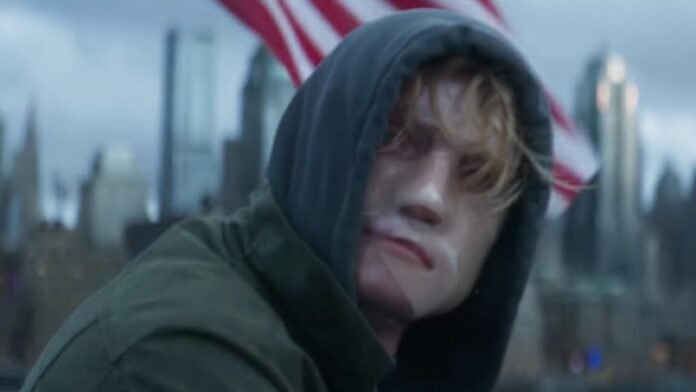
Matt Hagen’s meteoric rise from Gotham street kid to Hollywood leading man is tragically cut short when a local crime boss’s actions leave him horribly disfigured. Abandoned by his team and with nothing left, Matt seeks out a cutting edge treatment that miraculously returns him to his former self… but also unexpectedly affects his grip on reality, spiraling him down a destructive path of all-consuming revenge.

The original shape-shifting villain from the 1940s was a successful actor before turning to crime, so it’s a nice little callback to the character’s long, rich history. Tom Rhys Harries (Doctor Who, The Gentlemen) stars as Hagen/Clayface, alongside Naomi Ackie (Mickey 17) as Dr. Caitlin Bates, described as a “fringe” scientist and a love interest for Hagen. Max Minghella (The Handmaid’s Tale) plays a Gotham City police detective who just happens to be dating Bates. The cast also includes Eddie Marsan, David Dencik, Francesca Corney, Ruby Sear, and Wil Coban in as-yet-undisclosed roles.

A teaser dropped in April showing a bandaged Hagen in a hospital bed, ending with a shot of the character’s now-putty-like face beginning to shapeshift. This latest trailer opens with Bates asking Hagen to show her his badly disfigured face, covered in a mask. He wants his old life back—the Hollywood golden boy before thugs carved up his face—and he’s hoping Bates can give it to him. She has a radical new treatment involving the injection of a mysterious gooey substance.

Hagen volunteers to be a human guinea pig, even though she cautions, “This isn’t cosmetic surgery”; there could be side effects, and she won’t know how to treat them. “Even if it kills me, I’ll be better off than I am now,” Hagen insists. He is very wrong about that. At first, the treatment seems to have worked, but then his face starts sagging mid-flight, and we see Hagen holding a dopp kit knife in the aircraft’s restroom, presumably about to use it to open his now-blocked eyes. Ewww. His body-morphing condition just gets worse from there, fueling his rage—or perhaps it’s the other way around.

Clayface hits theaters on October 23, 2026.

EU seeks breakthrough on Russia sanctions as Venice Biennale challenges funding cut

0
eu-seeks-breakthrough-on-russia-sanctions-as-venice-biennale-challenges-funding-cut
EU seeks breakthrough on Russia sanctions as Venice Biennale challenges funding cut


European Union ambassadors are due to meet on Wednesday in an effort to break a deadlock over a 21st package of sanctions against Russia, while the Venice Biennale has launched a legal challenge against the EU’s decision to withdraw €2 million in funding over the return of Russia to its 2026 edition.

The latest sanctions package, aimed at increasing pressure on Moscow over its invasion of Ukraine, focuses heavily on Russia’s banking sector. It would add about 215 individuals and entities to the sanctions list, including 94 financial institutions. Nearly 90 of those are banks, bringing the total number of sanctioned Russian lenders to more than 100, or over half of the country’s internationally connected banks.

The measures are intended to tighten restrictions on Russia’s financial system after many companies continued conducting international business through smaller regional banks and cryptocurrency networks despite earlier sanctions that disconnected major Russian banks from the SWIFT international payments system.

EU diplomats said Greece remains the main obstacle to adopting the package. Athens is seeking changes to planned restrictions on Russian liquefied natural gas (LNG), arguing that a proposed transfer ban would simply shift business to competitors outside Europe without reducing Russian revenues. Greece is Europe’s largest LNG carrier operator and one of the world’s leading shipping players.

The package also proposes maintaining the oil price cap on Russian crude at $44.10 per barrel for another six months. EU envoys agreed last week to temporarily freeze the cap until July 23 while negotiations continue. A scheduled review could otherwise have raised the cap following the Iran war, potentially increasing Russia’s oil earnings.

Diplomats had expected negotiations over future sanctions to become easier following the departure of Hungary’s Viktor Orban, who had repeatedly delayed measures supporting Ukraine and targeting Russia. Instead, new divisions have emerged as the European Commission seeks to close remaining loopholes in sanctions and further reduce Moscow’s energy revenues.

Separately, the Venice Biennale said it would contest the European Commission’s decision to revoke a €2 million grant after organisers confirmed Russia would return to the prestigious cultural event in 2026 for the first time since the invasion of Ukraine in 2022.

The funding, administered through the European Education and Culture Executive Agency (EACEA), was withdrawn following legal advice and a recommendation from Brussels.

Commission spokesperson Thomas Regnier said cultural events financed with EU taxpayers’ money should uphold democratic values, dialogue, diversity and freedom of expression, which he said are not respected in present-day Russia.

The Biennale rejected the Commission’s reasoning, arguing that the grant supports projects run by its cinema department and is unrelated to Russia’s participation in the exhibition. Organisers said they would challenge the decision before the relevant authorities.

Biennale President Pietrangelo Buttafuoco defended allowing Russia’s return, describing the festival as “a space of coexistence for the whole planet” without censorship.

Organisers added that the loss of EU funding would not significantly affect the Biennale’s finances or its planned activities.

Although Russia returned to this year’s exhibition, public access to the Russian pavilion has been limited. Visitors were allowed inside only during four days of press previews, while for the remainder of the six-month event the building has remained closed, with audiences viewing video projections on its exterior as live music is broadcast from inside.

Most Utahns want to protect their national monuments. Trump had other plans.

0
most-utahns-want-to-protect-their-national-monuments-trump-had-other-plans.
Most Utahns want to protect their national monuments. Trump had other plans.

This coverage is made possible through a partnership between Grist and The Salt Lake Tribune, a nonprofit newsroom in Utah.

A majority of Utah’s residents opposed shrinking Bears Ears National Monument before President Donald Trump drastically slashed its size last week, according to multiple polls conducted over the past few years. Those findings contrast with statements from Utah’s political leaders who argued that the cuts reflected what Utahns want.

President Donald Trump signed two executive orders shrinking Grand Staircase-Escalante and Bears Ears national monuments by roughly 90 percent each. He announced the change flanked by members of Utah’s congressional delegation and Governor Spencer Cox, all of them Republicans. Trump’s proclamation said the move “will better align the use of these public lands with the public interest,” citing the region’s deposits of critical minerals such as copper, nickel, and uranium, among others. 

On Monday, hundreds gathered outside the Governor’s Mansion in Salt Lake City to protest the cuts, part of efforts organized by the Southern Utah Wilderness Alliance across the state to pressure lawmakers. 

The two monuments, which totaled about 3.3 million acres in southern Utah before Trump’s executive orders, were created by Democratic presidents despite protests from Utah’s elected Republican leaders.

During the signing ceremony in the Oval Office, Utah Representative Celeste Maloy, a Republican, said that supporters of shrinking the monuments  included “the locals who are worried about losing multiple uses on these federal lands,” and said that Trump was “listening to the people of Utah” in reducing the size of both monuments.

“It was very unfair to the people of Utah,” Trump said, “and now fairness has been brought back.”

But separate polls conducted before Trump shrank the monuments show that most Utahns and residents of other Mountain West states favored keeping their existing designations.

“It is very contradictive of our findings,” said Michaelann Nelson, a professor of environmental rhetoric at the Utah State University campus in Price. “They’re kind of picking and choosing which Utahns they’re paying attention to and listening to.”

In surveys conducted in 2024 and 2025, researchers with Utah State University found that 61 percent of Utahns either supported or strongly supported preserving Bears Ears as a national monument, with just 19 percent opposed or strongly opposed. Some 53 percent of respondents opposed or strongly opposed reducing Bears Ears, while 26 percent supported the idea. The remaining 21 percent neither supported nor opposed shrinking the monument.

Politicians and tribal members are among the people attending a rally as snowflakes fallhas now been reduced to about 121,000 acres.
Grand Staircase-Escalante wasn’t included in the Utah State University study. President Bill Clinton designated that monument in 1996, and it eventually reached nearly 1.9 million acres after some adjustments by Congress. After Trump’s order to cut the monument last week, it now includes just over 181,500 acres.

Nelson, the lead author of the poll, said she focused her surveys on Bears Ears because it was newer and a bigger focus of Utah politicians’ ire at the time. But she expects Utahns’ sentiments toward Grand Staircase-Escalante are similar.

“In some ways, perhaps [Utahns would be] even more in favor of Grand Staircase,” Nelson said, “just because we’ve existed with it for more than 20 years.”

Jessica Schad, a professor of sociology and the director of the Utah State’s Community and Natural Resources Institute, oversaw the survey efforts. She suspects Utahns’ attitudes toward monuments haven’t shifted much in the months since researchers polled them.

“It seems like this issue has become really politicized,” Schad said, “and our politicians aren’t taking into account what residents are preferring.”

The poll included 468 respondents in Utah, and the university tapped sociologists based in rural parts of the state so the results didn’t overrepresent residents in the more urban Wasatch Front, home to Salt Lake City. “We use high-quality, really rigorous survey methods,” Schad said.

Other surveys conducted across eight Mountain West states showed similar sentiments about national monuments to the Utah State University poll. A total of 91 percent of voters in these states wanted existing national monuments kept in place as of January, compared to 88 percent last year and 80 percent in 2017, according to the annual Conservation in the West Poll conducted by Colorado College.

This year’s study included interviews with voters in Arizona, Colorado, Idaho, Montana, Nevada, New Mexico, Utah, and Wyoming. About 24 percent of respondents lived in rural areas or small towns, 24 percent lived in cities, and the rest lived in suburbs. Politically, 36 percent identified as Republicans, including 35 percent who said they supported MAGA; another 36 percent were independent, and 28 percent were Democrats.

The survey found support for existing national monuments nationwide was strong across party affiliations, backed by 87 percent of Republicans, 92 percent of independents, and 96 percent of Democrats. The share of MAGA supporters who wanted to keep existing national monument designations in place grew from 81 percent in 2025 to 87 percent this year.

“We’ve asked about this many times over the years,” said Lori Weigel, a principal with New Bridge Strategies, a Republican public opinion research group that assists Colorado College with its annual poll. “What we have seen very consistently in the data is that people want additional protections for these public lands.”

The poll also found that voters from both parties wanted to prioritize “conservation, recreation, and renewables over fossil fuel development,” according to a statement accompanying the results. A separate December 2024 survey by New Bridge Strategies found 71 percent of Utah voters supported keeping Bears Ears protected as a national monument, and 74 percent felt the same about Grand Staircase-Escalante. Another 75 percent of Utahns surveyed backed a president’s ability to create more national monuments.

Utah’s politicians, including Cox and Senator Mike Lee, have asserted Democratic presidents went too far in designating the two monuments. The 1906 Antiquities Act allows presidents to protect sites of historic and scientific interest as national monuments, but directs presidents to preserve “the smallest area compatible with the proper care” of those lands.

“These multimillion-acre monuments that are bigger than the state of Delaware certainly do not fit that designation,” Cox said at Monday’s event with Trump.

The designations have brought more visitors to the Bears Ears and Escalante areas, a statement issued by the Utah Senate notes. That puts a strain on land management agencies and law enforcement, causing “degradation” at the sites.

When Trump downsized the two monuments during his first term in 2017, records showed mining companies had lobbied administration officials to reduce the boundaries of Bears Ears. The president’s latest orders both cite a need to mine domestic supplies of critical minerals on public lands as part of the justification for reducing Bears Ears and Grand Staircase-Escalante.

During the signing ceremony last week, Trump complained that the previous monument boundaries closed off access to recreation, too. “You can’t do anything. You can’t go hunting. You can’t go fishing. You can’t do anything. You can virtually not even walk on it,” he said.

But the fact is that hunting, fishing, driving off-road vehicles on designated trails, and other recreation are allowed in both Bears Ears and Grand Staircase-Escalante — activities that are sometimes prohibited at other national monuments. Bears Ears also had an intertribal commission that federal agencies consulted for management of the monument and protection of its resources. Trump’s order disbanded that body.

Nearly 90 percent of Utahns supported Native American tribes having a strong role in managing ancestral lands, according to the 2024 New Bridge Strategies survey, and 81 percent said that the incoming Trump administration should keep agreements with tribes in place for managing Bears Ears.


US urges citizens in Israel to remain vigilant amid surge in organized crime violence

0
us-urges-citizens-in-israel-to-remain-vigilant-amid-surge-in-organized-crime-violence
US urges citizens in Israel to remain vigilant amid surge in organized crime violence

The US Embassy in Jerusalem issued a security alert on Wednesday, warning American citizens of a significant increase in violence linked to rivalries between organized crime groups in central Israel, Anadolu reports.

“US Embassy Jerusalem is closely monitoring reports of a spike in violence … primarily in the Tel Aviv, Jaffa, and Herzliya neighborhoods,” the embassy said.

It said that recent attacks have involved hand or stun grenades thrown at vehicles, private homes, and businesses, often by assailants on motorcycles.

READ: US, Israel discuss potential Trump-Netanyahu Oval Office meeting: Report

The embassy advised Americans to remain vigilant in commercial districts, particularly during evening and overnight hours.

It urged citizens to avoid areas with heavy police activity, report suspicious items to local authorities and review their personal security plans.

The embassy also encouraged travelers to enroll in the Smart Traveler Enrollment Program to receive real-time updates.

Citizens should keep essential supplies, including food, water and medication, in a secure location, it said.

READ: New Hamas chief outlines 6 priorities topped by ending Israeli offensive in Gaza

Iran’s Hormuz choice: trust pays, coercion doesn’t

0
iran’s-hormuz-choice:-trust-pays,-coercion-doesn’t
Iran’s Hormuz choice: trust pays, coercion doesn’t

History suggests geography can be a nation’s greatest economic asset or its greatest geopolitical liability.

Whenever maritime arteries have been disrupted — whether by war, conflict or political confrontation — the economic costs have extended far beyond the countries directly involved.

The eight-year closure of the Suez Canal after the 1967 Arab-Israeli war forced ships to sail around the Cape of Good Hope, sharply increasing voyage times, freight costs and insurance premiums.

More recently, Iran’s repeated threats to close the Strait of Hormuz, coupled with the Houthi campaign against commercial shipping in the Red Sea, have again demonstrated how even partial disruptions ripple across global supply chains, affecting exporters, importers and consumers alike.

There are two very different models of maritime commerce: monetizing geography, which can be sustainable, and weaponizing geography, which usually provokes backlash.

Egypt and Panama do not charge for the right to pass through the Suez Canal and the Panama Canal, respectively — they charge because ships are using man-made infrastructure that they built, operate and maintain.

Egypt has earned billions of dollars in Suez Canal transit fees for decades without fundamentally disrupting global trade. Even during periods of political tension, it has generally kept the canal open because its economic value depends on being seen as a reliable passage.

Panama has similarly prospered by efficiently managing one of the world’s most important maritime choke points. Its greatest strategic value has come not from restricting access but from ensuring reliable transit, while generating steady toll revenues and supporting a broad ecosystem of logistics, shipping and financial services.

The example of the Strait of Malacca is particularly instructive. Despite periodic concerns over piracy and regional tensions, Singapore, Malaysia and Indonesia have consistently treated the waterway strictly as a commercial thoroughfare.

Malaysia and Indonesia do not levy canal-style transit tolls because it is an international strait; their benefits come indirectly, through ports, bunkering, logistics, ship repair, customs, trade and industrial activity, rather than passage fees.

Singapore, in particular, has built a major maritime economy around this model. Rather than exploiting its geographic advantage, it invested in maritime security, port infrastructure and logistics.

The result has been remarkable: Singapore has evolved into one of the world’s leading ports and financial centers, while Malaysia and Indonesia have benefited from expanding trade, investment and industrial growth linked to the uninterrupted flow of commerce through the strait.

Now contrast these with examples of geography used coercively. Iran’s constant threats to shut down the Strait of Hormuz have created temporary oil price spikes and also encouraged importers to diversify supply routes, sometimes even justifying a sustained foreign naval presence.

This is reminiscent of Russia’s actions affecting energy transit to Europe, which only accelerated Europe’s efforts to reduce its dependence on Russian oil and gas. Moscow’s leverage declined over time as customers diversified.

As one of the world’s largest petroleum producers, Iran has a far greater economic interest in ensuring that its own exports move freely through Hormuz than in periodically threatening to disrupt the passage of others.

The Strait of Hormuz, like the Strait of Malacca, is a natural international strait. Under the UN Convention on the Law of the Sea (UNCLOS), ships enjoy the right of transit passage, and coastal states cannot simply impose tolls for using the strait because they happen to control its shores.

They can charge only for specific services, such as port facilities, bunkering (fuel), repairs and navigation assistance.

This is one of the strongest critiques of Iran’s current strategy. Iran possesses perhaps the world’s most valuable geographic asset after the Suez and Panama canals. If it consistently guaranteed safe passage through the Strait of Hormuz, it could become a regional shipping and logistics hub, a preferred destination for energy infrastructure, a magnet for foreign investment and an indispensable commercial partner for Asia, Europe and the Gulf.

Instead, repeated threats to shipping have encouraged countries to seek alternatives — pipelines bypassing Hormuz, diversified energy suppliers, larger strategic petroleum reserves and greater naval deployments. The very leverage Iran seeks to preserve risks diminishing over time.

The difference is essentially one of strategy: Egypt and Panama monetize confidence. The world pays because it trusts the route will remain open. Iran, by contrast, monetizes uncertainty, seeking geopolitical leverage from the possibility of disruption — but at the cost of investment, trade and diplomatic goodwill. In the long run, the first model has consistently produced greater and more sustainable economic returns than the second.

The issue is ultimately about the balance between short-term leverage and long-term costs. Iran seeks to leverage its position astride the Strait of Hormuz because doing so provides enormous bargaining power in the moment.

It has no legal right under UNCLOS to levy transit charges simply for allowing merchant ships to pass, and even attempting to commercialize access in that manner would be economically self-defeating.

Ultimately, there are two competing models for leveraging geography. The coercive model treats a choke point as political leverage by threatening navigation. The facilitation model keeps trade routes open, predictable and commercially attractive, generating long-term economic returns.

Iran’s preference for the former reflects its security calculus: Tehran views the threat to Hormuz as one of its few effective deterrents against militarily superior adversaries. Whether preserving that leverage continues to outweigh the economic costs remains an open question.

Raghu Gururaj is a retired Indian ambassador and former foreign service officer.

0FansLike
0FollowersFollow
0FollowersFollow
0SubscribersSubscribe
- Advertisement -
Google search engine

Recent Posts