Israeli media claim Kushner warned Hamas during meeting with its leader
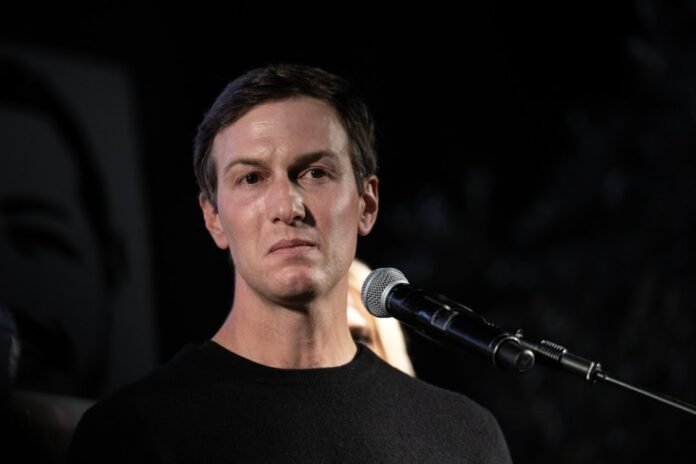
Israeli media claimed that US envoy Jared Kushner issued a direct warning to Hamas during a meeting with the group’s leader, Khalil al-Hayya, in Cairo.
Israel’s Channel 12 reported that the warning was that any attempt to violate the understandings or conceal weapons would lead to the suspension of the political process and give Tel Aviv full freedom to take military action.
It claimed that the meeting followed intelligence information received by the United States and mediators suggesting that some members of Hamas were planning not to honour their commitments to disarm and halt the rebuilding of its military capabilities.
According to the Israeli channel, Kushner told Hamas that “The test of trust will be in the implementation, and if you try to cheat, the process will stop and no one will stand in Israel’s way.” He stressed the need for the group to comply with all the terms of the agreement, particularly full disarmament and a halt to military mobilisation.
Kushner met Hamas leaders in the Egyptian city of El Alamein earlier this month to discuss US President Donald Trump’s plan to end the war in the Gaza Strip, following Israel’s rejection of the proposed roadmap.
Hamas has announced its acceptance of the roadmap for the second phase of Trump’s plan for the Gaza Strip, saying it was ready to proceed with its implementation to achieve a permanent ceasefire and the withdrawal of Israeli forces from the territory.
In a statement, Hamas said its leadership delegation, headed by al-Hayya, had met, under Egyptian auspices, with representatives of the mediators and guarantors of the Gaza ceasefire agreement. The meeting discussed several issues related to implementing the agreement and the roadmap.
Nvidia senior manager linked to Supermicro scheme smuggling AI servers to China
Taiwan has indicted nine people—reportedly including an Nvidia senior manager and two Supermicro employees based in the country—who allegedly helped forge documents to cover up illegal exports of high-end AI servers to China in violation of US export controls.
On Monday, Reuters reported that prosecutors in Keelung did not release any names but confirmed that the suspects were “charged with breach of trust and document forgery.” One suspect linked to a related case remains at large, accused of the “siphoning of funds from a distributor company involved” in helping China get access to restricted Nvidia chips.
Since 2022, the US has required a license to export semiconductors to China, with the intent of protecting national security by staying ahead of China in the AI race. But after the US arrested Supermicro co-founder Wally Liaw in March for allegedly funneling $2.5 billion in restricted AI servers to China since 2024, Taiwan launched a separate probe to learn more about the scheme.
Taiwan’s investigation found that co-conspirators attempted to falsify documents to make it appear that 130 B300 servers were installed and in use at a Taiwan facility. But 74 of those servers “were ultimately exported and delivered to Chinese customers,” Reuters reported, while the rest, 56, were intended to go to China but were blocked once Taiwanese customs officials “detected irregularities.”
Ars could not reach Supermicro or Nvidia for comment.
Huang urged Supermicro to “fix” problem
In a statement to PC Mag, Supermicro has previously confirmed that it’s cooperating with Taiwanese investigators.
“Supermicro is committed to protecting our advanced technologies and intellectual property. We are working closely with Taiwanese authorities on recent events, which underscore the importance of continued collaboration across industry and government to strengthen safeguards, enhance supply chain visibility, and facilitate the enforcement of export control laws,” Supermicro said.
The firm is not a target of the probe, Supermicro emphasized, which so far has targeted at least 12 locations to uncover suspected smugglers. Although US employees are believed to be integral to the scheme, Lauren Barden-Hair, an expert in China’s power over multinational firms across Southeast Asia, posted an op-ed in The Hill, noting that the US found that “a nameless Southeast Asian firm” was “at the heart of the operation.” That firm allegedly coordinated with co-conspirators at Supermicro and Nvidia, succeeding for years at ensuring that China wasn’t completely blocked from accessing Nvidia’s most advanced AI chips.
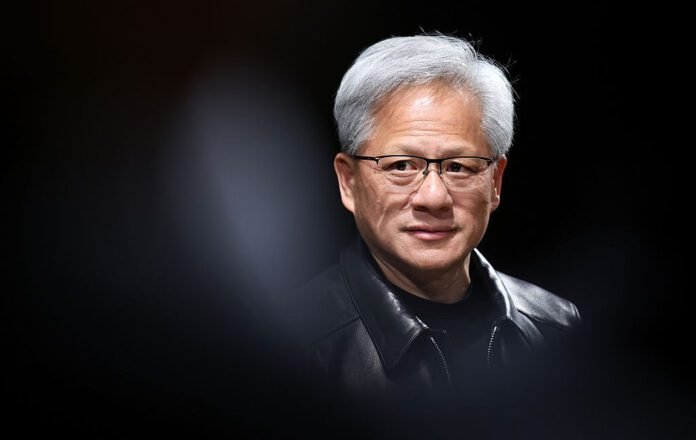
Both US firms will likely need to assess the steps they take to comply with US export controls. In May, before any Nvidia employees were linked directly to the scheme, Nvidia CEO Jensen Huang was highly critical of Supermicro for its failing compliance program, urging that a fix was needed, Tom’s Hardware reported.
“We insist our partners are compliant. We hope that they will enhance and improve their regulation compliance and prevent that from happening in the future,” Huang said at the time.
Supermicro has confirmed that it has already made changes. It also fired several employees that an internal investigation connected to the Chinese AI server scheme, Tom’s Hardware reported. Conducted by a third party, that probe cleared Supermicro’s current senior officials of any involvement. However, the company may have been neglectful in not noticing that “billions of dollars’ worth of hardware was being sent to questionable clients,” Tom’s Hardware noted. Spooked investors have even sued Supermicro for securities fraud, fearing that the company’s sales may be dominated by such illicit sales.
Taiwanese prosecutors said that all employees indicted were “fully aware” that Nvidia and Supermicro have “rigorous internal control procedures” regarding exports to China, Reuters reported. The US and Taiwan have recently tightened those controls, prosecutors said, yet employees’ scheme only got more brazen, Barden-Hair’s op-ed suggested. Supermicro’s team allegedly was so confident that it could evade US and Taiwanese export controls that it made “increasingly daring deals” to get China the computing power it wanted.
Taiwan officials announced that they recently uncovered more of the same misconduct. They alleged that Nvidia’s manager and Supermicro employees “colluded with one another at various levels for enormous profit, illegally exporting high-end servers, increasing corporate compliance costs, and severely damaging our nation’s international image,” Taiwan authorities said Monday.
US may cut off China’s remote access to AI
The US is determined to cut off China’s access to Nvidia’s AI chips and servers, and it seems to be taking a two-prong approach to tighten controls even further.
First, lawmakers are weighing a bill called the Remote Access Security Act (RASA), which would allow US export controls to extend to include remote cloud-based access to critical hardware and software, CNBC reported.
Passing that law would allow rule-making that could cut China off from exploiting a known loophole that currently impedes the US from interfering with its remote access to Nvidia chips via data centers in Southeast Asia. According to industry experts, remote access to computing power is a key factor driving Chinese models’ capability gains for companies including Alibaba, ByteDance, and Tencent, CNBC reported. And China will apparently soon have more data centers nearby to potentially expand remote access to compute, as hyperscalers plan to multiply the number of facilities in the region, leaping from two data centers today to 31 planned projects underway.
That bill will likely face industry pushback, CNBC suggested, since cloud providers would bear the cost of that new compliance regime, including implementing better know-your-customer protocols.
For the US, ending remote access may seem like an increasingly urgent priority, but the Supermicro scandal shows that evading controls can often be as easy as forging a document in an overburdened system where neither top executives nor customs officials managed to flag billions of dollars in fraudulent diversions.
However, the global crackdown on employees who are striking shady deals to export AI servers to China does come as Nvidia recently announced it’s increasing the prices of AI servers by 15 percent. So, at the very least, any employees motivated by the potential of gaining even higher profits from illicit sales will seemingly be on notice.
In her op-ed, Barden-Hair suggested that the US was blindsided by Chinese AI server smuggling because it failed to learn from its own history. In 1998, the Senate Committee on Governmental Affairs investigated “Chinagate,” a campaign finance scandal where China used Southeast Asian companies as a cover to try to influence election outcomes.
In that scheme, China learned that cultivating ties with business moguls—particularly those who had deep financial investments in China but were based just outside its sovereign territory—provided the “ideal cover,” Barden-Hair said. And similarly, the unnamed Southeast Asian firm at the heart of the Supermicro scandal appears to follow the same playbook, she said.
“It is easy to point out errors in judgment after a disaster, and US export control authorities deserve support and praise for their efforts to protect national security,” Barden-Hair said. “But it is important that we take the right lessons from the Supermicro scandal amid our shaming of the guilty, and remember the hard-earned lessons of the past. With the anonymous company the Justice Department refers to, China is showing us, again, that its pawns are scattered beyond its borders, and that its financial tentacles have a real and devastating influence.”
It’s hardly news that Americans are not happy with the state of their nation. Confidence in the country’s direction crashed hard during the Bush years and never recovered. But what’s notable about more recent years is Americans’ increasing dissatisfaction with their personal lives: [1]
For intellectuals and commentators such as myself, for many policy wonks and academics, and even for many politicians, the question is how to make the American people happier. And the answers we come up with are usually economic ones — ideas for policies that will improve the material well-being of either the whole populace, or some segment of it.
This is common on both sides of the aisle. On the left, centrists have embraced the Abundance movement, whose main idea is to give Americans more stuff — more housing, electricity, health care and so on. For progressives and leftists, meanwhile, Medicare for All is probably the centerpiece idea.
On the right, Trump’s trade agenda has usually been justified with claims that it will return good manufacturing jobs to the American working class. Even immigration restriction is usually couched in economic terms — the MAGA people claim that mass deportations will open up jobs for Americans, lower the price of housing and so on.
The roots of the country’s malaise, too, are often described in economic terms. Many people claim that the First China Shock — and the loss of good blue-collar jobs to offshoring more generally — left a disappointed, angry working class in its wake.
Progressives decry corporate landlords that they claim raise the cost of housing, and blame grocery stores’ greed for the rising cost of food. Practically everyone agrees that inflation was the biggest reason Trump won the 2024 election.
I’ve spent a lot of time arguing against a lot of these ideas (and in favor of a few of them). But I almost always accept the basic frame that A) many of America’s problems are due to economic malaise, and B) we ought to focus on finding ways to make Americans richer.
Partly, this is because I was trained as an economist; I recognize that things like culture wars are also important to Americans, but I don’t have much special expertise in that area. But partly, I think I just subscribe to the general tendency of American intellectuals to focus on the material.
I was thinking of this as I read Jay Caspian Kang’s essay, “Subaru Socialists and the Great Disappointed.” Kang argues that the young, educated, angry voters who currently form the Democrats’ base can be separated into two basic groups: Millennials who are mad about the raw economic deal they received during and after the Great Recession, and Zoomers who are mad about Covid and Palestine. Here he describes the first of these groups:
This new voting bloc has two similar but distinct components. There are what I call the Subaru Socialists: college-educated millennials in their thirties and early forties who earn a somewhat steady income but not what they expected. These voters arrived at their politics via the Great Recession, Occupy Wall Street, and the continual escalation of housing prices in urban areas—all of which heightened the contrast between what they were promised when they took on student debt and their current circumstances.
For a long time, I basically bought the narrative that at least some of the unrest of the 2010s was due to angry Millennials who had gotten screwed by the Great Recession.
It makes intuitive sense that a generation who were on the losing end of such a vivid demonstration of economic risk would turn toward policies that decrease economic risk — like government health insurance and rent control. It also makes sense that they’d want student debt forgiveness.
But as time has gone on and I’ve seen Millennials do better and better economically, I’ve begun to doubt this narrative. Corinth and Larrimore (2026) write:
We find that Millennials had a real median household income that was 20% higher than that of the previous generation, a slowdown from the growth rate of the Silent Generation (36%) and Baby Boomers (26%), but similar to that of Generation X (16%). The slowdown for younger generations largely resulted from stalled growth in work hours among women…Additionally, lifetime income gains for younger generations far outweigh their higher educational costs.
It’s not just government redistribution giving Millennials a boost. By the time they hit their mid 30s, their market income was well ahead of Gen X or the Boomers (and yes, this is adjusted for the cost of living). They had caught up in wealth, too:
Now, is it possible that even though Millennials eventually did OK, the disruptions of their 20s created a scarring experience that they’ve never forgotten? Yes, it is absolutely possible.
But it’s also notable that the kind of economic policies lefty Millennials demand — especially universal health insurance — don’t really address the main kinds of risks they experienced in their youth (unemployment and wage declines).
On the right, it’s notable that the economic policies Trump has unleashed have not helped the people they were supposedly designed to help. Manufacturing employment has fallen since Trump took office and started putting tariffs on anyone and everyone:
So much for those blue-collar jobs coming back. Meanwhile, mass deportations and a near-cessation of net immigration to the US have spectacularly failed to raise employment rates for native-born Americans:
The core economic pitch for Trump’s mass deportations was “fewer immigrants means more jobs for Americans”
Unsurprisingly, that’s just not happening
Prime-age employment rates for native-born Americans fell to the lowest levels in more than four years in data released today pic.twitter.com/GYV30WMScg
The core economic pitch for Trump’s mass deportations was “fewer immigrants means more jobs for Americans” Unsurprisingly, that’s just not happening Prime-age employment rates for native-born Americans fell to the lowest levels in more than four years in data released today
It’s possible, of course, that Trump’s supporters think his policies will take a long time to work, or perhaps they simply aren’t very aware of what’s going on in the economy. I kind of doubt this, though.
Americans as a whole have noticed, which is why Trump’s approval rating is in the gutter and inflation — the most important economic issue at the moment — is the issue on which voters are most angry at Trump:
So it’s possible that Trump’s voters were just tricked into thinking he was better on economics than he was. On the margin, that’s probably true. But the fact that Trump’s base has stuck with him strongly implies that economics was not their primary concern.
In fact, there was a whole huge debate among political scientists and economists about whether Trump’s victory in 2016 was due to “economic anxiety” or to sociocultural issues. In the end, the “economic anxiety” hypothesis generally lost out. Here’s Margalit (2019):
Empirical findings indicate that the share of populist support explained by economic insecurity is modest. Second, recent evidence indicates that voters’ concern with immigration—a key issue for many populist parties—is only marginally shaped by its real or perceived repercussions on their economic standing.
On the left, I think there’s pretty good evidence that economic issues are not foremost in the minds of the progressives who dominate the Democratic Party. The political analyst David Shor has found that the issues Democratic donors and activists care about are just different from the bread-and-butter economic concerns that motivate swing voters:
In reality, Shor says, young party staffers are far to the left of the median Democratic voters on relatively uncontroversial, bread-and-butter Democratic priorities like combatting income inequality or addressing climate change. In their 2015 paper, for instance, Enos and Hirsch found that 23 percent of Obama staffers cited income inequality as the single most important issue facing the country, whereas polls from that election cycle found that fewer than one percent of all voters listed “the gap between rich and poor” as the most important issue. Enos and Hirsch also found that campaign workers were more likely to cite health care and inequality as an important issue to voters — even though most voters did not list those as high-priority issues and said they were more concerned about things like war and inflation.
And although much has been made of the fact that low-income highly-educated voters tend to break strongly for the Democrats, it turns out that high-income highly-educated folks also vote blue:
In fact, in his essay, Kang describes Gen Z voters as caring less about the economy than about Palestine:
Then there are the Great Disappointed, a younger set. They don’t have strong memories of the 2008 financial crash, as their millennial elders do, but they came of age during the pandemic and saw that seemingly invincible institutions could, in fact, sputter and fail when placed under duress. Like the Subaru Socialists, these twenty-two-to-thirty-year-olds aren’t exactly happy with the return on their educational investment. But their political views have seemingly coalesced less around the economy than around the war in Gaza, which serves as a character test for any politician who asks for their vote…A majority of young Democrats believe that their tax dollars are funding a genocide; candidates like Melat Kiros, who defeated the longtime Colorado Congresswoman Diana DeGette in a primary, are running to the left of progressive incumbents not so much on economic issues as in their condemnation of Israel and of America’s continued military aid to the country.
The name Kang assigns to these voters — the “Great Disappointed” — seems at first to imply some kind of economic disappointment. But it turns out he just means they’re angry about foreign policy stuff that they see in the news.
In fact, a lot of committed DSA types are actually post-economic. The Gen Z political strategists who recruited Graham Platner to run for Senate, Morris Katz and Daniel Moraff, were found to be scions of very wealthy families. Similar stories keep popping up:
Absolutely extraordinary. The co-chair of the NYC DSA is a self-described “union electrician”, has an arts degree from Yale, a 1.5 million brownstone gifted by his parents, a trust fund, and has worked for a total of about 6 months in his entire life.
If people like this are “disappointed”, their disappointments have little to do with their material standard of living.
In other words, over the past decade I’ve increasingly come to doubt that economic policies and programs can address the true concerns of the people driving American politics. Yes, economics still matters, of course — for humanitarian reasons, if nothing else.
And yes, there are still a lot of voters who care about inflation, jobs and other economic issues. But these are not necessarily the people setting the agenda in American politics or causing unrest in American society.
Even where “normie” voters are concerned, though, it’s proving maddeningly hard to craft economic policies that give them what they want. Even though inflation fell from 9% in the summer of 2022 to just 3% in the summer of 2023, voters still seemed to punish Democrats at the polls in 2024.
And although inflation during Trump’s current term has never approached anything resembling 2022, voters still say they’re incredibly mad at Trump over inflation.
With a robust job market, low-ish inflation, and decent economic growth, analysts have struggled to figure out why consumer sentiment — at least, as measured by UMich — is at all-time lows. At a loss, commentators have been reduced to talking about “vibes” — basically a label for our ignorance.
Every time a policy wonk thinks about some measure that would increase GDP by 0.4%, or create 200,000 jobs, or lower inflation by 40 basis points, they need to think about the unpleasant reality that Americans may simply not care very much.
That doesn’t mean it’s bad to help people economically, but it means that economics may ultimately not be the lever we need to pull if we’re going to make the people of this country happy and satisfied again.
We should therefore think about whether our primary social problems are actually about material scarcity. The vast majority of Americans now possess not only the basic necessities of life, but a degree of economic security unimaginable to their forebears a century ago.
It seems plausible to think that a great many Americans have climbed to the higher rungs of Maslow’s Hierarchy of Needs — that instead of where to get their next meal or how to save for retirement, they’re thinking about how to feel like they belong in their society, or how to get more status and respect.
A large contingent of Americans may now simply care less about adding to their bank accounts than about questions like “Who are the real Americans?”, or “Does one race deserve special treatment in the eyes of the law?”, or “Why do some of the people I went to college with have 10,000 times as much wealth as I do?”. As long as those questions remain unanswered, boosting Americans’ economic fortunes could have little effect on their happiness.
Neither the discipline of economics nor our typical policy discourse is set up to deal with issues like belonging, social status or respect. There’s no market for these things; people with wealth might be more respected, but you can’t buy respect on Amazon. And some of these psychological needs are positional goods — for the status of one person or group to be higher, someone else’s status often has to be diminished.
Not only is modern economics poorly set up to deal with those kinds of things, it often bothers us to even talk about them. A world dominated by positional goods — where one person having more requires that someone else have less — is a dark, zero-sum world. We would much prefer to work toward a world where everyone wins.
And yet like it or not, this may now be the world in which we find ourselves. Just as the great challenge of the 20th century was to provide broad-based material plenty, the great challenge of the 21st century may be to make everyone feel high-status at the same time — or at least to create a world where status differences don’t lead to mass resentment.
USA’s ‘economic D-Day’ against Iran begins with a ‘warning shot’
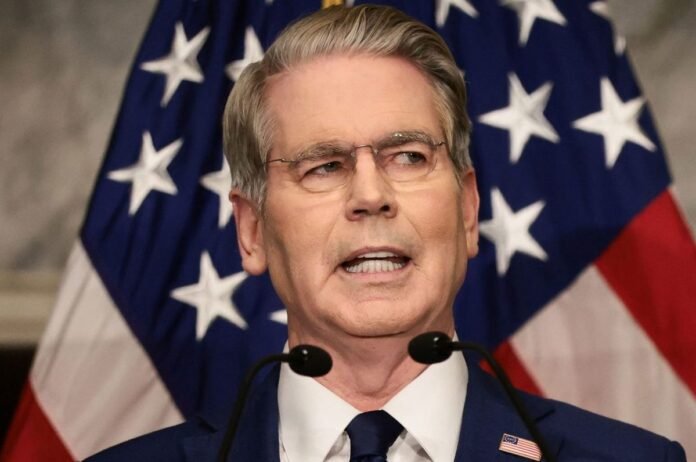
American Treasury Secretary Scott Bessent on Monday unveiled a sweeping new effort to economically isolate Iran, warning foreign governments and companies that they could lose access to the U.S. financial system if they continue doing business with Tehran.
The campaign, which Bessent dubbed “Operation Economic Outcast,” stopped short of immediately imposing penalties against financial institutions located in China and other countries that facilitate trade with Iran for oil and other commodities.
Senator @MarshaBlackburn on Operation Economic Outcast: “Iran is suffering from unprecedented inflation. We hear that the military and the police are not able to meet their payroll… I think it is important to note that @SecScottBessent alluded to the fact that there’s going to… pic.twitter.com/WkyyInCcgd
Instead, Bessent delivered what he called a “warning shot” to countries around the world that they should get in line behind the Trump administration’s efforts to isolate Iran or face significant financial repercussions.
Bessent and the Trump administration for days had signaled its plans to drastically step up economic pressure on Tehran, which the Treasury secretary had likened to an “economic D-Day” operation.
Pressed during a press conference Monday on why Treasury was not immediately imposing those penalties, Bessent said the U.S. wanted to give countries a “cure period” to comply. He said the clock “just started ticking.”
“We are giving everyone the opportunity to remedy bad behavior,” Bessent said. “Why would I want to blow up the global financial system?”
Bessent said Treasury expects to sanction a major foreign financial institution by the end of the week as part of the new effort.
Read full statement by the U.S. Department of the Treasury HERE
The Treasury Department expanded its ability to penalize foreign companies that operate in or support five sectors of Iran’s economy: digital assets, technology, gold, aviation and shipping. Treasury also imposed fresh direct sanctions on dozens of people and entities tied to Iran and ended waivers that had permitted the flow of remittance payments to the country and allowed Iranians to access the U.S. cultural and academic universities.
Bessent said President Donald Trump was calling foreign leaders with “specific requests” to cut economic ties with Tehran. Officials from Treasury, the State Department and the Pentagon are also pressing their counterparts for “immediate action” to cut off economic ties to Tehran, Bessent said.
Bessent said every country had been given a deadline to shut down specific Iran-related activities identified by the U.S., though he declined to disclose the nature of those requests or the timelines.
“It’s no longer acceptable to operate in the gray spaces of this conflict,” Bessent said.
The move marks the Trump administration’s latest attempt to force an end to an increasingly unpopular war that has stretched into its sixth month. The war has disrupted global energy markets, raised the price Americans pay for gas and become a growing political liability for Republicans ahead of the midterm elections months away.
It also puts Bessent at the center of the administration’s war efforts after months of military strikes, a blockade of Iranian ports and diplomatic talks have failed to secure a lasting agreement to end the conflict.
The latest strategy could significantly raise tensions with China, which is a large buyer of Iranian oil. Treasury has already sanctioned smaller Chinese refineries, shipping companies and financial networks accused of helping Tehran sell oil.
But targeting larger Chinese banks or companies that facilitate Iran-linked transactions could provoke retaliation from Beijing as Trump prepares for expected talks with Chinese President Xi Jinping.
Asked about whether the U.S. would move forward on sanctioning Chinese banks on Monday, Bessent said that “no one is above the reach of U.S. sanctions.”
Those who have been involved in past negotiations with Iran are skeptical the announcement will move the needle with Tehran — and especially Beijing.
“The announcement itself was a nothing burger,” said Ali Vaez, the International Crisis Group’s Iran project director, who helped work to bridge differences between Iran and world powers during negotiations over the 2015 nuclear agreement. “The only thing that would make a difference at this stage is the U.S. delivering on its threats, not threatening. ”
Trump allies welcomed the Monday announcement, but they were skeptical it would work.
“Doubt it,” said one person close to the White House, who was asked whether the move would help end the war with Iran and granted anonymity to speak candidly on administration policy. But “I support all non-war avenues to pressure Iran.”
A second person close to the White House, who was also granted anonymity to discuss a sensitive issue, added, “I think it has the potential to be impactful if they actually execute. However, without addressing the China angle it leaves an economic escape route for Iran.”
Bessent’s refusal to say the word “China” during a press conference despite repeated questioning about whether the threatened sanctions would hit Beijing, underscores the administration’s aim to avoid derailing Trump’s summit with Xi next month.
Beijing provides Tehran an economic lifeline by purchasing around 90 percent of Iran’s oil exports via the “shadow fleet” of vessels that sell those cargoes to small-scale “teapot refineries” in China.
The Chinese government is likely equally skeptical that the Trump administration will impose disruptive sanctions on its Iran trade ahead of a summit at which President Donald Trump is seeking to expand U.S. agricultural exports to China while avoiding disruption to Chinese supplies of rare earths.
“Beijing is betting that Washington will be reluctant to jeopardize the current leader-level dynamic by targeting major Chinese entities before the summit,” said Craig Singleton, senior China fellow at the Foundation for Defense of Democracies.
The Chinese embassy in Washington did not immediately respond to a request for comment.
European diplomats were cautious about the new pressure campaign, with some noting that relatively few countries maintain significant trade with Iran, one of the world’s most heavily sanctioned nations.
“The risk here is that the regime may react in a way that will further aggravate the situation,” one European ambassador said, warning that Iran’s Revolutionary Guard could see the campaign as a question of survival.
A senior European diplomat said it remained unclear how quickly the campaign would produce results, noting that sanctions typically take time to have an impact.
European officials are also concerned Washington could demand that they impose matching sanctions on Tehran.
“The big question now is whether Europe will be asked to match the U.S. sanctions,” said Giuseppe Spatafora, a policy analyst at the EU Institute for Security Studies.
Iran’s neighbors, former negotiator Ali Vaez said, have their own reasons for maintaining ties with Tehran and may resist U.S. demands.
US Intelligence Warned President Trump Khamenei Killing Could Backfire
US intelligence officials warned President Donald Trump shortly before the United States launched an operation against Iran in February that assassinating Supreme Leader Ali Khamenei could bring a more extreme government to power rather than cause the Iranian regime to collapse, The Wall Street Journal reported.
Then-Director of National Intelligence Tulsi Gabbard delivered the assessment to Trump before the conflict began, warning about the potential consequences of killing Khamenei.
Intelligence officials assessed that a more radical leadership replacing Khamenei would be more willing to pursue nuclear weapons. The briefing also warned that Iran could block the Strait of Hormuz and launch attacks against US troops and American allies in the region.
Senior Pentagon officials separately raised concerns about potential American casualties and the pressure a conflict would place on US stockpiles of precision-guided munitions.
Vice President JD Vance opposed going to war and urged a more cautious approach. Senior Pentagon officials, however, ultimately persuaded Trump that US military power could prevail.
Other senior aides presented President Trump with a different assessment of the opportunity presented by Iran’s condition. Prime Minister Benjamin Netanyahu and senior US officials told the president that Iran was weaker than it had been in decades, creating an opportunity to topple the regime and strike Tehran’s nuclear program.
Efforts to negotiate an end to the war have since reached a stalemate, while Iran continues to interfere with shipping through the Strait of Hormuz.
The Trump administration is now pursuing increased economic pressure against Tehran.
President Trump and US Treasury Secretary Scott Bessent have announced an “economic D-Day” strategy aimed at bringing down the Iranian regime through sanctions and other financial pressure.
Inaudible sounds used to fingerprint browsers catch AliExpress red-handed
Chinese retailer AliExpress has been caught fingerprinting visitors after one of the metrics—an outdated technique that measures inaudible sounds it sends to browsers—impeded a researcher’s ability to use his bluetooth headphones.
Researcher Matthew Callaghan said he stumbled on the stealthy tracking by mistake. After loading the AliExpress homepage, audio from his phone stopped playing over his multipoint headphones, which accept connections from more than one device at a time. He set the headphones to play sounds from his phone except when his PC was producing audio. Each time he loaded AliExpress, the phone audio stopped. Each time he closed the tab the site was loaded into, the phone was once again audible.
Users can’t hear it, but browsers can
While investigating the odd behavior, Callaghan said he found two highly obfuscated scripts. Together, they rendered a graph that analyzed the WebAudio readings of each visiting browser. This graph acted as an oscillator that measured Sawtooth waves, which are common in output from digital audio.
“The oscillator generates a known waveform,” Callaghan wrote. “The analyser measures the result after it has passed through the browser’s audio implementation, and the script reads frequency data from it.”
The scripts set the gain to zero to prevent users from hearing anything. But because the graph is still connected to the selected system audio, the browser continues to process it and, eventually, sends it to AliExpress.
Variability in different math libraries, which are used when audio is produced through browsers, were once high enough to provide a massively large number of uniquely different signatures when combined with different CPUs and other system differences. After the audio soundprinting technique became well known, Firefox implemented a fix, starting in version 118 released in 2023. Beginning then, the browser used its own unique math libraries, rather than relying on ones that shipped with the OS it ran on. Tom Ritter, a Firefox developer who has also volunteered for the Tor Project, said the move to constant libraries reduced the entropy enough to stop the technique from working.
The technique is ineffective in Chrome because it, too, ships with its own libraries, a Google spokesperson said. Safari users are likely safe for the same reason, although Apple didn’t immediately confirm that.
An artifact from years past
AliExpress’ use of an obsolete fingerprinting method raises the question: Why is it bothering to use it? The likely answer has to do with the more than a dozen other fingerprinting methods the online retailer is using. Callaghan said the other techniques included:
canvas rendering and toDataURL()
WebGL renderer information, extensions, and shader precision
audio oscillator and analyzer output
screen and viewport dimensions
device pixel ratio
hardware concurrency and device memory
installed browser plugins
supported audio and video formats
WebRTC behavior
browser performance timing
mouse, touch, focus, and scroll events
device motion and orientation
properties commonly associated with browser automation
It’s likely the web audio trick is left over from years earlier and no one noticed it until now.
It’s comforting to know that browser makers have taken precautions. At the same time, it’s not yet clear how effective the rest of the metrics AliExpress is using are. Less reassuring still: it’s almost a certainty that thousands of sites are employing similar tracking. Browser developers are in a dynamic race with site publishers, who are constantly looking for new ways to break the latest protections.
New US ‘Malice’ missile aims at China’s carrier kill chain
The US Navy’s new AIM-424 “Malice” missile could push carrier defense back into the outer air battle, where destroying the aircraft and networks enabling China’s long-range strikes may matter more than intercepting the missiles themselves.
The US Navy has officially unveiled the AIM-424, a next-generation Long-Range Air-to-Air Missile (LRAAM) engineered by Raytheon to neutralize Chinese carrier-killer aircraft across the contested Indo-Pacific, multiplemediaoutlets reported.
Announced at the August 2026 Tailhook Symposium, the 680-kilogram, 4.11-meter weapon boasts a range exceeding 463 kilometers, effectively bridging the capability gap left by the retired AIM-54 Phoenix.
By employing a two-stage solid-propellant propulsion architecture, the AIM-424 preserves terminal maneuverability at extreme distances, enabling it to intercept hostile bombers, airborne early-warning platforms and tankers before they can launch anti-ship missiles at US carrier strike groups.
Crucially, the missile integrates seamlessly across current and future aviation fleets; recent flight tests confirm it can be carried internally by radar-evading F-35C stealth fighters and externally by F/A-18E/F Super Hornets, with planned compatibility for sixth-generation platforms.
US Navy and industry officials describe the weapon as a “generational leap” in air dominance, reportedly outranging all known adversarial threats.
By pushing interception opportunities hundreds of kilometers farther out, the AIM-424 could expand the fleet’s defensive perimeter while giving US fighters greater scope to disrupt the targeting networks that support long-range anti-ship strikes.
The AIM-424 is therefore aimed not merely at countering longer-range anti-ship missiles, but at the distributed airpower and targeting networks that allow China to threaten US carriers from beyond traditional fleet-defense envelopes.
China’s H-6J strategic bomber is designed for a “carrier-killer” role and is armed with six YJ-12 supersonic anti-ship missiles with a 460-kilometer range. The aircraft is built to attack US carrier strike groups from beyond the reach of Aegis missile defenses.
Tactically, these bombers would operate alongside H-6G electronic warfare variants tasked with jamming adversary ship and airborne radars to overwhelm defenses.
Beyond striking China’s H-6J strategic bombers, the AIM-424 could be employed against critical nodes in the kill chain – the assets, processes, and people required to guide a missile to its target.
Losing an AWACS aircraft could force the H-6J bombers to search for and track US carriers with their onboard sensors, possibly bringing them within range of US fighters and fleet air defenses.
Aside from threatening bombers and AWACS aircraft, the AIM-424 could be employed against China’s aerial tankers – crucial assets in enabling force projection beyond the Second Island Chain, which runs down Japan’s Ogasawara Islands, Guam, the Marianas, Palau, and parts of Micronesia.
The AIM-424 complements the AIM-260 Joint Advanced Tactical Missile (JATM): with a range exceeding 463 kilometers, the AIM-424 is optimized for long-range fleet defense and disruption of enemy kill chains, while the AIM-260, with a range exceeding 193 kilometers, serves as the standard tactical air-dominance successor to the AIM-120 Advanced Medium-Range Air-to-Air Missile (AMRAAM).
China’s PL-17 reflects a similar logic, using extreme-range air-to-air engagement to threaten high-value support aircraft such as tankers and early-warning platforms. With a reported range of about 402 kilometers, it falls slightly short of the AIM-424’s more than 463 kilometers. Meanwhile, its roughly six-meter length restricts it to external carriage on fighters such as the J-16.
That limitation underscores how both sides increasingly rely on third-party sensing and targeting networks to exploit such weapons at extreme ranges. The systems point to a wider shift in air and maritime defense: as weapons gain range, the contest increasingly moves from intercepting missiles after launch to disrupting the platforms and networks that enable them beforehand.
While shipboard defenses such as electronic warfare, chaff and flares, and hard-kill measures such as interceptor missiles and close-in weapons systems (CIWS) remain necessary, they face increasing difficulty against such weapons, which drastically compress target reaction time and significantly reduce the chance of a successful interception.
In that sense, the AIM-424 represents less a wholly new concept than a technological return to the Cold War Outer Air Battle: destroy the launch platform and its supporting network before the carrier strike group is forced to defend against the weapon itself.
In that doctrine, the US fielded long-range fighters and missiles, such as the F-14 with the AIM-54 Phoenix, to intercept enemy bombers before they launch anti-ship cruise missiles (ASCM), thereby ensuring carrier strike group (CSG) survivability against emerging near-peer threats.
But the AIM-424 creates a paradox: the farther the US pushes the outer air battle from the carrier, the more dependent the missile becomes on the very sensing, networking and battle-management architecture China is seeking to destroy.
As Philip Sheers noted in a March 2026 Center for a New American Security (CNAS) report, dedicated Air Battle Management (ABM) platforms serve as the indispensable “quarterback” for US air operations in priority Indo-Pacific scenarios.
Regarding airborne ABM assets, Sheers mentions aircraft such as the E-2 Hawkeye, E-3 Sentry, and E-7 Wedgetail as the connective tissue of US air operations, providing critical early threat detection and orchestrating defensive counterair missions.
In a July 2026 China Aerospace Studies Institute (CASI) report, Catherine Welch and other writers note that researchers from the PLA Naval Aviation University have studied the US Navy’s Naval Integrated Fire Control-Counter Air (NIFC-CA) architecture for points of operational disruption, identifying the E-2D Advanced Hawkeye, Aegis-equipped destroyers and F-35C fighters as particularly consequential nodes.
Because these platforms provide sensing, information acquisition and targeting support, their loss could blind the network and fracture the US kill chain. The deeper contest, therefore, may hinge less on which side fields the longest-range missile than on which can keep its battle management and sensing networks intact long enough to exploit that range under fire.
GM vehicles under federal scrutiny after hundreds of reports
The federal government is expanding a safety investigation into a number of vehicles manufactured by General Motors after receiving hundreds of reports of brake failure. The problem affects more than 1.1 million cars, including many of GM’s electric vehicles, as well as ones it has built for Honda and Acura. The problem is with the brake-by-wire system (which GM calls eBoost), which can suffer a spindle fracture while driving.
GM says that in the event of that happening, the car should still retain a number of critical safety features—antilock brakes, traction control, and stability control—at least until it comes to a complete stop, at which point they become inoperable. But NHTSA’s ODI says that it has received many reports that contradict this behavior and allege that eBoost failures are followed by an immediate loss of braking, which obviously poses a safety risk.
Indeed, NHTSA has received 227 incident reports, a number that grows to 745 once you include the hundreds of occurrences reported to GM. Twenty-two cases resulted in crashes, and while six people have been injured in five crashes, thankfully there have been no fatal incidents.
NHTSA says that the following vehicles are equipped with eBoost: “2023-2026 MY Cadillac Lyriq, Chevrolet Colorado, and GMC Canyon; 2024-2026 MY Buick Enclave, Envision; Chevrolet Blazer EV, Equinox EV, Traverse; Cruise Origin; and GMC Acadia; 2025-2026 MY Cadillac Celestiq and Optiq. ODI is also aware of 2024-2026 MY Acura ZDX and 2024-2026 MY Honda Prologue vehicles that were built with this system.”
Rock Band’s Tour Bus Involved in Fatal Highway Pileup
Rock band Buckcherry says its tour bus was caught up in a deadly multi-vehicle crash on a South Carolina interstate early Friday morning.
The frightening wreck happened around 2 a.m. on Interstate 26 in Spartanburg County, according to the band.
Authorities said the incident began after a vehicle was involved in a crash and a pedestrian got out onto the interstate. The person was then struck by a Toyota sedan and killed, according to local reports citing transportation officials.
Buckcherry later confirmed that its tour bus was also involved in the chain-reaction accident.
“At approximately 2:00 a.m. Friday morning, Buckcherry’s tour bus was involved in a multi-vehicle accident on I-26 in Spartanburg County, South Carolina,” the band said in a statement posted to Facebook.
Fortunately, Buckcherry said every member of the band and its touring crew escaped without injury.
But the group said law enforcement confirmed that the crash unfolding in front of their bus had turned deadly.
“The collision that occurred ahead of our bus resulted in a fatality,” the band said.
The identity of the person killed was not immediately released in the initial reports.
Buckcherry, best known for rock hits including “Crazy B—-” and “Lit Up,” offered condolences to the victim’s family following the tragedy.
“Our thoughts and deepest condolences are with the family and loved ones of the person who lost their life,” the band wrote. “We sincerely appreciate everyone who has reached out with concern and support.”
The circumstances surrounding the original crash and exactly how the band’s bus became involved remain under investigation.
Join new Iran sanctions or leave the dollar system: Bessent
With the United States unable to militarily defeat Iran in President Donald Trump’s illegal US-Israeli war of choice, Treasury Secretary Scott Bessent on Monday escalated the administration’s economic attacks on Tehran, warning countries and companies around the world that continuing to do business with the nation could expose them to punitive sanctions.
“Let there be no ambiguity as to the position of the United States,” Bessent said during a news conference unveiling what the Trump administration is calling Operation Economic Outcast. “An economic engagement of any kind with this murderous regime will expose those responsible to the full reach of American power.”
The “economic D-Day” campaign targets five sectors – technology, gold, aviation, shipping, and digital assets – and is intended to choke off virtually every remaining source of hard currency for Iran.
Bessent warned that it is “no longer acceptable to operate in the gray spaces” of US policy. The secretary said he anticipates the announcement of sanctions against a major financial institution as soon as next week.
Asked if Chinese banks that do business with Iran would be sanctioned, Bessent replied that “no one is above the reach of US sanctions.”
While Bessent did not say which countries would likely be targeted, China, Turkey and the United Arab Emirates are Iran’s biggest trading partners.
The secretary was also asked why sanctions aren’t being imposed immediately.
“Well, we are giving everyone the opportunity to remedy bad behavior,” he replied. “Why would I want to blow up the global financial system?”
“We believe that it is important to level set and give people a cure period, but they should know that that will move very quickly and that we are serious,” Bessent added. “So we believe that a warning shot and a level set of expectations is appropriate, and if people do not want to meet our expectations, then we expect – and they should expect – that they will leave the dollar system.”
Iranian officials largely scoffed at Bessent’s “economic D-Day” threat. Deputy Iranian Foreign Minister Kazem Gharibabadi asked on social media, “Is this a victory or an admission of America’s failure!?”
“You say Iran’s military capability has been ‘dismantled,’ 100% of its military factories ‘destroyed’ and its nuclear program ‘buried’; but for this very Iran, the ‘largest financial assault in history’ and the mobilization of ‘all US institutions and authorities’ have been necessary!” he mocked.
While Trump has said the war is “over” or nearly over dozens of times, Iran currently appears to have the upper hand, as shipping has overwhelmingly avoided the US-supported route through the Strait of Hormuz, with most vessels using a course set by Tehran or avoiding the waterway altogether.
Trump’s war on Iran is proving costly not only in Iranian lives and US taxpayer dollars, but in the increasingly strained budgets of American families. Disruptions to oil shipments through the Strait of Hormuz have pushed gasoline prices above $4 a gallon nationally – roughly a dollar more than a year ago. Trump has dismissed Americans’ concerns about high fuel prices, saying $4 is “not very high” and vowing to “never apologize” for the economic pain his actions are inflicting.
That pain doesn’t stop at the pump. More expensive gasoline and diesel ripple through the economy, raising the cost of transporting food and other goods while keeping inflation elevated.
The pain is far worse for the people of Iran. Trump administration’s escalation comes as Iran’s currency, the rial, has plunged to record lows amid an economic crisis largely caused by the war and years of preceding US-led sanctions.
However, the administration’s effort to force every country to choose between trading with Iran and maintaining access to the US-dominated financial system could have consequences far beyond Tehran.
At a Monday press conference in Beijing, Chinese Foreign Ministry spokesperson Lin Jian said that sanctions “lead to escalation” that “serves no one’s interests.”
“China calls on parties to act rationally and with restraint and avoid taking any measures that may further escalate tensions or deal a blow to global economic growth and financial stability,” he continued.
The Chinese government “will closely watch relevant developments and do what is necessary to protect our legitimate rights and interests,” Lin added.
“President Trump, the ultimate gambler in geopolitics, is poised to double down on a bad hand on Iran yet again,” National Iranian American Council policy director Ryan Costello said in a statement.
“We’ve been down the maximum pressure road with Iran many times,” he noted. “What we’ve learned is that President Trump can impose extensive economic pain on Iran, but ordinary Iranians overwhelmingly bear the cost. The ruling elite in Iran remains largely insulated, while Tehran has repeatedly refused to capitulate to Washington’s demands.”
“Trump’s gamble is that this time, amid the destruction of war, and with the reinforcement of a blockade, time is on his side and ultimately Iran will be forced to concede defeat,” Costello added. “President Trump has proven unable and unwilling to stop his gambling on Iran that risks further undermining US and regional security and the global economy.”
Sina Toossi, a senior nonresident fellow at the Center for International Policy, said on social media that Operation Economic Outcast “is as much psychological warfare as economic warfare: Project Iran’s isolation as inevitable, convince markets Hormuz is being overcome, and amplify economic anxiety inside Iran.”
“But the bravado masks a basic problem,” he asserted. “The military option failed to compel Tehran, Iran still possesses substantial escalation dominance over the Arab Persian Gulf states, and ‘severing every economic lifeline’ requires countries like China to enforce a US strategy they openly reject.”
Washington “is effectively betting it can achieve through intensified economic strangulation what six months of war could not,” Toossi added. “And it is demanding unprecedented international compliance at a moment when US relations with much of the world are becoming much more coercive and transactional. The capacity to hurt Iran is clear. The path from pain to capitulation or collapse is not.”
Alan Eyre, a former State Department Iran specialist and current Middle East Institute distinguished fellow, argued that “the problem with Operation Economic Outcast is it continues the trend of making the US an economic outcast.”
Stockbroker and financial commentator Peter Schiff said on X that “because Trump failed to achieve his objective in Iran using military force, he has pivoted to using economic sanctions instead.”
“However, Operation Economic Outcast will not only fail,” he added, “but the economic noose that actually tightens may end up being the one wrapped around our neck.”