24.2 C
London
Monday, July 20, 2026
Home Blog

China’s mega-oiler could break America’s Pacific base edge

0
china’s-mega-oiler-could-break-america’s-pacific-base-edge
China’s mega-oiler could break America’s Pacific base edge

China’s construction of what may be the world’s largest naval replenishment ship signals its growing expeditionary ambitions — and highlights the vulnerability of the US’s base-dependent model of power projection.

This month, multiple media outlets reported that satellite imagery and state media indicate that a state-owned subsidiary of China State Shipbuilding Corporation (CSSC) has been rapidly constructing what appears to be the world’s largest naval replenishment ship on Longxue Island, near Guangzhou, China, since at least February 2026.

Measuring approximately 270 meters long with a 37-meter beam, the scaled-up fleet auxiliary vessel significantly surpasses China’s current 45,000-ton Type 901 replenishment ship and the US Navy’s newest John Lewis-class oilers.

Featuring a broad, slab-sided hull optimized for volume, the ship incorporates dual-aperture hangars and a stern flight deck to facilitate vertical helicopter replenishment, as well as midship pillar-like vertical structures engineered to transfer fuel, munitions, and dry stores at sea.

This massive logistics asset appears designed to sustain the People’s Liberation Army Navy’s (PLAN) expanding carrier strike groups, including conventionally powered aircraft carriers such as the Fujian and advanced amphibious vessels such as the Type 076, during prolonged blue-water operations far from mainland ports.

The vessel’s rapid assembly underscores a widening disparity between Chinese and US naval shipbuilding capacity, potentially providing China with the critical logistical reach necessary to project maritime power across the Pacific and globally without relying on foreign shore infrastructure.

For a major military power, it may be surprising that China has only one foreign military base at Djibouti, compared to the US, which has around 750 bases worldwide.

As such, China’s power projection efforts have been relatively constrained by the lack of foreign basing, forcing it to rely on an extended supply chain of vulnerable auxiliary ships for such missions.

Although China has an extensive network of dual-use infrastructure associated with its Belt and Road Initiative (BRI), which is primarily framed as economic, it could also support PLA operations worldwide. Facilities like Gwadar, Hambantota, Kyaukpyu, and Honiara could enable China to project power into the Indian Ocean and the Pacific.

From a military perspective, these isolated facilities are vulnerable and hard to defend. Additionally, political instability in BRI host countries threatens their long-term viability.

China’s logistics limitations could become more pronounced if its fourth carrier—widely speculated to be nuclear-powered — enters service. Nuclear propulsion could give the carrier itself exceptional endurance, but its aircraft, escorts, crew and weapons would still require replenishment.

In line with those constraints, China’s new naval replenishment ship could, to some degree but not fully, mitigate the vulnerabilities that come with a lack of foreign basing capabilities.

The massive auxiliary may indicate that China is developing a more self-sufficient expeditionary capability, potentially reducing its dependence on the overseas basing network central to US power projection.

During World War II, before the US had its global network of bases, it had true expeditionary capability, meaning it could project power from its mainland without dependence on foreign bases.

As the US consolidated its global network of military bases, the US Navy arguably became a “garrison force” – one that was dependent on access to foreign bases for power projection.

By the end of the Cold War, US bases were assumed to be sanctuaries against attack and to enable an unimpeded buildup and staging of forces.

The protracted wars in Iraq and Afghanistan also reinforced the idea that coalition-building and foreign basing were more feasible means of power projection than maintaining independent capabilities for that purpose.

However, those assumptions are now seriously challenged. China has developed long-range missiles such as the DF-21 and DF-26 that can threaten US air and naval bases in the Pacific.

Recent fighting in the Middle East offers a warning of what happens when supposedly secure forward bases come under sustained missile and drone attacks.

The ongoing Iran war has seen Iranian missiles and drones leave many of the 13 regional bases used by US troops all but uninhabitable, destroy costly military equipment and inflict casualties.

The Iran War may have forced US regional allies to ask hard questions about the strategic value of US bases in the region and the credibility of US security guarantees. They would now have to contend with the hard reality of Iran’s geographic advantage at the Strait of Hormuz and an entrenched regime that arguably now has every reason to push forward with developing nuclear weapons.

Still, the US will most likely remain in the Middle East, but its regional footprint may change significantly after the conflict. Strategic bases, such as the US 5th Fleet Headquarters in Bahrain and the Al-Udeid Air Base in Qatar, may remain, as withdrawing from these facilities could have serious strategic consequences for US interests.

Smaller US forward bases near Iran, many of which proved vulnerable to Iranian drone and missile attacks, may be closed. In parallel, the US could explore new basing options, possibly in Israel or Jordan.

But what do those lessons mean for the US force posture in the Pacific? Large hubs such as Guam and Okinawa are critical anchors of US presence in the region, but they are increasingly vulnerable to attack. Smaller US “lily pad” facilities in remote Pacific islands may also face similar vulnerability.

China’s growing economic and political influence in the region, coupled with military overmatch against regional states, could prompt US allies and partners that are economically constrained, politically sensitive, and militarily vulnerable to think twice about hosting US forces.

Facing a potentially degraded Pacific basing posture, the US may have to rely more on power projection from the US mainland, as it did during World War II.

In terms of air power, this could mean increased reliance on hypersonic weapons, strategic bombers, and tanker aircraft based on the US mainland for standoff strikes.

At sea, the US may have to relearn how to use the oceans themselves as bases of operations. This could mean re-exploring the sea-basing concept, which uses the sea itself as a base for power projection rather than relying on potentially vulnerable bases and uncertain allies.

While the US Navy maintains formidable strike capabilities, it must also ensure it can stay in the fight after the initial salvos have been fired.

This would entail significant reinvestment in neglected capabilities, such as the Sea Base Ship and other replenishment at sea (RAS) assets, which would enable the US Navy to remain longer in a potential Pacific fight and reduce dependence on potentially vulnerable and politically unreliable foreign basing.

Hence, China’s development of what could be the world’s largest replenishment ship could signal its increasingly ambitious blue-water ambitions while addressing its lack of foreign basing options.

It could also serve as a mirror-image warning to the US, prompting a re-examination of its longstanding assumptions about power projection and a re-evaluation of how it envisions a future Pacific conflict – one in which it could neither use its regional bases nor depend on its allies.

Hamas Storms WFP Humanitarian Aid Warehouse, Demands Ransom for Detained Palestinians 

0
hamas-storms-wfp-humanitarian-aid-warehouse,-demands-ransom-for-detained-palestinians 
Hamas Storms WFP Humanitarian Aid Warehouse, Demands Ransom for Detained Palestinians 


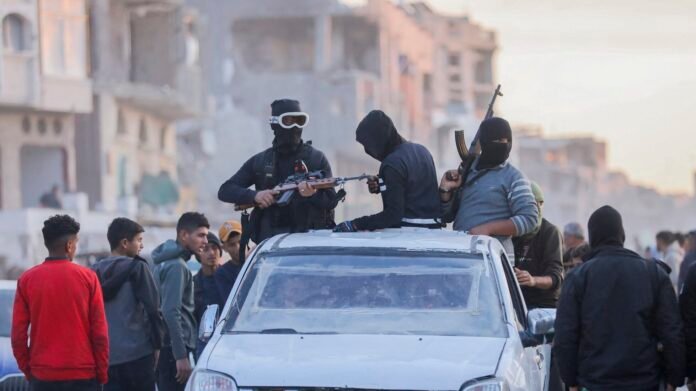
Hamas terrorists raided a World Food Programme warehouse and food distribution site in Jabalia, threatening aid workers and forcing life-saving operations to halt, The Telegraph reported, citing Palestinian sources and United Nations statements, in the latest reported attack on humanitarian operations in Gaza. 

As part of a report detailing accounts of Hamas attacks on humanitarian facilities, the Telegraph described an incident in which terrorists stormed a shelter housing displaced women, children, and elderly people after local residents asked armed Hamas members to move away so the shelter would not become a target. 

“The group left, only to return with greater numbers. They stormed the shelter and opened fire, causing panic and terror among the women and children, and proceeded to arrest several people,” an anonymous Gazan civilian told The Telegraph. 

Hamas refused to release those detained until it was compensated for ammunition used during the operation, demanding about NIS 24,500, a Palestinian source said. 

Earlier, The Telegraph reported that Hamas ambushed a bus transporting local staff working for the Gaza Humanitarian Foundation near Khan Younis. The attack killed five people and resulted in the kidnapping of several others. 

The newspaper said the raid on the World Food Programme site disrupted food distribution after armed Hamas terrorists entered the warehouse and distribution center, threatened staff, and brought operations to a halt. 

Another source cited by The Telegraph said Hamas has also generated revenue by smuggling goods inside trucks belonging to humanitarian organizations as well as commercial shipments. 

The newspaper reported that aid and commercial vehicles were allegedly used to transport various goods for the group, allowing Hamas to raise funds while humanitarian assistance continued entering Gaza. 

The reported incidents describe separate attacks affecting aid organizations, local humanitarian workers, and Palestinian civilians. The World Food Programme warehouse raid halted food distribution, while the attack on the shelter left civilians injured and several people in Hamas custody until payment was demanded for their release. The earlier ambush targeting Gaza Humanitarian Foundation personnel left five local staff members dead and several others kidnapped. 


Beyond grep: The case for a context-rich AI coding harness

0
beyond-grep:-the-case-for-a-context-rich-ai-coding-harness
Beyond grep: The case for a context-rich AI coding harness

There are a lot of AI coding applications out there, and as impressive as large language models and the agents they enable have become, many of the most recent developments in AI-assisted development have been in the software that manages those models, not just the models themselves.

Earlier this summer, I spoke with the head of product for Claude Code, Anthropic’s Cat Wu, about that company’s approach to building that software.

Wu repeatedly came back to the same point in our conversation: Anthropic’s models (and those of its direct competitors) are improving so quickly that it makes little sense to plan too far ahead or to build opinionated or limiting features around them. Rather, the Claude Code product team attempts to maintain what they call a lean harness.

A harness is the software built around one or more AI models that determines how they are used. It decides what the models see, what actions they can take, and how they interact with the code base. Think of it like a layer between a model and the developer’s actual project.

It’s not that Claude Code as an application and harness has no opinionated features or design choices, but its product team does seem to err on the side of trusting where the models will take them over the next year.

There are other harnesses besides Claude Code, though. There are OpenAI’s Codex, Google’s Antigravity, open source alternatives like OpenCode, and options from startups like Cursor or Augment Code. Each can have different features, emphasis, or opinions about how a model can or should be utilized in agentic workflows.

One key choice that Claude Code makes is to avoid approaches that build a structured context around a codebase in advance by default.

“Going by the evals, we don’t see a measurable change,” she said of those approaches. “And I think we generally lean more toward shipping a leaner harness with fewer opinionated tools and just letting developers add their own if they want.”

Augment Code has made a substantially different bet, although the two companies are not necessarily testing the same interventions or optimizing for the same outcomes; its product pre-indexes the repository using embeddings, a retrieval model, and a vector database, then retrieves conceptually relevant code. So to get the other side of that discussion, I spoke with Vinay Perneti, Augment Code’s VP of Engineering.

Perneti briefly described Augment Code’s differing approach, offered his own team’s evaluations of the advantages, responded to some of the arguments for a leaner harness, and shared his perspective on some of the concerns developers have about AI tools and agentic workflows more broadly.

A conversation with Vinay Perneti

This interview has been edited for length and clarity.

Ars Technica: Can you explain how Augment Code’s context engine works?

Vinay Perneti: So, if I take a step back, what is it that a particular developer is trying to achieve? They want a particular task implemented and they give it to an agent. And the interesting thing with agents today is they have a limited context window, and every time they need to essentially go get all of the context needed for that and then work on it.

There’s two approaches to context. One is grep-based. Claude Code and Codex and other agents have done that. The second is the semantic retrieval bit. For Augment, we’ve always taken the semantic route, and I’ll describe the building blocks of that.

I would say there’s two core pieces. One is, we have an embedding and a retrieval model pair that are working in the system, and then you have a vector database and an entire, highly optimized back-end system that makes it possible to retrieve in sub-milliseconds.

Ars: Does it have an advantage in one kind of code base versus another?

Perneti: Yeah, it actually turns out the advantage comes in large, private codebases. And here is why I say that.

For all the public, open source repos where most of the benchmarks are run, every single model has basically memorized the repo. These models are large enough that they’re actually able to memorize the whole repo. So when you’re trying to get something done, the models kind of already know where to look so they can get to an outcome quickly.

Whereas when you’re doing this in a private repo, a model has never seen that repo. And now the iteration loop for finding the outcome is much longer, right? If you have a semantic understanding of your entire private repo, you can ask a question, and you get to those outcomes much more quickly.

Ars: People are concerned about token efficiency. Does this semantic approach help with that?

Perneti: We’ve certainly seen it in certain situations. In fact, we published a blog post—we ran Terminal-Bench with Claude Code and Augment Code, same model. And we completed at similar accuracy, but we were 33 percent more efficient than Claude Code. So I do see this showing up in terms of making better use of tokens because you’re not spending as much time on the exploration side.

Ars: Anthropic told me that Claude Code does not see measurable eval gains from including more semantic code-navigation tools. But then I look at your blog, and I see you posting benchmarks and other claims that, actually, this really helps. Are you guys measuring different things when you say this, or what are their evals missing?

Perneti: Great questions. I don’t know what specific retrieval engine they used, and I think the other mistake that often people conflate is, not all retrieval systems are equal just like not all databases are equal, right? And by that, what I mean is the models and the system that are working together, which is the context engine, makes a big difference in terms of the quality of outcomes as well.

So, for example, at Augment, we spent about 18 months at the beginning of the company being founded in 2022—this is pre-ChatGPT—researching retrieval and embedding models predominantly for large code bases. So there’s a lot of research that has gone into, when you’re trying to achieve a particular outcome, what are the right pieces of code to get in this embedding space? All of that is encoded into our retrieval models.

And doing that in a very, very fast way is the system that we built around it. So when somebody says, ‘Hey, I tried Claude Code with a RAG implementation, but I’m not seeing benefits,’ that’s because the implementation and the context engine are very, very different, if that makes sense.

Ars: What do you say to the notion that models are improving so fast that building anything with any assumptions at all makes no sense? That’s the argument for a super lean harness or not doing any of this, is just that you don’t know where it’s gonna be in six months or twelve months or whatever as the exponential goes up.

Perneti: There’s a lot of truth to that, but I think you have to think about it from a couple of different perspectives.

At Augment, the way we’ve been thinking about this is there’s two ingredients that you need for higher quality outcomes, intelligence and context. When models are getting really good, intelligence is going to get exponentially better, no doubt about that. But just because they’re more intelligent does not mean they have the context.

Now, a person can get the context that they want by spending the tokens on it. And that’s where the second dimension comes, which is what all of the engineering leaders are asking right now, is cost. How much of your token budget is going towards context gathering and producing the right outcomes? Are you using the model the right way to get the highest quality outcomes?

And that’s where I think harness design and context matter. So to me, it’s a combo of intelligence and context, and then it’s a systems engineering problem at that point: how do you put the right energy into each of these verticals so that you get the most optimal outcome with the least cost?

Ars: We have a fair number of readers who are skeptical of AI in software development. I see two objections that are especially common. One of them is that they still feel that they just can’t trust these systems enough, that they’re going to create technical debt that’s not worth it. The other is that these agentic workflows are too expensive. What do you think?

Perneti: I’ll actually touch on both. Let me preface for both of them. I think the fundamental truth I hope everybody agrees with is models are continuing to improve at an exponential rate. So whatever you’re doing, you want to ride the exponential so that you’re understanding where things are going and you’re orienting yourself to benefit from that.

So, going back to your question around trust and verification and tech debt, it is true if you approach this problem as, ‘I’m handing this off to agents and I’m walking away.’ That’s not how it’s gonna work, and that’s why I point out that it’s teams of humans working with teams of agents, where there are many points where humans are still better suited for judgment, right? Spec reviews is an example. We find that agents are actually not good at writing specs. So you have to really work with an agent to guide the agent to write a good, high-quality spec. But once you have the spec we are at a place, they’re really good at executing. So it makes no sense to not take advantage of that.

The second thing… tech debt is actually very real, by the way. One of the patterns that we noticed internally at Augment—we are obviously very agent-forward—is agents are very good at duplicating code… so we found that we’ve had to do focused sprints on reducing tech debt with agents. The beauty about that is that you can say you can come up with a spec that talks about what it means to reduce tech debt, and they’re really good at executing that. So I think that is the way to tackle that part of it.

And the second part, you talked about cost. I think that there’s an interesting point there. If you believe that this is the way of working moving forward, then how do you get the best outcome for your tokens? And that’s where I think things like context engine make a difference. To me, picking the right model for the right task makes a huge difference.

The second thing—this is much more a philosophical, forward-looking bit—is, as these model capabilities continue to improve in exponential and open source models are going to keep up, there’s going to be a point where I think the proportion of tokens that’s going to frontier labs, to open-source models, is going to start tipping, where your most difficult problem, you’ll still throw at a frontier model, but the coding step that I described—like I know exactly what needs to get done and I know I described that in a spec—an open source model might be able to get that done for you. At that point, your cost drops quite a lot, right? So you need a system that allows you to work this way, and I think the cost will just kind of take care of itself, is how I see it.

Ars: Thank you. I appreciate you making the time.

Perneti: Yeah, I really enjoyed the chat, Sam.

Takeaways

Both Wu and Perneti agree that they expect frontier models to continue to improve at or even above the current exponential, at least for the next year. (Neither explicitly addressed a longer time frame.) Both agreed that this is fundamentally changing the way software development is done for many organizations.

The practical dispute, such as there is one, is whether context should be assembled ahead of time or rediscovered during each task—especially with large, private codebases.

They’re also sometimes measuring and optimizing for different things. Wu specifically said that Anthropic did not find “a measurable improvement in performance” from “a few LSPs available.” It’s important to note that what Wu was describing when she said that (an LSP, or language server protocol) is not as broad as what Augment Code’s harness does.

When Perneti and Wu describe evaluations of tools or systems that go beyond grep, they are not always talking about the same thing. That is one possible reason (among others) why they come to different conclusions.

One thing Perneti was able to speak to that Wu did not is the possibility that frontier models like Anthropic’s Opus or Fable may become too expensive to remain the main or only models in developers’ and organizations’ agentic workflows, such that smaller or open-weight models might become more widely used.

As the compute crunch continues, some open-weight models—including those small enough and sufficiently quantized to run on local hardware, or at least on hardware maintained in-house by the organization—now approach relatively recent frontier performance on some coding tasks. It remains possible that they, too, will continue to improve at a rapid rate, such that they become viable for coding agents in many teams and projects. Teams may increasingly reserve expensive frontier models for the hardest problems while routing more routine, well-specified work to these cheaper or locally operated models.

Regardless of which approach is more dominant a year from now, more autonomous workflows do not eliminate the need for engineering judgment. If anything, it may be more valuable, not less, as the increases to the speed and scale of production make bad decisions carry higher costs.

World Cup ‘Falklands are Argentine’ banner is a foretaste of diplomatic challenges ahead for the UK

0
world-cup-‘falklands-are-argentine’-banner-is-a-foretaste-of-diplomatic-challenges-ahead-for-the-uk
World Cup ‘Falklands are Argentine’ banner is a foretaste of diplomatic challenges ahead for the UK

The sovereignty dispute between Britain and Argentina over the Falkland Islands (or Las Islas Malvinas) was brought centre-stage once again in the aftermath of the World Cup semi-final in Atlanta.

Several members of Argentina’s squad celebrated with a banner plucked from the stands occupied by Argentine supporters that declared: “Las Malvinas son Argentinas” (the Falklands are Argentine).

The banner and its unfurling triggered a range of responses, depending on where you stand on the sovereignty dispute between the UK and Argentina. For Argentines, the phrase is a part of everyday life, displayed on public transport, murals and monuments. It is repeated by politicians and other public figures regularly, as a constant reminder of Argentina’s sovereignty claim.

For Argentina’s players, the act of carrying this banner wouldn’t have been hugely controversial – particularly in front of their adoring fans. But they would have been acutely aware of Fifa’s regulations given the tense atmosphere in the build up to the game, as well as the security cordon supposedly enforced by Fifa to prevent political slogans and banners from entering the stadium.

The UK and its government reacted quite differently. The British press, as you’d expect, exploded. The Sun wrote of “shameless Argentinian players” and a “vulgar sign”. UK secretary of state for trade and business, Peter Kyle said the banner was “entirely inappropriate”.

Outgoing prime minister, Keir Starmer, has called on Fifa to investigate this breach of its regulations regarding the display of political statements at matches under its jurisdiction.

Press reports also highlighted the offence caused to Falklands War veterans and the people of the Falkland Islands. The Falkland Islands government in particular expressed their outrage and disappointment that their home had been dragged into the aftermath of a football match in which they weren’t even represented. This was a match between England and Argentina. The Falklands Islands are a British Overseas Territory.

The state of Anglo-Argentine relations

The tense and ill-tempered semi-final will have done little to improve relations between Argentina and the UK, even if Argentina’s president, Javier Milei, rather hopefully declared that his country was “getting closer every day” to gaining sovereignty of the islands as a consequence of his diplomatic approach.

In reality, little has changed. The waving of the banner is not evidence of a resurgent Argentine nationalism. Argentina’s claim to the Falklands has long been an ever-present aspect of public life most especially evident in football stadiums throughout the nation. What is more controversial is the display of this geopolitical slogan on such a high-profile global stage.

Nor does it herald any meaningful progress towards the sovereignty negotiations with the UK that Argentina has long-desired. The UK remains steadfast in its support of the Falkland islanders’ right to self-determination and maintains that negotiations cannot take place without the consent of the Falkland Islands Government.

Where next?

Milei has little evidence to back his claims regarding Argentina’s diplomatic progress. He has been markedly less active in pushing Argentina’s sovereignty claim than some of his recent predecessors such as Néstor and Cristina Kirchner and Alberto Fernández.

These presidents were far more firebrand and confrontational in their approach to the Falkland Islands, constantly threatening and implementing measures to disrupt the islands’ economy, an approach that also yielded minimal tangible diplomatic results.

UK newspaper frpont pages report on Falkland Islands dispute, APril 2026.

The Trump administration’s attitude to the Falkland Islands has put pressure on Anglo-US relations. Steve Travelguide/Alamy Live News

That said, Milei and Argentinian leaders before him have continued to push their sovereignty claim. Why? Presidents and politicians of all stripes clearly recognise the significance of the islands to the Argentine people and the political capital to be gained from pushing the issue at home. But while the Falklands/Malvinas sovereignty dispute rarely cuts through in international media coverage of geopolitics, there are several factors that mean this sovereignty dispute could feature more regularly in coming years.

For one thing, the development of phase 1 of the Sea Lion oil field to the north of the Falkland Islands could begin as early as 2027. So there is considerable potential for tensions to rise once again.

Argentina’s recent angry response to a British warship entering its waters without requisite permission is perhaps a sign of increased surveillance and sensitivity around shipping movements in and around the South Atlantic. Argentina frequently lodges complaints about the movements of military aircraft and ships between the Falklands and South America. This may well intensify as economic interests come to the fore.

In addition, the geopolitical uncertainty generated by the second Trump administration (that considers Milei a staunch ally) has caused pronounced anxiety for overseas territories and strategically located islands around the world. The US president has regularly expressed his desire to “acquire” Greenland from Denmark and the White House has reportedly considered a plan to purchase the Chagos Islands that remain part of the British Indian Overseas Territory.

Evidence of the warm relations between the US and Argentina at present came in the days following the semi-final controversy over the banner, when Andrew Giuliani, head of the White House Fifa task force, defended the Argentine team’s right to free speech. This reaction will have prompted both disappointment and dismay by government officials in the both UK and the Falkland Islands.

The recent events are a reminder of the geopolitical uncertainty characterising the second Trump administration that has regularly threatened and disrupted formerly stable alliances and diplomatic positions. For the UK Foreign Office and the Falkland Islands government this inconsistency is clearly a worrying development that will be monitored ever more closely in the months and years ahead.

2 Palestinians killed, another injured in attack by Israeli occupiers on West Bank village

0
2-palestinians-killed,-another-injured-in-attack-by-israeli-occupiers-on-west-bank-village
2 Palestinians killed, another injured in attack by Israeli occupiers on West Bank village

The bodies of 53 year-old Palestinian Awda Abulrahim Farahneh and 26 yer-old Ahmed Adil Abu Muhu, are brought to a hospital after they lost their lives after an attack carried out by Israelis in the village of Deir Jarir, Ramallah, West Bank, Palestine on July 19, 2026.  [Hisham K. K. Abu Shaqra - Anadolu Agency]

The bodies of 53 year-old Palestinian Awda Abulrahim Farahneh and 26 yer-old Ahmed Adil Abu Muhu, are brought to a hospital after they lost their lives after an attack carried out by Israelis in the village of Deir Jarir, Ramallah, West Bank, Palestine on July 19, 2026. [Hisham K. K. Abu Shaqra – Anadolu Agency]

Two Palestinians were killed and another was injured after Israeli occupiers opened fire during an attack late Sunday on the village of Deir Jarir near Ramallah in the occupied West Bank, according to Palestinian officials, Anadolu reports.

The Palestinian Health Ministry identified the victims as Awda Abdul Rahim Awda Farakhna, 53, and Ahmed Adel Rashid Abu Mukh, 26, saying they were killed by Israeli gunfire.

Earlier, the Palestinian Red Crescent Society said its crews transported a critically injured man with a gunshot wound to the abdomen to a hospital after the attack, adding that medics performed cardiopulmonary resuscitation while transferring him.

It later said another man was taken to the hospital with a live-fire gunshot wound to the knee before announcing that its crews were performing CPR on a third victim, 55, during his transfer to the hospital.

The official Palestinian news agency, Wafa, said towns and villages across the Ramallah and Al-Bireh governorate have witnessed a surge in attacks by Israeli occupiers against Palestinians and their property including physical assaults, live fire, arson and attacks on agricultural land under the protection of the Israeli army.

The Israeli army and occupiers have intensified their attacks in the occupied West Bank since the start of the Gaza war in October 2023, killing at least 1,181 Palestinians, injuring 13,000 and arresting nearly 24,000, according to official Palestinian figures.

Spain unites in joy at second World Cup crown

0
spain-unites-in-joy-at-second-world-cup-crown
Spain unites in joy at second World Cup crown


Thousands danced in the streets, set off fireworks and launched red ​flares in Madrid as the party went on into the early hours of Monday after Spain beat Argentina ‌1-0 to win the World Cup.

Waving red and gold flags, Spaniards and fans from around the world watched as La Roja realised the dream of winning the trophy for the second time following an extra-time goal by Ferran Torres in New Jersey.

After a tense match that ​went to extra time, fans exploded in joy in cities and towns across Spain as the final whistle blew in New ​York.

In Barcelona, where many of the Spain team play for the La Liga champions, revellers set fireworks off and partied on the beaches ‌at ⁠the start of what promised to be a long night of celebrations.

Spain fans waved flags and cheered in the streets of the neighbourhood where Spain’s teenage forward Lamine Yamal grew up.

The 19-year-old Lamine learned to play football on the streets of Rocafonda, a working-class, multi-ethnic area of Mataro, a coastal city about 30 km (19 miles) north of Barcelona.

ONE OF THEIR OWN

The residents of Rocafonda, who ​include his grandmother and a ​cousin, still regard Lamine, who ⁠plays for Spain and Barcelona, as one of their own.

On the community pitch, where Lamine honed his skills as a boy, there is a mural featuring the player who is a symbol ​of the possible.

Lamine, who was born in Spain to a Moroccan father and mother from ​Equatorial Guinea, has ⁠never forgotten his roots.

Throughout his career, he has honoured Rocafonda with his trademark “304” hand gesture after scoring goals – a reference to the neighbourhood’s postal code.

During the World Cup, he has sported a headband with “Rocafonda” on it, worn the flags of his parents’ countries of ⁠origin on ​his boots, and said football was an example of racial and social integration.

Pedro ​Sanchez, the Spanish prime minister, posted on X: “We are World Champions!! Our national team was great! Thanks team!”

U.S. President Donald Trump and Sanchez, who have had ​a frosty relationship, exchanged a brief handshake before the match, Spanish newspaper El Pais reported.

Here are some takeaways from the tournament, which was ​co-hosted by the United States, Canada and Mexico:

Source:  Reuters

Google Is Censoring Reviews of ICE Detention Centers

0
google-is-censoring-reviews-of-ice-detention-centers
Google Is Censoring Reviews of ICE Detention Centers


While they’re not as common as reviews for cafes and dry cleaners, reviews have poured into Google Maps by the thousands for the growing network of jails operated by U.S. Immigration and Customs Enforcement. The reviews have come from internet users sharing their often harrowing experiences in the detention facilities.

Google then purges these reviews and blocks the ability to write new ones, according to newly published research.

“Google actively suppresses carceral information, narratives, and digital trace data related to the U.S. Immigration and Customs Enforcement’s (ICE) detention facilities,” wrote Muira McCammon, a professor at Tulane University’s Department of Communication who has been scraping and analyzing self-reported accounts of ICE imprisonment posted to Google Maps since last year.

Much of this record is now permanently deleted, erasing detailed testimony of people ingested by the U.S. deportation machine.

“Almost all of the Google reviews that I originally collected in 2025 are now no longer available.”

Last August, McCammon aggregated 1,636 posts from 26 different ICE facilities where Google still allowed users to post reviews and discovered there were 91 other immigration jails on Google Maps with no reviews.

“Google had already turned off reviews for the remaining 91 facilities,” McCammon told The Intercept. “Almost all of the Google reviews that I originally collected in 2025 are now no longer available.”

Only four ICE facilities appear to still permit reviews on Google Maps, she said.

Pulling the reviews has come with no public notice or explanation.

In 2023, Google said in a corporate blog post that it reserved the right to delete Maps reviews for locations that are “consistently unhelpful, harmful, or off-topic. This includes places that people go to without choice or places only accessible to people stationed or assigned there—such as police stations and prisons.”

Unhelpful to whom, however, is unclear: While some of the reviews in question were statements of protest that could have been left by anyone, many appeared to come from people directly affected by ICE. They described a variety of issues that would be of great material interest to anyone detained in the facilities or for people close to them.

“Reviews help people make decisions on where to go,” Google spokesperson Genevieve Park said in a statement, “and we don’t show reviews on several categories of places where people go without choice,” citing the company’s policy of removing Google Maps reviews that are “unhelpful, harmful, or off-topic.”

In the past, Google has complied with requests to censor speech about ICE. In 2025, the company blocked Android users from downloading ICEBlock, an app that alerted people to crowdsourced sightings of ICE agents.

Asked if the Department of Homeland Security, ICE’s parent agency, had communicated with Google about the reviews, Park said the takedowns were “unrelated—it was about enforcing our policy that prohibits reviews for places that people go to without choice.”

In a statement to The Intercept, a spokesperson for DHS denied that ICE requested any reviews of detention facilities be removed.

“Being in detention is a choice,” the Homeland Security spokesperson said, citing the department’s program to encourage an app-based system for self-deportation.

Many of the reviews McCammon aggregated were from despairing friends and relatives.

“You can barely hear the detainee when you make a phone call.”

“My friend’s dad was sentenced to one month in jail,” read one review. “He served the time and then was moved to this facility for another 3 months. How is it not illegal to hold someone 3x longer than what they were sentenced to serve?”

A Spanish language review McCammon collected read, “You can barely hear the detainee when you make a phone call.”

Other posts reflect what apparent former detainees described as poor conditions, such as “The place is infested with roaches crawling all over the inmates body there,” or “Very bad experience i spent 2 months in this hell . . . 99% of staff is cruel and racist.”

One reviewer said many detainees weren’t able to communicate with ICE staff because of the language barrier:

I stayed there for more than a month. The food there was okay, but very unpalatable. They were all very kind. Due to the language barrier, there was a big barrier to communication. I felt that most people couldn’t express their thoughts and needs. Why didn’t they have a translator? ! Even if it’s not expensive. The air conditioner there was very cold, and many people, including me, caught cold from the cold. Even so, they were unwilling to turn up the air conditioner temperature. When I slept at night, I only had a thin blanket to cover myself, and it felt very cold.

Although Google’s stance appears to be that the censorship is based on a common-sense, consumer-centric view of Google Maps’ purpose, McCammon argues in her paper that these are essentially political decisions, made by “suppressing the circulation of carceral information and counter-narratives [and] calling into question how the company approaches the ideology of search, when it concerns the reputation of the U.S. administrative state.”

Australia-India partnership deep on security, shallow on trade

0
australia-india-partnership-deep-on-security,-shallow-on-trade
Australia-India partnership deep on security, shallow on trade

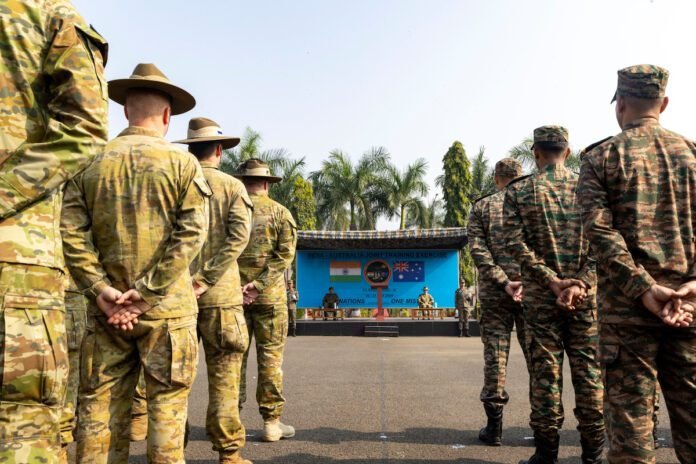
The third India-Australia Annual Summit in Melbourne on July 9 produced outcomes across defense, energy, critical minerals, technology and education — 18 in all. But by far the most significant deliverable centered on Australian uranium exports to India.

After nearly 12 years of a civil nuclear agreement on paper, Australia and India finalized the administrative arrangements needed to begin commercial uranium exports. A renewed defense and security declaration replaced the 2009 version, and new commitments on shipbuilding, maritime security and cyber cooperation followed.

However, what the summit did not produce was a trade deal. The Comprehensive Economic Cooperation Agreement (CECA) — launched in May 2011, suspended in 2016, relaunched in 2021 and promised at successive summits since 2023 — was again promised early conclusion yet remains unsigned.

The pattern is now sustained enough to read as structural. Since the Comprehensive Strategic Partnership was established in 2020, with the Mutual Logistics Support Agreement signed at the same summit, the security dimension of the relationship has yielded concrete outcomes at every major meeting.

Those include Australia’s first hosting of Exercise Malabar in 2023 and the defense declaration and uranium operationalization in 2026. The Critical Minerals Corridor, also launched at the Melbourne summit to secure supply chains for lithium, cobalt and rare earths, was framed as a strategic security measure rather than a standard trade mechanism, though it remains at the framework stage.

The economic side has produced one interim deal, the Economic Cooperation and Trade Agreement (ECTA), signed in April 2022. It covered goods tariffs and included limited services and mobility commitments, but left the hardest issues for the CECA, including investment, government procurement and broader labor mobility.

The trade numbers make the gap harder to ignore. Two-way trade has more than doubled since 2020, reaching approximately US$33 billion in 2025, making India Australia’s fifth-largest trading partner.

But the figures remain modest relative to the four partners above it, and Australia has managed to conclude comprehensive trade agreements with all of them. The deal with South Korea took five years from launch to signature, Japan’s seven, China’s 10, Indonesia’s nine and the EU agreement eight. India, at 15 years and counting, is the outlier.

The ECTA has driven much of that growth, with agricultural exports more than doubling since the agreement came into force. But the gains have come from goods liberalization. The services, investment and mobility provisions that would give the relationship economic depth remain unresolved.

The uranium deal reflects a strategic shift. Australia exports uranium to more than 40 countries under established frameworks, but India, as a nuclear-armed state outside the Non-Proliferation Treaty, required more complex safeguards arrangements.

The civil nuclear agreement sat unused for nearly 12 years because the two sides could not agree on how to track and report uranium transfers. India’s foreign secretary said resolving the impasse required “very intense discussions” over two years. Only a single test shipment in 2017 had moved between the two countries before 2026.

Much like the Critical Minerals Corridor, the uranium deal eventually cleared because both governments treated it as a security priority. India wants to expand its nuclear capacity from roughly 8 gigawatts (GW) to 100 GW by 2047, and Australia wants to demonstrate its value as a reliable Indo-Pacific partner while diversifying its export relationships. When the strategic logic on both sides pointed in the same direction, the procedural obstacles gave way.

The trade deal faces a different kind of obstacle. India is the world’s largest milk producer, and the dairy lobby is powerful enough to have helped push India out of the Regional Comprehensive Economic Partnership in 2019.

The Gujarat Milk Marketing Federation, headquartered in Prime Minister Modi’s home state, was among the first to welcome that withdrawal. The same dynamics are now blocking the CECA. As of 2025, dairy and wine tariffs were the main sticking points, with a senior Indian official ruling out further concessions on either.

On the Australian side, the services and mobility provisions India most wants, particularly easier access for IT workers and recognition of professional qualifications, run into politically sensitive workforce and migration debates.

The interim deal was designed as a stepping stone, but by deferring the hardest issues, it left the core obstacles unresolved. CECA negotiations have continued, with more than 10 formal rounds completed, but neither side has signaled a timeline for conclusion.

The underlying problem is that neither government pays a real political price for leaving the CECA unresolved. The trade relationship matters but is not large enough to force action. By comparison, Australia and China’s approximately $212 billion in two-way trade created pressure to manage the relationship even at its most strained.

India’s broader trade posture has been one of “sustained disengagement,” where domestic protectionist interests consistently override outward-looking economic ambitions.

When the politics do align, India can move fast: the trade deal with the UAE was concluded in 88 days. India signed a comprehensive deal with the UK in July 2025, three and a half years after launching negotiations, covering services, mobility and government procurement.

It concluded negotiations with the EU in January 2026, the largest trade deal either side had attempted, after more than three years of active talks. Both involved difficult agricultural and services concessions. The CECA’s 15-year timeline stands out against that record.

This matters because a partnership built primarily on a shared reading of regional threats is only as durable as that shared reading. The Quad has not met at the leaders’ level for nearly two years.

India’s relationship with China, while competitive, has stabilized since the 2020 border crisis, with both sides managing tensions rather than escalating them. Even if the strategic rationale endures, its intensity may fluctuate, and a partnership without economic depth is more exposed to those shifts.

The Comprehensive Strategic Partnership label itself does political work in both capitals, signaling to domestic audiences and third parties that the relationship is deeper than it operationally is. That framing may reduce rather than increase the pressure to close the gap between the security architecture and the economic substance it is supposed to rest on.

The Melbourne Summit showed that when both governments frame an outcome as a strategic necessity, procedural obstacles give way. When an outcome sits in the commercial lane, domestic constituencies hold.

The uranium deal cleared because it was treated as a security imperative. The CECA has stalled because the domestic political costs of concession on dairy, wine and migration remain higher than the perceived cost of delay. Until that calculus shifts, the partnership will remain structurally lopsided.

Lam Duc Vu is a risk analyst writing on Indo-Pacific security and regional affairs.

Child sex case a diplomatic reckoning for UK-Pakistan ties

0
child-sex-case-a-diplomatic-reckoning-for-uk-pakistan-ties
Child sex case a diplomatic reckoning for UK-Pakistan ties

The debate over whether convicted child sex offender Shabir Ahmed should be deported from the United Kingdom to Pakistan is about far more than one offender. It has evolved into a test of how modern states balance domestic political pressures, immigration policy and international legal obligations in an era of increasingly complex migration.

Ahmed’s crimes are not in dispute. Convicted by British courts of serious sexual offenses committed against children in Britain, he represents one of the gravest failures of public protection. His victims deserve justice, and the British state has a continuing obligation to ensure that dangerous offenders are effectively managed under the law.

Pakistan has unequivocally condemned such crimes and has consistently stated its willingness to cooperate with international partners, including the United Kingdom, in combating serious criminality in accordance with domestic and international law.

The controversy today, however, is no longer focused solely on his crimes. Rather, it increasingly centers on his identity.

As political pressure has intensified following his release from prison, public debate has shifted toward whether Ahmed should now be viewed primarily through the lens of his Pakistani origins rather than the country where he spent almost his entire adult life. That shift transforms what began as a criminal justice issue into a diplomatic one.

Ahmed arrived in Britain in the late 1960s as a teenager and lived there for nearly six decades. His education, employment, family life and criminal conduct all unfolded within British society.

His victims were in Britain. His offenses were investigated by British police, prosecuted by British authorities, adjudicated by British courts and punished within the British prison system. Every stage of his legal accountability has taken place under British jurisdiction.

Supporters of deportation argue that serious offenders with legal ties to another country should not benefit indefinitely from legal protections that prevent their removal. That is a legitimate public policy argument, particularly in cases involving grave offending.

The difficulty is that the Ahmed case sits at the intersection of domestic politics and international law. Once deportation depends on another sovereign state accepting an individual, the issue no longer belongs exclusively to one country’s immigration system. It becomes part of a wider framework of nationality, sovereignty and interstate cooperation.

Domestic politics meet international responsibility

Britain’s difficulty in deporting Ahmed stems largely from its own legal framework, which provides protections for certain long-settled residents and requires courts to weigh factors such as long-term residence, family life and proportionality before authorizing removal.

The current British government has indicated that it wants those rules tightened. Democratic governments are entitled to revisit immigration laws if they conclude that existing legislation no longer reflects public expectations or strikes the right balance between individual rights and public safety.

Changing domestic law, however, is only one part of the equation.

International law does not automatically require one state to accept every individual another state wishes to deport. Governments retain the sovereign authority to determine nationality under their domestic legislation and to verify whether legal requirements have been satisfied before recognizing an individual as their national.

Pakistan has publicly maintained that any request should proceed through established legal procedures governing nationality and that satisfactory legal evidence is required before responsibility can be assumed.

Britain, meanwhile, argues that serious offenders should not be able to rely indefinitely on legal protections that frustrate deportation. These positions reflect different legal responsibilities operating at different levels rather than necessarily conflicting legal principles.

This illustrates a broader reality of migration governance: decisions made within one country’s immigration system often depend upon the sovereign decisions of another. What appears to be a domestic immigration matter can quickly become a question of diplomacy.

When deportation becomes diplomacy

The Ahmed case reflects wider pressures confronting many Western democracies. Across Europe and elsewhere, governments are attempting to reconcile three competing realities: growing public demands for stricter immigration enforcement, legal obligations protecting long-term residents and increasingly diverse societies shaped by decades of migration.

When those pressures collide, deportation can become politically attractive because it offers a visible demonstration of government action. At the same time, migration policy has increasingly become intertwined with foreign policy.

Across Europe, migration has become a central feature of foreign policy. Readmission agreements with countries in Africa, South Asia and the Middle East increasingly shape broader diplomatic relationships involving visas, trade, development assistance and border management. As a result, deportation disputes are no longer simply administrative matters; they have become tests of interstate cooperation.

Against that backdrop, individual deportation cases can acquire significance well beyond the individuals involved. They become tests of legal cooperation, diplomatic trust and competing interpretations of sovereignty.

That broader context should not obscure another important reality. Britain’s own public inquiries into grooming gang scandals identified serious shortcomings in policing, safeguarding and local governance. Those institutional failures require continued attention regardless of whether particular offenders are ultimately deported.

Even where deportation is lawful, it does not absolve governments of responsibility for addressing the institutional failures that allowed such crimes to occur. Removing an offender may reduce immediate risks, but it cannot substitute for reforms that strengthen child protection, improve policing or restore public confidence in state institutions.

The wider implications also deserve careful consideration. If governments increasingly seek to remove long-term residents by emphasizing historical nationality or country of origin, similar disputes are likely to become more common. States receiving deportees will continue to insist on nationality verification and due process, while states seeking deportation will argue that public confidence in immigration enforcement requires firmer action.

Reconciling those interests requires legal cooperation rather than political rhetoric.

The Ahmed case ultimately illustrates a broader challenge confronting migration governance in the 21st century. Citizenship, nationality and long-term residence no longer fit neatly into traditional assumptions about belonging or responsibility.

As migration continues to reshape societies, governments will increasingly face difficult questions about where legal accountability begins and where sovereign responsibility ends.

Britain may ultimately decide to reform its deportation laws. Pakistan may continue to apply its own nationality laws when considering any request. Both are legitimate exercises of sovereign authority.

The larger lesson extends beyond one offender or one bilateral relationship. As migration, identity and security become increasingly intertwined, deportation is becoming not only an instrument of immigration policy but also one of diplomacy.

Governments may be able to move offenders across borders, but responsibility for the institutions that failed to stop them remains far less transferable.

Saima Afzal is a researcher specializing in South Asian security, counterterrorism, and broader geopolitical dynamics across the Middle East, Afghanistan, and the Indo-Pacific. She is currently a Research Scholar at Justus Liebig University, Germany.

US Strikes Iran After Hormuz Shipping Attack; Explosions Heard in Bahrain’s Capital 

0
us-strikes-iran-after-hormuz-shipping-attack;-explosions-heard-in-bahrain’s-capital 
US Strikes Iran After Hormuz Shipping Attack; Explosions Heard in Bahrain’s Capital 


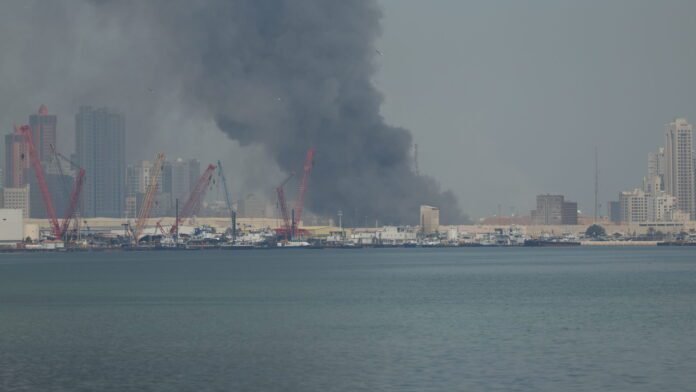
The United States launched a ninth consecutive night of strikes against Iran after Iranian forces targeted oil tankers in the Strait of Hormuz, while Iran expanded its attacks across the Gulf, triggering repeated air raid sirens in Bahrain, where explosions were reported in the capital, Manama. 

US Central Command (CENTCOM) said American forces completed a wave of strikes targeting Iranian command centers, air defense systems, maritime surveillance positions, and missile and drone launch sites. President Donald Trump said, “Tonight we hit Iran very hard again.” 

Earlier, the Revolutionary Guards said they had attacked two oil tankers sailing in the Strait of Hormuz outside a route approved by Iran. The group also warned the United States to expect “punishment.” 

Bahrain’s Interior Ministry announced multiple rounds of air raid sirens overnight. State television later reported that the country’s air defense systems were intercepting an Iranian attack after explosions were heard in Manama, Reuters reported. The US Embassy in Bahrain warned American citizens of a potential Iranian attack in the capital, urging them to remain vigilant and follow official guidance. 

The Kuwaiti army said it intercepted drones launched from Iran. 

CENTCOM said US naval forces remain focused on enforcing the maritime blockade against Iran. It added that six commercial vessels were diverted from their course in the Strait of Hormuz. 

CENTCOM also announced that one American soldier was killed in northern Iraq during the controlled detonation of munitions left from a downed Iranian drone. A second soldier was injured in the incident. Separately, the command said “unidentified findings” had been recovered from the scene where two American soldiers were killed in Jordan the previous day and remain under investigation. 

Iran’s Fars news agency reported that the remains of an American MQ-9 drone were found in the mountains near Asaluyeh on Friday and were transported using a donkey. 

Speaking after a meeting with Lebanese President Joseph Aoun, US Secretary of State Marco Rubio described the talks as “very positive” and said “the US is open to a diplomatic solution with Iran,” Reuters reported. 


0FansLike
0FollowersFollow
0FollowersFollow
0SubscribersSubscribe
- Advertisement -
Google search engine

Recent Posts