14.3 C
London
Tuesday, July 21, 2026
Home Blog

Hegseth’s War Department Slashed Civilian Protection Staff, Brought in AI Assessments

0
hegseth’s-war-department-slashed-civilian-protection-staff,-brought-in-ai-assessments
Hegseth’s War Department Slashed Civilian Protection Staff, Brought in AI Assessments


Self-styled War Secretary Pete Hegseth’s Pentagon has gutted its premier center devoted to preventing civilian casualties in war zones, cutting staff, scrapping a civilian harm records database, and developing an AI assistant to accelerate assessments, according to a new report shared with The Intercept. These revelations come as the Trump administration has renewed attacks on civilian sites in Iran.

The War Department’s Civilian Protection Center of Excellence has reduced its staff from 40 personnel in January 2025 to just nine by the end of the year, according to the report. Two current defense officials confirmed that staffing levels remain the same today. Current and former government officials say the massive cuts have left the Pentagon unable to protect civilians.

The tiny contingent that remains at the Civilian Protection Center of Excellence, the officials said, are also prevented from investigating major civilian casualty incidents like the U.S. attack on the Shajarah Tayyebeh elementary school in Minab, Iran, in February that killed more than 150 people, most of them children.

Wes Bryant, who served as the Center’s chief of civilian harm assessments, was one of the more than 30 people pushed out last year by the War Department. He told The Intercept that the Center was being kept on life support to provide cover for the Pentagon.

“The Hegseth regime held on to a thread of the program mostly in effort to be able to say they are following the law, but the reality is the Center and its efforts have had little to no influence on or oversight or visibility on operations,” Bryant said. “As long as they sit in the seat, they are continuing to try to put out good work, but the reality is, most of it is being thrown into the wind, and neither institutionalized nor operationalized.”

Before civilian harm mitigation and response (CMHR) efforts were sidelined and the staff downsized last year, the Center completed basic civilian harm mitigation training for 212 personnel from military combatant commands like Central Command and Africa Command, the intelligence community, the State Department, and other agencies, according to the report.

Established in 2023, the Civilian Protection Center of Excellence was just “hitting its stride” in late 2024, a defense official told The Intercept. When the center was staffed by 40 civilians, troops, and contractors at the beginning of last year, it was on track “to achieve Full Operational Capability” by the end of 2025, according to the report. That never came to fruition, as the Center saw its staff slashed to seven civilians and two members of the military. 

“The COE was cut down shortly after becoming fully operational,” Madison Hunke, the U.S. program manager at Center for Civilians in Conflict, told The Intercept. “They had minimal time to show value, but they were still able to inject critical CHMR expertise to all corners of the U.S. military, even as their staff dwindled down to a handful of people.”

The report also details financial constraints that have crippled the entire civilian harm mitigation and response enterprise across the War Department. “DoW-wide budgets for CHMR in FY26 were cut,” reads the report which notes that staff and programs across the entire Department of War — including at combatant commands like AFRICOM and CENTCOM — “were gradually reorganized, reduced, and/or terminated by the end of FY25.”

The 10-person civilian harm mitigation team at CENTCOM, for example, has been reduced to just one individual, according to Adm. Brad Cooper, the command’s chief. Reporting by The Intercept also found U.S. Southern Command was unable to cope with the volume of civilian casualty reports after the U.S. attacked Venezuela in January. When the U.K.-based watchdog group Airwars attempted to submit documentation of civilian casualties to SOUTHCOM, they learned the command had no mechanism for dealing with such reports. After reaching out to the Pentagon, Airwars was told to submit documentation to the Civilian Protection Center of Excellence.

While the Pentagon slashed the center’s staff, the military has made greater efforts to utilize artificial intelligence for targeting and civilian harm mitigation, according to the report. It specifically references the Maven Smart System, a product of the defense firm Palantir that serves as the War Department’s signature AI-enabled software platform. The Center of Excellence “leveraged the rapid adoption of the AI-enabled Maven Smart System (MSS)” within the military to advance the development of a tool to give field commands a more complete picture of the civilian environment, the report notes. A current defense official said it provided a “better layer of protection” for civilians in war zones. 

During an Army training exercise, the AI assistant reportedly shortened the timeline to produce civilian assessments by 97 percent.

The report also details the Center’s development of “an AI Assistant prototype that helps military staff rapidly analyze civilian environment data during operations by equipping AskSage, the Army’s enterprise AI platform,” with the CHMR data. During an Army training exercise, the AI assistant reportedly shortened the timeline to produce civilian assessments by 97 percent. Several additional Army units have requested access to the assistant, according to the report.

The report also references a database used for tracking civilian harm that the Pentagon abandoned last year. It notes that “progress on the development of a standardized CHMR data management process and a repository of civilian harm information stalled due to the cessation of the CHMR Data Management Platform (DMP) project during Department-wide realignment of priorities and resources.”

Without a database like the DMP, the Pentagon is unable to effectively track civilian harm. In May, Cooper, the CENTCOM commander, said the U.S. had no means to corroborate reports of strikes on hospitals and schools and was aware of just “one active civilian casualty investigation from the 13,629 munitions.” Months later, CENTCOM still has no additional information about civilian harm, telling The Intercept: “We have no new updates at this time pertaining to current investigations or munitions that were expended during Operation Epic Fury.” Airwars, by contrast, has chronicled hundreds of civilian casualty incidents in Iran since the start of the conflict.

As the Pentagon has starved the CHMR enterprise, the U.S. has killed and wounded thousands of civilians across the world, from Latin America to Africa to the Middle East. The World Health organization put the death toll in Iran at 3,375 people — before the ceasefire fell apart this month. The U.S. military has also conducted more than 220 extrajudicial killings during a campaign of boat strikes targeting civilians in the Caribbean Sea and Pacific Ocean.

Airwars also tracked reports of at least 224 civilians in Yemen killed during the Trump administration’s campaign of air and naval strikes — codenamed Operation Rough Rider — against Yemen’s Houthi government in the spring of 2025. This nearly doubled the civilian casualty toll in Yemen from U.S. attacks since 2002, meaning that the U.S. reportedly killed as many civilians in 52 days as in the previous 23 years of airstrikes and commando raids.

The Center of Excellence conducted a “qualitative lessons learned study” on Rough Rider, examining “how the operational environment shaped civilian harm mitigation and assessment to identify lessons for scenarios lacking air and information dominance.” The classified study, according to the report, is supposed to help commanders “safeguard civilians while maintaining operational effectiveness in contested environments.” But Bryant said the COE’s input to the study was “nominal,” and a current defense official said the Center was “boxed out” when it attempted to examine strikes during Rough Rider.

Hegseth’s office did not return a request for comment on the findings of the study.

For months, the Pentagon has failed to reply to requests to interview experts about civilian harm policies at the Civilian Protection Center of Excellence, the Office of the Under Secretary of War for Policy, or the Office of the Secretary of War.

The “Annual Report on the Civilian Protection Center of Excellence for Fiscal Year 2025” is dated April 4, 2026, and states it will be made “publicly available on an appropriate website of the Department” but has yet to be posted online. On Friday, Hegseth’s office told The Intercept: “We anticipate release of the 2025 CPCoE report in the summer of 2026.”

In a letter sent earlier this month, a group of Democratic lawmakers told Hegseth that his “gutting civilian harm mitigation and response (CHMR) efforts” has left the Pentagon unable to “comply with the law and its congressionally-mandated CHMR responsibilities.” They added, “The Trump administration — potentially in violation of federal law — has defunded and impeded civilian protection efforts.”

The letter, sent by Sen. Elizabeth Warren, D-Mass., and nine other lawmakers, echoed concerns raised by a recent War Department inspector general report that described civilian protection efforts as largely “inactive.” That May report by the Pentagon’s top watchdog says cuts to civilian harm mitigation and response efforts have been so severe under Hegseth that the United States cannot adequately protect civilians in conflict zones or track harm when it occurs. 

Hunke said the war with Iran demonstrates the need for a fully-funded and staffed COE. “Given adequate resources, the Center has so much potential to transform how the military thinks about and implements civilian protection,” she said. “This is needed now more than ever as the U.S. engages in ongoing and harmful operations in Iran.” A defense official was less sanguine, stating that Hegseth’s underlings would have sidelined even the efforts of a fully staffed and funded COE.

“This was never meant to succeed — whatever that means,” the official said. But that official and Bryant also praised the remaining COE staff and were strenuous in their support for their work.

Remaining personnel are “supposed to shut up, keep their heads down, and pretend that the civilian harm mitigation and response mission isn’t simply a shell.”

Bryant, who was forced out of his job after blowing the whistle on the Pentagon’s dismantling of its CHMR enterprise, decried the department’s “tyrannical and imperialistic uses of lethal military force internationally.” He told The Intercept that the remaining personnel at the Center of Excellence are “supposed to shut up, keep their heads down, and pretend that the civilian harm mitigation and response mission isn’t simply a shell for legal CYA,” using shorthand for “cover your ass.” Asked to assess Bryant’s comments, a current defense official replied: “Yup. No notes.”

The Intercept has previously reported on Hegseth’s gutting of civilian harm mitigation and response efforts. Last spring, five current and former Defense Department officials described Pentagon efforts to eliminate or downsize offices, programs, and positions focused on preventing civilian casualties. One of the then-current officials said that it could result in “wanton killing and wholesale destruction and disregard for law.” His warnings were prescient.

Rare Saudi-Israeli Media Contacts Re-emerge as Iran Strikes the Gulf

0
rare-saudi-israeli-media-contacts-re-emerge-as-iran-strikes-the-gulf
Rare Saudi-Israeli Media Contacts Re-emerge as Iran Strikes the Gulf


Riyadh is keeping diplomatic options open while maintaining its demands on Palestinian statehood and its dialogue with Tehran

Two unusual media appearances involving Saudi Arabia and Israel have revived questions about whether the countries are cautiously reopening channels as Iranian attacks place growing pressure on Gulf security.

On July 16, Israeli President Isaac Herzog gave an exclusive interview to Al Arabiya English, telling the Saudi-based outlet that he wanted rapprochement between Israel and Saudi Arabia and expressing respect for Crown Prince Mohammed bin Salman. Herzog said it was his “dream” to see peace between the two countries and raised the possibility of direct negotiations supported by Washington.

Three days later, Abdullah bin Ghanem Al-Qahtani, a former major general in the Royal Saudi Air Force who is now a security and strategic affairs analyst, appeared on Israel’s Channel 12. He described Iran’s attacks across the region as a grave threat that could not go unanswered while also saying Israel must address the Palestinian issue.

Appearances by prominent Saudi figures in Israeli media remain rare. Their timing has drawn attention because Iranian attacks on Gulf infrastructure are testing Saudi Arabia’s long-standing effort to maintain dialogue with Tehran while relying on the United States and other partners for security.

The crisis could strengthen the case for regional defense cooperation, including quiet coordination with Israel, without necessarily bringing the kingdom closer to formal diplomatic relations.

The two appearances have revived comparisons with the period before October 7, 2023, when Saudi-Israeli normalization was being publicly discussed as part of a broader US-brokered package involving security arrangements and other bilateral agreements.

Those negotiations were disrupted by the Gaza war, and Riyadh has continued to make normalization contingent on progress toward Palestinian statehood. A Saudi source familiar with the matter, who requested anonymity because of the sensitivity of the matter, told The Media Line in May 2026 that the kingdom still required a clear and irreversible pathway toward statehood.

The renewed media contacts do not demonstrate that negotiations have resumed. They indicate that public communication of the kind seen during the gradual Saudi-Israeli rapprochement before October 7 is again possible.

Cyril Widdershoven, a geopolitical and energy analyst and director at Strategy International in Cyprus, views Herzog’s interview as a possible signal that Saudi-Israeli engagement is not completely off the table.

“It was politically significant because of the platform, timing, and message,” Widdershoven told The Media Line.

He said Al Arabiya is part of the Saudi media landscape and argued that giving Herzog a platform to discuss peace and praise the crown prince could have been intended to gauge public and regional reactions. Widdershoven acknowledged that the interview did not demonstrate an official change in Saudi policy.

Asked whether rapprochement channels were reopening, he distinguished political signaling from formal diplomacy.

The interview should be interpreted as political signaling rather than proof of an active normalization process

“The interview should be interpreted as political signaling rather than proof of an active normalization process,” he said. “Saudi Arabia can use such media engagement to remind Washington and Israel that rapprochement remains possible.”

Riyadh can also use the prospect of normalization as leverage in seeking US security guarantees and civilian nuclear cooperation while pressing Israel over Gaza and Palestinian statehood, Widdershoven said.

“Saying that pre-October 7 negotiations have fully restarted would go too far,” he added. “Saying that communication channels and strategic calculations are being quietly reactivated would be reasonable.”

Yet the assumption that Iranian attacks will automatically push Saudi Arabia and the wider Gulf closer to Israel is far from universally accepted.

Abdulaziz Alshaabani, a Saudi political analyst, told The Media Line that the escalation has placed national security ahead of any debate over relations with Israel.

Recent events have reinforced one clear priority: national security has become more important than any discussion about relations with Israel

“In my view, it is still too early to conclude that the Gulf has abandoned diplomacy with Iran or that a fundamental regional realignment has taken place,” Alshaabani said. “Recent events have reinforced one clear priority: national security has become more important than any discussion about relations with Israel.”

His assessment offers another reading of Gulf policy: Attacks on critical infrastructure may increase the need for stronger defenses without ending diplomatic engagement with Tehran.

“This is my personal assessment, but I believe many in the Gulf remain committed to diplomatic solutions, including initiatives that Saudi Arabia has consistently supported,” Alshaabani said.

That position reflects an important difference between the security calculations of Israel and those of the Gulf states. Israel has approached Iran primarily as a direct strategic and military adversary, while Gulf governments have attempted to contain the confrontation through diplomacy and prevent their territories from becoming battlefields between larger powers.

“At the same time, the recent escalation has strengthened the perception that Israel has been more willing to sustain confrontation with Iran despite the potential risks to Gulf security and regional stability,” Alshaabani said.

Iran’s expanding attacks across the Gulf are making that balancing act more difficult. Recent strikes have moved beyond military bases and energy installations to threaten infrastructure on which civilian life directly depends.

According to Kuwait’s Ministry of Electricity, Water and Renewable Energy, an Iranian strike on July 17 hit a power generation and water desalination facility, damaging several electricity-generating units and starting a fire. Authorities activated emergency plans, extinguished the blaze, and began repairs while monitoring the stability of the national power grid.

The attack was particularly sensitive because Kuwait produces more than 90% of its drinking water through desalination.

Water infrastructure had already been struck elsewhere in the conflict. Bahrain’s Interior Ministry said an Iranian drone damaged a desalination plant on March 8. Bahrain’s Electricity and Water Authority said the damage did not interrupt water or electricity services.

Iranian forces have also claimed attacks on US military facilities in Gulf countries, including Bahrain, Qatar, and Kuwait. On July 20, Bahraini authorities again sounded missile-alert sirens and urged residents to seek shelter, while Kuwait said its air defenses were responding to another incoming Iranian barrage.

The escalation is no longer confined to whether Gulf governments should support Washington or remain outside a direct confrontation with Tehran. It now concerns the protection of electricity, water supplies, energy exports, ports, and other infrastructure sustaining daily life.

Widdershoven described the Gulf approach as strategic hedging rather than strict neutrality: maintaining dialogue with Tehran while relying on Western security guarantees.

“The new Iranian attacks on Kuwaiti power and desalination infrastructure, taking into account also the strikes against Bahrain and other Gulf targets, increasingly show that this balance becomes untenable,” he said.

Diplomatic channels are likely to remain open, he added, but the attacks have exposed the limitations of engagement without credible deterrence.

Once Iran threatens civilian water, electricity, ports and energy assets, the engagement can no longer be treated as sufficient protection

“Once Iran threatens civilian water, electricity, ports and energy assets, the engagement can no longer be treated as sufficient protection,” Widdershoven said.

A harder security posture would not necessarily mean that Gulf governments are preparing for war with Iran. Widdershoven said the more likely response would involve integrated air and missile defenses, shared radar and intelligence networks, expanded naval patrols, stronger cyber capabilities, and better protection for ports, desalination plants, and energy infrastructure.

Saudi Arabia’s response could help determine whether the crisis produces a formal regional realignment or another adjustment to the kingdom’s policy of maintaining relations across competing geopolitical camps.

For Washington and Israel, the Iranian threat strengthens the case for greater regional security integration. Israeli systems and operational experience against Iranian missiles and drones could become more relevant to Gulf defense planning if attacks on civilian and strategic infrastructure continue.

Riyadh, though, remains constrained by the Palestinian question and the kingdom’s broader objective of preserving strategic autonomy rather than joining a single geopolitical camp.

Widdershoven believes those competing pressures could produce limited security cooperation before political normalization.

“The most likely trajectory is therefore security convergence before diplomatic normalization: discreet intelligence cooperation, air-defense coordination, and shared threat monitoring first, with formal political relations remaining conditional,” he said.

Alshaabani cautioned against assuming that such an alignment is already taking shape. In his assessment, the conflict has reinforced the need to protect Gulf security and prevent further regional escalation rather than encouraging new political alignments.

Herzog’s Al Arabiya English interview and Al-Qahtani’s Channel 12 appearance are better understood as signs that public channels remain available than as evidence of imminent normalization.

Iran’s attacks may give Saudi Arabia and Israel stronger reasons to cooperate on security, but Riyadh’s investment in diplomacy with Tehran and its insistence on progress toward Palestinian statehood remain in place. For now, the kingdom appears to be keeping its options open as the Gulf’s traditional strategy of geopolitical hedging becomes harder to sustain.

Judge halts Paramount’s $111B purchase of Warner Bros. in win for US states

0
judge-halts-paramount’s-$111b-purchase-of-warner-bros.-in-win-for-us-states
Judge halts Paramount’s $111B purchase of Warner Bros. in win for US states

A federal judge today ordered Paramount Skydance and Warner Bros. Discovery to halt their $111 billion merger, handing an early win to states that sued to block the deal. The ruling granted a temporary restraining order prohibiting the firms from completing the merger and from consolidating their operations.

The temporary order is only in effect for 14 days, but it can be converted into a preliminary injunction that would prevent the merger from being completed until the case is resolved. The temporary restraining order can be extended past the 14-day period if more time is needed to rule on a preliminary injunction.

A group of 12 states led by California sued the companies last week in an attempt to block the deal, which had been approved by the Trump administration. The states say the merger will eliminate competition by combining two of the five major Hollywood movie studios, and two of the five major owners of basic cable TV channels.

“My office and attorneys general nationwide have secured an emergency order blocking the unlawful merger of Warner Bros. and Paramount,” California Attorney General Rob Bonta said today. “This is a critical first win in our case to ensure this megamerger never sees the light of day.”

The case is in US District Court for the Northern District of California. US District Judge Araceli Martínez-Olguín wrote in today’s order that the states “make a strong showing that the Transaction will substantially lessen competition” in the theatrical-film market, and that “the Court is persuaded that it can presume the proposed merger is likely to violate antitrust laws.”

Judge cites presumption of illegality

The merged company is expected to have a 27 percent share of the wide-release theatrical distribution market, the judge wrote. Courts have presumed that a merger resulting in a share of 30 percent or more is likely to violate antitrust law, but 30 percent is not the lowest market share that can pose a threat, she wrote.

The judge also pointed to a sharp rise in concentration as measured in the Herfindahl-Hirschman Index (HHI), saying the HHI increase for Paramount/WBD exceeds the level necessary to show the merger is likely to enhance market power.

“Where plaintiffs demonstrate a presumption of illegality by way of undue market concentration, they need not offer ‘elaborate proof of market structure, market behavior, or probable anticompetitive effects’” to obtain a restraining order, Martínez-Olguín wrote.

The legal standard for issuing a temporary restraining order is the same as the one for issuing a preliminary injunction. Parties seeking either kind of preliminary relief must show a likelihood of success on the merits, a likelihood of irreparable harm in the absence of a court order, and that the order would be in the public interest.

Martínez-Olguín said the merger poses potential harms to the public, and that Paramount and WBD would not suffer any harm from having to wait a few months.

“Defendants will suffer no apparent harm in the near term if enjoined from consummating the Transaction—they concede that they will not begin to incur carrying costs for a delayed merger until the end of September 2026,” the order said. “Even if Defendants argued that they would suffer economic harm as a result of delaying the merger, the equities do not weigh in their favor when contrasted with the potential public harms that would result from consummation of the Transaction, including the loss of competition.”

Martínez-Olguín set a schedule for the sides to submit briefs and scheduled a hearing on a preliminary injunction for August 3. Paramount can challenge the district court’s rulings in the US Court of Appeals for the 9th Circuit. It is likely to do so if Martínez-Olguín maintains that the merger cannot be completed until after a trial.

How China’s rise changed the logic of globalization

0
how-china’s-rise-changed-the-logic-of-globalization
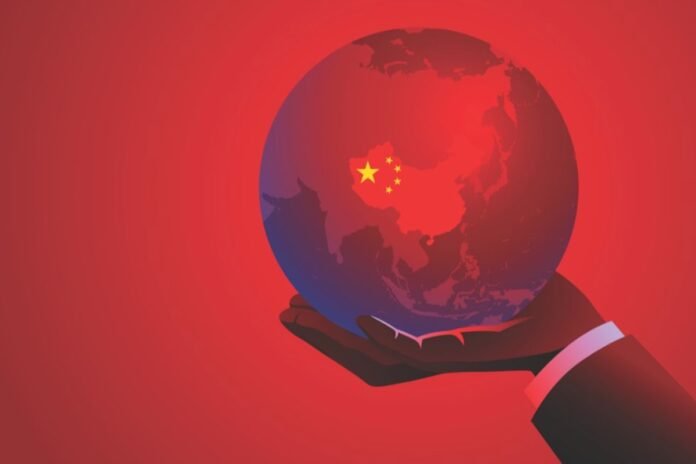
How China’s rise changed the logic of globalization

A recent Pew Research Centre survey found that people in most of the 36 countries surveyed now view China more positively than the United States. More respondents also expressed confidence in Xi Jinping than in Donald Trump on world affairs. The findings suggest that Beijing’s international standing has improved even as Washington’s global image has weakened.

Yet beneath China’s growing international influence lies a striking paradox. As Beijing appears more confident abroad, it has become increasingly preoccupied with reducing dependence on the very global networks that enabled its rise.

Why would a country that has benefited more than almost any other from globalization become increasingly wary of the system that fuelled its ascent? Most explanations point to strategic rivalry with the United States, export controls and intensifying technological competition. These factors matter, but they explain what China is doing more readily than why it is doing it.

To answer the question, it is necessary to look beyond tariffs, semiconductors and geopolitics to how Beijing interprets its own rise. The answer lies not simply in China’s growing capabilities but in how it understands the relationship between globalization, dependence and national power.

One globalization, two visions

China’s accession to the World Trade Organization in 2001 encapsulated one of the defining bargains of the post-Cold War era. Yet Beijing and Washington entered that bargain with fundamentally different expectations.

China did not resist globalization. On the contrary, it embraced it more enthusiastically than almost any other major economy. The difference lay not in participation but in purpose.

For many Western policymakers, integrating China into the global economy was about more than economic growth. Markets, prosperity and participation in international institutions would gradually encourage political liberalization and closer alignment with the liberal international order.

Beijing viewed the same process very differently. Economic openness was a means of generating the wealth and technological capabilities needed for national rejuvenation through industrial upgrading and economic transformation. Markets, investment and global integration were instruments for strengthening China’s technological and strategic capabilities rather than transforming its political system. Globalization was not an end state but one stage in a much longer national project.

Both sides entered globalization believing it would be transformational. The West expected openness to reshape China politically; Beijing expected it to strengthen national development and reinforce long-term political stability.

Neither expectation was entirely misplaced. Globalization made China wealthier, more technologically sophisticated and more deeply integrated into the global economy while reinforcing, rather than diluting, the state’s capacity to shape national development. As China’s capabilities grew, however, Western expectations of political convergence collided with Beijing’s strategy of self-strengthening and national rejuvenation.

Using globalization to build capabilities

China’s development strategy reflected this vision. Rather than allowing markets alone to determine its trajectory, Beijing used globalization to acquire technology, upgrade manufacturing, climb value chains and strengthen domestic firms. Access to foreign capital, export markets and international production networks formed part of a broader strategy of capability accumulation in which the state remained central to guiding economic transformation.

Apple’s deep integration into China’s manufacturing base illustrates this approach. Its supply chains did far more than create export capacity. They diffused production expertise, engineering capabilities and supplier networks that strengthened China’s broader industrial base.

China became the world’s manufacturing hub and accumulated vast industrial capabilities. It moved beyond assembling products to building industrial ecosystems capable of designing, manufacturing and improving increasingly sophisticated technologies. These ecosystems emerged through sustained interaction between state policy, firms, universities, research institutions and global production networks.

The outcome was one that few Western policymakers had anticipated. Rather than socializing China into the liberal international order, globalization strengthened state capacity, accelerated technological learning and fostered industrial ecosystems capable of reshaping global competition.

Huawei’s resilience despite years of American export controls, BYD’s emergence as a global electric-vehicle leader and CATL’s dominance in advanced electric-vehicle batteries reflect the same reality: China is no longer simply participating in globalization; it is helping shape some of its most strategically important industries.

In doing so, China challenged a central assumption of the post-Cold War era. Interdependence generated technological leadership and strategic leverage without producing political convergence. Governments increasingly came to view supply chains not simply as engines of efficiency but as sources of resilience, capability and geopolitical influence. Globalization did not end. It became political.

From capability to vulnerability

China’s success, however, also revealed a paradox. The same globalization that accelerated its rise created new forms of strategic vulnerability. Access to global markets, advanced technologies and international production networks enabled China to accumulate unprecedented industrial capabilities, but these same networks also exposed critical sectors to external leverage. Beijing increasingly concluded that national power depended not only on domestic capabilities but also on who ultimately controlled the technologies and networks on which those capabilities depended.

That logic became visible earlier this year when Manus AI, a Chinese artificial intelligence start-up, reportedly restricted access to its platform for users in several countries while citing compliance with United States export-control regulations. Whether the restrictions reflected legal necessity or commercial caution matters less than what the episode revealed. Even a Chinese company operating at the technological frontier remained embedded within international regulatory and technological structures shaped by others. Strategic dependence could persist even after technological advancement.

The lesson had already been reinforced by Huawei. Despite its having become one of the world’s leading technology companies, years of American export controls exposed its dependence on foreign semiconductors, software and advanced manufacturing equipment.

Similar concerns extended to semiconductor fabrication, biotechnology, financial infrastructure and other sectors increasingly viewed as foundational to national security. Beijing’s concern was not simply that access might be interrupted, but that dependence itself could become an instrument of strategic leverage.

This marked a fundamental shift in how Chinese policymakers understood globalization. Interdependence was no longer seen only as a source of opportunity and mutual gain but also as a source of asymmetric vulnerability that could be exploited during periods of geopolitical tension. The challenge was therefore not to withdraw from globalization but to reduce exposure in sectors where external dependence carried unacceptable strategic risks. From Beijing’s perspective, the objective is not to reject globalization but to reshape the terms on which it participates – remaining globally connected while ensuring that the foundations of national development cannot be constrained by external actors.

When globalization became political

China’s reassessment of dependence was not unique. It reflected a broader shift in how governments understood globalization. For much of the post-Cold War era, markets were expected to allocate resources efficiently while firms optimized for cost and scale. Governments instead began evaluating economic openness through a different lens: national resilience, technological leadership and strategic capability.

Governments increasingly came to view firms not simply as commercial actors but as repositories of critical technologies and industrial capabilities. The question was no longer simply how to attract investment but which capabilities countries could afford to lose. Economic interdependence came to be understood not only as a source of mutual benefit but also as a source of dependence, leverage and vulnerability.

The result has been a more selective form of globalization. Cross-border investment, technology transfers and market access are increasingly conditioned by considerations of national security and economic resilience.

The United States combines export controls with industrial policy to protect critical technologies. Europe now frames trade through the language of de-risking and economic security. Japan’s intervention in the proposed acquisition of Makino Milling by a South Korean private equity firm, together with the controversy surrounding Nippon Steel’s bid for US Steel, reflected the same concern: Even transactions among allies are increasingly judged through the lens of strategic industrial capability.

Perhaps most revealingly, China itself has moved in the same direction. Even while encouraging firms to expand globally, Beijing has simultaneously sought to reduce dependence on foreign technologies and retain control over capabilities it considers strategically vital.

The emerging divide is not between globalization and deglobalization. It is between competing efforts to redesign globalization around resilience, technological leadership and national capability while remaining deeply connected to the global economy.

For three decades, the central question was whether globalization would change China. China’s rise has largely answered that question. The more important question today is what kind of globalization is now emerging. The next phase is likely to remain deeply interconnected, but it will also be more selective, more strategic and shaped by competing national models of development.

China’s rise did not simply produce a more powerful state. It transformed how globalization itself is understood. Xi Jinping’s call at this week’s World Artificial Intelligence Conference for greater international cooperation in AI, alongside stronger governance and a larger Chinese role in shaping global standards, captures this emerging vision. Beijing is not abandoning globalization; it is seeking to reshape its rules.

G Venkat Raman, PhD, is a professor of humanities and social sciences at the School of Government, Peking University

Tom Brady ‘Blindsided’ by Gisele Bündchen’s Baby Bombshell

0
tom-brady-‘blindsided’-by-gisele-bundchen’s-baby-bombshell
Tom Brady ‘Blindsided’ by Gisele Bündchen’s Baby Bombshell


Tom Brady may be one of the coolest competitors football has ever seen, but even the seven-time Super Bowl champion was reportedly rattled when he learned his ex-wife, Gisele Bündchen, was expecting a child with her jiu-jitsu instructor-turned-husband, Joaquim Valente.

The former NFL superstar and the Brazilian supermodel finalized their divorce in 2022 after 13 years of marriage, ending what had long been seen as one of the most glamorous power couples in sports and fashion. But behind the red carpets, magazine covers and championship celebrations, their marriage had been quietly strained for years.

Now, as Bündchen marks her 46th birthday, her post-Brady life has taken a dramatic new turn — complete with a new husband, a new baby and a reported shockwave through her famous ex’s world.

Brady, 48, first met Bündchen in December 2006 after the two were set up on a blind date. The chemistry was immediate, and the pair married in early 2009 after a little more than two years together.

Over the course of their marriage, they welcomed two children, Benjamin, now 16, and Vivian, now 13. Brady also shares son Jack, 18, with his former girlfriend, actress Bridget Moynahan.

For years, Brady and Bündchen appeared to be the picture of celebrity success. He was building a legendary career on the football field, while she remained one of the most recognizable models in the world. But the pressure of Brady’s demanding career reportedly took a toll at home.

Rumors of trouble followed the couple as far back as 2015, then resurfaced in 2018. Brady himself later acknowledged that his football life had created tension in the marriage.

During an appearance on The Howard Stern Show, Brady said Bündchen had felt he was not doing enough for their family.

“A couple of years ago, she didn’t feel like I was doing my part for the family,” he said at the time. “She felt like I would play football all season and she would take care of the house, and then all of a sudden when the season ended, I’d be like, ‘Great, let me get into all of my other business activities. Let me get into my football training,’

Firefighting drones in the works as wildfires plague US nearly year-round

0
firefighting-drones-in-the-works-as-wildfires-plague-us-nearly-year-round
Firefighting drones in the works as wildfires plague US nearly year-round

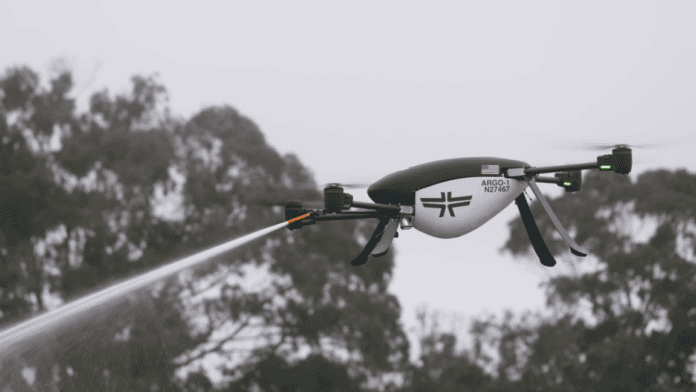
Drones capable of spraying water and fire retardants have been practicing how to snuff out wildfires early in California and Alaska this summer—demonstrating a possible rapid-response tool for firefighting as climate change transforms wildfire season into a nearly year-round risk for much of the United States.

Most drones are significantly smaller than crewed aircraft and have shorter flight ranges, meaning they cannot replace large airtankers in delivering massive payloads of water or other fire-suppressing payloads to remote wildfires. But companies and fire agencies—along with organizers of the $11 million XPRIZE competition—are testing whether drones can help firefighting crews respond more quickly to small fires and put them out before they become more destructive.

The California Department of Forestry and Fire Protection, also known as CAL FIRE, ran its own field test involving five autonomous drones that worked together to deploy between 500 and 1,000 gallons of foam combined for suppressing fires on July 15, according to the TV station KPMH. The demonstration was organized with the help of the nonprofit FireWERX and the California-based company Seneca, which is making the drones commercially available starting in 2026.

Each of Seneca’s Argo-1 drones can carry about 100 pounds of water or fire retardant while working together in swarms of four to six drones. Once a human operator uploads a GPS waypoint, the autonomous drones fly toward their target and use onboard sensors to spot the heat signature of a fire, HeliOps Magazine reported. The drones then find the best hovering altitude before each lining up to spray the fire, one after the other.

The fully loaded drones are limited to a round trip of 10 miles while flying at about 30 miles per hour on average, which means they would ideally need to be prepositioned in fire-prone areas or first transported by ground vehicle. But each drone can fit in the back of a pickup truck with the tailgate down, and two people can even manually carry the empty drones.

Seneca told HeliOps Magazine that the goal is to enable firefighters to refill a returning drone’s payload and swap in a fresh battery so that it’s ready to fly again in two minutes. The company previously demonstrated its drone technology for San Bernardino County Fire in December 2025.

Testing in the Alaskan wilderness

Separately, the XPRIZE Wildfire competition gave another firefighting drone system its own trial by fire in finals testing just outside of Fairbanks, Alaska in June 2026. The Silvaguard autonomous firefighting drone system—developed by the German company Dryad Networks—worked with the Dryad’s Silvanet wildfire detection network to autonomously detect and suppress a wildfire within the competition’s 1,000 square kilometer test area.

Dryad’s detection system consists of solar-powered sensors attached to trees that are designed to detect the smoke from a smoldering fire. When a sensor triggers the alarm via a wireless mesh network to an Internet-connected border gateway device, a prepositioned Silvaguard observation drone launches to confirm and geolocate the fire using infrared and optical imaging sensors, while also ensuring that it’s not a false alarm.

That sets the stage for a Silvaguard suppression drone to take off and deploy up to 26 gallons of fire suppressant onto the fire. The drones can be prepositioned inside solar-powered, spherical hangar pods.

Dryad’s Silvaguard drone.

The ultimate test for whether Dryad’s system or Seneca’s drones can nip fires in the bud will come if fire agencies deploy them during the lengthening wildfire season. The Aspen Fire Protection District in Colorado has become an early customer by already committing to a $5 million contract for deploying five of Seneca’s drones over five years.

CAL FIRE has not signed up any firefighting drones just yet, but it represents another large potential customer. The California fire agency already operates the world’s largest aerial firefighting fleet with more than 70 crewed fixed-wing aircraft and helicopters, along with using AI-powered camera networks and supporting development of the FireSat constellation designed to spot wildfires from space even faster.

Why autocracies get more repressive when opening their economies

0

The current state of democracy in the world is fragile. According to the V-Dem Project, which measures global democracy, 41% of the world’s population live in autocratizing countries — that is, those becoming more authoritarian.

In fact, a “third wave of autocratization” has seen democracy pushed back to levels not seen since 1978, the authors of the 2026 V-Dem report conclude. Worse, many of the 92 autocracies around the world are becoming more repressive.

And all this is happening while the economy has globalized — something that many political economists thought would encourage democracy among previously undemocratic nations.

So what’s going on? We spoke to Arizona State University’s Jose Kaire, whose book, “The Road to Repression,” explores the link between economic liberalization and the slide into deeper authoritarianism.

Walk us through your theory

The book starts from a simple puzzle: Dictatorships today are as repressive as ever. This is surprising because 40 years ago, many believed that economic liberalization would push autocracies toward democratic politics.

The cover of a book with a boot over paper people.
Explaining why economic liberalization doesn’t equal democracy.

The logic was straightforward: Take away the state’s economic power, and you limit its ability to repress. The theory was that economic liberalization did this by privatizing state-owned enterprises, deregulating markets and opening economies to trade and investment.

As people became less dependent on the government for jobs, credit and economic opportunity, they would gain the autonomy to organize, oppose authoritarian rulers and demand greater political freedoms.

This idea, associated with Nobel laureates Milton Friedman and Friedrich Hayek, remains influential among many scholars and even served as part of the founding mythos of the Washington Consensus, a policy agenda championed by international financial institutions and leading world powers. It helped make economic liberalization the default prescription for countries across the developing world.

But reality has been much messier. The book documents how countries like Mexico, Malaysia and Senegal saw human rights abuses increase after embracing liberalization.

About half of all autocracies have experienced similar trajectories after opening their economies. Why did a policy meant to weaken authoritarian rule sometimes make it more violent instead?

My answer focuses on the role of autocratic political elites – that is, the party officials, military officers and other regime insiders who control the state. For them, liberalization not only brings economic change, but it also represents a fundamental political threat.

It can empower regime outsiders, such as an emerging business class or opposition leaders, who may later force their way into the system, diluting the influence of the old guard.

Dictators who liberalize then risk alienating their ruling coalition. When elites are strong, dictators cannot afford to lose their support, as they would risk a potential coup. Leaders with strong elites must then find ways to appease insiders, and one way they do that is through repression.

By cracking down on opposition groups, leaders signal that they remain committed to protecting elite interests. Repression, in this sense, is not just about silencing dissent — it’s about managing elite politics.

The book documents, for example, how Mexico’s presidents used repression against the same opposition they had long tolerated to compensate the party elite for accepting reforms that threatened their political influence.

When dictators deploy repression in this way, they solve a broader political dilemma. On the one hand, they must contend with a political elite that sees liberalization as a threat to its influence.

But, on the other, they also need to avoid alienating international actors, such as the United States, that are quick to punish governments that abandon the Washington Consensus. Repression allows leaders to retain elite backing while adhering to international demands for economic liberalization.

How does your theory apply to Cuba or Venezuela today?

Both are cases where the details of the argument really matter. In recent months, Venezuela has been forced down the road of economic liberalization by the U.S., while Cuba has embarked on economic reforms – also under pressure from Washington.

A key distinction in my theory is that the effects of liberalization depend on how strong the regime’s elites are relative to the leader.

When elites are strong, dictators need to accommodate them, often by repressing outsiders to shield insiders from potential challenges. When elites are weak, leaders do not need to make those concessions.

The question then comes down to which of these two camps Venezuela and Cuba currently occupy.

In the case of Cuba, we have seen some of the power flow from the leader to the party. Former leader Raul Castro extended and institutionalized the role of the party in the late 2010s. The military also gained more autonomy during that period, having secured economic privileges that are more resilient to the whims of the leader.

This all suggests that elites have extended their capacity to make demands on the leadership. In that context, further economic liberalization could trigger the dynamics I describe, pushing the regime toward more repression. There is a good argument that we have already started to see some of that.

Venezuela is in a similar situation. It is too early to say for sure, but the removal of Nicolás Maduro in a US raid in January 2026 might create an opportunity for regime insiders to carve out some more independence and influence. If that is the case, then future deregulation may hurt, rather than help, human rights.

Ultimately, outcomes will depend on how these regimes evolve. But if current dynamics persist, external pressure for economic reform is unlikely to improve human rights – and may well make them worse, if my theory holds.

Two boys walk outside a broken-down building.
Children play in front of a mural of the late Venezuelan President Hugo Chavez near the Punta Cardón refinery. Jesus Vargas/picture alliance via Getty Images via The Conversation

What surprised you when researching for the book?

I got the idea for this book from listening to my father’s stories about how the liberalization of the automobile industry in Mexico in the 1970s affected the factory where he worked. It was all very specific, so I assumed it would not apply more generally to more countries. But the more cases I looked at, the more I realized this pattern of liberalization leading to repression was not uncommon.

In the book, I ended up statistically estimating that most dictatorships who have liberalized have displayed this pattern.

Another thing that surprised me was how the implications of the core argument kept extending to new areas.

For example, I expected that leaders pushed to liberalize their economies would become especially repressive if they also faced the threat of international prosecution. These leaders want to avoid ending up in front of institutions like the International Criminal Court, so they go to greater lengths to stay in power. That often means keeping their elites satisfied at all costs.

Where else are you seeing the dynamic play out?

One area I’m watching is the rise of artificial intelligence. My book focuses on economic liberalization, but it really is about how autocratic regimes adapt to a shifting economic structure. When new sources of wealth or influence emerge, they can give leaders an opportunity to bring in new allies and, in the process, weaken established elites.

China is probably the most relevant case for how these dynamics might play out in AI. Under Xi Jinping, there has been a clear push to centralize control over the AI sector. For example, the new Central Science and Technology Commission is led by one of Xi’s closest allies, placing oversight of this key sector closer to his inner circle.

At the same time, the state has been heavily involved in promoting AI firms aligned with priorities associated with Xi’s leadership, while disciplining more independent tech entrepreneurs.

What I find interesting is what this might mean politically. If these sectors are producing new elites whose success depends on their relationship with the leader, they could become an alternative base of support.

That, in turn, could give leaders more room to maneuver in dealing with established elites. I do not think we know yet how far that goes, but I suspect it may very much fall in line with the dynamics the book highlights.

Jose Kaire is professor of political science, Arizona State University

This article is republished from The Conversation under a Creative Commons license. Read the original article.

Mamdani says ICC warrant against Netanyahu should be ‘taken seriously’

0
mamdani-says-icc-warrant-against-netanyahu-should-be-‘taken-seriously’
Mamdani says ICC warrant against Netanyahu should be ‘taken seriously’

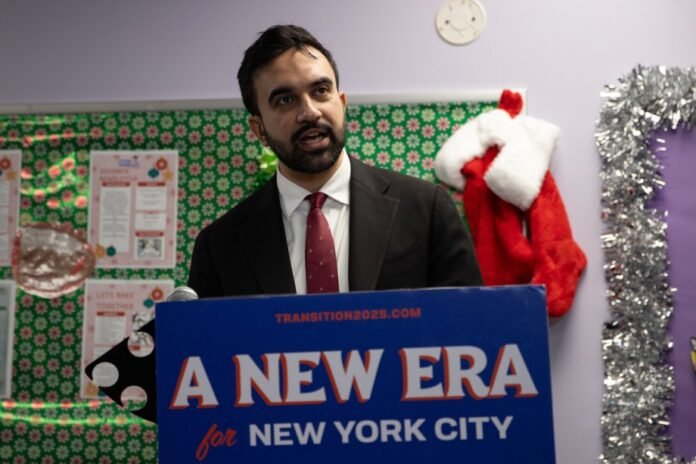
New York City Mayor Zohran Mamdani said Monday that the International Criminal Court (ICC) arrest warrant against Israeli Prime Minister Benjamin Netanyahu should be “taken seriously,” hours US President Donald Trump said Netanyahu would not face arrest in the US, Anadolu reports.

Speaking at a press conference, Mamdani said Netanyahu is “the subject of an International Criminal Court arrest warrant” over alleged crimes against humanity and war crimes.

“We’re speaking about someone who’s the subject of an International Criminal Court arrest warrant. And he’s the subject of this arrest warrant for alleged crimes against humanity, for war crimes, and he’s the architect of the genocide against Palestinians in Gaza as Israel’s prime minister,” Mamdani said.

He added that his remarks were based on “facts of public record,” not personal opinion.

“I believe that when someone is charged with an International Criminal Court warrant, it’s something that should be taken seriously—whether it’s Benjamin Netanyahu or it’s Vladimir Putin or whomever else. What I’ve also made clear is that my administration will follow all applicable local laws,” he said.

READ: Mamdani says New York City reviews authority to arrest Netanyahu during UN visit: Report

Mamdani reiterated that position, saying: “If someone is charged with a warrant by the International Criminal Court for these kinds of crimes, that’s something I believe should be honored. And I’ve also said that we will follow our local laws.”

His comments came after US President Donald Trump said Netanyahu would not face arrest in the United States.

In a Truth Social post earlier Monday, Trump said the Israeli leader “will not be arrested, in any way, shape, or form, while in the United States of America.”

Earlier, Mamdani told The New York Times that his administration’s legal department was discussing the possibility of Netanyahu’s arrest if he visited New York, saying he believes the Israeli premier “belongs in The Hague.”

The ICC issued arrest warrants in November 2024 for Netanyahu and former Defense Minister Yoav Gallant over allegations of war crimes and crimes against humanity in Gaza.

READ: Netanyahu seeks extended security protection for his family beyond potential end of premiership

DA: Cop covered bodycam to snap nude prisoners on his iPhone—but other cams caught him

0
da:-cop-covered-bodycam-to-snap-nude-prisoners-on-his-iphone—but-other-cams-caught-him
DA: Cop covered bodycam to snap nude prisoners on his iPhone—but other cams caught him

On March 31, 2026, a rather odd complaint arrived at the Bucks County, Pennsylvania District Attorney’s Office.

It came from the local sheriff’s office, and it concerned one of their own, Deputy Sheriff Ryan Gaffney. The allegation was unusual: Gaffney had used his iPhone to snap photos of nude prisoners he had encountered in his job—and he had then shared those photos with “several female civilian employees inside the Sheriff’s Office.”

The main claim involved a local man suffering a mental health crisis on the morning of January 30, 2026. Five fully uniformed deputies had arrived at the house and were in the upstairs bedroom. Their detainee was naked from the waist down and had just been persuaded to put on some pants.

At some point in this process, Gaffney was believed to have obtained a photo of the man’s genitalia, because after the arrest and booking, another deputy admitted that he had seen Gaffney showing the photo on his phone to a female civilian employee “in jest.” This same witness said that Gaffney had done something similar in late 2024, taking a photo of a “subject’s naked buttocks while in custody.”

Investigators checked the logs from the Axon system. These showed that Gaffney did not access bodycam footage from the January incident for many months. So if Gaffney had shown a photo on his phone to the female employee on the day of the arrest, it must have come from some other source.

Perhaps Gaffney had used his own phone? Yet his bodycam footage never showed it. Still, it did show him covering his bodycam’s lens with a hand for a few moments.

Investigators pulled bodycam footage from other cops who had been in the room. These picked up Gaffney as the deputies stood around the bed of the nude man. According to investigators, when the man sat down on the bed to pull on his pants, Gaffney removed a glove from his right hand and pulled an iPhone 15 from his right pants pocket. He was then “observed manipulating the cell phone in his right hand” and putting it back in his pocket.

Investigators say that he placed his left hand over his bodycam, blocking its view, as he reached into his pocket again to retrieve the cell phone. He pointed it for just a moment toward the man getting dressed while the phone screen appeared to have “the camera application open,” investigators say.

This gave them enough to go to a judge. On April 22, they obtained a warrant to search Gaffney’s cell phone, which was done the next day by a detective unaffiliated with the investigation. Both nude pictures previously described by witnesses were allegedly located on the phone.

Further phone searches showed, investigators say, that Gaffney had shared one image with “two stored contacts” and the other with “twelve contacts from his personal device on four different dates.”

Gaffney had already sat for a voluntary interview about the case with the Bucks County sheriff. He was asked about allegations of taking pictures of naked detainees with this phone. According to a written statement that he signed off on as accurate, Gaffney had told the sheriff, “I used it for texting my wife, but in relation to the allegations? No.”

Gaffney had also offered his own evidence for this claim. His lawyer sent along screenshots from Gaffney’s iPhone, showing his photo library from January 18 through February 7, 2026. The photos at issue were not in it. Nor were they in the “Recently deleted” folder.

But investigators later said that their detailed forensic search was in fact able to turn the photos up on Gaffney’s phone. They also noted that metadata helped them tie the photos to that very device—and even to specific moments in time that could be cross-checked with bodycam footage.

Watching the watchers

Gaffney was fired from the Sheriff’s Office last month and was today charged by Bucks County District Attorney Joe Khan with “secretly photographing naked prisoners.” This didn’t result in just one charge, either; Gaffney was hit with a batch of charges, including official oppression, unsworn falsification to authorities, possessing an instrument of crime, and obstructing the administration of law or other government function.

“When a deputy sheriff breaks the law and then attempts to cover it up by lying about it,” Khan said today, “it erodes the public trust that thousands of honest public servants work daily to preserve. This Office will continue to aggressively investigate and prosecute official misconduct at all levels of government to ensure that no one is above the law, especially not those who are sworn to enforce it.”

If the charges stick, then Gaffney acted as though he lived in an old-fashioned world, one where police abuse could be hidden with a hand over the camera and some misleading screenshots sent to one’s boss. But a world awash in surveillance cuts both ways—and it can trip up cops who aren’t aware of just how many logs, metadata, and recordings capture their every move.

U.S. Official: Iran Attacks Injured “Far More” Troops Than Pentagon Admits

0
us.-official:-iran-attacks-injured-“far-more”-troops-than-pentagon-admits
U.S. Official: Iran Attacks Injured “Far More” Troops Than Pentagon Admits


U.S. casualties of the Iran War spiked even as U.S. Central Command withheld information about Americans killed and injured from the public. It’s part of a long-running pattern of the Trump administration manipulating such data.

A crushing wave of attacks in Bahrain, Iraq, Jordan, and Kuwait left U.S. forces in “disarray,” causing significant damage to facilities, dozens of injuries, and the first troops killed in action since a June ceasefire collapsed, according to a U.S. official. Three Army soldiers were killed in “devastating” ballistic missile attacks on Muwaffaq Salti Air Base in Jordan, said the official whom The Intercept is not naming because they are not authorized to speak publicly.  

Pvt. Isabella Gonzales, 19, of Carrollton, Texas, was killed in action on Friday. Lt. Tyler James Feehan, 25, of Ewa Beach, Hawaii, was killed on Saturday. The third soldier is provisionally listed as missing, but the official said that “unidentified remains” found after the attack were “certainly” those of the missing soldier. A second official confirmed this assessment. At least four and as many as 10 troops were also injured in the attacks in Jordan, according to the first official.

In northern Iraq, a U.S. service member was killed and another wounded on Saturday when ordnance from a downed Iranian drone exploded. CENTCOM claimed that the injuries occurred during a “controlled detonation” of the downed aircraft. 

The surge in deaths and injuries raise the official U.S. casualty count to at least 446. U.S. casualties have increased by more than 15 percent since the first ceasefire between the U.S. and Iran was struck on April 8. The first official told The Intercept that recent attacks had wounded “far more” personnel than are reflected in the Pentagon’s current casualty count. They did not provide numbers but said “dozens” had received medical attention.

Neither CENTCOM nor the Pentagon replied to numerous requests by The Intercept for information on the casualties, nor would either address the effort to cover up U.S. losses.

Reporting by The Intercept previously found that the Pentagon’s official tally of dead and wounded personnel is a gross undercount, stemming from what one U.S. government official called a “casualty cover-up.”  The Defense Casualty Analysis System, or DCAS, which tracks “deceased, wounded, ill or injured” service members for Congress and the president, is missing hundreds of dead and wounded personnel. The official tally was also previously adjusted downward by 15 casualties without explanation. For months, the Pentagon has ignored requests by The Intercept for comment or clarification.

On Monday, the New York Times reported that the Pentagon withheld information on “dozens of U.S. military injuries in Iran War.” Pentagon spokesperson Sean Parnell called the article “baseless and malicious.”

U.S. bases across the Middle East suffered “significant” damage over the last week, according to the official speaking on the condition of anonymity. That source said Iran had learned how to defeat U.S. air defense systems by overwhelming them using a mix of ballistic missiles and attack drones. They said multiple U.S. aircraft had also been damaged in the attacks. Videos circulating on social media showed the impact and aftermath of Friday’s missile strikes on Muwaffaq Salti Air Base.

“They’ve got some missiles. They’ve got some drones,” Trump said on Sunday of an Iranian military he has insisted, for months, had been annihilated. “We hit them very hard, again, tonight and we did that in honor of the probably three, probably three as opposed to two, great patriots.” 

U.S. Central Command announced later on Sunday night that it had “successfully completed the ninth consecutive evening of strikes,” claiming that the “U.S. military is holding Iran accountable at the Commander in Chief’s direction.”

“Their sacrifice only stiffens our resolve.”

The office of self-styled War Secretary Pete Hegseth attempted to keep information about the new casualties under wraps. “We have nothing to provide beyond what is listed on the website,” a representative of Hegseth’s office told The Intercept late Friday night, without specifying which website, when questioned about U.S. casualties. Hours later, U.S. Central Command acknowledged “two U.S. service members in Jordan were killed in action” on Friday amid “Iranian ballistic missile and drone attacks.” The command also disclosed that four other troops “were medically evacuated to Jordanian hospitals,” an unspecified number of other troops were evaluated for injuries, and “one service member is currently missing in action.” CENTCOM later stripped “in action” from the announcement of the missing soldier, but would not explain the reason to The Intercept.

“Godspeed, heroes,” Hegseth wrote on X. “Their sacrifice only stiffens our resolve.”

The spike in U.S. casualties over the last week followed the Pentagon quietly adding another fatality to its rolls earlier Monday. After Iran claimed to have killed three U.S. personnel in Kuwait last weekend, U.S. Central Command said last Sunday that there were “zero reports of U.S. service member deaths or injuries in the region.” But last Monday, the Pentagon’s official toll of injuries and deaths in the war quietly climbed upward.

After ignoring numerous requests for clarification, an official from Office of the Assistant to the Secretary of War for Public Affairs intimated the fatality added last week was Cmdr. Gabriel Edwards, the commanding officer of Helicopter Sea Combat Squadron (HSC) 5 who went missing almost two weeks prior, following his “helicopter’s emergency landing in the Arabian Sea.” But that official refused to confirm it.

Historically, there was little lag between a casualty occurring in the field and its inclusion in the DCAS system, according to two people who used to work on the official casualty tally.

Asked why it took a week after the search for Edwards ended to add him to the casualty rolls, the second official said a blend of incompetence and deliberate slow-walking of casualty data has slowed down the process of updating publicly available statistics. 

For months, the Pentagon list of the names of the dead has also been missing Maj. Sorffly Davius, a signals and communication officer with the New York Army National Guard who was assigned to the headquarters of the 42nd Infantry Division and reportedly died of sudden illness while on duty in Camp Buehring, Kuwait, on March 6. Davius’s death was widely acknowledged even as it was excluded from the official count: Rep. Mike Lawler, R-N.Y., spoke about him during a memorial service that month, and Gen. Dan Caine, chair of the Joint Chiefs of Staff, recognized Davius while “honoring our fallen.”

Counting Davius and the “missing” soldier in Jordan, the U.S. has suffered 19 deaths during the Iran War.  Parnell said on Monday that “casualty information is publicly available and regularly updated online on the Defense Casualty Analysis System for everyone, including the media, to review.” DCAS was, uncharacteristically, not updated as of Monday afternoon and instead offered outdated figures posted Friday morning.

While DCAS provides a running tally of “non-hostile” deaths — meaning those who died from accidents or by illness — it doesn’t include “non-hostile” injuries. The DCAS figures show that 68 Navy personnel have been wounded in action. Missing, however, are the more than 200 sailors treated for smoke inhalation or lacerations due to a March 12 fire that raged aboard the USS Gerald R. Ford. The aircraft carrier had been conducting round-the-clock flight operations to, in Caine’s words, “project combat power” in the Middle East.

The casualty numbers also don’t include a sailor who suffered a non-combat-related injury aboard the USS Abraham Lincoln as it was involved in “strike missions in support of Operation Epic Fury” on March 25.

On April 21, the number of wounded-in-action troops declined by 15 without public comment from the War Department. Despite repeated questions over three months, the Pentagon has not explained the disparity in its casualty count.

The Trump administration began undermining transparency surrounding U.S. military casualties almost a decade ago. Not long after Trump first took office in 2017, and following an uptick of violence in the conflict, the Pentagon stopped releasing immediate information about American combat deaths in Afghanistan.

After an Iranian missile attack on Al-Asad Air Base in Iraq on January 8, 2020, Trump peddled a complete fiction to the public. “No Americans were harmed in last night’s attack by the Iranian regime,” he said at the time. CENTCOM ultimately admitted that 110 troops suffered traumatic brain injuries. An inspector general report indicated that the number of wounded may have been even higher, because “DoD cannot determine whether all Service members are being properly diagnosed and treated for TBIs in deployed settings.”

On the campaign trail in 2022, Trump claimed that for a year and a half of his first presidency, the U.S. suffered no deaths in the Afghan War. “In 18 months in Afghanistan, we lost nobody,” he said. But an Associated Press investigation found that there was no year-and-half span during Trump’s first term when there were no combat deaths.

Last spring, The Intercept reported on an effort by CENTCOM, the Pentagon, and the White House to keep casualties of the U.S. war against Yemen’s Houthis under wraps. It represented a departure from the Biden administration, when the Office of the Secretary of Defense and CENTCOM provided detailed data on attacks on military bases across the Middle East — including to this reporter. CENTCOM had provided the total number of strikes, breakdowns by country, and the total number injured, and even individual synopses of more than 150 attacks.

0FansLike
0FollowersFollow
0FollowersFollow
0SubscribersSubscribe
- Advertisement -
Google search engine

Recent Posts