23.1 C
London
Sunday, July 19, 2026
Home Blog

Turkish foreign minister urges return to US-Iran agreement, says Ankara coordinating with Qatar

0
turkish-foreign-minister-urges-return-to-us-iran-agreement,-says-ankara-coordinating-with-qatar
Turkish foreign minister urges return to US-Iran agreement, says Ankara coordinating with Qatar

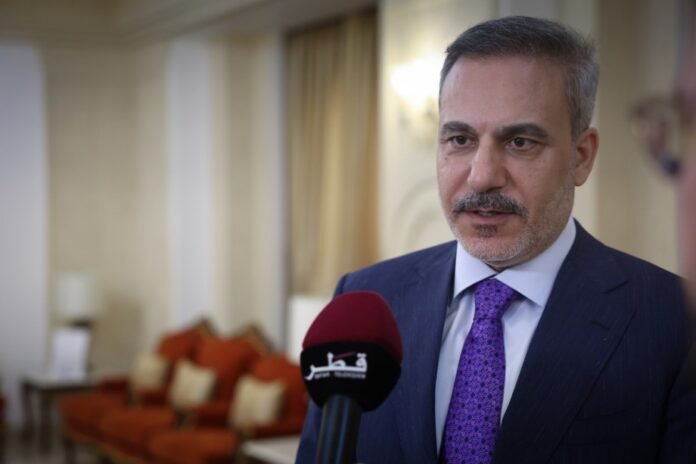
Turkish Foreign Minister Hakan Fidan on Sunday called for a return to the memorandum of understanding signed between the US and Iran, saying Qatar is using all available diplomatic channels to help resolve the crisis and that Turkiye is coordinating closely with Doha, Anadolu reports.

“I am pleased to see that Qatar is once again trying to do everything it can to resolve this crisis by using all constructive methods and all available channels. Hopefully, we will receive good news in the coming days,” Fidan said in an interview with Qatar TV during his visit to the Gulf country.

“Turkiye is also in close coordination with Qatar on this issue,” he added.

Fidan warned that hostilities between the US and Iran war have affected the regional economy and said the risk of a broader conflict could create further instability.

Recalling attacks on infrastructure in the region, he stressed the need to revive diplomatic efforts.

“Our wish is that an agreement between Iran and America will be reached again as soon as possible. As you know, with Pakistan’s mediation, Qatar’s intensive contributions and Turkiye’s support, a memorandum of understanding had been prepared.

“However, we have since moved away from that point. We need to return to it,” he said.

Fidan said he discussed these issues during meetings in Qatar and reiterated Turkiye’s support for Doha’s diplomatic efforts.

“The security and peace of Qatar, as well as the security and stability of the region, are also in Turkiye’s interest. Therefore, as in many other issues, we will continue to work together with the Gulf countries and other countries of the Islamic world on this matter,” he added.

READ: 14 US refueling aircraft arrive in Israel amid Iran escalation: Report

‘Constructive cooperation rather than competition’

Fidan described Turkiye and Qatar as two countries with deep historical ties and a strong strategic partnership, saying the foundation of bilateral relations was laid during the tenure of former Qatari Emir Sheikh Hamad bin Khalifa Al Thani, who died last Sunday.

Offering condolences to the Qatari people, Fidan said Sheikh Hamad was “not only a visionary leader for Qatar, but also for the Islamic world and the world at large.”

“He made highly significant and constructive contributions. Today, both our region and beyond continue to benefit from what he accomplished,” he added.

Fidan also praised Qatari Emir Sheikh Tamim bin Hamad Al Thani for playing a constructive regional role and strengthening Turkiye-Qatar cooperation to address regional challenges.

“We see today that the outstanding example of Turkiye-Qatar cooperation, from Lebanon to Afghanistan, from Afghanistan to Sudan, from Sudan to Gaza, the Palestinian issue and the Iran issue, is increasingly appreciated across the region and serves as a model for others,” Fidan said.

“There is a need for constructive cooperation rather than competition in the region, and Qatar is making serious efforts toward that goal,” he added.

Fidan said Gulf countries, particularly Qatar, Saudi Arabia, the UAE, Kuwait and Oman, have made significant progress by advancing development and public services while building strong states and world-class cities.

READ: Jordan says 3 Iranian missiles intercepted as sirens sound

IDF Warns Iranian Strikes on Jordan Could Spill Over Into Israel 

0
idf-warns-iranian-strikes-on-jordan-could-spill-over into israel 
IDF Warns Iranian Strikes on Jordan Could Spill Over Into Israel 


The Israeli military said Sunday that Iran launched ballistic missiles toward the southern Jordanian city of Aqaba, warning that the attack could result in projectiles or debris entering Israeli territory. 

“There may be spillover into Israeli territory as a result of the fire,” the Israel Defense Forces (IDF) said, adding that air raid sirens would sound if necessary. The military said there were no changes to the Home Front Command’s civilian guidelines. 

Initial reports said large explosions were heard over Eilat as interceptor systems attempted to destroy Iranian missiles headed toward nearby Aqaba. Images and videos shared on social media showed plumes of smoke rising over the Red Sea resort city. 

The IDF later said it had conducted interceptions outside Israeli territory involving interceptor fragments that could have crossed into Israel. It said fragments subsequently fell in northern Eilat, and no injuries were reported. 

Earlier Sunday, Jordan rejected a statement by the US Embassy in Amman that said Jordanian authorities had evacuated Aqaba’s international airport and Red Sea seaport because of what the embassy described as a “specific and credible threat.” 

Jordanian government spokesman Mohammad Al-Momani said no evacuation orders had been issued for either facility in the southern port city. Speaking to the state-run Petra news agency, Al-Momani said Jordanian authorities had detected no potential threats to Aqaba in recent hours. Jordan’s state news agency also quoted a government spokesperson as saying no decision had been made to evacuate either the airport or the seaport. 

The US Embassy had earlier advised US citizens not to travel to either location, saying Jordanian authorities had evacuated both facilities in response to a “specific and credible threat.” 

The developments came as the United States carried out an eighth consecutive night of strikes against Iran after two US troops were killed and a dozen others were injured in a series of strikes on US military bases in Jordan. 


Sharon Osbourne Sparks Death Fears After Hospital Scare

0
sharon-osbourne-sparks-death-fears-after-hospital-scare
Sharon Osbourne Sparks Death Fears After Hospital Scare


Sharon Osbourne has sparked fresh concern for her health after an unexpected hospital visit forced her to miss a major tribute to her late husband, Ozzy Osbourne.

The 73-year-old former The X Factor judge had been expected to attend the unveiling of a statue honoring the Black Sabbath legend at France’s Hellfest festival in late June. Instead, Sharon pulled out after requiring medical treatment earlier in the week.

She shared the news herself on Instagram but did not reveal what sent her to the hospital. Her brief update quickly worried fans, especially after the difficult year she has endured since Ozzy’s death in July 2025 at age 76.

“I’m sorry I couldn’t be at Hellfest for the unveiling of Ozzy’s statue,” Sharon wrote. “Unfortunately, I had an unexpected trip to the hospital earlier in the week.”

She added: “A big thank you Olivier Garnier, Ben Barbaud, and everyone at Hellfest. Special thank you to @philippe_pasqua_officiel for the absolutely stunning statue!”

While Sharon did not offer more details about her condition, sources claimed those close to her have been increasingly worried about how much she has taken on since losing Ozzy.

“Sharon has been through an extraordinary amount emotionally since losing Ozzy,” one source close to the family claimed. “People around her have been worried because she has thrown herself into preserving his legacy while still dealing with immense grief.”

The insider added that news of her hospitalization caused real alarm among friends and family.

“When word spread that she had been admitted to the hospital, there was genuine concern that she had reached breaking point,” the source said.

Another insider claimed friends fear Sharon has barely slowed down since Ozzy’s passing.

“Friends are frightened because Sharon has barely stopped since Ozzy passed away,” the insider said. “She has been determined to honor him, yet she’s also been carrying an enormous emotional burden behind closed doors, and there is a real fear she is at death’s door now.”

Despite the scare, Sharon has continued to focus on projects tied to Ozzy’s legacy. One of the most talked-about is an AI-powered digital avatar of the rock icon, which has already drawn criticism from some fans.

Sharon has pushed back against claims that the project is a cash grab.

“Technology moves on,” she said on The Osbournes podcast. “For somebody to turn around to me and say I’m doing a cash grab, no. You don’t know my husband. I know my husband.”

She said Ozzy often wondered how long people would remember him.

“My husband would say to me over and over, ‘How long do you think I’ll be remembered?’” Sharon said.

She added that the project is something that can be passed down through the family.

“[It’s something] that will pass on through our family, and it’s for our grandkids,” she said.

Her son, Jack Osbourne, has also defended the technology. He said the project is being built carefully and is not meant to make it seem as though Ozzy is still alive.

According to Jack, the avatar uses what he described as “closed AI,” relying only on verified material related to Ozzy’s life and career.

“This is going to be tasteful,” Jack said. “It’s innovative. It’s either we do it, or someone else is gonna do it.”

He added: “For me, it’s not about pretending he’s still alive. It’s making sure he’s never forgotten.”

The project was announced during The Enduring Legacy of a Rock Icon and His Family: Ozzy Osbourne and The Osbournes at Licensing Expo. It is being developed through a partnership between Hyperreal and Proto Hologram.

The companies have said the digital recreation will be able to hold conversations with fans using authenticated data from Ozzy’s life and career.

Sharon appeared excited about the possibilities when discussing the technology.

“The things that you can do with that are just endless,” she said.

Jack later responded to critics on his YouTube channel, insisting the project is far more advanced than a simple chatbot.

“Here’s the thing, it’s gonna be so tasteful what we’re doing,” he said. “It’s not gonna be f—— lame. It’s really complex what we’re doing.”

He continued: “This isn’t just like hooking up an image of my dad to ChatGPT. This is some high-level technology that we’re gonna be working with, and it’s gonna feel very real, and it’s kind of wild how it will be utilised.”

For now, Sharon’s fans are left hoping her hospital scare was only temporary. But her absence from the Hellfest tribute has raised new concerns about how deeply Ozzy’s death continues to weigh on the woman who spent decades by his side.

As mosquito ranges expand, better monitoring is key to preventing disease

0
as-mosquito-ranges-expand,-better-monitoring-is-key-to-preventing-disease
As mosquito ranges expand, better monitoring is key to preventing disease

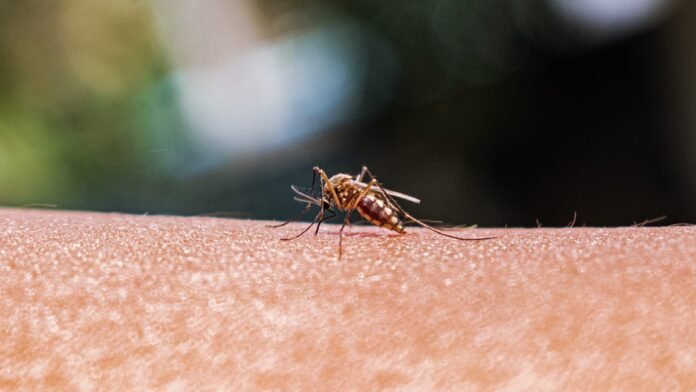
With summer heat comes pool parties, beach days, backyard cookouts, and, of course, swarms of bloodthirsty mosquitoes.

But while insect bites have always been a side effect of time spent outdoors, the species doing the biting are changing in historically temperate regions like New England. As climate change makes these areas warmer and wetter, their ranges are expanding—and any diseases they carry come with them.

In Connecticut, for example, a statewide mosquito monitoring program has detected 54 different species, including invasives like the Asian tiger mosquito, which can transmit potentially serious diseases including dengue and Zika. The mosquito’s historical territory is in hot and humid climates farther south, but it has been moving north.

“There are a number of new species that are creeping into our area,” said Philip Armstrong, chief scientist at the Connecticut Agricultural Experiment Station, which coordinates the state’s mosquito trapping and testing program.

Programs like these are key for preventing mosquito-borne diseases, especially as climate change alters the risks. “You really do have to test the mosquitoes to know where the hot spots are for these viruses,” Armstrong said. “By the time we learn about human cases, it’s usually too late to do anything.”

There aren’t statewide monitoring programs in much of the country. Instead, a patchwork quilt of more than 1,000 mosquito control agencies tries to keep ahead of an evolving problem. Most are run at the local level, with a wide range of organizational structures and monitoring practices.

The US ought to have a national surveillance database collecting and sharing information from all monitoring programs, said Dan Markowski of the American Mosquito Control Association, a nonprofit that works to reduce mosquitoes and vector-transmitted diseases. But, he added, “it all obviously comes back to money.”

Last week, Connecticut announced that mosquitoes in the state have already tested positive for West Nile virus this season. The virus, which appears every summer, has become the leading cause of mosquito-borne disease in the Northeast. While most infections are asymptomatic, it can cause flu-like symptoms and has resulted in more than 3,300 deaths since it first appeared in the US in 1999.

Connecticut established its monitoring program two years before that to monitor for a different virus: Eastern equine encephalitis, a rare but serious mosquito-borne disease that can cause neurological issues and has a roughly 30 percent fatality rate. While it is still uncommon, outbreaks are becoming more frequent in New England.

“There’s these cycles of increased virus activity, and we didn’t see that before, historically,” Armstrong said. “It has the hallmarks of something that’s being affected by climate change.”

In temperate regions like the Northeast, global warming can alter mosquito-borne disease risks not only by expanding the range of virus-carrying insects but also by lengthening the transmission season, reducing the number of mosquito predators and changing habitats, among other factors. Researchers predict that tropical mosquito-borne diseases like Zika, dengue, chikungunya, and malaria will likely become established in temperate areas because of climate change.

“As the temperatures rise, you can actually speed up mosquito development, so you can have multiple cycles of mosquitoes every year in new areas,” said Brian Leydet, who studies mosquito- and tick-borne diseases at the State University of New York College of Environmental Science and Forestry.

Beyond mosquitoes, Leydet said environmental changes can also affect viruses and their original hosts, such as birds and deer, creating complex ecological shifts that can be difficult to study.

Leydet helped establish a monitoring program in St. Lawrence County, New York, in 2024, after an Eastern equine encephalitis outbreak. Unlike Connecticut, New York does not have a statewide program, and many counties “lack the infrastructure and budget to conduct regular mosquito monitoring,” according to the project announcement.

Monitoring programs are typically labor-intensive and expensive, requiring teams to set and check traps, alongside specialists who can identify, sort, and test the samples. While some traps attract female mosquitoes with “stinky water” loaded with decaying organic material, others require dry ice to release carbon dioxide that mosquitoes sniff out when hunting for mammals. But in rural parts of New York, dry ice can be hard to come by—the team had to make their own.

Even beyond the logistical and resource challenges, communication, coordination, and data sharing for mosquito monitoring can be a challenge.

“One of the problems with states that are not comprehensively doing these surveillance programs is that surveillance is hit or miss,” Leydet said. “A lot of these surveillance programs are run by the counties, and they’re not really talking to each other.”

Leydet’s lab found that this patchwork system means some invasive mosquito species are flying under the radar.

Funding is another challenge to better surveillance. “If the county doesn’t have money or resources, these programs fade away,” Leydet said. “If we don’t have these surveillance programs, then all we’re doing is responding to a problem when it’s already a problem, and that’s never how prevention works.”

That could change with a bill introduced in the New York State Legislature this session, which would lay the groundwork for a comprehensive mosquito surveillance program—rather than what the bill calls the “sparse and disintegrated” current system—to help public health officials respond before an outbreak.

Proactive measures can include removing pools of standing water, applying targeted larvicides in breeding habitats, and warning the public to use insect repellent and cover bare skin when outdoors, though outbreaks may require more widespread pesticide spraying.

Leydet said greater centralization would be a start, but widespread coordination in large states like New York can be a challenge: “There is general interest in these programs, but when you start seeing what they cost, it’s like, ‘Maybe we’re not that interested.’”

Still, he said, “any help is better than nothing.”

This article originally appeared on Inside Climate News, a nonprofit, non-partisan news organization that covers climate, energy, and the environment. Sign up for their newsletter here.

It’s Scary As Hell Being Black in America Right Now

0
it’s-scary-as-hell-being-black-in-america-right-now
It’s Scary As Hell Being Black in America Right Now


Alain Stephens is an investigative reporter covering gun violence, arms trafficking, and federal law enforcement.

There is a tangible heat to being Black in America this summer. 

Every morning starts the same. A jolt of coffee and nicotine as my thumbs scroll a daily intake of Black death and indignity. 

It mostly comes dosed in tears. Tears of Black moms and aunties, projected behind stone-faced fathers and grandpops trying to hold it together behind press podiums. 

This summer, it was Nolan Wells, an 18-year-old who disappeared during a trip to Mississippi’s Horn Island over the Fourth of July. Wells, who traveled to the island with a predominately white group of friends, was found dead in the water two days later. Authorities have not announced a final determination of what happened, but Wells’s family has challenged the official timeline and sought an independent autopsy. The investigation remains ongoing, which is to say that another Black family is waiting for answers in the indeterminate dark. In a state synonymous with deep-seated anti-Black racism, and the highest number of recorded lynchings, speculators and community members have begun to fear the worst.

It’s an expectation that has set the tone for living while Black in this new era. Where at any moment you, as Black person, can be erased for the most negligible of offenses, and if you’re not careful, be discarded into the void.

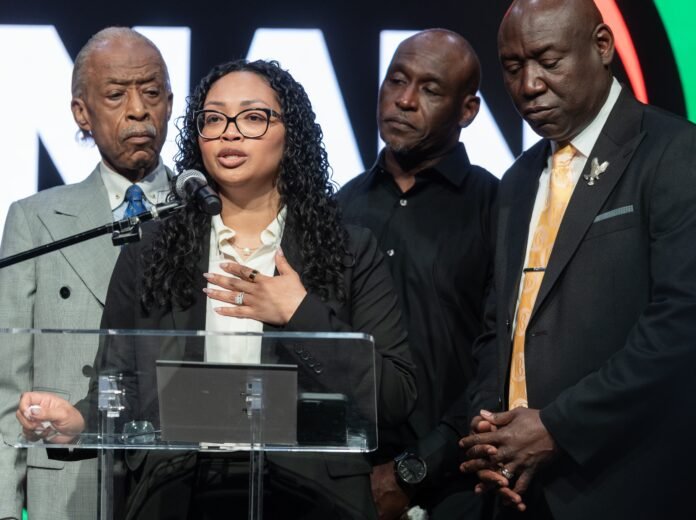
Before Nolan Wells, we watched in June as another Mississippi family laid their Black boy to rest. Kohen Wiley, who was just a year old, was shot and killed by Senatobia police officers, who fired into the vehicle where Wiley was sitting on his mother’s lap. After a friend of Wiley’s mother was accused of shoplifting a box of diapers at a Walmart, police opened fire on their car under the pretense that the vehicle was “oncoming” toward the officers. Civil rights attorney Ben Crump has said the officers were not in the car’s path, citing a photo from the scene. A month later, investigators have yet to release body camera footage of the incident or provide any new answers. No charges have been filed.

Black Americans had already borne witness to those familiar echoes. Earlier that month, a jury in South Carolina acquitted 61-year-old Rick Chow of a murder charge after he shot and killed Cyrus Carmack-Belton, 14, for the alleged offense of stealing bottled water. Video evidence of the 2023 incident shows the store owner chasing Carmack-Belton out of the shop after falsely accusing him of theft. Chow, who had twice before shot patrons he suspected of shoplifting, would go on to shoot the teenager in the back as he fled. 

Whether over a box of Pampers or a gulp of water, it is a startling reminder that for too many non-Black Americans, protecting even the most trivial property can take precedence over the sanctity of a Black life.

It’s an existential dread that has now turned into expectation, an anxiety meant for the mind to blunt the inevitable oncoming pattern of pain, disappointment, and injustice — in this case, being Black in America.

These deaths do not exist in isolation. They arrive amid a broader retreat from the institutions that, however imperfectly, once acknowledged Black Americans as a constituency deserving of protection and investment.

And the casualties of Black existence transcend more than just bodies. The Trump administration has waged full spectrum warfare on Black identity in every sense. 

Since Trump returned to office, Black workers have experienced rising unemployment, with Black men seeing some of the steepest job losses in recent memory, according to an analysis by the Economic Policy Institute.

This coincides with broader efforts by the Trump administration to dismantle federal diversity, equity, and inclusion initiatives, directing agencies to terminate DEI programs and contracts while encouraging similar rollbacks throughout the private sector. The administration has also sought to reshape how race is discussed across the federal government, from education and museums to civil rights enforcement. 

At the same time, the administration has continued to chip away at the legal architecture of voting rights, with years of court decisions making it more difficult to challenge racial gerrymandering and voting restrictions. The Supreme Court’s recent decision dismantling key Voting Rights Act protections has opened the door for states to erase Black-majority districts, which threatens to strip Black communities of congressional representation across the South. 

If there was anything novel to the current pulse of American white supremacy, it is that it doesn’t seek domination but to erase Blackness altogether.

Trump’s supporters have come out in droves to support this mission, from swarms of masked white supremacists descending on the U.S. Capitol in honor of our nation’s 250th birthday to the endless viral videos of white men brandishing guns at Black people doing anything from swimming at the pool to handing out flyers

It is no surprise that, under the constant reminder that the market value of Black life has plummeted, many Black Americans are succumbing to despair. Suicide rates among Black Americans — especially young Black men — have risen sharply over the past decade. Researchers point to a convergence of untreated depression, limited access to mental health care, economic instability, exposure to violence, and the cumulative weight of racialized stress.

None of those policies alone determine whether a police officer fires a gun, whether a jury reaches a particular verdict, or what pushes a broken down mind over the brink. But together they communicate something many Black Americans increasingly recognize: that America has further turned tail and ran away from its promise of an egalitarian society, or even the aspiration that it should be one. 

That departure has consequences well beyond Washington. It shapes who receives the public’s attention, which communities are viewed as worthy of investment, and whose fears are treated as matters of national concern. 

For Black Americans watching another summer marked by funerals, investigations, and courtroom disappointments, the sentiment is not simply that violence persists. It is that the country is becoming less interested in confronting why it persists at all

That is the understanding of it. But the feeling is something entirely different.

And that feeling is scary as hell.

Libya joins China’s payment system, reducing reliance on US dollar

0
libya-joins-china’s-payment-system,-reducing-reliance-on-us-dollar
Libya joins China’s payment system, reducing reliance on US dollar

The Governor of the Central Bank of Libya, Naji Mohammed Issa, and the Governor of the People’s Bank of China, Pan Gongsheng, agreed Saturday to connect Libyan commercial banks to China’s payment and settlement system, Anadolu reports.

In a statement on its website, the Central Bank of Libya said Issa, who is visiting Beijing, met with the Governor of the People’s Bank of China on Friday.

They reviewed the volume of trade between the two countries and discussed ways to strengthen it and increase its growth rate.

“The importance of launching a new phase of genuine strategic partnership between the two central banks was discussed. It was agreed to connect Libyan commercial banks to China’s Cross-Border Interbank Payment System, CIPS, which will simplify financial transfers and make them easier to conduct,” it said.

CIPS was launched by the People’s Bank of China in 2015 to facilitate international transfers using the Chinese yuan.

It serves as an infrastructure that enables banks to send and receive yuan-denominated payments directly, reducing reliance on the US dollar by eliminating the need to process transactions through intermediary banks.

READ: Libya announces new oil field discovery with estimated reserves of 195M barrels

The statement added that the two sides also agreed to address existing obstacles and facilitate trade procedures in a way that would increase the volume of trade between the two countries.

It would begin with the implementation of direct money transfers to China, making transactions easier for small-scale traders.

The two sides also agreed to allow letters of credit to be opened directly through Chinese banks, according to the statement.

They also agreed to arrange a visit to Beijing by an official Libyan banking delegation, headed by the governor of the Central Bank and accompanied by the directors of Libyan commercial banks, to meet their Chinese counterparts at the earliest possible opportunity.

The statement noted that the planned visit aims to establish cooperation between commercial banks in the two countries and to benefit from China’s experience in electronic payments and direct financial transfers.

It added that the measures would help reduce reliance on the informal market, ensure compliance with anti-money laundering and counter-terrorism financing standards, and improve the reputation of Libya’s banking sector.

READ: China, Pakistan urge US, Iran to cease hostilities, resume dialogue

Syria and Iraq Sign US-Backed Deal To Revive Strategic Oil Pipeline 

0
syria-and-iraq-sign-us-backed-deal to revive-strategic-oil-pipeline 
Syria and Iraq Sign US-Backed Deal To Revive Strategic Oil Pipeline 


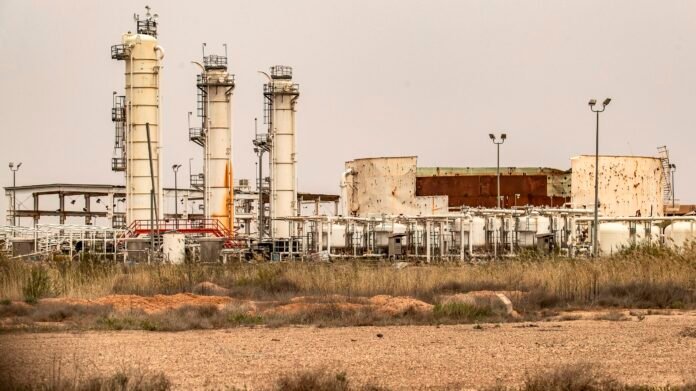
[DAMASCUS] Syria and Iraq have signed two memorandums of understanding to revive the long-idled Haditha-Banias crude oil pipeline, in a move that has drawn strong backing from the United States and could reshape regional energy routes if brought to fruition.  

The agreements, signed during meetings in Washington, aim to restore one of the Middle East’s most strategically significant oil corridors, linking Iraqi crude production to Syria’s Mediterranean coast and providing Baghdad with an additional export outlet beyond the Gulf.  

Under the first agreement, the Syrian Petroleum Company and Iraq’s Basra Oil Company will cooperate to rehabilitate the pipeline, which is historically connected to the Kirkuk-Banias route. A second memorandum was signed with an international consortium comprising Chevron, UCC Holding, and TI Capital to conduct technical and financial studies and prepare implementation plans for the project.  

According to the Syrian government, the signing ceremony took place in the United States in the presence of Iraqi Prime Minister Mohammed Shia al-Sudani, the US secretary of energy, and senior officials from both countries.  

The project revives a pipeline with deep historical roots. Construction of the Kirkuk-Banias line began in 1950, and the pipeline entered service in 1952, carrying Iraqi crude from the Kirkuk oil fields to Syria’s Banias terminal on the Mediterranean through an approximately 890-kilometer route built by the Iraq Petroleum Company.  It remained one of Iraq’s principal export arteries until April 1982, when Syria halted Iraqi oil flows after siding with Iran during the Iran-Iraq War.  

Efforts to restore the pipeline have repeatedly stalled over the past four decades because of political tensions between Baghdad and Damascus, international sanctions imposed on Iraq during the 1990s, damage to infrastructure following the 2003 US-led invasion of Iraq, and the collapse of a joint rehabilitation initiative launched in 2007.  

Washington welcomed the latest agreements, with the US State Department describing the pipeline as a priority regional infrastructure project with strategic significance for both countries. The department also expressed support for the US-led consortium participating in the technical and financial aspects of the rehabilitation effort, noting that the pipeline is ultimately expected to transport up to two million barrels of crude oil per day.  

Economic analyst Abdel Azim al-Maghrabel told The Media Line that, if implemented, the project could become one of the region’s largest energy infrastructure developments.  

“It would provide Iraq with a new export corridor to the Mediterranean, reducing reliance on traditional shipping routes while increasing flexibility in reaching international markets,” he said.  

Al-Maghrabel added that Syria could also benefit by restoring its role as a regional energy transit state through transit revenues and renewed investment in its energy infrastructure.  

“The project extends beyond economics,” he said. “It has the potential to reshape regional energy corridors by establishing a land route linking Iraqi crude directly to the Mediterranean. The participation of major international companies also reflects growing interest in reinvesting in Syria’s and Iraq’s energy sectors.”  

Preliminary estimates suggest the first phase could take around 30 months to complete. Syria could earn roughly $200 million annually in transit fees during the initial stage of operations, with revenues potentially exceeding $500 million per year once the pipeline reaches full capacity, although those figures have yet to receive independent technical or official confirmation.  

Despite the political momentum surrounding the agreements, significant obstacles remain. Securing a pipeline that spans vast desert areas, rehabilitating decades-old infrastructure, mobilizing billions in investment, and completing the necessary legal and regulatory frameworks will all be essential before construction can proceed.  

While the memorandums mark the first serious attempt in more than four decades to revive the pipeline, analysts say the project’s success will ultimately depend on whether political commitments translate into financing, security coordination, and tangible progress on the ground.  


‘Possessed’ Woman Thrashes on Floor During Celebrity Pastor’s Book Signing (Video)

0
‘possessed’-woman-thrashes-on-floor-during-celebrity-pastor’s-book-signing-(video)
‘Possessed’ Woman Thrashes on Floor During Celebrity Pastor’s Book Signing (Video)


A celebrity pastor’s book signing at a Barnes & Noble took a dramatic turn when one woman began thrashing on the floor while other attendees screamed, shook, cried and appeared to collapse inside the store.

The intense scene unfolded during a Houston event for Kathryn Krick, the 35-year-old self-described “apostle” and lead pastor of Five-Fold Church in Los Angeles.

Krick had gathered more than 200 people for a May 12 talk and signing for her book Ignite Revival when the emotional event turned into what she later described as a religious “revival.”

Krick’s ministry practices what it calls spiritual “deliverance,” which it describes as freeing people from demonic forces. She later characterized the attendees’ physical reactions as encounters with God’s power.

Footage shared by Krick showed one woman approaching the signing table visibly emotional as her right hand began to shake.

Within seconds, the woman’s body started jerking. Her head snapped backward as two people moved in to support her.

Her knees eventually buckled, and she arched backward over a folding chair while a man cradled her head. Moments later, she was lowered onto the bookstore floor.

The edited video then cut to other attendees crying, screaming, doubling over and slumping in their chairs as Krick touched them or gestured in their direction.

During one interaction, Krick could be heard commanding something to “leave her body,” apparently performing what her ministry describes as spiritual deliverance.

Text placed over the video read: “God’s power is not limited to the four walls of a church.”

Krick said the reactions began while she was speaking and continued as people came forward to have their books signed.

“Revival broke out in this bookstore!” she wrote in an Instagram caption.

She also claimed people began “falling out of their seats” during her message.

“Person after person was touched as they came to get their books signed, and I was left in awe of the tangible love of God that filled the store,” Krick wrote.

She added: “Many were set free, some received impartation, and others were touched powerfully by God’s love. Hallelujah!”

Five-Fold Church, also known as 5F Church, describes its mission as bringing Christian revival around the world and restoring practices it believes were present in the early church.

According to the church’s website, the ministry teaches that God’s power can “deliver the oppressed and heal the sick.”

The church also says followers are called to “heal the sick, cast out demons, and raise the dead” by acting as vessels for what it describes as God’s anointing.

That “anointing,” according to the ministry, can be passed to others through a practice known as “impartation.”

Krick did not provide evidence to support the purported healings or demonic deliverances shown or referenced in the footage.

The Daily Mail said it contacted Krick and Five-Fold Church for comment.

The bizarre bookstore scenes have since sparked discussion about what drives such extreme physical reactions at modern religious events, especially when they unfold outside a church setting and in front of a crowd of onlookers.

A blockade at Hormuz, a crisis for all humanity

0
a-blockade-at-hormuz,-a-crisis-for-all-humanity
A blockade at Hormuz, a crisis for all humanity

The current architecture of international relations faces a profound, non-linear crisis that extends far beyond the traditional boundaries of regional military conflict.

The ongoing military escalation in the Middle East — particularly around the region’s key maritime chokepoints, the Suez Canal, the Bab al-Mandab Strait and the Strait of Hormuz — is exposing deep material and moral vulnerabilities in our hyper-optimized, globalized society.

While mainstream security analysis remains focused on energy volatility and short-term crude oil price swings, a more devastating, silent crisis is unfolding where global logistics networks, human security and agricultural supply chains intersect.

For decades, supply chain policymakers and global freight operators have treated major maritime routes as fixed, deterministic constants. That assumption enabled the global adoption of hyper-efficient “just-in-time” logistics models designed to minimize capital holding costs and maximize inventory turnover.

However, this aggressive optimization has stripped international shipping networks of buffer capacity, rendering the global food trade highly sensitive to geopolitical shocks. When military interdictions and asymmetric security threats paralyze these critical maritime routes, the system suffers a severe shock.

Unlike industrial manufacturing components, agricultural goods and humanitarian aid shipments cannot survive prolonged disruptions; they are bound by perishability and operate on extremely narrow financial margins.

In response to the maritime gridlock, a dominant but misleading narrative has emerged in both Western policy circles and Eurasian diplomatic forums. Shippers and trade ministers frequently argue that land-based intermodal corridors — most notably the Trans-Caspian International Transport Route, known as the Middle Corridor — can seamlessly serve as an emergency safety valve and scalable shock absorber.

To test that assumption, our research institute conducted a network flow optimization analysis using the Edmonds-Karp maximum flow algorithm. The data generated by our model delivers a harsh reality check to current policy discourse.

The simulation shows that continental land infrastructure faces a fixed physical and administrative capacity ceiling. Under maximum stress, the land-based Middle Corridor (Vector α) reaches saturation at a maximum of 12 intermodal container trains per day. Translated into equivalent maritime freight volumes, that rail capacity reveals a staggering structural deficit.

A standard intermodal block train operating across Eurasia carries roughly 100 twenty-foot equivalent units, or TEU. Therefore, a fully saturated daily capacity along the Middle Corridor yields a maximum network throughput of just 1,200 TEU per day. By contrast, a single modern ultra-large container vessel, or ULCV, routinely carries up to 24,000 TEU.

As a result, the entire daily throughput of the main land-based Eurasian rail corridor equals just 5% of the cargo volume displaced by a single modern container ship. Our analysis identified the primary bottleneck at the Caspian Sea transshipment point between the ports of Aktau, Kazakhstan, and Baku, Azerbaijan.

Pushing cargo volumes beyond the 1,200-TEU threshold causes terminal yard dwell times to jump from a baseline of 48 hours to more than 240 hours — 10 days — of severe port gridlock.

This paralysis is worsened by a shortage of rail-car ferries and mechanical delays at track-gauge transition points, where trains must shift from the wide, 1,520-millimeter Russian gauge to the 1,435-millimeter standard European gauge. Land corridors simply cannot substitute for maritime routes in bulk food logistics.

With the overland alternative quickly saturated, global logistics networks must rely on the maritime detour around Africa via the Cape of Good Hope (Vector β). While the open ocean offers essentially unlimited capacity, it imposes severe time and cost penalties.

Rerouting commercial vessels around Africa adds about 3,500 to 4,000 nautical miles to the voyage. At standard economical speeds, this adds a delay of 10 to 14 days to the global supply chain. The extended transit also increases marine fuel consumption by 450 to 600 metric tons per vessel, driving up operational costs per voyage by 34.6%.

For low-margin agricultural commodities such as wheat and corn, these logistics penalties flow directly into retail markets. Agricultural shippers and humanitarian relief organizations cannot absorb a 34.6% spike in freight rates, so the cost is passed on entirely to consumers.

Our model predicts that within 14 days of a chokepoint closure, the supply gap caused by shipping delays triggers panic buying and localized shortages. Within 30 days, as higher transport costs reach retail shelves, the model projects a 15% to 22% spike in the price of basic food commodities in vulnerable, import-dependent regions, most notably in East Africa and across the Global South.

For populations that already spend more than 40% of household income on food, this logistics-driven inflation directly reduces caloric intake and sharply raises the risk of widespread, localized famine.

This mechanism shows that maritime security is not a commercial luxury for shipping conglomerates; it is a core pillar of global human security. To prevent these logistics bottlenecks from turning into catastrophic humanitarian shocks, the international community must move past reactive crisis management and adopt structural interventions. We propose three immediate, coordinated policy measures:

First, the United Nations, in coordination with the World Bank and the Group of 20, should establish an International Humanitarian Logistics Shielding Fund, or HLSF. This fund should absorb the 34.6% cost increase caused by the African detour by directly subsidizing emergency war-risk insurance premiums and fuel surcharges for certified vessels carrying basic grains, fertilizers and medical aid. By insulating transport costs at the institutional level, the HLSF would prevent price shocks from reaching local retail markets.

Second, international maritime frameworks should be used to designate and enforce legally binding, demilitarized transit zones — known as “Blue Corridors” — for civilian commercial vessels transporting life-sustaining agricultural commodities through or near active conflict zones. The transport of essential food must be insulated from broader geopolitical disputes and strictly protected under international humanitarian law.

Third, international development banks should prioritize structural investments to relieve bottlenecks in secondary intermodal networks. Expanding rail-car ferry and container feeder fleets on the Caspian Sea and adding automated handling infrastructure could reduce terminal dwell times from 10 days to under 36 hours.

While land-based routes cannot replace deep-sea shipping, they should be optimized to handle time-critical, high-value emergency aid.

Ultimately, science and human ethics must speak with a single, unyielding voice. The current geopolitical instability in the Middle East and the resulting logistical paralysis expose the limitations of existing international structures.

True global stability cannot be achieved through hyper-optimized commercial systems that lack resilience, nor through a return to destructive, classical power politics that relies on military escalation.

Instead, international society must move toward a framework of evolutionary realism — a paradigm that views global order as an interconnected system of shared vulnerabilities, where human security and the preservation of individual lives are the primary objectives of governance.

If global decision-makers fail to show sustained financial and diplomatic resolve to protect these vital transport routes, the economic cost of transport will, in time, become a tragic and massive loss of human life.

W. Julian Korab-Karpowicz is a professor at the Warsaw Academy of International Relations and American Studies (WSSMIA). He received a doctorate in philosophy from the University of Oxford and was a Lady Davis Visiting Professor at the Hebrew University of Jerusalem (2021–2022).

He is the author of several authoritative monographs, including “Tractatus Politico-Philosophicus” (Routledge, 2017) and “Political Realism: An Evolutionary Theory of International Relations” (Routledge, 2026). His strategic peace blueprint for the Middle East, “The New Israel and the New Palestine,” was published by The Jerusalem Post on May 27, 2026.

Israeli opposition leader slams Netanyahu for alliance with far-right parties

0
israeli-opposition-leader-slams-netanyahu-for-alliance-with-far-right-parties
Israeli opposition leader slams Netanyahu for alliance with far-right parties

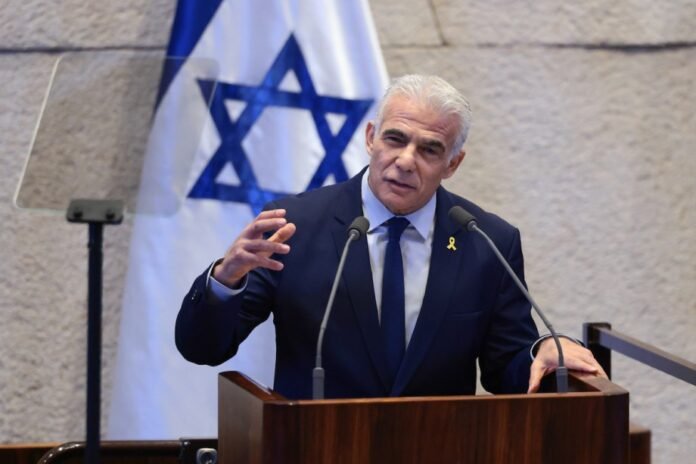
Israeli opposition leader Yair Lapid on Saturday criticized Prime Minister Benjamin Netanyahu over his alliance with far-right religious parties and support for legislation serving their interests, calling for a broad coalition to keep them out of power, Anadolu reports.

“There is no point in drawing closer to extremists, trying to reach agreements with them or appeasing them, because they do not appreciate goodwill,” Lapid wrote on the US social media platform X.

“Extremists see only one thing: more power,” he said, warning that they would exploit any opportunity and that those who allowed them near power would become their first victims.

Lapid accused extremists of using democratic rules to eliminate democracy and said they must be confronted directly.

“If laws against you are needed, they will be enacted, and if we have to exclude you, we will exclude you without hesitation,” he said.

He called for a “broad and determined alliance against extremists” that would refuse to make any concessions to them.

Referring to Netanyahu’s alliance with far-right religious parties, Lapid said the prime minister had believed he could control National Security Minister Itamar Ben-Gvir, leader of the far-right Jewish Power party.

“But what happened? Who ultimately controlled whom? What laws did they enact, and what policies did they implement? Not because they are geniuses, but because they are extremists,” he added.

“Someone must close the door in their faces and tell them clearly and firmly: There is no place for these views here,” Lapid said. “We are the ones who will stand up to them.”

His remarks came a day after the Israeli Knesset voted to dissolve itself, paving the way for general elections scheduled for Oct. 27.

Netanyahu is seeking to remain in power, while opposition parties, despite their political differences, share the goal of removing him and his allies from office.

Days before its dissolution, the Knesset gave final approval to the Basic Law on Torah Study, granting students at Jewish religious seminaries, known as yeshivas, a special legal status.

The Israeli daily Yedioth Ahronoth reported the law could strengthen the position of ultra-Orthodox Jews before the Supreme Court and pave the way for future legislation exempting them from military service.

According to the newspaper, Netanyahu and ultra-Orthodox parties agreed that the governing coalition would support legislation serving their interests, including the Torah study law and a measure freezing the arrest of draft evaders.

In return, the ultra-Orthodox parties would back bills aimed at weakening the media and curtailing the powers of the government’s attorney general, it added.

Haredim make up about 13% of Israel’s population, which exceeds 10 million. They reject military service on the grounds of full-time Torah study, saying integration into secular society threatens their religious identity.

For decades, Haredi men avoided conscription at age 18 through repeated deferments for religious study until reaching the exemption age, currently 26.

But in 2024, Israel’s Supreme Court ruled that Haredim must be drafted into the military and ordered the suspension of state funding for religious institutions whose students refuse enlistment.

0FansLike
0FollowersFollow
0FollowersFollow
0SubscribersSubscribe
- Advertisement -
Google search engine

Recent Posts