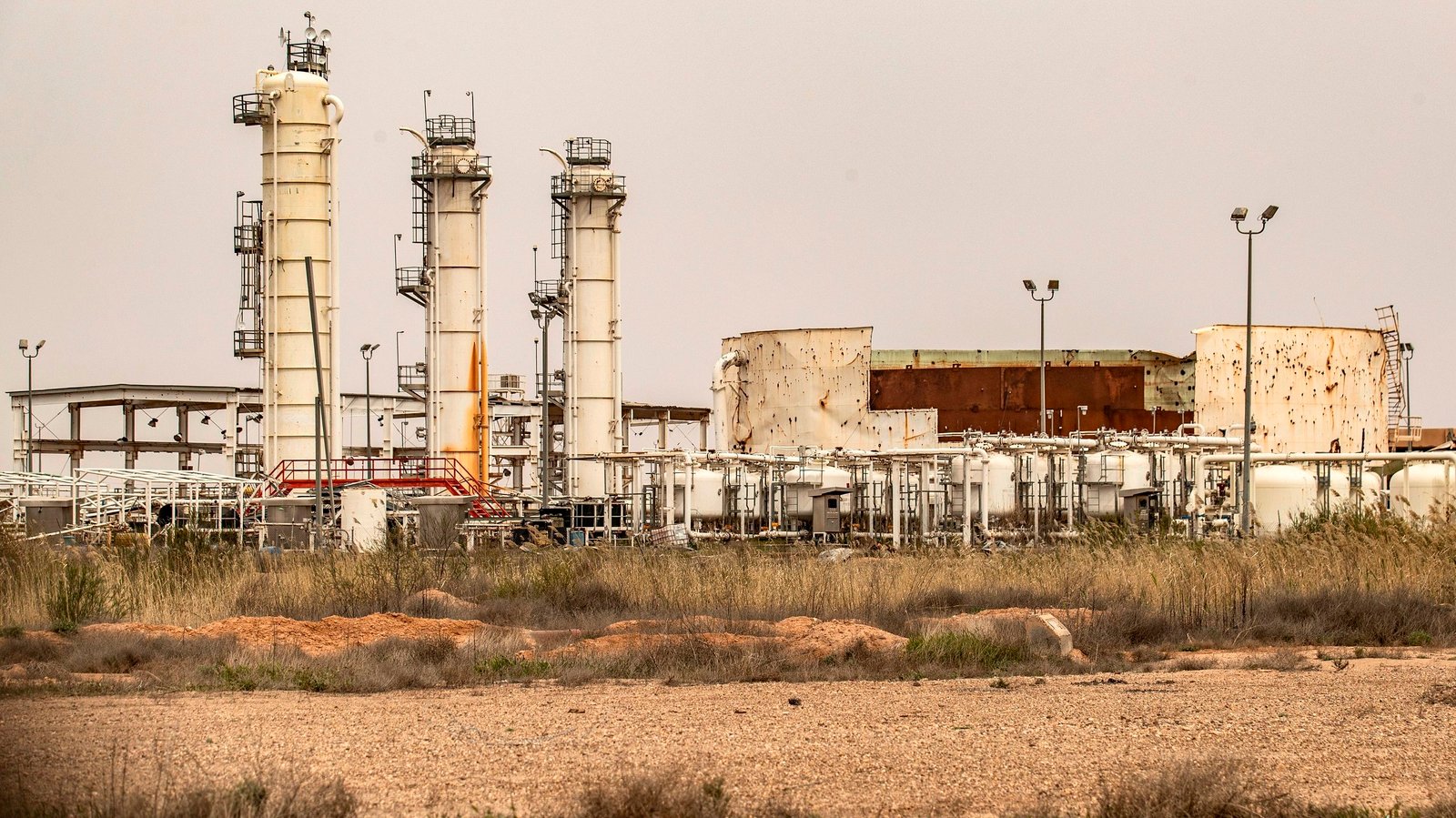
[DAMASCUS] Syria and Iraq have signed two memorandums of understanding to revive the long-idled Haditha-Banias crude oil pipeline, in a move that has drawn strong backing from the United States and could reshape regional energy routes if brought to fruition.
The agreements, signed during meetings in Washington, aim to restore one of the Middle East’s most strategically significant oil corridors, linking Iraqi crude production to Syria’s Mediterranean coast and providing Baghdad with an additional export outlet beyond the Gulf.
Under the first agreement, the Syrian Petroleum Company and Iraq’s Basra Oil Company will cooperate to rehabilitate the pipeline, which is historically connected to the Kirkuk-Banias route. A second memorandum was signed with an international consortium comprising Chevron, UCC Holding, and TI Capital to conduct technical and financial studies and prepare implementation plans for the project.
According to the Syrian government, the signing ceremony took place in the United States in the presence of Iraqi Prime Minister Mohammed Shia al-Sudani, the US secretary of energy, and senior officials from both countries.
The project revives a pipeline with deep historical roots. Construction of the Kirkuk-Banias line began in 1950, and the pipeline entered service in 1952, carrying Iraqi crude from the Kirkuk oil fields to Syria’s Banias terminal on the Mediterranean through an approximately 890-kilometer route built by the Iraq Petroleum Company. It remained one of Iraq’s principal export arteries until April 1982, when Syria halted Iraqi oil flows after siding with Iran during the Iran-Iraq War.
Efforts to restore the pipeline have repeatedly stalled over the past four decades because of political tensions between Baghdad and Damascus, international sanctions imposed on Iraq during the 1990s, damage to infrastructure following the 2003 US-led invasion of Iraq, and the collapse of a joint rehabilitation initiative launched in 2007.
Washington welcomed the latest agreements, with the US State Department describing the pipeline as a priority regional infrastructure project with strategic significance for both countries. The department also expressed support for the US-led consortium participating in the technical and financial aspects of the rehabilitation effort, noting that the pipeline is ultimately expected to transport up to two million barrels of crude oil per day.
Economic analyst Abdel Azim al-Maghrabel told The Media Line that, if implemented, the project could become one of the region’s largest energy infrastructure developments.
“It would provide Iraq with a new export corridor to the Mediterranean, reducing reliance on traditional shipping routes while increasing flexibility in reaching international markets,” he said.
Al-Maghrabel added that Syria could also benefit by restoring its role as a regional energy transit state through transit revenues and renewed investment in its energy infrastructure.
“The project extends beyond economics,” he said. “It has the potential to reshape regional energy corridors by establishing a land route linking Iraqi crude directly to the Mediterranean. The participation of major international companies also reflects growing interest in reinvesting in Syria’s and Iraq’s energy sectors.”
Preliminary estimates suggest the first phase could take around 30 months to complete. Syria could earn roughly $200 million annually in transit fees during the initial stage of operations, with revenues potentially exceeding $500 million per year once the pipeline reaches full capacity, although those figures have yet to receive independent technical or official confirmation.
Despite the political momentum surrounding the agreements, significant obstacles remain. Securing a pipeline that spans vast desert areas, rehabilitating decades-old infrastructure, mobilizing billions in investment, and completing the necessary legal and regulatory frameworks will all be essential before construction can proceed.
While the memorandums mark the first serious attempt in more than four decades to revive the pipeline, analysts say the project’s success will ultimately depend on whether political commitments translate into financing, security coordination, and tangible progress on the ground.