14.6 C
London
Sunday, July 19, 2026
Home Blog

Mamdani Consults City Lawyers on Possible Netanyahu Arrest During UN Visit 

0
mamdani-consults-city-lawyers-on-possible-netanyahu-arrest-during-un-visit 
Mamdani Consults City Lawyers on Possible Netanyahu Arrest During UN Visit 


New York City Mayor Zohran Mamdani said his administration is examining whether the city has the legal authority to detain Israeli Prime Minister Benjamin Netanyahu if he travels to New York for the United Nations General Assembly in September. 

Mamdani said the question is being reviewed by the city’s Law Department, and that discussions remain ongoing over what powers, if any, are available to the mayor and the New York Police Department. 

Speaking on The Interview, a New York Times program hosted by Lulu Garcia-Navarro, Mamdani reiterated his criticism of the Israeli leader while acknowledging that the legal issues have not been resolved. 

“I believe that Prime Minister Netanyahu belongs in The Hague,” Mamdani said. “He’s a war criminal who has been charged by the International Criminal Court. And what you will find is that is an opinion that is held by many, purely because of what his actions have wrought over these last many years.” 

Although the New York Police Department operates under the mayor’s authority, Mamdani said he does not know whether he can instruct officers to arrest a visiting foreign head of government. He described the matter as being in “an active conversation” with the Law Department. 

“Whatever the law allows me to do in New York City, that’s what we will do, but we won’t be writing our own laws to that end,” he said. 

During last year’s mayoral campaign, Mamdani told The New York Times that he would direct the Police Department to arrest Netanyahu should the Israeli prime minister come to the city. 

The International Criminal Court has issued arrest warrants for Netanyahu and former Defense Minister Yoav Gallant, alleging responsibility for war crimes and crimes against humanity over the conflict in Gaza. 

Israel’s ambassador to the United Nations, Danny Danon, condemned Mamdani’s remarks. 

“Mamdani failed in managing the city of New York. Instead of focusing on his responsibility as mayor and confronting the rising wave of antisemitism in his city, he chose to incite hostility and create headlines by attacking the State of Israel.”  

Danon added, “The Prime Minister of Israel will come to New York, address the General Assembly of the UN with pride, and stand before the world.” 

Mamdani says New York City reviews authority to arrest Netanyahu during UN visit: Report

0
mamdani-says-new-york-city-reviews-authority-to-arrest-netanyahu-during-un-visit:-report
Mamdani says New York City reviews authority to arrest Netanyahu during UN visit: Report

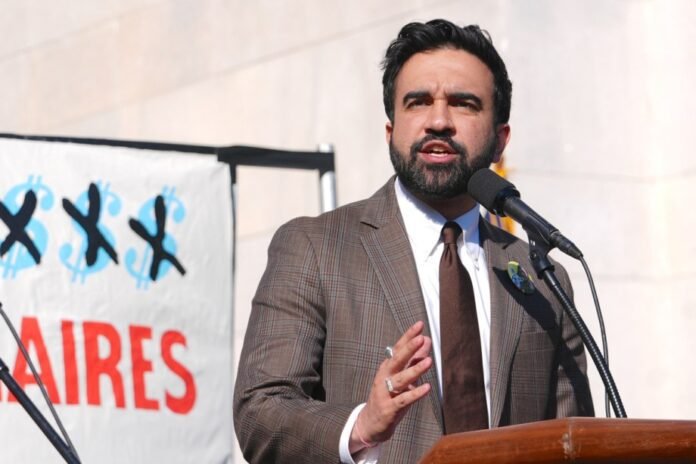
New York City’s Mayor Zohran Mamdan speaks as workers from different industries gather at Washington Square Park for the May Day rally, and march to Foley Square, demanding workers’ rights, economic justice, world peace, major policy changes, and taxing the rich, on Friday, May 1, 2026, in New York City, U.S. [Selçuk Acar - Anadolu Agency]

New York City’s Mayor Zohran Mamdan speaks as workers from different industries gather at Washington Square Park for the May Day rally, and march to Foley Square, demanding workers’ rights, economic justice, world peace, major policy changes, and taxing the rich, on Friday, May 1, 2026, in New York City, U.S. [Selçuk Acar – Anadolu Agency]

New York City Mayor Zohran Mamdani on Saturday said that his administration is reviewing whether it has the legal authority to arrest Israeli Prime Minister Benjamin Netanyahu if he visits the city for the UN General Assembly in September, according to The New York Times, Anadolu reports.

“I believe that Prime Minister Netanyahu belongs in The Hague,” Mamdani said on The New York Times’ The Interview podcast with Lulu Garcia-Navarro. “He’s a war criminal who has been charged by the International Criminal Court.”

Mamdani said he was in “an active conversation” with the New York City Law Department over whether he has the authority to direct the New York Police Department to detain a foreign leader.

“Whatever the law allows me to do in New York City, that’s what we will do, but we won’t be writing our own laws to that end,” he said.

Mamdani had previously said during his mayoral campaign that he would seek to enforce the International Criminal Court’s arrest warrant for Netanyahu if the Israeli leader visited New York.

Netanyahu dismissed the prospect in a recent interview with radio host Sid Rosenberg, accusing Mamdani of supporting Hamas.

“I think he should look at who he’s condemning, who he’s praising,” Netanyahu said. “He’s condemning Israel, the one democracy that stands shoulder to shoulder with American values.”

Mamdani has repeatedly condemned Israel’s military campaign in Gaza while also denouncing Hamas’ Oct. 7, 2023, attack on Israel.

In the interview, Mamdani also criticized US policy toward Gaza, saying it is “hard to find a more bankrupt policy approach than what our country has done to Gaza and to Palestine.”

He also expressed support for the possibility of Democratic Rep. Alexandria Ocasio-Cortez running for president in 2028, defended New York Police Commissioner Jessica Tisch’s leadership, criticized President Donald Trump’s immigration policies while backing cooperation on serious criminal cases, and said affordability remains the defining challenge facing New Yorkers.

Mass Fainting and Vomiting at Concert After Active Shooter Scare

0
mass-fainting-and-vomiting-at-concert-after-active-shooter-scare
Mass Fainting and Vomiting at Concert After Active Shooter Scare


Panic erupted at a packed cheerleading championship in Dallas after a loud crash inside the venue sent thousands of terrified attendees running for the exits, with many fearing the worst.

The frightening scene unfolded Saturday, March 1, at the Kay Bailey Hutchison Convention Center during the National Cheerleaders Association All-Star National Championship.

Videos and images shared on social media showed crowds rushing into the streets as panic spread through the massive event. Early posts claimed possible gunfire, but Dallas police later said no shots were fired and there was no active shooter.

Authorities said the chaos began after a fight broke out between two people inside the convention center. During the altercation, several poles were knocked over, creating a loud crashing sound that many people mistook for gunshots.

The noise triggered a stampede as attendees scrambled to get out of the building. The competition had drawn a huge crowd, including 30,410 athletes and 3,700 coaches. The weekend event was expected to bring in roughly 58,000 people in total.

Dallas Fire-Rescue said 10 people were taken to the hospital after the frantic evacuation. None of the injuries were considered life-threatening.

“All of the injuries were sustained during the evacuation, and none were life-threatening,” Dallas Fire-Rescue spokesman Jason Evans said. “They ranged in severity from bumps and bruises to extremity fractures.”

As a precaution, law enforcement evacuated the entire convention center and suspended the rest of the day’s activities. Officials also set up a family reunification center at 400 North Lamar St. as frightened parents and children tried to find one another.

For families inside the venue, the moments after the crash were terrifying.

NCA cheer mom Makayla Cossey said panic swept through the crowd almost instantly.

“The moms were sitting there and all I know was we were just looking around and people were screaming – running, jumping off all the bleachers,” Cossey said.

Her first thought was her 9-year-old daughter.

“All I could think of is where is my 9-year-old daughter? I was terrified. I was on the phone with my husband that’s out of state crying, bawling,” she said.

Cheerleader Destiny Hinton described being caught in the rush of people trying to escape.

“I tripped and then had people step on me and then I ran a mile past the Alamo Cinema – a mile past that – and I hid in a dumpster,” she said.

For cheer mom Joyce Sterling, the evacuation turned into a desperate search for her daughter.

“She was in all-out panic trying to find me,” Sterling said. “She was like, ‘I’m outside, I’m outside.’ We were still inside, and we saw people running everywhere. It was just mayhem. It was crazy.”

Dallas police said they are still investigating the fight that sparked the panic.

“All the available information has been released,” Dallas Police Department spokeswoman Melinda Gutierrez said Saturday night.

Brian Bianco, senior director of strategic communications for Varsity Brands, said NCA security officials were working with law enforcement to review what happened.

Despite the frightening ordeal, NCA officials said the championship would resume as planned on Sunday.

New York governor orders first statewide data center moratorium

0
new-york-governor-orders-first-statewide-data-center-moratorium
New York governor orders first statewide data center moratorium

This story was originally published by Stateline.

New York Governor Kathy Hochul, a Democrat, issued an executive order Tuesday that puts a moratorium on the construction of large-scale data centers.

The pause, which will last up to a year, is the nation’s first statewide ban on data centers, which have drawn increasing concern from lawmakers and citizens based on their impact on electricity prices and the energy grid.

“As data center development threatens to hike up utility bills, deplete our natural resources, and create uncertainty for New Yorkers, it’s my responsibility to take action and lead,” Hochul said in a statement.

Technology companies have invested billions of dollars to build data centers all across the country, driven in part by the computing demands from artificial intelligence.

In her executive order, Hochul directed the state Department of Public Service to issue no new permits for large-scale data centers for a  year. During that period, the agency will conduct an environmental analysis on the impacts of data centers, along with a proceeding to “require data centers to either pay more for their energy or supply their own.”

New York lawmakers passed a more extensive data center moratorium last month, but Hochul has not said whether she will sign the bill.

Read Next

Maine Governor Janet Mills, also a Democrat, vetoed a measure earlier this year that would have been the first statewide data center ban.

In a news release, Hochul also directed the state’s economic development agency to develop a framework that local communities can use to negotiate with tech companies that seek to construct data centers. That framework will focus on infrastructure improvements, child care investments, direct financial support, and labor and wage standards.

She also announced plans for a fund that would require data centers to invest in New York’s grid infrastructure and clean energy supply. And she called on lawmakers to repeal the state’s sales tax exemptions for large data centers.

Across the country, data centers have drawn vocal opposition at local public meetings and in state capitols. Several cities and counties will vote on ballot measures this year to restrict the development of new data centers.


China’s anti-stealth shield has a radar reality gap

0
china’s-anti-stealth-shield-has-a-radar-reality-gap
China’s anti-stealth shield has a radar reality gap

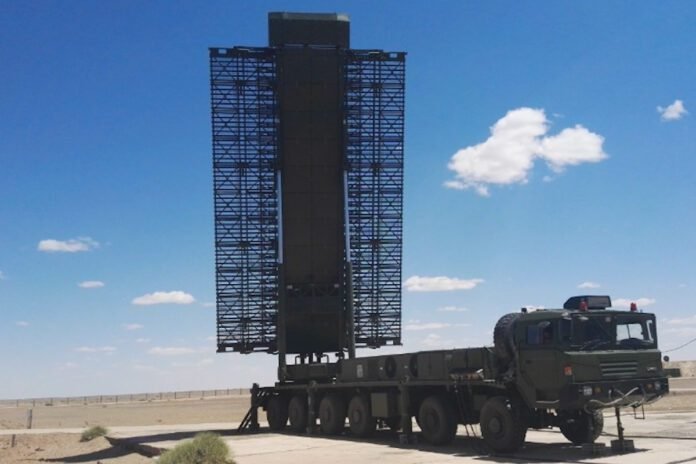
China is building an increasingly sophisticated anti-stealth network, but its effectiveness may depend less on individual radar performance than on its ability to integrate, maintain and operate the wider system under combat pressure.

Last month, the China Aerospace Studies Institute (CASI) released a report arguing that China’s drive to counter and replicate US stealth technology is reshaping the Indo-Pacific air balance but remains constrained by flawed assumptions about how low-observable aircraft operate.

The report found that the 1999 Serbian shootdown of an F-117 reinforced Chinese confidence in low-frequency radar and encouraged investment in layered sensors, integrated air defenses and indigenous stealth aircraft, including the J-20, J-35 and planned H-20 bomber.

But the report argues that China often treats stealth as a hardware problem, underestimating US advantages in mission planning, electronic warfare, software, training and tactical adaptation.

Chinese radars may provide early warning but still struggle to generate the continuous, weapons-quality tracks needed for engagement amid clutter, electronic attack and complex terrain around Taiwan and the South China Sea.

The report warns that exaggerated confidence in counter-stealth defenses could embolden Beijing and heighten the risk of miscalculation. It recommends that the US institutionalize stealth education, expand operator training and sustain bomber deployments in the Indo-Pacific.

The central question is whether China can turn an expanding collection of sensors into a resilient combat network capable of maintaining reliable tracks on low-observable aircraft.

In a March 2025 CASI report, Eric Hundman wrote that China is systematically replacing third-generation air-defense systems with more advanced fourth-generation hardware designed to improve detection of stealth aircraft.

According to Hundman, this approach combines highly mobile active radars with passive sensors that can detect targets without continuously transmitting and revealing their positions.

He adds that by networking radars operating across different frequency bands at the brigade level, the People’s Liberation Army (PLA) aims to combine incomplete observations into a broader air picture.

He notes that China ultimately envisions a redundant, interconnected sensing network capable of maintaining surveillance of fifth-generation aircraft and constraining US freedom of action.

Yet a March 2023 article by Lu Xiaoqiang and his co-authors in the peer-reviewed Chinese Journal of Aeronautics found that radar returns from stealth aircraft are highly dependent on geometry because radar cross-section varies sharply with aspect angle.

Lu and his co-authors say that stealth shaping concentrates stronger radar returns into a small number of narrow angular sectors while suppressing returns across most other aspects. Consequently, they state that stronger detections occur mainly when one of those narrow signature peaks aligns with a radar’s line of sight.

They point out that because the aircraft’s aspect changes continuously in flight, those peaks may appear only briefly, producing intermittent contacts rather than a stable track during penetration.

But even with that limitation, a January 2023 article by Ye Kang and his co-authors in IET Radar, Sonar & Navigation shows how a distributed radar network could partially compensate for such intermittent and corrupted data through collaborative track fusion.

Kang and his co-authors say that individual radar nodes first filter background noise and reject tracks identified as probable deception targets. They add that the nodes then exchange and iteratively reconcile their remaining track estimates with neighboring sensors.

They note that repeated exchanges reduce the influence of any corrupted sensor and allow the network to converge on a more reliable estimate of the target without depending entirely on a central command node.

A greater uncertainty is whether these concepts can survive the maintenance, integration, electronic warfare and command pressures of actual combat.

A January 2026 Newsweek report raised questions about the performance of Venezuela’s Chinese-made JY-27A radars during a US raid, citing maintenance problems, limited readiness and weak integration as possible explanations.

Newsweek cites a Miami Strategic Intelligence Institute assessment saying spare-parts shortages and minimal Chinese technical support had reportedly left more than 60% of Venezuela’s radar fleet out of commission.

The episode illustrates a broader point: even a functioning counter-stealth radar has limited value if it cannot pass usable tracks to command centers, fighters or surface-to-air missile batteries.

Reporting on recent operations in Iran has prompted similar questions, although the available public evidence remains incomplete.

Van Taylor points out in a May 2026 Wall Street Journal (WSJ) article that China’s YLC-8B anti-stealth radars failed to detect low-observable US and Israeli aircraft in a high-intensity combat environment during the opening hours of Operation Epic Fury.

Taylor adds that instead of tracking stealth targets, the network was bypassed entirely; the sole US F-35 damaged during the March hostilities was struck using a passive infrared sensor system rather than any radar, exposing operational deficiencies in China’s military hardware.

Separately, Miles Maochun Yu argued in a Hoover Institution commentary this month that the June 2026 crash of a light aircraft into Beijing’s CITIC Tower raised questions about coordination within China’s tightly controlled airspace.

Yu attributed the incident to possible institutional barriers between civilian air-traffic authorities and military command. However, Chinese authorities later said the pilot had deliberately deviated from his approved flight area and had mental health issues; they did not link the crash to military command failures.

He further argued that recent PLA leadership purges may have disrupted command relationships and readiness. His broader argument is that advanced sensors cannot compensate for fragmented authority, poor readiness or delayed command decisions.

China’s counter-stealth challenge will therefore turn increasingly on whether the PLA can keep a dispersed sensor network connected, supplied and responsive under sustained attack. Until that capability is demonstrated, the network may constrain US flight planning and raise the cost of penetration without reliably denying access to stealth aircraft.

Bangladesh shelves India reset as tensions trump trust

0
bangladesh-shelves-india-reset-as-tensions-trump-trust
Bangladesh shelves India reset as tensions trump trust

Driven by shifting domestic political dynamics and a transforming regional landscape, Bangladesh’s new prime minister, Tarique Rahman, who came to power after a landslide in February this year, has shelved plans to visit its most consequential neighbor, India, for the time being.

Senior officials at the Ministry of Foreign Affairs and diplomatic sources familiar with the matter have confirmed this strategic decision to Amar Desh, one of Bangladesh’s highest-circulated vernacular daily newspapers. This correspondent also independently verified the claim by speaking with relevant Foreign Ministry officials.

A state visit to New Delhi by a Bangladeshi prime minister has always been the country’s most important bilateral engagement, as well as its most sensitive and challenging. Dhaka manages no bilateral relationship as complex as its one with India, particularly over unresolved, structurally significant disputes such as transboundary water sharing.

Although New Delhi initially declared that a fresh chapter in bilateral relations would begin after Rahman assumed office, the Indian administration has yet to take meaningful steps to translate that public assurance into reality, at least from the perspective of policymakers in Dhaka.

Tensions are compounded by critical structural deadlines. The much-discussed Ganges Water Sharing Treaty expires this December, yet New Delhi has not responded to Dhaka’s requests to keep the existing agreement in force until a comprehensive new treaty is negotiated.

Diplomatic sources say the level of mutual trust required for a high-profile prime ministerial visit is absent. Alongside what Dhaka views as New Delhi’s hostile reaction to Rahman’s recent trip to Beijing, India has heightened border friction through alleged push-ins.

Furthermore, Zahed Ur Rahman, one of the prime minister’s top policy advisers, was recently subjected to prolonged harassment at Delhi airport. Most critically, India is seen as trying to destabilize Bangladesh by protecting and enabling Sheikh Hasina, who has been convicted of crimes against humanity, to re-enter the political arena from her sanctuary in Delhi.

Against this backdrop, all discussions regarding a visit to New Delhi have frozen. Diplomatic sources in both capitals say the likelihood of such a visit taking place this year is virtually non-existent.

Political analysts in Dhaka have welcomed this measured distance, arguing that the prime minister has made the right call. They contend that India has historically refused to trust any political force in Bangladesh other than the Awami League and Hasina. Though the new government has been in office for less than six months, New Delhi has already sought to exert pressure by fostering instability inside the country.

Analysts argue that unless India fundamentally changes its patronizing approach, Dhaka should maintain its distance. They stress that the government must ensure the strategic foundation established in Bangladesh-China relations is not undermined.

Setting aside India, the Foreign Ministry is now focusing on Rahman’s participation in the upcoming United Nations General Assembly in New York, alongside planned state visits to Japan and Saudi Arabia.

This diplomatic freeze coincides with a startling domestic development. Nearly two years after fleeing Bangladesh amid a historic student uprising, Hasina announced her intention to return home from exile in Delhi this December.

In a recent interview with Reuters, the ousted prime minister, now 78, acknowledged that she could face immediate arrest, execution or assassination. Yet she insisted she had no alternative, declaring that she wanted to die on the soil where her parents were buried.

Whether that journey materializes remains uncertain, but the announcement reveals how dramatically her political options have narrowed. Exile in India no longer appears sustainable.

Mounting legal pressure from Dhaka, India’s delicate diplomatic balancing act and the steady collapse of her party’s domestic structure have left her with little room for maneuver. The International Crimes Tribunal has sentenced her to death over crimes against humanity linked to the deadly suppression of the student protests.

Dhaka has repeatedly sent extradition requests to India, while New Delhi has carefully avoided making any public commitment. Despite hosting her since August 2024, India has never publicly granted her political asylum, as doing so would amount to a permanent commitment to shield her indefinitely.

Instead, she remains a highly sensitive guest whose presence complicates India’s effort to rebuild ties with Bangladesh’s new administration. For India, the dilemma is profound. For more than 15 years, New Delhi invested heavily in Hasina’s administration, which became its closest strategic partner in South Asia.

Abandoning that ally risks damaging India’s credibility across the region, yet continuing to protect a leader sentenced to death for mass killings carries mounting diplomatic costs. Every improvement in bilateral relations narrows New Delhi’s room for indefinite delay.

Faced with these challenges, Bangladesh’s latest diplomatic reshuffle offers the clearest indication that Dhaka is recalibrating how it intends to deal with its largest neighbor after years of what many officials describe as unreciprocated goodwill.

The decision to replace High Commissioner M Riaz Hamidullah in New Delhi with serving Foreign Secretary Asad Alam Siam marks a significant shift in diplomatic philosophy.

Internally, Hamidullah’s tenure had come to symbolize an overly deferential approach towards India, one that leaned heavily on cultural diplomacy even as border irritants accumulated, according to a senior Foreign Ministry official familiar with the deliberations.

The turning point came with the incident involving Zahed Ur Rahman, who abandoned his visit to India after being held up at immigration in New Delhi. Dhaka reacted by summoning India’s acting high commissioner and lodging a formal protest.

Taken together, the suspension of a prime ministerial visit, the diplomatic reshuffle in New Delhi, the public dispute over Hasina’s future and Bangladesh’s growing emphasis on alternative strategic partnerships point to a broader recalibration rather than a passing diplomatic disagreement.

Unless trust is rebuilt through concrete actions on both sides, the relationship is likely to remain defined by caution instead of the political momentum that both capitals had once promised.

Faisal Mahmud is a Dhaka-based journalist
Pro-Palestinian protest in London call on Andy Burnham to impose sanctions on Israel

0
pro-palestinian-protest-in-london-call-on-andy-burnham-to-impose-sanctions-on-israel
Pro-Palestinian protest in London call on Andy Burnham to impose sanctions on Israel

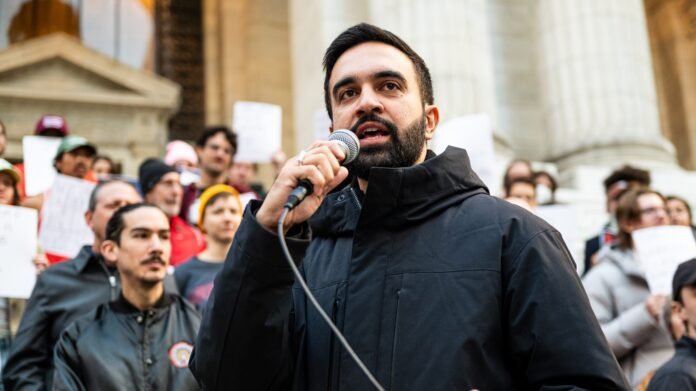
People stage a pro-Palestinian demonstration and call on Labour Party leader Andy Burnham, who is preparing to take office as prime minister, to impose comprehensive sanctions on Israel, in London, United Kingdom on July 18, 2026.

People stage a pro-Palestinian demonstration and call on Labour Party leader Andy Burnham, who is preparing to take office as prime minister, to impose comprehensive sanctions on Israel, in London, United Kingdom on July 18, 2026. [Raşid Necati Aslım - Anadolu Agency]

People stage a pro-Palestinian demonstration and call on Labour Party leader Andy Burnham, who is preparing to take office as prime minister, to impose comprehensive sanctions on Israel, in London, United Kingdom on July 18, 2026. [Raşid Necati Aslım – Anadolu Agency]

People stage a pro-Palestinian demonstration and call on Labour Party leader Andy Burnham, who is preparing to take office as prime minister, to impose comprehensive sanctions on Israel, in London, United Kingdom on July 18, 2026. [Raşid Necati Aslım - Anadolu Agency]

People stage a pro-Palestinian demonstration and call on Labour Party leader Andy Burnham, who is preparing to take office as prime minister, to impose comprehensive sanctions on Israel, in London, United Kingdom on July 18, 2026. [Raşid Necati Aslım – Anadolu Agency]

People stage a pro-Palestinian demonstration and call on Labour Party leader Andy Burnham, who is preparing to take office as prime minister, to impose comprehensive sanctions on Israel, in London, United Kingdom on July 18, 2026. [Raşid Necati Aslım - Anadolu Agency]

People stage a pro-Palestinian demonstration and call on Labour Party leader Andy Burnham, who is preparing to take office as prime minister, to impose comprehensive sanctions on Israel, in London, United Kingdom on July 18, 2026. [Raşid Necati Aslım – Anadolu Agency]

People stage a pro-Palestinian demonstration and call on Labour Party leader Andy Burnham, who is preparing to take office as prime minister, to impose comprehensive sanctions on Israel, in London, United Kingdom on July 18, 2026. [Raşid Necati Aslım - Anadolu Agency]

People stage a pro-Palestinian demonstration and call on Labour Party leader Andy Burnham, who is preparing to take office as prime minister, to impose comprehensive sanctions on Israel, in London, United Kingdom on July 18, 2026. [Raşid Necati Aslım – Anadolu Agency]

People stage a pro-Palestinian demonstration and call on Labour Party leader Andy Burnham, who is preparing to take office as prime minister, to impose comprehensive sanctions on Israel, in London, United Kingdom on July 18, 2026. [Raşid Necati Aslım - Anadolu Agency]

People stage a pro-Palestinian demonstration and call on Labour Party leader Andy Burnham, who is preparing to take office as prime minister, to impose comprehensive sanctions on Israel, in London, United Kingdom on July 18, 2026. [Raşid Necati Aslım – Anadolu Agency]

People stage a pro-Palestinian demonstration and call on Labour Party leader Andy Burnham, who is preparing to take office as prime minister, to impose comprehensive sanctions on Israel, in London, United Kingdom on July 18, 2026. [Raşid Necati Aslım - Anadolu Agency]

People stage a pro-Palestinian demonstration and call on Labour Party leader Andy Burnham, who is preparing to take office as prime minister, to impose comprehensive sanctions on Israel, in London, United Kingdom on July 18, 2026. [Raşid Necati Aslım – Anadolu Agency]

People stage a pro-Palestinian demonstration and call on Labour Party leader Andy Burnham, who is preparing to take office as prime minister, to impose comprehensive sanctions on Israel, in London, United Kingdom on July 18, 2026. [Raşid Necati Aslım - Anadolu Agency]

People stage a pro-Palestinian demonstration and call on Labour Party leader Andy Burnham, who is preparing to take office as prime minister, to impose comprehensive sanctions on Israel, in London, United Kingdom on July 18, 2026. [Raşid Necati Aslım – Anadolu Agency]

People stage a pro-Palestinian demonstration and call on Labour Party leader Andy Burnham, who is preparing to take office as prime minister, to impose comprehensive sanctions on Israel, in London, United Kingdom on July 18, 2026. [Raşid Necati Aslım - Anadolu Agency]

People stage a pro-Palestinian demonstration and call on Labour Party leader Andy Burnham, who is preparing to take office as prime minister, to impose comprehensive sanctions on Israel, in London, United Kingdom on July 18, 2026. [Raşid Necati Aslım – Anadolu Agency]

People stage a pro-Palestinian demonstration and call on Labour Party leader Andy Burnham, who is preparing to take office as prime minister, to impose comprehensive sanctions on Israel, in London, United Kingdom on July 18, 2026. [Raşid Necati Aslım - Anadolu Agency]

People stage a pro-Palestinian demonstration and call on Labour Party leader Andy Burnham, who is preparing to take office as prime minister, to impose comprehensive sanctions on Israel, in London, United Kingdom on July 18, 2026. [Raşid Necati Aslım – Anadolu Agency]

People stage a pro-Palestinian demonstration and call on Labour Party leader Andy Burnham, who is preparing to take office as prime minister, to impose comprehensive sanctions on Israel, in London, United Kingdom on July 18, 2026. [Raşid Necati Aslım - Anadolu Agency]

People stage a pro-Palestinian demonstration and call on Labour Party leader Andy Burnham, who is preparing to take office as prime minister, to impose comprehensive sanctions on Israel, in London, United Kingdom on July 18, 2026. [Raşid Necati Aslım – Anadolu Agency]

Rocket Report: India’s Vikram-1 nears debut flight; AST to become rocket company?

0
rocket-report:-india’s-vikram-1-nears-debut-flight;-ast-to-become-rocket-company?
Rocket Report: India’s Vikram-1 nears debut flight; AST to become rocket company?

Welcome to Edition 9.03 of the Rocket Report! SpaceX counted down all the way to T-0 on Thursday evening in South Texas before a handful of Raptor engines decided not to light at ignition of the rocket. It is not clear whether the vehicle can be worked on at the pad, or whether Starship will need to be de-stacked before this can occur. In any case, a few days delay beats a significant issue in flight.

As always, we welcome reader submissions, and if you don’t want to miss an issue, please subscribe using the box below (the form will not appear on AMP-enabled versions of the site). Each report will include information on small-, medium-, and heavy-lift rockets as well as a quick look ahead at the next three launches on the calendar.

Vikram-1 rocket gets a launch date. The debut launch attempt by Skyroot Aerospace of its Vikram-1 rocket is now set for July 18, at 11:30 am local time in India. This will be the first time a commercial rocket developed in India attempts to reach orbit. Designed to carry small satellites weighing up to 350 kg to low-Earth orbit, Vikram-1 is targeting a 450 km orbit at a 60-degree inclination.

A major step for India … The new rocket will carry technology demonstration payloads from Grahaa Space, Cosmoserve, DCubed, and Skyroot’s own SCOPE, along with Cosmos Diamonds’ artwork “Cosmic Bloom” and a micro-art piece. “We have done everything that could be done to test Vikram-1 on ground,” said Pawan Kumar Chandana, co-founder and chief executive of Skyroot, in an emailed news release. “We are eager to see how Vikram-1 performs in real flight environment for the first time. This is our first test flight, and we will be getting valuable data from it.”

Japan conducts rocket landing test. Japan’s space agency has conducted a test flight of its experimental reusable rocket in a northern part of the country, the Japan Broadcasting Corporation reports. JAXA said the rocket took off and landed as planned after reaching a height of about 11 meters. The flight lasted about 40 seconds and included a 16-meter horizontal translation relative to the ground before landing.

Step by step … JAXA has been developing the RV-X rocket to demonstrate technologies needed for a reusable launch vehicle. The conical fuselage stands about 7.3 meters tall and is somewhat similar in appearance to the DC-X vehicle developed by NASA in the 1990s, and SpaceX’s Starhopper. The agency says it plans to analyze the data from the flight for the development of an experimental reusable rocket in a joint project, called CALLISTO, with French and German research institutions. (submitted by tsunam)

The Ars Technica Rocket Report
The easiest way to keep up with Eric Berger’s and Stephen Clark’s reporting on all things space is to sign up for our newsletter. We’ll collect their stories and deliver them straight to your inbox.

Sign Me Up!

A new suborbital test range Down Under. A company called Spinifex Space was established this week to provide end-to-end suborbital launch campaigns, private range access, and test and evaluation infrastructure from facilities in southwestern Queensland, Payload reports. Spinifex says its team spun out of Black Sky Industries, an Australian developer and supplier of solid rocket propellant and solid rocket motors.

Helping others get to space … Spinifex itself does not build rockets. Instead, its products are the land and the licenses required for flight. The company will support static-fire testing, hypersonic vehicles, kinetic effectors, energetics handling, and destructive testing. The closest domestic alternative is Woomera, the government-owned range where Australia tests its missiles.

China lands orbital booster. China’s sprawling state-owned rocket developer, maker of the country’s Long March rocket family, announced it recovered a reusable orbital-class booster for the first time last Friday in the South China Sea. The milestone mission began with the liftoff of a medium-lift Long March 10B rocket from the Wenchang Commercial Space Launch Site on Hainan Island, Ars reports. About 10 minutes later, the Long March 10B booster descended from space and guided itself into a four-legged frame affixed to an offshore vessel. Tensioned cables, stretched over the ship in a grid pattern, captured the rocket as it shut down its landing engines, leaving the smoldering booster hanging in midair.

Joining Western rocket companies in the club … The rocket’s upper stage continued into orbit and deployed a payload known only as CX-26. Chinese officials hailed the flight as a “complete success.” SpaceX and Blue Origin use propulsive landings to return their Falcon 9 and New Glenn boosters to offshore platforms or onshore landing pads. With Starship, SpaceX pioneered a new method of catching the rocket’s reusable booster back at its launch pad using mechanical arms mounted to the launch tower. (submitted by tsunam)

AST SpaceMobile seeking other launch vehicles. The direct-to-cell satellite company announced its intention to offer $1 billion in convertible notes on Wednesday after the US stock market closed. Shortly after the announcement, the stock value dropped more than 10 percent as investors appeared concerned about dilution of their shares. What is interesting for our purposes is the reason offered by AST SpaceMobile for the transaction: the need for more rockets to get its large BlueBird satellites into orbit.

Company considering acquisitions … AST SpaceMobile intends to “pursue an expanding universe of growth initiatives and secure additional access to orbit for its space-based cellular broadband network, including partnerships and/or acquisitions to further vertically integrate its business and mitigate risks associated with third-party launch providers.” The decision follows the failed static-fire test of a New Glenn rocket in April, which was due to launch a BlueBird satellite to expand the company’s constellation. The company’s plan for future launches on New Glenn are necessarily on hold.

Japan seeks to increase launch activity. The Japanese government wants to sharply increase the number of launches despite struggles with both current and new launch vehicles, Space News reports. The country would like to increase the number of government and commercial launches to 30 per year by the early 2030s. That is an ambitious target, because Japan, to date, has conducted just two orbital launches in 2026.

It’s a stretch goal … An H3 rocket launched June 11 on a test flight of a new variant of the vehicle. That launch also served as a return to flight for the H3 family after the previous launch in December failed to place its payload, a navigation satellite, into orbit. The other was the third flight of Kairos, a small launch vehicle developed by Space One, on March 4. It was a failure. One way to reach the goal of 30 launches a year is for Japan to host launches of foreign rockets, officials said.

Ariane 6 is cleared to launch CubeSats. The European Space Agency has awarded a contract to launch its solar storm-monitoring CubeSat on an Ariane 6 rocket, European Spaceflight reports. Scheduled for launch in early 2027, the Henon CubeSat will be flown as a secondary passenger alongside the space agency’s PLATO telescope, which will be tasked with finding Earth-like exoplanets.

Up to 16 satellites … Before the award, a feasibility study was conducted to confirm that CubeSats could be safely accommodated as secondary payloads aboard an Ariane 6 flight. “Henon was a reference case, but we also looked at how many CubeSats could be accommodated in this launch architecture,” said Roger Walker, head of CubeSat missions at ESA. “We can fit up to four 16U CubeSats, in fact.” After the launch, Henon will use its miniaturized electric propulsion system to maneuver into a distant retrograde orbit around the Sun.

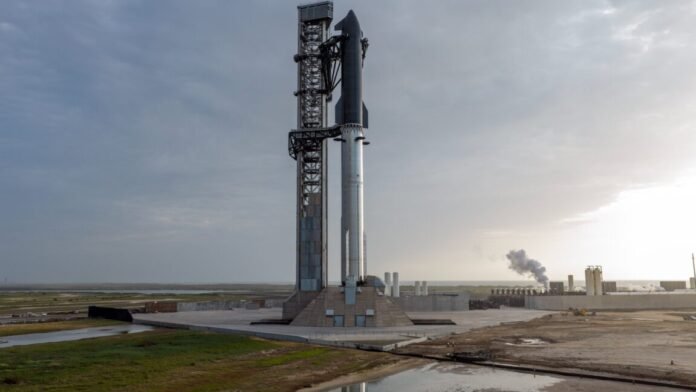
Starship test flight is scrubbed at ignition. The next test flight of SpaceX’s Starship spacecraft and Super Heavy booster was set to launch as soon as Thursday, Ars reports. However, a handful of the rocket’s 33 Raptor engines failed to light at the vehicle’s ignition, and therefore the launch attempt was aborted automatically. Shortly after this abort on Thursday evening, SpaceX founder Elon Musk said the next launch attempt would “hopefully” take place in a few days.

Seeking validation …  For this flight technicians have installed 20 Starlink V3 satellites into the ship’s deployer, a system of pulleys and cables designed to eject a stack of satellites one at a time through an opening on the side of the spacecraft. The satellites will not be part of SpaceX’s operational network, but engineers will attempt to briefly establish laser communication links between the Starlink V3s and other spacecraft flying in low-Earth orbit. If successful, these links will validate Starlink V3’s interoperability with SpaceX’s previous generation of Starlink satellites.

How many launches to build a data center megaconstellation? In a new feature, Ars looks into the technical challenges of building orbital data centers and assesses what it might take to build SpaceX’s proposed 1 million satellite megaconstellation. The key to all of this is not radiation or the need to cool data centers in space. The single-most important factor is cheap access to space. For the purpose of the analysis, Ars modeled three scenarios: high-performing Starship and low-satellite mass; medium-performing Starship and satellite mass; and low-performing Starship and high-mass satellites.

The numbers are pretty daunting … The optimistic scenario would require 17,500 Starship launches to deploy 1 million satellites. The most pessimistic scenario would require 77,000 total launches. Over a period of five years, by the way, for the pessimistic scenario that would be 42 Starship launches a day. As for total costs, including launches, satellites, and ground systems, under the most optimistic scenario the constellation could be deployed for $1.45 trillion. Pessimistically? Hold your breath: It’s $9.8 trillion.

NASA mission moves to Falcon Heavy. NASA’s SunRISE (Sun Radio Interferometer Space Experiment) mission will launch on a SpaceX Falcon Heavy rocket from the agency’s Kennedy Space Center in Florida, the space agency said this week. As part of the announcement, NASA did not announce a launch date for the heliophysics mission, which had originally been scheduled to launch on United Launch Alliance’s Vulcan rocket.

Six new eyes on the Sun … The mission is flying as a rideshare sponsored by the United States Space Force’s Space Systems Command. SunRISE comprises six toaster-oven-size small satellites, or SmallSats, that will operate as one giant radio dish slightly above geosynchronous orbit (about 22,000 miles, or 35,000 kilometers, in altitude) to track the rumbles of radio bursts coming from within the Sun’s atmosphere, or corona. (submitted by Tfargo04)

Next three launches

July 16: Starship | Flight Test 13 | Starbase, Texas | 22:45 UTC

July 18: Vikram 1 | Aagaman test flight | Satish Dhawan Space Center, India | 06:00 UTC

July 20: Falcon 9 | Starlink 17-39 | Vandenberg Space Force Base, Calif. | 14:00 UTC

End-times prophecy jumps from lunatic fringe to US elite belief

0
end-times-prophecy-jumps-from-lunatic-fringe-to-us-elite-belief
End-times prophecy jumps from lunatic fringe to US elite belief

It recently emerged that tech billionaire Peter Thiel is running a secret society that brings together fellow CEOs and billionaires with political leaders. Members reportedly include figures like NATO supreme commander Alexus Grynkewich and the son-in-law of US President Donald Trump, Jared Kushner.

Thiel, a German-American entrepreneur and activist, was a co-founder of PayPal and software firm Palantir. Revelations about the society – known as “Dialog” – have attracted widespread attention. And Thiel himself gave a confidential lecture series in San Francisco this year, in which he framed issues of politics and technology in biblical terms.

Thiel has said he believes that humankind faces existential threats from nuclear war or runaway artificial intelligence (AI) that could lead to “Armageddon.” In such an end-times era, so the thinking goes, only the most ingenious – like those in the secret society – would survive.

Thiel is an extreme, but by no means isolated, case. Other powerful people in politics and technology are viewing today’s world through a lens of civilizational crisis and impending catastrophe.

End-times politics

Over the centuries, political leaders have often invoked fears of decline and collapse. In ancient times, Augustus, the first Roman emperor, championed the narrative that Rome faced moral collapse to justify concentrating power in his own hands.

Yet the current moment of “end-times politics” is different on several fronts. Threats, both real and imagined, spread faster than ever, diffused through social media algorithms that favour hysteria and conspiracy.

In Silicon Valley, influential figures routinely discuss AI as either humanity’s salvation or an extinction event. Palantir CEO Alex Karp has described the AI race as “our Oppenheimer moment”, when the world’s rich nations must decide whether to halt the development of a dangerous technology or tip the balance of power in its favour.

Yet the phenomenon extends beyond eccentric tech circles. End-times narratives have made their way into the halls of power, as political figures seize the opportunity to propagate radical politics.

US military personnel have filed a large number of complaints, stating that their commanders have been using biblical end-times rhetoric to justify the US attacks on Iran. Their leadership reportedly made reference to Armageddon, viewing the war in Iran as a necessary step in bringing about the return of Christ.

Youtube video

Weaponizing Jesus.

This occurs in a context where the Trump administration has been catering to the Christian right, particularly evangelicals, as a major constituency for its “spiritual warfare.” The US Secretary of War Pete Hegseth, in particular, has been portraying himself as an instrument of god in an existential civilizational battle for Christianity.

Hegseth and other central figures have reportedly been stacking their departments with evangelicals and Christian Zionists. These instances can be viewed as elements of a larger shift, where political and corporate leaders mix their interpretation of Christianity with beliefs about US supremacy.

Radical minds, radical politics

Trump’s threats towards Iran, including his decree in April that “a whole civilization will die tonight, never to be brought back again”, indicate the consequences of this myth-making. It paves the way for radical politics in the US, and also beyond.

The Trump administration has claimed that Europe is facing continental decline and “civilizational erasure” due to immigration and European integration. In the same vein, Nigel Farage, leader of Reform UK, has sounded the alarm about the UK facing “societal collapse”.

Research has shown that people are more willing to support extraordinary measures when they believe they face an existential threat. It has also been shown that political leaders’ psychological dispositions matter more in times of uncertainty.

The unforeseeable effects of technological and environmental transformation create risks and anxiety – and the danger is that leaders treat opponents, social movements or minority groups as mythical foes.

End-times politics then becomes a struggle over the definition of the ultimate threat to humankind. We are in a time when humans face multiple risks. These worldviews eventually determine how national politics and geopolitics evolve.

There is another reason to pay attention. For much of the modern era, the most influential people were elected leaders and state officials. Today, a novel type of leader has emerged: technology executives with wealth and media influence.

Their influence can extend deep into the state – symbolized by Elon Musk’s role in the US Department of Government Efficiency and the critical role of SpaceX in US global strategy.

For a long time, scholars explained global politics in terms of institutions and structural relations, and globalisation through business interests. Now, the future of both increasingly depends on the psychology of a small political and corporate elite.

End-times leaders will exaggerate certain threats while downplaying others. Often, technology executives will establish links between a prosperous future and the necessity of disruptive innovation.

US venture capitalist Marc Andreessen has been a proponent of “technological accelerationism” – the idea that unregulated technological development is the only way to overcome the world’s existential problems.

The challenge is distinguishing between genuine threats and narratives that amplify fear while obscuring more pressing problems. At a time when the debate is saturated with predictions of collapse, it may be more important than ever to focus on the risks that are supported by evidence – the climate crisis and an erosion of democratic systems, for example.

On the question of whether technology can overcome climate change and bring world peace, it might be wise not to take the word of tech billionaires. After all, Thiel has recently been hedging his bets between a bunker in New Zealand and a refuge in Javier Milei’s Argentina.

Joscha Abels is a post-doctoral researcher, Institute of Political Science, University of Tübingen and Juliana Tappe Ortiz is post-doctoral researcher, Institute of Political Science, University of Tübingen

This article is republished from The Conversation under a Creative Commons license. Read the original article.

‘The Pitt’ Star is Being HAUNTED by Legendary Ex

0
‘the-pitt’-star-is-being-haunted-by-legendary-ex
‘The Pitt’ Star is Being HAUNTED by Legendary Ex


Katherine LaNasa says her late ex-husband Dennis Hopper stayed with her long after his death — at least in her dreams.

The Pitt actress, 59, was married to the Hollywood legend from 1989 to 1992. Years later, after Hopper died in 2010 at age 74 following a battle with prostate cancer, LaNasa said she felt as if he still had unfinished business with her.

The actress said Hopper “would not leave me alone for a really long time.”

LaNasa, who shares 36-year-old son Henry Hopper with the Easy Rider star, recalled a series of vivid dreams that left her shaken.

In one dream, she said Hopper appeared at the Academy Awards.

“He was in a wheelchair and he fell down and it was super upsetting,” the Truth Be Told actress said.

At the time of Hopper’s death, his personal life was anything but peaceful. The actor was in the middle of a bitter split from his fifth wife, Victoria Duffy.

Because of that, LaNasa ended up spending more time with him near the end of his life, even though they had been divorced for years.

“I was the last wife that he’d been with that he wasn’t currently divorcing,” she said.

LaNasa said the experience created a kind of emotional intimacy that was hard to explain.

“I think that level of intimacy when you’re dying is maybe only something you can do with a partner?” she said.

That closeness may be why, in LaNasa’s view, Hopper seemed to keep reaching out after he was gone.

But eventually, the dreams became too much.

“He used to come over to me in a sweat and I told him he had to leave me alone, and then he did,” LaNasa said.

Still, the strange feeling did not disappear right away.

LaNasa said she felt unsettled after telling someone how strange the dreams had been. That same day, she took an unusual route home and stumbled upon a gallery showing Hopper’s photographs.

Inside, she said, there was one image that stopped her cold.

In the back of the gallery was a photograph of Hopper wearing a fedora and winking at the camera.

LaNasa took it as a sign.

She said Hopper appeared to her only one more time after that.

In the final dream, the two were in a cafeteria in Greece. This time, the feeling was different.

“We were both in a cafeteria in Greece, and he told me that he was okay and that he wasn’t in pain anymore and he was good,” LaNasa said.

After that, the visits stopped.

“And I never heard from him again,” she said.

0FansLike
0FollowersFollow
0FollowersFollow
0SubscribersSubscribe
- Advertisement -
Google search engine

Recent Posts