29.4 C
London
Tuesday, July 14, 2026
Home Blog

ICE Orders Halt Vehicle Stops After Deadly Shootings by Federal Agents

0
ice-orders-halt-vehicle-stops-after-deadly-shootings-by-federal-agents
ICE Orders Halt Vehicle Stops After Deadly Shootings by Federal Agents


Internal orders handed down by leaders at U.S. Immigrations and Customs Enforcement instructed officers in the field to stop making vehicle stops, according to five ICE officials around the country.

The directive, handed down in at least three of ICE’s administrative regions Monday and effective immediately, came after a pair of killings in Texas and Maine by ICE agents that involved attempts to stop cars.

The ICE officers who spoke with The Intercept, who asked for anonymity to discuss internal orders, said the shift was meant to mitigate the chances of shootings like the ones that sparked outrage by taking the lives of two immigrants over the past week.

“Whatever these chucklefucks did in Maine and Houston is serious.”

“We have been told to either grab them before they leave their parking spot, or follow them and arrest them where they stop (ie a gas station or place of work) to avoid these situations,” said an ICE official from the South.

“This shit isn’t normal,” the official said. “Whatever these chucklefucks did in Maine and Houston is serious.”

ICE did not immediately respond to a request for comment.

The five officials who spoke to The Intercept about the directive all hail from ICE’s Enforcement and Removal Operations division, which carries out most of the federal government’s street immigration arrests. (ICE’s Homeland Security Investigations, the agency’s criminal investigative arm, did not receive a directive about vehicle stops, according to two special agents.)

The directive to ICE’s Enforcement and Removal Operations, which was first reported by the New York Times, didn’t come down as written orders, two of the ICE officials told The Intercept.

Instead, said one of the ICE officials who works in the Mountain West region, the order came down through field office directors to avoid red tape associated with putting an official policy in place.

Along with street arrests, vehicle stops had become go-to tactic for ICE in the second Trump administration, with ramped-up enforcement that has included crackdowns on large cities like Minneapolis. Under past administrations, including President Donald Trump’s first term, ICE relied mostly on transfers from local jails and prisons to satisfy its enforcement priorities.

The vehicle stops also contributed to a recent explosion of immigrant detentions, with ICE announcing roughly 10,000 arrests over a five-day period in late June 2026.

Ending the vehicle stops, said the ICE official based in the South, “definitely hinders enforcement.”

Killings in Vehicle Stops

In a recent period of less than a week, Mexican national Lorenzo Salgado Araujo was shot and killed by ICE officers in Houston and Colombian national Joan Sebastian Guerrero was shot and killed in Biddeford, Maine.

Details surrounding the shootings are still emerging, but Department of Homeland Security officials have said that neither Araujo nor Guerrero were the intended targets of the ICE enforcement operations that claimed their lives. The officers involved in the shootings were not wearing body cameras in either case.

The killings sparked public outrage and probes at both the state and local levels.

In addition to investigations by FBI and the Homeland Security Department’s Office of the Inspector General, Maine’s attorney general and the attorney general in Harris County, Texas, which includes Houston, launched investigations. Local police departments in both Maine and Texas are assisting with the investigations.

There are few precedents for ICE to cut off its enforcement division agencywide from using vehicle stops to make apprehensions.

As federal agents surged into mostly Democratic major cities, confrontations between ICE and demonstrators, activists, and immigrants led to violence — especially after the killings of Renee Good and Alex Pretti during ICE’s Operation Metro Surge in Minneapolis over the winter.

The outrage over the shootings led to operational guidance emphasizing de-escalation and reducing confrontations during field operations, with several field offices even briefly suspending proactive street enforcement or vehicle-stop tactics following orders of ICE upper management.

Since Operation Metro Surge’s end in mid-February, ICE has focused on smaller, decentralized “at-large” enforcement operations under the leadership of new Homeland Security Secretary Markwayne Mullin, a strategy that has allowed ICE to, until recently, operate with a lower profile, while maintaining previous arrest quotas.

Trump Administration Launches Crackdown on Teacher Sexual Misconduct Following KQED-ProPublica Investigation

0
trump-administration-launches-crackdown-on-teacher-sexual-misconduct-following-kqed-propublica-investigation
Trump Administration Launches Crackdown on Teacher Sexual Misconduct Following KQED-ProPublica Investigation

The Trump administration has launched a national crackdown on how school districts handle accusations of sexual misconduct by teachers, following a KQED-ProPublica investigation into California’s teacher disciplinary system.

In guidance issued last week, Secretary of Education Linda McMahon cited the news outlets’ reporting in May that California’s teacher licensing agency has not revoked the professional credentials of at least 67 educators who school districts determined had sexually harassed students or committed other types of sexual misconduct. At least 14 of those educators were rehired by other schools.

McMahon threatened to withhold federal funding from public schools that fail to protect children from teacher sexual misconduct. She called on states and school districts to scrutinize their laws and regulations to prevent educators who have engaged in sexual misconduct involving students from obtaining new positions elsewhere. Citing previous reports by the Government Accountability Office and other studies, McMahon said the Department of Education has observed a “troubling and recurring pattern” of credible reports of sexual abuse and harassment by school employees going uninvestigated. 

“Unfortunately, many administrators and State educational regulators have apparently preferred to sweep these incidents under the rug and have ‘pass[ed] the trash’ to another school,” McMahon wrote in an open letter to state schools chiefs on Friday, referring to teachers who go on to work in different schools after findings of sexual misconduct.

McMahon said the Department of Education intends to increase its monitoring of school systems to ensure that they comply with federal law. The Trump administration will also examine states’ laws and regulations to determine their effectiveness in protecting students, she said. 

The department is investigating 20 school districts over their data collection practices and handling of allegations of staff sexual harassment of students, McMahon announced. Two of the districts — Tulare City and Wilsona — are in central and Southern California, according to a list the department provided to KQED and ProPublica. The Tulare City superintendent has not responded to a request for comment. Wilsona Superintendent Steve Doyle said the district will cooperate fully with the federal review and “is committed to providing a safe and inclusive learning environment for every student.” 

The list, which the Trump administration said was built on 2023-24 civil rights data, also includes districts in Georgia, Michigan, Arizona, Connecticut, Kentucky, New Hampshire, Missouri, New Jersey, Pennsylvania, South Carolina, Tennessee, Texas, Virginia and Washington. 

A spokesperson for Tony Thurmond, California state superintendent of public instruction, said he was not available to comment on the Trump administration’s letter.

California law requires public school teachers who resign or are fired for misconduct to be reported to the Commission on Teacher Credentialing, the state’s educator licensing agency. That agency then decides whether teachers will be disciplined further, including by losing their professional credentials. 

Our look at California’s teacher disciplinary process revealed a pattern of delays and inaction, combined with a lack of transparency, that has allowed educators to continue teaching after school districts reported them to the state for sexual harassment or other sexual misconduct.

That disciplinary process, which is hidden from public view, stands out compared with how California oversees other professionals. The fact that a teacher has been disciplined is noted — along with a red flag icon next to their name — on a state website of credentialed educators, but the database does not explain why. California law prohibits the teacher licensing agency from sharing that information publicly. In contrast, the licensing bodies governing dozens of other professions in California, including doctors, nurses, police officers and lawyers, make the reasons behind disciplinary actions easily accessible on their websites. And at least 12 states, including Oregon, Washington and Florida, do the same for teachers.

California’s system also makes it difficult for school districts to learn the details of prospective employees’ disciplinary histories. Only after the state licensing agency recommends educators be disciplined can prospective employers request a summary of the case and the agency’s findings — if the request is made within five years.

California law does require teaching candidates to provide prospective employers with their complete educational job history and mandates that school districts ask previous employers whether candidates have ever been reported to the state for egregious misconduct. But no state agency is enforcing whether teachers are sharing their full employment records, whether districts are checking for previous misconduct or whether schools are providing the records. 

“Prospective employers have the tools at their disposal to assess whether an individual is fit to be in the classroom,” Anita Fitzhugh, a spokesperson for the Commission on Teacher Credentialing, previously told KQED and ProPublica. “However, the Commission has no legal authority to compel employers to use these tools.” 

Fitzhugh said Monday that state law prevents the agency from formally reviewing allegations of sexual misconduct that districts report to the state unless it also receives an affidavit from alleged victims. “The Commission stands ready to implement any additional public protections that the Legislature authorizes,” she said.

A new California law mandates the creation of a database by next summer that will allow employers to search the names of school support staff, such as bus drivers, custodians and teaching assistants, who are under investigation for or have substantiated complaints of egregious misconduct. But the law does not apply to public school teachers. 

Some critics characterized McMahon’s latest guidance as political rhetoric and grandstanding, given the Trump administration’s gutting of the Education Department and routine dismissal of civil rights cases.

“Staff-on-student predation occurs less frequently than student-on-student harassment and assault. This letter is silent on that,” said Heidi Goldstein, a personnel commissioner of the Berkeley Unified School District and advisory board member of Stop Sexual Assault in Schools, a national nonprofit. “I look at something like this as a wedge issue you’re going to take to schools to weaken union power overall.”

In her letter, McMahon singled out teachers unions as obstructions to legislative reforms to protect children.

“This is yet another example of the Trump administration weaponizing and distorting an issue for political purposes while also systematically dismantling the very offices of the Department of Education that were established to protect the safety and civil rights of students across the nation,” said Maggie Sisco, a spokesperson for the California Teachers Association. 

Read More

McMahon also noted that the Trump administration recently opened an investigation into the Los Angeles Unified School District for an agreement it made with the teachers union to reassign educators accused of sexual misconduct instead of removing them while district officials investigate. But Christy Hagen, a spokesperson for Los Angeles Unified, said “reassignment means an employee is assigned away from students and schools during an investigation.” 

The district “takes all allegations of sexual misconduct and harassment with the utmost seriousness,” Hagen said, and reported allegations are reviewed promptly through a “thorough and impartial process.” 

Los Angeles Unified, California’s largest school district, has yet to release public records requested by KQED reporter Holly McDede two years ago. The First Amendment Coalition, a California nonprofit that advocates for free speech and government transparency, filed a lawsuit on behalf of McDede in May. Hagen said Monday that the district “has responded to requests in accordance with the California Public Records Act.”   

Steve Hilton, the Republican candidate for California governor, said if elected, he would “end the loopholes that let dangerous teachers move from one school district to another.” 

“Agencies will share information, act quickly and put student safety first, not the system,” Hilton said. “If you abuse a child, your teaching career is over.”

Jonathan Underland, spokesperson for Xavier Becerra, the former U.S. health and human services secretary, former California attorney general and the Democratic gubernatorial candidate, said Becerra “will make sure this state has a system that acts swiftly and keeps educators who harm students out of the classroom.”

“Protecting students from predators demands real action — but this president is demanding it from the very office he’s spent years tearing down,” Underland said. “California won’t wait on Washington.”

How apocalyptic worldviews are moving from the fringes to the corridors of power

0
how-apocalyptic-worldviews-are-moving-from-the-fringes-to-the-corridors-of-power
How apocalyptic worldviews are moving from the fringes to the corridors of power

It recently emerged that tech billionaire Peter Thiel is running a secret society that brings together fellow CEOs and billionaires with political leaders. Members reportedly include figures like Nato supreme commander Alexus Grynkewich and son-in-law of US President Donald Trump, Jared Kushner.

Thiel, a German-American entrepreneur and activist, was a co-founder of PayPal and software firm Palantir. Revelations about the society – known as “Dialog” – have attracted widespread attention. And Thiel himself gave a confidential lecture series in San Francisco this year, in which he framed issues of politics and technology in biblical terms.

Thiel has said he believes that humankind faces existential threats from nuclear war or runaway artificial intelligence (AI) that could lead to “Armageddon”. In such an end-times era, so the thinking goes, only the most ingenious – like those in the secret society – would survive.

Thiel is an extreme, but by no means isolated, case. Other powerful people in politics and technology are viewing today’s world through a lens of civilisational crisis and impending catastrophe.

Politics of the end times

Over the centuries, political leaders have often invoked fears of decline and collapse. In ancient times, Augustus, the first Roman emperor, championed the narrative that Rome faced moral collapse to justify concentrating power in his own hands. Yet the current moment of “end-times politics” is different on several fronts. Threats, both real and imagined, spread faster than ever, diffused through social media algorithms that favour hysteria and conspiracy.

In Silicon Valley, influential figures routinely discuss AI as either humanity’s salvation or an extinction event. Palantir CEO Alex Karp has described the AI race as “our Oppenheimer moment”, when the world’s rich nations must decide whether to halt the development of a dangerous technology or tip the balance of power in its favour.

Yet the phenomenon extends beyond eccentric tech circles. End-times narratives have made their way into the halls of power, as political figures seize the opportunity to propagate radical politics.

US military personnel have filed a large number of complaints, stating that their commanders have been using biblical end-times rhetoric to justify the US attacks on Iran. Their leadership reportedly made reference to the Armageddon, viewing the war in Iran as a necessary step in bringing about the return of Christ.

Weaponising Jesus.

This occurs in a context where the Trump administration has been catering to the Christian right, particularly evangelicals, as a major constituency for its “spiritual warfare”. The US secretary of war, Pete Hegseth, in particular has been portraying himself as an instrument of god in an existential civilisational battle for Christianity.

Hegseth and other central figures have reportedly been stacking their departments with evangelicals and Christian Zionists. These instances can be viewed as elements of a larger shift, where political and corporate leaders mix their interpretation of Christianity with beliefs about US supremacy.

Radical minds, radical politics

Trump’s threats towards Iran, including his decree in April that “a whole civilisation will die tonight, never to be brought back again”, indicate the consequences of this myth-making. It paves the way for radical politics in the US, and also beyond.

The Trump administration has claimed that Europe is facing continental decline and “civilizational erasure” due to immigration and European integration. In the same vein, Nigel Farage, leader of Reform UK, has sounded the alarm about the UK facing “societal collapse”.

Research has shown that people are more willing to support extraordinary measures when they believe they face an existential threat. It has also been shown that political leaders’ psychological dispositions matter more in times of uncertainty. The unforeseeable effects of technological and environmental transformation create risks and anxiety – and the danger is that leaders treat opponents, social movements or minority groups as mythical foes.

End-times politics then becomes a struggle over the definition of the ultimate threat to humankind. We are in a time when humans face multiple risks. These worldviews eventually determine how national politics and geopolitics evolve.

There is another reason to pay attention. For much of the modern era, the most influential people were elected leaders and state officials. Today, a novel type of leader has emerged: technology executives with wealth and media influence. Their influence can extend deep into the state – symbolised by Elon Musk’s role in the US Department of Government Efficiency and the critical role of SpaceX in US global strategy.

For a long time, scholars explained global politics in terms of institutions and structural relations, and globalisation through business interests. Now, the future of both increasingly depends on the psychology of a small political and corporate elite.

End-times leaders will exaggerate certain threats while downplaying others. Often, technology executives will establish links between a prosperous future and the necessity of disruptive innovation. US venture capitalist Marc Andreessen has been a proponent of “technological accelerationism” – the idea that unregulated technological development is the only way to overcome the world’s existential problems.

The challenge is distinguishing between genuine threats and narratives that amplify fear while obscuring more pressing problems. At a time when the debate is saturated with predictions of collapse, it may be more important than ever to focus on the risks that are supported by evidence – the climate crisis and an erosion of democratic systems, for example.

On the question of whether technology can overcome climate change and bring world peace, it might be wise not to take the word of tech billionaires. After all, Thiel has recently been hedging his bets between a bunker in New Zealand and a refuge in Javier Milei’s Argentina.

Crunch time looms over Myanmar’s grinding civil war

0
crunch-time-looms-over-myanmar’s-grinding-civil-war
Crunch time looms over Myanmar’s grinding civil war

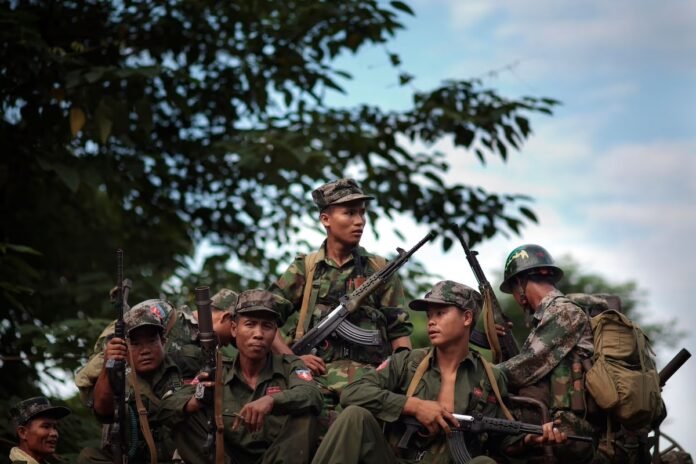
Following the dramatic shifts on the battlefields of Myanmar’s civil war in recent years, 2026 was always likely to be a year of decision. By the halfway mark of early July,the broad implications of “decision” have become increasingly clear: Crunch time for the viability of military resistance to army rule by federal-democratic forces will arrive in the coming months.

It is now commonplace to observe that behind the coup regime’s electoral charade of December 2025 and January 2026, and the emergence of an administration of civilian frontmen under military dictator-turned-president Min Aung Hlaing, Myanmar’s armed forces — known as the Tatmadaw — are on a steady roll of countrywide advances that have thrown the opposition onto the defensive.

This has nothing to do with the strategic acuity of new Tatmadaw Commander-in-Chief General Ye Win Oo, a soldier whose elevation stems from his unblinking loyalty to Min Aung Hlaing and, after years as national intelligence chief, a grasp of political undercurrents in the army and across society more broadly.

It has everything to do with a methodically unfolding strategy that began in the dry season of early 2025, was sustained through the mid-year rains and continues today. The long-term campaign, which Ye Win Oo is now overseeing rather than planning, is aimed in the medium term at reasserting control over key economic centers and border trade hubs lost in the serial disasters of late 2023 and mid-2024 to the so-called “Operation 10.27.”

Over the long haul, it aims to subdue resistance forces one by one with either overwhelming firepower or long-practiced suasion and subversion. Coordinated by Naypyidaw and implemented by Regional Military Commands (RMCs), this war plan has owed far more to logistical competence than to strategic flair.

And in the field it has been critically underpinned by four decisive elements, all now well recognized: major infusions of conscripted manpower; new technology and tactics with drones at the tip of the spear; the daunting advantage of ubiquitous, unchallenged airpower; and, not least, an unstinting backstop provided by China, which has effectively neutered two key opposition actors based on the Chinese border, the Myanmar National Democratic Alliance Army (MNDAA) and the Ta’ang National Liberation Army (TNLA), which along with the Arakan Army (AA) jump-started the resistance’s successful 10.27 campaigns.

The gains of this spreading multi-front campaign have been significant. In offensives that began in late 2024 in northwestern townships of Shan State, the military has reestablished control over most of the highway between Mandalay and the Chinese border; has pushed north along the Ayeyarwady River through northern Sagaing and into Kachin State toward Bhamo; and has reopened the road between Mandalay and the Kachin State capital, Myitkyina, for major convoys.

In northwest Sagaing, efforts are underway to secure the border highway from Tamu on the Indian border south to Kaletwa, while in eastern Chin State, the recapture of Falam, Tedim and Tonzang towns has been followed by bitterly contested thrusts toward the Indian border at Rikhawdar and Matupi.

Not least in eastern Karen State, where the heavy lifting to open the Asia Highway from Hpa’an to Myawaddy on the Thai border was undertaken last year, relentless recent clashes spilling onto Thai territory have focused on border bases to the south.

Attention is soon likely to focus on Myanmar’s southern panhandle with army chief General Kyaw Swar Lin promising major operations around Dawei intended to lay to rest Russian concerns over the persistent security threat that opposition attacks pose to a planned deep-sea port near which Moscow has agreed to build a coal-fired power plant and oil refinery.

Tatmadaw vulnerabilities

Notwithstanding these battlefield successes, the Myanmar military remains years away from establishing anything that could be described in polite diplomatic circles as stability, let alone victory. Indeed, advances to date have also served to reveal two very real and interlinked vulnerabilities where the Tatmadaw continues to struggle.

The first turns on the sheer size of Myanmar’s geography and the simple fact that, even granted the conscription-driven boost in manpower that since early 2024 has seen well over 100,000 new troops inducted into the ranks, the army will be increasingly overstretched by its new and far-flung gains.

This is hardly a new problem. Even before the civil war and the staggering losses inflicted by 10.27, a chronically stretched military was hard-pressed to maintain its garrison presence across the country, while at the same time conducting borderland offensive operations against major armed ethnic groups, a mission parceled out primarily to centrally commanded Light Infantry Divisions (LIDs).

Today, however, the uncomfortable difference from Naypyidaw’s perspective is that reasserting its presence must now confront central regions that have risen in revolt, and an armed opposition that is everywhere better organized, better armed and, whatever their differences, united behind a lowest-common-denominator anti-military goal.  

The military’s second vulnerability is morale, which, despite the numbers-driven surge over the past two years, remains undoubtedly brittle. A corruption-riddled process that had driven thousands abroad, into hiding or even opposition ranks, conscription has been ferociously unpopular from the outset.

Two years on, the pressures on ward- and village tract-level recruiters and press gangs to deliver fresh fodder for the training camps have only increased – and for good reason.

For conscripts who have gone through boot camps that provide only basic training, particularly those assigned to front-line LIDs, heavy casualties on some fronts have turned many deployments into near-death sentences.

As one retired army colonel noted in a recent interview, referring to LID battalions: “In the mess halls and barracks, they are increasingly seen as the ‘units that don’t come back.’”

SCEF Joint Chiefs of Staff

Against the backdrop of an otherwise bleak military situation, it is difficult to overstate the criticality for Myanmar’s armed opposition of zeroing in on these two vulnerabilities and regaining a measure of battlefield initiative.  

That, in turn, implies a coherent strategy and, by extension, the crucial element that has eluded Myanmar’s ethnic resistance for decades: a unified command structure or, specifically, a joint-chiefs-of-staff committee (JCSC).

The late-March formation of the Steering Committee for the Emergence of a Federal Democratic Union (SCEF) offers some hope that a joint committee of ranking staff officers from major resistance factions can be something substantively more than the same old pipe dream revisited.

The SCEF pulls together four key ethnic armed forces – Karen, Karenni, Kachin and Chin, the so-called “K3-C” – along with large numbers of People’s Defense Forces (PDFs) affiliated with the shadow National Unity Government (NUG).

In its initial formulation, the new grouping stands essentially as a political umbrella designed to reassure the international community that opposition forces can rise above the gnawing problems of ethnic fractiousness and organizational dysfunction. 

At the center of the problem is the NUG, which, notwithstanding its ingrained presumption of national legitimacy, is widely perceived as dominated by the ethnic Bamar majority and, at its core, by Aung San Suu Kyi’s National League for Democracy (NLD), which was ousted from elected power in the military’s 2021 coup.

An instinctively bureaucratic parliamentary party crippled today by a yawning leadership deficit, the NLD has proved predictably ill-suited to leading a youth-driven, bottom-up revolution – most egregiously in the military domain.  

On paper, at least, the SCEF has formed a “Military Strategic Cooperation and Command Committee,” and it is possible that this 10-man body amounts to the same thing as a Joint Chiefs of Staff committee.

But who will join it, how and where it will operate and, not least, how it will interface with the General Staff Committee of the NUG’s Ministry of Defense (MoD) all remain ominously unclear.

Regardless of the acronym adopted, however, at this juncture in a war that opposition forces are certainly not winning and are likely soon to be losing, the requirements for a unified command structure should be clear enough.

Necessarily reaching beyond current SCEF members, an effective committee needs to be a standing body that meets regularly and in person, bringing together senior staff officers with delegated military authority and combat command experience – as distinct from ex-politicians and party bureaucrats trying their hand at war.

An essential balance between functionality and inclusivity suggests a committee of around 10 members would be a manageable body, while in a wartime situation, regular meetings imply convening at least twice a week, or maybe more frequently depending on battlefield circumstances.

Inconvenient as it may be, across a country the size of Myanmar, running a war by Zoom call – the go-to technology of the opposition – is simply not a serious alternative to in-person conferences around a single table, where trust and mutual understanding can be forged across political and ethnic divides, and practical decisions can be reached.

Regular in-person meetings also obviously mean that committee members need to be in the same area, each in touch with their own headquarters, but, given the threat from the air, housed separately.

Arguably, a joint committee could – and probably should – move between different regions of the country. It could be headed by one of its members serving on a rotating basis for at least three or four months.

The political visuals of a joint staff committee are almost as vital as coordinating operations, prioritizing the allocation of scarce resources and reorganizing a disastrously flagging drone capability.

Images and video clips of conferences would convey a powerful message that a unified national command around a single table and a single strategy is a continuously functioning reality “somewhere inside Myanmar.”

For an exhausted Myanmar public and members of the international community whose sympathies for the opposition are being fast overtaken by skepticism, the optics of a joint staff committee are not a cosmetic add-on: They are indispensable proof that fighting unity has moved decisively beyond media statements and squabbling over the constitutional minutiae of federal arrangements that have no relevance to villagers being bombed.

Strategic basics

At this pivotal juncture in the war, two elements of a unified military strategy should be self-evident.

First is a shift towards what might best be described as a “war of the roads”– a relentless focus by local forces on harassing and severing lines of communication, including roads, railways and rivers, between urban centers that the regime has retaken or long held. Guerrilla harassment is a form of warfare in which the underdog – and that is now unquestionably the resistance – always holds the initiative.

It needs to be recognized and explained, however, that a strategy aimed at bleeding the military as it struggles to keep open its communications arteries should, and inevitably will, impact commerce and the national economy, imposing further suffering on urban populations. Exhausting an urban-based enemy while at the same time hoping the national economy can be run on a business-as-usual basis is clearly delusional.

Against the backdrop of the war of the roads undertaken by local forces, a second and related element of national strategy turns on the organization of regional forces in the form of regular mobile brigades drawn from township-based PDFs and operating across districts to carry the war to the enemy in nighttime hit-and-run assaults on army bases and strongpoints.

While some larger ethnic forces, notably the Karen and Kachin, have operated for decades at brigade level, the past five years have seen no similar shift toward forming even a nucleus of larger, semi-regular units from PDFs that still remain wedded to their home townships.

Dating from at least 2022, the failure to organize a tiered force structure has stemmed partly from problems of imposing top-down command-and-control on a spontaneous national uprising. It has also been paralleled by a lack of strategic understanding within the NUG’s MoD, which seems to imagine that a war against a well-equipped, centrally commanded national military can be magically won by local battalions.

It is also true that wider political turf squabbles have precluded the emergence of a joint staff committee, essential to hard conversations over the reorganization of forces as the foundations of a national revolutionary army.  

Whether, on the foundations of the SCEF, Myanmar’s opposition forces can summon the political will in the second half of 2026 to establish a real joint chiefs of staff committee and belatedly formulate a broad national strategy is, at best, a moot question.

Dizzying levels of fragmentation and the remarkable fact that in five years of war not a single charismatic military leader with national name recognition, ethnic or Bamar, has moved to the fore are hardly grounds for optimism.

But in mid-2026, armed resistance to army rule finds itself at five minutes to midnight. Failing the formation of a joint command structure and strategy in the coming months, arguably only two questions remain to be answered: How long will Asia’s most brutal military dictatorship need to reassert a blood-drenched dominance over a shattered nation, and how many more lives must be lost in the process?


These painted e-tattoos could be the future of wearable biosensors

0
these-painted-e-tattoos-could-be-the-future-of-wearable-biosensors
These painted e-tattoos could be the future of wearable biosensors

Credit: Wanqing Zhang

Scientists at Penn State University have developed a novel conductive ink that can be painted directly onto the skin in colorful custom designs, turning into a functional electrode for biomonitoring after drying. They described their work in a new paper published in the Proceedings of the National Academy of Sciences (PNAS).

As previously reported, epidermal electronics attached to the skin via temporary tattoos (e-tattoos) have been around for more than a decade. So-called e-tattoos connect to skin without adhesives, are practically unnoticeable, and are typically attached via temporary tattoo, allowing electrical measurements (and other measurements, such as temperature and strain) using ultra-thin polymers with embedded circuit elements.

However, these e-tattoos have their limitations, most notably that they don’t function well on curved and/or hairy surfaces, as well as requiring personalized electrode placement design to cover larger areas, since biosignals are spatially distributed. So scientists have been getting creative. For instance, in 2024, researchers developed special polymer-based conductive inks that can be printed right onto a person’s scalp to measure brain waves, even if they have hair. This could one day enable mobile EEG monitoring outside a clinical setting, among other potential applications.

Penn State mechanical engineer Larry Cheng, a co-author of the new PNAS paper, has been working on electrode designs for biomonitoring applications for more than 10 years, including EEGs, ECGs (for heart activity), and EMGs (for muscle contractions). Using rigid materials, like metals, makes for a stable biomonitor, but it is easily dislodged when the wearer moves too much, such as during exercise. Hydrogels have emerged in recent years as alternative materials, since they can absorb water, swell, and stretch with the body’s skin during movement. But hydrogels degrade rather quickly and lose those benefits with prolonged use.

As easy as face paint

Sweat or hair can also reduce the accuracy of recording biosignals. That’s because commercial electrodes are prefabricated and then applied to the skin, creating an air gap that weakens sensor readings. Cheng et al. decided to develop their conductive ink to address that issue. They mixed together several different kinds of polymers and acidic additives in a water-based ethanol/polyvinyl alcohol solution. PEDOT:PSS—aka poly (3,4-ethylenedioxythiophene): poly (styrene sulfonate)—provided electrical conductivity, along with DBSA (4-dodecylbenzenesulfonic acid), which also served as a plasticizer to give the ink flexibility.

A WE-PPD electrode taped to a man's chest

A WE-PPD electrode.

The team has painted sensors in all sorts of different designs and colors, including animals like the fox pictured above, among other cute characters.

The team has painted sensors in all sorts of different designs and colors, including animals like the fox pictured above, among other cute characters.

The team mercifully shortened the abbreviated moniker of their new conductive ink to WE-PPD. “The ink itself almost behaves like face paint,” said Cheng. “It starts out almost transparent, but you can use food dye to pigment the ink into whatever colors you need to paint whatever design you have in mind—like a cartoon or Superman. This allows us to completely personalize the wearable to a person’s preference.” Because the ink fills the contours of the skin, the resulting electrode has very high skin connectivity, and hence better signal recording. It can also be incorporated into a porous silver texture and integrated with rigid devices.

The painted sensors were tested in the lab on human subjects to monitor heart activity while running on a treadmill and lifting weights; gesture recognition to control a prosthetic robotic hand; and brain activity (EEG), monitored through hair, as a co-author went about their daily activities. The painted electrodes were able to stretch up to 170 percent before failing, per the authors, had much higher water vapor permeability than standard medical-grade films, and caused no skin irritation over prolonged use.

“Although we tested the daily use application over a 12-hour period, this is not the limit for these electrodes,” Cheng said. “The electrodes themselves can be washed away and easily reapplied. The big idea behind this is that in the future, you could potentially have a more expensive sensing module that remains separate from the system, but the electrodes themselves can be disposable. A single bottle of ink could provide enough material to paint multiple electrodes over the course of several days or a week.”

The team has filed a provisional patent for their conductive ink, but there are still a few limitations. While the absence of imaging artifacts holds promise for MRI imaging, the authors note that there still needs to be a comprehensive safety evaluation before deploying the painted sensors in a clinical setting. RF-induced heating is a particular concern, given the super-adhesive properties of the sensors. That’s a focus of future research, along with exploring the possibility of adapting the technology for plant health monitoring, since the painted sensors can conform so well to complex shapes.

DOI: PNAS, 2026. 10.1073/pnas.2615835123  (About DOIs).

US wartime buildup races against China’s industrial clock

0
us-wartime-buildup-races-against-china’s-industrial-clock
US wartime buildup races against China’s industrial clock

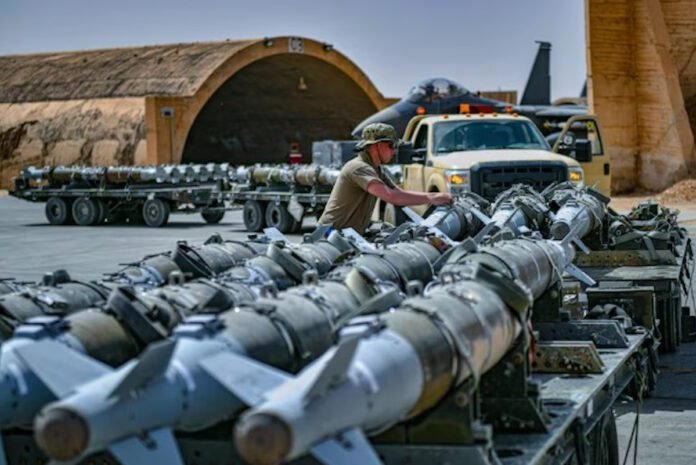
The US push for a wartime industrial base is accelerating, but its real test is whether new weapons can be produced, delivered and sustained fast enough for a multi-front Indo-Pacific conflict.

This month, the Center for Strategic and International Studies (CSIS) released a report indicating that, although the US has made significant progress towards preparing its defense industrial base for wartime needs, important weaknesses in stockpiles and supply chains persist.

The report outlines how the US Department of Defense (DoD) has leveraged large-scale public and private capital to counter strategic adversaries like China. The US DoD expanded its vendor ecosystem by adding 5,000 new entrants in FY 2025 and driving nontraditional contract obligations past US$120 billion.

To replenish munitions depleted during the Iran War, the DoD secured historic multiyear agreements to boost interceptor production and shifted its strategy toward a “high-low mix,” aiming for low-cost munitions to comprise 70% of requested units by FY 2031.

Furthermore, the US committed $7.6 billion between 2025 and 2026 to build a secure “mine-to-magnet” rare earth supply chain outside Chinese control.

Despite these aggressive acquisition reforms and an estimated defense budget request of 4.6% of GDP for FY 2027, the report warns that institutionalizing true readiness will take years, as manufacturing lead times for vital weapons still stretch to over 3 years.

While the US is measuring industrial mobilization by money committed and capacity promised, the decisive test is whether it can outproduce China, move matériel across the Pacific, and replace losses faster than a real war consumes them.

However, it remains to be seen whether the projected production can meet the demands of high-intensity conflict on the Korean Peninsula, over Taiwan or across simultaneous theaters.

In a pre-emptive strike against North Korea, Nicholas Anderson and Daryl Press estimate in a 2025 Texas National Security Review (TNSR) article that a highly localized operation would rely on 24 long-range B-1 and B-52 bombers carrying 528 air-launched cruise missiles (ALCMs), as well as 120 sea-launched Tomahawk cruise missiles fired from naval vessels.

Furthermore, Anderson and Press add that US ground forces on the Korean Peninsula would contribute 48 M270A1 precision-guided Multiple Launch Rocket Systems (MLRS) to the immediate counterbattery campaign against North Korean artillery. That expenditure pales in comparison to the cost of a potential US-China conflict over Taiwan.

Seth Jones estimates in a May 2026 CSIS report that in the first seven days of a conflict, the US  military would expend 3,000 to 5,000 baseline Joint Air-to-Surface Standoff Missile (JASSMs), 3,500 to 4,000 JASSM-Extended Range (JASSM-ER), and 400 to 1,000 Tomahawk cruise missiles, severely depleting or exhausting key US stockpiles almost immediately.

A simultaneous or near-simultaneous Korea–Taiwan conflict would split scarce US missiles, bombers and logistics, forcing support for one front at the expense of the other.

This raises the question of whether US munitions production can offset China’s industrial advantage and replace wartime losses quickly enough to alter the regional balance.

The Heritage Foundation’s January 2026 TIDALWAVE report compares the US and Chinese munitions systems, noting that while the US Indo-Pacific munitions system has significant structural fragility, the Chinese system is a massive, highly integrated enterprise optimized for high-intensity regional conflicts.

According to the TIDALWAVE report, the US model relies on finite stockpiles and could face an extreme “Triple Bind” supply failure within 25 to 120 days due to a two-year production lag, critical bottlenecks in rocket motors, and heavy reliance on imported Polish TNT.

In contrast, it says China’s state-owned conglomerates — like NORINCO — leverage automated, robotic “smart factories” that maintain resilient peacetime production with a 150% to 250% wartime surge capacity, allowing China to sustain prolonged combat depth.

However, the report points out that both nations share profound chokepoint vulnerabilities: the US is deeply dependent on Chinese rare earth minerals, while China’s highly centralized, rail-dependent distribution networks remain uniquely susceptible to targeted cyber warfare and advanced semiconductor export sanctions.

The comparison suggests that China holds the advantage in sustained regional munitions production, but both sides remain vulnerable to targeted disruption at critical industrial and logistical chokepoints.

Even if the US consolidates its supply chains and expands munitions production, those gains may not translate into combat power if vulnerable ports, transport networks, dispersed bases, storage sites and maintenance hubs cannot deliver and sustain the weapons under Chinese attack.

Highlighting the vulnerability of US facilities in the Pacific, Thomas Shugart III and Timothy Walton argue in a January 2025 Hudson Institute report that chronic underinvestment in Indo-Pacific combat logistics has left US forward bases unhardened and acutely vulnerable.

They warn that Chinese precision strikes could disable interdependent fuel lines, aboveground storage tanks and munitions stocks essential for sustained flight operations. Shugart and Walton add that these weaknesses would also hinder the dispersal of aircraft to alternative bases, particularly where prepositioned munitions, redundant fuel supplies and other passive defenses remain inadequate.

Kelly Grieco and her co-authors reach a similar conclusion in a December 2024 Stimson Center report, warning that Chinese missile attacks on forward-base runways could sever logistics and refueling links. They argue that prolonged runway closures could immobilize aerial tankers and restrict the operations of short-range fighters dependent on in-flight refueling.

Grieco and her co-authors also note that damaged airfields would impede deliveries of spare parts and munitions, while exposed fuel and weapons stocks could be depleted within days without reliable resupply routes.

US munitions expansion will have limited wartime value unless forward bases and logistics networks can survive attacks and keep aircraft fueled, armed and operational.

Beyond these logistical constraints, US contracts and investment announcements may overstate wartime capacity because much of the reported progress has yet to produce delivered weapons, qualified suppliers, skilled workers or sustained industrial output.

Mark Cancian and Chris Park argue in a May 2026 CSIS report that major funding increases and ambitious industrial framework agreements still leave a prolonged “window of vulnerability,” as billions in projected procurement have yet to materialize as battlefield-ready weapons.

Cancian and Park point out that while the DoD highlights aggressive contract actions, critical interceptors and missiles face severe manufacturing backlogs, requiring three or more years from appropriation to reach US stockpiles.

They stress that money alone cannot instantly resolve deep supply chain bottlenecks or expand actual factory output, and that maximum potential surge capacities remain theoretical projections rather than active, sustained industrial production.

The next phase of the US defense-industrial buildup will depend less on announcing capacity than on proving, through sustained production and contested-theater exercises, that weapons can be replenished and delivered faster than China can disrupt their flow.

Unless the US aligns factory expansion with hardened logistics, allied production and realistic multi-theater planning, new capacity may arrive too slowly to strengthen deterrence before the next regional crisis.

New York bans data center construction for a year, rattling AI industry

0
new-york-bans-data-center-construction-for-a-year,-rattling-ai-industry
New York bans data center construction for a year, rattling AI industry

New York became the first state to pause all construction of massive new data centers after Democratic Governor Kathy Hochul announced a one-year moratorium on Tuesday, Reuters reported.

The state-wide ban applies to data centers using 50 megawatts or more, officials told Reuters, and it won’t be lifted until the state figures out what “consistent standards” for responsible data center development in New York should look like.

Across the US, calls to halt data center construction have multiplied, as Americans grow increasingly concerned about risks of pollution, rising energy costs, and diminishing water supplies. At the federal level, Bernie Sanders (I-Vt.) and Alexandria Ocasio-Cortez (D-N.Y.) have introduced legislation seeking a possible nationwide construction ban. But Republicans are seemingly unlikely to embrace that legislation, given Donald Trump’s claim that such moratoriums would threaten America’s lead in the AI race.

However, officials on both sides of the aisle are cautious that their views on data centers could get them voted out. At every level, pressure is increasing on elected officials to consider residents’ fears before signing contracts that fail to consider if data center construction will benefit the public. New York’s move comes after researchers last month found that more than $130 billion data center projects have been blocked or delayed by protests so far this year.

On Tuesday, Hochul directed “state officials to develop a Generic Environmental Impact Statement (GEIS) to ensure that new data centers coming online are being held to ‘consistent standards,’ as well as examine the potential environmental impacts of the construction and operation of data centers in the state,” Reuters reported.

New York has fewer data centers than hotspot states like Virginia and Texas that have drawn more projects, but it did have a long queue of data centers waiting for approval to connect to the state’s energy grid, Reuters noted. Some projects had sparked backlash, The Washington Post reported, and New York lawmakers had already passed a bill to impose a data center moratorium in response. Hochul has yet to receive the bill for signing, Reuters reported, but her office described the law as “complicated” and said it would take some “time to work through” once it does reach her desk.

In the meantime, Hochul said it was her “responsibility to take action and lead,” as “data center development threatens to ⁠hike up utility bills, deplete our natural resources, and create uncertainty for New Yorkers.”

“New York will lead the way in creating the strongest standards in the nation for data center development, ensuring that when companies succeed because of New York, New Yorkers succeed too,” Hochul said in a statement.

NY threatens to repeal tax giveaways

Possibly providing a blueprint for other state-wide bans, New York’s bold anti-AI stance was viewed as “a striking setback for artificial intelligence companies that politicians once courted for investment,” the Post reported. It comes after Maine’s governor vetoed a prior state-wide effort to temporarily ban construction out of concerns that Maine’s legislation didn’t exempt a favored project already underway.

Hochul is clearly taking a firmer stance against massive projects concerning New Yorkers. Although her office insists that she isn’t anti-AI, she believes that she must take steps to ensure responsible growth of the industry in New York, where electricity prices are among the highest in the US. On Tuesday, Hochul indicated that she also planned to repeal sales tax exemptions for data centers, which could influence other states that, prior to the AI backlash from constituents, leveraged the tax giveaways to lure investments from the AI industry.

In New York, Hochul has suggested that old incentives and voluntary commitments that AI firms previously relied on to strike deals with officials were no longer enough. States need more information to assess whether residents will be protected from potentially harmful projects.

Hochul had already moved to ensure that data centers don’t force residents to pay higher prices as energy demand in the area skyrockets. In February, Hochul announced a plan to ensure data centers pay their “fair share” for energy grid updates, which she said would set a “simple standard” to “ensure everyday New Yorkers do not subsidize this energy-intensive industry.”

“These industries must pay more; if they do not, they must supply their own energy,” Hochul’s office said in a press release.

The moratorium shows that New York is serious about mulling how to set higher standards for data center construction, but the greatest immediate impact of the moratorium may be the momentum it gives to the anti-AI movement by signaling that stopping all construction in a state is possible.

Lithuania appoints Sinkevicius prime minister

0
lithuania-appoints-sinkevicius-prime-minister
Lithuania appoints Sinkevicius prime minister


Lithuania’s parliament on Tuesday voted in favour of a government manifesto presented by Social Democrat Mindaugas Sinkevicius, clearing ​the way for him to become prime minister and ‌for his proposed cabinet to take office.

NATO and European Union member Lithuania, which borders both Russia and Belarus, is the top defence spender in ​NATO as a share of the country’s economy, devoting ​an estimated 5.33% of its gross domestic product (GDP) to ⁠the military this year.

Sinkevicius’ government manifesto pledged to keep ​the spending above 5% of GDP and to seek a continued U.S. ​troops presence in the Baltic nation as a key deterrent against Russia, while continuing to support Ukraine.

“It would be a mistake to believe that ​Russian military threat is subsiding due to the large losses ​it is now taking”, Sinkevicius told parliament on Tuesday, referring to Moscow’s ongoing ‌war ⁠against Ukraine.

He replaces Social Democrat Inga Ruginiene, prime minister since last year, who is moving aside for the party leader to take over amid recent turmoil in her coalition government.

The new centre-left three ​party coalition, which ​includes the ⁠For Lithuania and Farmers and Green Union parties, commands a small majority in parliament.

Populist party Nemunas ​Dawn, whose leader faces charges of incitement to hatred ​against Jews ⁠and belittling the Holocaust, is no longer part of the government.

In parliament, 72 of the 141 members backed the new government ⁠platform ​while 29 voted against it and four ​abstained. The remaining members were absent.

The next election in Lithuania is scheduled for ​October 2028.

Trump’s Granddaughter Kai, 19, Shows Off Her Abs

0
trump’s-granddaughter-kai,-19,-shows-off-her-abs
Trump’s Granddaughter Kai, 19, Shows Off Her Abs


Kai Trump is putting in the work — and she is not shy about showing the results.

The 19-year-old granddaughter of Donald Trump proudly gave fans a look at her toned midsection in her latest YouTube vlog, lifting her shirt after a busy day of weight training and golf.

“Just got home, and guys, look at that,” Kai said as she pulled up her navy sleeveless top to show off her abs. “Working on my six-pack.”

The University of Miami golf recruit has been regularly giving her followers a peek into her workouts, golf routine, and life as one of the most visible young members of the Trump family.

In the new video, Kai showed herself doing a tough gym session before heading out for a full 18-hole round of golf with a friend.

At one point, she performed single-arm kettlebell lifts with one knee propped on a bench. She also showed clips of herself doing single-arm cable triceps pushdowns, giving her 1.5 million YouTube subscribers another look at the training routine behind her athletic build.

After the workout and golf outing, Kai returned to her mother’s house, where she proudly pointed out the progress she has been making.

The vlog also gave viewers a behind-the-scenes look at how Kai spent the Fourth of July with her grandfather at the White House’s America 250 celebration.

While Kai and Donald Trump share a well-known love of golf, they do not appear to share the same enthusiasm for serious gym time.

Trump joked about his own workout habits in May while announcing that he was bringing back the Presidential Fitness Test for students. The program had been discontinued in 2013 under former President Barack Obama’s administration.

“I work out so much,” Trump said at the time. “Like, about one minute a day, max. If I’m lucky.”

The president has long made it clear that he is not a big fan of traditional exercise.

In a 2015 interview, Trump argued that avoiding the gym had actually helped him sidestep the injuries some of his fitness-focused friends had suffered.

“All my friends who work out all the time, they’re going for knee replacements, hip replacements — they’re a disaster,” he said.

Trump made a similar point in 2018, saying he believed he got more movement than people realized through his daily routine.

“I get exercise. I mean, I walk, I this, I that. I run over to a building next door. I get more exercise than people think,” he told Reuters.

During that same interview, Trump also recalled getting on a treadmill for the first time in quite a while during a physical exam.

“I was on a treadmill for the first time actually in quite a while, and it was at a very steep angle, and I was there for a very long time,” he said. “They were surprised.

US-Israel military merger bill a threat to American democracy

0
us-israel-military-merger-bill-a-threat-to-american-democracy
US-Israel military merger bill a threat to American democracy

It’s called Section 219. Tucked away in the massive congressional spending bill known as the National Defense Authorization Act, or NDAA, this provision of the law would effectively require our nation to permanently entangle the American military with the Israeli military.

Among other things, the United States-Israel Defense Technology Cooperation Initiative would require the US to share intelligence with Israel and establish a system of weapons research, development, and production, particularly in the domains crucial to warfare in the modern age: artificial intelligence, autonomous systems, and various other fields of high defense technology.

The House provision, which has a Senate version known as Section 1217, would also forbid the president of the United States from limiting intelligence collaboration with Israel over its human rights abuses. If the President ever wants to limit such collaboration, he or she must tell Congress and can only cite American national security as a basis.

In other words, these bills would connect the US and Israeli militaries in unprecedented ways and make it exceedingly difficult for any future president to unwind this partnership with a foreign government.

If these bills pass in their current form, the US military would be more integrated with Israel’s than with that of any other country, including America’s NATO allies.

There’s a reason why members of Congress are trying to sneak this bill through right now, buried in a massive and must-pass defense spending bill: This might be their best, last chance to thwart the will of the American people.

Over the past three years, American public opinion has turned sharply against the Israeli government.

Thanks to the modern miracle of social media, Americans were able to directly see the human carnage as the Israeli military slaughtered and starved, by the most conservative estimate, over 73,000 people in Gaza.

Americans were also able to see the consequences of the Israeli military’s ethnic cleansing in Lebanon, which has destroyed ancient cities, including Christian towns, and displaced a million people from their homes.

Most recently, the American people watched as the Israeli government openly convinced the Trump administration to launch an unnecessary, illegal and failed war on Iran that has resulted in the deaths of thousands of civilians, over a dozen American soldiers, and a global economic crisis, including a sharp rise in gas prices.

The American people are simply fed up. According to recent Pew data, 60% of American adults have an unfavorable view of Israel, up from 42% in 2022.

Majorities of voters under 50 in both parties feel this way: 57% of young Republicans and 84% of young Democrats. Most Americans oppose further unconditional US military aid for the Netanyahu government.

Recent election results, in which candidates who staked their campaigns on investing American taxpayer dollars here at home instead of overseas in the Israeli military, have also shown that the tide is rapidly changing.

Even prominent conservatives like Tucker Carlson have decried the Israeli government’s influence on our political system while once-dominant conservative voices like Ben Shapiro known for supporting Israel have flailed and bled support.

Instead of respecting the clear will of the American people, members of Congress dedicated to maintaining unconditional US support for Israel have introduced bills meant to ensure changes in American public opinion never become changes in American public policy.

This should be unacceptable to everyone in our nation.

Although the US-Israel merger bills are currently making their way through Congress, the fight to strip these provisions from the NDAA is not over.

Just this week, Rep. Adam Smith (D-Wash.)—the ranking member on the House Armed Services committee — announced that he was withdrawing his support for the provision.

“I cannot support endless conflict even though I support Israel’s right to exist,” said Smith. “For these reasons, I will vote to remove Section 224 from the National Defense Authorization Act if it comes to the floor.”

If the joint technology development, intelligence sharing, and weapons production are enshrined in law, they would become extraordinarily difficult for future presidents or Congresses to undo, regardless of changing public opinion or policy priorities.

The United States would be permanently locked into a strategic alignment with a foreign government, taking away the American people’s ability to decide on the future of the relationship.

Members of Congress who recognize American sovereignty and respect American democracy must join Rep. Smith and others in opposing these provisions, and all Americans should call on their members of Congress to do so.

If joint technology development, intelligence sharing, and weapons production are required by law, they would become extraordinarily difficult for another Congress or future presidents to undo, regardless of changing public opinion or policy priorities.

Our nation would be trapped a strategic alignment with a foreign government, taking away the American people’s ability to decide on the future of the relationship.

The US military is meant to protect American interests, and Congress is meant to serve the American people. That’s why Section the US-Israel merger bills must go.

Robert McCaw is government affairs director for the Council on American-Islamic Relations (CAIR), America’s largest Muslim civil rights and advocacy organization. Ismail Allison serves as CAIR’s communications coordinator.

– Common Dreams

0FansLike
0FollowersFollow
0FollowersFollow
0SubscribersSubscribe
- Advertisement -
Google search engine

Recent Posts