22.5 C
London
Wednesday, July 15, 2026
Home Blog

President Trump Renews Naval Blockade, Threatens Civilian Infrastructure if No Deal Reached 

0
president-trump-renews-naval-blockade,-threatens-civilian-infrastructure-if-no-deal-reached 
President Trump Renews Naval Blockade, Threatens Civilian Infrastructure if No Deal Reached 


The United States and Iran exchanged strikes across the region for a fourth consecutive night as President Donald Trump renewed a naval blockade of Iranian ports and threatened to target Iran’s power plants and bridges unless Tehran returns to negotiations. 

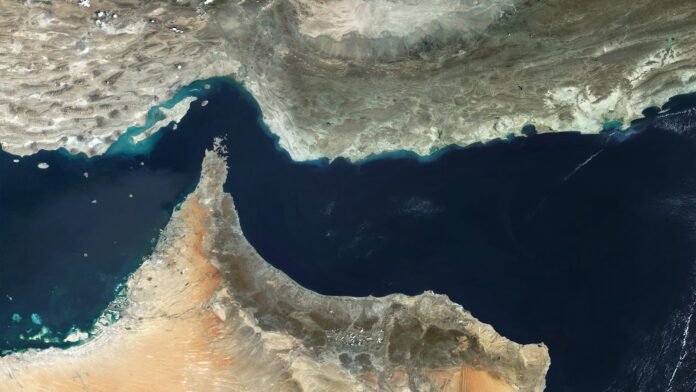
The US military’s blockade of ships traveling to and from Iranian ports began Tuesday after President Trump announced the move on Truth Social. On Monday, the president said the United States would act as the “guardian” of the Strait of Hormuz. 

US Central Command (CENTCOM) said it had resumed attacks on Iran before the blockade was reimposed. 

“At 3 p.m. ET today, US Central Command forces began launching an additional round of strikes against Iran to continue degrading Iranian capabilities used to attack commercial shipping in the Strait of Hormuz,” CENTCOM said in a statement posted to X. It said troops were also preparing “to resume the naval blockade against Iranian ports and coastal areas.” 

Iran’s Islamic Revolutionary Guards Corps (IRGC) responded with attacks across the region. Geolocated video reviewed by CNN appeared to show an Iranian drone striking an already-burning warehouse in an industrial area near Mina Abdullah in Kuwait. 

The IRGC said early Wednesday local time that it struck a US Army logistics and support center in Mina Abdullah, claiming the building was “set on fire and destroyed.” It was unclear whether the burning building shown in the video had any US connection.  

Late Tuesday local time, the Kuwait Fire Force said it extinguished a blaze “caused by a hostile Iranian aerial aggression,” the official Kuwait News Agency reported, without identifying the fire’s location. 

Iran’s army also claimed it struck US military assets at Al-Azraq Air Base in Jordan. IRNA said Iranian attack drones targeted an area where F-18 fighter jets were stationed, an accommodation building and a large equipment hangar it said belonged to the US Army. F-18 fighter jets are normally deployed aboard aircraft carriers rather than at Middle Eastern bases, and US media could not independently verify the claim. 

Meanwhile, Iranian Deputy Foreign Minister Kazem Gharibabadi said Tuesday that Tehran has “no obligations” under the 14-point agreement reached with the United States last month. 

“The core of the Islamabad memorandum of understanding concerned ending the war— an immediate and permanent cessation of the war and, in effect, of military operations against the Islamic Republic of Iran—as well as on all other fronts, including Lebanon,” he said. 

Trump told Fox News the strikes would intensify without renewed negotiations. 

“We’re going to hit them very hard tomorrow night. We’re going to hit them very hard the night after, and then next week it gets really bad for them, because next week comes the power plants. Next week comes the bridges. We’re going to knock out all their power plants. We’re going to knock out all their bridges unless they get to the table and negotiate,” President Trump said. 


Why Iran shut Hormuz after decades of holding back

0
why-iran-shut-hormuz-after-decades-of-holding back
Why Iran shut Hormuz after decades of holding back

US forces have struck hundreds of Iranian targets – including in the southern port city of Bandar Abbas – over three consecutive nights in a bid by the US president, Donald Trump, to regain some modicum of control over the Strait of Hormuz.

Trump has also inscribed the US as the “guardian” of the vital waterway. He has revived a naval blockade of Iranian ports and briefly demanded a 20% charge on all cargo passing through. His own secretary of state, Marco Rubio, had ruled out such a toll just two weeks ago.

Iran, meanwhile, has escalated by striking two tankers in the strait, killing a crew member. It has also hit US bases across the Gulf. Tehran’s brazen attempt to frustrate the US, and by extension the world economy, by targeting commercial vessels in the strait is indicative of the leverage it holds in this war.

But amid this cycle of tit-for-tat strikes, a key question is why Iran has decided to menace the strait in the current conflict when it has possessed the capacity to do so for decades.

For four decades, the threat to close the Strait of Hormuz represented a match that was never lit. Even at the height of the Iran-Iraq war in the 1980s, where more than 400 vessels were attacked in the Gulf, Tehran demonstrated conspicuous restraint.

It never attempted to seal the strait itself, not even after a US warship – the USS Vincennes – mistakenly shot down an Iranian passenger plane in 1988, killing 290 people.

Back then, Tehran’s logic dictated that closure of the strait would undermine its own oil revenue and invite retaliation. As political scientist Caitlin Talmadge put it in 2008, it would amount to “the military equivalent of cutting off its nose to spite its [enemies] face.”

The Strait of Hormuz served as a key instrument of Iranian coercive diplomacy. Tehran leveraged the prospect of closure as a deterrent and bargaining tool, without resorting to its implementation.

In 2011, Iran’s vice-president at the time, Mohammad Reza Rahimi, threatened that “not a drop of oil will pass through the Strait of Hormuz” if western sanctions on its petroleum exports went ahead. Yet Tehran ultimately acquiesced and allowed the embargo to take effect without closing the strait.

Through every round of escalation prior to 2026, this pattern of bluffing endured. That Tehran has chosen to act upon its threats in the current conflict makes the decision especially telling.

Accepting more risk

This about-turn speaks to a shift in Iran’s psychological risk perception, rather than material capability alone. Here, prospect theory offers a compelling answer. The theory holds that decision makers do not weigh risks consistently or rationally.

People are less likely to accept risk when operating within a frame of gains – preferring the certainty of what they hold over any gamble. But when leaders read a situation as one of loss, the logic reverses and they take greater risks to recover those losses.

The clearest window into this shift is the first statement attributed to the new Iranian supreme leader, Mojtaba Khamenei. In a March 12 statement, two weeks after the assassination of his predecessor, Ali Khamenei, he declared:

The revenge we have in mind is not just because of the martyrdom of the illustrious leader of the revolution. Every member of the nation martyred by the enemy is a separate case that demands we seek revenge … the leverage of closing the Strait of Hormuz must definitely continue to be utilised.

The statement presented each death not as a tragic cost of war, but a sacred debt that the US and Israel owe through retributive action. And the Strait of Hormuz was presented as the answer. Khamenei’s insistence that its leverage “must definitely continue to be utilised” transformed the strait into the mechanism through which accumulated losses are regained.

This narrative has been echoed well beyond Tehran. In an address delivered facing the strait itself in mid-April, Iranian cleric Hojjat al-Islam Jafar Rastakhiz stated that “for 47 years the criminal America has sanctioned us” and now “the Strait of Hormuz, because of the atrocities of America, has been closed.”

Ali Khamenei’s funeral, which recently took place across Iran during a week of mass processions, turned the regime’s losses into a public ritual. Mourners were heard chanting: “Our word is one! Revenge! Revenge!”

Crowds in the city of Mashhad taking part in the burial of Ayatollah Ali Khamenei unfurl a banner reading: ‘Hey Trump, we will kill you’. Iranian Supreme Leader Office / EPA

This rhetoric reveals how the regime now narrates its own position. It has portrayed Iran as a state burdened by an accumulation of military, political and symbolic losses that demand recovery. In doing so, it has created the very conditions under which greater risk acceptance becomes conceivable.

In all of this, there is an uncomfortable implication for the US. Trump’s decision to commit to further strikes on Iran, while defending commercial vessels in the strait, may be subsidising the psychological conditions that sustain Tehran’s risky behaviour.

Effective deterrence presumes an adversary weighing what it stands to lose. But against a regime that believes it has already lost, each strike simply deepens the deficit it is gambling to recover. The fight is now being waged on ground that Tehran has defined.

Ben Soodavar is lecturer, Department of War Studies, King’s College London

This article is republished from The Conversation under a Creative Commons license. Read the original article.

Wild Boar Sending Multiple People to Hospital After Charging Factory Workers and Cyclist

0
wild-boar-sending-multiple-people-to-hospital-after-charging-factory-workers-and-cyclist
Wild Boar Sending Multiple People to Hospital After Charging Factory Workers and Cyclist


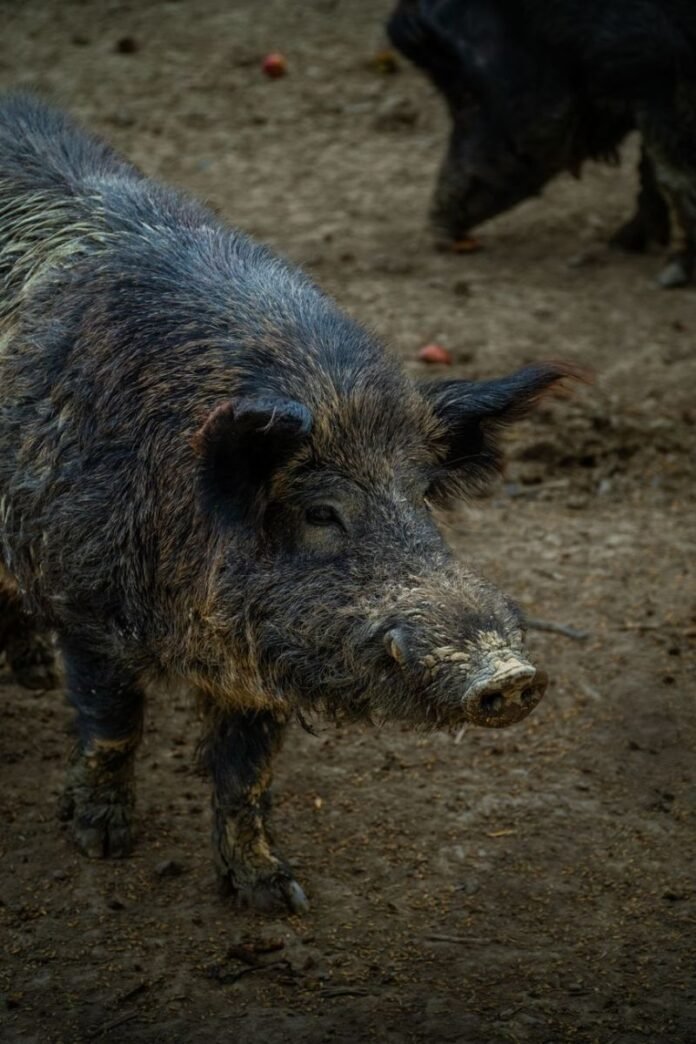
A wild boar sent four people to the hospital after tearing through the Japanese city of Toyota in a frightening early-morning rampage.

The roughly 120-pound animal first stormed into a factory that prepares school lunches at around 5:30 a.m., according to reports.

Once inside, the boar charged at workers and knocked down a 64-year-old employee who tried to fend it off with a shopping bag and a plastic container.

Surveillance footage showed another worker rushing in with a metal trolley as the terrifying standoff continued. The boar finally backed off after about two and a half minutes.

But the chaos did not end there.

Minutes later, the animal attacked a cyclist at a nearby road crossing. It then moved on to another factory about 800 yards away, where it tried to gore a man in his 80s.

Police and firefighters were eventually called in and managed to corner the animal. The boar died at the scene.

Four people were hospitalized after the attacks.

The bizarre incident comes as Japan continues to deal with growing concern over dangerous wildlife encounters.

Bears remain the country’s deadliest wild animals, but wild boar attacks have also been rising. Since 2016, more than 670 people have been attacked by boars in Japan.

Last year alone, 94 wild boar attacks were reported, marking the highest annual total on record.

For the people caught in the middle of the Toyota rampage, the morning turned into a terrifying reminder that even a routine workday can suddenly become dangerous when a wild animal charges into the city.

ICE Orders an End to Vehicle Stops After Deadly Shootings by Federal Agents

0
ice-orders-an-end-to-vehicle-stops-after-deadly-shootings-by-federal-agents
ICE Orders an End to Vehicle Stops After Deadly Shootings by Federal Agents


Internal orders handed down by leaders at U.S. Immigrations and Customs Enforcement instructed officers in the field to stop making vehicle stops, according to five ICE officials around the country.

The directive, handed down in at least three of ICE’s administrative regions Monday and effective immediately, came after a pair of killings in Texas and Maine by ICE agents that involved attempts to stop cars.

The ICE officers who spoke with The Intercept, who asked for anonymity to discuss internal orders, said the shift was meant to mitigate the chances of shootings like the ones that sparked outrage by taking the lives of two immigrants over the past week.

“Whatever these chucklefucks did in Maine and Houston is serious.”

“We have been told to either grab them before they leave their parking spot, or follow them and arrest them where they stop (ie a gas station or place of work) to avoid these situations,” said an ICE official from the South.

“This shit isn’t normal,” the official said. “Whatever these chucklefucks did in Maine and Houston is serious.”

ICE did not immediately respond to a request for comment.

The five officials who spoke to The Intercept about the directive all hail from ICE’s Enforcement and Removal Operations division, which carries out most of the federal government’s street immigration arrests. (ICE’s Homeland Security Investigations, the agency’s criminal investigative arm, did not receive a directive about vehicle stops, according to two special agents.)

The directive to ICE’s Enforcement and Removal Operations, which was first reported by the New York Times, didn’t come down as written orders, two of the ICE officials told The Intercept.

Instead, said one of the ICE officials who works in the Mountain West region, the order came down through field office directors to avoid red tape associated with putting an official policy in place.

Along with street arrests, vehicle stops had become go-to tactic for ICE in the second Trump administration, with ramped-up enforcement that has included crackdowns on large cities like Minneapolis. Under past administrations, including President Donald Trump’s first term, ICE relied mostly on transfers from local jails and prisons to satisfy its enforcement priorities.

The vehicle stops also contributed to a recent explosion of immigrant detentions, with ICE announcing roughly 10,000 arrests over a five-day period in late June 2026.

Ending the vehicle stops, said the ICE official based in the South, “definitely hinders enforcement.”

Killings in Vehicle Stops

In a recent period of less than a week, Mexican national Lorenzo Salgado Araujo was shot and killed by ICE officers in Houston and Colombian national Joan Sebastian Guerrero was shot and killed in Biddeford, Maine.

Details surrounding the shootings are still emerging, but Department of Homeland Security officials have said that neither Araujo nor Guerrero were the intended targets of the ICE enforcement operations that claimed their lives. The officers involved in the shootings were not wearing body cameras in either case.

The killings sparked public outrage and probes at both the state and local levels.

In addition to investigations by FBI and the Homeland Security Department’s Office of the Inspector General, Maine’s attorney general and the attorney general in Harris County, Texas, which includes Houston, launched investigations. Local police departments in both Maine and Texas are assisting with the investigations.

There are few precedents for ICE to cut off its enforcement division agencywide from using vehicle stops to make apprehensions.

As federal agents surged into mostly Democratic major cities, confrontations between ICE and demonstrators, activists, and immigrants led to violence — especially after the killings of Renee Good and Alex Pretti during ICE’s Operation Metro Surge in Minneapolis over the winter.

The outrage over the shootings led to operational guidance emphasizing de-escalation and reducing confrontations during field operations, with several field offices even briefly suspending proactive street enforcement or vehicle-stop tactics following orders of ICE upper management.

Since Operation Metro Surge’s end in mid-February, ICE has focused on smaller, decentralized “at-large” enforcement operations under the leadership of new Homeland Security Secretary Markwayne Mullin, a strategy that has allowed ICE to, until recently, operate with a lower profile, while maintaining previous arrest quotas.

Pro-Palestinian activist Mahmoud Khalil sues Heritage Foundation, Stephen Miller, others

0
pro-palestinian-activist-mahmoud-khalil-sues-heritage-foundation,-stephen-miller,-others
Pro-Palestinian activist Mahmoud Khalil sues Heritage Foundation, Stephen Miller, others

Palestinian activist Mahmoud Khalil filed a federal lawsuit on Tuesday against the Heritage Foundation, White House Deputy Chief of Staff Stephen Miller and others, accusing them of participating in a coordinated effort to retaliate against him for his advocacy on Palestinian rights, Anadolu reports.

Khalil said the case was brought under the Ku Klux Klan Act, a Reconstruction-era civil rights law designed to combat conspiracies to deprive individuals of their constitutional rights.

“Today, I sued the Heritage Foundation, Stephen Miller, a Columbia affiliate, and others under the KKK Act,” he said, adding that this lawsuit is about “accountability and justice.”

READ: Poll: 40 % of non-religious US Jews accuse Israel of genocide in Gaza

Khalil, a lawful US resident and a former Columbia University graduate student, was detained last March without a warrant by immigration officers in New York City and transferred to a detention facility in Louisiana, where he was held for months.

In January, a US federal appeals court ruled that a judge had no jurisdiction to order the release of Khalil.

“I will not stop fighting until everyone who willingly contributed to my missing the birth of my son and to taking 104 days of my life from me answers for what they’ve done,” Khalil said. He said additional legal actions would follow.

“This lawsuit is about far more than what was done to me. It is about a coordinated, ongoing plot to punish, silence, and intimidate everyone who dares to dissent and speak out for Palestinian liberation. We will hold them accountable,” he added.

READ: US House minority leader to oppose bid to cut off Israel aid

Arctic a missile defense corridor, emerging national security node

0
arctic-a-missile-defense-corridor,-emerging-national-security-node
Arctic a missile defense corridor, emerging national security node

Originally published by Pacific Forum, this article, the first of two in a series, is republished with permission.

Beyond the Arctic’s increasing relevance as a commercial corridor, the region is emerging as a strategic missile-warning and deterrence theater linked to Indo-Pacific security writ large. As Russia, China, and the United States jockey for military power and influence in the Arctic, Washington must consider the threats and opportunities of the present security environment and accordingly design its High North policy to protect American national security and extended deterrence networks.

The unique geolocation, climate, and terrain north of the Arctic Circle (66°33′ N) make the Arctic region an ideal node for missile defense, especially for early warning (EW) and interception.

The Earth’s geodesic structure makes air passage over the Arctic the shortest route between many a pair of locations in the Northern Hemisphere, enabling ballistic missiles to travel the minimum time and distance between launching point and destination. These geostrategic characteristics make the region the frontline for nuclear deterrence and early warning assets during a potential first-strike scenario.

The US-Soviet nuclear arms race of the Cold War extended into the Arctic, where both powers developed infrastructure for missile testing and early warning (EW in military jargon), as well as intelligence, surveillance, and reconnaissance (ISR). The Soviet Union established a dense network of military facilities across the region, including the Northern Fleet base at Zapadnaya Litsa and nuclear testing sites in Novaya Zemlya.

The United States, for its part, built a layered early warning and defense architecture across Alaska, Canada, and Greenland. This system included the Distant Early Warning (DEW) Line, a chain of radar stations stretching from Alaska across the Canadian Arctic to Greenland, providing a warning window of approximately three to six hours against incoming Soviet air-borne threats. Complementing this systerm were Nike Hercules surface-to-air missile installations, including Nike Site Summit 0verlooking Anchorage, as well as forward operating bases that supported Arctic surveillance and response missions.

These investments reinforced Alaska’s role as a forward defense hub and “guardian of the North.” DEW has since been incorporated into the North Warning System (NWS), the US and Canada’s joint 5,000-km radar network consisting of 13 long-range and 36 short-range radar sites. The NWS provides coverage across the Arctic from Alaska through northern Canada to Labrador.

Today, the United States maintains key early warning and missile defense facilities in the Arctic region, including Pituffik Space Base in Greenland, equipped with Upgraded Early Warning Radar (UEWR), and Clear Space Force Station in Alaska. Fort Greely hosts Ground-Based Midcourse Defense (GMD) interceptors, a vital component of the US homeland missile defense system.

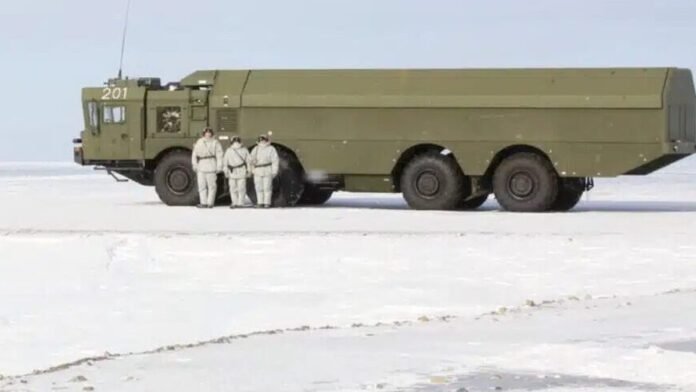
Meanwhile, Russia has revitalized its Arctic military posture, reactivating dozens of Soviet-era bases and concentrating strategic assets in the Kola Peninsula. The evolution of Russia’s presence in the Arctic demonstrates a renewed emphasis on EW, deterrence, and anti-access/area denial (A2/AD) capabilities in the High North.

Russia is also pursuing asymmetric advantages in the Arctic through the integration of critical defense assets, including the Northern Fleet and the Nudol anti-satellite system, and by using asymmetric capabilities to weaken key elements of US deterrence infrastructure. These efforts include preparations for the deployment of advanced nuclear-powered Burevestnik cruise missiles and Poseidon underwater drones, both of which have the capacity to complicate or overwhelm existing US missile defense systems.

In addition to investing in missile defenses, both Russia and the United States have invested heavily in ISR and conventional deterrence capacity in the region. In particular, the United States hosts critical service branches in Anchorage and Fairbanks including Elmendorf-Richardson), Eielson Air Force Base, and Space Force and Coast Guard bases.

Emerging strategic pressures

In recent years, China and Russia have expanded cooperation through a series of joint activities, including strategic bomber patrols near the Alaska Air Defense Identification Zone, joint coast guard operations and naval patrols in the North Pacific near Alaska. The two countries have also engaged in dual-use seabed mapping and maritime research, which support both scientific objectives and undersea military operations, including submarine navigation and ISR capabilities.

Such activities reinforce Russia’s existing military advantages in the Arctic while enabling new forms of asymmetric capability development. Russian cooperation with China in underwater and uncrewed domains complements Russia’s unilateral investments in advanced underwater systems, including nuclear-capable unmanned underwater vehicles designed to operate in Arctic conditions. These developments undermine US detection and response capabilities – particularly in the Arctic region whose environmental conditions already degrade sensor performance, thereby increasing uncertainty in early warning and crisis response.

Russia’s growing missile activities are destabilizing the regional security environment of the Arctic. Following the outbreak of the full-scale Russian invasion against Ukraine, Russia has conducted increasingly frequent missile tests across the region. These included major, publicized nuclear-delivery tests across air, land, and maritime domains.

Overall, Russia’s development of hypersonic, highly maneuverable delivery systems is challenging traditional radar-based tracking. Those systems operate at high speed between Mach 10 and Mach 20 and can be launched from an unpredictable initial launch point (e.g., an aircraft or a rocket vehicle) to defeat sectored, non-360-degree radar coverage.

The Avangard hypersonic glide vehicle (HGV) and the Kh-47M2 Kinzhal air-launched ballistic missile are examples of such initiatives. Avangard entered combat duty in December 2019, and Kinzhal has been in service since 2017. Avangard reportedly features onboard countermeasures and is nuclear-capable.

Due to the unpredictability of their flight paths and speeds, these systems further constrain pattern-recognition-based targeting and compress the conventional detection window. They degrade pattern-recognition targeting by avoiding predictable parabolic paths, varying atmospheric flight paths, creating plasma sheaths that confuse radar, and exploiting the persistent low-altitude sensor gap. Avangard can travel at Mach 20 (24,700 km/h), and Kinzhal has potential to reach speeds of up to Mach 10 (12,350 km/h).

Second, Russia’s nuclear modernization and investment in uncrewed systems are increasing and diversifying its second-strike capabilities. By adding more survivable delivery platforms, these systems increase the resilience of the Russian nuclear deterrent against a first strike, thereby strengthening its assured retaliation.

For example, the nuclear-powered, nuclear-capable Poseidon uncrewed underwater vehicle is designed for long-endurance, stealthy operations in the Arctic Ocean. Its ability to evade traditional anti-submarine warfare and survive a first strike enhances Russia’s second-strike credibility while complicating the United States’ ability to detect, track and intercept.

Beyond the air and underwater arenas, Russia’s counterspace capabilities present an additional security challenge for the United States. The Kremlin’s investment in space-based anti-satellite capabilities now threatens the satellite infrastructure on which United States’ missile warning systems and C5ISR (Command, Control, Computers, Communications, Cyber, Intelligence, Surveillance, and Reconnaissance) rely.

Additionally, the expiration of the New START Treaty in February 2026 introduces added uncertainty to the arms control architecture. In the absence of consent on the limits of delivery systems, along with mutually agreed mechanisms for investigation and management, increasing uncertainty is faced by each side regarding the other’s force posture and modernization trajectory.

Consequently, transparency has declined, while opportunities for confidence-building have become more limited. This further complicates potential collaboration on strategic stability assessment and increases the likelihood of miscalculation and escalation during a crisis.

Finally, the proliferation of dual-capable delivery systems could increase the risks of inadvertent escalation. These platforms can carry conventional or nuclear payloads, which could compromise the detector’s real-time warhead-type identification capability for incoming missiles. As a result, the prolonged identification time further compresses the decision window available to the military and political leadership. This situation, therefore, increases decision costs and the probability of miscalculation.

The ambiguity also introduces the possibility of a more effective first strike. Without fully reliable and verifiable intelligence to determine the incoming strike’s nature – particularly, whether it is conventional or nuclear – US and allied commanders may thus be confronted with a binary dilemma: Either select an option within a limited credibility and decision timeline or risk the survivability of their own nuclear arsenal and homeland security.

Together, the limit to situational awareness and the compressed decision timeline increase the likelihood of a delayed or compromised response, thereby further enhancing the operational effectiveness of Russia’s first-strike options.

Arctic environmental conditions also limit the effectiveness of Airborne Early Warning and Control (AEW&C) platforms. Such factors include extreme cold, reduced visibility, electromagnetic interference and severe weather. These operational constraints narrow the available interception window for US and allied missile defense forces by reducing sensor performance and complicating target identification.

New delivery platforms, especially maneuverable hypersonic systems, can evade traditional interception through variable trajectories and reduce predictability, thus increasing the survivability of the missiles. Such developments could reduce the efficacy of established missile defense systems, including Terminal High Altitude Area Defense (THAAD) and Patriot.

The integration of such systems into multi-domain operations that involve Northern Fleet assets, counterspace systems (e.g., Nudol), and next-generation strike platforms may further increase credible threats against US legacy systems.

As the Arctic becomes a more contested and strategically integrated domain, it is essential to examine the growing connection between developments in the High North and wider deterrence dynamics. In part two of this series, we will examine the Arctic’s impact on Indo-Pacific security and offer recommendations on how the US and its allies should respond.

Emerson Tsui (Emersonatsui@outlook.com) is a Washington, D.C.–based China and Indo-Pacific security analyst whose research focuses on Taiwan security, cross-Strait deterrence, and PRC strategic affairs. He has contributed to multiple policy publications on Indo-Pacific and Taiwan security issues and joined the Pacific Forum’s Young Leaders Program in 2023.
Google revamps image search for its 25th anniversary with more images and more AI

0
google-revamps-image-search-for-its-25th-anniversary-with-more-images-and-more-ai
Google revamps image search for its 25th anniversary with more images and more AI

Believe it or not, there was a time when searching the web for images was not possible. Twenty-five years ago, Google launched image search, and it’s celebrating by looking back at its biggest visual milestones and refreshing the experience for today’s searchers. The celebration also includes expanded AI because that’s just how Google rolls in 2026.

Google claims the impetus for image search a quarter-century ago was the green Versace dress Jennifer Lopez wore to the 2000 Grammy Awards. If you were alive at the time, you probably remember the one. Google engineers understood that people searching for the dress didn’t want to read about it—they just wanted to see it. The company got to work building image search, launching the first version in July 2001. Twenty-five years later, it’s easy to take for granted that you can search for Lopez’s green dress or whatever else strikes your fancy.

Currently, going to the Google image search site shows a plain search bar for finding images. It’s a refreshingly minimalist interface for the modern web. Even Google’s search homepage has a smattering of AI buttons and drop-down menus. That will change when the new Google Images rolls out.

Soon, Google Image search will feature a gallery of images from across the web before you’ve even searched for anything. Google says this gallery will be updated continuously based on your interests. Your “interests” in this context means your web and search history on Google. So the things you look up and interact with online will inform what content Google suggests in this new interface.

Google images interface

The new Google image search page.

The new Google image search page. Credit: Google

Google is also using this update as an opportunity to resurface Collections, a feature of image search you probably don’t use. As you browse Google’s suggested images and search for more, you can add items to your Collections. These will appear in a menu at the top of the main gallery for easy access.

The last change is not so much image search—it’s kind of the opposite. If the sheer volume of existing images on the Internet isn’t doing it for you, Google is making it easier to generate new images with AI. Google’s impressive Nano Banana image model has long been available in Gemini, and it expanded to AI Mode a few months back. Now, it’s coming to AI Overviews.

AI Overview Image Generation

If you want more AI images in your search results, just ask for one in your query. Google’s AI will generate and place it in the AI Overview that occupies an increasingly expansive portion of the results page. The image will naturally push the organic search results even farther down the page.

Both the refreshed Google Images page and image generation in AI Overviews will roll out over the coming weeks. They will both be limited to accounts set to English at first.

Trump Drops 20% Hormuz Fee Plan, Favors Gulf Investment in US 

0
trump-drops-20%-hormuz-fee-plan,-favors-gulf-investment-in-us 
Trump Drops 20% Hormuz Fee Plan, Favors Gulf Investment in US 


US President Donald Trump backed away Tuesday from his proposal to charge a 20% fee on cargo passing through the Strait of Hormuz, saying he instead favored Gulf leaders investing in the United States and arguing that no country should collect fees for passage through the waterway. 

President Trump said he reconsidered the proposal after receiving calls from “kings and emirs” and other leaders who offered an alternative to the transit charge. 

“They said we’d love to do it a different way. We’d love to invest in the United States with billions and billions of dollars,” PresidentTrump told reporters in the Oval Office on Tuesday. 

The investment proposal was preferable to collecting tolls “because I don’t think anybody should be able to charge a fee for the Strait,” President President Trump added. 

US officials have said throughout the conflict that ships should be able to pass through the Strait of Hormuz without paying transit charges. That stance contrasts with Iran’s proposal to collect fees from vessels using the strategic waterway. 

Tehran has described its proposed charges as “service fees” rather than official “tolls.” Iran says the payments would cover maritime security, environmental protection and vessel management. 

It remains unclear whether the investments discussed by the leaders who contacted President Trump would represent new financial commitments or agreements already announced following the president’s visit to the Middle East last year. 

President Trump’s remarks came as the United States and Iran exchanged fire for a third night. 

The renewed fighting followed an impasse in discussions over a memorandum of understanding intended to end the conflict that began in late February. 


US military sent explosive drone boats into combat for the first time

0
us-military-sent-explosive-drone-boats-into-combat-for-the-first-time
US military sent explosive drone boats into combat for the first time

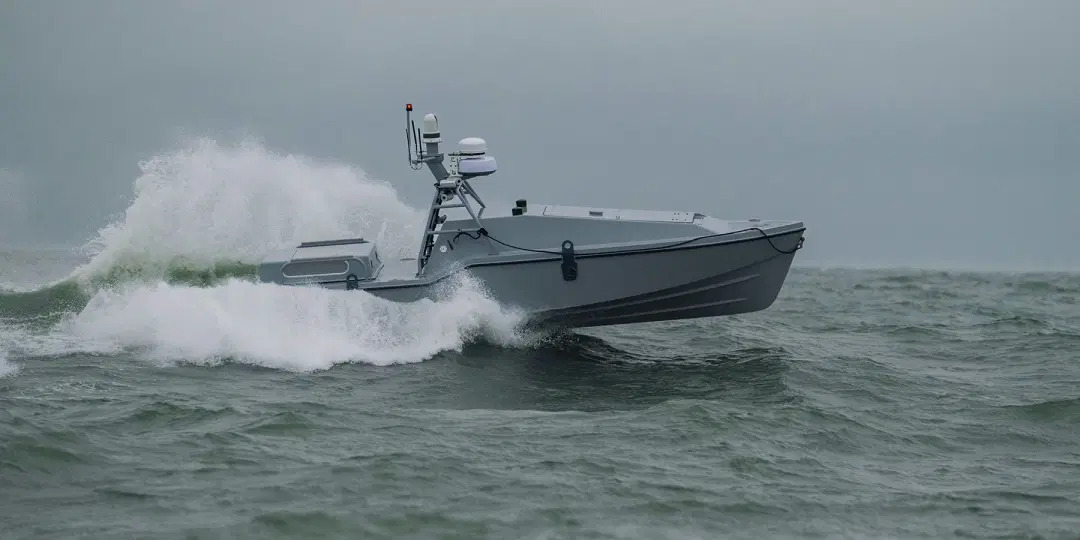
For the first time in its history, the US military sent explosive-laden drone boats into combat by attacking an Iranian midget submarine and naval port. The unprecedented use of such kamikaze sea drones by the United States comes nearly a decade after Iranian and Houthi forces first demonstrated such weapons.

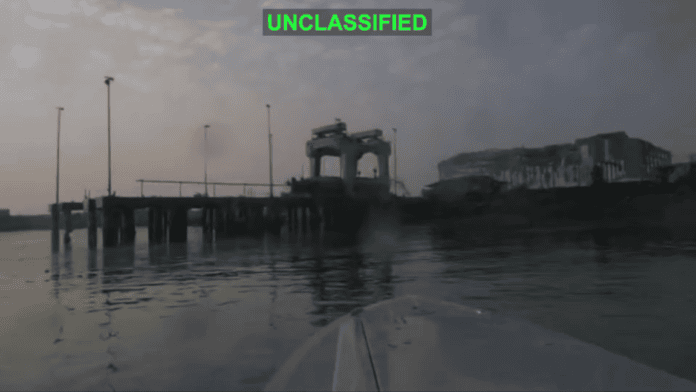
The US military shared a video showing three “one-way attack surface drones” exploding after approaching an Iranian midget submarine and ship maintenance facility at Iran’s Bandar Abbas Naval Base on the night of July 12. US Central Command, the US military combat command responsible for Middle East operations, described the strikes in a social media post as the “first time American forces have employed sea drones in combat operations.”

The US drone boats were able to “make a low-speed, uncontested approach” to their targets before exploding, according to USNI News, a news service from the nonprofit US Naval Institute. USNI News also identified one of the targets as an Iranian Ghadir-class midget submarine that was out of the water while being suspended from a gantry.

Kamikaze drone boat attack.

The technology behind the strikes involved Saronic Corsair autonomous surface vessels developed by Saronic Technologies, a defense company based in Austin, Texas. The company’s website describes the drone boat as being 24 feet in length and capable of carrying up to 1,000 pounds over 1,000 nautical miles at a top speed surpassing 34 knots.

Such Corsair drone boats supposedly have the capability to operate autonomously without direct human control, including long-range navigation and patrol missions along with regulating power consumption and engine use to loiter at a specific position, according to a Saronic blog post. They are designed to perform a wide variety of missions and were likely equipped with explosives for this specific strike.

This marks the second notable US military use of drone boats during the war, which began with the United States and Israel attacking Iran on February 28, 2026. The US military already used a Corsair sea drone to rescue two US Army helicopter pilots in the waters off the coast of Oman on June 8, after their US Army AH-64 Apache helicopter was taken down by a cheap Iranian Shahed drone.

An image of the Corsair autonomous surface vessel developed by Saronic Technologies racing across the surface of a blue-gray ocean with white water foam in its wake.

The Corsair autonomous surface vessel developed by Saronic Technologies is one of the drone boats in the US Navy’s service.

The Corsair autonomous surface vessel developed by Saronic Technologies is one of the drone boats in the US Navy’s service. Credit: Saronic Technologies

A history of drone boat violence

The United States is far from the first country to have used exploding drone boats, also colloquially described as kamikaze or suicide drone boats. The first confirmed use of such weapons occurred on January 30, 2017, when the Houthi faction based in Yemen struck the Royal Saudi Naval frigate Al Madinah using an uncrewed remote-controlled boat. A US Navy commander told Defense News that the Houthi weapon was likely developed with the technical assistance of Iran, which has long supported the Houthis.

In more recent years, the Ukrainian military has also developed and deployed drone boats for asymmetric warfare at sea since Russia launched a full-scale invasion of Ukraine in February 2022. Despite lacking a traditional navy, Ukraine has used a combination of flying drones and explosive drone boats to strike Russian warships and tankers, forcing Russia to withdraw its Black Sea Fleet to bases farther from Ukraine and cutting off vital Russian shipping routes.

Ukrainian drone boats have also achieved several milestones in military history by using missiles to shoot down Russian helicopters and acting as surface platforms to deploy small flying drones to strike Russian air defenses. Most recently, a Ukrainian drone boat even deployed an armed ground robot onto contested coastal territory in an unprecedented amphibious operation.

It’s unclear how the US military may continue deploying drone boats as President Donald Trump once again ramps up the war with Iran following the collapse of a supposed ceasefire. The US drone boat strikes came as part of a broader attack by conventional US military forces on Iranian targets in recent days, including strikes by US fighter aircraft and warships.

The US military has also been using one-way aerial attack drones for the first time during its war with Iran—LUCAS drones based in large part on Iranian-developed Shahed drones. Along with the drone boats, the United States is following the example of less powerful countries or factions that have used inexpensive drone weapons to pursue asymmetric warfare. The US military is currently trying to procure a new generation of cheaper surveillance and strike drones, especially after losing dozens of costly hunter-killer Reaper drones collectively worth more than $1 billion in the war against Iran.

Prepare for wild and dangerous scenarios on the Korean Peninsula

0
prepare-for-wild-and-dangerous-scenarios-on-the-korean-peninsula
Prepare for wild and dangerous scenarios on the Korean Peninsula

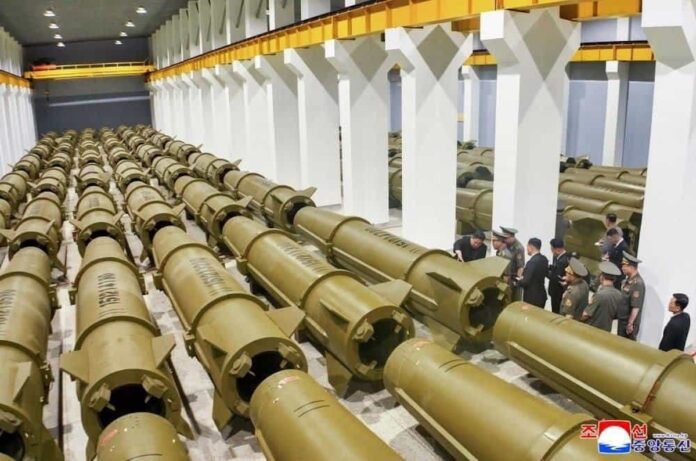
Kim Jong Un inspects Hwasong missiles in storage this month. Photo: KCNA

North Korea and Russia have approaches to the value of human life and risk that are radically different from those of the West – a reality that US and South Korean defense planners must prepare for.

State-sanctioned violence and militarism form the foundation of the rejuvenated North Korea-Russia partnership, and that should shape how US and South Korean alliance planners read the North’s tolerance for risk. 

But the relationship lacks the dynamics of 21st-century alliances. North Korea and Russia share no ethnic or religious linkage, no common political system and no joint economic vision. They do not trade goods and services to improve domestic living conditions. They trade weapons, ammunition, and soldiers to destabilize regions.

Both regimes accept far higher human costs than democratic governments do, and that is the assumption that the United States and South Korea should carry into any contingency planning.

In a 2003 essay, political theorist Achille Mbembe explained the concept of necropolitics and said that “the ultimate expression of sovereignty resides, to a large degree, in the power and the capacity to dictate who may live and who must die.”

Using necropolitics as a conceptual framework to explain the North Korea-Russia relationship allows us to see this partnership in a different light. Unlike the collective West, which traditionally upholds universal human rights and the rule of law, the North Korean and Russian regimes view these liberal values and principles as inherent weaknesses.

The inability of Western publics to stomach high body counts in war and sacrifice economic stability for military needs is seen as a strategic opportunity for the dictatorships in Pyongyang and Moscow.  

While Mbembe mainly uses necropolitics to explain the Israel-Palestine situation, extending this idea to diplomacy is a useful tool for explaining international partnerships such as the North Korea-Russia relationship that fall outside traditional definitions of alliance structures.

The North Korea-Russia partnership is centered around facilitating the means and ends of warfare. With both nations on a permanent wartime footing, Kim Jong Un offers artillery shellssoldiers, and landmine sweepers to Vladimir Putin in exchange for military technology. The two nations send each other the tools and instruments of death.

What makes this different from arms sales between democracies is the fact that this military-centered trade between Pyongyang and Moscow forms the core of this diplomatic partnership. While the United States may sell weapons systems to South Korea and vice versa, the two governments do not see those arms sales as the primary driver of the alliance. 

Beyond the diplomatic realm, necropolitics defines North Korean and Russian domestic politics. Russian dissidents “accidentally” fall out of apartment windows or end up in Siberian gulags. Kim enlarges an already expansive political prison system and ruthlessly kills potential political rivals, including his half brother.

Most of the people living in both North Korea and Russia would qualify under Mbembe’s category of the “living dead.” Malnourishment and the inability to escape precarious socioeconomic conditions characterize much of life in the rural regions of both countries.

Moreover, the mandatory military conscription of North Korean and Russian men renders them as living in a “death world” where personal agency is taken away and their lives are at the whims of their commanders. 

More than 350,000 Russian soldiers have died in Putin’s war against Ukraine. This gruesome statistic parallels Stalin’s disregard for human life during World War II. While many in Washington and Seoul see these body counts as a sign of Russian weakness in the war, it is useful to remember that dictators do not view humanity similarly.

These illiberal necropolitical values, embraced by Pyongyang and Moscow, change the risk calculus on the Korean Peninsula. While most pundits do not believe Kim would be foolish enough to launch a full-scale invasion of South Korea, it is still worthwhile to understand that the North approaches risk and the value of human life from an entirely different perspective.

While South Korea has matured into a robust liberal democracy with strong institutions and rule of law, North Korea has descended into Kim’s personal fiefdom. With absolute control of party-state affairs, he willingly sacrificed thousands of his own soldiers for a conflict in a faraway European theater. It is therefore useful to consider that Kim might be willing to do something equally reckless on the Korean Peninsula to pursue his own goals. 

The inability to understand the nature of the North Korean regime has long clouded analyses and assessments of the Kim family regime. But despite the opacity of North Korea’s inner workings, it is clear from defector testimony and human rights organization reports that Pyongyang has a radically different conception of the value of individual human life.

Given this fact and Pyongyang’s history of reckless behavior, it is imperative that both Washington and Seoul prepare for wild and dangerous scenarios on the peninsula. While Kim is not an irrational figure, he operates from an entirely different vantage point that only a handful of other dictators in the world understand. 

Benjamin R. Young is an assistant professor of intelligence studies at Fayetteville State University and a non-resident fellow at the Korea Economic Institute of America. KEI originally published this article, which is republished with permission. The views expressed here are the author’s alone.

0FansLike
0FollowersFollow
0FollowersFollow
0SubscribersSubscribe
- Advertisement -
Google search engine

Recent Posts