16.8 C
London
Tuesday, July 14, 2026
Home Blog

Ukraine’s robot army advancing on the war’s front lines

0
ukraine’s-robot-army-advancing-on-the-war’s-front-lines
Ukraine’s robot army advancing on the war’s front lines

The Ukrainian military is steadily replacing dangerous frontline tasks with ground robots. In April, President Volodymyr Zelensky ordered the military to field at least 50,000 unmanned ground vehicles (UGVs) in 2026, calling them “the next big step” in saving soldiers’ lives.

Ihor Shmyryov, head of the UGV department at Ukraine’s defense innovation platform Brave1, expects Ukraine to exceed Zelensky’s target once direct brigade purchases are included. “In the first half of 2026, 25,000 UGVs will be contracted for deployment to the front,” he said. “That’s twice the number contracted during all of 2025.”

Ukraine’s UGV industry is booming. A study jointly conducted by the KSE Institute, Brave1 and Defense Builder found Ukraine’s UGV market grew 488% in 2025. In March, Andrii Biletsky, commander of Ukraine’s 3rd Army Corps, said UGVs could eventually replace up to one-third of soldiers along the front.

“The goal is to replace an infantryman on the front line with drones, as much as possible,” Shmyryov said. That means pairing aerial drones with UGVs.

Kyiv is already implementing that vision. In April alone, Shmyryov said Ukrainian UGVs carried out more than 10,000 missions, most delivering supplies to frontline positions. As the battlefield grows more dangerous, demand for machines that can replace soldiers keeps rising.

“Drones can make ground unlivable,” said Heiner Philipp, an engineer with Technology United for Ukraine. Ukrainian forces can now detect and strike Russian troops day and night, often suppressing positions before infantry move in. Increasingly, the first thing advancing across that ground is not a soldier, but a robot.

Pavel Shurmei of the Kastus Kalinoŭski Regiment said his unit initially experimented with machine-gun-equipped UGVs but now uses them mainly for logistics, where the systems have found their clearest battlefield role.

Another mission is countering Russia’s growing use of small infiltration groups, allowing armed UGVs to engage them without exposing more soldiers inside the drone kill zone.

“Primarily, it involves engaging enemy personnel and equipment using turrets. This is already operational on the front lines,” Shmyryov said. “Robots can perform patrols and hold positions.”

In February, Khartiia’s Lava regiment cleared a Russian strongpoint near Kupiansk using ground robots, kamikaze UGVs and strike drones without sending infantry into the objective.

Two months later, Ukraine’s Defense Ministry announced the formation of “drone assault units,” integrating aerial drones, ground robots and infantry into a single combined-arms system.

Ground robots are also taking on engineering tasks. Dima, a soldier with Ukraine’s 3rd Assault Brigade, told me his unit uses UGVs to deploy concertina wire and MZP barriers in front of defensive positions. “But it’s tough,” he said. “As soon as a robot rolls out to the frontline, all the enemy’s FPVs try to strike and destroy it.”

Developers are expanding what UGVs can do. Ratel Robotics began testing net launchers mounted on ground robots to intercept low-flying drones.

In June, the 3rd Army Corps unveiled an AI-enabled robotic air-defense system capable of autonomously detecting, tracking and engaging aerial targets, highlighting how rapidly UGVs are evolving into modular battlefield platforms.

A Brave1 representative told me AI-enabled UGVs are already being used on the front lines for missions ranging from fire support to air defense, including engaging Russian Shahed kamikaze drones.

Poor communications remain one of the biggest barriers to deploying ground robots at scale. Rather than relying on a single radio link between an operator and a robot, mesh networks allow drones, UGVs and ground stations to relay commands through one another, making robotic formations withstand jamming.

“Mesh networking is essentially a prerequisite for UGV employment at scale,” said Ryan O’Leary, a former commander of Ukraine’s Chosen Company volunteer unit.

Russia is pursuing many of the same concepts. Samuel Bendett, an adjunct senior fellow at the Center for a New American Security, said Russian forces are fielding UGVs for logistics, casualty evacuation and combat roles, including systems such as the Courier, Depesha and Impuls, alongside improvised robots built by frontline units.

But he believes Ukraine currently retains an advantage in deployment. “The overall Russian UGV number used at the front today is likely smaller than the Ukrainian one,” said Bendett, adding that communications limitations have constrained wider Russian use. Even so, he said, both militaries increasingly see that ground robots are becoming essential on a battlefield dominated by drones.

Ukrainian commanders are beginning to plan assaults around what robots can accomplish before soldiers move forward.

The commander of the NC13 strike UGV company in the 3rd Assault Brigade told the Ukrainian outlet Militarnyi in December that his unit has already conducted offensive operations using multiple armed robots simultaneously. The next step, he said, is making such assaults routine rather than exceptional.

More capable robots do not mean infantry is disappearing. “UGVs can support frontal assaults and degrade enemy forces,” said George Barros of the Institute for the Study of War.

“They are not a perfect substitute for infantry. At the end of the day there will always be a requirement for old-fashioned infantry to occupy and control terrain,” Barros said. He added that current systems remain vulnerable to FPV drones and mines, and armed UGVs must still be physically reloaded after expending their ammunition.

“Progress here depends as much on hardware as software,” said Deborah Fairlamb, founding partner of Ukraine-focused venture capital firm Green Flag Ventures. Advances in software and AI should make UGVs more capable as better hardware reaches the battlefield.

During casualty evacuations, several robots may be lost attempting to recover a wounded soldier before one succeeds. As Yuliia Trybushna of NUMO Robotics told me: “It’s better to lose four machines than one soldier.”

Ukraine plans to field more than 50,000 UGVs this year. But Trybushna estimates replacing most frontline positions would ultimately require roughly 150,000 to 200,000 annually.

Combat UGVs remain relatively uncommon not because they have failed, she said, but because the doctrine needed to employ them at scale is still being developed. Individual battlefield successes come first; standardized tactics follow.

Ground robots are unlikely to replace infantry soon. But they are steadily replacing many of the tasks soldiers once performed, offering an early glimpse of a battlefield where soldiers increasingly stay behind while machines go forward.

David Kirichenko is a freelance journalist and an associate research fellow at the Henry Jackson Society. His research focuses on autonomous systems, cyber warfare, irregular warfare, and military strategy. His analyses have been widely published in outlets such as the Atlantic Council, the Center for European Policy Analysis, the Irregular Warfare Center, Military Review and the Modern Warfare Institute, as well as in peer-reviewed journals. Follow him on X: @DVKirichenko.

Houthi Missiles Target Saudi Airport, Air Bases as 4-Year Truce Collapses 

0
houthi-missiles-target-saudi-airport,-air-bases-as-4-year-truce-collapses 
Houthi Missiles Target Saudi Airport, Air Bases as 4-Year Truce Collapses 


Yemen’s Houthis launched a barrage of ballistic missiles toward Abha International Airport and two military bases in Saudi Arabia after an attack on the runway at Sanaa International Airport that Yemen’s internationally recognized government said was aimed at preventing an Iranian aircraft from landing. 

The Saudi-led military coalition in Yemen said air defenses stopped the missiles before they reached targets in the kingdom’s south. 

A coalition spokesperson said on X that the intercepted weapons had been “launched by the terrorist Houthi militia toward the southern region.” 

The attacks brought an end to four years of truce between Saudi Arabia and the Iran-aligned Houthis and renewed direct hostilities between the two sides. 

The Houthis blamed Saudi Arabia for the action at Sanaa airport, alleging that the kingdom had launched several airstrikes against the facility. Yemen’s internationally recognized government, which is supported by Saudi Arabia, gave a different account, saying its forces struck the runway to block the arrival of an aircraft from Iran. 

“In an unjust aggression, the Saudi enemy carried out several airstrikes against Sanaa International Airport,” Houthi military spokesman Yahya Saree said shortly after reports of the attack surfaced. 

Saree said the deescalation period was over and pledged that the Houthis would respond immediately. 

The group then directed ballistic missiles at Abha International Airport and the two Saudi air bases. Saudi air defenses intercepted the missiles targeting the country’s southern region, the coalition said. 

The Houthis described the missile barrage as retaliation for the attack at Sanaa International Airport. 

Saudi Arabia supports Yemen’s internationally recognized government in its conflict with the Houthis, who are aligned with Iran. 


California creates $3,500 rebate for new electric vehicle buyers

0
california-creates-$3,500-rebate-for-new-electric-vehicle-buyers
California creates $3,500 rebate for new electric vehicle buyers

At the end of last September, electric vehicle adoption in the US began to crater. That followed the abolition of the IRS clean vehicle tax credit as part of a series of moves by President Trump and congressional Republicans to undermine energy efficiency and pollution control measures. Until then, buyers of some EVs could claim up to $7,500 from the purchase as part of the IRS Section 30D credit, assuming the EV was below the price cap and the buyer earned less than the income cap. Since then, EV sales have dried up, and automakers have canceled entire product lines as they face the reality of a US government that has soundly rejected moving past oil dependence.

But EV buyers in California aren’t quite as unlucky as their peers in the other 49 states and the District of Columbia. Yesterday, California Governor Gavin Newsom signed a new EV rebate into law for residents of the Golden State.

As Newsom said in a statement:

Donald Trump is doing everything in his power to pollute our air and surrender the clean car industry to China on a silver platter. California is putting its foot on the accelerator. With our new instant rebate program for electric vehicles, we’re making it easier for families to drive clean, breathe clean, and keep more money in their pockets. As California leads the world toward a clean future, our message is clear: no one can stop Californians from choosing vehicles that are better for their wallets and better for the air they breathe.

California’s new MyFirstEV Zero Emissions Vehicles instant rebate program will provide a $3,500 rebate at the point of purchase for a California resident buying their first EV, so long as that EV costs less than $50,000. Additionally, there’s a $1,750 rebate for used EVs that cost less than $25,000.

The latest state budget allocates $135.5 million to partially fund the rebate program; participating automakers will collectively contribute another $135.5 million to MyFirstEV as well.

However, according to Electrek, the program has exemptions for California-based automakers. As long as an EV manufacturer is headquartered in the state—like Rivian and Lucid—its products are not subject to the price cap. Despite being founded in California by Martin Eberhard and Marc Tarpenning, current Tesla CEO and political activist Elon Musk famously moved the HQ to Texas in a fit of pique following his refusal to obey public health laws during the COVID-19 pandemic. Only new Tesla EVs that cost less than $50,000, therefore, will be eligible for a rebate for a first-time EV buyer in California.

California has not announced the list of participating manufacturers yet.

UPDATED: UK counter-terrorism police now probing former minister Widdecombe’s suspected murder

0
updated:-uk-counter-terrorism-police-now-probing-former-minister-widdecombe’s-suspected-murder
UPDATED: UK counter-terrorism police now probing former minister Widdecombe’s suspected murder


British counter-terrorism police officers are now leading ​the investigation into the suspected ‌murder of former British government minister Ann Widdecombe, interior minister Shabana Mahmood said on Monday.

Widdecombe, 78, was ​found dead at her home ​in rural southwest England on Thursday with ⁠what police described as “serious injuries”. Officers arrested ​a white British man in Rotherham, ​northern England, late on Saturday.

Get a look at the day ahead in European and global markets with the Morning Bid Europe newsletter. Sign up here.

“Following new information and evidence, they (counter-terrorism police) are now leading on the ​investigation into the horrific murder of ​Ann Widdecombe,” Mahmood said on social media platform ‌X.

“The ⁠police are pursuing multiple lines of enquiry to establish the motivation for this attack,” she said, adding that she ​would update ​lawmakers in ⁠parliament later in the day.

The Devon and Cornwall police force, ​who were previously investigating the ​suspected ⁠murder, had said on Sunday that there was no evidence suggesting there was ⁠a ​political motive or that ​the incident was terrorism related.

Who was Widdecombe

Her political career spanned decades, serving as MP for Maidstone in Kent for 23 years, before going on to join Reform UK.

She worked as a Home Office and employment minister in Sir John Major’s government between 1994 to 1997.

After leaving Parliament she embarked on a showbiz career,appearing on Strictly Come Dancing in 2010 and Celebrity Big Brother in 2018.

A staunch supporter of the UK’s departure from the EU, she became an MEP for the Brexit Party, representing South West England in the European Parliament between 2019-2020.

In 2023, Widdecombe joined Nigel Farage’s Reform UK, after the party changed its name from the Brexit Party, and made a number of appearances as the party’s immigration and justice spokesperson.

Following news of her death, Farage credited Widdecombe for playing a “decisive role” in getting Brexit “over the line”.

“When Ann Widdecombe decided to stand for The Brexit Party in the snap 2019 European Elections, it was a big moment and huge boost. The voters loved her,” he wrote in a post on X, adding she would be “missed by us all”.

Conservative leader Kemi Badenoch described Widdecombe as a “formidable politician who was never afraid to speak her mind and fought hard for what she believed”.

Tory MP and former party leader Iain Duncan Smith said she expressed her views “strongly and straight, which was refreshing in many senses and sometimes difficult”.

By appearing on Strictly, he said she discovered “a new lease of life, an inner Ann that we never had any sight of at all”.

Former Conservative MP and friend Gyles Brandreth described her as “a curious mix of Danny de Vito and Margaret Rutherford”.

“We met when we were both 19 and remained friends because she was fun and kind – even when you disagreed with her fiercely.”

Lord Howard, a former Conservative leader who clashed with Widdecombe when they were both ministers at the Home Office, told BBC Radio Kent she was a “feisty lady” and a “good minister”.

Widdecombe famously described him as having “something of the night about him”.

Lord Howard acknowledged they had had “our ups and downs” but later “made up”.

Speaking on Friday morning, health secretary James Murray said Widdecombe “was never shy of having quite firm views and sharing them quite willingly”.

“I can’t say I always agreed with her views, but she was such a part of our politics,” the Labour minister told Times Radio, adding “everyone can recognise the contribution that she made to politics” and public life.

In a statement, her agent Cloud 9 Management said her life and career were “driven by her strong Christian values and commitment to public service”.

They added that Widdecombe loved the “cut and thrust of political debate” and despite leaving Parliament 16 years ago, was “still actively campaigning for Reform UK”.

“For many, of course, she will be best (or worst?) remembered for her unforgettable appearances on Strictly Come Dancing, defying the judges week-after-week as the public delighted in her unsuccessful attempts to follow the choreography of the long-suffering Anton Du Beke,” the statement went on to say.

The former Tory minister became a favourite with viewers when she appeared on the BBC’s Strictly Come Dancing in 2010.

One judge likened her to a “Dalek in drag” but her popularity with the audience took her to the semi-finals.

She described her 10 weeks on the show as “magnificent” and life-enhancing”.

During her parliamentary career, Widdecombe, a staunch Catholic, often sparked controversy due to her socially conservative views, including opposing abortion and comments about the LGBT community.

In 2019, the former minister received backlash after suggesting science might one day “produce an answer” to being gay.

In the 1990s she converted to Catholicism, a move she later described as the best decision she ever made.

She told The Times newspaper: “To have a church which calls a sin a sin and has done with it is a blessed relief.”

During her political career, faced cruel comments about her appearance, with newspapers calling her “Doris Karloff”, a reference to the old Hollywood horror movie star, Boris Karloff.

However, she breezily dismissed the jibes saying: “I am toothy, dumpy, ugly, overweight, a spinster – what the hell.”

Source:  Reuters

Young TV Star Reveals He Became a Scientologist

0
young-tv-star-reveals-he-became-a-scientologist
Young TV Star Reveals He Became a Scientologist


Teen Wolf actor Dylan Sprayberry has revealed that he became a Scientologist after years of struggling with addiction, anxiety, and depression.

The 28-year-old actor shared the personal news in an Instagram video posted Sunday, telling followers that he joined the Church of Scientology three years ago.

Sprayberry described the experience as “epic” and said it has been “so fantastic” for him.

The actor said his path to Scientology began after he got sober. According to Sprayberry, he quit drugs and alcohol at age 23 after spending about a decade battling addiction.

He said he first turned to drugs as a teenager while trying to cope with anxiety and depression.

But even after he stopped using drugs and alcohol, Sprayberry said the deeper emotional struggles did not disappear.

After two years of sobriety, he realized he still had not addressed the issues that had pushed him toward substance abuse in the first place.

Sprayberry said that changed after he met people involved in Scientology. That connection eventually led him to the church’s “purification rundown,” a detox program that includes exercise and sauna sessions.

The actor described the program as transformative and said it helped him in a way he had not experienced before.

Sprayberry also credited L. Ron Hubbard’s self-help book The Way to Happiness with changing the way he looked at his own life.

He said the book helped him understand happiness as something shaped by his daily choices and actions.

The revelation puts Sprayberry among a long list of Hollywood figures who have embraced Scientology over the years. Some of the church’s most famous celebrity members include Tom Cruise and John Travolta.

Sprayberry is best known to many fans for playing Liam Dunbar on Teen Wolf. His new comments offer a rare public look at the private struggles he says continued long after he got sober.

US MAHA war on seed oils could benefit Asian palm and coconut oil

0
us-maha-war-on-seed-oils-could-benefit-asian-palm-and-coconut-oil
US MAHA war on seed oils could benefit Asian palm and coconut oil

Thanks to Robert F. Kennedy Jr. and his Make America Healthy Again tribe, seed oils have been getting a lot of unwanted attention. The MAHA types despise them.

Despise is not too strong a word. Cate Shanahan, a central MAHA figure known as “the mother of the seed oil movement,” calls them the Hateful Eight oils. That formulation expresses MAHA’s sentiments while avoiding the sticky fact that two of the eight — corn and rice bran — aren’t actually seed oils, as they aren’t extracted from seeds. The others are canola, cottonseed, grape seed, safflower, soybean and sunflower.

Whatever they’re called, the MAHA campaign against them is affecting consumer behavior. In an International Food Information Council survey, 28% of Americans said they avoid seed oils.

If you grow one or more of these eight crops, should you be concerned?

MAHA types believe that the refining of these eight oils leaves those who consume them with dangerous inflammatory toxins in their systems. MAHA has problems with several refining practices – the high heat, the bleaching and the use of chemical solvents like hexane.

Having rejected seed oils, the MAHA crowd embraces something the medical establishment considers dangerous: saturated fats. In releasing the government’s latest dietary guidelines, which promote cooking with butter and beef tallow, Health and Human Services Secretary Robert F. Kennedy Jr. declared he was “ending the war on saturated fats.”

Medical establishment organizations like the American Heart Association say seed oils are safe and beneficial. The inflammation argument is flawed, AHA says, adding that these oils are far better for heart health than butter and beef tallow. The headline on a 2024 AHA press release read, “There’s no reason to avoid seed oils and plenty of reasons to eat them.”

In this era of widespread public distrust of the “establishment,” the MAHA view is gaining the upper hand.

Farm groups are worried. In Senate testimony in February, former American Soybean Association president Josh Gackle decried “false claims” about soybean and other seed oils and threats to ban them. “Soybean oil consumption for edible uses is a stable market that has provided continued certainty for our farmers,” he said, “and removing that market would cause an immediate and significant decline in soybean oil prices.”

The US government’s 2026 Dietary Guidelines for Americans promote cooking with butter, beef tallow and olive oil, but pointedly do not mention seed oils. Image: screenshot from realfood.gov

MAHA enthusiasts, including RFK Jr., would probably ban seed oils if they could. So far, at least, they lack the political clout. The dietary guidelines would almost certainly have attacked seed oils if Kennedy had had his way. Instead, the guidelines pointedly do not even mention seed oils.

A 2025 seed oil study funded by the United Soybean Board concluded that a seed oil ban would raise food prices and lower farm incomes.

The big winner of a ban, the study said, would be imported palm oil.

If a ban would lower farm incomes, what effect has the 28% of the public avoiding seed oils had? Presumably there’s been some impact; if 100% of the public were using seed oils, demand would be higher, a plus for crop prices.

Still, there are reasons to think that for some crops, at least, the impact of consumer seed oil avoidance has been relatively small. Only a small percentage of US-grown corn goes to food oil. For soybeans, a big chunk of the oil produced has been diverted for use as biofuels. Restaurants continue to use seed oils because they’re economical.

Moreover, we don’t have any context for the 28% figure. What was the percentage five years ago? Ten? Was there ever a time when the number was zero? The avoidance may be built into crop price levels. Unless it’s increasing rapidly, it may not be driving prices down much.

Mainstream science and MAHA agree on one thing: Olive oil is good. It’s made by simply pressing olives rather than using heat and chemicals, which clears it with MAHA. Both the MAHA-influenced new government guidelines and establishment organizations like the American Heart Association recommend it.

But extra virgin olive oil isn’t likely to be the only cooking oil on pantry shelves. The taste of it doesn’t work with some foods. It has a low smoke point, so some cooks prefer seed oils for cooking at very high temperatures. And it’s more expensive.

Still, seed oils are fighting an uphill battle in the court of public opinion. The product description on the package of LesserEvil popcorn boasts of not using “sneaky vegetable oils.” LesserEvil uses coconut oil, which is particularly high in saturated fats. The LesserEvil brand is showing up on more and more store shelves.

Growers have to wonder: Could 28% today be 50% tomorrow?

Former longtime Wall Street Journal Asia correspondent and editor Urban Lehner is editor emeritus of DTN/The Progressive Farmer. This article, originally published on July 10 by the latter news organization and now republished by Asia Times with permission, is © Copyright 2026 DTN, LLC. All rights reserved.  Follow Urban Lehner on X @urbanize.

Ukrainian drone strikes forced Russia to stop shipping in vital sea corridor

0
ukrainian-drone-strikes-forced-russia-to-stop-shipping-in-vital-sea-corridor
Ukrainian drone strikes forced Russia to stop shipping in vital sea corridor

Ukrainian drone strikes have forced Russia to completely halt shipping in the Sea of Azov in less than a week—showing once again how a country without traditional naval power can still effectively blockade maritime corridors.

Ukraine’s Unmanned Systems Forces have flown one-way attack drones to target and strike more than 100 Russian tankers and other ships every night between July 6 and July 13, along with posting video evidence showing such drone strikes. The campaign has forced Russia to completely shut down the shipping route that flows from Russia’s Don River into the Sea of Azov, and to halt all Kerch Strait shipping transits from the Sea of Azov into the Black Sea, according to Reuters reporting.

The shutdown of such maritime lanes has further isolated the Russian-occupied Crimean Peninsula by cutting off seaborne delivery of fuel in particular. Crimea had already been experiencing severe fuel rationing and power outages as Ukraine stepped up its mid- and long-range drone strike campaign on Russian energy infrastructure and supply lines, leaving behind damaged oil refineries with billowing black smoke and burned-out trucks littering highways.

Restrictions on shipping in and out of the Sea of Azov could also impact one-quarter of Russian grain exports, Reuters reported. Wheat prices have started rising because Russia is the world’s largest exporter of grains.

“Ukrainian strikes against Russian seaborne gasoline transports over the past week represent a new phase in Ukraine’s efforts to isolate occupied Crimea from the Russian logistics network and to disrupt Russian seaborne shipping routes, especially for petroleum products and grain,” according to the Institute for the Study of War, a think tank based in Washington, DC.

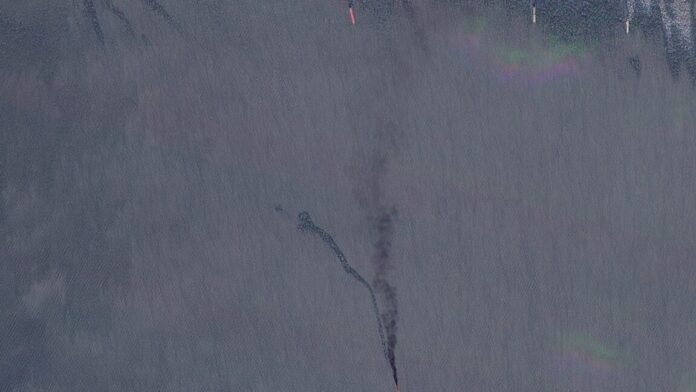
The Ukrainian videos showing the strikes from the drones’ perspective typically cut off at the moment of impact. But burning ships are visible in some videos taken of the aftermath and can also be seen in public satellite imagery from the European Union’s Copernicus Sentinel satellites and other sources.

The Ukrainian drones appear to be primarily targeting the ships’ bridges that represent the command-and-control centers, which can force the crew to abandon ship, according to Salvatore Mercogliano, a professor of history at Campbell University in North Carolina and a merchant mariner. “You’re not going to sink the ship like this, but this is a mission kill,” Mercogliano explained in a video posted to his channel “What’s Going on With Shipping?”

Ukraine’s Campaign to Cut Off Crimea.

No navy necessary

Most large Russian ships appear to have cleared out of the Sea of Azov with the exception of a cluster of about 25 vessels in the northeast, according to a review of public satellite imagery by the Ukrainian news publication Defense Express. Others are grouped in the Black Sea for possible cargo transfer operations.

Russian milbloggers who support the Kremlin’s invasion of Ukraine have complained about the apparent lack of protection for Russian ships in the Sea of Azov, according to the Institute of War. The Russian Navy’s Black Sea Fleet has already been forced to mostly hunker down in port after Ukraine’s earlier successes in using sea drones to damage and even sink warships. Ukrainian air and sea drones have continued to strike Russian warships and other vessels even in port.

A Planet Labs satellite image shows a top-down view of a ship trailing dark smoke after a Ukrainian drone strike in the Sea of Azov on July 11, 2026.

A ship trails dark smoke after Ukrainian drone strikes on Russian shipping in the Sea of Azov on July 11, 2026.

A ship trails dark smoke after Ukrainian drone strikes on Russian shipping in the Sea of Azov on July 11, 2026. Credit: Planet Labs PBC

Ukrainian drones have also been attacking Russian ships in the Black Sea and beyond. On July 8, the Security Service of Ukraine posted a video showing a Sea Baby naval drone striking a crude oil tanker when it was supposedly located near the southern end of the Crimean Peninsula, according to Ukrainska Pravda. In December 2025, Ukraine even sent aerial drones to strike a “shadow fleet” tanker carrying sanctioned Russian oil in the Mediterranean Sea off Libya’s coast.

Such feats show how Ukraine has managed to counter Russia’s traditional naval superiority and pressure Russian shipping lanes without fielding a naval force of crewed surface warships or submarines. A similar scenario is playing out in the Strait of Hormuz shipping chokepoint, where Iran now claims the authority to charge a transit fee and has used drone and missile strikes to halt much of the usual commercial shipping traffic despite the large presence of US military warships and aircraft.

Iran Claims to Kill 3 U.S. Service Members in Kuwait

0


After Iran claimed to have killed three U.S. personnel in Kuwait over the weekend, the Pentagon’s official toll of injuries and deaths in the war quietly climbed on Monday.

The increase followed the collapse last week of the ceasefire with Iran amid tit-for-tat attacks between the countries.

As hostilities escalated, Iran called for revenge on the U.S. for killing Supreme Leader Ayatollah Ali Khamenei at the outset of the war in February.

The numbers for both wounded and dead U.S. service members in the war increased on Monday, according to the Defense Department.

The numbers for both wounded and dead U.S. service members in the war increased on Monday.

Iran claimed Sunday that it “demolished the U.S. Army’s surface-to-surface missile base” in Kuwait, killing three American military personnel.

U.S. Central Command responded: “There are zero reports of U.S. service member deaths or injuries in the region.”

On Monday, however, the Pentagon’s Iran war death toll, which was last updated Friday, went up by one.

Pentagon statistics show a sailor died in what was provisionally deemed a “non-hostile” fatality with a “pending” caveat, meaning it could later be revised to a hostile death.

It marks the first U.S. fatality on the Pentagon rolls since March. It was not immediately clear whether the new death listed occurred in Kuwait.

The U.S. Office of the Secretary of Defense, CENTCOM, and the Iranian Ministry of Foreign Affairs did not immediately respond to requests for comment.

Ceasefire Collapse

Iran’s military said on Monday that it launched strikes aimed at American military targets in Jordan, Bahrain, Kuwait, and Oman. Hours before, U.S. forces attacked Iran in response to strikes on commercial ships in the Strait of Hormuz.

President Donald Trump renewed his past protection-racket threats to seize the Strait and begin charging a 20 percent toll on all goods passing through it.

“We’re gonna keep the strait, and we’ll probably run it,” he said on Monday. “We’re gonna get paid for guarding it, a lot of money.”

Following a week of public funeral ceremonies for Khamenei, his son and successor Mojtaba Khamenei called for retribution for the late supreme leader’s assassination.

“We pledge that we will avenge your pure blood and the blood of all those martyred in these two wars from the criminal and disgraced killers,” he said. “This revenge is the demand of our nation, and it must certainly be carried out.”

In addition to killing Khamenei, Trump’s war on Iran has killed thousands of Iranian civilians, including more than 150 — most of them children — in an attack on an elementary school.

U.S. Death Toll

The official number of dead and wounded U.S. personnel stands at 428, a more than 11 percent increase since the first ceasefire between the U.S. and Iran was struck on April 8.

Reporting by The Intercept previously found that the Pentagon’s official count of dead and wounded personnel is a gross undercount, stemming from what one U.S. government official called a “casualty cover-up.” The Defense Casualty Analysis System, or DCAS, which tracks “deceased, wounded, ill or injured” service members for Congress and the president, is missing hundreds of known casualties.

The number of casualties in the DCAS system fluctuates from time to time. On Monday, the number of U.S. deaths during Operation Epic Fury, the military’s name for the campaign in Iran, increased by one, to 14 total.

For a short time in May, however, the count was already at 14 before dropping back to 13, without explanation. Following the drop, DCAS listed 13 hostile and non-hostile U.S. deaths.

The Pentagon list of the dead is missing Maj. Sorffly Davius, a signals and communication officer with the New York Army National Guard who reportedly died of a sudden illness in Kuwait on March 6.

Davius’s death was widely acknowledged even as it was excluded from the official count. Rep. Mike Lawler, R-N.Y., spoke about him during a memorial service and Gen. Dan Caine, chair of the Joint Chiefs of Staff, publicly recognized Davius as a fallen service member.

Wounded U.S. Personnel

On Monday, the number of U.S. wounded from the Iran war rose by one, to 414.

Like the official U.S. death toll, it has fluctuated, rising from 385 to 428 during a pause in hostilities in April. Later that month, the number suddenly declined by 15 without public comment from the Defense Department, leading to questions about manipulation of the figures or incompetence at the Pentagon.

While DCAS provides a running tally of “non-hostile” deaths — meaning those who died from accidents or by illness — it doesn’t include “non-hostile” injuries.

The DCAS figures show that 65 Navy personnel have been wounded in action. More than 200 sailors injured during a fire aboard the USS Gerald R. Ford in March are, however, missing from the tally.

Trump’s “Memorandum of Surrender”: The art of the deal meets the fact of defeat

0
trump’s-“memorandum-of-surrender”:-the-art-of-the-deal-meets-the-fact-of-defeat
Trump’s “Memorandum of Surrender”: The art of the deal meets the fact of defeat

Donald Trump is not negotiating with Iran. He is negotiating with the humiliation of having failed to break it.

Beneath the ceasefires, memoranda, podium theatrics and sanctimonious appeals to “stability” lies a fact Washington cannot admit: the United States entered this confrontation expecting submission and emerged confronting its own limits.

It wanted Iran isolated, disarmed and politically obedient. It wanted its deterrence shattered, its regional influence dismantled and its sovereignty reduced to a flag, an anthem and nothing more. It failed.

Iran endured the pressure, preserved its strategic leverage and forced the most powerful empire on earth to negotiate with the country it had promised to bring to its knees. 

That is not an American victory. It is the management of an American defeat.

Real diplomacy begins when both sides recognize that the other possesses interests, rights, red lines and power. Trump’s version begins from imperial theology: Washington has interests; Israel has rights; everyone else has obligations.

American coercion is called deterrence. Israeli aggression is called self-defence. Iranian resistance is called escalation.

Sovereignty is sacred when invoked by an American client and intolerable when asserted by an American enemy.

This is the fraud now being sold as peace in the Gulf: a ceasefire presented as capitulation, an interim agreement marketed as surrender and a renewed campaign of pressure repackaged as de-escalation.

Trump did not win the confrontation. He failed to produce the result he promised. Iran was not bombed into obedience. Its government did not collapse. Its strategic position was not erased. Its enemies discovered, once again, that destruction is not control and military superiority is not political mastery.

For an empire addicted to command, the inability to compel surrender is defeat.

READ: Trump says US likely to take control of Hormuz, expects other countries to contribute financially

Trump’s response is therefore not to honor the agreement, but to hollow it out. Accept the document. Rewrite its meaning. Violate its logic. Impose new demands. Then accuse Iran of sabotaging peace. It is diplomacy by battering ram.

The Strait of Hormuz is where this revisionism becomes geography. The attempt to reroute shipping through Omani waters is not a neutral administrative adjustment. It is an effort to strip Iran of the leverage that forced Washington to negotiate at all.

“Freedom of navigation” is merely the varnish.

The real demand is that Iran tolerate a hostile military order on its doorstep, surrender its principal strategic pressure point and accept that its sovereignty exists only when it is politically useless.

Iran may possess rights, provided it never exercises them. It may retain leverage, provided Washington decides when it may be used. It may remain sovereign, provided it behaves as a subordinate. This is not peace. It is coercion translated into diplomatic jargon.

The method is familiar: provoke, retaliate, moralize, escalate. Strangle the adversary economically. Threaten it militarily. Exhaust it politically. Then present concessions extracted under duress as the triumph of moderation.

Washington calls this “managed escalation.” The phrase is obscene. There is nothing managed about pushing an entire region toward catastrophe and congratulating oneself for controlling the speed. Nor does the strategy stop at Hormuz.

In Lebanon, the American-Israeli project is to transform Israeli security doctrine into Lebanese national destiny: isolate Iran, constrain Hezbollah and call the resulting submission “sovereignty.”

In Syria, fragmentation remains useful because a sovereign, territorially coherent state would obstruct the endless manufacture of pressure points. A wounded country is easier to penetrate, divide and punish.

The region is never allowed to heal because its wounds remain profitable. Different countries. Different instruments. The same imperial objective: reverse the political reality produced by war and reconstruct the appearance of American-Israeli supremacy after its material limits have been exposed. Israel’s role is not secondary. It is central, relentless and poisonous.

Its political machinery in Washington treats any durable Iranian power as an intolerable violation of the regional hierarchy. It does not seek security in any reciprocal sense. It seeks permanent superiority: Iran contained, Lebanon vulnerable, Syria fractured and the Gulf militarized without end.

Restraint may occasionally serve American interests. Permanent confrontation serves the Israeli project.

Trump is the ideal salesman for this arrangement because his greatest political talent is not victory, but the theatrical conversion of failure into triumph.

He needs a camera, a slogan and a captive press corps. If the battlefield will not produce surrender, the press conference must counterfeit it. A document is signed. Trump declares victory. The media repeats the phrase. The coercion resumes. The performance becomes the policy.

READ: Iran says won’t allow US to ‘interfere’ in Strait of Hormuz management

But Iran has already achieved what Washington was determined to prevent: it survived, preserved deterrence and forced the empire to confront the limits of its power.

That is a strategic victory. Not because Iran escaped damage. Not because the confrontation was costless. But because the central American objective — submission — was denied.

Iran did not merely resist an attack. It exposed the distance between imperial spectacle and imperial capacity. It demonstrated that the United States and Israel can devastate, sanction and threaten, but cannot automatically dictate the political outcome. That is the defeat Trump is trying to disguise.

Tehran must therefore treat any agreement not as a gift from Washington, but as a battlefield whose terms remain contested. An agreement that binds only Iran while leaving the United States free to reinterpret, pressure and punish is not diplomacy. It is an ultimatum disguised as diplomacy.  

Restraint without reciprocity is not prudence. It is permission. Permission to rewrite the terms. Permission to escalate without cost. Permission to demand surrender after promising peace.

The central question is not whether Trump can stage another ceremony. It is whether the United States can tear up every agreement that fails to produce obedience.

Peace cannot be built on coerced submission and renamed stability. Victory cannot be manufactured at a podium while the balance of power says otherwise.

Trump wants Iran to surrender the leverage that defeated his strategy so he can announce that he won. Iran’s task is to deny him the fiction. To preserve its rights, consolidate its gains and make clear that the empire’s declaration is not reality. It is merely an empire issuing orders to history — and discovering, once again, that history does not obey.

OPINION: Pepe, Pakistan, and the last of the great foreign correspondents

The views expressed in this article belong to the author and do not necessarily reflect the editorial policy of Middle East Monitor.

US continues to shun Ebola-infected citizens; second American sent to Germany

0
us-continues-to-shun-ebola-infected-citizens;-second-american-sent-to-germany
US continues to shun Ebola-infected citizens; second American sent to Germany

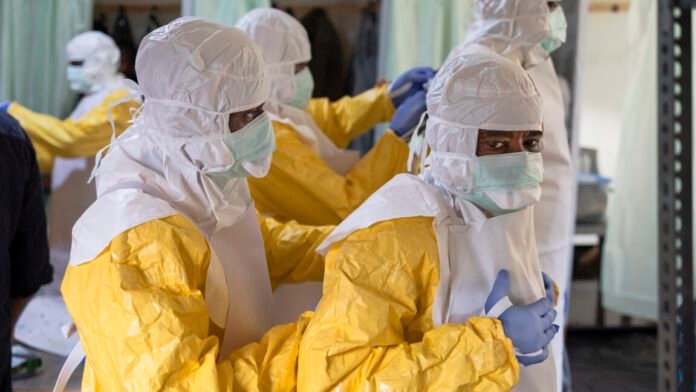
A US citizen doing humanitarian work in the Democratic Republic of Congo has tested positive for Ebola, marking the second American infected amid the DRC’s explosive Ebola outbreak—and the second to be sent for care in Germany rather than the US.

The Ebola outbreak, which was first declared on May 15, is already the third largest on record and still growing. As of July 12, the DRC has reported 1,926 cases and 702 deaths in the outbreak, which is caused by the lesser-known Bundibugyo strain of Ebolavirus.

Under the Trump administration, the US has adopted a seemingly isolationist approach, implementing stringent and controversial travel restrictions and blocking the repatriation of citizens exposed to or infected with the virus. That’s despite the US having multiple facilities around the country designed to safely monitor and provide high-quality care for Ebola patients in these types of situations.

The US is also largely removed from outbreak responses. Upon taking office, Trump moved to withdraw from the World Health Organization, which is helping coordinate the international efforts to halt the spread of the virus—though it is still outpacing health workers.

On Monday, WHO Director-General Tedros Adhanom Ghebreyesus said that WHO had provided clinical care for the infected American before the patient was transferred to Germany for follow-up care.

Americans infected

While saying such infections among aid workers are not unexpected, Tedros called for more help to curb the virus. “As the outbreak escalates, an accelerated response from local, national, and international partners is urgently needed,” he said on social media Monday. “WHO is working intensively under the government’s leadership and with Africa CDC to bring the outbreak under control as rapidly as possible.”

The American infected was working with the evangelical Christian organization Samaritan’s Purse. The organization told the media that the infected employee is a man in his 60s who was working as a warehouse manager. He was not involved in direct patient care at the organization’s Ebola treatment centers, raising questions about how he became infected.

On Monday, the organization said the man had arrived at Frankfurt University Hospital for treatment. He has “responded well to treatment, is in stable condition, and is receiving excellent medical care in the hospital’s special isolation unit,” it said in a statement to The Washington Post.

The first American infected in the outbreak, Dr. Peter Stafford, was working for a different Christian organization and had been directly treating patients when he was exposed. He was evacuated to Berlin for care after becoming ill. His evacuation was reportedly delayed as officials with the Trump administration prevented him from being repatriated to the US. Stafford recovered from his illness in Berlin and has since returned to the US with his family. One of Stafford’s colleagues at the organization was also exposed and was sent to Prague for monitoring.

0FansLike
0FollowersFollow
0FollowersFollow
0SubscribersSubscribe
- Advertisement -
Google search engine

Recent Posts