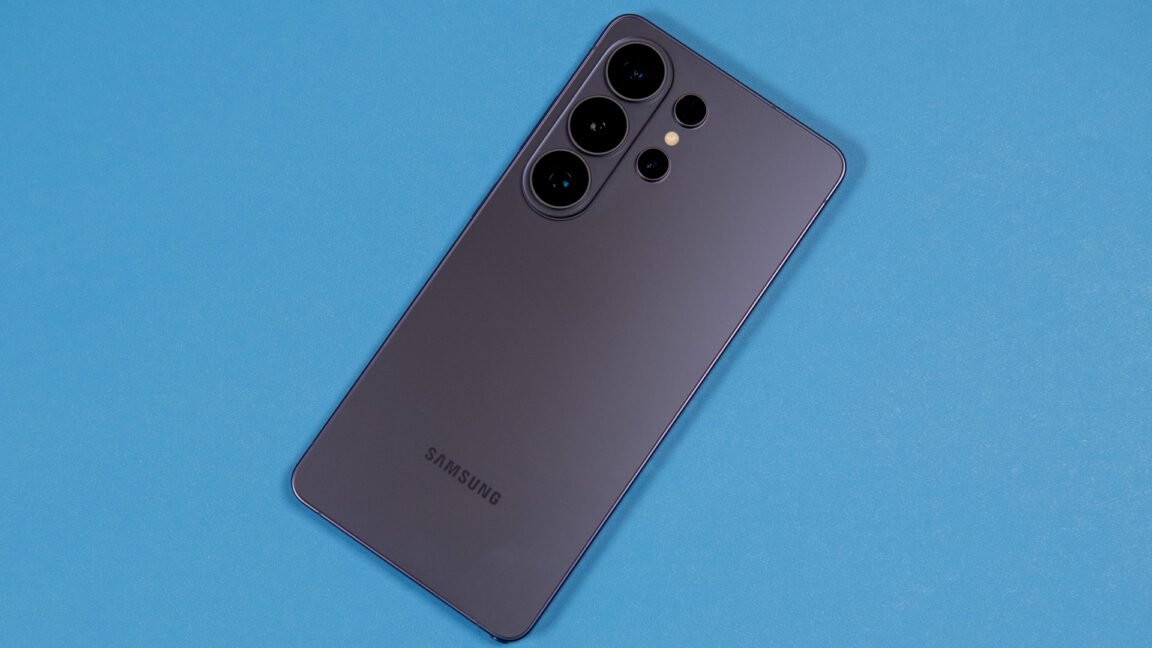
Selling smartphones used to be easy—everyone wanted one, and every new phone was a lot better than the one that came before. Things are different now that smartphones are mature products. Plenty of manufacturers have thrown in the towel, leaving big players like Samsung to sell a new phone every couple of years. But even Samsung may find it tough to turn a profit in 2026 due to the ongoing race to build more AI capacity.
According to Money Today (Korean), Samsung MX (mobile experience) head TM Roh has warned company leadership that it could be headed for the first net loss on smartphones in the company’s history. Even during times of economic strife or amid pandemic-related supply chain chaos, Samsung still made money on smartphones. The skyrocketing price of DRAM and NAND may be what finally breaks the streak despite strong Galaxy S26 sales.
Shortages of these components have affected all types of computing hardware, from consumer laptops to servers. The LPDDR5x memory found in most mobile devices is increasingly important for AI. Nvidia’s Vera AI CPU, which will replace Grace later in 2026, will have up to 1.5 TB of LPDDR5x memory. The company’s upcoming rack-scale AI platforms will have 36 Vera CPUs alongside 72 Rubin GPUs. The CPUs in a single server will consume enough RAM for 4,600 Galaxy S26 Ultra devices (12GB each).
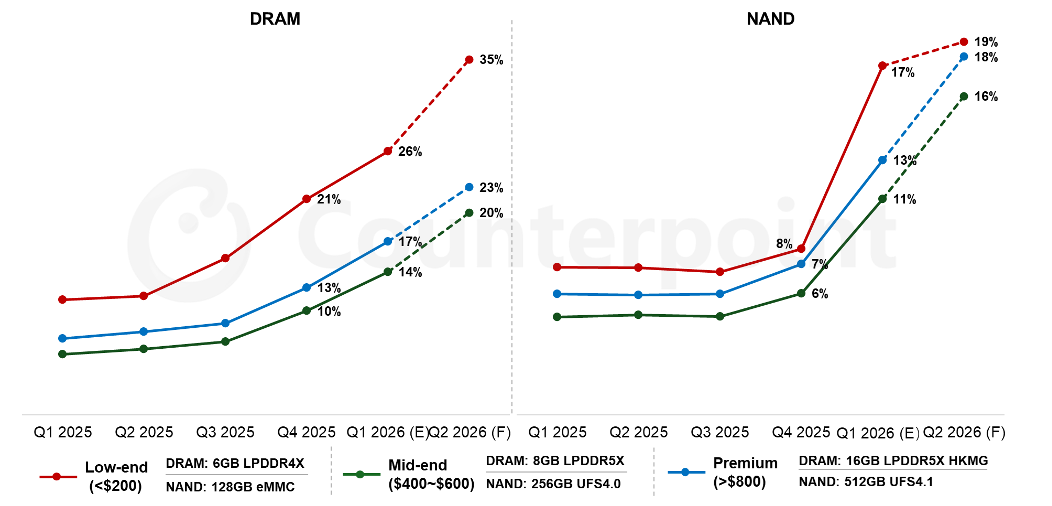
Until recently, the application processor (which includes the cellular radio) was the most expensive component of most smartphones, and the display usually came in right below that. The AI era has upended the formula, roughly doubling the cost of memory and storage. According to Counterpoint Research, RAM will account for more than a third of the cost of building a budget phone in mid-2026. Even with more expensive devices, memory is still north of 20 percent of the cost.
The good news for Samsung is that while the MX division struggles, its semiconductor division is raking it in. Samsung Semiconductor has smashed records in the first quarter of 2026, earning an estimated $38 billion (KRW 57.2 trillion) in profit. That’s more than seven times its net from Q1 2025.
Samsung, Micron, and SK Hynix are all accelerating plans to expand memory and storage production lines—Samsung specifically has started spinning down LPDDR4 production to boost the supply of LPDDR5—but Nekkei Asia projects that won’t be enough. Even with best-case improvements in output, DRAM production in 2027 could fall 40 percent short of expected demand. The only thing that could challenge that prediction is a substantial change in demand for AI applications. With most of the world’s tech giants firmly committed to expanding AI compute through next year, it’s unlikely that supply constraints will ease soon.
Higher demand, higher prices
There are already signs that RAM and storage costs are making phones more expensive. Motorola recently raised the price of its Moto G budget phones by up to 50 percent. Low-cost devices like the Moto G will feel the rising cost of components the most, making the very idea of a budget phone in the coming years suspect.
With the prospect of sinking profitability in 2026, Samsung is also making changes. The recently released Galaxy A37 and A57 mid-range devices come with a $50 price hike over the last generation. The company has also increased prices on some more expensive devices, adding $80 to the Galaxy Z Flip 7 (512 GB) and Z Fold 7 (512 GB and 1 TB). Some of its tablets are also more spendy, including a $100 increase for the Galaxy Tab S11.
With profitability in doubt, Samsung is on the verge of releasing new, ultra-expensive phones. This summer, the company will debut a new generation of Galaxy Z foldables, which are always priced even higher than the Galaxy S series. These devices come with ample storage and RAM to help justify the exorbitant price tags. That makes them prime candidates for price hikes that leave foldables even more unrealistically expensive.