28.1 C
London
Thursday, July 16, 2026
Home Blog

China’s savvy pivot in courting Muslim Indonesia

0
china’s-savvy-pivot-in-courting-muslim-indonesia
China’s savvy pivot in courting Muslim Indonesia

Beijing’s long courtship of Indonesia’s Muslim communities reached a new milestone this month, when the Majelis Ulama Indonesia (MUI), the nation’s top body of Islamic scholars, traveled to China.

The five-day “Digital Silk Road” program brought MUI council members to Guangzhou and Shenzhen, with a focus on technology, halal industries, education and cultural exchange.

But the trip’s significance extended further: Indonesia is home to the world’s largest Muslim population, making the MUI a uniquely valuable partner for Beijing’s soft-power ambitions in the region.

Over the past decade, China has expanded its outreach to Indonesian Islamic organizations through educational exchanges, scholarships, economic cooperation and religious dialogue, scholars note, alongside a steady stream of visits and social programs aimed at building people-to-people ties.

The latest MUI visit should therefore be viewed not as the start of China’s Muslim diplomacy in Indonesia, but as its newest expression.

Earlier exchanges often centered on religious understanding and social relations. In contrast, MUI’s visit placed greater emphasis on technology, digital communication and economic cooperation.

The MUI delegation, drawn from MUI’s international relations, halal affairs, economics and digital communication divisions, visited Islamic institutions, universities and technology companies in southern China.

For Beijing, engagement with Muslim organizations provides another potent channel of diplomacy beyond government relations. Indonesia’s Islamic organizations have considerable social influence, shaping local and national conversations on religion, education and community affairs.

Building relationships with these institutions allows China to communicate directly with influential Muslim actors while strengthening its broader ties with Indonesian society.

Yet this diplomatic outreach coexists with a harder problem for Beijing: since 2017, its often harsh treatment of ethnic Uyghurs and other Muslim minorities in Xinjiang has drawn sustained criticism from governments, rights groups and researchers.

Chinese authorities reject these accusations, maintaining that their policies focus on counterterrorism, economic development and the protection of religious practices.

China has sought to counter criticism over Xinjiang by inviting foreign delegations, including representatives from Muslim-majority countries and organizations, to visit the region and observe conditions firsthand. These trips are part of Beijing’s broader effort to shape the narrative around Xinjiang and push back at international criticism.

MUI took part in one such visit in 2019, when a delegation traveled to China to examine reports concerning Uyghur Muslims in Xinjiang, meeting first with the China Islamic Association before continuing on to the region. MUI described the trip as an effort to gather information directly, amid conflicting accounts of the situation.

The episode showed that MUI’s engagement with China has not been one-directional. Before the visit, MUI also received representatives from the Uyghur diaspora, who shared their concerns about conditions in Xinjiang. MUI’s approach reflected an effort to hear multiple perspectives while maintaining dialogue with Chinese institutions.

The current MUI visit shifted away from Xinjiang and toward areas where both sides see practical opportunities, with digital technology a major theme. MUI officials have argued that religious communication is increasingly shaped by artificial intelligence, search engines and social media platforms.

For an organization seeking to maintain influence among younger generations, understanding digital platforms has become an institutional priority.

Economic cooperation is another important factor. Indonesia is seeking to strengthen its position in the global halal economy, while China has a large manufacturing base and growing interest in halal markets.

Cooperation between Indonesian Muslim institutions and Chinese companies could create opportunities in areas such as halal products, supply chains and technology.

These exchanges also carry diplomatic weight. For China, ties with Indonesian Muslim organizations offer a channel to engage Muslim communities directly and provide opportunities to explain Beijing’s positions on issues that have drawn international scrutiny.

For MUI, cooperation with China supports its own objectives – expanding international networks, developing halal industry ties and promoting Indonesia’s model of moderate Islam abroad.

The significance of MUI’s visit lies less in the delegation itself than in what it reveals about China’s evolving diplomatic playbook. Beijing is increasingly investing in relationships with influential Muslim institutions alongside its traditional state-to-state ties, recognizing that organizations such as MUI shape opinion far beyond government circles.

The strategy also serves another purpose: creating trusted interlocutors as China continues to defend its record on Xinjiang and expand its economic footprint across Southeast Asia.

Whether that strategy succeeds will depend not only on Beijing’s outreach but also on how Indonesian Muslim organizations respond. MUI has shown that it is willing to engage China, but on its own terms — seeking economic opportunities, technological cooperation and religious dialogue while balancing domestic expectations and international scrutiny.

MUI’s China visit, then, is best understood not as an isolated exchange, but as the latest sign that Indonesia’s Muslim organizations have become an increasingly important arena in China’s competition for influence, legitimacy and partnerships across Southeast Asia.

Muhammad Zulfikar Rakhmat is the director of the China-Indonesia Desk at the Jakarta-based Center of Economic and Law Studies (CELIOS), an independent research institute. Yeta Purnama is a researcher at CELIOS.

OnePlus confirms shutdown in the US and Europe, ending months of speculation

0
oneplus-confirms-shutdown-in-the-us-and-europe,-ending-months-of-speculation
OnePlus confirms shutdown in the US and Europe, ending months of speculation

OnePlus arrived on the scene in 2014 with brash marketing and a compelling pitch: What if your phone was cheaper and faster? More than a decade later, the market is much different, and so is OnePlus. Confirming months of rumors and speculation, OnePlus has confirmed it’s ending phone releases in North America and Europe.

This development has been expected for a while. After a brief period of expansion in the US through deals with T-Mobile and Verizon, OnePlus began visibly shifting its focus to India after the pandemic. OnePlus has also increasingly come under the control of its parent company, Oppo, aligning its device releases and software experience with the larger brand. Still, OnePlus has continued to launch flagship devices in the US and Europe, with the OnePlus 15 going on sale in late 2025. That will be the last OnePlus phone many people see, though.

OnePlus denied rumors of a shutdown earlier this year, but its language was vague and never promised future phone releases. The new statement is also worded gingerly, but the outcome is clear. “As part of the proactive global strategy adjustment, OnePlus has decided to conclude new product rollouts in Europe and North America,” the official post reads.

You can still buy a current-gen OnePlus phone in North America and Europe, and the company will offer software support. However, OnePlus devices will drop the OxygenOS build of Android, adopting Oppo’s ColorOS with the Android 17 update globally. Only India and China will see new devices—at least for now. A shutdown of the OEM’s India operations in 2027 has also been rumored.

The smartphone desert

The impact may be minimal for phone buyers in Europe, where Oppo products will replace OnePlus. However, Oppo doesn’t operate in the US. Major Chinese brands have avoided venturing into the US mobile landscape, where carrier partnerships (and bill credits) are essentially required to move phones. Both ZTE and Huawei faced enormous legal and regulatory hurdles when they tried to partner with US carriers some years back. They no longer make phones for the US market, either.

This “strategy adjustment” further limits the selection of phones available in the US. With Chinese firms steering clear, Samsung and Apple will continue to dominate. Everything else is little more than a rounding error, giving the big players plenty of room to raise prices.

While it’s long been clear that OnePlus saw more success in India than in the US and Europe, it may have been worth continuing as a global brand were it not for the ongoing component shortage. As AI projects hoover up all the available DRAM and NAND flash, prices for consumer applications are skyrocketing. The cost of RAM alone now accounts for more than a quarter of a flagship phone’s bill of materials, according to recent analyses.

OnePlus 15 in hand

OnePlus phones will ditch OxygenOS in favor of Oppo’s ColorOS in Android 17.

OnePlus phones will ditch OxygenOS in favor of Oppo’s ColorOS in Android 17. Credit: Ryan Whitwam

OnePlus isn’t the only smartphone company making changes in the AI era. Earlier this year, Asus announced it was “pausing” its smartphone efforts amid rising costs and stagnant sales. Meanwhile, brands like Samsung and Motorola have increased prices to offset the higher component cost. Apple has managed to keep prices flat, but there are rumors of a price bump when it launches new phones this fall.

What can angry iPhone fans do? Buy an equally expensive Samsung phone? The US is a smartphone desert, and that’s not going to change any time soon.

How to Research Private Schools Like an Investigative Reporter

0
how-to-research-private-schools-like-an-investigative-reporter
How to Research Private Schools Like an Investigative Reporter

If you’re considering sending a child to private school, you’ve likely seen some glossy photos and lofty mission statements. But marketing brochures and admissions websites rarely tell you the bad stuff — like a principal with a concerning history, lawsuits filed by families, or financial instability that could shutter a school in the middle of the school year.

Parents have told us they assume authorities conduct safety and quality checks of private schools like they would for public ones. Our reporting shows that is often not the case. Many states take a hands-off approach, essentially leaving it to you to figure out if a school has problems. Advocates for systems that send public money to private schools have said the best accountability check on private schools is that families can leave if they are dissatisfied.

This is why our team at ProPublica — a nonprofit newsroom focused on investigative journalism in the public interest — has spent months digging into the expanding private school landscape. We’ve used data, public records, court cases and countless interviews to investigate hundreds of schools, and we’ve uncovered some with serious issues. These include a school in Arkansas that’s still operating after its founder was accused of running a “makeshift ‘Fight Club,’” and a former superintendent fired for mismanaging charter school money in the Midwest who was able to receive public funds in Florida. 

(The Arkansas school founder did not respond to interview requests and questions from ProPublica, and the school’s new education director said the founder is no longer involved in school operations. The former charter school superintendent told a reporter she had acted with board approval and spent money on kids and to develop and retain staff, saying auditors created a “false narrative” of her actions.)

We’ve learned from experience that it’s difficult to piece together a complete picture of any school, even if you’re an investigative reporter. Some states have stronger laws and provide better information than others. But we’ve also found that no matter where you live, there are free public records, databases and verification techniques that can prove useful. We’ve written this guide to pass on a few lessons we’ve learned. We hope it will help you spot red flags and make informed decisions for your family.

If you end up finding something interesting in your research, please let us know. We’re still reporting!

Table of Contents

How do I begin?

Where you live will determine what private school records are available. Before starting to examine a specific school, it’s good to get a sense of local regulations. 

  • Check your state’s education agency website. You can find a link through the U.S. Department of Education. Note that states may refer to private schools as “nonpublic” or “independent” schools, and some state education agencies have no authority over private schools. If your state has a page on private schools — like these ones from Pennsylvania, Tennessee, New Hampshire and Florida — give it a read. Look for school lists, the types of schools available in your state, and any relevant regulations mentioned.  
  • Take a look at what information schools need to report. EdChoice, a group that advocates for voucher systems and other programs that make public money available for private education, has a useful guide to some of the requirements schools must meet to open in each state. This can give you an initial sense of what your state is and is not asking schools to report. 
  • Look at voucher rules. If your state offers public money to private school attendees through vouchers, savings accounts or tax credits, check to see if those programs set additional rules for schools. EdChoice has a list of program names. Here’s an example of a voucher-specific state website for Indiana

Who runs this private school?

It’s important for you to know who makes the decisions about a school’s operations. This could be the principal, or it might be a different person or a board. The school could also be run by a larger organization. To find out:

  • See if your state education department has a directory. Some places, including North Carolina, Texas and Florida, maintain directories of private schools that name each school’s main contact. Not all states collect or provide such information. 
  • Look up the business registration. This can show when a school was founded and by whom, and whether it has changed its name. You can locate registrations by visiting OpenCorporates, which gathers this information on many businesses across states.

    In some cases, the school may not register as an independent entity because it operates as part of a larger organization, such as a church. Be aware that the school may also have a legal name that differs from the name it is known by, or it may use a company to help manage its paperwork, in which case you may see that company’s name listed rather than the school administrator’s.  

  • Look for employee reviews. Some schools have a profile on an employment website like Glassdoor, where workers can post reviews. It’s worth searching there to try to get a sense of school culture, but keep in mind that anonymous reviews should not be considered verified information.
  • Search for news articles. Once you have names of some administrators, Google them to find news articles or references to their history, being mindful that if someone has a common name, you might get results about other people. Basic as it may seem, this type of search has been one of the most powerful tools behind our investigations. In 2024, we reported on a private school founder whose prior charter school had its charter revoked — a fact that had been previously reported in the news. 

Who will be teaching my student?

The requirements — if any exist — for becoming a private school teacher vary by state. ProPublica recently reported on an example of a woman who pled no contest to felony child abuse in Florida and lost her teaching license, but was still able to then open a private school. Community members called attention to her history, which was findable online. 

  • Identify names. Look for teachers listed on the school’s website or its social media accounts, such as Facebook or LinkedIn. It’s also good to directly ask the school for teachers’ names, as online information could be outdated. 
  • Examine certifications. Check your state’s teacher licensure database to see whether someone is certified and what subjects or areas they are qualified to teach, including special education and gifted endorsements. International Schools Services has a list of these databases, but check your state’s education agency website to see if they offer anything more up to date.

    Some state voucher programs require at least some school employees to be certified. For instance, Ohio requires principals of schools participating in its scholarship program to be licensed. In other states, there are no such private school certification requirements. Further, private schools in some places, like Utah and Arizona, are not legally required to fingerprint teachers or run criminal background checks before hiring them. 

  • Find employment histories. You may be able to find teachers’ resumes on LinkedIn or through their own personal sites. If you can find names of schools they previously worked at, search for their names in conjunction with those schools. The social media accounts for prior schools might also help you learn more about them. 

    You’ll also want to Google for news articles that mention them, bearing in mind that common names might mean you get results for other people. Consider putting quotation marks around names to search for them as exact phrases, and use city or state names and the subjects the person teaches to help narrow your search results. 

  • Check for past discipline. If an employee does have a license to teach, you may be able to determine whether they have ever been disciplined by the state. In some cases, this information is listed in the same database as their license information, but in other states, you’ll need to look for a separate disciplinary database, like this one in Arizona, to get full details on disciplinary actions. Texas also maintains a list of teachers who are ineligible to be hired at public schools. Not all states make disciplinary information accessible to the public, and it can be challenging to get details on cases, as ProPublica and KQED have reported on in California

Is the private school financially stable?

If a school has money trouble and closes, it could leave you in the lurch midyear. Some states require private schools participating in voucher programs to demonstrate some form of financial soundness. If a state doesn’t require such information, it can be difficult for families to gain visibility into a school’s financial situation. 

  • Locate nonprofit filings. Many private schools operate as nonprofits. Depending on their size, they may need to file annual financial information with the IRS. ProPublica maintains a database of such filings called the Nonprofit Explorer. These can be daunting to review, but they can offer some basic information: For example, in prior years, was the school generally bringing in enough money to cover its costs? You can assess this at a high level by comparing whether its revenue was greater than its expenses. Schools operating at a loss for multiple years could be at risk of closure.

    Additionally, such filings show how much some of the highest-paid employees of an organization are making. Is most of the school’s income going toward one person’s salary? Does the school cover its costs through tuition, or is it reliant on donations? Does the school have debt from investments like purchasing a building? Does it spend substantial chunks of revenue on outside vendors?

    ProPublica and The Texas Tribune used nonprofit filings to report on conflicts of interest at private schools in Texas. For example, the newsrooms found at least six private schools that awarded contracts to companies with ties to their board members.

How can I assess the quality of the education?

  • Look for accreditation. Accreditation is meant to provide an outside assessment of whether a school is meeting certain educational standards. It can affect college applications and whether a school is eligible to receive public money through vouchers. If a school does not name an accreditor on its website or it isn’t reported in your state’s directory (such as Florida’s), you may need to ask directly whether it is accredited and by which organization.

    Not all private schools are accredited and not all accrediting agencies are equally rigorous. Some accreditors may visit the school in person, while others only use virtual site visits. If a school claims to be accredited by an agency, check the website for the accreditor to confirm the school is listed and in good standing. Here are examples of such directories. Where possible, ask the school if you can see any accreditation review reports, which assess the learning environment. Here’s an example from a Catholic school in Nebraska. 

  • Consider enrollment and staffing. Some state education departments, like California’s, collect and report this information for certain schools. 
  • Look for retention data. One indicator of whether families are happy with a school is whether they choose to stay from year to year. This information is not readily available in most places, but you can ask a school whether voucher users who were eligible chose to return. 

How will my student’s learning be assessed?

Under federal law, public schools are required to assess student performance in reading, math and science and must inform parents about the results. There’s no such federal law for private schools.

  • Identify testing requirements. In 2024, the Education Commission of the States logged testing requirements for states’ voucher programs. Voucher advocacy group EdChoice has also collected such information for each state. Note that legislatures are actively shaping state programs and these requirements may change over time. 
  • Check for posted test results. While some voucher programs, like North Carolina’s, require participating private schools to administer nationally standardized tests (meaning you can compare your student to other test-takers), the results of such tests are not usually posted online for prospective families.

    There are a few exceptions. For example, in Ohio and Indiana, you can look up a private school and see whether test-takers demonstrated proficiency in core subjects. In Arkansas, you can see how students performed on tests on average for each school. Wisconsin posts annual report cards for private schools participating in the state’s voucher program, using test scores and other measures to gauge whether the school is meeting expectations.

  • Contact the school. If this information is not readily available where you live, you can ask a school about any tests it administers. 

Has this school been sued?

If something goes wrong at a private school, families may turn to the courts. The existence of a lawsuit or complaint does not confirm wrongdoing, but suits can help you learn more about other people’s experiences and potential concerns. We’ve found examples of court cases showing criminal history, broken financial contracts and complaints from prior employees. 

You might also find lawsuits where schools are the ones pursuing families, which can give you a lens into how they handle enrollment contracts. For instance, The Washington Post reported on cases of schools suing families over tuition disputes. 

  • Locate cases and documents. Lawsuits might be filed in state, local or federal courts. If you navigate to your state and then county on the website BRB, you can see what records may be searchable in your location. Some states like Texas, Kansas and Georgia have court databases that let you search for free across multiple jurisdictions. CourtListener provides another avenue for checking federal court cases. Depending on where you live, there may be a way to search court cases from home, or you might need to call the local clerk or visit a courthouse. Look for judges’ orders and jury verdicts, which can be useful to see how a court weighed claims.

    Lawsuits are notoriously difficult to track down, as cases might be filed under multiple relevant names or locations. Try searching the school’s name, the name of the school’s leaders and teachers and any other names you can find.

  • Keep context in mind. On the flip side, the lack of lawsuits doesn’t mean things are operating perfectly. Lawsuits usually cost money to file, and some private school contracts may prevent families from suing. You can ask the school if they have any such clause in the agreements that families sign. 

How does the school’s student body compare to the community? 

If you are trying to get a sense of the student body of a school, check ProPublica’s Private School Demographics database. This data is based on the federal Private School Universe Survey, which is voluntary, so not all schools have participated. Note that the survey is only conducted every two years, so the information may not be current. Our database also compares private schools’ demographics to those of their local public school districts. 

Some state departments of education, like Louisiana’s, also maintain demographic data by school. 

School handbooks may also provide information on whether a school serves all students or may exclude some groups, like those with disabilities or LGBTQ+ parents from admissions.

What have other families said about this school?

In investigative reporting, there is no substitute for talking to people. As you try to vet a private school, one of the best resources will be past and current families or alumni. 

  • Check for online reviews. It’s always worth checking for reviews from past families on Google or on the school’s Facebook page. Also check Niche and GreatSchools. Use a critical eye when reading. People posting may not need to confirm their identity, might have no connection to the school or could even be school employees. 
  • Look at social media. Check your community’s local social media pages, such as Facebook and Nextdoor, for additional comments. Search for the school’s name in WhatsApp groups and on Reddit. 
  • Understand what families are and aren’t allowed to say. Some schools put their handbooks and admissions policies online. Read through these and see if they have rules about how enrolled families are allowed to speak about the school on social media. You’ll want to know if a school bars parents and guardians from sharing criticism. 
  • Ask people who work with families. If your child has a disability and you work with advocates, therapists or other specialists, you could see what they’ve heard about the schools you’re considering.

Could government agencies have records available to the public? 

Even in states that do not regulate private schools, families may turn to the government when things go wrong, creating records you might be able to locate. 

  • Look for federal documents. It’s worth checking with the U.S. Department of Education’s Office for Civil Rights, which fields discrimination-related claims from across the country, to see if there have been any complaints (though the agency has stopped posting them online). This would only pertain to certain private schools that have received federal dollars. You might also find inspection information from the federal Occupational Safety and Health Administration. 
  • Ask the state to see complaints. You could reach out to your state’s education agency and request any documented complaints it has received regarding a school by making a public records request. Arkansas, for example, maintains a hotline and an email address where people can report concerns about suspected financial misconduct.

    Or there may be another department that would take complaints. For example, Colorado directs people to the Attorney General’s Consumer Fraud Unit.

    Records requests can take some time to process, and there may be a cost associated with asking for such documents. You can learn more about asking for public records from MuckRock.

  • Consider unique state records. Your state may also provide additional procedural documents. For example, in Georgia, you can see if a school is regularly conducting and reporting fire drills. Or if Florida tries to remove a school from scholarship eligibility and an owner appeals the decision, you might find records through the state’s Division of Administrative Hearings.

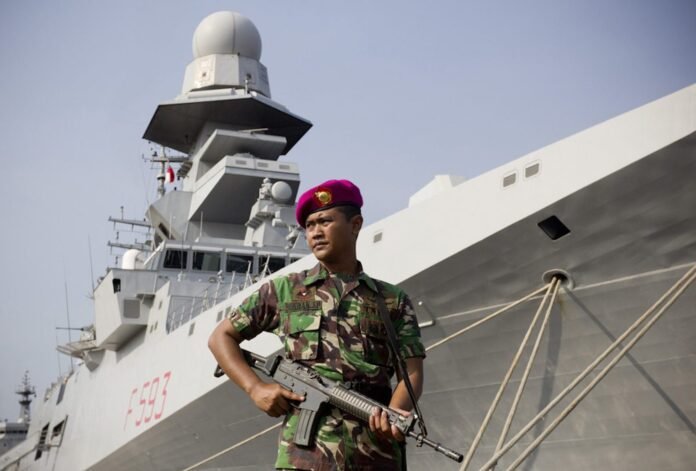
Indonesia’s telling empty chair on the South China Sea

0
indonesia’s-telling-empty-chair-on-the-south-china-sea
Indonesia’s telling empty chair on the South China Sea

The most significant development at this week’s Conference Commemorating the Tenth Anniversary of the South China Sea Arbitration Award in Jakarta was not what was discussed. It was who failed to appear.

Every Indonesian government representative scheduled to participate reportedly withdrew before the conference began on July 13. According to the organizers, the event had secured commitments from senior government officials, including a director general from the Ministry of Foreign Affairs and officers from the Indonesian National Armed Forces.

Several had agreed to deliver keynote addresses or participate as panelists. Yet, shortly before the conference opened, organizers were informed that approval for their participation had been withdrawn. The conference ultimately proceeded without a single representative from the Indonesian government.

On one level, governments cancel appearances all the time. Schedules change. Priorities shift. But this was different. According to Arie Afriansyah, one of the conference organizers, the event had been prepared over many months and initially enjoyed support from several Indonesian ministries and state institutions. Government officials had confirmed their attendance before organizers were informed that the support had been withdrawn.

Researcher Ristian Atriandi Supriyanto similarly noted that every government speaker who had accepted the invitation ultimately canceled. The result was an extraordinary absence. An event discussing one of the most consequential legal developments affecting Southeast Asia took place in Indonesia without a single official Indonesian voice.

That absence matters because this was not simply another academic seminar. Organized by the Philippines-based FACTS Asia together with Indonesian think tanks and academics, the conference marked the tenth anniversary of the Permanent Court of Arbitration’s landmark ruling of 12 July 2016.

The tribunal concluded that China’s sweeping nine-dash line claim had no legal basis under the United Nations Convention on the Law of the Sea, better known as UNCLOS.

It also found that China had violated the Philippines’ sovereign rights within its Exclusive Economic Zone and that many maritime features claimed by Beijing did not generate extensive maritime entitlements under international law.

China rejected the ruling immediately and continues to reject it today. Yet the award has become one of the most influential legal decisions governing maritime rights worldwide. Far from fading into irrelevance, its importance has only grown.

On the tenth anniversary, fourteen countries issued a joint statement reaffirming that the ruling remains legally binding between China and the Philippines and rejecting maritime claims that lack a basis under UNCLOS.

The European Union separately described the decision as a landmark contribution to the peaceful settlement of disputes. Beijing dismissed those statements, maintaining that the award remains null and void.

Indonesia has never been a claimant in the sovereignty disputes over the Spratly or Paracel Islands. That fact is often cited to justify caution whenever the South China Sea is discussed. But Indonesia has never been a disinterested observer either.

China’s expansive maritime claims overlap with Indonesia’s Exclusive Economic Zone around the Natuna Islands. For years, Indonesian governments have consistently rejected any legal basis for China’s claim to historic rights in those waters.

Immediately after the tribunal issued its decision in July 2016, then Foreign Minister Retno Marsudi reaffirmed the importance of respecting UNCLOS and resolving disputes peacefully.

Indonesia’s position became even clearer in 2020, when Jakarta submitted a diplomatic note to the United Nations explicitly invoking the arbitral award to reject China’s historical rights claims as inconsistent with international law.

In other words, Indonesia has already relied upon the tribunal’s reasoning to defend its own maritime interests. That is why this week’s empty chairs are so striking.

The past decade has only reinforced the relevance of the arbitration award. China’s rejection of the ruling has been accompanied by increasingly assertive grey zone operations throughout the South China Sea.

Philippine resupply missions to Second Thomas Shoal have repeatedly faced water cannon attacks, dangerous maneuvers, military-grade lasers and deliberate collisions involving Chinese coast guard vessels. Vietnam continues to experience persistent maritime pressure. Indonesia itself has not escaped.

Between 2017 and 2021, Chinese coast guard vessels and the survey ship Haiyang Dizhi Shihao repeatedly entered Indonesia’s Exclusive Economic Zone near the North Natuna Sea, disrupting Indonesian offshore energy exploration around the Tuna Block.

These incidents demonstrate that the legal questions addressed by the tribunal remain far from theoretical. They continue to shape the region’s security environment today.

The government’s absence is particularly striking when viewed alongside an opinion article published only weeks earlier by the state news agency Antara.

That article argued that Indonesia should not host a conference commemorating the arbitration award because doing so could undermine Indonesia’s free and active foreign policy or create the perception that Jakarta was siding with one party in the dispute. It urged Indonesia to focus instead on dialogue, neutrality and regional stability.

Those concerns deserve consideration. Indonesia’s diplomatic credibility has long rested on its ability to maintain constructive relations with all major powers while avoiding unnecessary confrontation. Yet there is an important distinction between geopolitical neutrality and legal consistency.

Participating in an academic conference discussing the arbitration award would not have required Indonesia to endorse the foreign policy of the Philippines, criticize China or abandon its carefully balanced diplomacy.

Indonesian officials could have delivered exactly the same message they have repeated for years. Respect UNCLOS. Resolve disputes peacefully. Exercise restraint. Uphold international law.

Indeed, that would have demonstrated confidence rather than confrontation. It would have shown that Indonesia’s commitment to international law is sufficiently robust to withstand open discussion, even when the legal conclusions prove politically inconvenient for one of its most important economic partners.

Instead, Indonesia’s silence created its own political message.

Diplomacy is conducted not only through speeches but also through decisions about where governments choose to be represented. When every official speaker withdraws from an event after previously confirming attendance, observers inevitably look for meaning.

Whether intended or not, the absence risks creating the impression that Indonesia is becoming increasingly reluctant to publicly associate itself with legal principles that it has privately relied upon for years.

That impression carries costs. Indonesia has long been regarded as ASEAN’s de facto leader because of its ability to combine diplomatic restraint with principled leadership.

The continuing negotiations over a Code of Conduct for the South China Sea will require precisely that combination. Jakarta’s influence depends not on choosing sides between Washington and Beijing but on consistently defending the rules that all parties have accepted, especially UNCLOS.

A decade after the arbitration award, Indonesia did not need to celebrate the ruling or use it to criticize China. It simply needed to be present.

The empty seats left behind this week represented more than cancelled speaking engagements. They represented a missed opportunity to reaffirm Indonesia’s longstanding commitment to the rules based maritime order that has served its national interests for decades.

For a country that has repeatedly defended UNCLOS, rejected unlawful maritime claims near Natuna and positioned itself as ASEAN’s diplomatic leader, absence spoke louder than attendance ever could.

Muhammad Zulfikar Rakhmat is the director of the China-Indonesia Desk at the Jakarta-based Center of Economic and Law Studies (CELIOS), an independent research institute. Yeta Purnama is a researcher at CELIOS.

Morocco Commits Troops to International Gaza Stabilization Force 

0
morocco-commits-troops-to-international-gaza-stabilization-force 
Morocco Commits Troops to International Gaza Stabilization Force 


Morocco has signed an agreement to join the International Stabilization Force in the Gaza Strip, becoming one of a small number of countries to commit personnel to the US-led multinational mission supporting ceasefire monitoring, humanitarian operations, and security efforts. 

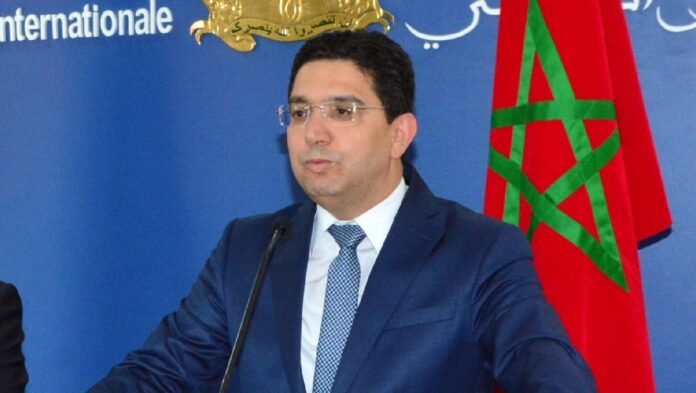
The agreement was signed in Rabat by Moroccan Foreign Minister Nasser Bourita, Minister-Delegate for National Defense Abdelltif Loudyi, and Nickolay Mladenov, the Board of Peace envoy for Gaza. 

Under the agreement, Morocco will contribute 400 troops to the force. Senior military officers will serve in the mission’s joint military command, where they will help monitor the ceasefire, secure humanitarian aid corridors, protect aid distribution sites, and assist with border security. 

The mission will also include Moroccan gendarmerie and police personnel, along with the establishment of a military field hospital. 

The Moroccan defense administration said the agreement “reflects the shared determination to contribute, through concrete humanitarian and security actions, to the establishment of a climate of peace and security in the region,” Morocco’s state news agency MAP reported. 

The Gaza Peace Council and the International Stabilization Force leadership welcomed Morocco’s participation, highlighting the deployment of senior military officers, gendarmerie and police personnel, and the planned military field hospital, MAP reported. 

Washington has approached about 70 countries seeking contributions to the force, with the goal of assembling a 10,000-member multinational mission by the end of 2026. At a February Board of Peace meeting in Washington, participating countries pledged roughly $17 billion to support the initiative. 

Despite those efforts, only a limited number of countries have committed personnel. Indonesia, Morocco, Kazakhstan, Kosovo, and Albania have pledged forces, although several of those commitments have weakened as governments have weighed the political and security costs of participation. 

Morocco is a close US ally and restored diplomatic relations with Israel in 2020 as part of the Abraham Accords. Its decision to join the mission expands the list of participating countries as organizers continue seeking additional troop contributions for the planned multinational force. 


Tesla driver who blamed crash on autopilot pressed accelerator 100%, NTSB finds

0
tesla-driver-who-blamed-crash-on-autopilot-pressed-accelerator-100%,-ntsb-finds
Tesla driver who blamed crash on autopilot pressed accelerator 100%, NTSB finds

On Wednesday, the National Transportation Safety Board (NTSB) released preliminary findings verifying Elon Musk’s and Tesla’s claims that a driver involved in a fatal Texas crash that killed a grandmother overrode Full Self Driving in the moments ahead of impact.

Last month, 44-year-old Michael Butler told police that the autopilot feature was engaged at the time of the crash. On X, Musk disputed the claim, writing that Butler must have overridden the feature because “FSD drives slowly through neighborhood streets, and this was a high-speed crash!” Moving to back Musk’s claim, Tesla’s vice president of AI software, Ashok Elluswamy, said that internal data showed “the driver manually overrode self-driving by pressing the accelerator all the way to 100 percent of the accel pedal in this residential area.”

NTSB’s preliminary report, which does not yet determine what caused the crash, confirmed Tesla’s claims. Their probe found that FSD was engaged at the time of the crash, but electronic data showed “the driver manually overrode FSD (Supervised) by pressing the accelerator pedal to 100 percent.”

According to a local ABC News report, Texas cops searched Butler’s phone with his permission and found that he was working as a DoorDash driver when the crash occurred. The phone data showed that Butler had no issues with the Tesla making multiple prior delivery stops, but Butler allegedly told police he “passed out” and didn’t remember leaving the highway or turning onto the residential streets.

It seems that Butler may have wanted more reliability out of the autopilot feature, with Google searches on his phone showing queries like “Tesla FSD not aggressive enough 2026,” “Tesla not aggressive enough,” and “Tesla FSD too timid,” ABC News reported.

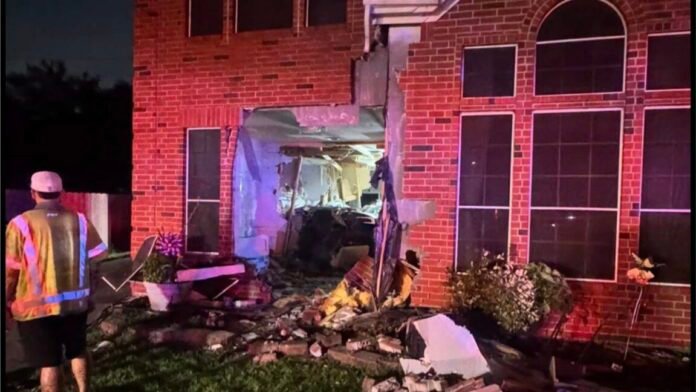
If the Tesla had successfully navigated that course that Butler set before allegedly losing consciousness, the car would have turned left before smashing into the family home where 76-year-old Martha Avila lost her life. But ABC News reported that in the six seconds before the crash, the Tesla instead exceeded 70 mph speeds and continued straight after the pedal was pressed “all the way down.”

The NTSB said that “security camera footage showed the car’s path of travel as it continued straight through the intersection, departed the roadway, and struck the residence.”

Butler has been charged with manslaughter and jailed, with a bond set at $150,000, ABC News reported.

Alongside Tesla, he also faces a lawsuit where Avila’s surviving family has alleged that both he and Tesla were negligent and may be to blame for the crash.

Although cops initially found no evidence of a mechanical malfunction, the family has alleged that Butler’s car may have been defective. For example, a Tesla defect known as “Sudden Unintended Acceleration” can occur when “components of the vehicle require additional power” and the draw on the battery causes “significant spikes in the system,” their lawsuit explained. If that happened to Butler’s car, the inverter may “incorrectly interpret that the accelerator pedal has been pressed” and rapidly advance to dangerous speeds.

NTSB confirmed that “all aspects of the crash remain under investigation while the NTSB determines the probable cause, with the intent of issuing safety recommendations to prevent similar crashes.”

Additionally, the National Highway Traffic Safety Administration has opened a special investigation.

Has the World Cup been a soft power failure for the US?

0
has-the-world-cup-been-a-soft-power-failure-for-the-us?
Has the World Cup been a soft power failure for the US?

Hosting the Men’s Fifa World Cup is supposed to be one of the biggest soft power wins a country can score. When Germany hosted the tournament in 2006, it did so under the official slogan “a time to make friends”. It sought to transform its global reputation for being serious and reserved, presenting itself as a welcoming host instead.

Two decades later, the 2006 World Cup is still cited as one of the clearest examples of a country using a sporting mega-event to improve how the world sees it. In fact, the atmosphere was so optimistic that the tournament is fondly remembered in Germany as the “Sommermärchen” (the summer fairy tale).

Developed by American political scientist Joseph Nye in 1990, soft power is the idea that a country can win influence abroad through attraction rather than force. A nation seen as open, fair and welcoming gains real advantages such as more trade, tourism and goodwill in international politics.

Sporting mega-events are one of the most effective tools for building this kind of image because they put a country in front of a global audience for weeks at a time. Millions of people form impressions about a country from what they see and experience directly. This is one of the main reasons the US, alongside co-hosts Canada and Mexico, wanted the 2026 World Cup.

Hosting the tournament was supposed to project a US that is open to the world. Andrew Giuliani, head of the White House’s World Cup taskforce, explained in a July 8 press conference that months of preparation had gone into ensuring millions of visitors experienced “the hospitality that only Americans can offer and provide”.

The World Cup was also a chance for the US to build goodwill and boost a global image that has undergone strain in recent years due to the war in Iran and the Trump administration’s verbal attacks on traditional US allies. However, a string of controversies look set to turn the tournament into a lesson in how soft power can fail.

Florian Balogun in action during a match for the US national team.

Florian Balogun, the US striker at the centre of a controversy sparked by Donald Trump intervening to suspend his red card. Christopher Torres / EPA

Red cards and outrage

The most recent controversy came in early July when the US president, Donald Trump, personally called Fifa chief Gianni Infantino to request a review of a red card shown to US striker Folarin Balogun. This red card, which Balogun picked up in a knockout game against Bosnia and Herzegovina, should have resulted in an automatic one-match suspension.

But Fifa suspended the ban, allowing Balogun to play in the US national team’s ultimately unsuccessful last-16 tie against Belgium. This was an unprecedented decision. It sparked outrage worldwide and drew sharp criticism from European football’s governing body, Uefa. Many observers saw it as an example of political pressure shaping a sporting outcome.

Various other scandals had already occurred in the preceding weeks. Fifa-listed Somali referee Omar Artan was barred from entering the US over unspecified “vetting concerns”, despite holding valid documents. He was removed from the tournament altogether. Iraqi striker Aymen Hussein was detained for seven hours at a Chicago airport before being allowed to continue his journey.

Visa restrictions, including a travel ban covering 39 countries, have stopped fans from several qualifying nations from attending matches. And Iran’s team was made to base itself in Tijuana, Mexico, rather than the US. The Iranians were required to leave the US immediately after each of their matches, prompting their coach Amir Ghalenoei to call them “the most oppressed team” in the tournament.

Each incident is likely to work against the welcoming image the US hoped to project. This is an example of what researchers call “soft disempowerment”, a concept first developed to explain the criticism Qatar received when it hosted the 2022 Men’s Fifa World Cup. It is used to describe what happens when a host country’s own conduct before and during a mega-event pushes people away rather than attracts them.

Reports of migrant worker deaths during stadium construction, as well as bribery allegations and a last-minute reversal on allowing alcohol in stadiums, harmed Qatar’s efforts to use the World Cup to boost its international image. Research from 2025 concluded that, while Qatar held a visually successful tournament, social media scrutiny caused a persistent negative shift in how global audiences perceived the country.

Omar Artan sat on the shoulders of a crowd member as he is welcomed back to Somalia.

Omar Artan was given a hero’s welcome on returning to Mogadishu in Somalia afterUS authorities denied him entry to the 2026 World Cup. Said Yusuf Warsame / EPA

Lessons for future hosts

The implications of soft disempowerment reach well beyond the 2026 World Cup. A growing number of countries consider hosting sporting mega-events a central pillar of their long-term national strategy. These include Morocco, which is set to co-host the 2030 World Cup alongside Spain and Portugal, as well as Saudi Arabia where the following tournament will be staged in 2034.

Soft power through sport depends on a country delivering on the promises it makes to the people an event brings through its door. Where politics visibly overrides fair process, or where visitors are met with suspicion rather than welcome, the same visibility that makes sport such a powerful tool of soft power becomes the mechanism of its undoing.

For prospective hosts planning their own turn on this stage, the 2026 World Cup may prove to be a far more instructive case study in failure than success.

‘Seismic shift’: More than 100 House Democrats vote to cut Israel military aid

0
‘seismic-shift’:-more-than-100-house-democrats-vote-to-cut-israel-military-aid
‘Seismic shift’: More than 100 House Democrats vote to cut Israel military aid

In what is being viewed as a “seismic shift,” more than 100 Democrats in the US House of Representatives voted yesterday to end $3.3 billion in annual military assistance to Israel. The vote marks a dramatic break with decades of bipartisan support for the occupation state and signals that unconditional backing for Israel is becoming an electoral liability.

The amendment, introduced by Republican representative Thomas Massie of Kentucky, failed by 314 votes to 104, while ten lawmakers voted present. However, the roll call showed that 103 Democrats supported the measure, compared with 98 who opposed it. Massie was the only Republican to vote in favour, while 215 members of his party rejected it.

The result meant that nearly half of the entire Democratic caucus, and a slim majority of Democrats who cast a definitive vote, backed ending the military funding. The scale of the revolt represented a significant change from April 2024, when only 37 Democrats opposed a separate package of military assistance for Israel. The number of Democratic lawmakers prepared to vote against Israeli aid has almost tripled in just over two years.

The amendment would have removed funding from a State Department spending bill and blocked the $3.3 billion in annual security assistance provided under the existing US-Israel agreement.

The vote divided the Democratic leadership. House minority leader, Hakeem Jeffries, opposed the amendment, calling it overly broad, but declined to pressure members to follow him. House Democratic whip, Katherine Clark, supported it, declaring that “the status quo is not tenable” and argued that Washington should not provide a blank cheque to a government which fails to meet US legal and human-rights standards.

Former House speaker Nancy Pelosi, one of Israel’s most longstanding supporters in Congress, also voted for the amendment. Pelosi described it as flawed but said she wanted to send a message that Israeli Prime Minister Benjamin Netanyahu’s government could not continue on its present course.

Pro-Israel Democrat Josh Gottheimer, described the scale of opposition as a “seismic shift” and accused colleagues of responding to political pressure.

That political pressure reflects a dramatic change in public opinion. A Pew Research Center survey published in April found that 60 per cent of Americans now hold an unfavourable view of Israel, compared with 53 per cent in 2025 and approximately 42 per cent in 2022. Among Democrats and Democratic-leaning independents, the proportion holding an unfavourable view has reached 80 per cent, rising from 53 per cent in 2022.

The shift also extends beyond the Democratic base. Pew found that 57 per cent of Republicans under the age of 50 view Israel unfavourably, although older Republican voters remain broadly supportive.

Gallup recorded an even more striking reversal in February. For the first time since it began its annual measurement in 2001, Americans were no longer more likely to sympathise with Israelis than Palestinians. Forty-one per cent expressed greater sympathy for Palestinians, compared with 36 per cent for Israelis.

Read: Poll shows majority of Americans oppose aid to Israel

Among Americans aged between 18 and 34, 53 per cent sympathised more with Palestinians and only 23 per cent with Israelis. Among those aged between 35 and 54, Palestinians led by 46 per cent to 28 per cent — an almost complete reversal from 2025, when Israelis led within the same age group by 45 per cent to 33 per cent.

A July poll from the Associated Press-NORC Center for Public Affairs Research also found that 58 per cent of Democrats believe Washington is too supportive of Israel, up from 45 per cent in January 2024. Sixty-two per cent said the US does not provide enough support to Palestinians, while 52 per cent of Democrats said that Israel’s actions in Gaza constitute genocide.

Analysts view the recent shift in voting patterns as an indication of Politicians responding to shift in public attitude. Candidates who placed opposition to Israel’s genocide in Gaza and rejection of pro-Israel lobby funding at the centre of their campaigns have defeated establishment Democrats in recent New York primaries. In Colorado, democratic socialist Melat Kiros, a vocal critic of Israel, defeated 15-term incumbent Diana DeGette.

An internal Democratic review of the 2024 presidential election also reportedly concluded that former president Joe Biden’s unconditional backing for Israel was a “net-negative” which cost the party support among younger, progressive and Arab-American voters.

The polling, primary results and congressional vote reflect a broader decline in support for Israel, particularly among Democratic voters. Unconditional military assistance to Israel is widely seen as a potential electoral liability for candidates seeking the support of younger and progressive voters.

Iran war leaves crisis-weary European airlines ready for a shakeout

0
iran-war-leaves-crisis-weary-european-airlines-ready-for-a-shakeout
Iran war leaves crisis-weary European airlines ready for a shakeout


As renewed conflict in the Gulf drives up oil prices, airline investors and industry executives see mounting signs that Europe’s financially ​weaker carriers may be headed for a shakeout.

British budget carrier easyJet is nearing a U.S.-led takeover that would see the 30-year-old airline go private at a valuation far ‌below its pre-pandemic peak, airBaltic is looking for short-term financing to stave off default and Norway’s Norse Atlantic is undertaking a strategic review.

While much of the industry cleaned up its finances after COVID-19, the fuel spike has weighed on share prices and exposed the fragile balance sheets of some carriers that are now pondering restructurings, buyouts or even bankruptcy protection.

“We are pitching, I think, four or five very large airlines on restructuring situations just at the moment across ​Europe,” Barema Bocoum, head of EMEA at financial advisory firm Interpath, told Reuters.

The global airline industry last month nearly halved its 2026 profit forecast, citing the Middle East conflict that has ​driven up fuel costs, disrupted key air corridors and exposed the fragility of a sector operating on thin margins.

Bankers, investors and analysts said the ⁠grinding Iran war, which sparked a huge jump in fuel prices this year, has compounded cost pressures that have persisted since the pandemic.

“It feels as though the cycle is over almost before it began,” ​said UK-based aviation analyst Rob Morris.

AIRLINES IN ‘PRUDENT’ MODE

The tougher environment has led airlines to temper expansion plans. Airbus this month revised down its 20-year passenger aircraft demand forecast as war and trade tensions curbed ​what had been a sharp post-pandemic rebound in activity.

“Airlines are mostly maintaining very modest growth in U.S., Europe and Southeast Asia,” said aviation adviser and former sector banker Bertrand Grabowski.

“Apart from some exceptions like Turkish Airlines, carriers are mostly being very prudent in increasing capacity.”

Elevated jet fuel costs, which can make up over a third of airline spending when prices are high, have triggered worries over the financial health of carriers this year.

While jet fuel prices have ​stabilised in recent weeks, renewed volatility in the Middle East has raised fresh doubts over whether weaker European airlines can generate enough cash during the crucial summer season to survive the winter.

“The smaller (airlines) ​are the ones probably in danger,” said London-based aviation analyst James Halstead, adding that losing traffic in the key summer season could prove fatal for some carriers in an industry that relies heavily on available cash.

He ‌said airlines may ⁠muddle through the summer, but could face bigger challenges early next year. “The usual thing is that airlines run out of cash in February,” he said.

Poland’s LOT has been a suspected consolidation target for years and Latvia’s airBaltic has seen the yield on its 2029 bond spike this year, reflecting higher perceived investor risk. Norse’s shares have collapsed to near zero since its high-profile listing in 2021.

An airBaltic spokesperson declined to comment. LOT said its performance over the past several years demonstrated the strength of its business model and long-term strategy. Norse did not respond to a request for comment.

AIRLINE SECTOR HAS ​A HISTORY OF DEFYING FAILURE PREDICTIONS

The industry has ​often defied predictions of widespread failures by ⁠showing resilience to outside shocks, but some analysts say there are early warning signals that the bullish trend seen since the pandemic is wavering due to higher fuel prices.

Capacity plans, second-hand plane prices and the volume of bankruptcies are among the indicators analysts are watching for signs that the strong ​run is losing steam.

In the U.S., rising fuel, labour, maintenance and leasing costs have steadily eroded low-cost airlines’ cost advantage and contributed to ​the collapse of Spirit Airlines ⁠in May.

Analysts have warned that budget carrier Wizz Air’s balance sheet is vulnerable, making it a possible consolidation target.

The airline says it has enough liquidity, though CEO Jozsef Varadi told reporters in April he expected more bankruptcies to hit the sector at the end of summer as forward bookings for the less lucrative winter season slump.

He said, however, that Wizz might benefit from other companies’ woes and pick up some ⁠routes from them.

“We ​remain opportunistic,” he said.

Willie Walsh, director general of industry trade body the International Air Transport Association, told Reuters in June ​that some airlines would go out of business or be acquired by larger carriers – especially if fuel prices remain high.

“Unfortunately, I think there will be some carriers that will find this high fuel price very difficult to cope with,” Walsh said.

Source:  Reuters

Africa’s Greater Horn region is facing a looming polycrisis fueled by conflict, prices, climate and disease

0
africa’s-greater-horn-region-is-facing-a-looming-polycrisis-fueled-by-conflict,-prices,-climate-and-disease
Africa’s Greater Horn region is facing a looming polycrisis fueled by conflict, prices, climate and disease

The impacts of a strengthening El Niño and the lingering effects of the war in Iran highlight two separate and seemingly unrelated global hazards. But in the Greater Horn of Africa, an area already beset by prolonged crisis and conflict, these factors are combining with others to potentially create a major, multicountry polycrisis.

As experts in famine, conflict and humanitarian crises, our concerns about such a grave risk for the region in the second half of 2026 and into 2027 are based on a series of overlapping trends that include El Niño, the broader effects on food prices and fertilizer of the Iran war, internal conflicts and other localized factors. We fear the consequences could be catastrophic.

Several factors underpin this risk.

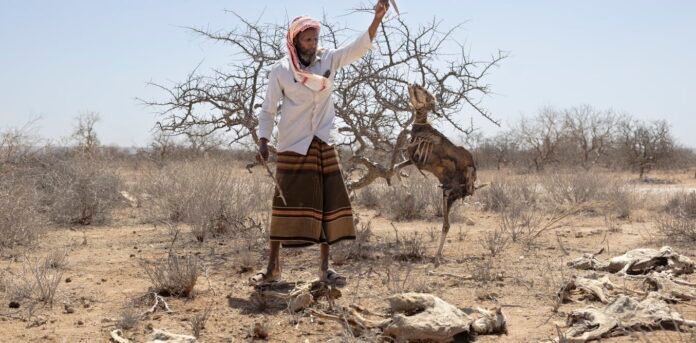
First, the short rains in the eastern Greater Horn of Africa – parts of Somalia, eastern Kenya, eastern Ethiopia – were well below average in the fall of 2025. The long rains in March to May of 2026 were also well below normal for much of that area, affecting both crops production and grazing and water for livestock, deepening the crisis of rural livelihoods.

The regional forecast for the northern Horn of Africa, where for the most part there is only one rainy season per year, is also projected to be below average. This includes the heavily populated highlands of Ethiopia, much of South Sudan and Sudan.

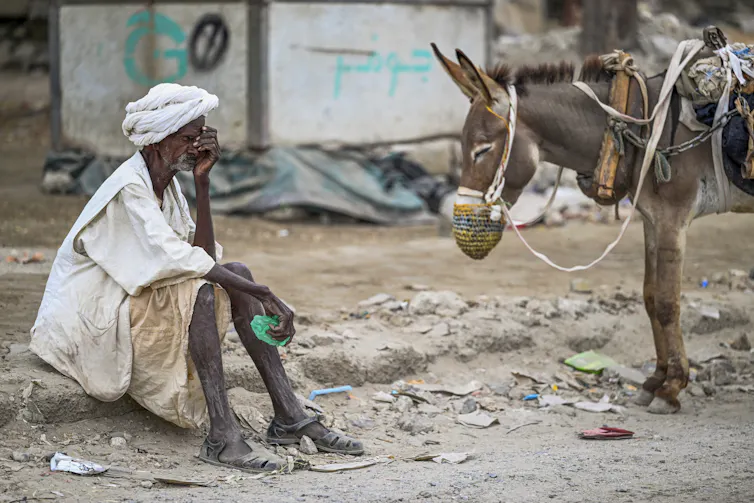
A man sits on the ground next to a donkey

An elderly man waits to refill his donkey-drawn water tank during a water crisis in Port Sudan on April 9, 2024. AFP via Getty Images

The super El Niño now forming could cause both drought and extensive flooding in parts of the Greater Horn of Africa, causing population displacement and tremendous loss of livelihoods.

Second, an unpredictable variant of the Ebola virus has taken hold in Congo and Uganda. Although it hasn’t yet spread to the rest of the region, the concern is that if Ebola spreads across the border to South Sudan, it will not only add a major epidemic risk but will also render the response to other shocks more difficult.

Third is the fact that all of the countries in the Greater Horn, with the exception of Kenya, are experiencing protracted, violent conflicts, with multiple parties jockeying for power and military advantage. This makes the task of dealing with the impact of climate, health and price shocks that much harder and risks further exacerbating or accelerating individual drivers.

Regional analysts have warned of an uptick in violence for Ethiopia and South Sudan. Violent conflict is a common denominator of contemporary famine, and famine or the risk of famine has already been noted in several countries in the region.

Conflict outside the region is also complicating matters. The war in Iran has already led to significant increases in transportation and food costs in the short term. But potentially more concerning is the fertilizer shortage caused by the war, which is projected to reduce harvests later in the year. If this happens, food prices will remain high long after the active conflict ends.

The Horn of Africa will be doubly affected by the fertilizer bottleneck – local production will be reduced, and global food prices will be higher. The bottleneck affects regional surplus-producing areas that might normally help to even out availability and prices in areas that do not produce enough to feed themselves. The El Niño effects, in combination with the high fertilizer costs, will likely reduce opportunities for agricultural work while also increasing the amount that food laborers – among the poorest people – have to spend on produce.

This combination of climatic, conflict, market and epidemic shocks are not simply additive but multiplicative, with each intensifying the other. Climate and epidemic shocks almost inevitably exacerbate conflict and encourage crackdowns on population movements.

A devastating aid cliff

To make matters worse, there are reasons to believe that the region will be less prepared to cope with the looming crisis than during previous El Niño years.

In the background is the deliberate gutting of much of the global humanitarian response infrastructure that people would have relied on in the past to mitigate the impacts of such a crisis.

In particular, the closure of USAID and the major cuts in spending on foreign aid – not only by the U.S. but by most Western nations – has undermined much of the international system’s capacity to respond to major shocks. Combined with longer-term political and governance challenges in eastern Africa, this conjunction of existing and anticipated factors in the Horn of Africa risks both further displacement and a rise in mortality.

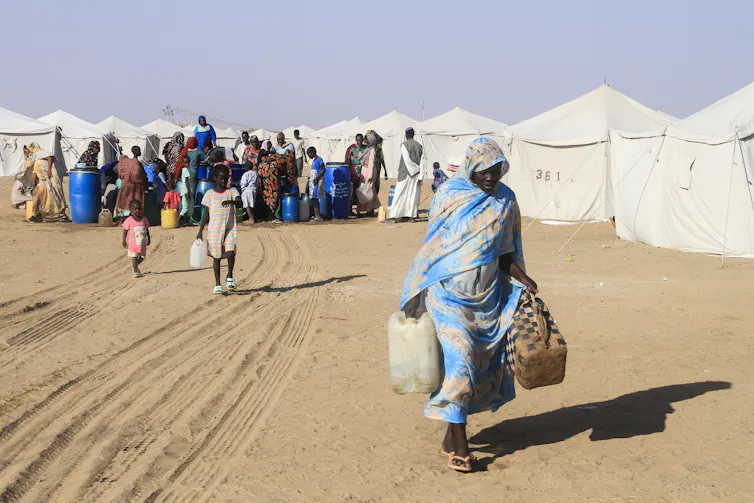
A woman carries cans of water in front of a row of tents.

A Sudanese woman carries a jerry can of water at the Al-Afad camp for displaced people in northern Sudan on Nov. 21, 2025. Ebrahim Hamid/AFP via Getty Images

There have already been calls by aid groups and regional bodies for higher levels of funding to be allocated through what remains of the international system.

But by itself, more money cannot solve this problem. Humanitarian programs have been shut down, staff have been laid off and infrastructure sold. Government-led programs in epidemic tracking and the provision of healthcare and other areas have likewise been curtailed.

Washington has recently increased its level of funding slightly, but U.S. humanitarian assistance is now more politicized and transactional, less sufficient and limited in its support of effective local systems and responses.

Local efforts addressing the problem

With the international humanitarian system compromised by funding cuts, the onus will be more heavily on governments, civil society and local communities in the Horn to mitigate anticipated shocks and their fallout.

The first responders in any crisis are usually next of kin, neighbors and local mutual aid groups. Since the collapse of the international aid system a year ago, long-standing efforts by local communities and organizations have ramped up significantly and effectively. These local mutual aid efforts are typically self-managed and financed through their own networks and diaspora remittances. But given the size of budget cuts in the formal humanitarian response system, these local initiatives can be better supported with complementary funding. Several intermediary organizations have recently emerged to support this effort.

Local mutual aid efforts can also be supported through more flexible public policies, for example, by easing restrictions on banking transfers to enable more effective diaspora support. Donors and the U.N. can also ensure that greater proportions of funding in the formal global humanitarian system go to local initiatives

Fundamentally, however, the most worrisome driver behind this polycrisis is violent conflict – wars in this region and elsewhere. In addition to the impacts of the conflicts in Ukraine and the Middle East, civil wars and ongoing insurgencies in Sudan, South Sudan, Ethiopia and Somalia have also been dragging on for years and in some cases have drawn in more countries – either directly through financial support and weapons sales or indirectly through political support.

Not only does violent conflict complicate any response to crisis, it also raises the risk of starvation being used as a weapon of war – something already alleged in Sudan and the Tigray region of Ethiopia. But for the most part, the international community has been unwilling to hold warring parties and their foreign supporters accountable for intentionally starving parts of their populations.

Finally, data and monitoring systems have also been significantly crippled by aid cuts and misinformation, making it difficult to understand the gravity of these crises or to keep actors accountable. Improved monitoring and evidence, including evidence of atrocities and the use of starvation as a weapon, need to be supported if there is to be effective assistance and accountability.

The conjunction of so many potential hazards has all the hallmarks of the proverbial perfect storm. Not only will people’s access to adequate food be devastated, it will also affect civilian protection, access and mobility. Without immediate prevention measures, the looming polycrisis will have widespread impacts on basic health, nutrition and water services – and the potential for mass mortality and displacement.

0FansLike
0FollowersFollow
0FollowersFollow
0SubscribersSubscribe
- Advertisement -
Google search engine

Recent Posts