21.9 C
London
Thursday, July 9, 2026
Home Blog

US seeks cheaper hunter-killer drones after Iran destroys $1B worth of Reapers

0
us-seeks-cheaper-hunter-killer-drones-after-iran-destroys-$1b-worth-of-reapers
US seeks cheaper hunter-killer drones after Iran destroys $1B worth of Reapers

The US military has lost dozens of Reaper drones collectively worth more than $1 billion while carrying out surveillance and attack missions over Iran. Now the Pentagon is seeking large numbers of cheaper drones that can perform such missions despite the expectation that many will be lost in combat.

In a call for industry pitches, the Defense Innovation Unit’s notice described the US military’s current reliance on drones and crewed aircraft, each costing more than $30 million, as being “unsustainable against adversaries utilizing layered defenses enabled by increasingly low-cost antiaircraft capabilities.” It envisions deploying more “cost-effective” drones to “overwhelm enemy air defenses even while experiencing numerous [drone] losses.”

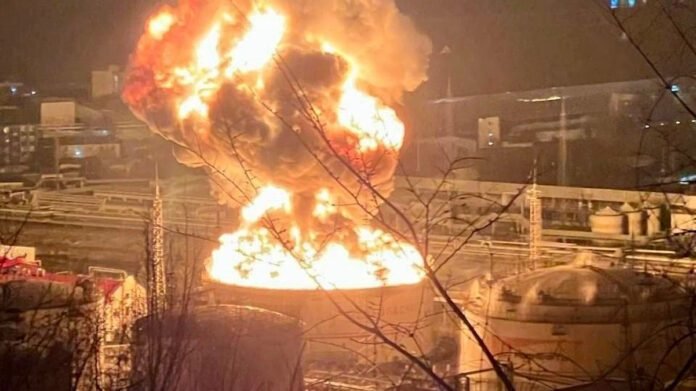
That is, in practice, what Ukraine’s military has been demonstrating with its long- and mid-range strike campaign against Russian supply lines, oil refineries, and various energy or industrial targets within Russia or occupied Ukraine. The Ukrainian campaign has been overwhelming Russia’s overstretched air defense capabilities by launching hundreds of relatively inexpensive drones and missiles on a daily basis to attack targets far behind the frontlines, while continuing to damage or destroy Russia’s most sophisticated air defense systems.

By contrast, the US military has primarily deployed sophisticated, expensive crewed aircraft and drones to perform airstrikes since the United States and Israel launched their attack on Iran on February 28, 2026. That has led to the loss of costly aircraft and helicopters and forced the US military to scramble to rescue downed pilots in Iran or the Strait of Hormuz.

For the riskiest combat missions, the US military has sent MQ-9A Reaper drones deep into Iranian airspace to gather intelligence and strike targets with missiles. Kenneth Wilsbach, chief of staff of the Air Force, described the Reaper as the “most valuable player” in the Air Force arsenal during the US military’s war against Iran.

Unleashing the drones of war comes at a cost

A heavy reliance on Reapers avoids putting more US pilots at risk, but it has also led to Iranian air defenses shooting down dozens of the hunter-killer drones. The US military had lost nearly 30 Reaper drones as of May 2026, including some destroyed on the ground by Iranian counterstrikes, according to Air & Space Forces Magazine. The Air Force acknowledged such combat losses as reducing its Reaper fleet to about 135 drones.

The total US taxpayer bill for the destroyed Reapers comes to about $1 billion, according to Bloomberg. A typical Reaper may cost $30 million per aircraft, but the Air Force has said a Reaper equipped with a full sensor package can cost up to $50 million.

That number of Reapers lost in combat has almost certainly increased since May, as the United States and Iran have continued to trade airstrikes and drones despite so-called ceasefire periods and attempted negotiations. On July 8, as hostilities ramped up again recently with new Iranian strikes on commercial shipping triggering more US military airstrikes, Iran’s Islamic Revolutionary Guard Corps claimed to have shot down yet another Reaper drone.

The defense company General Atomics stopped manufacturing Reaper drones for the US military in 2025. But a General Atomics executive told Breaking Defense that the company is interested in pursuing the newest drone contract offering from the US military, and seemed to suggest it would provide a cheaper successor to the Reaper.

The Defense Innovation Unit notice called for drones capable of carrying many different sensor and weapons payloads up to 2,800 pounds and flying with a combat radius of at least 2,300 nautical miles—or 8,000 nautical miles on a one-way strike mission—while executing the same missions that the MQ-9A Reaper drone currently performs for the US military. It envisions delivery of “20 mission-ready aircraft” by 2031.

Whether the US military and companies can deliver on that vision of deploying cheaper yet capable strike drones remains to be seen. The Pentagon is asking for about $54 billion in its fiscal year 2027 budget to spend on drones and autonomous warfare technologies—an amount that rivals wartime Ukraine’s entire military budget.

Lebanon’s Aoun Says Upcoming Washington Visit Aims To Halt Conflict with Israel 

0
lebanon’s-aoun-says-upcoming-washington-visit-aims to halt-conflict-with-israel 
Lebanon’s Aoun Says Upcoming Washington Visit Aims To Halt Conflict with Israel 


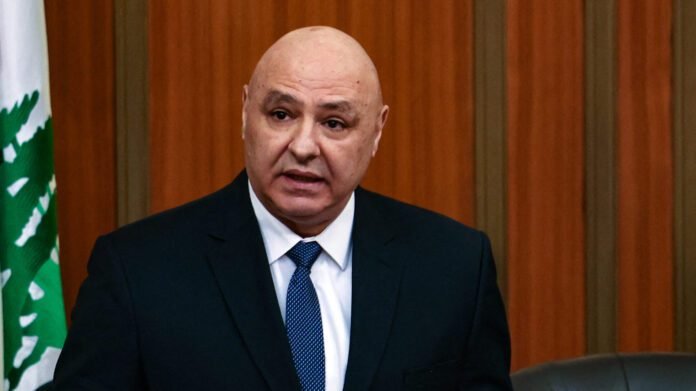
Lebanese President Joseph Aoun said Wednesday that his upcoming visit to Washington is intended to advance efforts to end the conflict between Lebanon and Israel through negotiations, expressing hope that talks with President Donald Trump will produce a lasting solution. 

“I expect that my upcoming visit to Washington and my meeting with US President Donald Trump will bring positive outcomes for Lebanon … to find a permanent solution to the cycle of wars and Israeli attacks on our country,” Aoun said in a statement issued by the presidency. 

Aoun said the planned negotiations are aimed at halting Israeli military operations in Lebanon and ultimately ending what he described as the “Israeli occupation.” He added that a majority of the Lebanese people support pursuing negotiations. 

US officials announced Tuesday that Aoun will visit the White House on July 21. The trip will mark his first official visit to Washington since taking office. 

The announcement comes as diplomatic contacts between Israel and Lebanon continue. 

Israeli Foreign Minister Gideon Sa’ar said Tuesday that the next round of negotiations between the two countries is expected to take place in Rome next week. 

The previous round of talks was held in Washington in late June. Those discussions concluded with a framework agreement intended to strengthen the ceasefire and reduce tensions along the Lebanon-Israel border. 


Oil rises after US launches fresh strikes on Iran

0
oil-rises-after-us-launches-fresh-strikes-on-iran
Oil rises after US launches fresh strikes on Iran


Oil prices rose more than 1% on Thursday after the U.S. carried out fresh strikes on ‌Iran, denting hopes for talks to end their war and for the full reopening of the Strait of Hormuz, a chokepoint for one-fifth of pre-war global oil supplies.

Brent crude futures rose 86 cents, or 1.1%, to $78.88 a barrel by 0352 ​GMT. U.S. West Texas Intermediate crude futures were up 85 cents, or 1.2%, at $74.37 a ​barrel.

Both crude benchmarks, WTI and Brent, rose more than a dollar in post-settlement trade on ⁠Wednesday after the U.S. military began launching fresh strikes on Iran.

Before that, the benchmarks had settled at ​their highest in over two weeks after U.S. President Donald Trump threatened new attacks on Iran.

“Fresh US strikes ​on Iran pushed oil higher this morning, with the latest escalation undermining confidence in the fragile ceasefire,” said ING analysts in a client note.

The U.S. military said it completed strikes on Iran aimed at keeping the critical Strait of Hormuz open ​to traffic, hours after President Donald Trump declared that an interim agreement to end the war was “over”.

U.S. ​forces struck approximately 90 Iranian military targets, which included air defense systems, coastal surveillance assets, missile and drone storage sites, ‌naval ⁠capabilities, and military logistics infrastructure along Iran’s coastline, U.S. Central Command said.

Iran earlier said on Wednesday it attacked U.S. military sites in Bahrain and Kuwait in response to earlier U.S. strikes on infrastructure.

A fifth of global oil and liquefied natural gas supplies traversed the Strait of Hormuz prior to the Iran war, and Tehran’s ​control of the waterway ​has been its main leverage ⁠in a conflict that started with U.S. and Israeli airstrikes against Iran on February 28.

The rush of oil that passed through the strait in recent weeks is ​over for now, with shipowners expected to take a more cautious stance, ​IG analyst Tony ⁠Sycamore said in a note.

Despite the interim peace deal between Washington and Tehran, “significant geopolitical risks remain,” said DBS Bank’s head of energy research Suvro Sarkar, expecting conflict uncertainty to support prices in the near term.

“We believe ⁠Iran has ​every incentive to prolong these discussions, suggesting that the war ​risk premium in oil prices may not fully dissipate for several months, leading to continued volatility despite an overall downward price trajectory ​in the medium term.”

Source:  Reuters

Graham Platner’s Exit From Senate Race Leaves Maine Dems “Hobbled” in Scramble for New Nominee

0
graham-platner’s-exit-from-senate-race-leaves-maine-dems-“hobbled”-in-scramble-for-new-nominee
Graham Platner’s Exit From Senate Race Leaves Maine Dems “Hobbled” in Scramble for New Nominee


In group chats of progressive activists and political operatives concerned with the state of the Senate race in Maine Wednesday morning, a link to an anonymous Google Doc was making the rounds. It disavowed Graham Platner, the disgraced Democratic nominee whose campaign was throttled by a rape accusation on Monday, and called to replace him with Troy Jackson, a recent gubernatorial contender the document deemed “the one candidate who can hold Platner’s coalition together.”

Platner suspended his Senate campaign on Wednesday evening, and there is no clear alternative to his candidacy. His campaign’s swift downfall has presented Democrats and his primary supporters with several bad options: The party establishment could pick a candidate and inflame an already frustrated base that scoffed at its efforts to anoint Gov. Janet Mills as the nominee, or it could bend to Platner’s past demands and let him influence the selection of his successor.

In either case, a base already exhausted by months of Platner scandals is at risk of fracturing and failing to consolidate behind a potential replacement — and Democrats are at risk of once again losing a key seat they need to pick up for control of the Senate to Republican Sen. Susan Collins.

With so much blame and anger to go around, the fear of poisoning the selection process was on display in the anonymity of the Google Doc pushing Jackson, the Bernie Sanders-endorsed third-place candidate in Maine’s Democratic gubernatorial primary. Jackson, who has already been discussed in national progressive circles as a possible ideological successor to Platner, was first to file paperwork on Tuesday to take the candidate’s place. But the anonymous document, shared with The Intercept by a source who said its origin was unclear, was quick to distance him from Platner.

“In a state where Democrats have hemorrhaged rural support and where Collins has consistently overperformed, Platner has attempted to sell himself as the populist solution. Jackson doesn’t need to sell; his career tells the story,” it says, citing a claim from centrist writer Matthew Yglesias that Jackson is more genuine than Platner.

There are still Platner supporters — and one progressive political operative close to the Platner campaign, who spoke on condition of anonymity because he was not authorized by his employer to discuss the race publicly, said they were divided in their reactions to the rape allegation against their once-powerful candidate.

“There are some people who just immediately decided that they believed they believed his accuser and who feel very betrayed and are just like, ‘Fuck this guy, now we’re screwed,’” the operative said. “And then there are some people who don’t believe her, and there are some people who think that he can continue to run, and some people who think he should run as an independent.” 

Platner announced he was dropping out of the race in an 11-minute video posted on X Wednesday evening. In it, he claimed the rape and sexual assault accusations against him were false and drummed up by an establishment leading a plot against his rise as an outsider in politics.

“I think it’s really important to understand why this is happening in the timeline,” Platner said, asserting that past scandals that dogged his campaign had broken at key political junctures. “There is a reason that this is happening now. I only have until July 13th until I am officially the nominee. This was the last week to try to get me off of the ballot. And that’s why this is occurring.”

The Maine Democratic Party announced that it would hold a nominating convention to pick Platner’s replacement, though its exact shape and timeline remain unclear.

The party has publicly feuded with Platner’s campaign, releasing a statement and an unusual video post on Tuesday saying that the campaign had tried “to put their thumb on the scale of what this process looks like,” after people close to Platner’s campaign told reporters that he would only drop out if he could ensure that the new candidate shared his ideological and policy stances.

In a mass text sent out before Platner dropped out on Wednesday, his campaign manager Ben Chin claimed that the campaign had been told it would have no role in helping to select a new candidate and that the Democratic Senatorial Campaign Committee had sent staffers “to plan a potential nominating process behind closed doors.”

A DSCC spokesperson called the assertion “false” in a statement to The Intercept. “The Maine Democratic Party has made it clear that they are working to put forth an open process to select a nominee. Graham Platner — who was credibly accused of rape — needs to drop out immediately so that Maine Democrats can begin the process of fielding a new candidate and focus on defeating Susan Collins,” the spokesperson wrote.

Platner’s campaign did not immediately respond to The Intercept’s request for comment.

Other potential picks being floated to replace Platner include Jackson’s Democratic gubernatorial opponents Dr. Nirav Shah, the former director of the Maine Centers for Disease Control and Prevention who came in second in the final round of ranked-choice voting in the June primary, and Maine Secretary of State Shenna Bellows, who ranked fourth. 

A source familiar with the matter told The Intercept that outgoing Rep. Jared Golden, a Blue Dog Democrat who represents Maine’s Second Congressional District is not seeking reelection, had been getting calls about running, but on Tuesday night a spokesperson said he had removed his name from consideration.

The progressive political operative warned against the idea that a middle-of-the-road candidate like Golden would be the safest bet to replace Platner against Collins. A “generic Democrat,” the operative said, would find themselves up against a deceptively formidable incumbent, with little chance of mustering the energy that made Platner, for a time, such a threat to Collins.

“People always underestimate Susan Collins, and that’s why I think a lot of us in the progressive movement are saying that you have to give a reason for people to turn out, because turnout in the midterms is everything,” the operative said. “I think a lot of that’s coming from the national Democrats and national pundits who have no friggin’ clue about — I don’t know if I’d say popular — but about how entrenched she is in Maine politics.”

“People always underestimate Susan Collins. … You have to give a reason for people to turn out, because turnout in the midterms is everything.”

Shah said Tuesday that he had few details about what the state Democratic party plans to do. 

“This should be a process that is open, robust, and transparent, not something where the torch is handed from one person to another, because that will undermine faith in that nominee,” Shah told The Intercept. He said his campaign has not yet decided if he’ll file paperwork to enter the race, and that while he had received calls from hundreds of supporters urging him to jump in, he had not heard from any national Democrats.

Jackson, for his part, now has to toe the line between seizing the progressive mantle and being publicly tied to a candidate who lost massive public trust. In a statement Tuesday, he called the allegations against Platner “serious, credible, and deserving of full accountability,” and called on Platner to step down for the sake of the movement that supported him. Jackson did not address his own intention to run, but his spokesperson told The Intercept that he was the person to beat Collins.

“Working Mainers need someone who will take on the wealthy and powerful and give them a voice in D.C. It is clear that Troy Jackson is that person,” said Christine Kirby, the spokesperson. “Since the recent news broke, Troy has been flooded with calls to run for U.S. Senate. He is clearly the strongest option to take on Susan Collins and has consistently won in deep-red Northern Maine.”

The document making the case in Jackson’s favor emphasized his appeal among working-class voters, whom Platner had tried to cultivate but lagged with compared to Collins in recent polling.

Platner reiterated his commitment to working-class politics and repeated his assertion that his campaign represented people who’d been locked out of the halls of power in his departure announcement on Wednesday.

“We live in a political system that is not built for normal people. It is a system that is built structurally to make sure that movements like ours cannot flourish,” Platner said. “That if they begin to succeed, they can be crushed.”

In a statement released before Platner suspended his campaign on Wednesday, the Maine Democratic Party’s executive director Devon Murphy-Anderson sought to thread the needle between castigating Platner and courting his voters.

“While we may be frustrated with Graham Platner’s continued efforts to manipulate this process, we are so thankful for his supporters and all of their efforts to defeat Susan Collins,” Murphy-Anderson wrote. “They are a vital part of our Party and deserve to participate in an open process to select Platner’s replacement.”

A new candidate has to be submitted to the Maine secretary of state by July 27 to qualify for the ballot.

In Shah’s view, anyone picked by Platner would be dragged down by his baggage, while anyone picked by the state party might not have buy-in from the base that Platner helped activate.

“If there is a torch-passing or anointments,” Shah said, “whoever that nominee is will be hobbled out of the gate.” 

Update: July 8, 8:55 p.m. ET
This story has been updated with news that Graham Platner has suspended his Senate campaign.

Drone warfare turning oil from asset to liability

0
drone-warfare-turning-oil-from-asset-to-liability
Drone warfare turning oil from asset to liability

I visited Omsk once, or at least its airport; we were en route from Moscow to Ulan Ade on the Mongolian border, and the Aeroflot flight landed there to refuel. (It was a memorable journey; this was still the Soviet Union, and on boarding for the full-day flight, the stewardess handed each passenger a baggie with a scrawny chicken drumstick).

All of which is to say, I’m equipped to pronounce, with the gravitas proper to a pundit, that Omsk is long ways from anywhere else.

Including the Ukrainian border, which makes it remarkable that Ukraine’s President Volodymyr Zelenskyy’s drone specialists managed to fly a whole squadron of their craft more than 2,500 kilometers from home and bomb the heck out of Russian President Vladimir Putin’s largest oil refinery.

It was the high point of an ongoing campaign designed to highlight what may be Russia’s greatest weakness: that it, like a number of other countries, is heavily dependent on oil.

Just as US President Donald Trump has proposed building American prosperity on the back of “energy dominance” via “liquid gold,” oil was supposed to be Russia’s strength, the source of its greatest riches. (John McCain memorably called it a “gas station with nukes.”)

And indeed in the early days of the war, Russia flexed its hydrocarbon muscle, threatening to cut off Europe’s gas supply. Throughout its invasion of its neighbor, Russia has relied on the often-covert export of oil via its fleet of “shadow tankers” to keep revenue flowing. Trump of course made this easier and more profitable for his buddy by temporarily lifting sanctions in the wake of our own ill-advised attack on Iran.

But if our attack on Iran has made other nations demonstrably more nervous about relying on the import of hydrocarbons, Ukraine’s attacks on Russia’s petroleum network should make them nervous about depending on the stuff even if they don’t have to bring it in from afar. It turns out that in the drone age it’s a very risky business, because it relies on colossal pieces of infrastructure that can’t be easily defended.

One of those is the supertanker—there was one on fire Tuesday in the Gulf, apparently hit by an Iranian missile because it strayed from the Tehran-approved shipping lane. Ukrainian drones attacked another Monday in the Sea of Azov, crippling the vessel. There’s essentially no defense for these slow-moving giant ships if an adversary with a few drones wants to take one out—they are, after all, a floating pool of flammable liquid.

Another vulnerability is the terminal where you load and unload the crude — Ukraine got one of those Monday too, in occupied Crimea:

The facility serves as a major logistics hub for petroleum products on the occupied peninsula, handling the receipt, storage, and transfer of oil between rail infrastructure, storage tanks, and tankers

And a third—and perhaps most exposed—is the refinery. An oil refinery is one of the most specialized pieces of equipment humans have ever built; anyone who’s ever driven by one on the highway will recognize that the tangle of pipes and tanks that makes each so complicated. It’s an industry truism that no two are alike.

That means that they’re highly vulnerable. If you aim your drone well, maybe it will smash, say, the ELOU-AVT-11 Unit, which at Omsk is what they call the thing that does the initial distillation and desalination of the crude. Without it, the secondary units that produce, say, gasoline and jet fuel have nothing to work with.

And this is highly complicated equipment not easy to replace—given Western sanctions, the current guess is six months to a year. And it’s not as if Ukraine has hit just that refinery—in fact, it was one of the last squares on a drone pilot’s bingo card. As Illia Kabachynskyi reports:

It’s also worth remembering that Ukraine has already hit all 10 of Russia’s largest refineries, some of them more than once. That means it’s no longer a single plant waiting for repairs—it’s effectively all of them at once, which piles additional pressure on repair crews and on the supply of replacement parts that are hard to source under sanctions.

Russia started this energy war, of course—over the years of the conflict it has targeted heating plants and the like, trying to freeze the fighting spirit out of the Ukrainians during their long winters. It’s been effective at producing cold, but not at winning the war; along with the attacks on schools, hospitals, and other civilian targets it seems to have helped reinforce the Ukrainian will to resist.

Now—with far more attention to avoiding civilian casualties—the Ukrainians are striking back, at defense plants, and especially at refineries. As Zelensky said Tuesday morning:

The very idea of Russia having a strategic rear is gone. For a long time, Russia believed it had territorial advantage no one else possessed, a deep rear, where it could safely keep everything its war depends on, believing no one could reach them. We have reached them.

But of course what’s at stake here is not just the oil that the Russian war machine runs on. In Russia, as in America, almost everything runs on oil. I remember that the one and only time that I sat down with former President Barack Obama, the first thing he told me was that “the price of gasoline is the most salient fact in American politics.”

If that’s even close to the case in Russia, Putin better watch out: in occupied Crimea, gas prices are going above $10 a gallon. The government is desperately trying to import gasoline from as far away as India.

As Pjotr Sauer reported Tuesday morning, police are having to draw guns to quell disturbances at gas stations where lines can stretch for kilometers, “fuel tourists” are crossing the borders with China and Kazakhstan to fill their tanks, and as a result:

“Mass fatigue with the war is turning into mass irritation,” said Andrei Kolesnikov, a Moscow-based political analyst. Even so, he said the shortages were unlikely to trigger widespread protests in Russia’s tightly controlled political system. “There is certainly shock, but the lack of any real means of influencing the situation—and the risks associated with trying to do so—make protests unlikely.”

This seems likely to get worse. Here’s a social media post from an Omsk resident watching the drone strikes: “Don’t waste any time right now. Anyone with a car who’s watching me—head to the gas station! The lines are about to get crazy.”

And here’s an account of how Russian horse breeders are reporting a surge in sales because a steed is now cheaper to maintain than a car; check out the video of the equestrian cantering past the endless line at the gas station.

Ukraine has stood up to Russia’s attacks on its energy infrastructure mostly by starting to diversify: as Paul Hockenos reported last winter, the country is undergoing a rapid renewables revolution:

According to estimates from the Solar Energy Association of Ukraine, the nation installed at least 1.5 gigawatts of new solar generation in 2025—enough to power roughly 1.1 million homes—and grid operators intend to almost double the country’s renewable energy production over the next four years.

“Ukraine’s energy transition is not a slogan,” says Ievgeniia Kopytsia, a Ukrainian energy analyst at the Institute for Climate Protection, Energy, and Mobility. “Since the full-scale invasion, Ukraine has added over 3 gigawatts of new renewable energy capacity. It’s a security-driven transformation, unfolding under extreme constraints, that prioritizes decentralization, flexibility, and speed of recovery.”

In the most basic terms, a single missile can take out a gas-fired power plant. But as Jeff Oatham of DTEK, Ukraine’s largest energy company and its largest private energy investor, explains:

“You would need around 40 missiles to do the equivalent amount of capacity damage at a wind farm.”

Solar, too, makes an unattractive target. “Attacking decentralized solar power installations is not economically rational,” says Ukrainian energy expert Olena Kondratiuk. “Missiles and drones are expensive, and significantly disrupting such systems would require a large number of strikes, while the overall impact on the energy system would remain limited.” Both solar and wind parks can function even when parts of them are out of operation.

That’s because sun and wind and batteries are not like oil—they are small, interchangeable pieces of infrastructure, easily subbed in. There aren’t choke points like refineries and tankers and terminals; there’s no cascading failure.

My roof is covered with solar panels, and I suppose a saboteur could put a ladder against the wall and climb up there with a hammer and do some damage. But it wouldn’t shut down the electric grid across New England; it would be a problem, not a crisis. Which in turn is why no rational saboteur would ever bother.

And once you can run cars and heat pumps and cooktops off the power those panels and turbines generate, then you’re far more protected against attack. If Vladimir Putin had an electrified Russia he would worry far less about Ukrainian drones. Of course, if the world ran on electricity Russia would never have built up the treasury required to act like a bellicose beast.

Look, world leaders should be moving quickly to clean energy because it’s the one scaleable weapon in the war against climate change. But I’ll take any motivation—and I’ll count it as a real bonus if a cleaner world is also one where it’s harder to attack your neighbors because they don’t have vulnerable infrastructure. The peace dividend from sun and wind could be very real.

Bill McKibben is the Schumann Distinguished Scholar at Middlebury College and co-founder of 350.org and ThirdAct.org. His most recent book is “Falter: Has the Human Game Begun to Play Itself Out?.” He also authored “The End of Nature,” “Eaarth: Making a Life on a Tough New Planet,” and “Deep Economy: The Wealth of Communities and the Durable Future.” Follow him on X at @billmckibben

– Common Dreams

TikTok users don’t have as much agency over their FYPs as they think

0
tiktok-users-don’t-have-as-much-agency-over-their-fyps-as-they-think
TikTok users don’t have as much agency over their FYPs as they think

TikTok’s For You Page (FYP) is the default home screen for users of the video-sharing platform. It’s a personalized, algorithmically driven content feed, but the approach differs from other social media in that TikTok’s algorithm relies heavily on implicit signals—such as how long users watch particular videos—as well as explicit signals such as likes or follows. And generally, that algorithm does remarkably well at predicting which videos will interest particular users.

But some users have voiced concerns that TikTok’s almighty algorithm doesn’t seem to incorporate negative feedback very well. Even when they don’t watch a suggested video or click the “not interested” feature, they keep seeing those videos on their FYP. Northwestern University computer scientists put those suspicions to the test. According to their recent paper, the engagement signals do have an effect, but only temporarily. Then the algorithm gradually relapses unless a user consistently gives the same feedback over and over again.

The research group specializes in “algorithm audits,” co-author Piotr Sapiezynski told Ars, to better understand online platforms: “how they work, how they fail, when they fail, how they harm individuals and societies.” In this case, he and his co-authors wanted to take a closer look at user agency after hearing multiple anecdotal reports from TikTok users that their negative feedback—responding to prompts by indicating they aren’t interested or want to see less of a certain kind of video—doesn’t seem to remove those posts from their FYP. “On the other hand, it’s unclear why the platforms would offer it, if it doesn’t work,” said Sapiezynski.

Their methodology did not involve computer simulations; rather, they created bot accounts on the actual TikTok mobile app, rather than studying actual users. “We used emulated devices, where we are creating accounts and automatically interfering with the TikTok algorithm through code with the sock puppet accounts,” co-author Levi Kaplan told Ars. “We’ve come up with a methodology where we get the metadata by intercepting the network traffic, and then we make a decision using an LLM. All the LLMs were validated with human responses as well.”

“We basically work from the assumption that if we want data, then we need to obtain it ourselves,” Sapiezynski said of their account cloning approach. “Even if we did, for example, want to use the official TikTok researcher API, none of the user agency is covered there. You can see what content is available, but you cannot see individual timelines that will tell you how the algorithm reacts to a particular user watching or not watching a particular video. Similarly, with the European Union’s researcher data access, all of this data can only be accessed aggregated and not from a perspective of a single user. So when you want to really study personalization, this research cannot be done on the aggregated data.”

Mind the gap

The team ran their experiments multiple times on the 90 cloned accounts and made side-by-side comparisons, using both implicit and explicit signals, to see how TikTok’s algorithm responded in terms of recommended content on the FYPs. They focused on three popular topics: cooking videos, fitness videos, and sports betting.

The “not interested” button proved most effective, reducing unwanted content by around 84 percent, compared to just a 48 percent reduction from merely skipping videos. “So if you don’t want to see something, you should be hitting that button,” said Kaplan. But the authors note that the “not interested” option seems to be deliberately hidden from users. And it was very easy for the algorithm to “relapse” into once again flooding an FYP with previously unwanted content; even a brief re-engagement by a user is sufficient.

“It turns out that it works in the beginning,” said Sapiezynski. “When you start saying, ‘I don’t want to see this particular topic,’ the platform might actually show you fewer of such pieces of content. But then the platform will slowly start putting it back in your feed. And if you don’t continue saying, ‘I really don’t want to see it,’ this may balloon back to the place where it was in the beginning. So the platform does react to your negative feedback, but then it also very much reacts to your express behavior. So if you are presented with this content again and you start watching it, the platform will again feed it to you more and more.”

In other words, be consistently very active with your feedback—constant vigilance!—when it comes to curating TikTok’s FYP. The researchers hope to test this hypothesis on real user data in the future. That said, “We can teach users how to use the platform better, but ultimately the way that you’re interfacing with the platform is going to be dictated by the design decisions that are fundamental to the platform,” said Kaplan.

Proceedings of the Twentieth International AAAI Conference on Web and Social Media, 2026. DOI: 10.1609/icwsm.v20i1.42688 (About DOIs).

US returns refueling aircraft to Middle East amid escalation with Iran

0
us-returns-refueling-aircraft-to-middle-east-amid-escalation-with-iran
US returns refueling aircraft to Middle East amid escalation with Iran

The US has begun returning aerial refueling aircraft to its bases in the Middle East amid rising tensions with Iran, as Israeli officials believe Washington would give a green light for Tel Aviv to resume attacks against Tehran, according to Israeli media on Wednesday.

“It is estimated that the Americans will give the green light to an Israeli response in Iran,” the public broadcaster KAN said.

Channel 12 said Israel’s defense establishment is closely monitoring the situation following an exchange of attacks between Washington and Tehran on Wednesday.

According to the outlet, Israeli Prime Minister Benjamin Netanyahu is set to hold a security consultation this evening with Defense Minister Israel Katz to discuss developments related to Iran.

READ: Trump says US will ‘probably’ hit Iran ‘hard’ again Wednesday night

Early Wednesday, US President Donald Trump said the US will “probably” hit Iran again on Wednesday night, following overnight US strikes in retaliation for attacks on ships in the Strait of Hormuz.

Trump also said that the memorandum of understanding signed last month with Iran to end the conflict was “over.”

Iran’s Islamic Revolutionary Guard Corps (IRGC) said early Wednesday that it had launched missile and drone strikes targeting 85 US military sites in the region, including Salman Port and the US Navy’s Fifth Fleet headquarters in Bahrain, and Ali Al-Salem Air Base in Kuwait.

The attacks came after the US military’s Central Command said it had carried out a new round of strikes against Iran, hitting more than 80 targets in response to Iranian attacks on commercial vessels transiting the Strait of Hormuz.

READ: Iran threatens to completely close Hormuz strait in response to renewed attacks

Top Legal Adviser to Joint Chiefs Is Stepping Down Nearly a Year Before Completing Term

0
top-legal-adviser-to-joint-chiefs-is-stepping-down-nearly-a-year-before-completing-term
Top Legal Adviser to Joint Chiefs Is Stepping Down Nearly a Year Before Completing Term

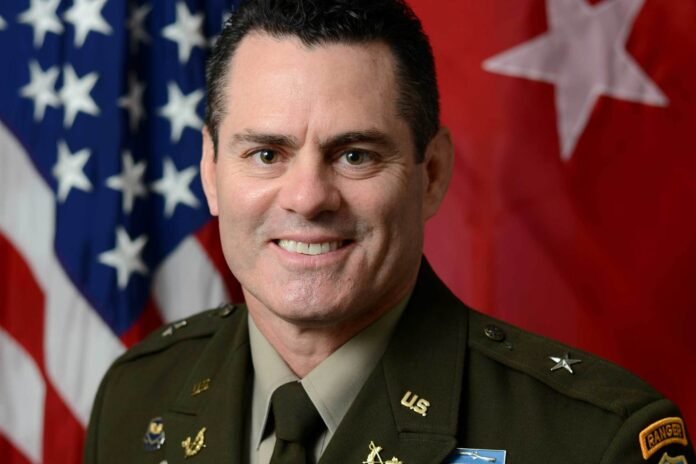
The senior legal counsel to the chair of the Joint Chiefs of Staff — the principal military adviser to President Donald Trump and Defense Secretary Pete Hegseth — is stepping down nearly a year before his term is over, the latest in an exodus of the military’s top leaders and lawyers over the last 18 months. 

Brig. Gen. Eric Widmar told ProPublica he did not take his decision to retire lightly and that he did so “for personal reasons.” 

“Earlier this year, my wife and I reflected on the demands of this role, which have required me to live apart from my wife for the past two years and created additional challenges for me and my family,” Widmar said in an emailed statement. “After careful consideration, I decided it was time to place my family at the center of my life and focus on our next chapter together.”

Widmar’s departure follows those of Gen. Chris “C.D.” Donahue, head of Army forces in Europe and Africa, earlier this month, about halfway through the typical term; Army Chief of Staff Gen. Randy George in April, about a year and a half short of the customary four-year term; and Admiral Alvin Holsey, who retired with two years remaining in his term late last year as the leader of Southern Command, which is overseeing the controversial drone strikes on boats in the Caribbean. Widmar’s exit also follows Hegseth’s firings of top lawyers for the Army, Air Force and Navy last year. 

“A person in that position is a rising star,” said one senior ranking former judge advocate, a military attorney, who did not want to be named for fear of reprisal. “He’s certainly high-ranking in the legal community and well-thought-of and trusted. It’s a pretty important job.”

Military experts and current and former senior ranking military officials called Widmar’s early retirement from such a vaunted post a marked departure from military precedent and said it was especially concerning as part of a pattern of well-respected senior leadership exiting under Hegseth with little explanation. Uniformed military leadership, particularly legal advisers, generally remain in place across administrations to preserve the military’s commitment to nonpartisan professionalism. 

“That is centuries of high-priced talent that are being cashiered without any explanation for why their service was untenable,” said Kori Schake, a senior fellow at the American Enterprise Institute, a nonpartisan Washington, D.C.-based think tank. “It creates a command climate in which people are hesitant to take initiative. And that’s how countries lose wars.” 

The chairman of the Joint Chiefs, Gen. Dan Caine, said in a statement that Widmar “is deeply respected and admired by all” and thanked him for his “remarkable” service. “We will miss his legal counsel, incredible expertise and experience, and his understanding of our responsibility to always speak truth to power.” 

The Pentagon did not respond to a request for comment from Hegseth.

Experts on military personnel matters as well as current and former senior ranking officers say the departures raise serious questions that Congress ought to be asking of all key leaders leaving in the current environment. 

“What is striking is how far Congress has let Hegseth go in shaping the force without demanding a clear explanation of what he’s doing,” said Peter Feaver, a professor of political science at Duke University who has long taught senior ranking officers the importance of not using retirement or resignation to stir public controversy.   

A West Point graduate who advised operations in Iraq and Afghanistan, Widmar departs after more than 28 years in the service. Prior to his most recent role, he was staff judge advocate for Central Command in support of U.S. interests across the Middle East and Asia. 

The Senate confirmed Widmar as legal counsel to the Joint Chiefs of Staff in 2024. In an announcement at the time, the Army’s then-top lawyer, Lt. Gen. Joseph Berger III, praised his “strategic vision and moral courage.” 

Berger has since been fired by Hegseth.

Le Pen to run for French presidency despite conviction – her protege Jordan Bardella would make a better candidate

0
le-pen-to-run-for-french-presidency-despite-conviction-–-her-protege-jordan-bardella-would-make-a-better-candidate
Le Pen to run for French presidency despite conviction – her protege Jordan Bardella would make a better candidate

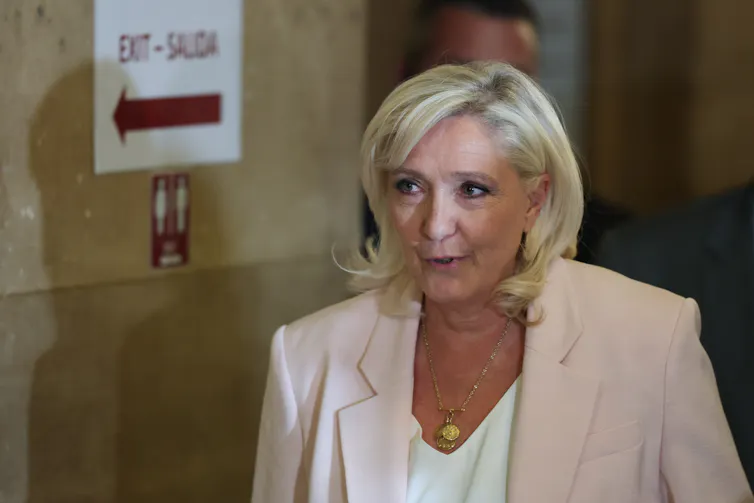
Marine Le Pen has confirmed she intends to run in next year’s presidential election in France, despite her appeal against a conviction for embezzlement of EU funds being rejected.

A Paris appeals court sentenced the leader of France’s right-wing Rassemblement National (RN) party to three years imprisonment, with two years suspended. She will have to serve one year wearing an electronic tag. But Le Pen confirmed hours after the sentence was handed down that she will still contest the election and would pursue all available legal avenues to have the sentence overturned: “The campaign begins tonight,” she told French television.

This may well prove to be a missed opportunity for RN to fight the election under the leadership of Le Pen’s deputy, the youthful and charismatic Jordan Bardella. Bardella was slated to run if Le Pen had been barred from the election. Now he will campaign as Le Pen’s putative prime minister in what the RN leader called a “winning ticket”.

But Le Pen has already unsuccessfully contested presidential elections in 2017 and 2022, framing them as a battle for the “soul of France”. It may prove hard to convince voters a third time that the soul of France is in danger.

Bardella, meanwhile, has been busily burnishing his credentials as the spearhead of a new generation of politicians, hoping to emulate the appeal of Emmanuel Macron in 2017, when he became the youngest president at the age of 39. Bardella will be 31 in September, but he is already a political veteran.

He joined Le Pen’s National Front – as RN was known – in 2012 at the age of 16 and was an office-holder within the party within two years. Over the intervening decade or so, he has carefully cultivated the image of a working-class man made good. He is adept in his use of social media, with 1.6 million followers on TikTok and 747,000 on Instagram.

But beyond his charisma and his savvy use of social media, his rise also demonstrates forces which have transformed the political landscape in France over recent years. And these are forces which could give him an edge over his political mentor were he to run in her stead.

Bardella’s authenticity

Bardella’s solid working-class credentials, which gives him the edge on authenticity when speaking about issues of concern to French voters. His background delivers political capital that Le Pen could never manage. Le Pen is from a political dynasty, inheriting the National Front from her father in a leadership election in 2011. Thanks to her privileged life in the family’s political business, she has found it difficult to deliver convincing messages about poverty and lack of opportunity.

Bardella, meanwhile, was born in Drancy, one of metropolitan France’s poorest areas and raised in Aubervilliers on a council estate in one of the most notorious departments in France – Seine-Saint-Denis. Referred to as the neuf trois (nine three) in French rap songs because of its departmental number 93, Seine-Saint-Denis is notorious throughout France as hosting some of the most socially excluded and underprivileged communities in the country.

So when Bardella talks on issues effecting the lives of working people in France his remarks have an authenticity that Le Pen could never muster. Indeed, when he discusses immigration and integration, for example when advocating policies of “national preference” of welfare payment towards French citizens and changing the French constitution to enshrine tough migration rules in constitutional laws, he says this as someone who grew up in one of France’s most diverse areas – Seine-Saint-Denis is home to over 130 nationalities.

French politician Jordan Bardella, surrounded by a large crowd of people.

Man of the people: Jordan Bardella campaigning in souther France in May 2025. PA/Guillaume Horcajuelo

This is in stark contrast Le Pen, who was born and raised in wealthy Neuilly-sur-Seine. Generally recognised as the most expensive suburb of Paris, it’s home to ex-president Nicolas Sarkozy, the Bettencourt family heirs to the L’Oréal fortune and the fashion designer Pierre Cardin.

Gender and politics

The other big advantage Bardella has in appealing to the French right is his gender. Despite efforts to even the balance and attract more high-profile women into frontline politics, France has made little progress since the bad old days when Ségolène Royal, the first woman to contest the presidency in 2007, was ridiculed by her rival, Dominique Strauss-Kahn with the phrase: “politics is not a beauty contest.”

Bardella has taken pains to project himself as a red-blooded heterosexual Frenchman, something he went on the country’s equivalent of Oprah Winfrey in 2025 to publicly affirm, scotching rumours about his sexuality. His recent high-profile romance with Maria Carolina de Bourbon des Deux-Siciles – an Italian princess and social media influencer – while perhaps not doing much for his image as a champion of the working class, would certainly seem to demonstrate his heterosexuality for any doubters.

Le Pen, by contrast, has suffered from a conservative bias in France against women in politics, which has even been shown to manifest itself in penalising women candidates based on their smile. Despite France having some of the strictest gender equality laws in European politics – a 2007 parity law mandates that political lists in France must be at least 50% women – there has been a decline in recent years in the number of women being elected to the national assembly.

Marine Le Pen dressed in white arrives at a courtroom.

Marine Le Pen arrives at a Paris courthouse for the verdict of her appeal. EPA/Mohammed Badra

Rise of the far right in Europe

Bardella’s career in politics has also coincided with, and benefited from, a shift in European politics which has seen the far right move from the political fringes to the mainstream.

On mass immigration, consistently a big issue in French politics, Bardella takes many of his cues from the US president, Donald Trump, and his vice-president, J.D. Vance. He told the BBC in December 2025 that he shares their concerns about Europe facing “civilisational erasure” due to mass immigration.

While this sparked outrage in the English-speaking world, in France this is a political idea that has become increasingly mainstream in recent years. The “great replacement” theory: that the white, French catholic population is being replaced by an “invasion” of mass migration from Africa, has become a central feature of political discussion. It’s even the subject of a best-selling novel about an Islamist political takeover of France.

But the road to the Élysée Palace is unlikely to be smooth for either Le Pen or Bardella. Macron’s unavailability to run may mean that the centre-right is missing a reliable champion in 2027, but there are a range of figures from the centre of French politics already mobilising.

If Le Pen is their target, her conviction provides them with a great deal of ready-made ammunition. But Bardella is unlikely to fnd the route to the Élysée Palace any smoother. The chaos of the Trump presidency and the calamity of Brexit have tarnished the appeal of populism – and the risk-averse French public may struggle to pull the trigger on a right-wing president in his early 30s.

Then there’s the French electoral system. Only if a candidate receives more than 50% in the first round of voting do they win automatically. In practice this hardly ever happens.

A common saying in France is that in the first round voters vote with their heart, and in the second round with their heads. So it’s likely that even if Bardella has a place in the hearts of many French voters, their heads may still guide them to vote for a more experienced and mainstream candidate in the second round – as Le Pen found to her cost in 2017 and 2022.

Australia-Fiji pact a hard Pacific pushback against China

0
australia-fiji-pact-a-hard-pacific-pushback-against-china
Australia-Fiji pact a hard Pacific pushback against China

For decades, the South Pacific was largely relegated to the margins of global politics. Today, it has undergone a seismic shift, transforming into the epicenter of great-power competition.

The defense treaty signed by Australian Prime Minister Anthony Albanese and Fijian Prime Minister Sitiveni Rabuka in Suva on July 6, 2026, was not merely a diplomatic routine. It was a calculated strategic maneuver that marks a new era in which Australia has firmly positioned itself as the “security partner of choice” for Pacific island nations, effectively countering the rapid expansion of Chinese influence across the region.

This development is the culmination of intensive defense diplomacy spearheaded by Canberra since October 2025. By binding Fiji through the Ocean of Peace Alliance and the Vuvale Union, Australia has officially solidified Fiji as its fourth formal ally, joining the ranks of the United States, New Zealand and Papua New Guinea.

This deal acts as a systematic response to the regional instability that peaked following the clandestine 2022 security pact between Beijing and the Solomon Islands. For Canberra, the specter of a permanent Chinese military presence in the Pacific is no longer a theoretical scenario; it is an existential threat that must be mitigated by bolstering the region’s security architecture with Australia at its hub.

Australia is no longer merely acting as a tactical adjunct to American interests. The 2026 Australian National Defense Strategy (NDS) underscores Canberra’s ambition to develop a more independent and proactive defense posture.

With defense spending targets reaching 3% of GDP by 2033–2034, Canberra is laser-focused on building resilient military infrastructure in Australia’s north while enhancing independent power-projection capabilities in the Southwest Pacific.

However, beneath this surge of maneuvers lies a structural shift in the region’s geopolitics that demands a more nuanced understanding. The increasingly multipolar nature of great-power competition is compelling island nations, historically seen as passive observers, to assert their own political agency amidst the sometimes crushing pressures of competing global interests.

Anatomy of a treaty

The legal framework of the dual agreement between Australia and Fiji is meticulously designed to integrate conventional defense with comprehensive non-traditional resilience instruments.

The Ocean of Peace Alliance functions as a de facto mutual defense treaty. Its core clause stipulates that any armed attack against either party in the Pacific will be regarded as a direct threat to the other party’s peace and security.

The structure is intentionally “open-ended,” providing a pathway for other regional neighbors such as New Zealand, Papua New Guinea and Tonga to join in the future, thereby coalescing into a broader collective Pacific security architecture.

Within this framework, both parties have committed to acting in concert to address collective threats, in accordance with their respective constitutional procedures.

Furthermore, there is an ironclad obligation to consult immediately whenever security developments emerge that could jeopardize national sovereignty, peace or stability. This not only provides Fiji with a robust security guarantee but also fortifies Australia’s role as the primary anchor of regional defense.

Conversely, the Vuvale Union operates across a much broader spectrum, encompassing domestic security, economic development and robust people-to-people ties. Australia’s involvement extends well beyond the military realm; it is actively bolstering Fiji’s law enforcement capabilities through police training, legislative reform, maritime interdiction, intelligence sharing and the prosecution of transnational crime.

Canberra’s commitments also cover the operational support of Fiji’s Guardian-class patrol vessels, the upgrade of the RFNS Stanley Brown wharf infrastructure and the optimization of the Maritime Essential Services Centre (MESC) in Suva, which has been active since October 2025.

This multifaceted approach demonstrates Canberra’s keen understanding of the necessity of “family diplomacy” (Vuvale) in winning the hearts and minds of Pacific nations. By launching the Vuvale Skills Hub to modernize vocational education and expanding visa access for Fijians through the Pacific Australia Labour Mobility (PALM) program, Australia is seeking to lock in Fiji’s loyalty through mutually beneficial economic interdependence.

This is the antithesis of the physical infrastructure-heavy model often offered by China through the Belt and Road Initiative (BRI), which is frequently encumbered by the involvement of Chinese state-owned enterprises and the looming risk of long-term debt traps.

The narrative paradox

A sharp conceptual tension persists regarding the very definition of “security” in the Pacific. The struggle for influence in the South Pacific is characterized by a clash between the security architecture promoted by Western powers and the local agendas declared by Pacific leaders.

On one side, the Western alliance, through the informal Partners in the Blue Pacific (PBP) mechanism announced in June 2022, is pushing a “hard security” narrative to curb China’s military hegemony through maritime patrols and exclusive treaties.

Conversely, Pacific island leaders, through instruments like the Declaration on the Blue Pacific Ocean of Peace, endorsed at the Honiara Leaders’ meeting in September 2025, consistently assert that their most pressing existential threats are not military aggression, but climate change, rising sea levels, illegal, unreported, and unregulated (IUU) fishing and transnational crime. Through this declaration, the Pacific is defined as a zone of peace that rejects militarization and geopolitical coercion from external powers.

Criticism of Western initiatives often stems from the perception that PBP powers have co-opted the “Blue Pacific” narrative, originally a symbol of self-determination and climate resilience, for the narrow purposes of geopolitical containment.

The PBP initiative is viewed by many as bypassing the consensual decision-making processes of the Pacific Islands Forum (PIF), risking the fragmentation of regional solidarity.

In response, Pacific leaders established the Pacific Resilience Facility (PRF), an independent financial institution designed to mobilize global climate adaptation funding, free from the bureaucratic entanglements of Western donor cycles.

Fiji, with its central position as a hub for air transport, undersea fiber-optic cables, and international shipping lanes, holds unique bargaining power. As the political and institutional leader in Melanesia and the host of the PIF Secretariat, Suva is the ultimate prize in the diplomatic tug-of-war.

Moreover, Fiji is one of the few nations in the South Pacific that maintains a standing military, the Republic of Fiji Military Forces (RFMF), with extensive international experience in UN peacekeeping missions.

Through this alliance, Australia not only secures Fiji’s geography against foreign military penetration but also gains direct military interoperability with the most respected local armed forces in the region.

However, Australia’s success in securing this alliance does not mean that Fiji or other island nations have surrendered their sovereignty. The phenomenon of “pragmatic sovereignty,” as evidenced in the Solomon Islands following Prime Minister Matthew Wale’s election on May 15, 2026, highlights a dynamic diplomatic trajectory.

Wale immediately initiated a review of the 2022 security pact with Beijing, choosing to restore traditional security partnerships with Australia while simultaneously courting Washington for commercial port infrastructure development.

Nevertheless, the fact that Chinese-led infrastructure projects continue to move forward in key areas of the Solomons confirms that balancing Western security partnerships with Chinese economic engagement remains the defining doctrine for most nations in this oceanic region.

Future projections

Australia’s proactive stance in constricting China’s maneuverability is bound to strain bilateral relations between Canberra and Beijing. China consistently opposes the formation of security pacts that it views as instruments of Cold War-era geopolitical maneuvering.

When Australia concluded defense treaties with Papua New Guinea and Vanuatu in mid-2026, Beijing’s Ministry of Foreign Affairs issued stern warnings against targeting third parties or undermining China’s sovereign interests.

Despite this, Prime Minister Sitiveni Rabuka has sought to lower the temperature, asserting that Fiji’s defense alliance with Australia is an exercise of sovereign right, not an act of hostility toward Beijing or a disruption to ongoing Fiji-China economic cooperation.

The challenge for Australia in the years ahead is to sustain this diplomatic momentum amidst the increasingly complex demands of island nations. The ability of smaller states to reject exclusivity clauses or foreign-investment veto powers, as seen in the recent renegotiation of the Nakama’al Agreement in Vanuatu, signals that Canberra can no longer unilaterally dictate policy in the Pacific.

These instances of renegotiation highlight the growing capacity of smaller nations to reshape agreements to protect their national sovereignty.

Ultimately, the future of the Pacific’s security architecture will depend on how effectively great powers, including Australia, align their security agendas with the developmental and climate-resilience aspirations of island nations.

If the West focuses exclusively on hard security without addressing the urgency of the climate crisis felt acutely by Pacific communities, the narrative of the “Blue Pacific” as a zone of peace will remain in direct conflict with the reality of creeping militarization.

Australia has made a massive wager with its strategy of “permanent contestation.” The success or failure of this strategy will not only dictate the regional balance of power in the South Pacific but will serve as a litmus test for how effectively a middle power like Australia can act as an anchor of stability in an increasingly volatile global order.

Despite the vast power asymmetry, Pacific island nations have proven they are not passive objects in a geopolitical game. They are actors acutely aware of their strategic value and are intent on charting their own future.

The Pacific is no longer just a vast expanse of ocean; it is a vital theater where the future of the global balance of power is being tested. As dynamics continue to evolve, Australia’s readiness to manage these relationships with both nuance and firmness will determine whether this region remains stable or descends into rigid, competitive blocs.

Ronny P Sasmita is senior international affairs analyst at Indonesia Strategic and Economic Action Institution, a Jakarta-based think tank. He holds a PhD from the University of Tokyo.

0FansLike
0FollowersFollow
0FollowersFollow
0SubscribersSubscribe
- Advertisement -
Google search engine

Recent Posts