25.8 C
London
Tuesday, July 7, 2026
Home Blog

Michigan sees explosive outbreak of diarrheal parasite with over 700 cases

0
michigan-sees-explosive-outbreak-of-diarrheal-parasite-with-over-700-cases
Michigan sees explosive outbreak of diarrheal parasite with over 700 cases

Cases of a diarrhea-causing intestinal parasite have exploded in Michigan over the last two weeks in an outbreak that still has no clear source.

As of July 6, the state has received reports of over 700 cases since June 22, along with 36 hospitalizations, the Michigan Department of Health and Human Services (MDHSS) told Ars Technica on Tuesday.

On June 30, the health department reported 170 cases, which rose to 572 on July 4.

The microscopic unicellular parasite Cyclospora cayetanensis is behind the cases, causing a disease called cyclosporiasis. Although the infection is generally not life-threatening, it usually causes “watery diarrhea with frequent and sometimes explosive bowel movements,” according to the Centers for Disease Control and Prevention. These intestinal eruptions usually last about a week, but can go on for two or more weeks, the CDC says, with dehydration being one of the most significant concerns.

The parasite is shed in feces and spreads by getting on produce and into water. Thoroughly washing and cleaning produce before eating, along with diligent hand hygiene, are key prevention methods.

State and national trends

Previous outbreaks have been linked to bagged salad mixes/kits, cilantro, basil, raspberries, snow peas, and green onions, MDHSS has noted.

“At this time, no specific produce grower, supplier or type of produce has been identified as the source,” an MDHSS spokesperson told Ars. But the state is coordinating a large investigation to identify a source or sources, working with local health departments in the southeastern region of the state, where most of the cases have been reported. Officials are interviewing cases, sharing information, and ultimately trying to identify common exposures. The spokesperson said MDHSS is also coordinating with the CDC and has shared the state’s case data with the agency.

The CDC has a website for cyclosporiasis surveillance. But it only has case reporting up to June 16 and doesn’t include any cases from Michigan. Ars reached out to the US Department of Health and Human Services about why the CDC’s surveillance data has not been updated, but there was no response. HHS also did not answer questions about its work with Michigan or trends in cyclosporiasis cases, which historically peak in June and July each year nationally.

According to the CDC’s outdated numbers, 17 states besides Michigan have reported cases this year, with a total of 145 cases nationally. With Michigan’s cases, the total would be over 845 cases.

Michigan’s case tally this year is far out of line with the state’s trends for cyclosporiasis cases. In the past several years, the state has mostly reported totals of around 50 cases a year, with a high of 97 in 2023, according to CDC data.

While it may be a record year for Michigan, the US does not seem to be out of line with past years so far. Since 2018, the US has been recording between 2,000 and 5,000 cases each year. In 2023, the US reported 4,463 cases, with 3,091 in 2022, 2,424 in 2021, 2,689 in 2020, 4,703 in 2019, and 3,519 in 2018, according to CDC’s data.

Trump resort rises on Vietnam graveyard as US links grow

0

BANGKOK – Vietnam is digging up a graveyard so a sprawling Trump International golf resort with plush residences can be built along the Red River, while “the highest Starbucks coffeehouse in Asia” has opened on Vietnam’s tallest mountain peak near Sapa.

Trillionaire Elon Musk, meanwhile, received a Starlink satellite operating license in February to expand Vietnam’s highly censored internet.

And Apple CEO Tim Cook told CNBC last year that for US sales of “Mac and iPad and AirPods and the (Apple) watch, almost all of the country of origin is Vietnam.”

Hanoi’s eager embrace of American capitalism spotlights how vastly US-Vietnam relations have changed since their grueling war ended with a communist victory in 1975.

Hanoi favors close ties with Washington to balance its economic vulnerability with China, its giant trading partner across Vietnam’s northern frontier.

US investments in Vietnam, meanwhile, appear to be growing despite the Trump administration’s emphasis on reshoring to boost American manufacturing at home.

Trump’s family convinced Vietnam’s government to permit the toppling of gravestones and exhumation of coffins so a cemetery could become a “Trump International Vietnam” golf resort and luxury real estate project, replete with five-star hotels and upscale villas.

“To put its immense scale into perspective, the project is comparable in size to Newark Liberty International Airport in New Jersey,” said Legal Initiatives for Vietnam (LIV), a human rights group based in Taiwan and registered in California.

The US$1.5 billion project spans 2,446 acres of flat, fertile land along the Red River in northern Vietnam’s Hung Yen province, with a 50-year operating license.

Digging began last year despite residents protesting the forced disinterring of more than 3,500 ancestral graves and rehousing of more than 4,000 families with scant compensation.

“The Trump Organization is not directly responsible for these [compensation] payments. Vietnamese developers are managing the project, while the Trump Organization receives licensing fees and will operate the club upon completion,” LIV said.

At the May 2025 groundbreaking, the Trump Organization announced: “Strategically located just 45 minutes from Hanoi, Trump International Vietnam is more than a luxury destination, it is a living icon of a new era.”

The project was supported by Vietnam’s recently reelected President To Lam, the finance ministry and the Hung Yen People’s Committee, a communist government body responsible for managing the province.

“The Ministry of Defense and Ministry of Public Security will guide local authorities and investors on defense and security matters, including the sale of housing to foreigners,” Vietnam’s Bac Ninh news reported.

“The complex will include two eco-residential areas featuring ecological golf courses, accommodating a combined population of 5,300,” Vietnam’s state-run Tuoi Tre News said.

“Additionally, it will have a commercial urban services area for 29,700 people, green spaces, themed parks and a social housing area.”

IDG Capital Vietnam “represents the Trump Organization in the project,” Tuoi Tre said.

IDG Capital Vietnam’s Charles Bowman discussed the project in Hanoi last year with Pham Minh Chinh, whose tenure as prime minister ended in April.

Pham “suggested the Trump Organization consider Vietnam as a strategic business hub, exploring investment and business expansion into other localities and potential sectors where the company has strengths and Vietnam is prioritizing development,” Tuoi Tre reported.

“Kinh Bac City (KBC) Development Holding Corp. [is] holding the majority of the charter capital,” LIV said.

“Specifically, Hung Yen Investment and Development Group Joint Stock Company (HYG) – a subsidiary of KBC in which is is 95% owned – contributed 99% of the charter capital to establish Trump International Vietnam Joint Stock Company,” a government statement said.

“This resulted in Trump International Vietnam being identified as a company controlled by KBC with an indirect ownership stake of 95.32%,” by KBC, it said, referencing KBC’s report to Hanoi’s Securities Commission.

Seattle-based Starbucks, meanwhile, announced it opened “the highest Starbucks coffeehouse in Asia on Fansipan Mountain” on the outskirts of Sapa city in northern Lao Cai province.

Fansipan’s 10,312-foot (3,143-meter) peak is the highest in Indochina, which includes Vietnam, Cambodia and Laos.

“From its position on the ‘Roof of Indochina,’ customers can enjoy their favorite Starbucks beverages while taking in panoramic views of the Sapa highlands,” the company said in March.

Tourists visit Fansipan by riding inside a group-sized pod attached to a four-mile-long cable, which lifts them above rolling, terraced farmland and the mountain’s forests to a modern station on the peak.

The spacious Starbucks nestles amid large, relatively new, stone-built pavilions and a bell tower, a gigantic Buddha, Chinese shrines and statues erected on the peak.

Vietnam, meanwhile, is grappling with corruption, population density, impoverished rural zones and demands for free speech and other rights while adapting to the 21st century and welcoming foreign investment.

The central coastal city of Da Nang is now a leading destination for international digital nomads who settle in locations that offer work-from-anywhere facilities, fast internet and other lures.

In a list of the “Top Cities For Creators And Digital Nomads In 2026,” Forbes magazine reported in April:

“Da Nang is emerging as a fast-growing hub for digital entrepreneurs, combining affordability, strong infrastructure, and a coastal lifestyle that supports long-term, location-flexible work.

“At a foundational level, that includes reliable infrastructure: high-speed internet, co-working spaces, and housing designed for longer stays,” Forbes said.

In February, the US State Department endorsed former President Joseph Biden’s 2023 US-Vietnam Comprehensive Strategic Partnership, which was unveiled during his Hanoi state visit.

The 2023 “strategic” upgrade in relations elevated former President Barack Obama’s 2013 US-Vietnam Comprehensive Partnership.

The State Department endorsed the partnership designed to strengthen “cooperation on law enforcement and security intelligence, collaborate and exchange information and experiences to increase the effectiveness of maritime cooperation and efforts to counter transnational crimes, piracy, money laundering, human trafficking, illegal trafficking of narcotics and precursor chemicals, cybercrime, and high-tech crime.”

Hanoi is also cooperating with the State Department and the Department of Homeland Security, and “welcomed” at least 170 Vietnamese illegal immigrants deported from the US.

“Vietnam has been accepting returnees faster since agreeing under US pressure in early 2025 to expedite repatriation requests,” the Hanoi-based VnExpress reported in March.

“More than 8,600 Vietnamese nationals in the U.S. have standing removal orders, according to [U.S.] Immigration and Customs Enforcement data, though the number includes long-term residents who arrived as refugees decades ago,” the Hanoi-based VnExpress said.

On June 10, US Deputy Secretary of State Christopher Landau met Vietnam’s Deputy Prime Minister Phạm Gia Tuc in Hanoi to strengthen economic, security and diplomatic relations.

The US buys more than $150 billion in Vietnam’s exports, making Washington vital to the Southeast Asian nation’s economy, but sells only $15 billion in goods to Vietnam, resulting in a huge bilateral trade imbalance.

Vietnam imports more than $180 billion worth of goods from China, while selling about $70 billion to China. Still, Hanoi’s balancing act between Washington and Beijing may be shifting in China’s favor.

For example, Vietnamese President To Lam, on an April state visit to Nanning, China, was offered sleek high-speed Chinese trains, enhanced rail links and other ways to streamline bilateral trade and travel.

America’s war on Vietnam, meanwhile, still haunts the country, highlighted by the recent discovery of a suspected “mass grave” of an estimated 900 North Vietnamese communist soldiers buried under a park in Ho Chi Minh City after Hanoi’s 1968 Tet Offensive against US and US-backed South Vietnamese forces.

“Muoi Bi, the cemetery manager at the time, said these were the bodies of commando fighters who died in the assault on the radio station and the US Embassy,” VnExpress reported.

After an eight-year forensic, above-ground inspection, Vietnamese officials on June 8 said Le Thi Rieng Park was built in 1983 over the mass grave, eight years after the war ended.

“Nguyen Thanh Phuoc, 70, who grew up nearby, remembered the cemetery manager spreading DDT over the bodies as they went into the ground,” VnExpress reported.

Phuoc described “corpses that were bloated and, in places, burned. Some of the dead still wore belts of AK [AK-47 assault rifle] ammunition.”

Forensics determined the bodies were buried in three trenches between what later became a children’s playground and a fish-filled lake.

Investigators “tracked down three photographs of a mass burial, then fixed their position by layering declassified US reconnaissance satellite images from 1968 to 1972 archived by the US Geological Survey, against French military aerial photos from 1951, commercial satellite imagery from Maxar and Airbus, and a run of old Saigon city [Ho Chi Minh City] maps.”

Richard S Ehrlich is a Bangkok-based American foreign correspondent reporting from Asia since 1978, and winner of Columbia University’s Foreign Correspondents’ Award. Excerpts from his two new nonfiction books, “Rituals. Killers. Wars. & Sex. — Tibet, India, Nepal, Laos, Vietnam, Afghanistan, Sri Lanka & New York” and “Apocalyptic Tribes, Smugglers & Freaks” are available here.


US reinstates Iran Oil Sanctions After Attacks on Commercial Vessels in Strait of Hormuz

0
us-reinstates-iran-oil-sanctions-after-attacks-on-commercial-vessels-in-strait-of-hormuz
US reinstates Iran Oil Sanctions After Attacks on Commercial Vessels in Strait of Hormuz


The United States is reimposing sanctions on Iranian oil after three commercial vessels were struck in the Strait of Hormuz on Monday and Tuesday, reversing sanctions relief that had been granted under a temporary ceasefire tied to negotiations over the regional conflict.

The sanctions had been suspended as part of a 60-day ceasefire accompanying talks aimed at ending the conflict. Those negotiations have since been paused for one week while Iran holds funeral ceremonies for the late Supreme Leader Ali Khamenei.

A US official said the Treasury Department’s Office of Foreign Assets Control would revoke the sanctions waivers following the attacks.

“As President Trump and the administration have repeatedly affirmed, the MoU in effect with Iran is entirely performance-based. Iran will only reap benefits if they exhibit good behavior,” the official said.

“Iran’s actions in the Strait were wholly unacceptable to the United States and will be met with consequences. Our negotiators continue to work in good faith towards a final deal,” the official added.

Iranian state television, citing sources, reported that Tehran had targeted at least one liquefied natural gas tanker after it allegedly ignored Iranian warnings. Earlier, a US official told Axios that two merchant vessels had been struck by Iranian missiles.

One of the ships identified was the Al Rekayyat, a Qatari-owned LNG tanker. The Wall Street Journal reported that a missile struck the vessel’s engine room, sparking a fire. No casualties were reported.

The United Kingdom Maritime Trade Operations agency said the tanker was hit on its port side while traveling southbound about 8 nautical miles (15 kilometers) east of Limah early Tuesday. The agency said the strike caused a fire but reported no casualties or environmental damage.

The reported attacks came after the Islamic Revolutionary Guard Corps announced it had broadcast maritime warnings stating that its missiles and drones were ready to fire.

Italian Foreign Minister Says Rome Will No Longer React to Trump’s Remarks

0
italian-foreign-minister-says-rome-will-no-longer-react-to-trump’s-remarks
Italian Foreign Minister Says Rome Will No Longer React to Trump’s Remarks


Italy will stop responding to U.S. President Donald Trump’s provocative remarks, Foreign Minister Antonio Tajani said in an ​interview on Tuesday, as NATO leaders prepared to meet ‌in Turkey.

Prime Minister Giorgia Meloni last month accused Trump of fabricating a story about her after the U.S. president told an Italian TV channel ​that she had “begged” him to take a photo with ​her at a G7 summit in France.

With the two ⁠leaders due to attend the NATO summit in Ankara on Tuesday ​and Wednesday, Trump appeared to reignite the dispute when he posted ​on Truth Social a picture of Meloni looking up at him with the caption “RESTRAINING ORDER NEEDED”.

Trump “speaks for himself. We have a U.S. President who loves ​to provoke, especially on social media. We have decided to ​stop responding to these remarks so as not to fuel disputes among ‌our ⁠allies,” Tajani told La Stampa newspaper.

“We are and will remain friends of the United States as our strategic partner and that of Europe,” he added.

Meloni was once a vocal supporter of Trump ​and was the ​only European ⁠leader to attend his inauguration in 2025.

However, she criticised him this year for lashing out at ​Pope Leo over his condemnation of the Iran ​conflict. ⁠That in turn prompted a blunt rebuke from the U.S. president, who accused her of lacking courage.

Italy’s Il Foglio newspaper headlined its ⁠front ​page on Tuesday mocking Trump’s jibe against ​Meloni, publishing a picture of the U.S. President with Russia’s Vladimir Putin, under ​the same caption “RESTRAINING ORDER NEEDED”.

Hamas is leaving government, not the resistance

0
hamas-is-leaving-government,-not-the-resistance
Hamas is leaving government, not the resistance

Hamas’s decision to dissolve the Government Emergency Committee in the Gaza Strip and transfer civilian administration to the National Committee for the Administration of Gaza marks a significant strategic shift. To interpret it as capitulation or defeat is to misunderstand the current stage of the Palestinian national liberation struggle.

The movement has reaffirmed its commitment to implementing the ceasefire agreement and fulfilling its responsibilities until Gaza’s civilian administration is fully transferred.

The decision should be understood as a tactical repositioning aimed at preserving three strategic objectives: Hamas’s political survival, the reconstruction of Palestinian national unity and the continuation of resistance.

The first is to preserve Hamas as a political, social and military force deeply rooted in Palestinian society.

For almost two decades, the movement has carried the dual burden of governing and resisting, administering a population subjected to blockade, repeated wars and the systematic destruction of the material conditions necessary for life.

After the most devastating war in contemporary Palestinian history, the occupation failed to achieve one of its principal declared objectives: eliminating Hamas.

Leaving Gaza’s day-to-day administration allows the movement to reduce its institutional exposure, reorganise its structures and concentrate on its historical reason for existence: the Palestinian national liberation struggle.

The second objective is to contribute to rebuilding Palestinian national unity.

The political and geographical fragmentation between Gaza and the West Bank, together with internal Palestinian divisions, has long constituted one of the occupation’s greatest strategic advantages.

By transferring civilian administration to a Palestinian national body, Hamas signals that governmental control over Gaza is subordinate to the broader objective of rebuilding national unity.

Gaza does not belong to Hamas. It belongs to the Palestinian people.

The new administration, however, cannot become an instrument of foreign tutelage or a mechanism for excluding political forces with genuine roots in Palestinian society.

The central challenge remains rebuilding a representative Palestinian leadership capable of speaking for Palestinians in the occupied territories, refugee camps and the diaspora.

The third objective is to preserve the continuity of resistance.

Governing and resisting are different political functions. A national liberation movement may participate in elections, administer territories, negotiate ceasefires and accept transitional governments. It may also withdraw from administrative structures when remaining within them threatens higher strategic objectives.

To confuse tactical flexibility with strategic abandonment is to misunderstand the history of anti-colonial struggles.

For years, “Israel” claimed that Hamas’s presence in government justified the blockade, military aggression and collective punishment imposed on Gaza.

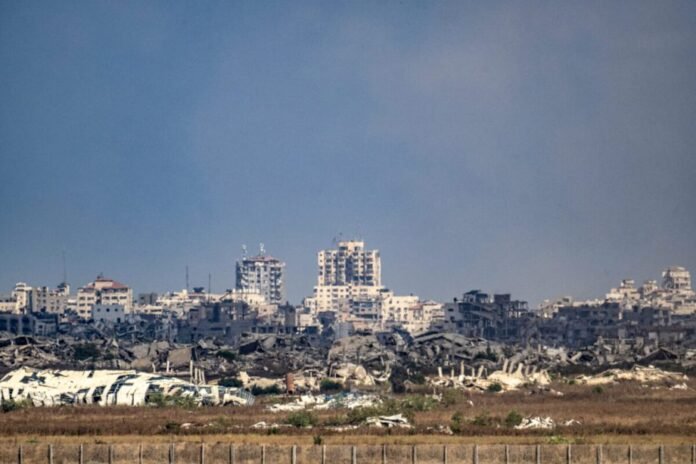
Now that the movement has completed the procedures necessary to transfer civilian administration, the occupation is seeking to obstruct the implementation of the agreement, prevent the National Committee from assuming its responsibilities and create an administrative vacuum capable of prolonging Palestinian suffering.

The contradiction is revealing. The objective was never simply to remove Hamas from government, but to deprive the Palestinian people of their capacity to resist.

By demanding that mediators and guarantor states pressure “Israel” to comply with the agreement and allow the National Committee to begin its work, Hamas is also confronting these actors with their responsibilities.

The establishment of the new administration could restore essential public services, strengthen Palestinian resilience and begin confronting the humanitarian catastrophe produced by the war.

One thousand days of war: Why Israel failed to defeat Palestine

Hamas’s decision therefore puts the occupation’s own narrative to the test.

If the war was necessary because Hamas governed Gaza, then the movement’s departure from government should pave the way for the withdrawal of occupying forces, the opening of border crossings, reconstruction and an end to military aggression.

If new conditions continue to be imposed, the political reality will become impossible to conceal: the problem was never simply who governed Gaza, but the existence of a people who refuse submission, displacement and disappearance.

Hamas may leave ministries, dissolve committees and transfer civilian administration. But leaving government does not mean abandoning resistance.

Governing Gaza was a historical circumstance. The liberation of Palestine remains the strategic objective.

The views expressed in this article belong to the author and do not necessarily reflect the editorial policy of Middle East Monitor.

Surprisingly large number of people may have marker for tick-linked meat allergy

0
surprisingly-large-number-of-people-may-have-marker-for-tick-linked-meat-allergy
Surprisingly large number of people may have marker for tick-linked meat allergy

In some parts of the US, up to 30 percent of people may carry the antibody behind a red meat allergy spurred by tick bites, far exceeding the estimated number of people who actually have the allergy, according a study published in Morbidity and Mortality Weekly Report.

The findings suggest far more Americans than previously thought may be at risk of the allergy, which can make having a hamburger for dinner a potentially life-threatening choice. The Centers for Disease Control and Prevention has previously estimated that only 0.14 percent of the US population (up to 450,000 people) has the allergy. But the study also highlights how little we understand about this unique disease—and the challenges of accurately diagnosing it.

The study surveyed blood donations for the disease’s key antibody, which is in a class dubbed IgE and specifically attacks a double-sugar molecule called galactose-α-1,3-galactose, also known as alpha-gal. This disaccharide is found decorating the cells of nonprimate mammals, including cows and pigs, but it’s also released in the saliva of ticks, particularly the lone star tick (Amblyomma americanum). People bitten by ticks can develop IgE antibodies against alpha-gal, which can sometimes go on to trigger the allergic response to eating red meat as well as other animal products, such as dairy and gelatin.

The allergy, called alpha-gal syndrome, is notorious for its delayed onset, flaring between two and six hours after a meal—making it difficult for people to connect the reaction to food. Symptoms can include hives, nausea, vomiting, abdominal cramps, diarrhea, and/or signs of a severe allergic response called anaphylaxis, which can be marked by trouble breathing, throat tightening, swelling tongue or lips, dizziness, weak pulse, and a drop in blood pressure.

Alpha-gal syndrome was only first described in the early 2000s, and researchers still have a slew of questions about it, including why some people develop alpha-gal IgE antibodies and why only some of those who have the antibody seem to have the allergy.

Early on, researchers realized there were people with so-called asymptomatic sensitization to alpha-gal. In other words, there are people with the antibody against the carbohydrate who don’t seem to have an allergic response to meat. This became clear in 2007 when researchers reported that many cancer patients were having severe allergic reactions to a cancer treatment called cetuximab—a monoclonal antibody drug that just happened to contain alpha-gal. The allergic response was first noticed when cetuximab was used in patients from Tennessee and North Carolina, where there are established populations of the lone star tick. While the cancer patients had alpha-gal IgE antibodies and the same allergic reaction to the drug as seen with alpha-gal syndrome, the cancer patients didn’t report problems eating meat.

New estimates

To date, researchers still don’t know how common it is to have alpha-gal antibodies, hence the new MMWR study. A group of researchers, led by infectious disease experts at the University of North Carolina at Chapel Hill, collected samples from 3,000 blood donations across 10 states, with 300 samples per state. They tested the samples for the antibody and used the data to make population-level estimates for the antibody’s prevalence.

Six of the states were firmly in lone star tick territory: Arkansas, Kentucky, Missouri, South Carolina, Tennessee, and Virginia. There were also two states out of the tick’s range, New Mexico and Washington, and two states with regions that may have the ticks, Minnesota and Maine.

The researchers found, as expected, that alpha-gal antibodies were most common in the states with the lone star tick. Of the six states in the tick’s territory, South Carolina had the lowest estimated prevalence of 5.5 percent. The other five ranged from 21.5 percent (Tennessee) to 31.2 percent (Arkansas). Collectively, the five top states had a prevalence estimate of 24 percent. The two states that only had some regions estimated to be in range for the tick, Maine and Minnesota, had prevalence estimates of 10.6 percent and 5.4 percent, respectively. Estimates for New Mexico and Washington, outside the tick’s range, were lowest, at 1.9 percent and 1.1 percent, respectively.

The researchers did not have data from the blood donors to know if they had been diagnosed with alpha-gal syndrome or not. But, the prevalence in the donors and the modeled population-level estimates far exceed the estimated number of people with alpha-gal syndrome. The results suggest asymptomatic sensitization to alpha-gal may be common, while alpha-gal syndrome is not, the researchers conclude. This poses a risk for alpha-gal syndrome to be over diagnosed and for patients to unnecessarily restrict their diets if clinicians rely solely on the antibody’s presence. The researchers stress that a diagnosis should only be given if people report symptoms after meals with red meat. Clinical guidelines recommend that people suspected of alpha-gal syndrome do a trial period of avoiding meat to see if symptoms improve before getting a diagnosis.

On the other hand, researchers still don’t know what proportion of people with antibodies have alpha-gal syndrome or are at risk of developing it later, possibly after additional tick bites. It’s also unclear if having alpha-gal IgE antibodies poses other risks. For instance, some small studies have linked alpha-gal IgE antibodies to higher risks of coronary artery disease.

The researchers behind the new study suggest such alpha-gal antibody surveillance data can help identify areas with high prevalence ripe for further research.

Six Flags Visitors Rushed to Hospital After Tree Falls During 4th of July Celebration

0
six-flags-visitors-rushed-to-hospital-after-tree-falls-during-4th-of-july-celebration
Six Flags Visitors Rushed to Hospital After Tree Falls During 4th of July Celebration


A Fourth of July celebration at Six Flags Over Georgia turned terrifying when a massive tree came crashing down near the park’s entrance, striking four visitors as a powerful storm ripped through the area.

The frightening incident unfolded Sunday, July 5, near the front entrance of the popular theme park in Austell, Georgia, as severe weather moved in with little warning.

First responders treated the injured guests at the scene before all four were transported to a nearby hospital for further evaluation, according to local reports.

Six Flags Over Georgia confirmed that park medical staff and local emergency crews responded after the guests were struck by the falling tree during what officials described as “severe weather in the area.”

“The injured guests were transported to a local hospital for further evaluation,” the park said in a statement provided to WSB-TV’s Channel 2.

The conditions of the four visitors have not been officially released. However, 11Alive reported that two of the victims suffered serious injuries.

Austell and Six Flags Over Georgia were among several locations placed under a severe thunderstorm warning Sunday evening as dangerous weather swept across the region, according to CBS News.

It remains unclear whether the storm caused any structural damage inside the park or forced officials to change its operating hours.

Park visitor Charles Smith told WSB-TV that he and his wife had been waiting for a fireworks show as part of the park’s ongoing Fourth of July celebrations when the weather suddenly took a dangerous turn.

Smith said he saw a young woman lying on the ground after the tree fell, as well as a man who appeared to have scrapes covering his back.

“It was almost like a little tornado come through,” Smith recalled, explaining that the storm struck so quickly that visitors barely had time to react.

The terrifying scene unfolded as families had gathered for what was supposed to be a festive holiday weekend filled with rides, fireworks and summer fun.

A Six Flags Over Georgia spokesperson and the Austell City Clerk did not immediately respond to requests for additional comment.

Ken Paxton Vowed to Crack Down on “Illegal Voting.” He May Have Violated Texas Election Law.

0
ken-paxton-vowed-to-crack-down-on-“illegal-voting”-he-may-have-violated-texas-election-law.
Ken Paxton Vowed to Crack Down on “Illegal Voting.” He May Have Violated Texas Election Law.

Two weeks before this year’s primary elections, Texas Attorney General Ken Paxton announced the creation of a tip line for the public to report people or groups suspected of voter fraud.

“Free and fair elections are a cornerstone of a thriving republic, and with the authority granted to my office by the Legislature, we will stop at nothing to uncover and stop any illegal voting activity,” Paxton said in a February news release announcing the tip line.

The announcement linked to guidance from his office about election laws in Texas, which included a requirement to be a U.S. citizen, a prohibition on collecting mail ballots on behalf of others and a warning that “it is illegal to misrepresent your residence on election records or to establish a residence for the purpose of influencing the outcome of an election.”

“You must register to vote using the address where you reside,” the attorney general’s guidance stated.

Despite his own warnings, Paxton appears to have used an address where he did not live while voting in six elections in the past two years, including in May’s runoff that made him the Republican nominee for U.S. senator, according to records obtained by ProPublica and The Texas Tribune.

State Sen. Angela Paxton said in a 2025 divorce filing that Paxton, whom she accused of adultery, moved out of their Collin County home a year earlier. But Paxton continues to list the home’s address in the northern Dallas suburb on his voter registration. Angela Paxton declined to be interviewed. A source close to the Paxtons said the attorney general has not moved back into the home since leaving.

It is unclear where Paxton has lived for the past two years, but reporting by ProPublica and the Tribune has linked him to a home in neighboring Denton County since February.

Three election lawyers told the news organizations that Paxton may have violated the same Texas laws his office cautioned about in its news release.

ProPublica and the Tribune reached out to Paxton’s campaign on June 3, 15 and 25, asking why he remained registered to vote in Collin County when he appeared to no longer live there and about his connection to the Denton County property. A reporter also left a voicemail on his personal cellphone on June 25. The news organizations sent his government office and campaign staff an email on Monday with a detailed list of questions, including a request for Paxton’s response to election lawyers’ belief that he may be violating the law. 

Paxton and his office did not reply until Monday’s email. Campaign spokesperson Madison Cercy did not answer the questions from the news organizations. Instead, she issued a statement saying that the attorney general has been “a national leader on election integrity, with a long record of defending Texas elections.” Cercy said that “attempting to insinuate otherwise and tear him down with a baseless, lie-filled tabloid story is not real reporting.”

Asked twice to provide specifics about what they believed was inaccurate, the campaign did not respond. 

Voting in an election when the voter is ineligible is a second-degree felony under Texas law and is punishable by up to 20 years in prison and a fine of up to $10,000. But prosecutors rarely bring cases challenging individual voters’ residency claims because they are hard to prove, the election lawyers said.

State courts have repeatedly ruled that there is no single way to determine where someone lives, and judges must consider multiple factors, such as where a voter sleeps or stores personal belongings. Prosecuting such cases also requires proof that a voter “knowingly” or “intentionally” broke the law.

Even if it’s clear that someone doesn’t live at the address where they are registered to vote, state law allows them to remain registered if their absence is temporary and they intend to return. The provision is commonly used by college students and military service members.

“So long as you truly intend to return, I think you’re fine,” said Beth Stevens, an election lawyer who worked for the Harris County clerk and the Texas Civil Rights Project. “When you start doing things that suggest, ‘Oh, I’ve fully moved. I’m just wink-wink saying I intend to return,’ that’s when you get into questionable territory.”

Paxton’s public and contentious split from his wife could make it difficult to argue that he intended to return to the home they own and where she continues to reside, said David Becker, a former voting rights lawyer for the Justice Department.

“I think there would be questions raised about a residence where someone does not live, does not spend the night and can in no way have the intent to continue to reside. Those would probably raise red flags in any state,” Becker said.

Becker, who is now the director of the Center for Election Innovation and Research, a Washington, D.C.-based nonprofit that works to build public trust in elections, added that the situation is particularly problematic because Paxton’s job is to enforce election laws.

“Certainly, the chief law enforcement officer of the state of Texas, someone who has made claims about election integrity and made it a priority of his office, should be charged with knowing the laws of residencies of the state of Texas with regard to voting,” Becker said.

Paxton has advocated for strict enforcement of the state’s election fraud law, including in cases against voters his office alleged had falsified records about where they lived. In 2018, the attorney general’s voter fraud unit arrested nine people on suspicion of using residential addresses where they did not live to vote in a municipal election in Edinburg, in the state’s Rio Grande Valley. County prosecutors, acting on behalf of Paxton, later dismissed the charges after failing to secure a conviction against the mayoral candidate they alleged had encouraged those voters to register at false addresses. The candidate, Richard Molina, said he was innocent and said the prosecution was politically motivated.

Clark Birdsall was not the attorney on those cases but defended another resident whom Paxton prosecuted for illegal voting. Birdsall was stunned that the attorney general appears to have voted under an address where he does not live.

He called it “especially egregious that someone such as Ken Paxton appears he’s not conforming to the law.”

State privacy laws allow some politicians and law enforcement officials to shield their voter registration information from public view. Paxton does not do so. His opponent in the Senate race, Democratic State Rep. James Talarico, does. Talarico’s campaign said he lives and is registered at the north Austin home he purchased in 2022. ProPublica and the Tribune were not able to independently confirm this.

Paxton’s campaign did not raise any issues with Talarico’s voter registration. In her statement to ProPublica and the Tribune, however, Cercy said, “Talarico has actively campaigned against voter security measures” and has said he opposes voter identification requirements. She pointed to a 2021 Fox News interview in which the state representative said he opposed voter identification rules that would require Texans to provide their driver’s license number or partial Social Security number for mail ballots. Talarico said hundreds of thousands of Texans, who don’t drive, lack a driver’s license. He did not directly answer a question about Social Security numbers during the interview.

The Talarico campaign did not respond to a request for comment. 

Paxton’s living arrangements since he separated from his wife are not public, but information obtained by ProPublica and the Tribune offers some indication of where he may have been residing since February.

In mid-February, a trust bought a 5,000-square-foot home listed for $2.4 million in a gated community in Denton County, according to the appraisal district and the seller’s real estate agent. The trust did not disclose its ownership to Denton County officials. Trusts are not required to by law, a spokesperson for Travis County’s appraisal district said.

Paxton shares a separate blind trust with his wife, Angela, that they have used to purchase property and other assets. For years, the address listed for that blind trust had been an office building in Collin County. But that address was changed to the Denton County home a week after the property was purchased.

Angela Paxton said through a spokesperson that she has no connection to the Denton County home or the trust that purchased it. The trustee of the Paxtons’ trust, family friend Chip Loper, did not respond to questions about the address change.

In June, a reporter knocked on the door of the Denton County home. No one answered. When the reporter placed a letter for Paxton in the mailbox, an envelope addressed to Warren Paxton, the attorney general’s given name, was visible.

Later that week, Paxton appeared on a podcast with Texas Lt. Gov. Dan Patrick. Video from the podcast showed Paxton seated in front of a fireplace and mantle that were nearly identical to those depicted in the home’s online real estate listing. One resident also told the newsrooms that they spotted Paxton in the gated community.

A two-panel image shows a brightly lit, modern living room on the left featuring a fireplace under a television and a blurred, square crop around the center of the frame. On the right, Texas Attorney General Ken Paxton wears a blue plaid jacket while speaking during an interview for the “Lt. Dan Podcast” in front of the same gray fireplace mantle.
In a podcast appearance in June, Texas Attorney General Ken Paxton was seated in front of a gray fireplace that appeared to match real estate listings for a Denton County home. Obtained and edited for privacy by ProPublica and The Texas Tribune

Separately, the Daily Mail reported in May that Paxton had moved into the Denton County home with Tracy Duhon, whose extramarital affair with Paxton, the news outlet said, prompted his wife’s divorce filing. The Daily Mail also published a video of Paxton and Duhon that it reported was taken at an airport in Iceland in late June. The video was quickly seized upon by Talarico, who depicted Paxton as out of touch with Texans. Duhon did not respond to questions about her connection to the Denton County property or about the Daily Mail reporting.

Paxton is not registered to vote in Denton County, voter rolls show. Instead, since February, he has voted in Collin County twice: once in the March Republican primary and once in the May runoff. Each Texas county elects its own slate of local officials, which is why state law requires voters to register where they live.

Ekow Yankah, a law professor at the University of Michigan whose expertise includes election law, said Paxton’s voter registration situation should remind the attorney general of what studies have consistently shown: that intentional illegal voting is rare.

“You would think that somebody who’s going through this would learn a little bit of humility that lots of things which look on their face, like technical violations of the law, are usually explained by totally ordinary things,” Yankah said. “It’s only if you’re utterly cynical and ignore all the evidence that you make a claim that, in fact, these cases are attributable to nefarious criminal intent.”

Paxton cannot claim ignorance of the law because he enforces it, said Joshua Blank, research director of the Texas Politics Project at the University of Texas at Austin. In fact, as attorney general, Paxton should avoid even the appearance that he is not following the law, Blank said.

“We expect these laws to be understandable by ordinary citizens,” Blank said. “When our elected officials who are tasked with passing and enforcing these laws exhibit troubles in engaging with the voting process themselves, that raises serious questions.”

Japan’s yen pain is Southeast Asia’s economic gain

0
japan’s-yen-pain-is-southeast-asia’s-economic-gain
Japan’s yen pain is Southeast Asia’s economic gain

The Japanese yen’s collapse through mid-2026 has become one of the most consequential disruptions to hit global financial markets in decades.

The currency has slid past 162 yen to the US dollar, its weakest level since 1986 — a sharp reversal from its 1995 peak of about 80 yen per dollar. Japan’s real effective exchange rate (REER) has fallen to its lowest point in more than 50 years, a sign that the yen’s decline reflects deep structural forces rather than a temporary market swing.

The fallout has reached far beyond Japan’s shares, redrawing economic fortunes across Southeast Asia. The region has emerged as a net beneficiary of the yen’s slide — from lower debt-servicing costs on yen-denominated loans to a surge in Japanese investment and tourism — even as the same forces expose it to the risk of a sudden reversal should the yen’s decades-long carry trade unwind.

Several factors have driven the sharp depreciation. Chief among them is the persistent interest-rate gap between Japan and other advanced economies, particularly the United States.

The Bank of Japan ended its negative interest-rate policy in 2024 and gradually raised its benchmark rate to 1% by June 2026, but investors viewed the tightening as too slow and too cautious.

Meanwhile, the US Federal Reserve kept its policy rate at around 3.5%-3.75% to contain stubborn inflation, widening yield differentials and drawing capital out of Japan and into higher-yielding US assets.

External shocks have compounded the pressure. War between the US, Israel and Iran pushed global crude oil prices over US$100 for a while. Because Japan imports roughly 95% of its crude oil from Gulf producers, soaring energy costs sharply increased demand for US dollars, adding further downward pressure on the yen.

Investor concerns over Japan’s fiscal outlook also intensified after Prime Minister Sanae Takaichi unveiled a $2.3 trillion public-private investment initiative without clearly explaining how it would be financed.

With government debt already approaching 240% of GDP, markets increasingly worried that fiscal expansion could overwhelm monetary policy and undermine confidence in the currency.

Uneven outcomes

The yen’s prolonged weakness has created starkly uneven outcomes within Japan. Large multinational corporations have posted windfall gains as overseas earnings translate into far higher yen revenue. Japan’s tourism boom has provided another lift, drawing record numbers of foreign visitors enjoying the cheap yen while boosting service-sector profits.

For households and smaller businesses, the story has been markedly different. Imported inflation has pushed up living costs and eroded purchasing power, even after the strongest annual wage settlements in decades; real wages have continued to fall because inflation has consistently outpaced nominal pay gains.

Smaller wholesalers and import-dependent firms, unable to pass rising costs on to consumers, have faced mounting financial strain — a factor behind the sharp rise in weak-yen-related bankruptcies in the first half of 2026.

This domestic contrast stands in sharp relief against the relative resilience of Southeast Asian currencies. The Singapore dollar, Malaysian ringgit, Vietnamese dong and even the Indonesian rupiah have all strengthened significantly against the yen, reflecting more credible monetary management and healthier fiscal fundamentals across much of the region.

Unlike Japan, several ASEAN central banks have responded to inflation with greater flexibility. Singapore’s exchange-rate-based monetary framework, for example, has let the Monetary Authority of Singapore contain imported inflation without relying solely on interest rates.

Most ASEAN governments also carry considerably lower public debt burdens than Japan, thereby preserving policy space and reinforcing investor confidence.

Reshaped regional economy

The yen’s depreciation is reshaping the regional economy through multiple channels, including sovereign debt, foreign investment and cross-border financial flows.

For developing Asian economies carrying significant yen-denominated liabilities — particularly Japanese official development assistance loans and Samurai bonds — the weaker currency has delivered an unexpected fiscal dividend.

As the yen loses value against local currencies, both principal repayments and interest obligations shrink in domestic-currency terms. Malaysia, for instance, is expected to save substantially when its 200 billion yen Samurai bond, issued in 2019, matures later this decade. Vietnam has likewise benefited from lower repayment costs on Japan-backed infrastructure financing, freeing up fiscal room for investment in green development.

Indonesia also stands to gain. With economic growth projected to stay close to 5% in 2026, the country’s macroeconomic position is comparatively strong.

Long-term repayment obligations for Japanese-funded projects, including the Jakarta MRT expansion, have become less burdensome, easing fiscal pressure on both the national government and the Jakarta provincial administration.

Indonesia’s exports to Japan, meanwhile, are dominated by commodities such as liquefied natural gas and coal, which are priced primarily in US dollars — so export revenue has stayed largely insulated from swings in the yen.

The picture is less favorable elsewhere. In the Philippines, a weaker yen lowers repayment costs for major infrastructure projects such as the Metro Manila Subway, but it also erodes the purchasing power of remittances sent home by Filipino workers in Japan.

Converted into pesos, those earnings buy less than before, weakening household consumption at a time when families are already grappling with elevated domestic inflation.

Carry-trade risk

Despite the yen’s sharp depreciation, Japan’s structural challenges — a shrinking population and chronic labor shortages — continue to push manufacturers to relocate production to Southeast Asia.

Japanese firms have steadily expanded their overseas manufacturing footprint, with offshore production accounting for more than 36% of output in fiscal 2024. That trend suggests ASEAN remains the region’s preferred long-term manufacturing base, regardless of short-term currency swings.

At the same time, even as Japanese companies continue to invest abroad, the weak yen has made domestic Japanese assets more attractive to foreign buyers. Singapore’s sovereign wealth fund, GIC, has been among the most active, channeling capital into premium hotels, logistics facilities and commercial real estate in Tokyo and Osaka.

The historically strong Singapore dollar has significantly boosted the purchasing power of regional investors seeking long-term assets in Japan.

Overall, ASEAN has emerged as a net beneficiary of the yen’s depreciation. Lower debt-servicing costs, continued Japanese foreign direct investment and opportunities to acquire undervalued assets have all strengthened the region’s economic position. But these gains shouldn’t breed complacency.

The greatest threat is a sudden reversal in global markets triggered by an unwinding of the yen carry trade. For years, investors have borrowed cheaply in yen to finance higher-yielding investments worldwide, a strategy that has flourished because Japan’s ultra-low interest rates and weak currency kept borrowing costs exceptionally low.

That equilibrium could change abruptly if the Bank of Japan speeds up monetary tightening toward a neutral policy rate of around 2%, or if Japan’s Ministry of Finance launches a large-scale foreign-exchange intervention that rapidly strengthens the yen.

Either scenario would force investors to unwind leveraged positions, buy yen to repay loans and sell off riskier assets across global markets.

Such a synchronized reversal would extend well beyond Japan. Emerging-market equities, bonds and currencies, including those across ASEAN, could see sharp capital outflows as investors scramble for liquidity.

Past episodes of carry-trade unwinding show that these adjustments can spread rapidly through global financial markets, amplifying volatility far beyond the original shock.

As such, regional policymakers should treat today’s favorable conditions as a chance to strengthen financial defenses, not as a guarantee of lasting stability. Central banks, including Bank Indonesia, should reinforce macroprudential safeguards, build up foreign-exchange liquidity buffers and deepen bilateral currency-swap arrangements under the ASEAN+3 framework.

These mechanisms would serve as an important first line of defense if global liquidity conditions were to tighten abruptly.

The weak yen has undoubtedly delivered tangible economic gains for much of Southeast Asia, from lower external debt burdens to sustained investment inflows to cheaper holidays in Japan.

But those benefits depend on an unusually benign financial environment. If the forces behind the weak-yen era reverse, the same economies now enjoying its advantages could quickly face renewed financial turbulence.

For ASEAN, then, the weakening yen should be seen not simply as an economic windfall but as a reminder that currency movements can redistribute opportunity and risk with remarkable speed.

The region’s true resilience will depend less on the yen’s direction than on the strength of its own institutions, prudent macroeconomic management and its readiness for the next shift in global capital flows.

Ronny P Sasmita is senior international affairs analyst at Indonesia Strategic and Economic Action Institution, a Jakarta-based think tank. He holds a PhD from the University of Tokyo.

The plan to make climate science harder to erase

0
the-plan-to-make-climate-science-harder-to-erase
The plan to make climate science harder to erase

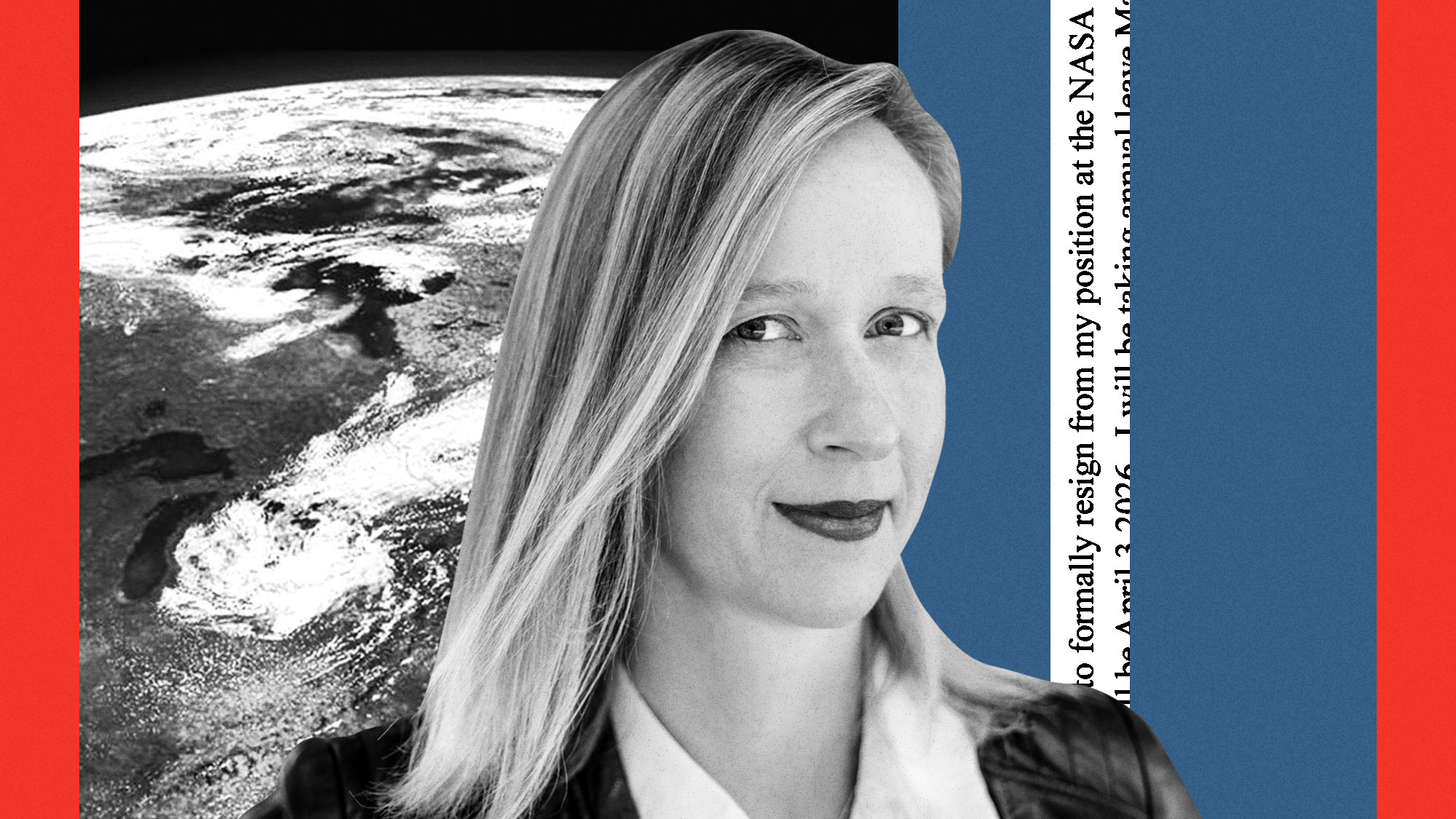
When Rebecca Lindsey was fired from the National Oceanic and Atmospheric Administration last February, the first thing she did was stew. Then she worried about what was going to happen to the website she and her team had built over the last decade and a half. Lindsey had long been the lead writer and editor, and more recently the program manager, of Climate.gov, a site that distilled the agency’s research on climate change into easy to understand, free resources for the public. 

She was right to be concerned: Within a matter of months, the Trump administration had eliminated the rest of the staff supporting Climate.gov and shut down the website — ironically, to comply with an executive order calling for “restoring gold standard science.”

“I couldn’t stand the thought of it all being thrown away,” Lindsey said of the website, which had been used by teachers, community leaders, and policymakers. It had also given researchers in the government important insight into what everyday Americans needed to know about climate science and how to answer their questions effectively. Members of the former Climate.gov team met periodically to discuss what could be done to preserve the work. By the end of last summer, they’d decided to create an independent version of the site. It launched late last month with a new nongovernmental domain: Climate.us. 

The intent behind Climate.us isn’t just to save what was on the Climate.gov website when it died, but to continue to update it with new visuals, explainers, features, and Q&As, making climate science relevant to people with resources that are vetted by scientists. “We just try to constantly take the pulse of what scientists say is valuable and important and needs to be talked about and explained,” Lindsey said.

Since its launch two weeks ago, the new site has gotten about 800,000 page views — an impressive number, considering that the old NOAA site had been getting about a million views a month, according to Lindsey.

Read Next

After President Donald Trump took office a second time, some of the most easy-to-understand resources to help people understand the warming planet disappeared. The National Climate Assessments, congressionally mandated reports released every four years that translated the science into warnings for policymakers and the public, vanished last summer. In December, the Environmental Protection Agency removed at least 80 webpages about the causes, indicators, and effects of climate change. The EPA webpage explaining the causes of climate change no longer lists human activity as a direct driver of global warming. It now emphasizes — misleadingly — natural processes. 

Izzy Pacenza, who monitors government websites for the Environmental Data and Governance Initiative, called it “an all-out assault on climate information.”

A woman holds a protest sign that says 'science makes america great'

Thousands gather at the Lincoln Memorial in Washington, D.C., to defend science as a public good and central pillar of social progress in March 2025. Astrid Riecken / The Washington Post via Getty Images

Beyond the federal government

As organizations race to fill the gap left by the United States’ attack on its own scientific knowledge, many experts see an opportunity to shield research and data from the shifting winds of politics. The world’s science has relied on massive support from the U.S. government, but experts see a future that disperses some of its responsibilities, including how data is collected, handled, preserved, and used.

“It can’t just be the federal government anymore,” said Janice Lachance, executive director and CEO of the American Geophysical Union, the largest Earth and space organization in the world. “That’s proven to us that that’s unreliable, that there’s too much control in very few hands. And so how do we distribute this to like-minded organizations, civil society, and [nongovernmental organizations] who care about it?

The American Geophysical Union is trying to fill the void where it can. It has launched a global initiative to ensure that environmental datasets are more resilient against threats such as political interference, pulling together a group of about 100 experts around the world. It’s also working with the Intergovernmental Panel on Climate Change, the world’s leading authority on climate science, hosting an academic network that allows U.S. scientists to participate in key international reports even after the Trump administration withdrew from the group. Along with the American Meteorological Society, it has also released an invitation for climate manuscripts to maintain the research momentum of what would have been the sixth National Climate Assessment, with plans to eventually publish a special climate collection across different peer-reviewed journals.

Read Next

For many former federal researchers like Lindsey, trying to carry on their previous work at nonprofits and through independent initiatives has been challenging. 

Adam Smith, who led a project tracking billion-dollar weather and climate disasters at NOAA before the agency ended the program last year, has taken the work over to the nonprofit Climate Central. The project is now up and running with all the same data and methods, but it took almost a year to get it fully where it was back at NOAA. The research is important, Smith said, because it quantifies the economic effects of extreme weather, helping to communicate the real-world consequences of climate change to businesses, policymakers, and the public. He is working to develop the project further, documenting disasters that cost $100 million or more back to 1980. 

Creating an independent copy of the Climate.gov site wasn’t easy, either. Researchers who had no experience fundraising had to crowdsource money and court philanthropists to back their work, Lindsey said. Web developers had to update all the old links that directed people to the defunct original site. The Climate.us team wanted independent scientific review for their materials, as they had done at NOAA, but some scientists declined to put their names on a defunded federal project because of unwanted publicity or fear of retaliation. 

Lindsey managed to revive the site as one of just three full-time staff, compared to roughly eight people who were running the operation under NOAA full-time. 

“In a lot of ways, I feel I’m back in 2010 when we first started building Climate.gov,” she said. “There are days when I think, ‘What am I doing? Do I have it in me to start this all over again?’”

These efforts to save climate information are crucial, experts said, but it’s tough for a patchwork of nonprofits, universities, and independent initiatives to fill the vacuum left by the federal government removing the most accessible resources about climate change. “No nonprofit is going to have the reach of the federal government, and so I think that there’s a massive gap in terms of people learning about where they can find these resources,” said Gretchen Gehrke, an environmental and public information researcher who co-founded the Environmental Data and Governance Initiative. Philanthropic funders can be fickle, too, raising questions about financial sustainability. “Truly, all of us are scrambling for funding and underfunded,” she said.

Nonprofits also don’t have the instant recognition that the government does, which can make it harder to earn public trust. When Smith started running the billion-dollar disaster project at Climate Central, for example, he found that some people didn’t know that anyone from NOAA was still involved. Now, the top of the website makes it clear that Climate Central is continuing NOAA’s dataset, with the same methods and the same lead scientist. 

Photo of a sign reads

A sign that reads “NOAA Saves Lives” is seen in a corridor of the University of Colorado at Boulder in Boulder, Colorado, on May 12, 2026. Ulysse Bellier / AFP via Getty Images

From rescue to reform

For information and data advocates, the current crisis is a wake-up call. “Guess what? We have really terrible and really insufficient data policies,” Gehrke said. As the Trump administration tests those vulnerabilities, it gives these stakeholders insight into what needs to change to protect government information from the political whims of future administrations. That could include writing specific requirements for agencies into law and building up Congress’ oversight capacity and enforcement mechanisms. 

When public-facing platforms like Climate.gov disappear, people tend to wonder, How can we bring this product back? without examining the structural failures that led it to be vulnerable in the first place. Sonia Wang, senior director at the Data Foundation’s Center for Climate and Environmental Data, uses the metaphor that people usually focus on the fountain — the shiny map or platform — rather than the plumbing behind it. This invisible infrastructure is much more fragile than people realize, Wang said, sometimes relying on one person who’s been maintaining a dataset for decades, or relationships the federal government has built over time. 

“This was always a problem, regardless of administration,” Wang said. “I think we’re just seeing more of the cracks be exposed now with the rapid decline in some of our federal partners being able to actually carry on their work without the staff.” 

As organizations work to shore up the plumbing of the data that helps us understand the world, there’s increasingly a sense that they can’t count on government support like they did in the past. “It happened in the United States last year, and it continues this year, but it could happen anywhere,” Lachance said. “And we just don’t think that critical scientific data should be vulnerable to the political winds of the day.” 


0FansLike
0FollowersFollow
0FollowersFollow
0SubscribersSubscribe
- Advertisement -
Google search engine

Recent Posts