Home Blog

Two scorpions in a jar

0
two-scorpions-in-a-jar
Two scorpions in a jar

There is an old parable about two scorpions in a jar. Neither can leave. Neither trusts the other. And sooner or later, one strikes, not because it wants to kill the other, but because the jar has become unbearable.

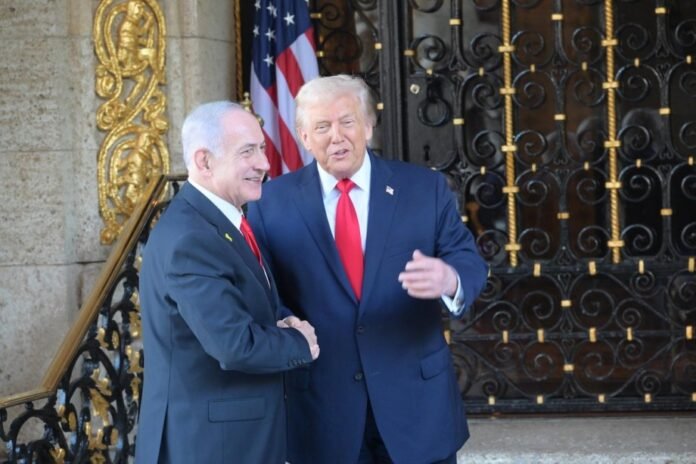
Donald Trump and Benjamin Netanyahu are those scorpions now, and the jar is the wreckage of the Middle East they built together.

For the better part of a year, they marched in locked steps. One man’s appetite for spectacle matched by the other’s genius for making disaster look like deliverance. Netanyahu persuaded Trump that Iran could be shattered quickly, cleanly, at no real cost. Trump believed him because believing him was easier than doubting him, and doubt has never been a currency Trump trades in. The war came. But Iran did not break. And when the bill arrived, it was delivered to Trump’s door, not Netanyahu’s.

John Mearsheimer of the University of Chicago, who has spent a career mapping the architecture of American deference to Israeli interests, put the verdict as bluntly as a man of his discipline allows:

Netanyahu convinced Trump the war would be short and decisive, and Trump, in Mearsheimer’s words, was foolish enough to believe him.

Elsewhere, Mearsheimer has been blunter still, arguing flatly that Israel and its lobby own Trump, and that the President has demonstrated, repeatedly, a willingness to dance to Jerusalem’s tune.

Then came Lebanon, and with it the profanity that told the truth polite diplomacy never does. Reports of a fifteen-minute call, confirmed by Trump himself, describe the President screaming at Netanyahu, demanding to know what the hell he was doing. He called Netanyahu “crazy,” reminded him that he would be sitting in prison were it not for American protection, and scolded him in the most excruciating language, that the world now despised him for it. This is not the language of alliance. It is the language of a landlord screaming at a tenant who has torched the building and still expects a reference letter.

Netanyahu absorbed the insult silently, the way he absorbs everything, with a statement insisting nothing had changed, that Israel’s “position remains the same,” even as his troops turned back from Beirut on Trump’s order. One American official described the call more crudely: Trump had steamrolled him, and all the great warrior-statesman could manage in reply was a chastened “OK, OK”. This isn’t how empires normally treat client states, but this was never a partnership of equals. It is, as Jeffrey Sachs of Columbia University observes, the latest chapter in a decades-long bid for regional dominance. In this script, Netanyahu and the architects of Greater Israel are the sole victors; everyone else is left with the ashes. Sachs does not flinch from naming the architecture. The war on Iran, he argues, was never separate from the older “Clean Break” doctrine first sketched in 1996, a blueprint for regime-change wars with Washington cast as the enforcement arm of Israeli strategy. In that reading, Trump is not a partner but an instrument, wielded by a prime minister facing indictment at home and a coalition that cannot survive a genuine peace.

Gideon Levy of Haaretz, writing from inside Israel’s collapsing consensus, sees the same rot from the other direction. He has warned that Israel follows Netanyahu mindlessly toward a reckoning it has not yet allowed itself to imagine, and that the U.S.-Israel relationship itself is nearing its breaking point. Even Thomas Friedman, hardly a radical, has confessed to being torn, rooting against the Iranian regime while dreading what its defeat would do for two men, he flatly calls terrible people, “alleged crooks” running “anti-democratic projects” in their own countries.

Phyllis Bennis of Institute for Policy Studies frames the arrangement in the coldest terms available: not statesmanship, but real-estate logic: a transactional partnership between a president with no re-election ahead of him but a legacy to launder, and a prime minister facing an October election and a courtroom he has spent years trying to outrun.

Both men need a win they cannot contrive through governance, so they manufacture it through war. Both are impeachable, indictable, and disposable to the very coalitions that elevated them.

AIPAC, the Israeli religious right, and the Republican Zionist bloc in the U.S. Senate are Netanyahu’s insurance policy. Miriam Adelson’s checkbook and the MAGA base are Trump’s. Each man is one betrayal away from being fed to those bases as a sacrifice, and each of them knows it.

This is why the scorpion metaphor holds. Two men who need each other to survive politically are also the two men most capable of mortally stinging each other. Trump has already shown he will humiliate Netanyahu the moment the war stops being useful to him. Netanyahu has already shown he will defy Trump’s orders the moment his coalition demands it. The sting, when it finally comes, will not be ideological. It will be self-preservation, dressed up as principle, in a jar built from the bones of Lebanon, Gaza, and Iran, while the region, and the truth, are left to rot in the glass along with them.

The views expressed in this article belong to the author and do not necessarily reflect the editorial policy of Middle East Monitor.
Why coal-rich Indonesia can’t keep the lights on

0
why-coal-rich-indonesia-can’t-keep-the-lights-on
Why coal-rich Indonesia can’t keep the lights on

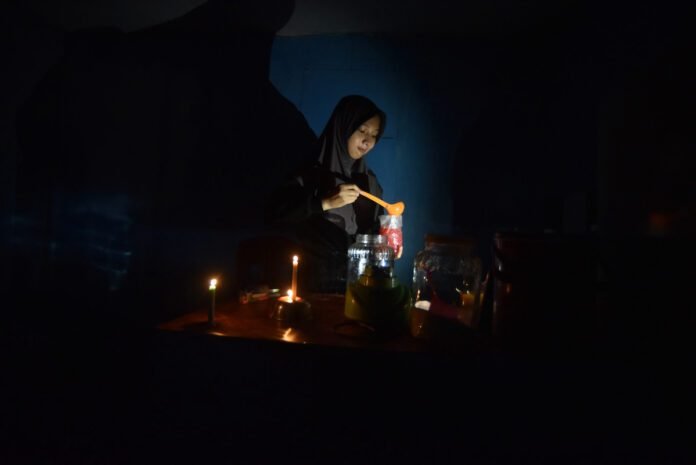
A wave of rolling blackouts across Indonesia in mid-2026 has exposed one of the country’s biggest economic paradoxes: it is one of the world’s largest coal producers, yet it has struggled to secure enough fuel for its own power plants.

Power outages across the Java-Bali grid — from South Tangerang and Depok to the University of Indonesia campus — are a stark warning of deeper structural problems: weak governance in the upstream mining sector and a fragile downstream power system.

The outages have triggered widespread public debate largely because they came despite Indonesia’s enormous coal reserves. Government data — from the Mineral and Coal Resources and Reserves Balance Sheet — shows the country holds 31.96 billion tons of coal reserves, including 17.54 billion tons of proven reserves.

By nearly any measure, that should be more than enough to meet domestic power and industrial demand for decades. But the power system breakdown shows that abundant reserves don’t automatically mean a reliable supply.

The Java-Bali grid’s problem isn’t an overall coal shortage — it’s a structural mismatch in the output mix. Over the past several years, Indonesia has sharply increased output of low-calorific coal while production of medium- and high-calorific grades has steadily declined.

That’s a critical imbalance because most power plants run by state utility PLN need coal with calorific values of roughly 4,500 to 5,200 kilocalories per kilogram.

A separate outage in East Kalimantan, Indonesia’s top coal-producing province, initially sparked speculation about supply shortages or failures in the Domestic Market Obligation, or DMO, policy.

Local authorities and PLN, however, said the blackout was actually caused by simultaneous mechanical failures at the Handil and Tanjung Batu combined-cycle gas power plants, which knocked out about 250 megawatts of capacity and took roughly a month to repair.

The distinction matters: Java-Bali’s outages stem from fuel management failures compounded by upstream regulatory bottlenecks, while regions outside Java remain vulnerable due to aging power plants and fragile transmission lines.

Bureaucratic delays, distorted pricing

A closer look at the Java-Bali crisis shows the scale of the structural problem. PLN projects it will need 154 million tons of coal in 2026 but has locked in legally binding contracts for only about 134 million tons — a gap of 18 million to 20 million tons with no guaranteed alternative supply.

That shortfall largely stems from a damaging interaction between delays in the Ministry of Energy and Mineral Resources’ approval of companies’ Work Plan and Budget (RKAB) and long-standing distortions in domestic coal pricing.

The Indonesian Mining Professionals Association, known as Perhapi, has warned that signing contracts for 134 million tons doesn’t guarantee the coal actually reaches power stations, since coal-fired plants need continuous, timely deliveries rather than one-time procurement deals.

Delayed approvals and cuts to 2026 RKAB quotas have created uncertainty over how much coal mining concession holders are legally allowed to produce each day. Without approved RKAB allocations before the fiscal year starts, mining companies lack the legal authority to extract and ship coal — disrupting domestic supply obligations.

Administrative bottlenecks have been compounded by powerful export incentives tied to a widening price gap. Under regulations unchanged since 2018, coal supplied to domestic power plants under the DMO scheme is capped at $70 per ton for high-calorific 6,322 GAR coal.

Mining costs, meanwhile, have climbed sharply as mature concessions face stripping ratios of 8 to 12 — sharply raising diesel consumption, heavy-equipment rental costs and labor expenses.

For many producers, the economics no longer add up: the cost of producing medium-calorific coal now often exceeds the DMO price ceiling, leaving little or no margin on sales to PLN and, in some cases, outright losses.

Export markets, by contrast, remain far more lucrative. Indonesia’s benchmark coal price stood at $121.83 per ton in June 2026 — a price gap of more than $50 per ton compared with the DMO ceiling.

Combined with a weaker rupiah, which boosts export earnings in dollar terms, that gap gives mining companies a financial incentive few are willing to pass up.

A regulatory mismatch

These regulatory inconsistencies point to a deeper conflict of interest between the government and the mining industry.

The government has used the RKAB process to cap national coal production at 600 million tons, aiming to tighten global supply and support export prices — but that has also reduced the flexibility of domestic supply, making it harder to set aside enough medium-calorific coal for PLN power plants.

At the same time, the requirement that every mining permit holder, or IUP, set aside at least 25% of production for the DMO — regardless of coal quality — has been called a fundamentally flawed regulatory approach by Publish What You Pay Indonesia.

Many producers simply do not mine coal that meets PLN boiler specifications. Facing costly, cumbersome coal-blending requirements, many companies have concluded that paying modest administrative fines is cheaper than complying with the DMO.

Against this backdrop, the government has launched one of the most ambitious overhauls in Indonesian mining history, making PT Danantara Sumberdaya Indonesia, or PT DSI, the country’s sole coal export gateway starting June 1, 2026. The goal is to curb long-standing practices such as under-invoicing, transfer pricing and the leakage of export earnings overseas.

The transition will happen in three phases. In the first, private exporters must route transactions through PT DSI under a nominee mechanism. In the second, set for late 2026, export approvals will hinge on verified compliance with DMO obligations. Full implementation is set for January 1, 2027, when PT DSI will operate under its own mining license and become the exclusive export intermediary.

While the reform is expected to boost state revenue and improve oversight of export proceeds, it has also created real commercial uncertainty. Perhapi has questioned whether PT DSI can administer hundreds of active export contracts, many with complex commercial clauses, trade-finance arrangements and risk-management mechanisms.

Coal export contracts potentially affected during the transition are worth an estimated $1.8 billion — about 32.7 trillion rupiah — in 2026 alone. The uncertainty has already led several overseas strategic partners to postpon investment decisions while they wait for greater clarity on how Danantara’s centralized system will set export prices.

The shift has also effectively shelved an earlier compensation-scheme proposal, first floated in 2022 and later reworked as the Government Institutional Partner, or MIP, scheme. It was designed to secure domestic coal supply by paying producers the difference between international market prices and the regulated DMO price whenever they supplied PLN.

Though a draft presidential regulation was reportedly finalized by late 2024, the Ministry of Energy and Mineral Resources formally dropped the proposal at the end of 2025 in favor of stricter DMO requirements and direct production quota cuts through the RKAB system.

Mining companies have expressed disappointment, arguing that without a credible compensation mechanism, supplying coal to the domestic market will remain financially unattractive as production costs continue to rise.

Rethinking energy security

The government has taken several short-term steps to stabilize the Java-Bali power system. PLN secured an emergency shipment of 1.8 million tons of coal in July 2026, followed by a special allocation of 3 million tons a month from the Directorate General of Minerals and Coal between August and December.

The additional supplies of medium- and high-calorific coal restored about 5 gigawatts of reserve capacity to the Java-Bali grid, effectively ending the rolling blackouts.

Yet Indonesia’s long-term energy security is far from assured. Global forecasts suggest Newcastle coal prices will stay relatively firm, between $149 and $155 a metric ton, through mid-2027 — meaning the big gap between international prices and Indonesia’s fixed $70 DMO ceiling is likely to persist.

Meanwhile, the International Energy Agency projects that global coal demand will peak before 2026 and then gradually decline as renewable energy expands rapidly in major consumer markets such as India and China.

A future drop in international coal prices could eventually narrow the export and DMO cap price gap. But it won’t eliminate Indonesia’s risk of recurring power shortages unless the country overhauls its upstream governance. The recent crisis shows that reactive fixes are no longer sufficient.

Three reform needs stand out. First, the Ministry of Energy and Mineral Resources should overhaul the RKAB approval process so production plans are fully reviewed and approved before each fiscal year begins, giving mining companies the legal certainty to plan production, arrange shipments and meet supply commitments without disruption.

Second, the DMO pricing formula needs to be redesigned. Instead of a rigid price ceiling, the formula should be dynamic and responsive to actual production costs, including stripping ratios and other mining inputs, making it commercially viable again to supply the domestic market.

Third, PT Danantara Sumberdaya Indonesia shouldn’t act solely as Indonesia’s single export gateway. It should also collect export levies and redistribute that revenue to compensate producers that supply PLN with primary fuel, aligning commercial incentives with national energy security goals.

Without a coherent package of structural reforms, namely regulatory certainty, market-based pricing and incentives, and real transparent government oversight, Indonesia’s energy security will remain hostage to competing bureaucratic and commercial interests.

For a country endowed with some of the world’s richest coal reserves, recurring power shortages aren’t a matter of resource scarcity; they’re a dark indication of policy failure.

Ronny P. Sasmita, Ph.D, is senior analyst at the Indonesia Strategic and Economic Action Institution, a Jakarta-based think tank

Disneyland Guests Left Stunned After Fire Erupts on Ride (Video)

0
disneyland-guests-left-stunned-after-fire-erupts-on-ride-(video)
Disneyland Guests Left Stunned After Fire Erupts on Ride (Video)


Disneyland’s famously cheerful “It’s a Small World” attraction turned frightening when a fire suddenly broke out while guests were still aboard the ride.

The alarming incident unfolded Wednesday at the California theme park, forcing cast members to rush in with fire extinguishers as smoke filled part of the attraction.

Video shared across social media showed a costumed Disney employee spraying an extinguisher near one of the ride vehicles while stunned guests remained seated nearby.

Despite the chaos, no injuries were reported.

Fire Breaks Out at Disney World

Witnesses claimed the fire was not caused by the ride itself, but by a portable phone charger carried by one of the guests.

“This was a guest’s portable charger exploding — not Disney or the ride,” one TikTok user claimed. “You can blame them for a lot but not this one.”

Another social media user, who said their family was inside the attraction at the time, claimed a child had placed a bag containing a new magnetic portable charger between their legs shortly before it caught fire.

A person who identified themselves as a Disney cast member appeared to back up that account.

“This is correct. SW CM here! Everyone is okay, including the ride itself,” the person wrote.

Disney has not publicly confirmed what sparked the blaze.

Footage of the smoky scene quickly spread online, with viewers expressing shock that a fire could erupt inside one of Disneyland’s most recognizable and family-friendly attractions.

The incident temporarily disrupted the ride as employees worked to extinguish the flames and make sure guests were safe.

EU strikes deal on haulage tolls, dropping trailer-based emissions discounts

0
eu-strikes-deal-on-haulage-tolls,-dropping-trailer-based-emissions-discounts
EU strikes deal on haulage tolls, dropping trailer-based emissions discounts


EU countries and the European Parliament have agreed draft changes to the Eurovignette directive, the EU framework that governs road tolls and user charges for heavy-duty vehicles.

The provisional deal sets out “targeted amendments” designed to clarify how CO₂-based charging rules should be applied under new EU CO₂ emission standards for heavy-duty vehicles that apply from 1 July 2026, the Council of the EU disclosed on Tuesday.

Transport operators, tolling authorities and service providers need legal certainty as the new CO₂ standards are extended to more heavy-duty vehicles, Cyprus transport minister Alexis Vafeades said in the statement.

The Council noted the changes are intended to give clearer guidance for hauliers, national authorities and toll service providers on applying the rules to different vehicle categories and emission classes — in practice, the groups used to determine how much a vehicle pays.

The agreement includes clarifications to definitions linked to CO₂ emissions, including what counts as a “zero-emission” or “low-emission” heavy-duty vehicle, as well as vehicle groups and reference CO₂ emissions.

Trailer-based toll reductions dropped

EU governments would also be allowed to apply reduced user charges or infrastructure charges for low-emission vehicles, alongside measures supporting the uptake of zero-emission vehicles, according to the Council.

The draft revisions also clarify how “vocational vehicles” — such as garbage collection trucks and construction vehicles — are allocated to CO₂ emission classes for charging purposes.

Negotiators decided not to keep a proposed system that would have varied road charges for heavy-duty vehicles towing more “sustainable” trailers, citing administrative burdens and added complexity for tolling systems and electronic toll services, the Council said, adding that the European Commission has been asked to evaluate obstacles that remain.

The agreement must still be endorsed by the Council and the European Parliament before it can be formally adopted following legal and linguistic checks.

source: Brussels Times

Ukraine war sparks fears of an organised crime resurgence in Russia

0
ukraine-war-sparks-fears-of-an-organised-crime-resurgence-in-russia
Ukraine war sparks fears of an organised crime resurgence in Russia

Following the Soviet Union’s collapse in 1991, Russia endured a period of violent criminal lawlessness known as the “wild 90s”. Organised crime spiked, with gangs taking control of banks, factories and other lucrative markets. Contract killings, shootings and car bombings became part of urban life.

There are now fears that the Ukraine war will give rise to a similar situation as members of Russia’s army, as well as former convicts who were pardoned in exchange for military service, return from the frontlines.

A variety of conditions enabled organised crime to flourish in the 1990s. Weak state institutions, economic turmoil and mass privatisation following the Soviet Union’s collapse created a governance vacuum in Russia.

As criminologist Federico Varese, of the University of Oxford, explains in his work, criminal groups stepped in to provide “private protection” in areas where the state was ineffective or absent. They provided services such as contract enforcement, debt recovery and physical business security.

Sociologist Vadim Volkov, meanwhile, describes the rise of “violent entrepreneurs” who commodified coercion in an environment where legal institutions had largely collapsed. Russia’s murder rate surged in this period. Between 1990 and 1994, it more than doubled to a peak of over 33 killings per 100,000 people. This made Russia’s murder rate among the highest globally.

Russian Soldiers talking as they prepare for combat.

Russian soldiers preparing for military action in Ukraine. Dmitriy Kandinskiy / Shutterstock

Contemporary Russia presents a different picture. Following Vladimir Putin’s rise to power in 1999, the Russian state has consolidated its authority. Putin quickly expanded the state’s security apparatus while reasserting control over criminal networks.

In many cases, organised crime has become integrated into systems of governance, complementing the state’s political or strategic interests. For example, criminal networks have facilitated sanctions evasion by transporting restricted goods through parallel trade routes and acquiring sanctioned technologies via intermediary networks in third countries.

Reinforcing this transformation

The Ukraine war is likely to reinforce this more recent transformation. Expanded western sanctions imposed since the start of the war have widened opportunities for illicit trade and smuggling networks. But the most significant consequences arise from the social and security challenges associated with large-scale military demobilisation.

Since the full-scale invasion in 2022, Russia has mobilised hundreds of thousands of military personnel. This includes up to 180,000 former convicts. Many of these people have experienced prolonged exposure to combat. Military service does not inherently lead to criminality and it would be inaccurate to suggest that all returning veterans are likely to become offenders.

However, evidence from post-conflict societies such as Colombia, Sierra Leone, Cambodia and Bosnia-Herzegovina suggests that poorly managed demobilisation can reshape criminal markets. Research on disarmament, demobilisation and reintegration consistently demonstrates that unemployment, psychological trauma and weak institutional support creates opportunities for criminal groups to recruit former combatants.

Military service also teaches soldiers organisational skills beyond battlefield experience such as logistics, intelligence gathering and network management. These skills are all transferable to contemporary organised crime. In modern organised crime environments, traditional racketeering is complemented by cybercrime, cryptocurrency laundering and transnational financial crime.

Even if only a small proportion of military personnel returning from Ukraine become involved in criminal activity, they could change the composition and improve the operational sophistication of Russian crime groups. While the circumstances differ, the case of Colombia illustrates how poorly managed demobilisation can transform organised crime.

In the 2000s, over 30,000 fighters from right-wing paramilitary groups in Colombia were demobilised. A minority of these former combatants subsequently joined or established criminal organisations. They provided military training, discipline and networks, aiding the capabilities of organised crime.

These groups rapidly became major players in the Colombian organised crime ecosystem. A Human Rights Watch report found they became major perpetrators of drug trafficking, extortion and violence. Estimates suggest they controlled up to half of the Colombia’s cocaine exports by 2011.

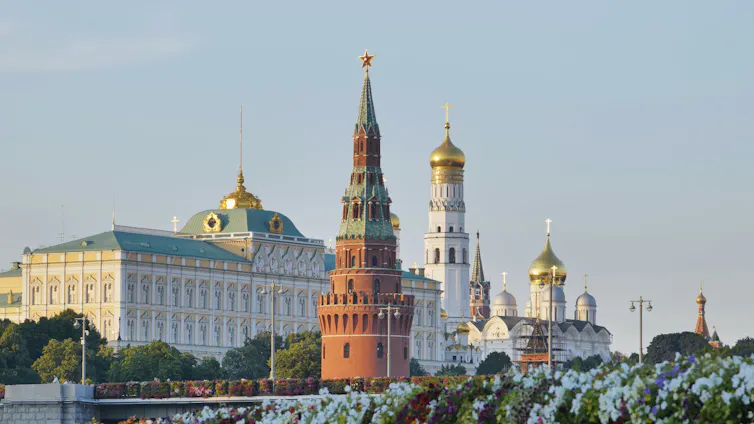
The Kremlin building in Moscow, where government decisions are made.

The Russian state is far stronger than the one that emerged after the collapse of the Soviet Union. WorldStockStudio / Shutterstock

The Russian state is far stronger than the one that emerged after the collapse of the Soviet Union. This makes a wholesale resurgence of traditional criminal violence unlikely. Instead, the Ukraine war looks set to accelerate a new generation of criminal networks that are more professional, militarised and embedded within state structures.

However, the Kremlin still faces a difficult balancing act. Contemporary Russian governance has relied upon managing and exploiting criminal groups. And Moscow appears wary of the broad social instability that would emerge if criminal organisations become sufficiently powerful or autonomous to operate beyond state control.

Russia has thus began preparing plans for the return of veterans from Ukraine. The Kremlin has implemented initiatives such as the “Time of Heroes” programme. This programme channels selected veterans into public administration and political office following their demobilisation. Although limited, such planning reflects official recognition that domestic consequences of war will extend beyond the battlefield.

Regardless of these efforts, the distinction between organised crime and state power in Russia is likely to become harder to draw than at any point since the end of the cold war.

Culture war killing America’s response to demographic decline

0
culture-war-killing-america’s-response-to-demographic-decline
Culture war killing America’s response to demographic decline

Birthright citizenship is the law of the land. The Supreme Court has once again ruled that the 14th Amendment gives automatic citizenship to anyone born in the US. This includes the children of illegal immigrants and temporary visa holders, both of which the Trump administration had sought to exclude from birthright citizenship.

Rightists immediately began howling about the ruling and saying some very intemperate things. Sean Davis of The Federalist suggested dissolving the Union and/or sterilizing foreign visitors to the United States:

Right-wing political commentator Matt Walsh shrieked that the America he grew up in — which also had birthright citizenship and significant amounts of illegal immigration — has somehow been destroyed as a result of the SCOTUS ruling:

These histrionics — sadly typical of online reactions to major news events in the social media age — demonstrate how central the anti-immigration cause has become to the political right in the United States.

The notion that immigration is an invasion bent on destroying the country by replacing its founding population has become a bedrock belief on the Right; it is a singular, all-consuming passion similar to what anti-racism was for 2010s progressives and Palestine has become to leftists in the 2020s.

Nor is it just an object of passion; nativism has become a self-contained, hermetically sealed worldview not subject to reasoned argumentation, logic, or data.

It is a distinctly minority worldview. The overwhelming majority of Americans continue to say that immigration, on the whole, is good for this country:

Source: Gallup

This does not mean that Americans want open borders, or that they think all kinds of immigration are good. Sentiment against illegal immigration, and in favor of increasing border security, remains strong. 

A backlash against the disorderly flood of quasi-legal immigration under Biden helped get Trump elected in 2024. But even illegal immigration is not seen as an invasion by most Americans — support for a pathway to citizenship remains strong, even among many Republicans not affiliated with the MAGA movement.

The rightist view of immigration as the death knell of America is simply a small minority viewpoint. Guys like Sean Davis and Matt Walsh are a screechy online fringe. They seem to think that if they screech loud enough and make dramatic enough threats (“Dissolve the Union!”, “Sterilize tourists!”, and so on), they can bully the supermajority into giving them their way. They basically expect veto power over this one issue, based purely on the strength of their emotion.

And on the narrow question of birthright citizenship, poll after poll shows that Americans want to keep the practice. Here’s an example from The Hill:

Nearly 70% of respondents in a Quinnipiac University poll think the Supreme Court should keep birthright citizenship in place. The results come ahead of the high court’s ruling on the legality of President Trump’s executive order seeking to end the policy…The survey, conducted between June 18 and 22, found that 69% of 1,165 self-identified registered voters believe the Supreme Court should keep in place its 1898 ruling affirming that the 14th Amendment guarantees citizenship to those born in the U.S…Less than 3 in 10 respondents (27%) said the high court should reverse its decision[.]

That doesn’t mean the public entirely disagrees with the Trump administration. About half of Americans think that birthright citizenship ought to be denied to the children of illegal immigrants:

Source: Pew

(It’s not clear what Americans think about the children of temporary visa holders; this question is typically not broken out in polls, and it’s not clear whether Americans generally understand the difference between permanent residents and legal visa holders.)

So if the MAGA movement were pragmatic — if they really wanted to succeed in restricting immigration in a way that Americans would support, instead of just screeching louder and louder about immigration in general in an attempt to cow the majority into giving them their way — there might be room for them to change the law.

They don’t currently have enough support for a Constitutional amendment specifically revoking birthright citizenship for the children of illegal immigrants, but they might be able to get over that line with a concerted campaign.

But that’s a bit of a moot point, because the right is probably not going to execute that sort of pragmatic, majoritarian strategy. Immigration has become a culture war. Taking a maximalist position on the issue is a way for people to signal their allegiance to the MAGA movement; supporting substantive compromises that win real policy victories broadcasts that you’re not a core part of the movement.

As for Democrats, they seem to still be almost entirely reacting against MAGA. On the positive side, this means that even hardcore leftists like Hasan Piker responded to the SCOTUS ruling by temporarily dropping their “America is evil” shtick and showing some national pride:

america remains america. this would’ve fundamentally changed the country for the worse & ushered in era where trump could change 100 year established constitutional precedent by executive order in ways that would destroy citizenship. this was our modern nuremberg race laws moment https://t.co/S2a61s3b6y

— hasanabi (@hasanthehun) June 30, 2026

On the minus side, it makes it even harder to get coherent immigration policy. Trump & co. want to make immigration harder, so Dems will simply make it easier in response. This is probably why Biden was so lax on border enforcement during the first three years of his term — a disastrous decision that probably cost the country four more years of Donald Trump.

This is a shame, because smart immigration policy is needed now more than ever. The US is suffering a fertility crisis, similar to the rest of the world. Two decades ago, America was having enough kids to keep the population stable over time. Now, fertility in America has declined to below the level of Japan in the 1980s:

Source: OWID

Most of us grew up thinking of Japan as a place with an aging, shrinking population. America is now headed for exactly that same fate, unless we take in immigrants. But Trump’s restrictive policies — not just deportations, but dramatic reductions in legal immigration — have almost entirely cut off the inflow:

Source: Duzhak (2025)

Other estimates show Trump actually reducing the number of immigrants in America in 2025 (and probably 2026), which would mean MAGA’s anti-immigration crusade is now actively reducing the country’s population.

This is bad news for the country. For one thing, it means far fewer workers to support each retiree. With zero immigration, the number of American working-age people per retiree will fall from 3 to 2 over the next quarter century:

Source: Lant Pritchett

For some, that will mean paying higher taxes to support old people’s health care and eldercare. For others, it will mean directly doing the work of taking care of their aging parents.

Either way, it means more toil and drudgery for the young and the middle-aged and less freedom, consumption and fun. As Paul Krugman points out, immigrants are disproportionately likely to work in jobs that take care of old people:

Source: Migration Policy Institute via Paul Krugman

The burden of supporting the elderly will also probably reduce fertility even further — it’s hard supporting kids and your retired parents at the same time! — which will compound the problem in the long term. And small towns and rural areas will be especially hard-hit.

Immigration can’t hold off population aging forever in a world of low fertility — immigrants get old too, and so you need to keep increasing the immigration rate just to maintain the age structure. And as the whole world begins to shrink, the supply of immigrants will dry up. But America’s wealth, and our (rapidly diminishing) reputation as a “city on a hill”, gives us the ability to stave off population aging for a while, and perhaps buy time to find a more permanent solution to the riddle of low fertility.

At the same time, we’ll get a lot more benefit if we’re careful about which kind of immigrants we let in. Immigrants with higher education levels add to the national fiscal coffers, since they make a lot of money. But immigrants with low education levels create a net fiscal drain, since they make less money and absorb more government benefits (as do their children).

If you just look at immigrants themselves, you find that college-educated immigrants tend to decrease the national debt, while immigrants without college degrees tend to add to the debt:

Source: Daniel DiMartino

If you include later generations — who tend to show strong upward mobility in the US — then the long-term fiscal impact is more positive, but you still see a very strong difference by education level:

Source: Noah Smith

So if we want to use immigration as a tool to strengthen our nation’s economy, we should focus on letting in immigrants with college degrees. That means more legal skilled immigration, more border security, and less quasi-legal asylum grants — in other words, exactly the set of policies that the American people say they want.

Source: EIG

Now, MAGA people will certainly respond that immigration is about more than dollars and cents — it’s about culture. Immigrants assimilate to American culture, but they also do change that culture somewhat; assimilation is a two-way street.

It’s impossible to live in the same country you grew up in — technology is still the biggest cause of cultural change — but if you want to preserve as much of the country of your youth as humanly possible, then it makes sense to restrict immigration.

More broadly, if you believe that nation-states are legitimate entities, then you must admit that countries have an inherent right to preserve their cultures in amber by shutting themselves off to immigration, if they want to.

But MAGA has already lost that battle. America is not North Korea; we’re not even Japan or Sweden. 79% of Americans say that immigration is good for the country overall; they say this even knowing that immigration will cause some long-term cultural changes. The cultural preservation argument against immigration is a lost cause, no matter how desperately its proponents shriek and bluster and threaten.

At the same time, Democrats must be extremely wary of embracing open borders simply out of pure reaction to MAGA nativism. Americans don’t want to let just anyone in; they want people to come legally, and they want to admit people who earn enough money to contribute positively to the economy.

If Democrats simply respond to each electoral victory by throwing open the borders and turning a blind eye to illegal immigration, the American people will continue to respond by intermittently electing xenophobes.

In the age of low fertility, America desperately needs to be smart about its immigration strategy. We can’t let a fringe of culture-warriors dictate our national policy.

This article was first published on Noah Smith’s Noahpinion Substack and is republished with kind permission. Become a Noahopinion subscriber here.

At Least 40 Killed After Overcrowded Bus Plunges Into Ravine in Pakistan

0
at-least-40-killed-after-overcrowded-bus-plunges-into-ravine-in-pakistan
At Least 40 Killed After Overcrowded Bus Plunges Into Ravine in Pakistan


At least 40 people were killed when a passenger bus carrying dozens of travelers plunged into a deep ravine in Pakistan’s southwestern Balochistan province on Friday, in one of the deadliest road accidents in recent months.

The crash occurred in Dhana Sar, a border area between Balochistan and Khyber Pakhtunkhwa, in Sherani district.

Usman Sadozai, a rescue official, told The Media Line that the bus was traveling from Quetta to Peshawar when it veered off the road and fell into a ravine.

According to Sadozai, at least eight other passengers were injured in the accident, some of whom were reported to be in critical condition.

Rescue workers faced significant challenges in carrying out relief operations as the bus had plunged into a deep ravine amid rugged mountainous terrain, making access to the crash site extremely difficult.

Balochistan government spokesperson Shahid Rind told The Media Line that rescue teams were dispatched immediately from Sherani, Zhob, and Dera Ismail Khan after authorities received reports of the crash.

Rescue officials said relief operations were hampered by the rugged mountainous terrain, making access to the accident site difficult.

Following the incident, a state of emergency was declared at hospitals in Sherani and Zhob to ensure immediate medical treatment for the injured.

Rind further told The Media Line that the district administrations, rescue agencies, and other relevant departments in both provinces were working to assist those affected and ensure the injured received immediate medical care.

He said preliminary information indicated that, in addition to its own passengers, the bus was also carrying passengers from another passenger coach that had broken down earlier, leaving the vehicle overcrowded at the time of the crash.

Dhana Sar is administratively part of Balochistan’s Sherani district, located about 250 miles northeast of Quetta.

The Dhana Sar route forms part of the shortest highway linking Quetta with Khyber Pakhtunkhwa and connecting Quetta to Islamabad.

The road passes through rugged mountainous terrain, with steep ravines running alongside much of the highway, making it one of the region’s most challenging routes for motorists.

Rights center documents 83 Israeli attacks on Christians in 3 months, mostly in occupied Jerusalem

0
rights-center-documents-83-israeli-attacks-on-christians-in-3-months,-mostly-in-occupied-jerusalem
Rights center documents 83 Israeli attacks on Christians in 3 months, mostly in occupied Jerusalem

This April to June saw 83 Israeli attacks on Christians in Israel or Israeli-occupied territories in 76 incidents, most of them in Jerusalem, according to a report released Friday, Anadolu reports.

The report was issued by Israel’s Religious Freedom Data Center (RFDC) and the its Hotline for Documenting Harassment against Christians in Israel, a nongovernmental center specializing in documenting attacks related to freedom of worship.

According to the report, 68 incidents took place inside Jerusalem, a city also revered by Christians. Two incidents were recorded in Haifa and the Galilee in northern Israel, one in the Sea of Galilee area, one in the West Bank, one in Beit Shemesh west of Jerusalem, and two in Mevaseret Zion west of Jerusalem. The report did not give the location of the remaining incident.

Of the 68 incidents recorded in Jerusalem, 46 took place in the Old City, 13 in West Jerusalem and nine on Mount Zion, a historic hill southwest of the Old City, the report said.

“As in previous reports, the high number of spitting incidents remains particularly striking. During this quarter, 47 incidents involved spitting, accounting for 56% of all recorded forms of harassment,” the RFDC said.

“In recent years, these acts have increasingly taken place openly, in broad daylight, and at times in a deliberately demonstrative manner. In several cases, perpetrators even explained to Hotline volunteers—and on camera—why they believed such behavior was justified,” it added.

The center said reported incidents included Israeli parents spitting and directing insults in front of their children, and encouraging them to do the same.

-Rise in harassment

As in previous years, the report noted a sharp increase in incidents during Jerusalem Day and the Flag March (28 Iyar on the Hebrew calendar), an annual Israeli event marking the occupation of East Jerusalem.

“While some incidents involved individuals acting alone, moving in groups appeared to encourage spitting and similar acts,” the report says.

The report said harassment and attacks are increasingly taking place openly in public spaces, with little hesitation from perpetrators. It cited a violent assault on a nun on Mount Zion and verbal abuse directed at a monk in a store.

The center says on its website that the reality in the Christian Quarter and the Old City of Jerusalem has long been sensitive and full of challenges and complexities, but that the situation changed radically for the worse in early 2023 with a rise in harassment.

In April, Israeli police prevented Pierbattista Pizzaballa, the Latin patriarch of Jerusalem, from reaching the Church of the Holy Sepulchre in East Jerusalem during Christian holidays, and imposed restrictions on Christians taking part in Easter celebrations at the church.

In recent years, Israeli extremists have been involved in spitting incidents targeting churches and Christian clergy in Jerusalem, along with attacks on holy sites in Jerusalem and the West Bank and the targeting of churches in the Gaza Strip during Israel’s war that started in October 2023.

Churches around the world have also criticized Israel’s recent wars on Gaza, Lebanon, and Iran, warning of their humanitarian and religious consequences.

‘Honebuto shock’: new term coined as Japan fiscal policy is probed

0
‘honebuto-shock’:-new-term-coined-as-japan-fiscal-policy-is-probed
‘Honebuto shock’: new term coined as Japan fiscal policy is probed

Prime Minister Sanae Takaichi Sanae discusses the government’s draft Basic Policy on Economic and Fiscal Management and Reform at a June 20 meeting of the Council on Economic and Fiscal Policy. Photo: Prime Minister’s Office of Japan

Japanese government long-term bonds briefly climbed to 2.81% on Thursday, July 3 – their highest level in thirty years – prompting one analyst to refer to it as the “honebuto shock,” a reaction to the prospect of larger deficits stemming from the Takaichi government’s pending Basic Policy on Economic and Fiscal Management and Reform (the honebuto) and the Bank of Japan’s sluggish response to financial conditions.

This market movement has put the Takaichi government on the defensive. Chief Cabinet Secretary Minoru Kihara said that the government is “closely watching market trends” and “will take every possible measure to ensure sound economic and fiscal management.”

Finance Minister Satsuki Katayama downplayed the idea that language in the draft honebuto threatens the BOJ’s independence and suggested that the government would manage the scale of bond issuance with an eye towards maintaining market confidence.

Economic Revitalization Minister Minoru Kiuchi suggested that markets were not simply expressing concerns about the Takaichi government’s fiscal policies.

Meanwhile, Centrist Reform Alliance (CRA) leader Junya Ogawa used his press conference on July 3 to criticize the government for irresponsible policies, characterizing the market reaction as a warning signal to the government.

Together with growing signs of discontent within the Liberal Democratic Party – as suggested by Yuko Obuchi’s resignation from the LDP tax commission to protest the government’s consumption tax cut plan – it seems that political friction around the Takaichi government’s fiscal policies is only beginning and will interact dynamically with financial market activity.

Consumption tax talks frozen

The political stalemate in the Diet has extended to the National Conference on Social Security, which has been working on an interim report that will inform the government’s consumption tax plan.

The working committee drafting the interim report has not met since 26 June, preventing the committee from finalizing the interim report before the end of the month and delaying its finalization into July (or later).

The Takaichi government had wanted the report concluded so that it could include a consumption tax cut plan the honebuto, but it may not be deterred by the delay in finalizing a report. At the same time, however, opposition parties may be increasingly reluctant to give their blessing to what looks like a purely partisan measure.

A piece in Diamond describes how the prime minister’s impatience with slower, thorough deliberations led to the near breakdown in the process.

This article is republished with permission from Tobias Harris’s Observing Japan.

Europe targets shadow fleet tankers falsely using Cameroon flag

0
europe-targets-shadow-fleet-tankers-falsely-using-cameroon-flag
Europe targets shadow fleet tankers falsely using Cameroon flag


Europe is taking tougher action against tankers falsely using Cameroon’s flag registry to transport Russian oil, including boarding vessels at sea, prompting Cameroon to dump 39 such vessels from its ship registry, according ​to officials and documents.

On June 8 the EU expanded the mandate of Operation IRINI, its naval mission in ‌the Mediterranean, and can now stop, board, detain and inspect ships suspected of belonging to Russia’s so-called “shadow fleet”. Moscow condemned the move.

Russia has used such tankers, which are typically older and lack known Western insurance or safety certification, to skirt sanctions by sailing under the flags of various nations ​to obscure their true ownership, cargo and movements.

Three tankers boarded and inspected by IRINI in recent weeks, the Nelsa, ​the Oneiroi and the Sandhya, were found to be using fraudulent Cameroonian registration, according to two ⁠European military sources.

Nine other ships have been seized by the French, Belgian, British and Swedish navies since the start of ​2026, including five with Cameroonian flags.

Cameroon has warned in recent months that its registry has been misused by shadow fleet tankers transporting ​Russian oil.

In a letter seen by Reuters sent to the U.N. shipping agency dated June 16, Cameroon’s government said an official investigation revealed several vessels were unlawfully operating under the country’s flag and that two websites were fraudulently being used to assign the flag to ships.

The government said it had ​de-listed 39 ships as a consequence.

The central African country has emerged as one of the biggest conduits for fraudulent shipping in ​recent years, prompting the United Arab Emirates in 2024 to bar, opens new tab Cameroon-flagged ships from calling at its ports unless they have top-tier safety certification.

Cameroon is “cooperating ‌with ⁠international authorities and organisations to enforce maritime rules, protect the credibility of its naval registry, and fight against irregular registrations,” its transport ministry said in a statement to Reuters this week.

It added that Cameroon could not be held responsible for the activities of any vessel after de-registration.

The latest shadow fleet tanker seized was the Deliver, detained by the French navy on June 25 after being intercepted near ​Sicily, while sailing under a ​Cameroonian flag despite having been ⁠removed from the country’s registry.

TOUGHER MANDATE

The EU is preparing a further round of sanctions for mid-July in part targeting the shadow fleet. “The idea is to change the best practices, what different countries ​are doing with those ships, because it is really posing a danger, and of course ​also the idea ⁠is to curb Russia from the funding of this war,” EU foreign policy chief Kaja Kallas said last month.

The latest EU sanctions package, which could be adopted in July, would see 30 more vessels from Russia’s shadow fleet listed and expand the listing criteria to ⁠vessels involved ​in refuelling sanctioned ships or offloading cargo, European officials have said. The risks such ​vessels pose include the safety of seafarers and of the environment should vessels not comply with maintenance requirements or break up at sea, as happened with ​two Russian coastal oil tankers in the Black Sea in late 2024.

Source:  Reuters

0FansLike
0FollowersFollow
0FollowersFollow
0SubscribersSubscribe
- Advertisement -
Google search engine

Recent Posts