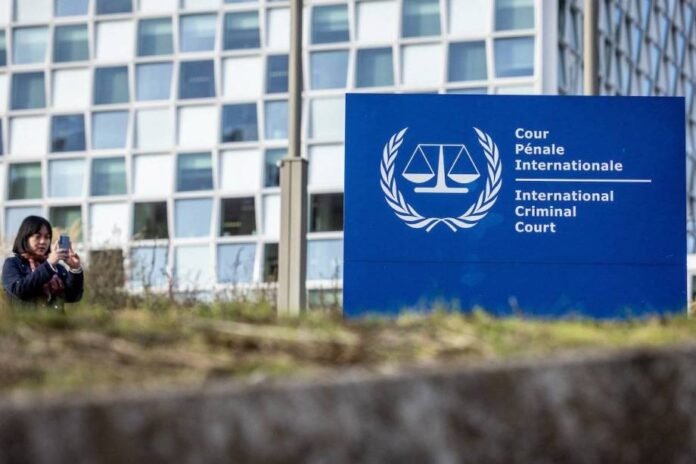
Burkina Faso, Mali and Niger have officially begun a one-year process to withdraw from the International Criminal Court (ICC), the court has announced.
The three West African countries previously said they would leave the ICC, describing it as “a tool of new colonial oppression,” according to Reuters.
The presidency of the ICC’s governing body confirmed that Burkina Faso, Mali and Niger had submitted formal notices of withdrawal, triggering a one-year process to leave the Rome Statute, the treaty that established the court.
In a statement, the presidency said the move could weaken global efforts to end impunity and undermine the pursuit of justice. It urged the three countries to remain committed to the Rome Statute.
The statement also stressed that withdrawal does not release a state from any obligations arising during its membership of the Rome Statute.
READ: ICC prosecutor Karim Khan suspended over misconduct allegations
The plans for the 250th anniversary of the American revolution, which kicks off in earnest on July 4, have drawn media scrutiny in the US. One issue has been the subject of recurrent discussion: the role of President Donald Trump.
Behind this scrutiny is the claim that Trump is co-opting the anniversary for his own agenda. His administration’s alleged sidelining of the non-partisan “America250” commission, which was established by Congress in 2016, in favour of his rival “Freedom 250” organisation has drawn particular comment.
The 250th anniversary, it seems, has become a hotly contested battleground.
This is not entirely without precedent. As historian Michael Hattem explains in his 2024 book, The Memory of ‘76, Americans have long argued over the revolution’s lessons and legacy. This can be traced to the late 18th century, when US politics began to assume some of the adversarial qualities all too familiar today.
In the 1790s, the arguments were generally between Alexander Hamilton’s Federalists and Thomas Jefferson’s Democratic-Republicans. For Federalists, who were keen to rebuild the relationship with Britain, July 4 celebrations often emphasised order and strong government.
For the Democratic-Republicans, however, the anniversary offered an opportunity to criticise what they saw as Federalist fealty to Britain. The result was that July 4 commemorations often became highly partisan.
Competing claims on July 4 recurred in subsequent decades, especially during the 1850s when sectional tensions between the north and south worsened. At the centre of these tensions was slavery.
For African-American abolitionists, the ideals articulated by the Declaration of Independence provided weapons with which to attack the evil of slavery in the south. The most powerful example of this was an 1852 speech given by Frederick Douglass in which he pointedly asked: “what to the slave is the fourth of July?”
The outbreak of civil war in 1861 further intensified the sectional divide over July 4. Many white southerners even drew parallels between the south’s status in the union and that of the 13 American colonies in the British empire.
According to this view, just as American colonists had been oppressed by the “tyranny” of Britain’s King George III – who they held responsible for the imposition of taxes and restrictive legislation – so was the south similarly oppressed by the north’s refusal to countenance the expansion of slavery.
By tracing this connection, historian Paul Quigley notes that these southerners used July 4 to present “themselves as the real Americans and northerners as traitors”. This was the memory of 1776 used to justify secession. The view of the then-president, Abraham Lincoln, was of course the complete opposite. For him, it was the union which was the true heir to the ideals of July 4.
Yet more arguments over the revolutionary past followed during the centennial of 1876. The anniversary came amid an economic recession and towards the end of the period known as “Reconstruction”. This period had seen the federal government readmit southern states into the union while also attempting to secure the rights of the formerly enslaved.
For some white northerners, the centennial was seen as an opportunity to promote reconciliation with the south. One consequence of this was that African-American contributions to the revolution were marginalised, something black communities in turn actively contested.
Attempts by local elites to dominate July 4 commemorations in cities like Boston similarly provoked pushback from recent immigrants and minority groups determined to ensure their inclusion in the commemorations. As a result of these tussles, the centennial of 1876 was marked by what historian Jack Noe has called “the deep sectional, partisan and racial divisions of an unreconciled nation”.
The 1976 bicentennial
Similar to its predecessor, the 1976 commemorations followed an enormously divisive conflict: the Vietnam war. And, again like the 1870s, the anniversary also unfolded during an era of economic uncertainty. An oil crisis in 1973, caused by an embargo imposed by oil-producing countries in the Middle East, was quickly followed by a recession that lasted until 1975.
There were even accusations of corruption levelled at the Bicentennial Commission, which had been created to plan the 200th anniversary, and linked to the activities of the Nixon administration. The commission was dissolved in 1973 and replaced by a new organisation called the American Revolution Bicentennial Administration.
US citzens march the streets of Philadelphia in protest against the Vietnam war, 1976.Wikimedia Commons
The bicentennial was thus another fraught anniversary. There were high-profile events in New York, Philadelphia and Washington, some of which were attended by Queen Elizabeth II at the invitation of the then-US president, Gerald Ford.
Following the social unrest of the Vietnam era, as well as the political turmoil of the Watergate Scandal which had led to the resignation of Richard Nixon as president in 1974, many Americans found escape in patriotic nostalgia. The anniversary even drew interest abroad. One small village in northern England, Warton in Lancashire, marked the occasion with a ten-day party due to its ancestral connections to George Washington.
Elsewhere though, the 200th anniversary again revealed domestic division. From the left came criticisms of excessive commercialisation, with historian Jesse Lemisch identifying a slew of what he called “bicentennial schlock”.
In some American towns and cities, meanwhile, commemorations likewise exposed discord. In Boston, for instance, the anniversary became tied up with local tensions linked to the desegregation of schools.
The revolutionary past has long been a contested battleground in the US, particularly during periods of partisan politics, social tumult and economic uncertainty. In this regard, the 250th anniversary has much in common with its predecessors.
Subscribe nowwith a one-month trial for only $1, then enjoy the first year at an exclusive rate of just $99.
Japan Inc. looks past the weak yen Scott Foster writes that despite a 40-year low in the yen, rising bond yields and geopolitical headwinds, Japan’s corporate sector remains surprisingly resilient. Strong business confidence, record foreign investment and fresh capital raising for AI and strategic industries suggest investors are backing Prime Minister Takaichi’s long-term industrial agenda.
Germany’s state-led investment masks private-sector retreat Diego Faßnacht argues that Germany is drifting toward a more state-directed economic model as entrepreneurs lose confidence and private investment falters. While defense spending and public investment may support growth in the short term, they cannot replace the innovation and productivity generated by a healthy private sector.
Ukraine’s drone successes haven’t reversed Russia’s battlefield gains James Davis reports that Ukraine is using long-range drone strikes and strategic messaging to convince Western governments that momentum has shifted, but Russia continues to make steady advances on the ground. The competing narratives are reinforcing hardline positions on both sides, making a negotiated settlement increasingly remote.
President Trump Claims Iran Has Agreed To ‘Just About Everything We Need’ in Negotiations
US President Donald Trump said Iran has agreed to “just about everything we need” in negotiations over the memorandum of understanding aimed at ending the war, while describing Tehran as significantly weakened.
Speaking in a wide-ranging interview with CNBC, President Trump did not specify what commitments he believed Iran had made. Negotiations on a final settlement remain in their early stage, since the two sides have yet to resolve disagreements over the Strait of Hormuz, the strategic shipping route that Iran closed early in the war, disrupting the global economy.
“We’re negotiating, and we’ll see,” President Trump said.
The president denied the conflict could be viewed as a conventional war, saying, “This is not a war per se. This is the denuking of Iran.”
“You can’t let them have a nuclear weapon,” President Trump said. He described Iran as “a spoiled child” and the “bully of the Middle East.”
“You’ve had your way for many years with your parents, and all of a sudden they come down hard on you, it takes you a little while to get used to it,” he said. “They’ve had their way for 47 years.”
Throughout the interview, President Trump argued that Iran’s military capabilities had been severely degraded.
“They have no navy, they have no air force, they have no radar, their leaders are all dead,” he said. “Their strength is gone, their bravado is gone.”
He also credited the US naval blockade with causing economic hardship inside Iran, saying, “They have 300% inflation, they’re making no money.”
President Trump defended the targeted killings of Iranian leaders, saying they resulted in more “rational” figures taking power and had produced some degree of “regime change.”
“We’re on the third set of leaders, and we actually get along with them,” he said, referring to strikes that killed the predecessors to Iran’s current leadership. “I think they’re much more rational. By the way, I think that’s regime change, but I’m not looking for regime change. I’m looking for something very simple. They cannot have a nuclear weapon.”
President Trump also repeated his claim that Iran would purchase US agricultural products under a future peace agreement.
“They’re making no money, so we’re going to take some of the money, and we’re going to buy them. They need food. They need corn and wheat and soybeans, and we’re going to have exclusively our American farmers provide,” he said.
Abdolnaser Hemmati, the governor of Iran’s central bank, told the Iranian news agency Tasnim last month that “there is no obligation to buy agricultural inputs from the US.”
Migrant arrivals to Italy fall 30% in first half of 2026, UNHCR says
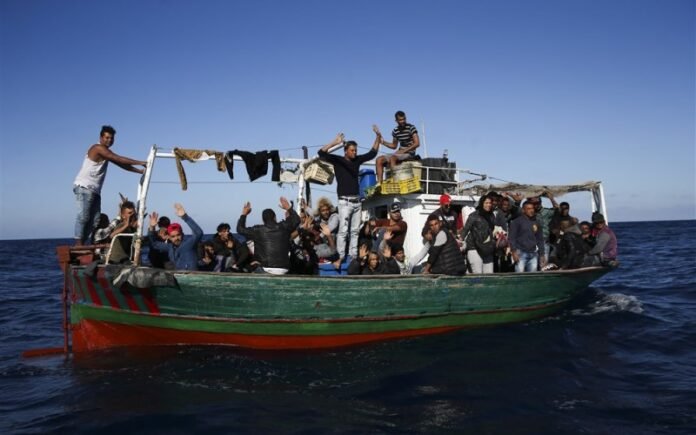
Nearly 2,800 migrants arrived in Italy by sea in June, marking a 10% decrease compared with the previous month, according to data from the UN Refugee Agency (UNHCR).
Since the beginning of 2026, a total of 14,388 migrants have reached Italy by sea, representing a 30% decline compared with the same period in 2025.
The UNHCR said that 56% of all arrivals so far this year have involved Lampedusa.
On the humanitarian front, the International Organization for Migration (IOM) estimates that 1,400 people lost their lives in the Mediterranean during the first six months of 2026. According to the agency, 62% of those deaths occurred along the central Mediterranean route.
Since January, Libya has remained the main country of departure, accounting for 83% of migrant landings in Italy. Algeria and Tunisia together accounted for a further 8%.
The UNHCR said that, between January and June, migrants from Bangladesh made up 30% of arrivals, followed by Somalia at 11% and Sudan at 10%.
The agency also reported that unaccompanied minors represented 19% of all sea arrivals during the first half of the year.
Between January and June 2026, 22% of people arriving by sea were rescued in the Mediterranean by non-governmental organisations, according to the UNHCR.
Woman’s hip replacement disintegrates, causing severe metal poisoning
A 56-year-old woman was admitted to a hospital with an array of alarming symptoms that were only getting worse. For eight weeks, she had a painful “pins and needles” feeling that started in both of her feet and then began working its way up her legs. By the time she arrived at the hospital, she was unable to feel her feet on the ground. She frequently stumbled and clutched at walls to stay up. But the tingling numbness was moving into her hands, too. Then came neurological symptoms. She told her doctors about short-term memory problems and difficulty concentrating. She was irritable and had no appetite. She was experiencing heart palpitations, too.
According to a case report this week in the New England Journal of Medicine, her doctors looked through her medical history for clues, finding nothing that immediately stood out. She had high blood pressure, a history of anxiety and depression, and hypothyroidism (an underactive thyroid). They did notice that, although she had managed the thyroid problem for more than a decade at the same dose of medication, she had been switched four weeks earlier to a stronger dose. But the dosage change didn’t immediately raise any red flags.
She also had a history of hip problems. Twenty years before, she had a hip replacement that stemmed from an injury she sustained in a car crash ten years before that. While more than 90 percent of hip replacements last at least 30 years, the woman’s started failing her after 19.
The year before her current condition, the hip prosthesis had become dislocated. At the time, doctors were able to put it back into position without surgery, but she continued to have pain and problems walking. Imaging also indicated that the lining in the hip socket was failing. So about three months before her alarming symptoms developed, she had surgery at a different medical facility to replace parts of her artificial hip joint, a surgery described as a hip “revision.”
The doctors didn’t have the medical records for the revision, but they didn’t think complications from such a surgery would explain her current condition. Of course, it’s possible the surgery could have damaged nerves, causing tingling and pain, which she was experiencing. But such damage would likely only affect nerves on one side of her body—the side with the hip replacement, which was her left side. But she had pain, tingling, and numbness on both sides. Further, nerve damage from surgery wouldn’t explain her other symptoms.
The doctors performed a thorough exam and began testing. They noted that her heart rate was elevated, a condition called tachycardia. She also had reduced sensitivity to touch in all four limbs. They considered a long list of possible causes: Vitamin B12 and copper deficiency, a rare immune disorder, chronic inflammation, and an autoimmune disease. But there were no clear leads.
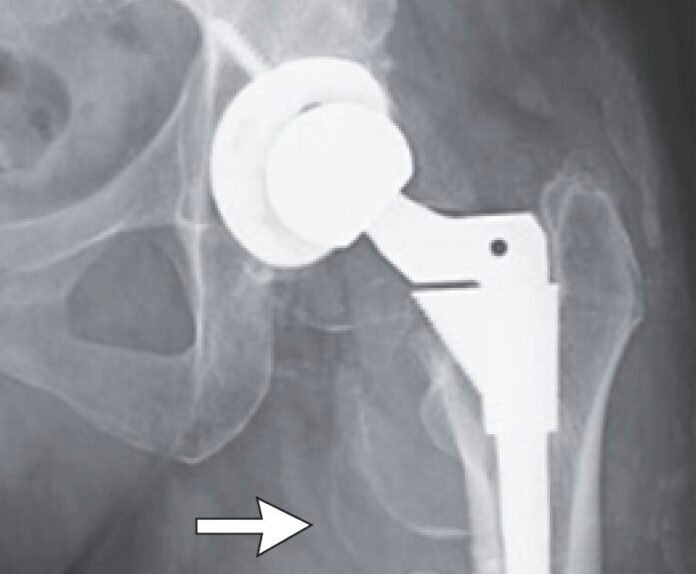
They noted that her blood work showed elevated levels of hemoglobin, an iron-containing protein in red blood cells that binds and transports oxygen. They also did an X-ray of her hip, which showed that the artificial joint was in the proper place. But it also showed deposits in the tissue around the joint.
Harrowing hip
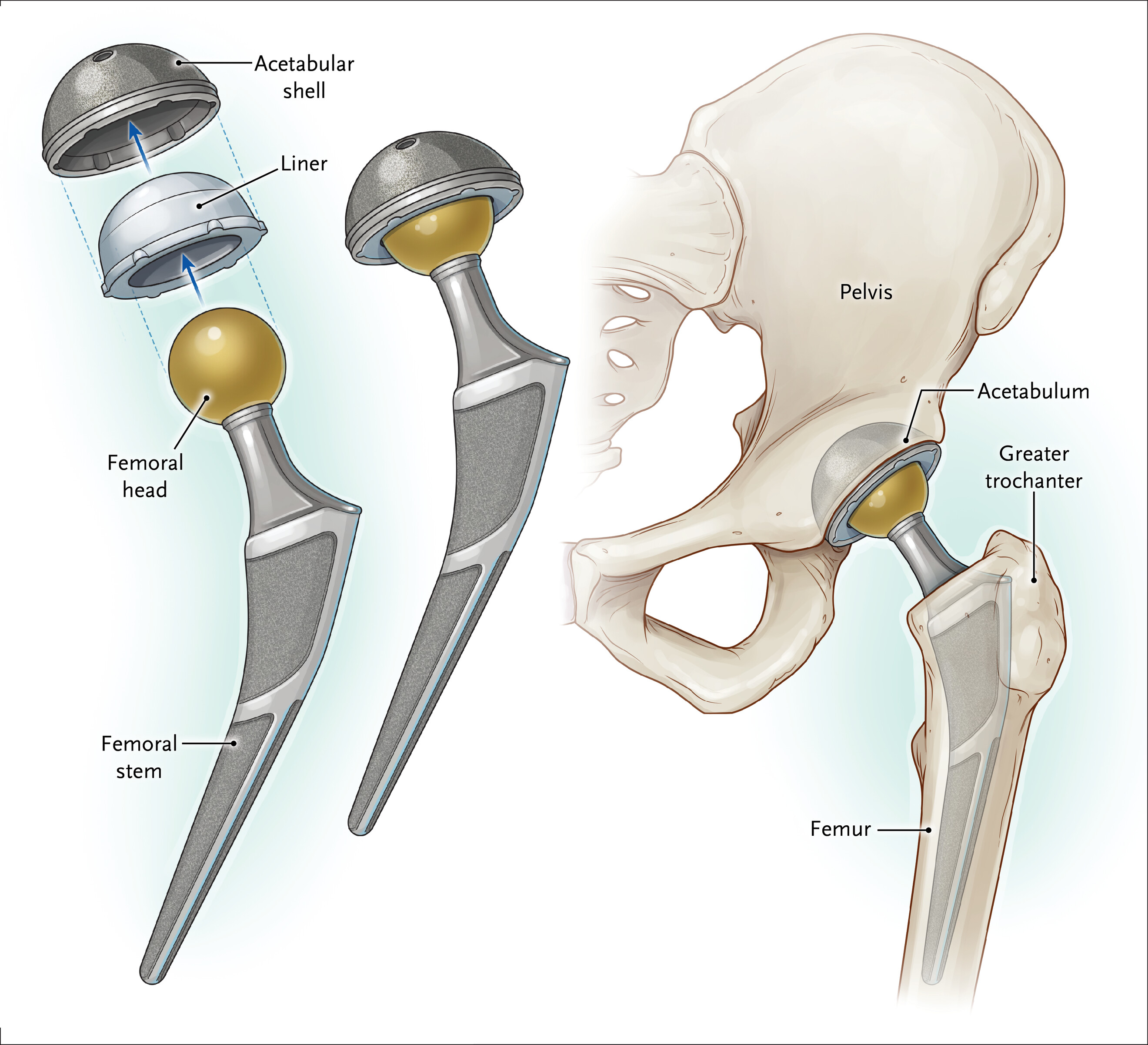
At that point, the records from her hip revision came in. The report clarified that 20 years ago, the woman had received a titanium and ceramic hip joint. Specifically, the joint included a titanium shell (acetabular shell) that fit into the hip bone, a ceramic liner in that shell, then a ceramic ball (femoral head) on the top of a titanium stem (femoral stem) that extended into her thigh bone (femur). Over time, the ceramic liner in the acetabular shell shattered, and the ceramic femoral head began directly moving against the titanium shell.
The main prosthetic components in total hip arthroplasty are shown separately, assembled, and in position within the native hip joint.
During the hip revision, a surgical team replaced the destroyed ceramic liner with one made of polyethylene. They also replaced the ceramic femoral head with a cobalt–chromium alloy one. The original titanium acetabular shell and femoral stem were kept in place. The report noted that the team had to do extensive cleaning of the woman’s hip to try to clear out all the fragments of the wrecked ceramic liner that had scattered in the joint and surrounding tissue.
After seeing the report, the woman’s doctors immediately understood the problem: She had severe cobalt poisoning.
The hallmarks of cobalt poisoning fit the woman’s array of symptoms neatly. Cobalt toxicity causes nerve problems, like her pain, tingling, and numbness; cognitive impairment, like her memory and concentration problems; cardiac problems, like her tachycardia and palpitations; and thyroid dysfunction, explaining why she recently needed to have her thyroid medicine increased.
Cobalt also stabilizes a protein called hypoxia-induced factor, a transcription factor that activates specific genes to spur the production of red blood cells, usually in response to low oxygen levels. But with toxic levels of cobalt, the transcription factor is active without low oxygen levels, leading to abnormally high amounts of hemoglobin-carrying red blood cells—explaining the woman’s high hemoglobin levels.
The one thing that didn’t fit was the rapid progression and severity of her toxicity. In cases of cobalt toxicity linked to hip replacements, the symptoms usually develop over many months, not weeks, as in the woman’s case. The doctors speculated that after the revision was done, there may still have been ceramic microparticles from the previous shattered liner left in the joint. Those particles may have been grinding in the joint, causing mechanical wear on the cobalt-chromium femoral head that released cobalt into the surrounding tissue and bloodstream.
Metallic muscles
The doctors sent the woman to have a second hip revision surgery. When surgeons opened the joint, they immediately understood why her toxicity had progressed so quickly. A pool of grey, metallic fluid filled the joint while the tissues and muscles around the hip were necrotic and stained silver-gray with cobalt. (A picture of what the surgeons saw is here, but be warned that it’s graphic.)
Surgeons extensively cleaned the joint, trying to remove all of the dead, cobalt-infused tissue. They also replaced the cobalt-chromium femoral head with one made of ceramic and replaced the old polyethylene liner with a new polyethylene liner. The same day, doctors started the woman on a chelation therapy to clear the cobalt out of her body.
Three days after the surgery, lab tests came back with the level of cobalt in her blood. Before surgery, the tests found she had 592 nanograms per milliliter of cobalt in her blood. A normal value is less than 10 ng/mL. Her chromium level was 62.4 ng/mL, while a normal level is less than 0.2 ng/mL.
Her recovery was slow, non-linear, and incomplete. In the first months, her walking improved and she was able to step down her thyroid medication to her old dosage. But her nerve problems persisted. Two weeks after she was discharged from the hospital, she developed tinnitus, which also persisted. Tinnitus is a common feature of cobalt poisoning, thought to be from cobalt-mediated injury of the cochlear hair cells or the auditory nerve.
A year after her hospital stay, she reported less nerve pain, improved walking, and less frequent tinnitus.
In the case report, her doctors note that the use of cobalt–chromium alloy in hip replacements has declined “substantially” in the last 15 years. They remain in use for some purposes, though, such as certain types of hip revisions. When they cause toxicity, it’s usually due to mechanical stress over long periods and specifically involves cobalt; chromium isn’t as much of a concern. The kind of chromium used in implants is predominantly trivalent (not the hexavalent kind in environmental pollution). Chromium can damage bone near the implant, but it has relatively limited uptake by cells and isn’t linked to systemic toxicity like cobalt.
In the woman’s case, the daily grind of residual ceramic debris from her previous artificial hip significantly sped up wear-and-tear of the cobalt-chromium femoral head, which in turn sped up the release of cobalt, causing her systemic toxic illness, the doctors concluded.
Young Boy Kills Multiple Monks with Parents’ Truck
An 11-year-old boy allegedly took his parents’ pickup truck without permission before losing control and plowing into a line of Buddhist monks in Thailand, killing nine and injuring 13 others.
The horrific crash happened Thursday morning in Mukdahan province, about 370 miles northeast of Bangkok, as 35 monks began a 160-mile pilgrimage walk to neighboring Ubon Ratchathani province.
The group had reportedly been walking for only about 30 minutes when the pickup truck suddenly swerved off the road and slammed into the procession.
Five monks were pronounced dead at the scene. Three others later died at a hospital, while officials subsequently confirmed that a ninth monk had also succumbed to his injuries.
Thirteen monks were hospitalized, including three who were listed in critical condition, according to the provincial administration.
Shocking surveillance footage shared by the Ruam Jai Mukdahan Rescue Association showed the monks walking in a single-file line along the side of the road moments before the truck barreled into them.
One survivor, identified as Phra Sompong, said he was chanting a Buddhist meditation mantra when he saw the pickup approaching.
“I saw a boy driving a pickup truck, approaching. At that moment I was chanting ‘Buddho, Buddho,’” the monk recalled in a video shared by rescue workers.
“Then suddenly the truck hit at full speed and crashed us like this,” he said.
Sompong said he and another monk managed to leap out of the truck’s path just in time.
“The first nine monks in line survived. But others who were hit were thrown into the air,” he said.
CCTV footage from a nearby property reportedly captured the monks calmly walking along the road as several vehicles passed. A loud crash could then be heard before the procession abruptly came to a stop.
Police said the 11-year-old boy had taken the truck from his parents without their permission and was believed to have lost control while driving.
Witnesses told investigators the pickup appeared to be swerving before it slid off the road and smashed into the monks.
“The suspect is a child,” Police Major General Pairoj Thaiphutsa, commander of the Mukdahan Provincial Police, told reporters.
“The vehicle has been taken for forensic examination to determine the cause.”
Police said the boy was being held and would be questioned in the presence of state child-protection officers.
Authorities also called the boy’s parents in for questioning as investigators worked to determine who was responsible for supervising him and how he was able to gain access to the vehicle.
“We’ve asked the child’s parents to come in so we can determine who is responsible for the child’s care, so we can go on with the legal process,” Pairoj said.
Buddhist monks are deeply respected in Thailand and are frequently seen walking in public processions or accepting food and other offerings from local residents.
Mukdahan Governor Worayan Bunnarat said the devastating incident should serve as a warning to parents and the wider public about road safety.
“This case should be a lesson not just for our province, but for the public in general when it comes to preventing road accidents,” he said.
“I think everyone involved, especially parents, needs to help, because no one wants something like this to happen.”
The exact cause of the crash remains under investigation.
Crimea in emergency as Ukraine reaches for Putin’s ‘crown jewel’
Vladimir Putin has finally acknowledged that Ukraine’s relentless drone attacks on Russia’s energy infrastructure are having an effect.
Speaking to the ruling United Russia party on June 28, the Russian president confirmed that his country is facing “a certain shortage” of fuel and that “strikes on our infrastructure sites are creating problems.”
In fact, the situation is far worse that Putin admits. Russia has hit back hard at Kyiv and other cities in Ukraine, launching massive strikes over night on July 1 with a combination of drones as well as cruise and ballistic missiles, killing at least 17 people and injuring dozens more.
Ukraine’s president, Volodymyr Zelensky, had warned that the Kremlin was planning another massive attack in retaliation after a month in which a Ukrainian air offensive has put considerable pressure on Russian defenses and morale.
Throughout June, Ukraine stepped up its strikes on Russia’s energy infrastructure deep in the heart of European Russia, far from the front lines of the war in eastern Ukraine. Oil refineries in Moscow itself have been hit. All regions of Russia now report fuel shortages and knock-on effects are emerging with delays in the delivery of food and other goods.
Russian-occupied Crimea has been a particular target, with regional authorities declaring a state of emergency on June 26 amid power outages, food shortages and fuel rationing that includes banning the sale of petrol to civilians.
Crimea has been a focal point for Ukraine’s strategy in part because it has played a vital role in Russia’s war effort. It has been an important route for military equipment and supplies heading to the combat zone in Ukraine’s Donbas region.
But Ukraine has also focused its attention on Crimea as a target because of its symbolic significance as the “jewel in the crown” of Russia’s campaign in Ukraine.
Ever since Russia annexed Crimea in 2014, the peninsula has been used by Moscow as a symbol of the success – and indeed the righteousness – of its efforts to claim Ukrainian territory as its own.
The fact that Russia has been unable to protect Crimea from Ukrainian strikes is therefore particularly humiliating for Moscow.
‘Crimea is ours’
The 2014 operation to seize control of Crimea was carried out very efficiently by Russian troops who swiftly occupied key strategic points. Ukrainian and western media labelled the soldiers “little green men” and initially Putin claimed they were “local self-defense units.”
It was later revealed they were Russian troops – and among pro-Russia residents of Crimea they were seen as heroes. Their professional appearance and disciplined behavior gave Russians a reason to be proud of their armed forces, which had a reputation for brutality and incompetence. Locals flocked to take selfies with them.
The annexation sparked a surge of nationalist sentiment in Russia. The phrase “Crimea is ours” became a social media meme and was was printed on consumer goods.
The Russian film industry was enlisted to reinforce the message. The 2017 blockbuster “Crimea” – made with funding from Russia’s defence ministry – presented the annexation as a demonstration of the country’s status as a great power.
The following year, a feel-good romantic comedy Crimean Bridge – Made with Love! was released. Written by Margarita Simonyan, the head of the Russian news outlet RT and a close ally of Putin, it depicted life in the peninsula as a sun-drenched adventure.
While popular culture painted an attractive picture of Crimea, Moscow encouraged Russians not only to spend their holidays there but to take up residence to ensure another, more permanent, form of occupation.
As many as 200,000 Russians are believed to have relocated to the peninsula, lured by the warmer climate and the promise of jobs and generous welfare benefits.
Russia struggling to adapt
Moscow’s failure to shield Russian society from the impact of war exposes the myth of Putin’s repeated claims that the war is proceeding according to plan. Even the US president, Donald Trump, who famously told Zelensky in early 2025 that Kyiv did not hold any cards in this conflict, has reportedly acknowledged that Ukraine is “doing pretty well.”
This raises the question of what Russia might do to try to regain the momentum. The mass invasion stage of Russia’s war in Ukraine since 2022 has revealed some clear patterns. Whereas Ukraine has been good at innovating in weapons development and in strategy and tactics, Russia has been slow to adapt to change.
In the short term, Moscow responds to setbacks by intensifying its attacks on civilians in Ukraine, as we have seen with the massive overnight strikes on July 1.
In the medium term, Russia adapts its tactics. For example, responding to Ukraine’s ability to strike large formations of troops on the front lines by dispatching a handful of soldiers at a time, sometimes on horseback, to continue Russia’s advance.
This suggests that we are likely to see continuity rather than radical change in Russia’s approach to this war – for example, putting more emphasis on anti-drone and anti-missile measures. But there are real doubts about whether Russia’s thinly stretched defenses can provide effective protection for the wide range of locations that Ukraine targets.
It is too soon to say whether the tide of the war has turned in Ukraine’s favor. But unless Russia finds a more robust response to the challenges it faces from Ukraine, we may look back on June 2026 as a decisive point in this conflict.
If the car-buying public had qualms about Tesla, it appears to have gotten over them. This morning, the automaker released its sales and production numbers for the second quarter of the year. And if you’re a fan of activist CEO Elon Musk, it’s good news, as April, May, and June were great months for the company. In total, Tesla sold 480,126 EVs during Q2, a 25 percent year-over-year increase.
As expected, the Model 3 and Y make up the vast majority of sales; despite its size, Tesla still only mass-produces these two models, which accounted for 467,762 deliveries, a 25.2 percent increase compared to Q2 last year. The remaining 12,364 vehicles—a 19 percent increase compared to the same quarter in 2025—were a mix of the now-discontinued Models S and X and the controversial Cybertruck, which is only sold in North America and the Middle East.
Better news for Tesla fans is that the company appears to be getting a handle on its overproduction problem. As we noted when it published its Q1 2026 results in March, Tesla had a growing inventory problem, repeatedly building more cars each month than it could sell. But total production for Q2 was 451,758 cars; this is a 10 percent increase year over year but also nearly 30,000 fewer cars than it sold this quarter.
Of those, 442,936 were Models 3 and Y, an 11.6 percent increase year over year. But we can see the effect of the Model S and X cancellations; “other” accounted for just 8,822 vehicles, a 35 percent decrease compared to Q2 2025.
Tesla’s energy storage sales aren’t looking too shabby, either. In Q2 2026, it deployed 13.5 GWh, a 40 percent increase compared to Q2 2025.
Although Tesla does not break out sales by geographic region, registration data shows that much of the sales surge came from Europe.
Google faces EU top court ruling on record €4.1 billion fine
The European Union’s top court is set to rule on Thursday on Google’s appeal against a record €4.125 billion ($4.67 billion) antitrust fine over alleged anti-competitive practices.
The European Commission imposed a €4.3 billion penalty in 2018, accusing Google of abusing its Android system’s market dominance by requiring phone makers to pre-install Google Search and Chrome.
The EU’s executive branch accused the tech giant of restricting competition while imposing the bloc’s highest antitrust fine ever.
The EU’s General Court upheld the findings in 2022, but reduced the fine from €4.34 billion to €4.125 billion.
Appealing the 2022 ruling, Google filed a new challenge before the European Court of Justice, the bloc’s top court.
Google claimed the case was unfounded, saying that the sanction penalized innovation and that Android users were free to download rival apps.
Earlier, the tech giant had also accused the EU of being blind to practices by Apple pushing its own services on iPhones.
Google fined more than €8 billion
The latest case is one of several antitrust disputes between Google and the EU, which fined the company more than €8 billion between 2017 and 2019 over antitrust violations.