How to Show That Israel’s Sexual Violence Against Palestinians Is Systemic — and Has Gone on for Decades
Editor’s note: This article contains graphic descriptions of sexual violence.
The months after the October 7, 2023, attacks saw a wave of questionable mainstream news stories about alleged sexual assault in Hamas’s attacks that day on Israel.
It would be years before the American press began to deal with sex crimes against Palestinians imprisoned by Israel as part of its brutal occupation.
It’s a reckoning that is long overdue.
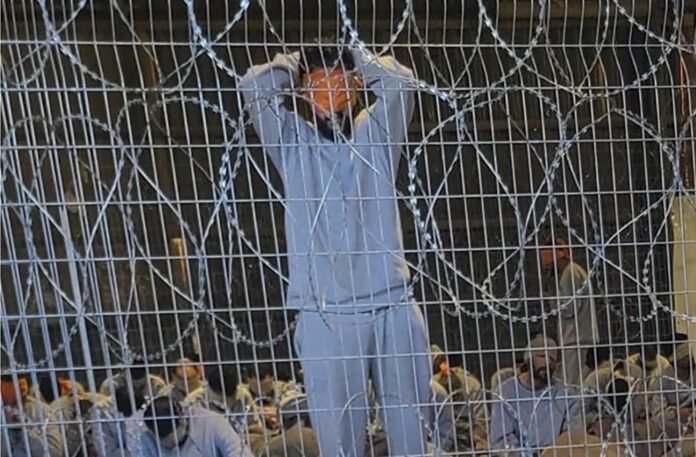
Sexual violence by Israeli forces against Palestinians in detention is both a systematic and a decades-old practice — a well understood dynamic that is being put in the spotlight this week in a new report from the Palestinian Feminist Collective, a group of Palestinian and Arab feminist researchers and organizers.
The extensive 188-page report, parts of which were shared with The Intercept in advance of publication, situates recent, high-profile news stories detailing the rape and sexual assault of Palestinians in Israeli detention as part of “a wider system of sexualized and gendered violence spanning detention, warfare, surveillance, reproductive destruction, family separation, domicide, and the desecration of Palestinian bodies” over decades.
The report, “A Predatory State: Israeli Systemic Sexualized and Gendered Violence Against Palestinians,” brings together witness and survivor testimonies; news coverage; academic research; United Nations reports; and findings from human rights groups, like the Gaza-based Palestinian Centre for Human Rights, Geneva-based Euro-Mediterranean Human Rights Monitor, and Israel-based B’Tselem; along with declassified Israeli archival material. (The Israeli government, military, and prison system did not immediately respond to requests for comment.)
The United Nations added Israel in May to a blacklist of countries found to be committing sexual violence in war zones, citing 31 cases of sexual violence perpetrated in the last two years by Israeli forces against Palestinians from the Gaza Strip and the West Bank. The new Palestinian Feminist Collective report underlines that the U.N.’s findings are merely the tip of the iceberg.
The compilation of harrowing details from a multiplicity of sources offers a chilling rebuke to those who have sought to discredit Palestinian victims’ claims or dismiss cases of sexual assault and rape perpetrated by Israeli forces as rare aberrations.
Crushed testicles, genital beatings, rapes of detainees including children and the elderly — the report, like a number of the previous human rights reports it draws from, shows that such abuse is, according to the authors, “institutional practice rather than individual misconduct.”
Rape by Trained Dogs
A section of the report shared with The Intercept includes the detailed testimonies of multiple released Palestinian prisoners. A 42-year-old woman arrested in Gaza while going through an Israeli military checkpoint in November 2024, for example, described being stripped, blindfolded, and handcuffed to a metal table and raped vaginally and anally by Israeli soldiers.
“I felt a penis penetrating my anus and a man raping me,” the woman said, in testimony originally collected by the Palestinian Centre for Human Rights. “I started screaming, and they beat me on my back and head while I was blindfolded. I felt the man who was raping me ejaculate inside my anus.”
She then recounted subsequent vaginal rapes.
A 41-year-old Palestinian father arrested at Kamal Adwan Hospital in December 2023 and held for 22 months in Israeli prison reported, “One of the soldiers raped me by violently inserting a wooden stick into my anus. After about a minute he removed it and then inserted it again more forcefully.”
Other accounts from boys and men detail anal rape by soldiers and prison guards using carrots, bottles, batons, and other sharp objects.
The report also includes multiple accounts claiming the use of trained dogs as sexual threats and tools of direct sexual violence.
When the New York Times’s Nicholas Kristof last month reported on widespread and extreme sexual torture of Palestinians in Israeli detention, including the use of trained dogs to rape detainees, the backlash from Israeli authorities and pro-Israel mouthpieces was as swift as it was predictable.
The Israeli Ministry of Foreign Affairs slammed the article as “one of the worst blood libels ever to appear in the modern press” — a typical retort that deems any criticism of Israeli brutality to be antisemitic. Israeli Prime Minister Benjamin Netanyahu threatened to sue the Times for defamation. No such lawsuit has materialized, bound as it would be to fail and risk a court process revealing further horrors perpetrated by Israeli forces.
Meanwhile, for Palestinians and advocates of Palestinian liberation, Kristof’s report was perhaps only surprising for its presence in the New York Times. Reports of rape, sexual violence, and sexual humiliation in Israeli custody have been widespread well established for years.
Pro-Israel media outlets like Bari Weiss’s The Free Press attempted to discredit and debunk the testimonies in Kristof’s article, particularly those from formerly detained Palestinians who alleged that trained dogs were used to rape prisoners. Such abuse was impossible, the critics claimed — despite the fact that, according to survivors, Augusto Pinochet’s regime in Chile, as well as Nazi prison commander Klaus Barbie, reportedly used dogs to rape and sexually torture prisoners.
The “Predatory State” report lists 10 specific incidents of rape or severe sexual assault involving trained dogs, as reported to human rights groups by victims themselves or firsthand witnesses.
“The shock came when they forced me to lie down, and a dog climbed on top of me and tried to insert its penis into me,” one detainee testified, in a report first compiled by Euro-Med and cited by the Palestinian Feminist Collective. “At first, I did not understand what was happening, but then I realised that I was being raped.”
“They unleashed police dogs on us again, allowing them to tear into our flesh,” a 48-year-old man arrested at Al Shifa Hospital in Gaza told the Palestinian Centre for Human Rights in further testimony cited by the Palestinian Feminist Collective. He reported that one dog attacked a fellow detainee and “started mauling his genitals (penis). He bled to death in my arms.”
“Violence Across Decades”
The report authors note that “sexual torture has often preceded the deaths of detainees and prisoners and therefore must be considered part and parcel of the crime of genocide waged against the Palestinian people.”
This statement covers more than just Israel’s genocidal war on Gaza: The Palestinian Feminist Collective report is explicit in including accounts of sexual violence reportedly carried out by soldiers as well as settlers in the West Bank.
“They zip-tied my penis, tightened it and then dragged me all around the village,” a Palestinian man, Qusai Abu-al Kebash, told B’Tselem of a reported assault at the hands of settlers in his West Bank village earlier this year.
In response to credible claims of sexual assault, particularly in Israel’s Sde Teiman military prison, Israel’s defenders have attempted to downplay incidents as aberrations or outliers in the fog of war.
“This is a story about how Israel was institutionally overwhelmed by events after October 7,” Jonathan Conricus, a former Israeli military spokesperson, now fellow at the neoconservative think tank Foundation for Defense of Democracies in Washington, told The Free Press.
He was responding to an incident caught on video of Israeli soldiers appearing to beat and brutally sodomize a Palestinian prisoner with a knife. Conricus blamed “reservists without the right training” who “were called up to be prison guards” — but rejected any claims of systematic abuse.
“The Sde Teiman footage should have shattered the fiction that Palestinian testimony is unproven.”
Reports like the Palestinian Feminist Collective’s further give the lie to excuses like Conricus’s.
“The Sde Teiman footage should have shattered the fiction that Palestinian testimony is unproven until Israeli perpetrators record themselves,” legal scholar and human rights attorney Noura Erakat told The Intercept. “Still the debate focuses on whether individual soldiers received direct orders, rather than how a state has sanctioned, protected, and repeated this violence across decades.”
In a statement shared with The Intercept, Loubna Qutami, a member of the Palestinian Feminist Collective, said, “This report names what Palestinians have long known and what the world has too often refused to hear: Israel’s sexualized and gendered violence against Palestinians is systemic, historical, and constitutive of Israeli colonial rule.”
According to Igal Dotan, an Israeli attorney cited in the Palestinian Feminist Collective’s report, “The situation before the war was very bad, but it is not comparable to what happened in Israeli prisons after October 7.”
Dotan’s clients include a “severely disabled” 14-year-old Palestinian boy, diagnosed with autism, who was, the report notes, “reportedly sexually, physically, and psychologically assaulted while in detention.”
Before October 7
The Palestinian Feminist Collective refuses to begin its history of sexual and gendered violence on October 7. The report includes testimonies of sexualized violence gathered from oral histories, declassified archives and historical documents, dating back to the Nakba in 1948, the expulsion of hundreds of thousands of Palestinians from what are today’s Israel’s internationally recognized borders.
The long history of systematic displacement and dehumanization of Palestinians is run through with sexualized violence — as is common in situations of oppressive, militarized violence and population control.
“Sexual torture is a technology of Israeli rule.”
“‘A Predatory State’ documents how sexual torture is a technology of Israeli rule: a means of terrorizing Palestinians and advancing a project of destruction,” Erakat told The Intercept. “Accountability must go beyond a handful of soldiers to reach and tear down the legal, military and political structures that command and then protect these crimes.”
With the genocide in Gaza ongoing and Israeli expansionist violence continuing in the West Bank, Lebanon, and Syria, such accountability seems beyond our current horizons of expectation.
More evidence of the sort compiled by the Palestinian Feminist Collective is unlikely to change that; it is not for lack of evidence that Israeli forces continue to carry out war crimes with impunity.
The urgency is to act on the ample evidence we have.
“The report is a call upon all responsible citizens to stay united,” said Francesca Albanese, U.N. special rapporteur on the occupied Palestinian territories, in a statement on the Palestinian Feminist Collective report, “not just to end genocide, but to fight once and for all this testosteronic model of power that roots and grows through subjugation and repression.”
Florida Is Executing Prisoners at a Record Pace, Even as Most of the U.S. Abandons the Death Penalty
This spring, Father Dustin Feddon began waking up in the middle of the night. Heart racing, he would stand at the bathroom sink in the dark, splashing cold water on his face until the feeling passed.
For about a dozen years, Feddon had visited prisoners on Florida’s death row as their appeals wound their way through the courts. Some had waited for decades, but the priest learned, more or less, how to accompany people through years of confinement and isolation without losing himself in their desolation. Then in January 2025, Gov. Ron DeSantis began signing death warrants at an accelerated rate. What followed was the busiest period of executions in more than eight decades in a state that has long been a stronghold of capital punishment.
In November, DeSantis set the execution date for Frank Walls, one of the men Feddon was counseling. Walls was moved from death row, at Union Correctional Institution, about an hour west of Jacksonville in the northeast part of the state, to nearby Florida State Prison. There he was placed in one of the three cells, known as death watch, that sit 30 feet from the execution chamber. And with that, Feddon was drawn into the strange, intimate work of accompanying a condemned person through the final weeks of his life.
Seven days before Christmas, he sat beside Walls in the execution chamber, his hand resting on the man’s leg. Walls, with whom he shared communion just hours before, lay strapped to the gurney, his head freshly shaved, intravenous lines running into his right arm. His chest began to heave as he gasped for air for several minutes. Feddon watched as the man’s eyes rolled back and his body went slack and then fell still.
He was the 19th man put to death that year, shattering the state’s annual record of 11, first set in 1936; the Sunshine State accounted for 40% of all executions in the United States in 2025.
Soon there were more prisoners who sought out the priest. One received an execution date in February, another in May. With each new death warrant, Feddon felt the panic rising in his chest. The pace of executions had upended the nature of his work; no longer was he ministering to men living under sentences of death; he was preparing them to die.
Feddon spent years getting ready for this role without quite knowing it. He entered the seminary in his 30s after temporarily taking a break from a doctoral program in religion, and during a year of hands-on ministry before his ordination, he began visiting prisoners. He went on to found Joseph House, a reentry home in Tallahassee, where he lives alongside men newly released from prison and often scarred by years in solitary confinement. There, he helps residents rebuild their lives — driving them to jobs, doctor appointments and therapy sessions; helping them obtain ID cards and open bank accounts; refereeing the inevitable dramas of communal living. There were no off days. He spent one Christmas waiting with a resident in an emergency room.
Father Dustin Feddon ministers to death row prisoners in Florida, where a significant increase in the number of executions has overwhelmed him.Alec Soth/Magnum
By the spring, he was ministering to the two men on death watch. As often as allowed, he came to see them, spending four hours on the road, round trip, to talk and pray with the men as they awaited execution. Some mornings he drove to Florida State Prison after only a few hours of sleep; and some days he returned to Joseph House so drained that the demands and small crises awaiting him there seemed strangely distant. At a spiritual retreat one afternoon, he suddenly became preoccupied with the idea that the priest who stood before him speaking was on the verge of collapse. Searching for an explanation, he told me he had become “hypervigilant of mortality — of other people dying, not me dying, but other people dying right in front of me.”
Florida has executed nine men this year, more than all other states combined. The pace has transformed death watch, which had typically been empty or held one man at a time. Now all three cells are often occupied, with the next man scheduled to die housed closest to the chamber. After each execution, the prisoners advance one cell closer; then another condemned man receives an execution date and is moved into the vacant cell. Death watch, once a lonely way station, has begun to resemble an assembly line.
Florida’s renewed embrace of the death penalty has unfolded against the backdrop of a decades-long national retreat from capital punishment. Thirty-three states have either abolished the death penalty or not carried out an execution in at least a decade. New death sentences have dropped even more precipitously, with prosecutors in capital cases seeking them less often and jurors more likely to choose life in prison. Just 23 people were sentenced to death in the United States last year, according to the Death Penalty Information Center, compared with 307 in 1995.
Support for capital punishment has been worn away by an accumulation of forces. The mounting number of death row exonerations — more than 200 since the early 1970s — has made the risk of executing an innocent person impossible to ignore. The steep cost of capital prosecutions has forced many prosecutors to think twice before seeking death; the years of litigation required to obtain and defend a death sentence can add millions of dollars to a case. Decades of declining violent crime have further blunted the public appetite for executions. Support for the death penalty now stands at its lowest since 1972; a Gallup poll last year found that a majority of Americans under 55 opposed it.
This July marks the 50th anniversary of the U.S. Supreme Court’s decision in Gregg v. Georgia, which reinstated the death penalty, making it a defining feature of the American criminal justice system. But capital punishment has since lost its hold on the political imagination, with executions persisting in only a small number of states, including Texas, Oklahoma, Alabama and Missouri.
That retreat from capital punishment is apparent in governors’ offices across the country. In 2000, Gov. George Ryan of Illinois, a Republican, declared a moratorium on executions, after the exoneration of 13 men who had been on death row; before leaving office, he commuted nearly all death sentences in the state to life in prison. More recently, Democrats like Gov. Gavin Newsom of California and Gov. Josh Shapiro of Pennsylvania imposed or maintained moratoriums. In June, Ohio’s governor, Mike DeWine, a Republican and a former prosecutor who helped write his state’s death penalty statute, called for abolishing capital punishment there, concluding that it did not deter murder and abandoning his belief that it was morally justified.
President Donald Trump, by contrast, has long been one of the death penalty’s most outspoken champions, making it a cornerstone of his law-and-order agenda. He resumed federal executions in 2020, ending a 17-year hiatus and reviving a punishment that had become an increasingly rare exercise of federal power. Before Trump took office, the federal government had executed just three people since 1963; in the final six months of his first term, it executed 13. He returned to the issue repeatedly on the 2024 campaign trail, calling for broadening the categories of crimes eligible for execution by proposing death sentences for drug dealers, human traffickers and migrants who kill American citizens.
Hours after taking office in January 2025, he signed a sweeping executive order titled “Restoring the Death Penalty and Protecting Public Safety” — signaling that the White House intended to put the full weight of the federal government behind the revival of capital punishment. He instructed the attorney general to pursue death sentences more aggressively, called on the Justice Department to challenge Supreme Court decisions limiting the death penalty, directed federal officials to help states obtain the increasingly scarce lethal injection drugs needed to carry out executions and encouraged state prosecutors to seek capital punishment more often.
Nowhere has the president’s vision been pursued more relentlessly than in Florida, thanks to an unusual concentration of power in the governor’s office. In most states that still carry out executions, the process follows a familiar legal path: Once a condemned prisoner has exhausted their appeals, courts — not governors — set execution dates. In Florida, however, the decision rests entirely with the governor, who decides whether — and when — to sign a death warrant for one of the state’s eligible prisoners.
DeSantis, like his predecessors, makes execution decisions behind closed doors; the state’s Supreme Court has long held that setting execution dates is an exercise of the governor’s executive authority, putting it beyond the reach of the state’s otherwise expansive open-government laws. As a result, there is no way to know what criteria DeSantis uses when he chooses who will be put to death, a Tampa-based attorney with the American Civil Liberties Union’s Capital Punishment Project, Maria DeLiberato, told me. “He could be deciding who is next to die by throwing darts at a list of names,” she said, “or spinning a roulette wheel.”
Gov. Ron DeSantis has the sole discretion to choose which eligible death row inmates will be executed, and when.Alec Soth/Magnum
The secrecy surrounding those decisions has left victims’ families, prisoners and their lawyers searching for clues about what principles, if any, guide DeSantis’ selection process. How long a prisoner has spent on death row does not appear to be a deciding factor; DeSantis has bypassed prisoners who committed their crimes as far back as the 1970s, scheduling the executions of men convicted of murders committed decades later. With no obvious overarching logic governing who is chosen next, the process has become a contest to attract — or avoid — his attention. Hoping to prompt him to issue a death warrant for Ronald Heath, convicted of the 1989 robbery and murder of a traveling salesman, the victim’s family sent DeSantis custom blue Sharpies — his pen of choice for signing both legislation and death warrants. DeSantis subsequently did so, and Heath was executed on Feb. 10.
In March, after the execution of a man named Billy Kearse by lethal injection took roughly twice as long as usual, lawyers for another man on death row, Chadwick Willacy, filed a public records request seeking information about the state’s execution protocol. A week later, DeSantis signed Willacy’s death warrant. That timing introduced more fear and uncertainty into an already opaque process. Lawyers representing condemned prisoners were left to wonder whether every legal challenge they raised risked drawing the governor’s scrutiny — and whether vigorous advocacy, intended to save a client’s life, could instead move them closer to death.
DeSantis has offered little public explanation for the record number of executions carried out since 2025 on his watch. The acceleration is particularly striking because it came after years of relative inactivity. In 2019, the first year of DeSantis’ governorship, Florida carried out two executions, and then three years passed without another. Though six men were executed in 2023, just one was put to death the following year before the pace abruptly ramped up in 2025. At a news conference in Jacksonville last November, a reporter asked him to explain the sudden increase.
DeSantis blamed the disruptions of the pandemic as well as bureaucratic challenges for the slow pace at the start of his governorship. Meeting with victims’ families, he said, had reinforced his determination to see old death sentences carried out. “There’s a saying: Justice delayed is justice denied,” DeSantis said. “We’re doing it to be able to bring justice to the victims’ families.” When I asked his office for comment, the head of communications, Alex Lanfranconi, sent a short response: “My advice to those who are seeking to avoid the death penalty in Florida would be to not murder people.”
Some observers see a different calculus. DeSantis is term-limited and will leave office in January, but his political future remains an open question. Since ending his campaign for the White House in 2024, he has worked to repair his relationship with Trump; in April, Axios reported that he was lobbying for a position in the administration, with an eye toward attorney general. Few who follow Florida politics believe he has abandoned his presidential ambitions. The sheer number of death warrants, wrote the editorial boards of the Orlando Sentinel and the South Florida Sun Sentinel last summer, “gives rise to wonder: Why the sudden rush? Is it another sign that he’s planning another run for president in 2028? Would he campaign as the governor who tried to empty his state’s death row?”
When DeSantis signs a death warrant, no one on death row knows who among them has been selected until prison officials arrive at the condemned man’s cell. Of the 242 prisoners on death row, roughly half have exhausted their appeals and are eligible for a warrant. The routine is always the same: A cluster of officials in dress uniforms suddenly appears, the arrival announced by the heavy cadence of boots on concrete and the metallic jangle of handcuffs and restraints. “The warden is first, followed by the colonel and the major and the captain and about four of the biggest guards you’ve ever seen in your life,” a former death row inmate, John Buzia, who was resentenced to life in 2017, told me from prison. “They come walking down the wing and it’s dead silent, because they’ve got their game faces on.”
The men listen as the footsteps pass one cell, then another. From inside their cells, they can see little beyond their immediate neighbors, unless they slip a mirror between the bars in violation of prison rules. Somewhere along the way, the footsteps stop. The warden informs the man whose name appears on the piece of paper he carries that the governor has signed his death warrant. The prisoner is placed in restraints and led back down the wing before being transported to Florida State Prison and placed on death watch.
Even before the ramp-up of executions in 2025, waiting for this moment was an exercise in near constant close listening. “You become very ear-sensitive, sound-sensitive,” Buzia said. Years spent in near total isolation and the same monotonous routine sharpen the senses, lending the smallest break from the ordinary an outsize and terrifying significance: the unmistakable sound of several officers approaching, a certain rattle of keys, the wing suddenly falling silent.
In the cemetery behind Union Correctional Institution lies the grave marker of Frank Johnson, the first person to be executed in the electric chair in Florida, on Oct. 7, 1924.Alec Soth/Magnum
Feddon saw the effects of this last July, when he went to visit Walls, who had been sentenced to death for killing an Air Force airman and his girlfriend during a 1987 robbery. Ten death warrants had been served in the previous seven months, and Walls was visibly on edge, telling the priest that he was barely sleeping because he was sure that his death warrant was going to come down at any moment. “They kind of know there’s this mysterious list,” Feddon said, “and they know they’re on it.” Walls, usually animated as he talked about whichever saint or prayer had most recently captured his imagination, struggled to collect his thoughts, and they sat in silence while he tried to focus. Feddon watched as exhaustion eventually overtook Walls and he nodded off.
The lawyers who represent condemned prisoners, most of whom work for Florida’s Capital Collateral Regional Counsel — a state-funded agency responsible for representing death row inmates in their final rounds of appeals — live with the same uncertainty, never knowing which client will suddenly be scheduled to die, or when. Until a warrant is handed down, they can only guess which of the many cases they juggle will become their most urgent.
Texas, which has historically had the most active death chamber, requires at least 90 days to pass between the setting of an execution date and the execution itself. But in Florida, the period between the signing of a death warrant and an execution is roughly one month, on average. When a warrant arrives, it can set off an all-consuming race against the clock to determine whether there is any legal or factual reason the execution should not go forward: Were there witnesses who were overlooked? Or leads that earlier attorneys failed to recognize or fully investigate? Newer, more sensitive forms of forensic testing — which may have been unavailable, or less reliable, just a few years earlier — can shed light on old evidence. Advances in science and research can alter how courts view a prisoner’s long-standing claims of mental illness or intellectual disability. The imminence of an execution can prompt witnesses who have remained silent for years to speak.
Bill Campbell, a death penalty supporter and a mainstay at the executions, on May 21. His sign keeps a running list of the names of prisoners executed since 2025, crossed out in red, and his boom box blares songs like “Another One Bites the Dust.”Alec Soth/Magnum
This spring, a prisoner named James Duckett, convicted of the 1987 rape and murder of an 11-year-old girl, received an execution date. Five days before Duckett was to be put to death, the Florida Supreme Court stayed his execution while last-minute DNA testing and analysis in the case were completed.
Cases like Duckett’s illustrate why the period between a death warrant and an execution is so important, serving as a finalsafeguard against an irreversible punishment. Florida’s own history of wrongful convictions in capital cases underscores what is at stake. No state has exonerated more death row prisoners, 30 men in all.
Now, with the added strain of one death warrant following another in rapid succession, the burden on the lawyers who are responsible for these cases has grown even heavier. “You have an execution, and then within a week or two, you’re working on a warrant again,” says Linda McDermott, chief of the Capital Habeas Unit at the Office of the Federal Defender in Tallahassee, which represents Florida death row prisoners in federal court. Last year, eight prisoners represented by her office were executed.
The state’s accelerated pace leaves little room for error, or for the demands of life beyond the courtroom. When DeSantis signed a death warrant for Kearse on Jan. 29, Kearse’s lead attorney of more than 20 years, Paul Kalil, was grappling with a family crisis: His father, who had been hospitalized for several months, would enter hospice care less than a week later. As Kalil worked to prepare the final challenges to Kearse’s death sentence, his colleagues sought additional time, explaining in one court filing that “due to his ethical obligations to Mr. Kearse,” Kalil had not been able to spend sufficient time with his father in the final days of his life. The courts granted only 48 additional hours.
Kalil’s father died on Feb. 8. Afterward, Kalil’s colleagues again asked for more time, explaining that the lawyer with the deepest knowledge of the case was now grieving his father’s death and making funeral arrangements. The Florida Supreme Court denied the request, and three weeks later, Kearse was executed.
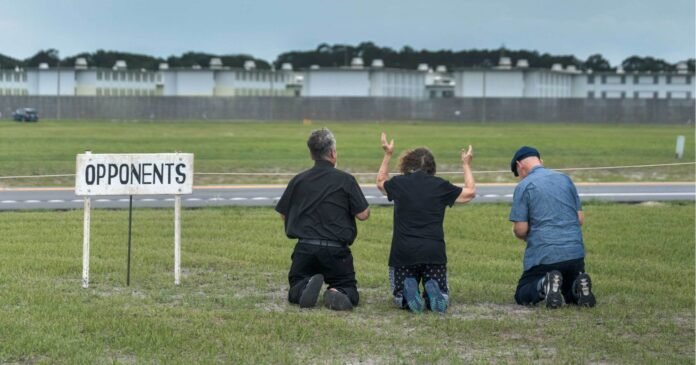
On April 21, the day Florida was set to execute Willacy, I made my way to the vigil that would be taking place outside Florida State Prison, near the small town of Starke. Across the two-lane highway that leads to the prison, a few dozen people were unfolding camping chairs on a sunbaked field, carrying signs with messages like “Execute justice not people” and “Thou shalt not kill.” A single, broad-canopied oak tree provided the only shade. There were no satellite trucks or television crews, no signs that something momentous was about to take place, other than a single counterprotester: a death penalty proponent who held up a sign listing the names of every man executed since early 2025, each name crossed out with a red X. Every so often, a lone car or pickup would come barreling down the highway, hurtle past the protesters and vanish.
A wide shot captures a large crowd of people gathered on a vast green lawn under a massive, spreading oak tree. Several individuals are holding open umbrellas or standing near lawn chairs and small pop-up canopies, while a law enforcement vehicle is parked to the right of the tree. Alec Soth/Magnum
The relative invisibility of executions — the sense that they take place with little public awareness — was what prompted Melanie Verdecia, a Jacksonville attorney, to start writing a newsletter on Substack, “Tracking Florida’s Death Penalty,” that chronicles everything from new capital prosecutions to last-minute death warrant litigation, in real time. Years ago, Verdecia told me, she was driving to the Florida Supreme Court, where she was clerking, on the day of a scheduled execution, having spent weeks immersed in the legal battle over whether it would proceed. As she sat in traffic looking at the commuters around her, she realized none of them had any idea that a man was slated to die that day.
Verdecia is one of a small number of Floridians who meticulously track the state’s use of the death penalty, trying to make sure executions — and more recently, the ramp-up in death warrants — do not pass completely unnoticed. On the afternoon of the Willacy execution, Grace Hanna was sitting in a doughnut shop in Starke, keeping a different kind of record. Hanna, the 29-year-old executive director of Floridians for Alternatives to the Death Penalty, sat at her laptop as she communicated with a network of people who were affected, in one way or another, by Florida’s death penalty, including capital defenders whose clients were under active death warrants and the state’s many death row exonerees, to family members of condemned prisoners who were preparing for final visits or grieving in the wake of an execution. Hanna told me that one of the most haunting parts of her job is when she is needed to collect the ashes of a condemned man and deliver them to his family.
When Hanna was 8 years old and growing up in Tallahassee, a cousin who worked the overnight shift at a convenience store in North Carolina was beaten to death during a robbery. The crime spurred long-running conversations in her home about crime, punishment and how society should respond after someone commits an act of violence. Her parents, Baptist deacons who ultimately left the church over its refusal to ordain women, raised their children to wrestle with such questions. “Clearly, something stuck,” Hanna told me. She went on to become a social worker, her brother a public defender. The man who killed her cousin received a sentence of life without parole, a punishment that spared her family from the many years or even decades of appeals that often accompany a death sentence. Justice, she said, had not demanded putting another person to death.
Grace Hanna, whose cousin was killed during a robbery when she was young, is now the executive director of Floridians for Alternatives to the Death Penalty, which connects with people affected by Florida’s policies and actions.Alec Soth/Magnum
That day, Hanna was drafting a news release, as her team did every execution day, to be sent out after Willacy was put to death. It began by acknowledging the victim at the center of the case, Marlys Sather, who was 56 when she returned to her home in Palm Bay during her lunch break one day in 1990, interrupting a burglary. Court records show that Willacy beat her, bound her and set her on fire before fleeing.
These news releases try to hold two realities at once: the suffering caused by the crime and the complicated path that led there. Drawing on court filings, prison records and years of discussions with the lawyers and family members who know these men best, Hanna writes about forces that shaped their lives before prison: mental illness, intellectual disabilities, addiction, physical and sexual abuse, and childhoods marked by neglect. She also looks at the decades of incarceration that follow their convictions, during which sometimes profound transformations take place. “This is often the only obituary these men will get,” she said.
Yet that was not the central focus of the Willacy release she was writing. Hanna devoted much of it to his unsuccessful effort to force the state to disclose records about its lethal-injection protocol. “Every Floridian,” she typed, “should be asking themselves tonight: What is the State of Florida hiding in those records?”
The execution went forward that evening. Shortly after 6 o’clock, around the time the lethal-injection drugs began to flow, the protesters gathered around a large metal bell. One by one, they stepped forward. “Not in my name,” each said before striking it. The sound was low and resonant, reverberating after each blow. The counterprotester, meanwhile, a lean retiree named Bill Campbell, tried to drown out the sound with a boom box blasting “Another One Bites the Dust.”
Above them, the sky stretched to the horizon, luminous in the early evening light. “Whenever we’re here for an execution, something wild happens in the sky, like a torrential downpour or the most beautiful sunset you’ve ever seen,” Hanna told me. She often takes a photograph of the sky and sends it to the prisoner’s family if they cannot bear to be there.
Soon a convoy of white vans emerged from the prison gates carrying witnesses, two members of the media and prison officials. The Florida Department of Corrections announced Willacy’s time of death as 6:15 p.m.
The protesters folded their chairs and gathered their belongings. A half-hour later, the vigil site had emptied out. Across the road, there was no visible sign that a man was put to death there that evening.
Another execution was already scheduled for nine days later. James Hitchcock, one of the longest-serving prisoners on Florida’s death row, was set to die on April 30. As Hanna headed to her car, she called out to another woman: “See you next week.”
Rain on May 21 did not deter a vigil for Richard Knight’s execution. “Whenever we’re here for an execution, something wild happens in the sky, like a torrential downpour or the most beautiful sunset you’ve ever seen,” Hanna said.Alec Soth/Magnum
Last December, with Florida on the verge of carrying out its 19th execution of the year, a retired warden named Ron McAndrew sat down to write an opinion piece for the Tampa Bay Times. A two-time DeSantis voter and self-described “law-and-order guy,” McAndrew was troubled by the rapid increase in executions. “That pace matters,” he wrote, “because executions depend on human beings performing complex, high-risk tasks under extreme pressure.” He warned of the potential for a serious error and the toll on those responsible for carrying out death sentences. “When something goes wrong in an execution chamber, it is not elected officials who absorb the consequences,” he wrote. It is prison staff members “who carry the memories long after the chamber is cleaned and the state moves on.”
McAndrew served as warden of Florida State Prison in the mid-’90s, when Florida still used the electric chair. He walked three men to the execution chamber and gave the signal that sent electricity coursing through their bodies. The last execution he oversaw, on March 25, 1997, would help hasten the end of Florida’s reliance on the electric chair. Moments after that prisoner, Pedro Medina, received the first jolt of electricity, his head caught fire and flames leaped into the air. Smoke filled the chamber. Medina’s chest heaved until he was pronounced dead.
McAndrew threw out the uniform he wore that day, which smelled of burning flesh. Afterward, Gov. Lawton Chiles sent him to Texas to study lethal injection, the primary method Florida uses today. The cumulative weight of the executions followed him. He drank heavily, sometimes downing a bottle of Johnnie Walker in a single day. At night, he often awoke to find the men whose executions he had overseen sitting on the edge of his bed. “They’re haunting me,” he told his wife.
Ron McAndrew, a former warden at Florida State Prison, was haunted for years by the electric chair executions he oversaw. He says Florida is not taking the burden on prison employees into consideration with the current execution rate.Alec Soth/Magnum
Thirteen years of therapy allowed him to regain his footing. Now retired, he lives in the small town of Dunnellon, roughly 70 miles southwest of Florida State Prison, where he had hoped for a quiet life, puttering along the Withlacoochee River on his pontoon boat. But as executions accelerated last year, he found himself worrying about the people inside Florida State Prison who were being asked to shoulder the burden he once carried, and of the effect on them of so much killing. He knew what it was like to stand inside the execution chamber, and what it was like for the other prison officials and staff members who were required to see the process through to the end. “It was damaging, and I mean very damaging, to the people in that room.”
I thought of the emotion with which McAndrew said “damaging” — as if he were describing an injury that never fully healed — when I spoke to Feddon on June 3, the day after a prisoner named Andrew Lukehart was executed.
Feddon had accompanied Lukehart, who was sentenced to death for the 1996 killing of his girlfriend’s 5-month-old daughter, through the final month of his life. The crime, the remorse he carried and the abuse that had marked his childhood were not the subjects to which Lukehart most often returned. Again and again, he spoke of the Camino de Santiago, the ancient pilgrimage route that winds across northern Spain, imagining that one day he might somehow walk its dusty roads. He and Feddon recited prayers, which the priest had found for him, that pilgrims have spoken for generations along the Camino.
Late in the afternoon on June 2, Feddon had been brought into the execution chamber at Florida State Prison, where he took a seat beside Lukehart, who was strapped to the gurney, and rested his hand on the man’s leg. Lukehart’s execution was the third that the priest would witness at Florida State Prison, and his voice was heavy as he spoke to me the following morning. “To begin the sacrament of last rites for an otherwise utterly healthy man …” he said, trailing off.
Around the time executions are scheduled to begin, protesters strike a large metal bell, intoning, “Not in my name.”Alec Soth/Magnum
He told me he had been flooded with images of the execution since waking before dawn. The scenes returned one after another: Lukehart’s face, flushed with pooled blood, as if he had been doing a headstand; a doctor leaning over the gurney, raising Lukehart’s eyelids to verify that he was dead; the prayer rope Feddon laid across the man’s still chest. Before Mass that morning, the images looped in his mind. “I just was seeing it, and seeing it, and seeing it.”
The priest was struggling to reconcile what he believed he was called to do with what that calling now required of him, and how to move forward as death warrants continued to be signed at a relentless pace. How could he keep doing this work? And yet, how could he abandon the men who had asked him to walk beside them? Inside the death chamber with Lukehart, Feddon told me, he felt a tension between the privilege of being with the condemned, he said, “to speak words of healing, of love, of God’s mercy” at their hour of greatest need, contrasted with the taking of a life. “Everything makes you want to cry out to the people around you, ‘Why are you making me do this?’” he said.
Lukehart was gone, but another prisoner he was counseling, Duckett, whose execution had been put on hold for DNA testing, remained. The testing yielded no clear answers, and prosecutors were now asking the Florida Supreme Court to lift its stay so that the execution could proceed. The machinery of death had paused for him, but only briefly. Feddon would return to Florida State Prison to see him in just a few days.
Turkish president says Israeli slanders attempt to cover up Gaza genocide
Slanders against Turkiye are Israel’s attempts to cover up its “barbarity in Gaza,” President Recep Tayyip Erdogan said, Anadolu reports.
Addressing the media after a Cabinet meeting in Ankara on Tuesday, Erdogan said “we pay no heed to the slanders directed at our country by the murder network that has the blood of 75,000 innocent people in Gaza, mostly children and women, on its hands.”
Turkiye’s history, he said, includes the virtue of giving refuge to those fleeing Nazi persecution and “those who slander Turkiye to cover up their barbarity in Gaza know it best.”
Erdogan also expressed support for Venezuela, which was hit by twin earthquakes on June 24, saying Turkiye stands with the “friendly and brotherly” Venezuelan people “with all our means.”
He underlined the importance of Turkiye’s space ambitions, saying developing satellite capabilities is “a necessity, not a choice” for the country.
READ: Turkish parliament speaker says ending Israeli aggression key to ensuring world peace
Amazon has released two Fire Stick models that use its proprietary, Linux-based operating system, Vega OS. Previous Fire Sticks ran Fire OS, which is an Android fork based on the Android Open Source Project. One of the biggest differences between Vega OS and Fire OS is that the former doesn’t support sideloading.
It wasn’t surprising when Amazon released its first Vega OS-based Fire Stick. Although many tinkerers sideloaded apps, especially from the Google Play Store, for added functionality, sideloading had also become largely associated with streaming piracy, especially of sporting events.
For years, stakeholders, including UK soccer channel Sky Sports, England’s Premier League professional soccer league, and the world’s largest European soccer streamer, DAZN, blamed Fire Sticks for a lot of streaming piracy. In May 2025, a report from Enders Analysis, a media and telecommunications research firm, said that Fire Sticks enabled billions of dollars’ worth of streaming piracy.
Amazon no longer making new Fire Sticks with sideloading addressed that concern, particularly as streaming service providers like Amazon display heightened interest in live events to make ad sales.
Additionally, running its own Fire Stick OS gives Amazon greater control over the devices, including ensuring that users can’t circumvent ad placement on Fire Stick software—as well as supporting new features, including Amazon’s subscription and generative AI-based chatbot, Alexa+, and managing app support.
Malware threat
Yet, Aidan Marcuss, VP of Fire TV, advertising, and Appstore, didn’t mention these direct impacts of Vega OS when discussing motivation for the new software. In a recent interview, Or Goren, editor-in-chief of Cord Busters, a UK-based streaming news outlet, noted the negative reaction to Vega being a closed OS. Marcuss responded, per the publication, by saying that Vega OS was Amazon’s opportunity to “innovate and deliver more capabilities, even on the least expensive devices.”
He also said that making a platform around security and privacy was “sort of utmost in my mind.” The statement is somewhat ironic, considering Vega OS blocks custom launchers and other third-party apps that helped users avoid Amazon tracking and ads.
Goren asked whether Amazon had evidence that sideloaded devices caused users harm.
“Apps that facilitate piracy, and other apps, can carry malware,” Marcuss responded. Marcuss also said that there is “a good amount of evidence that apps can carry unwanted code and behavior on them when they’re sideloaded.”
Marcuss didn’t provide specific examples of Fire Stick users being hurt by sideloaded apps. There are some potential examples, though. In 2025, Amazon claimed to blacklist (which blocked the apps from being sideloaded to Fire Sticks) four video streaming apps for malicious behavior. At the time, AFTVnews reported that two of the apps served as residential proxy providers and were considered riskware, and that the other two had APK files that were flagged by virus-scanning tools. Safari and Chrome also flagged one of the apps’ official websites, the publication reported. And in 2018, a botnet that infected Android devices with cryptocurrency-mining malware appeared on some Fire Sticks, per discussion on XDA Forums.
That said, Amazon also has a history of disabling apps that let users circumnavigate its home screen that Fire devices, including Fire Sticks and Fire TVs, have increasingly used for ads.
While Vega may, technically, better enable Amazon to try to prevent cybersecurity threats from landing on Fire Sticks, it’s also apparent that there’s a financial incentive for Amazon to use its OS to push ads and track user activity. Amazon has long sold Fire Sticks at a loss; it’s reasonable for it to seek ways to monetize the popular devices.
That said, Vega OS devices aren’t up to par with Fire OS devices when it comes to support for features like Dolby Vision and USB storage or apps. For instance, in the UK, the two Vega-based Fire Sticks available support about 3,000 apps, compared to the Fire OS-based Fire Sticks’ 40,000, per Cord Busters.
“No customer is actually downloading 50,000 apps. The question is whether the apps they want to watch [and] the content that they’re looking for are there,” Marcuss said, adding that customers can stream “the vast, vast, vast majority of content” on Vega-OS Fire Sticks.
Developers who register their devices can still sideload apps onto Vega OS devices.
Supreme Court keeps birthright citizenship, overruling Trump order
Illustration: KLC Journal
WASHINGTON — The U.S. Supreme Court Tuesday struck down President Donald Trump’s attempt to redefine the constitutional right to birthright citizenship.
In the 6-3 decision, a majority of the justices upheld the country’s long understanding of automatic citizenship by birth on American soil, regardless of the immigration status of a newborn’s parents. The opinion, written by Chief Justice John G. Roberts, Jr., found the president’s executive order violated the 14th Amendment of the U.S. Constitution.
“Arguments for limiting birthright citizenship to those domiciled in the United States fail,” Roberts wrote. “Children born in the United States to parents unlawfully or temporarily present are ‘subject to the jurisdiction’ of the United States and are citizens at birth under the Fourteenth Amendment’s Citizenship Clause. Under the Constitution, they are citizens at birth.”
The White House did not immediately respond to States Newsroom’s request for comment, but a day before the decision, Trump said in the Oval Office that he would accept the Supreme Court’s ruling.
“It’s up to them, but in terms of for the good of the country, it’d be great if they … didn’t allow it,” Trump, who in a highly unusual move for a president attended the oral arguments on the case, said of birthright citizenship.
It’s a major blow to Trump, who has sought to redefine who is American as part of his broader immigration agenda.
Tuesday’s decision is based on one of the first executive orders that the president signed on the first day of his second term. It aimed to deny citizenship to children born to parents who either do not have legal status, or hold temporary legal visas.
Experts warned if the order were to take effect, it could create an entire class of stateless people and cause chaos for hospitals and local governments.
Marlon Brando’s Secret Celebrity Phone Tapes Allegedly Left Hollywood Terrified
Marlon Brando was one of the most celebrated actors in Hollywood history, but one of the strangest stories about his private life had little to do with the big screen.
Years after his death, the late movie icon is still linked to claims that he secretly recorded phone conversations with some of the most famous people in the world.
As the July 1 anniversary of Brando’s death approaches, the unusual allegation has resurfaced, along with questions about what may have been captured on those tapes.
Peter Manso, author of “Brando: The Biography,” previously claimed Brando had an elaborate recording system installed inside his home.
According to Manso, the setup automatically recorded calls from several phone extensions throughout the property.
“All the calls were automatically taped,” Manso said in a resurfaced interview. “It was connected to his eight or nine phone extensions all over the house.”
Manso also claimed he legally received a shoebox filled with some of the recordings.
The biographer described Brando as a “consummate control freak” and said many of the actor’s friends and associates did not know their conversations were allegedly being recorded.
Once rumors of the recordings began circulating in Hollywood, the claims reportedly caused concern among some well-known figures.
Manso said certain celebrities and members of famous families feared the tapes could eventually be sold or released to the public.
The alleged recordings have drawn attention because of Brando’s extraordinary reach in Hollywood and beyond.
Over the course of his career, Brando formed relationships with some of the biggest names in entertainment, including Michael Jackson, Frank Sinatra, Tony Curtis, Brigitte Bardot, John Wayne, Sammy Davis Jr., Spencer Tracy, Bing Crosby, Paul Newman, Sophia Loren, Rod Steiger and Steve McQueen.
Manso alleged Brando heard and repeated private stories involving major stars, powerful families and personal scandals from Hollywood’s golden age.
One of the most notable claims involved Marilyn Monroe.
According to Manso, Monroe allegedly shared private information with Brando about the Kennedy family and other political matters. Brando, Manso claimed, later repeated some of those stories to people close to him.
Manso also said Brando spoke openly about actress Rita Moreno, one of the great romances of his life.
Brando and Moreno had a long and intense on-again, off-again relationship after starring together in the 1954 film “Désirée.”
It remains unclear how many recordings existed, what they contained or whether all of the claims surrounding them can be verified.
Still, the story has remained one of the more unusual pieces of Brando lore.
Brando first rose to national fame as Stanley Kowalski in “A Streetcar Named Desire,” a role he had played on stage before bringing it to film.
He went on to build one of the most respected careers in American cinema, with landmark roles in “On the Waterfront,” “Guys and Dolls,” “Mutiny on the Bounty,” “The Godfather,” “Superman” and “Apocalypse Now.”
Brando died on July 1, 2004, at UCLA Medical Center in Los Angeles. He was 80.
His death was later attributed to respiratory failure caused by pulmonary fibrosis, along with congestive heart failure.
More than two decades later, the alleged secret recordings remain a fascinating and unsettling chapter in the life of one of Hollywood’s most complicated legends.
Reddit will require you to log in to use old.reddit.com
Reddit will start requiring people to be logged into Reddit to use old.reddit.com.
The new requirement will take effect “over the next month,” a Reddit employee going by the username boat-botany announced on the social media platform today. The person claimed that the change is part of an ongoing effort to “tighten how automated systems access Reddit.”
The Reddit employee wrote:
Old Reddit’s logged-out experience is a significant source of abusive scraping and automated traffic on the platform. It’s also an important interface for many long-time mods and Redditors. To strike the right balance between preserving your access to Old Reddit while preventing abusive scraping and automated traffic, over the next month we will start requiring everyone to log in.
In a follow-up comment, boat-botany defined abusive behavior as that which violates Reddit’s rule prohibiting activity that interferes with the platform’s “normal use” or that “create[s] programs or applications” that break Reddit’s (controversial) API rules.
“By logging in, we get a lot more signal that allows us to detect whether an account is breaking the rules, and then we can block that traffic or enforce those accounts,” boat-botany said.
As of this writing, Ars was still able to use old.reddit.com without logging in.
The news is likely to upset some longtime Reddit users who have relied on old.reddit.com for a familiar look that they find easier to navigate and digest and who also want to view Reddit without logging in for convenience and/or privacy.
When a user asked boat-botany why New Reddit isn’t scraped as often as Old Reddit, the Reddit employee pointed to a comment by another user.
“[T]he shape of malicious traffic is always changing,” the user, Nestramutat, wrote. “It’s going to be a constant cat and mouse game[.] As you ban one method, a new one gets developed. It’s easy to see abusive traffic in hindsight, but it’s harder to pre-emptively block it. Given that they’re claiming Old Reddit doesn’t have the modern security stack, this is likely proving to be an even greater challenge.”
Nestramutat also said that the login requirement won’t eliminate malicious traffic but will add a barrier against threat actors.
“You’re also now attaching an account ID to every malicious request, plus account creation is only available on New Reddit (with the enhanced security stack),” they added.
The Old Reddit login requirement follows recent Reddit testing that blocked logged-out visits to Reddit’s mobile website to push people to its mobile app. Making Old Reddit users log in could impact Reddit scraping but also will address Reddit’s interest in connecting as much traffic as possible to specific users—a strategy that is common among companies like Reddit that rely on advertising for revenue.
Old.reddit.com might not exist “forever”
Perhaps more alarming for old-school Redditors is that boat-botany’s post left the door open for Reddit retiring old.reddit.com. In a follow-up comment, boat-botany wrote that Old Reddit is not shutting down “right now,” adding:
We can’t promise it will be around forever, but [Reddit CEO Steve Huffman] himself has said we’ll keep supporting it while folks are still using it. That said, it doesn’t have the same modern security tech stack reddit.com has, so we need to tighten security on old reddit to keep it viable.
In May 2025, Huffman addressed the longevity of Old Reddit in a post: “We’ll figure out how to work around it and keep it online as long as people are using it.”
The new login requirement will likely decrease use of old.reddit.com, though we don’t know how much. While many old.reddit.com users may visit the site while logged in, the forcefulness of the login requirement could deter longtime users.
“All part of the force-feeding of non-self-curated content to users. It’s really sad to see. [If] Old Reddit is phased out, I will no longer be able to make viewing my [subscribed-to subreddits] the default option for … using Reddit. It’s quite sad,” Reddit user ClarkFable posted in response to today’s announcement.
Advance Publications, which owns Ars Technica parent Condé Nast, is the largest shareholder in Reddit.
China cites 40 Japanese firms for ‘advancing remilitarization’
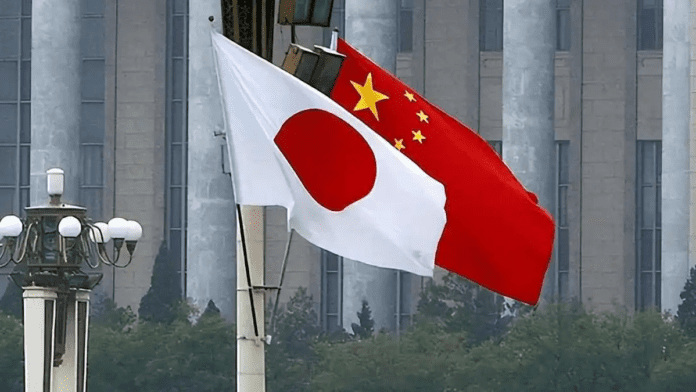
China has added 40 Japanese companies to its export control lists, accusing them of supporting Tokyo’s military buildup, as trade and military tensions between the two countries continue to escalate.
China’s Ministry of Commerce said on Monday that 20 Japanese entities had been placed on its Entity List and another 20 on a watch list. The ministry cited their roles in advancing Japan’s military capabilities and “re-militarization.” The move follows a similar round of listings in February.
“Japan has refused to reflect on its actions and instead gone further down the wrong path, accelerating its pursuit of new-style militarism, deploying offensive weapons and launching offensive missiles from overseas,” said a spokesperson for the commerce ministry. “The 20 entities placed on the control list are those involved in boosting Japan’s military strength, while the 20 on the watch list failed to verify the end users or end uses of the dual-use items they handled.”
“We hope Japan will turn back from the wrong path, correct its wrongdoings, do serious soul-searching and go back to the right track,” Guo Jiakun, a spokesperson of the Chinese Foreign Ministry, said in a regular media briefing. “The relevant measures target only the dual-use items, and will not affect the normal business exchanges between China and Japan. Japanese entities have no need to worry as long as they operate in good faith and in compliance with the law.”
He stressed that it is fully justified, legitimate and lawful for China to take these measures, which aim to contain what China sees as Japan’s reckless neo-militarism.
On February 24, Sino-Japanese relations deteriorated when China’s Ministry of Commerce added 20 Japanese entities to its export control list, including Mitsubishi Heavy Industries Shipbuilding Co Ltd, Fujitsu Defense & National Security Ltd, and NEC Aerospace Systems Ltd. The two rounds of sanctions in February and June have hit a total of 80 Japanese firms.
“The control list is defined by entities where there is a clear, confirmed national security risk,” said Wan Zhe, an economist and professor at Beijing Normal University. “The 40 entities placed on China’s Entity List are directly involved in boosting Japan’s military strength, meeting the threshold for serious harm to national security and interests under the dual-use export control regulations.”
“Forty other companies were added to the watch list as their end users and end uses for dual-use items could not be verified,” she said. “They have not yet reached the level of clearly endangering China’s national security, but they still need to be closely monitored targets.”
She said that the core goal of the measures is to curb Japan’s military expansion capabilities at the supply chain level, and that the policy is precisely targeted at risk, with the vast majority of compliant Japanese companies and normal trade and industrial cooperation between China and Japan left unaffected. She said the combined measures are both defensive, plugging gaps in the system, and reactive, a proportionate countermeasure that draws a clear line on national security while demonstrating strategic judgment.
Beijing’s latest export control measures come as Japan presses ahead with a long-range missile buildup that Chinese experts say is aimed at China.
In late March, Tokyo announced the deployment of its Type 25 missiles, its first long-range strike weapons capable of hitting ground and maritime targets at extended range. The series includes a surface-to-ship variant based in Kyushu and a hypersonic gliding variant based at Fuji, both with a range of over 1,000 kilometers, putting mainland China within reach. Tokyo plans to extend the hypersonic variant’s range to 2,000 to 3,000 kilometers in future versions.
The missile deployment came alongside the largest overhaul of Japan’s Maritime Self-Defense Force since its founding. Its main surface fleet units were merged into a new Fleet Surface Force, a new amphibious warfare unit was established in Sasebo, and the Air Self-Defense Force began building a dedicated space operations unit.
“Japan’s military moves are part of the government’s strategy to fundamentally strengthen its defense capabilities, using limited equipment and personnel to pursue far more aggressive military goals,” said Fan Xiaoju, a research fellow at the China Institutes of Contemporary International Relations. “These moves reveal the underlying tone of Japan’s diplomatic and security policy, a pursuit of military supremacy and stronger deterrence.”
“Combined with the rising tide of populism and xenophobia inside Japan, the country is heading in an increasingly dangerous and uncontrollable direction,” she said. “Japan should hold a correct view of history, honor its commitments and treat its neighbors well. That is what would truly serve regional peace and stability, as well as Japan’s own security.”
Japan’s photoresists
China’s newly imposed export controls on Japanese firms also came after Prime Minister Sanae Takaichi told G7 leaders at a summit in France on June 16 that China’s export controls against Japan risked disrupting partner nations’ supply chains. She called on G7 members and multilateral development banks to build more resilient mineral supply chains.
An article published by NetEase on June 22 said that four major Japanese photoresist makers, Tokyo Ohka Kogyo, JSR, Shin-Etsu Chemical and Fujifilm, had stopped accepting new orders for advanced argon fluoride (ArF) and extreme ultraviolet (EUV) photoresists and trimmed orders for lower-end krypton fluoride (KrF) grades.
EUV photoresists are used for the most advanced chip nodes below 7 nanometers, while ArF photoresists cover nodes from 65nm down to 7nm. KrF photoresists are suited only to larger nodes of 65nm and above.
The article said China’s photoresist imports from Japan fell by about 95% to just 111.3 tons in the first quarter of 2026, down from 2,200 tons a year ago. High-end photoresist imports recorded zero in the second quarter.
As of now, neither the Japanese government nor the four companies have confirmed a coordinated halt.
Chinese commentators have mixed views on the matter. Some dismissed the photoresist ban report as fake news, saying it lacked any verifiable evidence. Others said this may be a good opportunity for domestic photoresist suppliers, such as Jiangsu Nata Opto-Electronic Material Co Ltd and Red Avenue New Materials Group Co Ltd, to grow, as their manufacturing yields have matched those of their Japanese peers. Still, some said the reality is stark if the news is true.
“Japan’s photoresist ban has opened a rare window for domestic suppliers, but a window of opportunity is not the same as a shortcut,” writes a Liaoning-based columnist using the pen name Digital Observatory. “One domestic supplier saw its KrF photoresist’s yield rate plunge during testing because of a mismatch with the lithography’s temperature. Long-term stability, resistance to etching and ion implantation and storage life all still need to be tested over time.”
The columnist adds that domestic photoresist suppliers’ limited production capacity is another major problem, and large-scale domestic substitution in advanced chipmaking will only occur in three to five years.
Iraq’s Green Zone Raids Test al-Zaidi’s Anti-Corruption Push
Arrests of politicians and senior officials have raised questions over whether Baghdad is confronting entrenched corruption or staging a limited show of force before a Washington visit
Iraqi security forces arrested politicians and senior officials in overnight raids inside Baghdad’s fortified Green Zone on Sunday, in one of the most visible anti-corruption operations Iraq has seen in years and an early test of Prime Minister Ali al-Zaidi’s new government.
The Green Zone has long been a symbol of Iraq’s post-2003 political order: A protected enclave separated from ordinary Iraqis and home to the institutions, embassies, and political networks that have shaped the country’s fragile balance between Washington, Tehran, and its own entrenched elite.
Reuters reported that elite units from the Counter Terrorism Service (CTS) raided homes in the heavily fortified district, while Iraq’s state-run Iraqi News Agency (INA) said 47 suspects were detained, including members of parliament and government officials. The arrests followed judicial warrants linked to suspected corruption networks, with some cases reportedly stemming from testimony by Adnan al-Jumaili, the former deputy oil minister for refining affairs, after his earlier detention.
The Associated Press, citing INA, reported that those arrested included 12 current lawmakers, one former legislator, a former adviser to former Prime Minister Mohammed Shia al-Sudani, and another high-ranking Oil Ministry official. Some were associated with al-Sudani’s Shiite political bloc, while others were linked to the Sunni Azm Alliance. The specific charges against them were not immediately made public, but an investigative judge said the probe concerned allegations that state resources were used for electioneering and that government contracts were exploited for commissions and personal gain.
For al-Zaidi, who took office in May, the operation provides a political opening. It allows the new government to present itself as active, forceful, and willing to challenge a corruption system that has drained Iraqi state institutions for years. But the raids also raise a central question: Do the arrests mark the start of a genuine confrontation with Iraq’s deepest corruption networks—including those tied to armed factions and Iran-linked political interests—or are they a controlled spectacle aimed at satisfying public anger and external pressure while leaving the real centers of power untouched?
The timing gives the operation added political weight. Al-Zaidi is expected to visit Washington in mid-July to deepen economic, trade, and investment ties with the United States. Reuters reported that the visit is intended to strengthen the Iraqi-US partnership, but also noted that the prime minister faces the broader challenge of curbing Iran-backed fighters, tackling entrenched corruption, and balancing ties between Washington and Tehran.
That balance has grown more sensitive after recent US-Iran understandings and the broader regional effort to reduce hostilities. Earlier this month, US Special Presidential Envoy for Iraq and Syria Tom Barrack visited Baghdad in what The National described as the highest-level American engagement since al-Zaidi’s government was formed. Washington’s deeper cooperation with Baghdad has been linked to efforts to disarm Iran-backed militias and bring weapons under state authority.
A report by Asharq Al-Awsat on the Barrack-al-Zaidi meeting, citing a US Embassy statement, said the two sides discussed Iraq’s plans to ensure the “complete disarmament and disbandment of all armed groups and formations operating outside the authority and control of the Iraqi state,” as well as preventing Iraqi territory from being used to threaten regional peace. The same report noted that mechanisms for imposing a state monopoly over arms remain unclear and that some factions have continued to oppose disarmament.
In that context, analysts read the Green Zone raids as more than a domestic anti-corruption operation. One publicly reported link to Iran-related allegations was the arrest of Ali Maarij, the deputy oil minister for distribution affairs. Reuters reported that the United States sanctioned Maarij in May, accusing him of helping divert Iraqi oil to benefit Iran and Iran-backed militias and of facilitating the blending of Iranian crude with Iraqi oil for export using falsified documents. Iraq’s Oil Ministry denied the allegations at the time, saying the activities described by Washington did not fall within Maarij’s responsibilities.
Still, the broader campaign has not yet visibly targeted the most powerful Iran-aligned militia figures or the political leaderships around them. For some Iraqi observers, that is the point.
Middle East political analyst Dr. Tallha Abdulrazaq argues that the operation should be judged not by the scale of the raids, but by who remains untouched.
For there to be a real shift, [al-]Zaidi would have to start targeting the real big whales of corruption that have plagued Iraq for almost a quarter of a century since the US-led invasion in 2003
“For there to be a real shift, [al-]Zaidi would have to start targeting the real big whales of corruption that have plagued Iraq for almost a quarter of a century since the US-led invasion in 2003,” Abdulrazaq told The Media Line. “This operation is designed to give the impression that Iraq is finally cleaning itself up, but the reality is that those arrested are small fry and expendable fall guys.”
His assessment is severe, but it captures widespread Iraqi skepticism toward state-led reform campaigns. Iraq has seen previous governments announce anti-corruption efforts, only for them to stall, be reversed, or become entangled in elite bargaining. Under former prime ministers Haider al-Abadi and Mustafa al-Kadhimi, reform language often collided with the realities of Iraq’s power-sharing system, party patronage, and militia-linked economic influence.
Political analyst Alfadhel Ahmad offered a more cautious reading. He said the arrests have generated momentum for al-Zaidi but warned that their real meaning depends on what comes next.
“So far, the arrests have targeted third-tier Sunni politicians and associates of former PM Mohammed Shia al-Sudani—most linked to the network of Adnan al-Jumaili, the oil ministry undersecretary arrested earlier,” Ahmad told The Media Line. “Real intentions are hard to judge yet, but these arrests have clearly added political momentum and a cautious popular legitimacy to al-Zaidi’s new government.”
Ahmad also pointed to the choreography of the raids as part of the message. The use of elite security units gave the operation the appearance of a decisive state intervention, even if many of the targeted figures were not among Iraq’s most protected actors.
“There’s also a deliberate effort to project spectacle—deploying tanks and counterterrorism units to arrest figures who mostly have no militia protecting them,” he said.
The deployment of the CTS is especially symbolic. The CTS is one of Iraq’s most respected security forces, closely associated with the fight against the Islamic State group, also known as ISIS, and, at least formally, answerable to the prime minister. Its use in a corruption operation inside the Green Zone sends a political message that al-Zaidi can command the state’s coercive institutions against senior political figures.
Abdulrazaq sees the use of the CTS as part of the performance rather than proof of institutional strength.
“The use of the Counter Terrorism Service was, again, just for theatrical purposes,” he said. “… it was designed to show that Zaidi himself has authority and command.”
The deeper issue is whether Iraq’s state institutions can act independently of the networks that dominate them. For years, corruption in Iraq has not been limited to individual theft or administrative abuse. It is embedded in party financing, public-sector contracts, oil revenues, border crossings, ministries, and armed groups with political representation.
That helps explain why anti-corruption campaigns are often interpreted through factional politics: who is arrested, who is spared, and whose benefits are protected.
The Iraqi state literally is the militia-linked economic structure and the militia-controlled parliament and government. There is no separation between them.
“This strikes at the heart of the matter,” Abdulrazaq said. “The Iraqi state literally is the militia-linked economic structure and the militia-controlled parliament and government. There is no separation between them.”
For Ahmad, the test is still open. He does not rule out the possibility that al-Zaidi could use this early momentum to expand the campaign, but says the threshold must be clear: The government would have to move beyond expendable figures and begin touching interests tied to powerful factions.
“Worth remembering: Iraqi politicians have always reversed reform and anti-corruption efforts,” Ahmad said. “Iraqis have a long record of distrusting government action, fearing the same outcomes they’ve seen before.”
“Al-Zaidi has a clear chance to prevent backsliding by building on this momentum to expand toward key politicians and test the waters for confronting interests tied to pro-Iranian militias in Iraq,” he added.
That is also where the Tehran question enters the story. The raids unfolded while Iranian Foreign Minister Abbas Araghchi was in Iraq. Iranian state media reported that Araghchi held separate meetings with the governors of Karbala and Najaf to discuss arrangements for funeral ceremonies in Iraq for the late Iranian Supreme Leader Ayatollah Ali Khamenei.
Some observers have questioned whether the arrests, the US diplomatic track, and Araghchi’s visit are connected. Both analysts interviewed rejected a direct link between Araghchi’s trip and the Green Zone operation, but they interpreted that absence differently.
“I wouldn’t bother reading too much into the timing apart from the fact that it shows Iran isn’t bothered at all by [al-]Zaidi’s move,” Abdulrazaq said. “Tehran is extremely pragmatic and would be more than happy to sacrifice a few nobodies and placeholder MPs just so that the current system that serves its interests continues.”
Ahmad was more restrained, saying there is no evidence so far that the two matters are connected.
“Regarding Araghchi’s visit, those two things are not connected—at least for what is known till now. He came to arrange Khamenei’s ceremonies in Najaf and Karbala.”
The distinction is important. There is a difference between proving operational coordination with Tehran and arguing that the campaign avoids Iran-linked power centers. The first requires evidence that has not publicly emerged. The second is a political assessment based on who has been targeted so far and who has not.
Ahmad said the campaign may be useful to the Coordination Framework, the largest Shiite political bloc and the core parliamentary force behind Iraq’s current order, as it tries to navigate US pressure without rupturing its ties to Iran-aligned factions.
“The Coordination Framework … may be trying to market this campaign to Washington,” he said. “But importantly, the campaign has not yet touched any Iran-linked interests or proxies.”
That gap between optics and substance could become decisive ahead of al-Zaidi’s expected Washington visit. The United States is not only looking at corruption as a governance issue; it is also looking at corruption as part of the infrastructure that allows armed groups, smuggling networks, and foreign influence to survive inside the Iraqi system.
Abdulrazaq argued that Washington’s focus is less about corruption itself than about regional compliance.
“I don’t think the US necessarily cares about corruption per se,” he said. “What the US cares about is compliance with its ambitions in the region.”
Ahmad’s conclusion was similar, though less categorical. He said the real measure will be whether the campaign moves against militia-linked interests, not only politicians without serious armed protection.
“Against the broader US demands, there’s no sign anything has changed on the ground,” he said. “I think we should watch what follows these campaigns—specifically whether the government moves to undermine militia-linked interests.”
Ahmad said that if the campaign stops where it is, it will likely be read as a maneuver by Iraq’s political elite to manage American expectations.
“Otherwise, the likeliest reading is that Iraq’s political class is trying to circumvent US demands and present Washington a false picture—especially ahead of the PM’s anticipated visit—at the expense of expendable, marginal politicians.”
Another layer is internal score-settling. Anti-corruption campaigns in Iraq often become tools in factional struggles, especially when the justice system is activated selectively. Abdulrazaq said this campaign appears to fit that pattern.
“This is absolutely also about score settling,” he said. “To be clear, those arrested are almost certainly also corrupt, but, effectively, Zaidi is eliminating certain political rivals on behalf of the Coordination Framework of Shia Islamists close to Iran.”
The arrests have created three parallel narratives: The government’s narrative is that Iraq is finally acting against corruption. The public’s cautious reaction is shaped by years of disappointment and distrust. The analysts’ warning is that the campaign may be real only if it expands toward the political and militia-linked structures that have long been treated as untouchable.
For now, al-Zaidi has achieved visibility. The Green Zone was sealed, senior figures were detained, and the state projected force at a moment when Washington is demanding proof that Baghdad can control armed groups and reduce Iranian influence. But visibility is not the same as transformation.
What comes next will determine whether this becomes a turning point or another episode in Iraq’s long history of controlled reform. If the arrests remain confined to lower- and mid-level actors, Sunni rivals, and associates of the previous government, the campaign will reinforce the suspicion that Baghdad is offering Washington a staged concession while preserving the system beneath it. If it moves toward senior militia-linked economic interests and the political figures protecting them, then al-Zaidi may begin to test the foundations of Iraq’s post-2003 order.
Until then, the Green Zone raids remain less a conclusion than a question: whether Iraq’s new government is confronting corruption or simply managing the appearance of confrontation at a moment when both Washington and Tehran are watching.
June research roundup: 6 cool science stories we almost missed
It’s a regrettable reality that there is never enough time to cover all the interesting scientific stories we come across. So every month, we highlight a handful of the best stories that nearly slipped through the cracks. June’s list includes insight into the science of soccer’s scissors feint; the physics of poo’s distinctive coiled shape; a boron buckyball; and the latest breakthrough in the ongoing Vesuvius challenge to decipher the Herculaneum scrolls.
With the FIFA World Cup in full swing, even scientists’ thoughts are turning to soccer (or football for everyone else in the world). For instance, one common and highly effective dribbling maneuver is the “scissors feint,” in which a player uses the outside of their feet to fake going one way and then cutting to the other. Japanese scientists studied university and junior high school soccer players of varying skill levels to study dribbling dynamics, focusing on the scissors feint. The movements were captured with high-speed cameras.
The researchers looked at several variables, including body speed, joint kinematics, distance between players, and changes in relative speed between attackers and defenders. They described their findings in a paper published in the Japan Journal of Physical Education, Health and Sport Sciences. Most notably, the team found that raw speed is not the only factor in skilled dribbling. The best players actively regulate their distance to the defender while maintaining a high body speed, for example. They can generate explosive, rapid acceleration by coordinating their knee flexions and extensions. And they have minimal foot lift and a pronounced trunk inclination when executing feints, so their actions are quicker and more deceptive.
Per The Guardian, this year’s FIFA ball design , the Adidas Trionda, seems to be giving goalkeepers a bit of trouble when it comes to reading the ball’s speed and responding accordingly. FIFA shifted last year to the four-panel ball with intentionally deep seams to create optimal in-flight stability and a more predictable trajectory. It’s also designed to function better in wet or humid conditions. So why are goalkeepers struggling to stop the balls?
A paper published last month in the journal Fluids might hold the answer. The authors fired the Trionda ball through a wind tunnel and analyzed the aerodynamics. (It’s a common experimental approach used to study baseball aerodynamics, too.) They found that the ball traveled faster once it hit a certain velocity regardless of where it was struck. They attribute this to the so-called “drag crisis,” i.e., the point where the air flow around the ball shifts from a smooth laminar flow to a turbulent flow. The resulting disruption in drag makes the ball move faster, so it doesn’t slow down as goalkeepers have been conditioned to expect. Hitting the ball on the seam reduces drag, and the effect is less likely to occur at higher altitudes.
The Vesuvius Challenge is an ongoing project that employs “digital unwrapping” and crowdsourced machine learning to decipher the first letters from previously unreadable ancient scrolls found in an ancient Roman villa at Herculaneum. The 660-plus scrolls stayed buried under volcanic mud until they were excavated in the 1700s from a single room that archaeologists believe held the personal working library of an Epicurean philosopher named Philodemus. The badly singed, rolled-up scrolls were so fragile that it was long believed they would never be readable, as even touching them could cause them to crumble.
In 2023, the Vesuvius Challenge made its first award for deciphering the first letters, and the following year, the project awarded the grand prize of $700,000 for producing the first readable text. Last year brought the successful generation of the first X-ray image of the inside of a scroll (PHerc. 172) housed in Oxford University’s Bodleian Libraries—a collaboration with the Vesuvius Challenge. The scroll’s ink has a unique chemical composition, possibly containing lead, which means it shows up more clearly in X-ray scans than other Herculaneum scrolls that have been scanned. That project focused primarily on detecting the presence of ink rather than deciphering the characters or text, although the team was able to identify the Greek word for “disgust.”
The latest breakthrough: One of the scrolls, PHerc. 1667, has now been “virtually unrolled” and read in full, with the technical details and a full column-by-column transcription appearing in a preprint on the arXiv. The text is a philosophical treatise on ethics and human moral progress, and the final column revealed the name Aristocreon, a nephew and disciple of the Stoic philosopher Chrysippus. So the team believes the scroll likely dates to the 2nd century BCE. There are gaps in the text where the papyrus surface has been lost, but it’s still an impressive achievement. The team was also able to use higher resolution imaging to reveal ink on another scroll, PHerc. Paris 4, and to recover the title and author of a third scroll, PHerc. 139.
Buckyballs, aka buckminsterfullerenes, are carbon molecules comprised of 60 carbon atoms arranged in such a way as to bear an uncanny resemblance to soccer balls—just very tiny nanoscale soccer balls. They were first discovered in 1985 by Rice University physicists, who shared the 1996 Nobel Prize in Chemistry for the achievement. Buckyballs helped launch the nanotechnology revolution. Now, scientists at Brown University have produced the first experimental evidence for a new kind of “buckyball” molecule made up of 80 boron atoms. They described their results in a paper published in the journal Chemical Science.
Chemist Lai-Sheng Wang has been trying to make boron structures similar to those achieved by carbon, like the buckyball, for three decades. His team has made clusters of 36 boron atoms in a thin, atom-thick disk; two could be stitched together to create the boron equivalent of graphene. And in 2014, they found a 40-atom boron cluster arranged in a hollow cage shaped like a buckyball, although it did not have the trademark perfect spherical symmetry.
Wang’s team made its boron buckyball by zapping a boron target with a high-powered laser, producing a plume of boron atoms that cooled and formed different kinds of nanoclusters. They then weighed each cluster to determine the number of atoms, and used photonelectron spectroscopy to determine the shapes of the clusters. They were surprised to find an 80-atom cluster that was both highly stable and highly symmetrical. The result isn’t entirely consistent with current theory, which predicts a boron buckyball shouldn’t be stable, but Wang et al. have done an exhaustive search of various configurations for 80 boron atoms and still think a buckyball is the most likely candidate.
Researchers have discovered a new species of spider native to Australia with a novel hunting strategy. According to a paper published in Current Biology, these nocturnal spiders weave a main web, but also construct snare traps underneath to capture green tree ants and launch them upward to the main web at accelerations of up to 1,367 meters per second squared. There’s no official species name yet, but they belong to the genus Propostira, and the authors have dubbed them “ballista spiders.”
Co-author Greg Anderson of QIMR Berghofer Medical Research Institute in Brisbane first witnessed a catapulted ant in 2022, but the motion was pretty much a blur, and he lacked adequate camera equipment to investigate at the time. In the following year, he and his co-authors spent 10 days studying the spiders, which typically hide under leaves during the day. The spiders build their conical traps around dusk by attaching silk tension lines to a leaf, a task that can take as long as four hours. Then the spiders release a special chemical that specifically attracts green ants.
When an ant locks onto the trap with their mandibles, it gets stuck, and its struggles release the trap’s anchor point, launching the ant up to the main web. It took high-speed cameras set at 5,000 to 7,000 frames per second to capture that moment. Anderson et al. hypothesize that this is the spider’s strategy to avoid hunting on the ground, which carries a risk of counterattack from an ant colony.
Drawings of earthworm poo by Charles Darwin (1881)
Public domain
Drawings of earthworm poo by Charles Darwin (1881) Public domain
Lugworm excrement
Mehdi Habibi et al., 2026
Lugworm excrement Mehdi Habibi et al., 2026
Drawings of earthworm poo by Charles Darwin (1881) Public domain
Lugworm excrement Mehdi Habibi et al., 2026
The poop emoji is instantly recognizable because, well, we’ve all seen those telltale coils circling around a broad base and tapering to a point—just like swirling soft-serve ice cream. This happens because most creatures release their feces downward; the tapering occurs because the feces fall from decreasing heights. But lugworms produce coils of feces with uniform spirals that don’t taper into a point. Because they live in U-shaped burrows, they release their poo upward. Charles Darwin observed as much in 1881, noting that worms defecated “either upwards or downwards with respect to the slope” of their respective burrows.
According to a paper published in the journal Nature Communications, both kinds of coiled feces owe their shape to physics—specifically a mathematical description of how ropes and similar materials coil called the elastic rope-coiling theory. It all comes down to the material’s stiffness and whether the feces moves with or against gravity’s downward pull. The lugworm produces “anti-gravitational” poop. The distinctive shapes of the poo emoji and lugworm poo are both a “direct consequence of the physics governing elastic coiling in gravitational fields,” the authors concluded. They’re planning to design a second poo emoji and officially propose it to the Unicode Consortium.
Factors like muscular control and extrusion rate of the poo had little to no effect on the final shape. By contrast, the Australian bare-nosed wombat produces distinctive cubes of poop instead of tapered cylinders. A 2021 paper found that the secret lies in their intestines, which have varying stiff and soft regions that serve to shape the poo during the digestive process. Earlier preliminary findings by the same group won the 2019 Ig Nobel Physics Prize.
One of 15th-century painter Sandro Botticelli’s most famous works is the Birth of Venus, depicting the naked goddess, newly birthed, standing in a giant scallop shell. The model for the painting (disputed by some historians) was allegedly Simonetta Vespucci (nee Cattaneo), a renowned beauty in Florentine high society whom Botticelli greatly admired. He painted her five times before her untimely death in her early 20s. Her open coffin was carried through the streets of Florence. The poet Poliziano dubbed her “the Unrivaled” (La Sans Par).
It was long believed that Simonetta had succumbed to tuberculosis, but in 2019, Paolo Pozzilli of Queen Mary University of London and several co-authors argued that she may have suffered from a pituitary tumor (adenoma) that gradually increased in size due to prolactin and growth hormone secretions, citing her appearance in several portraits as evidence. This could have caused a sudden tumor-related fatal apoplexy.
Pozzilli et al. have now expanded their analysis in a paper published in the journal Endocrinology, Diabetes & Metabolism. For instance, they examined letters between Simonetta’s father-in-law, Piero Vespucci, and Lorenzo de Medici, which described how Simonetta had collapsed during a ball a few days before her death. Her symptoms included headache, hallucinations, vomiting, and a high fever, all symptoms of a rapidly expanding pituitary tumor, per the authors. Pozzilli et al. also think the tumor would explain the irregular eye positioning in the Birth of Venus, suggesting the model had a squint or a misalignment of the eyes, which will be the subject of future research.