If Europe wants to ‘go it alone’ on security, countries need to learn to sing from the same songsheet
The G7 summit at Evian from June 15 to 17 is most revealing not for what was agreed, but for what was exposed about the state of play among Europeans, and their relationship with the US. For all the choreography and displays of unity, the summit was, in large part, theatre. It was an attempt to paper over what is becoming increasingly obvious: many of the most critical international issues are now decided without the EU. Brussels is now, at best, an informed bystander.
This was obvious when the US president, Donald Trump, signed a physical copy of his deal with Iran at a post-G7 dinner at the Palace of Versailles hosted by Emmanuel Macron. It was a diplomatic coup for France, rather than a plan hatched by the EU.
The G7 produced nine joint declarations and seemingly reaffirmed more than just the bare minimum of western unity that has been possible of late. The leaders’ statement on geopolitical issues included strong language on Ukraine. The G7 promised “to increase the delivery of air defence capacities, additional systems and interceptors, and long-range capabilities” and “to increase the pressure on the Russian war economy”.
Yet, it fell short on concrete provisions and timelines. And it notably lacked the commitment to the “robust and legally binding security guarantees” and “the deployment of the Multinational Force – Ukraine” that France, Germany and the UK (the “E3”) had emphasised in their joint declaration with Ukraine’s president, Volodymyr Zelensky on June 7.
The E3 and Ukraine mini-summit showed European diplomatic coordination at its most effective. Évian, by contrast, showed how little of that coordination carries into the decisions that ultimately matter.
Europe’s struggle for relevance is also obvious in relation to Ukraine. The last meaningful – if hardly constructive – negotiations occurred in the so-called “Geneva track” in February. Mediated by Trump’s Witkoff-Kushner team (which was also involved in talks with Iran), this brought Russia and Ukraine together for talks.
But while Washington reported “meaningful progress”, Zelensky commented that “sensitive political matters … have not yet been sufficiently addressed” and called for European to be involved in the next round of talks. This has not happened.
Meanwhile, Europe’s own efforts also failed. Putin immediately rejected the call from E3 and Ukraine for direct talks. This was reinforced in a June 19 essay penned by Russia’s foreign minister, Sergey Lavrov, accusing Europe of complicity in the 2014 political crisis in Ukraine which ousted the pro-Russian president, Viktor Yanukovych, and precipitated the conflict. He added they had sabotaged any attempts at peace.
But the EU was already at loggerheads with itself. Earlier that day, EU leaders gathering for a summit in Brussels discovered that António Costa, the European Council president, had instructed his office to reach out to the Kremlin — without consulting member states — to lay the groundwork for potential peace negotiations with Russia over Ukraine. Their reaction ranged from surprise to outrage. Germany’s chancellor, Friedrich Merz, and Macron both publicly pushed back against Costa. Macron stated that “he [Costa] cannot represent [EU states] when security guarantees are at stake”.
The episode was damaging for reasons that go well beyond procedural embarrassment. The spectacle of European leaders publicly repudiating their own council president will have given Moscow the satisfaction of knowing that Europe still cannot speak with a single voice.
The European Commission president, Ursula von der Leyen, tried to bring the message under control. At her press conference after the EU leaders’ summit, she noted that “sooner or later Russia will need to come to the negotiating table, and when that comes we need a united European message to President Putin”. That ambition, however, contrasts sharply with the reality of the earlier Costa episode.
A unified approach
Diplomatic embarrassment is not the only issue when it comes to how quickly Europe will be able to close the persistent gap between ambition and reality.
On June 8, the German government formalised its withdrawal from the Future Combat Air System (FCAS), the €100 billion (£86 billion) joint fighter jet project launched in 2017 as the flagship expression of Franco-German defence ambition. FCAS also included engines, sensors and a digital intelligence network known as “combat cloud”.
One point of contention was reportedly the leadership role played by French aerospace giant Dassault. Germany wanted more of a leadership role and the partners are reported to have had divergent visions of the end product.
Germany’s aspiration to “lead or substantially shape” future European air combat systems may seem rational given the country’s financial muscle and engineering prowess. With more than €750 billion committed to rebuilding its armed forces by 2030, Germany’s instinct that this investment should produce proportionate industrial and strategic leadership is understandable. But when applied to European defence cooperation, it is counterproductive.
Vladmir Putin and Donald Trump in Alaska, August 2025: the aggression of one and unreliability of the other are encouraging European nations to make their own securoity arrangements.EPA/Sergey Bobylev/Sputnik/Kremlin pool
While European states, including Germany, have repeatedly stressed the need for collective action on defence, there is a repeated fallback on national initiatives. It’s hard to escape the conclusion that Europe continues to struggle to effectively coordinate efforts.
In a development that neatly illustrates this point, on June 20 the UK unveiled three prototype long-range strike missiles built without any US-manufactured components. The product of an 18-month programme known as Project Brakestop, the explicit purpose of developing this capability is to remove Washington’s ability to veto their deployment in Ukraine.
On the positive side, the UK’s ability to pull this off is commendable. It encapsulates the transformation in European thinking about the transatlantic relationship under Trump – and the capability to follow through on this.
But as an act of strengthening European strategic sovereignty, it falls short. It is British rather than European.
Europe’s ambition to rise to the simultaneous challenges of Trump’s transactionalism and Putin’s adventurism has been stated loudly and clearly on more than one occasion over the past 18 months or so. This ambition is most commonly expressed in the quest for strategic autonomy or “going it alone”. But it is not matched with an ability to act coherently.
Beyond denial: how oil execs shaped a landmark climate study
This article was originally published by ProPublica in cooperation with Drilled.
It is rare that a single scientific paper shapes how people think about a challenge as daunting as climate change. But one, known as “Wedges,” published 22 years ago by researchers at Princeton University, told an irresistible story.
It made solving climate change seem possible, even simple. It claimed that the world didn’t have to wait for innovation because it had the tools to start work immediately.
The trick was to do a little of everything and let the effects add up. Renewable energy, nuclear power and conservation were certainly pieces of the solution puzzle. But so were a slew of steps that involved using oil, gas and coal despite the carbon dioxide emissions they would continue to produce.
One fix that “Wedges” leaned especially hard on was carbon capture and storage, a technology that promised to grab carbon pollution from smokestacks and other sources and trap it forever underground. Do that enough, and climate change could be curtailed without upending the world as we know it.
The paper, written by scientists Robert Socolow and Stephen Pacala, became a phenomenon. Former Vice President Al Gore highlighted it in his Oscar-winning climate change documentary. US presidents from George W. Bush to Joe Biden incorporated ideas from it into policy. The United Nations’ panel on climate change worked it into at least three major reports over more than a decade. It was presented in classrooms at Harvard and MIT and cited more than 3,000 times in scientific papers. It was even turned into a board game.
For a generation, people learning how to address global warming were taught the ideas in the “Wedges” paper.
What they didn’t learn was this: “Wedges” was significantly shaped by the British oil giant BP — one of the single global entities most responsible for causing climate change.
In 1997, BP abandoned climate change denial. Instead, the company quietly launched a far-reaching effort to intertwine oil company interests and climate science, in part by using its vast resources to shape the research that major universities undertook.
While its chief executive, John Browne, was rebranding his company as Beyond Petroleum, BP sought out researchers who were already thinking about how to address climate change without replacing fossil fuels. The company found them at Princeton University, where it set about amplifying their work by donating $15 million to start the Carbon Mitigation Initiative. The research program was framed around finding solutions to climate change while keeping fossil fuels in play, focusing heavily on carbon capture.
The “Wedges” paper was the initiative’s first big swing. And it succeeded beyond anything its authors could have imagined.
BP executives were deeply involved throughout the paper’s creation, according to an investigation by ProPublica and Drilled. Socolow and Pacala, the authors of “Wedges” and the new center’s co-directors, not only discussed ideas with the company but, in a departure from academic norms, passed drafts back and forth and welcomed extensive feedback.
Like a book publisher shaping a clunky early draft into a bestseller, an executive at the company suggested the scientists punch up the language, which they did. Browne himself suggested wording that became a part of the title. Together they helped make wonky scientific ideas more digestible for popular consumption. BP even tried — unsuccessfully — to revise a version of it.
“Chaps, I have had a go at rewriting the paper,” Browne’s climate adviser wrote the researchers at one point.
Then, while the paper was being prepped for publication, BP began aggressively promoting the ideas it contained. Browne touted the framework in a speech as evidence that oil and gas had “sustainable futures” and published an endorsement of “Wedges” in an essay in Foreign Affairs magazine. BP inserted the paper’s ideas into its sustainability reports promoting greater efficiency and natural gas — which it argued offered a low-carbon alternative to coal.
“Wedges,” whose ideas were turbocharged by the sort of high-level marketing scientific papers rarely get, became a regular part of thinking about climate change in classrooms and boardrooms alike. And as that happened, BP kept pouring millions more dollars into Princeton each year, in part to explicitly advance carbon capture and storage technology and, as internal documents make clear, to get the university’s help in turning the idea into a bona fide government-backed solution.
“Chaps, I have had a go at rewriting the paper.”
Chris Mottershead, BP climate adviser
Gardiner Hill, a former vice president and climate executive at BP who worked with the Princeton program, told ProPublica and Drilled that BP took academic freedom seriously. It “did not oversee any of the publications” that Princeton put out under its sponsorship, he said. A spokesperson for BP declined to respond to two lists of questions sent by ProPublica and Drilled.
Socolow and Pacala say they were sincere in their intent to solve climate change in the best way they believed possible, at a time when it was not obvious that wind and solar would succeed the way they have today. The researchers say BP had no control over the scientific content of the paper. They rejected the view that technologies didn’t exist to start solving climate change immediately and hoped carbon capture offered, as Pacala said, a way to make fossil fuels “climate safe.”
But “Wedges” oversold the readiness of carbon capture and storage, describing it as “already deployed” industrially. Reporting by ProPublica and Drilled has found that even today, the technology faces financial and technical hurdles and is unlikely ever to work at the scale needed to avert extreme warming.
And the broader solution set that “Wedges” promoted, including expanding the use of natural gas, has meanwhile helped perpetuate a system in which fossil fuels remain the predominant source of energy and the emissions they cause have continued.
“An unfortunate consequence” of the “Wedges” paper, wrote climate scientist Ken Caldeira, New York University physics professor Marty Hoffert and others in a 2013 critique, “was to make the solution seem easy.”
Moreover, for the past quarter century, as research into carbon capture and storage and other industry-friendly solutions have enjoyed robust funding and attention, other ideas that might have replaced carbon-heavy energy entirely — reducing warming and potentially saving lives — were drowned out, several researchers told ProPublica and Drilled.
“Wedges” would likely never have been written without BP’s funding, Socolow said. Scientists and ethicists say the paper may not have been seen as credible or earned its acclaim had the extent of BP’s involvement been fully disclosed.
Neither BP nor Princeton responded to specific questions about our findings.
This is the story of how one of the most influential climate papers in history came to exist thanks to the support of one of the companies most responsible for causing the climate crisis — and one with a deep financial stake in how the technologies described in the paper would play out.
This is part of a broader investigation by ProPublica and Drilled into how the fossil fuel industry has helped steer the global response to climate change by pouring billions of dollars into research at elite universities. Since the 1990s, oil companies have sponsored research centers, kept offices on campuses, paid the salaries of scientists and, in at least one case, held veto power over what professors and scientists could study with their money.
Today, the impacts of those efforts are everywhere, so ingrained in our understanding of what it means to solve climate change that it can be hard to conceive of another way forward. Even the UN’s assessment of how to deal with the threat of climate change continues to pin hope on capturing tremendous amounts of carbon pollution and burying it in the Earth.
So little has been done to avert fossil fuel emissions for so long, said Zeke Hausfather, a climate scientist with the research nonprofit Berkeley Earth,that there is little remaining choice.
“We’ve just wasted so much time,” he said, that meeting goals to limit global warming has become “functionally impossible.”
A place of influence: ‘establishing cooperative relationships
Photo illustration by Tonje Thilesen for ProPublica
On a sunny morning in the spring of 1997, Browne took to the podium at Stanford University’s open-air Frost Amphitheater to deliver a speech unlike anything ever heard from an oil executive.
“There is now an effective consensus … that there is a discernible human influence on the climate,” Browne, a small, professorly man with an air of British formality, told the audience. For years, BP and the other big oil companies had been part of an industry group called the Global Climate Coalition, working to sow doubt about global warming and avert agreements that would force cuts in heat-trapping pollution. Now Browne, having pulled BP out of the group, was suddenly pledging his company would be taking “substantial, real and measurable” action to fix the crisis.
Still, Browne cautioned against haste even as he urged action. If governments were too aggressive in cutting fossil fuel use, he warned, their actions would “crash into the realities of economic growth.” Instead, BP would seek to be more efficient — seizing “low-hanging fruit.” And it would experiment with capturing carbon to stop fossil fuel emissions from entering the atmosphere.
This was the start of a long transition in BP’s branding and in the way it worked with thought leaders to shape the company’s future.
John Browne, former chief executive of BP. Photo: Stanford Graduate School of Business
By then, oil companies had already begun investing in universities’ climate work. Exxon started giving money for climate research to Columbia University’s Lamont-Doherty Earth Observatory in the late 1970s. Then, in 1991, the company funded the launch of the Joint Program on the Science and Policy of Global Change at Massachusetts Institute of Technology, according to the program’s former co-director, Henry Jacoby. Chevron, Shell and BP also later supported the program, which developed influential climate-related models.
Fossil fuel companies recognized that they could benefit from spotlighting the research of prominent scientists whose ideas were aligned with their interests. And they strategized to boost the influence of those ideas in the global policy response to climate change.
In 1998, the American Petroleum Institute, the largest and most powerful oil industry lobbying group in the US, established what it called its Global Climate Science Communications Plan. An internal document described the importance of outreach aimed at “establishing cooperative relationships” with “scientists whose research in this field supports our position” and developing “opportunities to maximize the impact of scientific views consistent with ours.”
In 1999, Browne asked his chief scientist, Bernie Bulkin, to find research programs the company could support in the US. Bulkin — who told ProPublica and Drilled that he had never heard of the API initiative to engage with scientists — decided to set up a climate-focused program that could test the viability of carbon capture and storage, a budding technology.
For decades, oil companies had extracted carbon dioxide from the Earth and pumped it back underground to force more oil out under pressure, a process called enhanced oil recovery. If that process were adapted to store CO2 in the earth forever, then billions of tons of carbon emissions could, in theory, be captured from smokestacks and buried. Global emissions could be reduced without cutting fossil fuel use at all.
A handful of scientists had been making the case that this might be doable. One of them was Socolow, a theoretical physicist who had been leading an interdisciplinary environmental program at Princeton since 1971.
In 1997, Socolow ran a summer workshop for the US Department of Energy in which he and other experts suggested that natural gas, coal and other fuels could be used to make clean-burning hydrogen. If the emissions from the process could be captured and stored away forever, it might be possible to use fossil fuels without contributing much to global warming.
Socolow wanted to address climate change. But he was also predisposed to remedies that would not require what he described as “a priori, the sacrifice of the energy value of oil, gas, and coal.” In graduate school he studied with scientists who had worked on the Manhattan Project, and he worried that supporting nuclear energy could lead to the proliferation of weapons. He thought solar, wind and hydro power would each present their own environmental problems.
Carbon capture and storage, though, could make switching away from fossil fuels less urgent and was something that “brings the oil industry to the table.”
Robert Socolow, left, and Stephen Pacala, right, of Princeton University, pictured in Time magazine in 2007. Photo: Jonathan Saunders
The oil companies had doubts that carbon capture and storage technology would work. “Nobody had any idea what it would cost and whether there was anything practical at scale,” Bulkin recalled in an interview. Still, Bulkin thought there would be little downside for BP in trying. If it didn’t work for the climate, it might help the company produce more fossil fuels.
Bulkin began evaluating America’s top universities. It was, he wrote in his 2019 memoir, a “determinedly elitist” selection process aimed at getting “the greatest benefit to the company.” Researchers at MIT and Stanford had pioneered work on carbon capture and enhanced oil recovery. But a colleague had heard Socolow give a presentation on carbon capture and was impressed. So Bulkin added Princeton into the mix, and in early 2000, Bulkin said, each of the universities submitted proposals to BP for funding of a program to expand carbon capture research.
Stanford saw carbon capture and storage as a geological problem, MIT more of an engineering challenge, Bulkin said. Princeton’s labs didn’t have the technical expertise in carbon capture that the other two schools had. But Socolow came off as masterful at synthesizing energy challenges and environmental concerns, and Pacala brought deep knowledge of how carbon moves between Earth’s atmosphere, land and oceans. Together, they offered a more systemic way of thinking about carbon capture.
That June, weeks before BP announced it was rebranding as Beyond Petroleum, Bulkin told Pacala and Socolow they had won. BP would commit roughly $15 million over 10 years to form the university’s Carbon Mitigation Initiative. The program would focus roughly one third on earth sciences research, one third on carbon capture and one third on policy efforts. Pacala got Ford Motor Co. to contribute $5 million more.
When it was announced that October, the $20 million gift amounted to the largest corporate grant in Princeton’s history.
A spokesperson for Princeton told ProPublica and Drilled that partnerships with corporations make up just over 3% of the university’s research funding but help it “address real-world problems.” Princeton, the spokesperson added, maintains policies that “prevent outside funders from exercising undue influence over research,” including not permitting sponsors to have veto power over publications.
Representatives from Columbia University and Ford did not respond to requests for comment. A representative from MIT wrote that Exxon “did not direct the Joint Program’s research agenda.”
From the start, Princeton’s contract with BP was supposed to protect its academic independence, Pacala told ProPublica and Drilled. The company wasn’t supposed to direct what its money was going to be spent on, he said. “BP can’t tell us what to do.”
But BP and the Princeton researchers were eager to collaborate, and both Socolow and Pacala said they sought ideas no matter where they came from. “The university has an obligation to welcome all points of view, while fiercely protecting its own independence and the independence of its investigators,” Socolow said in an email.
In late 2000, Princeton researchers, BP officials and representatives from Ford gathered at the enormous Italianate mansion of Princeton’s president.
“We spent about two days just talking about what would be useful to us,” Bulkin recalled in an interview. Princeton scientists “threw out ideas, and we said, ‘Well, we could help on this’ or ‘That’s maybe interesting, maybe not,” he said. “Tell us more.’”
Together, the scientists and their funders hammered out an ambitious vision: According to a memo summarizing the meeting, the Carbon Mitigation Initiative would become a “world-class” program focused on basic earth science and carbon capture through “a new kind of engagement.”
It would become “a place of influence” that would, ultimately, “help shape government research priorities.”
Evolution of ‘Wedges’
Photo illustration by Tonje Thilesen for ProPublica
In January 2003, BP executives traveled to Princeton for the Carbon Mitigation Initiative’s second annual meeting. The center had much to show for its work on earth systems modeling and had made technical progress on carbon capture and storage. But Pacala and Socolow quickly turned to their newest work: a simple framework they were developing to bring CO2 emissions under control immediately using methods that already existed.
Climate progress was in a state of paralysis. Groups denying the evidence of climate science were eroding political support for policy action. At the same time, climate modelers were suggesting it might be too expensive to fix climate change until the end of the century. President George W. Bush, in tacit agreement, pulled the United States out of the Kyoto treaty, the 1997 legally binding agreement that 192 countries signed to reduce emissions. Instead, Bush’s administration focused on expanding basic research into low-carbon energy technologies, which suggested to Pacala and Socolow that leaders didn’t think they had tools to address the crisis.
The Princeton researchers believed they did have tools and that failing to deploy them soon could spell disaster for the climate. They’d listed the fuels, technologies and conservation approaches that would lead to lower emissions, including manufacturing cars that get 60 mpg, expanding wind and solar power, regrowing forests and developing hydrogen-based fuels. The idea was to stack them up, allowing each to account for a portion of the reductions needed to flatten the surging rate of global emissions. They diagrammed it for their BP sponsors as a big triangle beneath the rising line of future carbon emissions, what Socolow recalls describing as a “wedge,” cut up into equal-sized slices. Each one represented a strategy that could offset a billion tons of CO2 each year by the middle of the century.
Source: The journal Science. Annotated by ProPublica.
Many of the approaches remained dependent on using fossil fuels and could result in still more emissions, not less. So the plan also leaned heavily on carbon capture to remove pollution and make those approaches work. “We were CCS enthusiasts,” Socolow said in an interview.
But the researchers appeared to be stretching their own parameters to make carbon capture and storage fit. The “Wedges” framework was supposed to be made up of “ready to deploy” technologies. Yet carbon capture and storage had barely been tested, and no experts interviewed could recall a commercial power plant using it.
Still, the Princeton group kept it at the center of the mix.
That fall, Pacala traveled to London to present the work directly to BP CEO Browne. In the city’s Westminster district, Pacala traversed the leafy St. James’s Square and entered BP’s brick office building, where he was shown past a pair of security guards and seated across from Browne in a busy room.
Pacala, whom a colleague described as an expert “pitchman,” presented his chart of ideas: Use oil and gas more efficiently. Replace coal-fired power plants. Reduce emissions, ultimately, by capturing them and burying them underground. Each action, he said, would take “slices” out of the total amount of future carbon pollution.
Browne listened attentively. The straightforward framework made a complex problem seem manageable. But the “slices” terminology confused him. “They’re kind of wedges, aren’t they?” Pacala recalls him saying.
“We’re like, ‘Yeah, whatever you want,’” Pacala remembers thinking. “‘You’re paying the bills, buddy.’”
From that point forward, Socolow and Pacala were thoroughly committed to “Wedges.” Days after the London meeting, they wrote the material up into a white paper for BP titled “The Stabilization Wedge: Consolidation of BP’s Environmental Leadership.” In an email to ProPublica and Drilled, Socolow wrote that the document was not a first draft of “Wedges,” but, he added, it was the first substantial write-up of his ideas.
A November 2003 email from BP climate adviser Chris Mottershead to Pacala and Socolow proposes that BP and Princeton co-brand the research BP sponsored. Courtesy of Science History Institute. Redacted by ProPublica.A March 2004 email from Mottershead to Pacala and Socolow says he has rewritten a draft of their paper. Courtesy of Science History Institute. Redacted by ProPublica.
In the months following, Pacala and Socolow refined that work, and BP remained closely involved.
At one point the researchers sent an early paper draft for review, and Chris Mottershead, Browne’s climate adviser, offered “scathing criticism,” Pacala recalls. Mottershead asked for a “punchy” and “non-academic” tone that might have more popular appeal.
In response Pacala says he did “a complete blank-sheet-of-paper rewrite” and sent the revised draft back to Mottershead and Socolow four hours later. Mottershead loved it. He later replied with a question: “What is the potential for co-branding the ‘wedges paper … ?’” Socolow and Pacala declined.
Mottershead wanted to change certain terms and asked for a more open-ended timeframe to reduce emissions. He was denied. Another time, he checked the researchers’ calculations, finding a single error.
In late 2003, Browne himself borrowed from the “Wedges” thinking in a speech. A few months later, records show, Socolow solicited feedback from another member of BP’s management. The researchers also contributed ideas from their work for BP’s internal training and corporate communications.
Then in March, Mottershead wrote his own version of the two scientists’ near final draft, stating in an email that he was attempting to “make the word ‘wedge’ the brand for the work.”
To Mottershead, Princeton’s draft was too dense to break through into popular discourse. He pushed for language that would make the “wedges” concepts more digestible.
“We’re like, ‘Yeah, whatever you want. You’re paying the bills, buddy.’”
Stephen Pacala, “Wedges” co-author and co-director of Princeton’s Carbon Mitigation Initiative
Most significantly, the draft shows, Mottershead tried to inject language that raised doubt about the legitimacy of basic climate science, describing that science as “provisional” and adding that “great uncertainties remain.”
Ultimately, Mottershead did not convince the authors to adopt that specific text. “BP tried to cross the line repeatedly,” Pacala said in an interview. “They were constantly trying to push their agenda. We just didn’t do any of it.”
But several edits would survive, including one that couched emissions in the context of economic growth and another in which Mottershead suggested moving a punchy line from lower in the article up to the very top. All, Pacala says, were changes the researchers would have made anyway.
Still, the situation amounted to what several academic researchers describe as a highly unusual level of coordination on a major scientific work on climate change. Pacala went so far as to offer Mottershead co-authorship, at one point placing his name at the top of the paper. Yet Mottershead declined. In retrospect, Pacala told ProPublica and Drilled, Mottershead contributed to the paper’s style and presentation but not to its original scientific ideas. Mottershead did not respond to several messages, including a list of questions, over several months.
The relationship “flies in the face of the idea of academic independence,” said Benjamin Franta, an associate professor of climate litigation at University of Oxford who studies fossil fuel influence in academia.
Pacala and Socolow each defended their independence in several interviews with ProPublica and Drilled, saying that it is common for sponsors to be involved in sharing preliminary ideas. Socolow wrote that he was buoyed by BP’s interest and thought it offered “a way of amplifying Steve’s and my impact.”
Pacala acknowledged that there are “inevitable dangers of proximity” to industry but said that BP’s staff had “no control over the findings.” Instead, the researchers believed they were influencing BP by encouraging it to plan for climate change, which, Pacala said, “was a win.”
Pacala rejected the concern that BP’s influence on their thinking might be subtle, stating that people who are subconsciously influenced in this way have “weak character.”
In fact, decades of peer-reviewed research has found that, across fields of study, industry funding tends to bias researchers whether they are aware of it or not, affecting what people choose to study and what they find. Industry-funded studies of food or drugs are more likely to conclude they are safe. In medical settings even a small gift from a drug company — like a box of doughnuts — can lead doctors to prescribe its brands more often.
One of the few studies to look at the impact of oil and gas funding in academia found that reports out of fossil-fuel-funded research centers describe natural gas more favorably than renewables, whereas reports from centers less reliant on that funding do not. The influence of this funding, according to a working paper from Harvard researchers, is not always visible to those swayed by it.
“It’s the whole subconscious bias problem,” said Harvard historian of science and corporate influence expert Naomi Oreskes. If “continued funding relies on having this good relationship and having this alignment, you are going to be influenced by it.”
At Princeton, Michael Oppenheimer, the director of Princeton’s Center for Policy Research on Energy and the Environment, said that he does not believe Socolow or Pacala would have been swayed by feedback they disagreed with. But Oppenheimer, a close colleague of the two, added that Princeton doesn’t train researchers on how to navigate the influence that might come from close interactions with sponsors.
And whether the researchers were affected by that proximity or not, Mottershead’s persistent feedback about the article’s scientific ideas “goes over the line,” Oppenheimer said. “That’s bad, that’s unacceptable.”
A spokesperson for Princeton told ProPublica and Drilled that the university provides “extensive guidance and information” to faculty and researchers about working with industry. Sponsors review drafts only to guard confidential material, the university added, or in cases where a sponsor is a co-author of a work. The university did not respond to a question about whether the extent of BP’s involvement in “Wedges” violated its policy and did not say whether it trains its staff on how to protect against more subtle influence.
Other colleagues at Princeton encouraged Socolow and Pacala to challenge BP more. In written feedback on the original draft for BP, visiting scientist Stefano Consonni said that the researchers needed to be more blunt with BP about the difficulty of and need to move away from fossil fuels in order to truly reduce carbon emissions. Bob Williams, a senior research scientist at Princeton whose detailed work on carbon capture inspired Socolow’s, warned the researchers that the draft made solving climate change “sound easier than it actually is.”
In early May 2004, Socolow and Pacala submitted their paper to the journal Science. By then, “slices” had indeed become “wedges,” a decision Socolow says they made to “harmonize” their vocabulary with Browne’s. The paper included 15 wedges, three of which involved some form of carbon capture and eight of which involved using traditional fossil fuels, though in more efficient, or less polluting, ways.
It described all of those wedges as “already deployed at an industrial scale,” a characterization that some experts said stretched the facts in the case of carbon capture and storage. Pacala told ProPublica and Drilled that each of the components required for carbon capture and storage were in use and just needed to be combined in a new way. He conceded the paper’s description was a “communications compromise.”
And the researchers made a key assumption — one that left room for the continued use of oil and gas — about how much carbon pollution the atmosphere could absorb while still avoiding disastrous warming. The number was in the mainstream at the time, but BP officials made it clear to the researchers that they supported it.
In an email to Socolow after the paper’s submission, Mottershead celebrated, writing that the target meant that “around 50% of primary energy could still come from fossil fuels.”
This, Mottershead wrote, was “THE key piece of the framework for politicians and business, in my view.” Socolow acknowledged, in another subsequent email, that the figure would keep the fossil fuel industry a “part of things for at least another 50 years.”
In the July/August 2004 edition of Foreign Affairs, Browne published his own lengthy essay, titled “Beyond Kyoto,” in which he introduced key elements of the “Wedges” framework.
In a small-type footnote that comprises “References and Notes,” Socolow and Pacala list BP and Ford as sponsors of the Carbon Mitigation Initiative and thank Mottershead as a BP employee, along with several other scientists.
But it is not clear that anyone understood the depth of their collaboration. In response to emailed questions, Science pointed to its policy stating that anyone contributing substantially to an article must be listed as an author. The journal does not have a policy about sponsors providing editorial feedback on drafts. And in a statement, a spokesperson wrote, “Science cannot assess authorship questions based on third-party descriptions of contributions.”
Science also pointed to a conflict disclosure essay from 2004, which describes a “check off form” to gauge potential conflicts, a form that the journal provided to researchers. The journal said it did not keep copies of forms from that time.
“Obviously there’s a conflict of interest here,” said Oxford’s Franta, pointing to BP’s financial interest in climate policy that might arise from the paper’s conclusions.
“The issue is how well it is managed,” Pacala said, noting that “almost every researcher” with outside funding grapples with such issues. “Of course there is conflict of interest.”
Regardless of whether explicit conflict disclosures were in place or were met, said Dana Fisher, a sociologist at American University who studies climate policy and activism, there were norms and expectations around interactions with sponsors. BP’s repeated input on the “Wedges” paper throughout its development, she said, was simply “wrong.”
“That is not how science is supposed to happen.”
A credible success: ‘How to save the world in 15 easy steps’
Photo illustration by Tonje Thilesen for ProPublica
In 2006, former Vice President Al Gore’s movie, “An Inconvenient Truth,” exposed millions of viewers to the fact that fossil fuel use was pushing the planet toward disaster. Gore soberly presented the earth’s dwindling ice, rising seas and increasingly violent weather. And then, toward the end, he shifted to optimism. Americans need not despair, he said, because “we already know everything we need to know to effectively address this problem.” Behind him as he spoke, the opening words of Socolow and Pacala’s paper — the same ones Mottershead had suggested moving to the top — appeared on a screen.
Papers published in Science often enjoy a media moment and then fade into obscurity. “Wedges” was different. Its simple, optimistic message — polished with the help of BP’s sophisticated public relations expertise — had an irresistible allure. And the media loved it. “How to save the world in fifteen easy steps,” read one headline the day it was published. “The 15 ways to stop global warming revealed!” read another.
Socolow gave dozens of interviews and spoke at institutions including the American Petroleum Institute, Lehman Brothers and the United Nations Conference of the Parties, where representatives from more than 190 countries coordinate international climate action. When the Bush administration released a major climate change technology strategy document in 2006, it highlighted the “Wedges” framework. “‘I get it, we don’t need pie in the sky,” Socolow recalled an administration official telling him.
“Wedges” fast became part of the zeitgeist. In 2006, Pacala and Socolow wrote a popular article about it for Scientific American. BP, in lockstep, took out a full-page ad. In 2007, Princeton released online a “Wedges” game, of which Pacala built a prototype from planks of wood in his garage. High school students, business leaders and policymakers played it.
University professors folded Princeton’s climate plan into their lessons across the country. Geoffrey Supran, a climate disinformation expert at the University of Miami, says that the paper was “mandatory reading” when he was a grad student at MIT.
“This was a paradigm paper for a whole generation of university students and grad students,” said Franta, who was also taught the “Wedges” paper as a graduate student at Harvard. “It was like, ‘This is how you solve climate change.’”
The findings of the “Wedges” paper were referenced in the conclusion of former Vice President Al Gore’s movie, “An Inconvenient Truth,” when Gore says, “We already know everything we need to know to effectively address this problem.” Screenshot : “An Inconvenient Truth.”
Had a BP executive’s name been on the top of “Wedges,” the paper’s message would likely have been less credible and its release met with more skepticism as a product of oil industry interests, several academics told ProPublica and Drilled.
“Would Gore have used it if he knew?” asked Craig Callender, a philosophy professor at the University of California San Diego, referring to the details of BP’s involvement. “Many were already skeptical of the wedge paper’s reliance on CCS,” he said. “If they saw the hand of BP behind it, that skepticism would have grown.”
A spokesperson for Gore distanced him from Socolow and Pacala’s work but did not directly address the question of whether knowledge of BP’s role in the paper would have changed his opinion of their findings. Pacala said in an interview that he thought broader disclosure of BP’s partnership would have made the paper more credible, not less.
Branded as Princeton research, the paper’s influence continued to expand, boosting the university program’s renown and the stature of Pacala and Socolow.
In 2007, Time magazine in its “Global Warming Survival Guide” touted the scientists as “innovators. ”Socolow was offered a seat on a National Research Council committee on climate policy. He testified before the Senate Finance Committee, where, in a 2007 hearing, he touted a BP carbon capture and storage pilot project as evidence that the technology was “commercially mature.”
He argued that the US should offer tax credits for coal power only if those plants used carbon capture technology. A year later, Congress inserted a significant carbon capture subsidy into the tax code — though it didn’t require coal plants to adopt it.
Pacala, meanwhile, was selected as chair of the National Academies of Sciences, Engineering and Medicine committees focusing on emissions monitoring and on carbon dioxide removal. In 2021, when President Joe Biden appointed him to serve on his Council of Advisors on Science and Technology, a White House press release cited the “Wedges” paper as Pacala’s standout accomplishment.
The paper would go on to see an explosive degree of exposure. According to Supran’s lab at the University of Miami, the roughly 3,000 peer reviewed papers that cite “Wedges” have themselves now been cited over 210,000 times, demonstrating a ripple effect rare in the universe of published science.
“That is not how science is supposed to happen.”
Dana Fisher, sociologist at American University
“Wedges” “certainly did help them a lot,” Bulkin said of the two scientists’ swift rise. “And of course, it increased the reputation of CMI and of Princeton as leading thinkers about climate change.”
This was exactly what was intended. And the benefits cut both ways.
BP’s investment in Princeton had proven an enormous success. “Wedges” “drove strategy” within the company, according to a 2014 internal memo. After the paper was published, BP announced it would double down on carbon capture and storage demonstration projects. It also said it would spend $8 billion over 10 years on four other wedge strategies: solar, wind, hydrogen and natural gas. (The company had nearly $240 billion in oil-and-gas-related revenues in 2005 alone.)
As BP’s initial commitment came to a close, Princeton and the company worked out a deal to keep it going. Princeton’s proposition was that it would continue to do work that would grow political and regulatory support for carbon capture, effectively using the university’s reputation to advance BP’s policy interests. “The few research groups perceived by the public as relatively unbiased will have a major role to play,” Pacala and Socolow wrote to BP in a 2007 funding document.
In response, Pacala says that Princeton was “advancing its own interest to provide to the public unbiased information.” Any “partial alignment” with BP was coincidental.
Another funding document stated that with BP’s support, Princeton sought to become “the world’s premier institution in climate and energy” and suggested its graduates could one day work for the company. In addition to carbon capture, the documents showed the initiative’s work had expanded in earth sciences, climate modeling and policy.
Jeff Greenblatt, a former researcher for Socolow who contributed to the “Wedges” paper, said the researchers had engaged in “a delicate dance” between maintaining their intellectual integrity and pleasing BP. “I’m sure that if they included that fossil fuels were not part of the solution to a significant extent, they probably would have seen their last year of funding,” he said. “That’s just the reality of these kinds of things.”
Socolow, in an interview, agreed that BP’s funding was likely conditioned on his support for maintaining fossil fuels. “There was a synergy,” he told ProPublica and Drilled in January. When the university and BP revisited their relationship for a 2016-2020 funding renewal, the parties made it explicit: “A premise from the outset was that CMI’s job was to invent a future where the fossil fuel industries have not disappeared,” the renewal document said. “This is still our job.”
BP extended its funding for Princeton’s Carbon Mitigation Initiative three times. It was originally slated to sunset in 2010 but was renewed through 2015, then 2020 and finally until 2025. All told, the company gave Princeton’s program more than $56 million.
Meanwhile, for all of the paper’s popular acclaim, many fellow scientists say “Wedges” missed its target.
“We thought it was wrong,” Caldeira, the climate scientist and former researcher at Lawrence Livermore National Laboratory, told ProPublica and Drilled. His research showed that far more carbon needed to be dealt with than “Wedges” acknowledged and that effective solutions would require much more research.
Two years before “Wedges” was published, Caldeira and Hoffert, the NYU professor, published their own research in Science concluding that a “radical restructuring of the global energy system,” was needed. They thought that few of the technologies “Wedges” focused on were mature and described “severe deficiencies.” In 2013, they explicitly criticized Pacala and Socolow’s analysis in a rejoinder article titled “Rethinking Wedges,” in which they wrote that “Pacala and Socolow gave us a way to believe that the energy-carbon-climate problem was manageable.”
To a lot of people, Hoffert said, “Wedges” served a purpose. “You have to give people hope” that climate change could be solved without radically disrupting society, he said in a recent interview. “Yet in the end,” he added, if that hope is gained by convincing people they can continue without getting rid of fossil fuels, “you’re gonna be driving the car over a cliff.”
The fact is, he added, BP “got their money’s worth.”
Microsoft adds another year to Windows 10 extended update program
Microsoft ended official support for Windows 10 in 2025, but the company may have a harder time than expected putting the operating system out to pasture. After promising a year of optional extended update support, Microsoft has changed its policy, tacking on another year to its Extended Security Updates (ESU) program. If you are still clinging to Windows 10, you don’t have to do anything but enjoy that extra year.
The last regular updates rolled out to Windows 10 in October of last year, but the Internet can be a dangerous place for unpatched Windows machines. That was a problem for Microsoft, as Windows 11 usage had only barely surpassed Windows 10 when support ended. Microsoft’s solution was to give everyone on the old OS a free year of extended updates.
That program was set to end on October 12, 2026, but Microsoft has updated its policy with hardly a whisper, pushing back the end of extended updates to October 12, 2027. The ESU support page was updated with that date, and Microsoft’s blog post on the program has a new editor’s note confirming the change.
The prevalence of Windows across so many devices and form factors has given Microsoft a massive customer base for decades, but it has also stymied the company’s efforts to roll out new operating systems. Microsoft famously extended the support window for Windows XP numerous times throughout the 2010s as it became apparent that millions of PCs would never be updated. Windows 10 isn’t quite as entrenched as XP was, but it has still been a slog getting people to upgrade to Windows 11 even nearly five years after release.
Unlike many past Windows updates, Windows 11 required some users to buy new PCs with specific CPU technologies and a Trusted Platform Module (TPM). Microsoft was widely criticized for excluding perfectly serviceable PCs, and that’s turning into a problem in 2026. The AI-driven shortage of storage and memory has made system upgrades vastly more expensive, potentially slowing upgrades. Some have also avoided Windows 11 due to Microsoft’s intense focus on AI features.
The result is that Windows 10 remains stubbornly popular. According to StatCounter data, Windows 10 is still running on about 26 percent of PCs, while Windows 11 sits at 72 percent. That means there are still hundreds of millions of active Windows 10 installs, but those machines will be up to date for at least an additional year.
Credit: Microsoft
Credit: Microsoft
To join the ESU program, just look for the enrollment option in the Windows Update menu. Customers in the EU get these updates for free, but in other regions, you have to sign in with a Microsoft account and sync your system settings to be eligible for free updates. Otherwise, it costs $30 (or 1,000 Microsoft Rewards points) to join the program.
Once you’re in, the ESU license works on up to 10 devices, but Microsoft stresses this is for personal use—businesses have to pay per device for Windows 10 updates, but the program is available through 2028. But at this rate, Microsoft might be releasing Windows 10 updates even beyond that timeline.
Young Soccer Star Dies After Jumping into River to Escape Heatwave
A promising 21-year-old soccer player has died after jumping into a river to cool off during a scorching European heatwave that has already been linked to dozens of drownings.
Kenzo Kies was swimming with three friends in the Rhône River in Lyon, France, on Monday, June 22, as temperatures in parts of the country climbed to a blistering 104 degrees.
What began as an attempt to beat the dangerous heat quickly turned into a tragedy.
Emergency crews were called to the scene around 5:30 p.m. local time. Kies’ three friends were rescued from the water, but he was the last to be found. He was pulled from the river in critical condition and rushed to the hospital.
Doctors later declared him brain dead, according to French outlet L’Equipe. He died in the hospital, the BBC reported.
The drowning happened near Parc de la Feyssine, where swimming in the Rhône is prohibited, according to French media.
Kies played for En Avant Guingamp, a French soccer club in Ligue 2, the country’s second-highest professional division. He had joined the club last summer and was playing with the reserve team.
The club announced his death in a heartbreaking tribute on X.
“En Avant Guingamp has had the sorrow of learning of the death of Kenzo Kies, a young player with the Club,” the team wrote.
“A Guingamp native since last summer, he was playing this season with the reserve team,” the club added. “En Avant Guingamp extends its most sincere condolences to Kenzo Kies’s family as well as to all his loved ones, and offers them its full support during this painful ordeal.”
Before joining Guingamp, Kies spent years training in the youth systems of Lyon and Saint-Étienne, two well-known French soccer clubs.
Saint-Étienne also mourned the young athlete in an emotional statement released Wednesday, June 24.
“The Green Generation is in mourning,” the club wrote. “A resident of the Robert-Herbin Sports Center for seven years, a talented player and discreet young man appreciated by all, Kenzo Kies has lost his life in dramatic circumstances.”
The club added, “AS Saint-Étienne extends its most sincere condolences to his loved ones as well as to those — teammates and coaches alike — who shared a piece of his Stéphanois journey. Kenzo, in the corridors of L’Étrat, no one will ever forget you.”
Kies’ death comes as France battles a deadly heatwave that has pushed people toward rivers, lakes and other bodies of water in search of relief.
French Prime Minister Sébastien Lecornu said 40 people have drowned in heatwave-related incidents since Thursday, June 18. Many of the victims were young people, according to French outlet Libération.
Sports and Youth Minister Marina Ferrari warned that swimming in dangerous or unsupervised areas during extreme heat can turn deadly in moments.
“It’s not something to be taken lightly, going swimming in unsupervised areas during a heatwave,” Ferrari told French radio, according to the BBC.
For Kies’ teammates, coaches and loved ones, the tragedy has left a young life and promising soccer career cut short far too soon.
Trump Claimed to Run Venezuela. After Earthquakes, He’s Walking That Back.
After abducting Venezuela President Nicolás Maduro, U.S. President Donald Trump declared that America would “run” Venezuela. When asked in January who was leading Venezuela, Trump said, “We’re in charge.”
Yet after back-to-back earthquakes rocked multiple Venezuelan cities on Wednesday, toppling scores of buildings and killing at least 188 people and injuring at least 1,520, Trump merely offered assistance.
“The U.S.A. stands ready, willing, and able to help! I have instructed all agencies of our government to get ready to move quickly,” he wrote in a Truth Social post. “We will be there for our new and great friends.”
One U.S. government official told The Intercept that Trump’s offer doesn’t go far enough since Venezuela is now a U.S. “vassal state.” “Don’t we run that country?” the official asked, speaking on background and referencing Trump’s comments. “That’s an obligation that exceeds friendship.”
At the same time, Venezuelan American organizations and progressive foreign policy groups are about to circulate a letter calling on the Trump administration to provide massive, unconditional humanitarian aid to Venezuela in the wake of the 7.2 foreshock and 7.5-magnitude quake, as well as long-term economic damage from U.S. sanctions, according to details of the letter shared exclusively with The Intercept by Just Foreign Policy, one of the groups that drafted the letter. The organizations argue that the United States bears a unique obligation to Venezuela and that U.S. aid “must match the scale of the harm the United States has played a role in creating.”
This all comes after Trump seemed to suggest earlier this week that the U.S. has reaped billions of dollars of Venezuelan oil wealth in the last six months.
After ousting Maduro, Trump’s installed a puppet government run by former Maduro ally Delcy Rodriguez. She has carried out day-to-day governance under the threat of a looming U.S. criminal indictment alleging corruption and money laundering charges. Trump also warned that the U.S. might attack again if Rodriguez did not comply with his demands.
“Should the U.S. be responsible for rebuilding? Any word from Trump on that?”
The costs of Absolute Resolve — the military operation and abduction of Maduro — topped $206 million, according to an analysis by Brown University’s Costs of War Project. Since then, the Trump administration has seized control of Venezuela’s oil industry and claims to be exploiting it for massive returns. This week, Trump said that the U.S. has recovered its war costs 28 times over through oil extraction; this equates to roughly $5.7 billion.
“The people are happy in the country. They have smiles,” Trump said of Venezuelans on Tuesday, prior to the earthquakes. He claimed Venezuela has shared in the economic rewards.
But the letter being drafted by the Venezuelan American and progressive groups cites a recent economic analysis by Venezuelan economist Francisco Rodríguez showing that U.S. policy has failed to produce the economic recovery Trump has claimed. The letter notes that sanctions have left Venezuela operating at a “diminished capacity,” that “the buildings that collapsed were not maintained,” and “the hospitals that must now treat nearly a thousand injured were not adequately supplied” as a direct result.
In the port city of La Guaira, for example, more than 100 buildings were destroyed in the twin earthquakes. “Should the U.S. be responsible for rebuilding?” the U.S. government official mused. “Any word from Trump on that?”
The White House did not respond to a request for comment on whether the U.S. would ease sanctions or help to rebuild Venezuela.
U.S. Southern Command, which spearheaded the war on Venezuela earlier this year said on Thursday that it was “working with the Department of State to support U.S. government relief operations in Venezuela.” The command added that it “has established an operational planning team that includes experienced subject matter experts from the Bureau for Humanitarian Assistance, who are advising staff and leadership responsible for disaster relief planning and mission-related decisions.”
But disaster aid is inadequate, according to Just Foreign Policy and the other groups. “Emergency relief alone will not be enough. Venezuela’s recovery will require access to its own financial resources and the ability to import the equipment, construction materials, medicine, fuel, spare parts and other goods needed to rebuild homes, hospitals, schools, roads, ports and critical infrastructure,” they wrote.
Even before the earthquakes, almost 8 million people in Venezuela were in need of humanitarian aid, according to the United Nations. The letter from Just Foreign Policy and others calls on the Trump administration to “provide immediate, massive humanitarian assistance with no political conditions attached,” to release Venezuelan oil revenues currently held in U.S.-controlled accounts, and to suspend remaining sanctions impeding disaster response and reconstruction.
After a civil rights complaint, Chicago built the nation’s largest air monitoring network
This story is a partnership between Grist and Chicago Public Media, a public media company serving the Chicago metropolitan region.
Serap Erdal stopped at a light pole in Chicago’s Grant Park, pulled out her phone, and began pinching at the screen. Behind her, towering skyscrapers cut into a sunny blue sky as she scanned her palm-sized map of the city. The researcher barely noticed the hum of city buses, cars, and cyclists buzzing around her in the city’s busy downtown. She was working out what was in the cool summer air.
Fixed to the pole above her was one of the city’s new solar-powered air quality monitors. The tracker, encased in a metallic silver shell about the size of a tissue box, is part of the nation’s largest community air quality monitoring network. Today, the network has 277 air monitors across Chicago collecting air pollution data from every ward and community area, with an increased concentration in already-overburdened neighborhoods.
A bright green dot flashed on Erdal’s phone. She smiled.
“Currently, the air quality index at this location is 31,” said Erdal, a professor of environment and occupational health sciences at the University of Illinois Chicago. The reading puts the air quality in the city’s public park in the Environmental Protection Agency’s safest category, meaning it poses little to no risk to public health. “Because we have a clear day and it’s breezy, concentrations across the city are quite uniform,” she added.
On that day in June, almost all of the city’s monitors were green, except for one on the far South Side, where legacy industrial facilities and freight traffic pump emissions into nearby Black and Latino neighborhoods. In the coming years, the monitoring system is expected to elucidate the dramatically uneven air quality in different neighborhoods, even on clear and breezy days.
Serap Erdal shows the Open Air Chicago map on her phone. Erdal helped launch the project last fall. Tyler Pasciak LaRiviere / Chicago Sun-Times
The project, called Open Air Chicago, went live last fall and is part of a five-year project to collect hyperlocal air quality data and provide Chicagoans with real-time pollution information. The data is also intended to help officials develop guidance for permitting, urban planning, and air quality control. The network is about to face its first Chicago summer, when air pollution typically worsens. Pollution from cars, heavy vehicles, and industry reacts with sunlight and heat, forming ground-level ozone, a harmful pollutant and the key ingredient in smog, in the summer. As climate change makes summers longer and hotter, the conditions for smog formation are also becoming more common.
The monitoring effort originated as a result of a fight over the city’s decision to relocate General Iron’s scrap-metal shredding operation from the mostly white Lincoln Park neighborhood to the predominantly Latino and Black Southeast Side. In 2021, local environmental activists filed a civil rights complaint with the federal Department of Housing and Urban Development, arguing that the move discriminated against low-income communities of color and harmed their health.
The city and the community groups reached a settlement in 2023, which included launching the community air monitoring network. Chicago officials partnered with the University of Illinois Chicago to launch it last fall at a combined cost of over $4 million to cover operations through the beginning of 2030.
“This air monitoring system is creating an ongoing record of what the air quality is in Chicago,” said Oscar Sanchez, the director of the Southeast Environmental Task Force, one of the groups that successfully filed the civil rights complaint.
higher rates of respiratory issues, they lacked time-stamped data to establish connections between their poor health and the region’s air quality. Sanchez said the monitoring system changes that.
“This is Chicago working in good faith,” he said. “We’re here to ensure that there’s publicly available information so people are not gaslit about their experience.”
Each air monitor is less than a mile from the next. The low-cost equipment measures ground concentrations of two airborne pollutants: nitrogen dioxide, typically formed by the combustion of fossil fuels, and PM2.5, which are small particles just one-twentieth the width of a single human hair and capable of passing through a person’s respiratory system and entering the bloodstream. Exposure to both pollutants is linked to childhood asthma and cardiovascular issues. PM2.5 is increasingly being singled out as the world’s leading environmental health-determining factor — associated with acute mortality and morbidity for respiratory and cardiovascular health outcomes.
Even as air quality has improved in recent decades, it can still reach unhealthy levels during the summer when sunlight and warm temperatures react with pollutants in the air to form ground-level ozone. That seasonal smog can further degrade air quality when it mixes with smoke from increasingly frequent wildfires. Climate change is exacerbating these conditions in the Midwest, according to Daniel Horton, an assistant professor of Earth and planetary sciences at Northwestern University.
“We also have to deal with the consequences of increased frequency and intensity of wildfires,” Horton said. “That’s a problem that doesn’t necessarily occur in our backyards, but when the wind blows in the right direction, we suffer the consequences in the Midwest.”
Read Next
Wildfire smoke now dependably turns Chicago’s summer skies into a hazy orange. In 2023, smoke from the record-setting Canadian wildfires reached the Windy City and raised ground-level ozone levels by nearly 10 percent of the federal pollution limit, according to a study published earlier this year. The study also found that central, western, and southeastern neighborhoods in Chicago were most impacted by ozone.
So far, wildfires have already burned through 2.5 million acres nationwide. That’s nearly double the 10-year average for this time of year. The recent surge in wildfires, tied in part to climate change, is reversing the country’s steady progress toward improving air quality, according to a recent study published earlier this month in Science.
Between 2003 and 2015, the study found that stricter federal air quality rules successfully cut down on the toxic gases that form ozone, or smog, by approximately 11 percent. Since 2015, however, rising ozone levels have undone about a third of the nation’s headway toward cleaner air — translating to an increase of 318 premature deaths per year from wildfire-related ozone since 2013.
Grace Adams, project administrator at the Chicago Department of Public Health, looks at one of the individual air sensor readouts on her phone. Tyler Pasciak LaRiviere / Chicago Sun-Times
Back in downtown Chicago, Erdal said the program is expected to run through 2029. City officials hope to keep the network online even longer. Over the noisy downtown traffic, she said the network is the culmination of two decades of citizen-based research with communities across the city’s West Side and Southeast Side. Previously, she worked on a project to monitor vehicle emissions in several of the city’s majority-Latino neighborhoods, which included helping local environmental justice activists install low-cost PurpleAir sensors.
Now her big goal is that the data collected over the next five years can help craft a roadmap for city officials and community leaders to cut down Chicagoans’ exposure to unsafe air.
“We hope we’ll strengthen the network in the future,” Erdal said. “Measuring more pollutants and providing more data to the public.”
Breaking the algorithm: why AI will never master diplomacy
Today, foreign ministries across the world are drowning in information — news reports, intelligence assessments, social media posts, satellite imagery, economic data, speeches and diplomatic cables.
AI can summarize thousands of documents in minutes, track political sentiment across countries, detect emerging crises earlier, analyze sanctions, dissect trade flows and monitor military movements.
The technology’s promise is compelling. A foreign minister who once relied on a 20-page briefing note may soon receive an AI-generated dashboard constantly updated with developments from across the globe.
Negotiations could become more data-driven. AI can model trade agreements, energy partnerships, climate commitments and infrastructure projects, among others.
Before entering negotiations, governments may simulate multiple scenarios and identify optimal bargaining positions. For example, while negotiating a free trade agreement, diplomats could rapidly assess the impact of thousands of tariff combinations.
Traditionally, major powers held an advantage because they could afford large diplomatic corps and intelligence agencies. But AI could partially level the playing field for smaller nations with fewer diplomats.
With access to advanced AI tools, smaller nations may be able to perform analytical tasks previously requiring hundreds of specialists. This could democratize diplomatic capability, though access to the most advanced AI systems may itself become a source and determinant of power.
Yet diplomacy has an enduring complication: A single leader can upend all predictions with one unexpected decision.
Donald Trump’s tariff escalations and policy reversals, Kim Jong Un’s unexpected military alignment with Russia, and Benjamin Netanyahu’s carrot-and-stick approach in Gaza are stark examples. The Iranians walking out of talks after Trump’s recent threat is another. Can diplomacy really be automated when leaders themselves are so often unpredictable?
Political leaders are not algorithms. The central assumption behind most predictive systems is that actors behave according to identifiable patterns. AI learns from past behavior, detects correlations and estimates probabilities.
This works remarkably well when patterns are stable. Diplomacy, however, often turns on individuals who deliberately refuse to behave predictably — or, in some cases, rationally. This is where the limits of algorithmic diplomacy become starkly evident.
Consider Trump. During his second presidency, many analysts anticipated tougher trade measures against China. What proved difficult to anticipate was the speed, scope and sequencing of those decisions. Markets, businesses and even allies found themselves constantly revising expectations as Trump raised and lowered tariffs at will.
For Trump, unpredictability is a strength, not a weakness, and is often leveraged as a negotiating tool. Threatening extreme measures, altering positions, creating uncertainty and keeping counterparts guessing can all generate leverage at the bargaining table. The more others try to predict his actions, the greater the advantage of remaining unpredictable.
A similar dynamic can be observed in North Korea. For years, many assumed Kim Jong Un remained heavily dependent on China and therefore constrained by Beijing’s preferences.
Instead, he deepened military cooperation with Russia, extracted strategic and economic benefits from that relationship and simultaneously strengthened his bargaining position with China.
Kim has also repeatedly alternated between threats and conciliatory gestures, making it difficult for outside observers to determine whether particular signals represent genuine policy shifts or tactical maneuvers.
Benjamin Netanyahu presents a different challenge. Throughout the Gaza conflict and wider regional tensions, outside observers often struggled to predict Israeli decision-making.
Military considerations were only one factor. Coalition politics, domestic pressures, personal political survival and strategic calculations all interacted in complex ways.
Such variables are difficult to fully capture in datasets or predictive models. None of these examples prove that world leaders have “defeated” artificial intelligence — governments do not publicly disclose what their predictive systems forecast.
But they do illustrate a broader point: The same leaders who surprise intelligence agencies, diplomats, markets and policy experts are also likely to expose the limitations of AI-driven prediction.
The problem is not that AI lacks intelligence. The problem is that politics is not governed solely by logic. Diplomacy involves trust, prestige, fear, ambition, ideology, ego and perception.
Leaders sometimes pursue courses of action that appear costly or irrational to outside observers because they are responding to domestic political pressures, personal convictions or concerns about reputation. In many cases, these motivations are difficult to quantify and even harder to predict.
Paradoxically, the growing use of AI may actually increase the value of unpredictability. If governments increasingly rely on predictive algorithms, leaders gain incentives to become less predictable.
Strategic ambiguity becomes a source of power. Sending contradictory signals, changing course unexpectedly or maintaining uncertainty can complicate an adversary’s calculations and reduce the effectiveness of predictive tools.
History offers an instructive precedent. During the Cold War, President Richard Nixon’s “madman theory” sought to convince adversaries that he might act unpredictably, thereby encouraging caution. Whether the strategy succeeded remains debated. What matters is the underlying logic: uncertainty can itself be a strategic asset.
The leaders most likely to frustrate predictive systems are not necessarily irrational. They are often leaders who understand that others are trying to predict them and deliberately cultivate ambiguity.
In a world increasingly dependent on algorithms, strategic unpredictability may become even more valuable. Leaders like Trump consciously exploit AI’s weaknesses: appearing unpredictable becomes strategically valuable when governments rely on predictive algorithms.
A leader who frequently changes positions, sends contradictory signals or makes unexpected decisions becomes harder for AI systems to model — and in that sense, erratic behavior can itself become a negotiating tool.
This does not mean AI will fail in diplomacy — far from it. AI will transform diplomatic practice in profound ways: improving intelligence analysis, accelerating decision-making, enhancing crisis monitoring and strengthening policy planning. It may even help smaller countries compensate for limited diplomatic resources.
For India, these advantages are particularly significant. India’s diplomatic service remains relatively small for a country of its size and global ambitions. AI could serve as a force multiplier, improving analytical capacity and enabling more effective engagement across multiple regions simultaneously.
As AI becomes increasingly central to national power, investments in indigenous technological capabilities, computing infrastructure and advanced research will become essential components of strategic autonomy.
Yet even the most sophisticated AI system cannot fully answer the questions that matter most in diplomacy. Is a leader signaling resolve or bluffing? Is a threat genuine or intended for domestic audiences? Is a sudden conciliatory gesture the beginning of a compromise or merely a tactical pause?
Such questions are not fundamentally data problems — they are problems of interpretation and judgment. And as AI handles more routine analysis, human diplomats may become more valuable, not less.
A seasoned ambassador might notice a leader’s mood, body language, personal insecurities, rivalries within the ruling elite or changes in tone during private conversations.
These subtle signals often matter more than data. An AI might conclude: “There is a 75% probability of agreement.” A diplomat might say: “The leader feels personally insulted — the deal is unlikely to survive.” The second assessment could prove more accurate.
That is why diplomacy is unlikely to become AI-led and far more likely to become AI-assisted. Algorithms will process information faster and more comprehensively than any human bureaucracy, identifying patterns, generating scenarios and highlighting risks.
But the most consequential decisions in international politics will continue to be made by human beings — leaders who can choose, at any moment, to follow the script, rewrite it or discard it altogether. And that is precisely why the leaders most likely to succeed in advancing national interests may be those who can still break the algorithm.
Raghu Gururaj is a retired Indian ambassador and former foreign service officer.
Google Finance finally gets a mobile app as AI-powered overhaul leaves beta
Google Finance is not a new product—it has been around for 20 years, long enough that it initially relied on Flash to display charts and graphs. The website has gotten a few major updates over the years, but it has never had a mobile app until now. Google has released the first standalone app for Google Finance, which is currently exclusive to Android, with iOS planned for later this year.
The app is available globally in the Play Store, but that’s not the only update to Google’s financial tracker. The AI-powered makeover for the Finance website is also leaving beta, making Google’s chatbot a core part of the experience. Naturally, the mobile app includes a heaping helping of generative AI that aims to make sense of irrational financial markets.
If you’ve checked out the new Finance web experience, you’ll see a lot of familiar features in the app. You can create watchlists, monitor real-time market data, and keep up with financial news in one place. While perusing graphs of stock performance, Finance will use AI to generate “key moments” that can explain why the numbers changed. This feature initially launched in the Finance web interface back in May.
Google Finance on Android
The mobile app also gets Google’s new AI research tool, accessible via the “Ask” button floating at the bottom of the UI. This allows users to converse with Google’s money-tuned bot about stocks. The bottom bar also includes a History section where you can easily access your past chats.
Google says that the current Android app is just a starting point. It plans to adapt more features from the new website to the app over time. Consequently, the updated website has a few features you won’t find in the app. While you can build a watchlist in the app by searching for stock symbols, the website has an expansive portfolio feature. Portfolios from the old Finance will port over, gaining new AI insights and suggestions. You can also upload a CSV or PDF to build a trackable portfolio in Google Finance. The chatbot has access to your portfolio data and can answer questions taking that into account.
The Finance website is also gaining a new AI-powered research tool that can send you periodic updates. Google suggests something like: “Send me a daily pre-market briefing analyzing significant overnight moves across major cryptocurrencies.”
Whatever you’re interested in, be that crypto or something marginally less sketchy, you’ll get notifications through the mobile app when your research reports are ready. They will also be viewable in the web version’s research panel.
Portfolios in the new Google Finance
Few industries have adopted generative AI as readily as finance. Many of the investments and market trends that lead to numbers going up or down are driven by AI models. So maybe a hallucinatory robot is what you need to make sense of the nonsense. Google’s got you covered there.
For more than 40 years, oil companies have been funding research at prestigious universities into climate change “solutions” that would not require the public to stop using oil and gas. Among their favored fixes is carbon capture and storage.
They’ve promoted this idea despite the fact that for CCS to work at the scale now envisioned, the world would need to devote almost unimaginable resources. Even if that were done, it might still prove impossible to trap so much carbon dioxide inside the earth.
Optimism has reigned, however, because small tests have worked and because slow global response to climate change has left few other options.
Right now, globally, we’re permanently burying less CO2 than a single large power plant can emit in a year.
Some experts point to the CO2 that gets pumped into the ground to help extract oil as proof CCS works. But that process, called enhanced oil recovery, isn’t designed to function the same way and isn’t monitored as stringently.
Global leaders are betting on carbon capture working now more than ever.
The models used in the latest United Nations assessment presume the technology succeeds.
IEA representatives and U.N. modelers say their projections reflect what the world has to do to achieve its goals of averting extreme warming.
To make CCS work, we would need to capture CO2 pollution in four ways:
Trap it from smoke stacks.
Absorb it from the air with fast-growing grasses or trees,
then capture it from those plants when they are burned for fuel.
Scrub it from the air, often using giant fans.
Then we would pump all of it into porous rock deep beneath the earth’s surface.
The U.N. analysis now suggests that countries must inject 6 billion tons of CO2 underground each year by the middle of the century.
Getting 6 billion tons of CO2 a year out of the atmosphere, though, is a daunting task.
If all of this works, and the CO2 is successfully captured, it must then be moved to a place where it can be buried.
In the U.S. alone, this could require building more than 68,000 miles of new pipelines in a little more than two decades.
That’s more than double the distance to fly around the earth.
And longer than the country’s entire interstate highway system.
Globally, pipelines could tally in the hundreds of thousands of miles.
Then, there is the challenge of finding a place to put 6 billion tons of CO2 a year.
Today, just 12 large-scale geologic reservoirs have attempted to permanently store CO2 pollution — but we would need more than 2,000 reservoirs of that size for CCS to work, each requiring years of study and engineering before it could be used.
Even if this could be done, it would cost tens of trillions of dollars.
Right now, U.S. taxpayers are paying oil and gas companies $85 for every metric ton they put underground.
At that rate, by 2050, the world could be spending half a trillion dollars — more than China’s military budget, and 10 times more than the U.N.’s humanitarian and development aid budget — each year.
$500 billion
annual global expenditure on carbon capture and storage by 2050
$340 billion
China’s military budget in 2025
$50 billion
U.N.’s humanitarian and development aid budget in 2024
The few test sites that exist suggest that keeping carbon underground may not work at scale.
Since 1996, while the 12 large-scale geological storage projects have opened, plans for another 12 have been scrapped. Many CCS sites in operation — in Norway, Algeria, Australia and the U.S. — have been mired in problems, pointing to enormous challenges ahead.
Climate experts know about the costs, technical troubles and failures of CCS test projects.
Yet many of them have continued to boost the technology, even as they have downplayed solutions showing greater progress.
For example, the same modelers who overestimated the potential of geological carbon storage repeatedly underestimated solar power — one of the energy technologies that would allow more oil to remain in the ground.
The modeled pathways, what we call projections, for deployment of carbon capture and storage are from text and tables in the International Energy Agency’s Energy Technology Perspectives and World Energy Outlook reports, and from correspondence with the IEA. The 2008 and 2010 projections are from the IEA’s Blue Map scenario; a second 2010 projection is from the Net Zero by 2050 scenario; 2018 is from the Sustainable Development scenario; and 2021, 2022, 2023 and 2024 are from the Announced Pledges, Stated Policies and Net Zero by 2050 scenarios. Some of these scenarios represent pathways designed to achieve a specific temperature or concentration of CO2. Other scenarios represent what is possible based on current policies or pledges. Pathways from years where underlying data was not provided in the IEA’s report were excluded.
In response to emailed questions, a spokesperson for the IEA said,“The IEA’s long-term modelling and scenarios are not designed to predict future deployment of technologies; the different scenarios we produce are intended to explore the potential implications and trade-offs of different policy, technology and investment choices.” The agency said that solar power has succeeded in part because of successful policy support for it, especially in China, and that CCS has lagged because of a lack of similar support. It added that CCS remains a part of the solution portfolio for industries that might otherwise be hard to decarbonize. The spokesperson noted that a record number of CCS projects are under construction.
Data for the actual CCS capacity derives from the IEA’s CCUS Projects Database. We defined large-scale projects as those with the estimated capacity to store at least 500,000 metric tons of CO2 annually. The data comprises only projects that were completed and that permanently store CO2, rather than those that utilize CO2 for enhanced recovery of oil and gas or other uses, since those uses can create more carbon than they store or have looser requirements for monitoring.
Of the 12 completed CCS injection projects, 11 remain operational and one has been decommissioned. The annual total for carbon stored assumes the projects operated at their stated capacity each year since launch, which few have done. The comparison to the volume of CO2 emitted by a single large power plant is derived from data provided by the U.S. Energy Information Administration.
The projections for solar power production are from the IEA’s World Energy Outlook reports. Data depicted is from the Announced Pledges, Current Policies, New Policies, Net Zero by 2050, Reference, Sustainable Development and Stated Policies scenarios. Data was limited to projections from IEA reports from every other year to make the chart less cluttered.
Data for the actual deployment of solar energy was taken from IEA’s World Energy Outlook and Energy Technology Perspectives reports.
Data comparing projections and deployment of carbon storage and solar energy was initially compiled by researchers Rory French and Lindsey Gulden.
The 6 billion tons target figure is derived from the 2024 paper “The feasibility of reaching gigatonne scale CO2 storage by mid-century.” It reflects the median quantity of subsurface carbon storage among scenarios from the Intergovernmental Panel on Climate Change’s Sixth Assessment Report scenario database that have a greater than 67% chance of limiting warming to 2°C.
The IPCC said it does not develop or run the models that create the scenarios in its database, and noted that the Assessment Report includes information contextualizing and questioning the models’ assumptions around solar and CCS deployment.
To calculate how many large-scale CCS reservoirs would be required to meet the 6 billion metric tons target, we assumed the projects would bury as much as the largest carbon storage project has in its largest year, the Gorgon Carbon Dioxide Injection Project in Australia, which injected 2.7 million tons in 2019. That figure came from the 2025 annual report from the London Register of Subsurface CO2 Storage, produced by Imperial College London.
To calculate the total annual cost for CCS projects by 2050, we multiplied the $85-per-ton subsidy the U.S. offers industry in its 45Q tax credit by 6 billion tons.
Why a development project linked to Donald Trump’s son-in-law has rocked Albania
Thousands of Albanians have been taking to the streets of their capital, Tirana, for over three weeks now to oppose a luxury coastal resort project backed by Jared Kushner, the son‑in‑law of the US president, Donald Trump. The €4 billion (£3.5 billion) development will be constructed on southern Albania’s unspoiled Zvërnec coastline and surrounding wetlands.
Albania’s longstanding prime minister, Edi Rama, who has been in power since 2013, has hailed the project as transformative for the Albanian economy and tourism sector. But local residents and environmental organisations have fiercely resisted the plan, citing unresolved land ownership disputes and the threat it poses to fragile ecosystems.
Public anger exploded in late May when footage emerged of a protester being dragged across a cliff by security guards at the resort site. The video went viral, igniting Albania’s largest civic protests in decades and galvanising a society long divided by party politics and the legacy of communism.
The protests have snowballed into a broad anti‑government movement that has become known as the “flamingo revolution”, named after the rare birds that inhabit the wetlands threatened by the Zvërnec development. Protesters in Tirana, as well as at demonstrations organised by the diaspora across Europe, are demanding Rama’s resignation.
The Zvërnec project has faced public opposition over environmental concerns and land-ownership questions.Malton Dibra / EPA
And while tackling corruption and organised crime remains the central condition for Albania’s accession to the EU, for which negotiations opened in 2024, Rama’s government has repeatedly undermined accountability.
His ruling Socialist party recently refused a request from Albania’s EU‑sponsored special prosecution body to lift the parliamentary immunity of the former deputy prime minister Belinda Balluku. She has been indicted for corruption, though denies any wrongdoing. Moves like this threaten to delay Albania’s EU accession further.
The cost of living in Albania has also soared. Fuel prices there were among the highest in the Balkans, even before the energy shocks linked to wars in Ukraine and Iran. Politically connected individuals dominate Albania’s energy market and stifle competition.
Foreign investors have long faced significant challenges in doing business in Albania due to distorted competition, as well as corruption in procurement and the weak enforcement of contracts.
At the same time, a housing affordability crisis has pushed many people to the brink. Albania’s real estate sector has seen rapid growth in recent years, facilitated by weak oversight of transactions. A UN report from 2021 suggested that money laundering has become a major factor in the price increases in Tirana and coastal areas.
Tourism is a key engine of growth for Albania, with millions of people now visiting the country each year. However, an underdeveloped domestic food industry as well as poor road and rail connectivity means ordinary Albanians are rarely able to capitalise on the sector’s success.
Young people in particular feel excluded from political processes and economic opportunities, shut out by opaque decision‑making and entrenched elites. More than half a million Albanians have emigrated to EU countries in the past decade in search of better opportunities.
What comes next?
With the protests now in their fourth week, the question hanging in the air is what the endgame might be. Protesters are demanding not only the government’s resignation but also deep structural reforms, starting with an overhaul of the country’s electoral system.
Many are calling for a caretaker government tasked with making constitutional amendments and renewing the fight against organised crime and corruption.
But the Socialist party holds a comfortable parliamentary majority and Rama has so far dismissed calls to step down. He has attacked protesters with slurs and suggested – without providing evidence – that foreign malign actors are behind the movement.
Edi Rama has rejected calls by protesters for him to resign.Boris Pejovic / EPA
However, pressure is mounting. On June 17, the European parliament urged Albania to suspend construction in protected areas. And the special prosecution has indicted several people allegedly involved in money laundering in construction, a sector that has long been considered a pillar of the government’s power.
Signs of dissent are also emerging within the Socialist party ranks. Marjana Koçeku, a young ruling party MP, recently defected to become an independent. And during the current unrest, some former cabinet ministers have publicly criticised what they see as Rama’s strong rule of the country.
The protest movement is ideologically diverse, making it hard to coalesce into a single political party. Yet it still poses a genuine challenge to Rama’s authority. The sheer scale of public mobilisation signals a profound legitimacy crisis and the desire among Albanians for a future without the existing elite at the helm of their country.
Refusing to resign, Rama hopes the movement will lose momentum. Yet the protests have empowered Albanians who now believe that deep political change is possible.
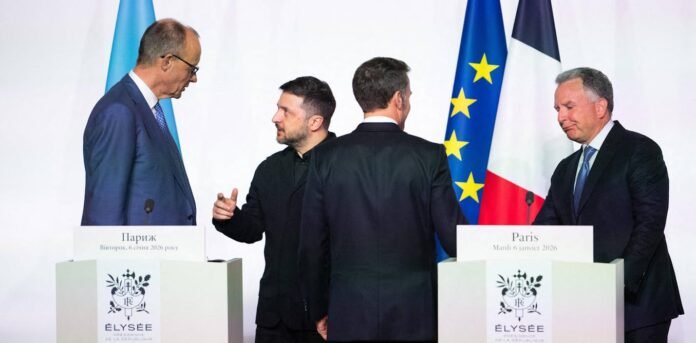








 higher rates of respiratory issues, they lacked time-stamped data to establish connections between their poor health and the region’s air quality. Sanchez said the monitoring system changes that.