31.3 C
London
Thursday, June 25, 2026
Home Blog

Trump wants $87.6 billion to pay for his war in Iran, etc.

0
trump-wants-$876-billion-to-pay-for-his-war-in-iran,-etc.
Trump wants $87.6 billion to pay for his war in Iran, etc.

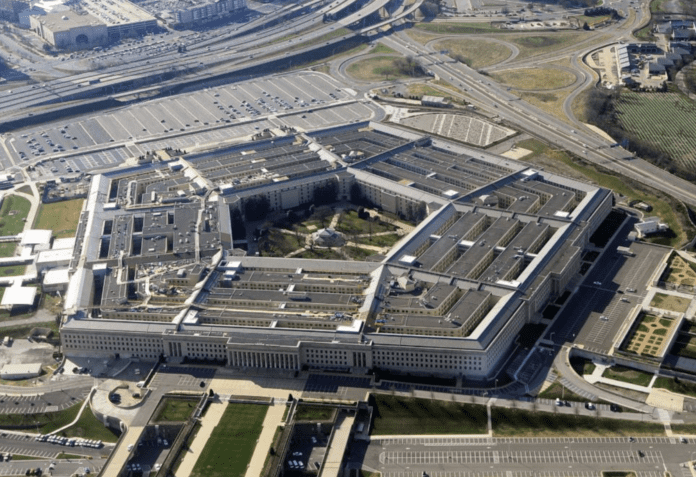
The Pentagon. Photo: Asia Times files / AFP

WASHINGTON — The Trump administration sent Congress a request Wednesday for $87.6 billion in emergency funding to cover the cost of the war in Iran and other expenses. 

The proposals didn’t appear to have broad consensus among Democrats, who would likely be needed for any emergency funding to become law. 

Senate Appropriations Committee ranking member Patty Murray, D-Wash., wrote in a statement the administration’s request “is not merely meant to pay for the president’s disastrous war, but an attempt to secure tens of billions of additional dollars for unrelated Pentagon priorities that should rightly be considered through the annual appropriations process.”

“I will closely review this request in its entirety and ensure we take care of our servicemembers, but I will not rubberstamp tens of billions more for this disastrous war of choice,” Murray added.

White House budget director Russ Vought wrote in a letter that in addition to addressing “urgent needs” for the Defense Department, the funding would help the US government assist with the Ebola outbreak and provide aid to American farmers.

Funding for the Energy Department, he wrote, would “support nuclear and other energy security requirements, primarily for the National Nuclear Security Administration.”

The supplemental spending request asks Congress to provide money for “restoration and construction projects in and around Washington, DC,” as well as the project that would modernize Penn Station in New York City. 

Senate Appropriations Chairwoman Susan Collins, R-Maine, wrote in a statement she will “evaluate the Administration’s supplemental budget request.”

“I plan to convene an Appropriations Committee hearing so that Senators can hear directly from the relevant Administration officials,” she said.  

The supplemental spending requests ask lawmakers to provide:

  • $67.15 billion for the Defense Department
  • $11.1 billion for the Agriculture Department to provide aid to farmers
  • $3.36 billion for the State Department for diplomatic, security and global health programs
  • $2.03 billion for the U.S. Coast Guard
  • $1 billion for the Transportation Department to “to assist in the final design and construction of a modernized Penn Station in New York City”
  • $1 billion for the Labor Department to “increase the benefit levels for participants of certain pension plans that were sponsored by Delphi Corporation and terminated as a result of General Motors’ bankruptcy in 2009″
  • $767.5 million for the Energy Department
  • $600 million for the General Services Administration’s federal buildings fund
  • $500 million for the National Park Service to upgrade a seawall and improve the World War II Memorial
  • $40.26 million for the FBI for its role in the Iran war and “other classified needs”
  • $36.18 million for the Treasury Department’s office of terrorism and financial intelligence
  • $13.1 million for the Homeland Security Department’s operations and support account that was part of a “classified request.”

-States Newsroom

India’s passport clarification fuels questions over citizenship documentation

0
india’s-passport-clarification-fuels-questions-over-citizenship-documentation
India’s passport clarification fuels questions over citizenship documentation


India’s Ministry of External Affairs (MEA) has clarified that an Indian passport is primarily a travel document and should not be regarded as conclusive proof of citizenship, according to Indian media reports.

The clarification was made by a senior MEA official during an event on Wednesday marking the expansion of passport services, in response to a question about the legal status of the document.

“Even though while travelling abroad, passport attests to your nationality, yet it is not a document of your citizenship,” The Hindu quoted the official as saying.

The ministry’s remarks come as the Election Commission of India carries out a controversial revision of electoral rolls, requiring voters to submit documents establishing their eligibility, including proof of citizenship.

The statement prompted widespread debate on social media, with many users questioning what documents constitute proof of Indian citizenship.

Some users shared photographs of their passports, noting that “Indian” appears under nationality, and questioned how the document could not be considered proof of citizenship.

The debate also revived discussion over other identity documents. Last year, India’s Supreme Court ruled that Aadhaar, the country’s biometric identity scheme, is not conclusive proof of citizenship.

“Passport is not a document of Citizenship. Aadhar Card is not a document of Citizenship. Voter ID Card is not a document of citizenship. Then what is the proof?” one post on X asked.

The clarification also drew criticism from public figures and opposition politicians.

Veteran screenwriter, lyricist and political activist Javed Akhtar described the ministry’s position as “absurd”, questioning whether passports were being issued without authorities first being satisfied that the holder was an Indian citizen.

Shiv Sena (UBT) leader Aaditya Thackeray said the statement could “create doubts in the minds of other countries” about whether non-Indians could obtain Indian passports as travel documents. He added: “Beyond its very confused foreign policy, how much more absurd can the MEA become.”

Trinamool Congress MP Mahua Moitra also criticised the government, saying: “It would seem that the only proof of Indian citizenship today is to be both Hindu and a BJP voter. Nothing else will do.”

Carbon Captured

0
carbon-captured
Carbon Captured

An investigation by ProPublica and Drilled has found that fossil fuel companies have been funding climate research at prestigious U.S. universities for more than 30 years. Their support has helped amplify the work of scientists who promote the idea that we can stop the climate crisis without breaking our dependence on oil, gas and coal.

The research produced by those schools in turn shaped global climate models, as well as the policy and technology solutions adopted by governments around the world.

Ultimately, it fostered a misperception that climate change could be solved without dramatically curtailing fossil fuels — a notion that has delayed emissions cuts by decades.

Corporate funders sponsored entire centers, paid the salaries of researchers, kept offices on campus and in some cases had veto power over projects.

Companies maintain they are supporting innovation and needed science. Universities say that with safeguards, sponsorship enhances research programs while preserving academic independence.

Still, the impact of funding constitutes a pattern that Benjamin Franta, an associate professor of climate litigation at University of Oxford, called the “colonization of academia.”

Illustrations by R. Kikuo Johnson. Visual editing by Alex Bandoni. Design and development by Anna Donlan.

Oman-Iran Statement Opens Door to New Fight Over Strait Fees

0
oman-iran-statement-opens-door-to-new-fight-over-strait-fees
Oman-Iran Statement Opens Door to New Fight Over Strait Fees


Giorgia Valente’s report turns a diplomatic footnote into the main event: The fight over the Strait of Hormuz is no longer only about warships, missiles, or oil tankers, but about the loaded language of “services,” “costs,” and “no charge.” The result is a classic Gulf power struggle conducted through commas, clauses, and public messaging.

At the center is a fragile US-Iran memorandum saying Iran will use its “best efforts” to ensure commercial passage through Hormuz “with no charge, for 60 days only.” Washington reads that as a clean ban on tolls, fees, insurance costs, or any Iranian-controlled payment system. Tehran, by contrast, appears to see a door left open for future talks over maritime services and associated costs. Oman’s phrasing sits between the two, pairing safe passage and international law with coastal-state sovereignty and regional consultation.

The piece is strongest when it shows why the dispute is not just semantic. Hormuz is one of the world’s most consequential chokepoints, carrying a major share of global oil and liquefied natural gas. A fee by another name could rattle shipping companies, insurers, Gulf states, and military planners. A “service” could be benign, or it could become a mechanism for Iranian leverage.

Trita Parsi of the Quincy Institute argues that Oman and Iran are not announcing tolls, but laying the groundwork for future navigation arrangements. A US Department of State adviser, identified as Willian I., offers the sharper warning: Iran and Washington are selling different stories to different audiences, and the gap is fertile ground for disinformation. His core point is blunt: Iran’s promise not to impose tolls may be real, but it is politically fragile.

Valente also links the Hormuz dispute to the nuclear file, where Iran has accepted inspections in principle while leaving the practical details unresolved. That parallel gives the story its larger shape: The ceasefire framework may be less a settlement than a holding pattern.

Giorgia Valente’s full article explains how a few carefully chosen words could decide whether Hormuz remains an open waterway or becomes the next arena for strategic pressure.

Disney agreed to $50M settlement over claims it made live-TV streaming expensive

0
disney-agreed-to-$50m-settlement-over-claims-it-made-live-tv-streaming-expensive
Disney agreed to $50M settlement over claims it made live-TV streaming expensive

The Walt Disney Company has agreed to pay $50 million to subscribers of YouTube TV and DirecTV’s live TV streaming services to settle a lawsuit that claimed that Disney forced these services to raise their prices.

In November 2022, four YouTube TV subscribers filed a class action complaint (PDF) against Disney in the US District Court for the Northern District of California. They accused Disney of entering “anticompetitive agreements with YouTube TV” and other companies that provide access to broadcast channels via the Internet.

The complaint argued that Disney forced over-the-top (OTT) live TV services to cost more by requiring distributors to include ESPN, which Disney owns, with their base packages.

Additionally, by raising prices for ESPN and for Hulu + Live TV, (Disney’s own OTT live TV service that includes ESPN), Disney drove up prices across the industry, the complaint argued.

The filing claimed that Disney had “pricing power over the entire” streaming live pay TV (SLPTV) market for two main reasons:

… these carriage agreement mandates—which now cover all of Disney’s leading competitors in the SLPTV Market—allow Disney to use ESPN and Hulu to set a price floor in the SLPTV Market and to inflate prices marketwide by raising the prices of its own products. And this is exactly what Disney has done in the past three years, since it took operational control of Hulu.

The complaint pointed out that YouTube TV’s base package increased from $35 to $65 after adding Disney-owned channels. It also noted that during YouTube TV and Disney’s 2021 carrier dispute, YouTube TV said that its base plan would be $15 cheaper without Disney-owned channels.

The complaint sought class action certification and a jury trial. Instead, the parties reached a settlement agreement in March (PDF). The court preliminarily approved the agreement later that month. A final approval hearing is scheduled for January 14, as first reported this week by local Alabama news outlet AL.com.

Under the terms of the settlement agreement, Disney agreed to pay a settlement amount of $50 million. Customers eligible to receive part of the settlement purchased a YouTube TV, DirecTV Stream, DirecTV Now, and/or AT&T TV Now subscription between April 1, 2019 and March 31, 2026.

Disney admits no wrongdoing under the agreement. It also agreed to “consider” offering distributors that it’s negotiating with the option to offer their subscribers fewer Disney-owned channels, including ESPN, for three years after the final approval of the settlement.

Still, per the agreement’s language, Disney doesn’t seem required to provide more affordable or skinnier bundles of its channels. Also, Disney can easily afford the $50 million settlement amount, considering it made $4.6 billion in total segment operating income in its most recent fiscal quarter. Still, for affected streaming users who feel slighted by Disney’s practices, the settlement agreement may provide some feeling of justice.

Disney didn’t respond to Ars Technica’s request for comment in time for publication.

AI frenzy makes Asia ripe for a ‘chip wreck’

0
ai-frenzy-makes-asia-ripe-for-a-‘chip-wreck’
AI frenzy makes Asia ripe for a ‘chip wreck’

TOKYO – No one complains about holding a winning lottery ticket. By that logic, South Korea has nothing to apologize for — it’s landed, almost by accident, at the center of the AI windfall now being minted in real time.

Six months ago, SK Hynix, Samsung and the rest of Korea Inc were bracing for a brutal 2026, squeezed between US President Donald Trump’s trade war and China’s deflationary slide. The best-case scenario was simply staying out of the line of fire as the world’s two largest economies traded blows.

Nobody in Seoul expected artificial intelligence to ride in to the rescue — let alone this dramatically. The same forces driving the Kospi’s rally past 111% this year — AI’s all-in trade and the global data center buildout — are lifting almost every corner of Asia’s fourth-largest economy. SK Hynix shares are up 348% year-to-date, Samsung up 199% and the rest of the tech sector isn’t far behind.

The broader economy is along for the ride, too. Korea’s $1.9 trillion GDP got a direct lift in the first quarter, when AI-fueled demand pushed exports up 40% and helped deliver a stronger-than-expected 1.7% year-on-year growth rate — enough to offset soft consumer spending, sagging auto sales and creeping inflation.

Korea is hardly alone. China, Japan, Malaysia, Taiwan, Vietnam and other economies are, to varying degrees, getting caught up and carried in the frenzy. “This is what an AI supercycle looks like,” says Evercore ISI analyst Amit Daryanani.

In Korea’s case, the growing dependence on AI puts it squarely in the path of a much bigger question: is AI a bubble rivaling the dot-com crash, or something larger still, given the sheer scale of money pouring into data centers?

Tuesday’s jarring 10% plunge in the Kospi already feels like old news, erased by Micron’s blockbuster forecast, which put the global AI trade right back on solid footing.

For now, anyway. The possibility of a dot-com-style reckoning hasn’t escaped the notice of some prominent financiers and economists.

Michael Burry, of “The Big Short” fame, said in mid-May that he’s seeing technical and fundamental signals all pointing toward the “same conclusion” he reached when sizing up the late-1990s frenzy against today’s AI boom.

This week, Nobel laureate Paul Krugman weighed in. In a Substack post titled “The Chips Are Down,” Krugman observed that the whole setup looks “very fragile. It’s a kind of bubble, but not in the normal sort of asset-price form. It’s more of a kind of fad, almost a social delusion. And that, it seems likely, certainly got ahead of itself.”

So what happens when an entire industry’s meme-ification starts putting whole economies at risk? Asia is about to find out, in ways that could prove genuinely revealing.

A tech downturn could rattle Korea, Taiwan and other economies now deeply dependent on the sector — with the risk of contagion spreading to China, Japan and eventually Malaysia and Vietnam.

The deeper concern is how thoroughly AI has become the defining industry across Asia’s major economies. El Salvador betting its fortunes on crypto is one thing. It’s another matter entirely when Korea — the world’s 15th-largest economy — and Taiwan (22nd-largest), along with others positioned to spread the pain further, tie their economic futures to a technology that hasn’t yet proven it can generate returns to match the hype.

Consider Korea, where exports jumped 60.4% year-on-year in the first 20 days of June alone. Chip exports nearly tripled to $25.5 billion on surging AI-driven memory demand, with semiconductors now making up over 41% of total exports — up sharply from 18% a year earlier.

Notably, auto exports have stayed flat or worse, and investors barely seem to notice. That indifference would have been unthinkable on January 1. It captures just how aggressively Seoul has thrown itself behind AI, backing the push with more than $102 billion in incentives — and increasingly erasing the line between the AI sector and the economy at large.

The catch is that the AI trade rests on the shoulders of a handful of massive conglomerates. In Korea, that means the family-run chaebols — already known for opacity and outsized market control — are only growing more dominant.

“Any time you have narrow leadership, despite what is doing the leading, it just creates more of a fragility in markets in general,” Matt Stucky, a portfolio manager at Northwestern Mutual Wealth Management, tells Yahoo Finance. “That growth in the fundamentals, even though it’s broadened some, it’s showing up in more concentrated markets today.”

Taiwan faces a similar dilemma with Taiwan Semiconductor Manufacturing Co. (TSMC), whose 48% rally this year is pulling the entire market — and the economy — along with it. In May, Taiwan’s export orders jumped more than 47% year-on-year, marking 16 consecutive months of gains.

The information and communications technology sector generated $32 billion in exports, and electronics another $37 billion — both up more than 60% from a year earlier. Combined, the two categories now make up nearly 78% of Taiwan’s total exports.

The chip boom is doing the heavy lifting, more than offsetting weak domestic spending and the dent in household confidence from Iran-war-driven inflation. Taiwan’s economy grew a stunning 13.7% in the first quarter, its fastest pace since 1987.

As in Korea, Taiwan’s economic fate is becoming nearly inseparable from global demand for AI hardware. To a lesser but still meaningful degree, AI is also feeding growth in Japan and China.

Japan, meanwhile, holds dominant positions in semiconductor manufacturing equipment and specialized electronic components. China runs the manufacturing ecosystem that assembles most tech hardware globally, weaving AI into everything from consumer electronics to electric vehicles to its broader supply chains.

Malaysia and Vietnam’s roles owe to their growing positions in the chip supply chain itself. Malaysia has become a key hub for chip “back-end” work — the testing, assembly, and packaging that complex AI processors require.

Vietnam, for its part, has been the standout winner of Trump’s trade wars dating back to 2017, emerging as the go-to backup manufacturing base for multinationals seeking shelter from years of US-China friction.

But here, too, Korea is drawing the most attention — and feeling the most vertigo. On January 1, most Koreans would likely have named cars, ships, smartphones or K-pop as the country’s signature industry. Now it’s AI, for better or worse, with 51 million Koreans scrambling to keep pace.

The whiplash in President Lee Jae-myung’s political fortunes tells the story. When he entered the Blue House in June 2025, he carried two overriding mandates. The first was restoring calm and predictability to a political system still reeling from his predecessor’s spectacular collapse.

Only Yoon Suk-yeol knows what drove him to declare martial law in December 2024 — a move that got him impeached and imprisoned, and briefly lumped Asia’s fourth-largest economy in with the likes of Indonesia, Myanmar, the Philippines, and Thailand. Rebuilding credibility, both at home and abroad, fell to Lee.

His second mandate was tackling the “Korea discount” — the chronic undervaluation that has dogged Kospi-listed companies for years. On the campaign trail, Lee promised tighter oversight and stronger corporate governance, setting a goal of doubling the Kospi from roughly 2,500 to 5,000 over his five-year term.

AI ended up doing the heavy lifting for him. The Kospi’s surge recently pushed the benchmark briefly past 9,100 — landing Korea Inc in global headlines for all the right reasons and sparking a FOMO rush, with Korean households and fund managers worldwide alike scrambling to ride the latest wave out of Seoul.

Whether this year’s AI rally reflects genuine foresight or simple irrational exuberance is the question hanging over markets right now — made sharper by the death this same week of the man who coined that phrase. Alan Greenspan first used it in December 1996 as a warning against dot-com euphoria, drawing explicitly on Japan’s late-1980s boom and the bust that followed.

Tokyo’s progress in strengthening corporate government, meanwhile, is real, even if incomplete. The Nikkei’s climb to a record 70,000 suggests AI is playing an outsized role.

Korea, too. The case that Lee’s government has done notable structural work over the past year is thin. If it had, MSCI would already be moving to elevate Korea to developed-market status, an upgrade Seoul has lobbied for over two decades. Instead, on Wednesday, MSCI kept Korea’s $5 trillion market grouped with Brazil, China, India and South Africa.

That should give Kospi bulls pause. Korea’s potential is real. But MSCI’s unresolved concerns — including restrictions on offshore won trading — point to structural friction that hasn’t gone away. As MSCI put it, investors have signaled that the underlying issues remain unresolved. Potential and performance are two different things.

That doesn’t mean they’ll stay that way. But the same reservations that kept investors from going all-in on Korea Inc on January 1 are still very much alive 175 days later.

Korea’s Finance Ministry essentially conceded the point, stating: “If we continue to implement reforms in the foreign exchange and capital markets on our own schedule, we believe we can be included among advanced economies.”

This might matter less if Seoul’s stock market weren’t now sitting at the center of the “chip-wreck” narrative sweeping global markets. The same goes for officials in Beijing, Hanoi, Kuala Lumpur, Tokyo and beyond, as AI turns equity discounts into runaway premiums faster than investors can keep up with.

Follow William Pesek on X at @WilliamPesek
Gaza shifts US politics as pro-Israel lobby suffers setback in New York primaries

0
gaza-shifts-us-politics-as-pro-israel-lobby-suffers-setback-in-new-york-primaries
Gaza shifts US politics as pro-Israel lobby suffers setback in New York primaries

New York City’s Democratic primary elections have highlighted a growing shift in attitudes towards Israel among Democratic voters, after three progressive candidates secured notable victories that were seen as a blow to the traditional party establishment and the political influence of pro-Israel groups, particularly the American Israel Public Affairs Committee (AIPAC).

Brad Lander won in the 10th District, Claire Valdez in the 7th District, and Darializa Avila Chevalier in the 13th District, putting them on a near-certain path to reaching Congress in the November elections. Lander and Avila Chevalier also succeeded in unseating incumbent members of the House of Representatives.

Observers said the war in Gaza and US support for Israel played a key role in several of the races, particularly in the 10th District, where Lander secured a landslide victory with around two-thirds of the vote, defeating Representative Dan Goldman.

Democratic polling expert Adam Carlson said the main difference between the two candidates was their stance on Israel, saying Goldman had moved away from the Democratic base because of his pro-Israel stance and ties to AIPAC.

READ: Pro-Israel cash goes undercover as US voters turn against Israel

IBM claims world’s first sub-1 nanometer chip technology

0
ibm-claims-world’s-first-sub-1-nanometer-chip-technology
IBM claims world’s first sub-1 nanometer chip technology

A new chip architecture from IBM can integrate nearly 100 billion transistors on a chip the size of a human fingernail—nearly twice the transistor density of the company’s previous generation of chip technology. The resulting improvement in chip compute performance and energy efficiency comes from what IBM describes as the “world’s first sub-1 nanometer chip technology” for AI data centers.

“It’s not just an incremental step, it’s a meaningful leap forward,” said Jay Gambetta, director of IBM Research and IBM Fellow, in an advance media briefing. He described the new chip technology as “pointing to a future where computing becomes significantly more powerful without a corresponding increase in energy.”

It’s worth unpacking what the “world’s first sub-1 nanometer chip technology” means, because it is impractical to build reliably functional chips with transistors and other features smaller than 1 nanometer due to various physical limitations. Instead, IBM is basically claiming that its new “nanostack” architecture can deliver the computing performance improvements that would be expected if a theoretical chip could be built with physical features smaller than 1 nanometer.

Specifically, IBM describes its new chip technology as being built at the 0.7-nanometer node, which it has named the 7 angstrom node because one nanometer consists of 10 angstroms.

But keep in mind that such node numbers have nothing to do with the actual physical dimensions of IBM’s chip features. Older generations of chips developed in the 1970s and 1980s had physical features with dimensions matching the number in the name of their chip technology’s node or process—such as chips made at the 180-nanometer node—but that has not been the case for decades and certainly not for the latest chip generations made with a 3-nanometer or 2-nanometer process.

To overcome the physical scaling limits facing modern chip designers, IBM’s new nanostack architecture vertically stacks transistors in a staggered layout to pack more transistors into the same chip space. The nanostack architecture builds on the company’s prior development of nanosheet transistors that paved the way for its 2-nanometer chip node introduced in 2021.

The basic unit of IBM’s nanostack architecture consists of two transistors stacked and bonded together. Each transistor consists of three nanosheets that are individually 5 nanometers thick, equivalent to about 15 rows of silicon atoms. There is also a distance of about 9 nanometers separating each nanosheet.

Performance gains for the AI era

The nanostack architecture could pave the way for 50 percent higher computing performance or 70 percent greater energy efficiency than IBM’s previous generation of 2-nanometer node chips, according to projections from the company’s published technical reports. The company introduced its nanostack transistor architecture at the 2025 IEEE Symposium on VLSI Technology and Circuits held in Kyoto, Japan.

IBM researchers also showed how the nanostack architecture can provide 40 percent improvement in scaling for static random-access memory (SRAM) during the VLSI 2026 symposium. SRAM allows for fast but energy-intensive read and write operations that are crucial in many AI applications.

The memory improvement is made possible through a staggered-channel design for the chip’s SRAM bit cells—memory storage units consisting of six transistors—that reduces overall cell height by 40 percent and enables more SRAM to be squeezed into the same chip space.

That will probably be welcome news for chip designers looking to support AI workloads, given how SRAM scaling has fallen off drastically in recent generations of chip technologies. For example, SRAM scaling improved just a few percent between the 3-nanometer chip generation and the 2-nanometer chip generation, Gambetta explained.

“This achievement of 40 percent will eventually industrialize itself in AI workflows, which require higher bandwidth and high efficiency,” Gambetta said.

The roadmap for sub-1 nanometer nodes

As a company that performs chip technology research, IBM does not manufacture commercial chips that could end up in AI data centers or consumer devices. Instead, IBM has partnered with semiconductor companies such as Rapidus in Japan to mass manufacture its previous generation of 2-nanometer node chips based on the nanosheet architecture, or to commercialize related technology in another partnership with Samsung in South Korea.

Other companies have followed up on IBM’s pioneering work without any direct collaboration. For example, Taiwan’s TSMC independently developed nanosheet transistors for its own proprietary 2-nanometer node technology.

“Nanosheet has become the foundation of the next generation of transistor scaling,” said Huiming Bu, vice president of IBM Semiconductors Global R&D and IBM Research, during the media briefing. “Today, nanosheet is adopted by all leading foundries for most of the 3-nanometer chips and all of the 2-nanometer chips.”

IBM declined to name specific companies that it may partner with to commercialize the newest sub-1-nanometer node technology. But Bu expects that commercial chips made at the sub-1-nanometer node and incorporating the newest nanostack architecture could begin production as early as in the next five years and most likely within a decade.

“It will replace nanosheet as today’s mainstream in leading foundries, whether it’s CPUs or GPUs,” Bu said. “Within a decade, this will become another mainstream that we have invented and helped industry to transform.”

The Intercept Sues to Uncover Secretive Government Anti-Protester Database

0
the-intercept-sues-to-uncover-secretive-government-anti-protester-database
The Intercept Sues to Uncover Secretive Government Anti-Protester Database


The Intercept is challenging the U.S. Department of Homeland Security’s refusal to release public documents relating to an unlawful database intended to stifle protest and punish people who exercise their First Amendment rights. In a complaint filed in U.S. District Court for the Southern District of New York today, The Intercept is asking the court to compel the government to release documents requested through the Freedom of Information Act regarding increased surveillance and travel restrictions for protesters. The Intercept is represented by Democracy Forward in the case.

“It’s not illegal to monitor the activity of immigration agents inside your community,” said Ben Muessig, editor-in-chief of The Intercept. “What is illegal is the U.S. government’s secret list of activists — and its refusal to turn over information about that database to the American public.”

Sweeping immigration enforcement actions performed by DHS and its component agencies — including Immigration and Customs Enforcement and Customs and Border Protection — in recent months have led to a countermovement of civilians protesting and recording immigration enforcement actions in cities and towns across the United States. In response to the swell of public support for democracy, news reports and social media posts about encounters with ICE and CBP agents have suggested that by using photos, video, license plates, hotel check-in information, and more to create a database of lawful protesters, the government may be taking concerning action affecting the rights of those exercising their First Amendment rights. There are other indications that DHS may have used its authority over traveler programs to retaliate against protesters.

In one example, a video posted to social media on January 23, 2026, depicts federal agents recording a protester, saying that they were recording her “because we have a nice little database, and now you’re considered a domestic terrorist.” In another example, a court hearing regarding immigration enforcement actions in Minnesota reportedly included an exhibit of a recording of a federal agent saying, “Well, this person is gonna have a hard time traveling from now on” after taking a photo of an ICE observer’s license plate. In a separate court case, a civilian observing ICE submitted a declaration stating that her TSA PreCheck and Global Entry statuses were revoked three days after an encounter with immigration enforcement officials. Additionally, at least one prominent supporter of transgender rights has reportedly had her Global Entry access and U.S. passport canceled in the past few months.

In order to shed light on these reported abuses of power, earlier this year, The Intercept filed FOIA requests to help uncover important information about DHS’s efforts to increase surveillance of protesters and unlawful retaliation against people exercising their rights. Despite acknowledging the receipt of the requests, DHS has not produced the requested public documents, as required by law.

“The government is not allowed to selectively hide information about its actions that impact protected First Amendment activity,” said Skye Perryman, president and CEO of Democracy Forward. “The surveillance and retaliation being reported would be egregious violations of core constitutional principles, and we are honored to represent a storied news organization as it fights to demand the public have access to the information we need to protect our democracy.”

The case is The Intercept v. DHS et al., and the legal team at Democracy Forward working on the case includes Amy Vickery, Daniel McGrath, Ron Fein, and Robin Thurston.

Read today’s filing here.

Race to record China’s vanishing Dong minority heritage

0
race-to-record-china’s-vanishing-dong-minority-heritage
Race to record China’s vanishing Dong minority heritage

The Dong people in China are an Indigenous ethnic group who are known to have lived in the mountainous regions of southwestern China for about 600 years. They don’t have a written language – instead, their cultural knowledge is shared by word of mouth. This means that the outside world doesn’t know much about them.

But an ambitious university-led research project to document the Dong people’s distinctive architecture is revealing a great deal about this marginalized Indigenous group’s way of life.

There are an estimated 3 million Dong people living in the provinces of Guizhou, Hunan and Guangxi. They are renowned for their polyphonic choral singing, which has been inscribed by UNESCO since 2009 as an example of world-class intangible cultural heritage. Their architecture, landscape and refined agricultural terracing are also distinctive, but less well known and never digitally recorded.

Dong buildings and settlements are typically hidden in fir forests with direct access to waterways at the bottom of valleys or halfway up hills. A Dong settlement typically has around 200 households of four to five people – although some larger villages can have as many as 500 households.

These villages tend to have a gatehouse marking their boundary, defining their territory in relation to neighbouring settlements. Many feature a distinctive “wind-and-rain bridge” – a mix of village gate and covered bridge – used for communal gatherings and blocking ceremonies. Ponds, wells, and granaries are scattered throughout the landscape.

At the heart of most villages, surrounded by wooden houses of two or three stories, there is a “drum tower” and a “Sa-Sui shrine.” The former represents the connection of the people’s sacred belief of clan kinship and fir trees, while the latter represents the center of the Dong’s worship of the “Sa” or grandmother.

They are the most important buildings in a village – for security, social and spiritual reasons.

Culture at risk

Nowadays, the Dong’s built and cultural heritage are increasingly at risk. This is due to a combination of climate change, natural disasters, urban infrastructure development and the expansion of rural tourism.

A warming climate is increasingly triggering wild fires and causing mountain flooding. We are also seeing the encroachment of urbanism into the Dong’s rural settings. While bringing improvements in the quality of life, this often presents domestic fire hazards due to poor-quality electrical infrastructure.

And in recent years, the growth of tourism and the encroachment of roads, railways and bridges is in danger of turning these villages into decorated stage-sets. This may bring in money, but threatens the Dong people’s unique architecture and landscape.

It’s a pressing challenge for this Indigenous people and for those of us dedicated to preserving their historic environment, their culture and their highly ritualised way of life.

Tragically, the scarcity of resources means that schemes for repair, restoration and regeneration works, as well as insufficient conservation policies and frameworks, have been slow to help preserve these precious villages.

The far remote mountainous environment does not help. Both the local communities and government authorities have extremely limited resources to manage almost any change to their historic environment.

Despite the remote location of many of these villages, they are now being encroached upon by modern development. We’re seeing the growth of contemporary housing developments using modern structures and materials.

It’s part of the rapid urbanization of China over the past few decades – but, like elsewhere, it’s irreversibly changing the image and identity of the Dong settlements and their architecture.

Modern infrastructure is irreversibly changing the context and historic fabric surrounding the drum tower of Ju Dong village. XIan Ren, Author provided (no reuse) via The Conversation

The problem of modern tourist development can be seen in the way traditional-style drum towers are being built as theme park attractions. At the Danzhai Wanda Village, a newly developed theme park near Kaili in Guizhou, the nearest city to the Dong’s Indigenous areas, there are five newly built drum towers, billed as “iconic”, which are presented as standalone monuments with no sense of their relationship with the surrounding houses and forests.

Decoding Dong built heritage

The need to document and protect authentic Indigenous Dong culture is what has driven the Decoding Dong project.

This was launched in 2023 and completed in 2025 and set to digitally document Dong physical and cultural heritage.

This interdisciplinary project draws on humanities and social science disciplines ranging from architecture, anthropology, heritage sciences, sociology and digital humanities.

Youtube video

It put together a series of innovative and complementary research methods. This has involved 3D LiDAR scanning, aerial and terrestrial photogrammetry (the science of applying mathematics to photographs to extract accurate 3D measurements), 3D reality capture modelling, measured drawing, documentary film making and mapping. This has been complemented with oral histories from provided by Dong people.

The project has completed a first-of-its-kind digital documentation of the Dong architectural heritage, building digital and audio-visual documentaries of around 100 historic buildings across a dozen remote Dong villages.

A key part of the research process was to consult with key stakeholders, including clan leaders, elderly villagers and provincial policymakers wherever possible.

Indigenous Dong heritage is still under threat, due to the scarcity of resources faced by both the local authority and the communities themselves.

But this project represents a step change. By building a mutually beneficial store of information, supported by cutting-edge digital technologies, we hope to draw more attention to this distinctive people without threatening what it is that makes them unique.

Xiang Ren is associate professor in architecture, University of Sheffield

This article is republished from The Conversation under a Creative Commons license. Read the original article.

0FansLike
0FollowersFollow
0FollowersFollow
0SubscribersSubscribe
- Advertisement -
Google search engine

Recent Posts