31.9 C
London
Thursday, June 25, 2026
Home Blog

Establishment Democrats to the Dustbin of History

0
establishment-democrats-to-the-dustbin-of-history
Establishment Democrats to the Dustbin of History


When Hakeem Jeffries, who’s positioning himself to be House speaker if the Democrats retake the chamber come November, was shown on the screen at an election party full of socialists in Brooklyn Tuesday night, the crowd chanted, “You’re next! You’re next!” Before polls closed on the night that would see the Jeffries-endorsed candidates fall and Mayor Zohran Mamdani’s candidates win, the New York congressman told reporters that he and the mayor have “agreed to strongly disagree” and that “a handful of primaries that go in one direction or the other in a given state or two aren’t going to reshape who we are as House Democrats.”

He may be right in the short term; it will take many nights like Tuesday to remake the face of the party. But what’s underway is nothing less than an existential threat to the version of the party that has made Jeffries its standard-bearer. If middle-of-the-road Democrats fail to reckon with this escalating reality and shift to the left, they risk making themselves irrelevant forever — and ceding even more ground to the Republicans as they cut off their nose to spite their face.

After all three congressional candidates that earned Mamdani’s endorsement — Darializa Avila Chevalier, Brad Lander, and Claire Valdez — won handily, as did nearly all of the Democratic Socialists of America’s down-ballot slate in New York, Jeffries and his ilk were quick to discount Mamdani’s political project as one that could never take root beyond the New York City meeting halls of Williamsburg and Bushwick. But as other primary races this cycle have shown us, that’s simply not true.

In Maine, Graham Platner delivered a crushing defeat in the Democratic Senate primary to Gov. Janet Mills, whom Chuck Schumer reportedly “aggressively recruited” to enter the race at all (and as we’ve covered, her campaign never really got off the ground or found anything approximating grassroots support). Platner’s victory — amid a spate of scandals over his online posts and alleged mistreatment of women — is now exposing the lie of one of his party’s favorite refrains for disciplining the left: that for all our differences, we must “vote blue no matter who.” 

These candidates stand for actual policy, not just mealy-mouthed “messaging.”

In the Senate race in Michigan, polling is strong for Abdul El-Sayed, a former public health official pushing Medicare for All and centering Israel’s genocide of Palestinians while competing with a both-sides-ing progressive and an outright AIPAC Democrat. Philadelphia nominated Chris Rabb, an outspoken anti-genocide democratic socialist, over the party’s political machine-mined candidate in Philadelphia, and Dr. Adam Hamawy, a 9/11 first responder who saved Sen. Tammy Duckworth’s life as an Army medic but was also tarred with Islamophobic attacks that tried to frame him as a supporter of terrorism, won a crowded 12-way primary in New Jersey earlier this month. (The latter three have all appeared on the trail with Hasan Piker, the popular streamer who’s become a potent political force for left-wing Democrats, much to the dismay of centrists who condemn him as “controversial” and worse.)

If you care to pay attention, there’s an obvious through line with all these candidates: They all stand for actual policy, not just mealy-mouthed “messaging,” and they have been unequivocal in their criticism of Israel. Mainstream Democrats have long lacked that moral clarity as America’s ally in the Middle East committed a genocide in Gaza and dragged the U.S. into an instantly unpopular war with Iran, and they’re being handed the losses they so richly deserve by candidates running to the left. For now, they’ve responded by making overtures of progressive change without meaningful or widespread policy shifts.

The idea that the party should respond to the will of its voters has become so foreign to the Democrats that Jeffries’s political operation has sneeringly referred to even the notion of a party challenge from the left as coming from “Team Gentrification.” On no issue is the division between voters and the national party as stark as it is when it comes to Israel.

A party that wants to defeat the rise of the far right in this country should look to bring the left in, especially as it continues to win at the ballot box. But instead, establishment Democrats have continued to bash and attempt to marginalize the growing left consensus. “If you hate the Democratic Party, then please don’t run for our nomination,” former Democratic National Committee chair Jaime Harrison wrote on social media on Tuesday.

But you can only condescend and disregard your party’s supporters for so long until they look for another vision of the future — one that doesn’t include you.

The flaws at the heart of Donald Trump’s Iran ceasefire deal

0
the-flaws-at-the-heart-of-donald-trump’s-iran-ceasefire-deal
The flaws at the heart of Donald Trump’s Iran ceasefire deal

The world sighed in relief when Donald Trump agreed to a memorandum of understanding (MoU) to finally end the conflict with Iran on June 17. But there is now a palpable feeling that hostilities are far from over. The agreement between Washington and Tehran, signed at Versailles on June 18, is better understood as a deferred crisis – one whose contradictions are already visible.

Iran’s closure of the waterway since February has caused one of the largest supply disruptions in the history of global energy markets, driving inflation across the western world and aggravating American motorists at the gas station. It was this economic stranglehold that brought Trump to the table.

The payoff for the US is unclear. As former US president Barack Obama recently said, it is “doubtful that any agreement that arises is going to be significantly different, or represent a significant improvement from the deal” that Obama himself oversaw in 2015.

Iran’s closure of the strait gave it the leverage to secure concessions from Trump – potentially exceeding the Obama-era nuclear deal – without offering more on the nuclear question than it had tabled in Geneva days before the war began in February. Even senior Republicans such as Senator Bill Cassidy have lamented the deal for its financial incentives to the Iranian regime.

Within 72 hours of the MoU, Iran’s military command claimed to have closed the Strait of Hormuz once again. This was no surprise. It is indicative of an emboldened Iran that is flexing its leverage – leverage Trump’s deal has inadvertently produced.

Iran has absorbed enormous punishment, survived and is now dictating the terms of the ceasefire by dangling the constant threat of economic misery in front of Trump’s face. This is not a foundation for a stable settlement. In fact, it signals a serious loss of control for both the US and Israel.

Iran’s justification – Israeli strikes against Hezbollah – for wreaking economic havoc and holding global energy markets hostage illustrates the structural flaw at the heart of Trump’s approach to deal-making. Iranian officials have explicitly said that the “most important item” on their agenda is preventing further Israeli strikes in Lebanon.

Iran’s strategic logic is unambiguous. Every time Israel retaliates against Hezbollah, which it is both legally entitled and politically compelled to do, Iran holds the global economy hostage via the Strait of Hormuz.

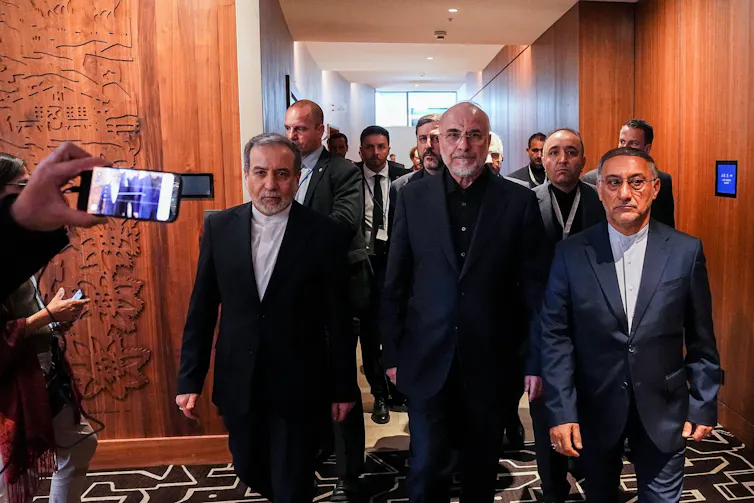
Iranian men in suits walk down a corridor of a hotel watched by press photographers.

Iranian parliamentary speaker, Mohammad Bagher Ghalibaf, foreign minister Abbas Araghchi and members of Iran’s negotiating team arriving for talks in Zurich, Switzerland, June 21. Sipa US/Alamy Live News

This places Israel in an impossible position. It cannot permanently suspend its right to self-defence as a condition of a US diplomatic agreement. It is hard to see Israel’s security cabinet accepting a framework in which Iranian-backed forces in Lebanon can attack their territory with impunity, because the consequences of retaliation lead to increased pressure on global oil markets and American inflation figures.

As Israel’s minister of national security, Itamar Ben-Gvir put it: “Israel is not subject to the United States, and we are an independent and sovereign nation.”

This is not a viable and sustainable strategy of deterrence. It is brass-necked coercion dressed up as diplomacy.

For Trump, the domestic arithmetic is equally unstable. While he insists that his deal has delivered everything it set out to achieve, by his own admission, he also stated at the recent G7 summit in France that he “didn’t want to see an economic catastrophe”. It would certainly not improve his party’s prospects in the upcoming midterm elections in November.

A woman in a football shirt walks away from a gasoline pump displaying high prices.

High gasoline prices in the US have made the war in Iran very unpopular. Abaca Press/Alamy Live News

It is a frank acknowledgement that his decision-making was driven by the perception that continued military pressure was producing diminishing returns. The decision to stop fighting had ceased to be a strategic choice. It was the result of an American president who no longer believed he could act with complete control.

The problem is that the deal does not restore that agency in a meaningful way. Iran has now demonstrated to itself, to its regional partners, and to the world that it can act belligerently and still negotiate from a position of strength.

Vicious cycle

What is currently happening can be best described as a cycle: Israeli military action in Lebanon, Iranian threats to close the strait, US pressure on Israel to stand down, and Israeli resistance to doing so. Each iteration of this cycle will intensify the narrative that restraint is no longer a viable course of action – for Israel, for Trump’s domestic base, and for the Gulf states who have felt the brunt of Iranian drone attacks.

Despite the destruction of most of Iran’s military capabilities, infrastructure and political leadership, Iran remains determined to change the order of things in its region. Its foreign policy behaviour is driven by a combination of revolutionary ideology, a deep mistrust of the US, and a religiously guided identity as a self-appointed protector of the Shia Islamic world.

Nothing in the last four months has given Tehran reason to revise that worldview. Quite the contrary.

Lebanon has become the fault line on which this deal will either hold or break. Israel has understood this from the start. Trump is catching up. His threat to “blow the shit out of them” if Iran does not comply suggests a president whose patience with his own agreement is already fraying.

The memorandum of understanding is a ceasefire with a built-in detonator. When political actors come to believe that restraint no longer allows them to act meaningfully – as both Trump and Israel increasingly do – escalation ceases to be a choice. It may come to be the only available logic.

Apple ratchets up prices, blames the cost of memory

0
apple-ratchets-up-prices,-blames-the-cost-of-memory
Apple ratchets up prices, blames the cost of memory

Apple bumped its prices across much of its product lineup today, in some cases adding hundreds of dollars to the cost of a new Macintosh. An entry-level MacBook Neo that cost $599 is now $699. The formerly $1,299 iMac will now be a $1,499 iMac. An M5 MacBook Pro that was $1,699 is now $1,999. And at the very high end, an M3 Ultra Mac Studio—which features 96GB of memory—sees a $1,300 price increase to $5,299.

The iPad line is also getting more expensive, between $100 and $200, depending on the model. Smaller price increases have been applied to products like the Apple TV and HomePod. The price of iPhones remains unchanged, at least for now.

The culprit? The soaring price of memory, according to an interview that Apple CEO Tim Cook gave to The Wall Street Journal earlier this month. “Unfortunately, price increases are unavoidable,” Cook told the paper. “We’re doing our best to mitigate the huge increases that are being passed to us, and we’ve been trying to shield our customers from the increases, but the situation has become unsustainable.”

As AI investments rocketed, chipmakers increasingly focused on the more profitable memory used in data centers rather than the memory intended for consumer products.

Consequently, supply shortages and high memory prices have been affecting the tech industry for months now, driving up the prices of many consumer electronics and causing others to disappear from sale. For example, in March, Apple quietly removed a memory-heavy configuration of the M3 Ultra Mac (which featured 512GB of memory) from its store.

For long-time Apple customers who remember how much Apple used to charge for RAM during the PowerPC days, these price rises might induce a little déjà vu.

Boy Injured in 50-Foot Fall from Disneyland Ride

0
boy-injured-in-50-foot-fall-from-disneyland-ride
Boy Injured in 50-Foot Fall from Disneyland Ride


A terrifying scare unfolded at Disneyland after a 13-year-old boy reportedly climbed out of a log ride moments before its final 50-foot plunge.

The incident happened Sunday evening on Tiana’s Bayou Adventure, one of Disneyland’s popular log flume rides, according to a Disneyland spokesperson. The teen allegedly got out of the ride vehicle before the attraction’s steep final drop, prompting a cast member to immediately stop the ride.

The boy was taken to a local hospital to be checked out as a precaution, the spokesperson said. He was later released.

The ride stayed closed for the rest of Sunday night before reopening the next day, according to reports.

Witnesses who discussed the scary moment online claimed they saw the teen slide down the steep descent before emergency crews arrived.

One Reddit user who said they were on the ride at the time claimed multiple passengers saw the boy fall just before the attraction came to a halt.

“He attempted to exit the ride vehicle at the top of the final drop,” another commenter wrote, claiming the ride either did not stop in time or had already passed the point where the vehicle could avoid the drop.

Another person said Disneyland security and medical personnel were quick to respond.

“Luck was on his side,” one commenter wrote.

Tiana’s Bayou Adventure opened at Disneyland in 2024 after replacing Splash Mountain. The ride is inspired by Disney’s animated film The Princess and the Frog and features a dramatic final plunge that has long been one of the attraction’s biggest thrills.

The Disneyland scare comes after another amusement ride incident in Louisiana left two girls hospitalized in November 2025. Authorities said the girls fell an estimated 15 to 20 feet from a Ferris wheel during a harvest festival in New Roads after the ride malfunctioned.

Both girls were treated at the scene before being airlifted to a children’s hospital in Baton Rouge with moderate to severe injuries. One was later released, while the other remained hospitalized at the time.

Trump wants $87.6 billion to pay for his war in Iran, etc.

0
trump-wants-$876-billion-to-pay-for-his-war-in-iran,-etc.
Trump wants $87.6 billion to pay for his war in Iran, etc.

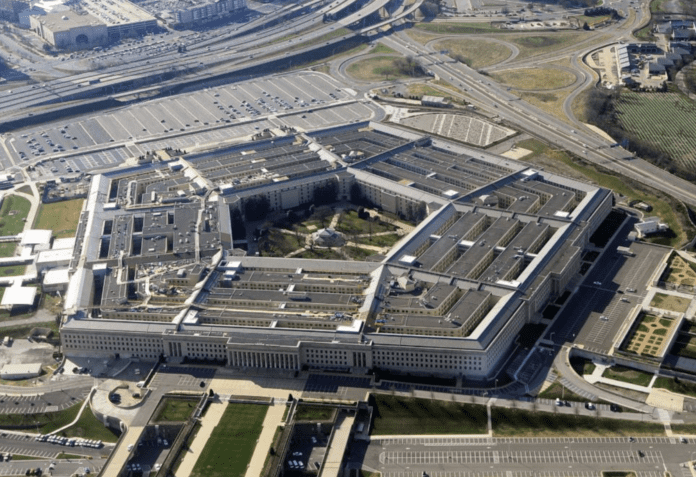
The Pentagon. Photo: Asia Times files / AFP

WASHINGTON — The Trump administration sent Congress a request Wednesday for $87.6 billion in emergency funding to cover the cost of the war in Iran and other expenses. 

The proposals didn’t appear to have broad consensus among Democrats, who would likely be needed for any emergency funding to become law. 

Senate Appropriations Committee ranking member Patty Murray, D-Wash., wrote in a statement the administration’s request “is not merely meant to pay for the president’s disastrous war, but an attempt to secure tens of billions of additional dollars for unrelated Pentagon priorities that should rightly be considered through the annual appropriations process.”

“I will closely review this request in its entirety and ensure we take care of our servicemembers, but I will not rubberstamp tens of billions more for this disastrous war of choice,” Murray added.

White House budget director Russ Vought wrote in a letter that in addition to addressing “urgent needs” for the Defense Department, the funding would help the US government assist with the Ebola outbreak and provide aid to American farmers.

Funding for the Energy Department, he wrote, would “support nuclear and other energy security requirements, primarily for the National Nuclear Security Administration.”

The supplemental spending request asks Congress to provide money for “restoration and construction projects in and around Washington, DC,” as well as the project that would modernize Penn Station in New York City. 

Senate Appropriations Chairwoman Susan Collins, R-Maine, wrote in a statement she will “evaluate the Administration’s supplemental budget request.”

“I plan to convene an Appropriations Committee hearing so that Senators can hear directly from the relevant Administration officials,” she said.  

The supplemental spending requests ask lawmakers to provide:

  • $67.15 billion for the Defense Department
  • $11.1 billion for the Agriculture Department to provide aid to farmers
  • $3.36 billion for the State Department for diplomatic, security and global health programs
  • $2.03 billion for the U.S. Coast Guard
  • $1 billion for the Transportation Department to “to assist in the final design and construction of a modernized Penn Station in New York City”
  • $1 billion for the Labor Department to “increase the benefit levels for participants of certain pension plans that were sponsored by Delphi Corporation and terminated as a result of General Motors’ bankruptcy in 2009″
  • $767.5 million for the Energy Department
  • $600 million for the General Services Administration’s federal buildings fund
  • $500 million for the National Park Service to upgrade a seawall and improve the World War II Memorial
  • $40.26 million for the FBI for its role in the Iran war and “other classified needs”
  • $36.18 million for the Treasury Department’s office of terrorism and financial intelligence
  • $13.1 million for the Homeland Security Department’s operations and support account that was part of a “classified request.”

-States Newsroom

India’s passport clarification fuels questions over citizenship documentation

0
india’s-passport-clarification-fuels-questions-over-citizenship-documentation
India’s passport clarification fuels questions over citizenship documentation


India’s Ministry of External Affairs (MEA) has clarified that an Indian passport is primarily a travel document and should not be regarded as conclusive proof of citizenship, according to Indian media reports.

The clarification was made by a senior MEA official during an event on Wednesday marking the expansion of passport services, in response to a question about the legal status of the document.

“Even though while travelling abroad, passport attests to your nationality, yet it is not a document of your citizenship,” The Hindu quoted the official as saying.

The ministry’s remarks come as the Election Commission of India carries out a controversial revision of electoral rolls, requiring voters to submit documents establishing their eligibility, including proof of citizenship.

The statement prompted widespread debate on social media, with many users questioning what documents constitute proof of Indian citizenship.

Some users shared photographs of their passports, noting that “Indian” appears under nationality, and questioned how the document could not be considered proof of citizenship.

The debate also revived discussion over other identity documents. Last year, India’s Supreme Court ruled that Aadhaar, the country’s biometric identity scheme, is not conclusive proof of citizenship.

“Passport is not a document of Citizenship. Aadhar Card is not a document of Citizenship. Voter ID Card is not a document of citizenship. Then what is the proof?” one post on X asked.

The clarification also drew criticism from public figures and opposition politicians.

Veteran screenwriter, lyricist and political activist Javed Akhtar described the ministry’s position as “absurd”, questioning whether passports were being issued without authorities first being satisfied that the holder was an Indian citizen.

Shiv Sena (UBT) leader Aaditya Thackeray said the statement could “create doubts in the minds of other countries” about whether non-Indians could obtain Indian passports as travel documents. He added: “Beyond its very confused foreign policy, how much more absurd can the MEA become.”

Trinamool Congress MP Mahua Moitra also criticised the government, saying: “It would seem that the only proof of Indian citizenship today is to be both Hindu and a BJP voter. Nothing else will do.”

Carbon Captured

0
carbon-captured
Carbon Captured

An investigation by ProPublica and Drilled has found that fossil fuel companies have been funding climate research at prestigious U.S. universities for more than 30 years. Their support has helped amplify the work of scientists who promote the idea that we can stop the climate crisis without breaking our dependence on oil, gas and coal.

The research produced by those schools in turn shaped global climate models, as well as the policy and technology solutions adopted by governments around the world.

Ultimately, it fostered a misperception that climate change could be solved without dramatically curtailing fossil fuels — a notion that has delayed emissions cuts by decades.

Corporate funders sponsored entire centers, paid the salaries of researchers, kept offices on campus and in some cases had veto power over projects.

Companies maintain they are supporting innovation and needed science. Universities say that with safeguards, sponsorship enhances research programs while preserving academic independence.

Still, the impact of funding constitutes a pattern that Benjamin Franta, an associate professor of climate litigation at University of Oxford, called the “colonization of academia.”

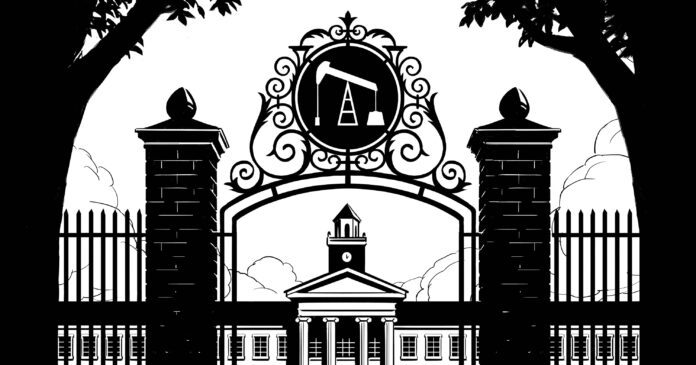
Illustrations by R. Kikuo Johnson. Visual editing by Alex Bandoni. Design and development by Anna Donlan.

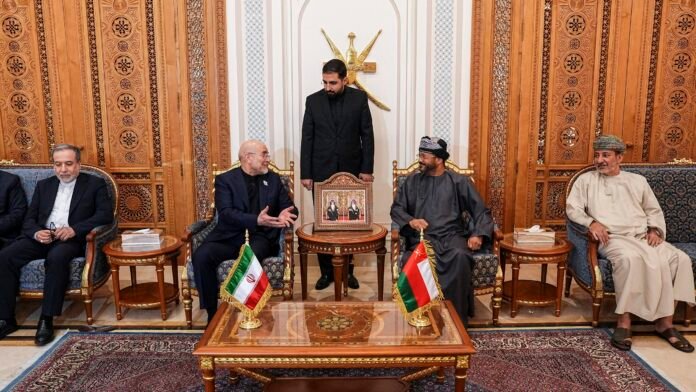
Oman-Iran Statement Opens Door to New Fight Over Strait Fees

0
oman-iran-statement-opens-door-to-new-fight-over-strait-fees
Oman-Iran Statement Opens Door to New Fight Over Strait Fees


Giorgia Valente’s report turns a diplomatic footnote into the main event: The fight over the Strait of Hormuz is no longer only about warships, missiles, or oil tankers, but about the loaded language of “services,” “costs,” and “no charge.” The result is a classic Gulf power struggle conducted through commas, clauses, and public messaging.

At the center is a fragile US-Iran memorandum saying Iran will use its “best efforts” to ensure commercial passage through Hormuz “with no charge, for 60 days only.” Washington reads that as a clean ban on tolls, fees, insurance costs, or any Iranian-controlled payment system. Tehran, by contrast, appears to see a door left open for future talks over maritime services and associated costs. Oman’s phrasing sits between the two, pairing safe passage and international law with coastal-state sovereignty and regional consultation.

The piece is strongest when it shows why the dispute is not just semantic. Hormuz is one of the world’s most consequential chokepoints, carrying a major share of global oil and liquefied natural gas. A fee by another name could rattle shipping companies, insurers, Gulf states, and military planners. A “service” could be benign, or it could become a mechanism for Iranian leverage.

Trita Parsi of the Quincy Institute argues that Oman and Iran are not announcing tolls, but laying the groundwork for future navigation arrangements. A US Department of State adviser, identified as Willian I., offers the sharper warning: Iran and Washington are selling different stories to different audiences, and the gap is fertile ground for disinformation. His core point is blunt: Iran’s promise not to impose tolls may be real, but it is politically fragile.

Valente also links the Hormuz dispute to the nuclear file, where Iran has accepted inspections in principle while leaving the practical details unresolved. That parallel gives the story its larger shape: The ceasefire framework may be less a settlement than a holding pattern.

Giorgia Valente’s full article explains how a few carefully chosen words could decide whether Hormuz remains an open waterway or becomes the next arena for strategic pressure.

Disney agreed to $50M settlement over claims it made live-TV streaming expensive

0
disney-agreed-to-$50m-settlement-over-claims-it-made-live-tv-streaming-expensive
Disney agreed to $50M settlement over claims it made live-TV streaming expensive

The Walt Disney Company has agreed to pay $50 million to subscribers of YouTube TV and DirecTV’s live TV streaming services to settle a lawsuit that claimed that Disney forced these services to raise their prices.

In November 2022, four YouTube TV subscribers filed a class action complaint (PDF) against Disney in the US District Court for the Northern District of California. They accused Disney of entering “anticompetitive agreements with YouTube TV” and other companies that provide access to broadcast channels via the Internet.

The complaint argued that Disney forced over-the-top (OTT) live TV services to cost more by requiring distributors to include ESPN, which Disney owns, with their base packages.

Additionally, by raising prices for ESPN and for Hulu + Live TV, (Disney’s own OTT live TV service that includes ESPN), Disney drove up prices across the industry, the complaint argued.

The filing claimed that Disney had “pricing power over the entire” streaming live pay TV (SLPTV) market for two main reasons:

… these carriage agreement mandates—which now cover all of Disney’s leading competitors in the SLPTV Market—allow Disney to use ESPN and Hulu to set a price floor in the SLPTV Market and to inflate prices marketwide by raising the prices of its own products. And this is exactly what Disney has done in the past three years, since it took operational control of Hulu.

The complaint pointed out that YouTube TV’s base package increased from $35 to $65 after adding Disney-owned channels. It also noted that during YouTube TV and Disney’s 2021 carrier dispute, YouTube TV said that its base plan would be $15 cheaper without Disney-owned channels.

The complaint sought class action certification and a jury trial. Instead, the parties reached a settlement agreement in March (PDF). The court preliminarily approved the agreement later that month. A final approval hearing is scheduled for January 14, as first reported this week by local Alabama news outlet AL.com.

Under the terms of the settlement agreement, Disney agreed to pay a settlement amount of $50 million. Customers eligible to receive part of the settlement purchased a YouTube TV, DirecTV Stream, DirecTV Now, and/or AT&T TV Now subscription between April 1, 2019 and March 31, 2026.

Disney admits no wrongdoing under the agreement. It also agreed to “consider” offering distributors that it’s negotiating with the option to offer their subscribers fewer Disney-owned channels, including ESPN, for three years after the final approval of the settlement.

Still, per the agreement’s language, Disney doesn’t seem required to provide more affordable or skinnier bundles of its channels. Also, Disney can easily afford the $50 million settlement amount, considering it made $4.6 billion in total segment operating income in its most recent fiscal quarter. Still, for affected streaming users who feel slighted by Disney’s practices, the settlement agreement may provide some feeling of justice.

Disney didn’t respond to Ars Technica’s request for comment in time for publication.

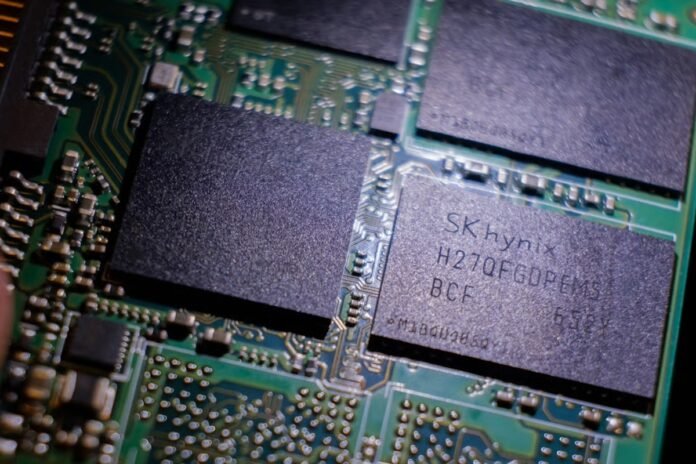
AI frenzy makes Asia ripe for a ‘chip wreck’

0
ai-frenzy-makes-asia-ripe-for-a-‘chip-wreck’
AI frenzy makes Asia ripe for a ‘chip wreck’

TOKYO – No one complains about holding a winning lottery ticket. By that logic, South Korea has nothing to apologize for — it’s landed, almost by accident, at the center of the AI windfall now being minted in real time.

Six months ago, SK Hynix, Samsung and the rest of Korea Inc were bracing for a brutal 2026, squeezed between US President Donald Trump’s trade war and China’s deflationary slide. The best-case scenario was simply staying out of the line of fire as the world’s two largest economies traded blows.

Nobody in Seoul expected artificial intelligence to ride in to the rescue — let alone this dramatically. The same forces driving the Kospi’s rally past 111% this year — AI’s all-in trade and the global data center buildout — are lifting almost every corner of Asia’s fourth-largest economy. SK Hynix shares are up 348% year-to-date, Samsung up 199% and the rest of the tech sector isn’t far behind.

The broader economy is along for the ride, too. Korea’s $1.9 trillion GDP got a direct lift in the first quarter, when AI-fueled demand pushed exports up 40% and helped deliver a stronger-than-expected 1.7% year-on-year growth rate — enough to offset soft consumer spending, sagging auto sales and creeping inflation.

Korea is hardly alone. China, Japan, Malaysia, Taiwan, Vietnam and other economies are, to varying degrees, getting caught up and carried in the frenzy. “This is what an AI supercycle looks like,” says Evercore ISI analyst Amit Daryanani.

In Korea’s case, the growing dependence on AI puts it squarely in the path of a much bigger question: is AI a bubble rivaling the dot-com crash, or something larger still, given the sheer scale of money pouring into data centers?

Tuesday’s jarring 10% plunge in the Kospi already feels like old news, erased by Micron’s blockbuster forecast, which put the global AI trade right back on solid footing.

For now, anyway. The possibility of a dot-com-style reckoning hasn’t escaped the notice of some prominent financiers and economists.

Michael Burry, of “The Big Short” fame, said in mid-May that he’s seeing technical and fundamental signals all pointing toward the “same conclusion” he reached when sizing up the late-1990s frenzy against today’s AI boom.

This week, Nobel laureate Paul Krugman weighed in. In a Substack post titled “The Chips Are Down,” Krugman observed that the whole setup looks “very fragile. It’s a kind of bubble, but not in the normal sort of asset-price form. It’s more of a kind of fad, almost a social delusion. And that, it seems likely, certainly got ahead of itself.”

So what happens when an entire industry’s meme-ification starts putting whole economies at risk? Asia is about to find out, in ways that could prove genuinely revealing.

A tech downturn could rattle Korea, Taiwan and other economies now deeply dependent on the sector — with the risk of contagion spreading to China, Japan and eventually Malaysia and Vietnam.

The deeper concern is how thoroughly AI has become the defining industry across Asia’s major economies. El Salvador betting its fortunes on crypto is one thing. It’s another matter entirely when Korea — the world’s 15th-largest economy — and Taiwan (22nd-largest), along with others positioned to spread the pain further, tie their economic futures to a technology that hasn’t yet proven it can generate returns to match the hype.

Consider Korea, where exports jumped 60.4% year-on-year in the first 20 days of June alone. Chip exports nearly tripled to $25.5 billion on surging AI-driven memory demand, with semiconductors now making up over 41% of total exports — up sharply from 18% a year earlier.

Notably, auto exports have stayed flat or worse, and investors barely seem to notice. That indifference would have been unthinkable on January 1. It captures just how aggressively Seoul has thrown itself behind AI, backing the push with more than $102 billion in incentives — and increasingly erasing the line between the AI sector and the economy at large.

The catch is that the AI trade rests on the shoulders of a handful of massive conglomerates. In Korea, that means the family-run chaebols — already known for opacity and outsized market control — are only growing more dominant.

“Any time you have narrow leadership, despite what is doing the leading, it just creates more of a fragility in markets in general,” Matt Stucky, a portfolio manager at Northwestern Mutual Wealth Management, tells Yahoo Finance. “That growth in the fundamentals, even though it’s broadened some, it’s showing up in more concentrated markets today.”

Taiwan faces a similar dilemma with Taiwan Semiconductor Manufacturing Co. (TSMC), whose 48% rally this year is pulling the entire market — and the economy — along with it. In May, Taiwan’s export orders jumped more than 47% year-on-year, marking 16 consecutive months of gains.

The information and communications technology sector generated $32 billion in exports, and electronics another $37 billion — both up more than 60% from a year earlier. Combined, the two categories now make up nearly 78% of Taiwan’s total exports.

The chip boom is doing the heavy lifting, more than offsetting weak domestic spending and the dent in household confidence from Iran-war-driven inflation. Taiwan’s economy grew a stunning 13.7% in the first quarter, its fastest pace since 1987.

As in Korea, Taiwan’s economic fate is becoming nearly inseparable from global demand for AI hardware. To a lesser but still meaningful degree, AI is also feeding growth in Japan and China.

Japan, meanwhile, holds dominant positions in semiconductor manufacturing equipment and specialized electronic components. China runs the manufacturing ecosystem that assembles most tech hardware globally, weaving AI into everything from consumer electronics to electric vehicles to its broader supply chains.

Malaysia and Vietnam’s roles owe to their growing positions in the chip supply chain itself. Malaysia has become a key hub for chip “back-end” work — the testing, assembly, and packaging that complex AI processors require.

Vietnam, for its part, has been the standout winner of Trump’s trade wars dating back to 2017, emerging as the go-to backup manufacturing base for multinationals seeking shelter from years of US-China friction.

But here, too, Korea is drawing the most attention — and feeling the most vertigo. On January 1, most Koreans would likely have named cars, ships, smartphones or K-pop as the country’s signature industry. Now it’s AI, for better or worse, with 51 million Koreans scrambling to keep pace.

The whiplash in President Lee Jae-myung’s political fortunes tells the story. When he entered the Blue House in June 2025, he carried two overriding mandates. The first was restoring calm and predictability to a political system still reeling from his predecessor’s spectacular collapse.

Only Yoon Suk-yeol knows what drove him to declare martial law in December 2024 — a move that got him impeached and imprisoned, and briefly lumped Asia’s fourth-largest economy in with the likes of Indonesia, Myanmar, the Philippines, and Thailand. Rebuilding credibility, both at home and abroad, fell to Lee.

His second mandate was tackling the “Korea discount” — the chronic undervaluation that has dogged Kospi-listed companies for years. On the campaign trail, Lee promised tighter oversight and stronger corporate governance, setting a goal of doubling the Kospi from roughly 2,500 to 5,000 over his five-year term.

AI ended up doing the heavy lifting for him. The Kospi’s surge recently pushed the benchmark briefly past 9,100 — landing Korea Inc in global headlines for all the right reasons and sparking a FOMO rush, with Korean households and fund managers worldwide alike scrambling to ride the latest wave out of Seoul.

Whether this year’s AI rally reflects genuine foresight or simple irrational exuberance is the question hanging over markets right now — made sharper by the death this same week of the man who coined that phrase. Alan Greenspan first used it in December 1996 as a warning against dot-com euphoria, drawing explicitly on Japan’s late-1980s boom and the bust that followed.

Tokyo’s progress in strengthening corporate government, meanwhile, is real, even if incomplete. The Nikkei’s climb to a record 70,000 suggests AI is playing an outsized role.

Korea, too. The case that Lee’s government has done notable structural work over the past year is thin. If it had, MSCI would already be moving to elevate Korea to developed-market status, an upgrade Seoul has lobbied for over two decades. Instead, on Wednesday, MSCI kept Korea’s $5 trillion market grouped with Brazil, China, India and South Africa.

That should give Kospi bulls pause. Korea’s potential is real. But MSCI’s unresolved concerns — including restrictions on offshore won trading — point to structural friction that hasn’t gone away. As MSCI put it, investors have signaled that the underlying issues remain unresolved. Potential and performance are two different things.

That doesn’t mean they’ll stay that way. But the same reservations that kept investors from going all-in on Korea Inc on January 1 are still very much alive 175 days later.

Korea’s Finance Ministry essentially conceded the point, stating: “If we continue to implement reforms in the foreign exchange and capital markets on our own schedule, we believe we can be included among advanced economies.”

This might matter less if Seoul’s stock market weren’t now sitting at the center of the “chip-wreck” narrative sweeping global markets. The same goes for officials in Beijing, Hanoi, Kuala Lumpur, Tokyo and beyond, as AI turns equity discounts into runaway premiums faster than investors can keep up with.

Follow William Pesek on X at @WilliamPesek
0FansLike
0FollowersFollow
0FollowersFollow
0SubscribersSubscribe
- Advertisement -
Google search engine

Recent Posts