France reports Ebola case in doctor returning from Congo
A doctor who recently returned to France from a humanitarian mission in the Democratic Republic of Congo has tested positive for Ebola, marking the country’s first confirmed case linked to the current outbreak, the health ministry said on Wednesday.
The patient has been placed in isolation and health authorities are tracing contacts, the ministry said in a statement, adding that the risk to the wider European population was low.
Congo’s Ebola outbreak is linked to the rare Bundibugyo strain of the virus. It has infected more than 1,000 people and killed 267 — generating the largest number of confirmed cases within the first month of any episode of the disease, the World Health Organisation said this week.
Experts say the disease was probably circulating for months before it was officially declared on May 15. Early confirmed cases were identified in urban areas, and infections have since been reported in at least three densely populated displacement camps.
The two largest previous Ebola outbreaks occurred in West Africa — in Guinea, Sierra Leone and Liberia between 2014 and 2016 — and in Congo in 2018.
A U.S. citizen treated for Ebola in Germany was discharged earlier this month after no virus had been detected in the patient since May 30.
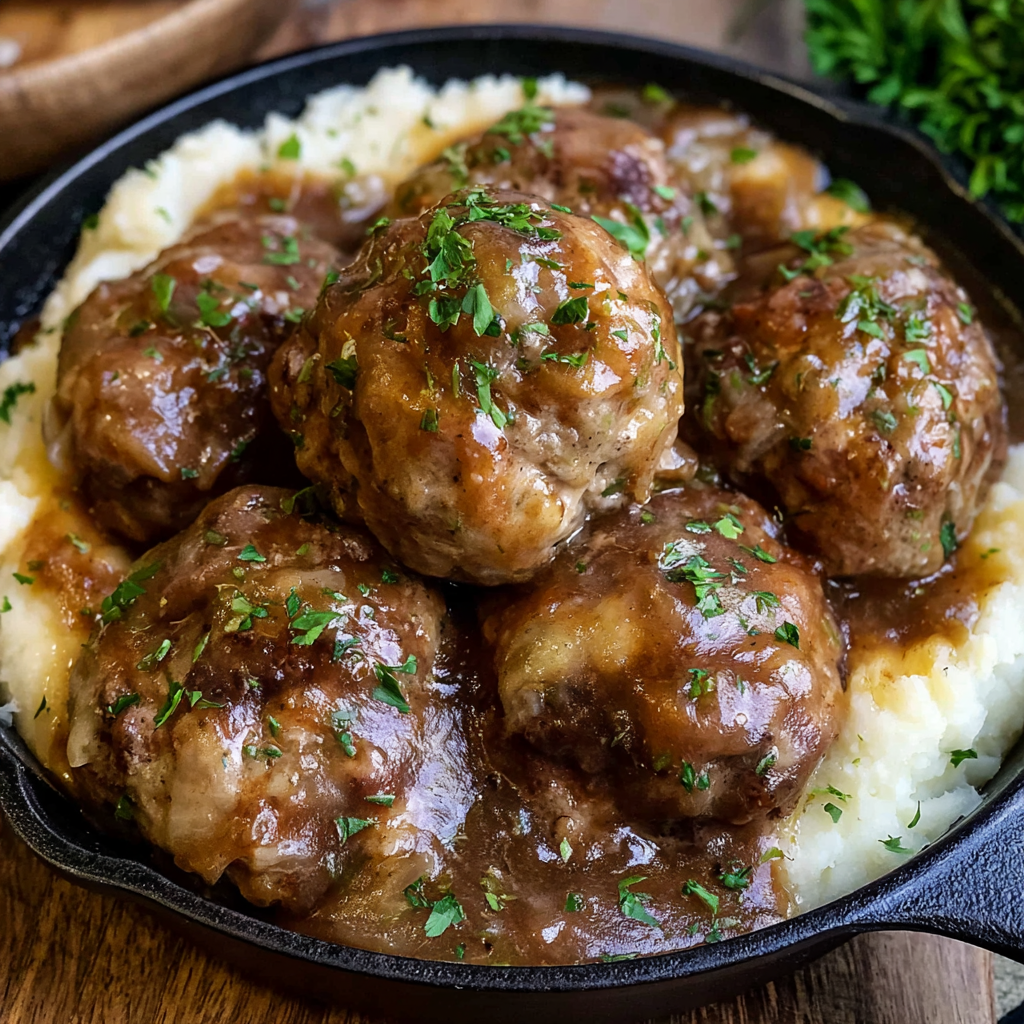
Salisbury Steak Meatballs are tender, juicy, flavorful meatballs simmered in a rich beef gravy with deeply caramelized onions. They have all the classic comfort of Salisbury steak, but in easy meatball form.
Serve these meatballs over creamy mashed potatoes, egg noodles, rice, or roasted vegetables for a cozy dinner that feels hearty, nostalgic, and satisfying. This is the kind of meat-and-potatoes meal that instantly becomes a family favorite.
Why You’ll Love These Salisbury Steak Meatballs
Tender homemade meatballs
Rich savory beef gravy
Sweet caramelized onions
Perfect over mashed potatoes
Great comfort food dinner
Family-friendly recipe
Easy to make ahead
Freezer-friendly
Salisbury Steak Meatballs are a fun twist on classic Salisbury steak. Instead of shaping the beef mixture into patties, the seasoned ground beef is rolled into meatballs, browned in a skillet, then finished in a thick, flavorful gravy.
The gravy is made with caramelized onions, beef broth, Worcestershire sauce, and a simple cornstarch slurry. It is rich, cozy, and perfect for spooning over mashed potatoes.
Ingredients
For the Meatballs
1 pound ground beef
½ cup plain breadcrumbs
1 large egg, room temperature
2 teaspoons dry mustard
2 teaspoons garlic powder
1 teaspoon kosher salt
½ teaspoon black pepper
1 tablespoon unsalted butter
1 tablespoon olive oil
For the Gravy
1 large yellow onion, thinly sliced
3 cups beef broth
4 dashes Worcestershire sauce
2 tablespoons cornstarch
2 tablespoons water
Salt and black pepper, to taste
Fresh parsley, for garnish
Ingredient Notes
Ground Beef
Ground beef gives the meatballs classic Salisbury steak flavor. You can also use ground turkey, ground chicken, ground pork, or a mixture of ground beef and pork.
Breadcrumbs
Plain breadcrumbs help hold the meatballs together and keep them tender. Panko, crushed crackers, rolled oats, or crushed cornflakes can also work.
Dry Mustard
Dry mustard adds a subtle tangy depth. If you do not have dry mustard, use about 1 teaspoon yellow mustard instead.
Garlic Powder
Garlic powder gives the meatballs savory flavor. Minced garlic can also be used.
Yellow Onion
Yellow onions are ideal for caramelizing because they become sweet, soft, and golden as they cook.
Beef Broth
Beef broth gives the gravy the richest flavor. Low-sodium broth can be used if preferred.
Worcestershire Sauce
Worcestershire sauce adds deep savory flavor to the gravy. If needed, use a small amount of soy sauce as a substitute.
Cornstarch Slurry
Cornstarch mixed with water thickens the gravy and gives it a smooth texture.
How to Make Salisbury Steak Meatballs
Step 1: Make the Meatball Mixture
In a large bowl, combine the ground beef, breadcrumbs, egg, dry mustard, garlic powder, salt, and black pepper.
Mix gently until just combined.
Do not overmix, or the meatballs can become tough.
Step 2: Shape the Meatballs
Roll the mixture into 1½-inch meatballs.
You should get about 16 meatballs.
Step 3: Brown the Meatballs
In a large skillet over medium heat, add the butter and olive oil.
Once the butter is melted and the oil is hot, add the meatballs in a single layer.
Cook for 3 to 4 minutes per side, turning to brown evenly.
The meatballs do not need to be fully cooked yet because they will finish cooking in the gravy.
Transfer the browned meatballs to a plate.
Step 4: Caramelize the Onions
In the same skillet, add the sliced onion.
Reduce the heat to medium-low.
Cook for 12 to 15 minutes, stirring occasionally, until the onions are soft, golden, and caramelized.
Step 5: Make the Gravy
Increase the heat to medium.
Pour in the beef broth and Worcestershire sauce.
Stir and scrape up any browned bits from the bottom of the skillet.
In a small bowl, whisk together the cornstarch and water until smooth.
Slowly pour the slurry into the skillet while stirring constantly.
Let the gravy simmer for 8 to 10 minutes, or until thickened.
Season with salt and pepper to taste.
Step 6: Simmer the Meatballs
Return the meatballs to the skillet.
Spoon gravy over the top.
Cover and simmer on low heat for about 5 minutes, or until the meatballs are fully cooked.
The internal temperature should reach 165°F.
Step 7: Garnish and Serve
Sprinkle with fresh parsley.
Serve hot over mashed potatoes, rice, or egg noodles.
Can You Make the Meatballs Ahead of Time?
Yes. You can assemble the meatballs ahead of time before cooking.
Refrigerate
Place uncooked meatballs on a baking sheet, cover with plastic wrap, and refrigerate for up to 24 hours.
Freeze
Place uncooked meatballs on a baking sheet in a single layer.
Freeze for 1 to 2 hours, or until solid.
Transfer to a freezer-safe bag or container.
Freeze for up to 3 months.
Thaw overnight in the refrigerator before cooking, or cook from frozen with a little extra time.
Can You Use Store-Bought Frozen Meatballs?
Yes. Store-bought frozen meatballs can be used if you need a shortcut.
Cook the meatballs according to the package directions first.
Then make the onion gravy and simmer the cooked meatballs in the gravy until heated through.
Tips for the Best Salisbury Steak Meatballs
Don’t Overmix the Meat
Mix just until combined so the meatballs stay tender.
Brown the Meatballs First
Browning adds flavor and helps the meatballs hold their shape.
Caramelize the Onions Slowly
Cook the onions low and slow until golden for the best flavor.
Scrape the Skillet
Those browned bits on the bottom of the pan add richness to the gravy.
Simmer in the Gravy
Letting the meatballs finish in the gravy makes them extra flavorful.
Variations
Turkey Salisbury Meatballs
Use ground turkey for a lighter version.
Pork and Beef Meatballs
Use half ground beef and half ground pork for extra richness.
Mushroom Gravy
Add sliced mushrooms with the onions for a mushroom Salisbury steak flavor.
Creamy Gravy
Stir in a splash of heavy cream at the end for a creamier sauce.
Extra Garlic Version
Add minced garlic to the onions while they caramelize.
Best Sides for Salisbury Steak Meatballs
These meatballs are delicious with:
Mashed potatoes
Cauliflower mashed potatoes
Egg noodles
White rice
Brown rice
Roasted carrots
Green beans
Brussels sprouts
Corn on the cob
Dinner rolls
Coleslaw
Roasted vegetables
Storage Instructions
Let the meatballs cool to room temperature.
Store leftovers in an airtight container in the refrigerator for up to 3 to 4 days.
If possible, store extra gravy separately so the meatballs do not become too soft.
Freezing Instructions
Place cooled meatballs in a freezer-safe container or bag.
Freeze for up to 3 months.
You can freeze the gravy separately in a freezer-safe container.
Thaw overnight in the refrigerator before reheating.
Reheating
Reheat meatballs and gravy in a skillet over medium-low heat until warmed through.
Add a splash of beef broth if the gravy has thickened too much.
You can also reheat individual portions in the microwave.
Frequently Asked Questions
Can I Use Ground Turkey?
Yes. Ground turkey works well, but the meatballs may be a little leaner.
Can I Add Mushrooms?
Absolutely. Mushrooms are delicious in the gravy and add extra savory flavor.
What Can I Use Instead of Breadcrumbs?
Crushed crackers, panko, rolled oats, or crushed cornflakes can be used.
How Do I Know the Meatballs Are Done?
The meatballs are fully cooked when they reach an internal temperature of 165°F.
Can I Make This Ahead?
Yes. You can assemble the meatballs ahead and refrigerate or freeze them before cooking.
Recipe Information
Prep Time: 15 minutes Cook Time: 35 minutes Total Time: 50 minutes Servings: About 4
Final Thoughts
Salisbury Steak Meatballs are rich, hearty, and full of classic comfort food flavor. The tender beef meatballs, caramelized onions, and savory gravy make this recipe perfect for cozy family dinners.
Serve them over mashed potatoes for the ultimate homestyle meal, or pair them with egg noodles, rice, or roasted vegetables for an easy dinner everyone will love.
Trump holds housing cost relief hostage to noncitizen voting act
Statuary Hall in the US Capitol on June 24, 2026, was set up for a ceremony in which President Donald Trump would sign into law a broadly bipartisan housing bill, but Trump abruptly canceled the event. Photo: Jennifer Shutt / States Newsroom
US President Donald Trump derailed a housing overhaul that he was set to sign into law Wednesday, canceling a signing ceremony for the broadly popular bipartisan bill until Congress passes an election security measure.
Trump had been scheduled to sign the bill, which passed the Senate Monday and the House Tuesday with wide margins, during a Capitol ceremony.
But in a pair of social media posts prior to the event, he derided the overhaul aimed at lowering housing costs as “minor” before refusing to sign it entirely.
“Today’s Housing News Conference and Signing is hereby cancelled until such time as we pass the desperately needed SAVE AMERICA ACT, which I consider to be a National Emergency,” Trump wrote on his social media platform, Truth Social.
The controversial SAVE America Act, a top priority for Trump, addresses the extremely rare phenomenon of noncitizen voting. Republican senators have told Trump there are not enough votes in the chamber for it to pass.
The housing bill’s Senate sponsors, Banking Committee Chairman Tim Scott, a Republican, and ranking Democrat Elizabeth Warren of Massachusetts, sought to lower the costs of housing construction by removing regulatory barriers, expanding the uses of federal housing grants and banning institutional investors from buying single-family homes.
Scott, a South Carolina Republican, lauded the bill Tuesday as not only bipartisan, but nonpartisan, addressing universal needs.
Republican leaders framed the measure as addressing affordability, which is expected to be a key issue in November’s midterm elections amid stubborn inflation.
The measure, which combined elements of proposals in each chamber, appeared on a fast track to becoming law after the Senate approved it 85-5 Monday and the House voted 358-32 Tuesday. The White House had said Trump supported the bill.
Statuary Hall in the U.S. Capitol on June 24, 2026, after President Donald Trump called off a scheduled bill-signing ceremony. Photo: Jennifer Shutt / States Newsroom
The House opponents were virtually all from a group of conservatives, led by Florida’s Anna Paulina Luna, who said she would oppose all legislation from the Senate, and even some House rules resolutions, until the Senate passed Trump’s elections security measure.
Speaker Mike Johnson, R-La., said during a Wednesday morning press conference that he had spoken with the president earlier in the day and that Trump is going to delay signing the housing bill until Congress approves a grant program for elections through the complex budget reconciliation process. That’s the same procedure the GOP used to enact its “big, beautiful” law and $70 billion for immigration enforcement.
“You have to put it on a reconciliation bill,” he said. “We believe that if you create a grant program that ties it to reconciling the budget and you allow blue states, if they come to their senses and they want to avail themselves of election integrity proposals and ideas and policies, they can draw down from a federal fund and use those funds. We’re willing to invest heavily in that.”
Johnson said he told Trump that Republicans in Congress can enact that policy if they “stand together.”
“As you know he has a window of time before he has to sign a bill and he’s going to use a bit more of that window of time,” Johnson said. “And we’re going to go through this together.”
Johnson said he expects Trump to sign the housing bill within the 10-day window.
Hotly anticipated Grand Theft Auto VI will cost more than other AAA games
It seems to some of us like just yesterday—even though the transition began more than half a decade ago—that gamers were getting adjusted to spending $70 on AAA game releases at launch instead of $60, but as preorders begin this week for the wildly anticipated Grand Theft Auto VI, they’re finding that at least that title will sell for $80.
Additionally, disclaimers make it clear that the physical release of GTA6 will not include a physical disc. Instead, it will be a box with a download code inside it.
The game’s “Ultimate Edition” will sell for $99 and will include a plethora of exclusive perks for the single-player portion of the game. (GTA6 will launch with its single-player campaign first, with its online modes coming sometime later.) Developer Rockstar Games’ marketing says that the ultimate edition includes “an exclusive collection of premium vehicles, weapons, apparel, and action threaded across all aspects of” the story.
While many gamers will find the new price level frustrating, it’s not a surprise. Analysts and commentators have been predicting this specifically for GTA6 for a couple of years now, with some speculative estimates landing even higher, like $100 for the base game.
Considerations and caveats
Game prices have not generally risen as quickly as inflation over the past few decades, while the cost of developing high-fidelity games for PC and consoles has been multiplying in recent years as large publishers chase bigger-than-ever projects in the belief that the most successful games will be massive, groundbreaking bets.
This is also informed by an awareness that scope, fidelity, and scale are differentiators for large studios and publishers, as the barrier to entry for making (albeit not necessarily making money on) smaller games keeps falling due to improved development tools and other factors.
On one hand, you could argue that the $60 or $70 price point simply isn’t practical for a single-player game of the budget and scope of GTA6. However, that also presumes that the initial purchase is the game’s only revenue stream. Although the title will launch with just single-player, it’s expected to get a robust multiplayer service with subscriptions, in-game purchases, and more, so that initial purchase is definitely not the game’s only revenue stream.
Demand for this game is so high that many players will likely be willing to pay the relatively steep launch price.
Keep in mind that this does not necessarily herald an $80 price point for all future AAA games. At least for the immediate future, other games in this category will probably still launch at $70. We’ll see how long it stays that way, though.
The industry has already been experimenting with a range of prices reflecting each game’s level of investment. For example, AA games—titles with modern 3D graphics but with a smaller scope and no ambition of pushing the envelope in a competitive way—often launch at $50.
GTA6 is scheduled to launch on current-generation PlayStation and Xbox consoles on November 19, with download preloading starting on November 12. The retail version of the game will go on sale on November 12 as well, so those who want to buy the physical box won’t have to wait for a big download on launch day. A PC version is expected, but has not yet been given a date.
‘Shocking’ photo of freed Palestinian journalist shows ‘tragic’ conditions in Israeli prisons: Rights group
A prisoner advocacy group said Wednesday the “shocking” photo of Palestinian journalist Mujahid Bani Mufleh after six months in Israeli detention shows the ongoing “tragic” conditions in Israeli prisons, Anadolu reports.
“Israeli prisons have turned into a tool for slow and direct killing of Palestinian prisoners,” the Palestinian Prisoner Society said in a statement.
Bani Mufleh posted a photo of himself on Wednesday after a long treatment journey for an illness he contracted while imprisoned by Israel. The photo showed part of his brain skull removed as a result of surgeries he underwent while in Israeli detention.
The Palestinian journalist also lost significant weight, appearing noticeably pale and almost unrecognizable.
“Bani Mufleh is not an isolated case, but points to thousands of cases that have been subjected to systematic violations inside Israeli prisons, including torture, starvation, denial of treatment, physical and psychological assaults, in addition to continuous psychological terror,” the society said.
It said prisoner affairs groups have been following up on hundreds of Palestinians released from Israeli prisons in “serious health and psychological conditions.”
READ: Palestinian female prisoner Lama Khater details alleged abuse in Israeli prisons
“Many other cases remain unreported as their families are afraid of re-arrest,” it added.
The rights group said Israeli forces detained Bani Mufleh, from the town of Beita in Nablus, in June 2025 without charge under Israel’s administrative detention policy and released him in January 2026.
“Bani Mufleh suffered a severe brain hemorrhage just two days after his release and he was transferred to a hospital in critical condition,” it said.
“Until today, he still needs a long and complex course of treatment to recover,” the society said.
The group said Israel has escalated its violations against Palestinian journalists since the Gaza war, arresting 245 journalists since October 2023.
Since Oct. 8, 2023, Israeli escalation by the army and settlers in the West Bank has killed 1,173 Palestinians, wounded 12,666, led to the arrest of about 23,000 and displaced 33,000, according to official Palestinian figures.
READ: Palestinian detainee dies after 25 years in Israeli prisons
OpenAI and Broadcom announce chip designed for LLM inference at scale
OpenAI, the company behind ChatGPT and Codex and the models those tools utilize, and Broadcom, an established silicon supplier, have announced a new chip called Jalapeño, designed specifically for large language model inference in data centers.
The chip is intended to be deployed at large data centers, both companies claim this is just the first generation in a long-term project that will see chips refined over time.
Broadcom says that this ASIC (Application-Specific Integrated Circuit) was designed from scratch for LLM inference, based on “detailed insights” from the company’s conversations with researchers at OpenAI, and that the chip’s development was informed by OpenAI’s own roadmap for future models and products. The design and production of the chip took nine months.
The promise is that this chip is more specialized for the current needs of LLMs than those that inference systems currently run on in existing data centers.
OpenAI claims that “early testing shows that Jalapeño will deliver performance per watt substantially better than current state-of-the-art,” but notes that it is not done measuring performance, and that a “detailed technical report will be presented in the coming months.”
Until then, we don’t have many details to go on.
The company, which is known for its ChatGPT and Codex services and harnesses, hopes to ultimately own the full stack behind its models and products, reducing dependence on outside companies like Nvidia and ostensibly providing better performance or efficiency thanks to vertical integration.
More generally, OpenAI and its competitors are interested in custom silicon because it’s another way to potentially squeeze out more capacity amid a global compute crunch, as competing companies scramble for limited data center capacity.
While Broadcom was already a successful chipmaker for customers building out compute infrastructure, it has seen substantial movement recently as it has built new business around providing custom chips to hyperscalers and the teams building frontier models during the current AI boom.
Both companies claim Jalapeño chips will be deployed in data centers by the end of this year.
Lessons start with how Iran organized Melbourne synagogue attack
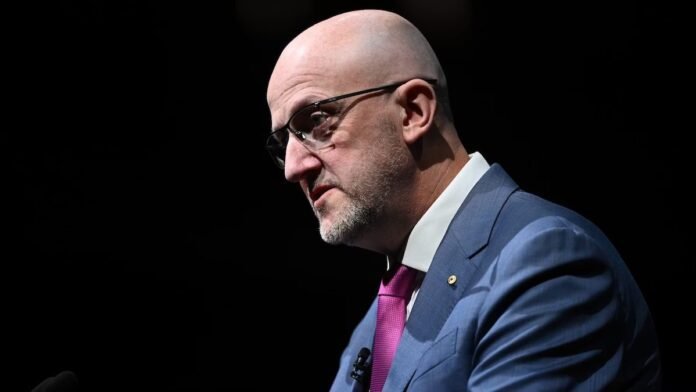
A former Australian resident living in Iraq directed the attack on Melbourne’s Adass Israel Synagogue in December 2024, Mike Burgess, the head of the Australian Security Intelligence Organization, has revealed.
Burgess said Iran, which was behind the attack, recruited the man through a “complex web of Iraqi-based militia groups”.
“Valuing his high wealth and criminal connections, the IRGC [Islamic Revolutionary Guard Corps] protected him and supported his illegal enterprises.
“That changed dramatically after ASIO publicly named Iran’s involvement in the arsons.
“This person’s Iranian backers lost their enthusiasm, and after further pressure from Australian and local law enforcement, they threw him in prison.”
Burgess gave the details while delivering his annual threat assessment speech on Wednesday evening. He also said an Iran-based Australian citizen orchestrated the firebombing of the Lewis Continental Kitchen in Bondi in October 2024, which was the “the first major attack in the summer of antisemitism.”
“This person is a senior agent of the IRGC Qods Force, running its networks around the world.
“We know more about him than he realises, including the name of his superior in Iran and the department he works for. Department Eleven-thousand, a covert unit within the IRGC Qods Force, is responsible for coordinating operations in the West.”
Burgess said he couldn’t name the individuals because of the need to protect continuing investigations and related prosecutions.
“But I want them to understand this: We know who you are, we know what you’ve done and we know who you work for.”
On antisemitism generally, Burgess said it was often seen through a narrow lens. But it could come from “diverse sources simultaneously, challenging traditional definitions, assumptions, and approaches”.
Sadly, and illogically, hatred of Jews is one thing virtually all the violent extremist cohorts have in common. Neo-Nazis are antisemitic. Islamic extremism is antisemitic.
Issue-motivated extremists can be antisemitic, particularly when they subscribe to conspiracy theories and stereotypes about the Jewish community.
Nation states can be antisemitic, as we saw with the arson attacks against the Jewish communities in Melbourne and Sydney perpetrated by criminals directed by Iran’s Islamic Revolutionary Guard Corps.
Anarchists and revolutionary groups can be antisemitic.
He said Australian companies seen to have links to Israel were being targeted with “repeated acts of vandalism and arson by far-left activists”.
“My point is that violent antisemitism is not a single, or simple, intelligence problem.”
The firebombing of a synagogue “can simultaneously be criminal arson, foreign interference, the promotion of communal violence and politically motivated violence”.
“And when Iran directs the arson, it’s an act of state-sponsored terrorism.”
Burgess once again stressed the degrading of Australian’s security environment. “Great power competition is driving an insatiable appetite for strategic advantage. As a result, espionage and foreign interference are at extreme levels, while preparation for sabotage is growing in scale and sophistication.”
“At the same time, politically motivated violence – which incorporates terrorism – remains an acute concern.”
Burgess said the degrading security environment was marked by “concurrent, cascading, and compounding threats” which could be categorized as “threats to life” and “threats to our way of life.”
In a speech filled, as usual, with case studies, Burgess related the story of a person subjected to “an unrelenting campaign of intimidation” by a foreign regime that for a decade had demanded he return to his place of birth to address unspecified corruption investigations.
The harassment included detaining the man’s relatives living overseas, interrogating them and subjecting them to travel bans.
“After receiving a desperate plea from one of the detained relatives, a family member based in Australia tried to sort things out.The family member flew to the foreign country to meet the regime’s. They interrogated the traveler for hours, and bluntly stated the individual would only be allowed to return to Australia after agreeing to maintain phone contact with the regime and file reports on the target of the harassment.”
Burgess said ASIO knew of five regimes that targeted Australians with harassment, with one country particularly active.
“In 2023 alone, that country coerced at least eight individuals to leave Australia for the place of their birth. Five were Australian citizens or permanent residents. Three never returned.”
Burgess said Australia’s defense captivities, especially AUKUS, were priority targets for foreign intelligence services.
“A spy from a foreign intelligence service approached an Australian security clearance holder online, pretending to be from a consulting company.
“The spy paid the official to write two reports on Australia’s relationship with our Pacific neighbors and then, thinking he’d been hooked, offered money for inside information on AUKUS. The foreign intelligence service wanted insights on the progress of Pillar 1, the technologies of Pillar 2, the amount of money being invested, Australia’s geo-strategic ambitions, relations between the three AUKUS governments and the likely trajectory of Australian public opinion.
“I’m pleased to report the clearance holder became suspicious and reported the contact.”
Burgess also said nation-state hackers had compromised the network of a critical Australian infrastructure provider. They were apparently preparing for sabotage, mapping out the network so it could be crippled later.
“Cyber sabotage is an evolving threat, and I have established dedicated teams to counter it. As ASIO’s understanding grows, so does our level of concern.
“The scale of this activity – led by one nation state in particular – is difficult to overstate. You’d be surprised how extensive our warrant coverage is. We struggle to find a single country in our region that has not been compromised by this state’s cyber apparatus.”
He said critical infrastructure in energy and communication as well as that supporting the military were “top targets.”
“In this case, a state-sponsored group didn’t just achieve access to the Australian critical infrastructure provider, it successfully acquired credentials – log in details and passwords – for active users of the networks, including the IT professionals guarding it.”
Burgess struck a defensive note when talking about ASIO’s counterterrorism activity in recent times, which can be read as a response to criticism that the organization had not given counterterrorism sufficient priority.
“Even when surging espionage and foreign interference demanded more attention, countering terrorism remained a priority – as I stated publicly in ASIO’s 2022 Annual Threat Assessment.
“We increased CT resourcing when we raised the threat level in 2024 and it continued to grow in the months before Bondi. Resourcing followed the threat.
“The number of ASIO officers working on our counter-terrorism mission in 2025 was almost double the number from 2005.
“That reflects a bigger ASIO but also an on-going commitment to leave no known serious threat untreated.”
But he said in the new terrorism environment, even a “vast army” of ASIO officers might not be enough “to find an individual who’s been radicalized online and uses encrypted communications”.
Jerusalem Grand Slam 2026 To Welcome Athletes From 29 Countries
The Jerusalem Grand Slam 2026 will bring together approximately 76 athletes from 29 countries on Thursday, June 25, at the National Stadium in Givat Ram, Jerusalem, as the city hosts one of Israel’s leading international athletics competitions.
Organized with the involvement of the Jerusalem Municipality and the Israel Athletics Association, the event will feature competitors from Europe, North and South America, and Africa alongside many of Israel’s top track and field athletes.
Athletes from countries including the United States, Canada, Brazil, France, Greece, Ukraine, Hungary, Italy, Spain, the Netherlands, Ethiopia, and Uganda are expected to participate. The program will also include a 4×100-meter relay featuring national teams from Ukraine, Lithuania, and Poland.
Among the Israeli competitors scheduled to take part are Blessing Afrifah, Yonatan Kapitolnik, Adva Cohen, Omri Shiff, Romi Tamir, Alina Drotman, and Mercy Afrifah.
(Israel Athletics Association)
For many athletes, the competition represents an opportunity to achieve qualification standards and collect ranking points ahead of the European Championships in August.
Now entering its third consecutive year, the Jerusalem Grand Slam has continued to expand its international profile and strengthen Jerusalem’s role as a venue for major sporting events.
Last year’s edition produced a notable achievement when Omri Shiff set a new Israeli record in the 400-meter hurdles with a time of 49.82 seconds, ending a 34-year wait for a new national mark in the event.
In addition to the athletics competition, organizers said a family fan zone will operate at the stadium, offering interactive activities and entertainment for visitors.
From left to right: Ze’ev Barzilai, marketing director at Eldan transportation, Moshe Lion, mayor of Jeruslaem, Ami Baran, chairman of the Israel Athletics Association. (Israel Athletics Association)
Jerusalem Mayor Moshe Lion said the event reflects “Jerusalem’s growing status on the global sports map,” adding that the city has continued to attract international athletes and invest in sports infrastructure.
Ami Baran, Chairman of the Israel Athletics Association, said the participation of athletes from 29 countries carries “great significance” and reflects efforts to continue bringing major international sporting events to Israel.
The Jerusalem Grand Slam 2026 is scheduled to take place at the National Stadium in Givat Ram on Thursday, June 25.
EU to require air con installers to tell buyers how energy efficient their systems are
Installers of air conditioning units will be obliged to tell customers how energy efficient these systems are, under a European Union law proposed on Wednesday, in an attempt to help people manage their energy bills.
Europe is sweltering in a record-breaking heatwave this week, part of a broader trend of hotter summers and more severe heatwaves in the continent, which has made many Europeans consider installing air conditioning for the first time.
The European Commission proposed rules that would require companies installing air con units, boilers and kitchen appliances in the EU to show customers the energy performance label of their products when sending a quote for an installation.
“If you, for instance, go home and call an installer to try to have an air conditioner fitted in your flat this afternoon, because you can’t stand the heat, you’re quite unlikely to get the label with the offers from the installers,” a Commission official said. “We want to change that.”
Many customers buy these appliances directly from a local installer, which means the buyer may not view the product in a physical shop first or be able to check its specifications online.
Such purchases are also often done in a rush, if an existing boiler breaks, for example, meaning customers lack time to research the new product to choose a more energy-efficient system to try to limit their energy bill.
EU countries and lawmakers must now negotiate the final rules, a process that typically takes around a year.
Air conditioning is historically less commonplace in Europe than in regions such as North America, but global warming is pushing some people to consider the investment or use existing systems more frequently. Stores in France and Spain have been reporting skyrocketing sales of air conditioning units this week.
Yandri, a 28-year-old plumber in the Spanish capital, told Reuters on Monday that he sleeps with air conditioning running through the night. “You will see the bill. It is going to be big,” he said.
Russia’s push to control Arctic waterway presents Europe with a daunting challenge
Norway’s defence minister, Tore Sandvik, recently warned that Russia must not be allowed to control the Bear Gap. This is a stretch of water that runs roughly 400 miles between Bear Island in the southernmost portion of the Svalbard archipelago and Cape North on Norway’s northern mainland. It serves as the geographical boundary point where the shallow Barents Sea meets the much deeper Norwegian Sea.
Russia has long sought to control the Bear Gap. Control of the waterway would give Russian submarines easier access to the Norwegian Sea, where complex acoustic conditions make detection much harder for Nato forces. From there, Sandvik warned these submarines would be able to threaten Nato countries such as the UK and Denmark directly with hypersonic missiles, which have an operational range of up to 1,500km.
There is also a defensive element to controlling the Bear Gap. From the 1970s onwards, Soviet and later Russian doctrine has emphasised what is termed a “bastion strategy”. Russia has sought to create heavily defended perimeters in and around the Kola Peninsula in its far north-west to protect its ballistic missile and nuclear-attack submarines in “bubbles” close to home waters.
Russia’s northern fleet, which is based near the port city of Murmansk in the northern part of the Kola Peninsula, accounts for two-thirds of its naval nuclear strike capabilities. Thus, Russia sees control of the Bear Gap as key to ensuring Nato forces are kept out of the area and unable to threaten the northern fleet.
Russia has long sought to create defensive perimeters in its north-western waters to protect its ballistic missile and nuclear attack submarines.Laskin Nikita / Shutterstock
Currently, no one controls the Bear Gap. But Russian activities in the area have become more assertive over the past few years. Russia’s strategy to establish control over this stretch of water seems to depend, fundamentally, on destabilising Norway. Three elements loom large.
First, Russia has been intensifying its GPS jamming operations off the coast of northern Norway in recent years. These activities make the airspace in the region hazardous for military and civilian aircraft, especially during the winter when darkness is the norm. Norway has responded by establishing three monitoring stations for detecting GPS disturbances in the region.
Second, Russia has used disinformation campaigns to frame Norway as an aggressive force. Russia’s state-owned news agency, Tass, reported in April that Ukrainian troops were training with the Norwegian special forces to prepare “terrorist attacks” against Russian ships travelling to and from Murmansk.
Norway has been actively training Ukrainian soldiers since the start of the war in Ukraine in 2022. But there is no evidence that this training is intended to support Ukrainian attacks on Russian maritime traffic in Arctic waters.
And third, Russia has engaged in provocative behaviour in and around the Bear Gap by carrying out military exercises designed to simulate the targeting of Nato assets. Despite the demands currently placed on Russian forces due to the war in Ukraine, these exercises are usually operated at considerable scale with the intention to intimidate.
In July 2025, Russia carried out a naval exercise that involved live missile firing in a vast exclusion zone, some of which extended into Norwegian territorial waters. And in March 2026, Russia’s northern fleet carried out a test of its Oniks anti-ship cruise missile over the Barents Sea, which travelled 300km to its target at sea. Russia released video imagery of the test-fire but did not confirm its exact location.
The Bear Gap runs between Bear Island in the southernmost portion of the Svalbard archipelago and Cape North on Norway’s northern mainland.Sémhur / Wikimedia Commons, CC BY-SA
Svalbard
Russia’s approach to establishing a dominating influence over the Bear Gap is not solely focused on harassing mainland Norway. Just north of the waterway is the Norwegian territory of Svalbard. In January 2022, Russia was widely suspected of damaging undersea fiber-optic cables connecting Svalbard to mainland Norway.
Russia also regularly harangues Norway about its management of this remote territory. The 1920 Svalbard Treaty, which established Norway as the governing authority of the archipelago, prohibits the construction of fortifications there and stipulates that Svalbard cannot be used for “war-like purposes”.
However, Russia frequently complains about what it sees as Norway’s militarisation of the archipelago. Although there is no permanent military base on Svalbard, Russia argues that Norway is violating the 1920 treaty through naval patrols of the surrounding waters as well as the periodic travel of Norwegian armed forces personnel to the islands.
Russia also maintains that Norwegian satellite infrastructure on Svalbard violates the treaty due to its potential to be used for military as well as scientific means.
If Russia is hell-bent on securing Bear Gap dominance, then its long-coveted acquisition of Svalbard could be accelerated to complete this task. One way of achieving this would be to continue complaining that Norway is breaching the terms and conditions of the 1920 Svalbard Treaty.
They might even hope to provoke Norwegian military overreach, which then provides the pretext to act directly to protect Svalbard’s small Russian-speaking community in the town of Barentsburg. The fact that the archipelago is covered by Nato’s collective defence commitment acts as a major deterrent here.
But, regardless, the threat of Russian aggression is something Norway is seemingly very aware of. In January 2025, a Norwegian white paper warned of “Russia’s willingness to use military force to achieve political goals” and called for “total preparedness throughout Norway to strengthen the resilience of the entire population”.
Russia appears to be stepping up its efforts to establish control over the Bear Gap. Preventing it from doing so is a truly daunting task for Nato forces such as Norway and the UK.