Romanian parliament rejects nominated prime minister, deepening government crisis
Romania’s Prime Minister-designate Adrian Vestea failed to win parliament’s vote of confidence late on Monday after the far-right opposition refused to back him, extending a political crisis that threatens the country’s access to EU funds and its credit ratings.
Centrist President Nicusor Dan must now nominate another prime minister, who will have 10 days to assemble a cabinet and seek parliament’s approval.
Under Romanian law, the president can dissolve parliament and call an early election if two prime minister-designates fail to win parliament’s backing within 60 days.
Romania’s next parliamentary election is not until 2028, and the European Union state has never held snap polls. With the opposition hard-right Alliance for Uniting Romanians (AUR) leading opinion surveys, analysts widely expect parliament to endorse the president’s next nominee.
The president nominated Vestea, a member of the centre-right Liberal Party, without consulting the party in what analysts said was a forceful attempt to rebuild a pro-European government capable of carrying out reforms and cutting the EU’s largest budget deficit.
A previous pro-European broad coalition government led by Prime Minister and Liberal Party head Ilie Bolojan collapsed in early May when the leftist Social Democrats, parliament’s biggest party, quit and teamed up with the far right opposition to file a no confidence vote.
Vestea’s cabinet had the full support of the Social Democrats, but the Liberals and two smaller parties in the previous coalition refused to support him, leaving his fate in the hands of the far right opposition.
AUR, parliament’s second-largest party, ultimately declined to back Vestea, with its leader George Simion demanding that mainstream parties refrain from labeling AUR as “extremist.”
AUR, which has 38% to 41% in opinion surveys, opposes aid for Kyiv. It also voted against a law to shoot down Russian drones that breach national airspace near the border with Ukraine, and has been a vocal critic of the European Union, including its SAFE rearmament initiative.
Vestea needed 233 votes for his government to pass. He got 189.
Given parliament’s fragmentation and the Liberals’ refusal to form another coalition with the Social Democrats, a minority government is the most likely scenario, lawmakers across parties have said.
The minority government could be made up of the leftists or of the three centre-right parties in the previous coalition, including the Liberals.
“Minority cabinets have a hard time governing, but either version would be democratically transparent, at least,” said Sergiu Miscoiu, a political science professor at Babes-Bolyai University.
Oracle’s 21,000 layoffs help drive its debt-fueled AI investments
The growing use of AI contributed to Oracle laying off 21,000 workers in a year, according to a Securities and Exchange Commission filing on Monday.
In its annual regulatory filing for the fiscal year ending May 31, Oracle said it has 141,000 full-time employees. In its 2025 filing, Oracle said it had 162,000 employees. The reported 12.9 percent reduction followed March reports of mass layoffs at the database management software company.
“[T]he adoption and deployment of AI technologies across our operations have resulted, and may continue to result, in reductions to our workforce,” the filing reads.
“The majority of the initiatives undertaken by the 2026 Restructuring Plan were effected to implement our continued emphasis in developing, marketing, selling, and delivering our cloud-based offerings,” this week’s filing reads.
Oracle plans to raise $45 billion to $50 billion in 2026 to expand its Oracle Cloud Infrastructure for customers like OpenAI, xAI, AMD, Nvidia, and Meta, it said in February. About half of that funding will come through debt, with the remainder coming from equity. When Oracle announced this, investors had already been concerned about Oracle’s growing debt to fuel its AI efforts. Overall, Oracle has over $120 billion in debt, per its fiscal year 2026 earnings report.
In February, bondholders sued Oracle, claiming that they lost money because Oracle hid the need to raise its debt to build its AI infrastructure, Reuters reported.
Analysts noted that Oracle’s workforce reduction will help the company’s cash flow. In March, Barclays said that Oracle makes less profit per employee than its rivals, CNBC reported at the time.
In its SEC filing, Oracle said it spent $1.8 billion on restructuring costs in its fiscal year, which is a 481 percent increase from the prior fiscal year’s $374 million.
Oracle also noted the drawbacks frequently associated with mass layoffs, including the potential for “reduced productivity” and “shortages of sufficiently skilled employees in certain roles, loss of valuable institutional knowledge, and damage to employee morale and retention.”
“As our cloud and AI businesses grow, we will continually balance our resources and restructure our development group to help ensure we have the right people delivering the best cloud and AI products to our customers around the world,” Oracle said in a statement to CNBC.
While generative AI has reignited concerns about AI taking over jobs, Oracle demonstrates one way AI can contribute to job losses beyond direct human replacements. That said, AI is increasingly common for companies to cite when letting workers go.
“AI is now the leading reason companies give for cutting jobs, and the primary industry citing it is technology,” Andy Challenger, CRO at outplacement firm Challenger, Gray & Christmas, said in a May 2026 report released in June. “Technology, already the year’s biggest job cutter, saw its steepest cuts since early 2023, even as it remains the sector with the most hiring plans this year.”
The outplacement firm reported in January that AI had been cited for 71,825 “job cut announcements” from 2023 to 2025.
A hospital worker in Hungary has been arrested after police say they found a horrifying collection of human body parts inside his apartment — including skulls, a full lower leg, a hand, bones stuffed in a suitcase, and even a heart preserved in a jar.
The 30-year-old man, who works as an orderly at a hospital, was taken into custody in Budapest on June 17 after authorities received a disturbing tip that he had allegedly been storing body parts both at work and at home, according to Hungary’s National Bureau of Investigation.
When investigators searched his apartment, they reportedly made a grisly discovery.
Police said they seized multiple skulls, a complete lower leg, a hand, and what they described as a reconstruction of a human face made from facial skin. Other bones were found packed inside a suitcase.
Authorities also recovered a heart in a jar, though forensic experts are still working to determine whether it came from a human or an animal.
The man allegedly admitted during questioning that he had been collecting body parts, police said. Even more disturbing, investigators said he told them he was especially drawn to human remains — and claimed he had prepared food from human body parts and eaten them.
Police said the suspect is “passionate about anatomy and pathology” and enjoys dissecting animals.
Investigators believe the man may have obtained some of the remains through his hospital job. They also suspect he dug up bodies from abandoned cemeteries in both Hungary and Slovakia.
The suspect is currently being held on suspicion of illegal use of human bodies.
Police also seized his computer, laptops, tablets, cellphones, SIM cards, and data cards as part of the investigation.
Authorities said all of the recovered body parts will now be examined by forensic experts. Police warned that the list of possible charges could grow once investigators determine exactly where the remains came from — and whether more victims or burial sites may be involved.
When it was signed at the end of the G7 summit on June 17, the US-Iran memorandum of understanding (MoU) was hailed as a diplomatic breakthrough.
By reopening the Strait of Hormuz, easing sanctions and launching a 60-day negotiating process, it felt like a positive step on the road to ending a conflict that has threatened regional stability and the global economy.
Yet the past weekend’s events have exposed the agreement’s fragility. While US and Iranian negotiators reported progress in the first round of talks in Switzerland, US President Donald Trump’s renewed threats of military action against Iran and the physical security of Iranian negotiators prompted fears that the diplomatic process may break down and the conflict resume in earnest.
The status of the Strait of Hormuz, arguably the only positive takeaway for the US from the MoU, also remains uncertain.
So as it stands, the agreement is better understood as enabling a pause in hostilities than an actual settlement. It largely restores pre-war conditions while leaving tensions between the US, Iran and Israel unresolved.
Israel remains the elephant in the room. It is deeply affected by the deal but is not a party to it. And it’s still capable of undermining any diplomatic progress with its continuing assault on Lebanon in contravention of the MoU.
The most likely outcome is a return to gray-zone conflict, meaning hostile measures that stop short of outright shooting warfare. In this case, proxy warfare, cyber operations, economic coercion and periodic military escalation. The shooting may have stopped – but the forces that ignited the conflict remain.
None of which looks good for Washington. Trump entered the confrontation promising to dismantle Iran’s nuclear program, curb its regional influence and restore American deterrence. Instead, the MoU grants Tehran economic relief while leaving unresolved key issues – missile capabilities, proxy networks and long-term limits on uranium enrichment.
For Iran, survival itself is a strategic victory. Despite sustained US and Israeli pressure, the regime remains intact and negotiating rather than capitulating.
The conflict also exposed the limits of regional security arrangements. Gulf states felt and witnessed how even America and Israel’s overwhelming military superiority and expensive advanced weapons systems do not necessarily translate into decisive political outcomes. Nor do they guarantee protection from escalation.
For the US, the agreement appears to reflect the mounting costs of escalation: US$132 billion and counting. Disruption in the Strait of Hormuz raised energy prices, strained alliances and exposed the limits of military coercion.
While sanctions relief and restored oil flows may ease immediate pressures, they also risk reinforcing the perception that sustained pressure and proxy warfare can force even a superpower to negotiate.
Perceptions matter in international politics. For America’s gulf partners, the MoU may raise doubts about Washington’s willingness to sustain ambitious objectives when the economic and political costs become too high.
Iran, meanwhile, appears to have been strategically strengthened by the conflict. The MoU creates space for economic recovery and strategic adaptation, making it likely that Iran will continue pursuing influence through cyber operations, proxy networks and other forms of grey-zone competition.
Israel faces perhaps the most difficult strategic recalibration. For decades its security policy has rested on military superiority backed by close US support to the tune of some US$4 billion a year.
The MoU shows how its strategic priorities are now at loggerheads with those of its main ally and sponsor. It raises questions about how far Washington is willing to align its regional priorities with those of Jerusalem.
Israel’s strategic culture has always prioritized self-reliance. This suggests it will continue to pursue covert operations, targeted assassinations and strikes against perceived Iranian threats.
While there has been no actual fracturing of the US-Israeli security relationship, the clear strategic differences could make future coordination more transactional – even as Israel remains heavily dependent on US military and diplomatic support.
Criticizing members of the Israeli cabinet who had denounced the MoU, the US vice-president, J D Vance, told a White House briefing on June 19 that “Donald J Trump is the only head of state in the entire world who is sympathetic to the nation of Israel at this moment in time.”
Grey zone warfare: the modern default for conflict
But the broader significance of the agreement struck at Versailles on June 17 lies in what it reveals about conflict in the contemporary geopolitical situation.
Rather than producing clear victories or defeats, modern confrontations increasingly become prolonged competitions in the gray zone between peace and war. As escalation becomes too costly, states regroup and compete through alternative means.
As far as the Middle East is concerned, this means that significant risks remain. A comprehensive agreement within 60 days appears unlikely given persistent disputes over sanctions, enrichment and regional security.
Continued Israeli operations in Lebanon could quickly unravel the fragile pause. America’s allies in the gulf could respond to all this uncertainty by deepening ties with China and Russia.
The MoU is less a peace agreement than a diplomatic holding pattern. It lowers tensions and stabilizes markets but leaves the underlying drivers of conflict intact. US-Iran-Israeli relations are therefore likely to continue oscillating between confrontation and accommodation.
Addressing deeper sources of instability – regime security concerns, ideological rivalry and regional proxy networks – would require a far more ambitious settlement than any 14-point memorandum can provide.
‘Train Wreck’: Ambassador Leiter Warns Negotiations Are Drifting From Goal of Dismantling Hezbollah
As Israeli and Lebanese officials convened in Washington for a fifth round of negotiations, Israel’s ambassador to the United States warned that the talks are drifting away from the principles that originally brought the sides to the table.
Ambassador Yechiel Leiter expressed concern that discussions once focused on removing Hezbollah as a military force and ending Iranian influence in Lebanon have become increasingly uncertain.
Addressing reporters at the opening of the talks Tuesday, Leiter described the current state of the negotiations in stark terms.
“We are in a train wreck,” he said.
The ambassador argued that earlier rounds had been built around a common vision shared by Israel, Lebanon and the United States.
He said Washington had played a leading role in advancing efforts aimed at achieving security arrangements and a broader peace process between the neighboring countries.
“Before four rounds, we all boarded the same train, with the United States serving as the locomotive,” Leiter said. “The train was heading toward a very clear destination: full peace and security between the countries; the removal of Iran and its malicious influence from Lebanon; the dismantling of Hezbollah.”
Leiter said recent developments have raised doubts about whether those objectives remain unchanged.
“The basic assumption was that Iran was out, and that the central discussion concerned Lebanon and Hezbollah — not the question of how much Iran can restrain Hezbollah,” he said.
According to Leiter, the negotiations should focus on strengthening Lebanese sovereignty rather than assigning Tehran a role in shaping outcomes inside Lebanon.
“It is not Iran’s role. Its role is to leave Lebanon. The role of the Lebanese government is to exercise its sovereignty,” he said. “Sovereignty means that Iran will no longer be involved in activity or malicious influence in Lebanon.”
The ambassador also questioned the growing emphasis on “deconfliction,” a concept discussed by the United States and Iran in connection with Lebanon.
Leiter said Israel needs greater clarity regarding the direction of the negotiations and whether Hezbollah’s disarmament remains a central objective.
“Is the dismantling of Hezbollah still the basis of these discussions? Because from our perspective it must remain so,” he said.
After the world’s largest producer of wood pellets built what it called a state-of-the-art biomass facility near Ruby Bell’s home in Faison, North Carolina, she started organizing. Bell told her residents about the potential impacts, and tried to prevent the company from adding to the area’s environmental burden. It has been an uphill climb.
The retired educator recalls the day that the reality of the effects set in. She had spent the afternoon talking to residents about their experiences living near the new wood pellet facility. By the time she got home, Bell says she was sniffling, her nose was running, and her eyes were burning. “I thought ‘what in the world is going on?’ Then it dawned on me: I sat outside for 20 minutes talking to a resident. There was all this dust and my pants were covered from sitting in a chair,” she recalls. “If it’s like this after 20 minutes, I can only imagine what it’s like for those people living there.”
Seeing experiences like Bell’s — ordinary residents pushed into the role of frontline advocates — helped draw Sherri White-Williamson deeper into environmental justice work, changing the course of her life. After decades working for federal agencies in Washington, D.C., White-Williamson wanted to return to North Carolina and confront industrial pollution. Believing she could make a bigger impact as a lawyer, she enrolled at Vermont Law School at the age of 63. After graduating, White-Williamson founded the Environmental Justice Community Action Network (EJCAN), a grassroots organization dedicated to empowering rural communities to defend their environment and health.
estimates that Enviva facilities in North Carolina alone consume about 50,000 acres of forest each year, leading to flooding and deforestation.
After the trees are felled, they are hauled to a processing plant, where they are chipped, dried, and pressed into small pellets. Enviva claims that its impact on forestland is minimal because it only uses wood that is unsuitable for other purposes, such as tree limbs and leftover wood from timber harvests. Environmental groups like Dogwood Alliance and the Southern Environmental Law Center have documented evidence to the contrary, capturing images of clear-cut logging and mature downed trees bundled in neat rows along the perimeter of barren dirt fields to supply the pellet mills.
Felled trees wait to be processed at Enviva’s biomass facility. Cornell Watson
White-Williamson points out that none of this energy is produced for US consumption. “The pellets are going overseas, and the trees are getting cut down over here,” she says, pointing out that these forests would otherwise be storing carbon.
A growing body of research shows that burning wood pellets emit even more carbon than burning coal. Although trees are a renewable resource, researchers at the Massachusetts Institute of Technology calculated that in some instances, it would take more than a century for young trees to absorb as much excess CO2 as the forests they replace.
The social and environmental consequences extend far beyond carbon. Recent data found that Enviva’s wood-pellet facilities are 50% more likely to be located in vulnerable communities already besieged by polluting industries and environmental injustices. Oversight has often failed to keep pace with these impacts. Although the facility had received several citations for emitting too many toxins, in 2019 the Department of Environmental Quality granted Enviva’s request to expand its production capacity over community objections.
“The story is always the same,” says White-Williamson. “The community that doesn’t have the power or the access to power, or politicians or decision makers is always getting the short end of the stick.”
This raises considerable health risks for the people living nearby, says Danielle Purifoy, a professor of geography and environment at the UNC Gillings School of Public Health. The pellet manufacturing process releases a toxic combination of particulate matter, carbon monoxide, nitrogen oxide, and volatile organic compounds (VOCs).
report showed that air pollution, dust, noise, and traffic have a measurable impact on quality-of-life.
“The results of this survey confirm what we have known for years: Biomass wood pellet plants do incredible amounts of harm to nearby communities, which are more often than not communities of color, or lower-wealth communities,” said SELC staff attorney Jasmine Washington. “When they were asked, they shared very openly about their frustrations at the daily impact from this pellet mill.”
Eager to talk about their experiences after having their concerns ignored for years, respondents complained of the constant plant and traffic noise, needing to wash their cars almost daily, and no longer feeling comfortable sitting on their porches. Some said they were even forced to wear masks indoors.
“Folks are speaking up more because they now understand that there is a direct link between what they or their family is experiencing, and what’s going on around them,” says White- Williamson. The survey findings underscore the importance of EJCAN’s work helping communities document harm, and building collective power to advocate for protections.
The Environmental Justice Community Action Network (EJCAN) is a North Carolina–based nonprofit that works to advance environmental justice in rural communities, particularly in Sampson County. The organization supports residents facing pollution and other environmental harms by providing scientific research, water and air monitoring, education, and advocacy. EJCAN also helps communities access legal and technical resources, empowering them to hold polluters accountable and push for cleaner air, water, and soil.
ICE Tried to Deport an Asylum-Seeker. Now He’s Being Denied Care for a Growing Tumor in a Private Prison.
In his dreams, Aliaksei Shcharbachenia is on a plane with an immigration agent’s hands wrapped around his neck. When he wakes up, he’s freed from the memory of his traumatic and botched deportation attempt last month — but then he’s stuck languishing in Farmville, Virginia.
The 35-year-old asylum-seeker from Belarus has spent nearly a year at Farmville Detention Center. There, he says, he’s experiencing medical neglect as a tumor grows on his arm.
“It hurts when you touch it,” Shcharbachenia told The Intercept, holding his arm up on a video call to show a growth the size of an egg. He said he’d lost feeling in the fingers on his right hand, and though he requested to see a specialist in December, as of last week he hadn’t seen one nor received a diagnosis. Instead, as Shcharbachenia attested in an internal oversight complaint to the Department of Homeland Security, the U.S. government illegally tried to deport him back to Belarus, where he fled political persecution in 2021.
Shcharbachenia is one of thousands of immigrants being held in detention facilities where the federal government or private contractors control their access to food and medical care. Soon tens of thousands more could be joining him, as the Trump administration and Congress move to rapidly expand the deportation and detention machine. And advocates warn that Farmville, purchased last year by private prison contractor CoreCivic for $67 million, has long been dogged by allegations of neglectful and unsanitary conditions.
“Dogs” live better than detainees there, Shcharbachenia told The Intercept. “I want people to know what really happens inside here.”
The Intercept spoke to Shcharbachenia via a Russian translator arranged by an abolitionist organization, Free Them All VA, and reviewed several complaints he submitted to the DHS Office of Inspector General about the lack of medical attention for the enlarged mass on his arm and his treatment on the attempted deportation flight. When The Intercept called the inspector general’s office to discuss Shcharbachenia’s case, the number was no longer in service.
Earlier this month, Congress approved roughly $70 billion for immigration enforcement efforts. Last year, the One Big, Beautiful Bill Act allocated more than $170 billion over the next four years for immigration enforcement. And the Trump administration has been rapidly purchasing detention centers with a plan to have the capacity to detain 100,000 immigrants at once.
“They’re using detention as a form of punishment as a way to get people to relinquish their rights to remain in this country.”
“What we expect is that the mass infusion of cash will only put online more detention facilities that are going to be run as private businesses, and offer the bare minimum at the cost of human life and human suffering,” said Sophia Gregg, senior immigrants’ rights attorney at the American Civil Liberties Union of Virginia.
Gregg said that there’s no indication that the administration will manage these new facilities, many of which are converted warehouses and “temporary shelters,” any better than the current ones in operation.
“They’re using detention as a form of punishment as a way to get people to relinquish their rights to remain in this country and creating conditions that ultimately create suffering in order to induce people to elect to be removed,” she said. “And so with that being the goal of the administration to deport people as quickly as possible, they have no incentive in creating conditions that are humane.”
“They have no incentive in creating conditions that are humane.”
In fact, Shcharbachenia believes he was targeted for just that reason. In May, he was caught sharing “know your rights” information with new detainees, and guards soon placed him in solitary confinement. He was there for two weeks, Shcharbachenia recalled, and only let out of his cell with his legs and arms bound by chains.
In a statement to The Intercept, CoreCivic spokesperson Brian Todd said the contractor does not use solitary confinement and instead opts for “restrictive housing,” a term that describes confining a detained person in isolation from other people. He denied allegations of retaliatory treatment.
ICE did not respond to The Intercept’s requests for comment.
When Farmville Detention Center opened in 2010, its initial owners, Immigration Centers of America, argued that private management would be more humane than what the government could provide. They sold it to the community as “almost a summer camp environment,” said a spokesperson for Free Them All VA, which has been monitoring the facility for years.
Instead, advocates argue they created a hellscape for immigrants.
In 2015, a guard pepper-sprayed a detainee while he was in full restraints and confined to a medical isolation cell, according to U.S. Immigration and Customs Enforcement records released under the Freedom of Information Act. In another instance from the same records, a detainee was restrained to a bed and chair for over four days. The “vendor” at the time, Immigration Centers of America, did not deny the incident but said that the action was justified. ICE responded that they would not sanction the facility for the use of force.
The facility did receive a “one-time deduction” of its monthly invoice after detainees found “white worms” in their food, but only because Immigration Centers of America had posted a memorandum threatening anyone who “attempted to degrade the reputation of” the facility, which the government interpreted as threatening complainants.
In 2020, detainees initiated a hunger strike to demand their release as Covid swept through the facility. In August ofthat year, 72-year-old Canadian man James Hill died after contracting the disease inside. Instead of responding to the growing concerns about the spread of the coronavirus, guards reportedly used pepper spray against detainees on hunger strike.
Then CoreCivic bought the facility in 2025.
“Things since [the facility] moved to CoreCivic have only gotten worse,” said Gregg. “Medical services are difficult to get for individuals, if not impossible.”
Shcharbachenia, who was picked up by immigration agents at a truck stop in Virginia in August 2025, agreed with Gregg’s assessment of the care. He said the facility’s ventilation system is dirty, and it’s often freezing inside. The water is “undrinkable,” he said, and the food is disgusting and “artificial.”
Shcharbachenia, who primarily speaks Russian, said CoreCivic staff have denied access to a translator or any assistance in filing his asylum claim. He said he had received documents related to his claims while in detention, but without a translator, he was unable to do anything about it.
In February, two months after he requested urgent medical attention, Shcharbachenia said he was finally seen by an onsite doctor about his arm, but he claims that she only measured the growth on his arm and did not provide any treatment, and that he still has not seen a specialist. He said he also had a telehealth appointment, but it was for mental health care. In a letter from Shcharbachenia to the DHS Office of Inspector General in March, he detailed his medical condition and repeated requests to receive outside “specialist evaluation and imaging.”
Todd, the CoreCivic spokesperson, told The Intercept that he was unable to comment on whether Shcharbachenia had seen a specialist or received a diagnosis but said he was seen multiple times by onsite medical staff.
“The safety, health and well-being of the individuals entrusted to our care is our top priority, and we take seriously our responsibility to adhere to all applicable federal detention standards at our Farmville Detention Center (FDC),” Todd wrote in a statement to The Intercept. He denied Shcharbachenia’s claims about his lack of access to a translator as well as the state of the drinking water and ventilation system, arguing that it’s the same “clean drinking water” that supplies the local community, and that the staff drink the same water and use the same ventilation systems.
On May 20, after his two weeks in isolation, ICE moved Shcharbachenia to a facility in Chantilly, Virginia, according to a separate complaint filed with the DHS Joint Intake Center. He recalled an agent asking him if he was ready to fly to Belarus.
ICE flew him to Turkey, where he begged not to be returned to Belarus as best he could in English. He said he showed officers documents he’d printed out on human rights abuses in his home country and warned that if he returned, he would likely be murdered, leaving his two daughters fatherless.
But it was to no avail. He was flown from Turkey to Azerbaijan, where was able to speak with immigration officers who understood his native Russian. He refused to board the next plane to Belarus.
Shcharbachenia said that agents from the United States and Azerbaijan began to argue, but because he did not have his passport, he was unable to leave the airport. ICE eventually escorted him back to Turkey, where he was placed in a cell in the airport.
What happened next still haunts his dreams.
“They took out of their backpacks some white plastic collars, like dog collars,” he said, referring to U.S. immigration agents. As they entered the cell, Shcharbachenia said he begged a Turkish police officer who was present for asylum. He said a U.S. immigration agent approached him from behind and hit him across the head, causing him to lose consciousness.
Shcharbachenia said he woke up on the floor with another officer “choking him so hard he couldn’t breathe.” Shcharbachenia passed out again and awoke with the plastic collars around his legs and arms, Shcharbachenia told The Intercept and wrote in three complaints filed with internal DHS oversight agencies.
Shcharbachenia was eventually transferred back to Farmville, where he said he received no medical treatment for the injury he sustained from being hit on the back of the head. Todd, the CoreCivic spokesperson, said that the assault and head injury were not reflected in Shcharbachenia’s medical records.
As for the growing mass on his arm, Shcharbachenia said he has made multiple grievance requests for treatment. He said staff at first promised to get him an appointment within the month, but eventually, Farmville Detention Center stopped responding.
Update: June 23, 2026, 10:53 a.m. ET This story has been updated with an additional statement from CoreCivic spokesperson Brian Todd sent after publication.
After a slower start than its major rivals, Toyota has been making up for it with a flurry of new electric vehicles for the North American market. Its first attempt, the bZ4x, was an also-ran, but a new battery pack, more efficient motors, and a NACS charging port transformed the face-lifted bZ into an EV I happily recommend. Then, earlier this year, it followed up with some bZ-related variants. For those who miss the vibe of a station wagon, there is the bZ Woodland, and an all-electric Highlander is nearing the showroom, too. But today’s focus is the C-HR, and I’m still not entirely sure what to make of it.
It’s the smallest of the bunch, some 6.7 inches (170 mm) shorter than the bZ. But it’s still as wide and only a little more than an inch shorter. So if you’re put off by the bZ’s size, and are looking for something diminutive—and based on reader feedback, there are many of you out there—this small SUV will probably still fail to pass muster.
It’s not any cheaper than the bZ until you consider that the C-HR is only available with one choice of powertrain: a twin-motor AWD setup with a combined 338 hp (252 kW) powered by a 74.7 kWh battery pack. That same arrangement, with a 223 hp (167 kW), 198 lb-ft (268 Nm) front motor and 118 hp (88 kW), 125 lb-ft (169 Nm) rear unit, costs almost $3,000 more in a bZ than the $37,000 starting price of the C-HR.
Is it cheeky to think of the C-HR as a bZ SWB?
Toyota
Is it cheeky to think of the C-HR as a bZ SWB? Toyota
Like the last C-HR, the rear door handles are in the C pillar.
Toyota
Like the last C-HR, the rear door handles are in the C pillar. Toyota
Is it cheeky to think of the C-HR as a bZ SWB? Toyota
Like the last C-HR, the rear door handles are in the C pillar. Toyota
From the driver’s seat, it might look like a bZ. There’s the same multifunction steering wheel, the same small main instrument display, the same infotainment system, and a pleasing array of actual plastic buttons, each with just one discrete function. Toyota’s 14-inch touchscreen infotainment system isn’t particularly flashy, but the screen is responsive, and Apple CarPlay runs wirelessly.
Take it off the back
You notice the 3.9 inches (200 mm) that’s missing from the wheelbase if you sit in the back. It’s not especially cramped compared to the back seat of the old gas-powered C-HR, but it’s hardly palatial. As you sit level with the C pillar back there, it can feel a little dark even with the optional panoramic glass roof, which robs a little over an inch of headroom as a trade-off for letting more light into the cabin. There’s only one USB-C port in the back, and it’s only 15 W, unlike the two 60 W ports up front, but if you opt for the C-HR XSE, you can get heated rear seats to go with the standard heated fronts.
The C-HR certainly feels frenetic on the street. Even with the car set to Eco mode, it’s plenty peppy; in normal mode, I found the initial throttle response to be a bit too eager. Despite that, Toyota quotes the same 4.9-second 0–60 mph (97 km/h) time for the C-HR as the other AWD EVs it builds. Perhaps driving them back-to-back would reveal no appreciable difference, but if the point was to imbue the C-HR with an eager quality, Toyota’s engineers succeeded at the task. It’s not the last word in driving thrills, though, with front-biased power delivery thanks to that AWD setup and not particularly communicative steering.
The C-HR interior is basically copied from the bZ.
Toyota
The C-HR interior is basically copied from the bZ. Toyota
Not exactly spacious.
Toyota
Not exactly spacious. Toyota
With the rear seats flat like this, there’s 59.5 cubic feet (1,685 L) of cargo volume. With the rear seats in use, that shrinks to 25.3 cubic feet (716 L).
Toyota
With the rear seats flat like this, there’s 59.5 cubic feet (1,685 L) of cargo volume. With the rear seats in use, that shrinks to 25.3 cubic feet (716 L). Toyota
Not exactly spacious. Toyota
With the rear seats flat like this, there’s 59.5 cubic feet (1,685 L) of cargo volume. With the rear seats in use, that shrinks to 25.3 cubic feet (716 L). Toyota
Over a week of mostly city driving, the C-HR reported an average of 3.8 miles/kWh (16.4 kWh/100 km), but also only estimated 149 miles of range with 72 percent state of charge in the battery, which might be down to the extremely hot and humid weather in DC but makes it hard to extrapolate out to a number that matches the official EPA range, which is 273 miles (439 km) when fitted with 20-inch wheels. (The 18-inch wheels on the C-HR SE add 14 miles/23 km in range.)
If you’re out and about and need a charge, the native NACS port, which tops out at 150 kW, means all of Tesla’s compatible Superchargers are among the tens of thousands of fast chargers you can use, although the position of the charge port behind the front wheel arch can make it a challenge to get close enough for the older Tesla cables to reach. A DC fast charge from 10–80 percent takes around 30 minutes, or 7.5 hours with an 11 kW AC charger, Toyota says.
The heat and humidity during our test week brought me to my other bugbear with the C-HR. I’ve made peace with the fact that no Toyota remembers to turn the auto hold function back on if I used it last time I drove the car. But the C-HR added another level of amnesia by never remembering that the AC should be on. Perhaps it’s an eco strategy to save a few Wh on startup, but if it’s hot enough to melt gallium in the shade, I want my car to remember to make it cold when I turn it on.
Japan isn’t just selling warships — it’s quietly building a new Indo-Pacific security architecture in the shadow of China’s rise, amid uncertainty in US leadership.
This month, the Wall Street Journal reported that Japan is actively marketing its advanced, stealthy Mogami-class frigate to international buyers as the country aggressively rolls back decades-old restrictions on lethal arms exports to counter a rapid Chinese naval buildup and fluctuating US security commitments.
Manufactured by Mitsubishi Heavy Industries (MHI), the highly automated warship can hunt submarines, deploy underwater drones, and operate with a lean crew of just 90 personnel — a critical selling point for nations facing severe sailor shortages, though critics warn the reduced staffing compromises real-time damage control during combat.
Priced at approximately US$710 million per vessel according to Japan’s 2025 defense budget, the Mogami offers a stark, cost-effective alternative to the US Navy’s troubled next-generation Constellation-class frigate program, which has been severely plagued by design delays, cancellations, and a ballooning unit cost of $1.4 billion.
Driven by Japanese Prime Minister Sanae Takaichi’s overhaul of national defense policy amid the region’s most volatile security environment since World War II, Japan secured a landmark $6.5 billion defense contract with Australia in April to deliver three upgraded variants by 2029 while transferring local manufacturing technology.
Meanwhile, other regional Indo-Pacific nations, including New Zealand and Indonesia, are actively considering the warship to modernize their fleets.
In that sense, the Mogami may be less a naval platform than a vehicle for knitting together a network of regional partners through shared technology, logistics and industrial cooperation.
Japan’s push may be aimed at a capability gap among US allies and partners that the US is increasingly unable to fill on its own. Smaller regional navies in the Indo-Pacific rely on general-purpose, relatively affordable frigates as the workhorses of their fleets, but the US does not build frigates on any appreciable scale or at a feasible cost.
Should Japan’s frigate sales in the Indo-Pacific materialize, they would significantly streamline interoperability, training, and supply chains, benefiting smaller regional navies.
It would allow smaller regional navies, such as New Zealand’s, to integrate into the modernization plans of larger ones, such as Australia’s, with both navies already highly interoperable. Such an approach could minimize capability gaps while enabling shared training programs and a spare parts pool.
Beyond the mere sale of frigates, Japan’s marketing push may signal its efforts to build a coalition of like-minded partners in the Indo-Pacific to address uncertainties about US security commitments. Specifically, the frigates could serve as a focal point for defense diplomacy between Japan and its partners.
Sales of high-end military items, such as frigates, don’t end with the delivery of the ships themselves. More than that, customers purchase the entire sustainment package behind the ship that sustains it for its service life.
This package includes spare parts, maintenance, training, and software updates, to name a few. These frigates, therefore, help cement a long-term defense relationship between Japan and its partners.
Rather than supplanting the US-led alliance system, Japan’s frigate push may reinforce it by creating horizontal links among allies that have traditionally relied on the US as the sole hub. Such links could make regional security cooperation less dependent on US resources and political attention.
However, the challenge for Japan in sustaining this hub-to-hub defense relationship is to broaden those relationships beyond defense into related fields and to strengthen them from the transactional to the institutional level.
Beyond a defense relationship, Japan’s possible frigate sales could bolster its partners’ economic resilience, addressing an often-cited gap in the traditional US-led hub-and-spoke security architecture in the Indo-Pacific.
The US-led regional order has often struggled to translate security ties into equally robust economic relationships. This imbalance has left many allies and partners seeking deeper economic engagement alongside existing security ties.
China has demonstrated how economic relationships can reinforce strategic influence, most visibly through the Belt and Road Initiative (BRI) in Southeast Asia and export dependencies on its large market.
China’s economic investments in Indonesia may be a significant factor in Indonesia’s restraint in dealing with China, especially on issues such as the Natuna Islands dispute. That dynamic illustrates how economic dependence can shape strategic calculations even where security interests diverge.
Likewise, Australia and New Zealand’s dependence on China as a top export market for minerals and agricultural produce gives China a possible lever of influence over the former.
In response to that, Japan’s frigate marketing may aim to fuse the economic and defense spheres into a holistic package to counter China’s growing naval might and economic clout in the Indo-Pacific.
That approach could also address a disconnect between military planners and politicians. While military planners think in terms of addressing security challenges, politicians tend to think in terms of elections, which course of action would win them popular support for subsequent terms.
By combining military capabilities and economic benefits into a single package, Japan’s frigate sales may generate sufficient buy-in from both defense planners and politicians in its potential customers.
However, the long-term success of Japan’s frigate marketing push may depend on its partners’ abilities to build the policy, institutional, and governance ecosystem that enables the absorption of downstream economic benefits.
These downstream benefits may include jobs, the strengthening of local shipbuilding and repair industries and the fostering of education in science, technology, engineering and mathematics (STEM) fields, in which Japan could be a key partner.
Successfully harnessing these downstream benefits could incentivize politicians to pursue further defense and economic cooperation with Japan, avoiding one-off purchases and expanding cooperation into related fields beyond defense.
Ultimately, the real test of Japan’s emerging regional influence will not be how many frigates it sells, but whether it can transform defense transactions into durable networks of economic, industrial and political alignment.
In an Indo-Pacific region increasingly shaped by strategic competition and uncertain guarantees, the countries that can fuse security, technology and prosperity into a single ecosystem will set the terms of the next regional order.
Netherlands records first euthanasia case involving a child under 12
A child under the age of 12 has died through euthanasia for the first time since the law was changed two years ago.
Health minister Sophie Hermans said the case had been reported to the committee that reviews all late-term abortions and medically assisted deaths of children.
Hermans revealed the child had died at the end of last year when she presented the committee’s annual report to parliament on Monday.
No details about the child’s circumstances, such as their age, gender or their medical condition, were given.
The death has also been referred to the public prosecution service, as happens with all euthanasia cases, who will decide if the doctors complied with the strict rules that protect them from being charged with unlawful killing.
When the law was extended to under-12s politicians expected around five cases per year to be reported. Previously terminally ill children who wanted to end their lives could only do so by palliative sedation or by refusing food and water.
Unbearable suffering
Euthanasia in the Netherlands is only permitted if the request comes from the patient and a doctor agrees that they are suffering unbearably with no prospect of relief. Around 6% of all deaths last year were through euthanasia.
The doctor must be satisfied that the patient is not acting under duress and must obtain a second opinion from at least one independent colleague.
In the case of a child under 12, their parents must give their consent once the doctor has established that there is no treatment available for their condition.
The committee’s guidelines state: “The doctor will involve the child, insofar as they are capable, in the decision and must be satisfied that the child’s life is not being ended against their will.”






 estimates that Enviva facilities in North Carolina alone consume about 50,000 acres of forest each year, leading to flooding and deforestation.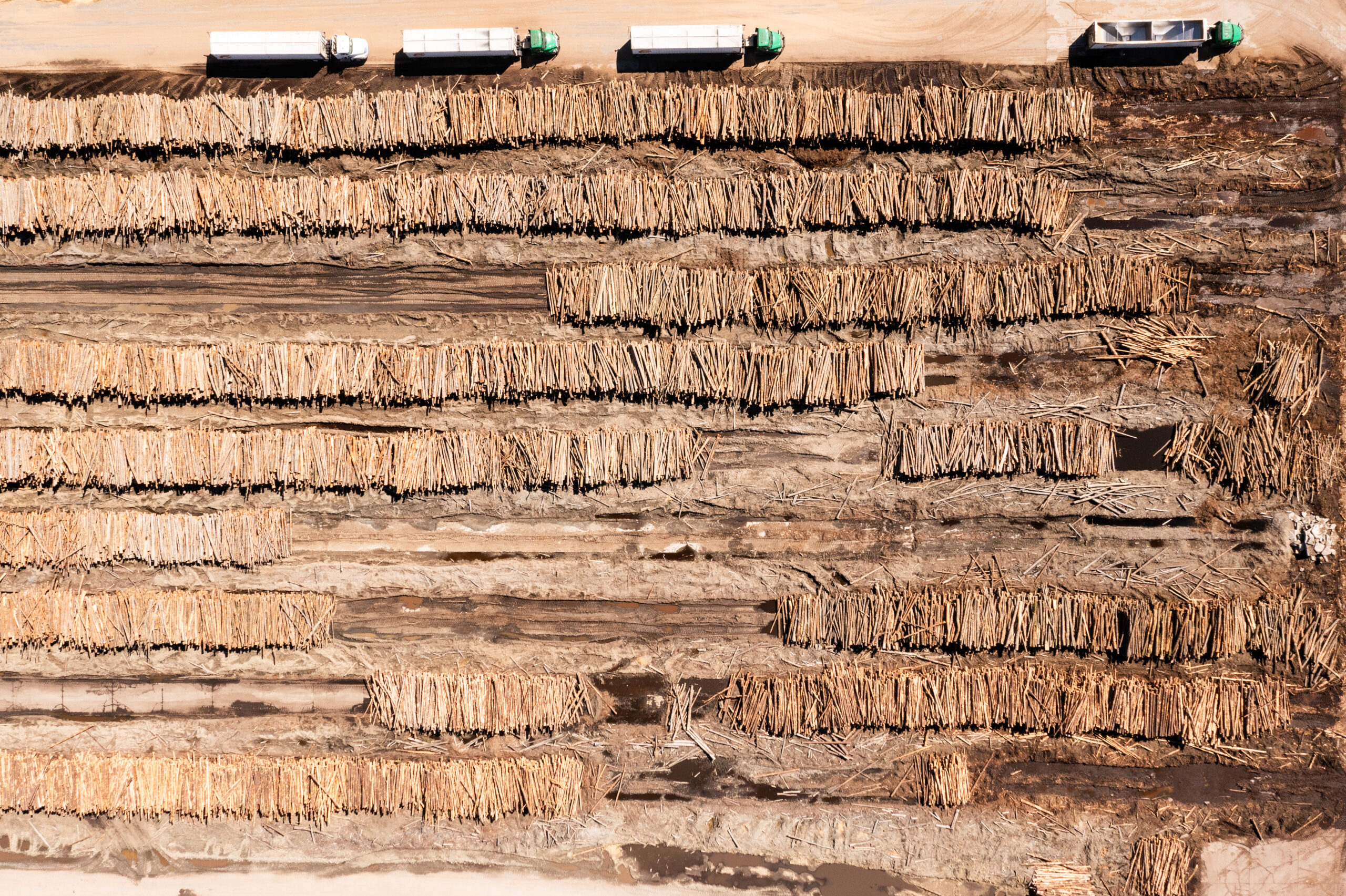
 report showed that air pollution, dust, noise, and traffic have a measurable impact on quality-of-life.