Home Blog

Cheesy Potato Egg Scramble

0
cheesy-potato-egg-scramble
Cheesy Potato Egg Scramble
Cheesy Potato Egg Scramble with fluffy scrambled eggs, golden potatoes, melted cheddar, chives, and thyme in a white bowl on marble.
Fluffy eggs, golden potatoes, and melted cheddar make this Cheesy Potato Egg Scramble cozy, hearty, and perfect for breakfast or brunch.

Print Friendly, PDF & Email

Cheesy Potato Egg Scramble is the kind of breakfast that feels simple, hearty, and a little extra special. Crispy golden potatoes, soft scrambled eggs, melted cheddar, and fresh herbs come together in one skillet for a cozy meal that works for breakfast, brunch, or even an easy dinner.

The best part is the texture. The potatoes get lightly crisp on the outside, while the eggs stay tender and creamy. Then, the cheese melts right through everything, making each bite warm and comforting. It feels homemade in the best way, but still looks beautiful enough to serve straight from the skillet.

It is also a great recipe for using everyday ingredients in a way that feels fresh, filling, and satisfying.


Cheesy Potato Egg Scramble with fluffy scrambled eggs, golden potatoes, melted cheddar, chives, and thyme in a white bowl on marble.
Fluffy eggs, golden potatoes, and melted cheddar make this Cheesy Potato Egg Scramble cozy, hearty, and perfect for breakfast or brunch.

Recipe Yield: 4 servings

INGREDIENTS

8 large eggs
1 lb baby Yukon gold potatoes, cut into 3/4-inch pieces
1 cup shredded sharp cheddar cheese
1/4 cup shredded Monterey Jack cheese
2 tbsp olive oil
1 tbsp unsalted butter
3/4 tsp kosher salt, divided
1/2 tsp garlic powder
1/4 tsp smoked paprika
1/4 tsp black pepper
2 tbsp whole milk
2 tbsp chopped fresh chives
1 tsp fresh thyme leaves

INSTRUCTIONS

1. Soften the potatoes:
Place the potatoes in a microwave-safe bowl with 2 tbsp water. Cover and microwave for 4 to 5 minutes, until just fork-tender. Drain well, then pat dry.

2. Crisp the potatoes:
Heat the olive oil in a large 12-inch nonstick skillet over medium-high heat. Add the potatoes and cook for 7 to 9 minutes, turning occasionally, until golden and lightly crisp.

3. Season the skillet:
Add the butter, 1/2 tsp salt, garlic powder, smoked paprika, and black pepper. Stir gently and cook for 1 minute, until fragrant.

4. Whisk the eggs:
Meanwhile, whisk the eggs, milk, and remaining 1/4 tsp salt in a bowl until smooth.

5. Scramble everything together:
Reduce the heat to medium-low and let the skillet cool for 30 seconds. Pour in the eggs and gently fold for 3 to 4 minutes, until softly set.

6. Add the cheese:
Sprinkle the cheddar and Monterey Jack over the eggs and potatoes. Remove from the heat, cover, and let stand for 1 to 2 minutes, until melted.

7. Finish and serve:
Top with chives and thyme. Serve warm straight from the skillet.


HELPFUL TIPS TO PERFECT THIS RECIPE

  • Pat the potatoes dry for better crisping: Extra moisture keeps potatoes from browning. After microwaving, drain them well and give them a quick pat before they hit the skillet.
  • Keep the eggs soft and gentle: Once the eggs go in, lower the heat. This keeps the scramble tender instead of dry or rubbery.
  • Use freshly shredded cheese when possible: It melts smoother and gives this cheesy potato egg scramble a creamier finish.
  • For firmer eggs, cover the skillet briefly: If you prefer eggs more done, cover the skillet for an extra minute over low heat instead of turning up the heat.

Rate This Recipe

Tried this recipe? Your rating helps others and means so much.

“A Huge Grab of Power”: Trump Is Defying Congress on Foreign Aid

0

Reporting Highlights

  • A Constitutional Crisis: Congress gave orders to Trump officials on foreign aid spending, but officials have largely refused to follow many of them, likely in violation of the law, experts say.
  • Delayed Spending: Officials have made little effort to spend aid money that Congress earmarked for specific purposes like nutrition and have reduced funding for HIV and other diseases.
  • Blocked Funds: Russell Vought’s Office of Management and Budget has labeled some aid money “unallocated” to control how it can be spent.

These highlights were written by the reporters and editors who worked on this story.

After the Trump administration upended the world’s largest foreign aid provider last year, terminating thousands of programs and firing nearly all of its staff, its plan for the agency was clear: Eliminate it entirely.

But because it is a congressionally created agency, President Donald Trump needed lawmakers’ permission to do so. So this year, Trump officials asked Congress for permission to shutter the U.S. Agency for International Development and dramatically reduce federal spending on food, medicine and lifesaving work around the world. 

Congress said no. Lawmakers, who hold the government’s purse strings and have oversight of federal agencies, wanted USAID to remain, even in its diminished form. They detailed precisely how much the State Department should spend on foreign aid and for what, including $9.4 billion on global health to treat and prevent maladies like HIV, tuberculosis and malaria, and more than $5 billion on emergency humanitarian aid. They also insisted on regular, detailed reports about how the administration was spending the money. 

Trump signed the bill, enshrining their orders into law.

Now, eight months into the fiscal year, Trump officials are failing to follow many of those orders, ProPublica has found. Officials have delayed spending on global health, have not issued funds for some projects and have labeled money destined for humanitarian aid as “unallocated” to control how it can be spent, according to a ProPublica review of government records and interviews with legal experts, current and former government employees, and members of Congress. And when lawmakers have asked about their actions, officials often have not responded.

The White House and Congress have been battling over federal spending since Day 1 of the Trump administration, setting up a constitutional crisis — a breakdown of the division of power among the three branches of the federal government, according to several legal scholars. 

Nowhere has that crisis been more visible than with foreign aid. Last year, the administration took the unprecedented step of gutting USAID, terminating thousands of aid programs and letting funding expire, all without permission from Congress. Lawmakers did little to stop it.

Now, in defying Congress on foreign aid that Trump himself agreed to spend, the administration is quietly escalating the battle.

“It is a huge grab of power from the president, taking powers away from Congress,” said David Super, a professor of law and economics at Georgetown University and a leading scholar on administrative and constitutional law.

USAID was created by Congress decades ago as a means of promoting American diplomacy and soft power around the world. As ProPublica previously reported, when Trump officials dismantled the agency last year, stopping payments on thousands of lifesaving programs that provided food, medicine and other supplies to impoverished nations, many people died, including children. 

Even with USAID in shambles, Congress has made clear that it expects the administration to continue providing foreign aid — in some cases, at nearly the level it did in previous years.

“It’s proof that there is still broad, bipartisan support for America showing up in the world, helping people and working with our allies and partners on shared challenges, not just because it’s the right thing to do, but because it directly benefits us,” said Sen. Brian Schatz, D-Hawaii, the ranking member of the Senate committee with oversight of foreign aid funds. Sen. Lindsey Graham, R-S.C., the committee’s chair, did not respond to multiple requests for comment.

But the administration has taken a variety of steps to thwart Congress’ directives. The Office of Management and Budget, run by Russell Vought, was instrumental in blocking the spending of aid money last year. This year, it has labeled both humanitarian aid and global health money as “unallocated,” meaning the OMB must approve how it is spent.

Legal scholars say such moves, and the delayed spending by the State Department, likely violate the law. Foreign aid is a prime example of why Congress made it illegal for administrations and agencies to slow-walk such funds, said Bobby Kogan, an OMB adviser under former President Joe Biden currently with the Center for American Progress. “If you spend no money for a year and all the clinics close, then those people die,” he said.

The State Department has made little effort to spend some foreign aid money that Congress earmarked for specific purposes, including family planning, neglected diseases and nutrition, according to government staff and budget documents. 

And programs have been given fewer dollars, even when Congress has kept funding steady. That includes the President’s Emergency Plan for AIDS Relief, the hallmark HIV program credited with saving 26 million lives around the world. 

Administration officials are also spending on foreign aid at a much slower rate than they had in recent years, according to an analysis of federal funding data shared with ProPublica by Aid on the Hill, an advocacy group created by former USAID employees, although the State Department disputes its conclusions. Another group published a similar analysis last week.

Where Trump officials have made plans to spend funds, it’s often spurred outrage. Under the new America First Global Health Strategy, Trump officials are signing bilateral deals with poor countries, asking for access to health data as a condition for receiving lifesaving medications the U.S. once donated. 

Jeremy Lewin, a 29-year-old lawyer who came into government via Elon Musk’s Department of Government Efficiency with no prior humanitarian experience, is in charge of foreign aid. He has said that this new strategy will not only save countless lives, but also reform the aid sector and reduce dependence on U.S. funding.

Since last July, Lewin has been “performing the duties” of undersecretary for foreign assistance and humanitarian affairs, a position that must be approved by Congress, though the administration has yet to nominate him or anyone else to the job. 

But he rarely, if ever, meets with career staff and doesn’t share information about his plans, even with the people who are expected to carry them out, according to six current and former career officials. Lewin insists that he approve even routine payments, creating a stranglehold on funding and information. 

And all the while, Trump appointees have failed to answer basic questions from Congress about what they are doing. Letters from lawmakers have gone unanswered and required reports unfiled. 

To understand the administration’s compliance with congressional mandates and federal law, ProPublica reviewed administration documents, including agreements, memos, and internal communications, and spoke with dozens of current and former government officials, congressional staff, and international experts in global health and humanitarian aid. Many people spoke on the condition of anonymity for fear of reprisal from the administration. 

In response to a list of detailed questions about the concerns, a State Department spokesperson who declined to be named said they would continue to follow the president’s direction on foreign aid spending. “We are not withholding any funds appropriated to, or available to, State,” they said. “If additional funds are made available to State, we will work to obligate them consistent with legal requirements and Administration priorities.”

They said officials have regularly briefed Congress and that Lewin had recently spent four hours discussing foreign assistance. They also said they have “reduced by 80% the number of outstanding reports and letters” since Trump retook office. 

“We are working with Congress to spend appropriated balances and find the right future-appropriated level for global health,” the spokesperson said. 

In response to a series of detailed questions about this story, OMB spokesperson Rachel Cauley said, “This is patently false,” adding that “USAID was a weaponized government agency.” She did not respond to a follow-up question asking what was false.

Spending Less — or Not at All 

After nearly all of USAID’s employees were fired and the majority of its programs closed down last summer, the agency’s remnants were transferred to the State Department. Despite repeated promises from Secretary of State Marco Rubio that lifesaving aid would continue, the State Department began winding down many of the remaining programs earlier this year.

And staff have been working with a severely constricted budget; officials gave them just half of the available money for PEPFAR, said Dr. Mike Reid, who was the program’s chief scientific officer until he left earlier this year over concerns about how the program is being run. Of the $9.4 billion for global health spending for the State Department that Trump signed into law earlier this year, Congress earmarked about $4.6 billion for PEPFAR. But staff say it’s unclear how much of that they will be allowed to spend.

Congress also explicitly directed the State Department to spend pots of money on family planning ($524 million), nutrition ($165 million) and neglected tropical diseases ($109 million), according to the bill. According to a review of government records and two people with knowledge of the department’s activities, State Department officials have made little or no effort to spend from those pots. 

In response, a State Department spokesperson said it has “continued to obligate and spend every dollar appropriated for global HIV/AIDS programs” and “we continue to implement life-saving care in global health priority areas, including HIV/AIDS, tuberculosis, malaria, and maternal and child health.”

They added: “The State Department has been in the process of slowly replacing old carry-over USAID grants with new State Department grants and contracts which have fresh funds, new terms and conditions, and better align with the new America First foreign assistance strategy.”

Global health programming in general is moving at a much slower rate than it did previously, according to the Aid on the Hill analysis of federal funding data. Of the more than $9 billion that Congress told the Trump administration to spend on global health last year, the administration had by the end of this March obligated just $190 million, 5% of what was spent on average in that period in the five years before Trump returned to office. Typically, officials would have obligated about half of the money by then. Another advocacy organization, Health Security Policy Academy, published an analysis last week that drew a similar conclusion.

The State Department said it “cannot and will not” verify any independent analysis, but disagreed with the figures, saying that it has “approved and implemented spending” for more than $7.5 billion to align with the bilateral agreements and disaster response. “You either have vastly outdated numbers or are simply mistaken,” it said, but would not elaborate.  

The agreements signed with nations around the world, a centerpiece of the State Department’s foreign aid policy, will in many cases involve sending funds directly to those governments, some of which have been mired in corruption scandals. But the specifics of the programs are still being determined, and the funding has yet to flow. 

Meanwhile, Lewin has been increasingly leaning on large international organizations to deliver aid once managed by USAID employees.

Earlier this year, Lewin funneled $3.8 billion to a small arm of the United Nations, the Office for the Coordination of Humanitarian Affairs, quadrupling the budget of the agency. 

Trump has frequently criticized the U.N. as ineffective. But after nearly all of USAID’s staff was fired, the skeleton crew at the State Department doesn’t have the capacity or expertise to manage so much humanitarian aid themselves, according to a dozen people familiar with the new system.

The agreement with OCHA, a copy of which was reviewed by ProPublica, also does not allow the U.S. to independently audit the funds, though the U.N. agreed to run a pilot project for greater internal oversight.

Eri Kaneko, OCHA’s spokesperson, said the agency has worked quickly since December to disburse funds for “the most urgent and life-threatening needs” and that U.N. entities are “fully committed to the highest standards of accountability and oversight.”

The U.S. has been the largest donor to the Global Fund to Fight AIDS, Tuberculosis and Malaria, a multilateral organization that provides medicines and prevention measures to millions of people around the world, since its inception. Lewin recently announced an expanded partnership with the fund to provide HIV prevention across Africa. But the Trump administration last year withheld payments pledged under the Biden administration, forcing the fund to reduce the amounts it gave to nations.

So in this year’s spending bill, Congress directed the State Department to make good on its pledges, issuing specific instructions to Rubio on what to pay and when, and telling him to make those contributions “in a timely manner.” 

That hasn’t happened. 

A State Department spokesperson told ProPublica that “all current funding obligations have been met.” But according to a board member for the Global Fund, congressional staff and Friends of the Global Fight, an organization that advocates for the fund in the U.S., the administration should contribute another $661 million. 

“The State Department is underfunding the Global Fund,” Schatz said. “It’s out of compliance with congressional appropriations.” 

When the senator asked about the funding during Rubio’s recent testimony to Congress, Rubio said, “I think that will move shortly, very quickly.”

A “Fundamental Threat to the Rule of Law”

During previous administrations, once Congress passed laws to approve federal spending, the money flowed through the OMB, which in turn parceled out the funds to designated agencies, making sure they didn’t spend the funds too quickly or too slowly. 

Under Trump, the OMB, led by Vought, has repeatedly blocked funds approved by Congress from going to agencies using legally dubious maneuvers, experts in federal spending and constitutional law told ProPublica. 

As ProPublica has chronicled, Vought takes an expansive view of presidential power and has moved to give the executive branch dramatically greater authority to not spend legally appropriated money. Foreign aid has been a clear focus; after USAID was razed last year, Vought was made acting administrator and tasked with overseeing the closeout of the agency. Eric Ueland, a Vought deputy at the OMB, is currently performing those duties. 

The OMB currently has labeled more than $500 million in global health money as “unallocated,” according to its own data, which makes it impossible for the State Department to spend without first going through the OMB. It had also labeled most of the humanitarian aid money this way, but began releasing some of those funds in May. By June 11, the OMB had released all of that money to the State Department.

Several people inside and outside the government told ProPublica they fear that the administration is withholding the funds because it is planning not to spend them at all. They have good reason to be concerned: That’s exactly what Trump did last year. 

In 2025, the administration clawed back some $13 billion in foreign aid that Congress had passed into law, some of it by using a maneuver widely understood by legal experts to be illegal.

That maneuver, which Vought calls a “pocket rescission,” essentially asks Congress to cancel funds so late in the fiscal year that there isn’t enough time for them to be spent if Congress says no. The Government Accountability Office, Congress’ watchdog, has said pocket rescissions are illegal, and several constitutional scholars told ProPublica the move violates the Impoundment Control Act. That law, passed in 1974 in the wake of disputes with President Richard Nixon, restricts the president’s authority to withhold, or impound, funds approved by Congress. 

A federal court initially blocked the maneuver as part of ongoing lawsuits related to the dismantling of USAID. But the administration appealed to the Supreme Court, which issued an emergency ruling split along ideological lines that allowed the clawback to continue, though it did not rule on the merits. 

The GAO has standing to take legal action on a pocket rescission. Edda Emmanuelli Perez, GAO’s general counsel, told ProPublica that her office was continuing to review potential impoundments and monitoring ongoing litigation, and that it has not made a decision to file any lawsuits at this time.

While there are still nearly four months left in this fiscal year, career officials and legal experts say another rescission — legal or not — would further erode Congress’ power of the purse, threatening the U.S. democracy. 

“If that’s going to be a regular occurrence, then we have a real fundamental threat to the rule of law,” said Cerin Lindgrensavage, a former Justice Department lawyer who works for Protect Democracy, a nonprofit that fights against authoritarianism. “Congress has said spend the money, and the president doesn’t want to. The question is, who wins? Under the law, Congress is supposed to win. Right now, the president is.”

Budget watchers say there are concerning signs that the administration plans to withhold more funds. 

In April, the OMB announced to Congress that it was withholding funds earmarked for global health to pay the hefty bills for severance fees and other costs for the thousands of USAID programs Trump officials terminated last year.

OMB officials told lawmakers they were setting aside $19 billion to cover those costs, though they anticipated the total would be “substantially” less. (Internal documents reviewed by ProPublica say the figure doesn’t include the cost of the litany of lawsuits associated with the closures — or the dozens of new hires and other agency operations needed to process them.) 

The bulk of that money came from unspent funds for the canceled programs and other unobligated dollars from previous years. But $3.2 billion came from funds earmarked by Congress for global health and development programs that Trump signed into law in 2025. If it’s not obligated by the end of September, that money will expire and can no longer be spent. 

Democratic lawmakers were incensed by the OMB’s decision. In a letter to Trump officials, senators called it an “appalling admission of waste of U.S. taxpayer dollars” and demanded that the administration use the $3.2 billion as directed, “consistent with the law.” They asked for a response by May 8. As of June 16, lawmakers had not received one. 

Asked about the funds during the recent Senate hearing, Rubio claimed they were under the purview of the OMB. Schatz pointed out that Rubio had moved all foreign aid under the State Department and had just wrestled some of that money away from the OMB to respond to an Ebola outbreak. “It also demonstrates you are perfectly capable of getting money released from those closeout funds if you wish,” he told the secretary. “Ebola is an urgent priority, but so is malaria, so is TB and so is HIV/AIDS.” 

“Proposing a rescission is a Presidential authority, and we will follow President Trump’s direction as to any future rescissions,” the State Department spokesperson told ProPublica. “We are currently planning to obligate all appropriated balances, consistent with law.”

China in hot pursuit of a wave-skimming hypersonic edge

0
china-in-hot-pursuit-of-a-wave-skimming-hypersonic-edge
China in hot pursuit of a wave-skimming hypersonic edge

China’s pursuit of a sea-skimming hypersonic missile could redefine naval warfare in the Pacific — but only if it can overcome the immense technical and operational barriers standing in its way.

This month, the South China Morning Post (SCMP) reported that the Chinese Academy of Sciences (CAS) has launched a low-altitude hypersonic flight research program to develop foundational technologies for a sea-skimming hypersonic missile, a move that could significantly challenge the US Navy’s air-defense networks.

The initiative, funded by a CAS basic research program for youth teams, is spearheaded by the Academy’s Institute of Mechanics, in partnership with the University of Science and Technology of China and the Ningbo Institute of Materials Technology and Engineering.

While China has already deployed high-altitude hypersonic weapons, flying just above the sea surface presents severe engineering hurdles, including extreme aerodynamic heating, intense drag, and complex shock-wave interactions.

To overcome these obstacles and maximize low-altitude engine thrust, the project focuses on detonation combustion technology, which utilizes supersonic shock waves rather than conventional subsonic flame propagation to drive propulsion.

By weaponizing speeds exceeding Mach 5 at ultra-low altitudes, the system aims to exploit the radar horizon. This capability would drastically reduce radar detection ranges, shorten defensive warning times, and improve the penetration capabilities of next-generation strike platforms against advanced maritime defenses.

While China is pursuing the development of a sea-skimming hypersonic missile to enhance its ability to penetrate advanced maritime defenses, significant engineering, cost, and operational challenges raise questions about the feasibility and effectiveness of such a weapon against US carrier strike groups.

China’s development of a hypersonic sea-skimming missile appears to build on its earlier philosophy of building supersonic cruise missiles, such as the YJ-12, which relies on high speed and maneuverability to evade shipborne missile defenses and minimize target reaction time.

It contrasts with the US’s approach of developing stealth anti-ship missiles, such as the AGM-158C LRASM (Long Range Anti-Ship Missile), which relies on information dominance and stealth features to fly through previously identified gaps in enemy air defenses at wavetop height and remain undetected until it is too late for the target.

Thus, a sea-skimming anti-ship hypersonic missile may be China’s attempt to combine the advantages of high speed and stealth in one weapon – thereby increasing its effectiveness against critical targets such as US carriers in the Pacific.

One possible use case is within China’s broader multilayered missile-swarm strategy. SCMP reported this month that China’s strategy utilizes a multi-layered, coordinated missile swarm to defeat the US Navy’s Distributed Maritime Operations (DMO) operational concept.

According to the report, submerged submarines launch hypersonic anti-ship missiles to destroy forward-deployed Aegis destroyers, neutralizing the outer missile defense shield. It then mentions that an orchestrated firepower package floods enemy sensors: cheap decoy drones and low-cost cruise missiles exhaust interceptor stocks, allowing wave-skimming, subsonic-stealth cruise missiles and terminal hypersonic weapons to bypass the remaining defenses.

Finally, it states that a decentralized, smart leader-follower swarm tactic features a high-climbing scout missile relaying real-time targeting data directly to low-flying missiles, enabling autonomous adaptation to electronic jamming and the successful sinking of the target carrier group.

The concept underscores that hypersonic missiles are only as effective as the kill chains – the processes and assets required to guide missiles to their targets – that support them.

Yet turning that concept into a workable weapon may prove easier said than done. David Wright and Cameron Tracy note in a March 2024 article in the Bulletin of the Atomic Scientists that flying at low altitudes forces hypersonic weapons through dense atmospheric air, generating immense aerodynamic drag that severely degrades their performance.

Wright and Tracy point out that this friction slows the vehicles down, making them no faster—and potentially slower — to reach targets than traditional ballistic missiles.

They add that the high atmospheric density causes severe, sustained aerodynamic heating that scales with the cube of the velocity, noting that traveling at Mach 5 produces 100 times the heat of Mach 1, and that vehicles must endure these punishing temperatures for up to 30 minutes.

Beyond those engineering challenges, cost may also be a factor. Overall, China is estimated to have 600 hypersonic weapons, according to a leaked 2025 US military assessment reported by the Wall Street Journal this month.

China already fields multiple anti-ship hypersonic weapons, such as the YJ-19 submarine-launched hypersonic missile aboard its Type 039 Yuan-class submarines, and the YJ-20 aboard its Type 055 cruisers.

However, that number is rather small compared to other missile types in China’s inventory. In an April 2026 testimony to the US Congress, Lieutenant General James Adams stated that the People’s Liberation Army Rocket Force (PLARF) has fielded approximately 3,450 missiles.

Adams states that this stockpile comprises 1,300 medium-range ballistic missiles (MRBMs), 900 short-range ballistic missiles (SRBMs), 550 intermediate-range ballistic missiles (IRBMs), 400 intercontinental ballistic missiles (ICBMs), and 300 ground-launched cruise missiles (GLCMs).

An attack against US naval forces would consume substantial numbers of missiles in a short span of time, with hypersonic missiles reserved only for high-value targets such as carriers.

Even then, finding and targeting a carrier may be harder than building the missile itself. First, the attacker must find the warship within vast ocean expanses, a daunting task due to the carrier’s constant evasive movement. Second, they must establish a continuous, highly precise target track to account for real-time positioning.

Third, offensive weapons must successfully penetrate the carrier strike group’s incredibly dense, deeply integrated, layered air and undersea defenses. Finally, attackers must overcome heavy side armor and extensive compartmentation to inflict actual disabling structural damage upon the massive vessel.

Yet the greatest vulnerability may lie not in the missile itself, but in the kill chain behind it. Together, these kill chains form a broader kill web that enhances resilience and survivability.

Attacking critical nodes of the kill web could be akin to disabling an adversary’s nervous system. Space-based sensors, coastal radar stations and underwater cables may prove to be vulnerable to attack by kinetic and non-kinetic means.

Should those assets be disabled or destroyed, China may still be able to launch its hypersonic missiles, but its entire kill web ecosystem may operate in disjointed parts, giving operational and tactical opportunities for US forces.

If China fields a viable sea-skimming hypersonic missile, it could significantly complicate US naval operations in the Pacific. However, the future contest is likely to hinge less on missile performance alone and more on which side can better protect—or disrupt—the sensor and targeting networks that enable long-range precision strikes.

Can Hate Speech Be Stopped?

0
can-hate-speech-be-stopped?
Can Hate Speech Be Stopped?


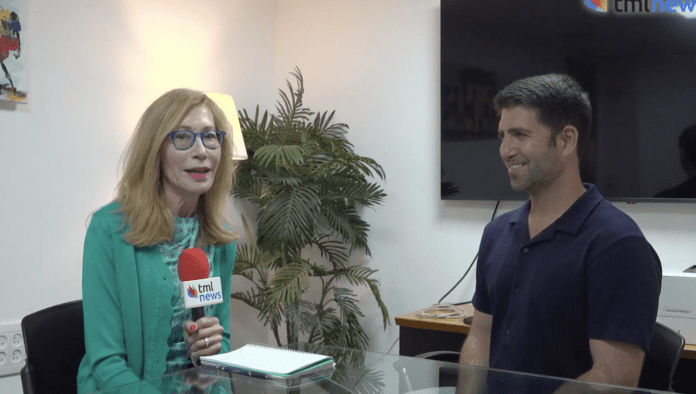
“We have a technological front line,” Chen Shmilo, former CEO of 8200 Alumni Association and a Voice of the People council member, told TML, adding that the goal is to combat antisemitism online with the same seriousness as other threats

In the new battleground for Jewish life, the fight is no longer only over policy, memory, or public opinion. It is over the conditions that shape all three: what people see, what they believe, and whether hate can be manufactured faster than truth can catch up.

The warning came during a broader discussion about efforts to unite entrepreneurs, educators, technologists, and community leaders in confronting antisemitism in the age of artificial intelligence. What emerged was not a single campaign but a multi-front response, one that treats social media, education, Jewish identity, and digital manipulation as parts of the same crisis. The speakers described a world in which hate spreads through algorithms, deepfakes, and large language models, while the counterforce must come from networks of people willing to collaborate across sectors, countries, and disciplines.

That effort came into sharper focus through “From Blueprints to Life,” a global digital gathering held on June 3, 2026. Hosted by Amalya Duek of Channel 12’s daily newscast, the broadcast highlighted the inaugural Voice of the People cohort’s initiatives and the work of its global council, with a focus on practical responses to challenges facing Jewish communities worldwide.

Voice of the People is a global Jewish network led by President Isaac Herzog that brings together Jewish voices from around the world to tackle the community’s biggest challenges through dialogue and joint action. Its goal is to turn broad conversation into concrete steps that strengthen Jewish life, leadership, and long-term resilience.

The old boundaries no longer hold. Antisemitism is not just a social problem or a political one; it is increasingly linked to technology, generation, and identity. The answers in the room came from people who were not waiting for the crisis to pass. They were already building a response, whether through education, community leadership, or tech-driven efforts to arrest the spread of hate online.

Neta Danciger, chief marketing officer of Voice of the People, described the event as reaching a meaningful milestone, showcasing the initiatives of seven entrepreneurs, either individually or in groups, whose work was already making an impact. Their projects ranged across issues: antisemitism, artificial intelligence, polarization in the Jewish world, education, early childhood, and Jewish identity. President Isaac Herzog’s appearance in the studio emphasized the significance of the event.

For Danciger, the most important development was the community that had formed around the projects. “It’s so exciting to see these 150 people,” she said, “and to look at them after a year and a half into the cohort and to see that they became a community.”

They were helping each other, she said, and acting as “generous leaders in the world, in the Jewish global ecosystem.” That kind of connection, she suggested, is what gives the initiative its lasting value. And beyond the projects themselves, there was the larger framework of the leading topics, with antisemitism sitting alongside questions of identity, relations, and education as part of a broader effort to understand where Jewish life is being pulled.

Asked about the scale of the problem, Danciger pointed to a survey of more than 10,000 Jews around the world that found rising antisemitism was the clearest challenge facing Jewish life, especially after October 7th. She said the shock of that moment has reshaped Jewish life globally and now runs through the Voice of the People’s work.

But Danciger also made clear that antisemitism was not confined to one lane. It also focused on relations between Jews and non-Jews, as well as on Jewish identity. “It’s the underlining topic, issue, and challenge for all Jews today,” she said. That line captured a central truth: antisemitism is now so embedded in Jewish public life that it shapes everything around it. The task is not merely to respond to the rise in hate, but to understand how it affects the future. That is why, she said, people in the cohort are also trying to think about Jewish identity “in the early years of development,” before prejudice and polarization fully take root.

That is where technology enters the picture. Danciger said many of the thought leaders she works with are trying to understand how antisemitism and technology “kind of interlace.” AI has dramatically changed everyday life in just the last two years, she said, and those shifts are already affecting how people encounter and amplify hatred.

The challenge is to look at what is happening now and figure out how to change the numbers—not just by reacting to hate, but by understanding the systems that spread it. The same impulse also runs through the educational work: not as a campaign to “get into” schools, she said, but as a way of preparing leaders who can carry these lessons into their own communities and professional worlds.

Education was one of the most revealing parts of the conversation, because it showed how the response to antisemitism can begin long before adulthood. When asked whether the work was aimed at schools or at educating communities more broadly, Danciger replied, “We are not looking to get into anything.” Instead, she said, Voice of the People is “fostering this community” and nurturing leaders who will do the work in their own communities and professional worlds. That model is less about institutional reach than it is about distributed responsibility. The point, she seemed to suggest, is not to parachute in with a message but to cultivate people who can help shape the message from within.

She pointed to Ranit, the CEO of the Meitarim school network in Israel, as an example. The schools bring together religious and non-religious children, and one of the projects she described concerns how to “quiet down the monster, the beast of hating each other on social media” so people can begin listening to one another. The phrase was vivid, and intentionally so. It suggested that the digital world is not just noisy but violent in ways that shape children early on.

Danciger said the hardest part is having conversations with people who disagree with you or come from different backgrounds. That is precisely why she sees schools and community programs as essential arenas for this work. The fight begins with the ability to sit in the same room, or even the same feed, without instantly turning the other person into a threat.

Chen Shmilo, former CEO of the 8200 Alumni Association and a council member of Voice of the People, translated the same concern into technological terms. He said social media has long been a platform for both positive speech and hate speech, but the rise of generative AI has made the problem more complex. Hate can now be produced, scaled, and disguised in new ways. “We have a technological front line,” he said, and the task is to combat antisemitism and hate speech online with the same seriousness that other threats receive. The stakes are not theoretical. If hatred can be automated, then the response must be at least as agile.

Our haters will always outnumber us, both offline and online, right?” It is, again, the David versus Goliath story.

Responding to a question about possible solutions to the problem, Shmilo argued that meeting the challenge requires a broad coalition of talent. “We have to harness the most talented people in the Jewish world,” he said, both in Israel and outside it. When asked whether the Jewish community worldwide had enough people to deal with such a large problem, he answered with striking candor: “Our haters will always outnumber us, both offline and online, right?” But he quickly reframed the imbalance. “It is, again, the David versus Goliath story,” he said. The larger force may have more numbers, but the smaller one can still prevail through ingenuity, speed, and collaboration.

He compared the challenge to cybersecurity, where threats evolve constantly, and responses must be developed, integrated, and scaled. What is missing, he said, is not intelligence but focus: the attention of people in tech, funding, and venture capital who are willing to work together. He stressed the need for Israelis and Jews outside Israel to collaborate. The fight, in other words, is not local. It is global, and it must be answered with a network that is just as wide as the problem itself.

One of the most alarming parts of his warning involved chatbots and large language models. Shmilo said there are already tools to identify hate speech, but not enough options for response. “We are still running short of solutions to respond quickly,” he said.

Some chatbots are generating hate speech or inaccurate Holocaust information, creating a threat not only to public discourse but to Holocaust memory itself. Asked how that could be fixed, he admitted, “I still don’t know.” But he then added that the capacity is already there: “We have the people, we have the startup nation to start working on it if we create this platform for them to start thinking, collaborating, and developing solutions.” The idea is not to start from zero, but to connect what already exists.

We have the people, we have the startup nation to start working on it if we create this platform for them

His own sense of urgency was deeply personal. Asked what drives him as antisemitic acts intensify, especially after October 7th, Shmilo said, “I’m a descendant of four Holocaust survivors.” The memory of the Holocaust, he said, is still very much alive in his family. October 7th changed him further, and he said it helped him understand more deeply how antisemitism abroad affects life in Israel. That led him to what he called “a responsibility, almost an obligation,” to be more proactive and help develop technological solutions that can at least mitigate the spread of hate speech.

He linked that obligation to his background in the 8200 Alumni Association, where he said there is a duty to promote impactful technologies by harnessing graduates’ human capital for the sake of Israeli society and the economy. Now, he said, there is “another mission, which is fighting anti-Semitism.” And because online antisemitism is really a form of hate online, he argued, it is “a global threat to liberal societies, to Western countries, to Western democracies.” That broader framing makes the issue bigger than one community’s defense. It becomes a test of democratic resilience itself.

He later returned to that idea with a line he attributed to Rabbi Jonathan Sacks: “What starts with the Jews never ends with the Jews.” The message was that the consequences of online hate spread outward, and so do the solutions. If effective methods are developed, Shmilo suggested, they could help other societies as well. Jews, then, are not only defending themselves; they may also be helping to build tools that strengthen public life more broadly. “I think we have the right people to do that. I think we can harness the brightest minds of the Jewish people, both in Israel and in the diaspora, and give it more attention and start thinking creatively and find solutions.”

When asked why media, communication, and hate speech have often been treated as secondary fronts, Shmilo said he did not have the full answer, but he identified the pattern. Communities often lack the knowledge or confidence to take on “these giants”—the social media platforms and AI systems that feel so powerful.

“It feels like we are almost unable to do something,” he said. “But I resent this idea.” He pointed to Israel’s startup culture as evidence that people once believed they could solve hard problems in finance, digital health, and other sectors, noting that initiatives such as Hack the Hate and the One Signal Collective are innovative efforts aimed at redressing the balance.

Shmilo believes antisemitism is another frontier where the same mindset can succeed. The issue is not the absence of talent, but whether that talent is organized and empowered to act.

Shiran Mlamdovsky Somech, founder of Generative AI for Good, brought that entrepreneurial spirit into the realm of digital truth. She described Hack the Hate—a tech-driven initiative against online antisemitism and hate speech—as an effort to bring together “the different sectors to talk with each other.”

The project began with a conference in 2024 and then expanded to two additional conferences in New York, held in partnership with the Yeshiva University Museum. Those events were successful, she said, because both startups and organizations wanted “to come together and to speak and to listen and to learn.” From that demand came the idea for the One Signal Collective, an innovation center where companies, academics, and other stakeholders could work together regularly.

Pressed on the issues surrounding AI, her explanation was especially powerful because she kept returning to the fact that no technical background is required to use it. In “a few clicks,” anyone can create a deepfake and generate new content. That accessibility makes the technology dangerous because people may not recognize what they are seeing, and malicious actors can exploit it at scale. Deepfake and misinformation, she said, can easily fuel hate across social media if they are not addressed. In that sense, AI is not just a tool; it is an accelerant.

She also warned about the bias built into large language models, saying those biases are aimed not only at the Jewish community but at democracy itself. To make that danger vivid, she described online images of Hitler and Anne Frank together in a grotesque invented scene. “For me, it was very, very chilling to see it,” she said. Her concern was not only that such fabrications exist, but that young people may not know how to tell the difference between real and fake. “It can be easily manipulated by those kinds of fakes and lies and propaganda,” she said. That is why, in her view, the response must include both technical solutions and a broader social protocol for responsible AI use.

When the conversation turned to social media platforms such as TikTok and Instagram, Mlamdovsky Somech said algorithms can trap users in echo chambers until they believe what they see is simply the truth. It is not exactly an industry, she said, but the truth itself may no longer remain stable. “What is reality and what is not?” she asked. “What is good, what is bad?” In her view, society now needs relevant experts to create protocols that guide platforms and other AI systems toward responsible use. The aim is not to outlaw technology, but to prevent it from becoming a machine for confusion.

What made the whole discussion compelling was the way it tied together the practical and the existential. Danciger talked about community formation, early childhood, and the difficulty of listening across differences. Shmilo spoke about survivors, October 7th, cybersecurity, and the possibility of building technological defenses. Mlamdovsky Somech focused on deepfakes, algorithmic echo chambers, and the collapse of shared truth.

Taken together, they describe a Jewish world that is not simply reacting to hate but trying to understand how hate now moves, mutates, and recruits technology in its service. And because the effort is being led by people who think across sectors, it feels less like a slogan and more like a working blueprint.

The conversation kept returning to the same conviction: the people and the tools needed to fight back already exist. The challenge is to bring them together, to trust their capacity, and to move fast enough to matter. In a moment when hate can be manufactured in seconds, and falsehood can travel farther than fact, that may be the most important work of all—building the human networks that can keep truth, memory, identity, and community from being overwritten.

How Donald Trump has changed the way diplomacy is done

0

The negotiations to end the US-Iran war, resulting in the signing of a memorandum of understanding on June 17, have been something of an acid test of Donald Trump’s approach to diplomacy. What does it tell us? And has this US president changed the way diplomacy is done?

When Trump was inaugurated for his second presidency in January 2025, he announced his intention to be both a peacemaker and to pursue an “America first” foreign policy, focused on avoiding wars and bringing direct benefits to the US. By November 2025, he declared he had already settled eight “raging conflicts” across the world.

In January this year, the forced removal of Nicolas Maduro as president of Venezuela and installation of Delcy Rodríguez as a more US-friendly successor led Trump’s deputy chief of staff, Stephen Miller, to tell CNN: “You can talk all you want about international niceties and everything else. But we live in a world, the real world … that is governed by strength, that is governed by force, that is governed by power.”

But the Iran war has shown Trumpian diplomacy colliding with a real world that does not always bend to his will or succumb to US displays of force. The real world, it seems, is more complex than he thought.

Hitherto, five elements have characterised Trump’s approach to diplomacy. First, he prefers to eschew the traditional institutions and mechanisms of diplomacy. The State Department languishes, the UN is ignored. Traditional alliances, multilateral organisations and international gatherings have been disdained, unless they provide a platform for Trump to demonstrate his power and “call the shots”.

Rather than use US ambassadors or diplomats to tackle international issues, Trump relies on a small cast of trusted personal envoys – including his son-in-law Jared Kushner, real-estate developer Steve Witkoff and Massad Boulos, a Lebanese-American businessman who is father-in-law to his daughter Tiffany – to negotiate on his behalf. Even the secretary of state and national security advisor, Marco Rubio, is given a limited role, mainly in the western hemisphere.

Second, Trump’s approach to diplomacy, as to government as a whole, is distinctly personal. He likes to deal with other leaders directly, man-to-man, provided they are leaders he respects.

This tends to comprise a small group that includes Chinese president Xi Jinping, Russian president Vladimir Putin, Israeli prime minister Benjamin Netanyahu and (sometimes) Saudi Arabia’s ruler Mohammed bin Salman. Trump will see others but, as the Ukrainian president Volodymir Zelensky and South Africa’s Cyril Ramaphosa found, he likes to publicly demonstrate his superiority to them.

US president, Donald Trump, vice-president, J.D. Vance, and UKrainian president Volodymyr Zelensky argue in  the Oval Office, February 2025.

Humiliation: Donald Trump and his vice-president, J.D. Vance, browbeat the Ukrainian president Volodymyr Zelensky in the Oval Office, February 2025. EPA/Jim Lo Scalzo/pool

Third – as Miller reflected – Trump sees power as deriving from military might and economic strength. He is willing to use both freely in bilateral relations to get what he sees as a good deal for America. Appeals to principle, to the international rule of law, to human rights or to the value of democracy have all gone out of the window.

He has also demonstrated his willingness to strike first – by unilaterally imposing the so-called Liberation day tariffs, or by sending marines to Caracas – and talk later. Other leaders recognise that having friends can be a source of power – but this, it seems, is not an approach that appeals to the US president. Having friends requires building trust and accepting a reciprocal – not just transactional – relationship.

Fourth, public messaging is crucial. How do his actions look on the media, to his Maga faithful, to the markets and to the world? Trump’s use of his TruthSocial platform to negotiate in public – with friend and foe alike – is the antithesis of traditional diplomacy, where secret channels, confidential negotiations and trusted interlocutors play a central role.

His ability to “flood the zone”, by overwhelming the media and any critics while spinning his own message, has given him a big advantage in this social media-driven world. But as the Iran negotiations have shown, it has drawbacks when the hyperbole and spin are shown to be hollow.

Finally, Trump’s focus is relentlessly short term. “Strategic patience” – using restraint and timing to achieve his ends – does not appear in his lexicon. Results must be immediate, and the declaration of victory or peace or a deal is what matters – not the actual delivery of those outcomes.

The “deal” to end the conflict in Gaza, struck in October 2025, remains stuck in limbo as Trump’s interest has wandered. The Ukraine war that was to be settled in 24 hours grinds on relentlessly.

Trump’s weaknesses exposed

The war in Iran, in particular, has challenged Trump’s model of diplomacy and exposed its weaknesses. The Iranians refused to “cry uncle”, as he put it, when their leadership was wiped out, their nuclear facilities were pounded by bunker-buster bombs, and their economy was brought to its knees by sanctions.

Instead, they challenged the US to put boots on the ground, closed the Strait of Hormuz to hurt the US economy, and struck its erstwhile allies in the Gulf. They refused to talk to Trump’s envoys – who they distrusted after twice feeling betrayed when the US attacked them mid-negotiation – and they exposed the deception of his constant statements and social media posts claiming agreement had been reached, or victory was at hand.

As a result, Trump has had to rely on third-party intermediaries Pakistan and Qatar to negotiate with the Iranian regime. The UN remains firmly on the shelf, as Trump is resolutely opposed to the political constraints that operating through international organisations might impose on American freedom of manoeuvre. But even so, he has found himself in need of neutral third parties to do the deal that he could not.

Will Trump change? Yes and no. He has no ideological constraints, only pride and faith in his own abilities. So he could change course at any moment. But his antipathy to multilateralism and traditional diplomacy are unlikely to disappear.

Nato chief Mark Rutte with US president DOnald Trump in the Oval Office, October 2025.

Nato chief Mark Rutte has been dubbed a ‘Trump whisperer’ for his ability to charm the US president. EPA/Aaron Schwartz/pool

The world at large is already adjusting to these new ways of doing diplomatic business. Some are seeking out “Trump whisperers” such as Nato’s chief Mark Rutte, or Maga-friendly lobbyists that, for example, Nigeria and the Democratic Republic of Congo have employed to secure US support for their respective struggles against Boko Haram and Rwanda.

Others are picking envoys to liaise with the likes of Witkoff and Kushner. The UK’s pick for this role is national security advisor Jonathan Powell, whose contacts with Witkoff played a significant part in calming US relations with Ukraine. As bilateral diplomacy replaces multilateral, the air miles of such envoys multiplies exponentially, while small countries are cut out of the action.

And yet, Trump’s last two summits with Putin and Xi yielded little – and he found himself spending more time at the latest G7 summit in France than at previous ones. Perhaps, the US president has found he needs some friends after all.

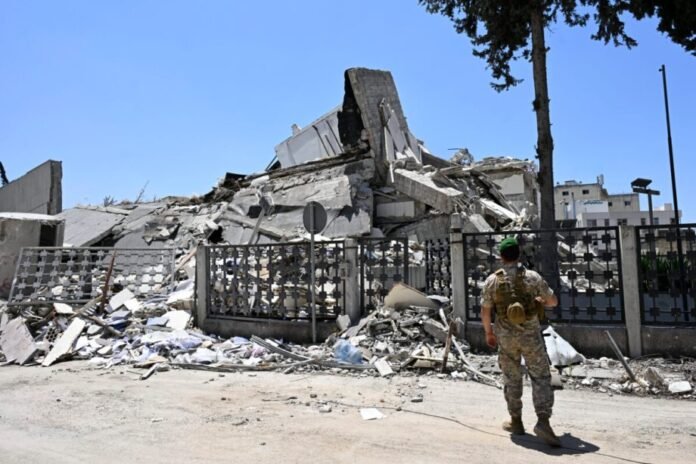
Israel plans to reduce forces in southern Lebanon under US pressure ahead of Lebanese army deployment

0
israel-plans-to-reduce-forces-in-southern-lebanon-under-us-pressure-ahead-of-lebanese-army-deployment
Israel plans to reduce forces in southern Lebanon under US pressure ahead of Lebanese army deployment

The Israeli army is expected to reduce the size of its ground forces operating in southern Lebanon, according to a report published on Sunday by Israeli public broadcaster KAN.

The broadcaster said the gradual reduction is due to the fact that “most offensive missions have been completed and there is no longer a need for all the soldiers currently deployed in the security zone”.

KAN added that another reason is an expected meeting this week between Israeli and Lebanese negotiating teams, during which pilot areas in southern Lebanon will be defined.

According to the report, these areas will be free of Hezbollah, with the Lebanese army taking responsibility for them to test its ability to prevent the group from re-establishing control.

The US administration wants Israeli forces to return to positions along the Yellow Line, located about eight kilometres from the border. Israel says the line is intended to protect northern towns from anti-tank missile attacks.

Over the past two months, Israel has expanded its military deployment in southern Lebanon beyond the Yellow Line.

Quoting an Israeli official familiar with the matter, KAN said the Israeli army would not withdraw from the Yellow Line itself, but could pull back from areas occupied more recently as part of the negotiations.

Why Gaza’s genocide death toll is deliberately undercounted

0
why-gaza’s-genocide-death-toll-is-deliberately-undercounted
Why Gaza’s genocide death toll is deliberately undercounted

The mainstream media has no problem guesstimating the deaths (500,000) from the Assad dictatorship’s civil war in Syria, nor the estimated deaths in the wars in UkraineSudan or Iran.

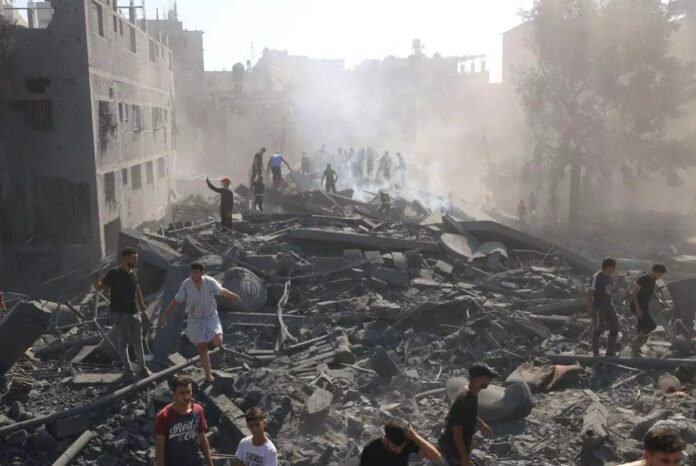
Somehow, media editors do not let their investigative reporters assess the extent of Israel’s mass murder of civilians in Gaza — an exposed, defenseless population of 2.3 million people in an enclave the geographic size of Pennsylvania.

The Associated Press notes that US military historian Robert Pape believes, “Gaza is one of the most intense civilian punishment campaigns in history” and that, “It now sits comfortably in the top quartile of the most devastating bombing campaigns ever.”

Why? One reason is that the Hamas-controlled Ministry of Health certifies deaths in Gaza based on reports from hospitals and morgues that were mostly blown up well over a year ago. (They report presently around 73,000 fatalities.)

But Hamas has admitted that there are tens of thousands of bodies under the rubble, thousands more blown into bits or incinerated and unidentifiable.

They also say their figures do not include the collateral deaths (e.g., spreading fires) from the Israeli military F-16 bombings and relentless shelling of the people of Gaza or the deaths caused by the Israeli government-imposed blocking of food, medicine, healthcarewater, fuel, electricity and shelter.

From other conflict zones around the world, the ratio of collateral deaths is anywhere from 3 to 13 times the deaths by violent weaponry.

The Israeli regime is fine with the Hamas undercount because they and the US State Department know the real death toll (along with the injury count) is much, much higher. Hamas knows that on October 7, 2023, the multi-layered Israeli border security apparatus was shaky.

They then launched what turned out to be a suicide-homicide assault over the border, resulting in some 1,400 deaths as compared with the nearly 1,200 people — about 400 of them soldiers and police — shot by the Hamas raiders.

To this day, with most Israelis skeptical, Netanyahu has blocked an independent official investigation of the mysterious collapse of the multi-tiered Israeli border security complex.

Netanyahu attributes it to negligence. There were, however, too many separate warnings, including 24-hour Israeli spotters from the Israeli side, plus Israel having the Hamas plans a year earlier, to accept that improbable pretext.

Hamas, on the other hand, doesn’t mind the world media repeating again and again their minimal, identifiable death count.

They certainly do not want the realistic estimate death count to further outrage their subjects because Hamas did not protect the civilian population, and did not have any air-raid shelters.

Hamas certainly knew what was coming from the ultra-modern, savage Israeli military backed by co-belligerent Joe Biden’s US ultra-modern and lethal military industrial complex.

There is another media reluctance operating. The reports by eyewitnesses, and scholarly and military weaponry specialists, who arrive at minimum and maximum ranges of deaths (most of whom are children and women) bring repulsive denunciations and charges of anti-Semitism.

Moreover, apologists for endless Israeli slaughter, like Bret Stephens, the mouthpiece of Netanyahu on the New York Times opinion page, have used the low Hamas figures to counter charges of Israeli genocide. If it was genocide, they inaccurately claim, the death toll would be much higher.

In 2025, two major Israeli human‑rights organizations – B’Tselem and Physicians for Human Rights Israel – each issued reports concluding that Israel is committing genocide against Palestinians in Gaza (see reporting from Amnesty International).

Well, the death toll is much higher, over 600,000 lives destroyed or over 25% of Gaza’s original population. This leaves an improbable nearly 75% still alive, though most are sick, injured or dying.

Reporting reality would intensify the political, diplomatic and civic determination to stop the killing, let in adequate humanitarian aid and move toward resolving this conflict.

Analysts reported by The Lancet, international relief organizations, universities and UN agencies all estimate hundreds of thousands of dead Palestinians from violent bombs, artillery, snipers and the resultant, related secondary effects noted above.

For example, Professor Emeritus Paul Rogers of the University of Bradford in the UK, back in April 2025 estimated the tonnage of explosives dropped on Gaza was the equivalent of six Hiroshima bombs, but more lethal because these daily projectiles are more targeted.

Tarek Loubani, a Canadian physician who has served tours of duty at crumbling Gaza hospitals, puts the estimate at “hundreds of thousands of dead.”

In a detailed, footnoted series of reports (“The Truth About Gaza’s Dead”), Feroze Sidhwa, an American trauma surgeon who worked in Gaza’s killing fields, has published much probative evidence by dozens of other health workers who experienced the ghastly horrors.

These included the deliberate targeting by Israeli terrorist snipers of little children receiving bullets in their brains and hearts. (See Foreign doctors say Israel systematically targeting Gaza’s children: Report – Al Jazeera, September 14, 2025).

The recent report by Francesca Albanese, the United Nations Special Rapporteur on the Occupied Palestinian Territories, referred to a consensus of 680,000 deaths.

The respected chair of Global Public Health at the University of Edinburgh, Professor Devi Sridhar, long ago was offering estimates far higher than those of Hamas.

The Hill reported that in November 2023, Assistant Secretary of State for Near Eastern Affairs Barbara Leaf testified to a House committee that the actual number of Palestinians killed in Gaza was likely higher than the figures then being reported by Gaza health authorities at that time.

She was immediately silenced and never again spoke about Israel’s genocidal casualties. The State Department has been blocking a Freedom of Information demand for two years.

The huge Israeli bloc in Congress, of course, has allowed no hearings on the toll made possible by deadly US weapons (including shipping over white phosphorus artillery shells)— costing billions of dollars paid for by US taxpayers. 

Human Rights Watch and Amnesty International have reported that Israel used white phosphorus munitions in military operations in Gaza and along the Israel–Lebanon border shortly after the October 7 Hamas attacks.

Reporters could have gotten informed assessments and estimates about the Israeli-inflicted carnage in Gaza from Doctors Without Borders, Save the Children, the World Central Kitchen and other aid groups.

Scores of infants and children in Gaza are dying every day from disease, malnutrition and untreated injuries.

There are no healthcare facilities for them. The shameful US newspapers, magazines, television and radio disrespect the Palestinians in both life and death, something they would never dare to do if the shoe were on the other foot.

Why aren’t brave reporters like Ryan Grim, Jeremy ScahillAmy Goodman and Sy Hersh looking deeply into the ghastly indifference to the undercount in Gaza? Truth and the mournful survivors need you.

Ralph Nader is a consumer advocate and the author of “The Seventeen Solutions: Bold Ideas for Our American Future” (2012). His new book is “Wrecking America: How Trump’s Lies and Lawbreaking Betray All” (2020, co-authored with Mark Green). He tweets at @RalphNader

Common Dreams

Starmer Announces Resignation as UK Prime Minister Amid Growing Pressure from Burnham

0
starmer-announces-resignation-as-uk-prime-minister-amid-growing-pressure-from-burnham
Starmer Announces Resignation as UK Prime Minister Amid Growing Pressure from Burnham


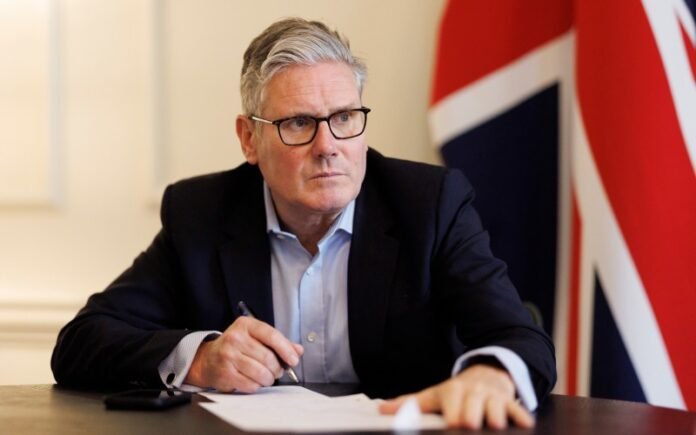
British Prime Minister Keir Starmer announced his resignation on Monday, saying he had informed King Charles III of his decision and triggered a Labour leadership contest.

The move follows a decisive by-election victory by Andy Burnham in Makerfield, a result that strengthened his position within the Labour Party and increased pressure on Starmer’s leadership.

Speaking outside Downing Street, Starmer said Labour’s National Executive Committee would open nominations for the leadership race until July 9, with the process expected to conclude before Parliament’s summer recess. He pledged to remain in office until a successor is chosen to ensure an orderly transition.

Starmer’s departure comes less than two years after Labour secured a large parliamentary majority in the 2024 general election. Despite that mandate, his government struggled to maintain momentum, facing setbacks in local elections, mounting internal criticism, several political controversies and a series of policy reversals.

The leadership contest is expected to determine Labour’s future direction, with Burnham emerging as a leading contender to replace Starmer.

via Politico

Fan Runs Onto NASCAR Track During Race and Tries to Climb into Driver’s Car

0
fan-runs-onto-nascar-track-during-race-and-tries-to-climb-into-driver’s-car
Fan Runs Onto NASCAR Track During Race and Tries to Climb into Driver’s Car


A wild NASCAR moment unfolded in San Diego when a fan jumped a fence, stormed onto the track during a race, and tried to talk his way into a driver’s car.

The bizarre scene happened Saturday, June 20, during the O’Reilly Auto Parts Series race at Naval Base Coronado — the first time in NASCAR history that a race has been held on an active military base.

The event was already unusual enough. Drivers were racing around a 3.4-mile road course built inside the highly secured military base. Fans had to go through tight security just to get inside.

But once the race was underway, one spectator somehow managed to turn the historic event into a security nightmare.

The chaos began late in the race after driver Sam Mayer clipped the inside wall at Turn 1. His car slammed into Anthony Alfredo’s before crashing hard into the outside wall, triggering a nasty pileup.

The wreck was so severe that it damaged the retaining wall, forcing officials to throw the red flag and stop the race while crews made repairs.

That’s when one fan apparently decided it was his moment.

During the red flag delay, the man climbed over a fence and walked onto the track. He then approached driver Sheldon Creed’s car and stuck his head through the driver’s window.

Creed was still sitting inside his car when the shocking encounter happened.

Moments later, Creed got on his team radio and seemed just as stunned as everyone watching.

“I think he’s wasted,” Creed said. “I didn’t even understand what he was saying.”

After his brief and bizarre pit-stop-style visit, the fan climbed back over the fence and left the track area.

He was later apprehended, according to reports, and likely faced serious consequences for trespassing onto an active NASCAR track — especially one set up on a military base.

As shocking as the incident was, it was not the first time a fan has wandered onto a NASCAR track during a race delay.

Back in 2007, a fan at Watkins Glen International in New York walked onto the track while trying to get an autograph from driver Matt Kenseth.

Still, Saturday’s stunt was especially alarming given the location, the security concerns, and the fact that it happened during a historic NASCAR weekend at an active naval base.

NASCAR fans are known for being passionate. But jumping a fence, walking onto the track, and trying to chat up a driver from the window is one way to make sure you leave the race in handcuffs instead of with a souvenir.

The Caspian Sea has lost an area nearly the size of Sicily: human activities are a major reason why

0
the-caspian-sea-has-lost-an-area-nearly-the-size-of-sicily:-human-activities-are-a-major-reason-why
The Caspian Sea has lost an area nearly the size of Sicily: human activities are a major reason why

The Caspian Sea, the largest inland body of water on Earth, is shrinking. Not fluctuating, not entering another natural cycle, but shrinking.

For decades, scientists and policymakers treated changes in the Caspian as part of the basin’s natural variability. Water levels in the sea have always risen and fallen.

But our new study shows something far more troubling: the current decline is increasingly driven by human decisions to dam and divert rivers, and by fragmented decision-making across five countries that border this body of water.

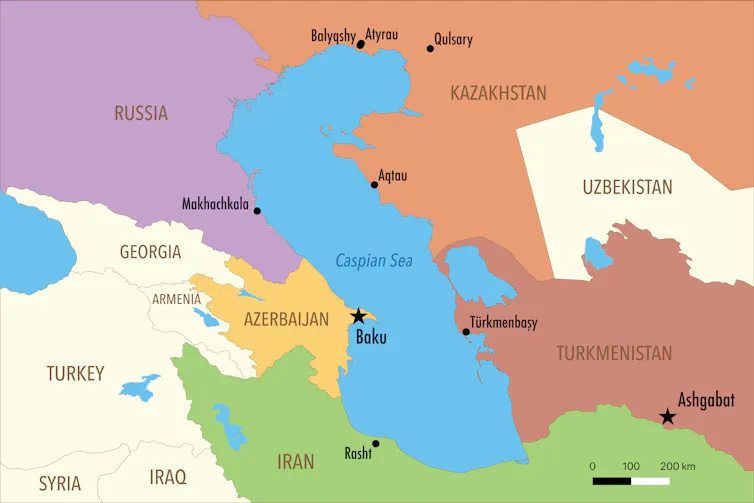
Using satellite observations together with ground-based hydrological records from rivers across all five shoreline states (Iran, Russia, Turkmenistan, Azerbaijan and Kazakhstan), we found that flow into the Caspian Sea has declined sharply over the past three decades.

The main reason is not declining rainfall. In fact, rain over the Volga Basin, which supplies roughly 80% of the Caspian’s inflow, has slightly increased. That finding matters because it overturns one of the most common assumptions surrounding the Caspian crisis. The common narrative has been straightforward: climate change increases evaporation, rainfall declines, and the sea shrinks.

Climate change certainly plays a role: our analysis confirms that evaporation across the Caspian has increased significantly as regional temperatures rise. But evaporation alone explains only about 40% of the observed water loss since the mid-1990s.

The remaining decline points overwhelmingly toward human activity. The Volga River has been heavily engineered for decades. Dams, reservoirs, use for irrigation, industrial consumption and navigation systems have fundamentally altered the hydrology of the basin).

Water that once flowed naturally into the Caspian is increasingly intercepted upstream. One critical but rarely discussed example is the Volga–Don canal system, which links the Caspian basin to the Black Sea through Russia’s internal waterways. Geopolitically and economically, the canal is strategically valuable. But it diverts water away from the Caspian system.


Read more: Why the Caspian Sea has become so important in both the Ukraine and Iran wars


The cumulative effect is now visible from space. Since the mid-1990s, the Caspian Sea has lost roughly 24,000km² of surface area, an area approaching the size of Sicily. Water levels have fallen by about two metres.

The shallow northern Caspian, ecologically one of the most productive parts of the sea, is drying particularly rapidly. This matters because the northern Caspian is not empty water. It is a critical ecological zone supporting fisheries, wetlands, migratory birds and spawning grounds for sturgeon, the ancient fish species that produce most of the world’s caviar.

Threats to shipping

As water retreats, ecological stress intensifies. Our study also detected a long-term rise in chlorophyll-a concentrations in the northern Caspian, a key indicator of algal activity and declining water quality. In plain terms, the sea is becoming warmer, shallower and increasingly nutrient-rich: ideal conditions for harmful algal blooms.

This is not merely an environmental story. The Caspian region sits at the centre of major energy and trade corridors linking Europe and Asia). Russia’s north-south transport routes and China’s international development plan, the Belt and Road Initiative, plus offshore oil infrastructure and regional shipping networks all depend on the Caspian remaining navigable and stable.

Falling water levels threaten ports, shipping lanes and coastal infrastructure. Declining depths reduce cargo capacity and increase transport costs. What appears initially as an environmental issue gradually becomes an economic constraint.

The Caspian Sea region

A colour map of the Caspian Sea and surrounding countries.

Shutterstock

Political problems

Then there is the political dimension. Unlike oceans, inland seas cannot rely on global circulation to buffer local mismanagement. Their survival depends directly on the behaviour of neighbouring states. And the Caspian is surrounded by countries with competing strategic interests, uneven governance systems and limited transparency over their water use.

That fragmentation has become one of the greatest risks facing the sea. Although regional agreements exist, including the 2018 Aktau Convention (formally the Convention on the Legal Status of the Caspian Sea), there is still no comprehensive and enforceable system governing water allocation, hydrological monitoring or ecological protection across the basin. Data sharing remains limited. Water withdrawals are often opaque. Environmental management is fragmented.

This resembles a pattern seen repeatedly across modern environmental crises: governments prefer to discuss climate change because it externalises responsibility. It allows leaders to portray ecological decline as an unavoidable planetary process.

But the Caspian story is more uncomfortable than that. It is also a story about political choices. Rivers were dammed. Water was diverted. Wetlands were degraded. Pollution controls remained weak. Oil and gas development expanded while ecological safeguards lagged behind. Economic growth consistently outranked hydrological sustainability.

The danger is not simply that the Caspian shrinks, but that ecological thresholds may be crossed – beyond which, recovery becomes extraordinarily difficult.

The Aral Sea, the world’s fourth largest lake, demonstrated how quickly collapse can accelerate once a chain reaction begins. Exposed lakebeds generate dust storms. Fisheries collapse. Salinity rises. Biodiversity crashes. Local climates shift. Economic systems unravel around the drying basin.

The Caspian has not yet reached that stage – but the warning signs are becoming increasingly visible.

There is still time to slow the trajectory. However, doing so would require something historically rare in the region: long-term coordination that prioritises hydrological stability – safeguarding the sea’s natural water balance and keeping water levels from dropping past a dangerous point of ecological collapse – over short-term extraction and geopolitical competition.

This would mean transparent water accounting – the open tracking and sharing of data on exactly how much water each nation is pulling from the feeding rivers for agriculture and industry. It would mean negotiated environmental flow releases from upstream reservoirs, and recognition that the Caspian is not simply an energy corridor or a shipping route, but a fragile water system.

Nature eventually imposes consequences on societies that ignore those limits. The Caspian Sea is beginning to deliver that message.

0FansLike
0FollowersFollow
0FollowersFollow
0SubscribersSubscribe
- Advertisement -
Google search engine

Recent Posts