32.3 C
London
Friday, June 26, 2026
Home Blog

Israel’s ‘campaign between the wars’: How strategy to contain Iran and its allies risks further straining ties with US

0
israel’s-‘campaign-between-the-wars’:-how-strategy-to-contain-iran-and-its-allies-risks-further-straining-ties-with-us
Israel’s ‘campaign between the wars’: How strategy to contain Iran and its allies risks further straining ties with US

A lot hangs on whether the United States can compel Israel to cease operations against Hezbollah in Lebanon. After all, an end to the Israeli military offensive was a key provision of the broad U.S.-Iran agreement setting out a road map to end the Iran war.

And even though Israel did not sign the deal, policymakers in Washington will continue to press Israeli Prime Minister Benjamin Netanyahu to abide by the truce.

Yet there’s a larger and more vexing issue for the Trump administration and its Arab allies in the Middle East that has received little attention: Israel’s long-standing “campaign between the wars” strategy and whether it threatens the prospect for long-term peace in the region.

The policy, known as “Mivtsa Bein Milchamot” in Hebrew and shortened to “Mabam,” has become a widely accepted facet of Israel’s national security. Its purpose is to degrade the capabilities of Iran and its key regional allies in any interwar period.

As the former assistant director of CIA for Weapons and Counterproliferation, I have watched Israel wage Mabam in an increasingly bold manner and widening geographic scope over the past seven years. Israel has broadened both the targets of the strategy and the instruments it uses to strike them, heightening the risk of escalation.

Save any unexpected abandonment of the policy, Israel will almost certainly continue launching limited military strikes, covert action and cyberattacks across the Middle East, regardless of any U.S. deal with Iran. This will likely take the form of degrading the capabilities of Iran’s partner Hezbollah, Iranian-backed Shiite militants in Iraq and even Tehran’s unreliable ally the Houthis in Yemen. And Israel will remain willing to take military actions short of full-scale war in Iran itself.

But such outcomes will pose serious challenges for the U.S., which seems intent on avoiding a renewed war with Tehran. In fact, Israel’s “campaign between the wars” risks widening the split with Washington and restarting war with Iran and its allies over the long term.

Origins of Mabam

Israel codified the Mabam strategy in a 2015 Israeli Defense Forces document. Its history, however, predates the official adoption of the policy, with the IDF executing “campaign between the wars” operations in the early 2010s.

Most scholars and Israeli military officials acknowledge that the strategy evolved from cross-border “reprisal operations” against Jordan, Egypt, Syria and the Palestinian Liberation Organization in Lebanon in the 1950s and ’60s .

The logic behind Mabam is that by using targeted operations to consistently downgrade the capabilities of Iran and its allies, Israel will be better prepared for future wars by maintaining a qualitative military advantage. Israel’s goal is to avoid escalation by taking actions that it judges Iran and its proxies will view as below the threshold for significant retaliation.

As the former chief of the Israeli general staff and architect of Mabam, Lt. Gen Gadi Eisenkot, explained in 2019: “Deviating from the binary approach of either preparing for war or openly waging it, the [campaign between the wars policy] strives for proactive, offensive actions based on extremely high-quality intelligence and clandestine efforts.”

Two men, one in army garb, stand at a lecturn.

Israeli Prime Minister Benjamin Netanyahu and Israeli Chief of Staff Gadi Eisenkot at a press conference in Tel Aviv on Dec. 4, 2018. Jack Guez/AFP via Getty Images

Expanding beyond Syria

In the early 2010s, the Israeli military focused Mabam on Hezbollah in Syria, where the group lacked the advanced military capabilities it possessed in Lebanon and therefore posed a less significant risk of escalation.

Jerusalem placed a premium on degrading Hezbollah’s advanced weapons, supplied by its ally and sponsor Iran, and “preventing the entrenchment of terror infrastructures on the Golan Heights border,” in the words of Israeli military strategist Eran Ortal.

To achieve this, Israel employed airstrikes, cyberattacks, interdictions of weapons and covert action to impede Iran’s ability to resupply Hezbollah’s existing arsenal and supply it with more advanced weapons. Israel’s targets included Iranian facilities and missile warehouses in Syria, convoys and shipments of weapons, and Hezbollah and Islamic Revolutionary Guard personnel in Syria.

Later in the decade, Israel broadened its objectives to include pressuring the Assad regime in Syria and undercutting the long-standing Iranian-Syrian relationship.

Encouraged by the success of its strategy in Syria, Israel began to take action against Iranian-backed groups in Iraq and Lebanon as well.

In summer 2019, Israel reportedly struck the weapons depots of Iranian-back Shiite militant groups in Iraq. Explosive-laden drones that experts trace to Israel targeted equipment linked to Hezbollah’s precision-guided missile program.

With these actions, Israel almost certainly delayed and degraded some adversary capabilities, especially those of Hezbollah. In particular, it stopped or delayed Iranian transfers of precision-guided missiles and the guidance kits that Hezbollah could use to enable such capability, limiting the size of the Lebanese group’s arsenal.

Men in fatigues salute a large banner.

Hezbollah fighters salute a banner in a mountainous area around the Lebanese-Syrian border town of Arsal on July 26, 2017. Anwar Amro/AFP via Getty Images

An imperfect strategy

However, the size and capabilities of Hezbollah’s missile and rocket force show the limits of Israeli effectiveness. The group possessed an estimated 100,000 to 200,000 missiles and rockets prior to the resumption of hostilities between Israel and Hezbollah in 2026. Israeli officials and pro-Israeli think tanks would make the counterfactual argument that Hezbollah’s arsenal, especially of advanced weapons, would have been much larger without Mabam operations.

Israeli officials refrain from directly connecting the country’s covert action in Iran since the late 2010s to Mabam. But explosions at nuclear, missile and drone facilities and assassinations of scientists outside the direct conflicts of June 2025 and from February 2026 clearly map to the goal of degrading Iranian military capabilities in between wars.

To use one prominent example, an explosion in July 2020 widely linked to Israel disabled a key Iranian advanced centrifuge assembly facility, destroying more than half of the facility.

But the attack had unexpected consequences. Iran was able to rebuild the capability in a matter of months, concentrating on locating future centrifuge assembly capabilities at sites buried deep underground.

A risk to US objectives

In an early 2026 graduation speech for military cadets, Netanyahu declared that Israel would move beyond Mabam to even more actively confront threats. “There is no more containment of threats. There is no more Mabam,” he said after decades of supporting the strategy.

But even a force that conducts a high number of military operations like the IDF needs a strategy short of full-scale war.

And since most in the Israeli security establishment view the Mabam strategy as generally successful in diminishing Iran’s capabilities and those of its partners and proxies, it will likely remain a prominent feature of Israeli strategy even if updated to reflect current perceived threats. This will be the case whether Israel is led by Netanyahu or another leader.

While a central aspect of Mabam is avoiding escalation, this balancing act will be increasingly difficult in today’s Middle East.

To retain U.S. support for Israel’s overall Iran strategy, expanded coordination with Washington will be crucial. Israel has sometimes, but not always, coordinated relevant actions with the U.S. For instance, it allowed the U.S. Central Command to review strikes it planned to launch from near the Al Tanf Base in Syria that hosted U.S. troops until February 2026.

Israel believes it has valid reasons for sometimes conducting military action on its own: Israeli officials view Iran developing a nuclear weapon as an “existential” threat and Hezbollah having a large arsenal of precision-guided missiles as a “strategic threat” to the state of Israel.

However, Washington is likely to ask for wider coordination with Israel in the aftermath of the Iran war. That war ever more tightly connected U.S. security interests to those of Israel, but the ongoing negotiations to end the conflict have shown a rare degree of distance between the two countries. Coordinating its operations short of war will be a bitter pill for Israeli leaders intent on acting as they desire. It also has the potential to further strain Israel-U.S. relations in the years ahead.
UAE foreign minister holds 1st publicly announced call with Iranian counterpart since outbreak of war

0
uae-foreign-minister-holds-1st-publicly-announced-call-with-iranian-counterpart-since-outbreak-of-war
UAE foreign minister holds 1st publicly announced call with Iranian counterpart since outbreak of war

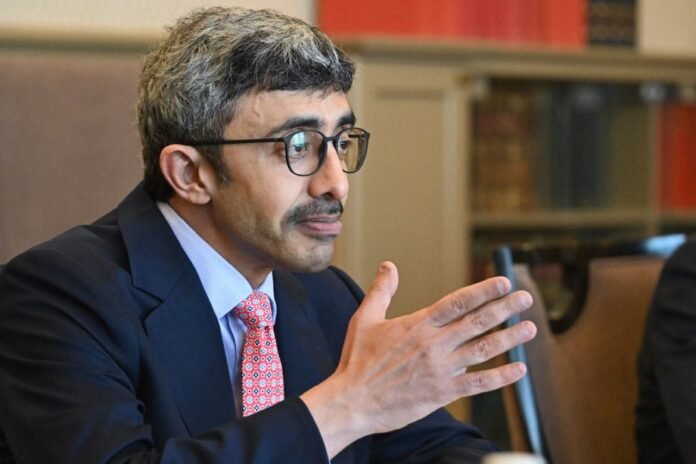
In the first publicly announced contact between the two countries since the outbreak of the US-Israeli war against Iran, UAE Foreign Minister Abdullah bin Zayed Al Nahyan held a phone call with Iranian Foreign Minister Abbas Araghchi on Friday, Anadolu reports.

According to the UAE Foreign Ministry, the two officials reviewed “the latest regional developments” following the signing of a memorandum of understanding between the US and Iran aimed at ending the war that came into force on June 18.

Bin Zayed stressed “the importance of full compliance with the provisions of the agreement” and said “serious diplomacy and responsible dialogue” remain the preferred means of addressing regional and international crises.

The UAE is among the Gulf countries that came under Iranian attacks during the war launched by Israel and the US on Feb. 28, with Tehran saying its strikes targeted US bases and interests.​​​​​​​

READ: Iran says ‘direct communication line’ established with US over Hormuz to avoid military confrontation

Cops Warn CEO Bodyguards That Luigi Mangione Fever Could Spark Class War

0


A law enforcement intelligence hub in New Jersey fretted that the growing class divide in the U.S. could drive a wave of lone-wolf attacks on high-flying corporate executives, according to a report obtained by The Intercept.

The New Jersey Regional Operations and Intelligence Center, one of the so-called fusion centers that serve as intelligence clearinghouses for cops, warned in a bulletin earlier this year that disaffected Americans were increasingly blaming society’s ills on rich people and corporate bigwigs.

The report specifically cited the killing of UnitedHealthcare CEO Brian Thompson in December 2024 — allegedly by Luigi Mangione — as an expression of anti-fat-cat rhetoric. To the analysts at the New Jersey fusion center, Thompson’s killing hinted at a larger trend.

“Public discourse increasingly attributes the challenges faced by the middle and lower classes to the actions and influence of wealthy corporate executives,” the fusion center memo says.

By warning corporate security outfits of the danger posed by average Americans who blame their problems on the actions of corporate executives, the report effectively dedicates public resources to securing a private system that has made the few extremely wealthy at the expense of the many.

“The report seems to be putting forth the view that that is an extremist viewpoint, rather than something that the state has some responsibility in correcting.”

Michael German, a former FBI agent specializing in domestic terrorism and longtime critic of fusion centers, said that by warning CEOs of threats, the bulletin was effectively taking the side of the rich and powerful over ordinary people who are critical of inequality — a typical dynamic at fusion centers.

“The way it’s written, the report seems to be putting forth the view that that is an extremist viewpoint, rather than something that the state has some responsibility in correcting,” German said. “All the resources of the national network of fusion centers, which includes federal resources along with state and local resources, are devoted toward providing security information to private entities.”

Brian Thompson Murder

The “Quarterly Executive Threat Watch” bulletin warned corporate bodyguards to switch up the daily routines of execs, limit information on public engagements, and remove bosses’ personal information from the web. The report says bosses should “remain vigilant of lone offenders with personal grievances.”

“Following the fatal shooting of UnitedHealthcare CEO Brian Thompson and the current political climate, there is a heightened threat environment surrounding corporate executives,” the report says. “Online glorification of the murder of Brian Thompson and calls for violence are still apparent and further create a risk for a lone offender attack.”

A spokesperson for New Jersey’s Office of Homeland Security and Preparedness, the agency that oversees the fusion center, did not respond to a request for comment.

Days after Thompson’s killing in late 2024, Mangione was arrested and charged with the murder, allegedly motivated by injustices in the healthcare system. The then-26-year-old quickly became a cause célèbre for a wide array of supporters and a bête noire of right-wing figures, including those at the Trump administration, who branded him as a violent extremist.

Mangione’s legal team declined to comment on the fusion center report, but has in the past decried attempts to tie him to unrelated acts of violence.

The report went on to cite a list of seemingly disparate incidents to highlight a possible surge in threats to the wealthy, including a satirical Christmas wishlist that called for sabotaging CEOs; a handful of 4chan posts calling for violence against executives at Netflix and elsewhere; a “far-left forum” calling for a campaign against people tied to a mining project in Michigan; and an act of vandalism by pro-Palestine activists at the home of a New York Times executive.

Another incident that made the list was the federal case against the so-called Turtle Island Liberation Front, a group of left-wing activists arrested last year whose alleged bomb plot appears to have been largely driven by a member of their group who was a longtime paid FBI informant.

“The problem with a lot of these fusion center reports is that they take a handful of incidents, not necessarily related to one another, and use them to justify and amplify these threats without any kind of analysis,” said German. “Rather than actually looking at data, their performance is measured by the number of reports they produce.”

Fusion Centers

Fusion centers, which bring together state and federal law enforcement agencies to share intelligence on potential terror threats, rose to prominence in the wake of the 9/11 attacks. The centers operate under state authority, often with grants from federal agencies like the Department of Homeland Security.

While data on any terror plots actually foiled by fusion center operations is scant, they have been roundly criticized for compiling surveillance and data on protest movements, communities of color, student organizers, and, recently, critics of AI data centers.

New Jersey’s only fusion center, officially known as the New Jersey Regional Operations and Intelligence Center, has been criticized for operating outside the typical oversight to which most state agencies are subject.

A 2023 report by Rutgers Law School’s Center for Security, Race, and Rights warns of the potential for abuse in the New Jersey fusion center. The report cited the fusion center’s practice of drafting dossiers on “known troublemakers” and its reliance on so-called “intelligence-led policing,” a practice of surveilling and data collection that the American Civil Liberties Union has cited as a potential violation of the right to due process.

The Quarterly Executive Threat Watch, the bulletin that included the warning for CEOs, appears to be internally categorized as terrorism-related intelligence and was later disseminated by a U.S. Customs and Border Protection officer to recipients across the country. (CBP did not immediately respond to a request for comment.)

Then there is the issue of the center’s shadowy public-private partnership. The New Jersey fusion center does not make public which private agencies or organizations it partners with, or to whom it disseminates reports.

“It’s very ambiguous who is actually in charge and who is responsible.”

The January report drew heavily on the work of SITE Intelligence, a for-profit firm that has come in for criticism because of its labeling Islamic charities as terror fronts and mistakenly identifying video game footage as terror propaganda.

Like its counterparts across the country, the New Jersey fusion center feeds its reports into a national network of public and private agencies dedicated to the gathering and dissemination of information about potential threats — a practice that frequently crosses the line into surveillance of political speech, according to German and other critics of fusion centers.

“There is a lack of public accountability here,” German said. “Because they’re joint enterprises, it’s very ambiguous who is actually in charge and who is responsible for ensuring that the participants within these centers are acting in accordance with the law.”

Feedbacks upon feedbacks: Rock weathering and the climate

0
feedbacks-upon-feedbacks:-rock-weathering-and-the-climate
Feedbacks upon feedbacks: Rock weathering and the climate

Since the early 1980s, Earth scientists have understood that erosion and weathering of rock slowly removes CO2 from the atmosphere, regulating Earth’s climate on geological timescales. But recent studies have shown that erosion can also emit CO2 by oxidizing organic carbon contained in eroding sediments. It hasn’t been clear how this competition between removal by rock weathering and emission by organic carbon weathering ends up affecting Earth’s climate.

A new study in the journal Nature Communications uses the geological past to test how these competing effects added up. Doctor Madeleine Stow of the University of Oxford, with colleagues from across the UK and France, examined a volcanically triggered episode of global warming that happened in the early part of the Jurassic period, 183 million years ago, known as the “Toarcian Ocean Anoxic Event.”

They found that eroding organic carbon amplified climate warming at the time, suggesting that the same process may apply to modern climate change. But the extent to which the past is prologue is uncertain.

Sampling the air using sediments from the seabed

The Toarcian warming event is one of a dozen or so periods of climate change in the geological past that were triggered by enormous volcanic phenomena known as large igneous provinces. Several are associated with mass extinctions, including the Great Dying at the end of the Permian period, which was caused by the Siberian Traps Large Igneous Province. The Toarcian event was triggered by massive volcanic eruptions across South Africa and Antarctica, which were joined together at the time. The resulting 6° to 7° C of global warming shuffled the makeup of plant and dinosaur species on land and caused a mass extinction of corals and other marine species.

“This event had been well studied before. We understand its drivers, we understand how it caused mass extinctions, and it’s driven by this Large Igneous Province release,” explained University of Oxford professor Bob Hilton, a coauthor and principal investigator in the study.

Organic carbon in rocks ranges from visible debris from fossil leaves and wood to molecular remains of plankton, algae, and microbes. In past global warming events, like the Toarcian, so much organic matter was buried at sea that the resulting shales are black with organic carbon. Later, after plate tectonics raises such sediments to the land surface, they can be eroded, and the organic carbon within them can be weathered into CO2.

To measure how much organic carbon was weathered on land during the Toarcian, Stow and colleagues turned to isotopes of the element rhenium extracted from rocks deposited on the seabed at the time. Rhenium works as a tracer of organic carbon oxidation because it binds chemically with organic matter in seabed sediments.

When organic carbon is weathered on eroding land, it’s released to the atmosphere as CO2 gas. But the rhenium that was bound to the organic carbon gets washed through rivers into the ocean, where it is incorporated into new seabed sediments. There, it acts as a tracer of the organic carbon that was oxidized from the older sediments.

The intensity of organic carbon oxidation changes the ratio of the isotope rhenium 187 to rhenium 185. This makes the ratio of these two isotopes in sediments a measure of the organic carbon weathering at the time.

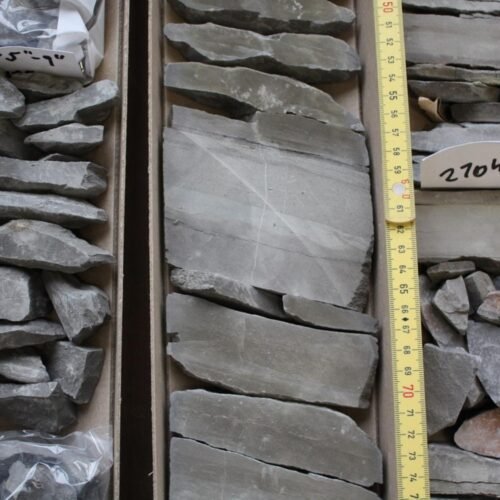
The team used a 1,300-meter rock core of sediments deposited from the late Triassic to the early Jurassic. It was drilled in the 1960s in Wales and is now stored by the British Geological Survey.

The concentrations of rhenium in the rock are as low as one billionth of a gram per gram of rock, requiring exquisitely sensitive techniques to measure it. Recent improvements in the sensitivity of mass spectrometers have been “a bit of a game changer” in allowing studies like this, Hilton said.

The team chipped shale samples from different points along the drill core, with each sampling location representing a different point in time during the warming event. They digested the rock samples in a succession of different acids to break down the minerals and the organic matter, and after several further preparation steps, the rhenium isotopes were measured using “Inductively Coupled Plasma Mass Spectrometry” (ICP-MS).

The rhenium isotope values they measured changed as the Toarcian warming event unfolded, indicating that organic carbon weathering intensified as the climate heated up.

“This is a really important paper because it is one of the first to use rhenium isotopes in a past geologic context, and that really opens up this system to be able to study further in the past and to study others of these anomalous events to gain more understanding of our current Earth system,” said Katherine Grant of the Lawrence Livermore National Laboratory, who was not involved in the study.

Professor Jeremy Caves Rugenstein of Colorado State University, who was also not involved in the study, highlighted the importance of the paper in the context of earlier work by Hilton’s group. “This group… has revolutionized our understanding of how geologic organic carbon interacts with climate,” he said.

Mind the gap

“Our modern measurements of this process suggest if you warm up the planet, you should weather this material more intensely,” said Hilton, “and that’s exactly what we see in the core as we had this warming event. Weathering breakdown of rocks can actually be acting as a carbon dioxide source, and this can be quite large.”

A 2024 study by Professor Isabel Fendley of Penn State and colleagues used the same rock core to assess the amount of volcanic CO2 emitted in the Toarcian warming event. Using mercury as a tracer for the volcanic eruptions, they concluded that volcanic CO2 alone was insufficient to drive the warming, so there must have been an additional source of greenhouse gas emissions. The rhenium isotopes in the study show there was sufficient organic carbon weathering to fill that CO2 gap.

“Lo and behold, we end up finding that we can explain this apparent discrepancy,” said Hilton. In other words, weathering of organic carbon amplified the warming initiated by volcanic CO2, so the planet warmed more than it would have if only the volcanic CO2 had been emitted.

A series of tubes, each with a bit of brownish liquid in it.

Acid-digested rock samples being prepared for analysis using column chromatography.

Acid-digested rock samples being prepared for analysis using column chromatography. Credit: Bob Hilton

But Rugenstein is skeptical of the amount of CO2 released by the weathering. “Their estimates of the total amount of carbon delivered by this feedback are enormous,” said Rugenstein. “I find it difficult to believe that these carbon fluxes are going to be as big as they think they are.”

Where does that leave Earth’s “thermostat”?

If rock weathering emits CO2, where does this leave our widely accepted understanding of Earth’s climate “thermostat,” where weathering of rock (specifically weathering of silicate minerals) reduces atmospheric CO2, preventing runaway global warming?

“Silicate weathering is still playing a major role. We’re not challenging that,” said Hilton. “It means that silicate weathering has to work harder.”

“While [organic carbon weathering] could be a big positive feedback, in the end, that tells you that the silicate weathering feedback has to be even stronger,” said Rugenstein.

The strength of the competition between silicate weathering and organic carbon weathering depends on the amount of organic-carbon-rich sediment that’s exposed on land. “At some point, you’re going to run out of organic carbon to oxidize, and that’s then going to place a hard limit on the strength of this feedback,” said Rugenstein.

By contrast, the volume of silicate minerals available to weather and draw down CO2 is much greater. “That’s why that feedback ultimately is a stronger one—we have a much bigger buffer to play with,” said Rugenstein.

A small, long-term uncertain impact for humans

The study suggests that this feedback is likely to apply to other climate warming events, including our own today. Hilton foresees organic carbon weathering adding CO2 to the atmosphere over the next few centuries, with a small amplifying effect to human-caused warming. “It’s not disaster stations,” said Hilton, “but it is an amount of carbon that could be released at a rate more than it is right now, and that does eat into our carbon budget.”

Complex questions remain about how much organic carbon weathering eats into our carbon budget, and over what timescales.

For one thing, it will depend on where organic-rich sediments are eroding around the globe and how those locations are affected by changes to temperature and rainfall. “We have more extreme storms driving more debris flows, more landslides, and more erosion,” said Rugenstein. “Does that tend to enhance organic carbon oxidation, or does it actually dampen it because you end up shuttling all this organic carbon… to the [continental] shelf where it just gets buried?”

Grant also points to the complications. “We really have to understand the more complicated organic carbon system to be able to fully balance out CO2 mass balance, to be able to understand how that both operated in the past and how it’s operating now,” she said.

Rugenstein points to the huge scale of other human changes to the environment as a further source of uncertainty. “We have moved so much sediment around as humans and changed sedimentation patterns that it’s just difficult to know,” Rugenstein said. ”Have we accelerated or decelerated organic carbon burial that could counteract this kind of positive feedback?”

Rugenstein also points to CO2 emissions from permafrost and soils as a larger and more immediate concern for humans. “That’s going to be a bigger positive feedback than this geologic organic carbon will be—this [organic carbon weathering] could be sustained for longer, but at much lower rates,” said Rugenstein.

But even with all the uncertainty, the new results shed more light on how our planet works.

“It can just give us a greater understanding of how the Earth works mechanistically,” said Grant.

Nature Communications, 2026. DOI: 10.1038/s41467-026-71533-6

Dublin hosts European Parliament leaders before Ireland assumes EU Council presidency

0
dublin-hosts-european-parliament-leaders-before-ireland-assumes-eu-council-presidency
Dublin hosts European Parliament leaders before Ireland assumes EU Council presidency


European Parliament President Roberta Metsola and the leaders of the Parliament’s political groups met in Dublin this week to discuss priorities ahead of Ireland assuming the rotating presidency of the Council of the European Union on 1 July.

The visit by the European Parliament’s Conference of Presidents included meetings with Ireland’s President Catherine Connolly, Taoiseach Micheál Martin, government ministers and members of the Oireachtas.

Discussions focused on priorities for both the Parliament and Ireland’s upcoming six-month presidency, including European competitiveness, the One Europe, One Market roadmap, the EU’s next long-term budget, external relations, enlargement, security and the bloc’s core values.

The European Parliament said the first exchanges with members of Dáil Éireann and Seanad Éireann paved the way for interparliamentary meetings planned during the Irish Presidency.

The delegation also engaged with young people at Croke Park, where they were welcomed by a GAA committee and learned about the cultural significance of Ireland’s national games.

At a joint press conference, Metsola said Ireland would assume the presidency “at a decisive moment for Europe”.

“With a strong focus on prosperity, security and our fundamental values, Ireland is well placed to help Europe deliver where it matters most: strengthening our competitiveness, advancing enlargement and agreeing on a budget fit for a new era,” she said.

Martin said close cooperation with the European Parliament would be essential for a successful presidency. He said discussions had covered the One Europe, One Market roadmap, continued support for Ukraine, EU enlargement and safeguarding the bloc’s core values.

Metsola added that she was confident Europe would continue to move forward “with confidence, unity and purpose” under Ireland’s leadership.

Ireland will hold the rotating presidency of the Council of the European Union for the eighth time from 1 July until 31 December 2026, after which Lithuania will assume the role.

Martin is due to present Ireland’s presidency programme to the European Parliament during its plenary session in Strasbourg on 7 July. Irish ministers will also appear before parliamentary committees to outline the country’s priorities for the six-month presidency.

The Conference of Presidents is the European Parliament’s political body responsible for organising and coordinating the institution’s work. It traditionally visits the member state preparing to take over the Council presidency to discuss priorities and strengthen cooperation ahead of the six-month term.

PHOTO – EP President Robert  Metsola of Presidents during her visit  to Croke Park Stadium  while she was in Dublin for meetings with the incoming Irish Presidency of the Council – © European Union 2026 – Source : EP.

Air Fryer Imitation Crab Bites

0
air-fryer-imitation-crab-bites
Air Fryer Imitation Crab Bites

Air Fryer Imitation Crab Bites are a quick, crispy, buttery, and flavorful appetizer made with imitation crab, melted butter, and Cajun seasoning. They cook in the air fryer until golden on the outside and warm and tender inside.

This easy seafood-inspired snack is ready in about 20 minutes and is perfect for parties, game day, movie nights, or a simple light meal. Serve them with melted butter, bang bang sauce, garlic chili oil, or your favorite dipping sauce for extra flavor.

Why You’ll Love These Imitation Crab Bites

  • Ready in about 20 minutes
  • Made with only 3 main ingredients
  • Crispy outside and tender inside
  • Easy air fryer appetizer
  • Great for seafood lovers
  • Perfect for dipping
  • Budget-friendly
  • Can also be made in the oven

What Are Imitation Crab Bites?

Imitation crab bites are small pieces of imitation crab meat tossed with butter and seasoning, then cooked until lightly crisp. Imitation crab is made from surimi, a whitefish paste that is shaped and flavored to taste similar to crab.

It is affordable, easy to find, and works well in quick appetizers like this recipe.

Ingredients

  • 1 package imitation crab meat sticks, 8 ounces, cut into 1-inch pieces
  • ¼ cup salted butter, melted
  • 2 teaspoons Cajun seasoning

Ingredient Notes

Imitation Crab

Imitation crab is made from whitefish paste and has a mild seafood flavor. Cut it into bite-sized pieces so it cooks evenly and gets crisp around the edges.

Butter

Melted salted butter coats the crab pieces and helps them brown in the air fryer. You can also melt extra butter for dipping.

Cajun Seasoning

Cajun seasoning adds smoky, spicy, savory flavor. Use more or less depending on how bold you want the bites to taste.

How to Make Air Fryer Imitation Crab Bites

Step 1: Cut the Crab

Cut the imitation crab sticks into 1-inch pieces.

Place them in a medium mixing bowl.

Step 2: Add Butter and Seasoning

Pour the melted butter over the crab pieces.

Sprinkle in the Cajun seasoning.

Step 3: Toss Gently

Gently toss until all the crab pieces are coated with butter and seasoning.

Be careful not to break the pieces apart too much.

Step 4: Air Fry

Preheat or set the air fryer to 400°F.

Place the coated crab bites in the air fryer basket in a single layer.

Cook for 12 to 15 minutes, flipping halfway through, until golden brown and heated through.

Step 5: Serve

Remove the crab bites from the air fryer.

Serve warm with your favorite dipping sauce.

Oven Instructions

If you do not have an air fryer, you can bake these crab bites in the oven.

Preheat the oven to 400°F.

Line a baking sheet with parchment paper.

Coat the crab bites with melted butter and Cajun seasoning.

Place them on the prepared baking sheet in a single layer.

Bake for 10 minutes.

Flip the bites and bake for another 14 minutes, or until crispy and golden.

Best Dipping Sauces

These imitation crab bites are delicious on their own, but even better with a dip.

Try them with:

  • Melted butter
  • Garlic chili oil
  • Bang bang sauce
  • Remoulade sauce
  • Spicy mayo
  • Ranch dressing
  • Tartar sauce
  • Lemon garlic butter
  • Sweet chili sauce

Tips for the Best Air Fryer Crab Bites

Cut Even Pieces

Cut the imitation crab into similar-sized pieces so they cook evenly.

Don’t Overcrowd the Basket

Arrange the bites in a single layer so the air can circulate and crisp the edges.

Flip Halfway Through

Flipping helps both sides cook evenly.

Serve Warm

These bites taste best right after cooking while the edges are crisp.

Adjust the Seasoning

Cajun seasoning can vary in salt and spice, so start with 2 teaspoons and adjust next time if needed.

Variations

Spicy Crab Bites

Add cayenne pepper or a few dashes of hot sauce before air frying.

Garlic Butter Crab Bites

Add minced garlic or garlic powder to the melted butter.

Lemon Pepper Crab Bites

Use lemon pepper seasoning instead of Cajun seasoning.

Old Bay Crab Bites

Swap Cajun seasoning for Old Bay seasoning.

Bang Bang Crab Bites

Toss the cooked bites with bang bang sauce before serving.

How to Serve Imitation Crab Bites

Serve these crab bites as:

  • A party appetizer
  • A game day snack
  • A light lunch
  • A salad topping
  • A seafood-style side dish
  • A rice bowl topping
  • A quick air fryer snack

They also pair well with lemon wedges, fresh parsley, coleslaw, fries, or a crisp green salad.

Storage Instructions

Store leftover imitation crab bites in an airtight container in the refrigerator for 2 to 3 days.

Let them cool before storing.

Reheating

For the best texture, reheat the crab bites in the air fryer at 350°F until warmed through.

You can also reheat them in the oven.

Avoid microwaving if possible, as it can make them soft instead of crisp.

Frequently Asked Questions

Can I Make These Without an Air Fryer?

Yes. Bake them in the oven at 400°F until crispy and golden.

Is Imitation Crab Real Crab?

No. Imitation crab is usually made from surimi, which is a whitefish paste, along with seasonings and other ingredients.

Can I Use Unsalted Butter?

Yes. If using unsalted butter, you may want to add a small pinch of salt.

Can I Use Another Seasoning?

Yes. Old Bay, lemon pepper, garlic herb seasoning, or blackened seasoning all work well.

Can I Make These Ahead of Time?

They are best served fresh, but leftovers can be reheated in the air fryer.

Recipe Information

Prep Time: 5 minutes
Cook Time: 15 minutes
Total Time: 20 minutes
Servings: 4
Calories: About 159 per serving

Final Thoughts

Air Fryer Imitation Crab Bites are buttery, crispy, lightly spicy, and incredibly easy to make. With just imitation crab, melted butter, and Cajun seasoning, you can create a quick appetizer that tastes fun, flavorful, and satisfying.

Serve them hot with your favorite dipping sauce for an easy snack, party bite, or seafood-inspired appetizer.

Danger of the US‑Iran ceasefire agreement is what it leaves out

0
danger-of-the-us‑iran-ceasefire-agreement-is-what-it-leaves out
Danger of the US‑Iran ceasefire agreement is what it leaves out

The latest US military conflict with Iran appears to be over.

Washington declared success. Tehran claimed victory. Israel insisted it remains free to strike Hezbollah.

Some sticking points remain. For example, Iranian officials insist de-escalation in Lebanon was part of the deal; Israeli leaders deny it.

To most onlookers, the contradictions may seem like confusion, bad faith or evidence that the agreement is already unraveling.

But after more than two decades studying how wars end and whether the peace holds, I have learned that contradictions are often a sign the negotiations are working. The real danger lies elsewhere: in what the US-Iran agreement leaves out.

The price of caving

It would be a mistake to assume the United States and Iran are bargaining only with each other.

The political scientist Robert Putnam called diplomacy a “two-level game” in which leaders negotiate abroad and at home at once. And no deal abroad survives unless it can be sold to the audience back home.

The US-Iran agreement is closer to a five-level game. Washington must satisfy Iran, Israel, Congress, its Arab partners and its European allies. Tehran must satisfy Supreme Leader Ayatollah Mojtaba Khamenei and the Revolutionary Guard, Iran’s most powerful military institution. Iran must also contain a public whose anger over sanctions can spill into the streets, and it must keep Russia and China on its side.

Every gain at the negotiating table must be sold to people who are not at the table.

That is why the messaging contradicts itself. Each side is talking past its rival to its own people. Washington calls relief from sanctions a reversible decision. Tehran stresses its sovereignty. Israel advertises its freedom to strike.

And the price of caving differs from place to place. In Washington, it might be electoral. In Tehran, factions of hard-liners may exact a heavy political price from leaders who compromise with the West, a lesson learned by President Hassan Rouhani and Foreign Minister Mohammad Javad Zarif after the 2015 nuclear deal.

Diplomacy has always worked this way. The first recorded peace treaty was struck by Egypt and the Hittites, an ancient civilization centered in modern-day Turkey, after the battle of Kadesh 3,000 years ago.

The treaty survives in two versions, each written in its own language for an audience at home. In October 2025, I saw the Egyptian text that had been carved into the walls at the Karnak complex, a vast array of temples, pylons and chapels near Luxor in southern Egypt. A copper replica now hangs outside the U.N. Security Council, where agreements like these are still negotiated today.

Peace between Egypt and the Hittites held not because the parties told the same story but because each could tell a story that its own people would accept.

Generous with rewards, short on penalties

Contradictory messaging, then, is not the problem. The problem is that the same multilevel pressures that scramble public narratives also shape what negotiators are willing to put into an agreement.

Each side bargains hard for rewards it can display at home and resists penalties for noncompliance that it would have to defend later. The result in this case is a US-Iran deal generous with benefits and short on enforcement.

While conducting research for my 2009 book Securing the Peace, I found that negotiated settlements ending civil wars break down at roughly twice the rate of wars ending in outright military victory.

Although my research focused on civil wars, the broader lesson applies to war settlements more generally.

They fail not because of what is written on paper but because they lack credible enforcement once implementation begins.

This weakness is hidden at the moment of signing, when all parties are still collecting the benefits an agreement promises. It surfaces later, once those rewards are exhausted and nothing exists to deter or punish defection.

The 1979 Egypt-Israel peace treaty makes the point. It endured not simply because Egypt regained the Sinai Peninsula and Israel won recognition, but because those gains were embedded in a broader enforcement structure: phased Israeli withdrawal from the Sinai tied to compliance and sustained US economic and military assistance to both countries.

The treaty also deployed the Multinational Force and Observers in 1982 to monitor Sinai’s demilitarization. More than four decades later, the treaty holds.

The lesson for any US settlement with Iran is clear. Durable peace depends not only on what parties gain but on the institutions and incentives built to enforce it long after the signing ceremony ends.

By that standard, the US-Iran agreement is built to wobble. It is generous with rewards and short on penalties. The United States lifts its blockade, issues oil waivers, releases frozen Iranian funds and promises more than US$300 billion in reconstruction.

Iran reopens the Strait of Hormuz and dilutes its enriched uranium on its own soil, while keeping the machinery to enrich more. Nearly every step confers a benefit on someone; almost none imposes a cost on the party that walks away.

Enforcement is left to a UN Security Council resolution that has not been written. The hardest question, enrichment, is pushed into a final deal that may never be reached.

And there is a deeper problem. The actors most capable of destroying the agreement are precisely those least constrained by it. Israel, Hezbollah and the broader network of Iranian-backed militias across the region all sit outside the agreement. They gain little by complying and risk little by defecting because they never signed. A settlement that excludes powerful spoilers has no way to make breaking it hurt.

None of this means collapse is imminent. The history of peacemaking – from Kadesh to the Dayton Accords that ended the Bosnian war to the Belfast Agreement that halted the 30-year sectarian conflict in Northern Ireland – shows that public blowups and threats to walk out are normal stages, not proof of failure.

But surviving the turbulence is not the same as lasting. The question is not whether setbacks come. History shows they will. It is whether the parties build institutions capable of deterring defection before the rewards are spent and the incentives are gone.

That points to a clear task, and it is not the one most are watching. The task is not to reconcile competing narratives. It is to create automatic costs for anyone who returns to violence, including actors who never sat at the negotiating table.

Monica Duffy Toft is a professor of international politics and director of the Center for Strategic Studies, The Fletcher School, Tufts University.

This article is republished from The Conversation under a Creative Commons license. Read the original article.

Venezuela earthquakes add tragic new layer to the country’s humanitarian crisis

0
venezuela-earthquakes-add-tragic-new-layer-to-the-country’s-humanitarian-crisis
Venezuela earthquakes add tragic new layer to the country’s humanitarian crisis

Venezuela has a well-documented vulnerability to earthquakes. The country sits on the boundary between the Caribbean and South American tectonic plates, resulting in routine tremors and causing historical earthquake disasters. But the experience of a “doublet”, a pair of 7.2 and 7.5-magnitude earthquakes 40 seconds apart, on June 24 was a rare misfortune.

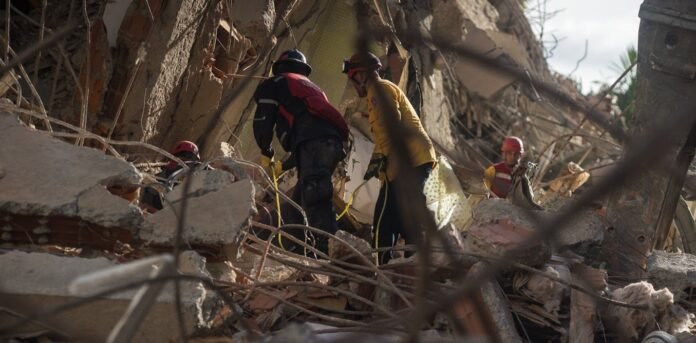
From an epicentre in the north-western city of San Felipe, the impact sheared down Venezuela’s Caribbean coast with devastating force. The historic port city and resort of La Guaira, home to around 200,000 people, has been declared a disaster zone.

In the Venezuelan capital of Caracas, which is approximately 30km from La Guaira, buildings have collapsed in the once prosperous suburbs of Altamira, San Bernardino, Baruta and Chacao. The national airport, Maiquetia, has also been closed because of extensive damage.

While there have been pockets of resilience, an estimated two-thirds of Venezuelan residents live in informal housing. This a product of Venezuela’s rapid urbanisation in the 1960s and 1970s and the housing shortages that followed.

Officially, at least 235 people have been killed and 30,000 more are registered as missing. The US Geological Survey estimates that as many as 10,000 people may have been killed in a disaster of this magnitude.


Read more: Was Venezuela struck by an earthquake ‘doublet’? Here’s what we know so far


A map of Venezuela.

The two earthquakes struck north-western Venezuela, with the impact felt along the country’s Caribbean coast. Peter Hermes Furian / Shutterstock

The earthquakes add a tragic new layer to the country’s existing humanitarian crisis – a crisis that has severely depleted the capacity of Venezuela’s state and society to prepare for and respond to natural disasters.

The years of Nicolás Maduro’s presidency, which spanned from 2013 through to his removal by the US at gunpoint in January 2026, were characterised by economic collapse. Hyperinflation, shortages and authoritarian repression of protests contributed to a situation where approximately a quarter of the population have fled the country in recent years.

Venezuela’s economic fragility is ultimately a product of political incompetence and corruption. But it has been reinforced by crushing US oil and financial sanctions imposed during Donald Trump’s first presidency.

The comprehensive sanctions regime has meant that, for the past nine years, Venezuela has been cut off from financial and energy markets. Many of its exports and imports have subsequently been blocked.

Combined with the continued mismanagement of and underinvestment in infrastructure and utilities that were nationalised by Maduro’s predecessor, Hugo Chávez, this has led to an accumulation of problems that apply across the public sector. These include hospitals short of medicines, staff, power and water.

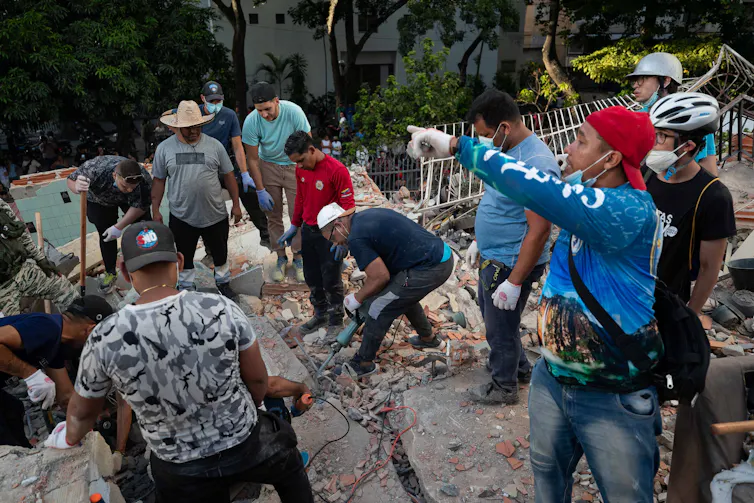
In the immediacy, energy and attention are focused on the search and rescue effort. But this is a politically perilous moment for Venezuela’s interim president, Delcy Rodríguez. Each stage of the humanitarian response brings serious logistical challenges.

There is a shortage of mechanical equipment to help with the recovery operations, largely due to shortages of spare parts and diesel fuel. There are few ambulances, hospitals are overwhelmed and there are limited safe shelters for the displaced. Access to food and drinking water is severely compromised and heavy rains are forecast.

At the same time, Venezuela’s armed forces, police and national guard have been on a war footing since Trump’s return to office. Their primary focus has been on defensive responses to what had, at least until Maduro’s capture, been a widely anticipated US military invasion.

This has come at the expense of honing skills to implement the global “Wash” framework for responding to natural disasters by providing safe drinking water, constructing emergency latrines and promoting safe hygiene practices. There is thus a very real risk of disease and food shortages in the coming days and weeks without urgent external support.

The possibility of disorder, looting and the further degradation of the security situation is another grave concern. Since Maduro’s removal, Venezuela’s pro-government security sector has not been tested by opposition protests or demonstrations. But lines of command have been disrupted in the turmoil of political change and public confidence in the military is low.

A group of Venezuelans search through rubble following two earthquakes.

Venezuela’s recovery efforts are hampered by years of mismanagement, underinvestment and the impact of a comprehensive US sanctions regime. Ronald Peña R / EPA

US holds key

The US is the ultimate arbiter of Venezuela’s capacity to respond. Having assumed control of Venezuela’s oil export income after Maduro’s capture and still maintaining a sanctions regime, the US dictates what money can be received and how it is spent.

And while Venezuela has exported around 100 million barrels of oil since the ousting of Maduro, worth an estimated US$8 billion (£6.1 billion), the Trump administration has not publicly revealed how much revenue it has actually collected.

It has also not disclosed how much of this revenue has been drip fed back to Caracas. Restricted access to these funds will impede the disbursement of financial and humanitarian aid to earthquake-affected areas.

Trump has announced that US$150 million in assistance will be mobilised for Venezuela and that the US Departments of War and State are coordinating relief support. These funds must be received fast if popular frustration with the US regime change process is not to translate into widespread anger and if US plans to deport Venezuelan migrants are to stay on track.

Moving forward, there will no doubt be significant attention on the legacies of corruption and underinvestment that have rendered Venezuela so catastrophically vulnerable and debilitated in response to the earthquakes.

This includes the quality of buildings delivered under the gran misión vivienda Venezuela, the house-building mission launched by Chávez in 2011 that claims to have delivered over 1 million new homes. However, such an investigation will be complex, resisted politically and currently far down the list of priorities.

Venezuela’s deadly earthquakes happened on a fault similar to the San Andreas, and the risks aren’t over yet – a geophysicist explains

0
venezuela’s-deadly-earthquakes-happened-on-a-fault-similar-to-the-san-andreas,-and-the-risks-aren’t-over-yet-–-a-geophysicist-explains
Venezuela’s deadly earthquakes happened on a fault similar to the San Andreas, and the risks aren’t over yet – a geophysicist explains

Venezuela and its capital, Caracas, were rocked by two massive earthquake pulses on June 24, 2026, just seconds apart. The shaking from the magnitude 7.2 and 7.5 events caused buildings to collapse in cities across the northern part of the country, killing more than 500 people and trapping many more.

University of Southern California geophysicist Sylvain Barbot explained what’s known about the earthquake pulses so far, what risks are still ahead and why Californians should pay attention.

How many earthquakes hit Venezuela, and why did it see so much damage?

Earthquakes are natural phenomena that typically happen at the boundaries of Earth’s tectonic plates. These plates, which make up the Earth’s crust, are tens of miles thick and carry the oceans and continents. They are slowly moving, but not in a smooth, consistent way.

Venezuela sits along the boundary between two of these plates: The South American plate and the Caribbean plate. As they slide past each other, these plates can stick, building up resistance before eventually having a catastrophic failure that generates an earthquake.

Map of the plates under and around Venezuela

Venezuela sits on the South American plate, adjacent to the Caribbean plate, which underlies the Caribbean Sea. The circles indicate large earthquakes of magnitude 5.5 and higher from 1900 to 2019. Most are on or near the plate margins. U.S. Geological Survey

There were two big pulses of seismic activity within 39 seconds of each other on June 24, 2026, both over magnitude 7. They could have been separate events or a single earthquake with two pulses. Scientists don’t yet know because we’re still analyzing the data.

Two separate earthquakes is plausible. In 2023 there was an earthquake “doublet” in Turkey, where two magnitude 7-plus earthquakes happened within eight hours of each other. In that case, it was clearly two events.

In Venezuela the pulses were just a few seconds apart. There have been earthquakes of this magnitude in the past that ruptured different segments of very long faults, creating the appearance of two different earthquakes but that were actually ruptures from the same event.

What triggers destructive earthquakes like this?

Earthquakes are controlled by how rocks resist shear and stress. The stress can build up over years or decades until it overcomes the strength of the rocks, making them break. When that happens, the stress propagates and the rupture grows.

That’s not a gradual motion. Within seconds, the plates quickly move, causing an earthquake. This happens several miles underground, where the temperature and pressure are both very high.

That action is difficult to reproduce in a laboratory and involves many processes, from mechanics to chemistry to the motion of fluids. But the outcome is simple: There is a rupture that involves the sliding of rocks past one other that creates a surface rupture that breaks everything in its path, causing damage.

Are there similarities between the fault system in Venezuela and California’s San Andreas?


The faults involved in Venezuela’s earthquake and California’s San Andreas are very similar. They are known as transform faults, where this strike-slip motion happens as plates slide horizontally past each other.

Even the rates of motion are quite similar. In Venezuela the boundaries move past each other at about 0.8 inches (20 millimeters) per year on average. Along the San Andreas Fault it’s slightly faster, about 1.2 inches (30 millimeters) per year.

Animation shows earth moving horizontally, offsetting a road.

How strike-slip movement happens during a large earthquake in a transform fault, similar to the San Andreas in California. U.S. Geological Survey

They also create large magnitude earthquakes at similar frequencies. On the San Andreas Fault, scientists expect on average a large earthquake of magnitude 7 or above every 170 years or so, with the timing varying along the fault. However, this is not clockwork – it can be much more frequent or much less.

Southern California’s last “big one” was the Fort Tejon earthquake of 1857, a powerful magnitude 7.9. A recent study suggested the stress along the southern San Andreas is stronger now than it has been in at least 1,000 years. If the assumptions of the work are correct, it may be ready for a rupture. But there is great variability in how frequently big earthquakes happen, so it may be another 100 years or it could happen tomorrow. We just don’t know.

Many earthquakes have happened on these faults in the past. That alone is reason for communities to have strong seismic codes for buildings and infrastructure, such as bridges and hospitals, and emergency preparedness plans.

Have scientists identified warning signs that might suggest an earthquake is imminent?

Scientists have been actively looking for reliable precursors that could generate warnings of an impending rupture, but we don’t yet have reliable signals.

There are anecdotal cases of seismic swarms before a large rupture that, in hindsight, could have provided some clues to possibly detect early signs of future large ruptures. But that isn’t always the case. Machine learning has identified systematic changes of microseismic activity that precedes large ruptures, and some studies of the physics of earthquakes have started to provide explanations of why that happens.

So, there is hope that in the future we’ll be able to connect the dots and have a good understanding of the mechanics. But we’re not there yet.

Many people run from the doors of a building into the street.

People run into the streets to get away from buildings as an earthquake shakes Caracas on June 24, 2026. Federico Parra/AFP via Getty Images

We can, however, pick up short-term warnings to issue alerts.

Once an earthquake has started, it generates seismic waves of different kinds that propagate at different speeds. The ones that propagate fastest arrive first, and they can be detected, allowing scientists to predict the second and third waves, which are slower and generally more destructive.

After the first waves, called the P waves, you have the S wave – the shear waves – that are a little more intense. And after those you have the surface waves. The first P waves can trigger early warning systems, giving people just seconds, but that’s enough time to stop traffic and shut down gas pipelines, fast-moving trains and infrastructure that is sensitive to shaking. It may be enough time to find cover to avoid being killed in your office or at home by the collapse of the building.

What risks does Venezuela face now?

We know a lot about the tectonics of these regions because geologists have spent decades mapping these faults and learning about their behavior. But to understand this particular event, scientists need to be at the scene to see the extent of damage and assess the extent of the rupture itself.

Meanwhile, earthquakes bring other hazards. The shaking is followed by a period of months or years when the region becomes more prone to landslides because the rocks have moved.

That means the next rainstorm will likely trigger landslides, so Venezuela can expect more damage, more hazards and perhaps more deaths.

This article, originally published June 26, 2026, has been updated with the death toll rising.

VW may close four factories to adapt to the future, report says

0
vw-may-close-four-factories-to-adapt-to-the-future,-report-says
VW may close four factories to adapt to the future, report says

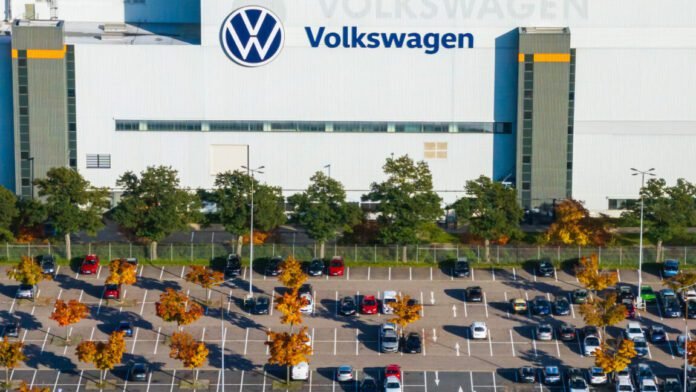
Volkswagen Group is considering what was previously unthinkable: closing up to four factories in Germany and instituting layoffs that would shrink the workforce by 15 percent.

2025 was a bad year for Europe’s largest automaker. Its sales were essentially flat, but profits were anything but, dropping 44 percent to just 6.9 billion euros ($7.9 billion) as operating margins more than halved. The red ink looks set to continue bleeding through 2026, and in March, the company announced it would cut 50,000 jobs in Germany by 2030 as part of a plan to adapt. Now, according to a report in Manager Magazin, those job losses may double.

The automaker did well selling EVs in Europe last year, but sales in North America and China fell and continue to fall, and tariffs have had a significant effect.

In April, VW Group CFO and COO Arno Arnitz told investors that the company’s operating margin was “far too low” and that it would have to fundamentally transform its business model to cut costs and increase efficiency without tanking quality. That would require “significantly reducing complexity—in our product portfolio and technology platforms, as well as in the number of entities and decision-making layers,” Arnitz said.

Now we have some idea what that reduction in complexity might look like.

The report, confirmed by Reuters, says that another 45,000 jobs would go. That would reduce VW’s total workforce by around 15 percent; currently, the automaker employs more than 650,000 people across the group’s 10 car brands and other divisions.

VW Group is part-owned by the state of Lower Saxony, which, together with strong unions, has always made the thought of factory closures in Germany anathema. But VW Group CEO Oliver Blume will present a plan to the company’s board next month that outlines just such a thing, according to the report. Volkswagen plants in Hannover, Zwickau, and Emden, as well as Audi’s factory in Neckarsulm, are all in the crosshairs.

Ars reached out to Volkswagen and will update this story if we hear back.

0FansLike
0FollowersFollow
0FollowersFollow
0SubscribersSubscribe
- Advertisement -
Google search engine

Recent Posts