Home Blog

Apart from China, Asia isn’t afraid of a remilitarizing Japan

0
apart-from-china,-asia-isn’t-afraid-of-a-remilitarizing-japan
Apart from China, Asia isn’t afraid of a remilitarizing Japan

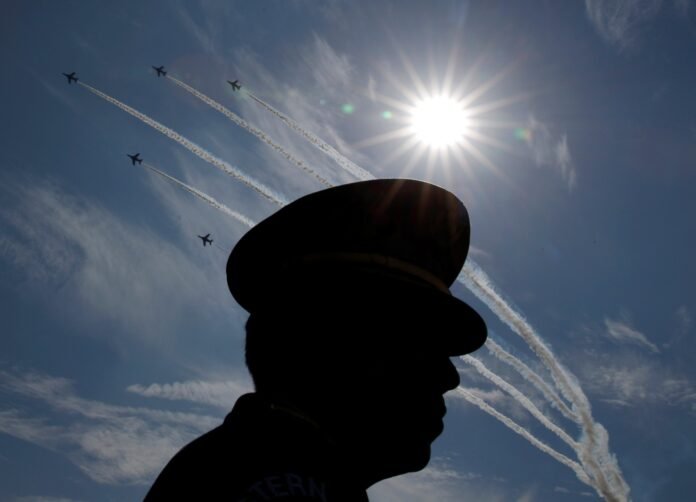
China is harping non-stop about resurging Japanese “militarism” – but almost nobody in the Asia-Pacific region is listening – or believes it. 

The more China blusters and warns of a dangerous Japan, the more ridiculous it looks and the better Japan appears by comparison.

Make no mistake, Japan caused plenty of misery in the region during the 1930s and 1940s.  But World War II ended 81 years ago and today’s democratic, consensually governed Japan is another country. 

That’s been obvious for a long time. Even in 1990, when US Marine General Hank Stackpole described US forces in Japan as the “cap in the bottle” that kept Japanese militarism in check, the idea seemed outdated. 

Japan is well-liked in most of Asia, and has been for decades. Japanese investment and economic assistance are welcomed across Asia, and Japan’s role in regional security is now widely taken for granted. 

But the idea that Japan is feared in the region because of World War II still persists, particularly among parts of the Western foreign policy commentariat. So it’s worth taking a closer look.

India: 1.4 billion Indians have a soft spot for Japan. Tokyo is viewed as having helped bring about Indian independence via its support for the Indian nationalist movement before and during World War Two.  Commercial ties are vast, and bilateral defense ties are expanding. 

Philippines: Japan has been a major and welcome investor and aid provider for years. And substantial defense ties have grown over the last decade, with Japanese ground forces conducting combat training during this year’s Balikatan Exercise. 

Taiwan: Good feelings exist towards Japan, and the colonial era from 1895-1945, when Japan controlled Formosa, is not a sore point. Taiwan’s elected government would like even better ties with Japan, including a security relationship. 

Singapore: The Japanese occupation from 1942-1945 was brutal and is not forgotten, but Singapore and Japan today have excellent relations. Tellingly, Singapore’s Prime Minister Lawrence Wong has stated that Singapore and other Southeast Asian countries support Japan playing a bigger regional role, including on the security front. 

Malaysia: Prime Minister Anwar Ibrahim recently met Prime Minister Sanae Takaichi and confirmed their “comprehensive strategic partnership” and specifically mentioned expanded defense ties. Japan and Malaysia are currently discussing the transfer of retired Maritime Special-Defense Force ships to Malaysia. 

Indonesia: In addition to being a major investor in Indonesia, Japan is seen as having helped rid Indonesia of Dutch colonial rule.  The two nations cooperate on defense and are discussing transferring retired Japanese Asagiri-class destroyers to the Indonesian Navy. 

Vietnam: Solid economic ties exist, along with Japan Coast Guard support for the Vietnam Coast Guard. And like Indonesia, Vietnam credits Japan with a role in bringing about Vietnamese independence from colonial France.

Thailand: A hub of Japanese commercial activity in the region for decades, ties are strong, including between the two nations’ royal families. Japan has also quietly built a notable defense relationship with Thailand. 

Australia: Beyond longstanding economic and political ties, Canberra recently signed an agreement to buy Japanese Mogami-class destroyers and defense ties have deepened in both directions over the last 15 years.  Australia has plenty of reasons to resent Japan’s cruel behavior toward Australian prisoners of war in World War II, but it doesn’t.

Pacific Islands: From the Solomon Islands to Micronesia to the US territories of the Commonwealth of Northern Mariana Islands and Guam, Japan is well-liked and appreciated for its development assistance and commercial presence. The Japan Self-Defense Force’s periodic visits and training activities in the region are conducted with little fanfare – and without any objection from Pacific Island nations.

However, despite this widespread respect and affection for Japan, there are less favorable views of Japan and the Japanese to be found.

South Korea: There is a widespread visceral resentment of Japan owing to Japan’s colonial occupation, but there are limits. It’s also manipulated for political gain by South Korea’s leftist politicians. 

Paradoxically, many Koreans love visiting Japan. The two nations have had reasonable defense ties in the past, and under the leftist Lee Jae Myung administration, the Japan Maritime Self-Defense Force and the ROK Navy recently conducted search-and-rescue exercises together. 

China: The Japanese in China from the 1930s onwards were often brutal. But the Chinese Communist Party that killed at least 50 million of its own people in peacetime and good weather in the years after the Japanese left, was glad to accept Japan’s overseas development assistance (ODA) and welcomed Japanese investment and the technology that came with it.

While plenty of deep-seated animosity towards Japan does exist, it’s only in the last 20 years or so that the CCP has aggressively stoked historical resentments for political advantage.  This is done both for domestic purposes and also to put Japan on the back foot as it belatedly seeks to improve defenses against an assertive China. 

Even still, millions of Chinese visit Japan as tourists and an estimated one million or so Chinese now live there.

The cliche  “Asia is afraid of Japan owing to World War II” doesn’t stand up to scrutiny. And even if Japan carries out its plans to bolster its defenses, it would still be incapable of projecting power to threaten its neighbors.

Indeed, it’s ironic that while Beijing warns of Japanese militarism, it is China that has built up a powerful military with regional and global ambitions despite facing no enemies. In fact, China seems to be aiming to create its own version of Japan’s Greater East Asia Co-Prosperity Sphere that led to war and misery in the 1930’s and 1940’s.

Apparently, Beijing has learned from Japan’s history after all.  

Grant Newsham is a retired US Marine officer and former US diplomat. He was the first Marine liaison officer to the Japan Self-Defense Force, and is a fellow at the Center for Security Policy and the Yorktown Institute. He is the author of the book, “When China Attacks: A Warning To America.”
Medico: Israel’s white phosphorus and glyphosate point back to Germany’s Bayer group

0
medico:-israel’s-white-phosphorus-and-glyphosate-point-back-to-germany’s-bayer-group
Medico: Israel’s white phosphorus and glyphosate point back to Germany’s Bayer group

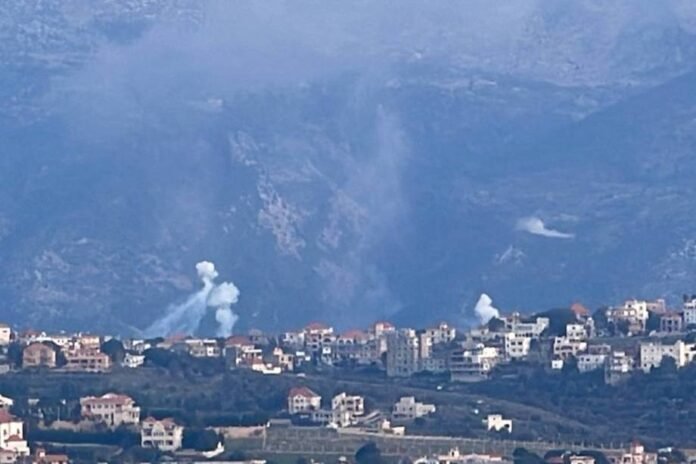
Human rights organisation Medico International and the German network “Coordination gegen Bayer-Gefahren“ (Coordination against Bayer Dangers, CBG) have reported that the glyphosate and white phosphorus used by the Israeli occupation forces in Lebanon which were presumably of German origin.

At the beginning of February this year, reports emerged in the international media alleging that the Israeli army had deployed the environmental toxin glyphosate in southern Lebanon and in occupied Syria.

According to Lebanon’s Ministry of Agriculture, glyphosate concentrations in some samples taken in the region exceeded “normal levels by around 20 to 30 times”. Lebanon’s president Joseph Aoun described the situation as “environmental and health crimes”.

The incident is of particular relevance to Germany, as the US-based glyphosate manufacturer Monsanto was acquired in 2018 by the German chemical and pharmaceutical giant Bayer, one of the world’s largest chemical corporations. As a result, not only did Germany’s mainstream media take up the issue – despite their otherwise consistent reluctance to report on Israeli war crimes – but the matter also reached the agenda of the German Bundestag.

However, there has been little in the way of public outrage. After a few critical remarks, the issue quickly faded from public debate, and it is unlikely that a wider German audience is aware that Israel is not only carrying out a genocide in Gaza using German-supplied weapons, attacking Iran and Lebanon with German arms, enforcing the blockade of Gaza with German naval vessels, and raiding Gaza Solidarity flotillas with the same equipment, but is also reportedly using chemical agents produced with German industrial involvement.

That may now be changing. Last Thursday, the human rights organisation Medico International published a report titled “Cartographies of Destruction: Israel’s War Against Lebanon”, produced in cooperation with its Lebanese partner organisation “Public Works”. Alongside numerous alleged war crimes, the report also documents the repeated use of white phosphorus by Israel in Lebanon. According to the report, this substance also originates from Monsanto. Jan Pehrke of the CBG stated: “There is strong evidence that phosphorus used in the Middle East war comes from Bayer’s glyphosate production facility in Soda Springs in the United States.”

While it has long been known that Israel has repeatedly used white phosphorus in its wars on Gaza and Lebanon, the alleged use of glyphosate is a relatively new claim. However, Riad Othman, Middle East officer at Medico International, noted that the carcinogenic herbicide was already “tested” by the Israeli military in the Gaza Strip in 2014.

During its shareholders’ meeting in April 2026, the Bayer executive board denied directly supplying glyphosate to the Israeli or US military. However, it did not issue a corresponding denial regarding white phosphorus. Meanwhile, earlier this year, US President Donald Trump designated elemental phosphorus – used in the production of both white phosphorus and glyphosate – as critical to US “national security”.

This decision came roughly two weeks after reports of glyphosate use in Lebanon and Syria surfaced, and shortly before the US-Israeli strike on Iran, during which white phosphorus was also reportedly used.

The views expressed in this article belong to the author and do not necessarily reflect the editorial policy of Middle East Monitor.

CENTCOM Challenges Iranian Claim of Hormuz Closure as Negotiators Head to Switzerland 

0
centcom-challenges-iranian-claim-of-hormuz-closure-as-negotiators-head-to-switzerland 
CENTCOM Challenges Iranian Claim of Hormuz Closure as Negotiators Head to Switzerland 


The United States and Iran offered conflicting accounts Saturday over the status of the Strait of Hormuz as officials prepared for negotiations in Switzerland on Sunday involving senior representatives from both countries.

Iran earlier announced that it was closing the strategic waterway and warned commercial vessels to stay away. The move came after fighting continued between Israel and Lebanon despite a declared ceasefire.

Islamic Republic of Iran Broadcasting reported that the naval branch of the Islamic Revolutionary Guard Corps issued warnings to ships operating near the strait, cautioning that vessels attempting to pass through could encounter mines or come under attack. Iranian state media also reported reduced maritime traffic in the Persian Gulf following the announcement.

The US military disputed Iran’s claim that the waterway had been closed.

“Iran does not control the Strait of Hormuz,” said Capt. Tim Hawkins, a Central Command (CENTCOM) spokesperson. “Traffic continues to flow, and US forces are monitoring the situation to ensure this remains the case.”

CENTCOM said 55 merchant ships and 17 million barrels of oil passed through the strait on Saturday. The command added: “US forces remain present and vigilant to ensure all aspects of the agreement with Iran are adhered to, obeyed, and in full force and effect.”

The dispute over the waterway emerged as diplomatic efforts continued ahead of talks scheduled for Switzerland.

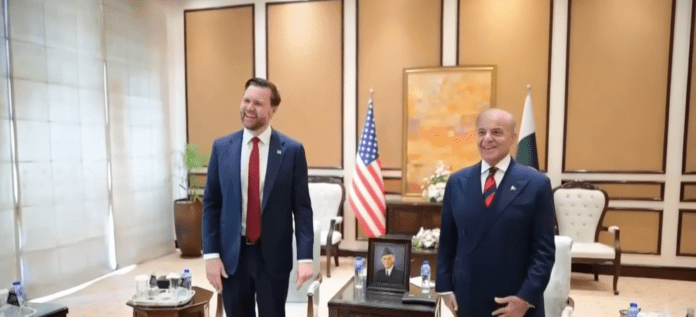
Pakistani Prime Minister Shehbaz Sharif announced that he would travel to Switzerland to serve as a mediator during the discussions. Qatar is also expected to participate.

The US delegation is set to include Vice President JD Vance, Jared Kushner, and US special envoy to the Middle East Steve Witkoff. They are scheduled to meet with an Iranian delegation.

CNN reported that ending the conflict in Lebanon is “the most important item on the Iranian delegation’s agenda” as Iranian representatives prepare for the talks.

The negotiations are expected to begin on Sunday as both sides continue to publicly differ over developments in the Strait of Hormuz, one of the world’s most important maritime routes for global energy shipments.


Once a Target of TrackAIPAC, Ro Khanna Gains Its Endorsement

0
once-a-target-of-trackaipac,-ro-khanna-gains-its-endorsement
Once a Target of TrackAIPAC, Ro Khanna Gains Its Endorsement


After a resounding primary victory and ahead of a potential presidential run in 2028, progressive California lawmaker Ro Khanna has received the endorsement of the influential advocacy and watchdog group TrackAIPAC, known for posting red cards of lawmakers and candidates who receive money from the pro-Israel lobby.

Khanna, a Democrat representing parts of San Francisco’s Bay Area, is the first member of Congress to go from a target of TrackAIPAC’s online fury to the winner of its endorsement. Though Khanna never took money from the pro-Israel lobby giant, the American Israel Public Affairs Committee, he received a red anti-endorsement card from TrackAIPAC in 2024 largely due to his legislative record. Khanna has taken money from the liberal Zionist group, J Street, which opposed Gaza ceasefire attempts in 2023 but has since pushed for conditions on military aid to Israel. 

 “Rejecting AIPAC money isn’t enough — every member of Congress must be clear on these issues.”

Khanna’s TrackAIPAC endorsement, first reported by The Intercept, came after the lawmaker on June 10 became the initial signatory of a new pledge from TrackAIPAC called PEACE to enforce American law, counter foreign influence, and end war crimes. Among other commitments, candidates who sign the pledge swear off money from AIPAC and aligned groups, acknowledge Israel’s genocide in Gaza, oppose military aid to any country that commits human rights violations, and agree to stand against efforts in Congress to enmesh the U.S. and Israeli militaries

“I’m proud to be the first member of Congress to sign the PEACE Pledge to reject campaign contributions and political support from AIPAC, DMFI, and other groups that promote unconditional support for Israel,” Khanna told The Intercept in a statement. “The pledge also affirms my opposition to the genocide in Gaza and my commitment to voting against future military assistance to any country whose security forces are committing human rights violations. Rejecting AIPAC money isn’t enough — every member of Congress must be clear on these issues.”

With the endorsement and the new pledge, TrackAIPAC is flexing its growing influence on the Capitol. Its viral social media posts have played a large role in making AIPAC into a politically toxic entity, helping drive underground much of its campaign giving in the midterms. Those posts have also compelled lawmakers, including Khanna, to seek meetings with the group in hopes of removing their red cards. With its political arm, Citizens Against AIPAC Corruption, TrackAIPAC has also been endorsing and funding candidates. 

TrackAIPAC’s founders said they want to offer a good-faith offramp for members of Congress looking to evolve on Israel and Palestine. Beyond tracking the pro-Israel lobby’s political spending, the group also serves as an advocacy organization pushing for Palestinian rights in the Capitol. It has claimed major midterm primary victories in races it has endorsed a candidate, such as in New Jersey with the victory Adam Hamawy, a former Army surgeon who volunteered in Gaza during the war; Chris Rabb in Pennsylvania; and Mai Vang in California. 

“We’ve been really effective at building a megaphone and bringing accountability to folks who are on the wrong side,” TrackAIPAC co-founder Casey Kennedy, told The Intercept. “But with that success we’ve had, now we have a responsibility to offer a bridge to folks to chart a new path forward.”

The group has attracted controversy over its methodology, which examines campaign financing as well as lawmakers’ legislative record on policies relating to Israel and Palestine. TrackAIPAC has at times assigned its red card to lawmakers and congressional candidates who do not take AIPAC money, which critics have called unnecessarily confusing or misleading. 

Last June, Khanna became the first lawmaker to meet with TrackAIPAC, according to the group, and asked why TrackAIPAC had initially assigned him a red card. By the time they met, the group had removed the red card but did not grant him its green seal of approval. Instead, it appended a label that remains on his page today, stating: “We encourage this representative to continue improving their legislative record on Israel-Palestine issues.” 

In contrast, Squad member Rep. Alexandria Ocasio-Cortez, D-N.Y., has a green card and a positive label stating: “This candidate rejects Israel lobby contributions. This representative has a strong legislative record on Israel-Palestine issues.”

Khanna had previously appealed to TrackAIPAC on social media, doubling down on his rejection of AIPAC support. The posts drew the ire of AIPAC, which relentlessly attacked him on social media, at times using TrackAIPAC’s own red card graphic

Khanna’s stances on Israel and Palestine have shifted in recent years. In the immediate weeks after October 7, 2023, Khanna voted in favor of a string of pro-Israel House resolutions, including reaffirming Israel’s “right to self-defense” on October 25. A week later, he signed a resolution that condemned antisemitism and “the support of Hamas, Hezbollah, and other terrorist organizations” in colleges and universities. Khanna was also notably absent on early resolutions calling for a ceasefire.

Khanna has since become a loud critic of Israel and has voted against a bill that sought to codify the International Holocaust Remembrance Alliance definition of antisemitism, which has been used to silence criticism of Israel. In the summer of 2025, he co-sponsored the Block the Bombs bill and signed on to a pair of resolutions by Rep. Rashida Tlaib, D-Mich., acknowledging Israel’s offensive in Gaza as a genocide and recognizing the Nakba. Earlier this month, Khanna attempted to strike a portion of the National Defense Authorization Act that would codify Israel’s joint development of weapons with the U.S. 

It was also this month when Khanna’s office reached out again to TrackAIPAC to revisit the possibility of gaining the group’s endorsement, the group said. His office had been receiving inquiries about his “continue improving” label on TrackAIPAC’s presidential candidate list. At the time, TrackAIPAC had already been developing its pledge and offered it to Khanna’s office.

“Groups like AIPAC are pouring money into our elections and are influencing policies that undermine human rights,” Khanna told The Intercept in a statement. “When Track AIPAC offered, I was proud to sign the pledge.”

While Khanna has not formally announced a run for president, he is positioning himself to the left of the Democratic establishment on Israel. In April, he announced he supports the halt of both offensive and so-called defensive weapons to the country due to its human rights abuses.

Adam Carlson, a political consultant and pollster behind Zenith Research, who has been critical of TrackAIPAC’s methodology in the past, has said he expects other congressional and presidential candidates courting the left to sign on to the new TrackAIPAC pledge. But he doesn’t expect a shift from the kinds of establishment Democrats often in the crosshairs of TrackAIPAC over their support for Israel.

“It’s a flex — the more people they get to sign this pledge, the stronger they are,” Carlson said of TrackAIPAC. “But it won’t change the dynamic broadly.” 

He cautioned of potential pitfalls, such as how the group will hold legislators who sign the pledge accountable and warned of the risk of purity tests on the left that could hurt certain candidates’ election chances in swing districts.

TrackAIPAC said anyone who abandons the pledge would again receive a red graphic and be targeted in the group’s intense social media campaigns. Cory Archibald, a TrackAIPAC co-founder, also resisted the premise of a purity test. “If you’re gonna have a litmus test,” Archibald said, “I think genocide is certainly a good one.”

Boys Hailed Heroes After Saving ‘Scared’ and Injured Elderly Woman

0
boys-hailed-heroes-after-saving-‘scared’ and-injured-elderly-woman
Boys Hailed Heroes After Saving ‘Scared’ and Injured Elderly Woman


Two 13-year-old boys in Iowa are being hailed as heroes after a simple bike ride turned into a life-saving rescue.

Gunner Skidmore and Kohen Chick were riding their bikes on June 9 in Fruitland, Iowa, when they spotted something strange near a home along a local trail.

At first, they were not sure what they were seeing.

Then they realized it was an elderly woman lying on the ground.

She had reportedly been stranded outside for more than 16 hours.

“I went to the trail and Kohen was like, ‘You see that lady back there?’” Gunner told KWQC. “Then, we went back and looked, and it took a little while to find her.”

When the boys finally reached the woman, they knew something was seriously wrong.

“I said, ‘Hey ma’am, are you okay?’” Gunner recalled. “She was like, ‘Yeah, I need help. Call 911.’”

The woman did not have a phone. She did not have water. She had been exposed to the elements all night.

Gunner said he quickly called his mother, who rushed to the scene and contacted emergency crews.

“She showed up pretty fast and then my mom called 911,” he said. “[The elderly woman] didn’t have her phone or water or anything. She was there for like 16-plus hours.”

According to the boys, the woman told them she had been outside since around 5 p.m. the day before.

Kohen said it was clear she had been terrified.

“She was scared,” he told the outlet. “You could just tell because like her face, she was covered in all these bugs and stuff.”

The teens believe the woman may have fallen while feeding her horse. They said she told them she had rolled from her backyard to her front yard while desperately trying to get help.

The boys believe their timing may have saved her life.

“A few more hours and she definitely like wouldn’t have made it,” Gunner said.

The woman was taken by ambulance to a hospital in nearby Muscatine for treatment.

Gunner’s mother later told KWQC that she has stayed in touch with the woman’s family and even helped take care of the woman’s horse while she recovers. She also plans to make the woman a lasagna when she comes home.

The boys’ quick thinking did not go unnoticed.

On June 15, Gunner and Kohen were honored with a special award from Muscatine County emergency officials.

Christopher Jasper, the county’s emergency management director, praised the teens for their compassion and courage.

“Today, I would like to recognize the extraordinary actions of two young men whose quick thinking and compassion helped save a life in Muscatine County,” Jasper said during the ceremony, according to an excerpt obtained by PEOPLE.

“Without the prompt actions of Gunner and Kohen, the outcome could have been tragic,” he added. “Their awareness, compassion, and willingness to help a person in need undoubtedly made a difference and may very well have saved her life.”

What started as an ordinary summer bike ride ended with two teenagers being credited for helping save a woman who had been alone, injured and scared for an entire night.

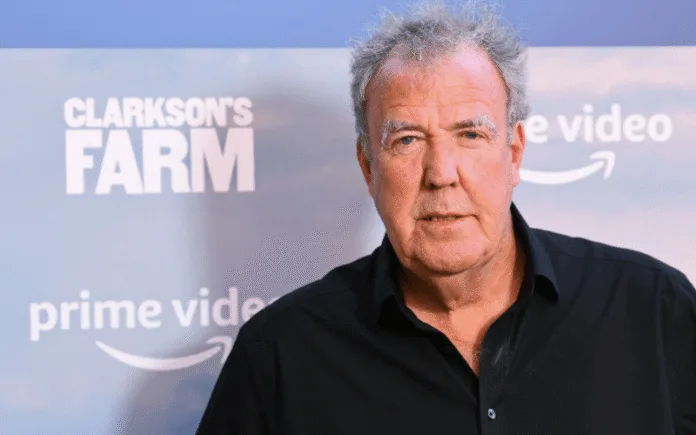
British presenter Jeremy Clarkson reveals he has cancer on TV show

0
british-presenter-jeremy-clarkson-reveals-he-has-cancer-on-tv-show
British presenter Jeremy Clarkson reveals he has cancer on TV show


British television presenter Jeremy Clarkson, best known for hosting the “Top Gear” motoring show, has revealed that he had been diagnosed with an aggressive form of prostate ​cancer.

Clarkson, 66, one of Britain’s most popular and high-profile TV figures, made the ‌disclosure during filming for his Amazon documentary show “Clarkson’s Farm” for episodes which were broadcast on Wednesday.

“I’ve got cancer,” Clarkson tells two of the show’s other main characters in a scene filmed last year. “I ​had a medical, remember, back in May? I disappeared off the other week ​and I had a biopsy and it is cancer, and it’s aggressive.”

Clarkson ⁠said the disease had been caught “really early” and he had since had an ​operation to remove 10% of his prostate.

“If I hadn’t have got myself checked out and ​they hadn’t caught the problem early, this could well have been my last harvest,” he said. “It’s only because they did catch it early, there’s every hope that I’ll be harvesting this farm for many, ​many years to come.”

Ahead of the episodes’ broadcast, Clarkson posted a video on Instagram ​on Tuesday, saying they were a “difficult watch”.

“Ordinarily, we try to keep the show bucolic, charming, and cheerful,” ‌he ⁠said. “But the final two episodes, which drop in the middle of the night tonight, are … they’re none of those things, really. They’re a difficult watch.

“They’re really, really difficult.”

Clarkson, who has cultivated a reputation for being controversial, opens new tab, gained worldwide fame as presenter of the BBC’s “Top ​Gear” show but lost ​his job after he ⁠punched a member of the production team in 2015.

He moved to Amazon where he made a new car show with his ​old show’s co-hosts Richard Hammond and James May, and subsequently began ​making the ⁠successful “Clarkson’s Farm”, which chronicles his often haphazard attempts to run the farm he owns in central England.

“I don’t know what’s going to happen. But look, what I wanted to say was: ⁠if ​this is all successful, I’ll see you for season ​six,” he says from a hospital bed at the end of the final show of the latest series. “And ​if it isn’t, I won’t. Take care, everyone.”

Source:  Reuters

Sharif Heads to Switzerland as US and Iranian Teams Prepare for MoU Negotiations

0
sharif-heads-to-switzerland-as-us-and-iranian-teams-prepare-for-mou-negotiations
Sharif Heads to Switzerland as US and Iranian Teams Prepare for MoU Negotiations


Pakistan’s Prime Minister Shehbaz Sharif, accompanied by the Chief of Defense Forces and Field Marshal Asim Munir, departed Islamabad for Switzerland. 

According to a press release issued by the Prime Minister’s Office late Saturday night, a high-level delegation is also accompanying the prime minister. 

The Pakistani delegation will participate in follow-up discussions related to the signing of the Islamabad Memorandum of Understanding (MoU). Technical-level talks are scheduled to be held in Bürgenstock, Switzerland, on June 21, 2026. 

In a statement issued by the Ministry of Foreign Affairs, Pakistan said representatives from the United States, Iran, and the two mediating countries, Pakistan and Qatar, would participate in the technical-level discussions. 

The statement added that Pakistan would maintain its support for advancing the memorandum of understanding. 

According to media reports, US Vice President JD Vance has confirmed that President Donald Trump’s son-in-law and senior advisor, Jared Kushner,  and Middle East envoy, Steve Witkoff, were already in Switzerland ahead of the scheduled talks with Iran. 

Vance told Fox News that the two officials were reviewing details of the negotiations. The vice president said he spoke with Kushner and Witkoff on Sunday morning and added, “My understanding is that things are going well.” 

When asked whether he also planned to travel to Switzerland, Vance said, “I will go there in the next couple of days.” 

Meanwhile, Iranian media reports say that the Iranian negotiating team has also departed for Switzerland, led by Parliament Speaker Mohammad Bagher Ghalibaf and Foreign Minister Abbas Araghchi. 

According to the semi-official Fars News Agency, Ali Bagheri Kani, deputy secretary of Iran’s Supreme National Security Council, Deputy Foreign Minister Kazem Gharibabadi, and Foreign Ministry spokesperson Esmail Baghaei are also joining the delegation. 

The Swiss Federal Department of Foreign Affairs has said in a statement that Switzerland continues to cooperate in providing a calm and reliable venue for the implementation of the MoU reached between the United States and Iran. 

Diplomats from various countries are currently present in Bürgenstock, where efforts are underway to continue the negotiations, the statement said. However, due to confidentiality, no details about participants or the discussions are being released. 

2 Lebanese soldiers killed in Israeli airstrikes in southern Lebanon, violating ceasefire

0
2-lebanese-soldiers-killed-in-israeli-airstrikes-in-southern-lebanon,-violating-ceasefire
2 Lebanese soldiers killed in Israeli airstrikes in southern Lebanon, violating ceasefire

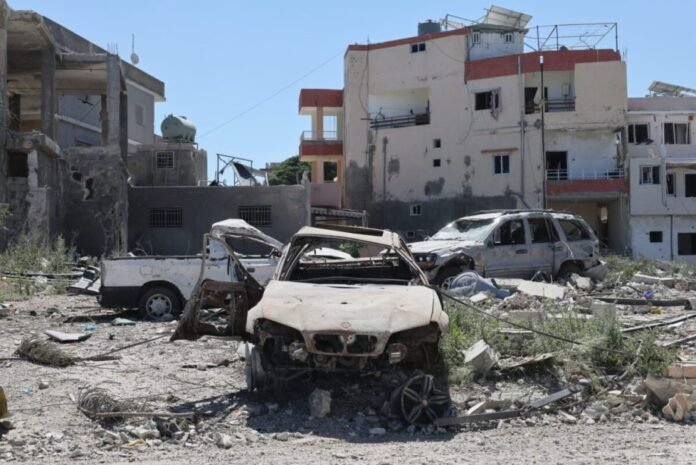
Two Lebanese soldiers were killed on Saturday in two separate Israeli airstrikes in southern Lebanon, the Lebanese army said in a statement, Anadolu reports.

The army said Jamil Nahhal was killed in an Israeli airstrike while traveling on the Kfarrumman–Nabatieh road in southern Lebanon.

The “brutal Israeli occupiers’ attacks continue against Lebanon,” the army said, noting that the latest escalation has affected wide areas in the south and extended to the Bekaa Valley, causing additional deaths and injuries and inflicting significant damage to property.

It warned that the continued attacks could obstruct efforts aimed at restoring stability in the country.

In a separate statement, the army said First Sergeant Ali Ibrahim died of wounds sustained in an Israeli airstrike on the town of Touline in Marjayoun on June 19.

Since early Saturday, the death toll from Israeli attacks in southern Lebanon has risen to at least 28, despite a ceasefire and the US-Iran agreement, Lebanon’s state-run National News Agency reported.

Lebanese authorities say Israel’s military offensive in Lebanon has killed more than 3,980 people, injured over 12,000 others and displaced over 1 million residents since March 2.

The latest attacks came after Israel’s Channel 12 on Friday quoted an unnamed official confirming reports that a ceasefire agreement with Hezbollah had begun at 4 pm local time (1300GMT).

A senior US official also confirmed the ceasefire in a statement to Anadolu.

US and Iran presidents sign ceasefire agreement, but Trump says he could still resume attacks

0
us-and-iran-presidents-sign-ceasefire-agreement,-but-trump-says-he-could-still-resume-attacks
US and Iran presidents sign ceasefire agreement, but Trump says he could still resume attacks


The U.S. and Iran released the text of an interim agreement their presidents have signed to end their war on Wednesday, with U.S. President Donald Trump threatening to resume attacks and kill Iranian officials if they failed to honour their ​commitments.

Trump, attending the G7 with other leaders in France, also withdrew at least one of his stated rationales for attacking Iran in the first place, saying it would be “unfair” for Tehran not to have ballistic missiles, having previously ‌vowed to obliterate them.

“We’re going to bomb the hell out of them if they violate the agreement,” Trump said of Iran at a press conference. “I don’t want them to. I want them to honor the agreement.” He also called Iranians “smart people” as U.S. and Iranian negotiators work on a permanent truce over the coming 60 days, which Trump said he hoped would usher in peace in the Middle East and lower oil prices.

Earlier, he had said: “If I don’t like it, if they don’t behave, we’ll go right back to dropping bombs right smack in the middle of their head, OK?”

Iran’s leaders did not address the new threats while celebrating the ​moment, releasing photographs of what is believed to be the first agreement signed by both a U.S. and Iranian president since the Islamic Republic’s founding in 1979.

“Everything we sought to achieve through military action, we obtained several times over through negotiation; it ​was not even comparable,” Iran’s lead negotiator Mohammad Baqer Qalibaf told state television about the agreement, which includes the unfreezing of billions of dollars in Iranian assets.

The United States on Wednesday read out the text of the interim U.S.-Iran agreement to halt the war in Iran and open the Strait of Hormuz.

The agreement, read to reporters by a senior U.S. official, outlines in 14 points a high-level understanding that defers many of the most difficult issues, such as how to wind down Iran’s nuclear program, until a final deal is reached. It paves the way for a broader 60-day negotiation period due to begin in Switzerland on Friday.

Here is the ​full document, titled “Islamabad Memorandum of Understanding between the United States of America and the Islamic Republic of Iran”, as it was read out:

1. The United States of America and the Islamic Republic of Iran and their allies in the ‌current war, by signing this MOU (Memorandum of Understanding), declare the immediate and permanent termination of military operations on all fronts, including in Lebanon, and undertake from now on not to initiate any war or any military operation against each other, and to refrain from the threat or use of force against each other, and ensuring the territorial integrity and sovereignty of Lebanon. The final deal will confirm the permanent termination of the war on all fronts, including in Lebanon, and other provisions of this paragraph.

2. The United States of America and the Islamic Republic of Iran undertake to respect each other’s sovereignty and territorial integrity, and to refrain from interfering ​in each other’s internal affairs.

3. The United States of America and the Islamic Republic of Iran commit to negotiating and achieving the final deal in maximum 60 days extendable with mutual consent.

4. Immediately upon the signing of this MOU, the United States ​of America will begin the removal of its naval blockade and any disturbances or impediments against the Islamic Republic of Iran, and will fully end the naval blockade within 30 days. During this period, ⁠the traffic of vessels will be in proportion to the numbers of pre-war traffic being restored by the Islamic Republic of Iran. The United States of America further undertakes to remove its forces from the proximity of the Islamic Republic of Iran within 30 days after the ​final deal.

5. Upon the signing of this MOU, the Islamic Republic of Iran will make arrangements using its best efforts for the safe passage of commercial vessels with no charge for 60 days only from the Persian Gulf to the Sea of Oman and vice versa. The ​traffic of commercial vessels will immediately start and, considering the need for removing the technical and military obstacles and de-mining by the Islamic Republic of Iran, will be instated within 30 days. The Islamic Republic of Iran will conduct dialog with the Sultanate of Oman to define the future administration and maritime services in the Strait of Hormuz, in discussion with other Persian Gulf littoral states in line with the applicable international law and the sovereign rights of coastal states of the Strait of Hormuz.

6. The United States of America undertakes with regional partners to develop a definitive, mutually agreed plan with at least USD 300 billion for the ​reconstruction and economic development of the Islamic Republic of Iran. The mechanism for the implementation of this plan will be finalized as part of final deal within 60 days. All required licenses, waivers, and permissions needed for the relevant financial transactions will be granted by the United ​States of America.

7. The United States of America undertakes to terminate all types of sanctions against the Islamic Republic of Iran, including the United Nations Security Council resolutions, i.e. IAEA Board of Governors resolutions, and all unilateral U.S. sanctions, primary and secondary, in an agreed upon schedule as part of the ‌final deal. The ⁠Islamic Republic of Iran and the United States of America acknowledge the critical importance of the sanctions termination issue above mentioned and express their intentions to immediately address these issues in the negotiations in order to achieve mutual agreement on them.

8. The Islamic Republic of Iran reaffirms that it shall not procure or develop nuclear weapons. The United States of America and the Islamic Republic of Iran have agreed to resolve the disposition of stockpiled enriched material pursuant to a mechanism that will be mutually agreed upon, in accordance with the schedule mentioned in paragraph seven with the minimum methodology to be down blending on site under the supervision of the IAEA. The two parties also agreed to discuss the issue of enrichment and other mutually agreed matters related to the Islamic Republic of Iran’s nuclear needs, based on a satisfactory framework being agreed upon ​in the final deal. The final deal will confirm the provisions ​of this paragraph. The United States of America and the ⁠Islamic Republic of Iran acknowledge the critical importance of the nuclear issues above mentioned and express their intention to immediately address these issues in the negotiations in order to achieve mutual agreement on them.

9. Pending the final deal, the United States of America and the Islamic Republic of Iran agree to maintain the status quo. The Islamic Republic of Iran will maintain the current status quo of its nuclear program and ​the United States of America will not impose any new sanctions and will not deploy additional forces in the region.

10. The United States of America undertakes that immediately upon the signing of this ​MOU and until the termination of sanctions, ⁠U.S. Department of Treasury will issue waivers for the export of Iranian crude oil, petroleum products, and derivatives, and all associated services, including banking transactions, insurances, transportation, etc.

11. The United States of America undertakes to make fully available for use the frozen or restricted funds and assets of the Islamic Republic of Iran. Upon the implementation of this MOU, the United States of America and the Islamic Republic of Iran will mutually agree on the procedures related to the release of these funds during the negotiation. Such funds, whether retained in the original account or transferred, shall be made fully usable ⁠for payment to ​any ultimate beneficiary designated by the Central Bank of the Islamic Republic of Iran. The United States of America undertakes to issue all necessary licenses and authorizations accordingly.

12. ​The United States of America and the Islamic Republic of Iran agree that an executive mechanism will be established to monitor the successful implementation of this MOU and the future compliance of the final deal.

13. After signing this MOU, and subject to the beginning of the implementation of paragraphs 1,4,5,10 and 11 of this MOU, and the continuing ​implementation of these measures, the United States of America and the Islamic Republic of Iran will start negotiations regarding the final deal exclusively on the other paragraphs.

14. The final deal will be endorsed by a binding UNSC resolution.

Classic Egg Salad

0
classic-egg-salad
Classic Egg Salad

Classic Egg Salad is creamy, simple, flavorful, and perfect for sandwiches, wraps, lettuce cups, crackers, or a light lunch. Made with hard-boiled eggs, mayonnaise, Dijon mustard, lemon juice, celery, red onion, chives, salt, and pepper, this easy recipe is fresh, satisfying, and full of protein.

This is the kind of recipe you can make all year long. It works for quick lunches, meal prep, picnics, brunch, low-carb meals, or easy sandwich fillings. The texture is creamy with just the right amount of crunch from the celery and onion.

Why You’ll Love This Egg Salad

  • Simple classic recipe
  • Creamy but not runny
  • Great for sandwiches or lettuce wraps
  • High in protein
  • Perfect for meal prep
  • Easy to customize
  • Made with everyday ingredients
  • Great for lunch, brunch, or snacks

What Makes This Egg Salad So Good?

The key to great egg salad is perfectly cooked hard-boiled eggs and a balanced dressing. Starting the eggs in hot water helps make them easier to peel, while an ice bath stops the cooking and keeps the yolks bright and tender.

The chopped eggs are gently folded with mayonnaise, Dijon mustard, lemon juice, celery, red onion, chives, salt, and pepper. The result is creamy, fresh, and flavorful with a little crunch in every bite.

Ingredients

  • 8 large eggs, cold
  • Water, for boiling
  • 4 cups cold water, for ice bath
  • 4 cups ice cubes
  • ½ cup mayonnaise
  • 1 tablespoon Dijon mustard
  • 2 teaspoons lemon juice
  • ¼ cup celery, finely diced
  • 1 tablespoon red onion, minced
  • 1 teaspoon chopped chives
  • ½ teaspoon kosher salt
  • ¼ teaspoon black pepper

Ingredient Notes

Eggs

Large eggs work best for this recipe. Cold eggs can go straight from the refrigerator into the hot water.

Mayonnaise

Mayonnaise creates the creamy base of the egg salad. Use your favorite store-bought mayo or homemade mayonnaise.

Dijon Mustard

Dijon mustard adds tang and helps balance the richness of the eggs and mayonnaise.

Lemon Juice

Fresh lemon juice brightens the flavor and keeps the salad from tasting too heavy.

Celery

Celery adds a crisp, fresh crunch.

Red Onion

A small amount of minced red onion adds sharpness and depth.

Chives

Chives add mild onion flavor and a fresh green finish.

How to Make Classic Egg Salad

Step 1: Boil the Eggs

Fill a large pot with enough water to cover the eggs by about 1 inch.

Bring the water to a low boil.

Carefully add the cold eggs to the hot water.

Boil for 30 seconds.

Cover the pot with a lid and reduce the heat to low.

Cook the eggs on a low simmer for 12 minutes.

Step 2: Chill the Eggs

While the eggs cook, prepare an ice bath with cold water and ice cubes.

When the eggs are done, immediately transfer them to the ice bath.

Let them chill for 15 minutes.

This stops the cooking and makes the eggs easier to peel.

Step 3: Peel and Chop

Peel the cooled eggs.

Chop them into small pieces using a chef’s knife.

For a more rustic texture, leave some pieces slightly larger.

Step 4: Mix the Egg Salad

In a medium bowl, combine the chopped eggs, mayonnaise, Dijon mustard, lemon juice, celery, red onion, chives, salt, and pepper.

Gently fold everything together until creamy and combined.

Taste and adjust salt and pepper if needed.

Step 5: Serve

Serve immediately or chill until ready to use.

Enjoy on bread, croissants, wraps, lettuce leaves, crackers, or cucumber slices.

Tips for the Best Egg Salad

Start the Eggs in Hot Water

Adding eggs to hot water helps the whites set quickly and makes peeling easier.

Use an Ice Bath

The ice bath stops the eggs from overcooking and helps prevent a green ring around the yolks.

Don’t Overmix

Fold gently so the egg salad stays creamy without becoming mushy.

Chop the Vegetables Small

Small pieces of celery and onion mix evenly into the salad and add the best texture.

Taste Before Serving

Add more lemon juice, salt, pepper, or mustard to match your taste.

Ingredient Substitutions

Mustard Options

Use yellow mustard, whole grain mustard, spicy brown mustard, or a little apple cider vinegar for a tangier flavor.

Herb Options

Try fresh dill, parsley, basil, tarragon, or dried Italian seasoning.

Seasoning Ideas

Add paprika, smoked paprika, curry powder, cumin, Cajun seasoning, hot sauce, or cayenne pepper.

Mix-In Ideas

Try chopped pickles, mashed avocado, bacon, canned tuna, capers, or extra herbs.

How to Serve Egg Salad

Classic egg salad is delicious in many ways. Try it:

  • On sandwich bread
  • In a croissant
  • On a brioche bun
  • In a tortilla wrap
  • In lettuce cups
  • On crackers
  • With cucumber slices
  • On toast
  • Over a green salad
  • As an appetizer with crostini

How to Make an Egg Salad Sandwich

Spread egg salad over your favorite bread.

Add lettuce, tomato, cucumber, or avocado if desired.

Top with the second slice of bread.

Cut in half and serve right away.

For extra flavor, toast the bread first.

Storage Instructions

Store egg salad in an airtight container in the refrigerator for up to 5 days.

Keep it chilled until ready to serve.

Do not leave egg salad at room temperature for long periods because it contains mayonnaise and eggs.

Make-Ahead Tips

Egg salad is great for meal prep.

You can boil and peel the eggs ahead of time, then mix the salad when ready.

For the freshest texture, add crunchy ingredients like celery and onion the same day you plan to serve.

Frequently Asked Questions

What Is the Best Way to Cook Eggs for Egg Salad?

Start the eggs in hot water, simmer gently, then transfer them to an ice bath. This method makes the eggs easier to peel and helps prevent overcooked yolks.

How Long Do Hard-Boiled Eggs Last?

Hard-boiled eggs can be stored in the refrigerator for up to 1 week if unpeeled.

How Long Does Egg Salad Last?

Egg salad lasts up to 5 days in the refrigerator when stored in an airtight container.

Can I Make Egg Salad Without Mayonnaise?

Yes. You can use Greek yogurt, mashed avocado, sour cream, or a mix of yogurt and mayo.

Can I Make Egg Salad Low-Carb?

Yes. Serve it in lettuce cups, over greens, or with cucumber slices instead of bread.

Recipe Information

Prep Time: 20 minutes
Cook Time: 13 minutes
Total Time: 33 minutes
Servings: 4
Yield: About 2 cups

Final Thoughts

Classic Egg Salad is creamy, easy, and always satisfying. With perfectly cooked eggs, a simple mayo-mustard dressing, fresh lemon, crunchy celery, red onion, and chives, this recipe is simple but full of flavor.

Serve it as a sandwich, wrap, salad topping, snack, or appetizer for a quick and reliable recipe you can enjoy anytime.

0FansLike
0FollowersFollow
0FollowersFollow
0SubscribersSubscribe
- Advertisement -
Google search engine

Recent Posts