2 Lebanese soldiers killed in Israeli airstrikes in southern Lebanon, violating ceasefire
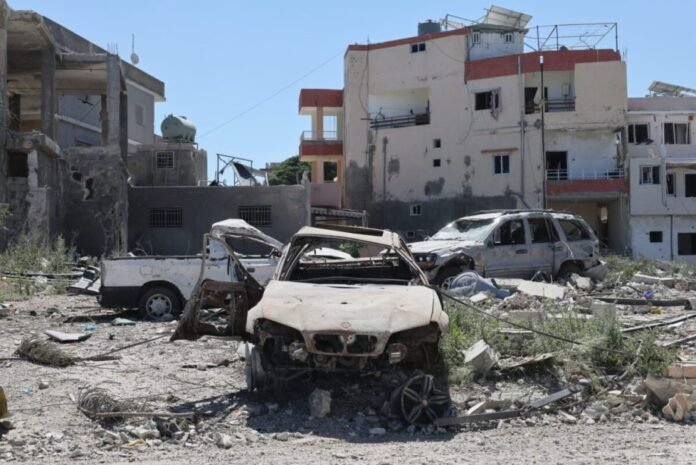
Two Lebanese soldiers were killed on Saturday in two separate Israeli airstrikes in southern Lebanon, the Lebanese army said in a statement, Anadolu reports.
The army said Jamil Nahhal was killed in an Israeli airstrike while traveling on the Kfarrumman–Nabatieh road in southern Lebanon.
The “brutal Israeli occupiers’ attacks continue against Lebanon,” the army said, noting that the latest escalation has affected wide areas in the south and extended to the Bekaa Valley, causing additional deaths and injuries and inflicting significant damage to property.
It warned that the continued attacks could obstruct efforts aimed at restoring stability in the country.
In a separate statement, the army said First Sergeant Ali Ibrahim died of wounds sustained in an Israeli airstrike on the town of Touline in Marjayoun on June 19.
Since early Saturday, the death toll from Israeli attacks in southern Lebanon has risen to at least 28, despite a ceasefire and the US-Iran agreement, Lebanon’s state-run National News Agency reported.
Lebanese authorities say Israel’s military offensive in Lebanon has killed more than 3,980 people, injured over 12,000 others and displaced over 1 million residents since March 2.
The latest attacks came after Israel’s Channel 12 on Friday quoted an unnamed official confirming reports that a ceasefire agreement with Hezbollah had begun at 4 pm local time (1300GMT).
A senior US official also confirmed the ceasefire in a statement to Anadolu.
US and Iran presidents sign ceasefire agreement, but Trump says he could still resume attacks
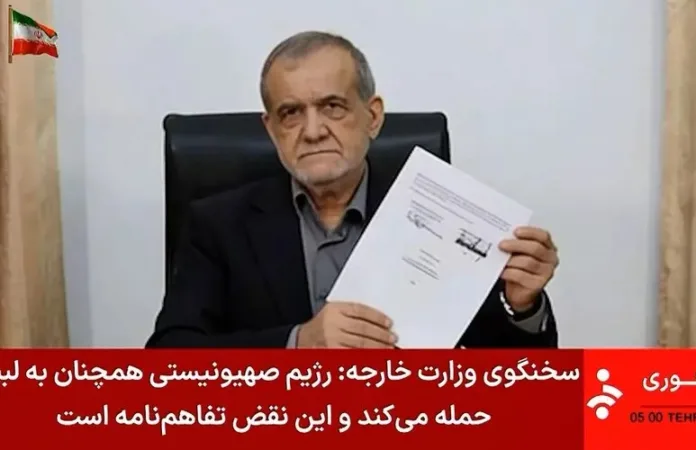
The U.S. and Iran released the text of an interim agreement their presidents have signed to end their war on Wednesday, with U.S. President Donald Trump threatening to resume attacks and kill Iranian officials if they failed to honour their commitments.
Trump, attending the G7 with other leaders in France, also withdrew at least one of his stated rationales for attacking Iran in the first place, saying it would be “unfair” for Tehran not to have ballistic missiles, having previously vowed to obliterate them.
“We’re going to bomb the hell out of them if they violate the agreement,” Trump said of Iran at a press conference. “I don’t want them to. I want them to honor the agreement.” He also called Iranians “smart people” as U.S. and Iranian negotiators work on a permanent truce over the coming 60 days, which Trump said he hoped would usher in peace in the Middle East and lower oil prices.
Earlier, he had said: “If I don’t like it, if they don’t behave, we’ll go right back to dropping bombs right smack in the middle of their head, OK?”
Iran’s leaders did not address the new threats while celebrating the moment, releasing photographs of what is believed to be the first agreement signed by both a U.S. and Iranian president since the Islamic Republic’s founding in 1979.
“Everything we sought to achieve through military action, we obtained several times over through negotiation; it was not even comparable,” Iran’s lead negotiator Mohammad Baqer Qalibaf told state television about the agreement, which includes the unfreezing of billions of dollars in Iranian assets.
The United States on Wednesday read out the text of the interim U.S.-Iran agreement to halt the war in Iran and open the Strait of Hormuz.
The agreement, read to reporters by a senior U.S. official, outlines in 14 points a high-level understanding that defers many of the most difficult issues, such as how to wind down Iran’s nuclear program, until a final deal is reached. It paves the way for a broader 60-day negotiation period due to begin in Switzerland on Friday.
Here is the full document, titled “Islamabad Memorandum of Understanding between the United States of America and the Islamic Republic of Iran”, as it was read out:
1. The United States of America and the Islamic Republic of Iran and their allies in the current war, by signing this MOU (Memorandum of Understanding), declare the immediate and permanent termination of military operations on all fronts, including in Lebanon, and undertake from now on not to initiate any war or any military operation against each other, and to refrain from the threat or use of force against each other, and ensuring the territorial integrity and sovereignty of Lebanon. The final deal will confirm the permanent termination of the war on all fronts, including in Lebanon, and other provisions of this paragraph.
2. The United States of America and the Islamic Republic of Iran undertake to respect each other’s sovereignty and territorial integrity, and to refrain from interfering in each other’s internal affairs.
3. The United States of America and the Islamic Republic of Iran commit to negotiating and achieving the final deal in maximum 60 days extendable with mutual consent.
4. Immediately upon the signing of this MOU, the United States of America will begin the removal of its naval blockade and any disturbances or impediments against the Islamic Republic of Iran, and will fully end the naval blockade within 30 days. During this period, the traffic of vessels will be in proportion to the numbers of pre-war traffic being restored by the Islamic Republic of Iran. The United States of America further undertakes to remove its forces from the proximity of the Islamic Republic of Iran within 30 days after the final deal.
5. Upon the signing of this MOU, the Islamic Republic of Iran will make arrangements using its best efforts for the safe passage of commercial vessels with no charge for 60 days only from the Persian Gulf to the Sea of Oman and vice versa. The traffic of commercial vessels will immediately start and, considering the need for removing the technical and military obstacles and de-mining by the Islamic Republic of Iran, will be instated within 30 days. The Islamic Republic of Iran will conduct dialog with the Sultanate of Oman to define the future administration and maritime services in the Strait of Hormuz, in discussion with other Persian Gulf littoral states in line with the applicable international law and the sovereign rights of coastal states of the Strait of Hormuz.
6. The United States of America undertakes with regional partners to develop a definitive, mutually agreed plan with at least USD 300 billion for the reconstruction and economic development of the Islamic Republic of Iran. The mechanism for the implementation of this plan will be finalized as part of final deal within 60 days. All required licenses, waivers, and permissions needed for the relevant financial transactions will be granted by the United States of America.
7. The United States of America undertakes to terminate all types of sanctions against the Islamic Republic of Iran, including the United Nations Security Council resolutions, i.e. IAEA Board of Governors resolutions, and all unilateral U.S. sanctions, primary and secondary, in an agreed upon schedule as part of the final deal. The Islamic Republic of Iran and the United States of America acknowledge the critical importance of the sanctions termination issue above mentioned and express their intentions to immediately address these issues in the negotiations in order to achieve mutual agreement on them.
8. The Islamic Republic of Iran reaffirms that it shall not procure or develop nuclear weapons. The United States of America and the Islamic Republic of Iran have agreed to resolve the disposition of stockpiled enriched material pursuant to a mechanism that will be mutually agreed upon, in accordance with the schedule mentioned in paragraph seven with the minimum methodology to be down blending on site under the supervision of the IAEA. The two parties also agreed to discuss the issue of enrichment and other mutually agreed matters related to the Islamic Republic of Iran’s nuclear needs, based on a satisfactory framework being agreed upon in the final deal. The final deal will confirm the provisions of this paragraph. The United States of America and the Islamic Republic of Iran acknowledge the critical importance of the nuclear issues above mentioned and express their intention to immediately address these issues in the negotiations in order to achieve mutual agreement on them.
9. Pending the final deal, the United States of America and the Islamic Republic of Iran agree to maintain the status quo. The Islamic Republic of Iran will maintain the current status quo of its nuclear program and the United States of America will not impose any new sanctions and will not deploy additional forces in the region.
10. The United States of America undertakes that immediately upon the signing of this MOU and until the termination of sanctions, U.S. Department of Treasury will issue waivers for the export of Iranian crude oil, petroleum products, and derivatives, and all associated services, including banking transactions, insurances, transportation, etc.
11. The United States of America undertakes to make fully available for use the frozen or restricted funds and assets of the Islamic Republic of Iran. Upon the implementation of this MOU, the United States of America and the Islamic Republic of Iran will mutually agree on the procedures related to the release of these funds during the negotiation. Such funds, whether retained in the original account or transferred, shall be made fully usable for payment to any ultimate beneficiary designated by the Central Bank of the Islamic Republic of Iran. The United States of America undertakes to issue all necessary licenses and authorizations accordingly.
12. The United States of America and the Islamic Republic of Iran agree that an executive mechanism will be established to monitor the successful implementation of this MOU and the future compliance of the final deal.
13. After signing this MOU, and subject to the beginning of the implementation of paragraphs 1,4,5,10 and 11 of this MOU, and the continuing implementation of these measures, the United States of America and the Islamic Republic of Iran will start negotiations regarding the final deal exclusively on the other paragraphs.
14. The final deal will be endorsed by a binding UNSC resolution.
Classic Egg Salad is creamy, simple, flavorful, and perfect for sandwiches, wraps, lettuce cups, crackers, or a light lunch. Made with hard-boiled eggs, mayonnaise, Dijon mustard, lemon juice, celery, red onion, chives, salt, and pepper, this easy recipe is fresh, satisfying, and full of protein.
This is the kind of recipe you can make all year long. It works for quick lunches, meal prep, picnics, brunch, low-carb meals, or easy sandwich fillings. The texture is creamy with just the right amount of crunch from the celery and onion.
Why You’ll Love This Egg Salad
Simple classic recipe
Creamy but not runny
Great for sandwiches or lettuce wraps
High in protein
Perfect for meal prep
Easy to customize
Made with everyday ingredients
Great for lunch, brunch, or snacks
What Makes This Egg Salad So Good?
The key to great egg salad is perfectly cooked hard-boiled eggs and a balanced dressing. Starting the eggs in hot water helps make them easier to peel, while an ice bath stops the cooking and keeps the yolks bright and tender.
The chopped eggs are gently folded with mayonnaise, Dijon mustard, lemon juice, celery, red onion, chives, salt, and pepper. The result is creamy, fresh, and flavorful with a little crunch in every bite.
Ingredients
8 large eggs, cold
Water, for boiling
4 cups cold water, for ice bath
4 cups ice cubes
½ cup mayonnaise
1 tablespoon Dijon mustard
2 teaspoons lemon juice
¼ cup celery, finely diced
1 tablespoon red onion, minced
1 teaspoon chopped chives
½ teaspoon kosher salt
¼ teaspoon black pepper
Ingredient Notes
Eggs
Large eggs work best for this recipe. Cold eggs can go straight from the refrigerator into the hot water.
Mayonnaise
Mayonnaise creates the creamy base of the egg salad. Use your favorite store-bought mayo or homemade mayonnaise.
Dijon Mustard
Dijon mustard adds tang and helps balance the richness of the eggs and mayonnaise.
Lemon Juice
Fresh lemon juice brightens the flavor and keeps the salad from tasting too heavy.
Celery
Celery adds a crisp, fresh crunch.
Red Onion
A small amount of minced red onion adds sharpness and depth.
Chives
Chives add mild onion flavor and a fresh green finish.
How to Make Classic Egg Salad
Step 1: Boil the Eggs
Fill a large pot with enough water to cover the eggs by about 1 inch.
Bring the water to a low boil.
Carefully add the cold eggs to the hot water.
Boil for 30 seconds.
Cover the pot with a lid and reduce the heat to low.
Cook the eggs on a low simmer for 12 minutes.
Step 2: Chill the Eggs
While the eggs cook, prepare an ice bath with cold water and ice cubes.
When the eggs are done, immediately transfer them to the ice bath.
Let them chill for 15 minutes.
This stops the cooking and makes the eggs easier to peel.
Step 3: Peel and Chop
Peel the cooled eggs.
Chop them into small pieces using a chef’s knife.
For a more rustic texture, leave some pieces slightly larger.
Step 4: Mix the Egg Salad
In a medium bowl, combine the chopped eggs, mayonnaise, Dijon mustard, lemon juice, celery, red onion, chives, salt, and pepper.
Gently fold everything together until creamy and combined.
Taste and adjust salt and pepper if needed.
Step 5: Serve
Serve immediately or chill until ready to use.
Enjoy on bread, croissants, wraps, lettuce leaves, crackers, or cucumber slices.
Tips for the Best Egg Salad
Start the Eggs in Hot Water
Adding eggs to hot water helps the whites set quickly and makes peeling easier.
Use an Ice Bath
The ice bath stops the eggs from overcooking and helps prevent a green ring around the yolks.
Don’t Overmix
Fold gently so the egg salad stays creamy without becoming mushy.
Chop the Vegetables Small
Small pieces of celery and onion mix evenly into the salad and add the best texture.
Taste Before Serving
Add more lemon juice, salt, pepper, or mustard to match your taste.
Ingredient Substitutions
Mustard Options
Use yellow mustard, whole grain mustard, spicy brown mustard, or a little apple cider vinegar for a tangier flavor.
Herb Options
Try fresh dill, parsley, basil, tarragon, or dried Italian seasoning.
Seasoning Ideas
Add paprika, smoked paprika, curry powder, cumin, Cajun seasoning, hot sauce, or cayenne pepper.
Mix-In Ideas
Try chopped pickles, mashed avocado, bacon, canned tuna, capers, or extra herbs.
How to Serve Egg Salad
Classic egg salad is delicious in many ways. Try it:
On sandwich bread
In a croissant
On a brioche bun
In a tortilla wrap
In lettuce cups
On crackers
With cucumber slices
On toast
Over a green salad
As an appetizer with crostini
How to Make an Egg Salad Sandwich
Spread egg salad over your favorite bread.
Add lettuce, tomato, cucumber, or avocado if desired.
Top with the second slice of bread.
Cut in half and serve right away.
For extra flavor, toast the bread first.
Storage Instructions
Store egg salad in an airtight container in the refrigerator for up to 5 days.
Keep it chilled until ready to serve.
Do not leave egg salad at room temperature for long periods because it contains mayonnaise and eggs.
Make-Ahead Tips
Egg salad is great for meal prep.
You can boil and peel the eggs ahead of time, then mix the salad when ready.
For the freshest texture, add crunchy ingredients like celery and onion the same day you plan to serve.
Frequently Asked Questions
What Is the Best Way to Cook Eggs for Egg Salad?
Start the eggs in hot water, simmer gently, then transfer them to an ice bath. This method makes the eggs easier to peel and helps prevent overcooked yolks.
How Long Do Hard-Boiled Eggs Last?
Hard-boiled eggs can be stored in the refrigerator for up to 1 week if unpeeled.
How Long Does Egg Salad Last?
Egg salad lasts up to 5 days in the refrigerator when stored in an airtight container.
Can I Make Egg Salad Without Mayonnaise?
Yes. You can use Greek yogurt, mashed avocado, sour cream, or a mix of yogurt and mayo.
Can I Make Egg Salad Low-Carb?
Yes. Serve it in lettuce cups, over greens, or with cucumber slices instead of bread.
Recipe Information
Prep Time: 20 minutes Cook Time: 13 minutes Total Time: 33 minutes Servings: 4 Yield: About 2 cups
Final Thoughts
Classic Egg Salad is creamy, easy, and always satisfying. With perfectly cooked eggs, a simple mayo-mustard dressing, fresh lemon, crunchy celery, red onion, and chives, this recipe is simple but full of flavor.
Serve it as a sandwich, wrap, salad topping, snack, or appetizer for a quick and reliable recipe you can enjoy anytime.
The White House has been desperate to find a way out of the quagmire of its own making in Iran, leading to the remote signing on June 15 of a memorandum of understanding that promises extraordinary concessions to the Islamic Republic. Stipulations once deemed a “nightmare for Israel” by American politicians and dismissed by President Donald Trump as “not acceptable” — such as total sanctions relief and the unfreezing of billions of dollars of funds held abroad — are now reality. Despite attempts by the Trump administration to spin this as an achievement of all of America’s goals and an “unconditional surrender” by Iran, the deal has been met with skepticism, derision, anger, and mockery by Democrats and even some Republicans, pushing close Trump allies such as Fox News host Mark Levin and Texas Sen. Ted Cruz to admonish the president for doing the “unthinkable” by capitulating to Iran.
In Israel, the deal has been seen far more uniformly across the political spectrum as an immense and almost incomprehensible betrayal by the United States, an unforeseen cruelty by Trump, and an incalculable failure by Prime Minister Benjamin Netanyahu. Only 11 percent of Israelis say that their country won the war against Iran, and a whopping 71 percent do not expect Trump to look out for Israeli interests in future negotiations. One Likud member of the Knesset expressed his frustration by filming himself taking off his “Make America Great Again” hat and instead putting on a “Total Victory” hat, a phrase invoked by Netanyahu to justify the wholesale destruction of the Gaza Strip.
In Iran, the atmosphere is still not entirely jubilant. Much of Iran’s media and many officials have indeed taken a triumphant attitude: The front page of Javan, an Islamic Revolutionary Guard Corps-aligned newspaper, depicted a crowd of Iranians breaking through a wall of threats made by the Trump administration, and Mohammad Bagher Ghalibaf, Iran’s chief negotiator, claimed that “everything we wanted to achieve through military action, we achieved many times over through negotiation.” But past betrayals are, after all, far too recent to forget.
It was only in April, for instance, when Israel unilaterally insisted it wasn’t party to the ceasefire in Lebanon and continued its war there. Previous negotiations with America only served as a cover for war preparations in June 2025 and February 2026. This has resulted in a national mood that is much more cautious than the elation that many felt after the Joint Comprehensive Plan of Action, the Iran nuclear deal negotiated under Barack Obama and agreed to by the Rouhani administration, was adopted in 2015.
While an overwhelming majority of the country has backed the diplomatic track, criticism of the efforts of the team lead by Ghalibaf and Foreign Minister Abbas Araghchi has burned subtly in the background since early April. Supporters of the coalition known as the Front of Islamic Revolution Stability, representing the largest faction of the conservatives in the Iranian Parliament, have begun making their objections known, countering previous attempts by those in power to present a united front and to dispense with hardliner-versus-reformist politicking amid the war.
Criticism of current diplomatic efforts on the Iranian state television program “Soraya” in late May led to the suspension of the program days later. In response, its host, Mohsen Maqsoodi, held live conversations in Tehran’s Valiasr Square, where political commentator Ali Abdi criticized the state for not striking Israel as its army continues to bulldoze Lebanon, which led to that series’ cancellation as well. Rumors swirled online that the cancellation was owed to an intervention by an adviser to Ghalibaf.
After Araghchi gave an interview on state TV on June 12 saying that Iran would have to make concessions in its dealings, angry demonstrators who were attending nightly state-sponsored rallies demanded the diplomatic corps remember the “blood of the Leader [Khamenei],” with one speaker in Tehran’s Enghelab Square leading marchers in chants of “Death to the compromiser,” against those who think “America has something to offer [Iran].”
In Parliament, conservatives affiliated or allied with the Front have made their criticism vocal, with members calling for Araghchi to be barred from contacting Trump administration negotiator Steve Witkoff and demanding Parliament see the deal before it is signed. One representative called the agreement worse than “the JCPOA and [the Treaty of] Turkmenchay,” referring to the 1828 treaty that ceded swathes of Iranian territory to the Russian Empire.
Tehran representative Mahmoud Nabavian has been arguably the most prominent member of Parliament criticizing the government’s diplomats, castigating Araghchi for leaving gaps in the memorandum of understanding that America could exploit, namely the immediate reopening of the Strait of Hormuz erasing Iran’s economic leverage, and the lack of clarity in the document about timelines for the lifting of sanctions and the exit of American forces from the region.
The public criticism has less so outlined how exactly Iran could extract more concessions. But it appears such sentiment is now being expressed at the highest level of government: Supreme Leader Mojtaba Khamenei. In a statement announcing his approval of the deal, Mojtaba raised the eyebrows of some analysts by saying that he “had a different view” than what was agreed to by his negotiators, but nevertheless acceded to the wishes of President Masoud Pezeshkian on the condition that Iran rejects “excessive demands” made by the United States, remarking that the nation “await[s] the realization of the aforementioned conditions.”
This kind of public and immediate skepticism of a deal agreed to by the elected government was not the type of messaging made by Mojtaba’s father, Ali Khamenei, who reserved public criticism of the red lines crossed in JCPOA negotiations until the deal had been torn up years later by the Trump administration. Coverage in Axios from an Israeli analyst speculated that Mojtaba means to place any failure of the deal firmly on the shoulders of the Iranian president.
While the deal has yielded extraordinary concessions for Iran, there are already dark clouds looming. Concerns are emerging among other members of Parliament about the agreement requiring cooperation with the International Atomic Energy Agency, which was suspended last year by the elected legislature. More importantly, the first clause of the agreement — which requires an immediate and permanent end to the war in Lebanon — is already being shattered.
Israel, as it did when the ceasefire was initially achieved in early April, has again argued that it must remain in southern Lebanon for as long as Israel’s national security demands it. A ceasefire apparently brokered between Hezbollah and Israel on Friday was broken within minutes as Israel continued to bombard the Lebanese south. An order has apparently come down on Saturday from Netanyahu and Defense Minister Israel Katz for the Israeli military to cease firing in Lebanon, but not withdraw from any of its positions and respond to any Hezbollah attack on its occupying forces. This leaves open the question of how Israeli military doctrine in southern Lebanon is actually supposed to change.
The United States has also taken active steps to secure more concessions from Iran outside of the explicit directives of the deal, with Vice President JD Vance saying that the $300 billion in reconstruction funds would not be released to Iran unless the nation stopped funding “terrorist organization[s]” like Hezbollah. The memorandum of understanding includes no mention of Iran’s support for allied organizations abroad, nor its ballistic missile program, both of which were primary targets of the Israeli–American war.
Iran, for its part, closed the Strait of Hormuz on Saturday in response to Israel’s refusal to stop the war. While it is still sending negotiators to Switzerland to speak with Vance, Iran is apparently not going there to negotiate a final deal just yet but instead demand U.S. compliance with the terms of the agreement. There is, as of now, still little indication at this time that the U.S. will agree to the demand for a total withdrawal of Israeli forces from Lebanon, despite surprising recent criticism from Trump and Vance of Israel’s scorched-earth tactics in the country.
For the moment, Israeli officials continue to dig in their heels, demanding further and further action, and stirring tension on other fronts like the West Bank, in an attempt to divert attention and lessen the blow that the majority of Israeli society agrees the country has suffered. For National Security Minister Itamar Ben-Gvir, there is no possibility of acceptance of the diplomatic track, remarking on Friday: “For every tear of an Israeli mother, a thousand Lebanese mothers must weep. All of Lebanon must burn!”
Justin Cary, the bassist for Sixpence None the Richer, has died after suffering a serious stroke. He was just 50 years old.
The heartbreaking news was shared Thursday through a GoFundMe page created to help cover his medical expenses after the musician was rushed to Albany Med Hospital in New York one week earlier.
According to the fundraiser, Cary “passed peacefully” with his wife, Linda, by his side.
The devastating update asked fans to continue praying for Linda and their loved ones as they face the painful loss.
“Please continue to pray and give strength during this very difficult time,” the message read.
Cary had been fighting for his life since June 11, when he suffered what was described as a “serious stroke.” He underwent two surgeries and was placed in the intensive care unit.
At the time, friends and supporters said the road ahead was “uncertain and scary” as doctors worked to save him.
“The road ahead is uncertain and scary so if you are so inclined to pray, send good vibes and healing energy it would be truly appreciated,” the GoFundMe page stated.
The fundraiser was launched to help Cary and his wife during the terrifying medical crisis and to give Linda space to stay by her husband’s side at the hospital.
“We wanted to put together a fundraiser to help them during this time and show them love and support,” the page explained.
Just one day before his death, an update said Cary remained in the ICU and was on a respirator.
“He is receiving amazing care!” the update read. “Linda is right next to his bed reading to him and hopeful he hears her.”
The post added that Linda was also telling him “how much he is loved” as family, friends and fans prayed for a miracle.
Sadly, Cary died on June 18.
By the time news of his passing spread, more than 360 people had donated to the fundraiser, bringing in more than $38,000.
Linda later mourned her husband in a touching Instagram tribute, sharing throwback photos and writing, “What an honor to be his wife and best friend.”
Sixpence None the Richer also paid tribute to Cary on the band’s Instagram page with an emotional message.
“‘We sure had a great time’ is an understatement,” the band wrote. “Thank you, Justin. We love you forever.”
The post continued, “There’s never been anybody like Justin.”
Cary joined Sixpence None the Richer in 1997, five years after the band first formed. The group became a staple of late ’90s pop with its dreamy, instantly recognizable sound.
The band is best known for its smash 1998 hit “Kiss Me,” which became one of the defining songs of the era. The track climbed to No. 2 on the Billboard Hot 100 and earned the group a Grammy nomination in 2000 for best pop performance by a duo or group with vocals.
The song also became a pop culture favorite after being featured in movies, TV shows and countless nostalgic playlists.
Sixpence None the Richer also released the 2002 single “Breathe Your Name,” another fan favorite.
The band’s lineup over the years included vocalist Leigh Nash, guitarist and songwriter Matt Slocum, drummer Dale Baker, guitarist Tess Wiley, keyboardist Jason Lehning and percussionist Steve Hindalong.
But for fans who grew up with “Kiss Me” playing on the radio, Cary’s death marks another painful goodbye to a piece of ’90s music history.
Crispy, golden Air Fryer Garlic Parmesan Fries finished with Parmesan, herbs, and plenty of homemade charm.
Air Fryer Garlic Parmesan Fries are the kind of crispy, golden side dish that makes a simple meal feel a little more special. The potatoes cook up tender inside and crisp outside, then get tossed while hot with warm garlic butter, finely grated Parmesan, parsley, and a little lemon zest for brightness. It is a simple air fryer recipe, yet the flavor feels restaurant-worthy in the best homemade way.
The trick is giving the potatoes a quick soak, drying them well, and finishing them at higher heat. That small extra step helps create crisp edges without deep frying. Serve them with burgers, grilled chicken, steak, salmon, or a creamy dip on the side. Hot garlic Parmesan fries rarely wait for the main dish.
Crispy, golden Air Fryer Garlic Parmesan Fries finished with Parmesan, herbs, and plenty of homemade charm.
Recipe Yield: 4 servings
INGREDIENTS
2 lb russet potatoes, scrubbed 2 tbsp olive oil 1 tbsp cornstarch 1 1/2 tsp garlic powder 3/4 tsp fine sea salt, plus more to taste 1/2 tsp black pepper 1 1/2 tbsp unsalted butter, melted 2 garlic cloves, finely grated 1/2 cup finely grated Parmesan cheese 2 tbsp finely chopped fresh parsley 1 tsp finely grated lemon zest
INSTRUCTIONS
1. Cut the potatoes: Cut the potatoes into 1/4-inch fries, keeping them as even as possible for steady cooking.
2. Soak and dry: Place the fries in a large bowl of cold water for 20 to 30 minutes. Drain well, then pat very dry with a clean towel.
3. Season the fries: Add the fries to a dry bowl. Toss with the olive oil, cornstarch, garlic powder, salt, and black pepper until evenly coated.
4. Air fry first: Preheat the air fryer to 380°F. Arrange the fries in a single layer, working in batches if needed. Air fry for 12 minutes, shaking halfway through.
5. Crisp the fries: Increase the heat to 400°F. Continue air frying for 7 to 10 minutes, shaking once, until the fries are golden and crisp.
6. Make the garlic finish: Stir the melted butter and fresh garlic together in a large bowl. Warm for 10 to 15 seconds in the microwave, or just until fragrant. Add the hot fries, Parmesan, parsley, and lemon zest.
7. Toss and serve: Toss gently until the fries are coated. Taste, add a little more salt if needed, and serve right away.
HELPFUL TIPS TO PERFECT THIS RECIPE
Dry the potatoes very well: Extra moisture is the biggest reason air fryer fries turn soft. After soaking, pat them dry until they feel almost tacky, not wet.
Cook in batches when needed: A crowded air fryer basket traps steam. For the crispiest garlic Parmesan fries, keep the potatoes in a loose single layer.
Add Parmesan after air frying: Parmesan can darken quickly in the air fryer. Tossing it with the hot fries at the end keeps the flavor fresh and the texture just right.
Reheat them the air fryer way: For leftovers, air fry at 375°F for 3 to 5 minutes. They will taste much better than reheating in the microwave.
Rate This Recipe
Tried this recipe? Your rating helps others and means so much.
Is New England’s new hydropower transmission line paying off?
This story was originally published by Canary Mediaand is reproduced here as part of the Climate Desk collaboration.
When the New England Clean Energy Connect transmission line started carrying electricity from Canada into Maine in January, supporters hailed the project as a triumph for renewable power. Now, after nearly six months of operations, the early numbers raise questions about whether the project will be able to advance the region’s energy transition as much as advertised.
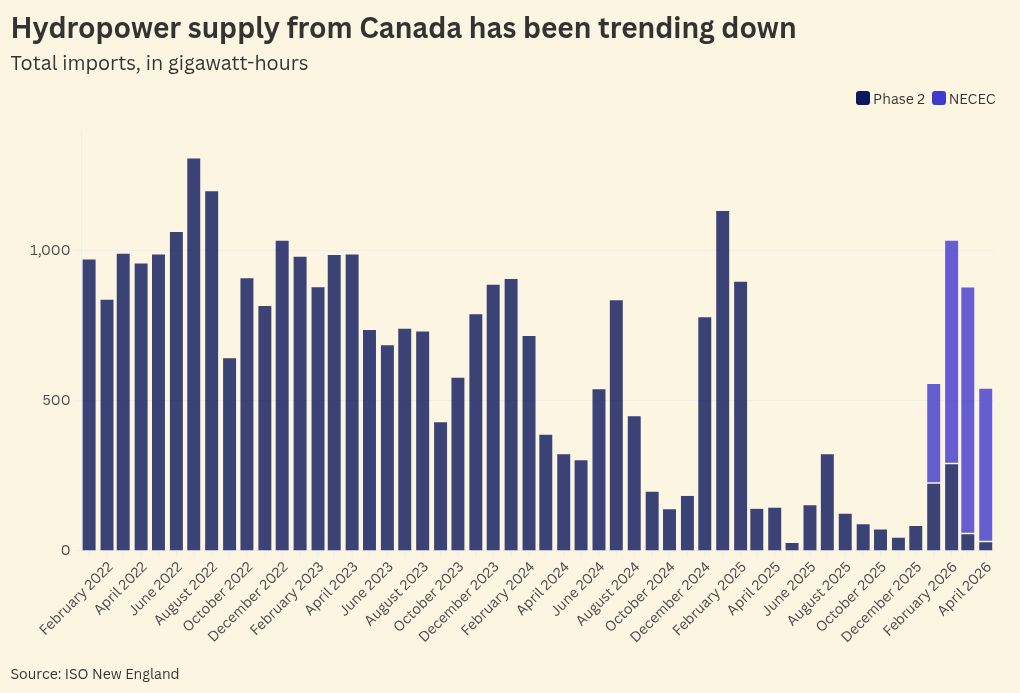
Energy flow into New England is up just marginally, and there have been roughly 27 days when no power at all traveled along the new line, commonly called NECEC. If current trends hold, New England will receive less hydropower this year over two transmission lines than it did over just one line in 2023 and previous years.
“What we’ve seen so far is not what some people expected to see,” said Joseph LaRusso, manager of the Clean Grid Program at climate nonprofit Acadia Center.
Potentially putting further strain on the supply of Canadian hydropower is the Champlain Hudson Power Express, a transmission line that started sending electricity from Quebec into New York City this month.
NECEC has its origins in a 2016 Massachusetts law that required the state to procure 1.6 gigawatts of offshore wind power and another 1.2 gigawatts of additional renewable energy. The plan was to contract with state-owned Canadian power supplier Hydro-Québec to tap into the region’s abundant hydropower resources and build a new transmission line to carry the electricity south.
Canary Media
The first proposal — a 192-mile project through New Hampshire — was abandoned in 2019 after public outcry about the impact on the state’s forests. The transmission line through Maine faced similar controversy. In 2021, a statewide referendum vote put the project on hold until 2023, when a jury ruled that the development could be restarted.
Two and a half years later, NECEC came online and started carrying the first electrons into New England. It’s certainly a notable achievement in a time when the Trump administration has been doing all it can to stop progress on clean energy, including offshore wind — the cornerstone of the Northeast’s decarbonization plans. And although the results so far have been mixed, some see potential for the line to make a sizable impact on New England’s clean energy future.
How much hydropower is coming from Quebec?
When NECEC came online earlier this year, Massachusetts Gov. Maura Healey, a Democrat, and climate advocates touted it as a major win for the state’s renewable energy goals and a way to save residents money on their utility bills. Massachusetts contracted with Hydro-Québec for 9.55 terawatt-hours of hydropower per year, roughly 20 percent of the state’s annual electricity demand.
The operations have not had the smoothest start. NECEC was completely inactive for several spans — from a half day on April 28 to nearly two weeks at the end of May and beginning of June. The most recent outage was due to “technical difficulties,” Hydro-Québec spokesperson Lynn St-Laurent said in a written statement.
“Once repairs were completed, deliveries resumed,” she said. “With any new transmission infrastructure, a period of optimization and fine-tuning is to be expected.”
Read Next
Still, most of the time, hydropower has flowed steadily on the new infrastructure. Through the end of April, Hydro-Québec exported about 2.4 terawatt-hours of power on the transmission line.
If the power is (mostly) moving as planned, why are some people still skeptical that the project will deliver the promised benefits? Because so far, it hasn’t done much to add to the total supply of renewable energy in New England.
Before NECEC, New England already imported significant amounts of hydropower on a transmission line known as Phase 2, which runs from Quebec into central Massachusetts. In 2019, the year the Massachusetts regulators approved the contracts between utilities and Hydro-Québec, more than 12 terawatt-hours traveled onto the New England grid over the line.
But starting in 2023, Hydro-Québec started selling less and less energy to New England over Phase 2. For nearly three weeks in early 2025, exports ceased entirely. Through the end of April this year, just over half a terawatt-hour has come south over that line. On paper, it can look a lot like NECEC isn’t allowing more energy into New England but is instead just giving it a new road to travel along.
“We’re not seeing much net new flows coming from our neighbors,” said Dan Dolan, president of the New England Power Generators Association. “We are running pretty close to the net energy flows we had in 2025, which were the lowest amount of imports that New England has ever gotten from Quebec.”
At the same time, Quebec has started importing power over the Phase 2 line, a rare occurrence before 2025. In the first four months of this year, more than 500 gigawatt-hours traveled into Canada on the line. Because New England’s electricity supply relies heavily on natural gas generation, the region is still burning fossil fuels to ship energy north even though it is receiving hydropower for its own use.
“We’re seeing a heavier natural gas burn on the rest of the generation fleet than I think many of those states had assumed going into this year,” Dolan said.
Power imports and exports
The main driver behind slowing exports seems to be the drought conditions that have lingered in Quebec for the past few years. During wetter periods, the hydropower industry uses large reservoirs to store water to help it ride out these drier times, said Gilbert Bennett, a senior adviser for WaterPower Canada, a hydropower trade group.
As generators wait for rainier days, their first obligation is to supply domestic customers, he said. That means there will likely be times when Hydro-Québec needs to import electricity over the Phase 2 line to offset some of the hydropower it is contractually obliged to send to Massachusetts over NECEC.
“Electricity flows between Québec and New England are dynamic and vary continuously based on market conditions and system needs on both sides of the border,” St-Laurent said.
Read Next
Financially, New England customers should not be at risk from these ongoing shifts, LaRusso said. Massachusetts’ contract with Hydro-Québec includes provisions that require the Canadian company to pay financial penalties if it fails to deliver according to its contract.
“To the extent that imports are curtailed, Hydro-Québec is liable to make the electric utilities whole for the cost of replacement power,” LaRusso said.
It is less clear whether NECEC will boost Massachusetts’ renewable energy supply in the long run.
Still, the new transmission line has at times demonstrated its potential to help New England achieve a cleaner energy supply, LaRusso said. He pointed to May 16, a sunny day when solar power reduced demand on the grid and NECEC was going full tilt. Natural gas plants were running at low levels, and most of the power was heading to New York. For a short time, all the region’s power needs could be met by nonfossil fuel resources.
“Hypothetically, [grid operator] ISO New England could’ve turned off its gas generators,” LaRusso said. “It really gets you thinking of the resources available and how they could be managed and shared in the future.”
Bennett is also confident in the long-term outlook. In general, he said, climate change is forecast to create wetter conditions in Quebec. And the region is investing heavily in additional hydropower facilities as well as onshore wind. The years to come, he said, will bring plenty of renewable resources to share with Canada’s southern neighbors.
“Over the long term, we see a bright future,” Bennett said.
Vance Cancels Trip To Geneva for Official MoU Singing
The White House announced late Thursday that Vice President JD Vance had canceled his planned trip to Switzerland for the official signing ceremony of the memorandum of understanding (MoU) intended to end the conflict with Iran.
The cancellation came hours after Vance indicated at a White House press conference that his travel plans remained uncertain, despite earlier announcements that a ceremony had been scheduled for Friday in Geneva.
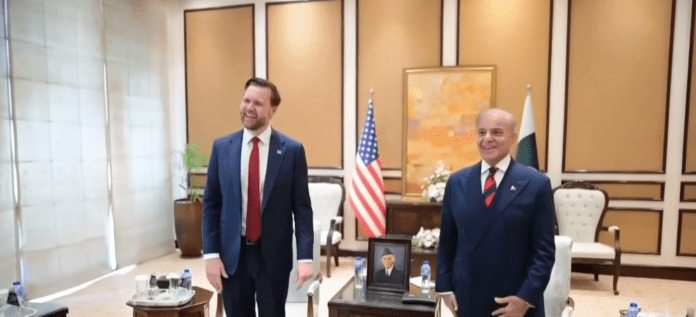
Earlier in the week, Pakistani Prime Minister Shehbaz Sharif announced that Pakistan would host a ceremony in Switzerland to mark the agreement and launch technical-level negotiations.
Speaking Thursday, Vance said, “My plan is to go to Switzerland,” but added that he did not know “exactly when.”
“We think these technical negotiations are going to start sometime this weekend — that’s still the plan — but that could change,” he said.
It remains unclear whether or when the vice president will reschedule the trip.
President Donald Trump digitally signed the MoU on Wednesday in Versailles. Iranian President Masoud Pezeshkian also signed the document. Friday’s event was intended to serve as a ceremonial signing and the formal start of negotiations.
The White House announcement came as fighting continued in Lebanon. The Israel Defense Forces said four soldiers, including a battalion commander, were killed by a Hezbollah drone in southern Lebanon. The military said it subsequently carried out strikes against Hezbollah targets.
During Thursday’s press conference, Vance criticized Israel’s military approach and resistance to the MoU, which would, among other provisions, limit Israel’s ability to target Hezbollah and respond to attacks.
“It’s clear that large segments of the Israeli political system and population are very sensitive about this deal,” he said. “But I also think they’re picking up on some misinformation about the deal and running with it and sort of panicking about it.”
Addressing Israeli opponents of the agreement, Vance added: “I guess my response to them would be: What is your exact proposal? You’re a country of nine million people. You can’t just kill your way out of solving every single national security problem that you have.” (Vance incorrectly stated the population of Israel at nine million, when the correct number is 10 million.)
President Donald Trump also criticized Israel’s military operations in Lebanon during the G7 conference.
“We have a little dispute over Lebanon,” he told reporters. “I say, ‘You can do a little softer touch, Bibi. You don’t have to knock down a building every time somebody walks into it that’s from Hezbollah.’”
Governments have cut back the European Union’s proposal to spend national funds on the bloc’s energy infrastructure after Sweden threatened to restrict power exports over the plan, an internal negotiating document seen by Reuters showed.
The spat concerns a proposed EU law to raise funds for large cross-country energy infrastructure projects, like interconnectors, which are needed to integrate more renewable energy into the network and meet rising power demand from data centres and other sources.
The European Commission proposed in December that 25% of unused congestion revenues collected by power grid operators would be earmarked to fund EU-backed projects.
EU countries negotiating the legal proposal have cut that back, so that national operators would not have to hand over any congestion revenues collected from power trade within their country, their latest compromise proposal showed.
The draft proposal would also cut the share of cross-border congestion income earmarked for EU-backed projects to 10%, which would rise gradually to 25% by 2030.
The plans would scale back the available funding, which raises questions about where cash for new cross-border power projects will be found. Some of Europe’s biggest planned power interconnector projects have stalled in recent years due to lack of funds and other concerns.
The EU estimates that €1.2 trillion ($1.4 trillion) in power grid investments are needed by 2040.
COUNTRIES PLAN DEAL NEXT WEEK
Congestion revenues arise when grid constraints prevent electricity from flowing to high-demand areas—both within a country and across borders—resulting in substantial earnings for network operators.
Sweden, a vocal opponent of the EU plans, collected 30.5 billion Swedish crowns ($3.3 billion) in congestion revenues in 2025.
Stockholm threatened earlier this year to restrict electricity exports to neighbouring countries if the EU proposal went ahead. Sweden exports excess power via cables to countries including Germany, Denmark and Finland.
EU countries’ ministers aim to approve their position on the proposal at a meeting on June 26, after which they will negotiate the final law with the European Parliament.
A spokesperson for Cyprus’ EU presidency, which drafted the compromise, said the draft already had “broad support” among countries, but Cyprus would propose “minor tweaks” to ensure it was approved by a large majority next week.
A Swedish official told Reuters the government would continue working with Cyprus to find a solution on the congestion revenue issue.
How Did the Feds Get Into Anti-ICE Activists’ Signal Messages?
When anti-ICE activists rallied against the Trump administration’s deportation campaign in Minneapolis, many relied on the encrypted messaging app Signal for secure communications. In activist chats and quickly established ICE-tracking groups, locals used Signal to keep tabs on federal agents patrolling their communities.
When the Department of Homeland Security announced this week the arrest of 15 alleged “anti-ICE rioters” in Minnesota, it pointed directly at their Signal chats.
The indictment is in large part built upon on conversations from more than a dozen Signal groups, citing more than 100 specific messages. The case is a stark reminder that using an encrypted messaging platform like Signal is not in and of itself a magic bullet to safeguard communications. It also raises the question: How did Immigration and Customs Enforcement’s Homeland Security Investigations unit gain access to all of these communications in the first place?
The indictment doesn’t provide a clear answer. But sprinkled throughout the document are clues that suggest that law enforcement may have gained access to the physical devices of some of those indicted.
The indictment singles out its targets for their alleged participation in local ICE rapid response networks, where volunteers monitor and report the presence of federal agents in their communities by flagging details such as the license plate numbers of vehicles used by immigration authorities. ICE watchers in Minnesota have been met with intimidation from immigration authorities amid the national outcry following the killings of Alex Pretti and Renee Good as they observed the actions of immigration authorities.
The 15 people named in the latest indictment are all charged with “conspiracy to impede or injure an officer,” with some facing additional charges like “solicitation to commit a crime of violence” and “destruction of government property.” Though some of the accused had court appearances on Tuesday, their defense attorneys have not as of yet been named.
The indictment comes months after FBI Director Kash Patel said in a podcast interview that federal law enforcement had started an investigation into Minnesota ICE watchers using Signal groups to share information about immigration agents.
The bulk of the indictment consists of transcripts of group messages; at various points it also makes mention of voicemails, text messages, Signal direct messages, and Signal calls. For instance, the indictment in one spot mentions that two of the indictees “exchanged approximately 20 connected Signal calls.” This hints that authorities were able to access not just group chat messages, but likely had wholesale access to the devices of at least some of those indicted.
The Signal app provides end-to-end encryption, protecting communications in transit, so that anyone monitoring your internet or cellular data connection cannot see the contents of your messages. Signal also minimizes the amount of metadata collected, so if the organization behind the app, the Signal Foundation, was served with a compulsory legal process to reveal user information, it wouldn’t even know with whom you spoke or chatted.
But all that falls apart if your device gets into the wrong hands. In order to safeguard your Signal data from someone who obtains access to your device, it’s necessary to manually harden Signal by modifying some of its default settings.
Perhaps Signal’s most well-touted security and privacy feature is its ability to set disappearing messages. Messages can be set to expire in periods ranging from seconds to weeks. A default expiration time for all messages can be selected, and specific groups and conversations can be set to custom retention times. To minimize risk, set retention times to the shortest amount feasible — minutes or hours, instead of days or weeks.
Signal’s disappearing messages don’t remove evidence that communications between parties occurred in the first place.
Keep in mind that Signal’s disappearing messages delete the contents of a message, but they don’t remove evidence that communications between parties occurred in the first place. This means that even if a group has enabled disappearing messages, someone who gains access to a member’s device could later determine with whom they were chatting. Therefore it’s safest to regularly delete entire groups and chats, not just the messages themselves.
Just like its chat function, Signal also keeps similar records of voice and video calls. It’s as important to delete records of the calls as it is to delete records of text messages, both within the Signal app and in your phone’s standard call history.
On iPhones, Signal can integrate its call history into the iPhone’s regular call history. This privacy-eroding feature can be disabled on Signal on iOS by tapping your profile circle on the top-left corner of the app, clicking on Settings, then Privacy, then disabling “Show Calls in Recents.”
Additionally for Signal on iPhones, you’ll also likely want to disable settings like “Share Contacts with iOS” and “Use Phone Contact Photos” (for Android users, the equivalent is “Use address book photos”), which can be found under Settings, then Chats.
Such precautions may sound extreme, but in a recent case, authorities were able to recover deleted incoming Signal messages based on old push notifications that were archived on iPhones (the latest iPhone update fixes this issue, highlighting the importance of keeping your devices up to date). On that note, remember to either turn off Signal notifications entirely or have them display only the names of people sending messages — which should be pseudonyms, not real names.