Home Blog

India doubts drove Pentagon’s Indo-Pacific name change

0
india-doubts-drove-pentagon’s-indo-pacific-name-change
India doubts drove Pentagon’s Indo-Pacific name change

The Pentagon’s decision to restore the designation US Pacific Command (USPACOM), replacing the Indo-Pacific Command name adopted in 2018, has officially been presented as a historical adjustment rather than a strategic shift.

According to the US Department of Defense, the command’s area of responsibility remains unchanged, stretching from America’s Pacific coastline to India’s western border, while its mission and commitment to maintaining a “free and open” region remain intact.

The 2018 decision to rename Pacific Command as Indo-Pacific Command reflected a broader strategic vision that placed India at the center of Washington’s approach to Asia, elevating it from a major regional power to a key pillar of the Indo-Pacific framework.

Eight years later, the return to the Pacific Command designation raises an important question: Is Washington beginning to reassess some of the assumptions that shaped that strategy?

The India assumption

The Indo-Pacific concept emerged as the US sought to respond to China’s growing economic, technological and military influence. At the heart of that framework was the belief that India would play a leading role in preserving a balance of power favorable to the US across the region.

The rationale made good strategic sense. India has a population exceeding 1.4 billion people, was the world’s fourth-largest economy in 2025 and spends more than US$86 billion annually on defense. Its geographic location places it astride critical maritime routes connecting the Middle East, Africa and East Asia.

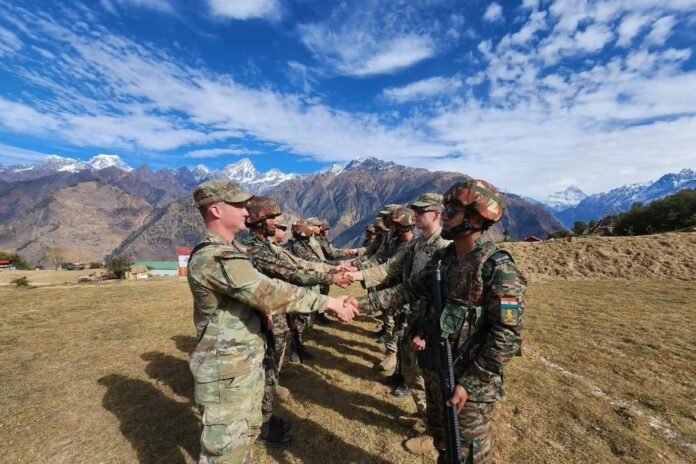
Washington invested heavily in this vision. Defense cooperation expanded dramatically, intelligence sharing deepened and military interoperability increased. The US and India signed a series of foundational defense agreements while bilateral defense trade grew from virtually zero in the early 2000s to more than $20 billion. Through mechanisms such as the Quad and joint exercises such as Malabar, India became increasingly integrated into American strategic planning.

Underlying all this was a broader assumption: that India would emerge not only as a counterweight to China but also as a stabilizing force in South Asia and a major contributor to wider Indo-Pacific security. The question today is not whether India has become more powerful, which it clearly has. Rather, it is whether the strategic expectations the US sought from India have been realized.

Outcomes over potential

To be sure, India’s recent achievements are substantial. Few countries have expanded their international profile as rapidly over the past two decades. Yet regional leadership depends not only on economic growth and military spending but also on the ability to shape regional outcomes and manage security challenges.

It is here that India’s record is mixed. The 2019 Balakot crisis demonstrated how rapidly tensions between India and Pakistan, both nuclear powers, could dangerously escalate despite enhanced international engagement with both countries. More recently, the May 2025 confrontation again required diplomatic intervention by outside powers to prevent further deterioration.

These episodes do not diminish India’s strategic importance. They do, however, highlight the limits of military and diplomatic coercion as instruments for managing the India-Pakistan relationship. The realities of nuclear deterrence have constrained escalation in recent clashes and limited the ability of India to impose unilateral outcomes on Pakistan.

For Washington, this matters because US policymakers under Trump increasingly seek partners capable of reducing America’s strategic burdens. As strategic competition with China intensifies, the US has strong incentives to avoid becoming repeatedly drawn into regional crises that divert attention from its broader priorities.

There are also signs that Washington is increasingly willing to evaluate India through a more transactional lens than was common during the early years of the Indo-Pacific framework. The contrast between Trump’s first and second administrations underlines the point.

Trump’s first term embraced the Indo-Pacific concept as a strategic vision in which India was positioned as a future counterweight to China. In this vision, strategic potential often received greater emphasis than immediate returns.

Trump’s second administration, however, is much more focused on measurable outcomes. Despite repeatedly describing India as an important strategic partner, Washington has maintained pressure on trade issues, pursued tariff disputes and approached economic negotiations through a framework emphasizing reciprocity rather than exceptional treatment.

This suggests that geopolitical importance alone no longer guarantees preferential consideration in American policymaking. This does not necessarily downgrade India in America’s vision. Rather, it suggests that Washington under Trump may be moving from strategic aspiration toward strategic performance as the principal standard of evaluation.

Pakistan’s rising relevance

This US reassessment of regional realities has coincided with renewed acknowledgment of Pakistan’s strategic significance. For much of the past decade, many analysts predicted that Pakistan’s relevance would steadily decline as India’s economic and diplomatic influence expanded. Yet geography and geopolitics continue to undercut those assumptions.

Pakistan is home to approximately 250 million people and maintains one of the world’s largest military establishments, with roughly 650,000 active personnel. It possesses a nuclear arsenal estimated at more than 170 warheads and occupies a strategic position connecting South Asia, Central Asia, Afghanistan and the Gulf.

Recent events have reinforced that relevance. Pakistan’s role in facilitating communication and diplomatic engagement between the US and Iran during their war has reinforced Islamabad’s value as a regional interlocutor. That role reminded US policymakers that Pakistan retains influence across multiple geopolitical theaters extending beyond South Asia to the Middle East.

Washington’s relationship with Pakistan has historically fluctuated according to changing geopolitical circumstances. Recent regional developments, however, have again underscored that Pakistan cannot be excluded from US strategic calculations about South Asia, Afghanistan or the Gulf.

That is, South Asia cannot be understood or managed exclusively through an India-centric framework. Regional outcomes are shaped by multiple actors whose influence derives from geography, military capabilities, diplomatic relationships and their ability to affect events beyond their immediate borders.

A shift in strategic thinking?

Critics may argue that the renaming of the Pacific Command is little more than bureaucratic branding. They would correctly note that the Quad remains active, defense cooperation between Washington and New Delhi continues to expand and India remains central to American efforts to balance China’s growing power.

Yet the significance of the renaming lies less in what it changes operationally than in what it reveals conceptually, i.e., that strategic frameworks are ultimately judged by results rather than intentions.

The restoration of Pacific Command does not signal an American abandonment of India, nor does it imply the collapse of the broader US-India strategic partnership. India remains one of the world’s most consequential powers and a critical American partner in Asia.

What may be changing, however, is that Washington is placing greater emphasis on strategic outcomes than on strategic expectations. If that trend continues, the future debate will not be about whether India remains important, but about whether the strategic expectations that drove its elevation in Washington have been fulfilled – and, if not, how Washington responds beyond renaming its largest military command.

Saima Afzal is a researcher specializing in South Asian security, counterterrorism, and broader geopolitical dynamics across the Middle East, Afghanistan and the Indo-Pacific. She is currently a Research Scholar at Justus Liebig University, Germany.

FBI Tried to Flip Anti-ICE Protesters Into Informants

0
fbi-tried-to-flip-anti-ice-protesters-into-informants
FBI Tried to Flip Anti-ICE Protesters Into Informants


John Mark Rozendaal was just trying to play music.

On May 29, along with scores of others, Rozendaal responded to calls on social media to gather outside of Delaney Hall, the immigration detention facility in Newark, New Jersey.

The privately run U.S. Immigration and Customs Enforcement facility had, in recent weeks, become the site of daily protests, spurred by a detainee hunger strike against alleged ghastly conditions inside.

When Rozendaal went to Delaney Hall, he took his cello with him. 

“I consider music to be a de-escalatory thing to do,” he told The Intercept. “I sat down on the concrete barricade facing north and started to play.”

“The agent said, ‘We’re calling because you were arrested at Delaney Hall.’”

That night, however, the scene outside Delaney Hall quickly took a violent turn. New Jersey State Police and ICE agents issued a dispersal order and began to clear protesters from the area by force — with officers deploying chemical weapons and charging protesters on horseback. 

“As I played, I saw this wall of plastic riot shields and cops in tactical gear advancing,” Rozendaal recalled. “There were tear gas canisters flying overhead. I could see horses behind the riot shields, flash-bangs. So it was quite dramatic.”

Moments later, Rozendaal was arrested by the New Jersey State Police and, according to an arrest report viewed by The Intercept, charged with one count of obstructing law enforcement. The charge was minor — but a week later, things took a strange turn when Rozendaal received a call from the FBI. 

“The agent said, ‘We’re calling because you were arrested at Delaney Hall,’” Rozendaal told The Intercept. (The FBI declined to comment.)

In the following minutes, Rozendaal said the agents asked if he would be willing to provide the FBI with information on protesters that they described as “anybody planning to go to Delaney Hall with not the right intentions.”

“So, I mean, they were asking me to inform,” Rozendaal said.

Mainstay FBI Tactic

Rozendaal is not the only Delaney Hall protester to receive a call from the FBI.

In the weeks since arrests began stacking up at the protests — approximately 90 people have been arrested so far — at least half of those taken into custody have received calls from federal agents looking for information, according to Benjamin Van Meter, a deputy public defender with the Essex County Public Defender’s Office who represents a number of protesters facing charges.

Van Meter lodged a complaint with authorities over the matter, claiming the FBI contact with his clients violated their constitutional rights.

The phone number used to contact Rozendaal, according to call history logs reviewed by The Intercept, is registered to the FBI’s New York field office and is posted online as an anonymous tipline.

Rozendaal said he rejected the offer immediately and, when the agent attempted to question him further, invoked his right to remain silent, ending the conversation.

The FBI has a long track record of trying to turn protesters, political dissidents, and ethnic and religious minorities into informants. The strategy, which is still commonly used today, can serve agents by both collecting information while stoking distrust among members of political movements and religious communities, according to Amol Sinha, executive director of the American Civil Liberties Union’s New Jersey chapter.

“With every major protest movement in United States history, there have been attempts at infiltration.”

“With every major protest movement in United States history, there have been attempts at infiltration and attempts to disrupt them and to sow discord,” Sinha said. “The FBI has repeatedly been on the wrong side of history every time they’ve tried these tactics of infiltration.”

Sinha said it was important for anyone approached by federal agents to remember their right to remain silent and to ask for an attorney to be present for any questioning.

“Unless the FBI produces a warrant, you have the right to refuse entry, ” Sinha said. “You certainly have the right to stay silent and to demand a lawyer. You are not under any obligation to speak to them about anything — especially if they are charging you with a crime.”

The Rights of Our Clients

Samuel Becker, another protester facing local charges after an arrest outside Delaney Hall, told The Intercept he too got a visit from federal agents in the days following his arrest.

“The FBI would rather intimidate and punish the people protesting outside of Delaney Hall than investigate the physical, sexual, and psychological violence that ICE agents and their auxiliaries are inflicting on detainees across this country every day,” Becker said.

Van Meter, the public defender, wrote a letter to Robert Frazer, the U.S. attorney for the District of New Jersey, and two high-ranking FBI officials in New York and New Jersey, demanding that the FBI stop their attempts to question his clients without an attorney present. (The Department of Justice did not respond to a request for comment.)

“These attempts at contacting our clients at their homes and by phone violate their right to counsel and we ask that you immediately cease and desist from all attempts to question or interrogate our clients without their counsel present,” Van Meter wrote in the letter, dated June 9. “Any further efforts to question our clients are a continued violation of their constitutional right to counsel and our office remains ready to seek all available relief under both state and federal law.”

In a statement to The Intercept, Karen Paff, a spokesperson for the New Jersey Office of the Public Defender, said Van Meter and his colleagues were simply looking “to ensure that the rights of our clients are respected.”

“When law-enforcement officers seek to question individuals who are represented by counsel about matters within the scope of that representation, it is our responsibility to notify the appropriate agencies that counsel has been assigned and that any such communications must comply with the law,” Paff said. “This is not a new or case-specific practice. It is a routine part of our responsibility to clients in any matter where represented individuals may be approached for questioning.”

For Rozendaal, the intent of the FBI agents who sought him out seemed to go beyond just fishing for information.

“I think the real intent is to divide us, to make us scared to talk to each other, too scared to talk in general, scared to go to Delaney Hall,” Rozendaal said. “It won’t work.”

Everything Bangladesh’s Rahman hopes to get from China

0
everything-bangladesh’s-rahman-hopes-to-get-from-china
Everything Bangladesh’s Rahman hopes to get from China

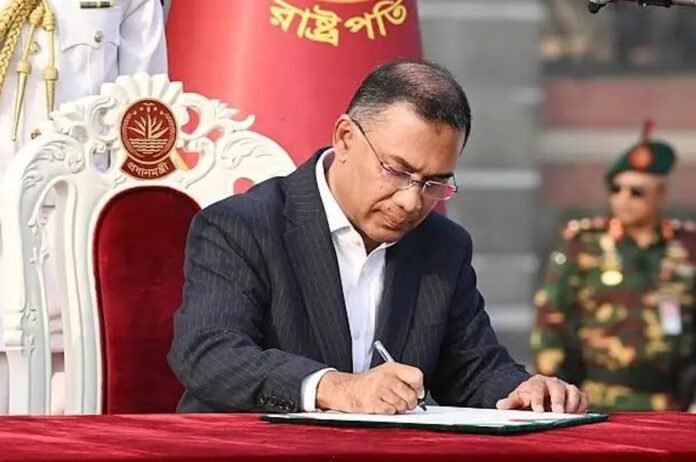
When Ashik Chowdhury, the executive chairman of the Bangladesh Investment Development Authority, was recently asked about Prime Minister Tarique Rahman’s upcoming trip to China, his response caught the room off guard.

“Many issues will come up,” Chowdhury remarked, “starting with defense.”

For a diplomatic trip strictly billed around trade, investment, and business, it was an early, blunt admission of how heavy the agenda will be.

Rahman is scheduled to land in China on June 23 for a four-day official visit, preceded by a two-day stopover in Malaysia. While the newly elected government has touted the tour under its “Bangladesh First” foreign policy doctrine, the reality awaiting Dhaka in Beijing will go well beyond balance sheets.

The trip begins with an economic veneer. Rahman’s first stop will be Dalian for the World Economic Forum’s Summer Davos — formally, the 17th Annual Meeting of the New Champions, running from June 23-25.

He is expected to hold talks with WEF Interim President and CEO Alois Zwinggi before heading to Beijing to meet with Chinese President Xi Jinping. By opening at a multilateral economic forum, Dhaka gets to frame the visit through a commercial lens before diving into the high-stakes strategic negotiations waiting in the wings.

The economic stakes are genuinely massive. Bangladesh currently has financing proposals worth over $9 billion pending with the Chinese government, the Asian Infrastructure Investment Bank and the New Development Bank.

Dhaka is directly seeking $4.34 billion from Beijing to back several critical, long-delayed initiatives — among them the highly contested Teesta River Comprehensive Management and Restoration Project, the expansion and modernization of Mongla Port, and the Chinese Economic and Industrial Zone in Anwara, Chattogram.

The groundwork on Anwara is moving fast. On June 16, the Executive Committee of the National Economic Council cleared a 41.89 billion taka project to develop the zone’s supporting infrastructure: a four-lane road, a multipurpose jetty capable of handling 20,000 deadweight-tonne vessels, a central effluent treatment plant, and gas, power, and water systems across the 800-acre site. China Road and Bridge Corporation has been nominated to carry out construction.

In all, officials expect around a dozen memoranda of understanding to be signed during the trip, spanning electric vehicle technology transfers, renewable energy, banking cooperation and a potential currency swap. Rahman will also serve as chief guest at a Beijing investment conference aimed at drawing Chinese capital directly.

But commerce alone does not explain why BIDA’s chairman put defense at the absolute top of the list.

Bangladesh is quietly finalizing a $2.2 billion deal to buy 20 Chinese-made J-10CE multirole fighter jets. The package allocates roughly $60 million per aircraft — $1.2 billion for the 20-jet fleet — with the remaining $820 million covering training, logistics, spare parts, transport, insurance and infrastructure.

The acquisition would make Bangladesh only the second country in South Asia, after Pakistan, to operate the J-10CE, and would represent the most significant expansion of Chinese military hardware in the region in years.

The previous interim administration had already cleared the deal in principle following extensive military reviews, and the current government is now driving it across the finish line.

Air Chief Marshal Hasan Mahmood Khan heads an 11-member inter-ministerial committee tasked with finalizing government-to-government terms, payment schedules and delivery timelines.

Internal momentum for the Chinese jets surged after Operation Sindoor, the four-day India-Pakistan border conflict of May 2025. While New Delhi disputed many of Islamabad’s claims, Pakistan’s accounts of the J-10CE’s radar performance against Indian Rafales likely shifted calculations in Dhaka, convincing military planners that the aircraft offered the best available combination of combat capability and cost, particularly after sticker shock from French alternatives.

It is not an isolated defense procurement from China. In January this year, the Bangladesh Air Force signed a government-to-government agreement with CETC International — the export arm of China Electronics Technology Group Corporation — to establish a domestic unmanned aerial vehicle manufacturing and assembly facility in Dhaka, with full technology transfer. It stands as the most consequential transfer of Chinese military technology to Bangladesh to date.

Washington is no doubt watching all of this carefully. US Ambassador to Bangladesh Brent Christensen has explicitly flagged the long-term risks of strategic over-reliance on Beijing.

To provide an alternative, Washington has put an aggressive military package on the table, including F/A-18 Super Hornets, Apache attack helicopters, NASAMS air defense systems, and MQ-9 Reaper drones — a line-up calibrated to match what China is offering in both capability and signal.

Simultaneously, long-stalled talks over the GSOMIA and ACSA defense frameworks have suddenly accelerated. The catalyst was a congratulatory letter dated February 18 from President Donald Trump to Prime Minister Rahman — a letter that went well beyond pleasantries.

“I hope you will take decisive action to complete the routine defense agreements that would finally give your military access to high-end, American-made equipment,” Trump wrote, pressing Dhaka to sign both pacts. Rahman’s government has insisted that no security agreement will be concluded unless it protects core national interests, but the pressure is unmistakable.

The deeper problem for Bangladesh is that Washington has begun tying trade access directly to security compliance. A reciprocal trade agreement signed on February 9 by the outgoing interim government embedded significant conditionalities alongside its tariff concessions.

The deal restricts Bangladesh from purchasing nuclear reactors, fuel rods, or enriched uranium from countries deemed to jeopardize US interests — a clause with direct implications for future energy deals with China or Russia. The agreement also commits Dhaka to $3.5 billion in American agricultural purchases, including wheat, soybeans and cotton.

The tariff relief that accompanied the deal came in two stages: Washington cut its levy on Bangladeshi exports from 37% to 20% effective August 1, 2025, as initial negotiations concluded, and then further to 19% when the broader trade deal was formalized in February.

The deal also includes a provision — Article 5.3 — that removes the supplementary reciprocal tariff surcharge on garments made using American cotton and man-made fiber, though economists have noted that the underlying base tariff remains, making the benefit narrower in practice than in the headlines.

Dhaka knows precisely how this game is played. The $3.7 billion formal order for 14 Boeing aircraft — eight 787-10 Dreamliners, two 787-9 Dreamliners and four 737-8 MAX jets — signed by Biman Bangladesh Airlines on April 30, 2026, was widely understood as the commercial fulfillment of a commitment made inside the February trade deal. It has been widely regarded as a geopolitical statement dressed up as aviation procurement, with no one seriously arguing otherwise.

Beijing has not let the contrast go unnoticed. At a meeting with Bangladesh’s then-foreign affairs adviser in Kuala Lumpur last July, Chinese Foreign Minister Wang Yi pointedly observed that China extends 100% duty-free access to Bangladeshi products, and called the weight of American tariffs on one of the world’s least developed countries “neither reasonable nor ethical.”

India has its own set of alarms. Speaking at an Observer Research Foundation event in New Delhi in July last year, Chief of Defense Staff General Anil Chauhan said that a possible convergence of interests between China, Pakistan and Bangladesh could carry serious implications for regional stability — placing the question of Bangladesh’s strategic alignment at the center of India’s security calculations.

Nothing in that calculus agitates New Delhi more than the Teesta project. Bangladesh has formally requested a $550 million Chinese loan for Phase 1 of the Teesta River Comprehensive Management and Restoration Project — a plan that would dredge 140 million cubic meters of sediment, reclaim 171 square kilometers of land and rebuild hundreds of kilometers of embankments across the northern districts.

The issue is not the water but the geography as a whole. The project’s footprint runs adjacent to the Siliguri Corridor — the narrow, 22-kilometer-wide strip of land that connects mainland India to its eight northeastern states, and the single most strategically sensitive piece of terrain in South Asia.

Adding to New Delhi’s unease are persistent reports that Bangladesh plans to upgrade its Lalmonirhat airbase, a World War II-era facility sitting less than 20 kilometers from the Indian border, with Chinese technical assistance.

India has moved swiftly in response. In May last year, the Airports Authority of India sent a team to survey the long-defunct Kailashahar airfield in Tripura’s Unakoti district — the first concrete step toward reviving a base that had been non-operational for over three decades.

While Dhaka sees essential domestic modernization in the form of flood management and upgrading its long-neglected air force, New Delhi sees a Chinese military footprint edging toward its most vulnerable chokepoint.

The shadow hanging over this entire visit is July 2024, when the then-prime minister Sheikh Hasina went to Beijing chasing a rumored $5 billion budget support package, only to return early and reportedly frustrated, with just $136 million in commitments, in the form of a 1 billion yuan grant.

Rahman will arrive in China in a meaningfully different position. He carries a cleaner project pipeline, Executive Committee of the National Economic Council clearances already secured for key industrial zones and the backing of a powerful parliamentary majority.

He also faces stubborn domestic challenges. Severe gas and electricity shortages continue to hobble the factories that Chinese investors would seek to build or fill, and the Bangladesh bureaucracy has a well-documented record of choking approved projects for years before construction actually begins.

Ultimately, Rahman’s trip will not be judged by the number of MOUs he brings back from Beijing. It will be judged by whether Dhaka can execute a precise high-wire act — pulling in billions in Chinese infrastructure financing and military hardware without triggering a devastating economic backlash from Washington or a security crisis with New Delhi.

Both risks are real, and neither is easily resolved as Bangladesh moves decisively toward Beijing.

Jannatul Naym Pieal is a Dhaka-based journalist, writer and researcher with over a decade of experience in professional journalism. He is also the author of 10 published books and a researcher focusing on Bangladesh’s media industry and its intersections with broader social and academic fields.

Zelenskiy: Best way to guarantee Europe’s future would be fast-track EU membership for Ukraine

0
zelenskiy:-best-way-to-guarantee-europe’s-future-would-be-fast-track-eu-membership-for-ukraine
Zelenskiy: Best way to guarantee Europe’s future would be fast-track EU membership for Ukraine


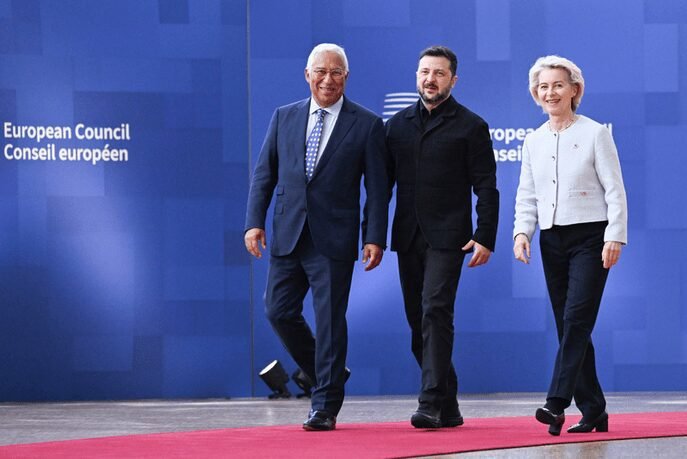
Ukrainian President Volodymyr Zelenskiy told ​an EU summit on Thursday the future of Europe was being shaped by the defence of Ukraine and the best security guarantee for the bloc’s future would be ‌to grant Kyiv fast-track membership.

Zelenskiy said he told member states that Ukraine wanted the war against Russia to be over by the end of the year and urged them to help Kyiv prepare for another winter with air defence missiles and fuel.

Every democratic nation in Europe deserved to be in the EU and “Ukraine merits this because it has paid more than any other country for its right to be free, independent and … European”, ​Zelenskiy said in excerpts of his address posted on X.

“The future of Europe – free, united and of course in peace – is being decided in our ​defence. That shows how unique our situation is.”

Hours earlier, Ukrainian air strikes struck targets deep inside Russia, including an oil refinery in Moscow, ⁠the latest long-range attacks in a campaign Zelenskiy highlighted as proof of Ukraine’s capabilities in meetings with U.S. President Donald Trump and other G7 leaders in France this ​week.

In his message to the EU leaders, he acknowledged that not all members would support an accelerated accession, with Hungary demanding the removal of such language from an European Council statement released ​after the summit.

“The most important such step – I know that not everyone loves this – could be a fast-track path for Ukraine to join the EU,” Zelenskiy said.

EU ambassadors agreed last week to advance membership talks with Ukraine and ex-Soviet Moldova, with discussions beginning on the first of six legal and policy “clusters” to bring legislation and standards into line with the bloc.

A statement, opens new tab issued by the European Council after ​the summit welcomed the beginning of accession talks for Ukraine and said it “looks forward to the opening of the other clusters, in line with the merit-based approach”.

But Hungary managed to ​remove a reference to accelerating accession for Ukraine from the statement, Prime Minister Peter Magyar said, opens new tab on X.

“It wasn’t easy,” he wrote.

END THE WAR THIS YEAR

Ukraine, which has also sought U.S. support for ‌its efforts ⁠to find a peace solution for more than four-year-long conflict, wants to end the war this year, Zelenskiy said in subsequent comments posted on Telegram.

“Of course, we want to end this war before winter – through diplomacy and by putting pressure on Russia. But we understand who we’re dealing with,” he said.

“Putin is war,” he added, referring to Russian President Vladimir Putin. Ukraine would need gas, diesel fuel, the energy equipment and a missile package of at least 300 missiles if the war extends further, Zelenskiy said.

The security of Europe ​depended on securing funding for Ukraine’s military, and ​the EU and the “coalition of the ⁠willing” countries supporting Kyiv could develop the financial instruments to ensure that, he added.

He also called for the disbursement of 6 billion euros ($6.9 billion) from an EU European Peace Facility intended to uphold international security.

The Ukrainian drone attack on Moscow’s oil refinery was the second ​this week in what Kyiv cast as a response to an attack that damaged a nearly 1,000-year-old monastery in the city. ​Russia has denied responsibility ⁠for that attack.

In an audio message issued at the end of the summit and an earlier meeting of the “Ramstein” group on military assistance for Ukraine, Zelenskiy restated that Ukraine was ready for talks with Putin on resolving the war. But he urged Europe to remain vigilant and maintain pressure on Moscow.

“Europe has to be engaged for us to have a strong position, ⁠to commit ​fully on sanctions without loopholes, on confiscation without exceptions and on funding Ukraine,” he said.

He also urged Ukrainians ​to be prepared for new attacks by Russian forces which could “intensify missile and drone strikes on us. Please make use of the shelters, I urge you.”

Russian Foreign Minister Sergei Lavrov, speaking after the Ukrainian drone attack ​on Thursday, said Moscow would carry out “massive coordinated strikes on a regular basis” against Ukraine.

Source:  Reuters

OPINION – Washington and Tehran’s Memorandum: Assessing the Aftermath of 110 Days of War

0
opinion-–-washington-and-tehran’s-memorandum:-assessing-the-aftermath-of-110-days-of-war
OPINION – Washington and Tehran’s Memorandum: Assessing the Aftermath of 110 Days of War


Strategic exhaustion has pushed both sides toward a preliminary deal that may stabilize markets while preserving deep security risks

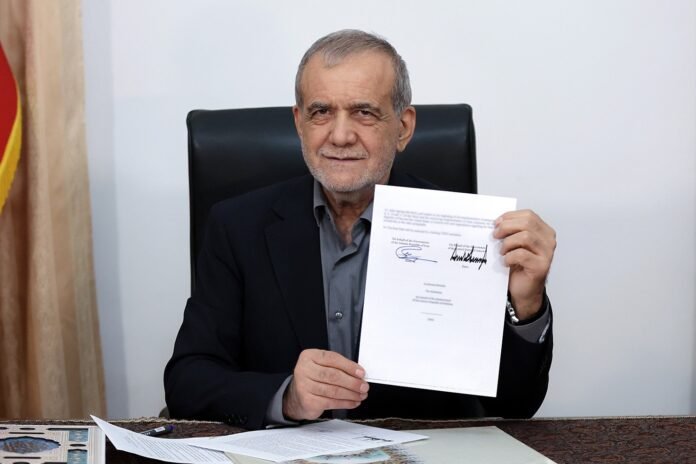
The memorandum of understanding signed between Washington and Tehran this month is more than a diplomatic effort to stop the fighting; it is a formal acknowledgment of the end of a brutal 110-day conflict that destabilized global energy markets and security. The agreement marks a new reality on the ground, one that neither side could afford to ignore.

How did we arrive at this point? Simply put, both sides reached a state of strategic exhaustion. Washington grew weary of the war’s mounting economic costs, while Tehran faced existential pressure on its regime and its ability to project power. We are looking at a “settlement of necessity.” Iran has accepted international oversight in exchange for keeping its nuclear program under International Atomic Energy Agency monitoring on its own soil, while Washington has chosen this path to stabilize global markets, moving away from the “maximum pressure” strategy that once aimed to fundamentally overturn the status quo.

The memorandum is not a unilateral US venture; it is backed by the Gulf states, which were active participants in its drafting. For these regional powers, the deal offers a chance to reset the regional security architecture. This shift also places a heavier burden on them to play a direct role in brokering sustainable solutions.

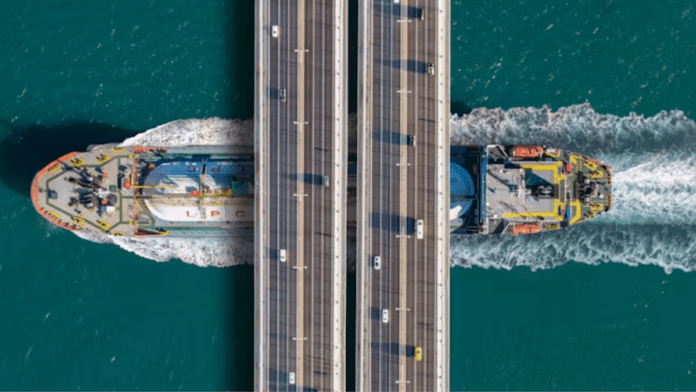
A clear example of this challenge is the Strait of Hormuz. While the memorandum opens a 60-day period in which free commercial transit through the Strait of Hormuz is expected to resume, the path forward remains clouded by uncertainty. The Gulf states now find themselves needing to engage more deeply in negotiations to turn this short-term waiver into a long-term, predictable arrangement. The ambiguity over what happens after those 60 days leaves the region waiting for more concrete guarantees.

A close look at the memorandum’s other terms reveals a delicate balancing act. Both sides are attempting to limit the other’s room for maneuver. Tehran appears to have secured immediate maritime relief and the prospect of sanctions and economic benefits, while Washington is trying to preserve leverage through conditionality and follow-on negotiations. The memorandum has moved the table from direct confrontation to a high-stakes negotiation, with each side scrambling to lock in gains within the framework of its new commitments.

Although the memorandum does not explicitly mention ballistic missiles or regional proxies, President Trump has emphasized that these issues will be front and center throughout the next 60 days. These two months are a “pivotal phase,” intended to flesh out the security and political substance of the agreement and transform this general framework into a binding, clearly defined accord.

For Israel, this agreement creates a precarious dilemma. The ceasefire in Lebanon, which lacks a credible mechanism for dismantling Hezbollah’s military capabilities, and the implicit acceptance of Iran as a “threshold nuclear state,” have triggered deep anxiety in Tel Aviv. Israel currently feels caught in a strategic vice: Its greatest ally is prioritizing regional stability, while Israel is left facing complex security challenges on its own borders and sensing a potential withdrawal of the full-throated international support it has long relied on.

Will a final, comprehensive deal be reached? Success depends entirely on Washington’s resolve to hold the line. The US will likely attempt to tie sanctions relief, frozen-asset access, and the proposed $300 billion private-sector reconstruction and development fund to tangible progress on nuclear and security issues. Yet the question remains: Will this gamble pay off? We will likely see progress on technical benchmarks, such as international monitoring and financial transparency, but dismantling the strategic capabilities Iran has built over the years remains a much taller, and arguably unlikely, order in the near term.

Israel, for its part, may not be willing to wait out the 60-day clock. It may find itself forced to act “outside the box” to protect its core security interests. This prospect creates the potential for a direct collision with the new American vision for the region, one in which de-escalation has become Washington’s top priority.

Fisherman Missing for 7 Days Found Alive in Tiny Boat

0
fisherman-missing-for-7-days-found-alive-in-tiny-boat
Fisherman Missing for 7 Days Found Alive in Tiny Boat


A fisherman who vanished during what was supposed to be a simple day on the water has been found alive after spending a week lost at sea in a tiny 13-foot boat.

The man was spotted Friday morning in the northern Cook Islands, a remote stretch of the Pacific about 2,100 miles north of New Zealand, after a Royal New Zealand Air Force crew joined the desperate search.

A stunning photo released by the New Zealand Defence Force shows the fisherman standing inside his small aluminum rowboat, waving his arms at rescuers while wearing a blue T-shirt, black shorts and a sports visor.

Another image shared by the Royal New Zealand Air Force showed him holding a paddle in the air, desperately signaling for help.

Authorities said nearby fishing vessels were able to reach the man and pick him up after he was spotted by the RNZAF P-8A Poseidon crew.

The fisherman had set off from Pukapuka Island on June 11 for what was meant to be a day-long fishing trip. But when he failed to return, alarm quickly spread through the small island community.

He was reported overdue to local police the next day, and New Zealand’s Maritime Rescue Coordination Centre later requested help from the Royal New Zealand Air Force.

The search aircraft and crew began looking for him on Thursday, June 18. By Friday morning, the missing fisherman was found alive.

Pukapuka, once known as Danger Island, is one of the most remote islands in the Cook Islands. It sits around 708 miles northwest of Rarotonga, the largest island in the nation.

Officials have not publicly confirmed the fisherman’s identity. However, local outlet Cook Islands News reported that authorities had been searching the same area for 42-year-old Pone Apiuta, who disappeared after heading out alone in a 13-foot aluminum boat.

According to local reports cited by the New Zealand Herald, Apiuta was last seen around 5 p.m. local time on June 11 on the northwest side of Pukapuka. Police were alerted after he did not come home.

The outlet reported that rough seas and strong winds had raised fears during the search.

Apiuta, described as a father of one, was called “a kind person who had a great love for fishing” by those who know him.

Cook Islands Police Commissioner Tai Joseph thanked New Zealand for its help in the rescue effort, saying officials were grateful for the assistance provided in the search.

The fisherman’s survival stunned many after seven days adrift in a tiny open boat with little protection from the elements.

What began as an ordinary fishing trip turned into a week-long fight for survival in one of the most isolated parts of the Pacific — and ended with a rescue that many feared might never come.

Palestinians to pay the price for Netanyahu’s defeat in Iran

0
palestinians-to-pay-the-price-for-netanyahu’s-defeat-in-iran
Palestinians to pay the price for Netanyahu’s defeat in Iran

Israeli Prime Minister Benjamin Netanyahu is facing perhaps the most precarious moment of his political career. He knows it. His allies know it. And his rivals — both within his coalition and across Israel’s political spectrum — are preparing to capitalize on his growing weakness.

Former Israeli Justice Minister Haim Ramon, who also served as deputy prime minister between 2007 and 2009, is among the latest Israeli political figures to join a growing chorus of criticism directed at Netanyahu.

“In the final result,” Ramon said in an interview with Radio Galey, cited by the Israeli outlet Srugim, “we did not win.” He then broke down that failure in blunt terms: “We did not win in Lebanon, we did not win in Iran, and we did not win against Hamas.”

Another prominent critic is former Israeli army chief Gadi Eisenkot, who joined Netanyahu’s emergency war government following the events of October 7, 2023, before resigning with Benny Gantz in June 2024.

Beyond accusing Netanyahu of failing to protect Israel on October 7, Eisenkot argues that the prime minister has effectively surrendered Israel’s political decision-making to US President Donald Trump, thereby strategically weakening Israel.

Ironically, Netanyahu’s coalition partners have often been even more opportunistic than the opposition.

Since the formation of the current coalition government on December 29, 2022 — widely regarded as the most right-wing government in Israel’s history — figures such as National Security Minister Itamar Ben-Gvir and Finance Minister Bezalel Smotrich have repeatedly used Netanyahu’s political vulnerability to expand their own influence.

Whenever Netanyahu needed political support to remain in power, they demanded concessions in return.

For Israel’s far-right extremists, Netanyahu’s inability to secure decisive strategic victories has often translated into opportunities to advance their own agendas. Every setback on the battlefield became an opening for greater settlement expansion, harsher measures against Palestinians, and deeper entrenchment of extremist policies.

Unable to deliver “victory,” Netanyahu turned perpetual war into a political strategy in its own right. The result has been a genocidal war in Gaza, widespread devastation in Lebanon, and a dangerous confrontation with Iran that has repeatedly brought the region to the brink of a wider catastrophe.

For a time, this formula proved politically sustainable. Netanyahu successfully enlisted unwavering US support to keep the fires of war burning. At the same time, the failure of Europe and much of the international community to hold a wanted war criminal accountable provided him with the political space necessary to continue his bloody calculations.

Yet that formula may be nearing its limits. While this possibility may appear encouraging, it comes with a serious warning. If Netanyahu can no longer sustain the wars that have prolonged his political life for nearly three years, he may escalate where resistance is weakest: the occupied West Bank.

Regarding Iran, there is growing recognition that the current confrontation is unsustainable indefinitely and that some form of arrangement will eventually emerge. Likewise, regardless of whether Lebanon is formally included in any future agreement, Israel’s ambition of permanently occupying parts of Lebanese territory remains untenable.

Historically, when Israel fails to secure a strategic breakthrough on one front, it seeks compensation on another — typically where Palestinians are most vulnerable and where international scrutiny is weakest.

As Israeli elections approach, it is therefore reasonable to fear a further escalation of the genocide in Gaza, pushing both the death toll and the level of destruction to new heights.

According to Gaza health authorities, nearly 1,000 Palestinians have been killed since the ceasefire agreement was announced in October, bringing the overall death toll of Israel’s genocide in Gaza to 73,000 Palestinians.

Though Israel’s war has already failed to break Palestinian steadfastness, the broader objective remains unchanged: the ethnic cleansing of Palestinians from Gaza and the transformation of the strip into a space that can no longer sustain Palestinian life.

The West Bank, however, presents a different challenge.

There, Israel faces a fragmented political landscape and a Palestinian Authority that refuses to develop an effective strategy for confronting accelerating Israeli violence, ethnic cleansing, home demolitions, land confiscation and the relentless expansion of illegal settlements.

This vulnerability has enabled Israel to move from discussing annexation to implementing it in practice. The strategy rests on two interconnected pillars: extreme violence and displacement on the one hand, and rapid settlement expansion on the other.

According to an Oxfam International study published on June 12, Israel has killed 1,244 Palestinians, including 268 children, in the occupied West Bank since 2023—more than the total number killed during the previous 17 years combined.

This bloodshed has been accompanied by large-scale displacement that has already uprooted nearly 46,000 Palestinians, many of them from refugee camps and vulnerable communities across the northern West Bank.

An Amnesty International report published on June 10 documented the full or partial displacement of at least 117 Palestinian Bedouin and herding communities between January 2023 and April 2026.

Expectedly, the violence, displacement, settlement expansion, and land seizures are not isolated developments but components of a coherent political project. In September 2025, Smotrich openly proposed the annexation of 82% of the occupied West Bank. What was once presented as a political vision is now steadily being translated into facts on the ground.

The era of Netanyahu may be nearing its end, but before this bloody political chapter closes, countless more Palestinians may be forced to bear the cost.

Arab and Muslim countries, along with their allies in the international community, must not wait for Israel to launch a much larger assault on the West Bank before responding. The matter demands urgent attention and immediate action.

Ramzy Baroud is a journalist and the Editor of the Palestine Chronicle. He is the author of five books, including: “These Chains Will Be Broken: Palestinian Stories of Struggle and Defiance in Israeli Prisons” (2019), “My Father Was a Freedom Fighter: Gaza’s Untold Story” (2010) and “The Second Palestinian Intifada: A Chronicle of a People’s Struggle” (2006). He is a non-resident senior research fellow at the Center for Islam and Global Affairs (CIGA), Istanbul Zaim University (IZU). His website is www.ramzybaroud.net.

Common Dreams

Australia poised to become an Asia-Pacific energy superpower

0
australia-poised-to-become-an-asia-pacific-energy-superpower
Australia poised to become an Asia-Pacific energy superpower

Energy security is a top priority globally, as governments grapple with the closure of the Strait of Hormuz, an accelerating clean energy transition and surging power demand from AI data centers.

The problem is especially acute for Asia and the Pacific, as both regions are highly dependent on imported fuels.

This is where Australia could step up as a regional energy superpower, rich in both renewables and fossil fuels. Australia could form a new energy security alliance to stabilize regional markets for the long-term.

In the short term, this would mean guaranteeing supplies of liquefied natural gas (LNG). In the longer term, green exports such as renewable fuels and battery minerals could form the bedrock of Australia’s energy relationship with Asia.

Energy insecurity is rife across Asia

The war between the United States-Israel and Iran triggered a major disruption to fossil fuel supplies.

After Iran closed the Strait of Hormuz, Asia lost 80% of its oil supply and 27% of its natural gas supply. Flow-on impacts to Pacific nations were significant, as these island nations rely heavily on diesel and food imports.

The deal to end the Iran war doesn’t mean an end to these challenges. This year has shown the risks of relying on Middle Eastern oil and gas producers in a conflict-prone region.

Asia-Pacific governments are looking for reliable partners to ensure energy security. The world’s top two powers, the United States and China, are jostling to expand their energy exports in the region but in very different ways.

China’s response to the Iran conflict has been to double down on electrification and build its reserves of oil. Beijing is also aggressively expanding its exports of electric vehicles, solar panels, batteries and other green tech exports to root out any overseas competition.

Meanwhile, the US is pursuing a strategy of “energy dominance”, focused on producing abundant supplies of oil and gas domestically. Washington believes this will deliver affordable energy, win the AI race against China with cheap power and expand energy exports to bind allies closer.

electric vehicles at a port waiting to be loaded onto a ship.
China has cornered the market in many clean tech exports. Photo: koiguo/Getty via The Conversation

Time for a decisive strategy

Without a clear strategy for energy exports, Australia risks becoming a passive spectator.

The risks are twofold. Our role as a coal and LNG exporter could erode as Asian countries look elsewhere to fill their supply gap and we could miss the window of opportunity to grow our clean energy exports.

What should this strategy look like? In practice, it would involve working with allies like the US and Japan to build a regional energy security alliance. This would focus on meeting the region’s immediate energy needs and enable Australia to play a central role in the region’s transition to clean energy. The Quad members’ recent joint statement is a strong start.

Any such alliance cannot simply focus on securing fossil fuel supply to the region. The shift to clean energy transition must be factored into its design.

Ideally, this alliance should cover the full energy supply chain. That means critical minerals, natural gas, diesel, hydrogen, batteries, data centers and even emerging products such as low-carbon fertilizers.

Australia is poised to take the lead

Australia is the only reliable high-volume LNG exporter in the Asia-Pacific.

Key competitors face challenges meeting the region’s needs. Russian gas is heavily sanctioned, Qatari exports have been held hostage in the Strait of Hormuz and US gas export terminals are concentrated on the Gulf Coast, adding 10 extra days in transit to reach Asia compared to shipments from Darwin.

Australia also has some of the greatest clean energy resources in the world, including critical minerals vital to batteries and renewables.

The US and Canada would also play a role as major LNG and oil producers. Japan would provide the financing and shipping infrastructure that many smaller Southeast Asian nations cannot. The US and Japan could also help produce the EVs, batteries and clean tech to drive the region’s transition.

Despite the Trump administration’s unfavourable views on wind and solar, US battery manufacturing is forecast to increase five-fold.

An alliance like this would give certainty to Indo-Pacific countries such as the Philippines, Thailand and India that Australia and its allies would not prematurely turn off fossil fuel supply.

This is pragmatic. While Australia is aiming for net zero by 2050, many Asian countries are aiming for 2060 or 2070. They may require fossil fuel supply beyond 2050 – would we rather that supply to come from Australia or Russia?

What needs to happen?

Shifting energy policies and sluggish approval timeframes have left Australia close to a gas shortfall in southern states, slowed the renewable transition and contributed to higher energy costs.

These domestic challenges must be balanced with the region’s current need for Australian energy exports.

The Iran war has shown the world is not yet ready to wean itself off fossil fuels. Despite very rapid shifts to renewables and clean transport, there are years ahead where gas and oil will remain vital.

As the region’s most reliable LNG exporter, Australia is well placed to cement its position in the Indo-Pacific’s energy landscape in the long term as green exports ramp up. Grabbing this opportunity requires a cohesive strategy, partnering with like-minded allies and fixing domestic challenges.

Robert Monterosso is research fellow, United States Studies Centre, University of Sydney

This article is republished from The Conversation under a Creative Commons license. Read the original article.

Rome to host four-day Vespa celebration marking 80th anniversary

0
rome-to-host-four-day-vespa-celebration-marking-80th-anniversary
Rome to host four-day Vespa celebration marking 80th anniversary


Rome will host a four-day public celebration from June 25 to 28, 2026, to mark the 80th anniversary of Vespa, with thousands of enthusiasts from around the world expected to attend.

The event, titled VESPA ROMA 2026 – 80 YEARS OF AN ICON, is sponsored by the Municipality of Rome and will celebrate the anniversary of the scooter brand with a programme of exhibitions, entertainment, rallies and parades.

Organisers said Rome, which they described as the city that has embraced Vespa’s “elegant cosmopolitan soul”, is expecting Vespisti from every continent.

Rome Mayor Roberto Gualtieri said the anniversary would be “a wonderful public festival” for the Italian capital.

“We are celebrating an Italian icon that is known and loved all over the world, a scooter that has kept its appeal intact from one generation to the next,” Gualtieri said.

He said the Vespa represented “an important part of our history, our culture and Italy’s ability to innovate without losing its identity”, adding that Rome had helped turn the scooter into a legend through cinema and culture.

Piaggio Group Executive Chairman Matteo Colaninno described the event as “the greatest celebration in the history of the Vespa”.

He said Vespa, created in 1946 alongside the Italian Republic, had witnessed changing lifestyles and generations over the past 80 years and that its history was closely linked to Italy’s post-war recovery, economic boom and the spread of the brand around the world.

“Today, we are on the cusp of 20 million scooters bringing life and colour to the streets of towns and cities across every continent,” Colaninno said.

He added that Rome had always shared a special relationship with Vespa and thanked the city’s administration for hosting the four-day event, which he said would attract tens of thousands of enthusiasts.

The main venue will be the Foro Italico and the Stadio dei Marmi, which will be transformed into a Vespa Village. The site will feature displays of historic and current Vespa models, lifestyle collections, merchandising, exhibitions and entertainment.

The event will be open to the public and include performances and entertainment organised by Radio Deejay. Vespa Clubs from 60 countries are expected to take part alongside thousands of individual Vespa owners.

Festivities will begin on June 25 with the official opening of the Vespa Village, the presentation of a commemorative coin issued by the Italian Ministry of Economy & Finance and minted by the Istituto Poligrafico e Zecca dello Stato, and a first-day cancellation ceremony by Poste Italiane.

The opening day will also feature the “80 Years of Vespa” photo exhibition, curated by Giacomo Bretzel, showcasing the brand’s stylistic evolution and cultural and social impact through photographs and historic pieces. Evening entertainment will include live music, a performance by Ditonellapiaga and a DJ set by Molella.

On June 26, activities organised by Vespa and its partners will continue throughout the day. The programme includes the European Vespa Rally Championship and the Gymkhana World Championship, as well as live performances and a DJ set by Wad.

The Grand Parade will take place on June 27, when thousands of Vespa scooters from different eras will travel through Rome’s streets and iconic locations. The day’s programme also includes a treasure hunt and the Vespa World Club awards ceremony for the Sport and Tourism championships.

The celebrations will conclude on June 28 with the Elegance Contest, featuring some of the rarest Vespa models, followed by the official closing ceremony of the Vespa Village at 3 p.m. Entertainment from Radio Deejay will continue throughout the final day until the departure of participants.

Trump-Loving Crypto Super PAC Finally Backs a Democrat: Ritchie Torres

0
trump-loving-crypto-super-pac-finally-backs-a-democrat:-ritchie-torres
Trump-Loving Crypto Super PAC Finally Backs a Democrat: Ritchie Torres


A crypto super PAC that has praised President Donald Trump and previously endorsed an all-Republican slate of candidates has finally found a Democrat it can get behind: New York Rep. Ritchie Torres.

The Fellowship PAC dropped $300,000 on Monday to boost Torres in the final days of his reelection primary campaign, funneling its ad spend through a firm co-founded by Trump’s former top crypto adviser.

The super PAC’s largest funder is Cantor Fitzgerald, the investment bank helmed by the sons of Commerce Secretary Howard Lutnick.

Torres is not expected to face serious opposition in the June 23 primary in New York. The sole public poll of the race put him far ahead of his leading opponent, former Democratic National Committee vice chair Michael Blake.

Torres, the Fellowship PAC, and Blake did not immediately respond to requests for comment.

The spending is another sign of bond between crypto firms and Torres, a member of the key House Committee on Financial Services who has been one of the industry’s most vocal Democratic supporters. Torres was a co-founder of the Congressional Crypto Caucus.

Still, the primary intervention still comes as something of a surprise given that, in the past, the Fellowship PAC only doled out campaign funds on behalf of Republicans. Reporting on its creation, the New York Times described the PAC as “more aligned with the Republican Party and President Trump than Fairshake, which is the dominant, pro-crypto super PAC.”

The PAC signaled support for Trump in a press release announcing its creation in September, praising him for putting “America on the path to become the global crypto capital.” In the months since then, however, the odds that Republicans will control the House after the midterm elections have dimmed.

The Fellowship PAC, which spends on ads rather than giving directly to campaigns, put Torres’s picture on its endorsement page in recent weeks, according to an archive of its website. Other candidates the group has endorsed include Sen. Lindsey Graham, R-S.C., and Texas Attorney General Ken Paxton, R-Texas, in their Senate races.

Big Crypto Bucks for Shoo-in

The Fellowship PAC is not the only crypto campaign organization spending on behalf of Torres. Protect Progress, which is affiliated with the juggernaut crypto super PAC Fairshake, buoyed the Bronx Democrat with nearly $1.4 million in advertising.

The two super PACs are aligned with different factions of the crypto industry. The Fellowship PAC’s chair is the vice president of regulatory affairs for Tether, a massive stablecoin company that is trying to break into the U.S. market after years of scrutiny over its use by money launderers, including terror groups.

Although Tether has not donated directly to the Fellowship PAC, the PAC received $10 million from the financial services firm Cantor Fitzgerald, which is the custodian of billions of dollars of U.S. Treasury bills on behalf of Tether. Lutnick, Trump’s commerce secretary, stepped down as the head of the banking firm and divested his assets to join the Cabinet.

The media buy on behalf of Torres was made through Nxum Group, which was co-founded by Bo Hines, a former Republican congressional candidate who served as the executive director of Trump’s Council of Advisers on Digital Assets last year. Hines is the CEO of Tether U.S., the American division of the El Salvador-based firm.

Protect Progress and Fairshake, meanwhile, have been funded by the crypto exchange Coinbase and the venture capital firm Andreessen Horowitz. Fairshake and its affiliates have spent money on both sides of the aisle, although it was criticized in 2024 for helping tip the Senate in favor of Republicans.

0FansLike
0FollowersFollow
0FollowersFollow
0SubscribersSubscribe
- Advertisement -
Google search engine

Recent Posts