EU rejects Israel’s Gaza territory plans, demands immediate crossing access
EU leaders on Friday issued a sharply worded statement on the war in Gaza and the situation in the West Bank, urging Israel to allow full humanitarian access, reverse settlement expansion and comply with international law, while calling for Hamas to be disarmed as part of a wider post-war settlement, Anadolu reports.
In conclusions adopted June 18-19, the European Council said it was “gravely concerned” about the “deteriorating situation” in Gaza, describing a “devastating humanitarian crisis” and demanding immediate, unimpeded aid deliveries “at scale” across the territory.
It called for border crossings to be reopened, including a medical corridor linking Gaza and the West Bank, and said international media should be granted access.
The statement also pressed Israel to allow UN agencies and humanitarian organizations to operate independently and urged compliance with international humanitarian law, stressing that civilian protection “needs to be ensured at all times.”
EU leaders backed the use of alternative supply routes, including the Cyprus maritime corridor, to supplement land access.
On the political track, the European Council reaffirmed support for a two-state solution, describing it as the basis for a “comprehensive, just and lasting peace” in which Israel and Palestine would exist side by side within secure borders. It also welcomed efforts by civil society and referenced an international conference in Paris aimed at supporting peacebuilding.
READ: UNICEF calls Gaza ceasefire ‘deadly illusion’ as 265 Palestinian children killed since October
The conclusions went further on the military and security situation, calling for the “permanent disarmament of Hamas and other non-state armed groups” alongside a full Israeli withdrawal from Gaza and the deployment of a temporary international stabilization force under a wider UN-backed plan.
EU leaders rejected reports that Israel intends to take control over around 70% of Gaza, and expressed concern over limited progress in implementing a ceasefire framework linked to UN Security Council Resolution 2803.
The council also condemned the treatment of detainees intercepted in international waters following the Global Sumud Flotilla incident, and criticized rhetoric from “extremist ministers” accused of inciting abuses.
Tensions in the West Bank featured heavily in the conclusions. The EU denounced settlement expansion, including in the E1 area, calling it unlawful under international law, and warned of “legal and reputational consequences” for companies involved in construction projects there. It also condemned rising settler violence and endorsed further sanctions against extremist settlers and organizations.
The council also criticized Israel’s adoption of a death penalty law as discriminatory and called for its repeal, while signaling that EU institutions would consider additional options if the situation worsens.
READ: Gaza administration committee says reconstruction priorities finalized, ready to begin work
Japan seeks G7 price floors to break China’s rare earth grip
Japan is seeking to rally G7 nations into a united front against China’s export controls on critical minerals, pushing for a floor price mechanism to shore up the economics of producing rare earths within the alliance.
Speaking at the G7 Evian Summit in France on June 16, Prime Minister Sanae Takaichi warned that China’s measures against Japan risked disrupting partner nations’ supply chains and called on G7 members and multilateral development banks to build more resilient mineral supply chains.
Takaichi expressed grave concern that China’s measures against Japan could disrupt the supply chains of G7 members and other like-minded nations, and stressed the need to work with international organizations to strengthen the resilience of critical mineral supply chains. She also underscored the importance of channeling support to mineral-producing developing countries through multilateral development banks (MDBs).
She added that Japan and G7 partners will further promote the World Bank Group’s Resilient and Inclusive Supply Chain Enhancement (RISE) Partnership and cooperate with the Asian Development Bank (ADB) and the Inter-American Development Bank (IDB).
G7 leaders agreed to coordinate stockpiling of critical minerals and reduce dependence on any single dominant supplier outside the G7. They also agreed to launch a new coordination platform with an expanded role for the International Energy Agency (IEA) to monitor markets and flag supply risks.
The target is to reduce dependence on any single non-G7 supplier of rare earths and permanent magnets to below 60% by 2030, with lithium and nickel designated as the two pilot metals for initial stockpiling efforts.
The current standoff has escalated steadily since January this year, when China banned exports of all dual-use items to Japanese military users, citing Japan’s remilitarization drive. The curbs were partly triggered by Takaichi’s remarks that any use of force against Taiwan could constitute a survival-threatening situation for Japan, a legal threshold that could activate the country’s Self-Defense Forces. Chinese firms have since stopped supplying critical metals to Japanese companies for dual-use purposes, forcing them to pay a premium to source materials elsewhere.
The tactic echoed a move Beijing made 16 years earlier. In 2010, China halted rare earth exports to Japan following a collision between a Chinese fishing trawler and Japanese Coast Guard vessels near the disputed Senkaku Islands.
At the time Japan imported about 28,000 metric tons of rare earths a year, roughly 90% of which came from China, leaving its automobile and electronics sectors severely exposed. Japan and its Western partners filed a complaint at the World Trade Organization (WTO), which ruled against China’s export controls in August 2014.
Japan responded to the 2010 shock by investing in overseas alternatives, including a US$250 million stake in Australia’s Lynas Rare Earths, which mines ore at Mount Weld in Western Australia and refines it at a plant in Malaysia before shipping processed materials to Japan.
But from 2012, China flooded the market with cheap supply, rendering most foreign rare earth projects uneconomical. Molycorp, which owned the Mountain Pass rare earth mine in California, filed for bankruptcy in 2015. Although Japan and its Western partners won a WTO ruling against China’s export controls in August 2014, the damage was already done.
By 2020 Japan had trimmed China’s share of its rare earth imports only to around 60%, leaving Beijing’s leverage largely intact.
This time, the G7 action plan announced at Évian marks a significant departure from that earlier era of unilateral responses. Unlike in 2010, when Japan fought alone, the Évian framework enlists a far broader coalition in support of binding supply targets and coordinated stockpiling.
Nikkei reported on June 10 that Shin-Etsu Chemical, one of Japan’s largest rare earth magnet makers, plans to build a new domestic refinery, in Fukui prefecture, at a cost of more than 35 billion yen (US$218 million), with roughly half the funding coming from government subsidies.
A company spokesperson said the refinery would help Shin-Etsu ensure a stable supply of rare earth products and magnets, but declined to provide further details on the plan.
Cold water from Beijing
China officially sticks to its guns. “In accordance with laws and regulations, China has banned the export of all dual-use items to Japanese military users and for Japan’s military use,” Foreign Ministry spokesman Lin Jian said in a regular media briefing on Thursday. “The aim is to contain Japan’s remilitarization and its attempt to possess nuclear weapons. China’s position on keeping the global industrial and supply chains of critical minerals safe and stable has not changed.”
“In recent years, Japan has been in the habit of stitching together exclusive groupings against China within the G7 and on other occasions,” Lim said. “Its leader’s latest G7 remarks on China were particularly obtrusive, exposing that its attempt to rally allies and stir up confrontation wins no support and is bound to fail.”
Lim said that if the Japanese side truly wants to improve its relations with China, it needs to comply with the four political documents between China and Japan, abide also by its own commitments and take concrete actions to uphold the political foundation of China-Japan relations, rather than continuing to do things that make dialogue impossible.
As Japan actively pushes for its own rare earth supply chain, Chinese pundits pour cold water on its prospects for succeeding.
“After China cut off rare earth supplies to Japanese military-linked entities in January, domestic prices in Japan tripled,” says a Hefei-based columnist writing under the pen name “Sea Lion.” “Japan now partners with Canada’s Aclara Resources, which has mining projects in Brazil and Chile and has pledged production by 2028, but this project is doomed to fail.”
He offers four reasons:
Chronic capacity shortfall. Even at full output, Aclara’s production would amount to only 15% of China’s 2024 annual output, not enough to cover US electric vehicle demand alone, let alone supply Japan.
Heavy rare earths remain the fatal weakness. Japan needs dysprosium and terbium for military and high-end manufacturing, and China controls virtually all stable global supply. Aclara’s Brazil trial line produces just 150 kilograms of heavy rare earths per year, insufficient for even a single Toyota production line.
The timeline is unrealistic. Taking a mine from approval to production requires five to eight years. Delivering within two years is widely seen as impossible.
The cost structure is prohibitive. With US$400 million sunk into construction and equipment and untested technology built from scratch, the final product could cost more than twice the price of equivalent Chinese supply.
In fact, Japan is not relying on any single bet. Its firms and state-backed institutions have been quietly locking in overseas supply on multiple fronts:
Last November, JX Advanced Metals Corporation took a stake in RZ Resources, an Australian miner developing the Copi Project in New South Wales, which produces mineral sands, including rutile, zircon, and monazite, used in aerospace and defense. Marubeni Corp followed with a further A$15 million (US$9.4 million) investment, giving Japan two anchor positions in the project.
On March 9, the Japan Organization for Metals and Energy Security (JOGMEC), which aims to secure stable supplies of resources and energy for Japan, signed a memorandum of understanding (MOU) with the state government of Goiás, Brazil, on rare earth cooperation. Brazil holds an estimated 21 million metric tons of rare earth reserves, second only to China, and a major mine in Goiás began commercial production in 2024. In February, the US government announced an investment of more than US$500 million in the state, cementing Brazil as a key frontier for the US-Japan alliance.
On March 10, Lynas Rare Earths renewed its supply agreement with Japan Australia Rare Earths (JARE), a joint venture between JOGMEC and Japan’s Sojitz Corp, extending annual deliveries of 7,200 metric tons of neodymium and praseodymium through 2038 with a price floor of US$110 per kilogram on 5,000 metric tons. The two sides also agreed on a stable supply of dysprosium and terbium.
What Tokyo is now pushing the G7 to adopt is a floor-price guarantee system for critical-mineral contracts, with each mineral carrying its own agreed-upon minimum price.
Under such a mechanism, G7 members would commit to purchasing rare earths at or above the floor price for each material, ensuring that allied miners and refiners can recover their costs regardless of how aggressively China undercuts the market. The US$ 110-per-kilogram floor agreed in the Lynas-JARE deal is seen as a reference point for neodymium and praseodymium within any broader G7 framework.
Benjamin Lin, director of the economic division at the Taipei Economic and Cultural Representative Office (TECO) in Japan, said that as the US and Japan move toward consensus on mineral-specific price floors, such guarantees could become a standard feature of international critical mineral contracts, serving as a direct counter to China’s ability to use non-market pricing as a geopolitical tool.
For longer-term supply security, Japan is preparing to send a delegation to Greenland this summer to evaluate opportunities for rare earth extraction, Nikkei reported. Tokyo is also looking beneath the ocean floor, announcing this month that a deep-sea Pacific mission had retrieved rare earth-bearing sediment from a record depth of 6,000 meters.
A Tianjin-based columnist says it is unlikely Japan could bring deep-sea rare earths to commercial scale within a decade. But he acknowledges that if Tokyo eventually succeeds, pricing power over critical minerals, long concentrated in China, could gradually shift toward a more distributed global market.
‘She Crossed a Security Line’: Knesset Grants Tally Gotliv Immunity in Shin Bet Disclosure Case
The Knesset’s decision shields Gotliv for now and sends the fight over parliamentary immunity to the High Court
The Knesset voted Wednesday to grant Likud MK Tally Gotliv procedural immunity, temporarily preventing the filing of an indictment accusing her of exposing the identity of a Shin Bet officer. The vote came two days after the Knesset House Committee recommended accepting her request, and pushed the case beyond the question of Gotliv’s own conduct into a wider dispute over how far parliamentary immunity can reach in a security-related case.
After days of heated committee hearings, lawmakers approved immunity on two separate grounds: that Gotliv’s alleged actions were committed during the performance of her parliamentary role, and that the indictment was brought in bad faith or applied in a discriminatory manner.
The case stems from posts attributed to Gotliv in January 2024. Prosecutors say she identified the partner of protest leader Shikma Bressler as a Shin Bet employee and linked him to claims surrounding the October 7 attacks. The Shin Bet and other security officials have rejected those claims, and Attorney General Gali Baharav-Miara has maintained that the disclosure posed a serious security risk and does not fall within the protections granted to members of Knesset.
Gotliv has not treated the case as a narrow legal dispute. She has framed it as part of a larger struggle over October 7, the conduct of the security establishment, and what she describes as the use of legal power against right-wing elected officials.
Israeli law recognizes two forms of parliamentary immunity for MKs. Substantive immunity protects acts and statements made in the course of parliamentary work and, if it applies, is permanent; procedural immunity, by contrast, is temporary and can block the filing of an indictment during an MK’s term if the Knesset approves it. That distinction is important because Gotliv argues her alleged conduct fell within protected parliamentary activity, while her critics say the Knesset improperly used procedural immunity to stop a criminal case before a court could hear it.
Before the plenum vote, Gotliv told The Media Line that parliamentary immunity is meant to protect lawmakers from pressure by state officials rather than serve as a personal privilege. “It allows a member of Knesset to do his work faithfully,” she said. “A member of Knesset is not above the law,” she added, saying that the law gives them immunity to allow them to do their work.
The dispute centers on whether the law protects the kind of act alleged in the indictment or whether the Knesset stretched immunity beyond its intended scope. Gotliv argues that lawmakers must be able to reveal matters of public importance, including information that state officials would prefer to keep hidden. She said immunity exists to protect that role, including in confrontations with unelected officials.
Whether it is a violation of an order, for example, or the exposure of things that must be exposed, the purpose is to bring the public things the public must know
“Whether it is a violation of an order, for example, or the exposure of things that must be exposed, the purpose is to bring the public things the public must know,” she said. Gotliv also accused Baharav-Miara of using her office against right-wing lawmakers, while failing to pursue journalists and public figures whom Gotliv said had violated confidentiality, privacy, or other legal duties. “That is exactly why immunity was created,” she said.
The attorney general and Gotliv’s critics read the same legal framework very differently. Under Israeli law, members of Knesset have substantive immunity for acts, votes, and statements made in the course of their parliamentary work or for the purpose of that work. They may also seek procedural immunity after the attorney general approves an indictment but before the case is filed in court.
Procedural immunity is temporary. If approved by the Knesset, it blocks the criminal case only for the duration of the current Knesset term, unless circumstances change. It does not erase the allegation, does not amount to an acquittal, and does not prevent the issue from returning to a future Knesset if Gotliv is reelected and the attorney general again seeks to proceed.
That is why the plenum vote matters beyond Gotliv herself. The Knesset did not decide whether the allegations are true. It decided whether the criminal process should be paused before the case reaches a judge. The House Committee’s legal adviser had previously reminded lawmakers that immunity hearings are quasi-judicial proceedings. Members are expected to hear both the lawmaker requesting immunity and the attorney general, examine the grounds set out by law, and vote on the merits—yet the result clearly followed coalition-opposition lines. Only Likud MK Yuli Edelstein broke ranks, warning publicly that the precedent could be used in future cases involving the exposure of intelligence personnel.
Merav Ben Ari, a Yesh Atid lawmaker who voted against immunity in the committee, told The Media Line that the outcome was never really in doubt. “Formally, it is over for now from the Knesset’s side,” she said. “Once immunity is left in place for a member of Knesset, it means that person is protected from prosecution as long as he or she is a member of Knesset.”
More precisely, the protection remains in force during the current Knesset unless the High Court overturns the decision or circumstances change. Ben Ari stressed that the question could be reopened in the next Knesset, but said the political reality made the current result predictable. Gotliv, she said, is a powerful figure inside Likud, with influence among party activists, on the ground, and on social media. “There was no chance,” Ben Ari said of the vote.
She exposed the name of a Shin Bet person, and by doing so, she endangered him and his family
For Ben Ari, the issue is not whether lawmakers need immunity in principle. She said they do, particularly in cases involving protest activity, speech in the plenum, or confrontations that arise from legitimate parliamentary work. But she said Gotliv’s case falls outside those parameters. “In the end, she crossed a security line,” Ben Ari said. “She exposed the name of a Shin Bet person, and by doing so, she endangered him and his family.” Ben Ari compared the case to past immunity proceedings involving former lawmaker Basel Ghattas, who was accused of smuggling phones to security prisoners. In that case, she said, the question was easier because the conduct was clearly outside the scope of protected parliamentary activity. Her broader conclusion was that lawmakers should not be the ones deciding whether their colleagues receive immunity.
“This whole issue of immunity should not be in the hands of members of Knesset,” Ben Ari said. She said she intends to pursue legislation that would remove such decisions from direct political control or at least place them in the hands of a more balanced and professional mechanism. “It is very problematic,” she said. In her view, the Gotliv vote showed why the current arrangement is vulnerable to coalition discipline and personal loyalties. “In this case, she used her political power, her connections in the coalition, and her friends to get immunity.”
This whole issue of immunity should not be in the hands of members of Knesset
Ben Ari’s criticism sharpened when asked what the public should understand from the coalition’s vote. “It means there is a coalition here that legitimizes and gives protection to offenders,” she said. “Tally Gotliv was supposed to go to a police investigation. She did not go. She used her immunity.”
Ben Ari argued that members of Knesset are not exempt from police investigations and should be treated like other citizens when the matter is not part of parliamentary work. “They have to go,” she said, commenting that in her view Gotliv’s conduct created the false impression that a lawmaker can stand above ordinary citizens, a conclusion she called legally and democratically wrong.
Gotliv’s supporters reject that framing and argue that the opposition is trying to narrow parliamentary immunity precisely when it is most needed. They say the law exists to prevent elected officials from being intimidated by legal authorities, security officials, or civil servants who are not accountable to voters. Some coalition members also tied the case to broader distrust of the attorney general, who has become one of the central figures in the long confrontation between the government and Israel’s legal establishment.
In the plenum debate, coalition lawmakers portrayed the case as another example of what they see as selective enforcement against the right wing. For them, Gotliv’s publications were part of a political and public campaign over unanswered questions from October 7, not a private act detached from her role.
The Movement for Quality Government in Israel, which opposed Gotliv’s immunity request and has moved toward judicial action, says the legal problem is more fundamental. Attorney Yael Bloch, director of the organization’s litigation department, told The Media Line that none of the legal grounds for immunity apply. “There is no legal basis to grant immunity,” Bloch said. “None of the grounds set out in the law exists here.” She said the central legal test is whether the alleged unlawful act was close enough to legitimate parliamentary activity to be considered a natural risk of the job. In Israeli case law, she explained, immunity can cover a situation in which a lawmaker, while carrying out lawful parliamentary work, “slips” into unlawful conduct, such as a defamatory remark made during a heated speech or debate.
Bloch said Gotliv’s case is not such a case. “This was not a slip,” she said. “It was not spontaneous. It was not by mistake.” According to Bloch, the publications were planned, repeated, and continued after warnings that the disclosure could endanger security. She said that distinction is decisive. “A member of Knesset is not allowed to plan in advance to break the law and then say immunity protects him,” Bloch said. In her view, the classic function of immunity is to protect the margins of parliamentary work, not to authorize a deliberate breach of security law.
Bloch also rejected Gotliv’s claim of selective enforcement. She said the lawmaker did not provide evidence that the indictment was filed in bad faith or because of discrimination. “On the contrary,” Bloch said, arguing that Gotliv benefited from procedural caution precisely because she was a member of Knesset. The organization’s position is that the Knesset majority accepted political arguments that do not fit the legal grounds for immunity.
The decision is unreasonable, illegal, and illogical. It is not based on the grounds that appear in the law.
“The decision is unreasonable, illegal, and illogical,” Bloch said. “It is not based on the grounds that appear in the law.” Asked what the High Court of Justice can do, Bloch answered directly: “The court can cancel the decision and say it was illegal because it was not based on the legal grounds set out in the law.”
The legal fight has already begun. After the plenum vote, the Shin Bet officer whose identity was allegedly exposed petitioned the High Court of Justice against the Knesset decision. His lawyer, Idan Seger, had already warned the House Committee before the vote that granting immunity would send a dangerous message to people serving in Israel’s intelligence and security services.
In a letter submitted to the committee, Seger argued that Gotliv’s publications were not a spontaneous political statement but a deliberate and repeated disclosure of confidential information. He also argued that accepting her immunity claim would stretch the doctrine beyond what the law and Supreme Court precedent allow.
That argument echoes the position of the Knesset’s own legal materials, which explain the difference between substantive and procedural immunity and emphasize that the committee is not supposed to decide whether the indictment is true. Instead, members are supposed to assume the factual allegations can be proven and ask whether one of the statutory immunity grounds applies. The relevant grounds include whether the act was committed in fulfillment of the lawmaker’s role, whether the indictment was filed in bad faith or with discrimination, and whether prosecution would cause serious harm to the functioning of the Knesset or voter representation without significantly damaging the public interest. In Gotliv’s case, the Knesset accepted two of those arguments.
Opposition leader Yair Lapid, who oversaw the Shin Bet as prime minister, said after the vote that the coalition had not only protected Gotliv but had also sent a message to the security service. “This was not a vote for Tally Gotliv,” Lapid wrote. “It was a vote against the Shin Bet.” He said intelligence personnel who work under cover would now have to ask what protection they can expect if their identities are exposed in a political battle. “Tally Gotliv received immunity,” Lapid added. “The Shin Bet had its secrecy removed.”
Tally Gotliv received immunity. The Shin Bet had its secrecy removed
The case also reflects a broader Israeli argument over checks and balances. Bloch said international readers often misunderstand Israel’s system if they imagine a firm separation of powers similar to the United States. “Formally, Israel has three branches,” she said, “but the government controls the Knesset through the coalition majority.” In that setting, she argued, the judiciary and legal gatekeepers play an especially important role because parliament does not always function as an independent check on the executive. “There are not really three fully separate branches,” Bloch said. “There are, in many ways, two, and the judicial system is the one they are constantly trying to weaken.”
For supporters of the government, that argument is exactly the problem. They see legal gatekeepers as having accumulated too much power and say elected officials need tools to resist interference from unelected officials. Gotliv’s case has therefore become part of a larger political language that has dominated Israeli public life for years: the coalition says it is defending democratic choice against legal bureaucracy, while the opposition and watchdog groups say the coalition is weakening the institutions that prevent abuse of power. In the Gotliv case, that argument is sharpened by the involvement of the Shin Bet and by the allegation that classified information was exposed during a period of national trauma and security sensitivity.
Ben Ari said Gotliv did not explain, either in committee or in the plenum, why the alleged exposure itself was necessary to her parliamentary role. “She spoke about October 7, about the attorney general, about the military advocate general, about other issues,” Ben Ari said. “But what does that have to do with it?” Her view is that Gotliv’s political argument depends less on the legal doctrine of immunity than on the identity of the person involved. “If he had been the husband of someone from Religious Zionism, do you think they would have done the same?” Ben Ari asked. For her, the answer is clear: the decision was political from beginning to end.
Gotliv, however, insists the case cannot be separated from politics because the legal system itself, in her view, is acting politically. She told The Media Line that Baharav-Miara “is persecuting members of Knesset from the right” while ignoring others outside parliament. She named journalists and public figures whom she accused of violating duties related to confidentiality or privacy without facing the same treatment. Gotliv’s point was not only personal. It was structural. In her view, the attorney general’s pursuit of the case proves why lawmakers need immunity in the first place. “She is misusing her power against elected officials,” Gotliv said. “That is precisely what immunity is for.”
That leaves the next fight to the High Court. The judges will now have to decide whether the Knesset applied the immunity law correctly or stretched it beyond what the law allows.
For now, Gotliv has won inside the Knesset, but the decision is not beyond review. The petitions before the High Court challenge the current Knesset’s vote, not a future one. If the court cancels the immunity decision, the attorney general could move ahead with the indictment during the current parliamentary term. If the court leaves the decision in place, the criminal case will remain blocked until this Knesset ends, unless circumstances change. After a new Knesset is elected, the issue could return if the attorney general again seeks to proceed and Gotliv remains a lawmaker.
Israel’s immunity law was designed to protect lawmakers from intimidation and preserve the independence of parliament. The Gotliv case has forced the country to confront a harder question: What happens when the Knesset itself decides that the protection meant to defend parliamentary work also applies to an alleged breach of security secrecy?
IATA slams revised EU passenger rules as missed opportunity
The International Air Transport Association (IATA) has criticised the latest revisions to Europe’s passenger rights rules, saying the changes fall short of the meaningful reform needed to address long-standing flaws in the EU261 regulation.
The airline body said the outcome represents a missed opportunity, with little in the revised framework to improve the passenger experience and nothing to strengthen Europe’s competitiveness.
According to IATA, the only substantial changes relating to flight disruptions are the addition of a non-exhaustive list of extraordinary circumstances and a requirement for airports to prepare contingency plans for accommodation during mass disruptions.
However, the association said the list of extraordinary circumstances still fails to properly reflect the aviation industry’s safety-first approach.
EU261, which sets out compensation and assistance rules for passengers affected by delays, cancellations and denied boarding, now carries an annual regulatory burden of €8 billion, IATA said.
Despite this, the association argued that the regulation has failed to deliver on its original aim of improving performance on delays and cancellations.
It pointed to Eurocontrol data, saying a significant share of delays is linked to weaknesses in Europe’s air traffic management system rather than factors directly controlled by airlines.
IATA said airlines had supported the European Commission’s proposals to introduce longer delay thresholds before compensation obligations apply.
The association said this would have given airlines greater flexibility to arrange alternative travel options for passengers, which, it added, travellers consistently identify as their main priority when disruption occurs.
However, IATA said this reform was removed during negotiations with the European Parliament, while other requirements were added with limited industry input.
“After 13 years of discussion, the opportunity to improve Europe’s competitiveness and the passenger experience by addressing the flaws of EU261 was lost,” IATA Director General Willie Walsh said.
“The result will not reduce delays, but considering the whole package of changes, it will create operational challenges and add costs which will ultimately be borne by passengers,” he added.
Walsh said the changes amounted to “a reform in name only” and did nothing to help disrupted passengers.
“Those responsible for this political trade-off must be held accountable with transparent data to monitor its costs and impacts,” he said.
Looking ahead, IATA said two upcoming processes will be important for the aviation sector.
The first concerns the enforcement package, where the association said it would work with the Council and Parliament to prevent further regulatory burdens being added to an already strained sector.
“The aim should be practical, effective, and consistent implementation,” Walsh said.
The second is Europe’s forthcoming Aviation Strategy, which IATA said must address air traffic management deficiencies, describing them as one of the root causes of delays across the region.
Star Granted Restraining Order from ‘Deranged’ Fan
Sabrina Carpenter has been granted a five-year restraining order against an alleged stalker accused of repeatedly showing up outside her Los Angeles home — and even trying to force his way inside.
A judge ordered 31-year-old William Applegate to stay away from the 27-year-old “Espresso” singer, her sister Sarah Carpenter, and Sarah’s significant other, George Smith, according to court documents obtained by ABC News.
The order will remain in place until June 17, 2031.
Under the order, Applegate is barred from contacting Sabrina, Sarah or Smith in any way. He also cannot “disturb their peace” and must stay at least 100 yards away from them, their home, their workplace and their vehicles.
If he violates the order, he could face up to a $1,000 fine, one year in jail, or both.
Applegate appeared in a Los Angeles courtroom Wednesday and made bizarre claims about the pop star, telling the court that he and Sabrina were part of a classified military program that required them to “be together as soon as possible” for “national and global security.”
He also reportedly said he would be “more than willing” to stay away from Sabrina if she told him herself.
Sabrina was not present at the hearing.
The frightening legal battle began after the singer filed for a civil harassment restraining order on May 29.
In her declaration, Sabrina claimed Applegate came to her Los Angeles home on May 23 “unannounced and uninvited” and allegedly grabbed the handle of her front door before forcefully pushing it down in an attempt to get inside.
She said he tried to enter her home without “any invitation, permission, or consent whatsoever.”
Los Angeles Police Department Detective Peter Doomanis wrote that Sabrina was “in genuine fear for her personal safety” during the terrifying incident.
Applegate was arrested on May 23, but after being released, he allegedly returned to the singer’s home on May 24 and again on May 25, according to declarations from Sabrina’s private security team.
One of her security guards, Hasan Brown, said he had noticed Applegate’s vehicle parked near Sabrina’s home on multiple occasions beginning sometime after April 19.
Even more disturbing, Brown claimed the vehicle appeared to be parking closer and closer to the singer’s residence over time.
The case marks a chilling ordeal for Carpenter, whose skyrocketing career has made her one of pop music’s most recognizable young stars.
Now, the singer has court-ordered protection in place for the next five years as she continues to deal with the fallout from the alleged unwanted visits.
The accepted wisdom in GenAI model making is that the door has closed. To build at the frontier, as per perceptions, is only for those who began years ago, with a real lab, a research culture compounded over time and a head start that no check buys back. The train seems to have left the station for someone with ambitions but without a start.
But consider a more-than-encouraging counterexample. In March, a model appeared on a developer platform under a codename, with no maker attached. It climbed to the top of the usage charts and passed one trillion tokens served before anyone could place it. The community reached the only conclusion its map allowed, that this had to be the unreleased DeepSeek, because the alternatives were unthinkable.
It was not DeepSeek. It was from Xiaomi, of course, from a company most investors file under phones, rice cookers and the occasional electric cars.
The timing makes it a parable. We’re finishing a week in which markets, in Hong Kong and China as much as in the US, have been arguing again over what a model is worth, pitting the valuations of labs that make nothing else against those of companies that make everything else.
Xiaomi now has lesser market capitalization than Zhipu AI, which would not be a discussion-worthy consideration ordinarily given what is going on in the US. Except that Xiaomi, with tens of times the revenue and remarkable innovation across several fields, also owns a model that on many counts is more exciting than the listed pure plays it is being measured against.
The people who should read on are not only Xiaomi’s shareholders. They include anyone now drafting a national or corporate model on the assumption that it takes a decade, a fortune and a ten-year head start.
The Price of Building LLM Within a Corporate Setup
The standing start
Almost every serious popular GenAI model carries a version #1 dated 2023 or earlier. This is as true of ChatGPT and Claude as of Mistral, DeepSeek or Qwen. To someone embarking on a generative model today, it would appear that the whole board was set before 2025 began.
Xiaomi’s first artifact, a seven-billion-parameter reasoning model built in-house, arrived on 30 April 2025, deliberately small and tuned to punch above its size on math and code. That is the entire starting line, and it was barely a year ago.
Some will say Xiaomi had not arrived from nowhere. The company had run a voice assistant, Xiao Ai, since 2017 – but that was AI in name only against what gets counted as AI now.
On paper Xiaomi built a large-model team inside its AI Lab in early 2023 and shipped its first language models, the MiLM series, that same year. But those were tiny by design, built for the edge.
Effectively, Xiaomi had nothing that could stand against even the lowest-ranked frontier model until last year.
The version #2 tags on the MiMo series tell the same story. What the table below tells is the more important part, that the rise in the series has been nothing short of staggering.
From a 7-billion-parameter start, the company had a 309-billion-parameter model in eight months – and, in eleven, a trillion-parameter one good enough to be mistaken for the most anticipated model in China. Inside a year the model turned multimodal and went open-source.
It now lands consistently in the middle of the major ranking tables, more often than not ahead of models from companies carrying market capitalization higher than Xiaomi’s.
The part the market has not absorbed is that almost none of the advantage has been collected yet. A reputation in models is built slowly, by developers who try a thing, trust it, and tell others, and Xiaomi has only just given them something to trust.
An ecosystem forms the same way, as adapters, fine-tunes, deployment tooling and integrations accumulate around weights that people have decided are worth building on. That accumulation began months, not years, ago.
These are assets that compound. Each capable release lowers the cost of the next; each developer who adopts the model makes it likelier the next one will; and each device the model touches returns data that sharpens it.
Xiaomi has spent the year laying the first courses of that foundation. The structure it is meant to support is still mostly above ground level, only on paper.
As impressive as the catch-up has been, the more interesting claim is that there should be more to come. Late in 2025, Xiaomi brought in a senior researcher who had helped build DeepSeek’s own models to lead the effort. The inflection in the table lines up with the arrival of that researcher and her team, and the honest read is not that they have peaked but that they have barely started.
MiMo leading the price league tables
The early model was, by the honest accounts of the people who used it, verbose and prone to wandering, with the math slips and the bloated token counts that betray a young model trying too hard. A year later those are mostly gone. Independent measurement now rates the flagship as concise rather than chatty, and places it on the efficiency frontier, hitting comparable quality at materially lower token counts than its peers.
On the dimension that matters most for agentic work, staying faithful to instructions across very long runs, it holds together over sessions of thousands of tool calls without losing the thread. Xiaomi’s own demonstrations include a compiler written autonomously over several hours and passing every hidden test, the kind of run that is impossible if the model is drifting.
The context holding is so strong that readers may come across an article in which the model is said to be “superior to Claude Code.” To be fair, that’s valid in an extremely limited context, but it does not invalidate the point that this young model is rising extremely rapidly.
Technically, MiMo-V2.5-Pro is a trillion-parameter mixture of experts that runs natively across text, image and video, with a one-million-token context as standard, and it was first among the world’s open-source models on the main intelligence index at launch. (It is no longer.) Its ability to hold threads, discussed in the previous paragraph, is the property that separates a model you can deploy from one you can only demo.
And here is the tell: Xiaomi launched the V2 flagship as a closed, proprietary product, then turned around and released V2.5 under an MIT license, weights in the open, free to modify and ship commercially. This is the flex on one’s confidence in the product: You do not give away what you are unsure of. Open-sourcing the better model is a confidence signal written in source code.
On raw capability, the model is not close to the ones at the frontier. It is below the closed leaders by a clear margin on the broad composite, but likely ahead of Mistral, ahead of Meta’s open line, behind Meta’s new closed model and behind xAI’s flagship on many benchmarks and parameters.
On a two-to-three-month average rather than a launch-week peak, it sits in the top tier of Chinese coding models without being the leader of it, with Kimi and GLM ahead on the hardest agentic benchmarks and DeepSeek the more consistent daily driver.
What it wins, and wins decisively, is value. It carries near-leading coding scores at roughly a fifth of the price of the Western frontier, under a fully permissive license, with fewer tokens burned per unit of work.
MiMo’s clinching number is economic. One autonomous run chewed through 387 million tokens for about $70, because a 96% cache-hit rate turned repeated context nearly free.
Developers may not be admiring the benchmarks. They are voting with their tokens. In late May Xiaomi cut the MiMo card by as much as 99 percent and scrapped the surcharge for long context, so a million-token call costs the same as a short one.
The new card is not merely cheap. It is, to the decimal, DeepSeek’s card. Both charge 0.025 yuan for cached input, 3 yuan for uncached, and 6 yuan for output. And Xiaomi’s cut runs directly against Zhipu, which raised its prices instead. That mirroring is deliberate, and it is selective. While Xiaomi and DeepSeek cut toward zero, Zhipu lifted prices 83 percent and Alibaba and ByteDance quietly pulled their cheapest tiers.
In the week when Microsoft is rumored to be weighing DeepSeek as an option for CoPilot Cowork as a low cost option, it is worth pausing to consider Xiaomi’s choice.
Generally, a model a few months old normally charges what it can while the capability is fresh, to recoup the training bill or to ration scarce capacity. Xiaomi did the opposite, pricing a new product for habit and mind share before it has earned a yuan, which is the move of a company sure of what it built and surer of how it wins.
This is the hardware reflex transposed onto software. Take the user first, worry about the toll later, and let the ecosystem do the monetizing the model refuses to. The result is a contender that matches the lab the market just valued above 50 billion dollars on openness and on price, beats it on modality and is pulling developers across in real time.
Has Xiaomi gotten the techflation-era memo?
Now that Apple has announced it will raise prices, techflation is likely to become a viral global theme soon. AI is an inflationary, unequal, and expensive technology, and even companies under other business pressures are raising prices without worrying about the impact on volume. Everyone seems to have gotten the memo except the company this essay is about.
For all gadget-makers, the falling bill of materials had been a decades-long trend, which let the likes of Xiaomi hold prices, widen a margin or cut a tag to take share, and usually some of all three. Memory was the most reliable part of that gift. It is now the most expensive surprise on the bill. The cost of the chips inside a phone has roughly doubled in a single quarter, and memory that was a single-digit slice of the build a year ago is approaching a fifth of it.
Xiaomi has repeatedly announced the possibility of imminent price increases since the second half of 2025, but its actions have not adequately matched its words so far. This is likely because its products sit where the inflation bites hardest, in the price-sensitive middle and bottom of the market, the exact place where a buyer who sees a higher number walks to the shelf beside it. So it has held and withheld.
Holding the price was supposed to protect the volume, and it has not. Xiaomi’s handphone shipments fell about a fifth, the steepest drop of any large maker in the world, and the margin on what did sell still collapsed, because the cost came through regardless of whether the price moved. The stock has roughly halved over the year as this arithmetic became clear.
The car was meant to be the second engine and has become the second worry. Orders were never the constraint. The gap between promise and delivery was. The wait on the SUV stretched toward a year, long enough that the founder told impatient buyers to consider a Tesla.
Safety did more damage to the premium story than any competitor. A fatal crash forced the recall of nearly 117,000 sedans over a driver-assistance flaw, and a fire in which the electronic doors would not open prompted a safety committee.
The volume push toward more than half a million cars a year is bought with margin, and the division swung from the prior year’s profit into the loss above.
The newest worry is particular to where these shares trade. Xiaomi is seen as a handset company, so its AI spending is not read the way a pure model maker’s is. Its followers have decided it is spending too much, and the structure of that spending makes the fear self-fulfilling. The intelligence is given away by design, the application programming interface priced in a war that loses money on every call, the bill running to billions over the coming years and landing inside the loss-making division.
This is the cruelty of the corporate wrapper, and it has hidden great assets before. Korean markets ignored the value of Boston Dynamics inside Hyundai Motor Group until early this year. Sum-of-the-parts arrives late at Asian conglomerates, and only once the innovation becomes impossible to ignore.
The case is coherent and not foolish: a phone maker losing share into a cost shock it will not pass on, tied to a car business buying volume with margin and an AI habit that consumes cash and returns none. Every figure in it is real. It holds together on a single assumption that it never tests: What sits inside the wrapper is only ever a cost.
The integrator’s edge
How many companies that are neither software houses nor model labs have built competitive large language models in-house? Worldwide, the list rounds to one.
Apple has spent more and delivered less, its assistant overhaul slipping by years. Samsung leaned on other firms’ models and put its name on the output. Two companies with the deepest distribution on earth could not turn it into AI of their own.
Xiaomi did, on a stack it controls down to the silicon, with its own 3nm processor sitting in the phone. The feat was never the research. It was the integration, which is the discipline the larger companies keep failing.
Management has put both a figure and a shape on the ambition, and neither is inference. R&D reached RMB33.1 billion in 2025, a record, taking the prior five years to RMB105.5 billion. The next five carry a pledged RMB200 billion, about $28 billion, close to double the last cycle, aimed sharply at chips, AI and operating systems.
The rationale is stated, not hoped for. Lei Jun has framed 2026 as a “grand convergence,” a self-developed chip, a self-developed operating system and a self-developed model meeting on a single device, in service of the “people, car, home” ecosystem.
Lei Jun, the founder and chairman of Xiaomi. Photo: YouTube /Yang Lan Official Channel
The three pieces already have names. The chip is XRING O1. The operating system is HyperOS, which already runs AI through its system applications, from writing and captioning to real-time translation and summaries. The model is MiMo.
The plan is to fuse them, and the spend is the price of fusing them.
The way we read it, and this is not how the company has framed it, the model is given away by design rather than out of generosity. Xiaomi has no need to sell intelligence by the token, because it sells the devices that the intelligence improves. Open weights and a price cut to the bone buy habit and mindshare now, while the value that’s compounding is taken inside the product later.
That product path is the part a model company cannot copy, and the lever is multimodality. Hundreds of millions of phones, cars and homes generate image, video, audio and sensor data from the physical world, the kind no standalone lab can assemble at any price.
The same model line that reads it is being pointed at the agentic layer, software that acts across the phone, the car and the home rather than only answers, and beyond that at the embodied work, where one vision-language line feeds both an in-car autonomy stack and a humanoid program.
The flagship never has to run on an appliance. It has to make the small model that does run there better each cycle – and turning model quality into product on constrained hardware is the one thing Xiaomi has spent fifteen years learning to do.
The case against
A note this favorable owes the reader the bear on the idea, not just on the share price, and there is a real one.
Start with the capability. Much of the lead is self-reported, and the independent reproduction is still thin. The flagship trails the live frontier and slips farther as the leaders pull away, and even within its own neighborhood it is not the front-runner.
On a multi-month view rather than a launch-week peak, Kimi and GLM are ahead on the hardest agentic work, and DeepSeek is the steadier daily choice, and some heavy real-world agent loops come out cheaper on DeepSeek despite matching list prices because cost in practice turns on cache behavior, not the sticker.
The strongest claims for the model are the youngest, and youth is not yet a record. Given the recent releases, one may expect a quicker pace of announcements from Xiaomi and a continued recapture of leads in league tables and in user imagination, but nothing in model making is guaranteed. Plus, the Chinese model-making landscape is brutally competitive.
All the political risks, compute risks and other risks associated with other Chinese models apply to Xiaomi. If we are wrong and Xiaomi continues its push to be a DeepSeek contender rather than focusing on building the model for applications within its ecosystem, there will be additional risks of failure and overspending.
The hardest objection is the one the bull case leans on. The Google parallel flatters because Google’s surfaces monetized the model directly, on a profit-and-loss statement the market already trusted. Xiaomi’s surfaces monetize it sideways, through stickier hardware first and new categories later. And that signal is tangled up with successes in other innovations, say in robotics hardware or cars. The asset may be every bit as good. The path from asset to printed earnings will not be just about the models.
None of this breaks the thesis in a market that has completely ignored these developments.
Premium or discount for all under one roof?
Open Xiaomi in any news feed on any given week and the range is the story. A 3nm phone processor designed in-house, with the company now committed to a new one every year. A humanoid that has gone from stage prop to factory intern, tested on the line of Xiaomi’s own car plant at a 90 percent success rate on autonomous assembly, the same plant that has now built its 500,000th vehicle. A frontier-class model. An operating system. Four new cars in a single year, alongside the wearables, the vacuums, the imaging.
Xiaomi is one of the most prolific innovation engines on earth, and it is priced only for the phone business that is not doing well.
The breadth is not a scatter of hobbies. It is the mechanism. The model that reads a room trains the robot that works the factory that builds the car that returns the data that sharpens the model. The chip team that learned a node in a phone carries it into the car and the robot. The motor and battery work crosses from the vehicle to the humanoid.
Expertise bought once in one product line ports to the next at almost no marginal cost, which is precisely the property that decides winners as computing leaves the screen and moves into the physical world. The integration is not the overhead on the innovation. It is the innovation.
That raises the question management cannot dodge, given where pure plays trade. Why not surface the value the market will not see on its own. Hive off the model, where standalone labs fetch tens of billions. Hive off the cars, where a clean vehicle multiple would dwarf what the group is credited for them.
The financial logic is real, and the market is rewarding exactly this surgery elsewhere this year. But it misreads the asset.
What makes Xiaomi singular is not the model, the car, or the chip. It is that they live together and feed one another. Hive off the model and you have sold free weights with no earnings to carry. Hive off the cars and you have severed the factory teaching the robot.
We, for one, would rather the company resist any temptation to split its assets. Its time is perhaps far better spent executing on its strategies.
As we have repeatedly discussed in these notes, amazing assets continue to get completely ignored in Asian marketplaces. Xiaomi, at current prices, has the potential to join the illustrious list. That said, its phone business may not simply be a neutral news provider, like Hyundai Motor’s core business was, for the value to be recognized in quick time.
Nilesh Jasani is CEO and portfolio manager of Singapore-based Geninnov Innovation Fund, which first published this article. It is republished with permission.
How FIFA’s climate solution has turned into ‘water-gate’
When the United States takes the pitch against Australia this afternoon, millions of soccer fans will tune in. Anyone who hasn’t watched a match since the last World Cup will notice something new: players stopping midway through each half to drink some water.
Introduced in the name of player safety, these mandatory three-minute breaks are a surprise controversy that has shoved climate change into the spotlight. “Water-gate,” blared a headline in The Independent, a U.K. newspaper. The chief sportswriter at the Daily Mail called the breaks a “momentum killer” and a “money-grabbing disgrace.”
Fans were equally outraged. Spectators at the match between England and Croatia booed when the referee blew the whistle, and comments poured in on Reddit. “I’m booing from home,” read one. Another said, “FIFA ruined the beautiful game.”
FIFA, the sport’s governing body and organizer of the tournament, declined to comment and referred Grist to its announcement of the policy in December. “The use of hydration breaks is part of a focused attempt to ensure the best possible conditions for players,” the statement read. Before this World Cup, cooling breaks only occurred when the wet bulb temperature — essentially a measure of air temperature and humidity combined — reached 32 degrees Celsius, or about 90 Fahrenheit. Now the rule applies to all games, regardless of temperature, humidity, or other factors. It even applies to matches played indoors with air conditioning.
The move came after criticism of a tournament in the United States last summer, when the organization representing players, FIFPRO, said extreme heat should have canceled matches. “It has never been more important,” the organization said in a press release before the World Cup, “to give space to scientific knowledge and find mitigation strategies that protect the health and wellbeing of our players.”
Players cool down during a hydration break in the FIFA World Cup 2026 match between Spain and Cabo Verde at Atlanta Stadium on June 15. Buda Mendes / Getty Images
There is no doubt that rest and water can help protect players in a world where extreme heat is becoming more common and increasingly dangerous. But many fans, and even athletes, think FIFA has gone too far. “If it’s really hot, obviously it will be good to put them in. But I think you have to look at it in every game separately, in my opinion,” said Virgil van Dijk, captain of the Netherlands’ squad. One Reddit user complained, “We’re inundated with commercials.”
That’s been a frequent complaint, and it has led to speculation that FIFA implemented the breaks to boost the number of ads that are shown. Broadcasters aren’t required to go to full-screen commercials during hydration breaks — Telemundo and the BBC, for instance, don’t. FIFA also dictates that ads must start 20 seconds into the pause and end 30 seconds before play resumes. But that still creates 2 minutes and 10 seconds of extra ad time available per half, which can be extremely lucrative. The Wall Street Journal reports that a 30-second spot during early games sells for roughly $200,000 and rises to around $750,000 when the U.S. national team plays.
“They’ve essentially divided the game into quarters,” John Kosner, a former ESPN executive, told The Journal, “and made enormously valuable breaks.”
About 67 minutes into the opening game of the World Cup, the referee signaled for a mandatory hydration break. The American broadcaster, Fox, cut to commercials. But they ran longer than the respite, so players were left stalling and many viewers missed the restart entirely. Fox said it didn’t see the referee signal the start of the break because it came during a replay. FIFA doesn’t plan to punish the network. But the incident did little to quell people’s fears about commercialization — in part because the temperature at kickoff was a relatively balmy 74 degrees F.
FIFA has required the breaks in all matches as an effort to be fair across a tournament that sees teams playing in 16 stadiums and three countries. That argument, though, has again done little to ease criticism. “That doesn’t ring true to me,” said Chris Taylor, the head coach of the Vermont Green FC’s men’s team, explaining that every soccer game has different stoppages and different lengths.
The Green are a climate-focused organization, so the dangers of extreme heat are particularly front of mind. Taylor sees hydration breaks as critical when the conditions warrant them, which they have numerous times during his decades-long career as a player and coach. Still, he questions FIFA’s motives at this World Cup.
“I don’t think the health of the players is their primary concern,” he said. “This World Cup has felt that every angle has been monetized.”
Chud the Builder Fantasized About “Race War.” Now He’s Charged With Attempted Murder.
Alain Stephens is an investigative reporter covering gun violence, arms trafficking, and federal law enforcement.
The situation has only gotten worse for Dalton Eatherly, the race-baiting online pest better known as “Chud the Builder.” Earlier this spring, Eatherly was out on bond after being arrested in Nashville on theft, disorderly conduct, and resisting arrest charges after allegedly walking out of a restaurant on an almost $400 tab. Days later, prosecutors say he went on to do something far more serious: allegedly shooting and nearly killing a man outside the Montgomery County Courthouse in Clarksville, Tennessee.
On Wednesday, a Davidson County judge revoked his bond after reviewing his conduct and new evidence surrounding the shooting.
“It sounds premeditative, like he’s going to kill somebody,” one Montgomery County investigator said at the hearing, pointing to Eatherly’s videos and social media posts.
There’s no mystery about what drives Eatherly, who livestreamed his violent, racist goals to thousands of supporters every step of the way.
In an age where racist rhetoric can not only be mainstreamed but can also be monetized, Dalton Eatherly represents its newest and lowest violent common denominator. He’s part of a new wave of right-wing streamers who profit by coaxing donations to push out racist hate speech via social media.
But Chud has taken the gambit even further than his counterparts. He’d carry out his antics in public, streaming himself hurling the N-word at minorities while armed with a pistol and pepper spray. His videos show him threatening to blow his targets’ “brains out,” often fantasizing that his escalation would end in violence, legal impunity, and the start of a race war. “Series finale is dead chimp on the pavement and you monkeys rioting when I walk free,” he wrote in a now-deleted X post on May 7.
A week later, he’d be strapped to a gurney after allegedly shooting a Black man, as well as himself, during the courthouse altercation.
Both men survived, but Eatherly now faces a torrent of charges, including attempted murder, aggravated assault, reckless endangerment with a deadly weapon, and employing a firearm during a dangerous felony. He also faces up to 60 years in prison.
Eatherly’s online notoriety has also translated into real-world support. In the weeks since the shooting, supporters descended on Tennessee courtrooms, turning routine hearings into spectacles. At one appearance, Jake Lang, the Trump-pardoned January 6 rioter and far-right activist, was removed by bailiffs after disrupting the court proceedings. (He received a 10-day jail sentence for contempt, the maximum sentence under state law.)
All this attention has done little to improve Eatherly’s legal position. A judge set Eatherly’s bond at $1 million in the Montgomery County shooting case. While supporters raised more than $300,000 for his defense, judges repeatedly rejected efforts to leverage that support into his release before his bail was revoked.
Part of Chud’s online appeal rests in how this new generation of white supremacists have morphed into online personalities to reach new followers. The far-right internet has spent the last decade learning how to refine the raw materials of extremism into entertainment.
Trump institutionalized hate speech into a legit political currency, but the new brand of online white supremacy often eschews institutions or electoral politics completely. Instead of espousing militant insular doctrine, figures like Nick Fuentes have used social media to soften their appeal to a broad group of nihilistic young men.
Young conservatives came of age during a period of collapsing institutional trust. Surveys from Gallup, Harvard, and Johns Hopkins have found young Americans increasingly distrust government, media, political parties, and other traditional institutions. For a segment of the online right, that disillusionment has curdled into political alienation — a belief that the system is not merely failing, but fundamentally incapable of delivering the future they were promised. Figures like Chud offer them convenient explanations for why those promises have been broken by pointing to anyone who isn’t a white American.
The far-right internet has spent the last decade learning how to refine the raw materials of extremism into entertainment.
They have also seized on this edgelord disillusionment for their own personal gain and notoriety. Envisioning an America that isn’t white or right fast enough. Often wrapping their rhetoric in a plausible deniability of shock content and prank. In this era, online racist rhetoric did not simply become more visible, it became more permissible, migrating from the internet’s fringe communities into mainstream political and social media culture.
Chud frequently targeted Black neighborhoods in his livestreaming, constantly hurling racial epithets and labeling his enemies “chimps” while framing these racist stunts as renegade expressions of “free speech.” In one video, he’d antagonized a pedestrian before pepper-spraying him and a crowd of onlookers.
In the initial Nashville incident, Chud livestreamed himself hurling racist insults at a restaurant before staff kicked him out. Police later arrested him for allegedly leaving without paying his sizable bill.
Eatherly’s story is less remarkable than many would like to believe.
The internet is now littered with young men and women chasing some version of the same racist, rage baiting, and accelerationist fantasy. Chasing hate can now yield significant online clout and even revenue. Researchers who study online hate have found social media’s reward systems can reinforce and escalate extremist behavior, with an audience’s approval often encouraging users to produce more hateful content.
Federal prosecutors have spent the last several years prosecuting people who movedbeyond posting. In September 2025, prosecutors charged organizers of “Terrorgram,” a white supremacist online group, with soliciting hate crimes and soliciting the murder of public officials. Authorities have subsequently linked recent racially motivated shooters in San Diego and Buffalo as adherents of the online extremist ecosphere.
Fortunately, Chud the Builder was blunted before any stunt went too far off the rails.
In this era, online racist rhetoric did not simply become more visible, it became more permissible, migrating from the internet’s fringe communities into mainstream political and social media culture.
Now, instead of broadcasting from a sidewalk, Eatherly sits in custody facing charges that could keep him behind bars for decades. He didn’t start the “race war” he framed as inevitable, and the legal immunity he joked about has yet to materialize. What remains is a criminal case and a growing pile of evidence documenting months of public provocation.
Eatherly’s days of online shock content may be over, at least for now, but there are hundreds, if not thousands, of others ready and willing to step up to fill the void. We exist in a social media-driven world that rewards the Chuds of the world, and where, at a moment’s notice, you too could be unwillingly cast as the subject of someone’s livestreamed hate stunt.
The result is a generation of online personalities chasing attention through violent escalation, with each trying to outdo the last for their chance at virality. Most will never pull a trigger. But as Eatherly’s case demonstrates, when your audience rewards and even craves confrontation, eventually someone will try to turn the fantasy into reality.
India’s strategic autonomy morphing into a connectivity strategy
As India pursues its ambition of becoming a developed economy by 2047 — the centenary of its independence — reliable access to overseas markets has become a strategic imperative.
Yet recent crises in West Asia — ranging from the Gaza war and Red Sea disruptions to the Iran war and Strait of Hormuz blockade — have all exposed an uncomfortable reality: connectivity is ultimately a function of geopolitics.
These developments offer important lessons on the limits of connectivity planning in an increasingly fragmented geopolitical environment and raise a pressing question: what options does India have to secure reliable access to markets and build resilience into its trade architecture?
A major lesson is that no corridor is geopolitically immune. IMEC was announced in 2023 with great enthusiasm, but within weeks, the Gaza conflict had disrupted the political environment necessary for its implementation.
Shipping through the Strait of Hormuz and the Red Sea has faced persistent attacks and rerouting, demonstrating that geopolitical risk can derail even the most promising corridor projects overnight.
India’s connectivity problem is fundamentally geopolitical, not one of engineering. India does not lack the technical ability to build ports, roads or logistics systems, nor the capital to participate in such projects.
Beyond the current Hormuz challenge, India’s most direct routes to Eurasia pass through regions marked by rivalry, sanctions, conflict or intense strategic competition. Pakistan blocks direct access to Afghanistan and Central Asia, while China’s growing influence stretches across much of Eurasia.
India’s search for reliable trade corridors is inseparable from its search for diplomatic space. In an era of geopolitical fragmentation, resilience lies not in a single flagship route but in maintaining varied pathways to markets.
India, therefore, needs multiple corridors, such as IMEC for Europe and the Mediterranean, and Chabahar and INSTC for Central Asia and Russia, now more than ever.
The assumption that economic logic alone drives connectivity has been proven wrong. Pakistan has blocked transit access to India despite clear economic gains; Iran sanctions have affected Chabahar’s development and viability; and regional rivalries have complicated IMEC. The lesson is that corridors succeed only when political alignments support them.
Middle powers cannot afford to outsource strategic risk. For decades, many Gulf states assumed that major powers such as the US would guarantee the security of global trade routes and ensure uninterrupted commerce. Recent events have demonstrated the limits of that assumption.
Great powers get distracted; their priorities shift, and critical shipping lanes can become hostages to geopolitical rivalries. India must therefore strengthen its own maritime capabilities through greater naval reach, enhanced maritime domain awareness and more resilient logistics networks.
The Gulf has become indispensable to India’s economic strategy, and is no longer merely an energy supplier. Countries such as the UAE, Saudi Arabia, Oman and Qatar are increasingly becoming investment partners, logistics hubs, technology collaborators and connectivity nodes.
From lessons to options
These developments suggest that India’s challenge is not merely to identify the right corridor but to build a diversified connectivity architecture capable of withstanding geopolitical shocks.
The question is not whether India should choose between IMEC, Chabahar or INSTC, but how to balance these initiatives while strengthening its economic foundations.
India’s most realistic near-term option is to double down on Chabahar and INSTC. Despite sanctions risks and delays, both corridors already exist in some form.
India can expand cargo volumes through Chabahar, invest in logistics, customs integration and digital tracking, work with Iran, Russia, Azerbaijan and Central Asian states on missing links and target specific sectors such as pharmaceuticals, engineering goods and agricultural exports.
The downside is that India has limited control over Iran-Russia dynamics and Western sanctions. Iran is more important than many Indians appreciate. Many discussions treat Chabahar as merely a port project, but, in reality, Iran occupies a unique position, connecting the Gulf, Central Asia, the Caucasus and Russia.
Sitting astride key energy routes, Iran provides India with its only viable land bridge to Afghanistan and Central Asia that bypasses Pakistan. For India, Iran is not merely another bilateral relationship — it is a gateway geography.
India could increasingly prioritize IMEC. Gulf countries are financially stronger than Iran, India’s relations with the UAE and Saudi Arabia are sound, and European participation brings capital and technology while avoiding sanctions-related complications.
The challenge is that IMEC depends on regional political stability, particularly involving Israel and the broader Middle East. India can influence IMEC, but cannot build it alone.
Historically, India’s greatest strategic advantage has been maritime rather than overland. Expanding ports on both coasts and strengthening links with the UAE, Saudi Arabia, Oman, East Africa and Southeast Asia would build on that natural strength.
While dedicated undersea pipelines remain economically and technically challenging, India can pursue long-term energy security with countries such as the UAE, Saudi Arabia and Oman through strategic reserves, dedicated port infrastructure, refinery partnerships, green hydrogen projects and priority supply arrangements. Such initiatives would strengthen energy security while complementing broader trade connectivity efforts.
India should strengthen ties with ASEAN, accelerate connectivity with Myanmar and Thailand, expand trade agreements and integrate supply chains with Vietnam, Indonesia and Singapore.
The crisis has reinforced the argument that robust political relationships across multiple camps can ease many connectivity challenges. Over the years, India has cultivated strong relationships with the Gulf monarchies, Iran, Russia, ASEAN, Europe and the United States.
Even with China, despite the border dispute, India maintains decent economic ties. India will need to deepen and fortify these relationships further, because a country seeking continental connectivity cannot choose its geography.
The uncomfortable reality is that connectivity projects alone do not generate economic power. This lesson has exposed the limits of corridor-centric thinking. History suggests the reverse: successful corridors emerge when strong economies create demand for them.
China’s Belt and Road Initiative (BRI) was effective not because it built roads and ports, but because it was backed by manufacturing scale, export competitiveness and robust financial resources.
India’s long-term success will therefore depend less on announcing new corridors and more on strengthening its industrial base, logistics capabilities and trade competitiveness.
India may need to reframe connectivity as diplomacy rather than infrastructure. Traditionally treated as a subset of foreign policy, connectivity is increasingly becoming its driver.
China’s BRI was not merely an infrastructure initiative but an instrument for shaping political relationships. India may require a similar approach, though less coercive and more partnership-driven.
Countries with the most resilient connectivity are not those possessing a single ideal route but those maintaining productive relations with the greatest number of countries along multiple routes.
In that sense, India’s long-standing pursuit of strategic autonomy is no longer merely a foreign policy doctrine – it is increasingly a connectivity strategy.
Raghu Gururaj is a retired Indian ambassador and former foreign service officer.
Libya drills well with encouraging production rates
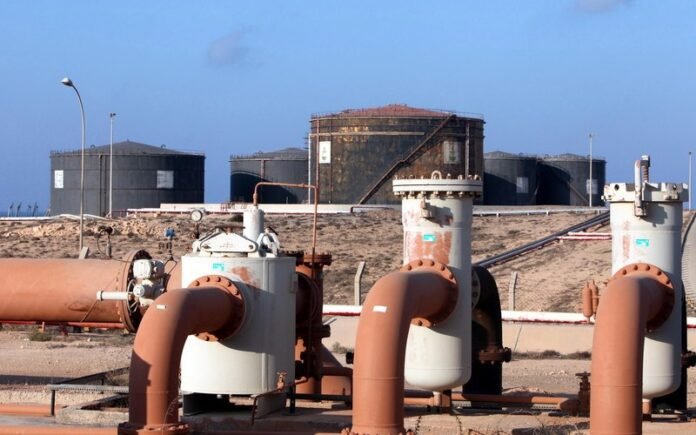
Libya has successfully drilled a well in its Al-Khair oilfield with production rates of 3,209 barrels per day and 1.948 million cubic feet of associated gas per day, the state-owned firm NOC said .
The NOC said in a statement that the tests of the initial well, drilled by its subsidiary, the Sirte Oil Company for Production and Manufacturing of Oil and Gas, showed a natural flow without the need for artificial lift, “with encouraging production rates confirming the success of the drilling operations.”
Al-Khair oilfield is located in the Sirte basin, and it started production in 2021 with initial rates of 6,000 bpd.
The drilling operation has reached its planned total depth of 9,050 feet, with a reservoir thickness of 174 feet, the NOC said.
“The well demonstrated high production capacity, a stable natural flow, excellent oil quality, and a complete absence of associated water during the testing period,” said the NOC.
Libya’s economy relies on oil for more than 95% of its economic output.