India’s strategic autonomy morphing into a connectivity strategy
As India pursues its ambition of becoming a developed economy by 2047 — the centenary of its independence — reliable access to overseas markets has become a strategic imperative.
Yet recent crises in West Asia — ranging from the Gaza war and Red Sea disruptions to the Iran war and Strait of Hormuz blockade — have all exposed an uncomfortable reality: connectivity is ultimately a function of geopolitics.
These developments offer important lessons on the limits of connectivity planning in an increasingly fragmented geopolitical environment and raise a pressing question: what options does India have to secure reliable access to markets and build resilience into its trade architecture?
A major lesson is that no corridor is geopolitically immune. IMEC was announced in 2023 with great enthusiasm, but within weeks, the Gaza conflict had disrupted the political environment necessary for its implementation.
Shipping through the Strait of Hormuz and the Red Sea has faced persistent attacks and rerouting, demonstrating that geopolitical risk can derail even the most promising corridor projects overnight.
India’s connectivity problem is fundamentally geopolitical, not one of engineering. India does not lack the technical ability to build ports, roads or logistics systems, nor the capital to participate in such projects.
Beyond the current Hormuz challenge, India’s most direct routes to Eurasia pass through regions marked by rivalry, sanctions, conflict or intense strategic competition. Pakistan blocks direct access to Afghanistan and Central Asia, while China’s growing influence stretches across much of Eurasia.
India’s search for reliable trade corridors is inseparable from its search for diplomatic space. In an era of geopolitical fragmentation, resilience lies not in a single flagship route but in maintaining varied pathways to markets.
India, therefore, needs multiple corridors, such as IMEC for Europe and the Mediterranean, and Chabahar and INSTC for Central Asia and Russia, now more than ever.
The assumption that economic logic alone drives connectivity has been proven wrong. Pakistan has blocked transit access to India despite clear economic gains; Iran sanctions have affected Chabahar’s development and viability; and regional rivalries have complicated IMEC. The lesson is that corridors succeed only when political alignments support them.
Middle powers cannot afford to outsource strategic risk. For decades, many Gulf states assumed that major powers such as the US would guarantee the security of global trade routes and ensure uninterrupted commerce. Recent events have demonstrated the limits of that assumption.
Great powers get distracted; their priorities shift, and critical shipping lanes can become hostages to geopolitical rivalries. India must therefore strengthen its own maritime capabilities through greater naval reach, enhanced maritime domain awareness and more resilient logistics networks.
The Gulf has become indispensable to India’s economic strategy, and is no longer merely an energy supplier. Countries such as the UAE, Saudi Arabia, Oman and Qatar are increasingly becoming investment partners, logistics hubs, technology collaborators and connectivity nodes.
From lessons to options
These developments suggest that India’s challenge is not merely to identify the right corridor but to build a diversified connectivity architecture capable of withstanding geopolitical shocks.
The question is not whether India should choose between IMEC, Chabahar or INSTC, but how to balance these initiatives while strengthening its economic foundations.
India’s most realistic near-term option is to double down on Chabahar and INSTC. Despite sanctions risks and delays, both corridors already exist in some form.
India can expand cargo volumes through Chabahar, invest in logistics, customs integration and digital tracking, work with Iran, Russia, Azerbaijan and Central Asian states on missing links and target specific sectors such as pharmaceuticals, engineering goods and agricultural exports.
The downside is that India has limited control over Iran-Russia dynamics and Western sanctions. Iran is more important than many Indians appreciate. Many discussions treat Chabahar as merely a port project, but, in reality, Iran occupies a unique position, connecting the Gulf, Central Asia, the Caucasus and Russia.
Sitting astride key energy routes, Iran provides India with its only viable land bridge to Afghanistan and Central Asia that bypasses Pakistan. For India, Iran is not merely another bilateral relationship — it is a gateway geography.
India could increasingly prioritize IMEC. Gulf countries are financially stronger than Iran, India’s relations with the UAE and Saudi Arabia are sound, and European participation brings capital and technology while avoiding sanctions-related complications.
The challenge is that IMEC depends on regional political stability, particularly involving Israel and the broader Middle East. India can influence IMEC, but cannot build it alone.
Historically, India’s greatest strategic advantage has been maritime rather than overland. Expanding ports on both coasts and strengthening links with the UAE, Saudi Arabia, Oman, East Africa and Southeast Asia would build on that natural strength.
While dedicated undersea pipelines remain economically and technically challenging, India can pursue long-term energy security with countries such as the UAE, Saudi Arabia and Oman through strategic reserves, dedicated port infrastructure, refinery partnerships, green hydrogen projects and priority supply arrangements. Such initiatives would strengthen energy security while complementing broader trade connectivity efforts.
India should strengthen ties with ASEAN, accelerate connectivity with Myanmar and Thailand, expand trade agreements and integrate supply chains with Vietnam, Indonesia and Singapore.
The crisis has reinforced the argument that robust political relationships across multiple camps can ease many connectivity challenges. Over the years, India has cultivated strong relationships with the Gulf monarchies, Iran, Russia, ASEAN, Europe and the United States.
Even with China, despite the border dispute, India maintains decent economic ties. India will need to deepen and fortify these relationships further, because a country seeking continental connectivity cannot choose its geography.
The uncomfortable reality is that connectivity projects alone do not generate economic power. This lesson has exposed the limits of corridor-centric thinking. History suggests the reverse: successful corridors emerge when strong economies create demand for them.
China’s Belt and Road Initiative (BRI) was effective not because it built roads and ports, but because it was backed by manufacturing scale, export competitiveness and robust financial resources.
India’s long-term success will therefore depend less on announcing new corridors and more on strengthening its industrial base, logistics capabilities and trade competitiveness.
India may need to reframe connectivity as diplomacy rather than infrastructure. Traditionally treated as a subset of foreign policy, connectivity is increasingly becoming its driver.
China’s BRI was not merely an infrastructure initiative but an instrument for shaping political relationships. India may require a similar approach, though less coercive and more partnership-driven.
Countries with the most resilient connectivity are not those possessing a single ideal route but those maintaining productive relations with the greatest number of countries along multiple routes.
In that sense, India’s long-standing pursuit of strategic autonomy is no longer merely a foreign policy doctrine – it is increasingly a connectivity strategy.
Raghu Gururaj is a retired Indian ambassador and former foreign service officer.
Libya drills well with encouraging production rates
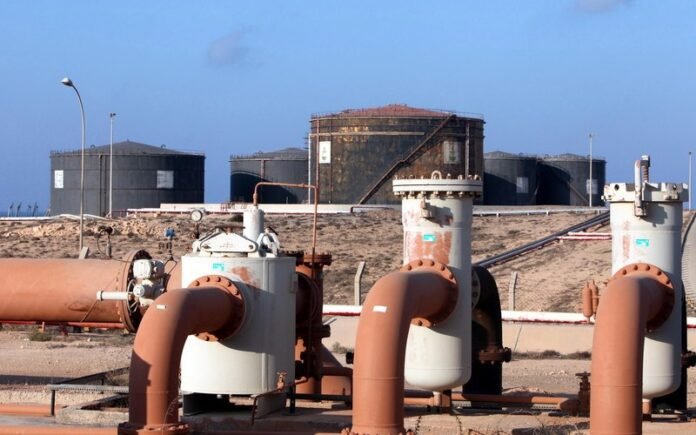
Libya has successfully drilled a well in its Al-Khair oilfield with production rates of 3,209 barrels per day and 1.948 million cubic feet of associated gas per day, the state-owned firm NOC said .
The NOC said in a statement that the tests of the initial well, drilled by its subsidiary, the Sirte Oil Company for Production and Manufacturing of Oil and Gas, showed a natural flow without the need for artificial lift, “with encouraging production rates confirming the success of the drilling operations.”
Al-Khair oilfield is located in the Sirte basin, and it started production in 2021 with initial rates of 6,000 bpd.
The drilling operation has reached its planned total depth of 9,050 feet, with a reservoir thickness of 174 feet, the NOC said.
“The well demonstrated high production capacity, a stable natural flow, excellent oil quality, and a complete absence of associated water during the testing period,” said the NOC.
Libya’s economy relies on oil for more than 95% of its economic output.
Israel says ceasefire with Hezbollah to hold if group complies, army to remain in southern Lebanon
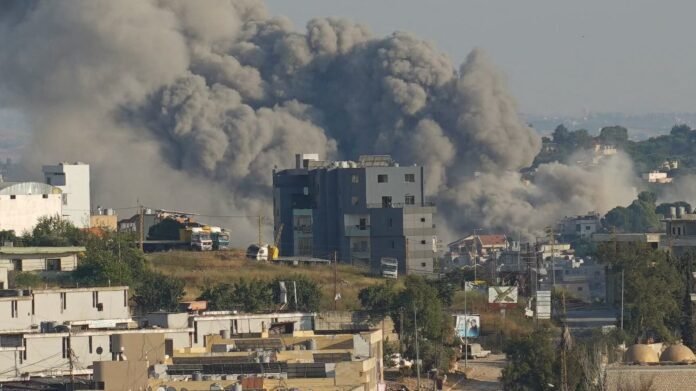
Ceasefire announcement came after at least 31 people killed in series of Israeli airstrikes in southern, eastern Lebanon since early Friday, Anadolu Agency reports.
Israel said Friday a ceasefire with Hezbollah will remain in effect as long as the Lebanese group complies with it, while the Israeli army will remain deployed in southern Lebanon, according to Israeli newspaper Yedioth Ahronoth.
An Israeli official said the ceasefire arrangement allows the Israeli army to stay in southern Lebanon and act against “emerging threats.”
“If Hezbollah doesn’t attack, we won’t attack them. If they attack us, we will respond,” the official said, according to the daily.
READ: Extremist Israeli ministers call for ‘burning’ Lebanon, opening ‘gates of hell’ after soldiers killed
Israel and Hezbollah have agreed to a ceasefire was set to take effect at 4 pm local time (1300GMT) Friday, a senior US official confirmed to Anadolu earlier.
The official did not provide further details about the agreement.
The ceasefire announcement came after at least 31 people were killed and several others injured in a series of Israeli airstrikes in southern and eastern Lebanon since early Friday, marking the deadliest escalation since the US and Iran signed an agreement aimed at ending war on multiple fronts, including Lebanon.
Four Israeli soldiers were also killed in a Hezbollah attack in southern Lebanon.
READ: Trump says US must keep Netanyahu ‘a little bit sane’ on Lebanon
Ceasefire Restored in Lebanon as Fighting Delays US-Iran Meeting in Switzerland
Israel and Hezbollah agreed to renew a ceasefire in Lebanon on Friday as US officials worked to prevent escalating violence from derailing negotiations between Washington and Tehran.
A senior White House official told Sky News Arabia that Prime Minister Benjamin Netanyahu had agreed “100%” to the renewal of the ceasefire. Separately, a senior Israeli official told Walla that the understanding between the sides was straightforward: “If Hezbollah does not attack, Israel will not attack.”
The ceasefire announcement followed a day of diplomatic activity, as Iran demanded assurances about the fighting in Lebanon before resuming talks with the United States.
CNN, citing a source familiar with the discussions, reported that Washington conveyed a message to Tehran that Israel did not intend to broaden its military campaign.
“Hezbollah violated the ceasefire. Israel agreed to absorb it, and that message was conveyed to the Iranians. Now it is up to Hezbollah to stop,” the source told CNN.
The diplomatic efforts came after a deadly incident in southern Lebanon. The Israel Defense Forces (IDF) announced that Battalion 52 commander Lt. Col. Dor Ben Shimhon was killed in combat. Three additional soldiers were killed in the same incident, though their names had not yet been cleared for publication.
IDF Spokesman Brig. Gen. Effie Defrin said a Battalion 52 tank was hit overnight Friday. Preliminary findings indicate an object from the air may have struck the vehicle. Investigators have not ruled out an anti-tank missile, a drone, or a Hezbollah explosive device.
Following the incident, Israel launched a broad military response against Hezbollah targets. The IDF said it carried out more than 150 strikes in Lebanon, targeting infrastructure in the south and additional areas deeper inside the country.
Defense Minister Israel Katz said, “We will not allow harm to our soldiers or citizens, and every violation of the ceasefire by Hezbollah will be met with great force.”
Tensions also disrupted planned diplomacy in Switzerland. A meeting between US Vice President JD Vance and an Iranian delegation headed by Parliament Speaker Mohammad Bagher Ghalibaf was canceled.
The meeting had been expected to accompany a face-to-face signing ceremony following the digital signing of a memorandum of understanding by President Donald Trump and President Masoud Pezeshkian.
Apple patches high-severity eavesdropping vulnerability in Beats Studio Buds
Apple has updated its Beats Studio Buds wireless earbuds to patch a high-severity vulnerability that could be exploited by nearby hackers to eavesdrop on users.
The vulnerability, CVE-2025-20701, allowed improper authentication in the firmware running on the Bluetooth-related chips, enabling people within signal range to impersonate devices that had previously been paired with the earbuds. The researchers demonstrated this in a series of end-to-end attacks that allowed them to eavesdrop on conversations or sounds within earshot of the phone microphone.
Apple joins the patch party
“Impact: An attacker within Bluetooth range may be able to listen through the microphone of a device which is not yet paired and actively seeking pair requests,” Apple said in a Tuesday security advisory. The fix is contained in Beats Firmware Update 1B211, which is delivered automatically while headphones are paired with and within Bluetooth range of a user’s iPhone, iPad, or Mac. Users can check their firmware version by going to Settings on their device, navigating to Bluetooth, and tapping the info button next to the headphones.
Carrying a severity rating of 8.8 out of 10, CVE-2025-20701 was one of three vulnerabilities resulting from last year’s disclosure by researchers Dennis Heinze and Frieder Steinmetz of security firm Insinuator about chips made by Airoha Systems. In response, Airoha released an updated software development kit to affected hardware sellers. Apple’s incorporation of the patch into the Beats Studio Buds came the same week that Jabra, another affected headphone manufacturer, also announced patched versions. According to this article from Ecoustics, manufacturers Bose and JBL have released statements saying their devices have also been updated to incorporate the fixes.
Security firm Sentinel One has a deeper dive into CVE-2025-20701 here.
Heinze and Steinmetz said last year that the full chain of attacks gave attackers the ability to do other malicious things, including retrieving call history and contacts, and even calling arbitrary numbers. Many of those capabilities are dependent on the specific devices being paired, since the functionality built into them differs from platform to platform.
Devices affected by the Airoha vulnerabilities are by no means alone. In January, researchers disclosed WhisperPair, a series of vulnerabilities that allows an attacker to hijack Bluetooth devices connected through Google Fast Pair, a proprietary protocol belonging to the company. Besides eavesdropping, attackers can exploit the WhisperPair flaws to geolocate devices. The vulnerabilities affect more than a dozen devices from 10 manufacturers, including Sony, Nothing, JBL, OnePlus, and Google itself.
There are few, if any, reports of Bluetooth vulnerabilities like these being actively exploited in the wild. The complexity of such attacks is often high, and an attacker has to continually stay within Bluetooth range of a target while utilizing the exploit. People who think they may be targeted by such attacks should turn off Bluetooth in devices whenever they’re not needed, and remain aware of the risks when Bluetooth is enabled.
US-Iran talks delayed as Israeli bombs in Lebanon kill 18 or more
US Vice President JD Vance. Photo: Wikimedia Commons
Overview:
Attacks followed US VP Vance’s complaint about Israeli leadership’s tendency to bomb during talks’ critical stages
US and Iranian delegations delayed plans to travel to Switzerland on Friday for the opening round of talks to cement the details of a peace agreement as the Israeli military bombarded southern Lebanon, killing at least 18 people and threatening once again to derail momentum toward a diplomatic resolution.
The Associated Press reported that “mediators worked to reschedule the meetings crucial for starting talks over a permanent end to the Iran war, with much of the attention focused on Lebanon.” Iran’s leadership has insisted that ending Israeli attacks on Lebanon is critical to ending the war, and the memorandum of understanding signed earlier this week calls for “the immediate and permanent termination of military operations on all fronts, including in Lebanon.”
Israel’s military, which joined the US in launching the war on Iran in late February, carried out strikes throughout southern Lebanon on Friday, hours after US Vice President JD Vance – who was supposed to travel to Switzerland – publicly complained about the Israeli leadership’s tendency to launch bombing campaigns during critical stages of the Trump administration’s talks with Iran. Last weekend, Israeli forces bombed Beirut shortly after US President Donald Trump announced plans to sign the memorandum of understanding.
“We seem to be right on the cusp of a major breakthrough in the agreement, and then all of a sudden, there’s a major explosion that goes off in a civilian population center in Beirut, and a lot of people who have nothing to do with Hezbollah lose their lives,” Vance told reporters on Thursday. “That’s not acceptable.”
Roqayah Chamseddine, a southern Lebanese writer, reported that “the intense Israeli bombardment” on Friday “targeted populated residential neighborhoods in the Nabatieh district, committing massacres in the towns of Dweir Harouf, Al-Sharqiya, and Kfar Sir, while also striking Kfar Roumman, Haboush, Jebchit, Toul, and Deir al-Zahrani.”
“People had only just begun returning to their villages,” Chamseddine wrote. “The renewed Israeli aggression quickly expanded into the Western Bekaa Valley, where Israeli warplanes targeted the heights of Abu Rashed and launched attacks along the Litani River valley near the town of Zalaya.”
Four Israeli soldiers were killed in southern Lebanon on Friday by a Hezbollah attack on an Israeli tank, according to the Israel Defense Forces. The attack prompted Israel’s far-right national security minister, Itamar Ben-Gvir, to declare that “all of Lebanon must burn.”
“With all due respect to the Americans, Israel must make it clear to the entire world that the blood of our sons and the security of our citizens are not forfeited,” Ben-Gvir added.
The Trump White House cited logistical challenges in a statement announcing the delay of the US delegation’s departure to Switzerland, not mentioning Lebanon.
But the Lebanese outlet Al Mayadeen reported that the Israeli assault on Lebanon was central to the Iranian delegation’s decision to postpone its planned trip on Friday.
“The delegation had already been preparing to depart Iran and launch the first round of negotiations, scheduled to span 60 days, before the decision to suspend the trip was made,” Al Mayadeen reported, citing an unnamed source. “Tehran had previously informed both Washington and the mediators that the Lebanon file remains a central component of the negotiations and will directly influence whether the talks proceed.”
Rocket Report: Rebuild begins at Blue Origin launch pad; Relativity targets Mars
Welcome to Edition 8.46 of the Rocket Report! We don’t mention Starship in the body of this week’s report, so I’ll give a brief update here. The next test flight of SpaceX’s mega-rocket—Flight 13—could happen as soon as next month, according to Gwynne Shotwell, the company’s president and chief operating officer, in a recent interview with CNBC. There’s still a fair bit of work to go before Flight 13, so don’t count on a launch next month just yet. What we do know, based on Shotwell’s comments to CNBC, is the next Starship test flight will look a like like the previous one last month, with a suborbital flight path and a splashdown of the ship in the Indian Ocean. SpaceX is holding off on an orbital flight until at least the following launch, Flight 14, after the ship was unable to complete a critical engine restart in space on the last flight.
As always, we welcome reader submissions. If you don’t want to miss an issue, please subscribe using the box below (the form will not appear on AMP-enabled versions of the site). Each report will include information on small-, medium-, and heavy-lift rockets, as well as a quick look ahead at the next three launches on the calendar.
Isar test flight scrubbed again. Isar Aerospace still commands top position among a new generation of European rocket startups, but the company’s efforts to launch a critical test flight of its Spectrum rocket continue to encounter roadblocks, Ars reports. The latest delay came Monday, when Isar scrubbed a launch attempt after “detecting off nominal behavior in the vehicle’s fluid systems,” according to a social media post. “The teams are analyzing the new data to isolate the root cause.” Isar is flush with cash, having raised nearly $1 billion to date, but is still lacking in the critical currently of flight experience. The Spectrum rocket has flown just once to date, on a failed launch last year that lasted less than 30 seconds.
Gravity still winning… The two-stage, 92-foot-tall (28-meter) Spectrum rocket was awaiting liftoff from Andøya Spaceport in northern Norway. It was the fourth time in five months that Isar Aerospace, headquartered near Munich, Germany, had reached a target launch date for the second test flight of the Spectrum launch vehicle. Isar called off a launch attempt on January 21 due to an issue with a pressurization valve, and then halted a countdown on March 25, moments before liftoff, when engineers detected rising temperatures in the rocket’s liquid propane fuel. Isar officials attributed the problem to a delay earlier in the countdown caused by an unauthorized boat in restricted waters along the rocket’s flight path. Managers stood down from another launch attempt on April 9 to evaluate a suspected leak in a composite overwrapped pressure vessel.
The Ars Technica Rocket Report
The easiest way to keep up with Eric Berger’s and Stephen Clark’s reporting on all things space is to sign up for our newsletter. We’ll collect their stories and deliver them straight to your inbox.
Swift reboost mission ready for launch. Just 10 months ago, NASA asked three companies if they could do something nobody had done before. Could they build and launch a satellite to save a $500 million astronomy mission at risk of crashing back to Earth? What’s more, could they do it in less than a year on a tight budget? The company that came back to NASA with the most compelling solution was a startup named Katalyst Space Technologies, and they have already given the agency a satisfying answer, Ars reports. Katalyst’s reboost satellite, named Link, was built in less than a year and is now integrated with an air-launched Northrop Grumman Pegasus XL rocket for a ride to space slated for no earlier than June 27.
More steps to go… The speed of development of the robotic mission to rescue NASA’s Swift observatory has been remarkable. Now, the mission needs to work. “To be honest, no one thought it was going to be possible. No one thought we would get as far as we’ve already gotten today,” said Shawn Domagal-Goldman, director of NASA’s astrophysics program. “And I have to be honest, there are still risks ahead of us, but I’m both deeply thankful and as optimistic as I can be that we’ll meet those challenges because of the people that have worked on it.” (submitted by EllPeaTea)
New launch pad in the works at Cape Canaveral. Space Launch Delta 45, the military unit that runs Cape Canaveral Space Force Station, is exploring the potential creation of a new rocket launch complex for Naval Ordnance Test Unit and US Army missions, Florida Today reports. The new location, known as Launch Complex 51, would be located about 2 miles north of Port Canaveral, making it the spaceport’s closest pad to public areas. LC-51 would encompass about a 50-acre area.
Better real estate… The new pad would replace Launch Complex 46, which lies within the explosive clear zone of Blue Origin’s nearby Launch Complex 36. Blue Origin’s New Glenn rocket exploded on that launch pad during a preflight test last month. LC-46’s proximity to LC-36 means the two pads cannot operate simultaneously without disruption. LC-46 has hosted a handful of small satellite launches and hypersonic missile tests in recent years.
Changes in attitude at Latitude. French launch startup Latitude has removed all mentions of the Zephyr name from its website, now referring to its rocket simply as “Our Launcher,” European Spaceflight reports. The rocket, previously known as Zephyr, is a two-stage launch vehicle that will stand 19 meters (62 feet) tall and is designed to deliver up to 200 kilograms (440 pounds) to low-Earth orbit. The company is currently targeting the second half of 2027 for the rocket’s inaugural flight.
Due diligence… Latitude did not explain the reason for the change, but one plausible explanation is trademark risk. The Zephyr name is already trademarked within the aerospace sector by Airbus subsidiary AALTO, whose solar-powered High Altitude Platform Station aircraft bears the name. The Zephyr trademark filing, which was granted by the European Union Intellectual Property Office in 2005, covers unmanned aerial vehicles, satellites, parts and fittings, and “launching apparatus for the aforesaid goods.”
China’s Zhuque-2E breaks up in orbit. The upper stage from a commercial Chinese rocket that launched last week has broken apart in space, spreading debris in a heavily trafficked part of low-Earth orbit home to the International Space Station and a significant portion of SpaceX’s Starlink broadband network, Ars reports. The breakup occurred shortly after the Zhuque-2E rocket reached orbit on June 9 with two satellites providing direct-to-cell communications, perhaps around the time the upper stage was expected to perform a disposal burn. The US Space Force confirmed the breakup event in a post on space-track.org, a website used by the military to distribute orbit data to the public.
50, 100, 150?… A US Space Force spokesperson said the military is tracking at least 51 objects attributed to the breakup of the upper stage. That number may increase as the Space Force’s network of tracking radars get a better handle on the debris cloud. Darren McKnight, a senior technical fellow at the orbital intelligence company LeoLabs, told Ars the fragmentation event likely generated 100 to 150 pieces of debris. The second stage of the Zhuque-2E rocket, made by a Chinese company called LandSpace, measured between 25 and 30 feet (about 8 meters) long and 11 feet (3.35 meters) in diameter. The main body of the rocket’s upper stage is now orbiting between 208 miles and 263 miles (335-by-424 kilometers) at an inclination of 54.5 degrees to the equator. This is close to the same altitude of the International Space Station and a number of SpaceX’s Starlink direct-to-cell communications satellites. The good news is atmospheric drag will likely bring most of the debris down within a matter of months to a year.
Relativity announces commercial Mars mission. Relativity Space plans to launch a Mars orbiter in 2028 as part of a new initiative to privately develop planetary missions, Space News reports. The company announced June 17 its Interplanetary Sciences Program, which aims to support science missions in partnership with NASA, industry, academia and philanthropic organizations. The first of those missions is a Mars science and telecommunications orbiter mission planned for late 2028. The payload will include an atmospheric profiling instrument suite contributed by NASA’s Ames Research Center, a radar instrument to map subsurface ice and geology, and a communications relay package.
Short on details... The robotic mission to Mars would launch on Relativity’s Terran R reusable rocket, which is progressing through development in advance of its inaugural flight, perhaps as soon as next year. Relativity offered little information on the mission, such as its size, mass, power, or cost. Since its founding in 2015, Relativity’s central focus has been on launch. Eric Schmidt, the former CEO of Google, took over as chief executive of Relativity a little more than a year ago, teasing new areas of focus such as orbital data centers, philanthropic space science ventures, and national security missions. This isn’t the first time Relativity has touted a Mars mission. Relativity and Impulse Space announced in 2022 plans for a Mars lander that would launch on Terran R, with the lander itself built by Impulse. The companies said in 2023 they were planning to launch the mission as soon as 2026, but neither has provided recent updates on those plans.
Japan’s H3 rocket returns to flight. Japan successfully launched an H3 rocket powered solely by liquid-fueled engines for the first time June 12, overcoming a mission failure six months ago, Kyodo News reports. H3 rocket No. 6, carrying a dummy payload and small satellites, lifted off from the Tanegashima Space Center in Kagoshima Prefecture, two days later than originally planned due to unfavorable weather forecasts at the launch site. JAXA said the rocket was successfully placed into its planned orbit.
Lower cost... This new configuration of the H3 rocket, designated the H3-30S, flies without the aid of solid rocket boosters. Instead, designers added a third hydrogen-fueled engine to the H3’s core stage, which typically has two main engines. The new variant is tailored to launch medium-class satellites at lower cost than the heavier version of the H3 with two or four strap-on boosters. The June 12 launch was the return to flight for the H3 program after a failure in December resulted in the loss of a Japanese navigation satellite. The failure was blamed on the collapse of the H3’s payload support structure, damaging the rocket’s second stage and leading to the unplanned separation of the satellite from the launch vehicle.
SpaceX gives a ride to a competitor. AST SpaceMobile, a company seeking to compete with SpaceX’s Starlink direct-to-cell communications service, launched three “BlueBird” satellites on a dedicated mission aboard a SpaceX Falcon 9 rocket Wednesday, Spaceflight Now reports. The launch followed the loss of AST SpaceMobile’s previous BlueBird satellite on a failed launch of Blue Origin’s New Glenn rocket in April. The satellites are among the largest ever sent into space, with deployable antennas that unfurl to cover an area of about 2,400 square feet (223 square meters) once in orbit. This allows AST to link up with unmodified smartphones on Earth.
Bottleneck... AST SpaceMobile hoped to launch 45 satellites this year, but that was before one of its primary launch vehicles, Blue Origin’s New Glenn, was grounded after an explosion on its launch pad last month in Florida. With this week’s successful Falcon 9 launch, AST SpaceMobile will reach the halfway point of the 2026 with just three new satellites in orbit.
For Amazon, Europe’s Ariane 6 stands apart. Amazon now has hundreds of flight-ready satellites standing idle in Florida, waiting to join the company’s low-Earth orbit Internet constellation, Ars reports. “They’re built, and sitting in a payload processing facility waiting for trips to orbit,” said Steve Metayer, vice president of Amazon Leo Production Operations, during a teleconference with reporters. “And we’re currently manufacturing several satellites a day.” Several years ago, Amazon entrusted three unproven rockets—United Launch Alliance’s Vulcan, Blue Origin’s New Glenn, and Europe’s Ariane 6—to launch the bulk of the company’s constellation of more than 3,200 satellites. Of that group, only the Ariane 6 has come through for Amazon.
A new lift record for Europe… France-based Arianespace has emerged as a critical partner for Amazon, which, to date, has had the majority of its 331 satellites launched on Atlas V rockets. However, Amazon has just one more mission booked on this rocket, which is operated by United Launch Alliance, as the vehicle is slated for retirement. Arianespace’s Ariane 64 rocket launched its third mission for Amazon Wednesday morning from French Guiana. This mission debuted larger strap-on solid rocket boosters, increasing the Ariane 64’s carrying capacity from 32 to 36 Amazon Leo satellites. It also marked the heaviest payload ever launched by a European rocket.
Rebuild underway at Blue Origin’s Florida launch pad. Blue Origin has started rebuilding a launch pad severely damaged in a New Glenn explosion less than three weeks ago as it works to resume launches by the end of the year, Space News reports. Jeff Bezos and Dave Limp, Blue Origin’s owner and CEO, spoke about the pad rebuild at the VivaTech conference in Paris. Limp said Launch Complex 36 has been cleared of all debris, and crews “started the reconstruction” of the pad earlier this week. Both reiterated their earlier statements that Blue Origin will fly the New Glenn rocket again before the end of the year, an achievement that would defy the expectations of many officials at NASA.
Mark 1 next year… NASA has a keen interest in the reconstruction of the launch pad and the return to flight of New Glenn. The rocket is a key element in the agency’s Artemis program to return US astronauts to the surface of the Moon. Blue Origin’s first prototype lunar lander, called Blue Moon Mark 1, was supposed to launch in the next few months on a New Glenn rocket to begin testing core technologies for a future human-rated Moon lander. After the pad explosion last month, NASA Administrator Jared Isaacman suggested Blue Origin look for an alternate rocket for the Mark 1 lander. Limp said that won’t be necessary, stating that Mark 1 is now targeted for launch early next year, once New Glenn is back in service.
Next three launches
June 21: Falcon 9 | Starlink 17-28 | Vandenberg Space Force Base, California | 14:00 UTC
June 23: Long March 7A | Unknown Payload | Wenchang Space Launch Site, China | 02:10 UTC
June 23: Falcon 9 | Starfall Demo | Cape Canaveral Space Force Station, Florida | 09:43 UTC
Music producer Tay Keith, the Grammy-nominated hitmaker behind some of the biggest songs of the last decade, has died at just 29 years old.
The producer, whose real name was Brytavious Chambers, was found unresponsive inside his Nashville apartment on Thursday afternoon, according to police.
Officers with the Metropolitan Nashville Police Department reportedly discovered Keith during a welfare check at his Martin Street home.
Police said no foul play is suspected.
His cause of death has not yet been released and is pending autopsy results.
Keith was a Tennessee native who rose from local producer to one of the most in-demand names in hip-hop and pop music. His sound helped shape major hits for stars including Drake, Travis Scott, Beyoncé, 21 Savage and Sexyy Red.
He scored four No. 1 songs on the Billboard Hot 100 during his career, including Travis Scott’s massive 2018 hit “Sicko Mode” and Drake’s 2023 chart-topper “First Person Shooter.”
Keith earned a Grammy nomination in 2019 for his work on “Sicko Mode,” a song he helped produce while he was still a student at Middle Tennessee State University.
He received another Grammy nomination in 2024 for “Rich Flex,” the Drake and 21 Savage collaboration that became another monster hit.
Keith also worked closely with rapper Sexyy Red, producing tracks including “Get It Sexxy” and “Pound Town.”
His sudden death has stunned the music world, where he was known as one of the young producers who helped define the sound of modern rap.
The European Central Bank (ECB) released its updated wage tracker this week, indicating that negotiated wage pressures remain stable as the year progresses.
Data covering agreements signed up to the end of May 2026 suggests that negotiated wage growth will reach approximately 2.6 per cent by the end of December 2026.
The headline indicator, which uses smoothed one-off payments to describe quarterly and monthly dynamics, shows growth of 3.2 per cent for 2025 and 2.3 per cent for 2026.
For 2026, this headline tracker averages 1.8 per cent in the first quarter, 2.1 per cent in the second quarter, and 2.6 per cent for the final two quarters of the year.
The increase observed over the year reflects the fading mechanical downward effect of large one-off payments that were distributed in 2024 but not in 2025.
This specific mechanical effect is expected to disappear almost entirely over the course of 2026 within the headline indicator.
The ECB wage tracker with unsmoothed one-off payments, which is better suited for describing yearly dynamics, indicates negotiated wage growth of 3.0 per cent in 2025 and 2.6 per cent in 2026.
Meanwhile, the wage tracker excluding all one-off payments points to an easing of negotiated growth from 3.8 per cent in 2025 to 2.6 per cent in 2026, reflecting more moderate dynamics in negotiated base wages.
Employee coverage for the 2026 data currently stands at 46.4 per cent for the first quarter, 44.8 per cent for the second, 41.1 per cent for the third, and 40.4 per cent for the final quarter.
The forward-looking horizon for the tracker remains fixed at the end of December 2026 for this release.
As new agreements are signed and coverage for contracts extending beyond 2026 increases, the horizon will be extended to the first quarter of 2027 in the July 2026 data release.
The bank cautioned that the tracker is subject to revision and its forward-looking component should not be interpreted as a formal forecast since it only captures currently available information from active collective bargaining agreements.
For a more comprehensive assessment of euro area wage developments, the bank pointed towards the June 2026 Eurosystem staff macroeconomic projections, which indicate a yearly growth rate of compensation per employee of 3.2 per cent for 2026.
Over the last few years, the world has seen unspeakable violence, death, and devastation from Israel’s war on Gaza. During that time, global perception has shifted as the scale of Israel’s destruction grew, with the death toll climbing to more than 73,000 people. Since the October 2025 “ceasefire,” Israeli military attacks have killed more than 1,000 Palestinians in Gaza.
“Spending years building a movement for an end to this genocide around the slogan ‘Ceasefire now’ alone, it was successful in building quite a substantial following,” Tariq Kenney-Shawa, an associate fellow at Palestinian think tank Al-Shabaka, tells The Intercept Briefing. “It was vague enough to bring a lot of people into the movement against genocide — because who’s going to disagree with calling for an end to war?”
“But at the end of the day, what it really laid the groundwork for was … the potential of signing this empty ceasefire agreement, in which there is an agreement on paper, there is a framework, and a phased approach to this.”
Since the U.S.-brokered ceasefire last year between Israel and Hamas, Gaza has largely fallen out of the news, as Israel, along with the U.S., launched attacks on Iran and Lebanon. But Israel’s genocidal assault on Palestinians never really stopped. “Palestinians continue to be killed every single day, albeit at a more piecemeal slower pace that is more difficult for the international community to oppose,” says Kenney-Shawa.
This week on the podcast, Intercept reporter Jonah Valdez speaks to Kenney-Shawa about how the fight for Palestinian rights and sovereignty can’t end at demands for ceasefires and conditioning aid — and should shift to sanctions and arms embargoes — and about how Gaza fits into Israel’s ambitions for the region and efforts to more deeply enmesh the U.S. and Israeli military.
“This is the most important thing to look at in the course of the next few months and few years,” says Kenney-Shawa, warning of new Israel-led initiatives like Section 224, an unprecedented integration of the U.S. military–industrial complex and Israeli defense and technology sectors. Israel and American leaders “recognize the fact that criticism of Israel in the U.S. is skyrocketing. … In many ways, they’ve recognized the need to shift this U.S.–Israel relationship from one of dependency, both militarily and financially, to one of further entrenchment.”
“Obviously, it’s a very strategic move by the Israelis to take advantage of this period in time where there is this huge chasm between public opinion and actual policy,” says Kenney-Shawa. “They’re essentially recognizing that, ‘Hey, we might not have total impunity in the United States forever, but we do for now while establishment Democrats and Republicans are running the ship. We have a Trump administration that’s essentially willing to do whatever we want.’ So what they’re trying to do now is essentially push this process through while Trump is in power, while Republicans have a majority in the Senate and the House.”
For more, listen to the full conversation of The Intercept Briefing on Apple Podcasts, Spotify, YouTube or wherever you listen.
Transcript
Jessica Washington: Welcome to The Intercept Briefing, I’m Jessica Washington, politics reporter at The Intercept.
Jonah Valdez: I’m Jonah Valdez, also a reporter at The Intercept, and I cover politics and Israel and Palestine.
JW: Glad to have you here, Jonah.
So on Wednesday, President Donald Trump signed an interim ceasefire to end military operations in both Iran and Lebanon for 60 days. The agreement would reopen the Strait of Hormuz, and bars Iran from having a nuclear weapon. The White House agreed to end their blockade and waive economic sanctions against Iran.
The deal also requires the U.S. and regional partners to develop a “mutually” agreed upon reconstruction and economic development fund worth at least $300 billion. However, the U.S. is not required to contribute.
Jonah, earlier this week on a special live Intercept Briefing, you spoke to Al-Shabaka U.S. Policy Fellow Tariq Kenney-Shawa about the particulars of ceasefires especially when it comes to Iran, Lebanon, and most notably Gaza.
In your conversation, you talk about the role the term “ceasefire” plays in our political imagination. Jonah, should a “ceasefire” be the end goal, or is there something more we need to push for here if what we’re really looking for is an end to the suffering?
JV: I think anyone should see even the recent deal between the U.S. and Iran with some skepticism as far as whether it will hold, given previous ceasefires it’s been a part of.
The term “ceasefire” has been weaponized against those that it’s supposed to bring peace to.
Something that Tariq Kenney-Shawa and I talk at length about during our conversation is how this term “ceasefire” has been — in many ways, in an Orwellian way — weaponized against those that it’s supposed to bring peace to. That’s exactly what we saw in Gaza.
The term “ceasefire” was this massive slogan — a very effective slogan — throughout the 2024 presidential campaign cycle, as well as congressional races that year. Pro-Palestinian protesters, the movement at large, was really pushing and using a ceasefire as a rallying cry to get people to care about Palestinian rights.
What conversely happened is you get this Trump-concocted ceasefire with a lot of hands from the Israeli government, which is essentially a fake ceasefire. They’ve continued the bombing campaign in Gaza. Since the ceasefire that was signed in October of last year, more than 1,000 Palestinians have been killed in Israeli strikes. So I think the term “ceasefire” just completely doesn’t apply in Gaza.
As a part of the Iran war, they have also invaded and are occupying southern Lebanon, and of course, Israel and the U.S. and their joint strikes in Iran. I think it’s important to see Gaza in this context of a broader conflict that Israel is trying to push on the region.
JW: On a related note, I know that you’ve consistently covered a lot of the momentum around calls for an arms embargo to Israel. I know this came up in your conversation with Tariq as well.
Are we giving an arms embargo too much weight, or to put another way, are we giving politicians who say they agree with an arms embargo the ability to skirt the actual issue here, which is our decades of perpetuating and being complicit in violence in the Middle East? What’s your take on that?
JV: This is a difficult one that Tariq and I had a really good back and forth about. An arms embargo, similar to a ceasefire, has been a huge rallying cry for the movement for Palestinian rights, for Palestinian sovereignty, really for decades now. Past U.S. governments have used an arms embargo [at] varying degrees of effectiveness of leverage against the Israeli government when the U.S. government wants Israel to do certain things.
It is still worth mentioning that Israel is still very reliant on the U.S. government for its military capabilities. Just the very fact of defending against Iranian attacks, that’s made possible because of U.S. weapons. Its ability to have a chokehold on Gaza and the West Bank, also due to U.S. weapons. Its ability to even strike in Iran and Lebanon, a lot of that is U.S. weapons capabilities. A lot of the aggression we’re seeing is because of its partnership with the U.S.
Again, there’s this danger, though, similar with the ceasefire, where an arms embargo might not be enough, and that’s what Tariq gets at as well, which is something he’s been saying since even before October 7, which is, the movement might have to go further than an arms embargo.
The reason is what we’re already seeing with certain conversations in Congress is there’s real efforts by Israel supporters and the Israeli government to further enmesh the U.S. and Israeli militaries in a way where even if we were to have a halt to weapon sales to Israel, even if we were to stop the flow of taxpayer dollars to Israel, they can still acquire weapons through a new kind of partnership they’re trying to form through the Pentagon directly.
This is something where, it could also be the case, where the movement gets what it wants. Again, this is a very effective rallying cry. We’re having an arms embargo, at least calls for stopping offensive weapons to Israel as a huge litmus test in the midterm elections. And it’s I think affecting the outcome of a lot of elections as we’ve seen in Pennsylvania and New Jersey and beyond.
It is having a lot of ripple effects in U.S. politics right now, and halting it would be a big deal. But, further down the line, Israel is already anticipating the halt of the flow of weapons or at least the flow of taxpayer dollars to Israel and is looking to create an even deeper relationship with the U.S. that could last indefinitely, really.
JW: This does really seem to be a cyclical issue in U.S. politics and in organizing. You pick an endpoint and of course, your enemies, they move around that endpoint. So, you may reach the goal, but what you actually wanted to achieve still feels elusive.
Jonah, thanks for giving us that preview. We’re going to hear your conversation with Tariq Kenney-Shawa, an Al-Shabaka U.S. policy fellow and co-host of Al-Shabaka’s Policy Lab series. Let’s listen to that now.
JV: Tariq, to start, I just want to give a little background on when you and I first connected. It was last summer, so July 2025, thereabouts, and it was the height of Israel’s manufactured famine in Gaza that, at the time, there seemed to be a huge shift toward how people in the U.S. were viewing Gaza.
You had mainstream media airing images of starving Palestinians. You had even more moderate Democratic leaders criticizing Israel. More lawmakers were referring to the conflict as a genocide for the first time. In the Senate, a historic vote, a majority of Democrats for the first time voted to block some weapon transfers to Israel.
But amid all that, you told me even then you were worried about a scenario where Israel would enact what you called a “performative ceasefire,” where Israel would continue the bombing and the blockades on humanitarian aid, the ethnic cleansing, but in your words, “a bit more piecemeal and gradual.”
So sure enough, several months later, last October, we got this iteration of a ceasefire, and here we are. The scenario you worried about is unfolding. So question to you, I’m wondering: In the last seven months, what’s been affirmed for you, and what has been more surprising?
Tariq Kenney-Shawa: It’s pretty clear that, yeah, everything that we were as a movement warned about — that these meaningless, toothless ceasefires can be agreed to and then not actually implemented — that has actually, as we’ve seen over the last couple months since October ’25, that’s played out exactly as expected.
What it’s really showed me was that, or what it’s really confirmed, was that spending years building a movement for an end to this genocide around the slogan “Ceasefire now” alone, it was successful in building quite a substantial following. It was vague enough to bring a lot of people into the movement against genocide because who’s going to disagree with calling for an end to war, calling for a ceasefire, right?
But at the end of the day, what it really laid the groundwork for was — again, like you just mentioned, and like I said last year — the potential of signing this empty ceasefire agreement, in which there is an agreement on paper, there is a framework, and a phased approach to this.
However, Israel has refused to implement any steps of the ceasefire agreement, and that includes continued carrying out daily airstrikes across the Gaza Strip. They’ve continued expanding the land they control. At the beginning Israel controlled about 53 percent of the Gaza Strip, delineated with that yellow line that people keep talking about that chopped Gaza in half. And now they’ve been, bit by bit, inching that line further and further westward and forcing 2 million Palestinians into an ever-shrinking strip of land that is now about 40, 30 percent of what the Gaza Strip was prior to the genocide.
Israel has also refused to let in the full agreed amount of humanitarian aid. They flood the Strip with commercial aid that people can’t really afford, but they refuse to let in sustainable products and things that people need to survive. Tents, building material, equipment to dig people’s bodies out of the rubble. What that has done is put those 2 million Palestinians who are caged in on that other side of the yellow line into a state of deliberate purgatory.
Since October 2025, that’s what we’ve seen. Palestinians continue to be killed every single day — albeit at, again, a more piecemeal slower pace that is more difficult for the international community to oppose. A lot of people within the now quite large movement in support of Palestinian rights and an end to a genocide, they look at the situation now and they say, “Well, they agreed to a ceasefire. What else can we do? What’s the next step for us?” At the end of the day, this is exactly what we were worried about last year.
Now we’re in this really difficult position in which other regional issues have come to the fore in terms of attention and media coverage, and Gaza has really slipped away from the public’s attention. Not that at the end of the day that really stopped a genocide, but there was a lot of movement in terms of this gradual push to hold Israel accountable.
The fact that we really predicated our entire movement around nothing really more than achieving a ceasefire has really come at the detriment of the Palestinians who are now living under this pseudo-ceasefire, while the movement in support of them abroad is a little bit in limbo, immobilized, and unsure of how to move forward.
“The fact that we really predicated our entire movement around nothing really more than achieving a ceasefire has really come at the detriment of the Palestinians now living under this pseudo-ceasefire.”
JV: It’s this Orwellian situation of language being weaponized in a way.
TKS: Absolutely.
JV: Out of that came the “Board of Peace” set up by the Trump administration that is supposed to govern this so-called ceasefire. Speaking of deals, this week we’re seeing a deal between the U.S. and Iran in, supposedly, ending the war there.
That war itself dominated the headlines and drew a lot of the attention away from Gaza. But now that the U.S. and Iran seem very close on this deal to end the war, Netanyahu, for his part, he said that he won’t withdraw Israeli troops from Lebanon despite this deal. And of course, the Israeli military continues to occupy more than half of Gaza.
How should we be viewing Gaza in the context of the Iran war or vice versa?
TKS: It’s important to see Gaza as the elephant in the room and just really part of this cycle of war. The fact that Israel was able to agree to this pseudo-ceasefire in Gaza allowed it to direct and move a lot of its attention, a lot of its resources, a lot of its military manpower to these other fronts that opened up. It was able to dedicate more time and energy to fighting this war in Iran, to going on this offensive against Hezbollah in Lebanon. And also, can’t ignore the fact that Israel is also holding occupied territory in Syria. So it’s really important to view this as a cycle.
It’s obviously very early, we don’t quite know what’s going to happen with the MOU [memorandum of understanding] between the U.S. and Iran. But if it does move forward, and if that front does shut down and quiet down — unfortunately, what that likely means is that Israel is going to have a lot more resources, a lot more manpower to turn its attention back to Gaza.
“The fact that Israel was able to agree to this pseudo-ceasefire in Gaza allowed it to direct and move a lot of its attention, a lot of its resources … to fighting this war in Iran.”
That shift in the regional wars that are ongoing is also coinciding with the fact that we’re basically in the run-up to Israeli election season. The opposition is really in a dead heat against the current far-right Israeli government. But the opposition in Israel isn’t criticizing Netanyahu because they’re against these forever wars that Israel is fighting. They’re criticizing Netanyahu because they just don’t like the way he’s conducting them. Just the other day, one of the main opposition candidates posted about how basically the war against Iran is going to basically reignite when there’s a new government in power in Israel.
“Israelis … are supportive of this concept of total victory that is quite elusive.”
That just goes to show that Israelis by and large are supportive of these war processes. They are supportive of this concept of total victory that is quite elusive. Netanyahu in particular, and the far-right coalition that he leads, is going to be particularly thirsty to, again, prove themselves in the face of these narratives that are coming out in light of the potential Iran deal that this was a strategic loss for Israel.
What Netanyahu and his coalition are thinking is, “OK, if we have to wind down our offensive activities in Iran and potentially even Lebanon, how else are we going to prove that we are the right party and the right people to defend Israel from our perceived threats?” They’re going to do that by reigniting their assault and genocide in the Gaza Strip. How they’re going to justify that is where we are at right now in terms of the ceasefire process itself. Despite the fact that Israel has not implemented any of the phase one parts of the agreement, they’re now demanding that Hamas agree to a component of phase two, which was disarmament.
But Hamas is basically putting its foot down and saying, “Listen if you guys aren’t going to adhere to stopping the bombing campaigns, if you guys aren’t going to let in humanitarian aid like you allowed to, if you guys are still eating up land every single day and not even adhering to phase one of the agreement, then basically why should we agree to phase two if there’s no mutual engagement on that side?”
Unfortunately, it does not bode well for Palestinians in Gaza because they’re the punching bag that Israel will turn its attention to undoubtedly.
“It does not bode well for Palestinians in Gaza because they’re the punching bag that Israel will turn its attention to.”
JV: Thanks for walking us through the political landscape in Israel. Sometimes we in the U.S. run the risk of overstating the influence of U.S. politics on Israel, specifically when it comes to Netanyahu’s decision-making and how he’s coming to those decisions. And we don’t talk enough about Israeli politics.
But I wanted to zoom in on something that you mentioned just a second ago about Hamas and their position right now and why ongoing negotiations with the “Board of Peace” continue to fall apart. For those who don’t know: The “Board of Peace” was set up as a part of the ceasefire and is supposed to, on paper, move the ceasefire process and rebuilding process of Gaza forward. It has a footnote essentially of like toward some further-off notion of Palestinian statehood.
I don’t think we talk enough about Hamas as a political entity and what its position is right now. What leverage does it have right now? What are they actually trying to argue for? Also, with other Palestinian factions, as trying to be a voice of what they see as this is the last remaining resistance of Palestinian freedom, in this context here, what does that look like? And, how is that stalling within this “Board of Peace,” very flawed structure?
TKS: It’s pretty obvious that Hamas itself doesn’t really have much leverage at all. They never had many offensive weapons to begin with. If you could consider the homemade makeshift rockets that they fire at Israel to be offensive; many of them have been depleted. I think it’s also important to be clear that Hamas is open, has explicitly stated that they are open to handing over their offensive weapons.
But they have clearly tied this to the process that was agreed upon. They very much see that as the only tidbit of leverage that they have left in this process. Basically, their argument is saying, “Listen, we’re open to handing over our weapons, but Israel has to withdraw as agreed upon in the ceasefire agreement, or there have to be steps that make it clear that Israel will be held accountable to the standards that was agreed upon.”
It’s really important to bring in the role of the “Board of Peace” here. It’s a misconception that the “Board of Peace” has been designed and will operate with the objective of building a new Gaza for Palestinians. What the “Board of Peace” exists to achieve is to create, effectively, this wonderland that Trump and Israel have agreed to.
What that looks like if you look at the presentations that, for example Jared Kushner has pushed out and the Trump administration has presented on how they view the Gaza Strip in 10, 20 years down the line — very little of it is actually for the Palestinians who live there, who will be basically concentrated into these disparate camps that are spread out throughout the Gaza Strip, put under intense surveillance, and basically serve as cheap labor for these luxury resorts and hotels and apartment complexes and data centers that Israel and the U.S. envision building in the Gaza Strip.
Palestinians will “basically serve as cheap labor for these luxury resorts and hotels and apartment complexes and data centers that Israel and the U.S. envision building in the Gaza Strip.”
When we think about the “Board of Peace” is, that shrinking territory that Hamas does still control of is basically the only thing that is stopping the Trump administration and Israel from embarking further on that dystopian future of, again, herding Palestinians into these effectively concentration camps distributed throughout the Gaza Strip and having them just serve as cheap labor for this personal enrichment opportunity for the Trump administration and his Israeli partners.
JV: You’ve written about your own experiences growing up a Palestinian American. Your grandfather, I believe, was the former mayor of Gaza City, Rashad Shawa. Your father is from Gaza. Your aunt, Laila Shawa, is a renowned Palestinian visual artist, also from Gaza. You have another aunt, Rawya Shawa, a Palestinian journalist and legislator.
There’s a lineage to the work you do. Could you talk a bit about your family, your father, how you came to start doing this work advocating for Palestine?
TKS: I’m Palestinian American. I was born in New York. Something that I’ve asked my parents about — they never wanted to make me feel like I had to advocate for Palestinian rights. They were always hoping that I wouldn’t have to do any of this and that eventually it would be figured out someday, and that we wouldn’t have to make this our lives or our careers. But I first started becoming aware of the politics of my heritage when I was very young.
I was in middle school. I remember this one time I went to a friend’s place. He introduced me to his parents, and his dad asked where I was from, and I said, “Palestine.” He said, “What is that? It doesn’t exist.” I was a middle schooler, so at the time it was shocking, and I didn’t really understand it. Only later in life did I realize that that was pointed and had a lot of history behind it.
As you mentioned, my father grew up in Gaza until he was about college age and came to the U.S. Just hearing about the stories about growing up in Gaza and then seeing his reaction to later events, for example, the 2008 Israeli offensive on the Gaza Strip — really, that kind of ended up awakening me to the real weight behind being Palestinian and pushed me to obviously get involved.
“That’s been one of the most difficult parts of, in addition to obviously just all the loss, is just knowing that we might never, never go back.”
The past two years have been extremely difficult just because there’s always been that hope of being able to return to Gaza and see the land that my father grew up in, my grandfather grew up in, my great-grandfather grew up in and played these really central roles in governance.
But it’s now — Gaza effectively doesn’t exist in the way it once did. So part of that process is just wrapping your mind around that as well. That’s been one of the most difficult parts of, in addition to obviously just all the loss, is just knowing that we might never, never go back. And if we do, it won’t be the Gaza that my father left and my grandfather led and all that.
JV: Your Aunt Rawya, she lost her home in that 2008 offensive from an Israeli strike?
TKS: Yep. And it wasn’t the first time. Israeli tanks had shelled her home before. That was the culmination of that whole process.
“ I very quickly had to become an expert in Palestinian history in order to defend myself.”
So it was very visceral for me at a very young age. But also, the fact that I was witnessing it all from a distance also played another role too. Because as a Palestinian American growing up in New York City, again, it very quickly became about defending myself. I very quickly had to become an expert in Palestinian history in order to defend myself from the people like my friend’s father who claimed I didn’t exist and my people didn’t exist.
Something that gives me hope in terms of the direction things are headed is that back in 2011, 2012, when I was a high schooler, the parameters for discussion around the Palestinian right to resist occupation, around some of the myths of Israel’s existence — for example, the myth that they made the desert bloom, or that it was a land without a people for a people without a land — so much of those have been eroded.
So much of American public opinion has, over the course of obviously two and a half years of genocide, shifted. There is much more space for having real conversations about this. More importantly, sharing the Palestinian perspective, which is very fundamentally different than it was even five, 10 years ago.
JV: Those shifts are incredible. Recent polling has shown time and time again that the vast majority of Democratic voters, somewhere north of 70 — more than 70 percent — in the U.S. see Israel unfavorably.
It’s playing a big role in U.S. electoral politics, whether or not a candidate supports blocking military aid to Israel has really become a litmus test in many of these races.
Some Democrats have found success in their primary elections running on that as a part of their platform and winning. You have Adam Hamawy in New Jersey, former Army surgeon who volunteered in Gaza; he won his primary against a moderate Democrat a couple weeks ago. Last month in Pennsylvania, you have Chris Rabb, whose campaign not only called for an arms embargo on Israel, but also — controversially for a lot of people — the right of return for Palestinians under international law.
I’m wondering, how would you diagnose this moment the Democratic Party is in with its attitude toward Israel–Palestine? Or do you see this as more than a moment? I’m curious how lasting you think these shifts will be.
TKS: I definitely see this as more than just a moment. It’s not just Democrats and people on the left who are feeling more pro-Palestinian than ever before. It’s across the political spectrum. It was Pew or Gallup, I forget which one, their most recent poll on where American sympathies lie between Israelis and Palestinians. For the first time ever, more Americans sympathize with Palestinians than with Israelis, and that’s across the political spectrum. Obviously that’s a lot more skewed when it comes to Democratic voters or progressives and people on the left. But it very much is across the political spectrum.
It’s more useful to look at the polling that we’re seeing around actual policy measures. For example, arms embargo or “block the bombs” and calls to actually either at the very least condition U.S. military aid to Israel, but, even better, cut it entirely. We’re seeing upwards of 60, 65 percent of Americans, again, across the political spectrum, who support these types of actual, solid policies.
That’s the difference right now between when you’re looking at just sympathy and people who are actually willing to potentially even make voting decisions out of what they’re seeing right now and out of the outrage that they’ve been witnessing when it comes to two and a half years of genocide. They also are now more cognizant of the fact that we send Israel billions of dollars to do that genocide and to engage in forever wars across the region that many Americans see or believe Israel is dragging the U.S. into. That is the bigger change that we’re seeing, and that arguably might be a little bit more lasting, is that more and more Americans today are critical of Israel and critical of that “special U.S.–Israel relationship.”
What concerns me sometimes is that a lot of the shift in public opinion isn’t necessarily tied to support for Palestinians, and we’re obviously seeing that on the right. On the far right, where we’re seeing a rise in actual antisemitism. Across the right, we’re seeing just a general rise in the “America-first — MAGA — we don’t want to be sending anyone our tax dollars,” and they’re now starting to include Israel in that.
But the other thing I will mention is, what we’re seeing right now in the Democratic Party is really a widening chasm between the Democratic establishment and the voting base. The Democratic establishment, some of the older representatives that we have in Congress — Chuck Schumer is a great example of some of these more old-school politicians who are resistant to recognizing this new reality. What I’m trying to say is that, there is this very, very big generational gap that is emerging. So despite the fact that we are seeing such a substantial shift in U.S. public opinion, we’re not seeing it in policy. That’s largely because these establishment Democrats remain in power.
But what I hope to see over the next five, 10 years is that that starts to fundamentally change when the younger generation emerges as the bigger voting bloc. Unfortunately, these policy changes are glacial. It’s too late to end the genocide.
The one thing I am hopeful for in that long-term process, is that long-term movement that we have built and are continuing to build that will be borne out by these younger generations as they rise into political power.
JV: All this discussion around blocking military aid to Israel is as old as the state of Israel itself. You had President Dwight D. Eisenhower in the 1950s threatening an arms embargo as leverage against Israel and other presidents after that.
We’ve been mostly talking about a post-October 7 world where it’s been this rallying cry for anti-genocide protesters, progressive lawmakers in the U.S., and, as I’ve mentioned, we saw Democrats win primary elections running on this. The message is pretty clear: Our taxpayer dollars are being used to help Israel acquire weapons from American companies to commit a genocide. All the while, there’s this economic side of it — all the while our economy suffers, people are struggling to afford rent, just daily life, healthcare. So let’s use the leverage we have as Americans and stop the flow of weapons.
To your point, a lot of it is leaning toward anti-Israel, not so much for the Palestinian people. And yet there is this huge shift. But now we’re increasingly hearing Netanyahu and the Israeli government, and supporters of the Israeli government signal that they are getting ready and almost championing a world without the same funding from the U.S., and basically a post-State Department funding mechanism where the same amount of taxpayer dollars isn’t flowing into Israel as much so that they could buy these weapons.
And in Congress you’re seeing a lot of pro-Israel lobbying happening around a new bill, and it would essentially intertwine the U.S. and Israeli militaries and weapons industries in a new way — we don’t do this with any other ally, it’s worth mentioning — in a new way that will reshape how Israel gets weapons. Could you talk about the dangers of that and where things are headed?
TKS: To be completely honest with you, and we’ve talked about this before, this is the most important thing to look at in the course of the next few months and few years. That’s the difference between conditioning U.S. military funding and aid to Israel, and completely cutting U.S. military weapons to Israel through an arms embargo.
I argued as early as summer 2023 — and this was before the genocide — that even conditioning U.S. military aid to Israel would not go far enough if the objective is for Israel to end the occupation. And that was prior to the genocide. It’s also important to recognize that the Israeli military is deeply dependent on U.S. weapons, U.S. military cooperation, intel sharing.
If the U.S. withdrew that relationship or fundamentally changed it or stopped providing Israel with the weapons — whether through conditioning that aid or cutting it entirely — that would fundamentally alter Israel’s ability to get away with whether it’s genocide in Gaza or regional wars.
However, conditioning doesn’t go far enough because if Israel’s committing a genocide, and if we recognize that, then selling Israel the weapons on the open market is arguably just as bad as giving those weapons to Israel for free with U.S. tax dollars.
“Selling Israel the weapons on the open market is just as bad as giving those weapons to Israel for free with U.S. tax dollars.”
It’s avoiding another movement trap that is reminiscent of the “Ceasefire now” trap. Because if we get stuck in limiting ourselves — our movement — to simply calling for conditioning U.S. military aid to Israel on Israel adhering to international law, or U.S. law even, then there are so many ways for Israel to wriggle around that.
More importantly, at the end of the day, Israel can continue to buy the weapons it needs to get away with genocide on the open market, and that’s the problem.
Right now, there are a couple Israel-led initiatives that actually recognize this moment we’re in. So Israel’s leaders Benjamin Netanyahu, and a lot of American — some of the most stalwart pro-Israel figures in the U.S., Lindsey Graham comes to mind — recognize the fact that criticism of Israel in the U.S. is skyrocketing; and potentially the future of this formerly special “U.S.–Israel relationship” is not sustainable in the long run, especially as more Republicans turn against this status quo. In many ways, they’ve recognized the need to shift this U.S.-Israel relationship from one of dependency, both militarily and financially, to one of further entrenchment.
How they’re going to do that, there’s basically two concurrent initiatives that are ongoing right now. The first and the most important one probably, is the fiscal year 2027 National Defense Authorization Act, or NDAA. In specific, Section 224, which is proposing basically an unprecedented integration of the U.S. military–industrial complex and Israeli defense and technology sectors. That’s dangerous because what that does is that entrenches the U.S. military within the United States military–industrial complex, and gives it access that no country has, not even the U.K., not even France, not even these core allies that the U.S. has built their relationships with over decades.
Apart from that, why that is dangerous is that it becomes much harder for the pro-Palestine movement, or the movement in support of Palestinian rights and an end to genocide, to decouple that new much more entrenched relationship. That would mean that we would have to then go up against the U.S. military as well as the Israeli military and make that case to Americans.
Obviously, it’s a very strategic move by the Israelis to take advantage of this period in time where there is this huge chasm between public opinion and actual policy. Because they’re essentially recognizing that, “Hey, we might not have total impunity in the United States forever, but we do for now while establishment Democrats and Republicans are running the ship. We have a Trump administration that’s essentially willing to do whatever we want.” So what they’re trying to do now is essentially push this process through while Trump is in power, while Republicans have a majority in the Senate and the House.
Another example is the negotiations that are ongoing around the memorandum of understanding, the MOU, between Israel and the US. The last one being signed under the Obama administration, which was a 10-year MOU that agreed to basically be giving Israel $3.8 billion every year of U.S. tax dollars. What the new MOU that they’re thinking about is a 20-year MOU in which a couple years of increase in U.S. military aid before it eventually decreases. They also pursue this entrenchment approach, making the two militaries more dependent on each other rather than this Israel dependency relationship.
JV: There’s this really fantastic archival footage you shared on Twitter sometime last year showing your grandfather, former mayor of Gaza City — again, Rashad Shawa — talking about the annexation of Gaza. This was in the 1980s, more than 40 years ago. Here we are having similar discussions, if not in a more dire place.
I’m wondering where you think the movement goes from here. And, with thinking about BDS — Boycott, Divestment, Sanctions — if Israel doesn’t care about its place on the international stage as much as it used to, as that increasingly isn’t playing a factor, as the U.S. is more officializing its entrenchment with the Israeli military, where do you see the movement going from here?
TKS: Israel remains very much dependent on the United States and its relationship with the West, and I’m talking about mainly Western Europe. Yes, they are recognizing that their relationships based on impunity are not a given forever, which very much explains why they are effectively going so hard across the region right now. They very much see this as a moment of opportunity for them that they might not have forever. They might not have a Trump administration in the White House forever that is effectively willing to allow them to get away with whatever they want. That’s why they are taking these unprecedented steps ranging from the genocide in Gaza to the war in Iran that no other U.S. president agreed to, except for Trump.
“That’s why I spend so much time advocating for arms embargoes, for economic sanctions, anything that goes past these previous demands that we’ve had.”
That is why it’s all the more important that we recognize that the movement itself — the movement in support of Palestinian rights — has made huge strides over the last couple of years. And now, however, it’s increasingly important to shift our efforts to punitive measures — sanctions — everything in our power to hold Israel accountable through actual punitive measures like economic sanctions, arms embargoes that make it more difficult for Israel to get away with the war crimes and atrocities and genocides it’s committing.
That’s why I spend so much time advocating for arms embargoes, for economic sanctions, anything that goes past these previous demands that we’ve had — the “Ceasefire now” demands, the conditioning aid demands.
It’s increasingly important now that we take these steps and hold Israel accountable through arms embargoes and sanctions so that we don’t get to the point in the future where Israel can live its “super Sparta” strategy that it is really investing in. Basically creating a world in which Israel can carry out these forever wars and these genocides without the U.S.’s and the West’s permission. It’s really imperative that we see these changes sooner than later because time is not on our side in terms of that process.
JV: I hate to be the pessimist in the room here, but aren’t we there already where Israel can just — maybe it’s not its fullest iteration, not fully evolved Sparta form, as you mentioned — but aren’t we there already where they’re acting outside of the U.S. interest?
TKS: Yeah. Everything we’re doing, it’s too late to stop the genocide in Palestine. An inconceivable number of Palestinians have been killed, and they’re not coming back. Gaza is — we’ve lost so much of it. A lot of this accountability is already too little too late.
But it’s also very important to recognize that, again, Israel remains very much dependent on the United States in particular, not even to mention just Europe and Western Europe, for its military activity and military prowess and being shielded on the international stage.
Just look at the Iran war, for example. There’s no way that Israel would have been able to sustain this type of regional conflagration without the U.S. This ranges from the offensive strikes that the U.S. was partnering directly with Israel on, the intelligence sharing, and the defensive capabilities that the U.S., its vassal states in the region, like Jordan, Saudi Arabia, and then even other European countries that ended up sending missile defense systems and naval ships to defend Israel from the rockets that were coming from Iran.
“Israel is very much still basically like a U.S. military outpost.”
So it’s very much like, we’re in this moment right now — and we will be for many years to come — in which Israel is still extremely dependent on U.S. on the U.S. military umbrella. Israel is very much still basically like a U.S. military outpost. So these types of actions — arms embargo and sanctions — can have an effect on Israel.
The timeline for Israel to be fully self-sufficient in its military procurement system and its own economy — that’s a far way off. Israel is a very integrated economy, and economic sanctions would have a very substantial effect on Israel’s ability to wage war and genocide. However, it is imperative that the sooner we can do this, the better.
JW: That was Intercept reporter Jonah Valdez and Al-Shabaka U.S. Policy Fellow Tariq Kenney-Shawa speaking at a special live Intercept Briefing earlier this week. If you don’t want to miss the next Intercept Briefing live, sign up for our newsletter at theintercept.com.
This episode was produced by Laura Flynn. Ben Muessig is our editor-in-chief. Maia Hibbett is our managing editor. Fei Liu is our product and design manager. Nara Shin is our copy editor. William Stanton mixed our show. Legal review by David Bralow.
Slip Stream provided our theme music.
This show and our reporting at The Intercept doesn’t exist without you. Your donation, no matter the amount, makes a real difference. Keep our investigations free and fearless at theintercept.com/join.
And if you haven’t already, please subscribe to The Intercept Briefing wherever you listen to podcasts. Do leave us a rating or a review, it helps other listeners to find us.
Let us know what you think of this episode, or If you want to send us a general message, email us at podcasts@theintercept.com.