21.8 C
London
Thursday, June 18, 2026
Home Blog

Under peace deal, US forces lift blockade on all maritime traffic entering and exiting Iranian ports

0
under-peace-deal,-us-forces-lift-blockade-on-all-maritime-traffic-entering-and-exiting-iranian-ports
Under peace deal, US forces lift blockade on all maritime traffic entering and exiting Iranian ports

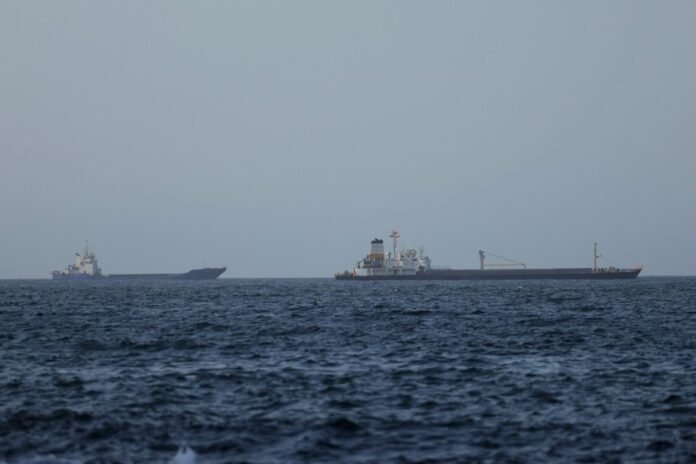
Commercial vessels and oil tankers preparing to transit through the Strait of Hormuz, one of the most critical strategic waterways for global trade flows, maintain their wait in the Gulf of Oman, on June 17, 2026. [Shady Alassar - Anadolu Agency]

Commercial vessels and oil tankers preparing to transit through the Strait of Hormuz, one of the most critical strategic waterways for global trade flows, maintain their wait in the Gulf of Oman, on June 17, 2026. [Shady Alassar – Anadolu Agency]

US forces on Thursday lifted the blockade on all maritime traffic entering and exiting Iranian ports and coastal areas, the US military’s Central Command (CENTCOM) said shortly after the US and Iran signed a deal to end the Mideast war, Anadolu Agency reports.

“Today, US forces lifted the blockade on all maritime traffic entering and exiting Iranian ports and coastal areas, in accordance with the President’s (Donald Trump) direction,” CENTCOM said in a statement on the US social media company X.

It said that American forces are “not impeding the transit of vessels to or from Iranian ports on the Arabian Gulf and Gulf of Oman.”

“All US military blockade enforcement efforts have ceased. Our great Naval Ships will remain in the general area to make sure that all aspects of the agreement are adhered to, obeyed and in full force and effect.”

READ: Iran’s state television says Hormuz passage ‘still requires coordination’ with Tehran

Donald Trump’s Iran ceasefire deal prompts strong feelings and profane language

0
donald-trump’s-iran-ceasefire-deal-prompts-strong-feelings-and-profane-language
Donald Trump’s Iran ceasefire deal prompts strong feelings and profane language

After dining lavishly on lobster, caviar and truffles in the opulent surrounds of the Palace of Versailles last night, Donald Trump affixed his signature to the much-anticipated memorandum of understanding that will, all being well, begin a 60-day ceasefire between the US, Israel and Iran.

The document was subsequently signed in Tehran by the Iranian president, Masoud Pezeshkian.

“This was not easy,” the US president reportedly remarked as he wielded his trademark Sharpie marker pen – a statement that may go down as a huge understatement. The text of the deal reveals the Iranian negotiators drove a very hard bargain in return for opening the Strait of Hormuz, which the world now hopes will enable the global economy to recover from the considerable disruption of the past three and a half months.

This war has been an utter disaster for the US and Israel, writes Arshin Adib-Moghaddam of SOAS, University of London, who has been researching and writing about Iranian affairs for many years. Trump and his ally, Israeli prime minister Benjamin Netanyahu, have failed to secure any of the outcomes they set out to achieve when they attacked Iran on February 28. In fact it has arguably left Iran, while battered, stronger strategically than it was before the war.

It’s not as if Iran-watchers haven’t warned of the danger of using blunt force against Iran. As Adib-Moghaddam notes here, he and fellow scholars and analysts have been stressing for years that the Islamic Republic was well prepared for the sort of asymmetrical conflict we have now seen it wage. And now, of course, it has demonstrated to itself – and the rest of the world – what a potent deterrent it has in its ability to shut down the strategically vital Strait of Hormuz.


Read more: Iran ceasefire deal confirms what we’ve been saying for years: military might doesn’t work


The state banquet at Versailles followed the 2026 summit of the Group of Seven (G7), which has been taking place this week in the French spa town of Évian-les-Bains. As Natasha Lindstaedt of the University of Essex notes, this was a clever move dreamed up by the French president, Emmanuel Macron, who was desperate to avoid a repeat of last year’s summit in Alberta, Canada, when the US president walked out a day early.

On that occasion he refused to sign the usual unified G7 statement, complaining that he didn’t like the language on Ukraine. There was no such reticence this year. Macron was cock-a-hoop at what he called a “very deep change in the US approach”. It was, he said, “re-synchronisation” for the G7 on the war in Ukraine, which released a statement pledging unwavering support for Ukraine in defending its territorial integrity, which Trump also signed after what the US president said was a “very good” meeting with Ukrainian president, Volodymyr Zelensky on the summit’s sidelines.

Key to achieving this unity, says Lindstaedt, was the approach of the other G7 leaders towards the US president: flattery. As we know, this is something that has proved highly effective in the past.


Read more: Macron plays ‘Trump whisperer’ as the US president signs Iran ceasefire deal after a successful G7 summit


Republicans unimpressed

If Trump’s dining companions at Versailles were effusive in their congratulations for the US president’s deal, the reaction from many prominent Republicans in the US has been less than positive. “Reagan is rolling over in his grave,” commented Senator Bill Cassidy, who added that the war had been “the worst foreign policy blunder in decades”. It’s a view shared by much of the party’s old guard, who see the deal as a capitulation.

Quite how Iran managed to gain the upper hand in a conflict against two of the world’s best-armed militaries will make for an important case study for students of war. Jim Lamson and Matthew Moran of King’s College London explain how Iran managed to turn the tables and emerge not only undefeated, but arguably stronger.


Read more: How Iran gained the strategic upper hand in the war with the US and Israel


Israelis livid

Meanwhile, if the US president’s critics in the US are unimpressed, Israelis – friend and foe alike – are positively livid. David Horovitz, the editor of The Times of Israel, called it “a catastrophic capitulation”. Others have been less polite.

Benjamin Netanyahu has made no public comment since the deal was signed. It has been reported that he wasn’t shown the finalised agreement before it was signed (Trump commented this week of their alliance that: “We are the big partner and he is the very small partner”, which will give him an idea of where he stands).

The fact is, writes Simon Mabon, a Middle East specialist at Lancaster University, that despite being close allies, the US and Israel – but particularly Trump and Netanyahu – are at loggerheads over what they want from the war from any peace agreement that ends it. Most Israelis see any bid by Iran to develop a nuclear weapon as an existential issue, for which there can be no compromise. The war, meanwhile, is deeply unpopular in the US, where rising fuel prices and inflation are really beginning to hit home.

The war has also hurt Trump’s popularity which is at a new low, just months before November’s midterm elections, at which the Republicans are likely to lose control of at least one chamber of Congress, if not both. Netanyahu also faces an election in October. So the idea of a ceasefire with no resolution of the nuclear issue is anathema.

To further complicate the situation, the deal stipulates an end to the conflict being waged in southern Lebanon and makes the US responsible for guaranteeing that country’s territorial integrity. This would require Israel to withdraw, something the Israeli prime minister has firmly ruled out, setting the scene for some serious discord between the two leaders.


Read more: Donald Trump and Benjamin Netanyahu have different war aims – can the Iran peace deal survive?


All of which means we may well be hearing some more fairly ripe language from Donald Trump, who has recently told the Israeli prime minister he is “fucking crazy” and that he has “no fucking judgement”.

Strong words. But not without precedent. As Andrew Gawthorpe, an expert in US politics at Leiden University notes here, Netanyahu has a long track record of moving US presidents to profanity.


Read more: Why US presidents end up cursing Benjamin Netanyahu


The unavoidable prisoner: Aung San Suu Kyi at 81

0
the-unavoidable-prisoner:-aung-san-suu-kyi-at-81
The unavoidable prisoner: Aung San Suu Kyi at 81

On June 19, Aung San Suu Kyi turns 81 in military custody. Myanmar’s military says it moved her in late April to a “designated residence,” but her family remains cut off, with no independent confirmation of her condition or exact whereabouts.

More than five years after the coup, she is physically absent from Myanmar’s daily struggle. The resistance that rose after her arrest is younger, armed, and has moved far beyond her nonviolent politics. Yet she remains the one figure no outside power can entirely write out of Myanmar’s future.

How foreign governments speak about her now reveals more about their own priorities than about her actual condition. But while outside powers calculate her diplomatic utility, her captors are driven by an older logic.

The generals: enduring hatred

The military occasionally invokes Aung San Suu Kyi’s name, or hints at private meetings, to ease outside pressure. But the generals’ view of her has long been rooted in fear, resentment, and contempt.

They resent the public legitimacy they could never manufacture for themselves. They have never wanted only to detain her. They have wanted to break her politically.

Former UN envoy Razali Ismail, quoted in Benedict Rogers’ biography of former dictator Than Shwe, said Aung San Suu Kyi “frightened the hell out of the military.” Reuters reported in 2007 that Than Shwe’s personal dislike was so intense that he once walked out of a meeting after a foreign ambassador mentioned her name.  

Andrew Selth, a longtime Myanmar analyst, wrote that Than Shwe’s hatred of Aung San Suu Kyi greatly hindered political compromise, and that Min Aung Hlaing’s dislike and distrust of her appeared to be a major element in his thinking before the 2021 coup.

Observers have long described Min Aung Hlaing’s relationship with Aung San Suu Kyi as frosty, if not ice-cold. Min Aung Hlaing deeply resented how she bypassed the military’s constitutional traps to become the country’s de facto leader, blocking his long-held hope of becoming president. That bitter, personal resentment reached a breaking point in late 2020, when she refused to entertain his baseless claims of electoral fraud.

The military physical threat against her surfaced as early as April 1989 when soldiers aimed rifles at her campaign procession in Danubyu in the delta region. The captain later said he had written orders to open fire. She walked toward the raised guns and survived only because a senior officer intervened.

In November 1996, a pro-regime mob attacked her motorcade in Yangon with chains and clubs, smashing her car windows while security forces stood by.

Seven years later, on May 30, 2003, pro-junta attackers armed with iron rods and sharpened clubs ambushed her convoy near Depayin in Sagaing Region. She escaped with her life, but dozens of her followers were killed. The institution holding her today has long tried to destroy her politically, and at times, physically.

The West: symbol of many causes

Western nations still call publicly for her freedom. The United States has demanded her immediate and unconditional release, along with access to medical care.

Britain has pressed for family contact. The European Union continues to list her among Myanmar’s arbitrarily detained prisoners while rejecting the military’s planned elections as illegitimate.

But the era when Western policy toward Myanmar was filtered almost entirely through Aung San Suu Kyi’s story is over.

Her international standing was badly damaged by the Rohingya crisis. Since the 2021 coup, Western capitals have widened their focus: documenting military atrocities, supporting humanitarian relief, and engaging a broader anti-junta movement that includes the National Unity Government and ethnic armed groups.

The West has not abandoned her, but it no longer treats her freedom as the sole measure of Myanmar’s democratic future.

ASEAN: access test

For ASEAN, Aung San Suu Kyi represents a diplomatic test. The bloc rarely names her directly; its consensus language usually folds her into broader calls for all-party dialogue, access for envoys and the release of political prisoners.

The Philippines, as ASEAN chair, has gone further than the bloc’s usual cautious formula, calling for more prisoner releases, including Aung San Suu Kyi, and asking that ASEAN’s special envoy be allowed to meet her. It also said she should be allowed to communicate with her family as proof of a genuine commitment to national reconciliation.

Even Thailand, one of the ASEAN members most open to engaging Naypyitaw, raised her welfare with Min Aung Hlaing in April, saying many ASEAN countries remained worried about her condition.

That question now sits inside a wider regional opening. Malaysia’s foreign minister visited Naypyitaw in May, Indonesia’s followed on June 8, and Laos’ foreign minister visited on June 12-13.

The more ASEAN governments test engagement, the more access to Aung San Suu Kyi becomes a measure of whether Naypyitaw’s talk of dialogue has substance.

India: interests over ideals

India’s position is colder and shaped above all by its own agenda. Despite Aung San Suu Kyi’s formative years in New Delhi, where she graduated from Lady Shri Ram College, and her family’s generational ties to India’s independence hero Jawaharlal Nehru, historical sentiment has yielded to strategic calculation.

When Min Aung Hlaing visited New Delhi in early June, Indian officials claimed Prime Minister Narendra Modi raised her case, urging dialogue and a return to democracy.

Yet New Delhi made no public call for her release. Instead, it received her jailer with the protocol accorded to a head of state. The talks focused on border security, insurgent activity, critical minerals, and stalled trade routes rather than solving Myanmar’s crisis.

India has made clear that engagement with the man who imprisoned her takes precedence over democratic principles. It is realpolitik, stated plainly.

China: useful ‘old friend’

China’s language on her is the most carefully calibrated. In late April, Beijing called Aung San Suu Kyi an “old friend” and said her circumstances had “always been on our minds.” It did not call for her release or acknowledge her 2020 election mandate.

Days earlier, Foreign Minister Wang Yi had met Min Aung Hlaing, whom Beijing was plainly prepared to deal with in his new formal role. In Chinese diplomacy, the phrase “old friend” is not sentimental.

It is a term of political convenience. Since the 2021 coup, Beijing has used similar old-friend diplomacy with veterans of Myanmar’s old military order, including Thein Sein and Than Shwe, to signal its preferred path: constitutional reconciliation and elections.

Beijing maintained a productive working relationship with Aung San Suu Kyi while she was in power, protecting routes and political cover for major strategic projects. When the military removed her government, China adjusted without much hesitation.

Invoking her name now serves a clear purpose: it signals limited concern without breaking with Min Aung Hlaing, softens public anger toward China and keeps Beijing’s options open.

At 81, Aung San Suu Kyi is physically isolated and held by a military that has spent decades trying to destroy her. Yet she remains politically unavoidable.

The West invokes her as a principle. ASEAN treats access to her as a diplomatic test. India raises her case while honoring her jailer. China calls her an old friend while backing the regime that keeps her locked away.

Everyone still finds a use for her name. None has turned it into her freedom.

Nyein Chan Aye is a Washington-based Burmese journalist who previously worked for the BBC and Voice of America and writes on Myanmar, China, the US and regional affairs.

As China looms, Taiwan makes more drones for defense and the US military

0
as-china-looms,-taiwan-makes-more-drones-for-defense-and-the-us-military
As China looms, Taiwan makes more drones for defense and the US military

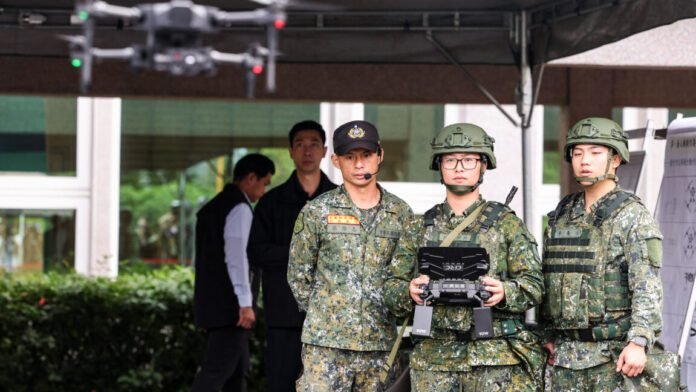
Taiwan’s existence as a self-governing democracy may depend heavily on having enough military drones to discourage any attempted invasion by China’s military. As the Taiwanese government aims to boost domestic production of military drones and Taiwanese citizens sign up for drone flight training, Taiwanese companies are forming international partnerships to sell more drones to the US military and other overseas buyers.

Taiwan’s Ministry of National Defense proposed a special budget that would spend $6.6 billion over six years on buying drones made in Taiwan, according to the Central News Agency that represents the national news service of Taiwan. Presented on June 18, the budget proposal would allow the government to buy more than 208,000 coastal attack drones, along with more than 1,400 coastal reconnaissance drones and 1,320 uncrewed surface vessels, between 2026 and 2031.

That would be a significant boost to the Taiwanese military arsenal that currently includes just 5,000 US-made attack drones and domestically produced drones, according to Resilience Media. During military exercises in early June, Taiwanese soldiers fired Altius-600 loitering munition drones—made by a subsidiary of the US military technology company Anduril Industries—from towed flatbed launchers to strike offshore targets, according to USNI News. In another exercise earlier this year, Taiwanese Marines used Taiwan-made drones to similarly strike targets at sea.

Beyond bolstering Taiwan’s national defense, Taiwanese government spending on domestically produced drones could provide a critical boost to Taiwanese drone manufacturers. Some Taiwanese companies, notably Thunder Tiger, have pitched their drone technology and components to the US military and European buyers as alternatives to drones made in China, while also establishing international technology and manufacturing partnerships to pave the way for more exports.

Taiwan has already exported $115 million of fully assembled drones between January and March 2026, exceeding the $93 million in total drone exports for the entire year of 2025, according to Taiwan Premier Cho Jung-tai in an announcement on April 30. The premier is an appointed principal advisor to Taiwan’s president and leads the executive branch of the Taiwanese government.

The drone business boom

Last year, Thunder Tiger’s Overkill drones became the first from an Asian company to qualify for the Pentagon’s Blue Uncrewed Aircraft Systems Cleared List, which certifies commercial drones for use by the US military. The small, first-person view (FPV) drones cost between $3,000 and $5,000 each, according to reporting from Rest of World, and are similar to the many explosive FPV drones being used on the battlefields in Ukraine.

Thunder Tiger has also started producing larger kamikaze drones starting at $30,000 based on the US LUCAS one-way attack drones, Rest of World reported. The LUCAS drones are themselves reverse-engineered versions of Iran’s Shahed drones that have been used in large numbers by both Russia and Iran.

Another one-way attack drone modeled on Israel’s Harpy drone was developed by the National Chung-Shan Institute of Science and Technology (NCSIST), a Taiwanese state-owned corporation, according to the Taiwanese think tank DSET.

Taiwanese companies also export plenty of drone components. For example, Thunder Tiger has been supplying drone components to three companies participating in the US Department of Defense’s $1 billion Drone Dominance Program, according to DSET. Taiwanese companies are also directly supplying flight controllers, batteries, motors, and other drone microelectronics to Ukrainian companies, while Czechia and Poland import tens of thousands of Taiwanese drones that may sometimes be passed on to Ukraine.

In March 2026, Thunder Tiger even expanded its overseas supply chain by establishing a US facility in Ohio capable of producing more than 60,000 drone motors each year, said Gene Su, general manager of Thunder Tiger, in an IEEE Spectrum interview.

Given their focus on hardware manufacturing expertise, Taiwanese drone companies typically turn to US companies and others with more expertise in AI and software. Taiwan’s NCSIST has sought to boost the AI capabilities of its drones by partnering with Western companies such as Anduril, Auterion, and Shield AI, according to DSET. Meanwhile, Thunder Tiger has purchased AI software from Auterion to embed in its broader lineup of drones, ground robots, and sea drones.

The Taiwanese company Ubiqconn Technology also recently teamed up with the US drone company AeroVironment—best known for making Switchblade loitering munition drones—to embed AeroVironment’s software into a drone controller platform that would allow the Taiwanese military to operate multiple types of drone systems, Nikkei Asia reported.

Rough air ahead

However, Taiwan’s homegrown drone ambitions face plenty of challenges, including political disagreement. The special budget proposal for Taiwan’s military to purchase Taiwanese drones represents an attempt to break a political deadlock in Taiwan’s Legislature, where the majority consists of the opposition parties Kuomintang and the Taiwan People’s Party. That majority coalition vetoed funding for domestically produced drones before passing a reduced defense budget bill in May.

Despite having a drone supply chain bolstered by chipmaking and electronics expertise, Taiwan faces an uphill battle in matching the manufacturing output and market dominance of China’s drone industry. The Shenzhen-based drone company DJI alone has between 70 and 80 percent global market share for commercial drones and is known for producing high-quality drones at extremely competitive prices.

“For the international market, how do you persuade other foreign governments to use Taiwanese-made drones two or three times more expensive than DJI’s?” said Ting-Wei Lin, a non-resident fellow at DSET, in a Resilience Media interview.

Taiwanese drone manufacturers are still establishing supply chains completely free of Chinese-made components. Tiger Thunder recently defended its actions in supplying Taiwan’s military with drones that included chips manufactured by the French company STMicroelectronics but packaged in China.

Taiwan is also looking to increase its monthly drone production capacity that currently stands at 15,000 drones per month, according to the Ministry of Economic Affairs. The ministry projects that the Taiwanese drone industry could exceed 100,000 drones per month by 2030.

Some inspiration may come from Ukraine’s example. When Russia launched its full-scale invasion of Ukraine in February 2022, Ukraine could only produce several thousand FPV drones per year, according to Just Security. By 2025, Ukrainian government and industry efforts had boosted domestic FPV drone production to about 3 million drones—and Ukraine’s defense industry could produce more than 8 million such drones in 2026.

Meanwhile, Taiwanese civil defense groups are also taking a cue from Ukraine’s example and offering more lessons in flying drones, The Guardian reported. Because, despite the recent wartime demonstrations of AI-powered battlefield drones, most drones still rely heavily on human operators one way or another.

Italian government not planning social media ban for kids, says Meloni

0
italian-government-not-planning-social-media-ban-for-kids,-says-meloni
Italian government not planning social media ban for kids, says Meloni


Italian Prime Minister Giorgia Meloni on Wednesday said her government would not take the initiative to introduce a social media ban on teens like those in the works in France, the U.K and other countries.

“I am not against a social media ban for under 16s, but I am not either convinced that this proposal alone can solve the problem because that type of ban can be easily circumvented,” Meloni told reporters at the end of a G7 summit.

Stating that a ban risks “to partially transfer the problem on families,” Meloni said restrictions can also be ineffective unless governments put more pressure on platforms to take action and to “take their responsibilities.”

While Meloni insisted she was not against a social media ban for under-16s in Italy, the prime minister said her government has decided not to present a government decree or bill to let lawmakers lead the discussions. Several Italian parties have presented bills to introduce a social media ban but none of those have so far been adopted.

Earlier this week, the U.K. announced it would introduce a social media ban for under-16s, a measure that France will also implement for under-15s later this year. The U.S. previously expressed concerns about the British ban, warning against one-size-fits-all measures.

On Wednesday the G7 leaders including U.S. President Donald Trump endorsed a declaration on protecting kids online that makes no mention of banning kids’ access to social media.

Source: Politico

Frank Sinatra’s Longtime Opening Act Dead at 86

0
frank-sinatra’s-longtime-opening-act-dead-at-86
Frank Sinatra’s Longtime Opening Act Dead at 86


Showbiz is mourning the death of legendary comedian Tom Dreesen, the beloved funnyman who stood beside Frank Sinatra for years and entertained generations with his unforgettable stories.

Dreesen died Wednesday at 86, just days after making what would become his final TV appearance on Comics Unleashed With Byron Allen.

His sudden passing stunned fans who had watched him remain active in entertainment despite recent health struggles.

The heartbreaking news was announced by his family in an emotional message posted to his official Facebook page.

“He wanted you all to know how much joy you brought him through the years,” the family wrote. “He said to tell you that he loved you all. May he rest in peace.”

No cause of death was immediately revealed.

Dreesen was not just another comic. He was a showbiz survivor, a road warrior and one of the last great storytellers from a vanished era of Hollywood glamour.

Born in Chicago, Dreesen clawed his way into comedy in the late 1960s alongside actor and comedian Tim Reid. Together, the two made history as Tim and Tom, the first biracial stand-up comedy duo in the United States.

It was a bold and risky act at a time when the country was still bitterly divided, but Dreesen never shied away from the stage.

After striking out on his own in the mid-1970s, he quickly became a trusted opening act for some of the biggest names in music, including Liza Minnelli, Smokey Robinson, Gladys Knight and Sammy Davis Jr.

Then came the call that changed his life.

In 1983, Dreesen began opening for Frank Sinatra, launching a 14-year run alongside one of the most iconic entertainers who ever lived.

Night after night, Dreesen walked out before Ol’ Blue Eyes and warmed up crowds packed with celebrities, power players and die-hard Sinatra fans.

Their bond grew far beyond the stage.

Dreesen later said Sinatra became like a father figure to him, giving him advice, guidance and friendship in a way he had never experienced growing up.

“In a lot of ways, he was like a father to me,” Dreesen once told The Hollywood Reporter. “I didn’t have a father that really cared that much where I was and what I did. But Frank would give me advice and counsel and then he was a buddy in a lot of ways. I thought the world of him.”

Dreesen remained by Sinatra’s side until the end of the music legend’s performing career, appearing at Sinatra’s final concert in 1995.

But Dreesen’s own career was massive in its own right.

The Spaceballs actor made more than 500 appearances on national television and became a regular presence on The Tonight Show Starring Johnny Carson. He also guest-hosted The Late Show for his close friend David Letterman.

Letterman was among those devastated by Dreesen’s death.

The late-night icon posted a touching tribute on Instagram, recalling that Dreesen was the first comedian he met at the Comedy Store in 1975.

“We became friends immediately,” Letterman wrote. “He had wisdom and endless stories. Everyone admired him, looked up to him and wondered if he ever stopped talking. He never did, he never will. We love him for that. We’ll miss the stories. God bless you, Tom.”

The tribute painted a picture of a man who could command a room not just with jokes, but with a lifetime of memories from the wild world of entertainment.

Comics Unleashed also paid tribute to Dreesen after his death, calling him a cherished member of the show’s family.

“Despite his health struggles, he brought so much joy, life, and vitality to our set,” the show’s official Instagram account wrote.

The message also revealed that viewers would still get to see Dreesen one last time on the program.

“Stay tuned for Tom’s last appearance on our show,” the post added.

His death comes as fans were still processing his final television appearance, making the loss feel even more shocking.

Though full details about his survivors were not immediately available, Dreesen’s family remembered him as much more than a comedian.

They described him as “a devoted father, brother, grandfather, friend, mentor, storyteller, and motivator.”

They also praised his generosity, saying he gave his time freely, supported countless charities and inspired others through his motivational speaking, writing and personal example.

To fans, he was the man who opened for Sinatra. To fellow comics, he was a mentor. To Hollywood, he was a living bridge to a golden era that is quickly fading away.

Now, just days after stepping in front of the cameras one final time, Tom Dreesen’s voice has gone silent.

But the stories he told, and the legends he stood beside, will keep his name alive.

Israeli drones hit Lebanon soon after Trump, Iran sign peace deal

0
israeli-drones-hit-lebanon-soon-after-trump,-iran-sign-peace-deal
Israeli drones hit Lebanon soon after Trump, Iran sign peace deal

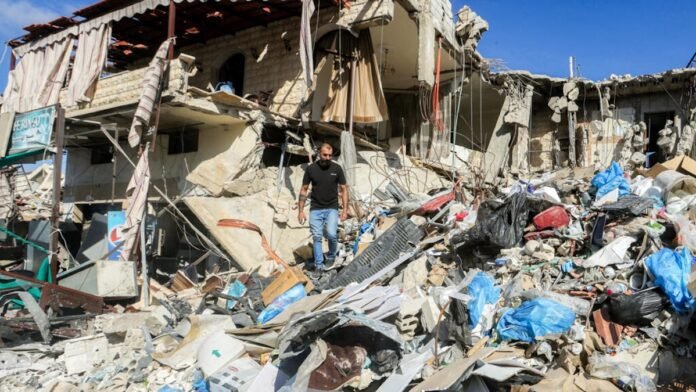
Damage from an earlier attack. Photo: YouTube

The Israeli military carried out drone strikes in southern Lebanon on Thursday, just hours after the presidents of the US and Iran signed a memorandum of understanding that establishes a framework for negotiations to end the war launched by the Trump administration and Israel in late February.

Lebanese media reported that “an Israeli drone dropped a munition on Beit Yahoun, injuring two people.” A separate drone strike “on a vehicle at the roundabout between Kfartebnit and Arnoun killed one person and critically wounded another,” according to Lebanon’s National News Agency.

The attacks underscored the threat that Israel’s ongoing military occupation of and assault on Lebanon poses to the prospects of a final peace agreement between the US and Iran. The memorandum of understanding (MOU) that Trump signed in France late Wednesday explicitly includes Lebanon and indicates that continued Israeli attacks would violate the deal.

“The United States of America and the Islamic Republic of Iran and their allies in the current war, by signing this MOU, declared the immediate and permanent termination of military operations on all fronts, including in Lebanon, and undertake from now on not to initiate any war or any military operation against each other and to refrain from the threat or use of force against each other and ensuring the territorial integrity and sovereignty of Lebanon,” the document states.

Israeli Prime Minister Benjamin Netanyahu, who has been accused of working to sabotage diplomatic progress, has voiced defiance in response to negotiations between the US and Iran, refusing to commit to the withdrawal of Israeli troops from southern Lebanon. Since March 2, Israeli attacks on Lebanon have killed around 3,800 people, including hundreds of children, according to Lebanese authorities.

Reuters reported Thursday that Israel is “holding negotiations with the US as it seeks to continue its deployment of troops in southern Lebanon.” An unnamed senior Israeli official, described as close to Netanyahu, told the news outlet that “Israel would not back down on its positions, including keeping troops deployed in the area south of Lebanon’s ⁠Litani River.”

“A second Israeli official told Reuters that the outcome of the talks would ultimately depend on whether US President Donald ⁠Trump ‘decides to force the issue’ by threatening repercussions if Israel does not abide by the interim Iran pact’s terms,” the outlet added.

Speaking during a press conference on Wednesday, Trump called Netanyahu “a very good man” and an “amazing prime minister.”

“We have a little dispute over Lebanon,” the president added. “I say, ‘You can do a little softer touch, Bibi. You don’t have to knock down a building every time somebody walks into it that’s from Hezbollah.’”

Esmaeil Baqaei, the spokesperson for Iran’s Foreign Ministry, said Thursday that the MOU signed Wednesday would be “nullified” in the absence of a full Israeli withdrawal from Lebanon and an end to military attacks.

“It is the responsibility of the US,” said Baqaei, to “force” Israel to “respect the US commitments to Iran in this document.”

-Common Dreams

US-Iran Deal Leaves Europe on the Sidelines in Hormuz

0
us-iran-deal-leaves-europe-on-the-sidelines-in-hormuz
US-Iran Deal Leaves Europe on the Sidelines in Hormuz


Washington’s direct channel with Tehran has reduced the immediate need for a European-led maritime mission while leaving major questions over safe passage through the strait

The announcement of an interim memorandum between the United States and Iran turned the Group of Seven (G7) summit in Évian from a test of Western coordination into a stage for a largely American diplomatic move. The agreement, presented by Washington as a framework to end hostilities and reopen the Strait of Hormuz, appeared to reduce the immediate need for a European-led maritime mission. But it did not settle the core question: Can the strait be reopened safely, durably, and in a way commercial operators, insurers, Gulf states, and European governments will accept?

In the days before and during the summit, European leaders had discussed a possible maritime role in the strait, including mine clearance, escort operations, and support for restoring freedom of navigation. The idea reflected both strategic concern and economic necessity. Hormuz is not only a regional chokepoint but a global one, and any prolonged disruption would affect oil prices, shipping costs, insurance rates, and inflation far beyond the Middle East.

Yet the US-Iran memorandum shifted the diplomatic balance. Instead of a European-supported operation moving toward implementation, the immediate focus moved to whether Washington and Tehran had found a formula that could reopen the waterway without making a foreign naval mission the central enforcement mechanism.

Willian, a US State Department adviser for Middle East affairs who attended the G7 and asked to be identified only by his first name, argued that the European maritime track had already been overtaken by events.

The situation in the strait is largely resolved at this point

“No, that’s not going to happen, and frankly, it doesn’t need to,” he told The Media Line. “The situation in the strait is largely resolved at this point.”

According to Willian, mines were only one part of the problem. The larger issue was Iran’s capacity to enforce closure or restrictions through naval assets, particularly those of the Islamic Revolutionary Guard Corps.

“The mining was never the whole picture,” he said. “Iranian naval assets were the real enforcement mechanism. You clear the mines, you still have Revolutionary Guard vessels that will engage anything trying to transit. That’s the architecture they built.”

That assessment points to the central distinction now shaping the Hormuz debate. A mine-clearance operation can reduce the physical threat to vessels. But it cannot, on its own, resolve the military and political structure that allowed the strait to become contested in the first place.

For European governments, the distinction matters. A technical mission to survey, clear, and escort shipping could be justified as defensive and stabilizing. A mission operating under the threat of possible Iranian naval resistance would be far more complex. It would require rules of engagement, regional deconfliction, US coordination, Gulf basing, and political consensus that Europe has often struggled to produce quickly during high-risk Middle Eastern escalations.

Connor McLemore, an operations research analyst and board member of the 501(c)(3) nonprofit ProbabilityManagement.org, said any such operation would first depend on the security environment.

“Assuming hostilities have ceased and a discrete mining incident occurs rather than an ongoing combat operation, the first requirement would be a permissive operating environment,” McLemore told The Media Line. “While legal interpretations differ, a coalition seeking to restore freedom of navigation in an international strait could certainly argue that mine clearance operations do not necessarily require the permission of coastal states. In practice, however, cooperation from the relevant governments would make the operation safer, faster, and less politically contentious.”

European navies have relevant capabilities. France, the United Kingdom, Belgium, and the Netherlands have experience in mine countermeasures, and several European states have operated in the Gulf and nearby waters. But Hormuz is not a neutral technical space. It lies between Iran and Oman, near Gulf states that would be affected directly by any escalation, and within a maritime environment where US, Iranian, Gulf, and commercial interests overlap.

McLemore, a former US naval officer with 20 years of military service, said a European-led or European-supported effort would probably not begin by trying to clear the entire strait.

“A European-led or European-supported effort would likely focus first on surveying and verifying safe transit lanes rather than clearing the entire strait,” he said. “European navies, especially Belgium, the Netherlands, France, and the UK, have deep mine countermeasures experience, and the US would likely remain important through 5th Fleet coordination, regional relationships, mine warfare expertise, and systems such as the MK 18 unmanned underwater vehicle.”

The work would involve minehunters, unmanned underwater and surface systems, sonar surveys, remotely operated vehicles, and explosive ordnance disposal teams. The immediate goal would not necessarily be to remove every mine before traffic resumes, but to create routes that governments, shipowners, and insurers are prepared to use.

The hard part would not just be finding and neutralizing mines. It would be creating verified safe routes that governments, shipowners, and insurers trust enough to restart traffic.

“The hard part would not just be finding and neutralizing mines. It would be creating verified safe routes that governments, shipowners, and insurers trust enough to restart traffic.”

Shipping companies and insurers are unlikely to treat a diplomatic announcement as equivalent to a restored maritime environment. They will look at actual vessel movement, residual mine risk, the behavior of Iranian naval units, the presence or absence of escorts, and whether new threats emerge after the agreement is made public.

Willian said the real diplomatic work is being handled outside Europe.

“The actual work is being done bilaterally, US and Iran, through a direct channel with Pakistan,” he said. “There’s an agreement coming that will address the strait access question in terms that both sides can live with.”

He also said public assessments of the mining threat may already be outdated.

“Part of what you’ll see in that agreement, when it’s disclosed, is that the remaining mine density is far lower than the public reporting has suggested,” he said. “The numbers being circulated are not current.”

That claim, if confirmed by events on the water, would explain why Washington may see a large European mine-clearance mission as unnecessary. If the mine threat is limited, mapped, or already reduced, the remaining problem becomes less about clearing a mined waterway and more about ensuring Iran does not reimpose restrictions through naval pressure.

McLemore cautioned that even a lower-density mine threat would not make the problem simple. Mine clearance is rarely absolute. It is a process of reducing risk to a level that governments and commercial actors consider acceptable.

“The difficulty would depend heavily on the number, type, and location of the mines. If operators do not know how many mines were laid, where they were placed, or what type they are, mine clearance becomes a risk-management problem rather than a certainty problem.”

In Hormuz, the physical conditions would add another layer of difficulty.

“In the Strait of Hormuz, depth, currents, heavy commercial traffic, seabed clutter, and the risk of renewed attacks could all complicate detection and clearance,” McLemore said. “Detection is usually the hardest part; once a mine is found and classified, neutralization or destruction is comparatively straightforward. Nearby underwater infrastructure, such as cables or pipelines, could slow or constrain how mines are destroyed, but it would not necessarily prevent clearance.”

The State Department adviser was blunt about Europe’s position.

Europe sat this one out entirely

“Europe sat this one out entirely,” he said. “No political will, no military positioning, no skin in the game. For them to launch a demining operation now, after the shooting has stopped, would be diplomatically awkward at best and operationally pointless at worst.”

That view reflects frustration inside parts of the US track over Europe’s limited role in the coercive phase of the crisis. It also understates Europe’s exposure. European economies would be among those affected by any sustained disruption of Hormuz, even if European militaries were not central to the conflict. For Brussels, Paris, London, Berlin, and Rome, the strait is not only a military issue. It is an energy, inflation, shipping, and legal order issue.

The G7 exposed two competing European instincts. The first is operational: Be ready to support mine clearance and maritime security if the US-Iran track falters. The second is diplomatic: Avoid inserting European assets into a theater where Washington and Tehran are now negotiating directly and where any misstep could reignite escalation.

McLemore said the assets required for a serious mine-clearance mission would be specialized and slow-moving.

“Mine-clearance operations in a strategic waterway like the Strait of Hormuz would require a mix of mine countermeasures vessels, unmanned underwater and surface systems, sonar, remotely operated vehicles, EOD teams, small boats, helicopters, command-and-control support, and logistics,” he said.

“Some smaller systems and specialist teams can be flown in, but dedicated minehunters and minesweepers are slow assets, and many are not positioned near the Gulf, so movement from Europe or other theaters could take considerable time,” he continued. “Minehunting is also inherently slow because each suspected contact has to be detected, classified, and then neutralized or avoided.”

Those forces would also need protection. Mine countermeasures vessels are not designed to operate in the middle of active crossfire. They move slowly, follow predictable patterns, and often require escorts.

“They cannot eliminate risk; they can only manage it,” McLemore said.

That is why the memorandum, if implemented, may matter more than any naval mission. A political arrangement can create the permissive environment that mine-clearance forces would need. Without it, a European mission could become a tripwire rather than a stabilizing mechanism.

Still, the memorandum itself remains incomplete. President Trump has described it in strong terms while also warning that military action could resume if Iran does not comply. Willian said Washington was focused on the agreement, not on a separate strait operation.

“There’s not much to say about the strait; we’re focused on the agreement,” he said. “There are some points to be adjusted, and the president was clear in an interview held that morning.”

Willian then quoted President Trump’s warning on the memorandum of understanding.

“Trump was asked if the MOU with Iran was final or if they are still tinkering. Trump said, ‘If I don’t like it, if they don’t behave, we’ll go right back to dropping bombs right smack in the middle of their heads because they misbehaved for 47 years.’”

That language captures the fragility of the current moment. The agreement may have created a path away from direct conflict, but it has not removed the coercive logic around it. The same US administration presenting the memorandum as a breakthrough is also preserving the threat of renewed force.

He also suggested that the timing of the reopening remained uncertain.

“Hormuz will have an update when the deal is officially out and published,” he said. “We’re discussing a lot with them and Pakistan. We expect it to be 100% open until Friday, which I personally don’t think is going to happen.”

That caveat matters. Even if the strait is partially reopening and initial commercial traffic resumes, full normalization is a different threshold. The legal status of future fees or maritime services, the timeline for demining, the role of Oman and other littoral states, and the connection between Hormuz access and broader US-Iran negotiations remain politically sensitive.

For Europe, the immediate mission may now be less visible but not irrelevant. A large demining deployment may no longer be the lead scenario if the US-Iran channel holds. But European governments still have an interest in monitoring whether the reopening is genuinely free, safe, and commercially credible. They also have a stake in preventing a precedent in which access to Hormuz becomes a negotiated privilege rather than a protected principle of international navigation.

McLemore said the timeline for restoring full operations cannot be reduced to a fixed number of days.

“Restoring full commercial operations is less about a fixed timeline than about balancing risk, speed, and number of assets,” he said. “Mine countermeasures forces can prioritize opening verified transit lanes rather than clearing every possible mine, but that leaves a residual risk that shipowners, insurers, and governments must be willing to accept.”

According to him, better information about the mines, more assets, and a permissive security environment would allow risk to be reduced faster. Renewed hostilities, poor weather, uncertain mine locations, seabed clutter, heavy traffic, or threats to the mine-clearing force would push the balance the other way.

“Military authorities can report what areas have been surveyed and what risks have been reduced, but commercial carriers and insurers will make their own decisions about when the route is economically and operationally acceptable.”

That may be the clearest way to read the G7 outcome. The summit did not produce a European-led Hormuz operation. Instead, it exposed the limits of Europe’s ability to shape a crisis that had already moved into a direct US-Iran channel. At the same time, Europe cannot simply step away from the consequences. If the memorandum holds, Europe’s role may be diplomatic, commercial, and legal: ensuring that the reopening of the strait does not include hidden charges, coercive arrangements, or unstable security guarantees. If it fails, the maritime mission discussed at the G7 could return quickly to the table.

For now, the deal has reduced the urgency of a European naval operation. It has not removed the uncertainty around Hormuz. The strait may be reopening, but the larger test is whether it can remain open without turning every commercial crossing into a measure of political trust between Washington, Tehran, the Gulf, and the wider international market.
After Senate vote, Trump admin backs off plans to kill ocean monitoring

0
after-senate-vote,-trump-admin-backs-off-plans-to-kill-ocean-monitoring
After Senate vote, Trump admin backs off plans to kill ocean monitoring

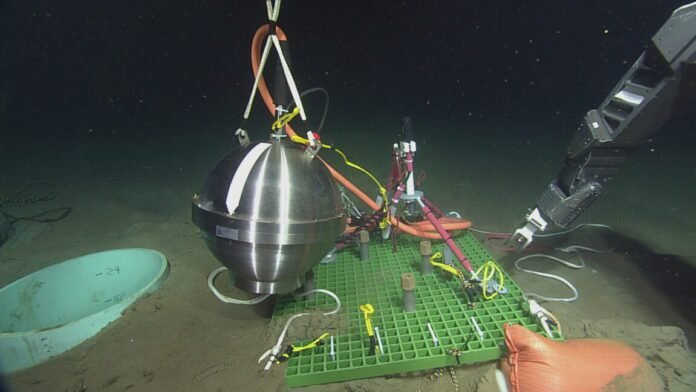
In May, the federal government announced without warning that it would take apart a network of ocean monitoring systems that it had spent over $350 million to build. No reason was given for the decision to shut down the Ocean Observatories Initiative (OOI), but suspicion immediately focused on the network’s role in tracking climate change.

But the OOI also provides data that’s useful for weather forecasting and fisheries management, leading to widespread opposition. Today, it appears that the opposition has won, as the government will announce that it’s reversing the decision. The big remaining question is how much damage the OOI took during the intervening month.

As of now, there is no formal statement available from the federal government. However, The New York Times reports that the decision will be announced later today, and Ars received a statement from Zoe Lofgren, the ranking Democrat on the House Science Committee, indicating that the decision has been made.

The OOI is a federally supported resource that provides ocean data for use by academic researchers, government planners, and private companies. It consists of arrays of monitoring systems in several locations in both the Atlantic and Pacific Oceans that can track things like currents, salinity, chemical levels, temperatures, and tectonic activity. (There are over 100 individual entries on the page that display the data gathered by the system.)

Obviously, there are many potential uses of that data. The fact that it has been gathered continuously for a decade means it can help track changes in how carbon dioxide and heat enter the oceans. This is probably what made it a target for the climate change denialists who helped set the Trump administration’s policy.

Those policymakers are perfectly happy to annoy people with environmental concerns, but they apparently neglected to consider how upset everyone else would be about losing access to the other data. The ensuing public backlash led the Senate on Wednesday to unanimously agree with a measure that would block the government from taking down the OOI. Today’s decision may indicate that the administration recognized it had gotten itself into a fight it knew it was losing.

The big question is whether some of the monitoring equipment has already been removed. “We also don’t yet know how much damage they have already done,” Lofgren’s statement said. “To be clear, this should have never happened. This pathetic scheme was illegal.” For now, however, it appears that this is one instance where we won’t have to wait for the courts to decide whether that last claim is accurate.

A solution to data center backlash? Put them in oil fields.

0
a-solution-to-data-center-backlash?-put-them-in-oil-fields.
A solution to data center backlash? Put them in oil fields.

Most Americans loathe data centers. Recent polling found that Democrats and Republicans alike would oppose having one in their neighborhood, and hundreds of communities across the country have fought against them, citing fears about noise, water contamination, and energy bills. After years spent courting tech companies, many politicians are now vowing to protect their constituents from their development. In just the past month, policymakers in New York, Texas, Pennsylvania, and Utah have proposed limits on the facilities. For the AI startups and others racing to secure more computing power, the question seems to be not which projects will face opposition, but which won’t.

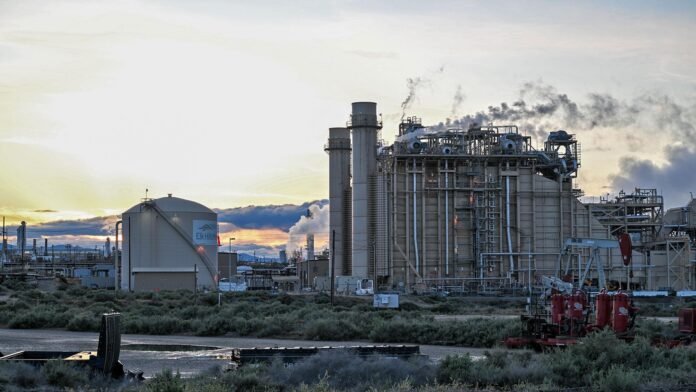
A project unveiled this week in California’s Central Valley suggests a potential answer. California Resources Corporation, the state’s largest oil company, wants to build a 600,000-square-foot data center campus in the Elk Hills oil field about two hours north of Los Angeles. It hopes to avoid the nationwide backlash from communities that have watched the outfits developing these sprawling operations swallow up farmland or install diesel generators near residential neighborhoods. 

It’s part of a new trend in the AI boom. More developers are proposing to build data centers in or near active oil and gas fields, which tend to sit far from densely populated areas and boast ready access to power. Projects are being planned in Texas, where the prolific Permian Basin oil patch has an abundance of natural gas, which can be used to generate electricity, and in Pennsylvania, which is already a leading producer of natural gas from shale. These projects are seen as a way of juicing revenues for legacy producers, even as the California project is unfolding in a state that has been trying to phase out fossil fuels.

California Resources Corporation executives have framed the deal, announced Monday, as a “responsible development” approach to the AI buildout—a claim that environmental activists in the state disputed.

“By repurposing an existing industrial site, creating jobs and tax revenue in Kern County, utilizing dedicated on-site power, and employing one of the industry’s most water-efficient cooling systems, the project is designed to support California’s growing digital infrastructure needs while minimizing impacts on local communities,” said Chris Gould, the company’s chief sustainability officer and the head of its carbon capture venture, in a statement to Grist.

The Elk Hills location has an obvious strategic benefit for CRC and Beacon, the data center developer collaborating on the project. The proposed Golden Valley Technology Hub will sit on 100 acres within an oil field that stretches across tens of thousands of acres, and will sit more than a mile from the nearest homes. The project will also face strict environmental review, which could take about a year. CRC has already held a number of community meetings with residents of nearby Taft and Buttonwillow and has promised to provide financial support for community groups and public infrastructure like roads.

Building in a century-old oil zone could sidestep the common furor over the impacts of data centers, which can require massive amounts of electricity and water and can also emit a lot of noise, said Gabriel Collins, an expert on energy and water issues who serves as a research fellow at Rice University’s Center for Energy Studies.

“Where you stand on these things depends on where you sit,” said Collins, who has studied the potential of Texas’ enormous Permian Basin to support data centers. “If you’re already out in the middle of an area that’s seen heavy industrial activity for a long time, there’s already a precedent, and folks there will probably find it easier to deal with.” In its permit application for the project, CRC included around 150 signatures from nearby residents who support the data center. At least five names on the list are affiliated with the local oil industry.

Ready access to electricity is the most important asset for these operations, something CRC’s oil field already has. It runs on a 550-megawatt natural gas power plant that has long been used to generate steam for drilling operations. Elk Hills no longer produces as much crude as it once did, so the power plant is running below capacity. The proposed data center will be able to run almost exclusively on that excess energy. (As for water, the company says the data center will use a closed-loop cooling system that will consume enough to fill an Olympic swimming pool over the course of 10 years. It also plans to erect noise barriers around the site.)

While the Kern County data center will rely on fossil fuels when many others draw power from the wind or sun, CRC is expanding its business to focus on carbon capture. Just this year it launched a first-of-its-kind system that captures CO2 emitted by another oilfield gas plant and stores it in depleted wells, and plans to build such a system for the plant that will supply the data center. Although the existing system absorbs about 7 percent of the plant’s total emissions, CRC has the storage space to capture several hundred times as much carbon underground. 

For oil producers in the Permian, data centers represent a market for natural gas that might otherwise be burned or vented to the atmosphere as a byproduct of drilling. Chevron signed a deal to supply methane to a Microsoft data center in west Texas, and oil service companies Schlumberger and Halliburton assist data center developers with energy and construction. Collins said the model makes even more sense for a declining field like Elk Hills, where production has fallen and CRC no longer needs as much electricity.

“In the Permian Basin, it’s a different dynamic, because the oil field and the data centers are gonna compete with each other for power,” said Collins. “If you have a declining oil field and you had that big captive asset there, then plugging it in to run digital infrastructure instead makes a lot of sense.”

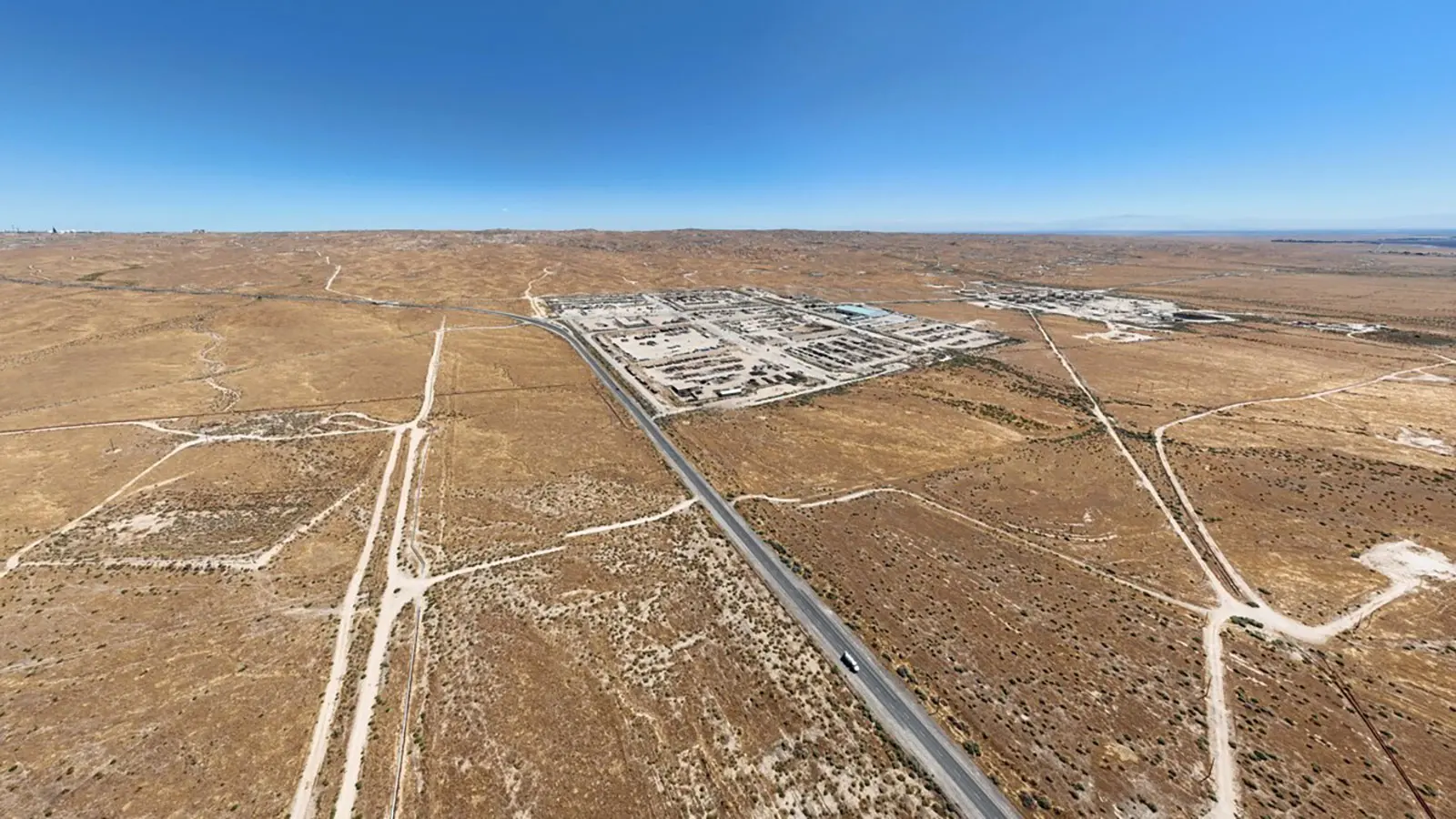
An aerial view of the Elk Hills oil field site where California Resources Corporation plans to construct a data center. The company has expanded its business to carbon capture and other technologies as oil production declines.

An aerial view of the Elk Hills oil field site where California Resources Corporation plans to construct a data center. The company has expanded its business to carbon capture and other technologies as oil production declines. California Resources Corporation and Beacon

California has seen gasoline demand fall about 15 percent over the last decade, and crude production has fallen by more than half during that time, due in part to strict regulations rolled out by Governor Gavin Newsom. State lawmakers struck a deal last year to stabilize in-state production as part of an effort to avoid gasoline price spikes, but few experts expect production to reach previous levels. 

As a result, CRC is looking beyond oil for its future. It has invested billions in carbon capture projects across the state, and executives have said that they expect revenue from such efforts to become essential as oil demand declines in California. The company acquired two of its largest competitors, Aera and Berry, over the past two years, and now accounts for nearly two-thirds of the state’s production. A senior executive last year likened the company to Equinor, the Norwegian state oil company that produces both oil and wind power.

The data center could advance this transition. CRC says the project would create at least 1,500 union construction jobs, as many as 250 permanent jobs, and ample tax revenues. The number of oil and gas jobs in Kern County has declined from around 12,000 to around 6,000 since 2015, and oil assets account for around 10 percent of its property tax income, compared to 30 percent a decade ago. CRC’s previous carbon capture project earned a stamp of approval from Newsom, long an opponent of oil, who called it “proof that innovation and ambition are the California way.” (His office said decisions about the data center should be left to Kern County.)

Climate groups disputed CRC’s claims about “responsible development.” The data center will cause an increase in gas power production, which will release more carbon dioxide and other pollutants in an area that already has poor air quality, said Nina Robertson, a deputy managing attorney at the environmental law firm Earthjustice who works on data centers.

“It’s a disservice to the people who are breathing that unhealthy air,” She also argued that California developers have no excuse to power data centers with fossil fuels when the state has made rapid progress on deploying solar and grid-scale batteries. “You should be powering any data centers in California with zero-emission energy…We are building the clean energy future, and this is pulling us back. You can’t paper it over with the fact that you’re building it on top of an oil field.

Earthjustice has previously said CRC’s carbon storage project would “open the door to a range of new polluting facilities that could be built from scratch.” It also said carbon capture could increase emissions by prolonging the life of the Elk Hills field or leading to more natural gas power production. Earthjustice, the Center for Biological Diversity, and a number of other groups sued the county over its approval of the carbon capture project, and litigation is ongoing.

But CRC seems to see tech and oil as natural partners. It signed an agreement last year to capture carbon from a nearby gas power plant owned by a Canadian company. That power plant, which can produce twice as much electricity as the one at Elk Hills, could in theory support another data center.


0FansLike
0FollowersFollow
0FollowersFollow
0SubscribersSubscribe
- Advertisement -
Google search engine

Recent Posts