19.2 C
London
Tuesday, June 16, 2026
Home Blog

Bank of Japan rate hike greeted with a market shrug

0
bank-of-japan-rate-hike-greeted-with-a-market-shrug
Bank of Japan rate hike greeted with a market shrug

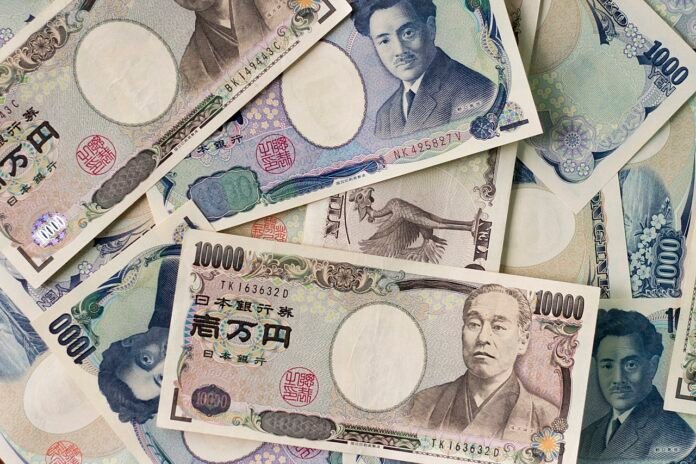
TOKYO – Only in Japan can a central bank on its fifth rate hike in two years still be accused of pulling its punches. Yet here is the Group of Seven’s most predictable monetary institution as 2026 unfolds.

That context explains Tuesday’s market reaction. The BOJ’s 25 basis-point move to 1% sent the Nikkei 225 above 70,000 for the first time and left the yen unmoved — not the behavior of investors bracing for punchbowl removal. Markets read the hike as a signal that normalization is quietly being wound down.

Two forces support that reading: stagflation, and Prime Minister Sanae Takaichi’s well-known aversion to higher rates.

It’s also worth noting that the BOJ had little choice. The “bond vigilantes” had already pushed 10-year JGB yields to a 30-year high of 2.7%, effectively threatening to tighten for the central bank if it didn’t hike the benchmark to a 31-year high. act. Even Team Takaichi understands that a BOJ-behind-the-curve narrative won’t do her approval ratings any favors.

Trump’s collapsing poll numbers offer a cautionary tale: tell voters the inflation they’re feeling isn’t real, and they won’t forgive you. Japan’s price pressures are nowhere near America’s — CPI rose 1.4% year-on-year in May, compared with 4.2% in the US, and even the BOJ’s private rate, stripping out government energy subsidies, runs at just 2.8%.

Yet the BOJ is finding that stagflation may be harder to navigate than deflation. With growth expected at just 0.5% this fiscal year — a fraction of the inflation rate — board member Toichiro Asada dissented Tuesday, pushing for a hold.

The 7-1 vote proceeded despite Governor Kazuo Ueda’s absence; he was hospitalized last week with a liver infection. But the hike wasn’t the real story. The BOJ simultaneously held bond purchases steady at roughly 2 trillion yen ($12.5 billion) a month through April 2027 — freezing, rather than intensifying, its quantitative tightening program, in direct contradiction of earlier pledges.

The implication is plain: the Ueda BOJ is more worried about the “stag” than the “flation,” which is exactly what Takaichi’s government wanted. Whether the board is formally abandoning normalization, only its members know. The optics, though, are uncomfortable for an institution that cut rates to zero in 1999 and took more than 25 years to meaningfully move them.

The yen is forcing the BOJ’s hand — at least occasionally. Once it slips past 160 to the dollar, Tokyo has a problem. With the Iran war pushing oil, food, and fertilizer prices higher, an undervalued yen means Japan imports bad inflation faster than its households can absorb it — households still psychologically scarred by decades of deflation.

Letting the yen drift toward 170 and beyond would intensify imported inflation and trigger heavier intervention by the Ministry of Finance.

It would also antagonize the Trump administration, which is acutely sensitive to any hint that trading partners are gaming exchange rates for export advantage. Hence Treasury Secretary Scott Bessent’s recent campaign pressing the BOJ to accelerate hikes.

Takaichi’s government wants no part of that. Before taking office last October, she called the idea of BOJ rate hikes outright “stupid.” A devoted Abe disciple, her entire economic framework depends on a weak yen and ultra-low rates. It goes some way toward explaining why, 238 days in, her government has yet to post a single policy win.

The theory is that yen weakness lifts exports and corporate profits, triggering a virtuous cycle of spending and growth. What “Sanaenomics” didn’t price in was the US and Israel going to war in a region that supplies more than 95% of Japan’s energy.

The deeper problem is structural. Every prime minister since Junichiro Koizumi — Abe’s own mentor, who took office in 2001, the year the BOJ pioneered quantitative easing — has promised to cut red tape, meritocratize labor markets, spark a startup boom, and close the gender pay gap.

None has delivered with sufficient urgency. Twenty-seven years of near-zero rates and a weak yen simply removed the pressure on corporate Japan to restructure, innovate, or take risks.

In some ways, Japan is now the dog that caught the car. Wages are finally rising after decades of stagnation — Japanese unions secured an average 5.26% hike for permanent employees in this year’s shunto spring negotiations, the third consecutive year of 5%-range gains. But without matching productivity growth, that’s a problem as much as a milestone.

Japan ranks 28th out of 38 OECD members in worker efficiency — last among the G7 — meaning wage gains risk feeding the inflation the BOJ is already struggling to contain.

Weak productivity is partly a consequence of BOJ largess, giving governments a pass on increasing competitiveness. As the International Monetary Fund points out, “Japan’s total factor productivity growth has been slowing for a decade and has fallen further behind the US. A steady decline in allocative efficiency since the early 2000s has been a drag on productivity and likely reflects an increase in market frictions.”

What’s more, the IMF notes, “Japan’s ultra-low interest rates may have allowed low-productivity firms to survive longer than they otherwise would have, delaying necessary economic restructuring. Reforms aimed at improving labor mobility across firms would help improve Japan’s allocative efficiency and boost productivity.”

For now, investors piling into the Nikkei are viewing this as positive. “The stars had aligned for another BOJ blockbuster hike today,” says Krishna Bhimavarapu, economist at State Street Investment Management.

“The rise of the policy rate to the psychologically critical 1% level happened alongside sustained shunto wage growth, continued economic growth and sound telegraphing, considering all of which this hike is quite a moment for the Bank.”

Looking ahead, Bhimavarapu adds, “the alignment for continued normalization would depend on the bullish outlook on AI & semiconductor exports. We see at least one more hike this year, but as always, where the yen might be headed from here will be an important barometer of sentiment.”

Also, for now, the BOJ is trying to deflect suggestions that it is easing back from its more assertive rate-normalization timeline. The BOJ, in its statement, noted that Japan’s official consumer inflation has remained below 2% due to government measures.

“However,” policymakers write, “the price pass-through stemming from the rise in crude oil prices has been progressing at a relatively fast pace in business-to-business transactions, which could spread to an increase in consumer prices across a wide range of items.”

Economist John Bromhead at Moody’s Analytics notes that the BOJ “decided to pause the tapering of its bond purchases after April 2027. In practical terms, the change is relatively modest because purchases have already been reduced substantially, and the balance sheet will keep contracting as maturities exceed new buying.”

The decision, Bromhead says, “could be interpreted as a concession to government pressure, though it is more plausibly an attempt to contain a disorderly rise in yields and improve market functioning. That risk has become more pressing in recent weeks, with yields across the Japanese curve moving sharply higher and 10- and 30-year yields reaching multi-decade highs.”

That gets at the bigger question of whether the BOJ is bowing to Takaichi or the bond market? Or both?

Hopes for a ceasefire in Iran may give the BOJ some political cover. ANZ economist Matthew Galt cautions that “markets will take time to settle, Hormuz flows will take time to normalize, and inventories will need to be replenished,” adding that a deal, if it holds, may reduce pressure to tighten — but that central banks will be watching developments closely before adjusting course.

Better still would be the BOJ stopping its role as a financial crutch for Takaichi’s LDP. And Takaichi’s party internalizing what three decades of weak-yen policy has actually produced: Asia’s second-largest economy stuck in first gear, with debt already between 250% and 260% of GDP and a shrinking population to service it.

Robin Brooks of the Brookings Institution argues the path forward starts with a signal. “Japan needs to show it recognizes debt is a problem,” he says. “It can do that with a wave of privatizations and sales of domestic assets.

Markets would reward that with a stronger yen and lower yields — which is “exactly what Japan needs.” FX intervention, Brooks argues, sends precisely the opposite message: denial, papering over a debt overhang rather than confronting it, and inviting continued depreciation pressure as punishment.

Against that backdrop, bets on the BOJ finding its spine and hiking toward anything resembling normal may be riskier than they appear.

Follow William Pesek on X at @William Pesek

Iran Deal Raises Questions Over Hormuz, Nuclear Talks and Hezbollah

0
iran-deal-raises-questions-over-hormuz,-nuclear-talks-and-hezbollah
Iran Deal Raises Questions Over Hormuz, Nuclear Talks and Hezbollah


The reported MoU could ease pressure on Gulf shipping and energy markets while leaving major disputes over enrichment, sanctions relief and Lebanon unresolved

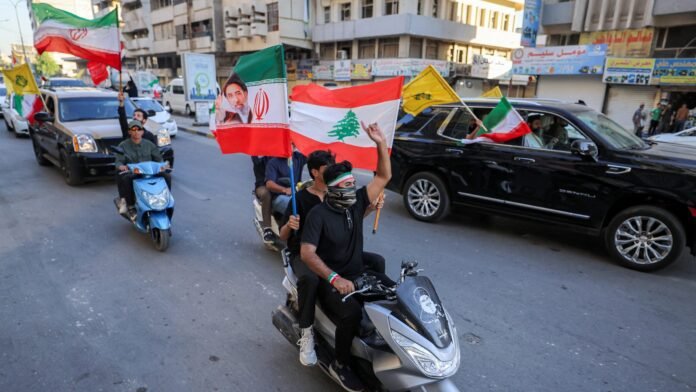
A memorandum of understanding between the United States and Iran has opened a new political fight before the public has seen the full text of the agreement. Washington and Tehran are presenting the framework as a step toward ending the latest phase of the war, reopening the Strait of Hormuz, and creating room for further nuclear negotiations. But in Israel, the deal is being judged by a more urgent test: whether it could restrict Israel’s freedom to act against Hezbollah in Lebanon.

The known contours of the agreement remain incomplete. President Donald Trump has said the agreement is signed, while a formal ceremony is expected in Geneva. Reports so far indicate that the memorandum of understanding (MoU) would create a 60-day ceasefire window, reopen the Strait of Hormuz, start technical talks on Iran’s nuclear program, and open the door to some form of sanctions relief, oil waivers, or access to frozen Iranian assets. But the official text has not been released, and descriptions from US, Iranian, and media sources differ on key details.

That uncertainty is central to the debate. The reported framework does not yet clearly settle what restrictions Iran would accept on uranium enrichment, what happens to its existing enriched uranium stockpile, how sanctions relief would be sequenced, what enforcement mechanisms would apply, or whether Lebanon and Hezbollah are formally covered. Iran has pushed for a cessation of hostilities across all fronts, including Lebanon, while Israel has made clear that it does not consider itself bound by a US-Iran arrangement that could limit its operations against Hezbollah.

Joe Truzman, a US-based independent Middle East analyst, said any assessment remains tentative until the document itself is made public. “An official version of the MoU has not been released; thus, most of my answers are based on what has been reported in the media about the deal,” he told The Media Line. “There are still questions about subjects like the opening of the Strait of Hormuz and other key issues because an official copy of the MoU has not been released.”

The deal is already producing political divisions in several arenas at once. In the United States, supporters can argue that President Trump is moving toward ending a costly war, easing pressure on energy markets, and forcing Iran into a negotiating framework. Critics, including some Iran hawks, argue that the agreement may stop short of dismantling Iran’s nuclear and missile capabilities while giving Tehran economic relief. In Iran, hard-liners have also voiced objections, fearing that the agreement may require concessions on the nuclear issue.

In Israel, opposition to the emerging framework is not uniform in its reasoning, but much of the Jewish-Zionist political spectrum is converging around one demand: No US-Iran deal should restrict Israel’s freedom of action in Lebanon.

Truzman said the politics are difficult for both governments. “Both the United States and Iran are attempting to sell the deal domestically,” he said. “Interestingly, both countries are receiving negative responses from their bases. Hardliners in Iran believe that the deal will result in significant nuclear concessions, while critics in the United States view the agreement as giving the regime a lifeline.”

Giving money to a regime that the United States has spent years trying to undermine does not look like victory

He added, “Giving money to a regime that the United States has spent years trying to undermine does not look like victory.”

Still, Truzman cautioned that US criticism of the deal should account for the damage Iran has already absorbed. “Though I believe that critics of the deal in the United States are not fully taking into account the overall picture,” he said. “Iran has gone through years of sanctions, which have decimated its economy. The Rial is nearly worthless. Iran’s proxies have been decimated but are slowly recovering. Due to American and Israeli action, key figures in the Iranian-led Axis of Resistance are now a memory. The region, at this moment, is safer, but that won’t last forever.”

That divide frames the broader argument over the agreement. One view sees it as a concessionary framework that may give Tehran economic oxygen without resolving the nuclear, missile, or proxy issues. Another sees it as a pragmatic pause after Iran suffered severe military, economic, and political losses. Under that reading, the deal may not represent a clean victory for any side but a temporary arrangement after a conflict in which each actor paid a price and none achieved all of its stated goals.

Irina Tsukerman, president of Scarab Rising and a political analyst, offered a more skeptical reading of the deal’s political logic. She told The Media Line the agreement should be understood less as a historic diplomatic achievement and more as an effort by President Trump to reframe an inconclusive outcome.

“No one should be surprised,” Tsukerman said. “Anyone who watched Trump’s handling of Ukraine and still believed Israel would ultimately be treated differently was paying attention to campaign rhetoric rather than the record of his actions.”

Tsukerman placed the Iran file within what she described as a broader pattern in President Trump’s foreign policy. “Trump’s political identity has long revolved around transactionalism, personal survival, reputation management, and the pursuit of outcomes that can be marketed as victories regardless of their strategic consequences,” she said. “The developing Iran agreement fits squarely within that pattern.”

Her argument is not that the deal lacks political usefulness. Rather, she sees it as a way to manage the political aftermath of a confrontation that has not produced a decisive strategic shift.

“Iran survived. The regime survived. Its proxy network survived. Its ability to influence regional events survived. The nuclear question remains unresolved. The transformative outcome that many supporters anticipated never materialized,” Tsukerman said.

The agreement becomes a mechanism for redefining success

Under that reading, the agreement helps recast an unfinished confrontation as a political success. “The agreement becomes a mechanism for redefining success,” she said. “The objective becomes narrative management rather than strategic transformation. The purpose is not defeating Iran’s regional project. The purpose is creating a political exit that allows Trump to declare victory and move on.”

The deal could still have practical effects. A reopening of the Strait of Hormuz would matter for global energy markets and for countries whose economies depend on Gulf shipping. The conflict severely disrupted maritime traffic, and even a partial restoration of movement would reduce pressure on oil prices, insurers, shipping companies, and Gulf economies. European leaders have welcomed the prospect of reopening the strait, while France and Britain have discussed a possible European or multinational maritime mission to help secure navigation if the ceasefire holds.

Yet the Hormuz issue also shows the limits of the arrangement. Reopening the strait would ease the immediate crisis, but it would not erase the fact that Iran demonstrated its capacity to use the waterway as leverage. Shipping companies may remain cautious until they receive practical assurances on demining, security guarantees, and the durability of the agreement. A European mission could help stabilize traffic, but Iran’s position on foreign military activity in the waterway could make such an initiative diplomatically sensitive.

The nuclear file remains just as unsettled. Reports suggest the MoU would open a 60-day period for technical negotiations, but the precise obligations remain contested. US officials have described a framework that would eventually prevent Iran from developing or acquiring nuclear weapons and require steps on enriched uranium. Iranian descriptions have emphasized different sequencing, including sanctions relief, oil waivers, and access to frozen funds. Until the official text is released, it remains unclear whether the agreement freezes the issue, advances toward a durable settlement, or simply postpones the hardest decisions.

The frozen-assets issue is likely to remain one of the most politically charged elements. Reports have referred to the possible release of billions of dollars in Iranian assets, though accounts differ on the amount and the conditions. For opponents of the deal, this raises the concern that economic relief could strengthen a regime still accused by its adversaries of supporting armed groups across the region. For supporters or more pragmatic observers, conditional access to funds may be part of the cost of securing de-escalation, reopening Hormuz, and keeping Iran at the table.

Truzman said Tehran emerged from the conflict damaged, even if the regime endured. “Lastly, what Tehran ‘gained’ from this conflict was survival and an opportunity to recover,” he said. “Yet that outcome should not obscure the scale of its losses. Supreme Leader Khamenei is dead, scores of senior military and political figures have been killed, and Iran’s armed forces have suffered significant damage.”

“The regime now faces a long and difficult path to rebuilding its military capabilities and restoring its regional influence,” Truzman said. “For the moment, the Middle East is safer from the threat of Iranian hegemony. However, that window may be temporary. The regime’s hardliners have shown little interest in moderation and every intention of restoring the status quo that existed before the war.”

For Israel, Lebanon is becoming the most immediate test of the agreement’s regional meaning. The question is less whether Iran has been weakened than whether Iran and Hezbollah can recover under diplomatic cover.

The agreement with the Iranians is a bad deal. Period.

Israeli politicians across ideological lines have reacted with concern to any arrangement that would connect the Iranian and Lebanese arenas. Israeli lawmaker Ohad Tal, of the Religious Zionism party, rejected the emerging framework outright. “The agreement with the Iranians is a bad deal. Period,” Tal told The Media Line. “It leaves them with their uranium, their missile program, and their ability to spread terrorism around the world, while funneling money to the regime that will only strengthen it and advance its extremist ambitions.”

Tal said that, according to reports, the agreement is temporary and would not prevent renewed conflict but “only postpone the return to fighting.” He said Lebanon must remain outside the US-Iran framework. “What happens in Iran is President Trump’s issue, but what happens in Lebanon is Israel’s concern alone,” Tal said. “The United States and Iran are not parties to what takes place in Lebanon.”

A similar concern came from Yisrael Beitenu lawmaker Yevgeny Sova, though he framed it as a strategic and diplomatic failure rather than only an ideological objection. Sova told The Media Line his party views the emerging agreement “not only as a strategic failure of the government, but also as a real danger to the future of the state.”

Sova said Israel must keep the Iranian and Lebanese questions separate. “It was a strategic mistake to connect the two arenas,” Sova said. “The Lebanese arena and the Iranian arena must not be connected.”

He also said Israeli leaders must manage disagreement with Washington without turning it into a public rupture. “You need to know how to say no to an American president,” he said. “Not to fight with him, not to smear him, certainly not to use the relationship with the Americans for political needs, but there is no doubt that you have to know how to say no.”

His warning over frozen assets was direct. As long as Iran’s ayatollah regime remains in power and receives money that had been frozen, Sova said, Israel should assume the funds will be used for terrorism. “Israel must change its approach,” he said, warning that acting as it did before October 7 would be “very dangerous” in the period ahead.

Opposition Leader Yair Lapid put responsibility on Prime Minister Benjamin Netanyahu rather than on the military or Israeli society. Lapid said Israeli citizens stood firm during the campaign, but that Netanyahu “collapsed at the moment of truth.” He argued that Israel had been left with an impossible choice: either a direct confrontation with its most important ally or a waiver of Israeli interests and the right to self-defense. “Israeli citizens behaved amazingly,” Lapid said. “This is Netanyahu’s failure.”

Other Israeli lawmakers reached different conclusions from different ideological starting points. Yair Golan, chairman of The Democrats, said the agreement “binds the IDF’s hands in Lebanon” and strips Israel of its freedom of security action. National Security Minister Itamar Ben-Gvir said Israel is “not a contractor for any superpower” and is not bound by agreements that close off its ability to defend its citizens. Avigdor Liberman, chairman of Yisrael Beitenu, called the agreement a “terrible diplomatic disaster” and said Israel should urgently tell the United States that it rejects any linkage between the Iranian and Lebanese arenas.

Arab members of the Knesset, Israel’s parliament, drew a different conclusion. Member of Knesset Aida Touma-Suleiman, from the Hadash party, cautiously welcomed the possibility of a US-Iran agreement, saying she hoped it would produce a real ceasefire across all fronts and end civilian suffering. She accused the Israeli government of repeatedly trying to sabotage diplomatic progress and argued that a policy of “more force and more force” would not lead anywhere good. Ta’al lawmaker Ahmad Tibi said his faction had opposed the war from the beginning and mocked the presentation of the reopening of the Strait of Hormuz as a historic achievement, saying the strait had been open before the war.

Taken together, the Israeli reaction is not a single political response. Coalition hard-liners reject any arrangement that limits Israeli military action. Opposition figures across the Zionist left, center and right accuse Netanyahu of mishandling the relationship with Washington and allowing Lebanon to be folded into the Iran file. Arab lawmakers see the possible agreement as an opportunity to stop the fighting and reduce civilian suffering. But across much of the Jewish-Zionist political spectrum, the central demand is the same: No agreement with Iran should restrict Israel’s ability to act against Hezbollah in Lebanon.

Tsukerman said Israeli operations could face new diplomatic pressure if Washington makes preservation of the agreement its priority. “This helps explain why Israel’s interests increasingly appear subordinate to the preservation of negotiations,” Tsukerman said. “Once securing an agreement becomes the overriding objective, every action capable of disrupting that objective becomes a problem.”

She added, “Israeli military operations against Hezbollah, Iranian assets, or affiliated networks cease being viewed primarily through the lens of security and begin being viewed through the lens of political inconvenience.”

In that context, she said, the Lebanese front cannot be treated as separate from Iran’s regional power. “The Lebanon component is especially revealing,” Tsukerman said. “Hezbollah remains one of Iran’s most valuable strategic assets. Any serious effort to diminish Iranian regional influence necessarily involves confronting Hezbollah’s military capabilities.”

“Yet once negotiations become paramount, Hezbollah transforms into a variable that threatens the desired political outcome,” she said. “Israel is expected to absorb risks, postpone objectives, and tolerate threats in order to preserve diplomatic momentum.”

Truzman also said Israel is unlikely to stop acting against Hezbollah, even if a US-Iran agreement holds. “Despite the close relationship between Israel and the United States, it is highly unlikely that Israel will completely stop its attacks on Hezbollah,” he said. “Israel discovered on October 7, 2023, that it cannot risk allowing an enemy to build up forces on its borders. While the relationship with the United States is important to Israel, Jerusalem is the ultimate decision-maker on how it will proceed with Hezbollah.”

He said direct attacks on Iran and continued action in Lebanon would be viewed differently in the context of the agreement. “The only way Israel could play spoiler in a deal between the U.S. and Iran is if Jerusalem directly attacked Iran,” Truzman said. “Separately, Israel cannot afford to allow Beirut to become a strike-free zone where Hezbollah can rebuild its forces. Thus, it is likely that we will see additional Israeli strikes in Beirut in the future if they are required, but I think Jerusalem will be very cautious when carrying it out.”

That distinction may become crucial. Israel may seek to avoid openly derailing a US-Iran agreement, but it is unlikely to accept a situation in which Hezbollah can rebuild freely in Lebanon. Washington may try to limit escalation; Israel may try to preserve operational freedom; Iran may try to include Lebanon in the ceasefire; Hezbollah may test the boundaries. The deal’s durability may depend not only on Washington and Tehran but also on whether these secondary fronts can be contained.

The role of mediators and external actors adds another layer. Qatar and Pakistan have played roles in moving the talks forward, while Europe is now discussing how to support the reopening of Hormuz. For some observers, mediation is necessary because neither Washington nor Tehran can easily negotiate directly after months of war. For others, the growing influence of regional intermediaries raises concerns that the final arrangement may reflect the interests of actors whose priorities do not fully align with Israel’s.

Tsukerman pointed to Qatar as one example. “The role of Qatar deserves particularly close scrutiny,” she said. “Doha has spent years positioning itself as an indispensable intermediary in regional affairs.”

She made a similar argument about Turkey. “Under Erdoğan, Ankara has increasingly defined itself through opposition to Israeli policies and ambitions,” Tsukerman said. “Anti-Israel rhetoric has become a regular feature of Turkish political discourse. Turkish regional objectives frequently place Ankara at odds with Jerusalem across multiple theaters. A diplomatic environment shaped by Turkish influence is unlikely to prioritize Israel’s security concerns in the same manner that Israel itself would.”

Russia is another actor watching the outcome closely, given its interest in preserving Iran’s regional position. Tsukerman said, “The Putin factor deserves equal attention. No major power benefits more from Iran’s survival than Russia.”

Still, the agreement cannot be reduced to a single actor’s agenda. For Washington, it may be an attempt to stop a costly war and prevent further disruption to global energy markets. For Tehran, it may be a way to secure regime survival, economic relief, and time to rebuild. For Israel, it may be a diplomatic framework that risks constraining freedom of action in Lebanon. For Gulf states, it may bring relief from the immediate danger of escalation while confirming that Iran remains a durable regional force. For Europe, the priority is freedom of navigation and avoiding another energy crisis.

The official text of the MoU will determine how much of the current debate is based on real obligations and how much is based on competing political messaging. The questions to watch are whether Iran’s nuclear activities are frozen, rolled back, or merely deferred; whether sanctions relief is conditional or front-loaded; whether frozen assets are released and under what restrictions; whether Hormuz reopens safely and permanently; whether a European maritime mission is accepted or challenged; and whether Lebanon is formally included in the arrangement or only politically linked to it.

For now, the agreement appears to offer enough ambiguity for several sides to claim victory. President Trump can argue that he stopped the war and reopened Hormuz. Iran can argue that it survived and secured a path toward economic relief. Gulf states can welcome de-escalation while reassessing their security assumptions. Israel can insist that it is not bound by any arrangement that limits its ability to act against Hezbollah.

That same ambiguity may become the agreement’s weakness. If the MoU does not resolve Iran’s nuclear future, define the terms of sanctions relief, clarify the release of frozen assets, and settle whether Lebanon is part of the deal, it may not end the conflict. It may only move it into a different phase.

The central question is not whether Washington and Tehran can announce an agreement. They already have. The question is whether the agreement changes the strategic reality, or simply pauses the confrontation long enough for each side to describe survival, restraint, or de-escalation as victory.
Commodore’s newest gadget is a flip phone that blocks social media and browsers

0
commodore’s-newest-gadget-is-a-flip-phone-that-blocks-social-media-and-browsers
Commodore’s newest gadget is a flip phone that blocks social media and browsers

The next gadget to bear the storied Commodore branding will be a flip phone.

The name behind the bestselling desktop PC in history came back about a year ago. Christian “Peri Fractic” Simpson, best known for running the Retro Recipes (now known as Retro Recipes x Commodore) YouTube channel, acquired the Commodore Corporation and “100 percent of the original and official trademarks that defined the Commodore name since 1983,” per a July 2025 press release. Simpson said the price was “in the low seven figures.” Since the acquisition, the brand released the Commodore 64 Ultimate and the Commodore 64X PC, a mini PC housed in a chassis that resembles the Commodore 64.

Today, the new Commodore announced a new device in a dated design: a flip phone.

The Callback 8020 in the “BASIC Beige” colorway.

The Callback 8020 in the “BASIC Beige” colorway.

The Commodore Call Back 8020 takes advantage of reinvigorated interest in dumb phones. Although Commodore’s phone has Internet connectivity, it blocks web browsers and social media “at the system level using patent pending technology,” the company’s announcement said. The phone supports other Internet-based capabilities, like maps and QR codes.

Frantic told Ars Technica that Commodore’s app store, Commostore, uses a whitelisting principle, and “social media and browsers will never get that whitelisting.” He added:

We’ve also developed patent pending technology that will prevent these apps—and only these apps—from being sideloaded on the device. … Users can sideload nearly anything else they want if it isn’t available on the Commostore, but we’ve drawn a firm line in the sand around any apps that drive doomscrolling.

On the off-chance somebody finds a way around that, we’ve also blocked access at the DNS level. So even if you manage to get TikTok installed, you’re not going to be able to reach its servers.

Ars asked Frantic if community forums would also be blocked. In response, he said that old school bulletin board systems are permitted, but Reddit is not.

“We’re determined to approach this in a way that’s fair and safe for everyone, and we’ll be consulting with the Callback community over the next few months to make this determination,” he said.

The Callback 8020 runs the Linux-based operating system Sailfish OS, which is made by Jolla, a mobile company created by Nokia employees in 2012 that also makes phones.

Per Commodore, its phone will support “over 99 percent of Android apps” through Sailfish OS’s Android runtime app compatibility layer, including Spotify, Signal, and WhatsApp. Commodore also equipped the phone with some Commodore 64-era games.

Commodore Callback 8020 using WhatsApp.

Some Internet-based apps, like WhatsApp, will work.

Some Internet-based apps, like WhatsApp, will work. Credit: Commodore

To minimize distractions, the phone uses a dome-shaped LED light that lights up when you have a message. Commodore thinks this will be less distracting than pop-up messages, but I wager a lit-up phone draws attention, too.

The former Nokia 3360/3595 owner inside of me is highly interested in another attention-grabbing design feature: the ability to swap phone covers and attach a stringed charm to the case.

Some of the phone’s swappable covers.

Commodore hasn’t said how much the covers will cost.

Additionally, the flip phone’s exterior screen is designed to resemble 1970s Commodore calculators and has a red tint.

A Commodore 776M calculator from 1975.

A Commodore 776M calculator from 1975. Credit: Vintage Calculators

As a former Nokia phone user, I’m excited to hear that the phone is supposed to let you swap covers and let you attach a stringed charm through the case.

For audio, the Callback 8020 uses an 8-bit SID music player, an app for playing music created for the SID (sound interface device) chip in the original Commodore 64. The phone also has what Commodore claims is a high-end, on-board DAC, an integrated FM radio, and a 3.5mm jack, and it comes with a pair of in-ear monitors.

A new Commodore

The Callback 8020 is a big step for the new Commodore brand and demonstrates an interest in creating new products with a nostalgic feel, rather than re-releasing retro devices. With the Callback 8020, the brand may be seeking a middle ground that embraces newer technology while maintaining some principles from the start of modern mobile computing.

Commodore Callback 8020 in the Founders Edition colorway

The most expensive version of the phone, the Founders Edition colorway, has a 24K gold-plated “C=” button and is $640.

The most expensive version of the phone, the Founders Edition colorway, has a 24K gold-plated “C=” button and is $640.

Commodore’s announcement points to a “growing number of consumers, parents, and policymakers … questioning the cost of never-ending connectivity” and aims for the Callback 8020 to represent a “return to technology’s original promise: tools that serve their users” and “where the customer is not the product.” It also claims that the phone doesn’t “collect personal data without consent,” monetize data, track cookies, or “monitor activities.”

“There is something very fitting about a company like Commodore—where the lights dimmed in the nineties—returning ready to enter its Y2K era just as consumers are beginning to move back to that simpler tech,” Fractic said in a statement.

With a price of $500–$640, depending on which of the five colorways is chosen, the Callback 8020 is cheaper than the latest Motorola Razr flip/foldable-screen phone, (which starts at $800) and in the midrange for other premium phones aimed at minimizing distractions, like the WisePhone II ($400), Light Phone III ($699), Light Phone II ($299), and Boring Phone (NZD $499, or about $291). We’ll see if people are willing to pay for nostalgic simplicity and retro branding when shipping begins, which Commodore is targeting for Q4.

Crosetto says US not planning to withdraw from military bases in Italy

0
crosetto-says-us-not-planning-to-withdraw-from-military-bases-in-italy
Crosetto says US not planning to withdraw from military bases in Italy


Italian Defence Minister Guido Crosetto said there will be no withdrawal of United States forces from American bases in Italy following talks with US Defense Secretary Pete Hegseth at the Pentagon on Monday.

Speaking to the media at the US embassy in Washington after the meeting, Crosetto said he did not perceive any desire by the United States to withdraw from its bases in Italy.

“Indeed, from a bilateral and NATO perspective, cooperation with us is in some ways very important for the United States,” the Italian defence minister said.

Addressing the possibility of a wider American military withdrawal from Europe, Crosetto said the United States had been discussing such plans for years as part of a strategy involving a smaller commitment.

“These are assets that they could withdraw from Europe and easily replace with European ones,” he said.

Iran vows continued support for Palestine, says foreign ministry adviser

0
iran-vows-continued-support-for-palestine,-says-foreign-ministry-adviser
Iran vows continued support for Palestine, says foreign ministry adviser

Ali Safari, adviser to the spokesperson of Iran’s Foreign Ministry, said on Monday that the Palestinian cause remains a priority for Iran, stressing that Tehran will continue to support Palestine.

In an exclusive statement to Safa news agency, Safari said Iran would continue efforts to end the war in the Gaza Strip and focus on stopping what he described as Israeli crimes and violations against Palestinians.

He said support for Palestine is a “fundamental and principled” position for Iran, adding that Tehran “will continue to support the Palestinians and make use of any opportunity to assist them”.

Regarding the terms of the agreement with the United States, Safari said both sides had agreed to end the war on all fronts linked to the confrontation between the United States, Iran and its allies, particularly the Lebanese front, followed by 60 days of negotiations.

READ: Hamas welcomes US-Iran truce deal, calls for end to Gaza and Lebanon attacks

He added that the agreement includes establishing mechanisms to manage the Strait of Hormuz through cooperation between Iran and Oman only, as well as the release of frozen Iranian funds and the lifting of the naval blockade on Iranian ports.

Safari said the nuclear file and related issues would be discussed during the negotiation period, stressing that Iran’s missile programme and Tehran’s relations with its regional allies are not part of the talks.

He also said that any continuation of the Israeli war in southern Lebanon would be considered a violation of the agreement, warning that such breaches could affect the course of negotiations. 

He added that Iran would retain the right to respond to any violation of the deal.

READ: US-Iran agreement gave region a ‘sigh of relief,’ says Turkish president

Good news—we have extra time before the Sun ends life on Earth

0
good-news—we-have-extra-time-before-the-sun-ends-life-on-earth
Good news—we have extra time before the Sun ends life on Earth

It’s a bit worrying when a scientific paper begins, “How long will life on Earth survive?” But in this case—a study by Jacob Haqq‐Misra of Blue Marble Space and Eric Wolf at the University of Colorado Boulder—the billion-plus-year timeline under consideration shouldn’t cause you too much existential panic.

The context for this question is that we understand the Sun will brighten as it eventually matures into a red giant that swallows the Earth in a solar furnace. So, where along that 5 billion-year path will life on Earth, in fact, be cooked?

Weathering and the weather

This isn’t just a question of incoming radiation. Among the thermostat-like stabilizing feedback loops in Earth’s climate, the cycling of CO2 through the solid Earth is a major factor over timescales this long. The weathering of silicate rocks at the surface converts atmospheric CO2 into carbonate that ends up on the seafloor, where it can be subducted into the mantle with tectonic plates. (And eventually, it can cycle back out to the atmosphere through volcanoes.)

The weathering of bedrock depends, in part, on temperature. Warmer temperatures and a more active hydrologic cycle mean an increased rate of weathering, which pulls more CO2 out of the atmosphere. That slows rising temperatures. But in this scenario, it could also lead CO2 to fall to extremely low levels—and photosynthesis requires CO2.

This far-future puzzle has been the focus of many model simulations over the past few decades. With a steadily brightening Sun, when does the Earth either get too hot or too CO2-starved for the base of the food chain to survive?

Some of those models have been relatively simple equations. Others have been more complex one-dimensional layer models, representing an ocean and an atmosphere separately in the math, for example. This new study brings a 3D model to the party and uses a pair of scenarios that mark opposite ends of a spectrum.

The difference between the scenarios is based on extreme views of the temperature/carbon relationship described above. That was done in part because the idea that CO2 would eventually fall to very low levels has been challenged recently, based on some evidence of a much weaker relationship between bedrock weathering and global temperature. So in one scenario, the researchers held the planet’s temperature constant (equal to today’s) and let CO2 drop to compensate exactly for the brighter Sun. This is a world where strong weathering acts as a perfect thermostat. In the other scenario, CO2 is instead held constant at a modern value while temperature increases, representing a very weak weathering thermostat.

Too hot to handle

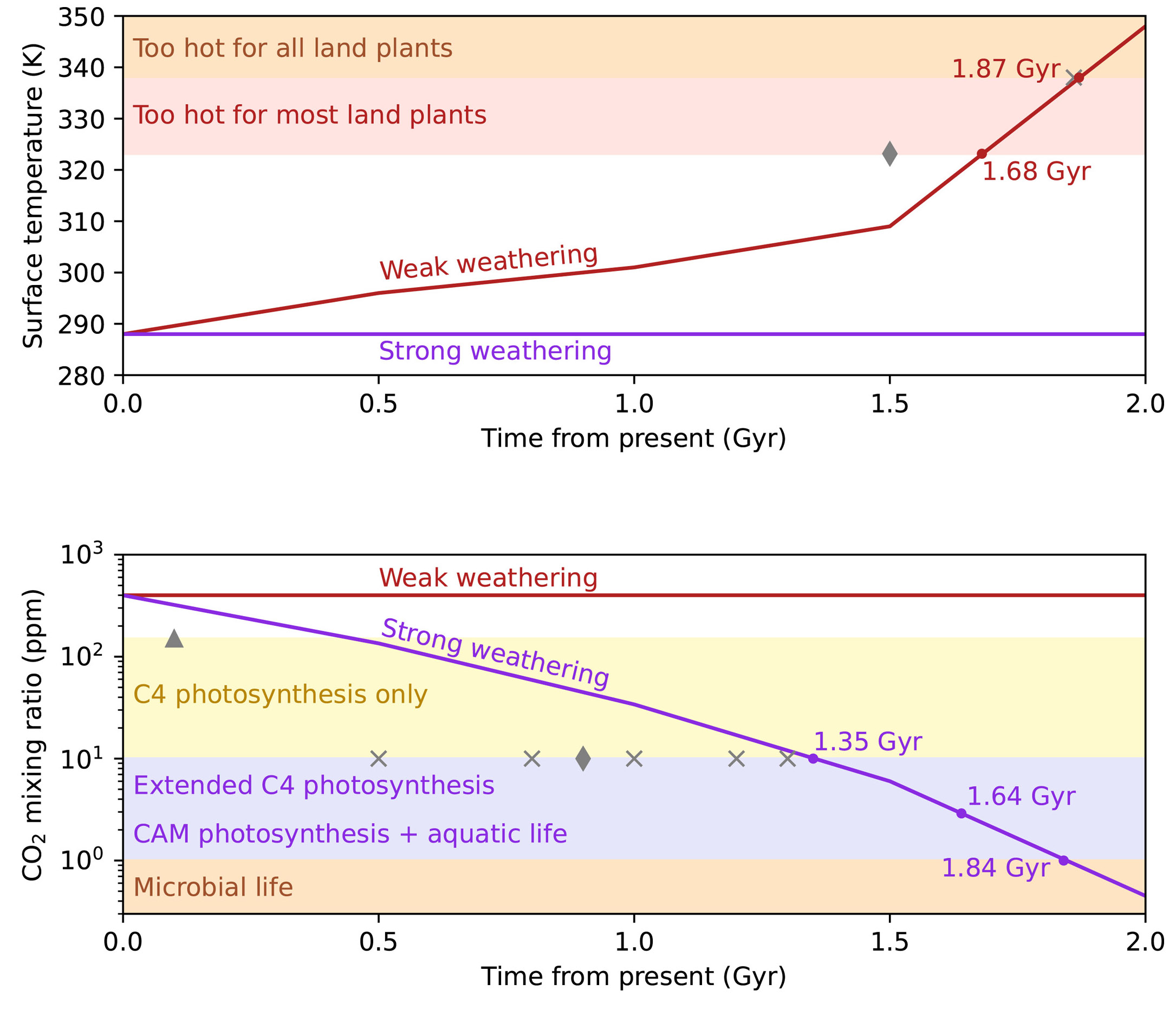
With weak weathering, the world is around 21° C (38° F) warmer 1.5 billion years from now, and it jumps an additional 40° C (72° F) between then and 2 billion years. Even with CO2 remaining at 400 parts per million, those temperatures would wipe out land plants on Earth.

Specifically, the physiological limits of most land plants are crossed by 1.68 billion years, and the rest are toast at 1.87 billion. (Boiling off the oceans and losing our water to space wouldn’t be far behind.)

In the strong weathering scenario, the temperature doesn’t change. But after 1 billion years, CO2 drops to about 34 parts per million, and after 2 billion years it falls to less than 1 part per million. The limit for most land plants is around 150 parts per million, while the much less common C4 plants could survive down to 3–10 parts per million. The latter limit gets hit between 1.35 and 1.64 billion years in.

A few plants, like cacti as well as some marine life, can cheat by using bicarbonate in the water if dissolved CO2 is low. They can probably make it down to 1 part per million. That would buy them a little more time, and they’d make it to about 1.84 billion years.

Two charts showing when model simulations cross thresholds for land plants.

Model timelines for the weak and strong weathering scenarios. Temperature in the top plot is in kelvins—a change of 1 kelvin is equivalent to 1 °C. Carbon dioxide in the bottom plot is on a logarithmic scale. (101 is 10 parts per million, 102 is 100 parts per million, etc.)

Model timelines for the weak and strong weathering scenarios. Temperature in the top plot is in kelvins—a change of 1 kelvin is equivalent to 1 °C. Carbon dioxide in the bottom plot is on a logarithmic scale. (101 is 10 parts per million, 102 is 100 parts per million, etc.) Credit: Haqq-Misra and Wolf/JGR Atmospheres

That’s optimistic?

The, uh, good news about these estimates for the demise of complex life on Earth is that they’re actually a bit more optimistic than most previous studies. That’s down to the 3D model producing a little less warming for a brighter Sun, the expectation that CO2 declines more slowly over time, and a slight expansion of the CO2 range believed to be survivable by plants. Many previous estimates had put life’s expiration date at less than 1 billion years from now.

Obviously, there are a bunch of additional considerations that could significantly alter this story, and the researchers mention a few. If civilization persists long enough to see some of these changes, geoengineering would certainly be an option—like spreading aerosols in the stratosphere to reflect sunlight, for example.

There are even some wilder suggestions out there, like moving Earth’s orbit farther from the Sun or removing some of the Sun’s mass to tame the red giant. (We have a billion years to work on the logistics, after all.)

Less speculatively, evolution could have a say in the physiological limits of Earth’s plants. Any adaptations that expand the range of survivability would extend the timeline.

Ultimately, the point of modeling this kind of thing is not to make a confident prediction. Apart from the simple natural curiosity about what will happen to our world, this is also relevant to wondering about the potential for life on other worlds. The window of time during which life on Earth is possible tells us something about where to look outside our Solar System.

Land plants have been present on Earth for almost 500 million years, and if this new estimate is right, they could stick around for almost 1.9 billion more. As was the case for a few billion years early on, microbial life might again have the place to themselves for a while after that.

JGR Atmospheres, 2026. DOI: 10.1029/2025JD045586 (About DOIs).

Father Shot Dead in Front of His Family After Barbershop

0
father-shot-dead-in-front-of-his-family-after-barbershop
Father Shot Dead in Front of His Family After Barbershop


A Birmingham father was gunned down in front of his own family after an argument outside an Alabama barbershop spiraled into deadly violence, police said.

The shocking shooting happened Saturday, June 13, just after 3:30 p.m. outside La Vida Barberia Spa y Estilismo on West Valley Avenue in Birmingham.

Authorities identified the victim as 34-year-old Jorge Fonseca, a Birmingham resident.

According to investigators, Fonseca and the suspected shooter knew each other and got into a physical fight outside the barbershop. During the altercation, police said, the suspect pulled out a gun and shot Fonseca.

Police and medical crews rushed to the scene after receiving a report that a man had been shot. Paramedics tried to save Fonseca’s life, but he was pronounced dead on the sidewalk outside the shop.

The tragedy was made even more horrifying by who was there to witness it.

Several customers were inside the barbershop when the deadly fight broke out, including members of Fonseca’s family, according to AL.com. Witnesses were later brought in for questioning as investigators worked to piece together what led to the fatal shooting.

Police said the shooter ran from the scene after the gunfire but was taken into custody about 15 minutes later.

The suspect’s identity has not yet been released.

Indonesia’s nickel-rich Halmahera becoming a Chinese company island

0
indonesia’s-nickel-rich-halmahera-becoming-a-chinese-company-island
Indonesia’s nickel-rich Halmahera becoming a Chinese company island

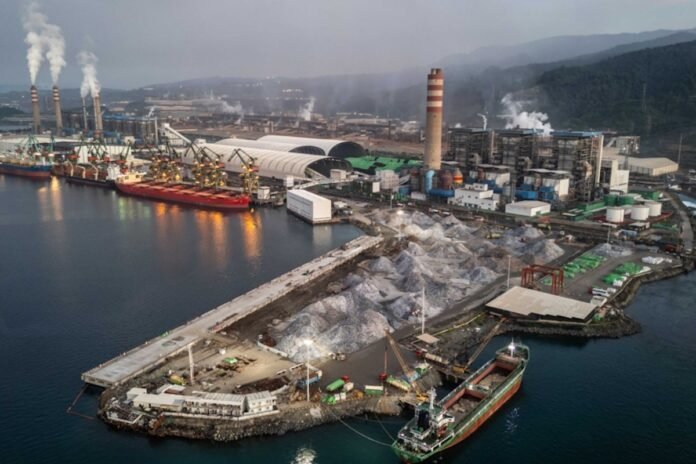
aerial photo taken on April 18, 2025 shows smoke rising at Weda Bay Industrial Park (WBIP), a major nickel processing and smelting hub, in Lelilef Sawai, Central Halmahera, North Maluku. Image: YouTube Screengrab

Halmahera, the largest island in Indonesia’s North Maluku province, is unlikely to be familiar to most readers outside Southeast Asia. Yet this forested island, located between Sulawesi and New Guinea, has become one of the most important places in the global energy transition.

Home to some of Indonesia’s largest nickel deposits and the world’s largest nickel mine, Halmahera now sits at the center of rapidly expanding supply chains that support electric-vehicle and battery manufacturing.

Over the past decade, billions of dollars in investment have flowed into the island, much of it linked to large-scale industrial projects backed by Chinese capital.

The China-led transformation has been dramatic, giving rise to bountiful new economic opportunities. Industrial activity has expanded rapidly. Infrastructure has improved in areas that had long struggled to attract public or private investment. Many of these changes have brought real benefits to local communities.

Earlier this year, Indonesia Weda Bay Industrial Park (IWIP), owned by three Chinese companies, and Weda Bay Nickel, majority owned by China’s Tsingshan Holding Group, began construction of a water treatment facility to provide clean water to villages in Central Halmahera, marking a tangible improvement in villagers’ daily lives.

To be sure, these contributions deserve recognition. But the growing role of corporations in community life raises an important question: What happens when foreign companies become more visible and effective than the government for delivering public services?

This is not a criticism of any particular Chinese or other foreign company operating in Indonesia. Nor is it an argument against foreign investment in public infrastructure. Rather, it is a warning about a pattern that has appeared repeatedly in resource-rich regions around the world.

A major industry arrives. Investment flows in faster than the government’s capacity to expand. Companies begin supporting infrastructure, education programs, health initiatives and community services.

Initially, these efforts are welcome because they address real needs. Over time, however, a subtle shift can occur. Communities begin looking to corporations rather than public institutions for solutions to public problems. When that happens, the balance between private influence and public responsibility begins to change.

Halmahera risks becoming what might be called a “company island”: a place where a single industrial ecosystem becomes so influential that it shapes not only employment and economic growth, but also the provision of services and the direction of development itself.

A strong state should welcome responsible private investment while remaining visibly present in people’s lives. Roads, water systems, schools and healthcare should not depend on the continued success of a particular industry or the goodwill of a particular company. Public services should remain public responsibilities.

This distinction matters because corporations and governments play fundamentally different roles in society. Corporate leaders may act in good faith, but their primary responsibility is to their businesses.

Governments carry a different obligation. They are responsible for the long-term welfare of all citizens, including those who do not directly benefit from industrial growth. As Halmahera’s role in the global energy transition grows, this distinction will become increasingly significant.

The island is often discussed today in terms of nickel, batteries and industrial parks. Yet Halmahera is more than a strategic asset in a global supply chain. It is home to hundreds of thousands of people, diverse Indigenous and customary communities, rich marine ecosystems and livelihoods that extend far beyond mining.

Its future should not be defined solely by the needs of the global battery industry.

Saving Halmahera does not mean rejecting investment. It does not mean opposing industrial development. The island’s residents deserve economic opportunities, better infrastructure and rising living standards.

But development should strengthen public institutions, not substitute for them.

The measure of success in Halmahera should not be how many tons of nickel leave its shores each year. It should be whether local communities feel that their future is being shaped by accountable public institutions capable of serving the public interest.

The world’s energy transition will require places like Halmahera. The question is whether that transition will leave behind stronger societies or merely stronger corporations.

For Halmahera, the answer depends on whether the government remains at the center of development. An island can welcome foreign investment without surrendering its future. It can benefit from corporate involvement without becoming dependent on it.

That is the balance Halmahera must preserve if it is to avoid becoming a company island.

Muhammad Zulfikar Rakhmat is director of the China-Indonesia Desk at the Jakarta-based Center of Economic and Law Studies (CELIOS) independent research institute. Yeta Purnama is a researcher at CELIOS.

Users cry foul after AMD stripped memory crypto from its consumer CPUs

0
users-cry-foul-after-amd-stripped-memory-crypto-from-its-consumer-cpus
Users cry foul after AMD stripped memory crypto from its consumer CPUs

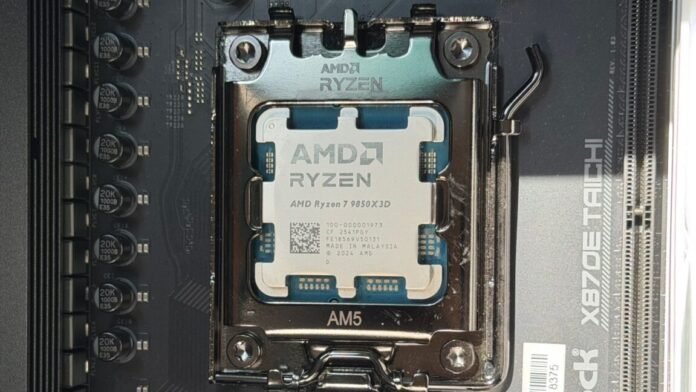
A decade ago, AMD added a protection to its high-end CPUs to protect them against cold boot attacks and other types of physical exploits that siphon sensitive data out of the connected memory chips. Short for Transparent Secure Memory Encryption, TSME encrypts the entire contents stored in memory, making the data useless to physical attackers.

Over time, AMD added TSME to lower-end processors, including the consumer version of its Ryzen chips, a CPU that costs less than the Pro version. Over the years, users of these lower-end chips have gotten used to the added security. Recently and without warning or notice, this lower-end line of AMD chips suddenly dropped the protection, and did so in a way that was impossible to detect on Windows machines and required a fair amount of technical work when using Linux.

Now you see it, now you don’t

AMD has yet to say why TSME worked on these CPUs, or even to confirm the change. AMD declined to answer questions sent by email other than to say TSME “is a security feature only applied to PRO CPUs as part of AMD PRO Technologies.” The statement is the first known time the chipmaker has explicitly made this restriction public.

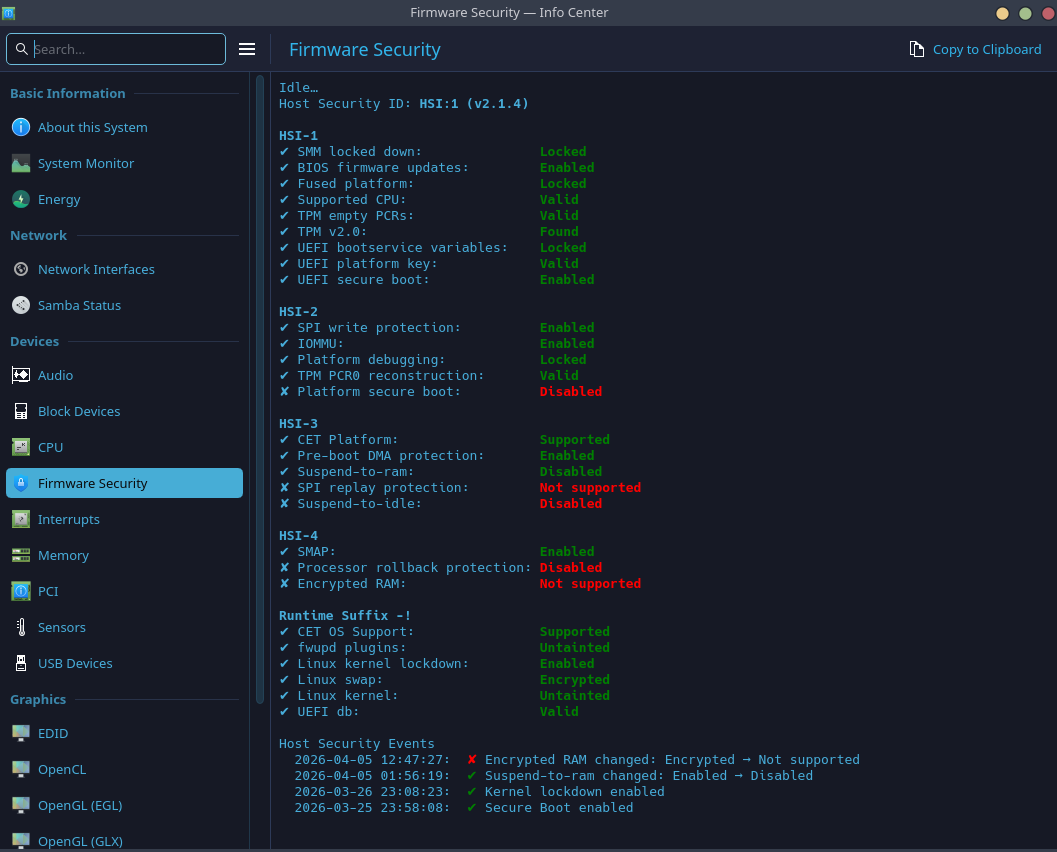
In April, Ben Kilpatrick, who describes himself as a “privacy-conscious Linux hobbyist,” was installing a new OS on his machine running a Ryzen 7 9700X from the Zen 5 architecture. To check that all security protections were enabled, he had his machine run Host Security ID (HSI), an auditing feature that evaluates the firmware and hardware security configurations.

To his surprise, HSI showed TSME was no longer possible, as indicated by the “encrypted RAM: not supported” line near the bottom of the screenshot below. A few lines lower, the HSI indicates that previously, TSME had shown as “encrypted.” This made no sense to Kilpatrick because he had enabled TSME in his BIOS settings all along.

HSI output showing that his Ryzen CPU once provided TSME but no longer does. AMD pulled the feature for consumer CPUs without notice or an easy means for users to know.

HSI output showing that his Ryzen CPU once provided TSME but no longer does. AMD pulled the feature for consumer CPUs without notice or an easy means for users to know. Credit: Ben Kilpatrick

This sent Kilpatrick into a monthslong investigation to figure out what had happened. After sending an inquiry to both the support and engineering teams at MSI, the manufacturer of his motherboard, he finally convinced company engineers to run tests.

They found that consumer versions of Ryzen running on MSI and Gigabyte motherboards had TSME enabled when an older firmware version, available exclusively through the AMD Generic Encapsulated Software Architecture (AGESA), described here, was used during the boot process. When the firmware in a newer AGESA, specifically version 1.2.7.0, ran instead, TSME showed as “not supported.” Pro versions of the Ryzen CPU supported TSME across both motherboards and AGESA versions.

“The big outstanding question is whether this is a deliberate policy decision by AMD to restrict TSME to PRO chips, or an unintentional regression that was introduced in AGESA 1.2.7.0,” Kilpatrick told Ars. He continued:

The reason that distinction matters is that if it is deliberate policy, AMD made a conscious decision to remove a working feature from consumer hardware and restrict it to enterprise customers. If it is an accidental regression, it is a firmware bug that AMD should fix. Either way the silicon is capable, either way the change happened in AGESA, and either way AMD has declined to explain it. But the two scenarios imply very different things about exactly what happened.

As part of his investigation, Killpatrick filed a bug report on AMD’s public engineering GitHub repository. Two AMD engineers engaged directly.

Tom Lendacky, an AMD fellow software engineer, replied that he didn’t know what caused the change. He suggested disabling and then re-enabling the option in the BIOS. “If that doesn’t work, my guess would be that it is a BIOS issue and you would want to contact MSI,” (It was this suggestion that led Kilpatrick to prevail upon MSI engineers to run the tests mentioned earlier.)

Mario Limonciello, AMD senior principal software engineer and maintainer of the fwupd version of HSI, then chimed in. He, too, suggested disabling and re-enabling the BIOS settings. “If it still doesn’t work; then yes please report it to your board vendor to debug,” he said.

I have nothing more to share, AMD engineer says

Six weeks later, Kilpatrick resumed the discussion. After getting the results of MSI’s investigations, he reported them to the AMD engineers.

“MSI’s product marketing team has informed me that AMD officially communicated to MSI that TSME is exclusively supported on PRO series processors,” he wrote. “They [MSI support personnel] also conducted controlled testing on an Asus X870E motherboard with a Ryzen 9800X3D (consumer) and a Ryzen 9945 (PRO), finding tsme_status = 1 on the PRO processor and tsme_status = 0 on the consumer processor with the same board and BIOS.”

A setting of 1 indicated TSME was enabled. A status of 0 meant it was off.

Next, Kilpatrick turned the engineers’ attention to results from memory captures from the AMD Boot Loader. Typically abbreviated as ABL, it’s a component within AGESA that initializes the hardware prior to the OS loading. MSI’s engineering team found that a string indicating the status of TSME early in the boot process was never enabled.

The memory capture showed that DfIsTsmeEnabled, an internal AGESA flag that controls whether TSME is activated during the firmware initialization process, showed that it was not turned on. The ABL memory dump comparisons returned different values depending on whether the Pro or consumer CPU version was used. The flag showed FALSE for consumer processors and TRUE for PRO or EPYC processors when TSME was enabled in the BIOS.

“Their BIOS engineer also provided ABL dump comparisons showing DfIsTsmeEnabled returning FALSE for the 9800X3D regardless of whether TSME is set to AUTO or ENABLED in BIOS,” Kilpatrick reported, “while the 9945 returns TRUE when TSME is ENABLED.”

Kilpatrick went on in the thread to remind Lendacky that in 2020, the engineer had confirmed TSME was supported on a Ryzen 3700X (a consumer CPU). After more back-and-forth discussion, Kilpatrick asked bluntly: “is DfIsTsmeEnabled being set to FALSE on consumer SKUs a silicon-level limitation, or is it a firmware policy decision within AGESA? The distinction matters quite a bit from a user perspective, since one is fixed and the other is potentially changeable.”

Limoncello promptly replied: “My apologies; but I don’t have any more information to share on this topic.” With that, the discussion and Kilpatrick’s inquiry were over.

The Lendacky comment in 2020 Kilpatrick referred to came in this thread discussing encryption features available in AMD CPUs. Lendacky said that the Ryzen 3700x, a consumer CPU, “should support TSME.” In a 2025 comment in the same thread, the engineer followed up on his comment concerning the 3700x.

“I recommend using TSME (Transparent SME), but it is a BIOS option that needs to be exposed by your BIOS provider,” Lendacky said in response to the question about the consumer chip.

There’s no indication that AMD ever advertised or marketed TSME as being available in consumer CPUs. AMD has long said that a related memory protection, Secure Memory Encryption (SME), is available only in the Pro and Epyc CPU tiers. SME is OS-managed. It uses a single key and allows the OS to selectively encrypt individual memory pages. TSME is firmware-managed. It encrypts all RAM with no OS involvement. When active, it provides protection against physical attacks, including cold boot exploits, DRAM interface snooping, and memory module removal. It activates silently when enabled in the BIOS, making it the more practically useful of the two protections.

AMD engineers’ comments, such as those mentioned above, and the years of TSME working just fine in the lower-cost tier processors, have understandably conditioned Kilpatrick and other users to reasonably regard it as an expected part of the chip package. AMD quietly removing it and providing no acknowledgment or explanation strikes these users as something of a betrayal.

“They could have not realized they did it leading to their cagey responses, or they could have done it intentionally and tried to get away with it, leading to the same cagey responses,” Joe Fitzgerald, an expert in silicon-level security, said in an interview, referring to AMD’s potential motivations for withdrawing TSME. “But I really feel like an explanation should be in order, even if it was ‘TSME was never supposed to be supported. We did ship some firmwares that erroneously enabled it, but you shouldn’t use them since we can’t guarantee it’ll work properly.’”

Beyond oil: Iran war may have transformed Asia’s trade architecture

0
beyond-oil:-iran-war-may-have-transformed-asia’s-trade-architecture
Beyond oil: Iran war may have transformed Asia’s trade architecture

The initial market reaction to US and Israeli military strikes on Iran was familiar: Brent crude surged in early Asian trading, equity markets slipped and headlines focused on the energy shock to come.

But months later, the conflict appeared to become much more than an energy disruption — it served as a stress test for Asia’s trade architecture, exposing vulnerabilities that run far deeper than elevated oil prices alone.

For corporates, logistics providers and policymakers across the Association of Southeast Asian Nations (ASEAN), the seemingly more consequential story unfolded in shipping lanes, compliance departments, export control registers and trade finance desks.

How the region responds could influence not just its near-term economic outlook, but the structure of Asian trade for years to come.

When Hormuz closes, Asia is among the first affected

The closure of the Strait of Hormuz — through which roughly a third of global seaborne crude oil and around 20% of global liquefied natural gas shipments pass — had near-term consequences for Asia’s most commodity-dependent economies.

Japan, South Korea, Taiwan, Singapore and Hong Kong all import more than 80% of their domestic energy needs. Nearly 90% of liquefied natural gas (LNG) exported through the Strait flows to Asian buyers. Asia generates two-thirds of global GDP growth and accounts for 40% of world trade while remaining heavily dependent on imported energy.

The disruption extended well beyond energy. A third of global seaborne fertilizer trade passes through the Strait of Hormuz, meaning that as gas prices rise, fertilizer costs follow and food prices with them. Some Asian exports have also faced delays or rerouting. India’s agricultural exports to Gulf markets have reportedly slowed as freight and insurance costs spike.

In addition, Qatar is the world’s second-largest producer of helium — a critical input for semiconductor manufacturing — and reports of disruptions at LNG facilities have raised the risk of interruptions in helium production.

A prolonged disruption could have tightened global helium supply and raised costs for the semiconductor industries of Taiwan, South Korea and Japan, adding a technology-supply-chain vulnerability for a region that anchors global electronics output.

Singapore: exposed hub, strategic position

Like its Asian counterparts, Singapore felt the strain from the disruption caused by the conflict. About 95% of the country’s electricity is generated from imported natural gas, and more than 40% of its LNG supply came from Qatar last year.

Singapore’s Energy Market Authority had warned that fuel prices will likely remain elevated in the foreseeable future. Business and market sentiment have declined, with companies across manufacturing, services, transportation and construction pulling back on investment and expansion decisions. Inflation pressures are building, raising the prospect of a tighter monetary policy response.

As one of the world’s leading trade, shipping, commodities finance and bunkering hubs, Singapore sits at the operational center of several supply chains currently under pressure. Its energy and chemicals sector is the country’s second-largest manufacturing industry.

Singapore’s financial institutions provide trade finance, commodity hedging and logistics credit to counterparties across Asia and the Gulf. As a result, disruptions affecting the Strait can be transmitted through Singapore’s logistics and financial ecosystem, with pressures likely to increase if the conflict persists.

Pivot away from Gulf dependency

For manufacturing-intensive economies in Asia, the conflict may accelerate a strategic recalibration that, in some cases, was already underway.

Some governments with large industrial bases — South Korea being a prominent example — have begun to explore alternative energy sources in response to Gulf supply disruptions.

As part of a longer-term strategy, this may create additional impetus to diversify reliance on a single source of energy amid heightened volatility. The environment may also contribute to a rise in demand for defense equipment and heightened security investment among regional governments, particularly those with close security ties to Washington, as evolving risks to US-linked assets and facilities sharpen threat calculations.

The policy responses emerging across the region illustrate the scale of the adjustment now underway. South Korea has imposed its first fuel price cap in nearly three decades. Japan has begun releasing oil from national reserves. Taiwan has spent over $600 million securing spot LNG cargoes.

Meanwhile, governments from Thailand to Indonesia are introducing fuel subsidies, price caps and demand management measures to cushion their populations from the shock. For many Asian economies, a medium-term priority may be to accelerate diversification across energy sourcing, trade routes and supplier relationships.

A shifting compliance landscape

Beyond the immediate risk to oil and gas supplies from the Gulf, one broader concern is how the conflict may influence trade behavior across Asia. As military actions intensify, countries may, in some cases, align their trade and export control policies more explicitly with geopolitical positioning.

The implications are significant. Exporters and logistics providers across ASEAN could face a tightening environment for dual-use goods controls, as governments respond to heightened secondary sanctions risk.

Customs scrutiny could intensify. Informal boycotts and selective export restrictions — driven not by formal policy but by geopolitical signaling — could disrupt established trade relationships.

Financial institutions may encounter growing pressure around counterparty transparency, including more rigorous requirements to identify and verify ultimate beneficial ownership across complex supply chains.

Over time, these non-tariff barriers could, for some sectors, prove as disruptive to regional supply chains as any physical interruption to the supply of oil and gas from the Gulf.

For Singapore-based trade finance providers, commodity traders and logistics companies, this presents an operational challenge that will likely place additional strain on compliance infrastructure, legal resources and risk appetite in the months ahead.

Singapore’s strategic moment

In this environment, Singapore’s role as a regional hub represents both a point of exposure and a source of strategic value.

The country’s deep institutional relationships, its sophisticated legal and regulatory framework, and its expertise in trade finance and compliance position it to play a stabilizing role for businesses navigating a more fragmented global trade environment.

Singapore’s LNG terminal infrastructure and fiscal buffers are also critical advantages, allowing the city-state to access world markets even as supply tightens, although they offer little buffer against the inflationary consequences of elevated global prices.

A key question for Singapore’s policymakers and business community is not simply how to absorb the shock, but whether and how to use this period to deepen the capabilities — in compliance, risk management, energy transition and supply chain resilience — that could shape the next era of Asian trade.

Doing so will likely require clear-eyed leadership and a willingness to pursue structural change that outlasts the current crisis. While transit through the Strait of Hormuz may soon normalize, the broader fragmentation pressures it has exposed may prove harder to unwind.

Choon Hong Chua is a senior director at Moody’s.

0FansLike
0FollowersFollow
0FollowersFollow
0SubscribersSubscribe
- Advertisement -
Google search engine

Recent Posts