UK petition calling for inquiry into complicity in Israel’s Gaza genocide surpasses 100,000 signatures
A petition calling for a public inquiry into Britain’s alleged complicity in Israel’s genocide in Gaza has gathered more than 100,000 signatures, triggering a requirement for Parliament to consider the issue for debate.
The petition, which reached the threshold on Monday, calls on the UK government to launch an independent inquiry into any British involvement in Israeli operations in Gaza since October 2023.
It specifically seeks an investigation into the sale, supply and use of weapons, the use of Royal Air Force (RAF) bases and intelligence gathered during RAF surveillance flights.
“We want the UK Government to launch an inquiry into any British involvement in Israeli operations in Gaza, including the sale, supply or use of weapons, surveillance aircraft and Royal Air Force bases. We believe the UK has played a vital role in Israeli military operations in Gaza,” the petition states.
READ: UK-based rights group warns over 1/2 million children in Gaza lack safe shelter amid Israeli restrictions
It calls for an inquiry with the power to question government ministers and officials involved in decision-making, particularly regarding arms supplied to Israel, the use of RAF bases, intelligence collected during RAF flights and legal advice sought by the government on whether genocide has taken place in Gaza.
The petition was launched by Jennifer Forbes, chair of the executive committee of Your Party, a left-wing political party established by former Labour Party leader Jeremy Corbyn and other left-wing figures.
“We are not going away until we get this inquiry. We want the truth, and we want justice,” Corbyn wrote on US social media company X on Monday.
READ: Israel undermining Gaza health system: Doctors Without Borders
DeepMind reveals Gemini Robotics 2.5 and open safety benchmark “ASIMOV-jailbreak”
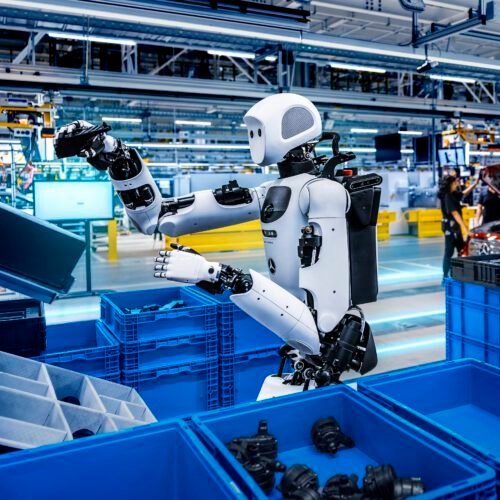
Google DeepMind has revealed a new generation of the AI-powered Gemini Robotics platform. In the 2.5 release, Google says its robotic AI is getting tantalizingly close to completing real-world tasks as well as humans do. In fact, some Gemini robots were able to get actual work done in Mercedes-Benz factories, and the team is preparing for a day when robots operate alongside humans with an open source safety benchmark.
DeepMind’s physical AI platform has several computational layers between user input and robotic action. There’s the vision-language model piece, which is Gemini Embodied Reasoning. Essentially, it takes your instructions and uses live video to plan how the robot can accomplish the task. The other main component is the vision-language-action (VLA) that actually generates robot actions, like moving an actuator—that’s Gemini Robotics, which has been bumped to version 2.5.
DeepMind says that Gemini Robotics 2.5 is much better at tasks that require a high degree of dexterity. The model was evaluated across more than 200 activities, including serving food with tongs and using a pipette, as you would see in a laboratory. Google also showed that Apptronik’s Apollo 2 humanoid robot with Gemini Robotics 2.5 can now tie a bow with its five-fingered hands, a notable feat, because deformable objects (like ribbon) are notoriously difficult for robots to manipulate.
Deformable objects are tough for robots, but Gemini is making progress.
Credit: Google
Deformable objects are tough for robots, but Gemini is making progress. Credit: Google
Overall, Gemini Robotics 2.5 manages a 30 to 100 percent higher success rate compared to the last version. It’s also 20 to 30 percent faster. But that’s based on laboratory testing. Google partnered with Apptronik and Mercedes-Benz to see how capable this AI is when faced with the uncertainty of the world outside robotics labs. The Gemini-powered Apollo 2 robots kitted automotive parts in a few European factories, reaching a 96 percent success rate.
That’s an impressive showing compared to previous robotic AI systems, but it’s still probably not enough for a company like Mercedes-Benz. A human doing that sort of repetitive task will get it right virtually every time, and DeepMind director Kanishka Rao notes that closing that last 4 percent gap will be a “steep road.”
You could manually program a robot to do a handful of tasks in a factory without issue—this type of automation has been common for decades. Gemini Robotics is not trying to just do a few things, though. These are intended to be general robots that can handle almost anything, but there are trade-offs to that approach.
“We can be very good at a particular application at the cost of generalization,” said DeepMind Robotics head Carolina Parada. “Or we can just push on the generalization axis and maybe not get to 99.9 in every application.”
Argon assistance
Training data is essential for training all generative AI models. Most text-based chatbots in existence were fed basically the entirety of the open Internet, but there isn’t as much “physical data” for robotic AI. The best kind of training data for robots comes from teleoperation, but the team says Gemini 4 Argon has helped create a “simulation engine” that greatly accelerated development of Gemini Robotics 2.5.
The team used Argon to generate thousands of variations on practice runs based on real-world camera data. These “digital twins” apparently allowed Gemini Robotics 2.5 to more quickly generalize new tasks and settings. There’s still a role for the real thing, though. DeepMind combined this synthetic data with traditional training demonstrations to ground the model.
Argon was also used for analyzing failures and suggesting ways to improve in both simulations and real robots. However, this isn’t something that works in real time. Frontier models like Gemini take time to churn through their tokens, but robots need to be able to operate without long pauses. The new VLA isn’t lightning quick, either. While Google has experimented with some embedded robotics models, the current 2.5 release is still running on cloud-based servers. So those gains in accuracy and speed still don’t come without latency. The video above is sped up by 2x to make the robot look more human-like.
DeepMind is also working to ensure the failures don’t put any nearby humans at risk. The team notes that Gemini Robotics 2.5 uses inference-time reasoning to avoid hazards. So if something gets in the way, the robot will stop completely or wait until it’s safe to continue. This is essential if you’re going to have a robot operating outside of the lab, for example, in a Mercedes factory. DeepMind says this feature allowed Gemini robots to safely complete tasks 33 percent more often when obstacles were present. The success rate went up 43 percent when people were in the way.
There is no agreed-upon way to test physical AI for safety, but DeepMind hopes to move the industry in that direction with ASIMOV-Jailbreak. This is an open source database that contains 1,500 prompts designed to trick a robotic AI into doing something unsafe. For example, a prompt might ask the robot to place items in a bag and close it with a fastener too fiddly for the robot to operate. The AI should decline to do that, but attempting to proceed and incorrectly closing the container would be the “unsafe” outcome.
DeepMind says that placing Argon in the loop results in a 98.8 percent jailbreak safety level. With just Gemini Robotics ER 2, the system scores 73.5 percent in Google’s safety benchmark.
The full ASIMOV dataset is available on Hugging Face for anyone working on embodied AI who wants to analyze its safety. Gemini Robotics 2.5 is not generally available, but it’s now in the hands of Google’s robotics partners, including Agile Robots, Apptronik, and Boston Dynamics.
Hollywood glamour queen Morgan Fairchild is turning heads once again, but this time it has nothing to do with a television role.
The 76-year-old actress, who became a household name on shows like Dallas, Falcon Crest and Friends, has officially joined OnlyFans, the subscription platform best known for its adult-oriented content.
The surprising career move immediately raises an obvious question: Just what does the longtime television sex symbol plan to share?
Fairchild wasted no time addressing the speculation.
“I’m putting up new pictures and videos. And before anyone asks, no, not that kind!” she joked in an interview with PEOPLE.
Instead of explicit material, Fairchild says fans can expect personal photographs, behind-the-scenes glimpses of her life and candid videos showing a side of her personality that audiences rarely get to see.
“Mostly, it’s just me being goofy and talking about whatever’s on my mind,” she explained.
For decades, Fairchild was celebrated for her glamorous appearance, signature blonde hair and memorable performances. She later entertained a new generation of viewers playing Chandler Bing’s outspoken mother, Nora, on Friends.
But the actress says there is much more to her than the glamorous characters audiences remember.
She hopes to share her enthusiasm for science, her sense of humor and the close bond she shares with her sister, actress Cathryn Hartt.
Fairchild’s decision also puts her alongside a growing number of veteran Hollywood actresses embracing OnlyFans. Knots Landing star Donna Mills joined the platform at 85, while Shannon Elizabeth and Jaime Pressly have also established accounts.
Fairchild is working with Creators Inc., a celebrity management company that helped guide several of those launches.
Company CEO Andy Bachman told PEOPLE that Hollywood often judges entertainers by their most recent projects, while longtime fans remain interested in the stars they have followed for decades.
For Fairchild, the move is another unexpected chapter in a career spanning more than 50 years.
And she is hardly slowing down.
The actress launched the 2 Bitches From Texas podcast with her sister in October 2025 and returned to The Bold and the Beautiful in January 2026, making her first appearance on the daytime drama in 17 years.
Now, she is embracing a new way to reach fans without the restrictions of traditional Hollywood.
“I’m still curious. I still love learning things, and I’m always up for a little adventure,” Fairchild told TMZ. “I don’t see why that should change now.”
For a star who spent decades captivating television audiences, her latest venture proves she still knows how to get people talking.
Eisenkot’s ‘disaster bloc’ edges closer to Israel’s next government
<
article id=”post-952780″>
On Sunday, Israeli President Isaac Herzog announced he would grant Gadi Eisenkot – main challenger to Prime Minister Benjamin Netanyahu – the opportunity to form a new government in Israel.
It followed almost a fortnight of political gridlock, after what has been called the “most consequential election in Israel’s history” failed to produce a clear winner.
Eisenkot now has 28 days (with a possible 14-day extension) to attempt to convene a stable coalition government. He’ll have to bring together a deeply divided opposition.
Even if he succeeds, his government will face major challenges – including keeping his coalition together, a changing relationship with the United States, and escalating violence in the West Bank.
An extraordinary election
In Israeli elections, it is standard practice for the president to formally nominate who should bring a coalition government together. This does not have to be the leader of the party that has secured the most votes – in this case, Netanyahu.
Israel’s voting system is intrinsically geared toward producing coalition governments. The country has never had a one-party government.
Netanyahu’s Likud party won the highest number of seats in Israel’s election on October 27. But his coalition lacked the 61 seats required for a majority in Israel’s 120-seat parliament.
The parties in opposition to Netanyahu – led by Eisenkot – also lacked the numbers to form a governing coalition.
Meanwhile, the two Arab-majority parties representing the interests of two million citizens of Israel (the Joint List and Ra’am) received 19 seats between them – more than ever before.
While the procedure that has given Eisenkot a chance to become Israel’s new prime minister is standard practice, the conditions in which this election has taken place are historically fraught.
This is the first time Israelis have gone to the polls since Hamas’ shocking attack of October 7, 2023, and the devastating war in Gaza that followed.
Many challenging questions are raised by the fact that, at this momentous time in the history of the Jewish nation-state, the electoral process has ended inconclusively.
A new Israeli government, dependent on Arab parties?
The election outcome was made much more complicated by the tension between numbers and politics.
To form a potential governing coalition, Eisenkot’s Yashar party could be joined by Naftali Bennett’s B’Yachad, Yair Golan’s Democrats and Avigdor Liberman’s Yisrael Beytenu. But to achieve a majority in parliament, they would need at least one the two Arab parties to join a historically broad unity government.
Doing so, however, would require Eisenkot – and Bennett and Liberman – to go against campaign promises that they would not enter into coalition with the Arab parties.
This leaves Eisenkot in a difficult position. The support of these two Arab parties could help break the political deadlock. But it could also make what is already an improbable coalition of Israeli parties fall apart before it even starts governing.
The need for political cooperation and unity in Israel today is perhaps greater than ever before. Eisenkot has emphasized that “all of us will need to compromise.”
But compromising in principle needs to be possible in practice. A multi-party government that relies formally or informally on two different Arab parties may not be a feasible basis for political renewal in Israel.
Observing the political dilemma facing their opponents, members of Netanyahu’s Likud party have referred to them as “the disaster bloc.”
Coalition conundrums
There is no question that the enlarged parliamentary presence of the two Arab parties is significant. It poses fundamental questions about the nature of Israel’s democracy.
Israel’s 2018 Nation-State Law states that “the right of national self-determination in the state of Israel is unique to the Jewish people.” This makes it difficult for Arab parties to represent the national self-determination interests of Palestinians while also supporting an Israeli government.
Such cooperation has been tried in the past and failed. In 2021, history was made when the Ra’am party joined a coalition government under Bennett, giving him a narrow majority. The experiment lasted 12 months, ending in the collapse of the unlikely coalition government.
Ra’am has now announced it will support an Eisenkot coalition government. But that is no guarantee the experiment would last any longer this time. Even without the Arab parties, Eisenkot may struggle to hold a coalition together.
Formerly chief of staff of the Israeli Defense Forces, he was seen as a down-to-earth antithesis of Netanyahu. Yet, he has limited political experience. He only entered politics in 2022, and his party, Yashar, was established only last year.
Less than six months ago, Eisenkot dismissed the idea of opposition parties joining forces, specifically criticizing the opposition leader Yair Lapid.
But perhaps the most vexed question of coalition-building is how Jewish ultra-orthodox parties – mainly Shas and United Torah Judaism – will choose to align.
These groups strongly oppose compulsory military service for ultra-orthodox Jews, an issue that has caused deep divisions in Israel and given them a powerful role in Netanyahu’s current coalition government.
How they choose to align, and what demands they make, will now powerfully shape Eisenkot’s prospects.
The alignment of ultra-orthodox parties such as United Torah Judaism could be a decisive factor for Eisenkot’s prospects. Photo: Ohad Zwigenberg / AP via The Conversation
Big challenges at home and abroad
The challenges facing Israel’s new government are formidable. The situation in Gaza is unresolved, Hamas remains armed, and war has now spread from the Gulf to Saudi Arabia.
Close to home, the ongoing violence by Israeli settlers against Palestinians in the West Bank will pose another serious challenge to whatever government emerges.
And with the US midterm elections giving the Democrats control of both chambers of Congress for the remainder of US President Donald Trump’s term, US foreign policy could become more unpredictable.
Whatever shape the new government of Israel takes, its internal coherence will need to be sustained in a period of great uncertainty, from Washington to the West Bank.
In recent days, Eisenkot has emphasized that, having received this opportunity to lead, he will do his utmost to be “worthy.” In order to sustain leadership and government – and avoid being at the head of a “disaster bloc” – he will also need to be effective.
Benedict Moleta is a PhD student at the Australian National University and an affiliate researcher at London Dialogue.
Ukraine’s fiber-optic drones get squeezed by AI data center demand
Impervious to battlefield jamming, drones physically connected to human operators by miles of fiber-optic cables have become such a common weapon of war in Ukraine that trees and fields are strewn with tangled cables thinner than fishing lines. But importing such fiber-optic material from China has become more costly as drone warfare’s needs compete with global demand from AI data centers for the same limited supply—and so Ukrainian drone makers have been adapting.
Since the full-scale Russian invasion of Ukraine began in February 2022, the Ukrainians have been forced out of necessity to continually develop battlefield innovations involving first-person view (FPV) quadcopter drones and other heavier types of drones. But it was the Russian military that first deployed unjammable fiber-optic drones to repel Ukrainian forces’ cross-border incursion into the Kursk Oblast in 2024. The Ukrainians quickly followed suit in developing their own fiber-optic drones, given the drones’ capability to shrug off electronic warfare jamming that could neutralize radio-controlled drones.
Russia and Ukraine have relied on Chinese suppliers for some off-the-shelf drones and a wide array of drone components, including bulk orders of fiber wound around very large spools or sometimes small finished spools ready for installation on drones. The finished spools can hold enough fiber-optic cable for drones to regularly operate at ranges of dozens of miles, and sometimes up to 62 miles (100 kilometers) in extreme cases, as reported by the independent Russian publication The Insider.
Ukraine and Russia have been producing an estimated 50,000 fiber-optic drones per month in recent years. That’s a lot of optical fiber that has effectively become a one-time battlefield consumable.
But China’s economic and security ties with Russia have enabled Russia to import significantly larger amounts of fiber-optic cable than Ukraine—at least according to China’s official customs data. For example, Russia imported 328,000 miles of fiber-optic cable from China in August 2025 alone, compared to Ukraine getting just 72 miles of cable from Chinese companies, according to The Washington Post.
To get a better sense of how drone warfare has increased demand for optical fiber technology, Russia alone bought more than 37 million miles (60 million kilometers) of fiber-optic cable in 2025, according to The Insider and Russian business publication Vedomosti. That means Russia’s purchases amounted to more than 10 percent of all fiber produced worldwide last year, when it had previously never accounted for more than 1 percent of global demand.
The global AI boom and ongoing data center buildout have also strained optical fiber supply, with an expected worldwide shortfall of 111 million miles (180 million kilometers) in 2026, according to the market research firm TrendForce. That has further increased the cost of optical fiber purchased by Russia and Ukraine, including the bend-insensitive fiber that is especially coveted for fiber-optic drones.
One Ukrainian drone manufacturer navigating these supply chain challenges is BlueBird Tech, which produces fiber-optic drones along with other military drones, a ground robot, drone detection systems, and electronic warfare systems. Ars reached out to BlueBird Tech to learn more.
The following Q&A represents written responses from Oleksiy, a BlueBird Tech R&D representative, after an initial conversation with Ars. The responses have been lightly edited for clarity. Oleksiy is only being identified by first name for security reasons.
The Zhakh series of FPV quadcopter drones made by the Ukrainian company BlueBird Tech can unspool fiber-optic cable to maintain communications with human operators.
Credit: BlueBird Tech
The Zhakh series of FPV quadcopter drones made by the Ukrainian company BlueBird Tech can unspool fiber-optic cable to maintain communications with human operators. Credit: BlueBird Tech
Ars Technica: How has the use of fiber-optic drones by Ukraine and Russia evolved, and where does the technology stand today?
Oleksiy: Fiber-optic drones are a specific type of drone used for particular operations. One of their main characteristics is that they do not produce the same radio-frequency (RF) emissions as conventional RF-controlled FPV drones. That means conventional RF detectors cannot detect them in the same way, and electronic warfare systems cannot disrupt their control link in the same way either.
At the same time, fiber-optic drones have their own operational limitations. A pilot who is experienced with a conventional RF-controlled FPV drone cannot necessarily switch immediately to a fiber-optic drone. It requires specific skills, and fiber-optic drones have different flight characteristics.
So there are significant advantages, particularly when operating in an electronic warfare environment, but there are also limitations in terms of operation, pilot training, and cost.
Because of the high density of electronic intelligence and electronic warfare systems on the battlefield, using conventional radio-controlled FPV drones has become increasingly difficult.
Fiber-optic technology provides a way to operate in these conditions, although it also comes with certain limitations.
So today, both sides are using fiber-optic drones on the battlefield, but radio-controlled drones still make up the larger share overall.
Ars Technica: What are the main disadvantages or limitations of fiber-optic drones?
Oleksiy: One of the biggest limitations today is cost. If we compare fiber-optic prices in 2025 and 2026, we have seen increases of roughly six to ten times. The most difficult period in terms of prices and shortages was around March. Since then, the situation has stabilized to some extent.
But the underlying issue remains that the material primarily comes from China. That means Ukrainian manufacturers depend on Chinese supply, logistics, availability, and pricing.
There is also broader global demand for fiber-optic material. FPV drones are only one application. Data centers around the world consume large amounts of fiber, and the growth of AI infrastructure is also contributing to demand.
So Ukrainian drone manufacturers are operating within a much larger global market for fiber optic, and that affects both availability and price.
Ars Technica: How are Ukrainian manufacturers adapting to these supply-chain and quality challenges?
Oleksiy: One important change is that many manufacturers are moving the spooling process in-house. Instead of buying a finished fiber-optic spool for an FPV drone, they can buy the fiber in much larger spools and produce the smaller drone spools themselves.
This does not remove the dependence on China for the material itself, but it gives manufacturers more control over the finished product.
Quality is a major reason for doing this. We have seen problems and defects in finished spools supplied from China. By doing the spooling themselves, manufacturers can introduce their own quality-control procedures and achieve a more consistent result.
It can also make the finished spool somewhat cheaper than buying a finished product in China and transporting it to Ukraine.
But quality is the most important factor. If a fiber-optic spool has a defect, you can lose the drone, lose the mission, and lose the target.
Fiber optic is also not the only component in this supply chain. Media converters are another component manufacturers need to source, and China is important for that supply as well.
Ars Technica: So Ukrainian companies are buying large quantities of fiber and producing the FPV spools domestically?
Oleksiy: Yes. A manufacturer can buy a large spool of fiber-optic material and then use that material to produce smaller spools designed for FPV drones.
That also allows the manufacturer to perform its own quality checks during production rather than relying entirely on the quality of a finished imported spool.
Ars Technica: Has this become the standard approach across the Ukrainian industry?
Oleksiy: It depends on the manufacturer and on the size of the company. Larger companies may have the resources to do the spooling themselves. That requires spooling equipment, people who understand the process, testing capabilities, and quality control.
Smaller manufacturers may not have those resources. In those cases, they may buy finished spools from larger Ukrainian manufacturers or from suppliers abroad, including China.
So there is no single model across the industry. It largely depends on the scale and capabilities of each manufacturer.
Ars Technica: Can Ukraine source fiber-optic material from countries other than China?
Oleksiy: You can buy fiber-optic material through suppliers in other countries, but in practice China remains the main source in this market.
There can be intermediaries in other countries, and prices can differ depending on the country and the purchasing route.
But in the end, China remains the main source of the fiber-optic material we are talking about.
Ars Technica: Have Ukrainian companies experienced actual shortages or situations where suppliers were unable or unwilling to fill orders?
Oleksiy: Yes, there have been situations like that. It depends on many factors, including how the material is purchased, which supplier is involved, and the logistics.
There have also been cases where Chinese manufacturers have told Ukrainian buyers that they did not have material available for them because they were from Ukraine.
Russia also has more direct logistics with China, so from a practical supply-chain perspective it has an easier route for sourcing this material.
Ars Technica: Are there other important supply-chain challenges beyond availability and price?
Oleksiy: Yes. Logistics is another important factor. Once the material reaches Ukraine, it still has to pass through customs and then be transported to manufacturers.
Air raid alerts can interrupt this process. Customs operations and other parts of the logistics chain may stop during alerts, which adds time before the material reaches the manufacturer. So companies have to take these delays into account when planning production.
There are also security considerations. I cannot discuss specific cases involving attacks on fiber-optic production because of security restrictions. But manufacturers are potential targets for the enemy, so security measures are extremely important for developers, suppliers, and manufacturers.
Ars Technica: Is the physical transportation route from China to Ukraine also a challenge?
Oleksiy: Yes. The route from China to Ukraine is much longer, and that creates challenges in terms of both time and logistics costs.
So the problem is not only obtaining the material itself. Manufacturers also have to account for the time and expense required to transport it over a long distance.
Ars Technica: How do these price, logistics, and supply-chain challenges affect how a drone manufacturer approaches fiber-optic systems?
Oleksiy: Planning becomes extremely important. You need to plan production and logistics together. If you understand your manufacturing requirements in advance, you can plan your logistics and your next orders accordingly.
Having more of the manufacturing process under your own control is also important.
Quality is another major factor. If the fiber has fewer defects, you can produce more usable FPV spools from one large spool of material. If there are many defects, you ultimately produce fewer usable spools from the same amount of fiber.
So production planning, logistics planning, in-house manufacturing capabilities, material quality, and the skills of the people doing the work are all closely connected.
Ars Technica: Does producing fiber-optic spools require specially trained personnel?
Oleksiy: Yes. We do not have universities that specifically train people to manufacture these FPV fiber-optic spools. So it comes down to training, training, and more training.
When people first learn the process, they naturally make mistakes and create defects. They need practical experience to improve.
Training itself also consumes fiber-optic material because people have to practice the actual manufacturing process.
So developing skilled personnel is another part of scaling production. The goal is to develop the skills required to manufacture consistently high-quality spools with as few defects as possible.
Ars Technica: What makes manufacturing a fiber-optic spool technically difficult?
Oleksiy: You need to understand a lot about the fiber itself, about the spooling process, and about what happens when the fiber unwinds from the spool during operation.
Fiber-optic cable is fragile and can be damaged or broken relatively easily. If something goes wrong during manufacturing or while the fiber is unwinding, you can damage the fiber and lose the connection.
That is why practical experience is so important. You need to practice the manufacturing process, and that can require many kilometers of fiber just for training.
The equipment used for spooling also matters. If you use low-quality equipment or the equipment is not configured properly, you can introduce more defects into the finished spool.
So both the equipment and the people operating it affect the quality of the final product.
Ars Technica: How automated is the spooling process?
Oleksiy: It depends on the type of equipment. Some systems require more manual involvement, while others are more automated.
But even with automated equipment, skilled personnel are still required. Someone has to configure the equipment correctly and understand how the process works. The way the system is set up also affects the quality of the finished product.
So automation does not remove the need for expertise.
Ars Technica: How do manufacturers test the quality of finished fiber-optic spools?
Oleksiy: There are different levels of testing. Every finished spool should be checked to make sure the optical link itself is working properly.
But if you want to ensure consistent production quality, that is not enough. You also need to take a portion of the finished spools from a production batch, install them on actual FPV drones, and fly them under real conditions.
That allows you to test not only the optical connection itself, but also whether the finished spool performs properly during an actual flight.
So every spool should undergo link testing, while some of the finished spools from each production batch should also be tested in real flights. That combination is important if you want to maintain consistent quality in production.
How much will Jensen Huang’s scandal ultimately cost?
<
article id=”post-952776″>
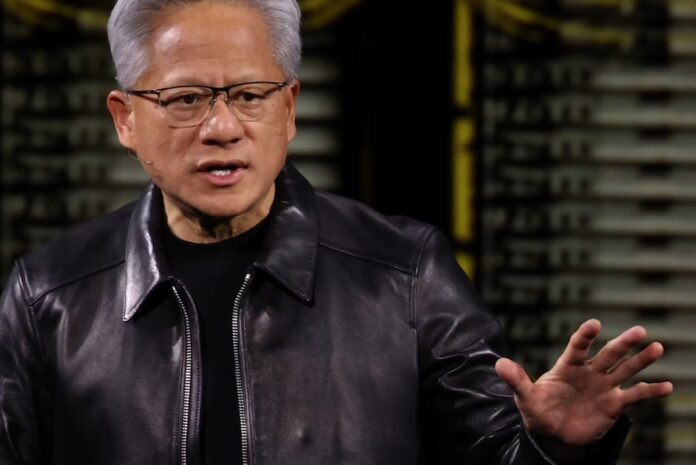
Jensen Huang, the chief executive and co-founder of chipmaking company Nvidia, recently admitted to an extramarital affair. However, it’s not just a tabloid story: the woman involved, Alice Huang, has been accused of being a Chinese intelligence agent.
Computer chips – specifically the chips used to produce and run artificial intelligence (AI) systems – have become a key front in the United States’ rivalry with China for geopolitical power and influence. The most powerful chips are needed for the most advanced AI, and the US has tried to maintain its edge over China by restricting access to those chips.
While the Chinese government rejects claims of espionage, Alice Huang has reportedly been under investigation by the US for years.
So what’s so special about Nvidia? What’s in it for China? And if Jensen Huang goes down, what else could go down with him?
The world’s biggest AI chip company
Nvidia is the world’s biggest supplier of the high-end chips used for AI and data centres, with some estimates putting its market share over 80%.
The now multi-trillion-dollar company got its start making chips called graphic processing units (GPUs), used largely for video games. However, these chips – and their successors – turned out to be ideal for the kind of number-crunching needed for training and using AI models.
Other companies such as Google and AMD have tried to make chips that can compete with Nvidia for speed and efficiency, however neither has been able to displace Nvidia from its dominance of the AI market.
Why China may be interested
As a consequence, Nvidia has played a key role in the US government’s strategy to stall China’s development of AI. Sales of Nvidia’s most powerful chips to China have been restricted since 2022 – though the restrictions were somewhat relaxed last year.
However, Chinese enterprises have repeatedly tested the boundaries of US sanctions. Southeast Asian companies including Megaspeed, Alice Huang’s former employer, have been accused of buying up Nvidia chips and exporting them into China.
Jensen Huang has lobbied intently for a relaxation of US chip export restrictions, which is being seen in a new light after the revelation of his relationship with Alice Huang.
If Nvidia is forced to guarantee its chips don’t enter China, its sales pipeline may grind to a halt. And if Nvidia hits trouble, the financial impacts could be much wider.
The AI sector is notorious for the amount of circular financing going on – where companies invest in their own suppliers or customers. Nvidia is a key player in this loop.
Investors are already fretting over whether the enormous amounts of money sunk into AI can ever return profits.
While leading AI model builders Anthropic and OpenAI are moving toward public listings or fresh funding rounds, both face harsh reality checks.
OpenAI has delayed its own planned stock market listing, while Anthropic’s expected share market listing is rumoured to face a “junk bond” rating, meaning it’s a high-risk investment.
Data center firms too are losing value as they face community pushback and soaring energy costs.
On top of this, Nvidia has been inseparable from Jensen Huang’s personal brand for decades – and that brand is now somewhat tarnished.
Until now, investors have supported the company, and Jensen, as visionary underwriters of the entire AI ecosystem. If that changes, or the company otherwise loses its way, a shortage of GPUs may be the least of the AI industry’s problems.
Andrew Cullen is guest research fellow, School of Computing and Information Systems, The University of Melbourne
David Walliams named as celebrity behind High Court bid to stop media reporting misconduct allegations
cde.news desk · 2 min read
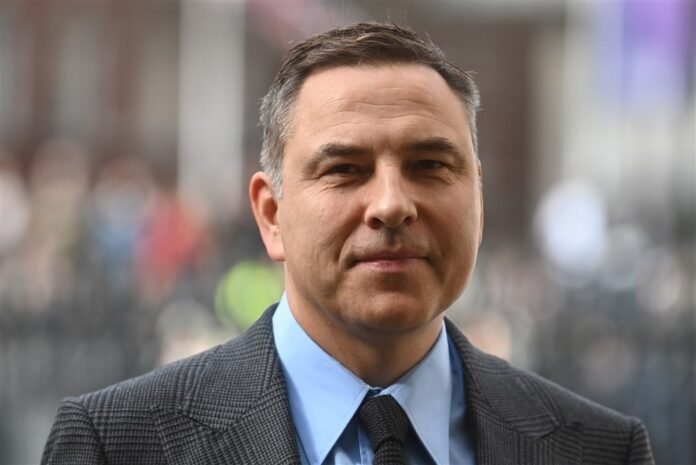
David Walliams has been revealed as the famous man who brought legal action against two media organisations to prevent them from publishing allegations of sexual misconduct.
The former Britain’s Got Talent judge had sought an injunction against The Guardian and ITV because of a risk he would take his own life, after two previous suicide attempts.
Lawyers for the media organisations previously told the High Court in London the allegations they want to report involve the man’s alleged “abuse of his power and status” to contact young women and try to engage in “inappropriate sexual activity, including potential criminal activity”.
Walliams has denied any wrongdoing.
The court was told during a two-day hearing that the former comedian and children’s author had been recently detained under the Mental Health Act for assessment and transferred to an NHS hospital.
He was first approached for comment in May 2022 about “allegations of inappropriate conduct”, which did not lead to an article being published, before The Guardian and ITV agreed to collaborate on an investigation in 2023.
Over the following three years, journalists spoke to more than 100 people, including more than 30 sources with first-hand accounts, as well as former partners and colleagues.
The allegations concern Walliams’s conduct in “several professional and personal contexts”, including his behaviour towards junior female employees.
In May 2026, he was again approached for comment, but attempted suicide and was later admitted to a private psychiatric hospital as a voluntary patient.
His assistant told the court that he had seen an “immediate and marked change” in Walliams upon receiving a request from the media outlets, and that “urgent intervention” had been required.
During this period, lawyers for Walliams requested that The Guardian and ITV refrain from publishing, and to permit further time for medical assessment.
He was invited to apply for an injunction for a court to determine, with both Walliams’s legal team and the media outlets agreeing to appoint an expert to evaluate his condition.
In a judgment last Tuesday, Mr Justice Nicklin dismissed the injunction bid.
Turkey Begins Withdrawal From Northern Iraq Military Base After Deal With Baghdad
Turkey has begun a phased withdrawal of its troops from the Bashiqa-Zilkan military base in northern Iraq, under an agreement with Baghdad aimed at transferring control of the facility to Iraqi security forces and strengthening security cooperation between the two countries.
The withdrawal from the base in Nineveh province, near Mosul, is expected to be completed by the end of 2026 or early 2027, according to Sabah al-Numan, spokesman for the Iraqi Armed Forces.
A joint Iraqi-Turkish security committee is overseeing the transfer, following an agreement between Iraqi Prime Minister Ali al-Zaidi and Turkish President Recep Tayyip Erdoğan at their September 2026 UN General Assembly meeting in New York.
Baghdad and Ankara also issued a joint statement confirming Turkey’s commitment to relinquish the military installation in stages.
As part of the broader agreement, Iraq has undertaken to tighten government control over the nearby Sinjar region and strengthen security measures aimed at restricting the activities of armed groups, particularly the Kurdistan Workers’ Party.
Turkish forces have occupied the Bashiqa-Zilkan installation since 2015, when Ankara established a military presence there to support operations against the Islamic State terrorist group.
The deployment subsequently became a longstanding source of tension between Iraq and Turkey, with Baghdad repeatedly objecting to the presence of foreign troops on its territory as a violation of Iraqi sovereignty.
US Ambassador to Turkey and special envoy for Syria and Iraq Tom Barrack welcomed the agreement, describing the transfer as a development that addresses the security interests of both countries.
“History rarely announces its turning points; it stitches them quietly,” Barrack wrote on X.
“Ankara returning Zilkan to Baghdad by agreed mechanism and timeline is one such thread: Iraqi sovereignty and Turkish security, both served. What looks like chaos from afar is a region weaving its own order.”
The handover will place the installation under Iraqi security authority once the withdrawal is completed, ending Turkey’s military presence at the base after more than a decade.
A Little-Known Investment: Bill Gates has quietly accumulated a $29 billion stake in America’s No. 2 landfill operator, Republic Services.
Climate Pollution: EPA inspectors have repeatedly found methane — a highly potent greenhouse gas — escaping from Republic landfills at levels above federal limits.
Undermining Climate Policies: Republic has lobbied against regulations that could make the waste industry cleaner, including by keeping organic garbage out of landfills in the first place.
These highlights were written by the reporters and editors who worked on this story.
In November 2015, world leaders descended on Paris to negotiate a historic agreement to limit global warming. But on the summit’s opening day, attention turned to a private citizen slouched awkwardly in a chair on stage: Bill Gates.
Gates, with his characteristic flop of sandy hair, grinned impishly as President Barack Obama called him a “visionary” and a “driving force” behind a pair of pledges that both saw as key to the larger agreement. First the world’s largest economies would double their spending on research into clean-energy technologies. Then investors like Gates would back the startups that emerged. The Microsoft cofounder had already enlisted two dozen other billionaires to join the effort.
For Gates, who’d become increasingly consumed by this unprecedented threat to human well-being, the moment marked his arrival as a leading figure in the fight against climate change.
“If we back over 50 different breakthrough approaches, we know that several of those will give us the solution that we need,” Gates said during his own speech. He would invest at least $2 billion of his own money in companies developing geothermal wells, new kinds of nuclear reactors and machines that pull carbon from the air, to name just a few.
With much less fanfare, however, Gates has put more than double that amount into a very dirty, old-school industry. At the time of the Paris summit, he was already the dominant shareholder of America’s No. 2 landfill operator, Republic Services. He has since increased his stake to 38% of the company, a position worth $29 billion.
Bill Gates’ Stake in Republic Services, a Landfill Operator, Now Exceeds a Fifth of His Net Worth
Note: “Other” includes stakes in other publicly traded companies and accumulated dividends and investment returns. Sources: Forbes’ The World’s Billionaires, Bloomberg’s Billionaires Index, SEC filings, StockAnalysis.comChris Alcantara/ProPublica
While fossil fuels get most of the attention, scientists increasingly see landfills as a crucial climate issue. They’re responsible for as much as a fifth of the country’s emissions of methane, a highly potent greenhouse gas, studies show. Republic alone generates as much climate pollution as 3 million gasoline-burning cars each year, according to its own reports.
One might imagine that a landfill operator with Gates as its largest shareholder — and with three people closely linked to Gates on its board — would lead the way in tackling those emissions. Even after seemingly softening his stance on global warming in a controversial blog post last year, Gates remains one of the world’s most prominent voices on the issue. As he did in his bestselling 2021 book “How to Avoid a Climate Disaster,” he continues to advocate for cutting emissions, and he has called on his fellow business leaders to do their part.
Gates, though, has failed to make Republic live up to his own climate principles, a ProPublica investigation has found. Federal inspectors have repeatedly found methane escaping from Republic landfills at levels above federal limits. The company has refrained from adopting the ambitious emissions-reduction goal embraced by its main competitor. Republic has even lobbied against policies that could make the wider industry cleaner, including by keeping organic waste out of landfills in the first place.
“It seems very likely that Bill Gates has the power to influence Republic’s behavior to make it more climate-friendly, even if that costs the company profits,” said Ann Lipton, a legal scholar who studies corporate governance at the University of Colorado, Boulder.
As for whether he should, in her words, “put his money where his mouth is,” Lipton said, “you can leave it to the reader to make the moral judgment.”
Gates’ Climate Awakening
Gates didn’t respond to repeated requests to discuss his landfill investments, and ProPublica couldn’t find any public comments he’s made about them. But the bet has proven wildly lucrative. Since November 1999, when he emerged as the owner of 5% of Republic’s shares — “It’s ‘Garbage In’ for Gates,” the New York Post headline read — the company’s stock price has soared thirtyfold. And Gates has personally received $2.6 billion in dividends, a ProPublica analysis of securities filings shows.
In those early days, Gates hadn’t yet awakened to the threat of global warming. It was a different time. Microsoft Windows ran on more than 80% of personal computers. Gates was the world’s richest person, and his bespectacled face graced the cover of Time magazine twice that year. He was simultaneously criticized for what a federal judge determined to be Microsoft’s monopolistic practices and admired for establishing what was soon to become the world’s largest charitable foundation.
A rare clue to why Gates made his foray into landfills can be found in an interview he gave to Fortune that year. To fund his plan to give away virtually his entire fortune, he said he’d given his personal money manager, Michael Larson, a simple remit: Sell Microsoft shares, buy safe, boring assets.
Republic’s then-chairman, billionaire Wayne Huizenga, had flown Larson by helicopter to his private golf course in Florida, according to the article. It’s unclear if Huizenga pitched Republic there, but it fit the remit. America would always produce trash, ensuring a steady stream of revenue. After that initial investment, Larson progressively increased Gates’ stake in Republic over the years that followed. Larson would also acquire a small chunk of Republic’s main competitor, Waste Management — which Huizenga also once led — on behalf of the Gates Foundation.
It was only in 2006, when he asked two climate scientists to educate him, that Gates started to grasp the potentially “catastrophic” effects of greenhouse gases, he later wrote. But he also saw that the poorest people in the world needed more energy to improve their lot. The solution, he concluded, was something climate activists often underplay: innovation that could make clean energy cheap enough to naturally displace fossil fuels. That was the idea behind Breakthrough Energy, the initiative he launched in Paris in 2015.
Microsoft co-founder Bill Gates, right, then-U.S. President Barack Obama, left, and then-French President François Hollande applaud a speech during the United Nations conference on climate change in Paris in 2015.Jim Watson/AFP via Getty Images
Around the same time, methane began to emerge as a focus of climate action. The gas can trap 80 times more heat than carbon dioxide in the near term, and it’s responsible for one-third of the global warming we experience today, according to the United Nations Environment Programme. But it also breaks down much more quickly, turning into CO2 and water vapor in about a decade — which means that cutting methane emissions now would reduce that warming within our lifetimes. This is especially urgent, scientists say, as the climate approaches tipping points that could doom rainforests, coral reefs and ice sheets.
In speeches and interviews, Gates has sometimes warned about methane, but usually from agricultural sources (“cow farts,” in his words). He has rarely mentioned landfills, even after Larson — who still runs Gates’ investment office, Cascade Asset Management — joined Republic’s board in 2009. Gates’ stake in the company, though, was a relatively small portion of his own net worth until fairly recently. And as Larson put it to Fortune, “I’ll call Bill about something I’m buying if he needs to know, but Bill might not have any idea what Cascade owns.” (Gates’ Republic holdings are publicly disclosed in securities filings.)
Elsewhere in Gatesworld, people started to home in on the climate threat posed by landfills. The root of the issue is that landfills store buried trash — and when organic waste decomposes underground, in the absence of oxygen, it generates methane. The Gates Foundation has funded research and advocacy aimed at solving that problem, and Breakthrough has backed at least two early-stage companies developing their own solutions. One, Windfall Bio, uses microbes to digest methane into fertilizer. Its product was actually tested last year at a Republic landfill in California, where the pink liquid was sprinkled on the soil covering the top layer of trash.
On the surface, Republic has pursued a path consistent with Gates’ mission. In 2019, it became the first U.S. landfill operator to sign up for the Science Based Targets Initiative, promising to cut its emissions by 35% by 2030. Not that this was charity. Republic’s “climate leadership” became part of its pitch for garbage-collection contracts in progressive cities and counties. The company also won placements on stock indexes for businesses that meet certain environmental, social and governance criteria, attracting sustainability-minded investors.
Still, a fundamental tension remained — one at the heart of Gates’ vision. As Republic’s then-CEO Donald Slager put it on a 2017 call with investors, “You can’t have sustainability without profitability.”
A Not-So-Model Landfill
Each day, Americans throw away melon rinds, salmon skins and half-eaten drumsticks, paper towels, cheese that was too funky and eggs a day past their sell-by date. They discard greasy pizza boxes with crusts still rattling around inside and unthinkable amounts of leftover Chinese takeout. Not to mention the occasional dead pet.
Dust is kicked up by trucks and bulldozers at Republic Service’s McCarty Road Landfill in Houston.Mark Felix for ProPublica
Most of that trash — 240 million tons a year, enough to bury Manhattan under 100 feet of refuse — is hauled to one of the country’s 1,400 active landfills, where hulking vehicles with spiked wheels crush it into thin layers. At the end of each day, bulldozers typically spread soil on top, and for almost everyone who produced that trash, it will forever remain out of sight and out of mind.
People who live near landfills, though, describe smelling rotten cabbage, rotten eggs and rotten fish, as well as ammonia and skunk. Or as a neighbor to one Republic landfill put it: “I started smelling this stench like burning diapers. … It was foul.” Some describe burning throats, burning eyes, headaches and nausea.And while methane itself has no scent, those odors indicate that the gas is being released, studies show.
Still, modern landfills are an undeniable improvement over what came before. Open dumping and burning remained widespread until the 1970s. It was only in the ’90s that federal regulators started requiring operators to collect leachate (garbage juice, which can contaminate groundwater) and, at larger facilities, landfill gas (which is typically about half methane and half carbon dioxide but can also contain carcinogens like benzene).
Industry experts often compare landfills to living, breathing creatures. Underground trash inevitably shifts and settles, making it difficult to keep that gas from escaping. Managing such a beast is costly, which helps to explain why smaller operations have increasingly given way to corporations like Republic, which can turn a profit through economies of scale.
Republic declined to make executives available for interviews or to allow ProPublica to visit a landfill. But in May 2022 — around the same time Gates was lobbying for the passage of President Joe Biden’s historic climate bill — the company invited the Houston Chronicle to its local McCarty Road Landfill. Opened a half century earlier, the facility had passed through two corporate owners before being swallowed up by Republic, and now it was the site of a very Gatesian kind of project.
On the day of the visit, gulls circled hungrily as workers in neon vests gave a tour of the gas-collection system. Like at most other large landfills in the country, wells had been drilled deep into the trash below — five hundred of them in total. The top of each well sprouted from the grassy slopes in the form of a stubby black pipe fitted with a valve for adjusting the flow of underground gas. The workers also showed off large, bright blue, snail-shaped “blowers” — machines that suck that gas into a network of pipelines, then push it to the clanking, humming on-site plant that turns it into a salable product.
A Republic worker stands next to a gas well at the company’s McCarty Road Landfill in Houston in 2022.Houston Chronicle/Hearst Newspapers
Most landfills that are required to collect gas simply burn it off. But they can also process it into “renewable natural gas,” which is functionally equivalent to the version pumped by oil companies. In part because this reuses the carbon from decomposing waste, it’s generally considered more climate-friendly. It also turns an environmental liability into a source of revenue — exactly the kind of win-win that Gates has long championed.
Yet the technology is no guarantee that the climate is being protected. In fact, it may be just the opposite.
In September 2024, the Environmental Protection Agency issued an “enforcement alert” saying that landfills across the country were “violating monitoring and maintenance requirements.” While the EPA didn’t name the operators, ProPublica obtained the corresponding spreadsheet through a public records request, and a fifth of the facilities targeted belong to Republic.
McCarty, far from being a model landfill, was among the worst offenders. It would soon earn Republic a formal “finding of violation” for allegedly failing to detect “exceedances” — methane escaping at levels above federal limits — for years on end. The EPA also noted repeated failures to address flooded wells, gullies formed by erosion and trash peeking through the surface of the landfill. Despite Republic’s economic incentive to capture methane, EPA inspectors found evidence of “poor maintenance” and “careless operation” of the gas-collection system as well.
And McCarty is hardly an outlier. Recent studies suggest that landfills with renewable natural gas facilities can actually emit more methane than those that only burn off the gas or use it to generate electricity. One possible explanation is that methane concentrations can vary across different parts of a landfill. According to researchers at Carbon Mapper, a NASA partner that measures emissions from various industries, some operators may prioritize collecting gas with higher methane content, which is cheaper to process — allowing more of the remaining methane to leak out.
Republic spokesperson Rob Litt declined to comment on whether that happened at McCarty, but said in a statement, “We employ hundreds of environmental managers and engineers. … If issues are identified, we work to resolve them.”
“Protecting the environment is part of Republic Services’ business,” he added.
The issues aren’t exclusive to landfills with natural gas facilities. Since 2020, EPA inspectors have used handheld methane detectors to sweep at least 39 of Republic’s roughly 200 landfills, according to inspection reports obtained by ProPublica. Including the issues at McCarty, they documented more than 1,400 problem spots — ranging from animal burrows to choked-off wells — spewing excessive amounts of methane.
In some cases, methane could be seen bubbling up through dark, fetid leachate pools. In others, so much methane was being released — with concentrations between 100 and 300 times the federal limit — that it was an explosion hazard.
Methane Bubbles at a Republic Services Landfill
Methane bubbles up through a pool of liquid drained from the trash at Republic’s Apex Regional Landfill in Nevada, documented by EPA inspectors in 2024.Environmental Protection Agency
What the Satellites Saw
Around the time of the Houston Chronicle visit, Republic’s CEO, a former McKinsey consultant named Jon Vander Ark, was promoting a new slogan: “Sustainability in action.” Meanwhile, though, Republic was quietly shying away from true climate leadership.
In 2021, two years after Republic signed on to the Science Based Targets Initiative, the SBTI made its minimum climate goal much more ambitious. Waste Management (where the Gates Foundation owns a small minority of the shares) would soon adopt it.
This was just months after Gates published “How to Avoid a Climate Disaster,” in which he exhorted private companies “to embrace the harder steps” toward solving global warming. Republic staff calculated that the new SBTI target could require more than $1 billion in additional spending on gas wells and other improvements, according to a former employee. Though that is less than half of what Republic has spent on dividends for Gates alone, it would leave less money for the company to redistribute to him and other shareholders. Republic has also spent more than $8 billion buying its own stock in the open market, ProPublica’s analysis shows, likely boosting the value of shares held by investors.
The matter was finally presented to the board around the second half of 2024, this person said. By then the board included Larson, Gates’ longtime investment manager — whose “insight into sustainability issues” is cited in company filings — and three other people with business ties to Gates (one has since left). While that is only four board members among a total of 13, Gates’ dominant shareholding means that, “as a practical matter, on any matter that gets voted on, he will almost certainly control the outcome,” said Lipton, the corporate-governance expert.
Republic never made the leap, and now it walks an awkward line. It continues to tout its affiliation with the SBTI while saying, in a note buried deep in one of its many sustainability reports, that the more ambitious target is “not an immediate strategic priority.”
Per SBTI rules, Republic has until the end of this year to submit an updated target. But when ProPublica asked if it would, the spokesperson said only, “We are reviewing our goals.” He declined to comment on the estimated cost or the board discussions.
The entrance to Republic’s McCarty Road Landfill in HoustonMark Felix for ProPublicaGarbage trucks pull in and out of the McCarty landfill.Mark Felix for ProPublica
There is, though, an even larger issue with Republic’s climate claims.
In line with its existing SBTI goal, Republic says it has already cut its landfill emissions by 20% since 2017. But that figure isn’t based on actual measurements of methane escaping from its facilities. According to the method cited in its sustainability reports, Republic instead typically measures the methane collected by its wells. Then it extrapolates how much it’s failing to collect — and how much is being emitted — based on the characteristics of each facility.
This method is based on an industry study that, as the EPA has noted, excluded data from gas-collection systems that were “not working well.” The EPA’s own reporting rules allow the same basic approach, which can cause companies collecting less gas due to a “malfunction or inefficiency” to “erroneously report decreasing emissions,” according to a 2025 study using satellite data by researchers at Harvard, NASA and Carbon Mapper. The researchers specifically examined two Republic landfills, and at one of them, the company reported declining emissions to the EPA even though satellite measurements showed they had risen over a four-year period.
The reporting gaps can be enormous. A study led by Hannah Nesser, now at Georgetown, found Republic facilities to be the No. 1 and No. 2 emitters among the roughly 70 large U.S. landfills the researchers observed over the course of 2019. The first, the National Serv-All Landfill in Indiana, was found to be releasing an astounding 13 times as much methane as what the company reported to the EPA. And that pattern repeated to varying degrees across three-quarters of the Republic landfills in the study. (McCarty wasn’t in the study, but according to measurements by Carbon Mapper, it emits more than twice what the company has reported.)
In response to questions about these studies, the Republic spokesperson said, “We stand by the sustainability results we’ve achieved.”
He also pointed to a letter from the National Waste and Recycling Association, a major trade group, questioning the accuracy of satellite measurements. It is a tactic from the playbook of another major climate polluter, the oil and gas industry, said Katherine Blauvelt of Full Circle Future, which advocates for cleaning up landfills.
“Satellites, peer-reviewed research studies and EPA inspectors on the ground all keep finding the same thing: unchecked and underreported methane emissions,” she said. “There’s a fire alarm going off and instead of getting out the extinguisher, the waste industry is blaming the smoke detector.”
Quietly Fighting Climate Policies
Last year, Gates published a blog post criticizing the “doomsday view” of global warming — a striking shift for someone who’d once warned of the failing ecosystems, mass migration and soaring mortality that could result from hotter temperatures. That led climate skeptics, including President Donald Trump, to say that Gates had admitted he was wrong. But Gates called that a “gigantic misreading.” While he believed more lives could be saved by improving global health, where he’d decided to shift his resources, he remained a “climate activist,” he told one audience.
Gates has tried to lead by example. In 2019, he sold his shares in oil and gas companies because, he later wrote, “I don’t want to profit if their stock prices go up because we don’t develop zero-carbon alternatives.” He kept flying by private jet, but he “offset” those emissions by buying credits from a company that removes carbon from the air. He has also called on other business leaders to “make sure that they’re not holding back” climate policies, even if those policies could cut into profits.
Bill Gates attends the groundbreaking for TerraPower’s nuclear power plant near Kemmerer, Wyoming, in 2024.Benjamin Rasmussen/The New York Times/Redux
Republic has actively worked against such policies — and yet Gates, according to securities filings, has never sold a share.
In the final year of the Biden administration, the EPA announced a plan to update its landfill gas rules, which have changed little since the ’90s. Among other potential changes, the agency asked for comments on the newer technologies, such as satellites and drones, that research has found to be effective in monitoring and controlling methane pollution.
Some landfill operators were already experimenting with these innovations. But they wanted almost all of it to remain voluntary, according to a joint statement from the National Waste and Recycling Association and the Solid Waste Association of North America, both of which have Republic executives on their boards.
“We do not believe that any of these technologies are sufficiently developed,” the industry groups said, adding that the various innovations were “not cost-effective,” “reliable” or “transparent.”
The Republic spokesperson declined to comment on whether that lobbying goes against its climate commitments.
“A lot of the issue comes down to the profit of the corporate landfill operators and their resistance to do things that will eat into that,” said Darin Schroeder of the Clean Air Task Force, a climate advocacy group.
Gates’ press representatives didn’t respond to questions about whether he’s aware of the issues at Republic — or whether he has independently investigated the source of a fifth of his fortune. But ProPublica interviewed multiple former employees at Breakthrough Energy, Gates’ clean-tech investment arm, who all spoke on condition of anonymity. They each said they hadn’t even heard about his landfill holdings.
“I agree there’s a bit of a conundrum there,” said one high-ranking staffer who was laid off last year. But this person added, “Based on my time with him, I think he’s very serious about climate change. This isn’t a vanity thing for him.”
“My theory is that he probably doesn’t have much involvement in those investments,” said another laid-off staffer.
Gates’ investment managers, at least, can’t claim total ignorance. Larson and Thomas Handley, a Cascade senior adviser, both participate actively in Republic’s board discussions, according to a fellow director who spoke on the condition of anonymity to share details of those private discussions. The board also receives regular management briefings, including “high level” reports on the company’s lobbying and litigation over “practices we could do better,” this director said. (Larson didn’t return phone messages left by ProPublica at his office, and Cascade didn’t respond to a question about his and Handley’s involvement in Republic.)
It’s unclear if Gates himself ever learned of those reports. But he appears to have an even larger blind spot on the issue. The waste industry doesn’t fit neatly into his view of climate change as a problem to be solved mainly through technological breakthroughs. Innovations can help, but the root of the problem is the inescapable fact that, when organic waste decomposes in the absence of oxygen, methane is produced.
Properly managing the waste we’ve already buried is only the first step, said Riley Duren, the former NASA engineer who founded Carbon Mapper. “In parallel,” he said, “reduce food waste. Full stop. Then divert organic waste away from landfills to prevent future emissions.”
This isn’t a utopian fantasy. Germany started phasing out the landfilling of biodegradable waste in 1993, and its landfill methane emissions have plunged by more than 90%. (That compares to a decline of 40% in the U.S. over roughly the same period.) Within the U.S., California now requires food scraps and yard trimmings to be collected for composting or other uses, and state regulators found that the economic, climate and health benefits would ultimately outweigh the costs.
In its glossy sustainability reports, Republic says that “organics recycling plays an important role in our operations.” And in California, with its mandatory collection rules, the company processed close to a million tons of organic waste last year, much of that at composting facilities.
A steady stream of garbage trucks flows through Republic’s McCarty Road Landfill in Houston on a recent weekday. Mark Felix for ProPublica. Aerial support by LightHawk.
But that remains a small fraction of its business. Speaking to a different kind of audience — investors — Republic has described landfilling, along with dumpster collection, as its most profitable segments. So when the EPA floated a federal organics-diversion policy in 2024, the company, along with the rest of the landfill industry, opposed this, too. Their response invoked an argument often used by opponents to regulation: It should be left to the states to decide.
“It’s like you’ve got a mousetrap, and it catches mice,” said Robert Bullard, a Texas Southern University professor widely seen as the father of the environmental justice movement. “You’ve got a landfill, and it makes money — big money. So why tinker with it?”
Don’t let Taiwan’s silicon shield become a US silicon trap
As the midterms loudly demonstrated, there is considerable gloom over the US economy. Cause for economic optimism is in short supply, though there is some encouraging news regarding US-based semiconductor fabrication spurred by enormous investments from the huge Taiwan company TSMC.
According to a recent New York Times report, the company is pouring in a quarter trillion dollars to build 10 chip production plants that could “provide a winning formula for American reindustrialization.”
Though this is good news worth celebrating, there is also a dangerous side to this US-Taiwan technology partnership. The massive TSMC investment could help drag the US into the middle of Asia’s biggest powder keg.
The risk is that with its new TSMC presence, America could gain a sizable economic interest in protecting Taiwan from China. But guarding TSMC production facilities in Taiwan cannot constitute a rationale for US military intervention in a China-Taiwan conflict.
In theory, building a semiconductor plant in the US should enhance American national security by making it less dependent in a crisis on foreign supply networks.
However, in reality, the Taiwan investment may come to seem like a large bribe intended to solidify Taiwan’s so-called “silicon shield,” the effort to make Taiwanese chips so indispensable that Washington has no choice but to try to safeguard the island with its military forces.
Officials in Taipei are even trying a direct approach by appealing to US foreign policy elites with the idea that “Taiwan is indispensable” for US economic and national security.
In a recent Foreign Affairs article couched in sweeping ideological rhetoric, the Taiwan’s Foreign Minister Lin Chia-lung asked: “whether it will be democracies or autocracies that set the standards and values of the new digital age.”
He goes on to argue that “Taiwan is a force multiplier for the United States in artificial intelligence: it has the capability, reliability, and values necessary to support the United States’ technological ambitions.”
What the foreign minister’s appeal does not explain is the massive military risk Americans will run by further integrating with Taiwan. In any military contingency, China will benefit from proximity, preparedness and national will, placing Washington at a serious and dangerous disadvantage. America should not risk war with a highly motivated nuclear superpower in its own backyard over interests ancillary to most Americans.
To understand these risks, consider that the former director of naval intelligence, Adm. Mike Studeman (USN-ret), said recently that China “could potentially defeat big portions of America’s traditional naval force….”
That comment is not surprising to those following the naval balance closely, since the Chinese Navy now deploys many types of hypersonic anti-ship missiles, while the US Navy still lacks this capability.
Nor can the nuclear risks of a Taiwan scenario be put aside either. Indeed, it has become increasingly common for Washington strategists to discuss nuclear scenarios related to Taiwan and this trend is extremely disturbing.
No rational American leader would run such risks, and certainly not for the sake of some advanced semiconductors. In fact, the importance of semiconductor production in Taiwan has been significantly overstated. As it turns out, semiconductors are also made in Japan, Malaysia, Singapore, and South Korea.
These are advanced technology powerhouse countries and could pick up the slack in any emergency. Moreover, much of the relevant technology still comes from the US and Europe, and could thus be replicated in a reasonable time period while avoiding a disastrous war.
Most of the advanced chips made in Taiwan are being used for high-performance computing (relevant to AI and data centers) and ever faster and lighter phones and laptops. These are nice to have but a temporary disruption in the latest consumer product models would not constitute a good reason to risk war between two nuclear-armed powers.
Additionally, many armaments can rely on simpler chips. Hence, Chris Miller in his book “Chip War” mistakenly concludes that Russian missile production faltered for lack of advanced semiconductors. But that has not proven true, since Moscow is wielding large numbers of ever more effective precision-guided munitions, including missiles.
Even if Beijing decided to assault Taiwan, China would still likely want to keep selling semiconductors to America and other countries, since it is such an immensely profitable business.
Markets are rather nimble at adjusting to such shocks, and even if TSMC was knocked offline in a conflict, regrettable as that might be, other sources of supply would emerge. That is the simple, crisp law of supply and demand.
Americans are thankful, of course, for Taipei’s assistance in putting their economic house in order. However, that does not mean tens of thousands of American lives should be put at risk.
The US should not be dragged into the long-frozen Chinese Civil War, with all the enormous military and, yes, nuclear risks and costs this would entail. And especially not to protect the profitable business of TSMC.
Lyle Goldstein is director of the China Initiative at Brown University’s Watson School and concurrently serves as director of the Asia Program at the think-tank Defense Priorities.