Lebanon’s Washington framework with Israel puts Hezbollah’s disarmament, state sovereignty, and Iran’s regional role at the center of a fragile test for both Beirut and Jerusalem
The new US-brokered framework between Israel and Lebanon was signed within a larger regional architecture that remains fragile, contradictory, and far from settled.
Washington is trying to stabilize the broader confrontation with Tehran through a preliminary US-Iran memorandum of understanding, or MOU, that gives both sides 60 days to negotiate final terms. That track includes nuclear restrictions, sanctions relief, provisions related to the Strait of Hormuz, and language aimed at halting hostilities across regional fronts, including Lebanon. At the same time, the United States has placed Israel and Lebanon on a separate track: a framework tying Israel’s gradual withdrawal from Lebanese territory to the verified disarmament of Hezbollah and the restoration of the Lebanese state’s monopoly over force.
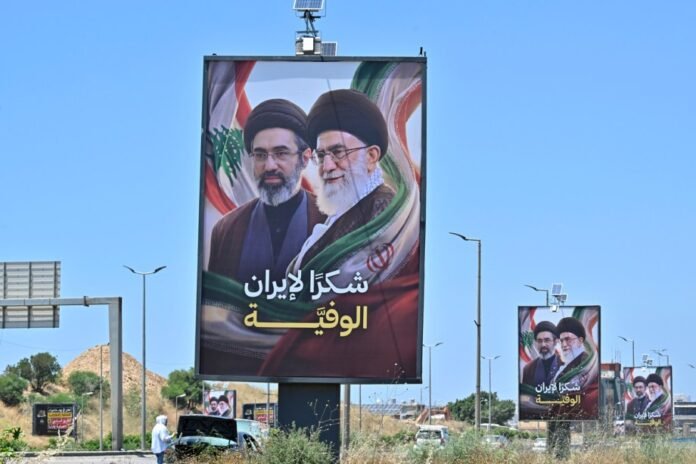
The two frameworks do not mirror one another. They expose one of the central contradictions in Washington’s regional diplomacy. The US-Iran track may open economic channels for Tehran, while the Israel-Lebanon framework seeks to prevent money, weapons, and political cover from reaching Hezbollah. One track treats Iran as a necessary party to regional de-escalation. The other implicitly removes Tehran from Lebanon’s sovereign decision-making and frames Hezbollah not as a resistance force, but as the central obstacle to Lebanese statehood and Israeli security.
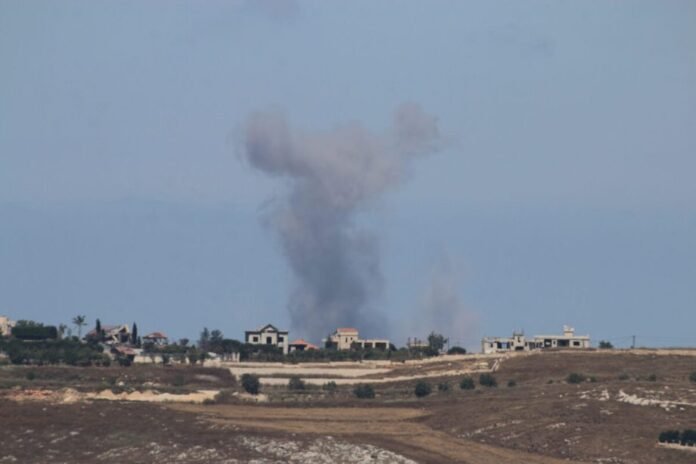
The Israel-Lebanon framework, signed in Washington, sets out a sequenced process. The Lebanese Armed Forces are expected to assume responsibility in two initial “pilot zones” in southern Lebanon, where Hezbollah infrastructure is to be dismantled, and Lebanese civilians allowed to return under state authority. If the process succeeds, it is expected to expand to other areas. A security annex, which has not been made public, is understood to define the operational details.
The framework also points to a broader political shift. It does not merely speak of restoring calm along the border. It refers to Lebanese sovereignty, the disarmament of nonstate armed groups, preventing reconstruction funds from reaching armed actors, and working groups for a future comprehensive peace and security agreement. For Lebanon, the text touches the most sensitive issue in the country’s modern political history: whether the state, and not Hezbollah, has the exclusive authority to decide war and peace. For Israel, the issue is whether any withdrawal can be accepted without repeating previous arrangements that were signed but never fully implemented on the ground.
Sarit Zehavi, founder and president of Alma Center, said the most important part of the agreement may be the part that remains unpublished.
“It’s an MOU, so not all details are published. It seems like there is another part of the agreement that was not published, which is the security part,” Zehavi told The Media Line.
Zehavi said the pilot-zone mechanism remains unclear, including whether the Israel Defense Forces, the Lebanese Armed Forces, or both would be responsible for removing Hezbollah infrastructure.
From Zehavi’s perspective, the framework’s main innovation is that Israeli withdrawal is no longer based only on Lebanese assurances, but on verified steps.
“I think the positive development of this agreement, with regard to the pilot zone, is the fact that there is an understanding that Israel is withdrawing only under proven actions of disarmament in Lebanon,” she said. “This was not the case in the two previous agreements that we had in 2006 and in 2024. In both cases, we had withdrawn based on a Lebanese promise that was never fulfilled. This time, it’s exactly the opposite.”
That sequencing is also where Israeli skepticism begins. The agreement depends not only on the Lebanese army entering areas vacated by the IDF, but on Hezbollah being prevented from returning with the civilian population. For Israel’s northern communities, many of which remain scarred by months of fighting, this is the central test.
“It is clear that it’s for the Lebanese army to make sure that Hezbollah is not coming back with the civilians,” Zehavi said. “Israel will not withdraw completely if it does not have proof that any area that was evacuated by the IDF is not being used for Hezbollah to come back. That’s the main achievement from the Israeli point of view.”
Zehavi also reads the framework as politically larger than a ceasefire.
“The second achievement, which works for both sides, I think, is the fact that there is mutual recognition in the very existence of the State of Israel,” she said. “And the idea is that it’s an MOU for a peace agreement, not for a ceasefire agreement.”
That is also why Hezbollah has rejected it. The group has long justified its weapons as a necessary resistance to Israel. A framework that makes disarmament a condition for withdrawal reverses that equation: Hezbollah’s arsenal becomes the reason Israel remains, not the reason it leaves.
Hezbollah doesn’t want to be disarmed. Hezbollah wants to preserve its power.
“Hezbollah doesn’t want to be disarmed. Hezbollah wants to preserve its power,” Zehavi said.
The fear in Lebanon is that Hezbollah will frame any attempt by the Lebanese army to enforce the agreement as an attack on the Shiite community and on the “Axis of Resistance,” raising the specter of civil war. Zehavi acknowledged that risk but argued that failing to confront Hezbollah would carry its own danger.
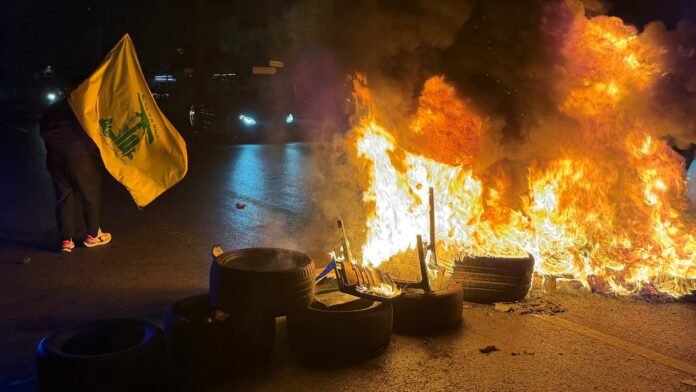
Inside Lebanon, the framework has produced sharply divided reactions. Supporters see it as a possible exit from a perpetual state of war, a path to reconstruction, and an opportunity to restore Lebanese sovereignty. Critics, especially Hezbollah and its supporters, portray it as surrender, normalization under pressure, or an arrangement that legitimizes Israeli military presence until Hezbollah disarms.
Marwan Abdallah, head of the Foreign Affairs Department of the Lebanese Kataeb Party, said the Israel-Lebanon framework should not be read as an annex to the US-Iran track. He said the Washington framework is separate from other regional discussions and should not be linked to diplomatic processes involving Iran, Qatar, Oman, or Pakistan.
Not Islamabad, not Tehran, not Qatar, not Oman. None of these processes is linked to the framework agreement between Lebanon and Israel.
“Not Islamabad, not Tehran, not Qatar, not Oman. None of these processes is linked to the framework agreement between Lebanon and Israel,” Abdallah told The Media Line.
For Abdallah, Iran’s only acceptable role in Lebanon would be to cut off Hezbollah financially, politically, and militarily.
“As Lebanese, and I think as Israelis, we don’t acknowledge Iran’s role in our process,” he said. “If Iran wants to have a role in our process, the only role that it’s required to do is to stop supporting Hezbollah, stop financing it, stop giving it orders to support their front and to launch attacks, and help us dismantle the organization.”
“Otherwise, there’s no role for Iran, irrespective of what is mentioned in the MOU that they signed with Washington,” he added.
This is where the contradiction with the broader US-Iran framework becomes politically dangerous for Lebanon. The Israel-Lebanon framework calls for preventing money from reaching Hezbollah and other nonstate armed groups. But if Tehran receives economic relief, Lebanese critics of Hezbollah fear those resources could eventually strengthen Iran’s regional network.
Abdallah said Western assumptions that any unfrozen assets returned to Iran would go to domestic needs underestimate the ideology and priorities of the Iranian system.
But Lebanese experience with Iran and Hezbollah, he argued, points in the opposite direction.
“We know for a fact that none of the money will go to the people of Iran, and it will be used to support the terrorist activities of Iran,” Abdallah said. “So, this is a naive approach from the West and the Americans.”
Zehavi made a similar point from the Israeli side, saying the two tracks appear to work against each other. The Israel-Lebanon agreement seeks to prevent money from reaching Hezbollah, she said, while the Iran-US track could give Tehran resources that may eventually flow to the group.
“I don’t know how to solve this contradiction. This is something that America created, and they will have to solve it. Time will tell,” she added.
Still, both analysts see the Israel-Lebanon framework as a moment of possible change, even if both remain cautious about implementation.
For Abdallah, the pilot zones are a technical test of whether the Lebanese army can assert state authority and dismantle Hezbollah infrastructure village by village. He said the army could be given information through the monitoring mechanism, including from Israel and the United States, and then be asked to take control and remove Hezbollah infrastructure in one area before the process moves to the next.
He described the Lebanese army’s role as essential because it would restore authority through a national institution, not a foreign one.
“For us as Lebanese, it’s the Lebanese army that’s taking control, so it’s not a foreign army. And I think this is the best thing that can happen,” he said.
But Abdallah also argued that the opportunity came only after devastation in the south. He said Lebanon failed to act before Israel attacked, occupied the territories, and destroyed many villages, including Hezbollah infrastructure. He blamed Hezbollah for launching a war it could not sustain and then refusing to give up its weapons even after the destruction of the south.
For Abdallah, the framework should not stop south of the Litani River. If the pilot zones work, he said, the same model should be expanded across the south and eventually throughout Lebanon.
The political opening is tied to a deeper social change inside Lebanon. During the war, public discussion over peace with Israel became less taboo in some Lebanese circles. Lebanese officials, including President Joseph Aoun and Prime Minister Nawaf Salam, took sharper positions against Hezbollah than many would have expected years earlier. Israeli voices appeared on Lebanese television. Polling suggested that a growing share of Lebanese were no longer committed to permanent confrontation with Israel.
Abdallah said Aoun and Salam represent a broad parliamentary majority and are acting in line with Lebanon’s national interest. He cited recent polling that he said showed 55% of Lebanese supporting peace with Israel.
“Peace, not just cessation of hostilities, not going back to the truce of 1949,” Abdallah said.
That argument directly challenges Hezbollah’s claim that disarmament would trigger civil war. Abdallah said the term itself is being misused. A clash between political parties or sectarian groups, he said, would be civil war; an army enforcing the law against an illegal armed group would be an act of state authority.
“But when the army, the legitimate army of the country, is implementing the law and the constitution of the country, and is given an order by the president, the prime minister, and the cabinet of the country to dismantle a military group that is illegal, it’s not a civil war. It’s a terrorist organization or a military group resisting the law enforcement entities and resisting the rule of law.”
Abdallah said Hezbollah is the only actor that can turn the process violent.
“No one wants to do a civil war except for Hezbollah,” he said. “No one is capable of doing a civil war except for Hezbollah because they are the ones who are armed and have their own militia.”
He said the Lebanese state is offering alternatives, including disarmament, demobilization, and reintegration.
“We are proposing many nonviolent paths to disarm willingly, to create economic opportunities and incentives for the people who are in Hezbollah, to do a DDR process, to help them rebuild their villages, to help them go back to their villages,” he said.
“If you want to stay stubborn about what you are doing or what you are deciding because Iran asked you to, then you have to pay the price,” he added.
The recognition question may be the most symbolically important part of the framework. Lebanon and Israel have technically remained in a state of war since 1948. Even indirect acknowledgment of Israel’s legitimacy is politically explosive in Lebanon, where Hezbollah and its allies have built much of their identity around resistance.
Abdallah said Lebanon has spent too long trapped in endless war and that the moment has come to move toward peace.
“I think it’s time. No human being lives to fight. No people in the world, no country in the world exists to keep fighting all the time,” he said.
He also separated Lebanon’s national interest from the Israeli-Palestinian conflict.
“The idea of removing Israel from existence is not something that we believe in,” Abdallah said.
“There’s a problem between the Israelis and the Palestinians. It’s for the Israelis and the Palestinians to solve. It’s not for us, the Lebanese, to solve,” he said. “We are too small a country. We carried the Palestinian cause for 80 years now, and now is the time to move on.”
For Abdallah, the desire to end the war is not limited to one sect.
“The decision is clear, and it’s cross-sectarian by the way. It’s not Christian only. The Sunnis, the Druze, the Christians, and some of the Shia are fed up with the war, and we want to live in peace,” he said.
“So yes, recognizing Israel is a big step, but it’s normal. The big step would be when we find peace, and this would mean ending 100 years of conflict,” he added.
On the Israeli side, Zehavi said communities in the north are not rejecting peace with Lebanon, but they are waiting to see whether the words will become facts on the ground.
The feeling is: let’s wait and see
“The feeling is: let’s wait and see,” she said. “This agreement will only be proved to be a success if it is implemented. And this is a question, whether it will be implemented. The people here are welcoming the idea of peace with Lebanon. Nobody is against that here.”
“But since we were disappointed so many times, we want to wait and see if it will succeed,” she added.
The coming weeks will show whether Washington can manage both tracks at once: a regional bargain with Iran that does not revive Hezbollah, and a Lebanon-Israel framework that depends on Hezbollah’s weakening without collapsing Lebanon internally.
The framework’s core premise is simple but politically explosive: Lebanon cannot recover its sovereignty while Hezbollah retains an independent military role, and Israel will not fully withdraw while Hezbollah remains capable of returning to the border.
The question is whether the Lebanese state, backed by Washington and tolerated by Israel, can enforce that premise without the country being dragged into another internal confrontation. For supporters of the framework, this is the first real opening in decades. For its opponents, it is a forced surrender. For both Israel and Lebanon, it is a test of whether the end of one war can avoid becoming the beginning of another.