Conricus says the US-Iran memorandum gives Tehran sanctions relief and diplomatic breathing room without confronting its nuclear ambitions, missile program, or support for proxy groups
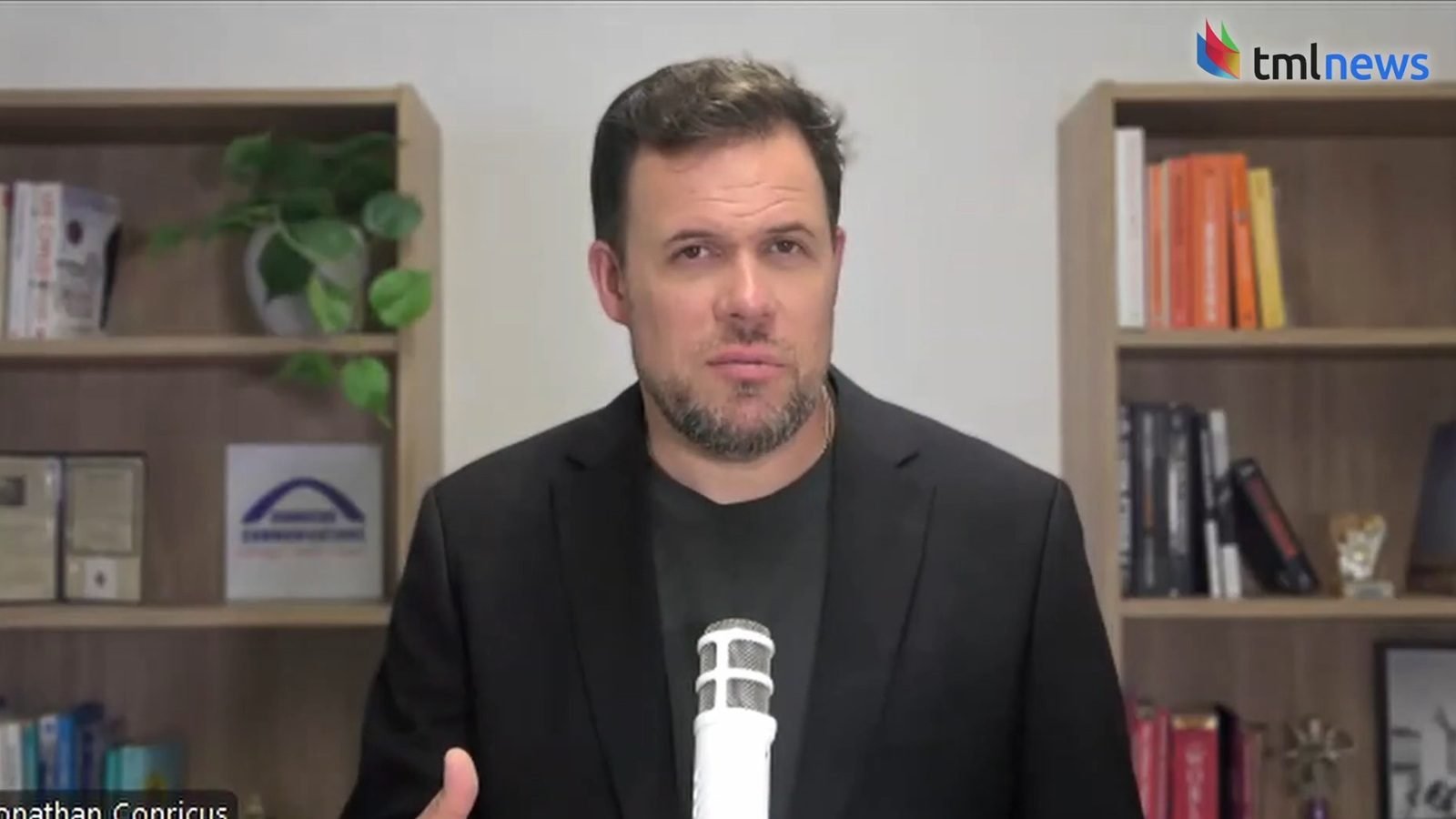
Jonathan Conricus, a senior fellow at the Foundation for Defense of Democracies think tank and a former international spokesman for the Israel Defense Forces, sees the Middle East as a series of collisions rather than a single crisis. One moment, the conversation is about attacks in the Strait of Hormuz and US retaliation; the next, it is about Iran, Bahrain, and a threat from President Trump to “complete the job,” together with a question about whether the memorandum of understanding (MOU) was really an MOU at all. Then it is back to Lebanon, where Conricus sees an opening that others seem determined not to notice. Calling the Lebanon track “the big news of the weekend,” Conricus said it gave him “a glimmer of hope that maybe the future will be different” from the near-constant war Israel has faced over the last almost three years.
The Lebanon development cut against the grain of the usual regional alignments. He said it is “very interesting to see, very telling to see, who is for a peace deal between two sovereign states and who’s against it.” In his view, the divide exposes something fundamental: Those truly committed to sovereignty, democracy, and peace should be welcoming a roadmap between Israel and Lebanon, not reflexively resisting it because it weakens “Iran and Hezbollah.” He also cast the moment as a quiet rebuke to those who have spent years claiming to care about human rights while opposing any development that might reduce violence.
Conricus made clear that this is not a simple peace announcement but a process. Asked about criticism from Israeli hard-liners, he dismissed National Security Minister Itamar Ben-Gvir as “an outlier” who does not have authority over the issue and whose posture reflects his political agenda “in election season.”
Still, what matters, he argued, is the practical framework: a continued Israeli military presence in southern Lebanon until the situation is fit for withdrawal, and a phased handoff in which the Lebanese Armed Forces move into selected areas just beyond the “yellow line,” take responsibility, and dismantle what remains of Hezbollah’s capabilities. He described it as a “pilot program,” with the possibility of expanding if it works, and said plainly that if there is a chance of peace between our two sovereign states, “then I think it’s definitely worth taking calculated risks in order to do so.”
That is the core of his Lebanon position: not an immediate peace, but a tentative one built on the weakening of Hezbollah. Before October 7, he said, the group was “very, very powerful,” armed with “more than 130,000 rockets,” advanced missiles, and the ability to strike deep into Israel. After the fighting that followed, after what he called the “beeper attack,” after the elimination of Hassan Nasrallah and other senior commanders, and after the elimination of the Radwan unit, Hezbollah’s military weight had been reduced enough to create room for something else: the chance for the Lebanese state to reassert itself.
We have now kind of turned the tables in Lebanon
“We have now kind of turned the tables in Lebanon,” Conricus said, arguing that Israeli military action—“forced upon Israel,” as he put it—unexpectedly opened the door for Lebanon to act like a sovereign state rather than a battleground for outside powers. He framed this as a rare strategic opening not only for Lebanon but potentially for Saudi Arabia too, though he said that Riyadh is unlikely to move under the current Israeli government and that normalization would probably come only after Israeli elections because of the “political baggage and weight” attached to Prime Minister Benjamin Netanyahu. Even then, he warned, the “so-called Palestinian issue” will remain the familiar wrecking ball, with actors trying to “sidetrack and ruin” attempts at regional normalization.
Conricus suggested that a Saudi move under American leadership would work “very well” for the Iranian regime’s opponents, but he was deliberate in separating the strategic possibility from the political mess accompanying it.
If the Lebanon discussion carried a note of guarded possibility, the exchange on Iran was far more pessimistic. Asked about the 60-day ceasefire and the broader US approach, Conricus said the region is living in “kind of a twilight zone.” His main complaint was that the memorandum of understanding with Iran does not confront the central problems at all. “It doesn’t address their nuclear weapons aspirations. It doesn’t address their ballistic missiles,” he said, adding that it also sidesteps Iran’s proxy activity and support for terror across the region.
It doesn’t address their nuclear weapons aspirations. It doesn’t address their ballistic missiles.
What the MOU does do, in his view, is hand Tehran a diplomatic and economic victory. He called it “a very frustrating document,” then “very generous,” and said it provides sanctions relief, access to the dollar system, and permission to sell oil, all “without really getting much in return.” That, he said, is not only a policy error but “quite a betrayal to the Iranian people,” especially after those who took to the streets believed help was coming and instead found themselves facing a strengthened regime with more money to feed the Islamic Revolutionary Guard Corps and terror networks. He sounded especially bothered by the mismatch between rhetoric and reality: a campaign that seemed aimed at weakening the regime now producing a financial windfall for it instead.
His critique of the US posture was blunt. Washington, he suggested, is focused more on oil prices, gas prices, midterm elections, and domestic politics than on what is happening in the Middle East. And the assumption that money appeases extremist regimes, Conricus said, is one that history has already rejected. “That never happens,” he said. “You give money to terrorists and terror supporters, they will use it exactly to continue to promote that agenda.”
Switching to Gaza, Conricus drew a sharp distinction between visible anger on the ground and the structural reality of life in the Strip. He described Gaza as an area where the civilian population is squeezed into a shrinking space under “Hamas oppression,” with “no freedom of expression, … no freedom of assembly, and … absolutely no right for anybody to criticize Hamas or to pose an opposition to what Hamas does.” Hamas, he said, rules by force and cruelty, using “the power of the AK-47” and a “medieval” system of punishment to keep people afraid.
That is why, he argued, demonstrations against Hamas should not be dismissed lightly. He called them courageous acts that can carry “capital consequences,” because in Gaza dissent can mean torture or death. Even there, Conricus kept returning to the same position: Nothing substantive can change until Hamas disarms. The first item in the agreement, he said, is that Hamas must “lay down their weapons” and hand power over to a civilian body that can begin rebuilding. Until then, there is no real way forward, and no use pretending otherwise.
The plan he described is simple in structure, if not in execution: Once Hamas disarms, the civilian side takes over, aid flows more effectively, and the situation can begin to improve. But he is skeptical that the transition will happen anytime soon. He said plainly that Hamas is violating the agreement, refusing to relinquish control, and continuing to oppress the civilian population because it wants to remain in power. That is why, in his view, international coverage often misses the point: It focuses on suffering but not enough on “why are they suffering, what brings this suffering, and most importantly, how can it be stopped?” For him, the media’s emotional emphasis becomes a kind of avoidance if it is not tied to the root cause.
The conversation then moved to one of the most pointed questions in the exchange: If civilians in Gaza are afraid, and if Hamas will not disarm, should ordinary people be armed so they can defend themselves or resist Hamas? Conricus acknowledged the comparison with Iran, where many millions are alienated from the regime, but he stressed that Gaza is different in both scale and political culture. He noted that Hamas has had “grassroots support” in Gaza and that, up until October 7, it enjoyed “very substantial levels of support” from the population. After the devastation of war, support has fallen, but he remains unconvinced that the underlying mindset has changed.
That uncertainty is central to his caution. He said he does not know whether Gazans have truly renounced the jihadi dream or accepted coexistence with Israel as a permanent reality. He conceded that they are suffering and unhappy, but that alone does not prove a deeper political or ideological shift. On weapons for anti-Hamas clans, he said there are reports of Israel providing arms to some local groups in places such as Khan Younis and Rafah, but he emphasized that this is still “very sporadic” and not yet a strategic tipping point. His gut feeling, he admitted, is that while many Gazans are angry at Hamas, “deep down, they’re still jihadist” and still believe in “taking what they call Palestine by force.” It was a stark statement, but one he presented as a judgment rather than a finding based on scientific evidence.
Turning to Egypt, Conricus described Egypt’s closure of Rafah as “very, very cruel” and “cold-hearted,” accusing Cairo of refusing to allow Gazans out for medical, family, or humanitarian reasons.
He argued that Egypt could have shortened the war by allowing civilians to evacuate into a temporary humanitarian zone outside Gaza, leaving only Hamas to fight. Because it did not, he said, the war became longer and deadlier than it needed to be. That criticism broadened into a sweeping indictment of Egyptian policy. Conricus said Egypt does not look at Gaza with compassion but as a tool to use against Israel. He pointed to school curricula that he described as indoctrinating its children to “the worst levels of anti-Semitism documented in the Arab world,” to a military he sees as oversized for a country without obvious land threats, and to exercises that resemble old war plans from 1973. He argued that Egyptian authorities enabled Hamas to stockpile weapons by allowing transfers through Sinai and Rafah, effectively letting “powder” accumulate in a “powder keg.” He also blamed years of Israeli complacency—especially under Netanyahu, though not only under him—for allowing weapons to keep flowing into Hamas’ hands.
At the same time, he did not reject the peace with Egypt. He said plainly that he prefers peace to war and wants peace over conflict. But he thinks the agreement is “very, very superficial,” and he believes Israel needs a reset in how it deals with Cairo. That means demanding more transparency, pushing for changes in education and public sentiment, and being far more forceful about stopping weapons transfers into Gaza. He also argued that international humanitarian law should have made Egypt the place where civilians could flee from Gaza during wartime.
Conricus recalled that in 2004, when he was a company commander in Givati, he saw “big Hamas tunnels under Rafah” already large enough for small trucks and cars. “We allowed it to fester,” he said, a line that seemed to carry both an admission and a warning. It was also a reminder that the Gaza crisis he describes did not appear overnight, and that the structures now dominating the Strip have been building for years.
Gaza is a mess
His final comment on the subject was as blunt as it was simple: “Gaza is a mess.” Across Lebanon, Iran, Gaza, and Egypt, Conricus kept returning to the same basic framework: Military realities create political openings, political openings require calculated risks, and real change depends on confronting the actors he sees as blocking it. In his view, the region is not short on plans. It is short on the conditions needed to make them real.
The mood, then, is not one of either optimism or despair so much as conditional possibility. Lebanon might open. Saudi Arabia might follow later. Iran may yet be forced to confront the consequences of its own weakness. Gaza could improve if Hamas disarms. But each of those futures is suspended on a first step that Conricus repeats almost like a refrain: “First things first”—a hard-edged belief that diplomacy only becomes meaningful after power changes on the ground.