21.1 C
London
Thursday, July 30, 2026
Home Blog

Chinese humanoids birthing new Asian business models

0
chinese-humanoids-birthing-new-asian-business-models
Chinese humanoids birthing new Asian business models

Made-in-China humanoids are helping to run Tokyo’s Haneda airport. Image: X

Before a Chinese humanoid can take on ground-handling work at Tokyo’s Haneda Airport, JAL Ground Service has to decide which jobs are suitable and what safety conditions the machine must meet. GMO AI & Robotics then adjusts its movements for an airport where people, vehicles and equipment share limited space.

Ground handling is a revealing robotic test. Baggage and cargo are moved around aircraft in an environment built for human reach and movement, not for fixed automation. A humanoid may be able to use that environment without expensive alterations, but it still has to learn a series of tightly controlled tasks without creating new risks.

The trial began in May and is scheduled to run through 2028. JAL is mapping airport tasks and checking safety; GMO is supplying the robots and developing the motion programs. The machines arrive able to walk, carry and balance. Their airport jobs still have to be written into software.

In June, GMO became Unitree Robotics’ authorized distributor in Japan. The agreement covers implementation support, software development, secure communications, maintenance and operations as well as sales.

GMO also rents humanoids for proof-of-concept trials, allowing a customer to test one without buying it and giving the company experience across different sites.

GMO AIR is drawing on the wider GMO Internet Group’s communications, cloud, security and financial services. Those assets become relevant when a robot must connect to a customer’s network, be monitored over time and be offered through rental or leasing rather than only an outright sale.

Unitree can ship the same platform to several Asian markets. It cannot practically reproduce every customer’s workflow from Hangzhou or maintain every site. Firms such as GMO are placing themselves in that gap.

A fault that is routine for Unitree’s engineers may be unfamiliar to the technician standing beside the machine in Tokyo. JAL will still need to know who restores service and explains what happened. When the workflow changes, the motion program may have to change with it; a second site brings another round of integration.

The three-year Haneda trial can absorb extra supervision and repeated adjustment. Paid daily operations cannot. Baggage does not wait while a movement is rebuilt or a problem is referred across time zones.

GXO made that transition after testing Agility Robotics’ Digit in a US warehouse in late 2023. The logistics company signed a multi-year Robots-as-a-Service agreement the following year. Digit was connected with autonomous mobile robots and conveyors, taking totes from one system and placing them onto another. By November 2025, Agility said the robots had moved more than 100,000 totes at the facility.

Agility supplies Digit, its fleet-management platform and much of the deployment expertise. Its software covers facility mapping, workflow definition, fleet operations and troubleshooting. At Haneda, comparable functions are divided among Unitree, GMO and JAL rather than held by one supplier.

At GXO, commercial use meant a narrow task repeated thousands of times inside an existing workflow, managed through a service agreement rather than a one-off equipment sale. That difference changes where revenue may sit. A reseller earns a margin when a robot changes hands. GMO is positioning itself to earn from rentals, software, maintenance and operations after installation.

The business depends on solving enough ordinary problems locally that every fault does not become a call to engineers in China. Technical control may not follow customer responsibility so neatly.

If Unitree retains tight control over software tools and updates, GMO could be answerable to JAL without being able to resolve a serious fault on its own. A response-time promise is only as good as the access behind it.

Lower-priced hardware does not settle the economics either. Extensive customization can erase the initial saving, while a local service agreement may still leave the customer dependent on the manufacturer’s headquarters. A Japanese partner shortens the distance to the customer; it does not make an unreliable machine reliable.

The practical test is whether GMO’s technicians receive the training, spare parts and software access to handle routine failures without waiting for Unitree. JAL will also need a clear escalation path: what can be fixed in Japan, when engineers in China become involved and who remains responsible while they do.

The second contract will be more revealing than the Haneda demonstration. If GMO can take what it learns there to another airport without rebuilding the project from scratch, it will have created more than a distribution business.

Haneda may then show something larger than whether a humanoid can move baggage. The machines are Chinese. The business that makes them useful may be built in Japan.

Jun Yan is a former DiDi senior executive and venture-backed technology founder. He writes about technology commercialization, capital and cross-border market access. His commentary has appeared in the South China Morning Post and The Business Times.  

Max-severity Exchange server flaw under active exploitation by Kremlin hackers

0
max-severity-exchange-server-flaw-under-active-exploitation-by-kremlin-hackers
Max-severity Exchange server flaw under active exploitation by Kremlin hackers

Russian state hackers are using a maximum-severity vulnerability in Microsoft’s Outlook’s Exchange Server to backdoor unpatched machines and steal credentials and other confidential information from them, security researchers said Thursday.

The attacks are coming from TA488, a tracking name for a group working on behalf of the Kremlin, Proofpoint researchers said Thursday. Proofpoint and the National Security Agency jointly warned last week that the group, also tracked as Laundry Bear and Void Blizzard, had been carrying out similar attacks by exploiting a zero-day vulnerability in an email service from Zimbra. The revelation that TA488 is also exploiting the Exchange Server vulnerability to install advanced malware when a user does nothing other than open an email sent to an Outlook Web Access (OWA) account has elevated the group’s profile and assessments of its abilities.

Doubling down

“TA488 is doubling down on the use of ‘half-click’ exploits—where opening the email is enough to trigger compromise—with significantly improved loading mechanisms, techniques, and malware, signaling an improvement in the group’s tradecraft and capability,” Proofpoint researchers wrote. “This novel infection chain ends with a previously unknown JavaScript browser-based implant we call OWAReaper, purpose-built for persistent access inside OWA.”

The vulnerability, tracked as CVE-2026-42897, is a cross-site-scripting vulnerability, usually abbreviated as XSS, that Microsoft provided mitigation advice for in May and patched in July. Microsoft gave it a maximum severity rating. The vulnerability, which stems from a failure to properly filter HTML embedded in an email, allows malicious JavaScript execution. Proofpoint said that TA488 may have exploited it as a zero-day.

The malicious JavaScript installs a novel, custom-built browser extension that gives attackers persistent access to victims’ OWA accounts. Proofpoint said it was the most sophisticated backdoor the company has ever seen delivered through a half-click exploit. The company has named it OWAReaper.

Company researchers explained:

OWAReaper is executed entirely in the Outlook Web Access (OWA) reading pane. Upon execution, it uses Outlook APIs to rewrite the email on the Exchange server and remove the exploit content. Simultaneously, it disables OWA pop-ups and right-click ability while it runs. OWAReaper then creates a session key, unique to each target, and begins gathering the target’s email address, username and Outlook settings. It then creates two invisible input elements in the DOM and waits for the browser’s autofill to enter the username and password to gather the user’s OWA saved credentials.

OWAReaper then writes an encrypted version of itself, and a decryption wrapper, into the browser’s localStorage, under settings fields in the PageDataPayload.OwaUserDefaultSettings key. This is a legitimate key used by OWA in its page rendering, where OWA evaluates OwaFrontendSyncState itself as part of its own sync restore flow. Every time the user opens an OWA tab in the browser, the normal OWA sync process automatically executes OWAReaper.

In many cases, the backdoor can go on to steal OAuth tokens and, from there, gain full access to the mailbox of any authenticated user on the same network. “This persistent access lives on the server side and requires deliberate removal from the Exchange server; credential rotation and even full re-imaging of the targeted user’s device will not evict the actor,” Proofpoint said.

It’s not clear if machines compromised by OWAReaper are disinfected once Microsoft’s July patch or a separate Exchange Emergency Mitigation service is installed. Proofpoint is advising affected users to revoke and audit their Exchange Web Services tokens for unauthorized add-ins and to (1) remove folder permissions to default users, (2) clear the OWA indexDB and PageDataPayload.owaUserDefaultSettings local storage key, and (3) block or alert when machines make outbound connections to command-and-control servers at asecdns[.]com, acocdn[.]com, dnsrecursive[.]eu, and tdndns[.]com.

Two meetings and a funeral: diplomacy on the sidelines of Lindsey Graham’s memorial service

0
two-meetings-and-a-funeral:-diplomacy-on-the-sidelines-of-lindsey-graham’s-memorial-service
Two meetings and a funeral: diplomacy on the sidelines of Lindsey Graham’s memorial service
Military honour guard carries the foccin of US senator Lindsey Graham out of the Washington National Cathedral, July 28 2026.

US politicians and world leaders, including Volodymyr Zelensky and Benjamin Netanyahu, gathered in Washington on July 28 for the funeral of Senator Lindsey Graham. EPA/Anna Rose Layden

Summit meetings on the fringes of funerals, diplomacy after death as the British political scientist Geoff Berridge put it, have a long and useful tradition. Not only can such working funerals force a meeting at a time that would not otherwise have happened, but they can remind those assembled of the transience of life, physical as well as political, and the urgency of now.

And so it was with the funeral of Senator Lyndsey Graham at Washington National Cathedral. The marking of his death provided the background to carefully choreographed visits to the White House for Ukraine’s president Volodymyr Zelensky and Israel’s prime minister Benjamin Netanyahu.

Each visitor, ostensibly in Washington for Graham’s memorial service, was granted 90 minutes in sequential closed-door meetings with Trump and his advisers. All sides later conveyed that the meetings were, in the words of White House press secretary, Karoline Leavitt, “positive and productive”.

Tale of two meetings

First up was Zelensky. For the Ukrainian president, this is not the first instance of funeral diplomacy with his US counterpart. The two presidents’ meeting at the Vatican in April 2025 for the funeral of Pope Francis provided the opportunity to put their relationship on to a more constructive footing just two months after their infamous clash at the White House.

Far from not having “the cards”, as Trump exclaimed in February 2025, Zelensky arrived at the White House this week in a much stronger position. Ukraine has demonstrated its capacity to strike deep into the Russian heartland causing substantial economic and military damage to the Kremlin’s war machine.

Ukraine is also an increasingly a high value tech partner in drone technology to the US and its allies in the Gulf and Europe.

Zelensky also stressed Ukraine’s usefulness as an intelligence partner to Washington. He reported he had supplied evidence to suggest that Russia has provided Iran with targeting information on US bases in the Middle East. While Trump himself tends to dismiss such allegations, posting recently on his TruthSocial platform that he doesn’t believe either Russia or China are assisting Iran, they almost certainly helped Zelensky in his subsequent meetings on Capitol Hill.

In a rare demonstration of bipartisan consensus, the Senate – in an 86-12 procedural vote – moved forward a sanctions package against countries who continue to trade with Russia and Iran. This was billed as a tribute to Graham, who – together with his Democrat senate colleague Richard Blumenthal – had conducted long and protracted negotiations to obtain approval from the White House.

Trump’s support for the sanctions package is another indication that his calculations on the Russian war against Ukraine are beginning to shift. The US president also repeated his commitments to allowing the manufacture of Patriot missiles in Ukraine and to advocating for the resurrection of the stalled peace talks between the US and Russia.

While Zelensky’s star is, for now at least, clearly on the rise in Washington, Netanyahu arrived for his meeting with Trump in a more precarious position. With Israel heading into crucial parliamentary elections in October, Netanyahu has most to gain domestically from being seen close to Trump.

Their meeting covered several issues where the two leaders’ views differ – from how to prevent Iran from developing a nuclear weapon to US sales of F35 fighter jets to Turkey. No details emerged of any tangible agreements. Netanyahu was nonetheless full of praise, characterising the meeting as: “It was one of the best conversations I’ve had with our friend, US President Trump.”

Mourners including Israeli prime minister, Benjamin Netanyahu, and Ukrainian president, Volodymyr Zelensky, at the funeral of Senator Lindsey Graham, July 28 2026.

Israeli prime minister, Benjamin Netanyahu, and Ukrainian president, Volodymyr Zelensky, at the funeral of Senator Lindsey Graham, July 28 2026. Annabelle Gordon/UPI/Alamy Live News

While mainly aimed at his electorate back home, these hyperbolic statements from the Israeli prime minister were also designed to signal to Iran that Netanyahu still has influence in the White House and that the Iranian nuclear issue has not been abandoned in the new focus on the Strait of Hormuz.

How much influence, however, is debatable. Trump seems undecided, and above all unsure, on how to moved forward on Iran – oscillating between escalation and diplomacy.


Read more: Is Netanyahu’s star waning in Washington? His latest meeting with Trump suggests it may be


US impotence

As the two wars in Iran and Ukraine are becoming more and more connected, the capacity of the White House to manage them is limited at best.

Critical weapons shortages due to US commitments in the war against Iran are putting Ukraine’s air defences at risk. Russia is emerging as an enabler of Iranian strikes against US bases in the Middle East. Ukrainian strikes on an Iranian ship in the Caspian Sea target a vital supply chain between Moscow and Tehran.

And these are just some of the links between two conflict theatres that are individually growing in complexity. Yet, Trump still uses the same over-extended and under-qualified duo of Steve Witkoff and Jared Kushner to lead US mediation efforts in both.

The best that the US president, therefore, could have hoped for as a result of his back-to-back meetings with Zelensky and Netanyahu was reminding them and everyone else of how the pivotal role of his administration in both wars continues to be. What Trump achieved instead was to highlight that the White House remains unable to bring either, let alone both, wars to a satisfactory conclusion on terms acceptable to Washington and its allies.

Under Trump, it seems, that funeral diplomacy is less about diplomacy after death than the death of diplomacy.

Want to write?

Write an article and join a growing community of more than 230,500 academics and researchers from 5,574 institutions.

Register now

Hamas May Agree To Gradual Disarmament as Gaza Pilot Neighborhood Nears

0
hamas-may-agree-to-gradual-disarmament-as-gaza-pilot-neighborhood-nears
Hamas May Agree To Gradual Disarmament as Gaza Pilot Neighborhood Nears


Hamas is weighing a US-backed proposal that would require the terror group to surrender its weapons in stages while launching a broader plan to rebuild parts of the Gaza Strip, Channel 12 News reported, citing White House officials and other sources familiar with the negotiations.

The proposal, supported by the Board of Peace, envisions Hamas dismantling its arsenal over a six-to-eight-month period. During that time, a technocratic Palestinian administration would gradually assume responsibility for different areas of Gaza, confirming each sector had been cleared of weapons before taking control.

Diplomatic efforts are focused on securing Hamas’ approval, with Qatar, Egypt and Turkey urging the group to accept the framework, while Iran is pressing it to reject the proposal, Channel 12 reported.

As part of the arrangement, Hamas would turn over detailed maps showing the locations of its tunnel network, weapons manufacturing sites and arms depots. Responsibility for storing surrendered weapons would be shared by the technocratic government and the International Stabilization Force, an international peacekeeping body.

The plan would also require anti-Hamas militias to disarm, while civilians would be allowed to sell privately owned weapons. Hamas members, meanwhile, would receive pardons and remain in Gaza under the proposed terms.

If the agreement is finalized, Israel would reposition its forces to the Yellow Line defining its security zone in Gaza, end its policy of targeted killings against Hamas leaders and retain the right to respond militarily to attacks.

White House envoy Steve Witkoff has briefed officials on the negotiations, and Prime Minister Benjamin Netanyahu has approved the disarmament framework.

“Israel knows the details, everything is coordinated,” a Board of Peace source told Channel 12.

“This is a good deal for Israel,” an American source said. “because it solves the Gaza problem. If Hamas cheats, everything will stop and Israel didn’t give anything up.”

The emerging agreement is also tied to the first phase of Gaza’s reconstruction. Channel 12 reported that a pilot residential neighborhood is expected to begin receiving residents in November if progress is made on disarmament.

The development would be built in an IDF-controlled section of Gaza where land has already been prepared. The Board of Peace said reconstruction would not move forward before Hamas is disarmed and that concrete production would be limited to sealing tunnels. The initial neighborhood is expected to house tens of thousands of residents, who would enter through checkpoints monitored by police forces with no ties to Hamas. If disarmament continues, additional residential zones would follow.

Myanmar’s junta slowly but surely winning its war with ASEAN

0
myanmar’s-junta-slowly-but-surely-winning-its-war-with-asean
Myanmar’s junta slowly but surely winning its war with ASEAN

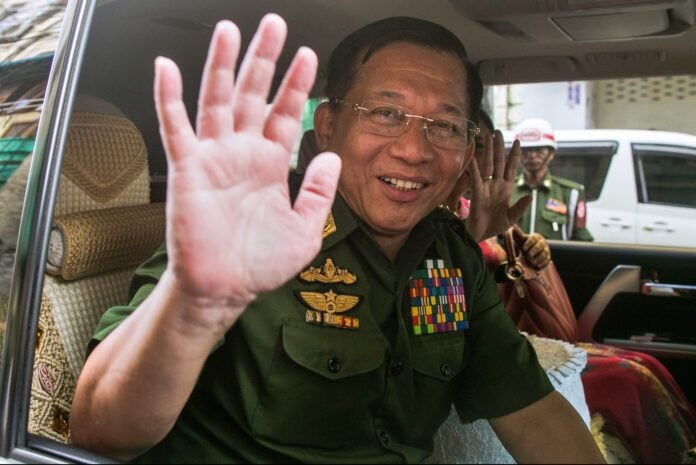
The multidimensional crisis that has gripped Myanmar since the military coup on February 1, 2021, has entered a new chapter — one increasingly complex and riddled with contradictions.

The move by military chief and coup maker Senior General Min Aung Hlaing to overthrow the civilian government of the National League for Democracy (NLD) did not merely halt the country’s democratic transition by force.

It triggered a total collapse of domestic stability, sparked a massive wave of civil disobedience, led to the rise of People’s Defense Force (PDF) militias, and escalated armed conflicts involving various ethnic armed organizations (EAOs).

Worse, the junta’s brutal response — marked by mass killings, arbitrary detentions, aerial bombardments of civilian populations and blockades on humanitarian aid — has mutated into a direct threat to Southeast Asia’s geopolitical stability.

For the Association of Southeast Asian Nations (ASEAN), the political tempest in Myanmar represents an existential test for the ASEAN Charter and the principle of regional sovereignty. From the outset, the regional bloc’s response has been crippled by deep internal fractures.

Member states further from the instability such as Indonesia, Malaysia, Singapore and the Philippines have repeatedly demanded an end to the violence and the restoration of democracy. Mainland states closer to the tumult such as Thailand, Laos, Cambodia and Vietnam, by contrast, have tended to shield themselves behind the bloc’s non-interference principle, viewing the crisis as a purely domestic affair.

Consequently, the collective effort manifested in the Five-Point Consensus (5PC) in April 2021 has proven toothless on the ground. Demands for a cessation of violence, inclusive dialogue, the appointment of a special envoy and the delivery of humanitarian aid through the AHA Centre have failed entirely.

This failure stems from a single, critical structural flaw: the complete absence of formal enforcement mechanisms and sanctions within the ASEAN Charter. The Myanmar military, or Tatmadaw, has shrewdly exploited this loophole to ignore its regional commitments while tightening its domestic grip.

Entering 2026, the Tatmadaw shifted its tactics to break the global diplomatic stalemate. Through a tightly controlled, artificial election held early in the year, the junta sidelined the opposition, dissolved direct military rule and declared a nominal civilian government, installing Min Aung Hlaing as president.

The maneuver was designed to manufacture cosmetic constitutional legitimacy, in hopes of coaxing ASEAN into restoring Myanmar’s full political participation. While most ASEAN members rejected this political theater for its lack of inclusivity, the bloc’s conflicting perspectives still leave the junta room to maneuver.

Two-pronged strategy

An informal foreign ministers’ meeting in Bangkok on July 12, 2026, offered the clearest reflection yet of ASEAN’s fragmented, multilayered diplomacy.

Initiated by the Philippines as 2026 ASEAN chair and facilitated by Thailand, the meeting brought regional diplomats face-to-face with the junta’s newly appointed foreign minister, U Tin Maung Swe, for the first time since 2021.

The approach was framed as offering an “olive branch” — flexible, unconditional face-to-face dialogue — while firmly maintaining “no political concessions” regarding the junta’s legitimacy. However, the outcomes from the Bangkok negotiating table only confirmed an acute asymmetry in commitment.

ASEAN stood firm in refusing to legitimize the January 2026 elections and continued to block Myanmar from high-level summits. On the other hand, the bloc’s primary demands — a halt to offensive military operations, inclusive dialogue with the National Unity Government (NUG) and physical access for the special envoy to meet with Aung San Suu Kyi — were flatly rejected by the Tatmadaw.

Instead, the Myanmar junta offered only minimal, technical concessions. It permitted the expansion of the AHA Centre’s humanitarian mission within strictly limited territories, offered vague promises regarding medical care and the potential transfer of Suu Kyi to house arrest, and opened the door to cooperation on cross-border cybercrime.

This pattern exposes a survival strategy that has remained consistent since 2021: engaging regionally on a tactical level to ease international pressure while systematically sabotaging the substance of peace on the ground. The Tatmadaw continues to exploit ASEAN’s weak internal coordination to secure bilateral deals that bolster its own position.

External actors, multidimensional costs

The Myanmar military’s stubborn defiance of regional diplomatic pressure is heavily backed by the geopolitical calculations of key external players. China, India and Russia have acted as the primary lifelines keeping the regime afloat amid global isolation.

China has deployed a highly pragmatic diplomacy aimed at securing its Belt and Road Initiative (BRI) investments, particularly the trans-Myanmar oil and gas pipelines and the Kyaukphyu deep-sea port in the Bay of Bengal. A high-profile visit by Chinese Foreign Minister Wang Yi to Naypyidaw in April 2026 underscored Beijing’s de facto recognition of the military-backed government.

Meanwhile, India has pursued a dual-track strategy to safeguard its northeastern border, protect the Kaladan multimodal transit project and secure access to critical minerals. Russia, on the other hand, has positioned itself as the primary supplier of heavy weaponry and military technology.

Moscow’s supply of fighter jets and attack helicopters has provided the Tatmadaw with the tools needed to sustain its offensive air campaigns while simultaneously offering a diplomatic shield at the UN Security Council.

Despite this external backing, ASEAN’s regional isolation has still inflicted severe, multidimensional damage on Naypyidaw. Economically, being frozen out of the ASEAN Economic Community (AEC) single market triggered a massive flight of foreign capital, particularly from Singapore and Thailand, contributing to an 18% GDP contraction at the start of the crisis and a chronic shortage of foreign exchange.

Geopolitically, the isolation perpetuates Myanmar’s pariah status on the global stage, trapping the country in a dangerous, asymmetric dependency on China and Russia. To mitigate these shocks, the junta has been forced to rely heavily on illicit and semi-legal border trade involving commodities such as jade, timber and rare earths.

Radical repositioning of regional centrality

The diplomatic experimentation in Bangkok opens a highly volatile and uncertain chapter for the future of Southeast Asia. Current analyses point to three potential scenarios.

The first, and most probable, is creeping normalization. In this outlook, ASEAN gradually succumbs to geopolitical pragmatism, driven by economic pressures and border security concerns felt by mainland neighboring states. The result would be de facto recognition of the nominal civilian government under Min Aung Hlaing, effectively pushing the pro-democracy movement off the formal stage.

The second scenario is ASEAN paralysis and internal fragmentation. The emergence of uncoordinated initiatives risks creating “parallel diplomacies,” in which Thailand operates via the “Bangkok Process” while Indonesia and Malaysia hold the line through the “Jakarta Club.”

This fractured voice would dissolve ASEAN centrality, leaving the bloc highly vulnerable to the junta’s divide-and-conquer tactics. The third and least likely scenario is a decentralized diplomatic breakthrough, in which ASEAN undergoes a paradigm shift, acknowledges that the Tatmadaw no longer controls the majority of Myanmar’s territory, and begins engaging in direct functional cooperation with non-state actors along the borders.

To avoid sinking into organizational paralysis, ASEAN must radically reinvent its tactical and strategic approaches. First, there must be absolute synchronization, unifying all informal and Track 1.5 diplomatic channels into a single command under an ASEAN Joint Contact Group.

Second, the bloc needs to institutionalize an “ASEAN Minus X” decision-making mechanism for humanitarian affairs, allowing cross-border aid delivery to be approved without requiring consensus, thereby bypassing junta representatives who frequently block aid.

Third, formal, territory-based engagement with non-state actors such as the SCEF, KIO, KNU and KNPP must be implemented immediately, acknowledging that de facto governance across large swaths of the borderlands is held by ethnic armed organizations rather than the military.

Fourth, the region must establish strict, time-bound benchmarks backed by progressive sanctions; if there is no significant reduction in airstrikes within the next six months, ASEAN should freeze Myanmar’s technocratic participation across the bloc’s sectoral bodies.

Finally, using the East Asia Summit forum, ASEAN must rally coordinated pressure on China and India, making clear that unconditional support for a fragile junta will only prolong the civil war and ultimately jeopardize their own long-term investments.

Without the political courage to execute this radical repositioning, ASEAN risks becoming a passive bystander to the total disintegration of one of its own members.

Ronny P Sasmita, PhD, is senior international affairs analyst at the Indonesian Strategic and Economic Action Institution, a Jakarta-based think tank.

Chrome may get faster updates with no restart required

0
chrome-may-get-faster-updates-with-no-restart-required
Chrome may get faster updates with no restart required

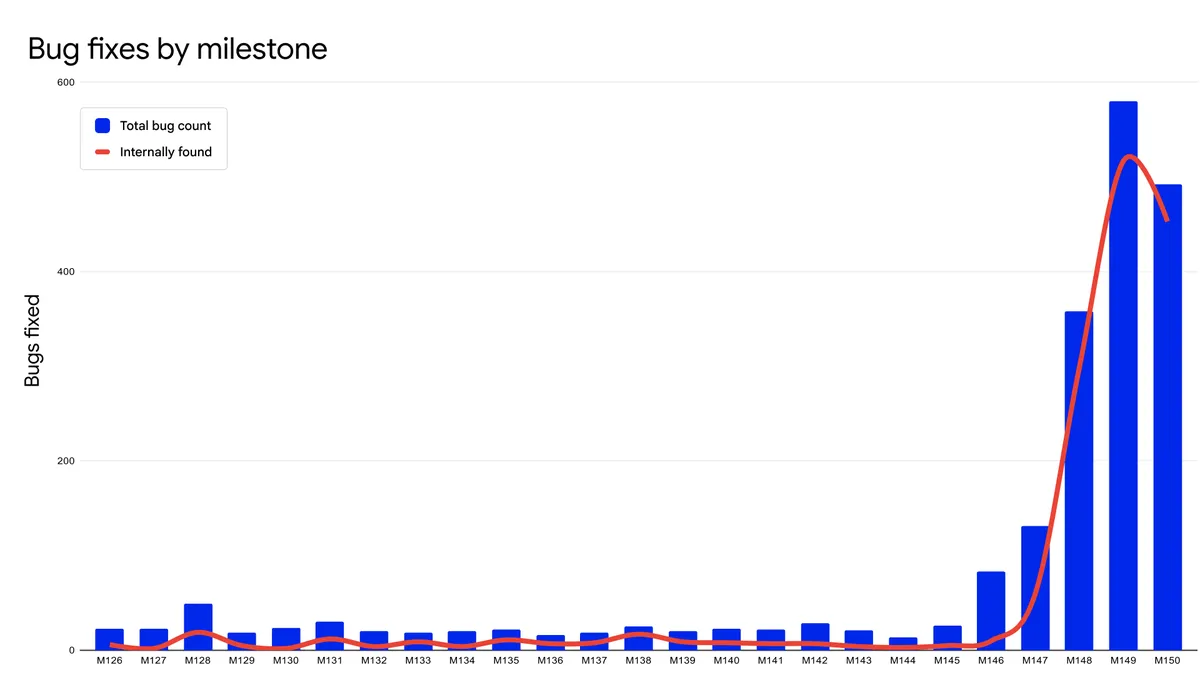
With Chrome, Google pioneered the rapid release model for browser security. Now, Google says updates may need to change in the face of AI security analysis. According to the company, the number of bug fixes in Chrome releases has skyrocketed in recent months because AI is detecting so many flaws. We could be looking at more frequent updates soon, but Google is also working on ways to get those updates rolled out without bothering you as much.

Google has released two major Chrome milestone builds recently—Chrome 149 in early June and Chrome 150 just a few weeks later. These two updates had a total of 1,072 bug fixes, which is more than the previous 23 releases combined. Such is the impact of giant cybersecurity AI models that can probe software for vulnerabilities at light speed. Some of these vulnerabilities were serious, too, with one bug hiding in the Chrome codebase for 13 years. If it had been exploited, an attacker could have bypassed the Chrome sandbox to make the browser access local files.

Number of security bugs fixed in recent Chrome Stable release milestones.

Number of security bugs fixed in recent Chrome Stable release milestones. Credit: Google

With the vastly higher rate of vulnerability identification, Google is worried bad actors will also be able to identify software flaws faster. Its goal is to ensure your Chrome install is always up to date or as close to it as possible. The first step toward that is the two-week update cycle the company announced earlier in 2026, but it’s now piloting a system that would update Chrome twice per week. This would get patches out the door faster, ensuring that browsers are ready for the threat of AI-fueled attacks.

However, not everyone updates Chrome as soon as new versions are available. While Chrome will download and stage updates promptly, it relies on users to restart their browsers to complete installation. Google is looking at several ways to streamline that process.

In Chrome 150, Google implemented a new update mechanism that takes advantage of the way macOS handles applications. Apps typically continue to run in the background even if their foreground windows are closed. If you close Chrome 150 on macOS without quitting, Chrome can take advantage of that state to update the browser install with what Google calls a “zero window restart.” When you next open a Chrome window, you’ll see the update has been taken care of.

The zero window restart on macOS.

The zero window restart on macOS. Credit: Google

Google is also working on a technique it calls “dynamic patching.” The intent is to improve Chrome’s security model to allow for patches to be installed automatically without a browser restart. Google says it’s still “investing” in dynamic patching, but it hopes to have more to share on this in the future.

So, looking ahead, you should see more frequent Chrome updates, and they could be installed more smoothly on macOS. If dynamic patching works out, there will be even more updates you never notice.

Euro Zone Growth Beats Forecasts as AI Investment Lifts Economy

0
euro-zone-growth-beats-forecasts-as-ai-investment-lifts-economy
Euro Zone Growth Beats Forecasts as AI Investment Lifts Economy


The euro zone economy grew faster than expected last quarter as surging investment in AI, ample ​government spending and several one-off factors more than offset a drag from high energy costs and the war in Iran.

The economy of the 21 ‌nations sharing the euro currency expanded by 0.4% on the quarter, above modest expectations for 0.2% in a Reuters poll as many of the bloc’s biggest nations outperformed forecasts, data from Eurostat showed on Thursday.

Compared with the same quarter last year, growth in the bloc of 360 million people accelerated to 1.0%, above expectations for 0.5%, as some earlier growth figures were also revised ​up.

The second quarter was initially expected to be the start of a rebound after a difficult and turbulent year for Europe. But soaring energy costs ​sapped much of the momentum and most forecasters now see full-year growth of less than 1% this year, below the bloc’s ⁠already much reduced potential.

Although growth was better than forecast in the quarter, it remains weak and stands in stark contrast to the continuing boom in the U.S., which ​will likely see its economy grow more than 2% this year, fuelled in part by oversized and potentially unsustainable private sector spending on AI.

Still, there appear to be ​some bright spots for the euro area and the bloc is showing the sort of resilience seen in previous downturns, including the COVID-19 pandemic and after Russia’s invasion of Ukraine.

Adding to the resilience narrative, unemployment held steady at 6.3% in June, defying expectations for labour market softening. A key economic sentiment indicator, also published on Thursday, meanwhile rose more than expected on better industrial ​and services sentiment.

Business investment in AI has been soaring in Europe as well, household consumption has held up against gloomy expectations, and Germany’s government is slowly but ​surely ramping up its long-promised spending on defence and infrastructure.

Industry, in the doldrums for years, has also held up against high energy costs surprisingly well and may have added to growth, ‌unlike in ⁠previous years, when it was a persistent drag.

Germany, the world’s third-biggest economy, France and Italy all expanded by 0.2% on the quarter, while Spain, the bloc’s outperformer for years now, grew by 0.7%, above expectations for 0.6%. The Netherlands meanwhile expanded by 0.4%, twice the expected rate.

GROWTH BOOSTERS MAY NOT LAST

“However, the recent escalation of the Middle East war means that more time is likely to pass before a final agreement is reached between the U.S. and Iran,” Commerzbank economist Jörg Krämer said. “This is ​likely to dampen the economic recovery in ​the second half of the year.”

Still, ⁠strong figures on Thursday suggest Germany could grow by 1.0% this year instead of the 0.6% seen earlier, Krämer added.

Others meanwhile point out that the economy, including the bloc’s vast industry, benefited from one-offs that may not last.

High energy costs and shortages ​of crude products may have affected Asian firms more, forcing buyers to turn to Europe, while some orders may also ​have been brought forward ⁠on fears that product shortages could become more acute later in the year.

The bloc also got a boost from 3.9% quarterly growth in Ireland, which was driven by multinational firms in IT and communication that are located there for tax purposes.

Irish GDP, though small, is so volatile — it contracted by 7% last quarter — that it can swing the euro ⁠zone number ​significantly and some now prefer to exclude it when studying underlying trends.

Industry’s boost and the quick ​Irish expansion may not last, suggesting the third quarter will be tough as the war keeps dragging on and high energy costs are slowly filtering down to consumers via petrol, airfare and holiday prices.

Household confidence ​may weaken as inflation erodes real incomes and higher interest rates at the European Central Bank also put pressure on consumers.

Source:  Reuters

These psychedelic images reveal what your weather app isn’t telling you

0
these-psychedelic-images-reveal-what-your-weather-app-isn’t-telling-you
These psychedelic images reveal what your weather app isn’t telling you

My weather app says it’s 80 degrees, but that’s a lie. I’m standing on a football field at Portland State University with professor Vivek Shandas, and we can feel intense heat radiating off the grass. Instead of being made of cellulose, these blades are plastic, because this field is artificial turf. Whereas natural vegetation has a cooling effect on a landscape — it “sweats” water vapor — this stuff absorbs and radiates the sun’s energy, making the ambient temperature especially uncomfortable.

Shandas, who’s founder and director of the Sustaining Urban Places Research Lab, can prove it. He hands me a Flir (forward-looking infrared) camera that I attach to my phone and control through an app. I point it at the ground and it gives me a color-coded view of the temperature at any given spot — approaching 150 degrees Fahrenheit in parts of the ground beneath my feet, compared to as low as 100 degrees in a patch of real grass in the sun next to it. (In the video below comparing the two, brighter oranges and yellows indicate higher temps, with purple showing lower readings.) We’re actually picking up significant differences even within the field: The darker greens are about 10 degrees hotter than white lines, which are bright enough to reflect some energy away — the same reason you feel cooler wearing lighter colors on a hot day.

At 1:45 in the afternoon, conditions are relatively mild so far. “If you think about a 100-degree day on a soccer game or a football game turf like this, I mean, those ankles are going to blow out, those knees are going to blow out,” Shandas says while pointing his own Flir camera at bits of turf. “Those kinds of temperatures are not good for the joints or physiology generally.”

We walk up a small hill at the edge of the field to get an overview of the I-405 highway. These multilane thoroughfares are consistently among the hottest parts of a city, because the surface soaks up the sun and vehicles generate still more heat with the friction of their tires. In addition, an internal-combustion engine produces a substantial amount of waste heat. You can think of them as thousands upon thousands of little heaters zooming past the Portland State campus every hour. I point the Flir camera at the lanes and from a few hundred feet away get readings approaching 120 degrees — still far cooler than the artificial turf — and pan down to the shaded vegetation in front of us, where it’s in the mid-80s. 

For pedestrians, shade is especially important on sidewalks. Making our way along the side of the field, pavement in the sun is in the mid-130s, dropping 50 degrees in adjacent shaded areas (shown below).

Back in his car, Shandas attaches a small magnetic sensor to the roof. A different app feeds me a constant stream of readings. Here in Portland’s downtown, with its tall, shade-bestowing buildings, it’s 84 degrees. As we move east across the Willamette River, it dips to 82 degrees before steadily climbing — 85, 86, 87, 88, and finally topping out at 89 F. 

There are many reasons for these disparities. The more trees a neighborhood has, the more shade it gets, and the more of that “sweating” cooling effect. (That low reading of 82 came as we drove down a tree-lined street in a residential neighborhood.) Lower-income areas tend to have much less tree cover, and therefore more open pavement that absorbs heat and releases it at night: The highest readings we recorded were in areas with wide roads, few trees, and low buildings, which provide minimal shade. So not only do these areas suffer higher highs during the day, but their residents don’t enjoy as much of a respite in the evening, compounding the stress on their bodies. This is especially dangerous for people who can’t help but be outside, like construction workers and the unhoused. 

Depending on where you live in a city, this heat unfolds in unique ways, hour after hour. “Places with the most buildings and infrastructure tend to be the hottest in the morning,” Shandas says, “but often some of the taller buildings keep it much cooler relatively in the daytime.” Areas with shorter buildings and few trees get blasted all day, taking a heavy toll on residents.

The hotter the planet gets, the wider these disparities grow. On this 80-degree day we’re finding differences of up to 7 degrees between neighborhoods. But during a previous heat wave, Shandas recorded 125 degrees in one notoriously hot area on the city’s east side, compared to 99 in a hilly, verdant neighborhood. “On a 90-degree day, the difference is about 15 degrees to 18 degrees,” Shandas says. “On a 110-degree day, it goes up to 20 to 25 degrees, and on. I don’t know what that limit is. I don’t think I want to find out.”

Read Next

The first step to helping urbanites cope is to understand the nuances of heat, hence Shandas’ regularly driving around with a sensor on his roof. (He’s also trying to get the devices on public buses, which run reliable routes throughout the region.) Different solutions will do different things in different neighborhoods. Portland and other cities, for instance, might prioritize planting trees in areas where heat accumulates and residents don’t have air-conditioning. (Better yet: They can develop urban farms, which produce nutritious food in addition to reducing temperatures.) They might also take the simple step of painting more roofs white, which, like the lines on the football field, bounce energy back into space. (Better yet: Move the urban farms onto rooftops.) Or more simply, they can identify particularly hot bus stops and shade them. 

“There’s just not one solution ever for these things, right?” Shandas says. “And so what we’re trying to do is: What’s the right mix of things that will actually reduce the likelihood of heat-related illnesses?”

For cities, extreme heat is now a many-headed emergency. The hotter it gets, the less productive workers become and the more economies suffer. Heat already kills far more Americans than any other natural disaster, and that only stands to worsen. And the electrical grid is straining as more people are forced to install air-conditioning. “Everything is dependent on that peak temperature,” Shandas says. “It is going to be pretty telling in the coming years, as we see it just crank up more and more.”


Free Speech Crackdown: Germany Deports Bob Vylan Frontman for Anti-Israel Chants

0
free-speech-crackdown:-germany-deports-bob-vylan-frontman-for-anti-israel-chants
Free Speech Crackdown: Germany Deports Bob Vylan Frontman for Anti-Israel Chants


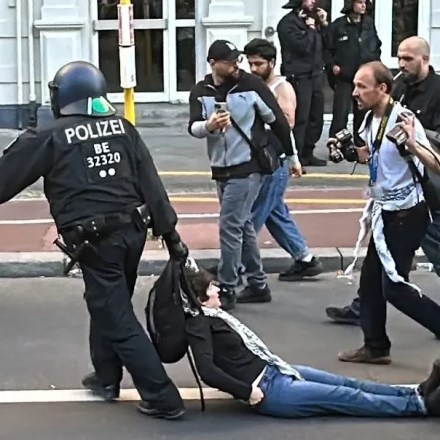
The frontman of British punk rap band Bob Vylan was denied entry to Germany, detained at the Berlin airport, and ultimately deported to the United Kingdom last month due to his pro-Palestine statements.

German federal police justified deporting the band’s vocalist on June 15, referencing a performance at the Glastonbury Festival in England in 2025 where Bob Vylan led a chant of “Death, death to the IDF,” or the Israel Defense Forces.

Authorities later revoked the entry ban against the singer, whose legal name is Pascal Robinson-Foster, in a letter in late July, but refused to explain why it had been rescinded — or how the decision to impose it had been made in the first place.

A police file on Robinson-Foster obtained by The Intercept alleges that he disseminated antisemitic narratives and Hamas propaganda that could “radicalise certain segments of the [German] population” and serve as “ideological justification” for terrorist groups or individuals. It also says that Robinson-Foster poses a threat to Germany’s public security and public order. Allowing him into the country would cause “considerable reputational damage” by creating the impression that Germany was making “no effort to prevent the spread of the propagated antisemitism and the associated calls to violence.”

The German Federal Police declined to answer detailed questions about the now-revoked entry ban, citing public security interests and data protection. In response to a list of questions about the decision-making process behind the ban, its legal basis, and why it was lifted, Bundespolizei spokesperson Nikolai Jaletzke told The Intercept the agency does not comment on individual cases, internal threat assessments, or inter-agency coordination.

“It’s frankly absurd to suggest that I’m a threat to German national security,” Robinson-Foster told The Intercept. “It’s equally absurd to claim that we spread propaganda on behalf of any proscribed organization.”

“It’s frankly absurd to suggest that I’m a threat to German national security.”

Bob Vylan’s Glastonbury performance last year drew widespread international attention at a moment when an increasing number of artists were speaking out against Israel’s destruction of Gaza. The performance — and the chant of “Death, death to the IDF” — also drew condemnation from politicians, including then-U.K. Prime Minister Keir Starmer, and several pro-Israel Jewish organizations. Germany’s antisemitism commissioner, Felix Klein, described the performance as “hate speech and incitement” and called on concert organizers in Germany to cancel Bob Vylan shows.

Following that performance, Robinson-Foster and his bandmate Wade Laurence George had their U.S. visas revoked. However, Germany is the first country to deny entry and deport a member of the band.

The documents reviewed by The Intercept concern only the implementation of the ban — not the decision-making process behind it. “Our position is simple,” said Alexander Gorski, the German lawyer representing Robinson-Foster. “There is a constitutional right to know the file on which such a decision is based.”

Following Robinson-Foster’s deportation, Gorski submitted a request with the Federal Police headquarters in Potsdam seeking both the deletion of the entry ban from Germany’s national register and access to the files underlying the decision. Soon after, federal police rescinded the entry ban without explaining why it had been lifted. The two-page response, reviewed by The Intercept, states that no additional information could be disclosed.

“It is, of course, good that the ban is now lifted,” Gorski told The Intercept. “But from a rule-of-law perspective, it is deeply problematic that someone can be barred from entering the country over a political statement that is not a criminal offence — and then be denied access to the files.”

“If an artist wants to comply with the law, they have to know what the rules are.”

Gorski filed a formal objection seeking access to the internal files that led to the decision. He argues that Robinson-Foster has a right to know the factual and legal basis on which he was barred from entering Germany — not only to challenge the lawfulness of the measure, but also to understand what conduct German authorities consider grounds for refusing entry in the future.

“If an artist wants to comply with the law, they have to know what the rules are,” Gorski said.

It’s unclear how a British musician who hasn’t been charged with an offense in either the U.K. or Germany came to be classified by German authorities as a threat to public security. British police previously closed an investigation into Bob Vylan’s Glastonbury performance, concluding there was “insufficient evidence to support a realistic prospect of conviction.”

“There is a lack of crime, not a lack of evidence,” Robinson-Foster told The Intercept in response. “It’s on the BBC. They can just go and watch it.”

“There is a lack of crime, not a lack of evidence.”

According to Gorski, the case is yet another example of a broader shift in the use of German migration law against pro-Palestine figures. Last year, Berlin authorities moved to deport four foreign residents over their participation in protests against Israel’s genocidal war on Gaza.

Gorski argues that German authorities are increasingly using immigration law “to silence unwanted voices” by preventing critics of Israel from entering Germany or removing them from the country. Similar concerns have been raised by others, including Thomas Oberhäuser, chair of the German Bar Association’s executive committee on migration law, who argues that immigration law is increasingly used for political ends.

Gorski pointed to previous cases involving the British Palestinian surgeon Ghassan Abu Sitta and former Greek finance minister Yanis Varoufakis, both of whom he has represented in similar proceedings. German authorities sought to prevent them from entering the country to participate in Palestine-related events.

Robinson-Foster told The Intercept that he traveled to Germany in June in a private capacity to visit friends and music collaborators ahead of the release of the band’s new album. Bob Vylan has toured Germany in recent years, and Robinson-Foster hopes to return soon. Even though authorities rescinded the entry ban, Robinson-Foster said the incident continues to shape his travel plans, saying it “opened a Pandora’s box.”

“It would seem as though the refusal of entry into Germany has now sparked this continued border confusion whenever we try to enter countries,” he said.

Since his deportation, Robinson-Foster said both he and his bandmate have been stopped for questioning at European borders. In one instance, Belgian border officials questioned the band’s drummer about the incident in Germany despite not having traveled there himself, Robinson-Foster said.

“We have shows that we are wanting to put on in Germany,” he said. “It’s a place that we’ve toured for the last five years. For us not to be able to connect with the people that support us there would be a shame.”

Pakistan, Saudi Arabia welcome Jordan proposal for Arab-Islamic meeting on Palestine

0
pakistan,-saudi-arabia-welcome-jordan-proposal-for-arab-islamic-meeting-on-palestine
Pakistan, Saudi Arabia welcome Jordan proposal for Arab-Islamic meeting on Palestine

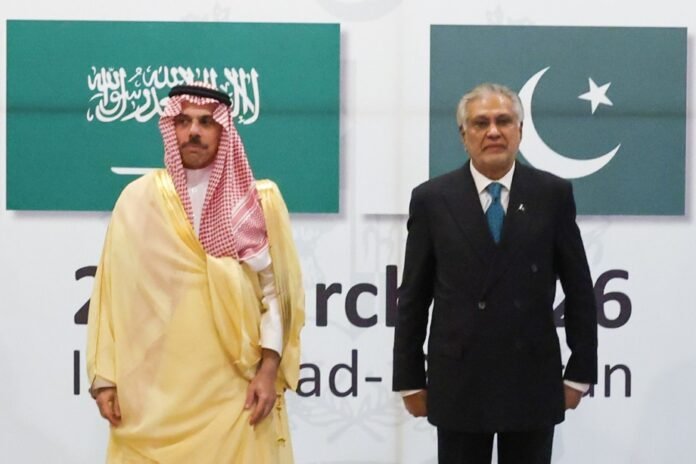
Pakistan and Saudi Arabia welcomed Jordan’s proposal to convene a meeting of Arab and Islamic countries to address the worsening situation in Palestine, particularly in occupied East Jerusalem, Pakistan’s Foreign Ministry said Thursday, Anadolu reports.

The announcement came after Pakistan’s Deputy Prime Minister and Foreign Minister Mohammad Ishaq Dar held a telephone call with Saudi Foreign Minister Faisal bin Farhan Al Saud, a ministry statement said.

According to the ministry, the two foreign ministers exchanged views on regional and international developments, including recent developments in the Red Sea and the Bab al-Mandeb Strait.

It said the two sides welcomed Jordan’s initiative to bring together Arab and Islamic countries to discuss the situation in Palestine, particularly occupied East Jerusalem, and agreed to remain in close contact on regional issues.

Separately, Dar also spoke by telephone with Malaysian Foreign Minister Mohamad Hasan, according to the ministry.

READ: Pakistan worried about being drawn into US-Iran conflict after Houthis attack Saudi Arabia

The two ministers discussed regional and international developments, including the situation in Palestine and occupied East Jerusalem, the ministry said.

Israeli forces conduct near-daily military raids across the occupied West Bank, frequently carrying out arrests and attacks against Palestinians and their property.

The escalation comes amid intensified Israeli military and occupier attacks across the West Bank since the start of Israel’s genocidal war on Gaza in October 2023.

According to official Palestinian figures, at least 1,182 Palestinians have been killed, around 13,000 injured and nearly 24,000 arrested in the occupied West Bank during that period.

The pace of Israeli raids and occupier violence has further intensified since Friday’s incident in the town of Tell, near Nablus, where four Palestinians and two Israelis were killed during clashes involving Israeli occupiers, Palestinian residents and the Israeli army.

READ: Saudi Arabia hosts international meeting to create multinational maritime defense alliance for Bab al-Mandab

0FansLike
0FollowersFollow
0FollowersFollow
0SubscribersSubscribe
- Advertisement -
Google search engine

Recent Posts