14.9 C
London
Monday, June 8, 2026
Home Blog

Iran attacking Israel seeks to shape the region on its own terms

0
iran-attacking-israel-seeks-to-shape-the-region-on-its-own terms
Iran attacking Israel seeks to shape the region on its own terms

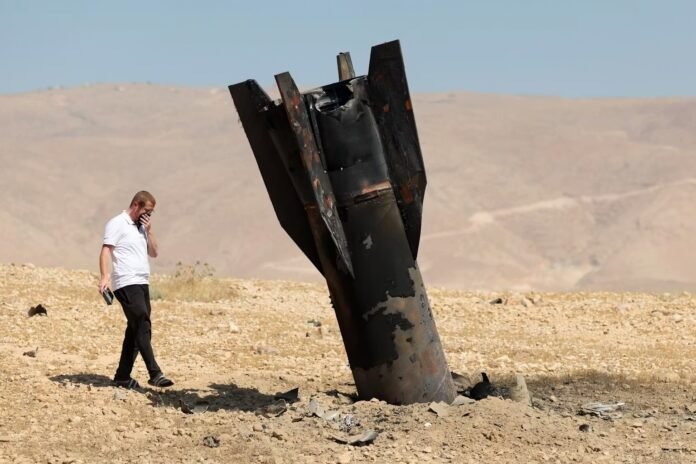
An Israeli man looks at the remains of an Iranian ballistic missile that landed in a field next to the West Bank settlement of Mevo’ot Yericho on June 8. Photo: Abir Sultan / EPA

Iran fired barrages of missiles at Israel for the first time in two months on June 7. The initial trigger was an Israeli strike against a Hezbollah target in the Lebanese capital of Beirut earlier that day, an attack that Donald Trump had only recently asked the Israeli prime minister, Benjamin Netanyahu, to avoid carrying out.

Israel’s military soon launched retaliatory strikes on targets in western and central Iran, again defying calls by Trump for restraint. Iran subsequently launched fresh strikes of its own, before the Iranian military announced it was bringing its attacks to an end. In a statement, Iran warned that it would carry out a “more severe” response if Israel’s attacks on Lebanon continued.

What caught my attention about this round of fighting is the geopolitical context in which it has occurred. Iran is trying to establish a new regional order, based on new rules. And it just might pull it off.

The first notable feature of this order is that Iran dictates to Israel and the US what they may and may not do. Iran started this latest round of fighting not because of an attack on Iranian territory, but as an attempt to dictate Israeli military actions in Lebanon.

Six months ago, Israel could do as it pleased in Lebanon without Iranian intervention. Now, thanks to Trump and Netanyahu’s war, Tehran feels sufficiently empowered to try and place limits on Israeli action on Israel’s own borders.

We have seen, somewhat more obliquely, the same principle apply in the Strait of Hormuz over the past month or so. Iran established a chokehold over the vital waterway shortly after the start of the war in late February. And it has no intention of letting its control go.

This, too, is part of Iran’s new regional order. Tehran is telling its opponents: Do as we say or we tighten our stranglehold on the global economy. For now at least, US actions show that Washington would rather accept the continued existence of this reality than fight to change it.

A second aspect of the new regional order is Iran’s expanding ways of inflicting pain on its enemies in order to force acceptance of this new world. Iran has established that it can rain missiles on Israel, strike infrastructure across the Gulf states, kill American soldiers and choke the global economy of oil, all without facing a realistic attempt at regime change.

Iran also still has many cards in its pocket. These range from expanding the scope of energy and desalination targets it hits across the Gulf to activating the Houthis to block energy traffic in the Red Sea. The Houthis have announced a ban on Israeli shipping in the Red Sea following the latest escalation.

The US has threatened many times now to attack Iranian civilian infrastructure, invade its Kharg island export terminal or to escort ships through Hormuz. However, it has backed down from all of them out of fear of the consequences.

Strained US-Israeli ties

The third feature of the new regional order is that Israel and the US no longer march in lockstep. Trump responded to Iran’s attack on Israel by emphasizing that his priority was to stop Israel from retaliating. “I am going to call Bibi right now and tell him not to retaliate,” he said following the initial Iranian strikes.

Netanyahu has managed to maneuver Israel into a position in which a Republican president is telling him not to respond to incoming Iranian missile barrages targeting Israeli civilians. This situation would have been scarcely believable six months ago.

Separating Israel from the US is a longstanding dream of Tehran. So far at least, there is no hint that Trump is threatening to withhold missile interceptor defenses from Israel over the resumption in hostilities. But even while keeping American defensive aid, it would be very difficult for Israel to sustain further conflict with Iran.

Hunting missile launchers would alone prove a challenge, because Israeli air power would be stretched much more thinly without American assistance in hitting targets. If the northern front against Hezbollah remains active as well, the Israeli military’s resources will be even more strained.

And for how long is the US going to accept running down its missile interceptor stocks in order to defend Israel from a bout of warfare that a famously mercurial US president told Israel not to start? In the short term, perhaps for a while. But over the longer term, it is not sustainable for the US to dedicate a substantial portion of its missile defenses to protecting Israel.

The fourth and final feature of the new regional order is that peace seems impossible to imagine. Netanyahu cannot accept an Iranian veto over Israel’s actions in Lebanon, nor absorb the implications for Israeli deterrence if he lets attacks from Iran go unanswered.

Trump cannot get his peace deal with Iran while Israel is bombing Lebanon. And Iran has the incentive to keep pushing for more, inflicting more costs on its opponents, because in the new regional order it can do so without many consequences.

This is the result of a disastrous war of choice which will go down as one of the most ill-conceived in American history.

Andrew Gawthorpe is a lecturer in history and international studies, Leiden University.

This article is republished from The Conversation under a Creative Commons license. Read the original article.

Michigan politicians want to ban Chinese-badged cars from even visiting the US

0
michigan-politicians-want-to-ban-chinese-badged-cars-from-even-visiting-the-us
Michigan politicians want to ban Chinese-badged cars from even visiting the US

It’s an election year, and that means politicians are putting in extra work to pander to special interest groups they think will help them cross the finish line. If you’re looking to be elected in Michigan, there aren’t many interests more special than the automotive industry, and a good way to get the industry on your side is by going after the thing it fears the most: China.

Now, if a pair of lawmakers get their way, Chinese-badged vehicles wouldn’t just be restricted from sale or import in the US, they’d also be banned from entering the country, even for a simple day trip from Canada or Mexico.

Moves to protect the US auto industry are nothing new, and they’re popular across party lines. Former President Biden added an additional 100 percent import tariff on all Chinese-made cars during his term and then had the Department of Commerce draw up new rules—later implemented by the Trump administration—that banned the import of connected cars manufactured by companies owned by or with links to the Chinese government, starting in 2027.

It’s possible to get authorization under those rules to import connected cars; last month, Volvo Cars got such permission to import its EX60, which would still have fallen foul of the regulations despite being built in Sweden, thanks to Volvo being part-owned by Zhejiang Geely Holding. (Geely also owns Polestar, which is seeking authorization for its own EVs, as well as Zeekr, which will be supplying Waymo with electric minivans to convert into robotaxis.)

But those rules don’t go far enough for Senator Elissa Slotkin (D-Mich.) or Rep. Haley Stevens (D-Mich.), who are introducing the Protecting America from Chinese Cars Act. Should it pass, the bill would ban connected cars built or designed in China (and other adversarial nations like Russia) from entering the country, including any connected cars built elsewhere by a Chinese company or by any firm in which Chinese companies own more than 15 percent.

Like the existing Commerce regulations, the bill would create a mechanism by which OEMs can apply for authorization “to allow otherwise prohibited vehicles to enter the US.”

“Specific authorizations could only be granted under strict conditions, with both transparency and congressional oversight,” the bill says. Customs and Border Protection would have 90 days to implement the rules, “including [generating] a list of prohibited vehicles.”

“We’re gonna be aggressive here because Michigan jobs are on the line, but also so is national security. So close our border to Chinese vehicles and Chinese technology in the vehicles, even for day trips. That’s how aggressive we believe we need to be right now,” Stevens said while speaking at a policy conference.

Her partner in the legislation went much further. “They can certainly come across the border, drive up to Selfridge Air Force base, take some video with the car. The car is a traveling surveillance package. And all of that data that the car is collecting is being sent straight back to Beijing,” Slotkin said.

Sen. Slotkin had previously partnered with Sen. Bernie Moreno (R-Ohio), a former car dealer, on the Connected Vehicle Security Act of 2026, which appears to have the same aims—keeping Chinese-made or Chinese-badged cars out of the US.

“This is an economic security issue and a national security issue, and we must prevent these vehicles from driving over our border and into our communities,” said Senator Slotkin. “They’re surveillance packages on wheels—fully capable of geolocating individual drivers, collecting full-motion video, and mapping sensitive infrastructure sites, including our military. This bill builds on my bipartisan Connected Vehicle Security Act of 2026 and bans fully finished Chinese vehicles from driving over in any capacity, even just for the day.”

In 2021, China barred Teslas from its military bases and other sensitive sites but rescinded the ban recently after Tesla began complying with Chinese data security laws that, among other things, require automakers to hand user data to the Chinese government. More recently, both the UK and Poland have banned Chinese-linked connected cars from parking near sensitive military installations.

Mick Jagger Sparks Chilling Onstage Assassination Fears

0
mick-jagger-sparks-chilling-onstage-assassination-fears
Mick Jagger Sparks Chilling Onstage Assassination Fears


Mick Jagger is not done yet.

The Rolling Stones legend has made it clear he is itching to get back on the road, even as old fears about his safety are coming back into the spotlight.

Jagger, 82, recently said he “can’t wait” to tour again with The Rolling Stones during an appearance on BBC Radio 2’s Tracks of My Years with longtime bandmate Ronnie Wood, 79.

The comments come as the band prepares to release its 25th studio album, Foreign Tongues, on July 10.

But while fans may be thrilled at the idea of seeing the Stones back onstage, insiders say those close to Jagger are worried. The rock icon has survived decades of wild crowds, terrifying threats, riots, violence and the crushing demands of life on the road.

One source close to the band said Jagger’s love of performing has never faded.

“Mick’s passion for performing is as strong as ever, but it inevitably raises concerns among people who care about him,” the insider said. “The extraordinary thing is that after everything he has experienced over the years, including genuine fears for his safety, he still wants to get back out there in front of huge crowds.”

That drive, the source added, is both impressive and worrying.

The renewed concern has brought fresh attention to one of the darkest chapters in Stones history: the band’s infamous 1972 North American tour.

That 53-day run was no ordinary rock tour. It was a chaotic ride through riots, bomb threats, arrests, political unrest and real fears that someone might try to hurt Jagger while he was performing.

The tour came just a few years after the deadly Altamont Speedway Free Festival in 1969, where 18-year-old Meredith Hunter was fatally stabbed during the Stones’ performance. The Hells Angels had been used as security at the event, and the fallout haunted the band for years.

According to tour manager Peter Rudge, members of the biker gang later sought payment for legal expenses tied to the incident and repeatedly harassed the band.

Keith Richards later revealed just how frightened Jagger was during that period.

In his memoir Life, Richards wrote that Jagger became deeply nervous about people trying to get to him. He said there were threats, obsessed fans, people who would walk up and hit him, and fears that the Hells Angels wanted him dead.

Richards said Jagger wanted a doctor nearby who could keep him alive if he was shot onstage.

A source familiar with the Stones’ history said the danger was not exaggerated.

“People sometimes forget just how serious the security situation became during that period,” the source said. “There were credible threats, there was chaos at certain venues, and there was a real fear that someone might try to harm Mick during a performance.”

The 1972 tour was marked by frightening scenes in city after city.

Riots broke out in Vancouver and San Diego. Police used tear gas to control crowds in Tucson. In Montreal, French-Canadian separatists bombed the band’s equipment truck in an attempt to draw attention to their cause.

Jagger himself once admitted he saw disturbing behavior from the stage.

“I see weird things out front some nights,” he said, recalling one fan begging him to whip him during Midnight Rambler.

More than five decades later, Jagger is still brushing off the danger and the physical toll of touring.

When asked if fans could expect another Rolling Stones tour, he left little doubt.

“I’d love to go on tour. Can’t wait,” Jagger said.

He added that it likely would not happen this year, but he hoped it would be “as soon as possible.”

Another insider said performing is simply part of who Jagger is.

“Being on stage is what drives Mick,” the insider said. “Even after decades of touring, controversy, threats and unimaginable pressure, he still sees performing as the thing that keeps him going.”

For now, Jagger appears determined to prove that age, danger and decades of rock ’n’ roll chaos still have not slowed him down.

Hungary Halts Work Visas for Citizens of Philippines, Georgia and Armenia

0
hungary-halts-work-visas-for-citizens-of-philippines,-georgia-and-armenia
Hungary Halts Work Visas for Citizens of Philippines, Georgia and Armenia


Hungary has stopped issuing work visas to citizens of the Philippines, Georgia and Armenia under new rules that took effect on Friday, as the government moves to tighten controls on guest workers.

Government spokeswoman Vanda Szondi said the measures are intended to regulate the inflow of foreign workers amid concerns that they may put downward pressure on local wages.

The restrictions follow the election victory of Prime Minister Peter Magyar’s Tisza party, which ended the 16-year rule of Viktor Orban in a landslide vote on April 12. The party had pledged to stop issuing visas to workers from outside the European Union from June.

Under the changes, the government has amended a decree that previously allowed manpower agencies to recruit workers from the Philippines, Georgia and Armenia through a simplified procedure.

Foreign workers already in Hungary can continue to apply for permit extensions, while visa applications submitted before the new rules came into force will still be processed.

Szondi described the measures as the first step in a broader, long-term plan to regulate guest worker employment.

According to official statistics, foreign workers account for about 2% of Hungary’s workforce. However, industries such as manufacturing and services rely heavily on overseas labour.

Some of Hungary’s largest foreign investors have warned that a complete halt to the inflow of guest workers could hurt businesses and the wider economy.

Source: Reuters

Don’t bomb Iran, Trump tells Netanyahu, but Israel strikes anyway

0
don’t-bomb-iran,-trump-tells-netanyahu,-but-israel-strikes-anyway
Don’t bomb Iran, Trump tells Netanyahu, but Israel strikes anyway

File photo: Facebook

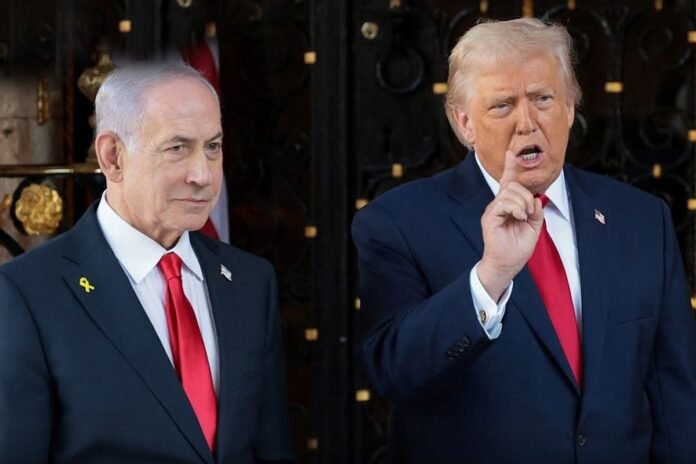
The Israeli military bombed Iran on Monday shortly after US President Donald Trump urged Israeli Prime Minister Benjamin Netanyahu not to respond to an Iranian missile barrage, which came in retaliation for Israel’s earlier bombing of Beirut.

“I am going to call Bibi right now and tell him not to retaliate,” Trump told Axios on Sunday, noting that the Iranian strikes did not appear to cause any injuries. “Each of them had their fun. Israel had its strike, and Iran had its strike. We don’t need another one.”

Iran’s missile attack on Israel was the first since a tenuous ceasefire agreement took effect in early April, and the exchange intensified concerns of a return to full-blown regional war. Iran’s Foreign Ministry said the Sunday strikes were a defensive response to the Israeli military’s bombing of southern Beirut as well as “Israel’s persistent breaches of the April ceasefire, including its collaboration with the US military in attacks on Iranian ships and targets in southern Iran over the past two weeks.

The Israel Defense Forces vowed to “continue to operate all across Lebanon” and said it would not “allow fire toward Israel.”

Esmail Baghaei, a spokesperson for Iran’s Foreign Ministry, said during a press conference on Monday that despite Trump’s public comments, “no one in the region believes” that Israel attacked Lebanon or Iran “without prior coordination and cooperation with the United States.”

“The United States bears responsibility as a party to the April 8 ceasefire understanding,” said Baghaei. “Whatever happens in the region, whether the US itself violates the ceasefire by attacking Iranian commercial ships or targeting southern parts of the country, or whether violations are carried out through the Zionist regime in Lebanon with US complicity, the direct responsibility of the United States is clear, and the consequences of any escalation will also fall on Washington.”

Trump told the Financial Times following Iran’s missile attack on Israel that he did not believe it would undercut the prospects of a diplomatic agreement. The US president also said Netanyahu would have no choice but to accept any agreement the Trump administration reaches with Iran, declaring: “I call the shots. I call all the shots. [Netanyahu] doesn’t call the shots.”

But critics of Trump’s war in Iran, which he launched in coordination with Israel in late February, said Netanyahu’s swift defiance of the president’s call for restraint underscored how disastrous the conflict has been for the US.

“This war has been humiliating for Trump and American power generally,” US Sen. Chris Murphy (D-Conn.) wrote on social media. “And when Trump announces he is going to call Netanyahu and tell him not to retaliate, and within hours Netanyahu retaliates, the humiliation just compounds.”

Trita Parsi, executive vice president of the Quincy Institute for Responsible Statecraft, wrote in a blog post following the Israeli attack on Iran that Trump “appears unwilling to spend the political capital necessary to rein in Netanyahu—beyond angry phone calls and tough public statements—unless he knows that he has a deal with Iran.”

“From Trump’s perspective, it is only worth doing if an agreement with Iran is already secured. In short, Trump is willing to restrain Israel to preserve a deal, but not to obtain one. Iran, however, wants evidence that Trump can restrain Israel before agreeing to a deal,” Parsi wrote. “As a result, the most likely scenario is another round of Iranian and Israeli strikes, with Trump declining to meaningfully constrain Israel.”

The National Iranian American Council noted that Iran’s leadership “has already threatened a broader and more destructive campaign” in response to Israel’s strikes.

“The coming 24 to 72 hours will likely determine whether this becomes a contained crisis or the beginning of a new phase in the regional conflict,” the group added.

-Common Dreams

Israeli army expects ‘several days’ of fighting with Iran

0
israeli-army-expects-‘several-days’-of-fighting-with-iran
Israeli army expects ‘several days’ of fighting with Iran

The Israeli army expects the ongoing military confrontation with Iran will continue for “several days” amid an exchange of attacks between the two countries, Israeli media said Monday.

“The assessment within the Israeli army is that the confrontation with Iran will continue for several days,” Army Radio said.

The outlet said the army started preparations for a broad call-up of reserve forces, without giving further details.

Meanwhile, Israel’s Home Front Command tightened restrictions on gatherings and movement across the country until Monday evening.

The public broadcaster KAN said new instructions allow gatherings of up to 200 people in open areas and 500 people indoors, provided people can reach a protected area within the required time.

READ: Tehran says Israeli strikes on Iran ‘fully coordinated’ with US

The restrictions also include closing beaches to the public, while workplaces may continue operating if they have access to protected areas within the required time, the same source said.

Tensions escalated on Sunday when Israel bombed the Lebanese capital Beirut despite an ongoing ceasefire, prompting Iran to launch missiles at northern Israel in retaliation, with Israel responding with several waves of airstrikes against Iran.

The region has been on edge since the US and Israel launched airstrikes on Iran in late February, triggering Iranian retaliation on Israel and other regional countries hosting US assets.

A temporary ceasefire was reached on April 8, but negotiations later stalled amid disputes over its implementation and subsequent regional developments.

READ: Israel detects new batch of Iranian missiles fired towards it

The weather and climate science AI revolution isn’t revolutionary

0
the-weather-and-climate-science-ai-revolution-isn’t-revolutionary
The weather and climate science AI revolution isn’t revolutionary

It feels like there’s no escaping AI right now, whether you’re trying to type a sentence without being interrupted by a digital “assistant” or struggling to find a new refrigerator that doesn’t require a Wi-Fi connection for some reason. You’d be forgiven for wondering if we’re in the midst of a quantum leap in tech or whether people are just hyping up a heap of slop.

So what should we make of the growing use of AI in weather and climate modeling?

The conversation didn’t get off to a great start earlier this year when a National Weather Service office posted a forecast map featuring nonexistent cities in Idaho with names like “Whata Bod” and “Orangeotild.” Thankfully, that was just an AI-generated image produced for social media, not the actual forecast model. Meteorologists and climate scientists are not yet being replaced by large language model prompt engineers.

But AI is being used in these fields through techniques that researchers have studied for years and whose strengths and weaknesses are well understood. And for good reason, those techniques differ between weather and climate simulation models.

ML, not LLM

In all these models, “AI” refers to machine learning. Without diving into the technical details of the many variations of machine learning, the idea is straightforward: using computers to identify patterns in data.

Fitting a straight trend line to data, known as linear regression, is a very simple way to identify a pattern. And we can do regressions with more complicated curves and equations as well. The power (and potential pitfall) of machine learning is that an algorithm can handle much higher levels of complexity, picking out relationships we would have a tough time putting a finger on manually.

Machine learning starts with training a model from scratch. The model is assigned some structure—like a neural network—giving us a number of knobs that can be independently tweaked to fine-tune the algorithm’s behavior. It is given a huge pile of example data, often with the answer attached, such as thousands of bird photos labeled by species. The model then iteratively determines the best set of knob values to connect the photo’s contents to the correct species.

Some limitations should be obvious. This algorithm won’t identify a species it wasn’t trained on or any subpopulations of species that differ too much from the example. The quality of the training data matters a lot, too. If we only use photos of chickadees in pine trees, the model could include pine needles in its definition of chickadee-ness.

Without a lot of extra work, we may not know how the model arrives at its answers. The internal mechanisms are pretty much a black box most of the time.

The upside is real, though. Machine learning algorithms often outperform our best human-crafted algorithms, at least in terms of computational efficiency, if not also accuracy. They just have to be used properly, or the limitations will show.

Cloud computing

For weather forecast models, the process isn’t too different from our bird identification example, but the models are trained on two sets of weather data obtained a short time apart.

Because they aren’t solving lots of physics equations in every location, these models run far more quickly than traditional weather models.

A number of companies, including Google, Nvidia, Huawei, and Microsoft, have developed initial models—sometimes in collaboration with independent academics—that could compare favorably to the forecast models we currently use. Once we began to understand where the models excel and struggle, some of the major weather forecast centers started developing their own.

The European Centre for Medium-Range Weather Forecasts (ECMWF) put its first machine-learning-based model into service in February 2025, running it alongside its long-standing Integrated Forecasting System (IFS) model.

The AIFS model is trained using a reanalysis—a dataset built by taking all available weather observations and filling out a physically consistent picture where we don’t have measurements. This critical tool greatly simplifies the machine learning task of predicting the next global snapshot (six hours ahead) based on previous snapshots.

Each snapshot contains information on temperature, air pressure, wind, water vapor, cloud cover, precipitation, solar radiation, and soil moisture. Instead of applying the physics connecting any of those things, the model simply distills the spatial patterns through which they’ve changed in the past.

That means weird things can happen. A machine learning model doesn’t “know” that the number in a column is rainfall and rainfall can’t be negative, or that the wind moving out of one part of the model grid must be balanced by the wind moving into the neighboring pixel because the conservation of mass and energy is a thing. When a model is optimized for the smallest overall error, it may get there by allowing nonsensical impossibilities.

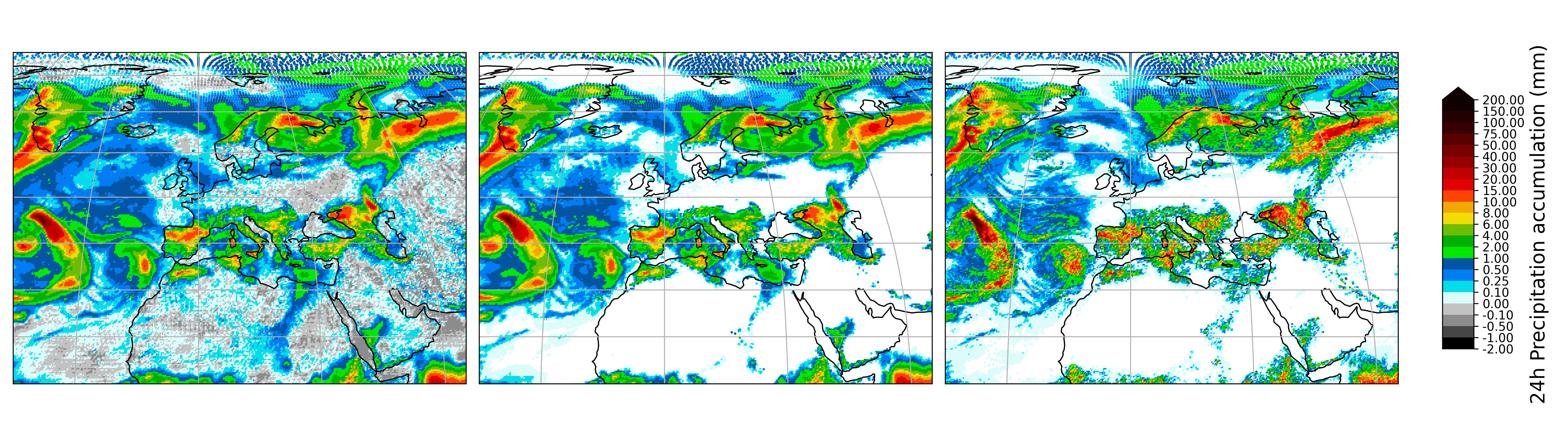
Dealing with this issue commonly involves constraining model outputs. The ECMWF model takes negative predicted precipitation values and remaps them to zero, for example. Physical guardrails of one form or another constitute a major focus for improving machine learning models.

Three precipitation forecast maps over Europe.

AIFS modeled precipitation before (left) and after (middle) an upgrade that included constraining negative precipitation, with the traditional IFS model (right) for comparison.

AIFS modeled precipitation before (left) and after (middle) an upgrade that included constraining negative precipitation, with the traditional IFS model (right) for comparison. Credit: Moldovan, et al.

The payoff for these machine learning models is that they absolutely clean up on computational efficiency. ECMWF says a forecast run of the IFS uses about 1,000 times as much energy as a run of the AIFS and requires about 30 minutes versus three. The savings really add up for the ensemble versions of these forecast models, which run 50 simulations to better capture the range of possible outcomes. Given that the forecast quality has been good, these machine learning models are enormously useful.

Here there be dragons

Forecasts of run-of-the-mill weather conditions have a lot of practical value, but there is life-or-death value in an accurate forecast of extreme weather conditions. The more extreme, the more true that is. But just as a bird-identifying algorithm can’t identify a bird it wasn’t shown during training, AI-based weather models can fail at predicting extreme weather that wasn’t in their training dataset.

Because extremes are rare, even a very large training dataset may lack certain kinds of events, or at least any examples as extreme as what might be about to happen in the real world. (If climate change is influencing a given weather pattern, the past is a poor guide to the future.) And if we include all the extreme events in the training phase, we’re left without any to use to test the system afterward.

Compared to ECMWF’s high-resolution physics-based model, a recent study found that the common machine learning models “tend to underestimate both the frequency and intensity of record-breaking events, […] with growing errors for larger record exceedance.” Since these models won’t go beyond what they saw in training, they may smooth out extreme events, capping them so they stay within the bounds of normal conditions.

That behavior is problematic for extreme-weather forecasts. But for climate models, it’s a deal-breaker.

Out of bounds

Weather forecasting involves looking at the current state of the atmosphere and projecting it just a few hours (or days) into the future. Climate models do something very different. Climate science asks broad “what if” questions about the effects of changing how much energy is in the atmosphere or about what factors control the atmosphere’s current state.

In modeling terms, this relates to boundary conditions—the factors that shape long-term weather patterns rather than the evolution of weather on a specific day. If we emit a given amount of CO2, how will those statistics change? What would the statistics look like today if we had never emitted CO2? These counterfactuals and projections generally can’t be learned from a historical training dataset.

The laws of physics are pretty indispensable for this kind of science, so ditching all of our physics-based calculations is out of the question. Still, researchers are finding ways to put machine learning to use.

Caltech’s Tapio Schneider is part of a project called the Climate Modeling Alliance, or CliMA. This ambitious effort is building a new climate model from the ground up, making a clean break from existing Fortran code in favor of Julia and cloud-native architectures that can take advantage of GPUs. The result will be a hybrid climate model—mostly physics-based, but with machine learning components.

“I think our essential bet is that it’s important to retain physical guardrails so that we can confidently predict the climate for which we do not have data,” Schneider told Ars, “which forces you down this path of putting machine learning at relatively small scales inside the model rather than replacing the entire model with [machine learning].”

Climate models are really multiple models connected together—one component might model the atmosphere, another the ocean, another some land surface processes, and so on. Within each component, many processes occur at a scale smaller than an individual segment of the model grid. We can’t simulate every droplet inside a cloud or every plant’s response to dry weather. Instead, these processes are handled by bulk approximations called “parameterizations,” which calculate average behavior across a segment based on physical values like humidity or temperature.

The CliMA group’s model is replacing some of those parameterizations with machine learning algorithms. Snow cover modeling, for example, requires a surprisingly intensive set of physical equations because of all the processes involved in controlling it. So they’ve replaced this specific parameterization module with machine learning and a requirement that water in equals water out.

“It works really well, actually, because snow conditions in the present climate sample [can help predict] what will happen in the future very well,” Schneider said. “What happens at lower altitudes right now will happen at higher altitudes later, or what happens at lower latitudes will happen at higher latitudes later, but [the] relation between temperature, snow melt, and the like—it’s well sampled in the present climate.”

“In other contexts, it doesn’t work so well,” Schneider explained. “Clouds, for example, will get deeper as the climate warms. So there will be taller clouds than we’ve ever seen on Earth as the climate gets warmer—meaning, if you try to learn the relation between cloud condensate concentrations and the like and environmental conditions in the present climate, you’re not sampling at all what the cloud will look like in the future.”

Still, the researchers have found narrower opportunities within cloud parameterizations. They’re implementing a machine learning solution for the exchange of air inside the cloud and the air around it—a process that sounds minor but has a significant impact on cloud cover.

Overall, the CliMA team’s goal is to incorporate machine learning where they see clear advantages for computational efficiency and scientific quality while preserving the methods that work better everywhere else.

Let’s get meta

Some equations in physics-based climate models have terms that can be tuned to achieve the best fit to reality. Optimizing that tuning, called model calibration, is a process that machine learning can fit into nicely.

A recent study from the NASA Goddard Institute for Space Studies (GISS) climate modeling group solved for the best-tuned combination of values for key terms across their entire atmosphere model—a daunting task that machine learning has made feasible.

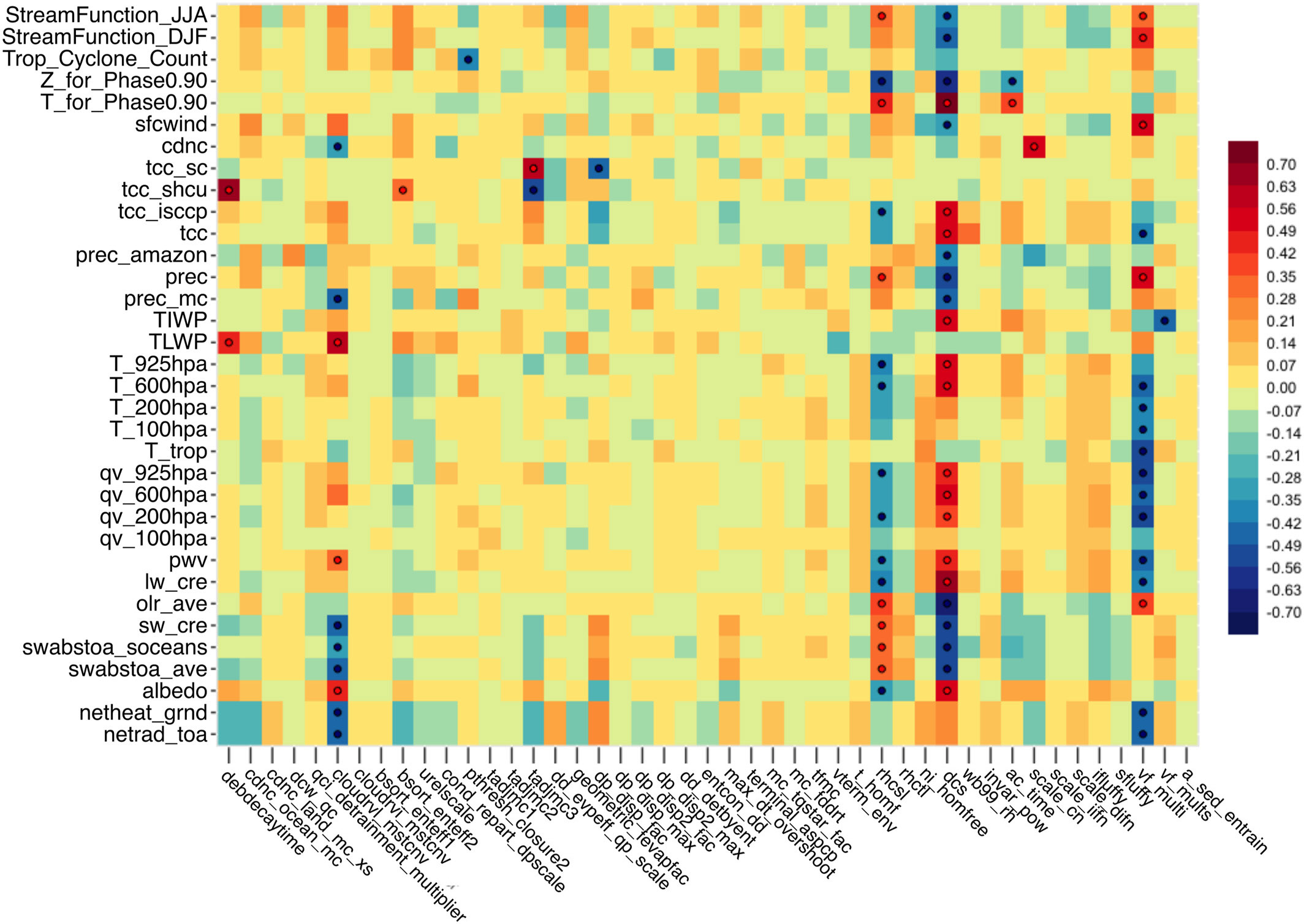
To do this, they varied the parameter values related to things like processes inside clouds, resulting in 450 combinations of values. Each combination was used to simulate one year of atmospheric conditions and then scored against metrics like the number of tropical cyclones that occurred or the difference between energy entering and leaving the top of the atmosphere.

Table with color coded correlations for each row and column.

Each of the metrics (y-axis) with their sensitivity to changes in the parameters (x-axis). For example, the number of topical cyclones goes up (red) or down (blue) if you increase the value of a specific parameter.

Each of the metrics (y-axis) with their sensitivity to changes in the parameters (x-axis). For example, the number of topical cyclones goes up (red) or down (blue) if you increase the value of a specific parameter. Credit: Elsaesser, et al./JAMES

A machine learning model was trained on the error in those metrics compared to real-world observations. That model could then be used to identify a set of exact values (within the ranges used in the simulations) for all the parameters that would result in the lowest error. This is, after all, exactly what neural network machine learning is designed to do—find the best fit for a dauntingly large number of knobs.

Another attractive use for machine learning is to train a model to imitate other models. That might sound goofy, but there are pretty of good reasons to do it. It allows you to take a complex model that might take heavy compute resources and time to run and train an incredibly lightweight model to estimate its output.

These “emulators” can be trained on a massive climate model’s projections for the standard set of future greenhouse gas emissions scenarios and then used to explore any new emissions scenario without getting in line for a week of supercomputer time. It won’t give you the detail of a full model simulation, but it could quickly provide bottom-line answers to key questions.

As a recent perspective article on emulators published in Communications Earth & Environment put it, “The result is a dynamic relationship between simulators and emulators: simulators generate data that trains emulators, and emulators, in turn, help target where simulation efforts are most needed.”

Emulators can be used to stand in for computationally expensive parameterizations. Instead of training a machine learning model to represent ice sheets based on data, as we described earlier, we could train it to emulate a beefy physics-based ice sheet model that is simply too big to fit into a global climate model. If you could get half of the benefit of an advanced model for less than 1 percent of its computation cost, the juice would be well worth the squeeze.

This process is currently being pursued for areas like the physics of energy radiating through the atmosphere, sea ice cover, and ocean circulation. Where it works out, it could either speed up current model components or increase the level of detail in others.

Mystery box

A fundamental trade-off of using machine learning models is that they are essentially black boxes. A mathematical formula representing physics is not guaranteed to be accurate, but you can at least point to each term in the equation and understand how it relates to a process in the real world. In a neural network with hundreds of unlabeled knobs… what do any of them mean?

Scientific models are ultimately a way to take reality apart and understand it. They make predictions, and if those predictions are accurate, you might argue that it doesn’t matter how a model gets the right answer. But just as machine learning models generally struggle with things outside the range of their training data, there may be situations where a model’s predictions will fail. If you don’t understand how that model works, you can’t really know where it won’t or learn anything from its failures.

This is one reason climate scientists are careful about where and how they use machine learning. But how you use it may not always be a big departure from traditional modeling, where behavior must always be verified at a granular level.

“You can then do what science always has done: do targeted experiments and prove it,” Tapio Schneider told Ars. “Is this actually correct? If I increase this quantity, do I get that quantitative response out of it? You can test it in numerical simulations [and] maybe at some point with targeted measurements and real data.”

There are also techniques that can make the black box a bit more transparent—often described as “explainable AI.” A common method is backpropagation, which identifies the data that had the most leverage on a given prediction. To return to our bird identification model, backpropagation can work backward from its prediction that your photo contained a Northern Cardinal to highlight the specific pixels that clinched that classification.

For example, one machine learning weather model could predict precipitation from satellite imagery, but people found it was only using information from locations where lightning was detected. When lightning data was removed, the areas of infrared and water vapor data influencing the prediction became broader, highlighting cloud boundaries and cold cloud tops. From these patterns, it was relatively easy to see how the model was working and judge whether that made good physical sense.

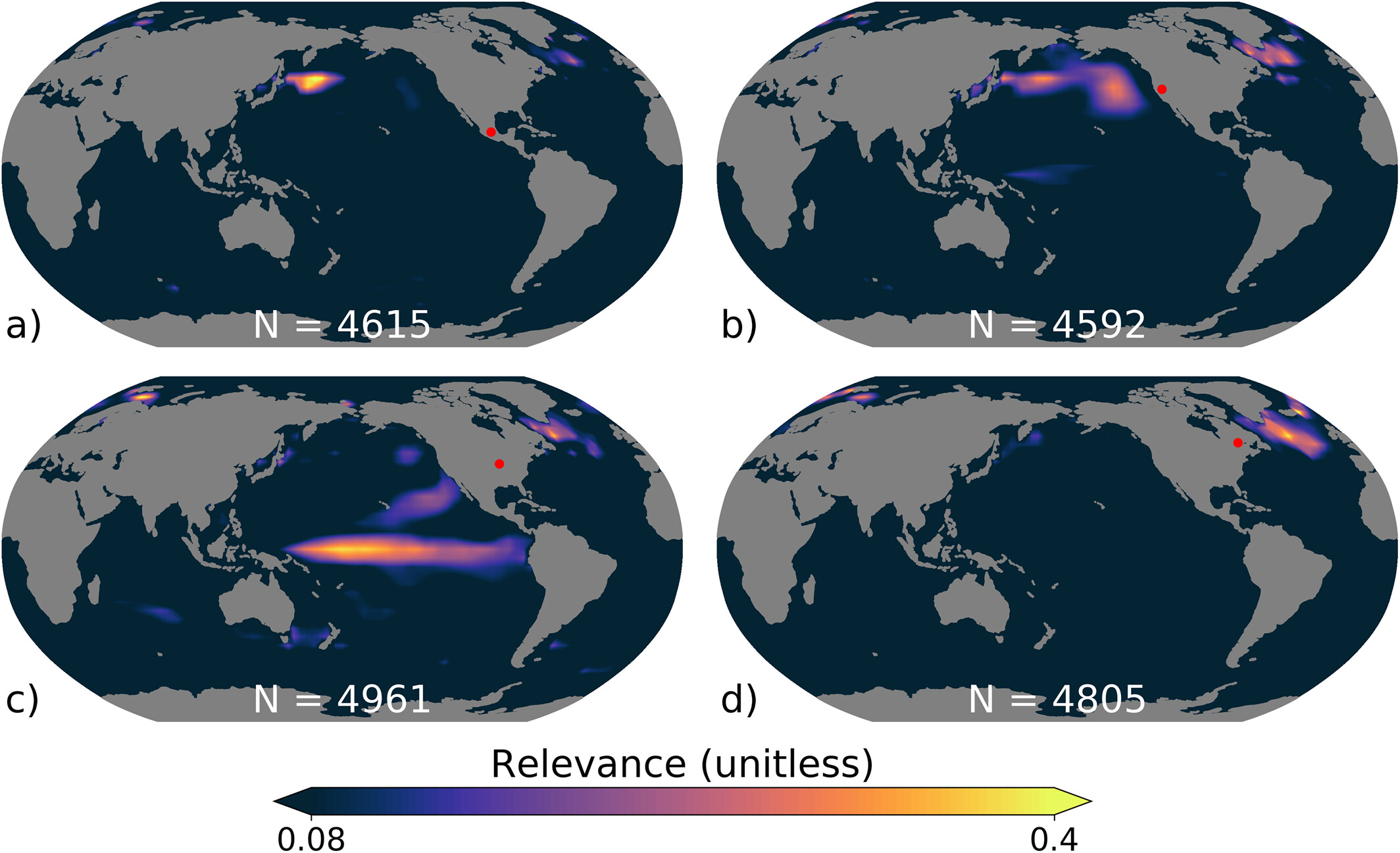
This can work in climate models, too. Another study used this technique in a model that predicted warmer or cooler multi-year averages for areas of North America based on global sea surface temperature data.

Visualizing the regions of sea surface temperatures linked to each North American location showed plausible connections. Some match the region of the equatorial Pacific where the El Niño/La Niña seesaw plays out, others point to an area just south of Greenland important to Atlantic Ocean circulation, and so on. With that information, you could test these linkages using traditional models.

Four maps of the globe with color highlighting areas of the ocean.

Higher average temperature predictions at the red dots on each map were linked to sea surface temperatures in the colored areas.

Higher average temperature predictions at the red dots on each map were linked to sea surface temperatures in the colored areas. Credit: Toms, et al./GRL

This won’t be quite so straightforward in every situation. But techniques like this can tilt the black box tradeoff back toward neutral a bit, helping machine learning tools contribute to science without changing what it means to do science.

ML MVP?

The use of machine learning is one manifestation of the “big data” push in science, helping us extract value from rapidly expanding datasets. For weather and climate modeling, machine learning’s scientific impact depends on where you look and who you ask.

For David John Gagne of NSF’s National Center for Atmospheric Research, the impact on weather forecasting is sizable.

“It’s the biggest contributor to progress both in terms of improvements in predictive accuracy and causing a reckoning in the broader atmospheric science community that has required everyone to revisit their traditional assumptions,” Gagne said. “If you have a model that’s now 100x faster and requires much less compute to run, how might one use it differently from the models that require hours on a big supercomputer to run?”

Though there’s plenty of work underway to improve these models, machine learning has clearly opened up a whole new branch of weather forecast modeling.

To Laure Zanna at NYU, the situation in climate modeling is more complicated: “I think we are still in the phase of development for [machine learning] in climate modeling. So it is one factor among others for now […] but I believe it has the potential to be a significant contributor to progress in testing hypotheses and providing more reliable simulations and predictions.”

“For example,” Zanna told Ars, “to speed up simulations, we are only just starting, but we can now generate large ensembles to explore attributions and predictability, which were out of reach outside large labs before.”

Schneider is bullish on the CliMA team’s use of machine learning but also sees it more as one tool among many: “I think it is a huge game changer. Now, how to get [to our goal], though, is not just machine learning. We’ve made a lot of progress on cloud physics, I think, but a lot of the progress actually came from physics and math, not machine learning. I would say more progress so far came from that than just from learning from data.”

To be sure, there is a range of opinions on how large a role machine learning can play in climate modeling. But at least some uses are widely accepted as welcome additions to the toolkit.

The reality in either of these fields doesn’t exactly match the Bronze-Age-revolution framing seen in AI vendors’ most breathless press releases, but it’s also not true that hallucinated slop has come to enshittify your tornado warning. Scientists are carefully incorporating these techniques where they offer an advantage, just as they would with any other analytical tool.

And they’d love just a tiny slice of the GPUs currently being hoarded for summarizing emails and forging homework assignments, by the way. “If someone gave us fifty GPUs for two months, we could just make a huge amount of progress,” Schneider told Ars. “A hundred would be amazing.”

What ProPublica Found in the Genetic Code of America’s Measles Outbreaks

0
what-propublica-found-in-the-genetic-code-of-america’s-measles-outbreaks
What ProPublica Found in the Genetic Code of America’s Measles Outbreaks

ProPublica is a nonprofit newsroom that investigates abuses of power. Sign up to receive our biggest stories as soon as they’re published.

American children lined up for the world’s first measles shots in the early 1960s, but it took nearly 40 years of shoring up immunization programs before the infamous contagion had been so thoroughly controlled that a panel of experts declared in 2000 that the United States had eliminated measles within its borders.

For a quarter century, the U.S. only saw outbreaks when infected travelers brought the virus in from abroad. The resulting waves of measles didn’t last more than a year.

Those days are gone.

Measles began tearing through the dusty plains of West Texas in January last year, and since then, all but a handful of states have seen cases. Two unvaccinated Texas girls and an adult across the border in New Mexico died before the West Texas outbreak seemed to burn out last July.

By then, measles was popping up in Utah, and state health officials couldn’t tell where the earliest patients had caught the virus. Infections in that state took off that fall and winter and continued into May of this year.

The Texas and Utah cases now sit at the center of an unusually technical — and politically fraught — question: whether the United States will lose its measles-free distinction.

Countries aren’t penalized for losing the status, but it’s an indication of cracks in a nation’s once rock-solid immunization programs, a loss of faith in vaccines among its people — or both.

To have any chance of keeping the designation, the U.S. will need to make a strong case that measles didn’t spread endemically — from person to person in a continuous chain within the country for more than a year. If the Texas virus, for example, made its way across the Southwest to Utah and continued infecting people there, that would be a problem. But if cases in Utah were instead sparked by a patient who caught measles abroad, that would be a new chain, restarting the clock.

For clues, the Centers for Disease Control and Prevention is analyzing the full genetic code of measles viruses that infected patients. Last November, the CDC’s leader at the time said preliminary genomic analysis suggested the Utah cases were not directly linked to those in Texas. A spokesperson for the Department of Health and Human Services told ProPublica that the work was done by the state laboratories and the CDC is conducting a more comprehensive investigation.

ProPublica embarked on its own analysis, reviewing over 1,800 whole genome sequences, including those released as recently as last month, to compare the genetic fingerprints of measles viruses circulating in the U.S. and Canada. This showed that the measles virus still spreading in Utah as of this May is very closely related to the one that sickened Texans over a year ago.

ProPublica’s analysis isn’t a smoking gun that proves endemic spread. It’s impossible to tell from this information whether the virus spread from state to state or if it at some point left the country and was brought back by a sick traveler.

But given how similar the viruses are in the sequences ProPublica identified, it’s going to be difficult for the U.S. to prove measles isn’t endemic — “unless CDC has something up their sleeves,” said Dr. Alberto Severini, a retired molecular virologist and measles expert who spent two decades at Canada’s Public Health Agency.

The unique fingerprint of mutations hasn’t been limited to these states. The five mutations observed in Texas and Utah were also present in sequences the CDC published of viruses that infected patients last May and June in Iowa, North Dakota, Minnesota and Alaska.

But it’s not clear that the genetic fingerprint is only in the U.S.: No whole genome sequencing has been made public from cases in either Mexico or the Canadian province of Ontario, where measles has also raged.

That matters because whether the virus was spreading continuously in the United States for more than a year — rather than circulating abroad and being brought back into the country by travelers — is a key question facing a panel of experts convened by the Pan American Health Organization.

A regional office of the World Health Organization, PAHO will decide whether the U.S. keeps its measles-free designation. Canada lost its status last year. PAHO invited the U.S. to make its case in April, but American officials asked for more time to investigate how the virus had been spreading. The review was moved to November.

Daniel Salas, a PAHO official, said the kind of thorough analysis that CDC is doing “takes time.”

“What the U.S. is trying to do with this whole genome sequencing is trying to find some patterns that could eventually say, for example, this mutation of the virus occurred in a different country, in a different place to the current outbreak that they’re trying to analyze, so that eventually, that might be taken into consideration to somehow replace the epidemiological information that is missing,” he said. “There’s no country that has done this before.”

One of the biggest questions is how the virus got into Utah. Health officials determined that the first confirmed patient there, identified last June, couldn’t have been exposed to measles in another country or even another state. Utah State Epidemiologist Dr. Leisha Nolen said she and her team reviewed the places the patient had been and the people they had been around, but still couldn’t figure out where they caught the virus.

Clues suggested measles had been quietly spreading in the region. A CDC disease detective investigating subsequent cases that spanned the Utah-Arizona border said there had been reports of community members with rashes last June, but the patients declined measles testing and families were often reluctant to answer questions.

Throughout the outbreak, no interviews suggested any patient was exposed in another country, Nolen said, but she and her team cannot rule out the possibility.

ProPublica asked the CDC whether its epidemiologists had linked any of Utah’s measles cases to an international outbreak, but the agency wouldn’t say, nor would it directly comment on genetic similarities ProPublica found between viruses in Texas and Utah. In a written statement, a spokesperson said, “Sequencing alone cannot determine whether transmission has been continuous or sustained.”

While genomic analysis can provide clues, the spokesperson wrote, “These findings must be interpreted alongside epidemiological data, including travel history, exposure information, and known outbreak connections.”

The CDC is still working on “a comprehensive analysis of potential linkages among cases and outbreaks” and has gathered additional epidemiological data, the spokesperson said, but did not elaborate on what that shows.

With the midterm elections approaching, the spread of measles has become a political liability for President Donald Trump, who picked the founder of an antivaccine organization to be his health secretary. Since Trump’s inauguration last year, there have been more than 4,300 U.S. cases, a high not seen in three decades.

Eliminating the endemic spread of measles is the public health equivalent of slaying a dragon. The disease is among the most contagious humans have ever encountered. Patients are infectious even before the telltale rash appears, and the contagion can linger in a room for two hours after they leave.

Policymakers built the U.S. immunization system on lessons learned from measles outbreaks. To get the sky high-vaccination rates needed to stop the disease from spreading, states made shots mandatory for school and daycare attendance, and the federal government provided them free to low-income kids. When measles still managed to roar back, state lawmakers in California and New York cracked down on exemptions to their school mandates. The U.S. helped other countries fight measles, too, not only to prevent deaths but also because people in power recognized that infectious diseases kept in check abroad are less likely to return to American shores.

During prior U.S. outbreaks, health and political leaders, with unwavering language, urged Americans to vaccinate their children and assured them the shots were safe.

Trump and HHS Secretary Robert F. Kennedy Jr. haven’t followed that playbook. Both have fueled doubts about the safety of the MMR shot, which guards against measles, mumps and rubella.

Researchers around the world have found the vaccine does not cause autism. Nevertheless, at a press conference on autism last fall, Trump said he had heard for years that there was a problem with the combination vaccine and urged parents to insist on separate shots for their kids — even though standalone shots don’t exist in the U.S.

Kennedy has said the vaccine offers protection from measles, but he also has repeatedly made the shot sound scarier than the disease.

“There are adverse events from the vaccine,” he told Sean Hannity on Fox News last year. “It does cause deaths every year.”

On a podcast, Kennedy said that when he got the virus as a kid, he got to watch television for a week. “I got chicken soup and vitamin A, which nobody can patent,” he said.

Measles kills 1 to 3 out of every 1,000 people infected and can cause deafness, intellectual disability and brain swelling. In a “know the facts” post, the Infectious Diseases Society of America said there have been no deaths shown to be related to the shot in healthy people. “There have been rare cases of deaths from vaccine side effects among children who are immune compromised, which is why it is recommended that they don’t get the vaccine,” the medical society explained. “That’s why it is so important that everyone who can get vaccinated does so, to protect those who can’t.”

HHS spokesperson Andrew Nixon said in an email that Kennedy “believes Americans deserve clear information about both the benefits and risks of medical products so they can make informed healthcare decisions in consultation with their healthcare providers.”

Nixon said “heavy-handed mandates” contributed to the significant loss of trust in health institutions during the COVID-19 pandemic. “The Secretary maintains that public health agencies rebuild trust through honesty, transparency, and respect for individual choice — not coercion,” Nixon wrote.

Kennedy has tried to distance himself and the administration from the measles resurgence. He said the U.S. has done a better job of limiting the spread than any other country and pointed to the far higher number of cases in Canada and Mexico, whose populations are much smaller.

White House spokesperson Kush Desai told ProPublica, “Fake News reporters should be spending more time examining why the Trump administration’s efforts to contain America’s measles outbreak has been so much more successful than those of Canada and Mexico instead of regurgitating the same, tired narratives.”

Kennedy has also reminded lawmakers that the Texas outbreak began before he became health secretary.

“We have a global pandemic,” he told senators in April. “It has nothing to do with me.”

Kennedy has been among the most prominent voices in the antivaccine movement for more than a decade.

Dr. Adam Ratner, a pediatric infectious disease physician who wrote a book about measles, said Kennedy has done “everything in his power to undermine confidence in vaccines in the U.S.”

During a measles outbreak in New York City that began in 2018, Ratner treated at least five unvaccinated kids who were hospitalized, including a couple who needed intensive care, so he knows that not every child escapes the disease with nothing more than memories of screen time and soup.

While most parents still support immunizations, Ratner worries that the country no longer has the stomach for the kinds of policies that once stopped endemic spread. Rather than making school vaccine requirements stricter, some states are working to do away with them altogether in the name of medical freedom.

“You need a highly vaccinated population to control the spread,” he said. “In the absence of that, I think that we will have ongoing spread, and we’ll have tragedies like the ones that we saw in West Texas with the two kids who died.”

The U.S. may very well find the international travelers it needs to prove that the country is still measles free. But if all remains the same, experts said, it will only be delaying the inevitable.

“It doesn’t change the fact that there’s been transmission of measles in the United States for over a year,” Severini said. “If people don’t vaccinate, measles is going to be endemic.”
With or without China, Shangri-La Dialogue is still relevant

0
with-or-without-china,-shangri-la-dialogue-is-still-relevant
With or without China, Shangri-La Dialogue is still relevant

Former Straits Times editor-in-chief Warren Fernandez writes with characteristic elegance in his latest RSIS piece, “With or Without You: The U2 Doctrine Comes to Shangri-La”, carried in The Straits Times on June 3, 2026.

The piece gives cause for three reflections from this year’s Shangri-La Dialogue: whether middle power coalitions can substitute for hard power; whether the SLD can be both a pro-American forum and a genuine platform for US-China ministerial dialogue; and whether deterrence and diplomacy are coequal in one’s foreign policy toolkit.

Let’s take them in reverse, because deterrence is the precondition for everything else.

Diplomacy comes after deterrence

Deterrence works by changing an adversary’s cost-benefit calculation before a decision to act is made. Diplomacy has room to operate only when the costs of aggression exceed the benefits. Without a coercive backstop, the stronger party has little reason to concede anything.

Fernandez cited Sun Tzu’s “supreme art” of prevailing without battle. But that only works when the adversary calculates that battle is irrational – and that calculation is produced by deterrence.

What happens when we invert this sequence? Europe spent three decades deepening economic interdependence with Russia while hollowing out its deterrence posture, betting commercial ties would socialize Moscow into the rules-based order. Then, Russia invaded Ukraine in 2022, undercutting Europe’s peace via economics premise.

In the South China Sea, ASEAN has pursued dialogue, while China has built at least seven artificial islands in the Spratly Islands, equipped with anti-ship missile batteries and operational runways, and has outright rejected the 2016 Permanent Court of Arbitration ruling. An ASEAN-China Code of Conduct may eventually be concluded, but it’s unlikely to change the territorial facts on the ground.

Questions of neutrality

For the second consecutive year, China’s defense minister skipped the SLD. Beijing’s explanation for his absence as “a completely normal work arrangement” was neither credible nor to the point, which is that China views the SLD as dominated by the US and the West.

Singapore’s former Ministry of Foreign Affairs permanent secretary, Bilahari Kausikan, affirmed as much on the sidelines of this year’s SLD : “The Shangri-La Dialogue was always primarily about anchoring the US in Southeast Asia.” IISS should own this assessment, rather than equivocate when critics call it out.

China’s Xiangshan Forum, which draws ASEAN and Global South defense ministers each September, is a rational response. So was Chinese Foreign Minister Wang Yi’s choice to attend the Munich Security Conference in February 2026 rather than Singapore in May.

He went where he could contest the normative order at its weakest, not where Chinese hard power is already the operating assumption among Indo-Pacific neighbors.

I make these points because the SLD should not simultaneously try to be both an American-anchored forum and a neutral platform for US-China ministerial dialogue to remain relevant and purposeful. Given today’s state of regional geopolitical contest, those are structurally incompatible functions.

If SLD exists to anchor US commitment to the Indo-Pacific, then Japan, Australia, the Philippines, and other American-aligned states are not merely attending a dialogue but are also using SLD as a stage to reaffirm Washington’s regional role.

China has no rational or strategic interest in legitimizing a forum that is structured around that purpose. Expecting Beijing to do so is asking a competitor to dignify its opponent’s press conference.

And because Singapore is hosting the conference, its local defense community should stop expressing “disappointment” at China’s absence. Lamenting it signals confusion about what SLD is for.

Worse still, mistaking SLD for a neutral convening platform – and then acting surprised when China declines – is self-deception. Singapore hosts SLD as an institutional choice and its internal clarity about the forum’s structural meaning must follow.

Don’t mistake activity for capability

This confusion about the SLD reflects a broader problem: mistaking the momentum of multilateral activity for the substance of deterrence.

Fernandez references the Guiding Principles for Underwater Infrastructure Defense Exchanges framework (GUIDE), Japan-Australia agreements, and middle-power Plan B architectures in his essay. He said that middle powers are “seeking agency – not just to adapt to a changing world, but to shape it.”

But shaping a security order (even a regional one) requires the ability to impose costs on a major power that is seeking to contest it.

Threat perception can be defined as intent multiplied by capability. In deterrence, intent matters little if a power lacks the capability to act on it, or if its capability is inferior to that of its competitor.

As US War Secretary Pete Hegseth said at the SLD, a favorable balance of power requires “capable allies with genuine military strength, industrial capacity and political resolve.” On this point, Hegseth is right.

For any smaller state, autonomy exists in the space that competing great powers leave open as they constrain one another.

In Singapore’s case, its ability to speak sincerely to both Washington and Beijing, to host the SLD and send ministers to Xiangshan, and to maintain the Agreement on Defense Exchanges and Security Cooperation with China while deepening US access arrangements, depends entirely on that balance of power remaining credible.

It’s worth noting that Singapore established an MOU granting US forces access to Sembawang and Changi in 1990, anchoring America’s forward presence before Singapore formalized defense ties with Beijing in 2008, from a position of strength. As Singapore enhanced the ADESC in October 2019, it also renewed the MOU with the US on base access through 2035.

In short, Singapore was able to deepen ties with both major powers because the balance was assured.

Friends with everyone

Keeping that balance on an even keel enables Singapore to stay friends with all. To illustrate this point, I’ll reference two of my earlier essays.

The first concerns Singapore’s September 2025 decision to acquire four Boeing P-8A Poseidon maritime patrol aircraft. The US$2.3 billion platform is US-built, US-interoperable and optimized for anti-submarine warfare in precisely the waters  whose stability is undergirded by a US-led architecture.

Second, I reflected last month on the New International Land-Sea Trade Corridor, with Singapore embedded as an indispensable logistics node in Beijing’s western maritime supply line, as a sustainable way of deepening economic ties and other strategic interests with China.

Warren’s counsel to “shape ties with a capricious America” treats US commitment as one variable among many. But Singapore’s experience suggests that without America’s commitment here, there is simply no balance to be had; without balance, there is no autonomy; and without autonomy, Singapore’s diplomacy – with Washington, Beijing, or anyone else – has little ground to stand on.

Singapore’s Defense Minister Chan Chun Sing recalled Emeritus Senior Minister Goh Chok Tong’s counsel at this year’s SLD, saying, “We cannot control the sea, but we can certainly keep our boat seaworthy.”

That is precisely why we should go beyond debating whether China should have attended the SLD or whether the US is coercing partners to burden-share. The SLD serves a purpose, but it is only one side of the ledger. Indeed, a seaworthy boat is necessary, but it still needs sea lanes that no single power can toll.

Marcus Loh is the chairman of the Public Affairs Group at the Public Relations and Communications Association (PRCA) Asia Pacific and a director at Temus, a Singapore AI and digital services firm. Formerly the president of the Institute of Public Relations of Singapore, he helped strengthen the role of strategic communication and public affairs amid shifting policy, technological and geoeconomic landscapes. He is currently an MA candidate at the War Studies Department of King’s College London.

France and Cyprus to sign defense pact for French deployment to island

0

France and Cyprus will sign on Monday a status of forces agreement allowing Paris to station troops on the Mediterranean island, two senior Cypriot government officials told POLITICO. The agreement will be signed by French Armed Forces Minister Catherine Vautrin and Cypriot Defense Minister Vasilis Palmas in Nicosia, as both will attend the informal European […]

0FansLike
0FollowersFollow
0FollowersFollow
0SubscribersSubscribe
- Advertisement -
Google search engine

Recent Posts