14.1 C
London
Monday, June 8, 2026
Home Blog

Myanmar’s military ‘comeback’ claim doesn’t hold water

0
myanmar’s-military-‘comeback’-claim-doesn’t-hold-water
Myanmar’s military ‘comeback’ claim doesn’t hold water

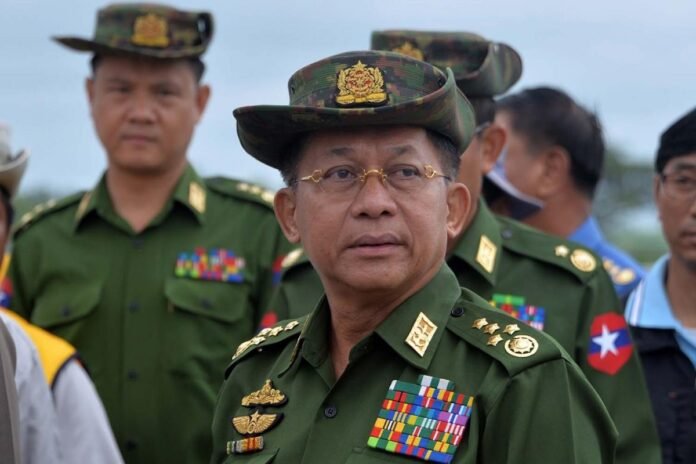
Coup maker Senior General Min Aung Hlaing’s allies want the world to believe that Myanmar’s military is “on the upswing” and “mounting a comeback” in a war that foreign media increasingly describe as “forgotten.”

Recent US media coverage leans into that storyline, highlighting tactical gains, diplomatic outreach, and a presidential façade after tightly controlled elections. To outside observers, it can sound as though the junta has reversed the tide (NPR).

Inside the country, the picture looks different. The military has more firepower than its opponents and has clawed back specific towns. But it is not winning the war that matters: the contest over territory, basic governance, and political consent. On those fronts, the fundamentals still run against Min Aung Hlaing’s post-election administration (CFR).

The territorial map is the clearest corrective. The Council on Foreign Relations’ Global Conflict Tracker, drawing on a BBC World Service investigation, estimates that the junta fully controls only about 21% of Myanmar’s territory, while resistance forces and ethnic armed organizations hold roughly 42%, with the rest contested (BBC).

In the west, the Arakan Army has taken most of Rakhine State and Paletwa Township in neighboring Chin State, and by late 2024 controlled 13 of Rakhine’s 17 townships, including the entire Bangladesh border (CSIS). ACLED reports the Arakan Army has since extended operations into Bago, Magway, and Ayeyarwady and now functions as the de facto government in western Myanmar (ACLED).

Honest analysis must concede that the junta has scored real, recent gains. With heavy Chinese support, it recaptured Kyaukme and Hsipaw in northern Shan State in October 2025, restoring the corridor to the Chinese border, and retook Lashio in April 2025 after the Myanmar National Democratic Alliance Army withdrew under Beijing’s pressure (BBC).

New tactics, tens of thousands of conscripts, Chinese and Russian drones and unprecedented air power have shifted momentum in specific theaters. None of this is in dispute. The question is whether it adds up to a strategic reversal. It does not, and for three main reasons.

First, recovered territory has not translated into restored governance. The Chinese-brokered Lashio handover left hundreds of surrounding villages outside junta authority and was accompanied by resentment over Beijing’s coercion rather than a stable return to order (SAC-M).

Across much of the country, law and order remain fractured, public services degraded, and administrative reach thin (BTI). That is nominal control without durable state power.

Second, the military’s growing dependence on air power underlines the weakness rather than masking it. Fortify Rights documented 304 paramotor and gyrocopter attacks on civilians across Sagaing, Magway, Mandalay, Ayeyarwady and Bago between December 2024 and January 2026, with peaks coinciding with election rounds (Fortify Rights).

Human Rights Watch documented escalating airstrikes, artillery, and drone attacks across all 14 states and regions in 2025 (HRW). Late-stage counterinsurgencies often look strongest from the air precisely when they are weakest on the ground.

Myanmar is not Vietnam, but the underlying lesson holds: more bombing does not prove more control, and firepower cannot by itself restore political legitimacy (Mitchell Institute).

Third, the economic and geopolitical dimension undercuts the comeback thesis where it should be strongest.

India’s outreach to Naypyidaw — rupee-kyat trade settlement, the Kaladan Multi-Modal Transit Transport Project, the India–Myanmar–Thailand Trilateral Highway, energy and mining cooperation — runs into the same obstacle as every other corridor: the formal counterpart in the capital often does not control the territory the projects must cross (Rediff). The Kaladan route runs through townships now held by the Arakan Army, not the junta (ACLED).

The same logic shapes the rare-earth conversation. CSIS has warned that courting the junta for rare-earth access amounts to betting on the weaker side (CSIS). After the Kachin Independence Army seized Chipwi and Pangwa in late 2024, it became the de facto authority — and tax collector — over Myanmar’s heavy rare-earth corridor along the China border (Asia Times).

A June 2026 Foreign Policy report quoted former US Chargé d’Affaires in Myanmar, Susan Stevenson, describing Myanmar’s rare-earth sourcing as “more of a pipe dream than a realistic proposition” because much of the resource base lies outside junta control (Foreign Policy).

The NPR piece’s hardest claim — that ethnic armed organizations with Chinese ties have “turned off the spigot” of arms to People’s Defense Forces and that some opposition forces are “beginning to collapse” — deserves a direct answer (NPR). Some of that is real and serious. China has clearly pressured groups along its border.

But the resistance architecture is not collapsing; it is reconfiguring. In March 2026, the National Unity Government, the Committee Representing Pyidaungsu Hluttaw, and major ethnic revolutionary organizations — the Karen National Union, Kachin Independence Organization, Karenni National Progressive Party, and Chin National Front — formed the Steering Council for the Emergence of a Federal Democratic Union to coordinate political and military strategy for a federal democratic order (SAC-M).

The Arakan Army has not publicly joined but cooperates militarily with the Chin Brotherhood and other resistance actors. Survey data cited by CFR indicate roughly 93 percent of respondents inside Myanmar view the NUG favorably (CFR). The pattern is uneven coordination among actors who still hold real ground, not resistance collapse.

If relevance is measured only by diplomatic protocol, Min Aung Hlaing’s administration can appear to be regaining ground. If relevance is measured by who can shape Myanmar’s eventual political settlement, secure and tax territory, govern communities, sustain trade routes, and command consent, resistance actors remain structurally central (Al Jazeera).

The risk of the “military comeback” narrative is therefore not just analytical. It encourages foreign governments, investors, and strategists to misread Myanmar as a normalizing authoritarian state rather than a fractured war zone where coercive reach and legitimacy have sharply diverged.

That misreading produces poor choices: premature normalization, corridor projects built on paper sovereignty and extractive deals that deepen instability in the name of realism (Foreign Policy).

Myanmar’s generals have improved their international posture – but posture is not tantamount to power. They have not shown that airstrikes can be converted into stable territorial recovery, that elections held under military domination can manufacture consent or that diplomatic theater can solve the counterparty problem at the heart of Myanmar’s transit and extraction economy.

The more defensible conclusion is not that the military is on the upswing, but that outside actors are once again mistaking optics for control.

James Shwe is a Myanmar American professional engineer and advocate for democracy in Myanmar, affiliated with the Los Angeles Myanmar Movement.

Israeli attacks across Gaza kill 10 Palestinians, wound 29 despite ceasefire

0
israeli-attacks-across-gaza-kill-10-palestinians,-wound-29-despite-ceasefire
Israeli attacks across Gaza kill 10 Palestinians, wound 29 despite ceasefire

Ten Palestinians were killed and 29 others injured in Israeli attacks on various areas of the Gaza Strip since Sunday morning, according to medical sources, as Israel continued its daily violations of the ceasefire agreement, Anadolu reports.

In central Gaza City, four Palestinians were killed and seven others injured when an Israeli drone struck a civilian vehicle near Palestine Square in the Rimal neighborhood.

The sources also said that 14-year-old Hadeel Ayman Jundi died of wounds sustained in an Israeli strike on Gaza City on Saturday.

In the southern Gaza Strip, five Palestinians were killed and 17 others injured in an Israeli strike targeting a police post in the Al-Nass area west of Khan Younis.

In northern Gaza, medical sources said five injured Palestinians were brought to the Al-Saraya Field Hospital after an attack carried out by the Israeli navy west of the town of Beit Lahia.

In central Gaza, a Palestinian teenager who worked as a fisherman was killed Sunday morning when the Israeli navy opened machine-gun fire at fishing boats off the coast of Deir al-Balah, according to medical sources.

Medical sources also reported that the bodies of two Palestinians were brought to the Al-Shifa Hospital in western Gaza after they were recovered Sunday morning from a house hit by Israeli artillery shelling in the Zeitoun neighborhood southeast of Gaza City on Saturday.

READ: Palestinian factions, mediators resume Cairo talks on next phase of Gaza ceasefire

The attacks come as Israel continues to escalate its aggression on the Gaza Strip despite ongoing talks in Cairo aimed at completing the first phase of the ceasefire agreement and discussing mechanisms and arrangements for moving to the second phase.

In September, US President Donald Trump announced a 20-point plan outlining a ceasefire framework that includes the release of Israeli captives, Israel’s withdrawal from Gaza, the formation of a technocratic administration, and the deployment of an international stabilization force, along with a call for Hamas to disarm.

The first phase of the ceasefire agreement included a truce and prisoner exchange between Israel and Palestinian factions. However, Palestinian sources say Israel has continued to violate the agreement on a near-daily basis.

Under the second phase, Israel is expected to carry out further withdrawals from the territory, while an international stabilization force would assume security responsibilities, including facilitating the delivery of humanitarian aid and reconstruction materials.

Israel’s genocide in Gaza since October 2023 has killed nearly 73,000 Palestinians and injured more than 173,000, most of them women and children, according to Palestinian figures.

Despite a ceasefire that took effect on Oct. 10, 2025, the Israeli army has killed at least 961 Palestinians and injured over 3,000 others in near-daily attacks, according to the Gaza Health Ministry.

READ: Islamic Jihad accuses Israel of continued violations of Gaza ceasefire

American Airlines Flight Attendant Found Dead on Florida Beach

0
american-airlines-flight-attendant-found-dead-on-florida-beach
American Airlines Flight Attendant Found Dead on Florida Beach


A young American Airlines flight attendant was found dead in the surf along a popular South Florida beach, and investigators say her injuries appear to point to a terrifying possibility: she may have been struck by a boat.

The Florida Fish and Wildlife Conservation Commission identified the woman as 31-year-old Kellie Melinda Williams. Her body was discovered near Hollywood Beach on June 3 at around 8 p.m., according to officials.

Authorities said two fishermen spotted Williams’ body in the water near North Boardwalk and Thomas Street and immediately alerted police.

The discovery has left investigators trying to piece together what happened in the final moments before the airline worker’s body washed up along the busy beach area.

According to the FWC, Williams’ injuries were consistent with a vessel strike, suggesting she may have been hit by a boat while in the water.

Investigators believe Williams may have been snorkeling or diving before her death, though officials have not released additional details about what she was doing, how long she had been in the water, or whether the vessel involved has been identified.

The circumstances surrounding her death remain under investigation.

Williams was originally from California and worked as a flight attendant for American Airlines. Her sudden death has stunned those connected to the airline and raised troubling questions about boating safety off Florida’s crowded coastline.

In a statement to ABC News, American Airlines said it was mourning the loss of one of its own.

“We are deeply saddened by the loss of our colleague. Our thoughts and support are with her family, loved ones and colleagues at this time,” the airline said Sunday.

The case comes as Florida’s beaches and waterways remain packed with locals, tourists, boaters, divers, and snorkelers, especially during the busy summer season. While officials have not said whether negligence played a role, the tragedy is another grim reminder of how quickly a day on the water can turn deadly when swimmers and boaters share the same space.

No further information has been released, and the investigation remains ongoing.

Iran warns of ‘decisive’ response to Israeli strike on southern Beirut

0
iran-warns-of-‘decisive’-response-to-israeli-strike-on-southern-beirut
Iran warns of ‘decisive’ response to Israeli strike on southern Beirut

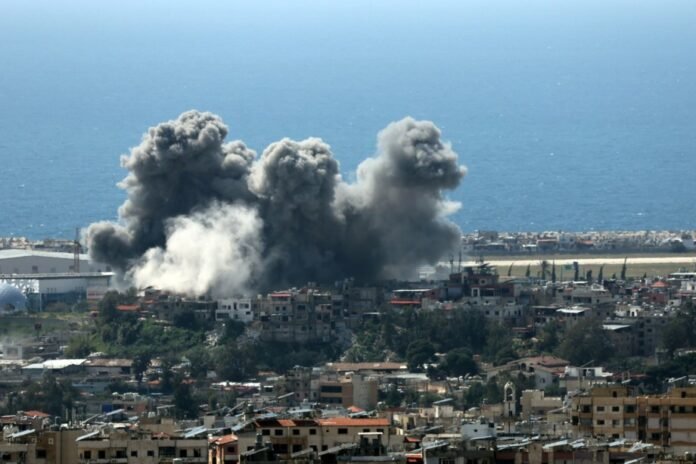
Smoke rises over residential area following the Israeli attack on Beirut, Lebanon on April 8, 2026. [Houssam Shbaro - Anadolu Agency]

Smoke rises over residential area following the Israeli attack on Beirut, Lebanon on April 8, 2026. [Houssam Shbaro – Anadolu Agency]

Iranian lawmaker Ebrahim Rezaei on Sunday warned that Tehran would respond “decisively” to the latest Israeli airstrike on Beirut’s southern suburbs, which killed at least two people and injured 11 others, Anadolu reports.

Rezaei, spokesperson for the Iranian parliament’s National Security and Foreign Policy Commission, made the remarks in a post on the US social media platform X following the strike.

“We will deliver a decisive and painful response to the Zionist regime’s attack on Dahiyeh,” he wrote.

“These rabid dogs must be disciplined and put back in their place,” he added.

READ: Israeli army launches airstrikes on Lebanese capital despite ceasefire

Rezaei also appeared to hint at possible military action, saying: “Look at the skies over the occupied lands tonight.”

The remarks came hours after an Israeli airstrike targeted Beirut’s southern suburb, a Hezbollah stronghold, killing at least two people and injuring 11 others, according to the Lebanese state news agency NNA.

Sunday’s strike was the first on the Lebanese capital since the ceasefire was extended on June 3 following US-mediated talks between Israel and Lebanon in Washington.

Israel has continued carrying out airstrikes in Lebanon since a Hezbollah cross-border attack in early March, killing more than 3,600 people and injuring over 11,000 others since March 2.

Ukraine’s destiny European, EU’s destiny’s to embrace Ukraine

0
ukraine’s-destiny-european,-eu’s-destiny’s-to-embrace-ukraine
Ukraine’s destiny European, EU’s destiny’s to embrace Ukraine

Wouldn’t you like as a member of your club an applicant who has just humiliated your most dangerous enemy through an audacious attack? That is what Ukraine did last week with its drone strikes on an oil terminal at St Petersburg, sending clouds of smoke into the air just as Vladimir Putin was hosting his flagship economic forum in that city designed to portray Russia as a perfect investment destination.

Yet although both Ukraine and its smaller neighbour, Moldova, will be given permission on June 15th to start their formal negotiations to join the European Union, the path to that membership still looks strewn with obstacles.

If you look at Europe through a lens of defense and security, nothing could be more obvious than that Europe needs Ukraine just as much as Ukraine needs Europe.

Anyone wanting to learn how to defend against drones or missiles – whether from Russia, from terrorist groups or anyone else – knows that Kyiv is the place to call. Anyone wondering how to expand their defence production rapidly, how to modernise it for the era of cheap drones and artificial intelligence, knows that Ukraine holds many of the answers, whether as a supplier, a partner or an adviser.

That emergence of Ukraine as Europe’s leading country for defense-industry innovation is of course the result of four years of war but also of hundreds of billions of euros of funding from the EU and from member governments.

The famous report on EU industrial competitiveness by Mario Draghi in 2024 called for the creation of an EU single market for defense production and for vast amounts of investment financing for defense and other sectors. It is an irony that by far the biggest and most successful example of that happening is in a country that is not yet a member of the EU, Ukraine.

Moreover, anyone looking at the history of Ukraine’s battle against Russian domination and then military assault will quickly see that the country’s desire to be European is deeply rooted. The popular protests in Kyiv in 2013-2014 that overthrew a Russia-affiliated president were protests in which the EU flag was as prominent as Ukraine’s own flag.

One of the main issues that led to President Viktor Yanukovych’s ousting was a proposed free-trade agreement with the EU that he sought to reject despite the Ukrainian Parliament having already accepted it. In a 2015 documentary film, “The Great European Disaster Movie” for which I served as executive producer – which featured plenty of skeptical and critical voices against the EU in Britain, France and elsewhere – by far the most powerful and emotional voices in favor of the EU were from Ukrainians.

The go-slow forces in Europe

Admittedly, now that Victor Orban is no longer Hungary’s prime minister it is hard to find European leaders who are explicitly opposed to Ukraine’s membership. Everyone claims to be in favor of it. But dig a little deeper and you will find many countries keen at least to slow the process down and some that might choose to block it altogether.

Italy is at the forefront of those wanting to slow it down. Giorgia Meloni says that she supports Ukraine’s accession but that countries in the Balkans, by which she means Albania, Bosnia & Herzegovina, Serbia and North Macedonia, should take precedence.

Meloni’s desire to show favor to Italy’s close neighbor and her desired asylum-processing partner Albania can be understood as a natural diplomatic gambit. But this could also become a way to ensure that Ukraine’s entry is delayed for years, given the clear problems concerning democracy, the rule of law and Russian interference in Serbia, in particular.

The most crucial opponents, however, lie in two of Ukraine’s biggest neighbours, Poland and Hungary.

The man who defeated Orban, Peter Magyar, is not going to demonize Ukrainians as enemies in the way that Orban tried to. But although he has lifted Hungary’s veto over Ukraine’s commencement of formal accession negotiations and Orban’s block on the EU’s €90 billion loan to finance Ukraine’s war effort over the next two years, the issue of the status and rights of the approximately 100,000 Ukrainians who are of Hungarian ethnic origin remains sensitive politically in Budapest.

Poland’s objections are even more visceral, notwithstanding the fact that unlike Hungary the country has housed vast numbers of Ukrainian refugees during the four-year war. President Volodymr Zelenskyy recently caused outrage among Poland’s political leaders when he gave posthumous honors to one of the former leaders of the Organization of Ukrainian Nationalists. This was a pro-independence group that during the Second World War was involved in a massacre of Poles in what is now western Ukraine but which in 1918 had been seized by Poland.

Conflicting agricultural interests

A more down-to-earth objection to EU membership for Ukraine is rooted in the traditional EU sport of agricultural protectionism.

The EU already accounts for 65% of Ukraine’s goods exports. The free-trade agreement that was negotiated in 2014 and has been in provisional force ever since then was deepened even further in 2022 when the EU abolished remaining tariffs on goods from Ukraine in order to support Ukraine’s economy after the Russian invasion. However tariffs on food imports were reintroduced in June 2025 under pressure from farmers and their political allies in Poland and Hungary.

Full Ukrainian entry to EU would inevitably involve those food tariffs being abolished again, which gives Polish farmers ample reason to oppose it, or at least to slow it down drastically by demanding a long transition period for agricultural trade. One of the reasons why Russian imperialists have coveted Ukraine for centuries is the fact that its wheat fields are so large and fertile.

EU enlargement decisions require all 27 existing member countries to agree and to ratify the decision through their own parliaments or by referendums. Inevitably, this hands a lot of power to objectors, even when the moral and political case for Ukrainian entry is so obviously strong.

Chancellor Friedrich Merz of Germany recently proposed that Ukraine should be given an interim “associate” status, through which it could gain many of the advantages of EU membership more swiftly and easily. President Zelenskyy reacted angrily, claiming to be insulted by the idea. He is right to feel insulted but in the end that may not be good enough grounds to reject some formula similar to Merz’s idea.

The top priority for Ukraine and for all of Europe must be defense, so that giving Ukraine a formal role in defense planning, production and military co-operation will be an obvious first step once some sort of ceasefire has taken place. Ukraine will not be able to join NATO, but the next best thing will be formal ties with the European members of NATO.

At the same time, after a ceasefire the economic pressures on both Ukraine and the EU will be intense and will demand cooperation. The costs of reconstruction will be huge, and the strain on Ukraine’s already diminished population of 28 million people (excluding people in areas currently occupied by Russia) will be immense. Unlike with other enlargements, the big issue will not be outward immigration but rather the task of attracting back most of the more than five million Ukrainian refugees. Without them, Ukraine will have a labor shortage.

These will be huge shared financial and demographic challenges, challenges that will not wait until the bureaucratic and political processes of negotiation are concluded. So both sides will be forced to compromise, on the speed of integration of Ukraine and on the symbolic labels given to describe Ukraine’s new status.

But, as the emotional voices at the end of our 2015 film showed and the war has now proved, Ukraine is now firmly a European, westward-facing nation. We must all find ways to welcome it, as rapidly and as smoothly as possible.

This article, an earlier version of which was first published in Italian translation by La Stampa, is republished with permission.

Xi’s North Korea visit puts a Trump-Kim summit back in play 

0
xi’s-north-korea-visit-puts-a-trump-kim-summit-back-in-play 
Xi’s North Korea visit puts a Trump-Kim summit back in play 

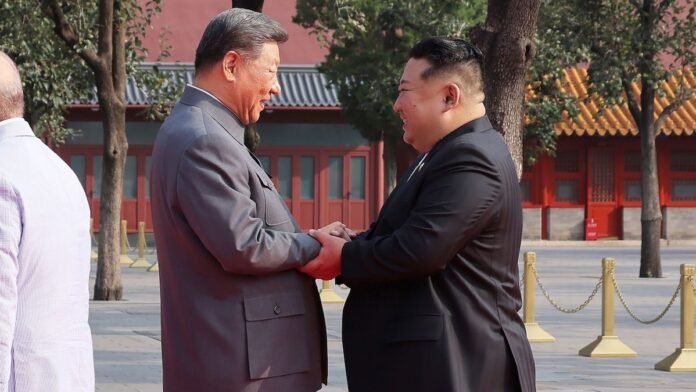
Chinese President Xi Jinping will make a rare visit to North Korea on June 8 – his first international trip this year – weeks after hosting US President Donald Trump and Russian President Vladimir Putin in Beijing. The sequencing has revived a scenario that seemingly grew less likely as Trump’s second term wore on: a third Trump-Kim summit.

This writer shared that skepticism, but recent conversations in Seoul with senior officials and North Korea analysts have produced a case for the summit that is proving harder to dismiss than six months ago.

Before reports of Xi’s Pyongyang visit surfaced, this writer had extensive discussions in Seoul with senior officials and well-informed North Korea analysts, during which the possibility of a Trump-Kim summit seemed to gain credence. The idea that such a meeting could even take place before the US midterm elections in November came up in these conversations.

There are, of course, differing views on this and on relations with North Korea. The Lee Jae-myung administration’s senior advisors are seemingly grouped into two broad camps. The “jaju,” or autonomy, camp emphasizes inter-Korean relations and autonomy. The “dongmaeng,” or alliance, camp prioritizes alliance relations with the United States.

While both of the camps may back another meeting between Trump and Kim to advance their respective goals, they interpret North Korea’s eagerness for talks differently.

The dongmaeng camp is more skeptical on this front. They argue Kim is now in a stronger position thanks to Russian aid and support for its nuclear weapons program, and point to tensions with China and sanctions for further strengthening the North Korea-Russia partnership.

For example, when Chinese Minister of Foreign Affairs Wang Yi flew to North Korea in April, interlocutors in Seoul told this writer that the Kim regime was unsatisfied with China’s reluctance to recognize it as a nuclear-weapon state.

In this view, economic problems in North Korea are not severe enough to threaten the country’s elite class or incentivize the regime to seek sanctions relief. The regime is focused on an intense military buildup, encouraged by its alliance with Moscow. As a result, the dongmaeng camp believes Kim is uninterested in dialogue but will want recognition of North Korea’s nuclear weapons in any future meeting.

Why Trump and Kim may want to meet

Not everyone is convinced. The jaju camp believes that Kim sees great utility in another summit with Trump because he is the only US president who will give him the kind of reception and respect he seeks.

Accordingly, if Trump does not set denuclearization as a precondition for talks and makes the initial move to seek a meeting, Kim will be open to the idea, those in the jaju circle argue. But, if denuclearization is explicitly on the table, one well-informed source told me, “he won’t go.”

From this perspective, a summit can happen even if Trump does not recognize or acknowledge North Korea as a nuclear state. The United States may not officially acknowledge this status, the argument goes, but if Trump refrains from bringing up the issue, Kim will think he has gone more than halfway. Russia has already acknowledged North Korea as a nuclear state. And China may be ready to follow Trump’s lead.

Whether this is a viable outcome for the US president largely depends on how the war in Iran concludes. If it ends with an ambiguous solution to Iran’s nuclear program, that could open the door to the US-North Korea summit outcome above. The claim would be that Trump and Kim have achieved “peace” on the Korean Peninsula, brought to an end the state of war that has existed for more than seventy years and stabilized the entire region.

Some in Seoul suggested a version of the deal discussed in Hanoi in early 2019 could now be agreed upon, with formal denuclearization put aside for later. Kim would commit to no additional production of nuclear warheads – his current stockpile of more than fifty warheads is more than sufficient – and pledge not to proliferate nuclear technology to others, including Iran.

Of particular appeal to Trump, Kim could offer to suspend the development and deployment of intercontinental ballistic missiles capable of reaching North America.

“Trump can sell to the US public that he prevented war on the Korean peninsula,” a well-informed source suggested.

The economic driver

One important driver of a summit, at least for Kim but maybe for Trump as well, is the prospect of expanded economic cooperation. Conditions within North Korea are extremely stressed, says Kim Byung-yeon, a North Korea economy expert at Seoul National University.

It is unclear whether living conditions have improved for most North Koreans since Kim took over in late 2011. The country is dealing with extremely high inflation, absurdly low exchange rates, runaway wages and high rice prices despite Russian assistance. Kim Byung-yeon says these crisis conditions are due to the regime’s “repression of the market, monopolistic conduct of trade and suppression of dissent in an attempt to curb South Korean influence.”

From the jaju camp’s view, Kim Jong Un wants to make North Korea a strong and wealthy country. Russian recognition and support alone cannot make this a reality. For that, he needs investment from China and the West. To that end, the United States and China would need to cooperate.

This is not a new argument, and it’s one contested by North Korea experts who see the regime driven mainly by its feverish security buildup, its own survival needs and even lingering aims of forced unification.

The third wheel

The odd man out in this game is South Korea. Kim has abandoned unification, declared the South a hostile state, and severed inter-Korean channels that brokered the 2018 engagement period. South Korean President Lee has far less, if any, leverage compared with what President Moon Jae-in had at that time.

Opening the doors to engagement with South Korea would be the most effective means of rapid economic development for the North. But, a senior official noted with some resignation, “It would lead to regime collapse. That is why they are open to every other country except the South.”

The Lee administration continues to call for broader talks. Minister of Unification Chung Dong-young, a prominent member of the jaju group, recently called for four-party dialogue among the two Koreas, the United States and China. But there is little reason to expect this proposal to go anywhere.

Ironically, perhaps, the Lee administration is now forced to rely on Trump’s outreach to Kim as the only means of improving inter-Korean relations.

Daniel C. Sneider is a non-resident distinguished fellow at the Korea Economic Institute of America (KEI), which originally published this article, and a lecturer in East Asian Studies at Stanford University. The article is republished with permission.

RIP Anthony Head: Our 10 favorite moments of Buffy’s Giles

0
rip-anthony-head:-our-10-favorite-moments-of-buffy’s-giles
RIP Anthony Head: Our 10 favorite moments of Buffy’s Giles

On Friday, news broke of the passing of actor Anthony Head at 72, best known for his portrayal of Watcher/father figure Rupert Giles on the supernatural drama Buffy the Vampire Slayer. Fans and former costars alike flooded social media with outpourings of appreciation for his talent and grief at his death.

Head certainly had a thriving career after Buffy: he played Uther Pendragon ins the series Merlin; the Prime Minister in Little Britain; a sinister headmaster in the Doctor Who episode “School Reunion”; and of course, the wealthy, entitled Rupert Mannion in Ted Lasso. But Giles remains his definitive role; there was even talk of a spinoff series, Ripper, although it was never made.

There are actually very few Giles-centric episodes, which belies the central importance of the character in the series. He definitely had some of the best, most cleverly cutting lines. But Head’s true genius—and that of his character—lay in quietly filling in the gaps in every scene, working with his fellow castmates to weave a complete tapestry. Remove him, and it diminishes everything.

(Spoilers for Buffy the Vampire Slayer TV series below.)

What better time to spend a few hours watching Buffy in Head’s honor? Should you want some suggestions, here are 10 of our favorite Giles moments, in chronological order. Feel free to weigh in with your own favorites in the comments.

Lie To Me (S2)

Credit: 20th Television/the WB

An old  Los Angeles classmate of Buffy’s, Ford (Billy Fordham) transfers to Sunnydale High for his senior year, and reveals that he knows she is the Slayer. We soon learn Ford has an ulterior motive for seeking her out. He has joined a secret “Sunset Club” whose members have read too much Anne Rice and romanticized vampires, ignorant of the demonic vicious nature. Ford is not deluded, but he still  approaches Spike (James Marsters) with a deal: Ford will deliver Buffy to Spike, and Spike in turn will turn Ford into a vampire. All the other club members will be killed.

When Buffy confronts Ford at the club, she learns he has a terminal brain tumor; his desperation to live is what drove him to betray her. This doesn’t excuse his choices, but it does make it harder for her to view him as a pure villain. After staking the newly sired Ford in the cemetery, Buffy asks Giles, “Does it get any easier?” Giles responds, “What do you want me to say?” Buffy asks him to lie to her. “Yes, it’s terribly simple,” Giles says. “The good guys are always stalwart and true. The bad guys are easily distinguished by their pointy horns or black hats. And we always defeat them and save the day. No one ever dies and everybody lives happily ever after.”

Buffy’s cheeky response? “Liar.”

The Dark Age (S2)

Credit: 20th Television/The WB

Earlier in the season we met Ethan Rayne (Robin Sachs), an old associate of Giles who traffics in the dark arts to sow chaos—such as casting a spell on Halloween to turn everyone into their costumes. His nickname for Giles is “Ripper,” our first hint that the stuffy librarian might have a wilder past. In “The Dark Age,” that past catches up to Giles and Ethan, as they discover that two other former friends are dead. All four have matching tattoos, the “mark of Eyghon.” Eyghon is a demon the quartet  had conjured for amusement in their youth. Now Eyghon is out for revenge.

Initially, Giles doesn’t tell Buffy and the Scoobies about any of this, preferring to conceal his rebellious youth from the impressionable youngsters. But he is forced to do so when Eyghon possesses an unconscious Jenny Calendar (Robia LaMorte Scott), Sunnydale’s computer teacher and Giles’ budding love interest. Eyghon is ultimately defeated, but a traumatized Jenny understandably decides to put the brakes on her romance with Giles, at least temporarily. It’s a recurring theme in the series: bad, reckless decisions can have nasty consequences that can follow us for years.

Passion (S2)

Credit: 20th Television/The WB

This is one of the most emotionally devastating episodes of the series—the first time fans suffered the loss of a major supporting character. Angel (David Boreanaz) has lost his soul and reverted to his demonically sadistic Angelus persona after experiencing a moment of “perfect happiness” when he and Buffy have sex for the first time. Jenny Calendar has been revealed to be of gypsy descent, the same clan that cursed Angel with a soul, and she was sent to Sunnydale to monitor Angel—a secret that served as another wedge in her relationship with Giles, although the pair were moving toward reconciliation.

Eager to earn back Giles’ trust, Jenny purchases a mystical orb and translates an ancient text to perform the ritual to restore Angel’s soul. Unfortunately, Angelus finds out and ruthlessly snaps her neck, smashing the orb for good measure. Jenny had made plans to meet Giles at his house later that evening. Giles arrives to find rose petals scattered around the living room and a note directing him upstairs. Expecting a romantic interlude, he is horrified to find Jenny’s lifeless body artfully arranged on the bed.

Giles responds how you’d expect to the brutal murder of the woman he loved: he heads out with a few weapons to hunt down Angelus in revenge. Buffy saves him in the nick of time, but Angelus escapes. “Why did you come here? This wasn’t your fight,” a grief-stricken Giles tells Buffy, who embraces him, sobbing, and insists she needs him: “You can’t leave me. I can’t do this alone.” It’s a turning point both in their relationship and in the season arc: Buffy has been reluctant to kill Angelus up to this point. Jenny’s murder strengthens her resolve.

Band Candy (S3)

Credit: 20th Television/The WB

High schoolers tend to forget that their parents (and teachers) were once hormonally challenged teenagers too.  So when all the adults in Sunnydale suddenly start acting like irresponsible adolescents again, it holds up an uncomfortable mirror to Buffy and the Scoobies. Those affected include Giles, who reverts to his younger, darker Ripper persona, and Buffy’s mother, Joyce (Kristine Sutherland). They have a wild night out on the town until a grossed-out Buffy interrupts them necking on the street.

It’s another Ethan Rayne spell, of course, this time delivered via the candy Sunnydale’s students were required to seek to buy new uniforms for the marching band. When Buffy confronts Ethan, he admits—after a blood-thirsty Ripper repeatedly urges Buffy to hit him—that he was hired to distract all the grown-ups so that Mayor Wilkins (Henry Groener) could pay a tribute of newborn babies to a demon, one of many supernatural beings to whom said mayor owes his august position.

Once that plot is foiled and the adults return to their usual selves, Buffy tells her mother and Giles that it was a good thing she came along before their whirlwind romance went too far. Giles and Joyce look distinctly uncomfortable. We learn in subsequent episodes that they had sex on the hood of a police car. The two never became an item, but when Joyce dies suddenly in S5, we see a grieving Giles listening to Cream’s “Tales of Brave Ulysses”—the music he shared with Joyce during their teen interlude.

The Wish (S3)

Credit: 20th Television/The WB

“The Wish” is one of the best episodes of the series, featuring an alternate dystopian reality in which Buffy never came to Sunnydale, the Master rose, and vampires took over and terrorized the town. A jilted Cordelia (Charisma Carpenter) makes the titular wish without realizing she is talking to a vengeance demon in disguise: Anyanka (Emma Caulfield Ford), who targets scorned and wronged women. But vengeance demons don’t grant wishes to be helpful and Cordelia soon realizes she’s made a dreadful mistake. She seeks Giles’ help—only for the vampire versions of Willow (Alyson Hannigan) and Xander (Nicholas Brendon) to track her down and drain her blood as a helpless Giles looks on.

A hardened and callous Buffy does eventually show up and take on the Master and his minions. Meanwhile, Giles summons Anyanka with a spell, having learned he must destroy her power center for reality to revert to its original form. He doesn’t remember that alternate reality, but reasons that it has to be better than this. As each of our favorites dies by each other’s hands—since they are not friends in this world—and the Master snaps Buffy’s neck, Giles smashes Anyanka’s necklace, correctly guessing it is the source of her power. Anyanka is rendered human and the original reality is restored.

Helpless (S3)

Credit: 20th Television/The WB

It’s a trope running throughout the series that something bad always happens on Buffy’s birthday, and in “Helpless” she turns 18—a rite of passage into adulthood. But it’s also a milestone for any Slayer lucky enough to make it to that age. The Watcher’s Council requires said Slayer to undergo a ritual known as the “Cruciamentum,” in which her Watcher drains her of her Slayer powers. She is then forced to fight a vampire as a mere mortal. Giles does this by putting Buffy into a trance with a crystal and then injecting her with muscle relaxants and adrenaline suppressors.

This is all done without Buffy’s knowledge, so it’s a significant betrayal from her perspective when Giles confesses that he’s responsible for her loss of power—an admission that invalidates the test. Things get complicated when the vampire captured for the ritual kills several Council members and escapes, kidnapping Buffy’s mother to lure the Slayer to the Sunnydale Arms building.

Buffy defeats the vampire using her wits and tells the Watcher’s Council to “bite me.” While Buffy passes, Giles does not: Council leader Quentin (Harris Yulin) fires him. “Your affection for your charge has rendered you incapable of clear and impartial judgement,” he tells Giles. “You have a father’s love for the child and that is useless to the cause.” The episode firmly establishes the father/daughter dynamic between the two, and as Buffy philosophically observes, “The important thing is that I kept up my special birthday tradition of gut-wrenching misery and horror.”

A New Man (S4)

Credit: 20th Television/The WB

It’s Buffy’s birthday again but this time the terrible thing happens to Giles, not to the Slayer. Giles has been feeling a bit left out and at loose ends. The S3 finale destroyed the school, so he’s no longer the librarian. And Buffy is enrolled in Sunnydale’s local college, preoccupied with a hot new (human) boyfriend and her brilliant psychology professor. He’s no longer a member of the Watcher’s Council. So when he bumps into Ethan Rayne, the two end up getting plastered together to drown their respective sorrows.

Giles should have known better than to trust his old adversary. Ethan spikes Giles’ drink and Giles wakes up the next morning as a giant Fyorl demon—a handy metaphor for his midlife crisis, per producer Douglas Petrie. He has trouble controlling his much larger body and can only speak in Fyorl, so none of the Scoobies recognize him; they think he killed or kidnapped Giles. Spike does recognize Giles, since he happens to speak Fyorl, and he finds the whole predicament hilarious. But he agrees to help in exchange for cash, and tells Giles about his demony powers (“you’ve got the mucus thing…”).

It all leads up to a showdown in Ethan’s hotel room. Buffy is about to kill Giles in his Fyorl demon form when she suddenly recognizes him and stops the attack. Ethan grudgingly reverses the spell. When Giles asks how she knew it was him, she says it was his eyes: “You’re the only person in the world that can look that annoyed with me.”

Hush (S4)

Credit: 20th Television/The WB

“Hush” is one of my favorite Buffy episodes. A group of fairytale ghouls called the Gentlemen come to Sunnydale and steal the voices of all the residents, including Buffy and her Scoobies. That’s to ensure that nobody can scream when the Gentlemen cut out their hearts; they need seven hearts in all for vague ritualistic purposes. It’s just bad luck that the Gentlemen arrive the same weekend Giles has an “orgasm friend” (in Anya’s words) named Olivia (Phina Oruche)  staying with him.

The premise means that almost the entire episode is free of dialogue, with the characters communicating by writing on chalkboards and gesturing. Giles gives his usual exposition of the threat they face using transparencies and an overhead projector, as Saint-Saens’ “Danse Macabre” plays in the background. In the original fairy tale, the Gentlemen can only be killed when the “princess’ (i.e., Buffy) screams—so to vanquish them, Buffy must get her voice back. And so she does, but the incident pretty much kills Giles’ budding relationship Olivia.

The Gift (S5)

Credit: 20th Television/The WB

“The Gift” is the S5 finale, marking the end of Buffy’s tenure at The WB network; the series subsequently moved to The CW.  The season arc features a banished, narcissistic god named Glory (Clare Kramer) who seeks a mystical Key that monks have transformed into human form: Buffy’s younger sister Dawn (Michelle Trachtenberg). Dawn’s blood will open an interdimensional portal so Glory can get back to her hell dimension. The catch: all the dimensions will bleed into one another and the universe will essentially be destroyed. But hey, at least Glory gets to go home.

Killing Dawn would solve the problem, but Buffy understandably refuses to do so. Glory has a human alter-ego, Ben (Charlie Weber), who can be killed. In the inevitable showdown, Buffy beats Glory until she’s weak enough for Ben to emerge, but Buffy can’t bring herself to take a human life. So Giles steps up and does the dirty deed by suffocating Ben.  “Sooner or later, Glory will reemerge and make Buffy pay for that mercy,” Giles tells Ben just before. “And the world with her. Buffy even knows that, and still she couldn’t take human life. She’s a hero, you see. She’s not like us.”

Once More With Feeling (S6)

Credit: 20th Television/The WB

Buffy‘s sixth season was admittedly a low point in the series. But the standalone musical episode, “Once More With Feeling,” was the shining exception. There’s even a plot-centric reason for all the Scoobies to suddenly break into song: someone has summoned a demon named Sweet (Hinton Battle) who compels people to sing out all the secrets they’ve been trying to hide from each other, working them into a frenzy until they spontaneously combust. Part of the charm is that not all the cast members were equally gifted musically. But Head was a very good singer, and the series had already revealed Giles shared the actor’s skills.

The musical numbers suit the characters: Spike gets a rock song, Tara (Amber Benson) croons a lilting romantic ballad, while Xander and Anya have a showtune-inspired duet in which they each reveal their misgivings about their impending wedding. Giles is struggling with the fact that the resurrected Buffy is leaning too much on him instead of finding her new path. She’s stuck in a holding pattern because, as he sings in his solo ballad, “I’m standing in the way.” It’s a fitting farewell. Giles leaves Sunnydale once Sweet’s influence is lifted, for both better and worse. And while he returns later in the season, and for a good chunk of S7, his role is never quite the same.


Soccer Star Collapses on Field During Game (Video)

0
soccer-star-collapses-on-field-during-game-(video)
Soccer Star Collapses on Field During Game (Video)


Danish soccer star Christian Eriksen sparked panic on Sunday after collapsing on the field during Denmark’s exhibition match against Ukraine — five years after he nearly died from cardiac arrest during the Euros.

The frightening moment unfolded in the 65th minute at Odense Stadium in Denmark, when the 34-year-old appeared to clutch his chest before suddenly going down.

Fans and players were left stunned as medical staff rushed onto the field.

Eriksen was briefly unconscious, according to Denmark’s team doctor, but quickly came around. He was later able to walk off the pitch on his own before being taken to a hospital for further testing.

“Christian is doing well and walked off the pitch by himself,” Denmark team doctor Morten Boesen said in a statement.

Boesen said Eriksen’s pacemaker appeared to respond properly during the terrifying scare.

“As I see it, the pacemaker responded as it should,” he said.

The doctor added that Eriksen was only unconscious for a short time and was communicating with medical staff soon after collapsing.

“He was briefly unconscious, but regained consciousness very quickly, and we were quickly in contact with him,” Boesen said.

Eriksen will now undergo additional hospital examinations to determine what caused the incident.

“We are in ongoing contact with him and the doctors at the hospital,” Boesen said.

Despite the shocking scene, Eriksen reportedly sent a message to his teammates letting them know he was okay.

“Christian is doing well, and he asked me to send his regards to all the players and tell them that he was okay,” Boesen said.

The collapse was especially chilling because of Eriksen’s terrifying medical emergency in 2021, when he suffered cardiac arrest during Denmark’s Euro 2020 match against Finland.

That incident horrified soccer fans around the world as Eriksen had to be resuscitated on the field.

Afterward, the former Manchester United star was fitted with an implantable cardioverter defibrillator, known as an ICD, which is designed to help correct dangerous heart rhythms.

Sunday’s collapse brought back painful memories of that nightmare moment, even though initial updates from Denmark’s medical staff were encouraging.

Denmark did not qualify for the 2026 World Cup, which begins Thursday.

Trump uses wartime powers to dole out $700 million to ‘clean, beautiful’ coal

0
trump-uses-wartime-powers-to-dole-out-$700-million-to-‘clean,-beautiful’-coal
Trump uses wartime powers to dole out $700 million to ‘clean, beautiful’ coal

This story was originally published by The Guardian and is reproduced here as part of the Climate Desk collaboration.

President Donald Trump is using wartime presidential authority to hand $700 million to coal-fired power plants in the U.S., the latest move by the president to bolster what he called “clean, beautiful coal,” despite it being the dirtiest of fossil fuels.

“Today, we’re taking historic action to bring down the price of energy and the cost of living for all Americans with the power of clean, beautiful coal,” he said at a press conference on Thursday.

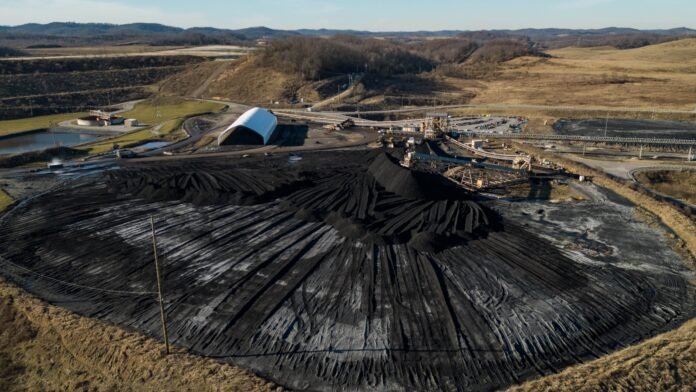
Trump is using the Defense Production Act, a Cold War-era statute used to accelerate American industrial output in times of national need, to provide grants to more than a dozen existing coal plants across the U.S., including facilities capable of exporting coal.

“As a result of the $700 million investment that I’m announcing today, we will protect 14 coal plants and 42 coalmines, a tremendous number, and build two new coal plants and one massive new export terminal,” Trump said.

Read Next

The funds will be used to bring a new coal export terminal online in Oakland, California, and to restart an existing facility in Maryland.

They will also keep online plants across 10 states: West Virginia, Kentucky, North Carolina, Indiana, Tennessee, Arkansas, Arizona, Oklahoma, North Dakota, and Wisconsin. Each of those 10 states voted for Trump, the president boasted on Thursday. “We won them all,” he said.

The two new coal plants will be in Alaska and West Virginia.

Trump has long been a champion of reviving the United States’ ailing coal industry. Thursday’s White House event featured supportive governors and lawmakers from coal-rich states such as Wyoming and West Virginia.

In the past year, the Trump administration has doled out hundreds of millions of dollars to the coal industry, signed orders forcing ratepayers to pay extra for aging plants to stay open, and dismantled environmental rules that limit toxins from coal leaching into Americans’ shared air and water.

The administration’s attempts to provide a cuddly rebranding to coal have even extended to creating a new mascot with giant eyes, called Coalie, and gushing social media posts that include an image of a lump of coal wearing sunglasses as if it were on the TV show Love Island.

Read Next

“You’re not allowed to say ‘coal’ within the Trump administration unless it’s preceded by the words ‘clean, beautiful,’” Trump said on Thursday. “Complicates our life, but it’s good.”

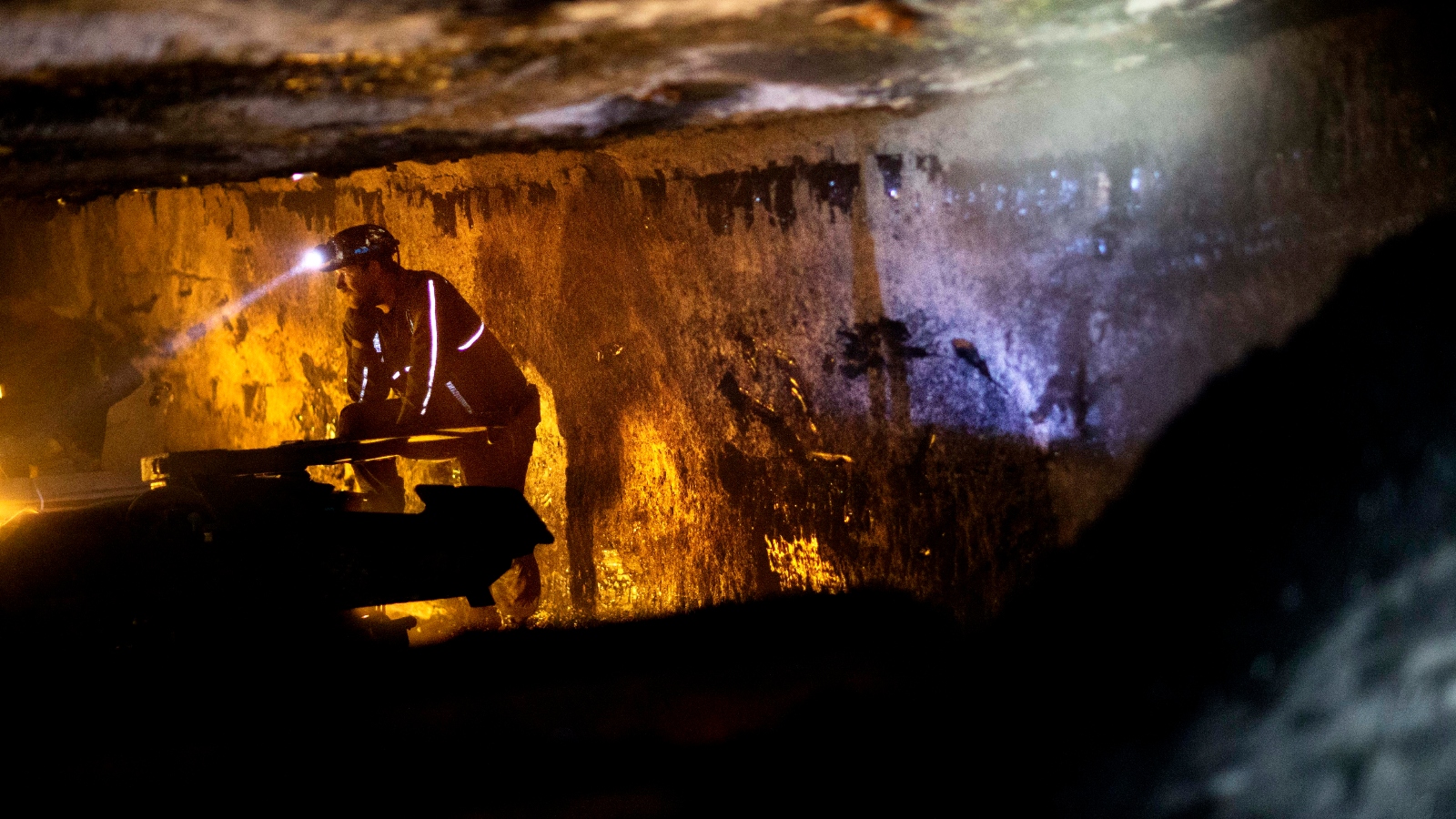
Regardless of such terminology, coal is not clean. It is the most carbon-dense fossil fuel and therefore a leading cause of the climate crisis when burned. Coal also gives off tiny toxic particles that sicken miners and trigger widespread respiratory and heart health problems across the U.S. — research has estimated that as many as 460,000 deaths in the U.S. from 1999 to 2020 were attributable to air pollution from coal plants alone.

Environmental groups strongly criticized the administration’s latest aid for coal. “It is disgusting and reprehensible that the president of the United States is giving away our taxpayer dollars to deadly and expensive coal plants that will make Americans sicker and drive up electricity prices even more,” said Patrick Drupp, climate policy director of the Sierra Club.

“This handout betrays everything Donald Trump promised and only serves his big coal buddies who stroke his ego and hand him shiny trophies.”

Though Trump on Thursday claimed that his pro-coal actions will lower energy bills and that wind power is “the most expensive energy,” experts say coal plants are more expensive to build and operate than renewable power sources.

Read Next

Trump’s attempts to revive the coal industry, while at the same time seeking to stymie the rapid growth of clean energy such as solar and wind, have so far floundered. The number of people working in coal has declined by more than 90 percent in the past century, with more people now working in Waffle Houses across the U.S. than in coal.

U.S. coal production is currently less than half of what it was in 2008, with coal recently declining as both a fuel for electricity and as an input for manufacturing materials such as iron and steel. Cheap, abundant gas has helped displace coal from power grids, with even cheaper renewable energy also now taking off in the U.S. despite the administration’s efforts to kill it off.

“What’s next, a taxpayer bailout to build new phone booths?” said Kit Kennedy, a senior climate campaigner at the Natural Resources Defense Council, of the new round of support for coal. “This is going to mean higher bills and dirtier air. What a waste.

“Propping up coal billionaires with taxpayer money is one more way for the Trump administration to put polluters first and put the rest of us at risk.”

The coal industry applauded Trump’s new order, arguing that ramped-up coal production will help the U.S. meet a historic spike in electricity demand caused by the surging artificial intelligence sector.

“Coal generation shields consumers from the impacts of volatile energy prices and supply challenges,” said Rich Nolan, chief executive of the National Mining Association.

The Environmental Protection Agency also announced plans to change an Obama-era emissions reductions plan that would have shuttered the Dave Johnston Unit 3 power plant in Wyoming.

Trump railed against Obama and Joe Biden for working to scale back coal power.

“Under four years of Sleepy Joe Biden and the radical left Democrats in Congress, not a single permit was approved for a new coal mining project, but in over one year of our administration, we’ve already approved 76 permits for clean, beautiful coal,” Trump said.


Trump talking points: Hegseth changes D-Day subject to migrants

0
trump-talking-points:-hegseth-changes-d-day-subject-to-migrants
Trump talking points: Hegseth changes D-Day subject to migrants

US Defense Secretary Pete Hegseth came under fire from critics around the world this weekend after he turned his speech at a Saturday event marking the D-Day anniversary into a “racist rant” against migrants.

On June 6, 1944, Allied forces stormed the beaches of Normandy in France, which was occupied by Nazi Germany’s troops. Thousands were killed, but it is now widely seen as the beginning of the end of World War II. More than eight decades later, Hegseth traveled to the Normandy American Cemetery in Colleville-sur-Mer for the second straight year.

“Sadly, today, different European beaches are stormed by different dangerous ideologies,” President Donald Trump’s Pentagon chief said at the cemetery. “Beaches in Spain, in Italy, in Greece, and Bulgaria – boats and men arrive. When will European capitals do something about that invasion? Or is it too late? I pray not, and I believe not.”

Critics quickly decried Hegseth’s comments as “straight-up white nationalist talk,” “utterly disgusting,” “despicable” and “a disgrace to the memory of the men and women who gave their lives to win World War II.”

US Army veteran and progressive advocate Mike Lavigne denounced Hegseth as “a disgrace to his office and to the nation.”

Sharing a report about Hegseth’s remarks on social media, Sen. Tim Kaine (D-Va.) wrote, “Apparently our nitwit secretary of war(drobe) thinks a D-Day commemoration is an appropriate time to push his far-right ideology in Europe.”

House Minority Leader Hakeem Jeffries (D-NY) said: “Thousands of American heroes died on D-Day to defend freedom and defeat fascism. Pete Hegseth should honor and respect their memory. Not politicize their ultimate sacrifice. May God Bless the Greatest Generation on D-Day and every day.”

After the speech, Hegseth “conspicuously skipped [the] afternoon’s main international ceremony marking the anniversary of the Allied landings,” France 24 reported. “His presence was not missed by some residents of the village hosting the ceremony, Langrune-sur-Mer, who said the US official was not welcome there.”

As the news network detailed:

“He has very warlike views and it seems to us that this man does not share our democratic values,” Sylvie Lamy Thepaut, a member of the municipal association Langrune en commun, told BFM TV.

A message on the association’s website called for Hegseth’s visit to be canceled on the grounds that the Pentagon chief “espouses values contrary to democracyhuman rights and peace” and had made “numerous anti-European remarks,” “warlike statements,” and “American supremacist pronouncements.”

“The honor of Langrune, that of France, and the memory of the young Allied soldiers – American, British, Canadian – who died on our beaches in the name of democracy would dictate canceling this individual’s visit,” the statement concluded.

Hegseth’s comments notably came a just day after US Vice President JD Vance claimed on social media that Henry Nowak – an 18-year-old student fatally stabbed in the United Kingdom last year by a fellow Brit who has since been sentenced to life in prison – would still be alive “if the last few generations of European elites had stood their ground against the politics of self-hatred and the mass invasion of migrants, many of whom despise the West and the people who love it.”

“Each time a life like his is lost, the proper response – the only response – is righteous anger,” Vance added. “One of the most important things the Trump administration has proven to the world is that stopping the flow of mass migration and defending national sovereignty is a matter of political will and leadership. Anything else is an excuse.”

In response, a spokesperson for UK Prime Minister Keir Starmer said that “in recent days we have seen people trying to interfere in our democracy and seeking to stir up division on our streets. The Nowak family are grieving after Henry’s horrific murder. They have said they don’t want his death to be used to create further division, hatred, or tension. We should be respecting their wishes. Our politics should bring people together even in the most terrible of circumstances. That is who we are as a country.”

The recent remarks from Vance and Hegseth align with the Trump administration’s official National Security Strategy, which was released in December and is full of rhetoric often used by white nationalists. The document accuses the European Union of enacting “migration policies that are transforming the continent and creating strife,” claims that “should present trends continue, the continent will be unrecognizable in 20 years or less,” and stresses that US policy is to help “Europe to remain European, to regain its civilizational self-confidence, and to abandon its failed focus on regulatory suffocation.”

Earlier this week, the 27-nation EU moved forward with an overhaul of its migration policy, which has led some human rights advocates to draw comparisons to Trump’s use of US Immigration and Customs Enforcement (ICE) to crack down on people in the United States.

“Across the Atlantic, we see the violence and fear created by ICE’s brutal immigration enforcement,” Silvia Carter, a spokesperson for the Brussels-based Platform for International Cooperation on Undocumented Migrants, told The Associated Press. “Europe should be learning from the harms of that model, not building its own version of it.”

Already, many migrants die while trying to reach Europe. The International Organization for Migration announced in February that at least 7,667 people died or went missing on migration routes worldwide last year—including at least 2,185 who died or went missing in the Mediterranean Sea, and another 1,214 on the Western Africa/Atlantic route toward the Canary Islands – but “the real toll is likely higher.”

-Common Dreams

0FansLike
0FollowersFollow
0FollowersFollow
0SubscribersSubscribe
- Advertisement -
Google search engine

Recent Posts