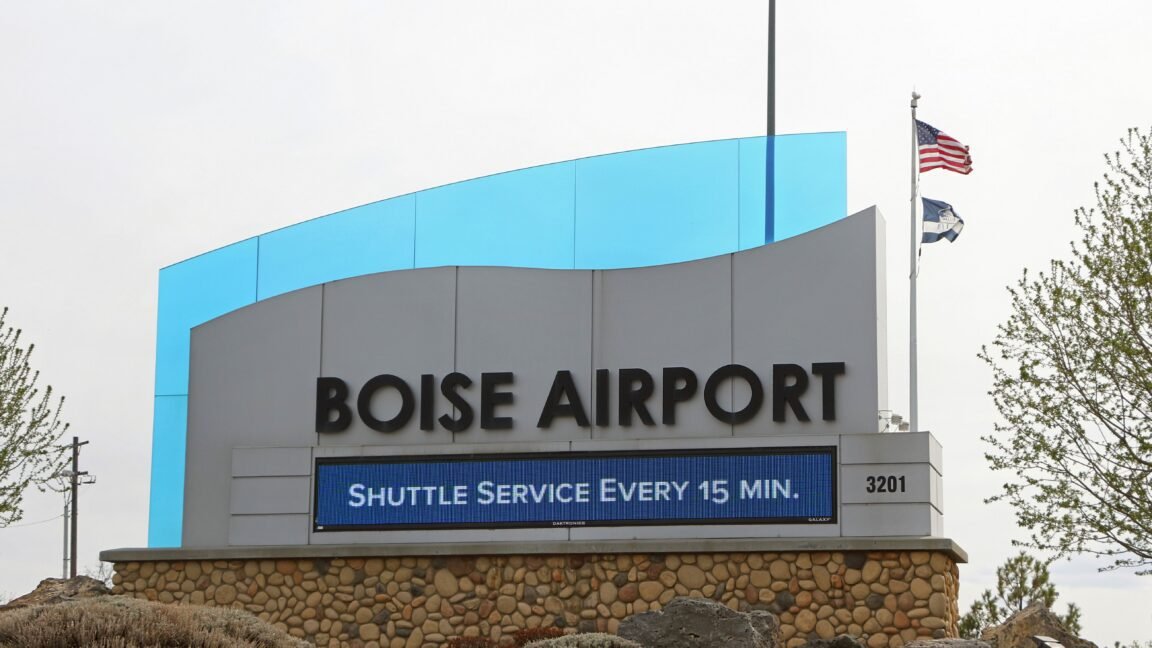
A person with measles passed through the busiest airport in Idaho, shedding one of the world’s most infectious viruses in the state with the country’s lowest measles vaccination rate.
Health officials are now warning residents and travelers about the exposure while trying to directly notify passengers who shared flights with the infected person. In an announcement on April 9, the Idaho Department of Health and Welfare (DHW) said the infected person was at the Boise airport on March 29 between 1:30 am and 7:40 am while traveling through the area.
Measles symptoms—which begin with fever, cough, runny nose, and watery, red eyes—can develop between seven and 21 days after exposure, but typically start after 11 or 12 days. That means that for anyone infected during the airport exposure, the initial generic symptoms would likely have started over the weekend. The telltale rash of measles typically doesn’t appear until two to four days after those early flu-like symptoms. The rash begins on the head and moves down the body, while fever may spike to 104° F or higher. Infected people are infectious for four days before the rash appears and for four days after its onset.
Idaho is particularly susceptible to measles outbreaks. The state has the highest rate of non-medical vaccination exemptions in the country and, in turn, the lowest rate of vaccination coverage among kindergartners. In the 2024–2025 school year, 15.4 percent of Idaho kindergartners had an exemption that allowed them to skip the shot. Breaking those exemptions down, only 0.3 percent were for medical reasons, while 15.1 percent were non-medical exemptions.
Susceptible state
Overall, only 78.5 percent were fully vaccinated against the measles virus with the MMR (measles, mumps, and rubella) vaccine. That’s well below the target of 95 percent vaccination coverage, which is the level needed to keep the virus from spreading onward in communities. With the high level of exemptions, the maximum MMR vaccination coverage the state could attain is only around 85 percent.
Measles outbreaks have been raging in several places inside and outside the US. But so far, Idaho has been quiet, with only nine cases detected since the start of 2026. Those cases were in three counties, and all involved people who were either unvaccinated or had an unknown vaccination status, according to a state measles tracking site.
However, it’s unclear if cases may go undetected in the state. Last August, the state reported three cases, including two cases in two neighboring northern counties. Health officials noted at the time that there was no clear link between the two cases. “Without any link between these two confirmed cases in north Idaho or travel outside of their communities, it’s reasonable to suspect that there is more measles circulating,” Christine Hahn, state epidemiologist and Division of Public Health medical director at DHW, said in a news release on August 20. “As we’ve seen with other states around the nation, cases can begin to multiply quickly.”
For now, no cases have been identified in connection with the airport case, but health officials are advising residents to get the MMR vaccine, two doses of which are 97 percent effective,– and that protection is considered lifelong.
“The MMR vaccine is extremely effective at preventing measles and is routinely recommended for children 12–15 months of age, with a second dose at age 4–6 years,” the health department said.